
You might know it from Ice Road Truckers, you might know it because you live or have visited Interior Alaska, you might not know it at all…but The Dalton Highway is a beast all its own. And it’s a beast we conquered this past Summer.
The first road built for motor vehicles was Hickel Highway, opened in 1968. This was the fist attempt for the oil companies to connect Interior Alaska with the Prudhoe Bay oil fields. It was important to the early development of the area, but was located far too west than the Trans-Alaska Pipeline. In 1969 Alyeska Pipeline Service Company began construction on what would eventually be known as the Dalton Highway.
Alyeska constructed it to follow state secondary-road standards. It took roughly 5-6 years to complete due to a delay in 1971 for the Alaska Native Claims Settlement Act, which led to legal challenges and further environmental reviews of the pipeline itself. Once the authorization of the pipeline went through in 1973, it took only 5 months to complete the construction of the roadway, 390 miles long (the full highway is 414 miles from start to finish).
The road serves mainly truck drivers delivering much needed equipment and supplies to not only the oil fields, but also the settlements along the route, and beyond. This is not an easy task- the Dalton Highway comes with its’ own challenges. Harsh weather, difficult terrain, inclines and declines, the Brooks Range, this road is unique. You begin in the boreal forest, go through Atigun Pass in the Brooks Range, descend into the Arctic Foothills, and end at Arctic Coastal Plain Tundra. In fact the last part of your drive will be the smoothest.
The Highway itself passed to the State of Alaska in 1979 and was opened to public use in 1994. It is one of the more popular routes and a truly incredible experience to have. You can choose to camp, RV, motorbike, or simply drive and stay in the couple hotel options.


We chose to drive and stay in hotels/cabins on our route. The drive from Fairbanks up to Deadhorse is really only a two day drive, but we extended by one day to enjoy the way back.
The highway itself is surprisingly not the worse we’ve ever driven. Sure it’s bumpy and some of the bumps really take you somewhere, but in comparison to other roads and when looking around at the sheer beauty around you, it’s really not bad. We were definitely expecting worse (especially after watching Ice Road Truckers).
We took our first stop at the Arctic Circle Sign, then had our first stop for the night up in Coldfoot. We stayed at the only accommodation available, which is the same accommodation you’ll find on this trip- a trucker/worker style stop. There are camp sights available and you are able to pull your RV or truck into the area. The rooms consist of two small (I think double size?) beds. In Coldfoot there were bathrooms inside the room, but in Deadhorse they are communal bathrooms. We had both dinner and breakfast at the attached buffet restaurant, as well as ordered a bagged lunch for our drive. It was actually a pretty nice set up and it was nice to just stretch our legs.
The second day of our drive we made it to Deadhorse, but not before getting a fully flat tire due to a rock. We had a really smooth drive leading up to this (and after it as well), so I’m thinking it was just the perfect rock, placed in the perfect position, hit at the perfect angle to pop our tire. While we were able to get a replacement tire in Deadhorse, I would not recommend unless absolutely necessary (and let’s be clear, if you are not traveling with at least one full spare, then it is necessary). Being so remote, you are definitely going to pay an uncharge in pricing for even the smallest things. (That’s also a really good note on gas too- while the prices were to be expected, prepare for them) Again, small accommodation, two beds this time with a communal bathroom. A restaurant on site and we wandered a little bit around the town just to see what all was offered. There isn’t a lot as most of the workers that are contracted through the oil companies reside on their property and are fairly self contained there.
We did take a tour of the Oil Fields while we were in Deadhorse and with that came our opportunity to visit the Arctic Ocean. The tour is the ONLY way in Deadhorse to go all the way to the Arctic Ocean. With the tour you do have to have a background check and bring identification. You are not allowed to film or take photographs within the fields themselves, but we were able to on the Arctic Ocean. Now, no surprise we went at the beginning of June and the Ocean was still frozen. We took a little walk on the water, touched the icy areas where there was a gap and water had come in and then got back on the bus to head back to town.
On our way back down to Fairbanks we stopped and spent an extra night near Coldfoot in a little town called Wiseman. This was a lovely 24 hours disconnected in a cabin. This is how we used to spend one week of our summer and boy did it make us realize how much we’ve missed doing this in the summer. While we weren’t able to fish (water was to high and fast for that), we were able to read, play games, and take a little walk to see the area. The owners of the Bed and Breakfast were absolutely delightful and made us feel so welcome.


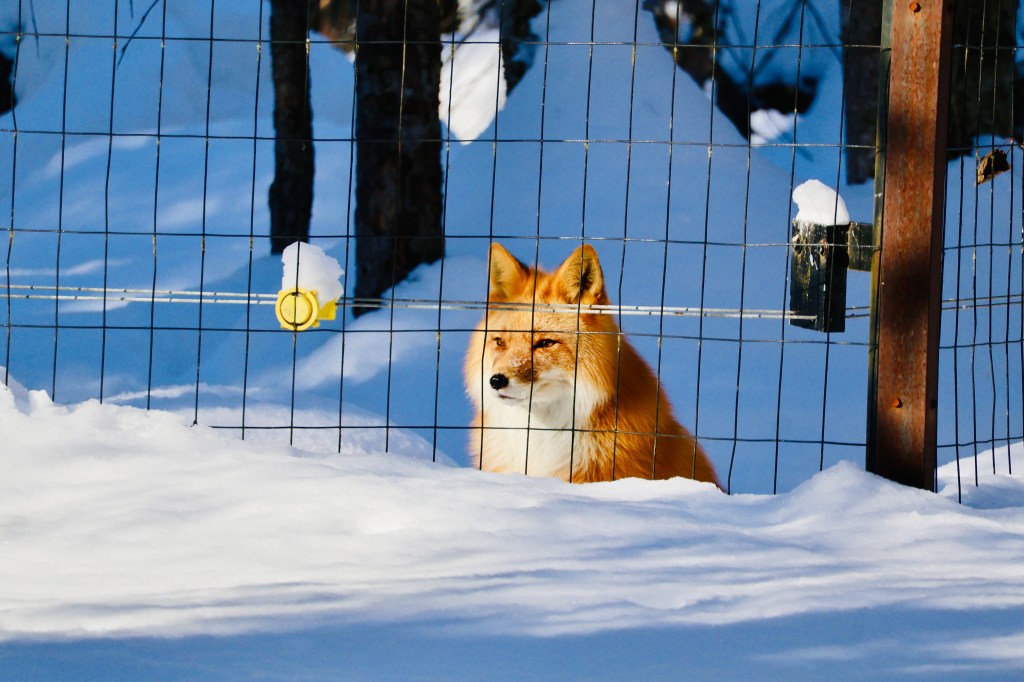
I guess before you go, I can fill you in on all of the wildlife we were able to see- musk ox (including a baby), arctic fox, grizzly bear, caribou, and a singular moose. It was really exciting to not only see the wildlife, but just to experience the Dalton Highway, the Arctic Ocean, and what wild untamed Alaska is really like. We got to experience something that fewer than 0.01% of the U.S. Population get to. What a core memory it will be.