
It is finally time to start breaking down our Summer Holiday. It’s a bit late in the posting lineup, but we had a truly fantastic trip, and I can’t wait to share all the details! We did a bit of an East Canada tour de force- starting in Quebec City and ending back in New York. I think this was one of our top trips in that we loved everywhere we went. We found some real gems in these cities and really fell in love with some of these spots. So, here we go with where we started…
We spent three nights in Quebec City and the bulk of our time was spent wandering the city. We stopped in places from time to time, but we really just walked the streets of the city and enjoyed our time. I’ll highlight a couple of the spots we did go to and the history, but I highly recommend just wandering the city streets of both upper and lower downtown. The days that we were there we did (and you’ll see) have some air quality issues, with the wildfires raging out of control.
A real quick note on the “Upper Town”/” Lower Town” designations. I’m not making these up- this is very much how they are referred to. Upper Town is the location of the military and civic/admin district. Most buildings in this area are 19th century, though there are some 17th/18th century ones. Lower Town is at the “bottom” of the cape. This is the site that Samuel de Champlain built a settlement. The Church Notre-Dame-des-Victoires is located in Lower Town (dated back to 1723) as well as the Musee de la civilization.
Quebec City dates back to 1608 when the French, specifically Samuel de Champlain, settled the area- making it one of the oldest European settlements in North America. The ramparts (which we walked) are the only remaining fortified city walls remaining in the North Americas (north of Mexico). The “Historic District of Old Quebec” is a World Heritage Site (as of 1985) and honestly one of the coolest spots to walk around. Now, while the French “founded” the city, it was actually an abandoned Iroquoian settlement called Stadacona. The city itself has quite the history, specifically during the French and Indian War where it served as the headquarters for raids against New England. However, Quebec was captured by the British in 1759 and held by them until the end of the war. It was then officially ceded to Britain, though Quebec is still heavily French and both French and English are spoken interchangeably (which gave our boys a chance to learn a couple phrases in a new language!).

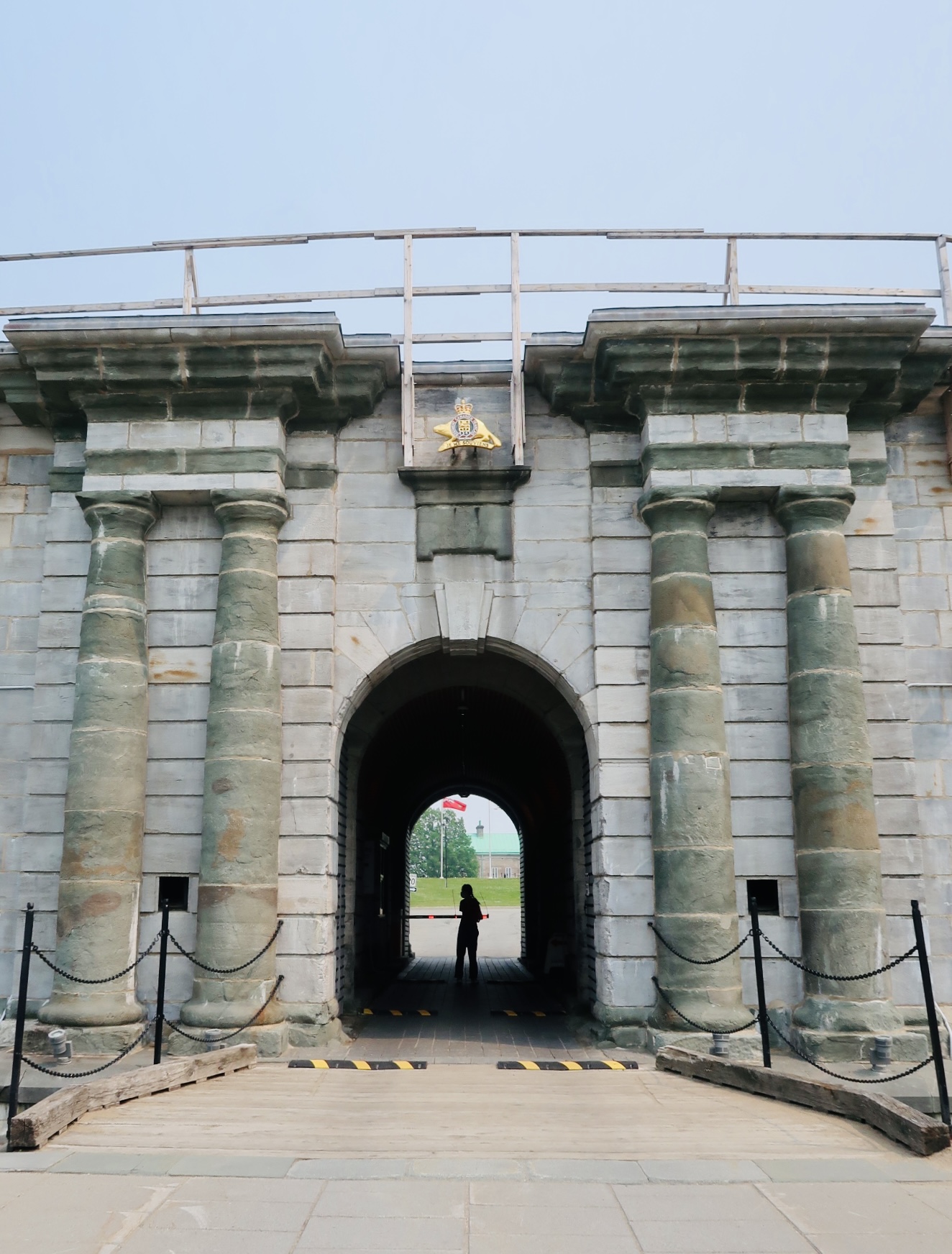
To get a little ahead of myself on our time in Quebec, but stick with the history, we spent an afternoon wandering and touring the Citadelle of Quebec. The Citadelle was initially built due to concerns of an American attack post the American Revolution and the War of 1812 (as America did try to “liberate” Canada from her Sovereign- unsuccessfully). Now, the Citadelle is an active military installation and a secondary (official) residence of the Canadian Monarch and governor general. The Citadelle does join the original fortifications, which is really cool when you think about the history of it all. The entire city itself is surrounded by fortifications.
When Samuel de Champlain was initially building up the settlement of Quebec, he immediately noted that the Cap Diamant would be of importance and value to any fortifications of the region. When he built up the settlement, he built it in the way that the city would be at the base of the cape, thus allowing the landscape to provide a natural defense. The French initially built up the walls but determined that a fort would cost too much, and it wasn’t until Louisbourg fell that they felt a true need for a fort. The British saw the need for a full fort, but, similar to the French, didn’t want to pay the cost for a full fort. It wasn’t until the late 18th century that they fully committed to building the fort. The present star fort was built from 1820-1850, with the British remaining within the Citadelle until 1871.


It was really neat to walk through the Citadelle, seeing and learning the history, as well as hearing about their mascot- a goat (affectionally named Batisse)! Even though it is a fully functioning military base, you are able to see quite a bit of the buildings and museums. It is well worth the visit.
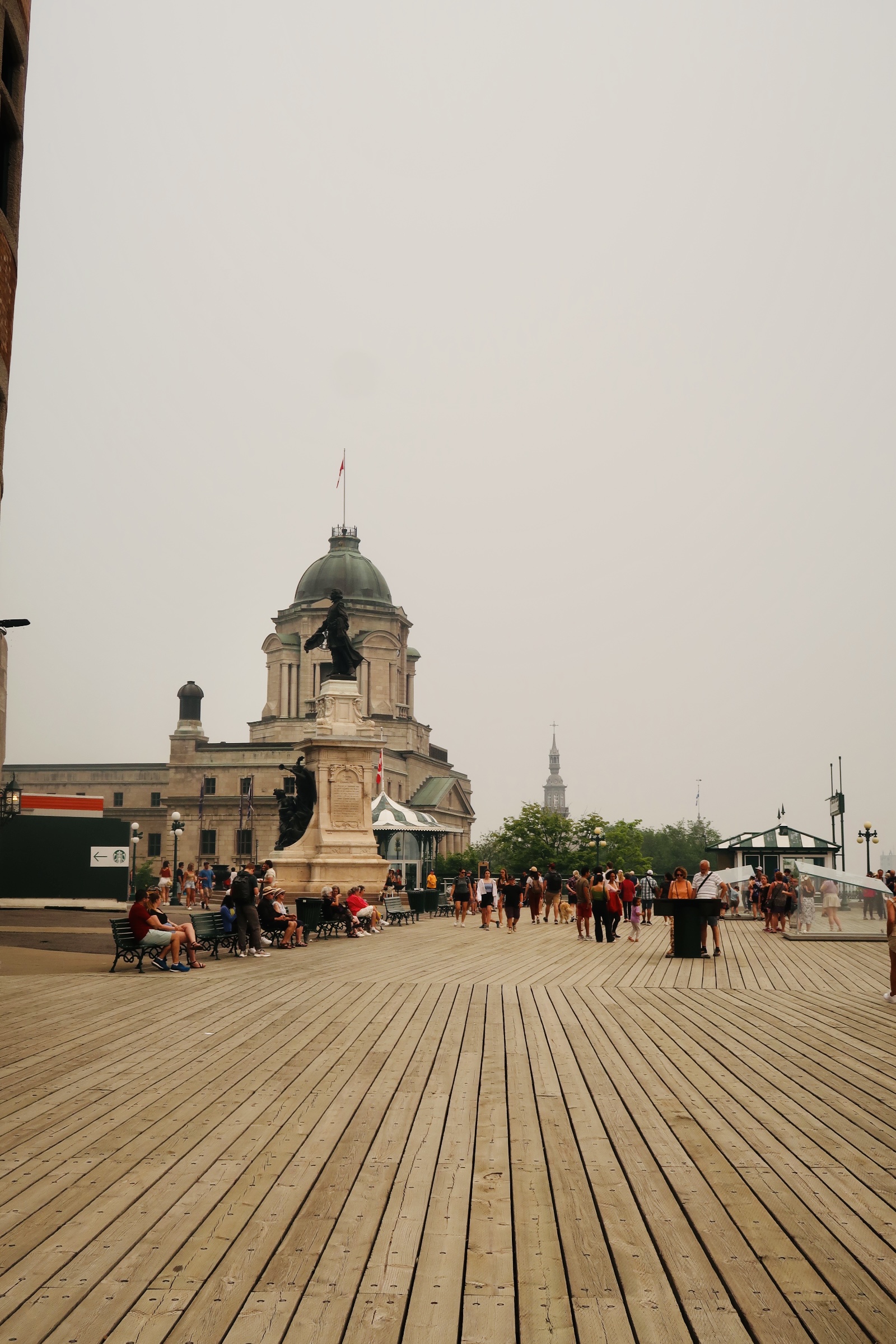
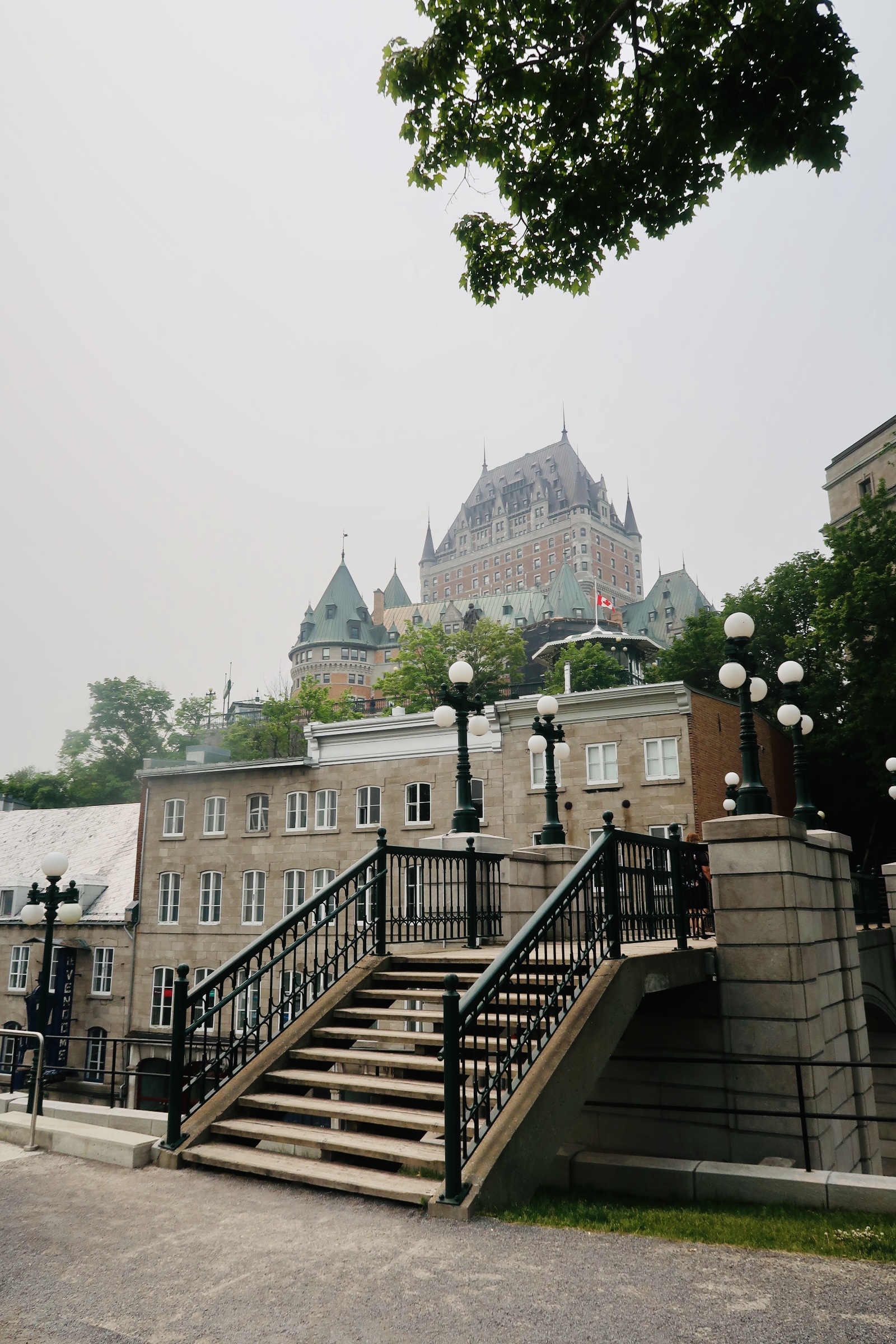
Now once you pass through the Old Fortifications to wander through downtown you can head through the streets and up towards the Promenade. This includes the cite of the Chateau Frontenac- one of the most photographed spots in Quebec City. Located in the Upper Town, it dates back to 1893 and was built by the Canadian Pacific Railway company. It is a National Historic Site of Canada and is one of the first completed grand railway hotels. These hotels are hotels that are built as an attachment to the major railways within Canada and were designed to serve railway passengers. A lot of these hotels then became landmarks and are linked to the history of the country itself. And I can definitely understand why- it is just as stunning in person as it is in photos.


Once you walk through the Promenade- called Terrasse Dufferin (and feel like you’ve stepped back into another era- just imagine it!), you can wander down to Lower Town. There are two ways to head down, by funicular or by stair. We chose the stair option because we have a thing for stairs (this is a long running theme from our European Travels). Lower Town has a very definitely different feeling to Upper Town. As you descend you can definitely feel a different vibe- in a way that…might even live up to the names. Upper Town is very…. business like, very prim and proper almost. Where Lower Town can have a bit of a frenetic feeling, a bit of a lighthearted, let loose, kind of feeling. Rue du Petit-Champlain in particular is very neat. We wandered through tight streets, picked up some ice cream, and sat riverside looking up at the Old City.
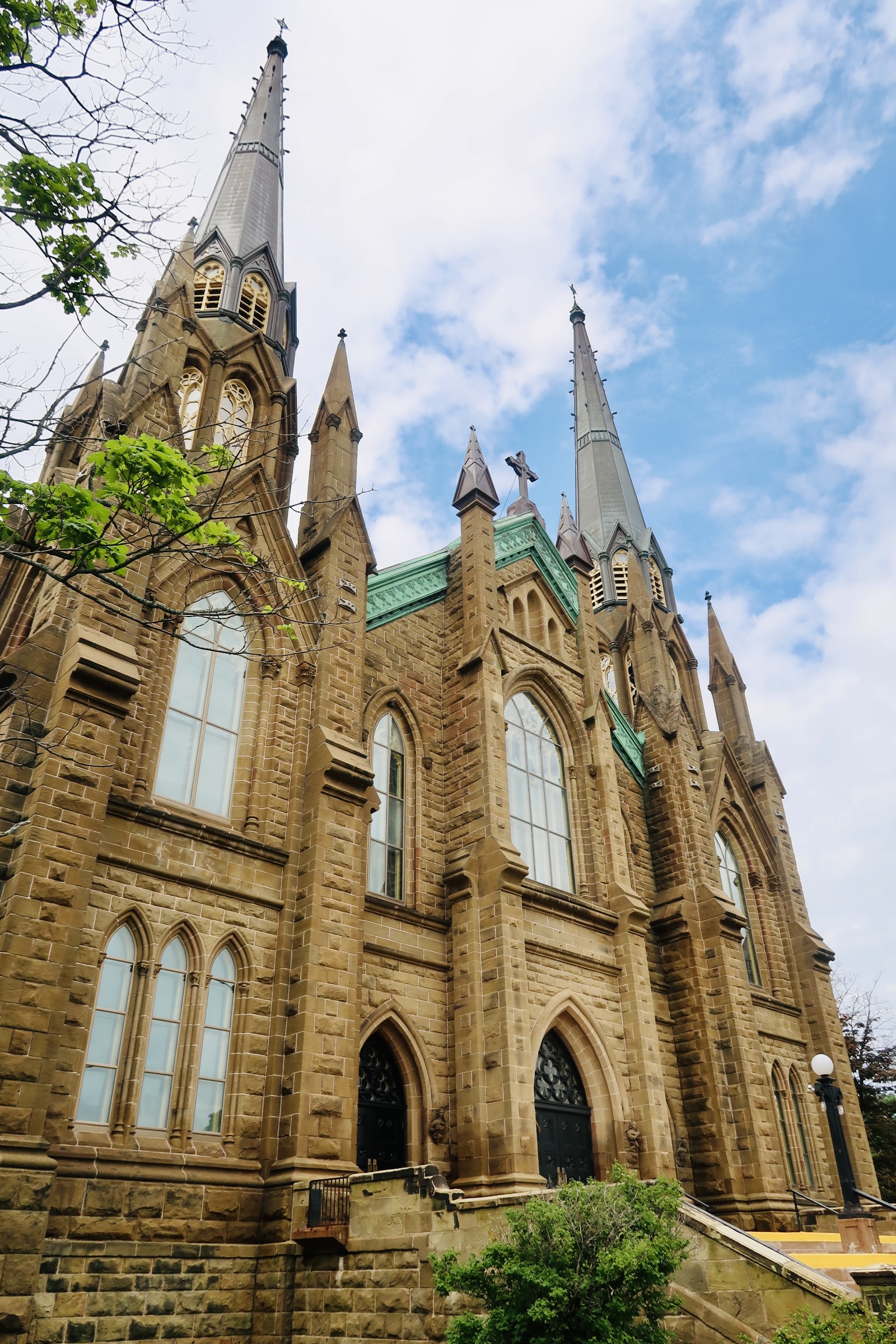
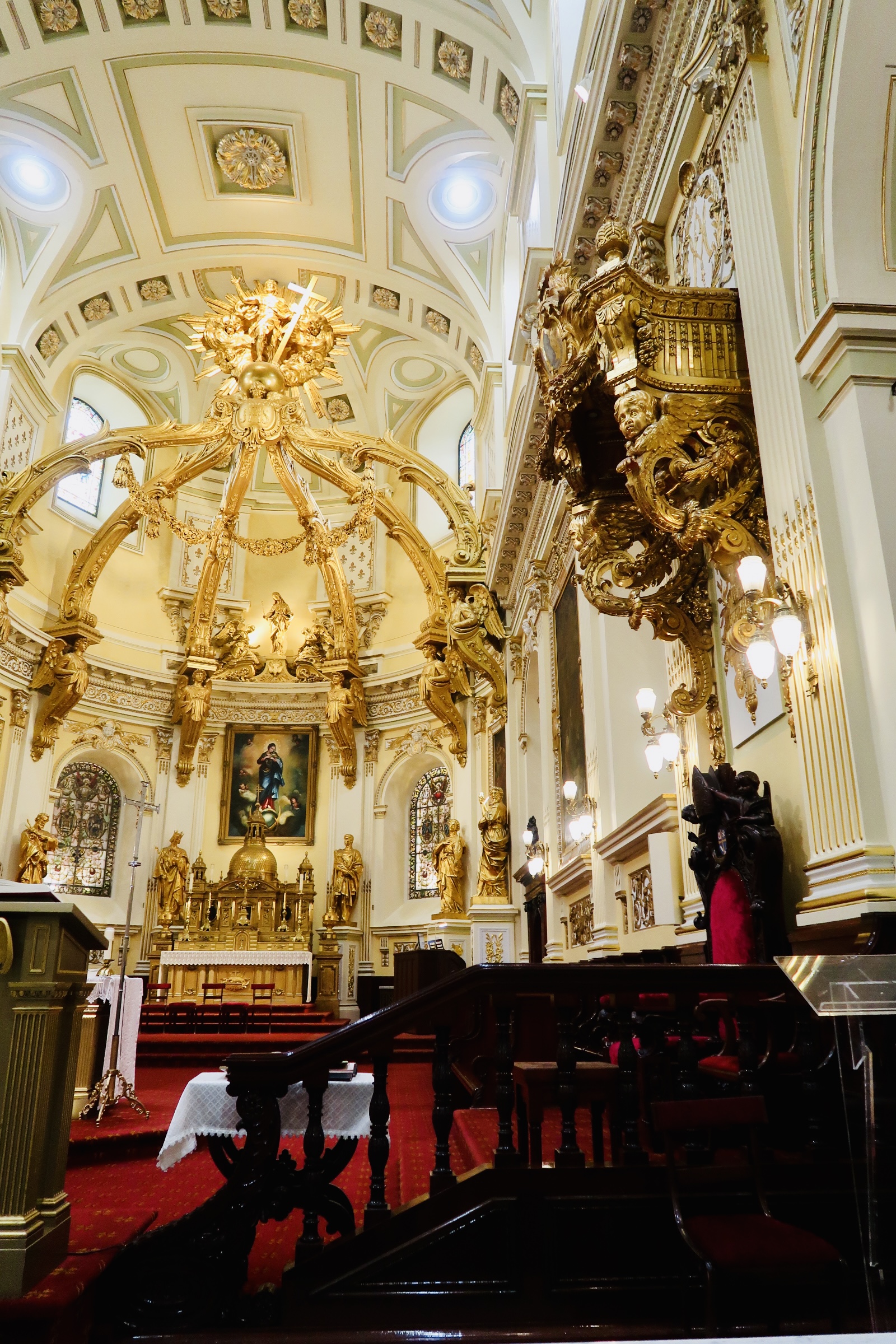
Cathedral-Basilica of Notre-Dame de Quebec was THE church we wandered through during our walks. And let me tell you…it lives up to that name. This is the oldest church in Canada and the first to gain the rank of minor basilica- which happened in 1874. However, this massive cathedral started off as a chapel- the Notre Dame de la Recouvrance- dating back to 1633. In 1647 construction of the actual Cathedral began under the name of Notre-Dame de la Paix. It was destroyed in 1759, rebuilt, and then destroyed again in 1922. Upon its 350th anniversary, a holy door was constructed, the second only to exist outside of Europe, only the eight in existence in the world. It was opened in 2013, for a little over a year, then opened again in 2015. It is not to be opened again until 2025. This particular Cathedral is absolutely incredible- it is pretty high up on my list of Cathedrals and churches, and I’ve seen my fair share.


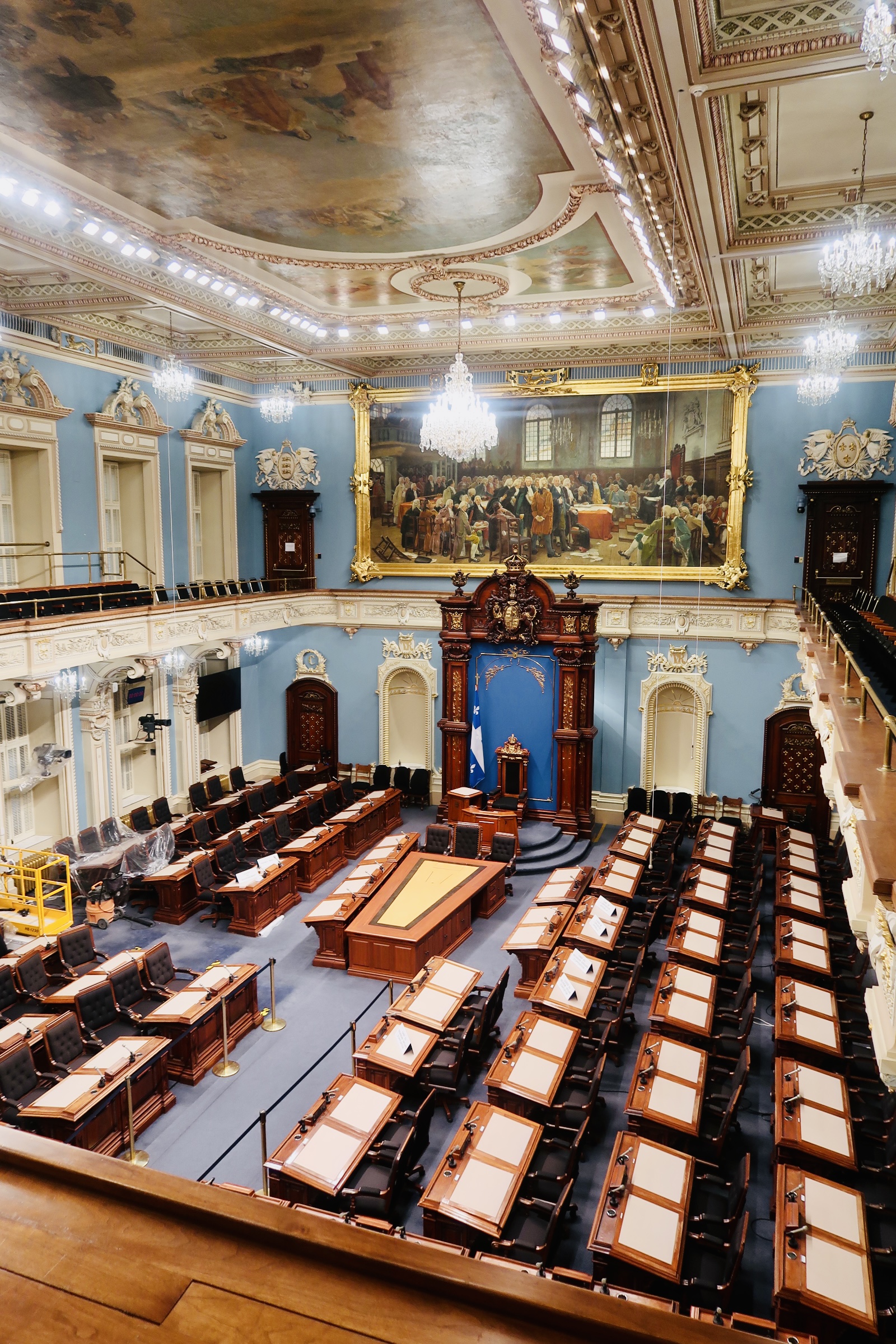
We spent a little bit of time exploring the Parliament Building of Quebec, which houses the National Assembly of Quebec. This present building was started in 1877, the first assembly met there in 1884, and the building was completed in 1886. The original building that housed the government was built in in 1648, rebuilt in 1694, and then destroyed in a fire in 1834. The clock tower was installed in 1888, the first addition was completed in 1915, and several more throughout it’s time. The new entrance was completed in 2019. We were able to walk through the halls, see where the government conducts business and learn a little about how it functions.


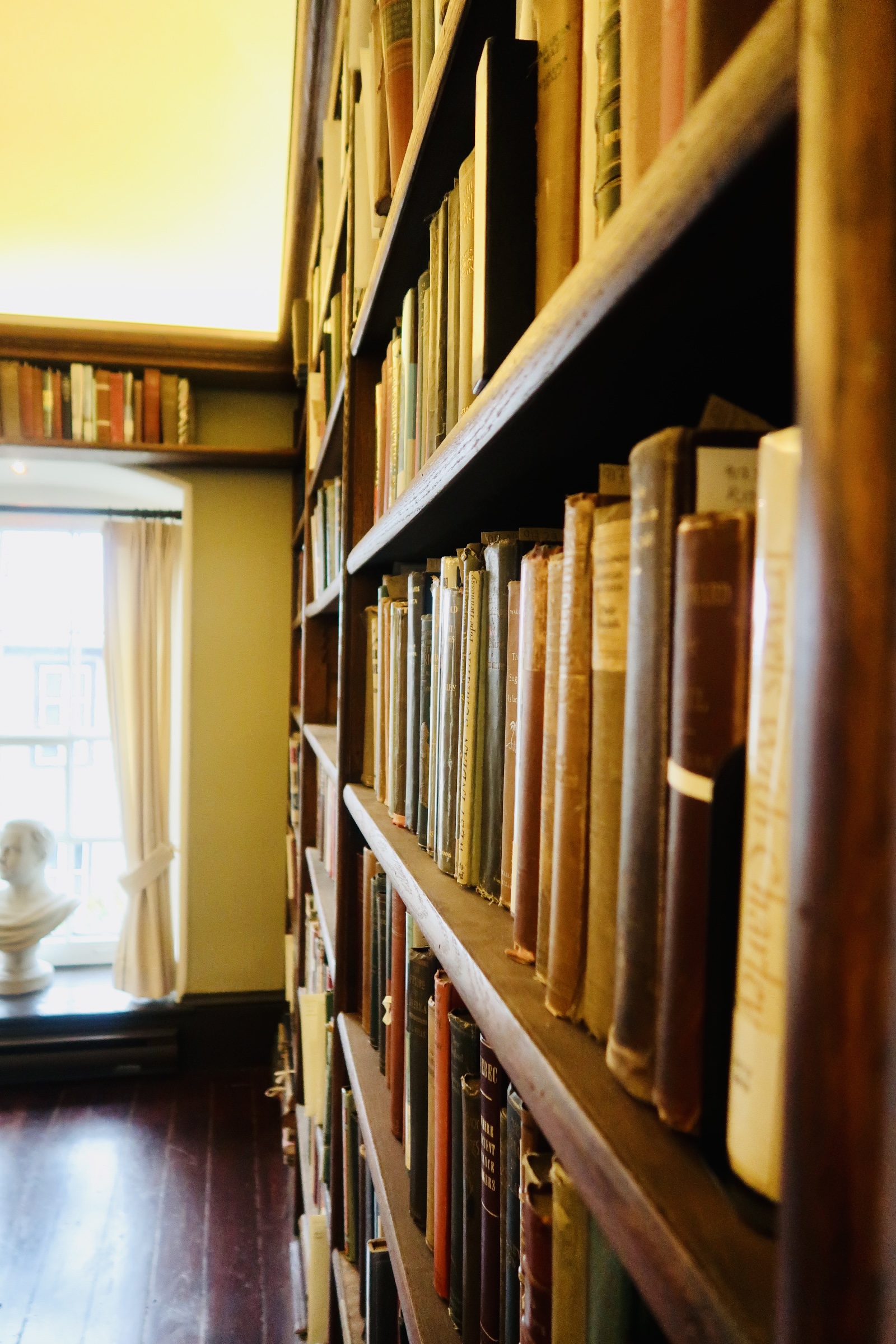
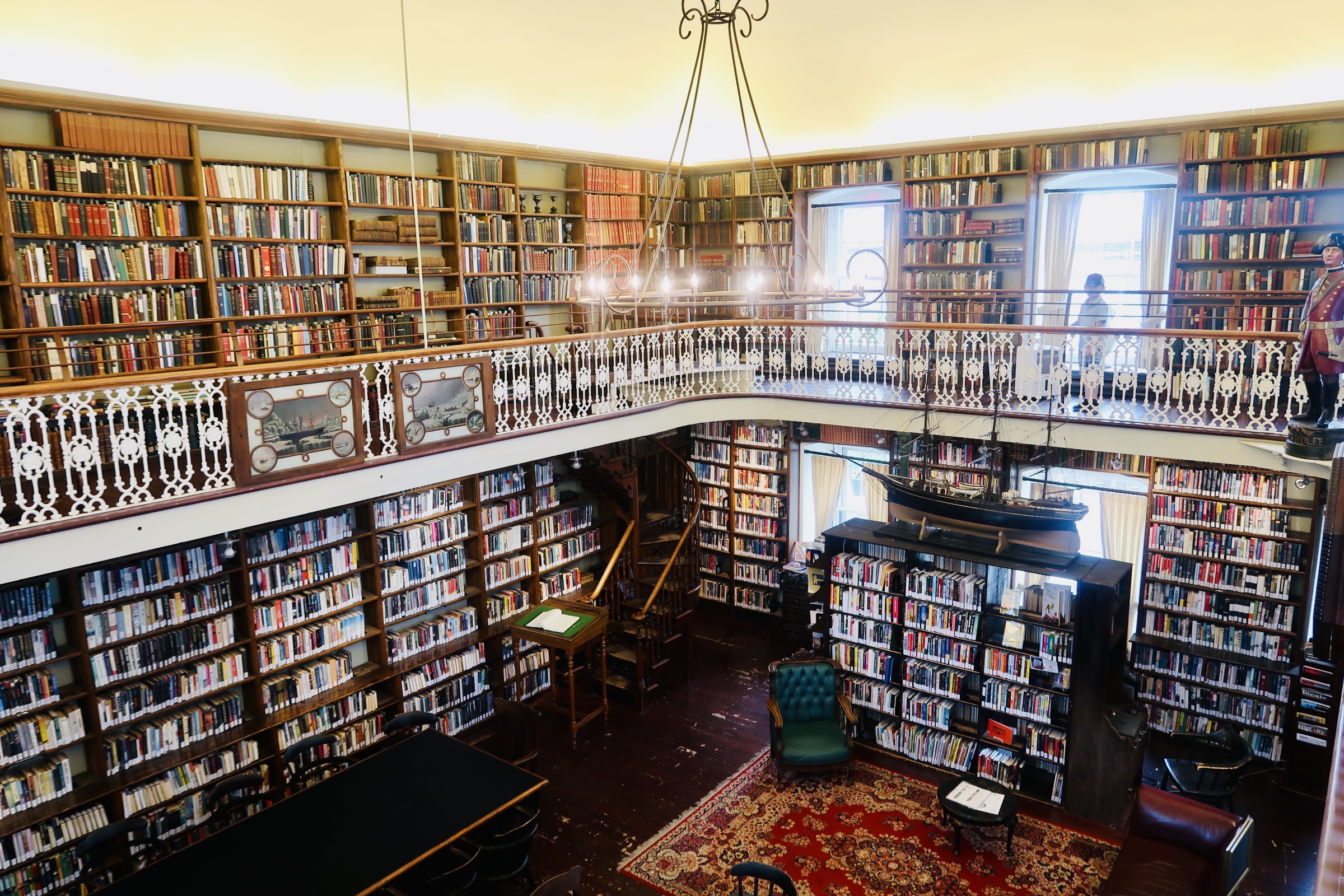
One of the final things I want to talk about in Quebec City is the Morrin Centre. This is a 200-year-old building that was initially one of the first jails in the city, turned school, and now is the leading English-language cultural centre and library. A little history, because this building has a LONG one. Initially this space was called the Redoute Royale and served as a military barracks, with the occasional prisoner of war. The original building was demolished in 1808, with the intention of building a new building to serve as the public prison. The new prison was completed and opened in 1813- though it housed prisoners starting in 1812. The prison was quickly put to full use and became overcrowded quickly. In fact, our tour guide told us that it was a common occurrence to get in light in trouble in order to go to the prison and get a meal. There was a total of 16 men hanged in front of the prison and you are able to walk the very same steps those men would have walked. You are also able to see a variety of markings in the basement cells from the prisoners. The prison was officially closed in 1867.




However, the building history doesn’t end there- it is quickly turned from a prison to a college. Morrin College is the first English language higher education institute. The college partnered with McGill University to allow students to earn Arts degrees, and starting in 1885, the college admitted woman into the program. In 1868 the Literary and Historical Society of Quebec (dated back to 1824) moved into a wing of the College. This Society has played quite the role in preserving the history of Canada- not only gathering and preserving historical documents, but also creating the National Archives, creating a lending library focusing heavily on English-language books, and republishing rare manuscripts.
The building presently serves as a museum, a cultural centre, as well as a fully functioning library. But also, I mean look at this library- is it not dreamy?


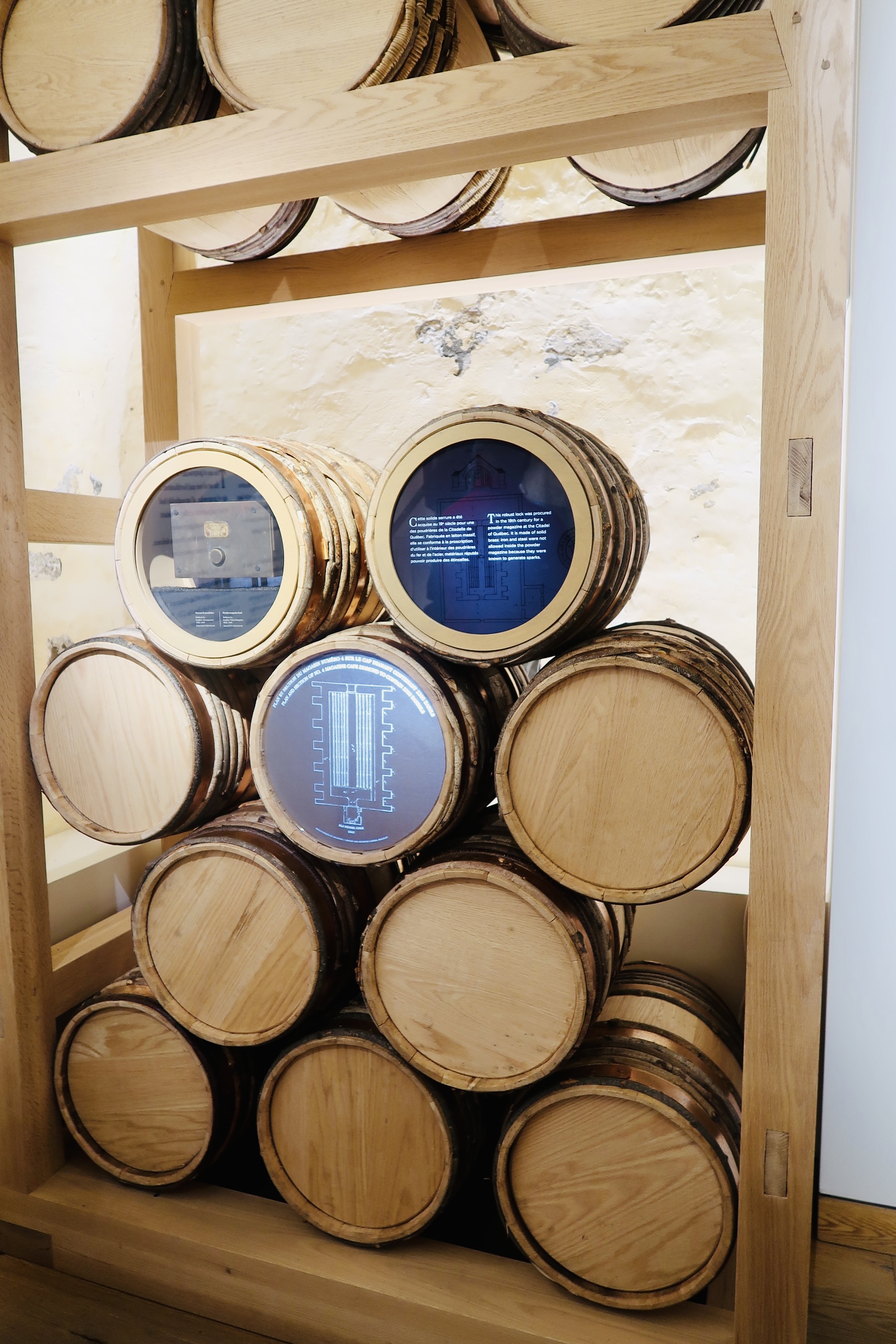
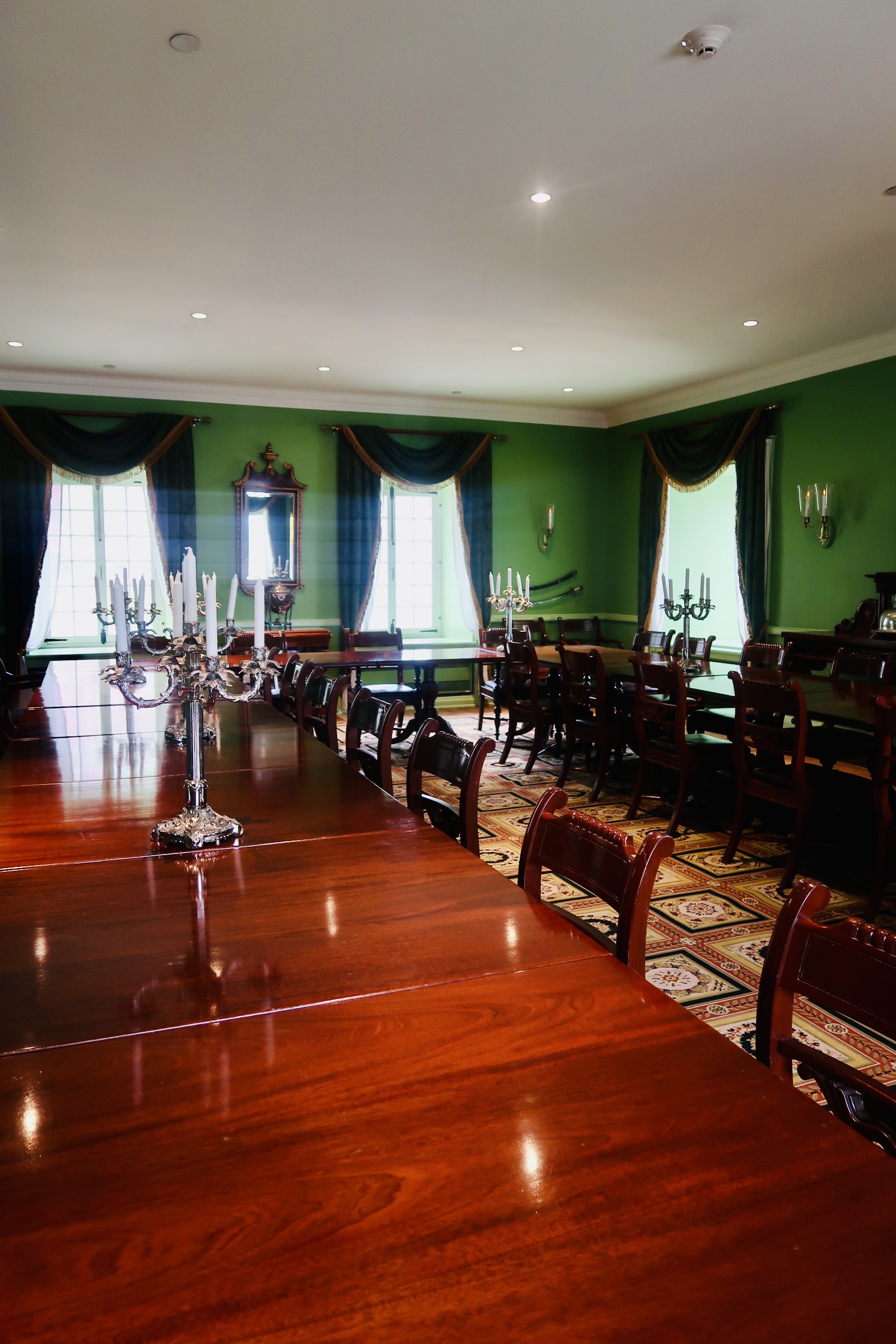
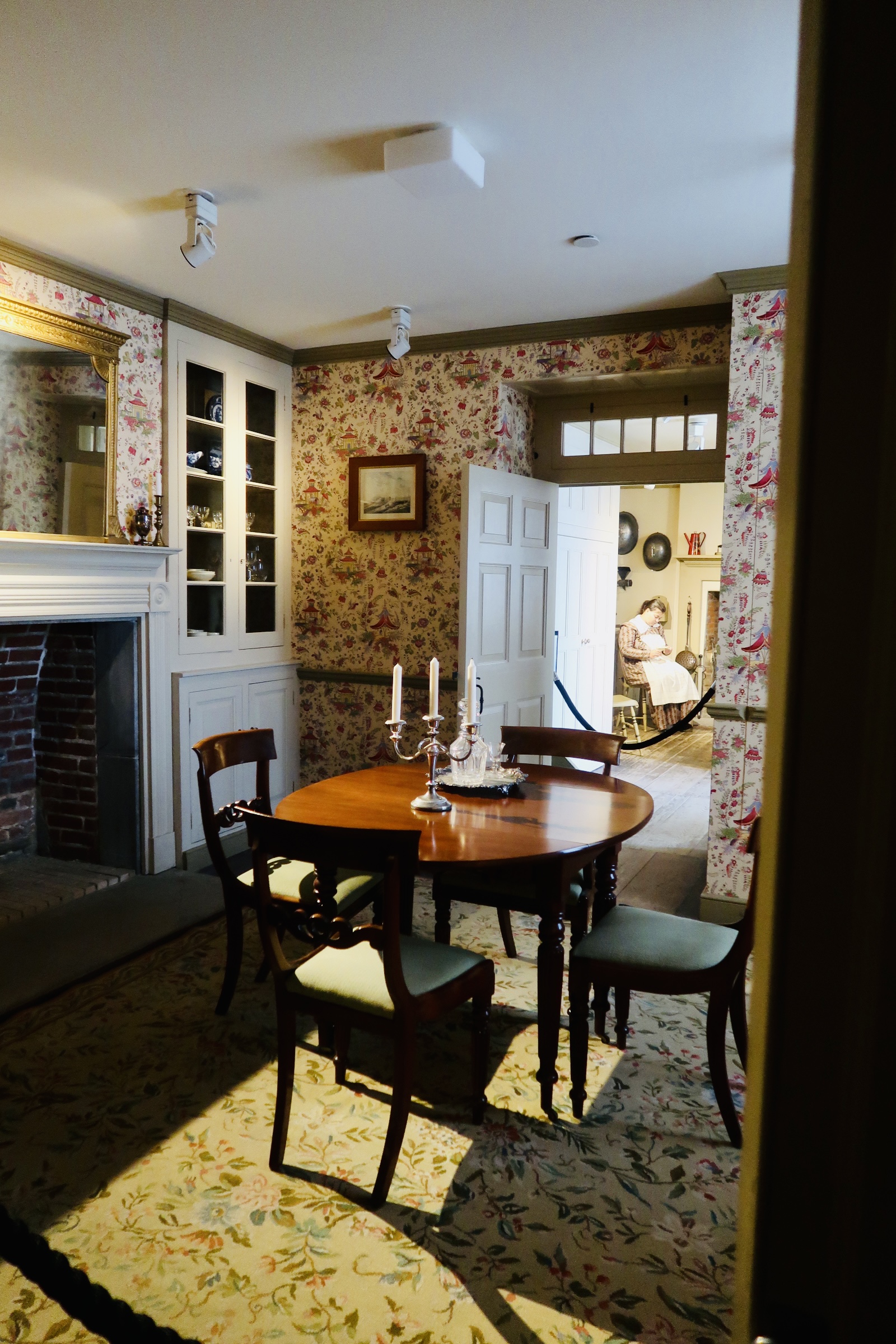
The final stop on our time in Quebec City was the Artillery Park, which is part of the Fortifications of Quebec. This is a “living history” museum that combines actors and artifacts to give a hands-on experience of life under the different rulers of Quebec. We got to experience the British, the French, and the Canadians. The “tour” starts in the arsenal foundry which gives you a full history of the City and its’ fortifications, then a model of Quebec City before you head down to the Dauphine Redoubt- one of the oldest military buildings in North America. Again, you experience life during different military rules. Finally, you stop in the Officer’s Quarters and see how they would have lived in the military area of the city. This building was actually originally a bakery but was repurposed to hold and officer and family. Definitely worth a stop!


And that really wraps up some of the highlights of our time in Quebec City. I will say- we really enjoyed our time. I always note what cities we like to be in (as we aren’t really a city family) and it’s always these Older European or full-on history spots that we prefer. Somewhere we can walk everywhere, see some architectural variety, and surround ourselves with history on every corner.