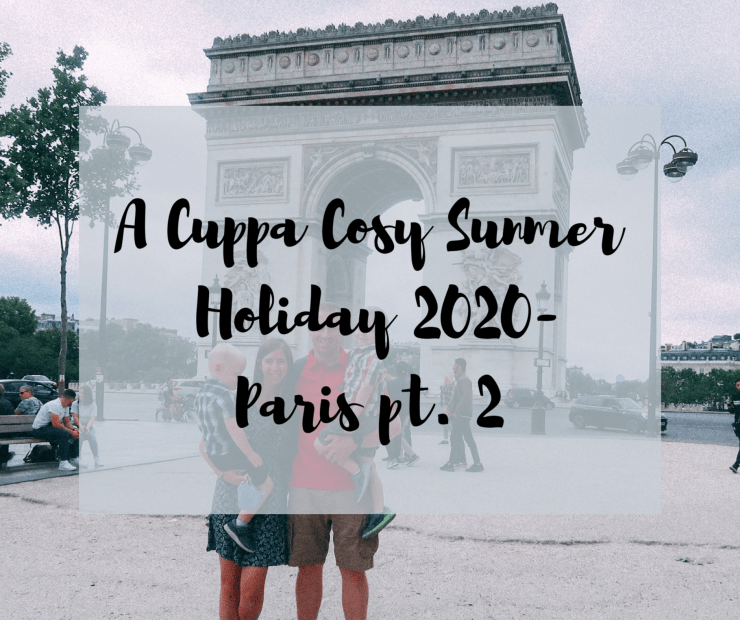
A Cuppa Cosy Summer Holiday 2020 – Paris pt. 2

There is a word derived from French, flaneur, and it means to stroll and observe; which is basically what we spent our second day in Paris doing. If our first day was spent dotting from here to there, hopping off and on public transport and staying on more of the Notre Dame side of things (read about it HERE), our second day was spent truly walking the streets of Paris. We utilized public transport twice, once heading in and then again heading back out. So, what did we do?
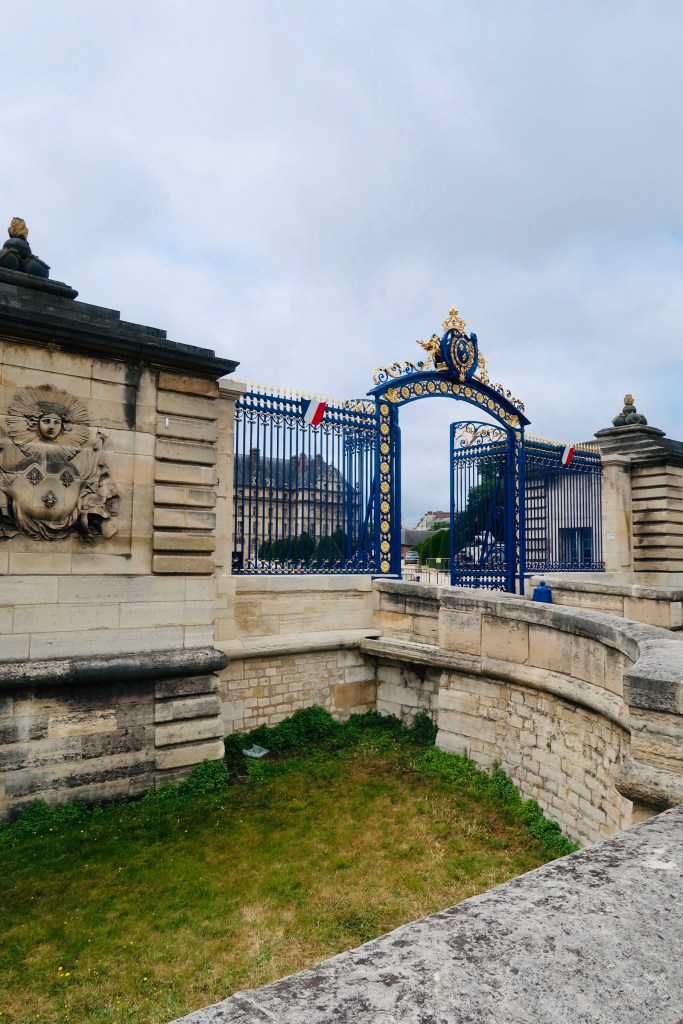
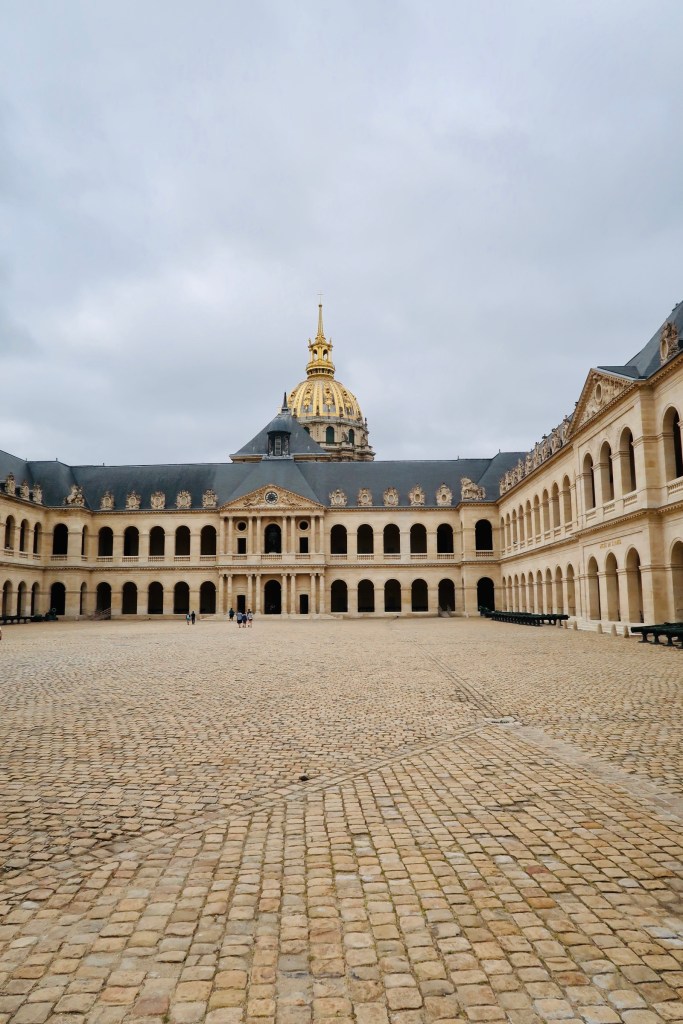
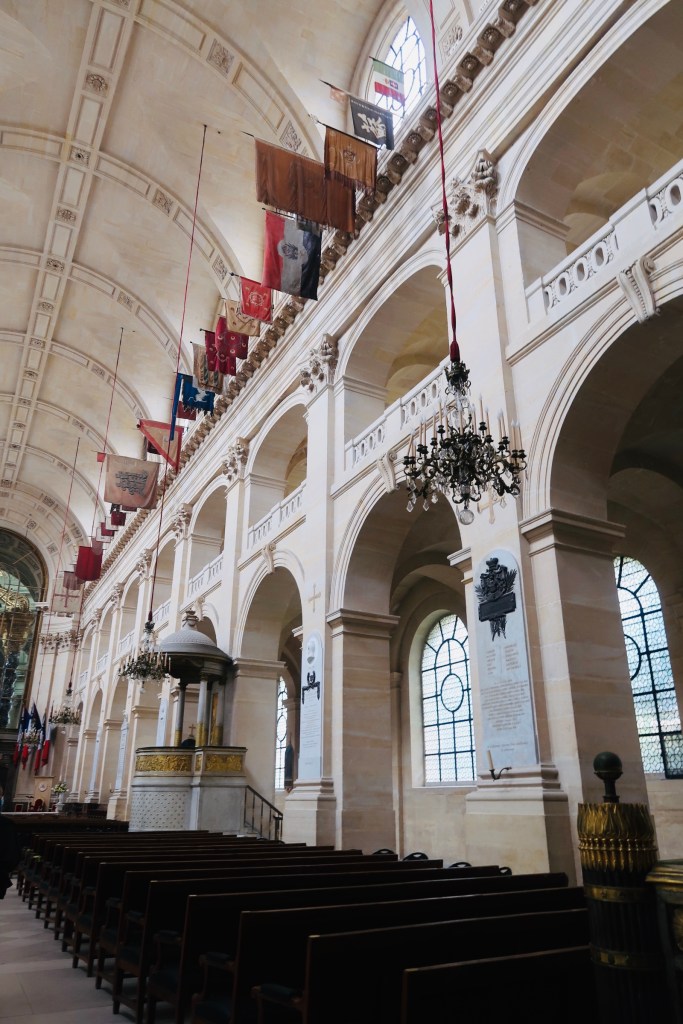
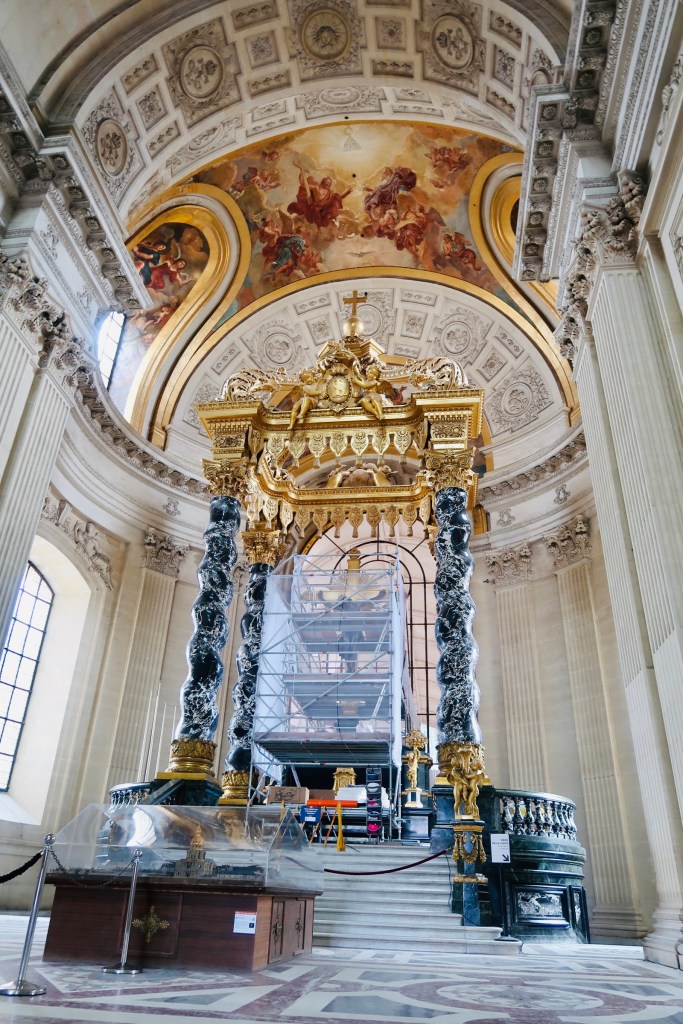
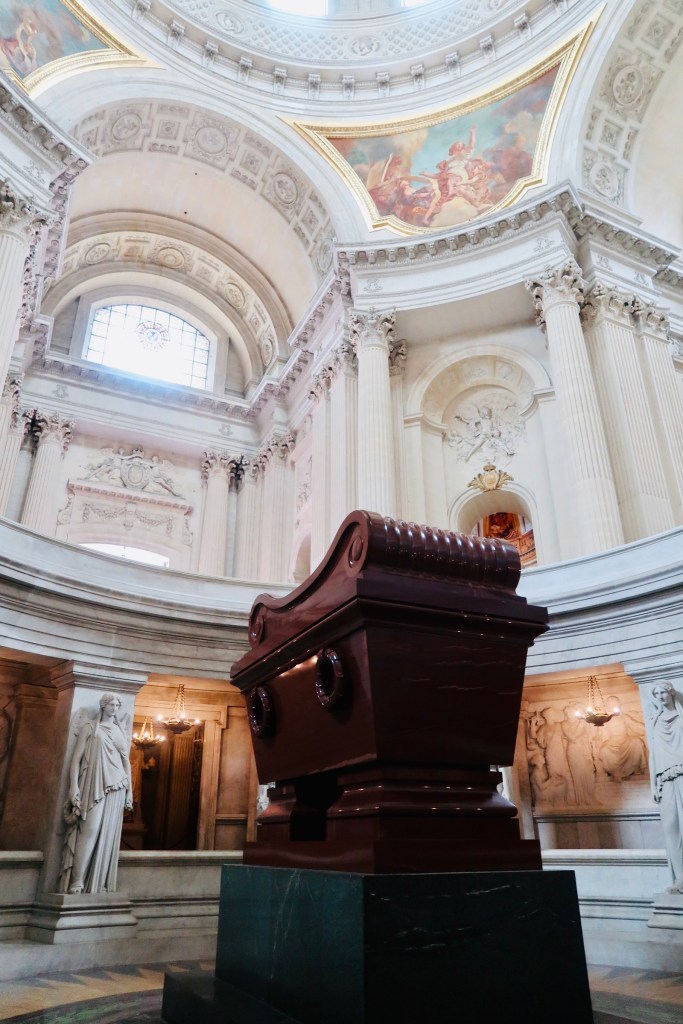
We started our day off at Hotel national des Invalides, or The National Residence of the Invalids. This building has several different facets, but it’s original use was as a military hospital and retirement home for war veterans. It also holds a large church with the tallest dome in Paris and the tombs of some very notable war heroes (we will break this down in a bit, but <cough, cough> Napoleon <cough, cough>).

The original project was commissioned by Louis XIV in the 17th century and it has some key history beyond just serving as a military hospital. During the French Revolution it was stormed by rioters and used against the Bastille, it also served as an important spot in the degradation, and then rehabilitation, of Captain Alfred Dreyfus (which I am just now learning about?!), and holds the sarcophagus of Napoleon Bonaparte. Of course, Napoleon is not the only Frenchmen interred in the dome, there is an exhaustive list of tombs, vaults, and hearts that are in Les Invalides. 

These days the property not only serves as a facility for veterans (it still holds a medical and rehabilitation center), but it also serves as a museum center with museums detailing war history as well as an archive center for the 20th century archives. The complex is massive, and we spent a few hours walking through all of the sections. The amount of compiled information just in the museum portion is a lot and spans not just French history, but quite a few other countries as well. They’ve got a lot of little models of battlefields and battles that our boys enjoyed. The church and dome are also quite grand and incredible in their own ways and of course, the tomb of Napoleon is front and center. 

From the Hotel des Invalides we walked over to the Eiffel Tower. We chose to simply walk as the distance is not that far and it’s an easy route (you just keep the tower in your sights…). It was actually a really nice walk that allowed us to see a bit more of the Paris architecture (that is different from the countryside in my opinion). 
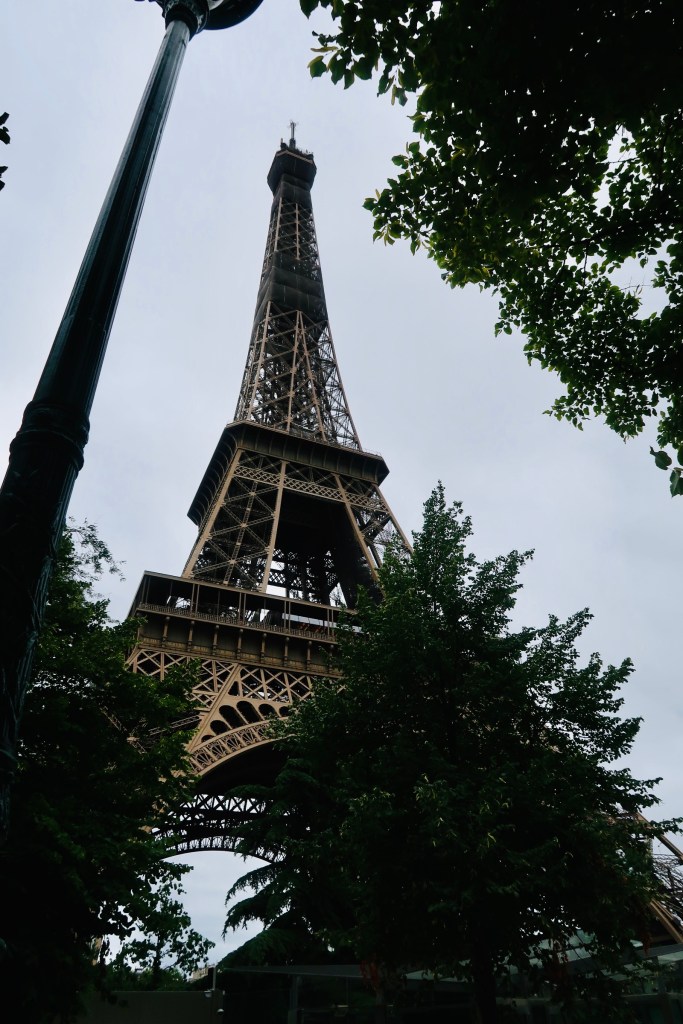
So, the Eiffel Tower. Constructed in the late 19th century for the 1889 World’s Fair, it “towers” over Paris at 324 meters tall. I feel like it should be noted that this particular World’s Fair was held to celebrate the centennial of the French Revolution. As with the Louvre Pyramid, there were objectors on several fronts (although the Eiffel Tower massively predates the Louvre Pyramid- HERE). The two popular counter arguments to the Tower were those who objected on aesthetic grounds and those that did not believe that such a tower could be constructed. Gustave Eiffel fought back, had powerful people behind him, and so the tower went ahead. The tower has a storied history, but survived both World Wars (narrowly in the second as Hitler did order it to be destroyed) and still stands today. There are three platforms with the third being at the very top. We were not able to go up to the third due to Coronavirus, and ended up choosing not to participate in going in the Eiffel Tower at all. Instead, we walked “under” (really beside it), across the Pont D’lena bridge and over to the Trocardie Gardens for a view of the full tower. We didn’t linger to long, partly because you can see the Eiffel Tower from any viewpoint on this side of the city of Paris, choosing instead to head over to our next stop of the day. 

From the Eiffel Tower we walked along towards the Arc de Triomphe. The route that we ended up walking allowed us to see a bit more of the “white collar” business side of Paris (I say white collar very lightly) as well as a part of their embassy section. It wasn’t a bad walk and before long we were right at the Arc. 

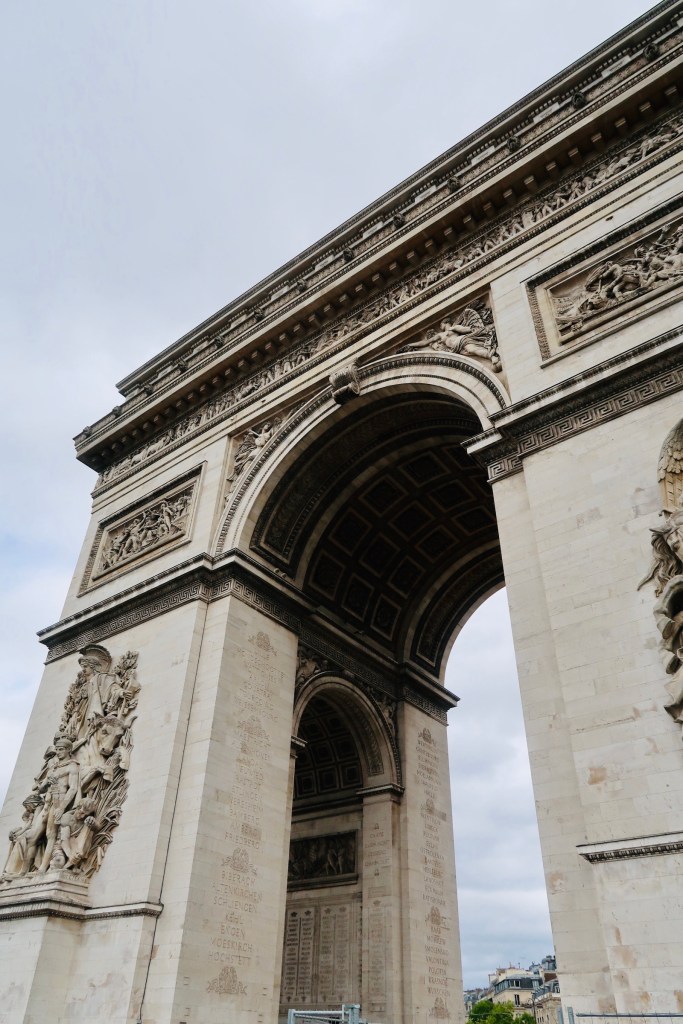
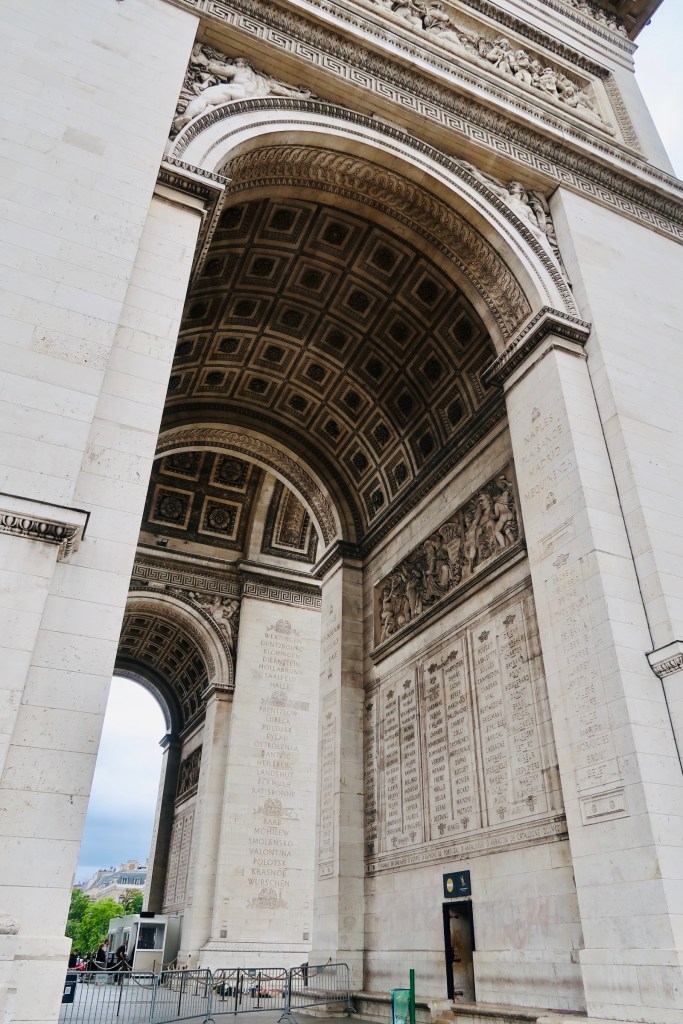
Commissioned by Napoleon towards the beginning of the 19th century, the Arc de Triomphe is a tribute to the armies of the Revolution and the French Empire. Napoleon really liked Roman antiquity (and you see this theme in quite a few of the buildings he commissioned) so there are a lot of similarities between this arc and those in the Roman Forum. It was placed in a central point of the city, with the Emperors residence at one end of the walkway (now the Avenue des Champs-Elysees) and became a central point for numerous roads leaving from the arc (did that make any sense?). Construction on the Arc was quite start and stop, however once completed it became a rallying spot for the French Army and is home to several large military parades and demonstrations. In 1920 the Tomb of the Unknown Soldier was interred beneath the Arc and the first eternal flame in Western/Eastern Europe since the Vestal Virgins was lit. There are a lot of architectural details and war history carved into the Arc and you are able to go to the top of the Arc and see the expanse of Paris. We declined to do so, but wandered around the base reading the names and paying our respects to their tomb. 
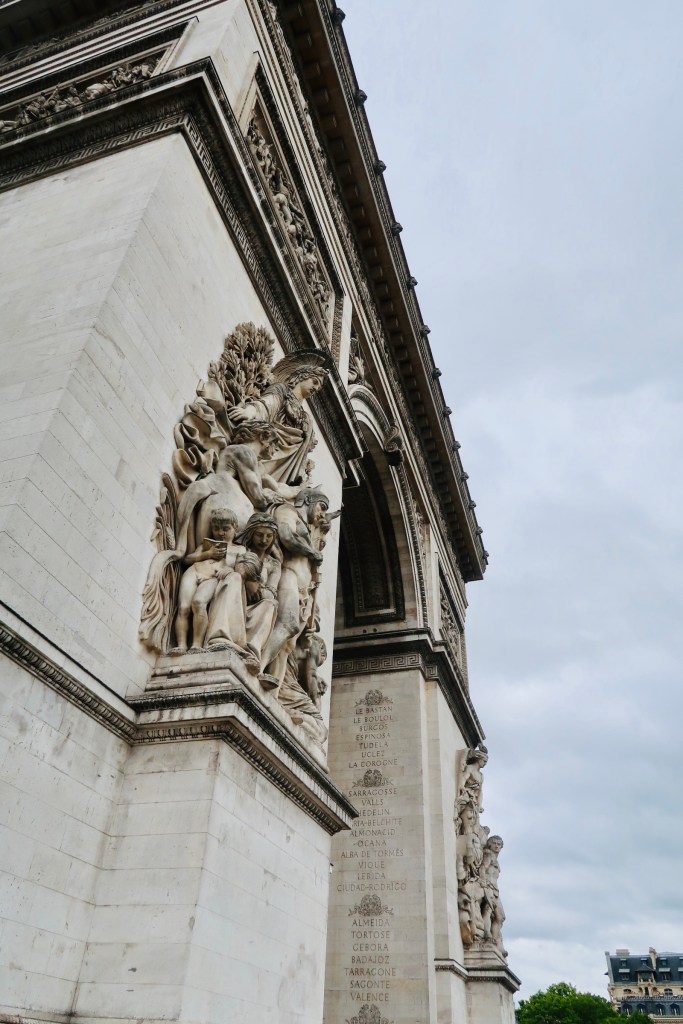
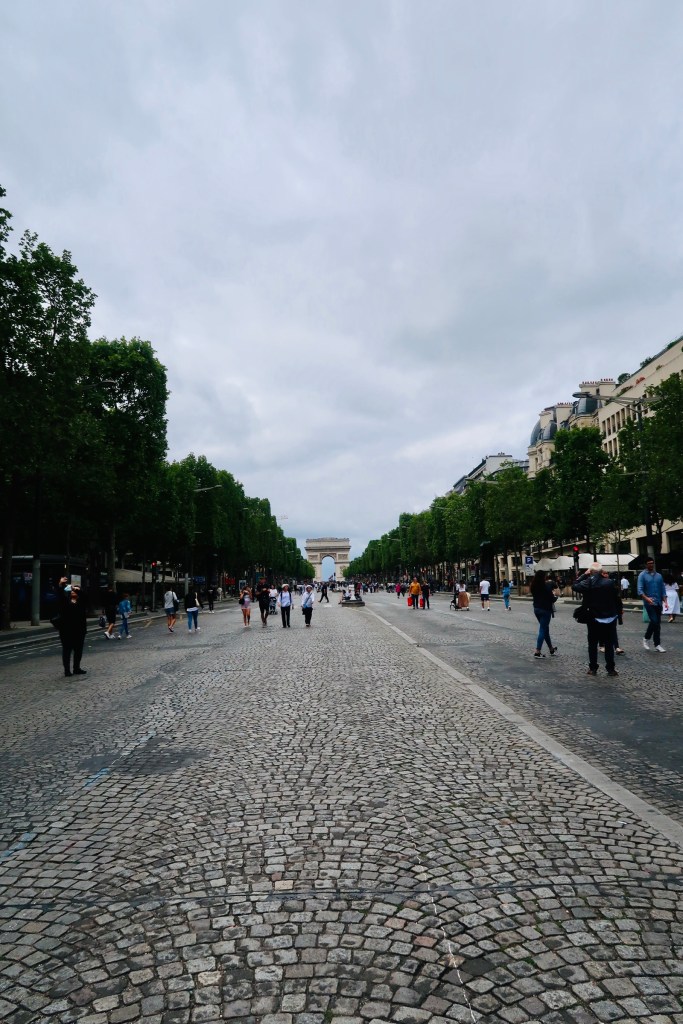
From there we wandered down the Avenue des Champs-Elysees which was open to foot traffic (not vehicular). The Champs-Elysees is an avenue that runs from the public square of the Place de la Concorde to the Arc de Triomphe. It is home to luxury stores and boutiques as well as military parades and other major events. Originally called the Grand Promenade it was originally an extension of the Tuileries Garden and the Tuileries Palace. It quickly was extended (several times) and then became home to townhouses of the nobility before finally, much much later in history (not entirely- right around the 1860’s) settling to the shopping center it has become. The avenue is not only famous for its shopping, but also for its military parades. The Germans had two victory parades, but the most joyous were of the parades of the French and American forces after liberating the city. While we didn’t do any magical, high end shopping, we did stop for dinner on the avenue and treated ourselves to a nice little feast before continuing on. 

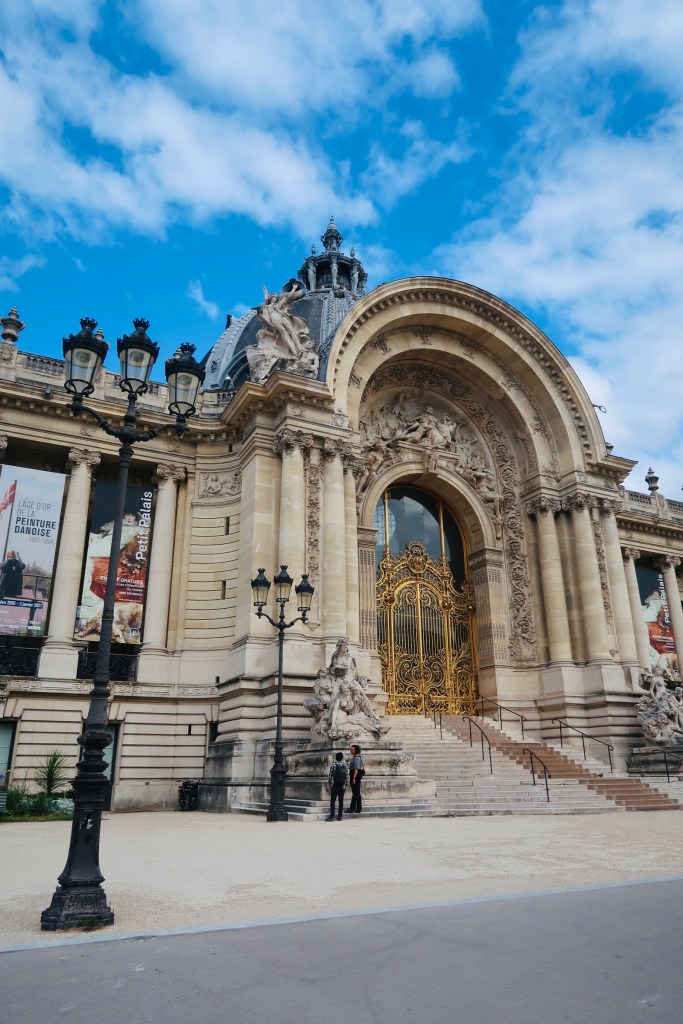
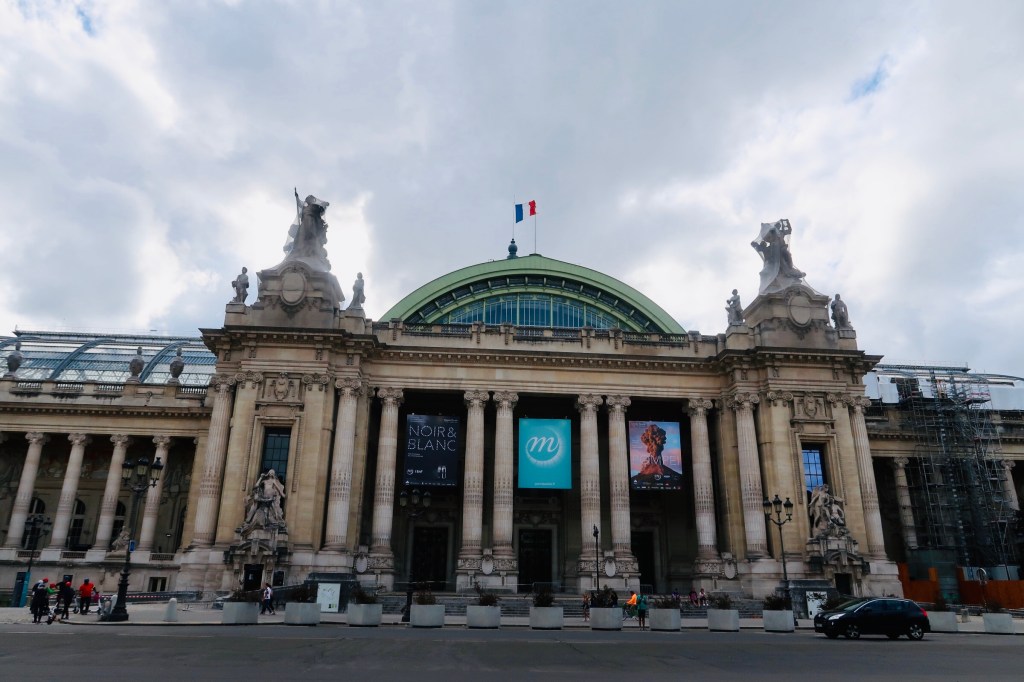
We wandered over towards the Grand and Petite Palais on Winston Churchill Avenue. The Grand Palais is an exhibition hall and museum dating back to the late 19th century. It is dedicated and intended for the arts and showcased objects innovation and modern technology (think planes, automobiles, household goods). During World War 1 it was used as a war hospital and during World War 2 it was used (by the Germans) as a truck depot and propaganda center. The Petit Palais is directly across the avenue and is an art museum and dates back to the 1900 World’s Fair. 
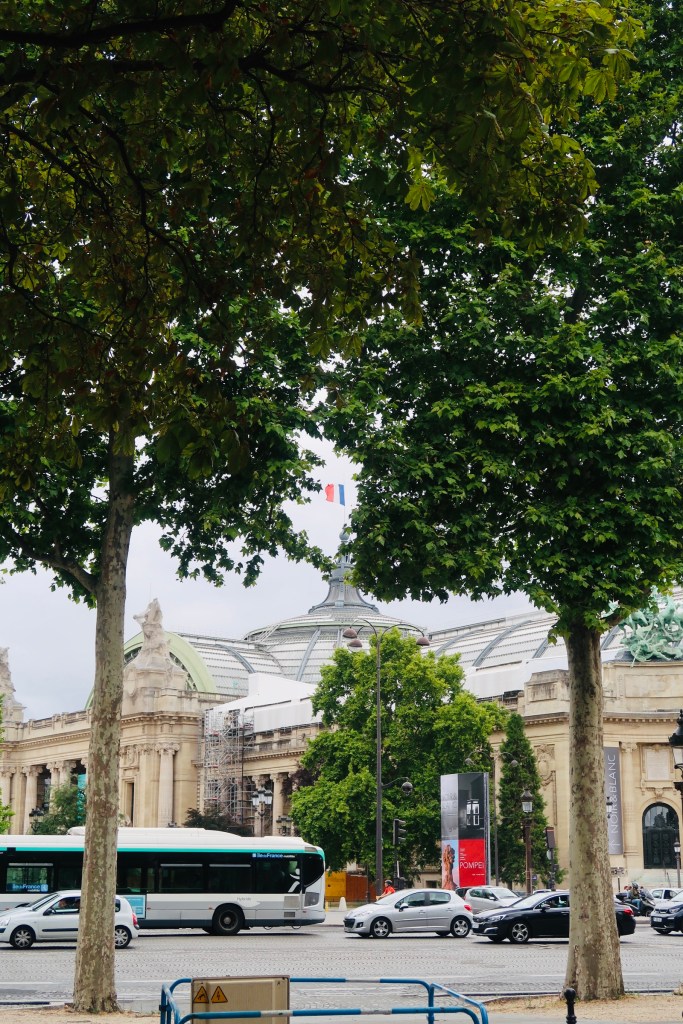
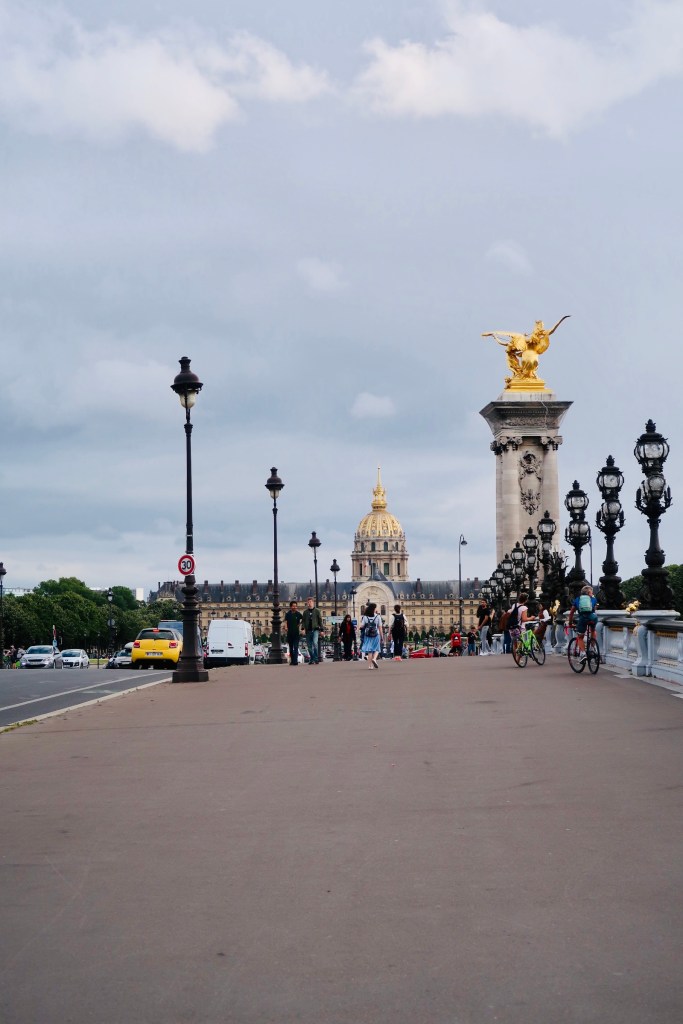
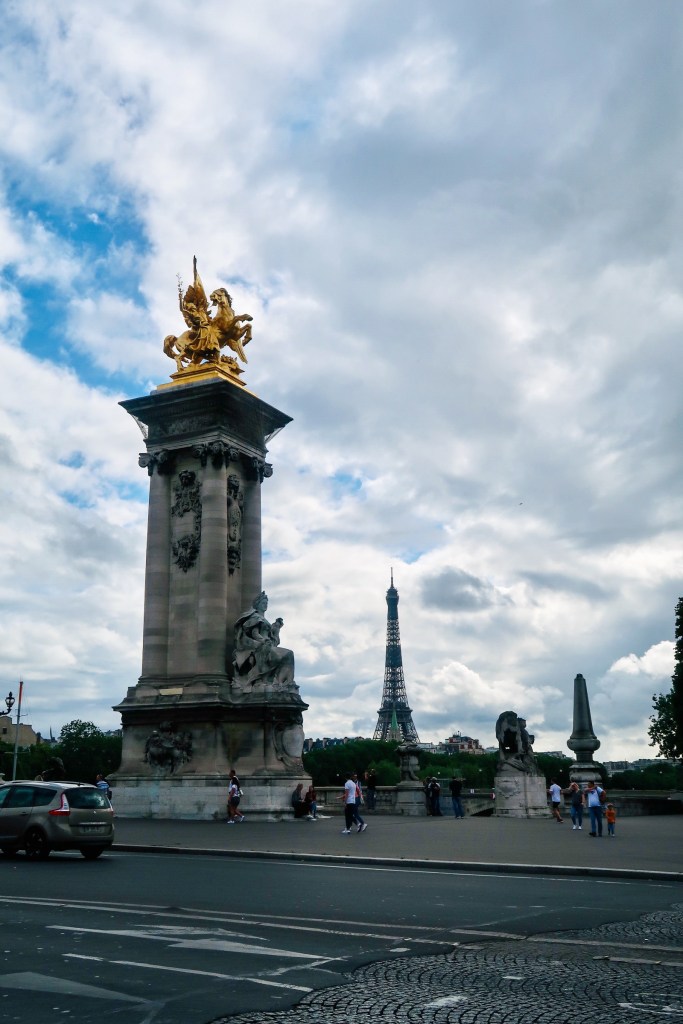
From there we walked across Pont Alexander III Bridge, which was built to connect the Champs-Elysees with the Hotel des Invalides and Eiffel Tower. Named after the Tsar Alexander III it was commissioned and built in the late 19th century. It is the most ornate and extravagant bridge in the city and boasts incredible views- from one side the Grand Palais, the other the Hotel des Invalides and out towards the water you see the Eiffel Tower. 
And that concludes our time in Paris!  
A Cuppa Cosy Summer Holiday 2020 – Luxembourg Tips & Tricks

On Monday I shared the first stop of our Summer Holiday 2020, which was Luxembourg City. You can read about everything we did on our ~36 hours in the city HERE and today I am going to continue on with the theme of Luxembourg and talk about my Tips and Recommendations for Luxembourg City. 

This particular post is going to be a bit different from my typical “Tips & Recommendations” posts as I don’t really have a lot of either category. To be completely, bluntly, honest…there isn’t A LOT to Luxembourg City. I don’t think you need more than a day to see everything you’d like (we definitely did what we wanted in a day and could have stopped at a couple more places – aka museums and such- if we wanted to) and it is relatively “central” in the fact that you can just walk the entire city and see everything there is to see. 

Honestly, that is what I would recommend that you do- walk the city. As I mentioned, we did the Wenzel and City Promenade Walking Tour. If you stop of the tourism office, you can get a guide pamphlet and map that takes you along the bigger sites in the city and the important monuments. You are also able to kind of tailor this to what you want to see. For instance, we wanted to see the main squares and monuments, but mostly had our sights set on seeing the Casemates and Old Fortifications, so we spent most of our day in that area, with shorter stops at the beginning. 

If you do get the pamphlet from the tourist office, then I would start with the tour they outline, but once you get to the Casemates, I would head down towards the Grund Gate and across the road to walk through the walls (in the direction of the Neimenster area. This gives you the chance to see quite a bit more of the older fortifications as well as a really nice walk along the river. The signs will directly you back towards the bridge and then you can continue the City Promenade tour if you would like. At the simplest, these are two “separate” tours, but between the two of them you can see the most of Luxembourg City. Just note, that they are separate so to see everything, you’ll need to combine them. 

Public Transport

I think I am going to make public transport its own category in these posts as it seems to be something I talk about at every location we travel to. So, Luxembourg City public transport is free within the country. Let me repeat, FREE within the country. You can just hop on a bus and go from (for example) the airport to the center of town, free of charge. This is a recent change, but one I am totally on board with. Trams and such within the city are free as well. The only time that you have to pay for public transportation is if you are crossing the border or outside the city (I believe- check the tourism website HERE for all of the details). 

I think that pretty much covers my opinions and tips as far as Luxembourg is concerned. Since visiting, I’ve come to realize that a lot of Luxembourg is inspired by the French (and a bit of Spanish as well). Most of the city seems to be made up of a cultural meld of visitors and immigrants from the surrounding country. While we enjoyed our time there, we don’t plan on going back, nor would we recommend a trip solely to see the city (just as a stop if you are maybe already traveling through). I didn’t hate it and actually found it pretty cool in spots, but I wasn’t overly in love either. 

If you want to know the Covid-19 specifics (do you?) I found Luxembourg City to be the strictest of all the places that we’ve visited, and they’ve actually recently gone “red” again with visitors and numbers (and we are no longer allowed to travel there due to personal work restrictions). Masks were required in stores, restaurants (unless you were seated at your table), physical distancing was enforced, and their law enforcement was on alert reminding those who weren’t abiding by the rules. 

A Cuppa Cosy Summer Holiday 2020 – Luxembourg City

I’ll start our Summer Holiday posts by saying, our ultimate destination we had in mind with this trip was the Normandy Region of France. My husband is a massive War History person, with an emphasis on World War 2. He had his heart set on visiting the beaches, the cemetery, and a couple other spots and I was interested in seeing them to. As opposed to last summer, this year we decided to stop for multiple nights at each location (a minimum of 2 nights a place). Spreading out our trip a bit more made it much easier for us pace wise (one of my biggest complaints from last year was by the time that we arrived at our last destination, we were so worn out from the pace of the first chunk that while we enjoyed it, it was a different enjoyment). 

So, in keeping this in mind, our first stop on our Summer Holiday was Luxembourg City. Luxembourg is a smaller country bordering France, Germany, and Belgium. It was a good first stop to have as there wasn’t a lot, a lot to do, but it was somewhere that we wanted to see. We visited the capital, Luxembourg City, which also happens to be one of the European Union Capitals. Luxembourg itself has quite a long, hard fought history that has formed it into the independent country it is today. The city of Luxembourg is actually listed as an UNESCO World Heritage site and on the whole, we spent a lovely time there. 

We arrived in the afternoon on Wednesday and checked in to our hotel. We stayed at an Ibis outside of the center of town (actually at the airport), but public transportation was very easy and there was a bus stop right at the hotel. The hotel itself was nice and clean and had plenty of modern amenities. The boys loved staying in the bunk beds and it’s a chain that I wouldn’t mind staying in again (and we did later in the trip).

After getting settled we headed out to start wandering around. We didn’t have any major plans for that first night as we wanted to do the city offered “Wenzel Circular Tour” which would be a full day long event. So, instead of doing much planning, we hopped on a bus and just headed for an overlook. 

Our first “view” of Luxembourg City was Le Chemin de la Corniche, one of the “most beautiful” balconies in Europe (claimed by a Luxembourg writer- so maybe a little bias? Ha-ha).

Between the overlook and the walk leading up to it, you can get a fairly good look at Luxembourg City and its history (you can see the Grund and the Casemates). This spot was built by both the French and the Spanish in the 17th century and, once the fortress was dismantled, was levelled off. I will say- it was a beautiful look out point and it was really nice to see the river cut between the houses and roads.  

We headed away from the balcony as a good amount of the spots over there we were planning on seeing the next day, and headed into the old town area of the city. We made a quick stop into Saint Michael Church.

This is the oldest church in Luxembourg and its location has been mentioned back to the 10th century. This particular church area has, similar to the city itself, had quite a turbulent history with the current standing church dating to the 17th century. You can see from the interior that the church itself is on the smaller side (in comparison to other churches and cathedrals), but still grand and incredible in its own way. You are also able to see areas that showed some of the previous structures that have been destroyed and rebuilt. From the church we wandered towards the main square and towards some dinner. We ate dinner at a restaurant called La Boucherie (Colton’s pick because they had a cow statue…) where we dined on meats and beers. 

After dinner we decided to walk over to the Adolphe Bridge.

One of the more well-known bridges in Luxembourg this is a double deck arch bridge (with the lower suspension bridge opening in 2018 for pedestrian and bike traffic). Originally built in the early (very early) 1900’s this bridge is known to the people as the New Bridge and has stood as a symbol of Luxembourg independence. The lower deck has become a large tourist attraction and we decided to take our chance and walk across (this was before I realized that it was basically just another lower road, rather than any form of “scarier” bridge). It did provide a unique view of some of the lower walkways and was a fun experience. 

Our full day in Luxembourg City was the day that we had planned to see it all. Luxembourg City Tourism offers a free, self-paced and guided walking tour called the Wenzel Circular Walk. It covers the history as well as the modern touches to give you a full picture. It also takes you through some of the nature walks. We knew that Luxembourg City wasn’t big, and we figured this was our best way to “see it all” (as tourist offices tend to be good places to start in these cases). You can start at the tourism office by picking up your guide pamphlet, which is also offered in a kid’s version with activities, and head out on your way. 

***A Quick Interjection here- if you don’t check my Tips & Tricks post coming on Wednesday (which will have A LOT more details about this walking tour and my full thoughts on how best to see the city) I would recommend stopping at the tourist office, but also making sure that you have downloaded into your phone the pamphlet from the website. The tourist office gave out a City Promenade guide, which will guide you to most of the same sites, but the signs and guide can conflict with each other, so having both options is better. The two pamphlets have different stopping points (mostly because I think they are actually different) and they cover different spots.  We ended up following signs at some of the points and putting the pamphlet aside- especially around the casemates area.***

I’m not going to go through every single stop on the tour, but will give a general overview and highlights of some of the big ones. The tour starts in William Square (which is kind of tucked almost “above”/”parallel” the new square that holds more restaurants and other spots) and covers the town hall, statues, and the Grand Ducal Palace. From there we walked through to the Cercle Cite and the other squares, and then over to the Bibliotheque Nationale (The National Library- we found two libraries by happenstance in Luxembourg City) and the Cathedral to the Blessed Virgin. 

Also known as the Cathedral Notre-Dame de Luxembourg this is the largest church (and only Cathedral in the country) in Luxembourg. Dating back to the early 17th century, this was originally a Jesuit church that was then consecrated and elevated to a cathedral in the late 1800’s. Something interesting I learned was that this cathedral had a fire as well (thinking along the lines of Notre Dame in Paris). In the 1980’s (on Good Friday actually) there was a fire in the towers that destroyed the church bells, the west tower collapsed, and the roof was partly damaged. This cathedral was incredible with all of the artwork and stained glass, it was just a special place. 

From the cathedral we stopped at a couple more monuments, but mostly made our way over to the Bock Promontory and Casemates.

At the Promontory you are able to see several things, the original, uncovered foundation walls of the very first stronghold, the original castle bridge,  and the Bock Casemates right below the street. These are the longest casemates of the world and are able to be walked through during certain times of year (unfortunately not for us due to Covid-19). However, we were still able to walk along the wall, the defenses, see the holes in the wall where canons would go, and much more. 

***This is where we started following the signs for Wenzel Walk, as opposed to the City Promenade map that we were given at the Tourist Office. The signs are placed at various spots that allow you to get the most out of the “lower” portion of Luxembourg City.***

Heading downwards, we walked through the Grund Gate and along the wall of the Promontory towards the Wenzel Wall.

We crossed the water at the Stierchen, which was really cool, then walked down the stairs and along the water. This was probably my favorite part of our entire day as it was basically (at this point) a nature walk. It was beautiful. If you would like, you are able to walk through “Neimenster”, which is now just a social cultural center, but has quite the history as an abbey, a prison, and a military hospital. We chose to head up the stairs to see some more of the tower and lookout points from the original fortifications. 

The signs then gently nudge and directly back around towards Adolphe Bridge through a series of walled pathways (original fortifications) before dropping you at the base of the Bridge. 

And that pretty much concluded both our walking tour of Luxembourg City. It also concluded our time in Luxembourg as we ate some dinner, headed back to the hotel to get ready to leave early the next day. Which concludes this first post of our Summer Holiday.  

Travel & Covid-19: My Experience

We recently got home from a trip to several different countries outside of our own (we currently live in Germany) and I figured I would share a little insight into OUR experience. Obviously this is all very new and things are constantly changing from location to location, but this is what I experienced and saw. 

This isn’t a debatable post, nor is it a place for opinions to be spewed one way or the other, I want to make that very clear. This is a place for those who may be traveling soon or want insight on what travel even looks like currently. Also, I don’t have the current accurate case numbers for Covid-19 and I wouldn’t share them if I did. These numbers and information changes daily and I would refer you to check the WHO, EU, or CDC websites for further details. Finally, I am going to give a very brief rundown of our situation. My husband is in the military and we are stationed here in Germany (I don’t talk about this much and wont moving forward very often, but need to address it for the sake of this post). We have our own restrictions set in place by nature of his job, above the European Union and Germany restrictions which do include where/how we travel currently. 

Another – shorter & quicker – note we traveled to Luxembourg, France, Belgium, and a smaller town in Germany. I would say we experienced everything from strict enforcement to relatively relaxed enforcement in terms of recommendations and Covid-19. I feel like we experienced enough to actually speak about not only what we did, but how we felt and what the experience was like. I’ll be sharing everything from masks, to shopping, to border crossings and finishing up with my thoughts. 

I’ll start by saying that masks are recommended across the board in Europe. In some countries they are required, but not all (for example in Brussels they were mostly recommended, but not required and in Luxembourg they were required inside at all times). In countries that require masks, they are required in any indoor situation (so a museum, church, store, etc.). They also recommend and ask that you have a mask in any outdoor setting where being able to be physically distant from others is not feasible. You are not required to wear a mask outside (unless that specific establishment ask that you do) and I found that most places that had outdoor exhibits chose to minimize the amount of people allowed in at one time over requiring a mask. One final mask note in regard to dining out. In the countries we went to, you wore your mask to enter the restaurant, go to the bathroom, and leave the restaurant. The wait staff wore masks through the entirety, but you were not required to wear one once you were seated at the table. 

Public transportation was something that I was the most intrigued about as it is what we use the most when we travel. We rely on a metro or bus system, so when figuring our trip out, this was what I wanted to know the most about. AND aside from a mask requirement and limited seating options (to ensure people from separate households minimize contact) everything seemed business as usual. The limited seating falls into this: if someone is sitting on a seat, the seat next to them (or in some cases behind- basically the seat touching them) should not be occupied by someone other than a member of their own household. Obviously they would prefer that you not get on a train that is already close to capacity (so don’t pack in like sardines), but there wasn’t any sort of force enforcing that. Public Transportation seemed very…”business as usual, but with masks”.

Everywhere we went, no matter mask requirement, you could count on markers (whether signs or tape on the floor) directing the flow of traffic as well as minimizing the amount of people in an establishment at one time. There is no disruption in any way to doing things this way. In fact, I somewhat prefer it. Most tourist locations know their sights the best and know the best way for visitors to get the most out of their visits. They have engineered the markers to take you along the best routes and allow you to get the most out of your visit. Marking the direction of traffic not only allows them to safely have people on the premises, but minimizes a lot of flow problems and allows you to end up seeing exactly what you want to see without a crowd of people or backtrackers. We didn’t run into any issues with making it into locations or museums due to the smaller group sizes, nor did our wait time to anything get too astronomical (except our last day at a suspension bridge). Honestly, I found it to be a bit more enjoyable. 

Since we are on the topic (kind of) of the smaller tour groups, I will say we didn’t see an overwhelming number of tourists, until we came back to Germany. Paris seemed almost empty (and in fact a few people that have been previous to Covid have said my pictures made it look almost like a ghost town) and most of the “tourists” we did run into were “within country” folks (people who are sticking within borders). I will say, it was a bittersweet addition to our trip. I know how important tourism can be, how many are suffering and dealing with Covid (in any way from actually being sick, to dealing with job cuts, to being higher risk for it), BUT I would be lying if I said that we didn’t enjoy being able to truly enjoy the various spots without all of the crowds. It was a unique experience. 

No matter what country you were in, whenever you entered an establishment there was a hand sanitizer station set up. These varied from just regular sanitizer bottles, to fancy foot pump bottles, to wipes (in only one or two locations). It was expected that when you walked in, you sanitized your hands (and our kid’s hands) and then again when you walked out. What varied the most with this from country to country was the guidelines of what to do after you touched something. This is a guideline I’m not even sure what or how I would advise, but we saw one location where they sanitized items right after you touched them, others would take them to the back (I’m guessing to wait out some time period), and some would do nothing at all (now some of this made sense depending on what it is that the store was selling), but otherwise shopping wasn’t very much interrupted. Most places had some form of clear material around their cash registers and I found stock wise things were good. 

A note on dining out in restaurants. We found that we didn’t need a reservation 90% of the time. Of course, you can make one to guarantee you have a table (as you would regularly), but it wasn’t required. We were able to walk into most restaurants and find a table to eat. Tables were placed at generous spacing and those in the middle would occasionally have those same clear barriers on either side of the table. As I already stated, masks were required until you were seated at your table. In the strictest location, restaurants had paper recyclable menus, but most had standard menus that would get sanitized after every use. Wait staff wear masks through their entire shift, but that is really the only “abnormality” (you could say). 

As far as crossing borders, we didn’t run into any issues. The European Union (and our little area) has open borders and at this time there aren’t any border checks for the countries we visited. Of course, you can always get randomly stopped and screened, but we didn’t actually experience that. We drove so I can’t speak to what planes or trains look like unfortunately. 

My Thoughts/Feelings

Honestly, I was a bit nervous going into this trip. I didn’t know what to expect, I didn’t know what the right steps to do to prepare, how paranoid I should get, etc. Now that we’ve gone and done it I have no fears. Well that may not be entirely true, I am definitely still worried about Covid and everything involved with that, HOWEVER I didn’t feel…unsafe in that sense whatsoever. Basically, a lot of what you do (just in general with travel right now) is going to be what you’re comfortable with. We wore masks inside even if they weren’t required, because that is what felt right for us (for numerous reasons). We tried to stay physically distant as much as we were able to and only going into places that we really wanted to. I think once we got into the swing of things it became second nature quite quickly. It really wasn’t all that bad. 

So, that’s that! Do you have any questions that I didn’t cover or that you want a bit more information on? Let me know!

Round the Kettle Ep. 26: Home Again

Hello! Long-ish time no blog. It’s been a nice little breathing point; I’ve been able to focus on our traveling and some much-needed family moments. It’s funny as this blog is my hobby. It’s my outlet. It’s like my library- my little corner in this great big world. And it’s a lot of work. It’s something that I love to do, that I feel a responsibility with, and that also takes up a lot of my brain space. I love it, but I get worn out from time to time. It’s not just sitting down at the computer, typing up some words, and then pressing publish (although it has been and can be that at times- especially these Round the Kettle posts). I try to put thought and information into each post I publish, I try to make it cohesive, and try to correct my grammar throughout each post. A break is a good thing every once in a while, to let my brain pause and let new ideas come. 

So, what did I do with my break? We took a little summer holiday. I spoke about our decision to start traveling HERE and originally that was limited to within Germany (where we live). However, we got a last minute “OK” to travel to some other countries (this is a longer story and maybe I’ll talk about it sometime…) and we jumped at the opportunity. We took a little under 2 weeks and explored areas of Luxembourg, France, and Belgium. 

I’ll be honest…it was glorious. Yes, we were overly precautious with masks, hand sanitizer, and washing our hands, but we also got to see places without the bulk of tourists. While there are positives and negatives to tourism and seeing tourist hotspots with all of the tourists, I won’t deny that walking through parts of Paris without a million other people was incredible. I will have blog posts and tip posts for every location, but it was a really great time overall. I didn’t know how much I truly missed (and needed) travel until we started traveling again. It was like something clicked back into place in my soul and I realized just how important that is. 

We do not have any immediate plans to travel again (beyond our German borders), as work schedules will start to pick back up again, school will start at some point in some way, and we are still carefully evaluating locations based on numbers (and approval). We have hopes though that late fall will have us planning another trip as well as sometime in the holiday season. 

Finally, now that I am starting to work through blog posts and content I wanted to give a little insight as to what you can expect coming up on the blog…

To start off I am going to be doing a little post about what the actual travel and Covid restrictions were like. What we noticed, what we practiced, and just what that was like. If you have any questions, please let me know and I’ll try to address them in that post. I will say- I cannot advise plane travel as we drove. 

Then, much like every other holiday, I will have blog posts on each city we went to, along with the tips/tricks posts, and a couple of castle posts (as we visited a couple of those). I’ve got a lot of thoughts and opinions to share on this particular trip so I’m looking forward to compiling those together. 

I will also have my standard reading wrap up post coming up at the end of this month/beginning of the next, a chatty post about the upcoming school year, AND hopefully a big announcement towards the end of next month (August/September time frame). 

All of this kicks off on Wednesday with my experience traveling in this new unprecedented time. 

How have you been? Have you started to see things open up near you?

Life in Europe – 1 Year In

Where to even begin with this post?! I mean, seriously…where do I even start? It’s been a year. We’ve been here a year. Well technically it’ll be a year on Friday, but still…a whole year. It’s hard to wrap my mind around.

A year ago, we stepped on a flight leaving out of Baltimore (after a flight from KY to MD) and into, at the time, the unknown. 8 hours later (or something like that) we stepped off the plane on a whole new continent that we hadn’t been to before, in a new country, ready for a new adventure. And an adventure it has been.

Untitled Design 33

Our first 5 months here consisted of living in a hotel, traveling (A LOT), and trying to learn our way around the customs and traditions of Germany. Things like stores being closed on Sundays, paying for restrooms, paying for water at restaurants, the dinners out that last hours, and driving as fast as we “like” on the autobahn (which isn’t as true or fun as you would think) were all new to us. After 5 ½ months in a hotel apartment, we got a house. A spacious 3 bedroom + to make all our own (well except for no painting, no major construction, etc.). We spent the rest of the year “settling in”. A year later and I feel like we finally feel settled, feel a part of our little community, have good friends that we can count on, and have things figured out.

And traveling. We’ve traveled more in the past year than I think we have in the span of our lives. We’ve learned more history, more culture, more information in the past year than ever before. We’ve seen the not so good parts of history up close, seen the gorgeous scenery of several countries, and have had one incredible trip after another. This first year taught us, more than anything, how to adapt, how to go with the flow, how to work with what we have. And, as much as it may seem like an “on the go” lifestyle, we’ve really slowed down in a way. We’ve stopped and smelled the roses for lack of a better phrase. We’ve taken so much more time as a family, exposing not only ourselves, but our children to different ways of living. One of the most incredible things was my older son telling us, at 4 years old, about The Colosseum and what used to happen. At 4 years old.

We’ve traveled to 11 countries, visited 14 castles, we’ve seen more churches than I can even count, seen the Tulips in The Netherlands, the Tower of London, the Dachau Concentration Camps, the filming locations for The Sound of Music, The Pantheon and Ancient Rome, and so, so much more. We’ve been to Oktoberfest, a whopping 7 cities (some of which had multiple within the city) Christmas Markets, and numerous cultural festivals and events. We’ve really tried to be involved and be a part of the culture in Germany. To celebrate with them, mourn with them, understand their history, culture, and what is important to them in life.

Even with all of that, we are still just living our life. We live our everyday lives. My husband goes to work in the morning, our oldest is starting school (just preschool, but still), both boys go to playgroup, I read and write every day, and we chat with friends over coffee or dinner. We just happen to be in Germany. I think this might be when I just get mind boggled the most. When I’m making that afternoon cup of tea or curling up in the evenings with my family. When I look at my backyard and it hits me…we are in Germany. This is when I count my blessings.

It’s hard to believe that we have our “home” days. That we aren’t always out adventuring, discovering new places, seeing more and more. I think that’s kind of the strange assumption that is made when you see someone who is able to move to a foreign country for a few years- that they are always going to be traveling. But that is just not the case for us. For us we have to have that down time. Not only do work and our boys make that a necessity, but it’s also just a quirk to us. We are homebodies by nature and so we usually need to have a little bit of home time in between all the travel, and it can’t just be a couple nights. Plus, there is adventure right in our backyard. There is so much to do and see right nearby us that it makes our home time weekends still full of fun.

This first year in Germany has been an adjustment, a whirlwind, an adventure. I can’t wait to see what the next two bring us.

Recommendations and Tips for – A Trip to Rome

We spent a magical week in Rome over the Winter Holidays and today I am going to share some of the spots I think you HAVE to go to, some of the spots that may not be as incredible as you think, and some tips for navigating your time in Rome. All of these kind of wrap together, so this Recommendations and Tips post might weave in and out between tips and recommendations. If you are interested in finding out exactly what we did you can find the following posts on that subject: The First Few Days, Vatican City, Ancient Rome, The Final Days.

Untitled Design 32

Recommendations:

My first recommendation is to take at least 5 days to visit Rome. It IS doable in a 4-day weekend, but you will get no rest and feel like you are just shuffling from place to place and not getting a chance to soak everything in. I feel like 5 days is the perfect amount of time to hit each spot without being rushed. I would say you don’t need any more than 7 days (if you really want to go longer) as at that point you’ve started to exhaust some of the area. Ultimately, it’ll be more focused on what you want to do and see than anything else.

In terms of the sights you have to see, you can “knock out” most of the tourist spots in one day. Starting at the Spanish Steps, then to Trevi Fountain, Piazza Navona, and The Pantheon (or you can do that backwards if you would like to see sunset on the Spanish Steps- which I would recommend). I would save Vatican City and Castel Sant’Angelo for a day together (as they are right next to each other). You’ll spend over half a day at The Vatican, so make sure you plan accordingly. I would also devote the Roman Forum, Colosseum, and Alter of the Fatherland to its own day (I would end the day at the monument as watching the sunset on the Forum is just incredible).

Honestly, I can’t recommend walking around Rome enough (fun fact- I said the same thing about London). There is just so much to see and the history of the city is so rich, that you can just turn a corner and there are the columns of an Ancient Rome building or see the culture up close and personal with people chatting about life in Rome. It’s just incredible. Everyone is incredibly hospitable as well and are happy to help in stores, restaurants, hotels.

In terms of eating- there is very little that you can do wrong in Rome. Thing is, a lot of the blogs that I read before going there said that the best restaurants are the ones off the beaten path, that don’t have the waiters waiting outside to lure you in, and I don’t know if I agree with that necessarily. Rome is a tourist spot and so, yes the restaurants are going to do whatever they can to get folks seated in their restaurant. I can tell you this, hole in the wall or on the tourist pathway, we did not have one bad meal. For specific recommendations: we loved The Loft for breakfast/brunch and Il Miraggio for lunch (and dinner), as well as Don Chisciotte. Those are the three that really stood out, but you can look back through my posts to see where else we ate.

Tips:

As always, I highly recommend using public transportation. Driving in Rome is not dissimilar to driving in New York City. The underground metro system is great and easy to navigate and, while the bus system isn’t the greatest, it will get you from place A to place B easier than if you tried to drive it yourself. You can buy a 7-day pass for the transport system and it is reasonably priced and well worth it.

Something you already probably know is that Rome is a tourist destination. There is no doubt that it is packed with people and the tourist spots (like Trevi Fountain) are going to be incredibly crowded. Be aware of yourself, your belongings, and your children (as you would any other time of traveling). But also, if you are wanting to get “the picture”, don’t be afraid to go to a different spot. You don’t need to queue in line with a bunch of other people, walk to another corner or spot and you’ll not only get a unique shot, but it’ll also be much easier to see things a little differently. You don’t always have to fight the crowds to see the scene.

I think that that is all I’ve got for tips and recommendations. Honestly, there is very little that you can really go wrong with in Rome! I LOVED everything we did and saw while there. Everything is just such a dream and so surreal and the people were so welcoming. However, I know that this post was vague at times, so if you have more specific questions, please feel free to send me a message or email and I can go into more specifics!
A Cuppa Cosy Winter Holiday 2019 – Rome The Final Days

And so, we come to our final “what we did” post of our Winter Holiday. Our trip was jam packed from start to finish, although there was a definite difference to the second half of our trip. Vatican City was a nice way to “break up” the week we were there as that trip was about halfway through. We’d covered most of the Tourist Spots in our first few days in Rome (read that HERE), we covered Vatican City at that halfway mark (you can read that HERE), then Ancient Rome (one of my absolute FAVORITES read HERE)and now all we had left was New Year’s Day and then some.

So, a quick brief breakdown, Day 1 was spent at Castel Sant’Angelo, checking into our Bed & Breakfast, The Spanish Steps and The Trevi Fountain. Day 2 was spent at Piazza Navona, The Pantheon, and Piazza del Popolo. Day 3 was spent at Santa Maria in Aracoeli, The Alter of the Fatherland, and Quirinale Palace. Each day also consisted of a lot of just walking the streets of Rome- you see so much more by just walking around and you get such a great feel of the place. Day 4 was spent at Vatican City walking the halls of Vatican Museum, the Sistine Chapel, and St. Peter’s Basilica. Day 5 was spent going back in time to Ancient Rome and discovering what life was like in a vastly different era. So, that brings us to New Year’s Day and Day 6 of our trip…

A Cuppa Cosy Winter Holiday - The Final Days

Day 6: New Year’s Day

Oh, New Years in Europe. New Years in Europe is like nothing I’ve experienced before. I’ll be honest, I wasn’t that big of a New Years party goer, but saw the Times Square parties on TV and have heard enough to stories to have what I think is a good idea and I can tell you… the United States doesn’t have much on Europe. And most of the celebrations continue through to the next day. The streets on New Year’s Day are full of celebration, most places are closed, and the atmosphere just feels fun!
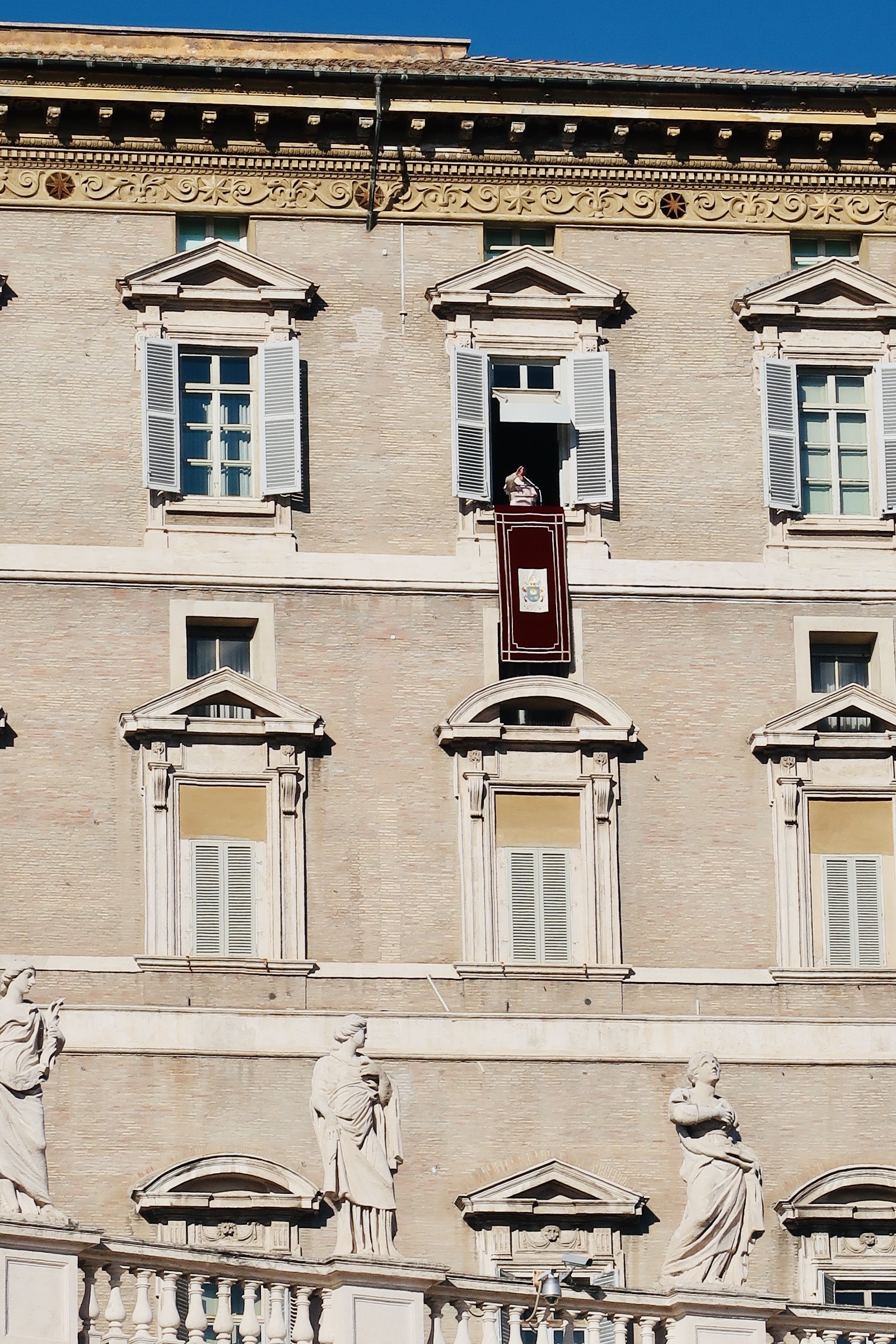
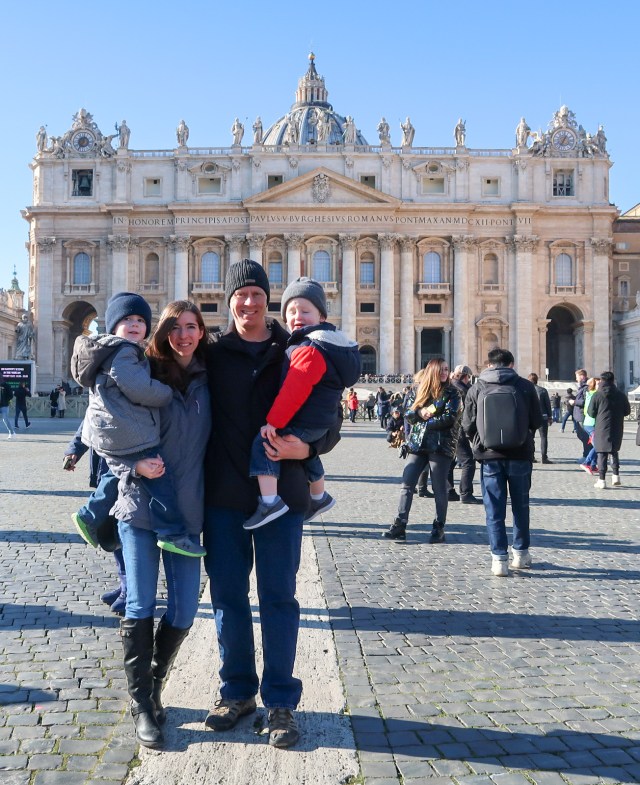
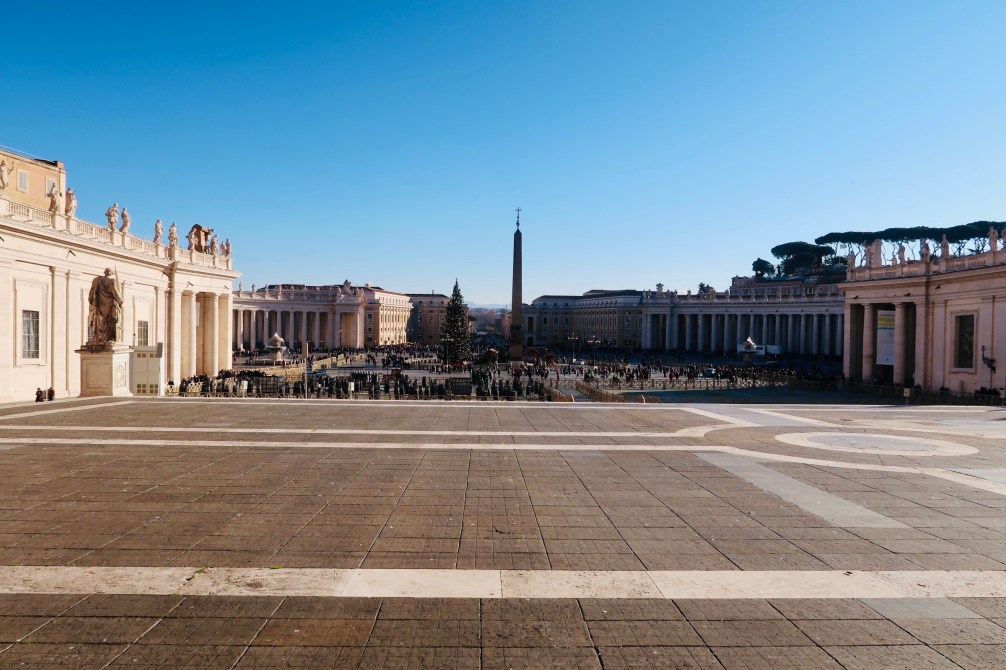
We started off the New Year with a breakfast at The Loft, where we had previously eaten. Ate some delicious food, drank some delicious coffee, and then headed out to a very exciting event. We were able to attend the Pope’s New Years Day Prayer. IMG_5054Now, the prayer is actually the Angelus and he will also give a reflection on the Gospel of the day, and on the day that we were there, some additional commentary. Here’s a secret, you can go to this most Sunday’s at noon and participate in this very special moment. I have included a link to the commentary that he gave on New Year’s Day (HERE), and you can view his “schedule” HERE to check if he will be doing the prayer while you are there (if this is something you are interested in). The entire prayer and comments lasts about 15-20 minutes and he speaks into a microphone from the window to the right of St. Peter’s Basilica. It was an incredible moment, so moving and you could feel everyone around you just being swept away by his words and his speaking. It’s something to be experienced, whether you are religious or not.
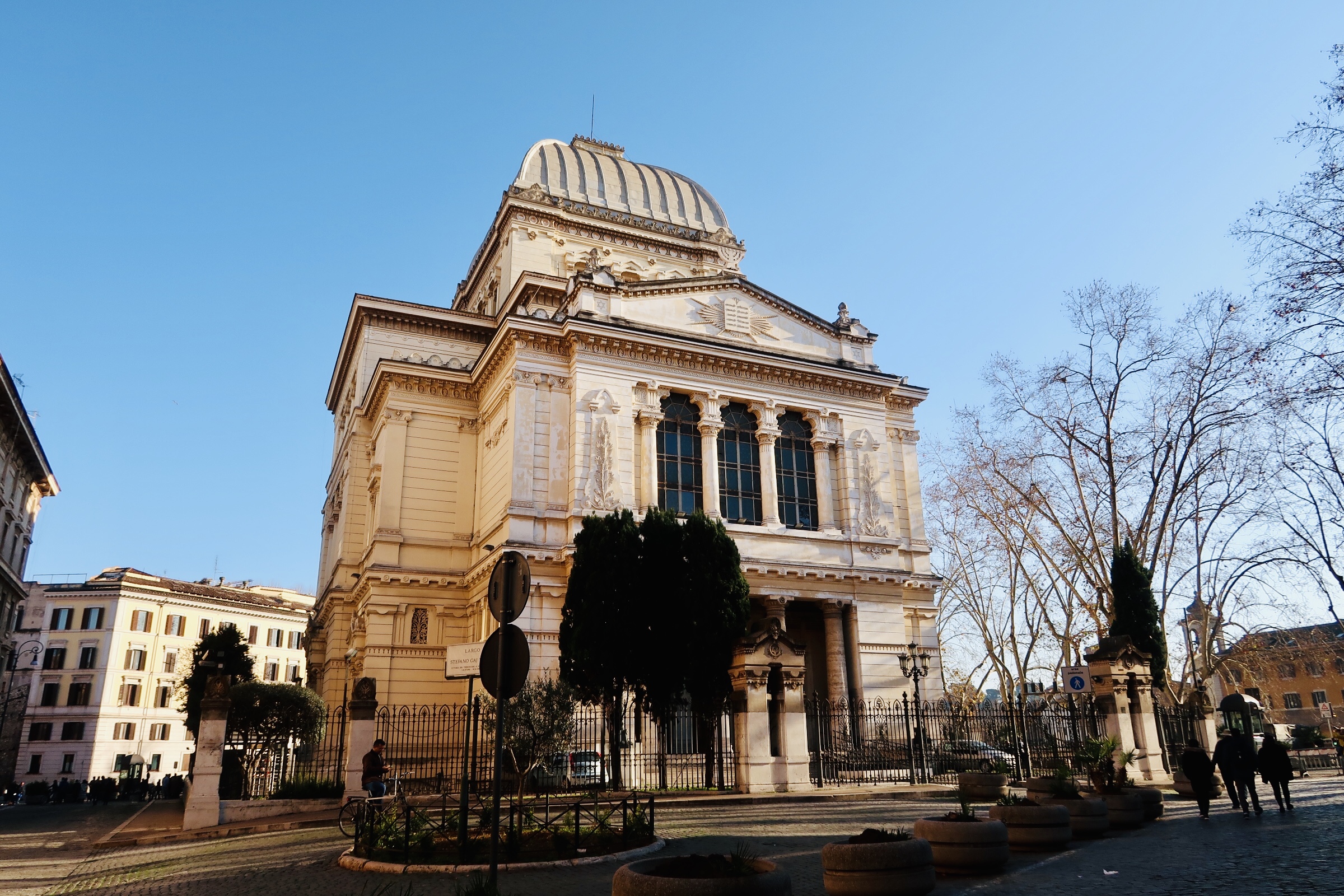
After the address we decided to further our religious experiences and head over to the Great Synagogue of Rome.

IMG_5064

This Jewish Quarter is one of the oldest, most intact in the world and the Roman Synagogue and Museum reflect both the community and the history. There has been a Jewish presence in Rome since at least the 2nd Century B.C and the museum, located in the basement of the synagogue, displays the history of the community, several artifacts through the history, and is a wealth of information about the traditions and rights of passage of the religion. For me personally, having grown up in a Jewish family, I found it really welcoming and heartwarming to see so much of what I know in such a positive, beautiful light. It was neat to learn some facts about the history of the Jews in Rome and how they were saved during World War 2. Before we get into that, first you need to know that Rome is the ONLY city in Europe to never expel it’s Jews. Did it try to convert them? Yes, there was even a Jewish Ghetto in the 16th century, but it never expelled them (and the Ghetto was abolished in the 19th century- the last in Europe to do so). When the Germans occupied Rome in 1943 the Jewish Community was told it could be saved by giving 50kg of gold. The was given to the Germans and included contributions by non-Jews as well, but the agreement never ended up being upheld. About 2000 Jews were still sent to concentration camps.

Admission to the Museum includes admission and a short tour of the Synagogue.

The Synagogue itself is incredible, dating back to the 19th century and  featuring several different styles which you can see simply by looking from the ground up to the ceiling. You can see the various cultural and design elements (including Spanish, Egyptian, & Roman) and it feels like a good representation of what the community is now. After all, it is an eclectic meld of a wide variety of people from all around Europe. It also features a square aluminum dome which causes it to stand out amongst the other dome’s and, as such, is easily identifiable.  The Synagogue has been visited by 3 different Pope’s, the first of which being a surprise visit in the 1980’s (and marked the first visit since the early history of the Catholic Church).

Finally, we spent our first night of 2020 watching the Sunset over the Roman Forum.

I’ve said it before and I’ll probably say it for a really long time, Roman Sunsets are incredible. I’ve always just really been a Sunrise fan, but this trip in particular reminded me just how beautiful a sunset can be.

Day 7:

Our final day in Rome was one that we weren’t really sure what to do with. We had almost the entire day to explore and weren’t quite sure what else to really do. Most of our “big ticket” items that we wanted to see we had seen, so we decided to just jump on the subway, pick a random spot and explore from there. Lucky for us the “stars aligned” and we wound up at Villa Borghese Gardens.

Listed as the third largest public park in the city, it’s a little haven of beauty in the city. Dating back to the early 17th century, when Cardinal Borghese decided to turn his vineyard into an extensive set of gardens. Within the gardens there is The Temple of Aesculapius, which has a beautiful lake around it and a Piazza that has been turned into a dog park, but was previously used as an equestrian track. There is also the famous Galleria Borghese (that you need to purchase tickets in advance to see) and its garden, the Villa Medici, which now houses a French Academy, a replica of the Globe Theatre, and a Zoo.

We wandered through the Gardens, which was a really nice little nature break, saw the Water Clock and Temple, stopped by the Borghese Gallery, and then headed to the Zoo. This is the Exposition Zoo, which features minimal caging and contains a little museum. I was really surprised by this zoo, the number of animals it contained, and how well cared for they were. Some of the things that I am normally concerned with in terms of zoo’s, were handled well at this particular one. The boys really enjoyed their time there, noting the Elephant, Snakes, and Crocodile as their best and worst animals (the crocodile because it was “scary”).

These couple spots seemed to be the perfect way to end our trip, which worked out well because shortly after our Zoo visit we headed to the train station and made our way back home.

IMG_4773

The entire trip still feels so incredibly surreal and one that I really loved. In my first post, I talked about how we handled this holiday a little bit differently than our Summer one and I can definitely see the benefits to both ways of traveling (the go, go, go vs. take it easy and truly vacationing). We just had such a lovely time and, yet again, a dream trip come true.

I hope that you enjoyed coming along with us! I hope I’ve done it just a little bit of justice for you.

A Cuppa Cosy Winter Holiday 2019 – Vatican City

It’s the smallest country in the world. It’s among one of the holiest spots (save for Mecca/Jerusalem/and the like) in the world. It has quite the history in both good terms and bad terms. And we spent the better part of the day walking its paths, looking at its artwork, learning its history. Vatican City.

Untitled Design 30

Where to even start? Our route was simple, we started in the Vatican Museum, then the Sistine Chapel, and finally to St. Peter’s Basilica. Before we even go much further I want to talk about how we saw Vatican City. We booked our tour through Through Eternity Tours (website HERE). They have a couple different options when it comes to Vatican Tours, but we decided to go with the Early Morning Vatican Tour with Sistine Chapel. It’s slighter more expensive (though still incredibly reasonable) and the timeline is specifically set up to get you the best time in the Sistine Chapel. I cannot recommend them enough. We had Federica as our tour guide, and she was great. She had not only great art knowledge and Vatican knowledge, but she also has a personal connection in that her husband works there, her son was baptized there (by the Pope himself!) and she shared not only the important stuff, but also little anecdotes. It may have been a very early morning, but it was very early. Honestly- if you are planning a trip and looking at different tour groups, this is the one that I would go with. They have their meeting place, their headset and ticket gathering down so that when you line up with the rest of the tour groups, you are already ready to go and one of the first groups in. (You’ll hear about them again in the next Rome post as well as we did a separate tour with them elsewhere)

IMG_4604.JPG

Our tour started off with meeting Federica and picking up our headsets at 7AM. From there we headed to the entrance spot (one entrance!) and waited in line. We were up towards the front with only a couple groups in front of us. While we were waiting, Federica made use of the time giving us a quick rundown on the history of Vatican City and specifically the artwork and artists displayed within the walls.

The history of the Vatican dates back to the 4th century when the construction of St. Peter’s Basilica began over the grave of St. Peter (issued by Emperor Constantine I). As the chapel and location grew in popularity, so did the development of the city. The walls were originally commissioned in the 9th century (after an attack) and were expanded through to the 17th century. The Pope’s have not always lived in the Vatican; however, a residence was built in the 6th century with a tunnel connecting the Vatican to Castel Sant’Angelo ( from our first days in Rome HERE) added in the 13th century. The Catholic Church briefly left Vatican City to relocate to France, but returned relatively quickly and worked to restore and rebuild most of the country.

Much of the Vatican City that you see today was due to Pope Julius II (with a bit of Sixtus IV and his commissioning bits of the Sistine Chapel). Julius II not only commissioned Michelangelo to paint the Sistine Chapel, he also commissioned a new church (St. Peter’s Basilica), and a new courtyard.

IMG_4486.jpg

Now, a quick foray into the Politics of Vatican City being its own country, separate from Italy and some information about the country itself. The Pope originally held power over its regional territories, but in 1870 a unified Italian government decided to take back the land located outside the walls of the Vatican which caused some…issues. In the 1930’s Mussolini signed an agreement that allowed Vatican City to become a separate, sovereign entity and had them receive compensation for the loss of territories. The Pope now only had power over his country, which is 109 acres and has a 2-mile border. The smallest country in existence. As many of you have probably heard, the Vatican does have its own post office, banking system, and you can potentially (depending on who is working) get a Vatican City passport stamp.

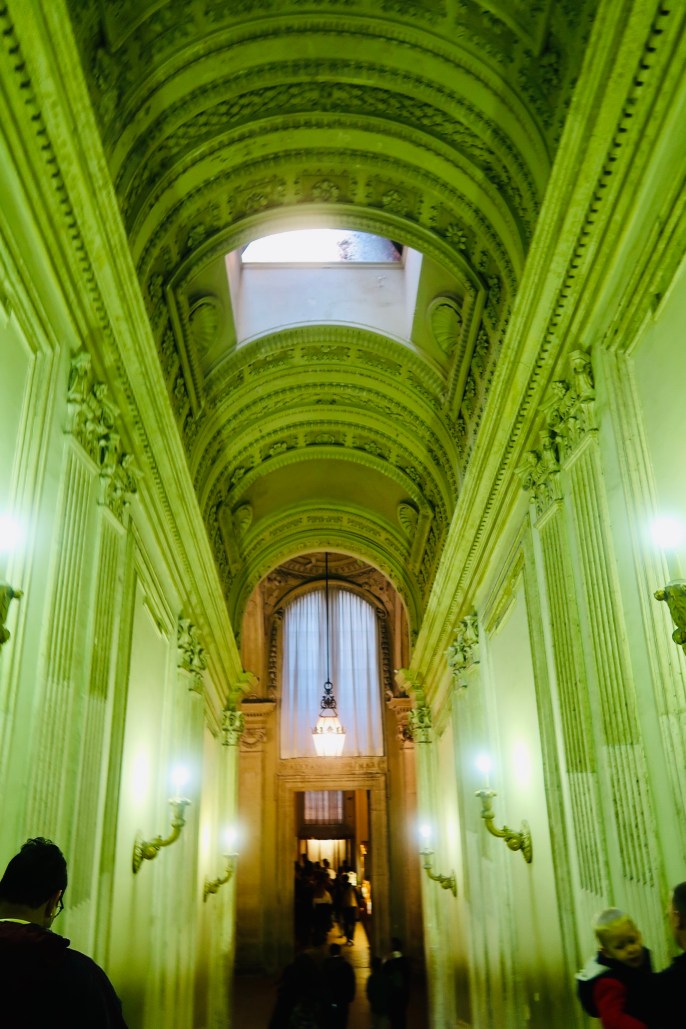
Our tour started in The Vatican Museum. The Vatican Museum actually takes you through the residence rooms of various Pope’s that contain artwork or statues that were either commissioned or used during their time as Pope. However, before you can get through to the artwork and rooms you go through the courtyard, statue, tapestry, and maps rooms. Each of these rooms featuring exactly what they are named for and each being almost more incredible than the last. Each room (or museum) has its own unique story and informational background. I’m going to link the official site of the museum and its history HERE as this blog post would get even longer than the last (and potentially more boring) if I went into elaborate detail about each spot. Instead of doing that, I’ll take a little bit to talk about each of my favorite one’s.

The map room in particular was incredible as the walls are lined with maps of Italy (and the islands) as it was seen at that time. It’s a much much different look at the world as this Gallery was opened in 1581. So much was still relatively “undiscovered” by Romans and their view of the world was much different. The walls of this room are lined with these maps and you can really see how they saw their “world” in a sense.

I also absolutely loved Raphael’s Rooms which, similar to the Sistine Chapel, were commissioned by Julius II and feature some absolutely incredible artwork. Raphael was given free reign over the design and depictions in the fresco’s and they are just an incredible sight to see.

A final cool spot (mostly because of the Pope) was Pope Alexander VI (Borgia)’s rooms. This particular pope is a very well known (some might say infamous) Pope and his rooms are exactly as you would expect. They are located in one of the most exclusive wings of the Apostolic Palace and were not inhabited by any other Pope’s. The ceiling of one of the rooms was decorated with pinecones, a symbol of fertility (yep you read that one right) and remained vacant after his death.

Something to note about the entire indoor areas of Vatican City is the floors. The floors are these absolutely incredible mosaic tiles, each individually laid and placed with care. These are the same floors that have been in existence since it’s origin. So, while you are walking through these various rooms, walking through the paths of artwork and statues, you are walking the same floors that many, many, great’s have walked before you. You are walking the same path that Michelangelo would have walked while he was working, the same path Raphael walked to get to this commissioned rooms. Just incredible to think about.

Once we finished with the museum portion (the Borgia apartment is the last to see), we headed straight into the Sistine Chapel. IMG_4474.jpgI have no pictures of the Sistine Chapel. First off, you are not allowed to take pictures in the chapel. Second, I don’t know that I would have wanted to take pictures even if you could. The Sistine Chapel is something that simply needs to be experienced, something that should just be taken in, without prior knowledge or warning. It is a spot to sit in silence and just revel at the beauty that is around you. It is truly incredible the amount of work, the paintings, the level of detail. Our tour guide, Federica, did a great job at pointing out a couple of spots for us to pay attention to when we did walk through. A couple of spots of note were the spots where Michelangelo inserted his…”opinion” on the commission. It is well known that Michelangelo had no interest in painting the fresco’s, he worked with marble, created statues- he hadn’t painted fresco’s in many many years. This “petty attitude” towards the Pope that he developed came through in some areas of the large painting (specifically where a little child is “flipping the pope off”). He also managed to apply this attitude to those who had…less than desirable opinions on the artwork (there is a Cardinal that is in a…precarious position in The Last Judgement).

We were able to spend 20 minutes in the Sistine Chapel before moving on to St. Peter’s Basilica.

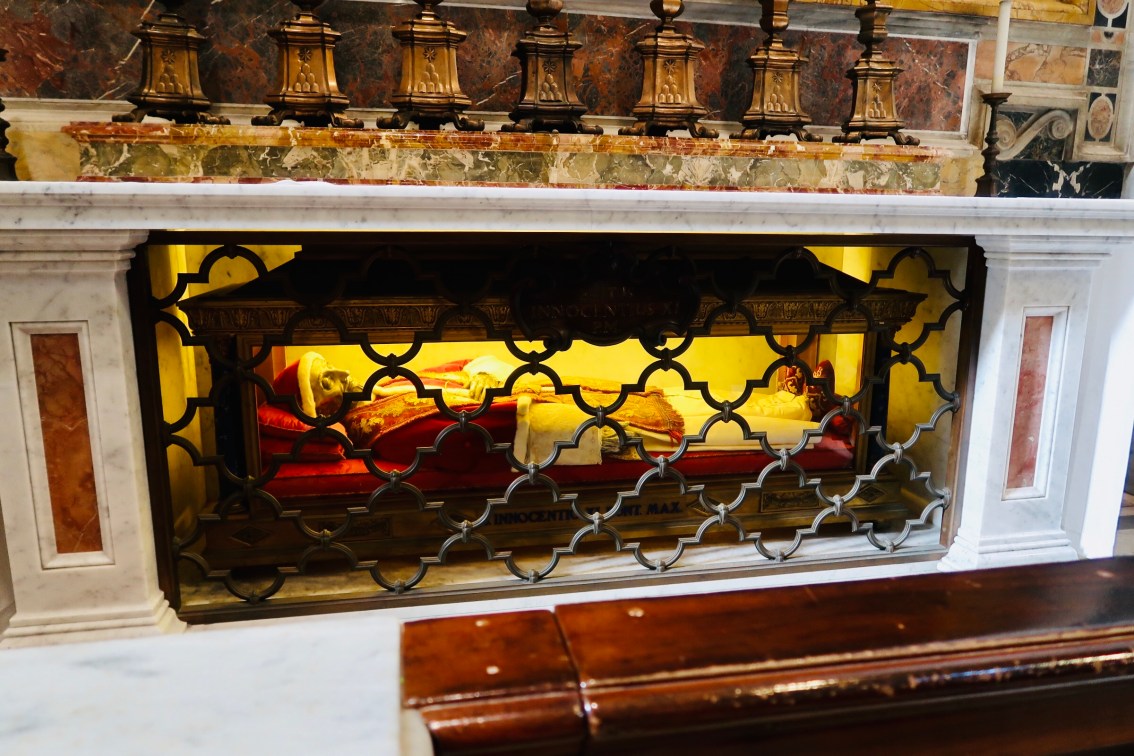
I’ve already briefly touched on St. Peter’s, but I’ll continue it here (very briefly to spare you). It took a little over 100 years to complete (after being commissioned in 1506) and the alter sits directly atop the shrine of St. Peter. It is truly a masterpiece just in terms of a church not even considering the incredible art inside the church. One of the major pieces that you can see within the church is the Pieta by Michelangelo. You are also able to see two pope’s that are “on display” within the church.

IMG_4537.jpg

When they were ready to be entombed in the Grottoes, they actually were found to be in perfectly preserved condition. Instead of being placed down in the Grottoes, they were placed at two different spots within the church for all to see. That’s not to say you can’t see the other Pope’s, simply head down the stairs to the Grottoes and you can learn about the histories of each of the Pope’s. It’s a pretty incredible site to see.

Our final stop within Vatican City was not as part of the tour, but something we decided to do ourselves, and that was to climb to the top of the dome on St. Peter’s Basilica. We’ve always been “those travelers” who like to get above a city and get a sort of “eagle eye view” of the city. This was the perfect chance to get as high as we could and take a look.

I will say this, despite my incredible fear of heights/falling from said heights, this view did not disappoint. It wasn’t my favorite of our entire trip (Alter of the Fatherland was as a side note), but this one was so special both for views and location. It is quite the climb up (500 something steps to the top), but you are able to take an elevator for about 200 of those steps. The elevator stops you at a higher point within the church, so you are able to see the interior of the dome a bit better and see down into the church from a higher viewpoint. Also, the steps aren’t really that bad as you are going up, you are able to tell each part of the dome that you are in.

IMG_4323 2.JPGThe Vatican was one of the most incredible parts of our visit and something that I am going to remember for the rest of my life. To stand in this most sacred spot for so many is something that words cannot describe and then you bring it’s long (and rich) history…it’s a lot. A lot of feelings. It is definitely a spot that you HAVE to go to if you are in Rome and a spot that I think is best done as part of a tour group (the line to get in without a pre-planned tour ticket was INSANE…heck the line to simply get into St. Peter’s Basilica without the tour was INSANE too). Through Eternity exceeded all of our expectations and we will definitely use them in the future if we are ever in need.
And that wraps up Day 4/Vatican City. I hope that you enjoyed!

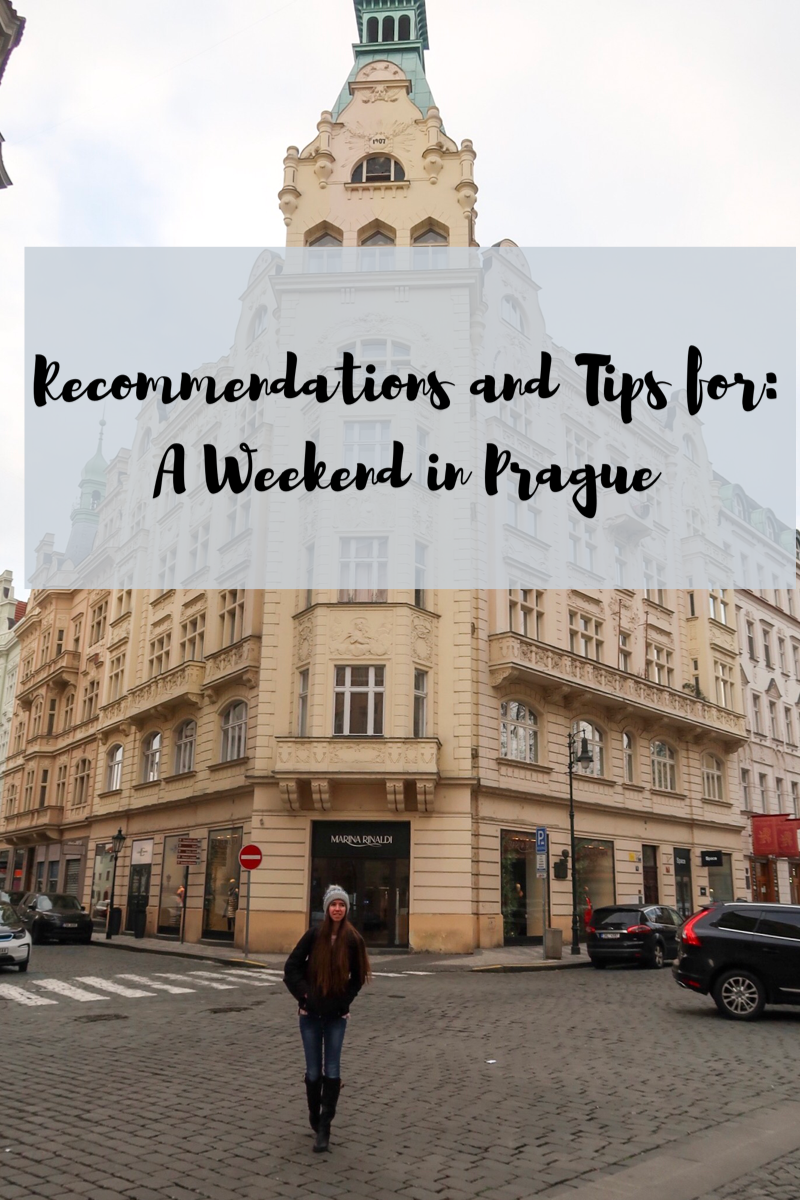
Recommendations and Tips for: A Weekend in Prague

Untitled Design 19We recently spent a couple days wandering the streets in Prague and I fully fell in love with the city. It has the perfect balance of history, culture, art, and music. It is a city that is full of life and love (seriously- my husband got all sorts of romantic during our short time there). It also happens to be a city that we fully plan on re visiting as there is so much to do and see. Today I am going to share some of the things that I think you should definitely see along with some tips about navigating the city. If you’d like a catch up on what we did you can see my post HERE. If you’d like tips specific to Christmas Markets in Prague, click HERE.

Recommendations

Prague Castle- It shouldn’t come as a surprise that I am recommending a trip to the castle. I love visiting castles as they usually are not only the focal point of a city/town, but also have such a rich, often turbulent history. Prague Castle is no different, plus it has the added bonus of being currently in use and it’s cathedral having been recently finished. I would head up towards the afternoon/evening so you can watch the sun set on the city. Then, for an added bonus, walk across Charles Bridge and see how the castle lights up across the water.

Old Town Square- I would recommend a morning wandering around Old Town Square. At the heart of Prague, this square offers churches, history, and shopping nearby (if that’s your thing). Make sure you pay attention to the ground as there are a couple special tiles on the ground in the square marking spots. There are two churches right around this square to go in as well and they both should be visited.

Charles Bridge – This is the pedestrian Bridge that connects Old Town Square to Lesser Town and Prague Castle and is a fun walking path to go between. There are quite a few monuments and statues on the bridge, as well as a couple to touch for good luck. If they are open, you are able to climb up into the towers and see a “birds eye” view. As I stated earlier, I would recommend walking the bridge in the evening so you can see the city light up and the castle across the river.

Jewish Quarter—This is a must see and is quite easy to navigate through. The important thing to know is that the entire Quarter is closed on Saturday and you will not be able to visit anything during that time. Otherwise, the synagogues typically open around 9AM for visitors and you need tickets to get into both the synagogue, the museum, and the old cemetery. You can stop at any of the souvenir or gift shops that are labeled to purchase tickets for the entire quarter. There are a couple different ticket options and I believe Audio Guides are included in most of them. I would definitely recommend stopping into as many of the synagogues as you can during your visit, as well as the Old Cemetery.

Prague Astronomical Clock – This one, quite honestly, is a miss. I wouldn’t go out of your way to watch the glockenspiel as it really isn’t worth fighting the crowds. If you happen to already be there, then go ahead and watch, but don’t make a special trip.

Honorable mention to Lesser Quarter if you have the time as well as Wenceslas Square. There are a couple of spots that I wish we would have gone and look forward to going back to see those spots (up in the all the towers and churches and some other food spots). When we go back, I’ll do another couple of posts giving more details.

Tips

Tip #1: Crowds. Prague is a very popular tourist destination and that leads to crowds. Honestly, I knew there would be crowds, but I didn’t feel like it was overwhelming (like Amsterdam was). To me, the crowds were just…the crowds. I would recommend to just keep moving with the crowd.

Tip #2: Use public transportation! I’m a huge proponent of using the local methods of transportation and Prague has a really great system. It is really easy to navigate, relatively inexpensive, with great options for ticket timelines (i.e 90 minute, 24 hr, 72 hr, etc.). I was very impressed with it while we were there.

Tip #3: Parking. Since you’ll be walking or using public transport during your time in Prague, you’ll need to find parking for your car. Parking in Prague is definitely a struggle. So many spots are reserved or not able to have parking, or are just too compact to comfortably park in. There are a couple spots to park in that you can pay for, The Palladium (which has convenience for Old Town Square), the main Train Station, OR you can use an app called Mr. Parkit which has spots that you can reserve all over town. They have both indoor and outdoor options and they all come with reviews and information. The benefit to using Mr. Parkit is that you reserve a spot, so you can come and go as needed (if you are staying to night or a couple nights this is helpful). The app itself is easy to use and once you’ve reserved a spot it’s easy to get in and out.

And that wraps up my recommendations and tips for Prague! I know I’ve said it a million times, but I loved Prague and I cannot wait to go back! Have you been to Prague? Any additional tips or spots to go?