

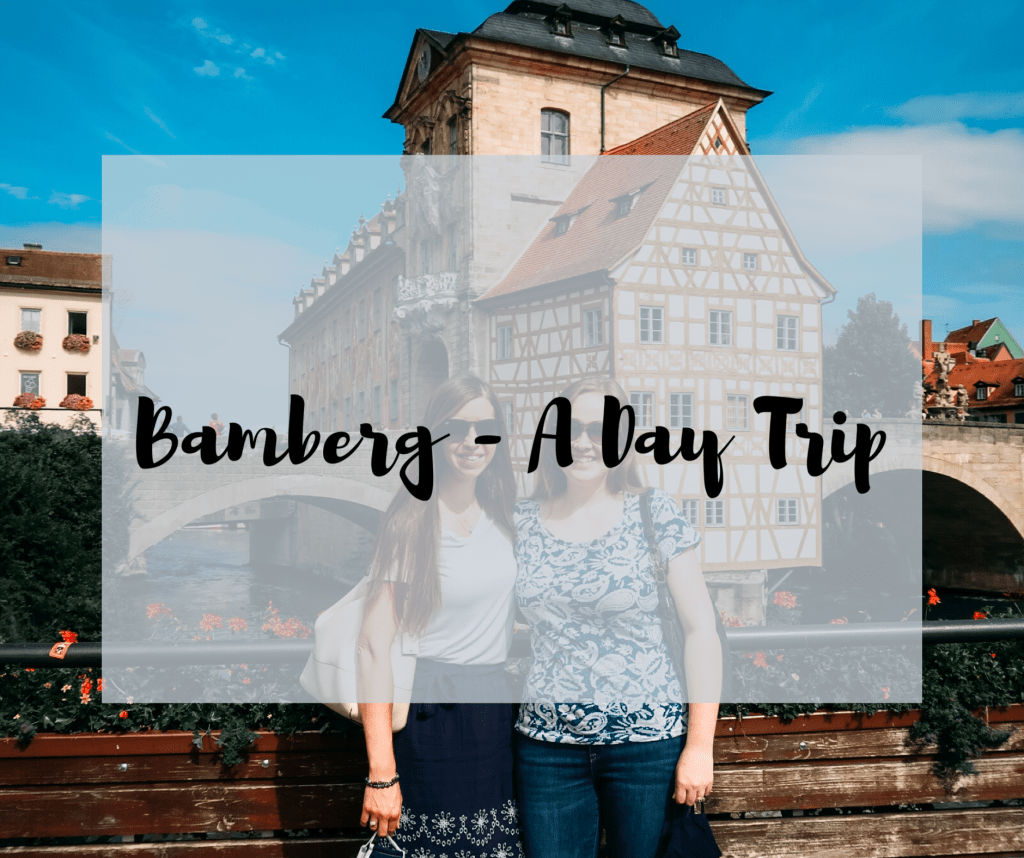
Recently my friend Kim and I went for a little day trip to the nearby city of Bamberg, Germany. Bamberg had been a city I had set my sites on for quite a while, not only for the fact that it’s your typical old-world German town, but also because of its history. We spent a day walking along the streets, seeing the Altstadt Rathaus, the bridges, a never-ending antiquary (old, used books- seriously the coolest), and the churches. We didn’t do everything we could have done, but we had a lovely casual day wandering around.
A little bit of history on Bamberg…
The first mention of Bamberg dates 902 as a mostly Slavic settlement. In the early 11th century, the Holy Roman Emperor (Henry II) made it a family inheritance and a separate diocese from Wurzburg. Once all the border details were sorted out, Henry II ordered the building of a new cathedral AND a Benedictine abbey for the training of clergy. With their involvement, Bamberg became a center point for the Holy Roman Empire; the Pope had visited several times, consecrated some of the churches, and thus, both Henry and his wife, Kunigunde, are buried in the Bamberg Cathedral.
Through the centuries, the city started to expand and change, going through the reformation and land changes. In the 17th century, the witch trials came to Bamberg and claimed around 1,000 victims. The 17thcentury also ushered in the University of Bamberg. Finally, it 1803 Bamberg became part of Bavaria after losing its independence the year prior. Bamberg has also played a role in the political landscape of Bavaria- being a safe place for the state government in World War 1 (after a communist uprising), the location of the passing of the first republican constitution of Bavaria, and then the venue for the Bamberg Conference, a conference convened by Hitler to stifle dissent within a young Nazi Party.
In 1993 Bamberg became a UNESCO World Heritage Site for its authentic medieval appearance.
One final fun fact: Bamberg is known in some places as a “Franconian Rome” as its geography extends over seven hills. Each hill has its own church at the top, overlooking the city.
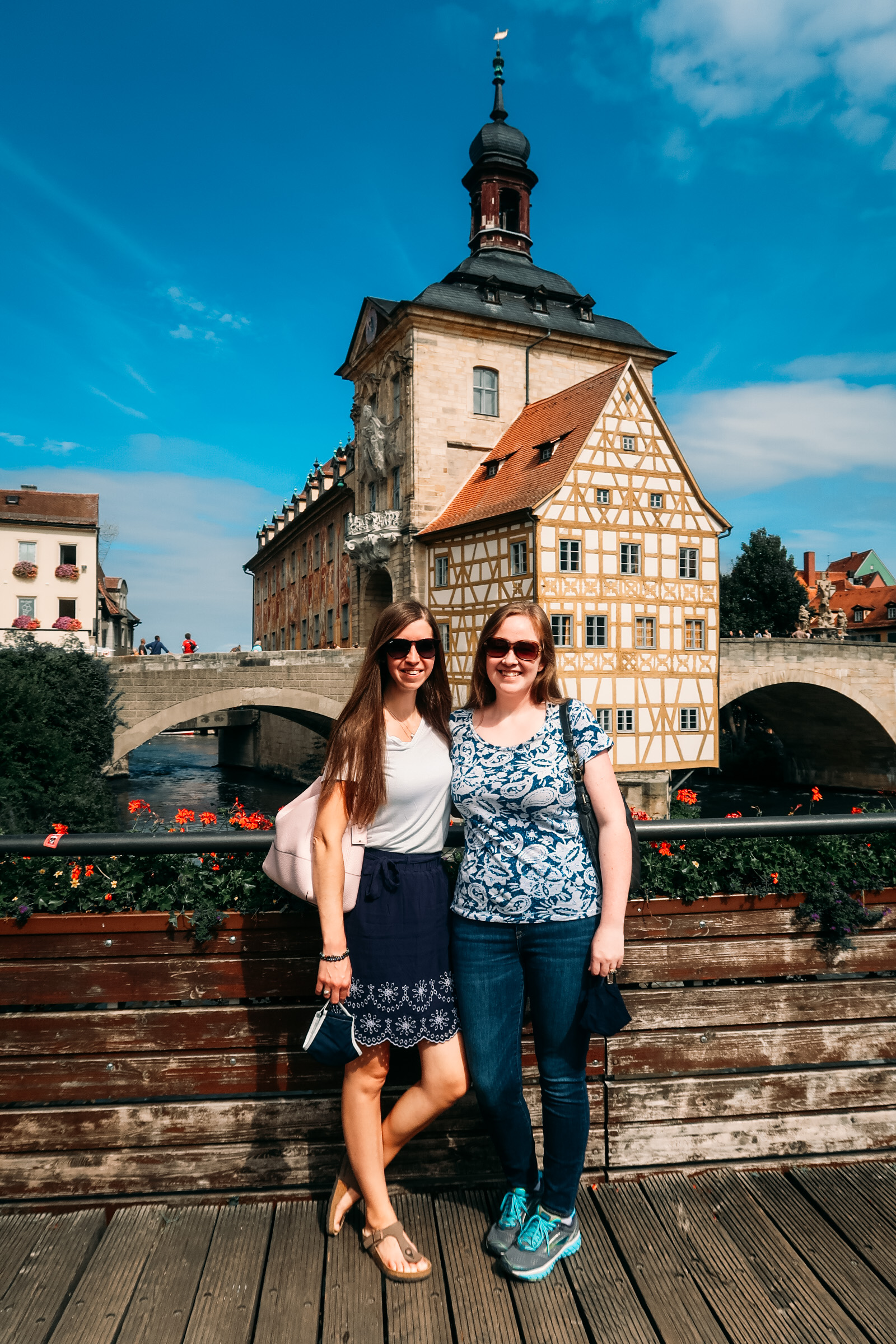
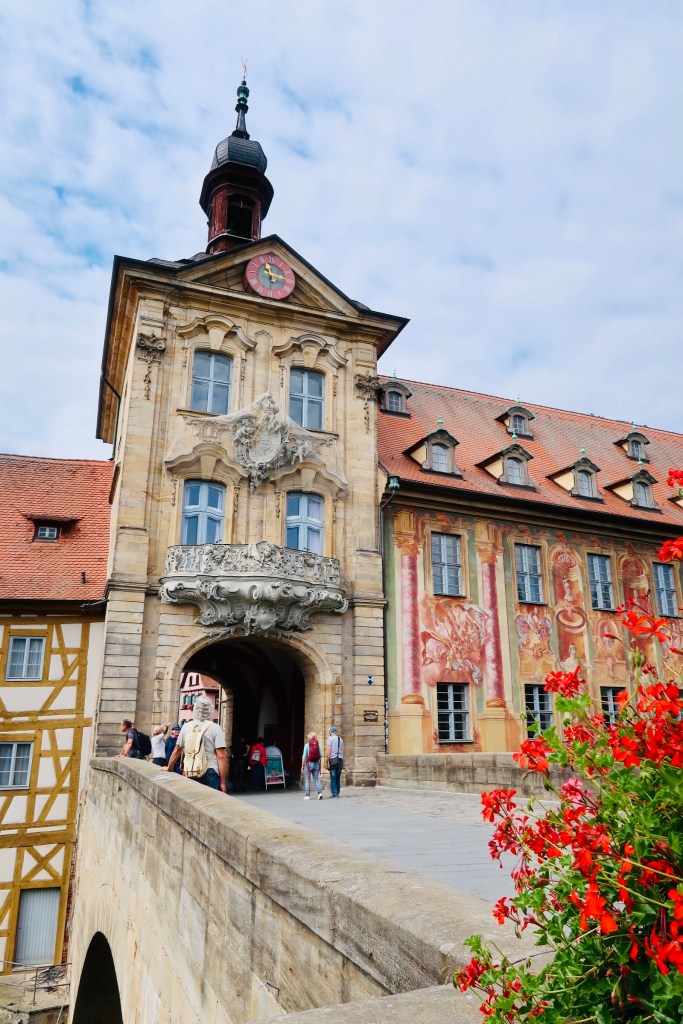
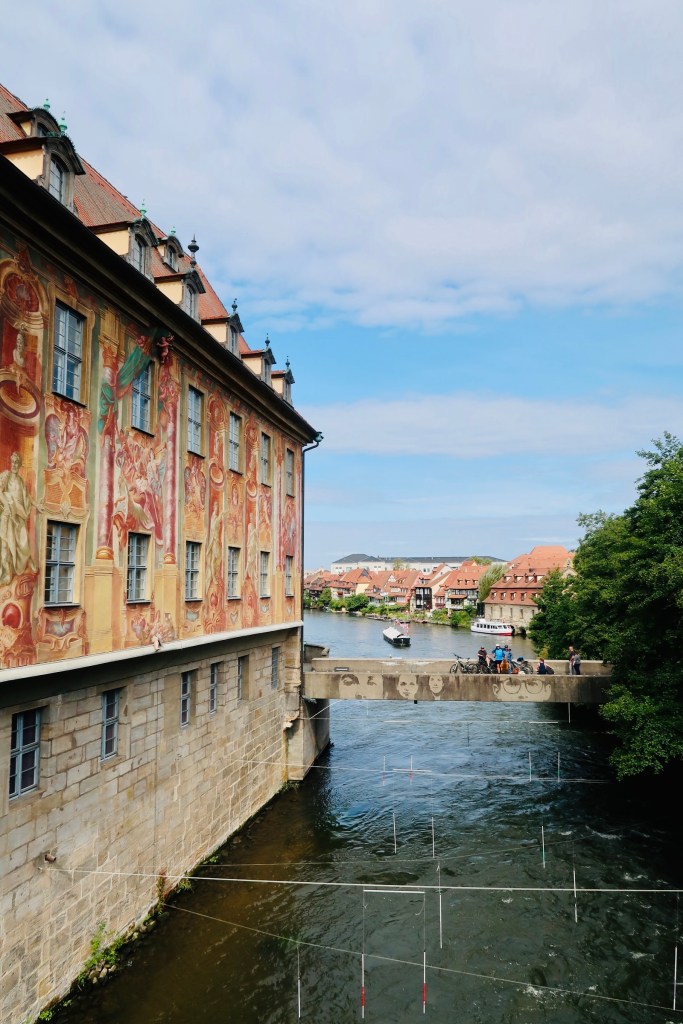
We started our day off walking the Obere Brucke, which is one of the bridges connecting the lower town to the hills. Halfway across this bridge is the Rathaus (town hall). The legend of the town hall is quite typical of the time period: the bishop did not grant the citizens approval to build a town hall, so they took matters into their own hands and rammed stakes into the river and create an “island” on which they built their town hall. The frescoes painted on the town hall are quite incredible, giving it a 3-D appearance- although there are a couple spots where it isn’t just an appearance.


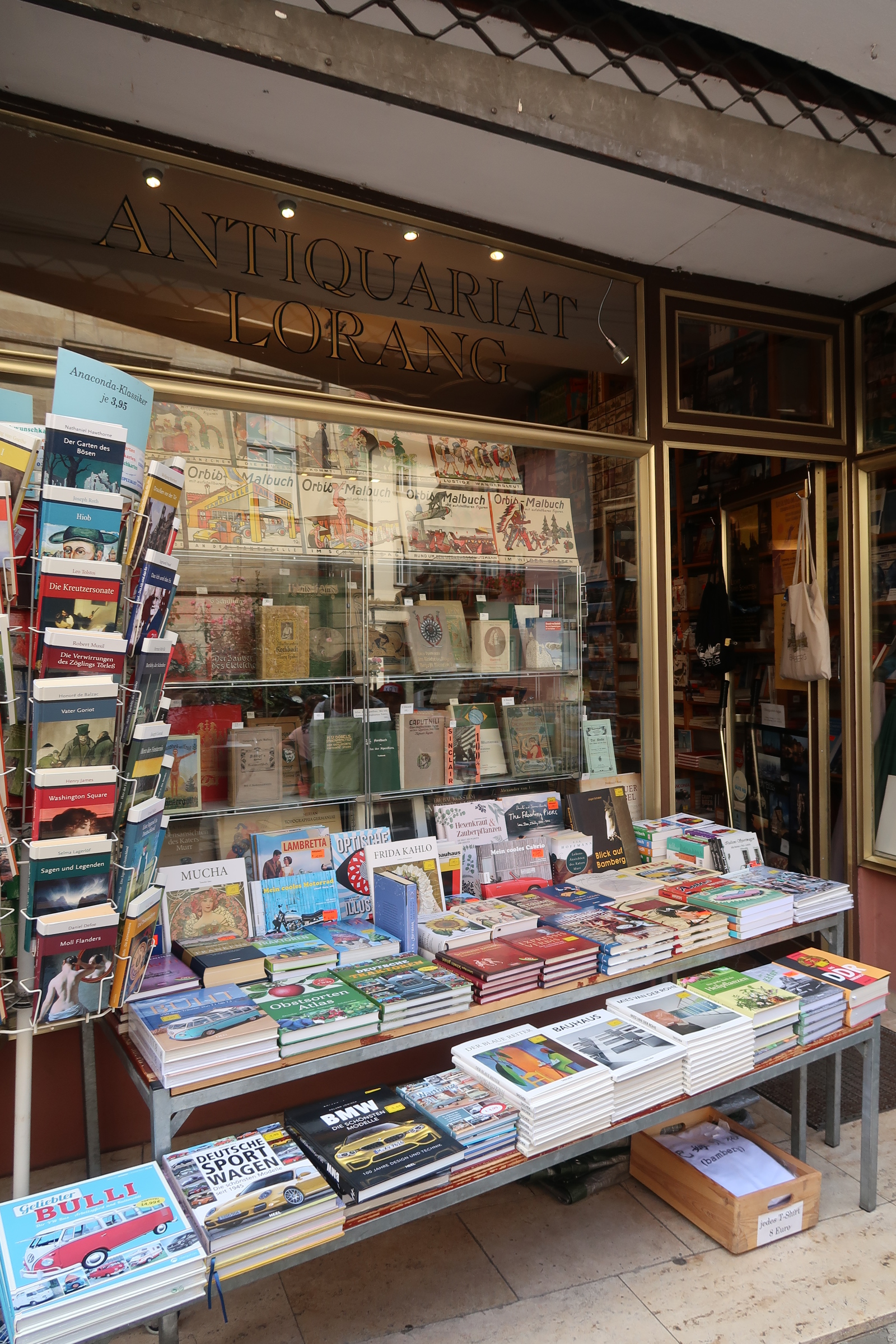
From the bridge we wandered through the streets, stopping in the Antiquariate Lorang. I’m mentioning this mostly because it was basically a store of old books that never ended. If you’re a book or bookstore lover, it’s one of those stores that you dream of going to at least once a week. Filled floor to ceiling with any and all books (and some notebooks), most dating quite far back it was just a dream to walk through and look at everything. It was a great start to our day.
We wandered the streets a little bit more, then started to climb up on of the hills towards the Church of Our Lady (Obere Pfarre). This church is Bamberg’s only purely Gothic church.
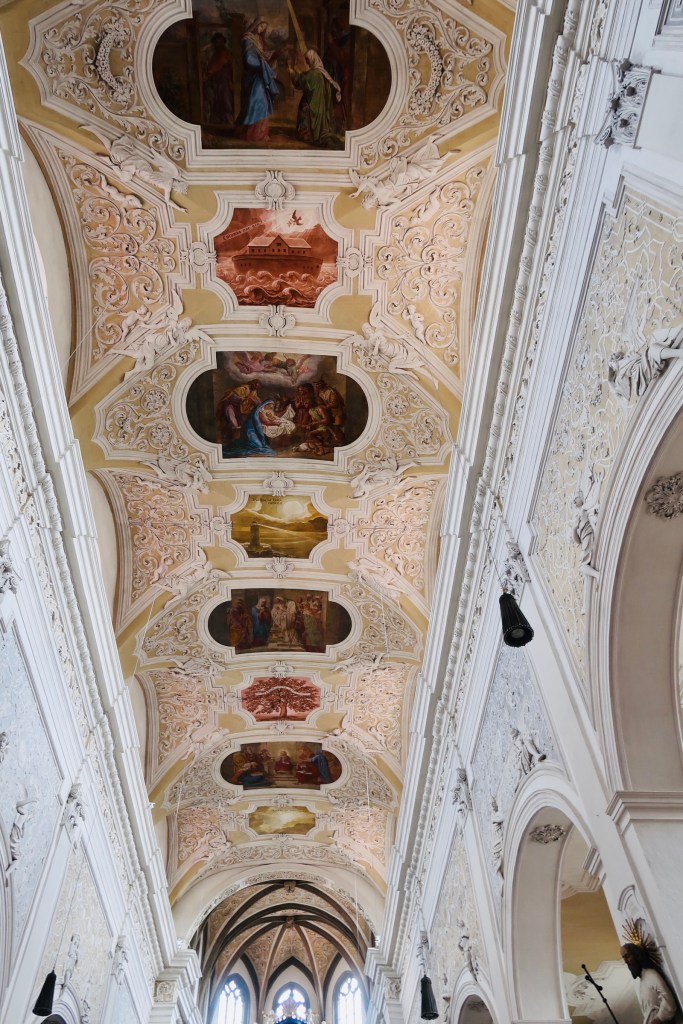
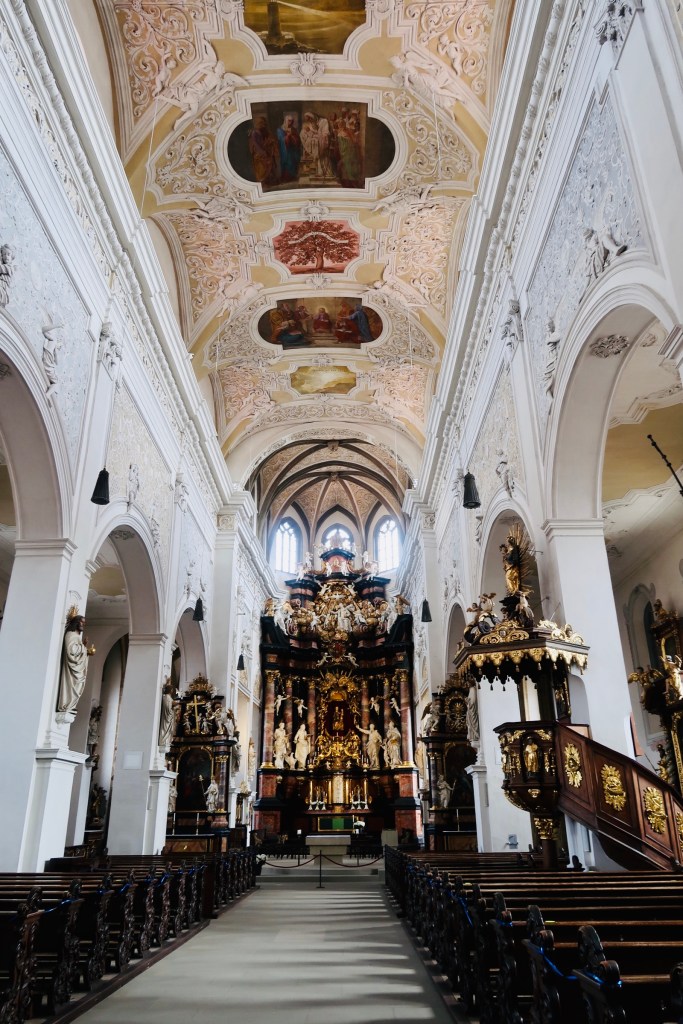
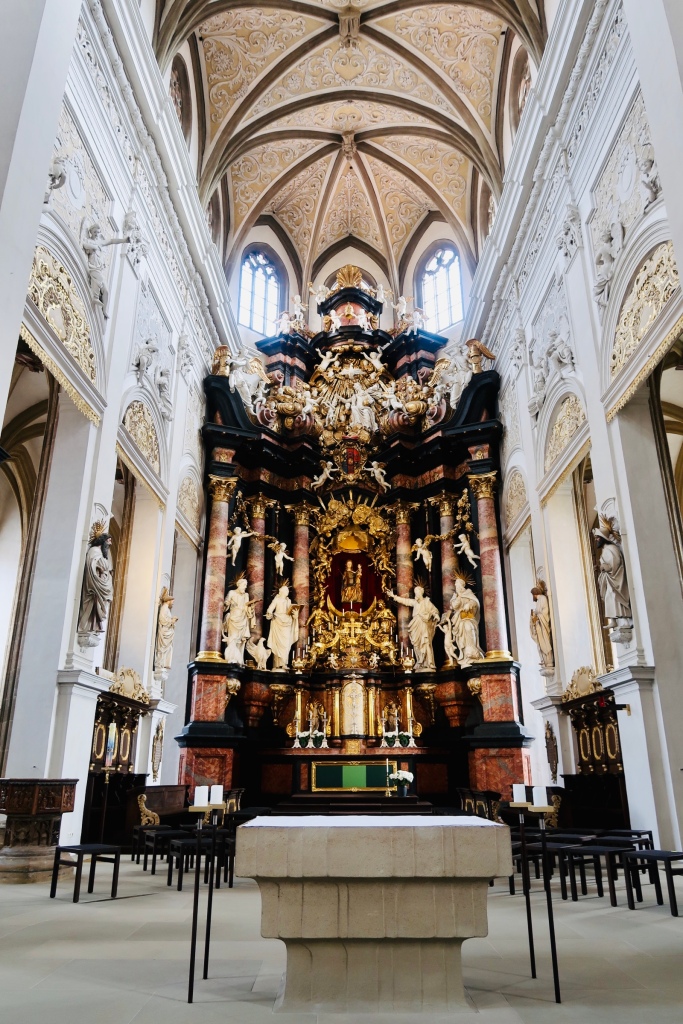
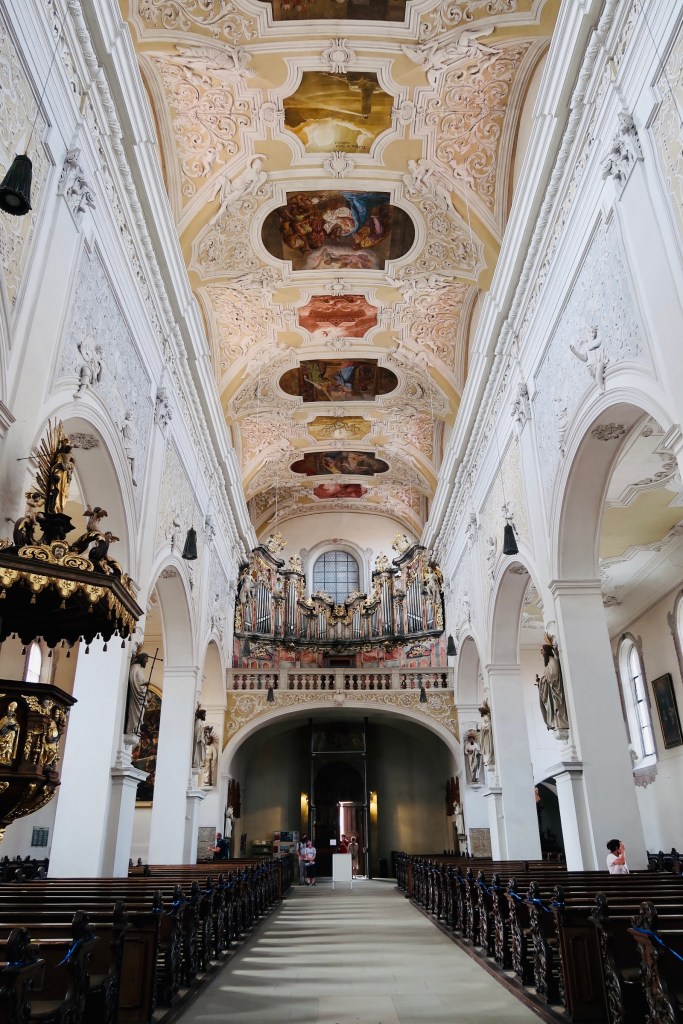
Planning of the church started at the end of the 13th century, with construction starting at the beginning of the 14th (the foundations date 1375). There were quite a few additions and rebuilds to the church, including damage done by an aerial bomb during World War 2. Walking inside the church was breathtaking. I don’t know if I have the words to truly do this one justice, so the pictures will have to speak for me. A few bits- the paintings are from the 19thcentury by Adolf Riedhammer, with some repainted in the 1930’s by Hans Bayerlein. There is a walnut portrait of Mary with Child which was from a school in Cologne dating around 1250. There is an incredible painting of The Ascension of Mary by Tintoretto that you can view as well. Overall, this was one of those churches that you really just have to walk through.
From the church we headed over to the New Residence. To get to the New Residence you go through the Old Court. The Old Court was originally the Castrum Babenberg and then the palace of Henry II. It then became the Bishop’s residence and it features an incredible gateway from the square to the inner square. Now, the Old Court is a historical museum and a small chapel for civil wedding ceremonies. It was really neat to see (I love Timber Frame anything ha-ha) and there was actually a wedding reception while we were there!
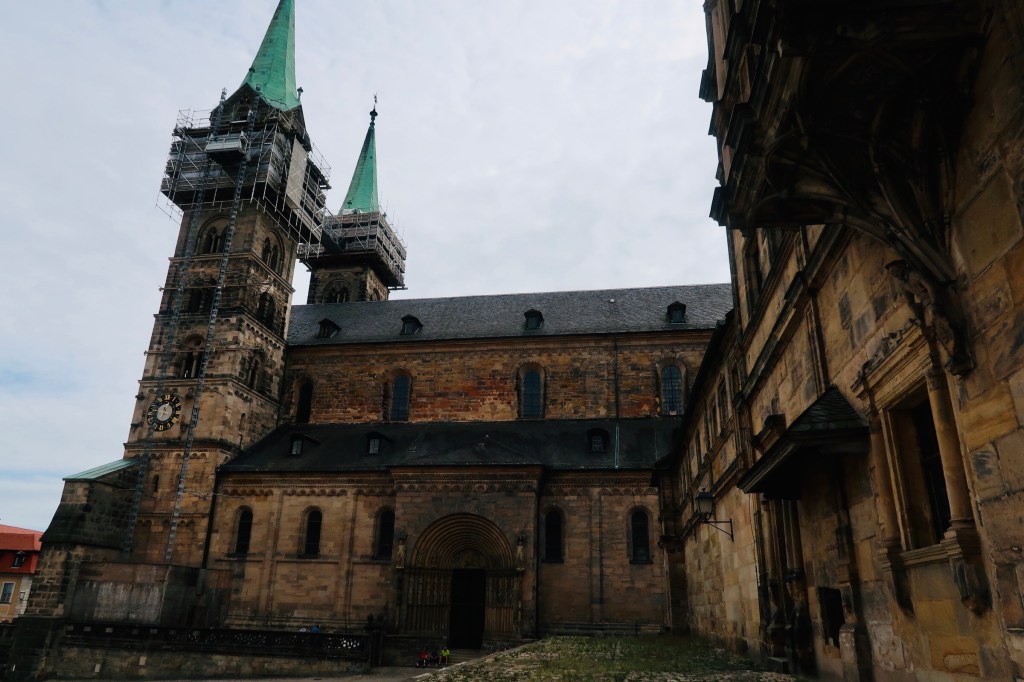
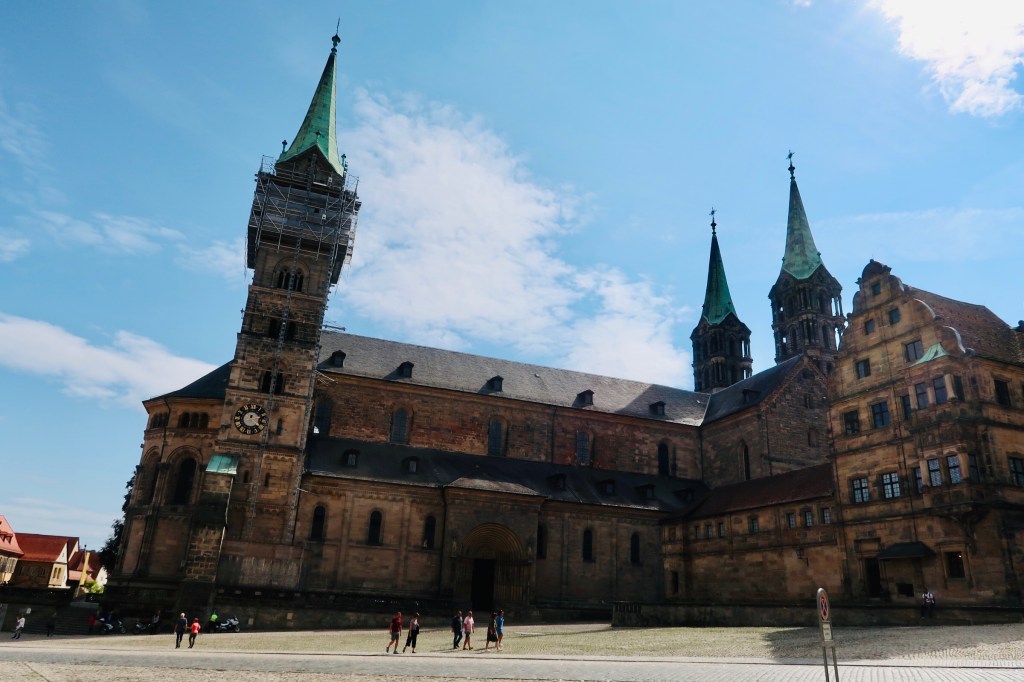
We walked through the gate and on to the main square of the New Residence and Bamberg Cathedral. The Cathedral Square is at the top of one of the seven hills and is the heart of the city. Before we went into the Cathedral, we went over towards the Library, Residence, and Rose Garden. The New Residence served as the seat of Bamber’s prince bishops. There are 40 magnificent rooms filled with artwork and lavish furniture. You are able to tour the inside of the residence which not only takes you through a few of the rooms, but shows you a large Bavarian State art collection. We elected to head over to the Rose Garden in the inner courtyard and take a little rest and relaxation moment.
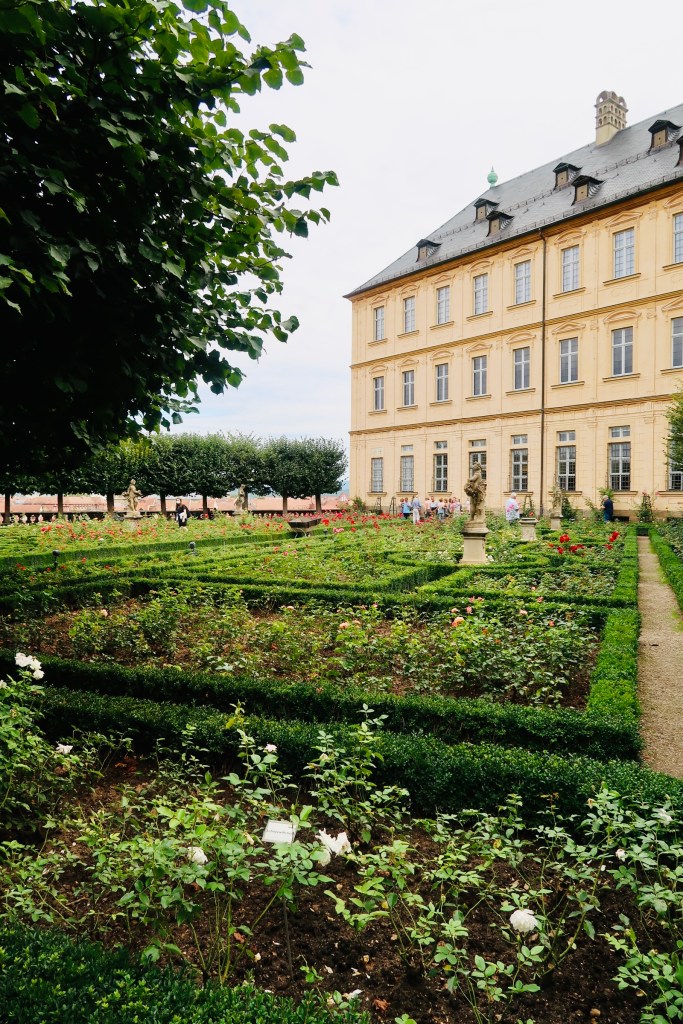


Designed by Friedrich Karl von Schonborn, the Rose Garden contains around 4500 roses, along with several sculptures, a fountain at the center, and an absolutely incredible view of Bamberg. We stopped at the café in the garden pavilion and had a lovely treat of a pear/mint lemonade and light food. In the summers there are musical performances in the garden and the entire area is so enchanting.


After a refreshing pick me up, we started to head out, first stopping real quick at the State Library.
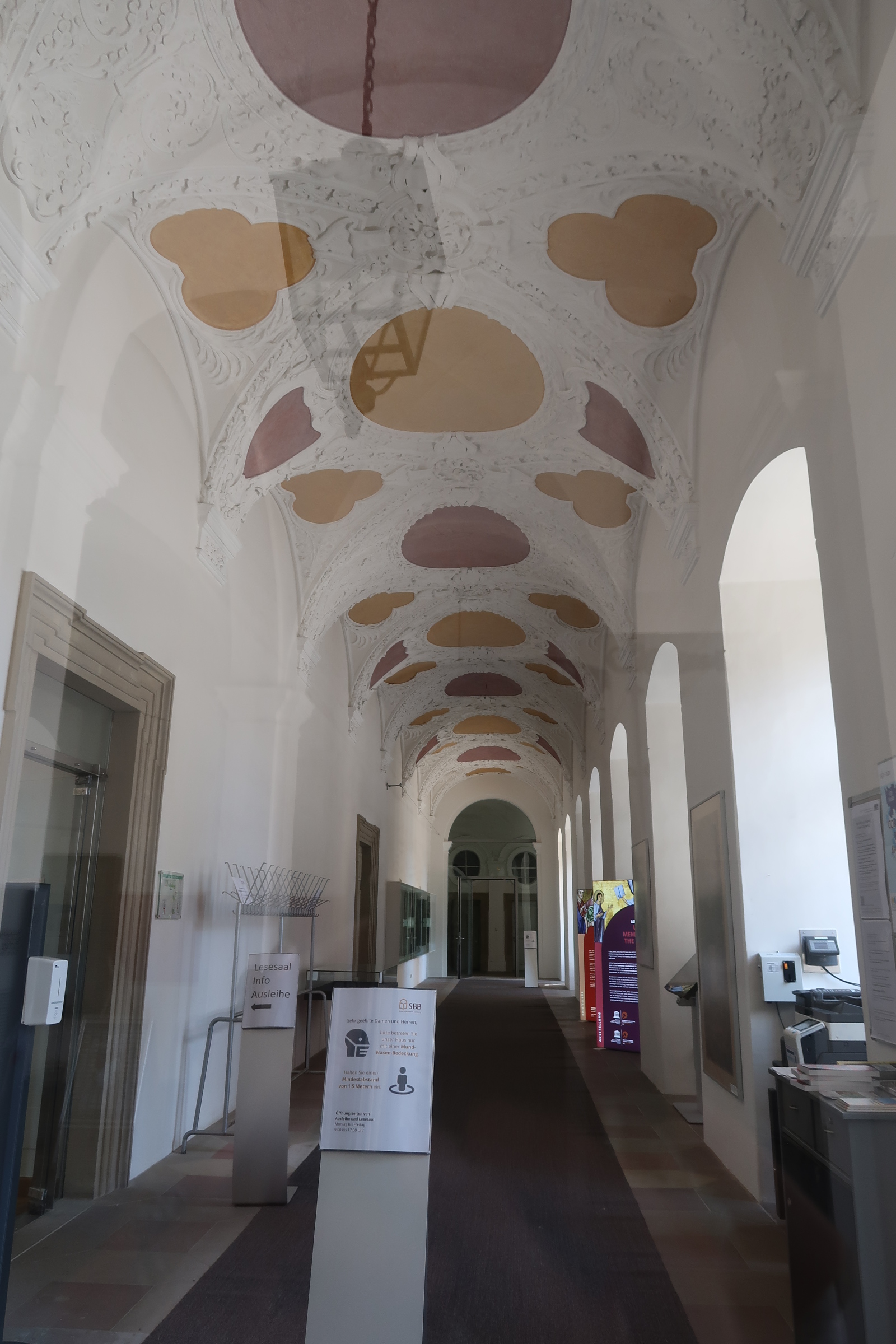
Let me tell you, some of our American libraries can learn a thing or two. The little glimpse we got to see inside was just incredible. The vaulted, painted ceilings, the quiet peace that comes from the library, the pristine collections, it was incredible. Not only that, but the library contains quite a few manuscripts dating from 1000, as well as 3 Reichenau manuscripts that are listed on UNESCO’s World Heritage documents. We only got a glimpse, but it was a pretty neat spot.
Finally, it was time to make our way to the Cathedral. St. Peter’s and St. George’s Imperial Cathedral is the legacy of Henry II.


The cathedral was completed in 1012 (after only 10 years of being built!), however it took 3 different constructions to get the current cathedral due to fires. Now, when we visited there was quite a bit of restoration and reconstruction being done, so we weren’t able to see the Bamberg Horseman and the alter and such were tucked back in the construction. We were able to see the tombs and the overall look of the cathedral. The thing that makes cathedrals so special in ways, is not how incredible they are on the interior (though they can be) is just the sheer craftmanship it takes to craft and build a cathedral (and most built before our modern engineering and technological advances.
Our last stop of the day was to head down to Little Venice.
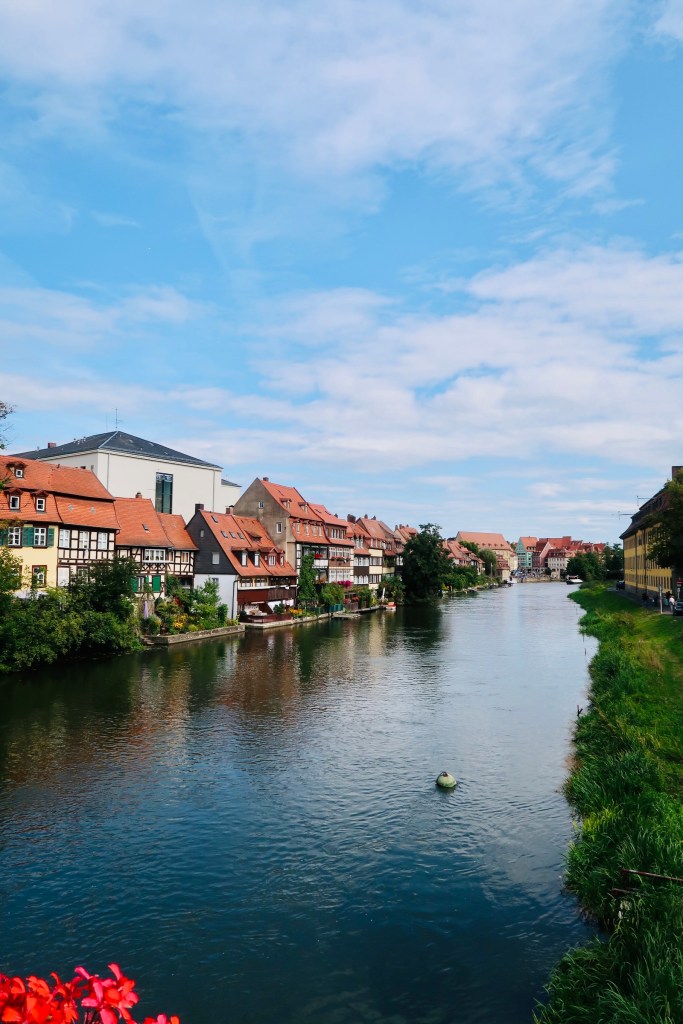
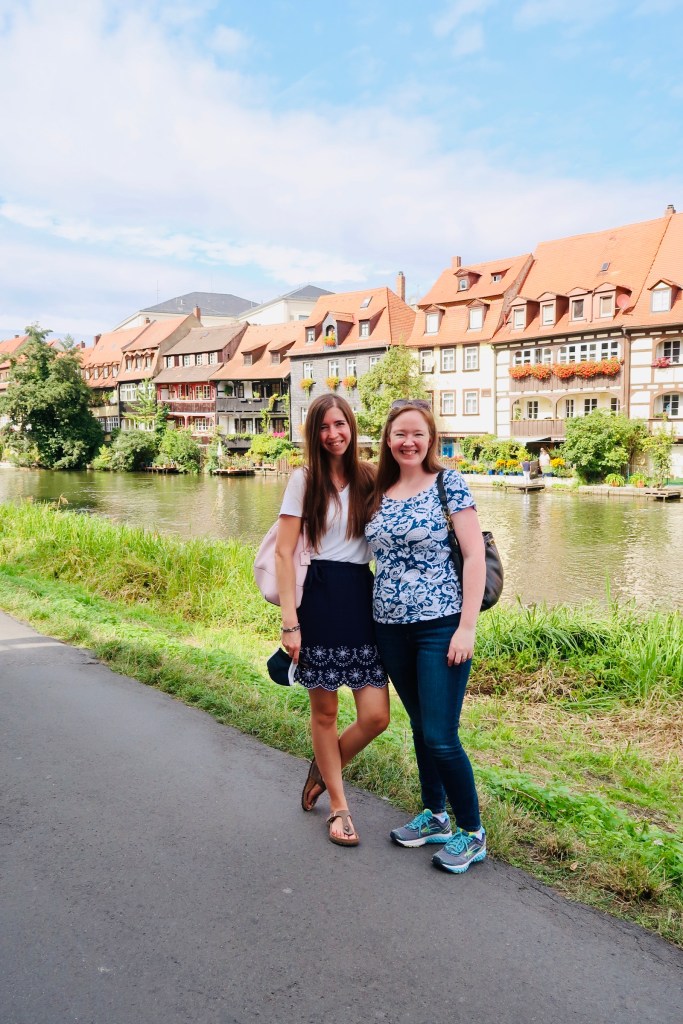
This is a former fish district of the Island City. The river way is lined by half-timbered buildings that date back to the Middle Ages and each has a little tiny garden. The homes are right next to each other, holding each other up in some cases, and sets quite the little backdrop. It is absolutely adorable and was the perfect picture of Bamberg to end our day with.
The only thing that we missed that I wanted to do would have been St. Michael’s Monastery. This is the home of the abbey that Henry II commissioned. I would have loved to see the monastery and walk its walls and church buildings (and garden), however it is currently closed due to restoration work. If you do get the chance to see it, do!
And that was our day in Bamberg! It was the perfect little outing and day trip for us.
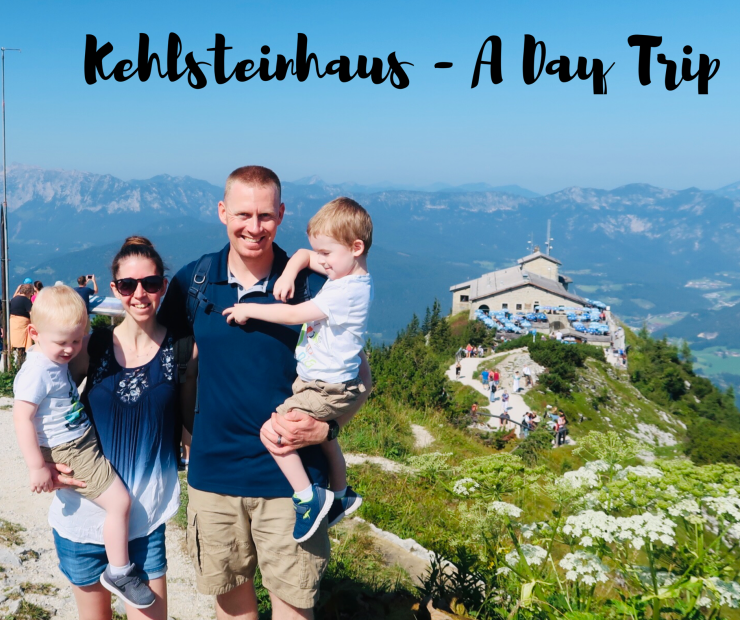


 We had a lovely little lunch on the restaurant terrace and then made our way back down to the Dokumentation Obersalzberg. This is what we would call a museum that talks about National Socialism, the major players in Hitler’s regime as well as the Obersalzberg area. Something I didn’t know is that The Eagle’s Nest and the Obersalzberg area was much more than just The Eagle’s Nest. There was an entire network of “high players” that had buildings or homes in the region. This center talks through the image that they tried to portray in the Obersalzberg and Berchtesgaden area along with history of the NS and World War 2 history and relics. As part of the entrance you are able to go down into the Bunker, which not only contains information about the bunker itself, but also has graffiti from the Soldiers who came through the area in WW2.


 A Cuppa Cosy