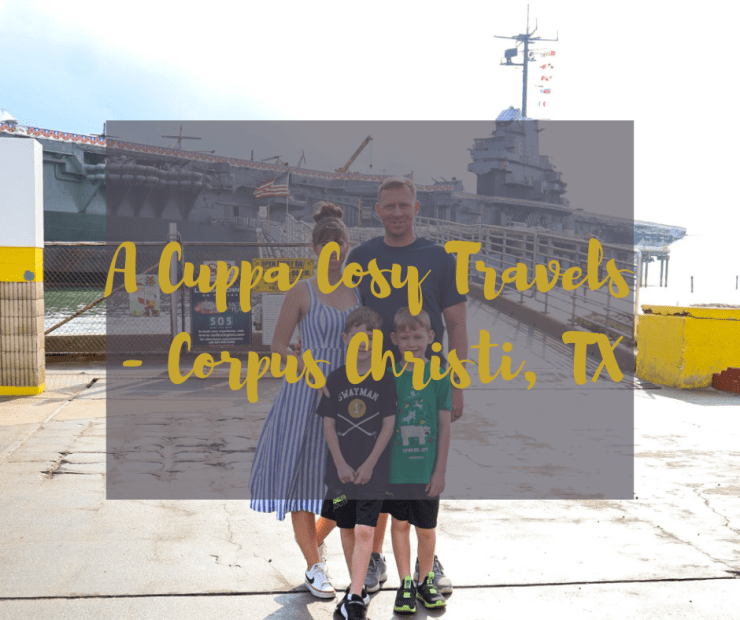
A Cuppa Cosy Travels – Corpus Christi, TX

I don’t know if I should really write this post or not- we really went down to Corpus Christi to see my Sister-In-Law who lives there with her family. It was a lot of family time and not as much seeing all the things (which is what we wanted and what we loved). It was also a time for us to see a couple of friends from prior duty locations, we had one living in the area and the other (my best friend from NY) who was in town visiting her own family. It meant a great reuniting for the kids and adults alike. So, I’ll share the couple things we did and the history we learned, but it won’t’ be as long as my normal travel posts are (and maybe that’s a good thing!). 

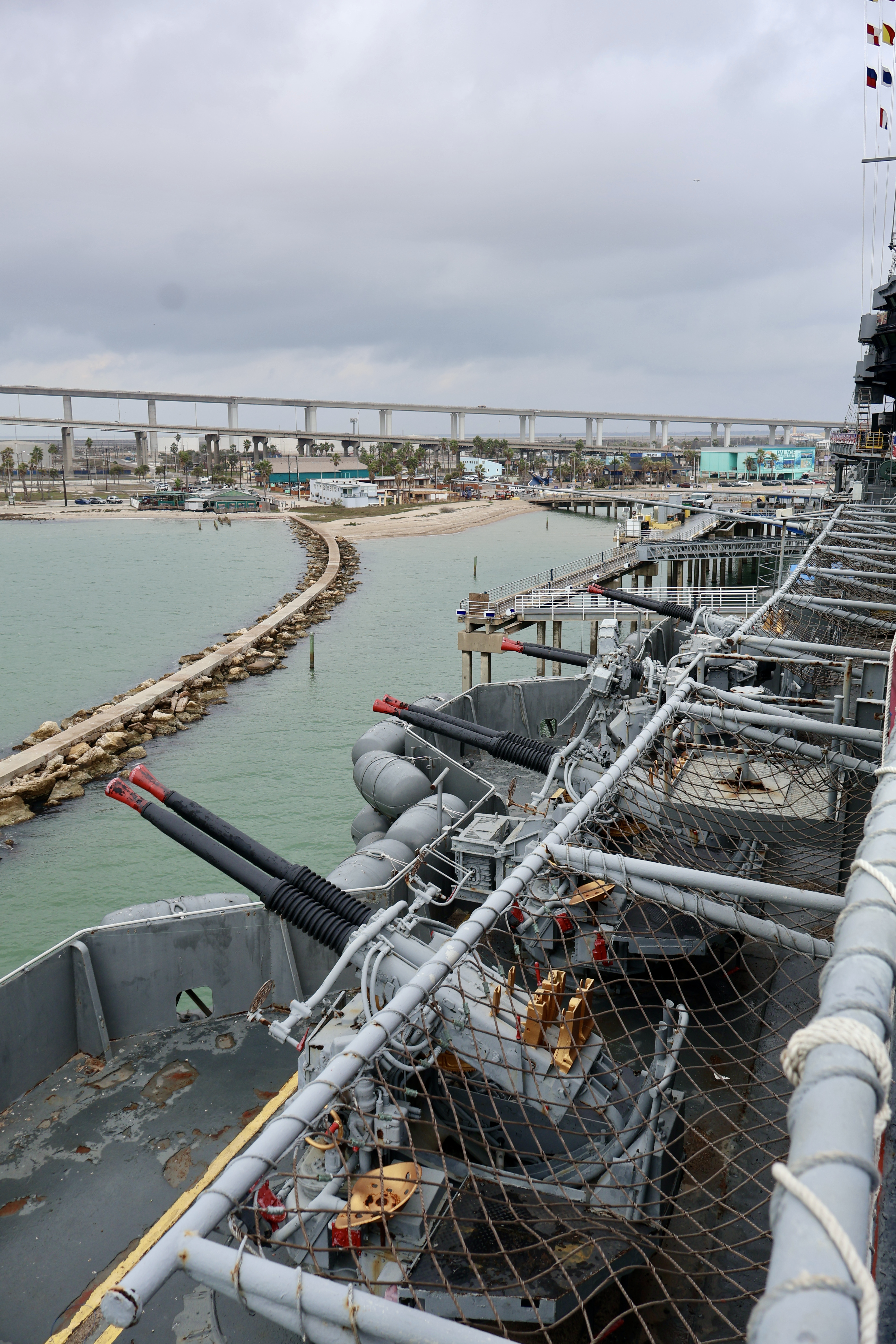
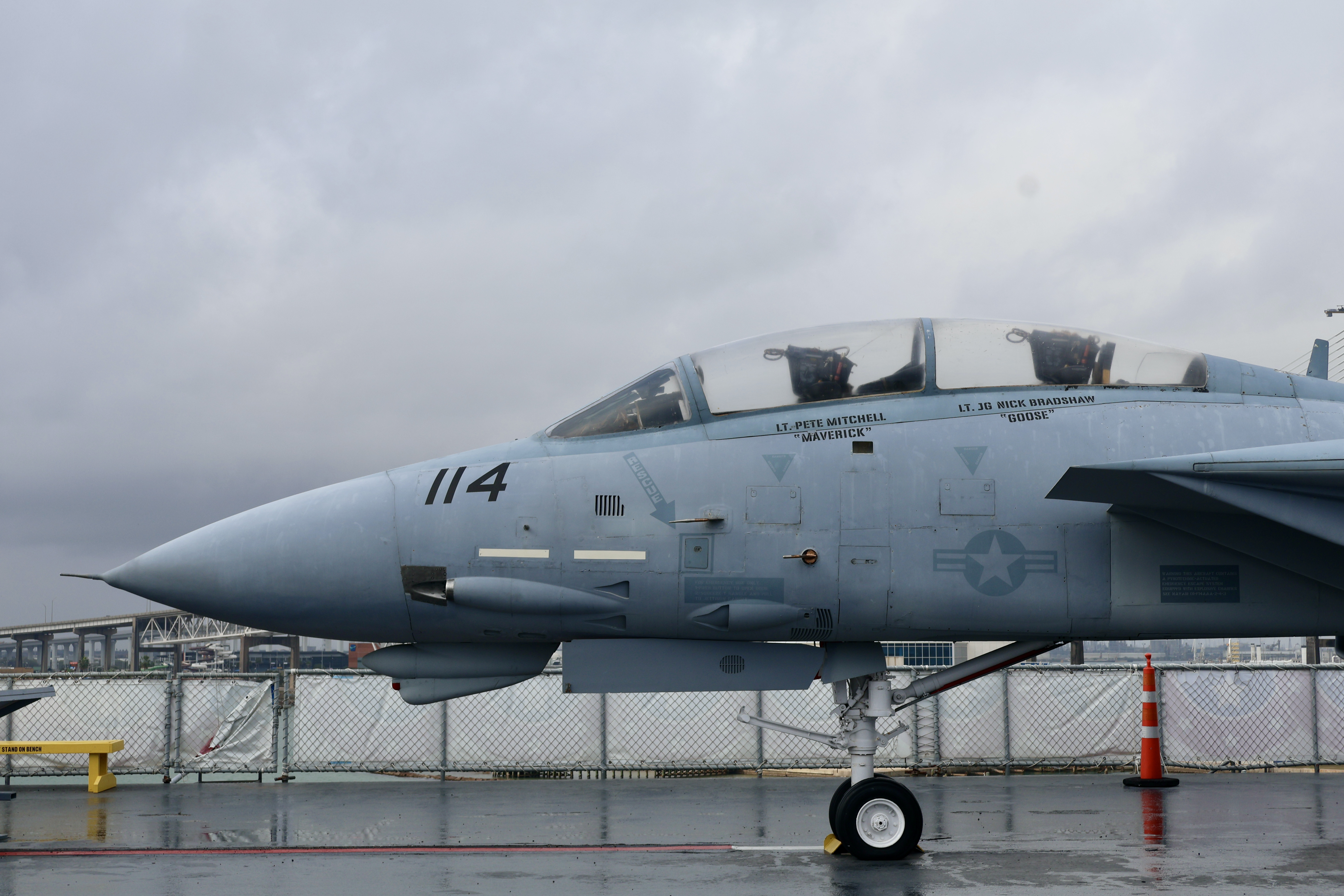
The main tourist attraction we visited in Corpus Christi was the USS Lexington. Where do I begin?

The USS Lexington is a carrier ship that was commissioned in 1943. She was the oldest working carrier when she was decommissioned in 1991. Originally named USS Cabot she was renamed upon being commissioned when the original carrier carrying the name USS Lexington was sunk. The USS Lexington joined the ships at Pearl Harbor as part of the Central Pacific Force. During World War II the Lexington served 21 months in combat, serving in every major operation in the Pacific Theater. Manned by 3,000 members during World War II (1550 Men and Women regularly), they destroyed 372 airborne enemy aircraft, 475 grounded aircraft, destroyed 300,000 tons of enemy cargo, and damaged 600,000 tons more AND downed 15 planes. During World War II she earned the nickname “The Blue Ghost” as she continued to return to the fight after being reported sunk. After World War II the Lexington was decommissioned, then reactivated to San Diego to assist with the tensions with Cuba, Laos, and Formosa. She then sailed to Pensacola and was designated a Naby Training Carrier. The USS Lexington is now permanently housed at Corpus Christi and is open for tours and various events. 
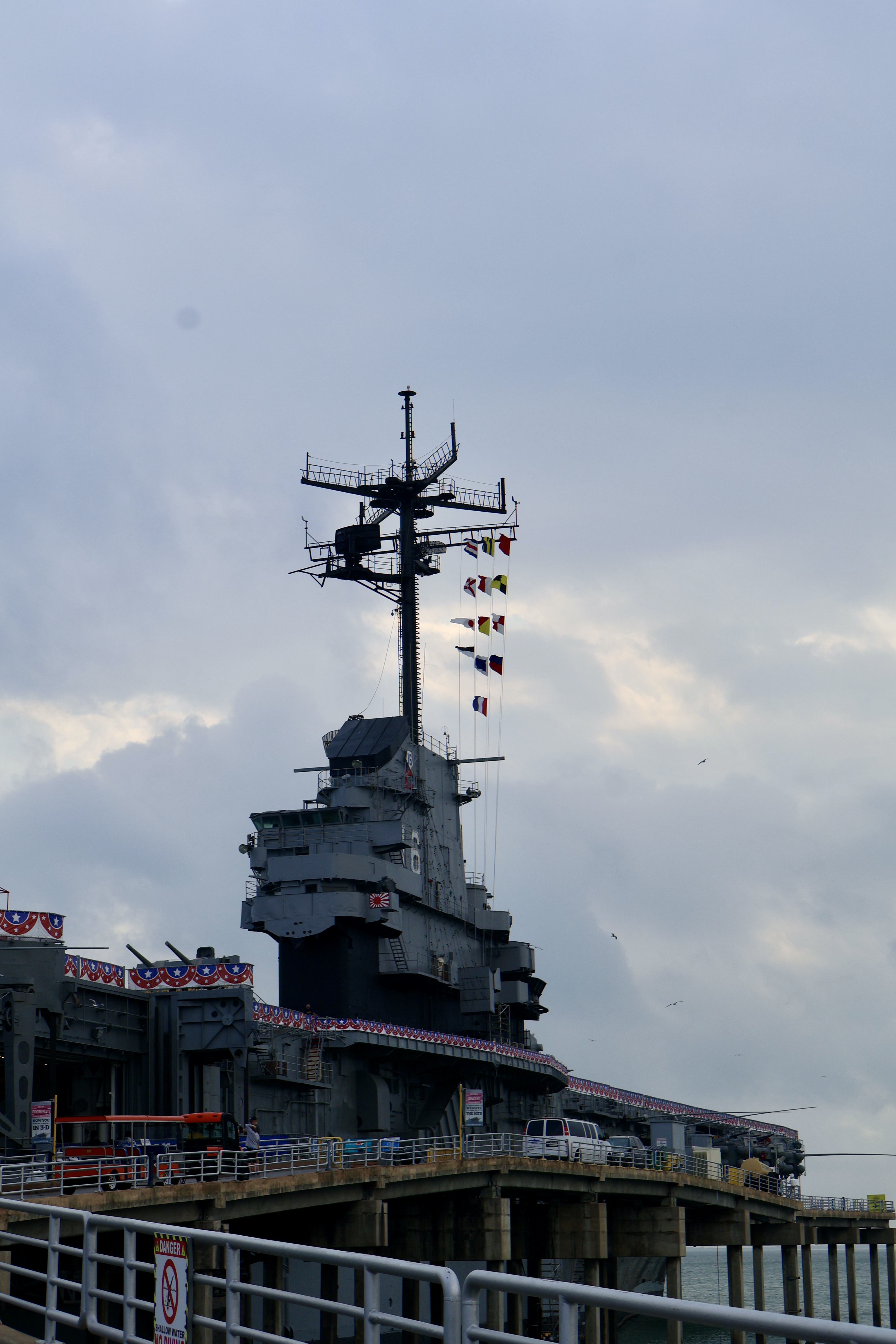
Some fun facts for you about the carrier. The USS Lexington was the first aircraft carrier to allow women to serve onboard. The Lexington served as a filming location for Midway in 1975, AND for the 2001 movie Pearl Harbor where she was altered to play a Japanese Carrier and the USS Hornet (which they do have a display for). Ghost Hunters filmed an episode aboard the Lexington, as did Ghost Lab. 

It was a really fun way to spend a morning- we were able to climb into several spots, see a lot of the ship (I was surprised at how much access we had), and the collection of planes and helicopters was really cool. All in all, I would recommend at least visiting one or two of the Naval Ship Museums. They are really cool and give a good insight into what life would be like on the ship. 

The other thing we did while in Corpus Christi was head down to the beach for a long walk along the water. The beaches in Corpus are really nice and easily accessible and you are able to see a high amount of wildlife. While in Corpus we were able to see the normal hermit crabs and jellyfish (keep a wide birth- even on shore), but we also got to see dolphins (a mom teaching her baby!), and sea turtles. 

That was really it for tourist-y things we did! The majority of our time was spent soaking up some much needed family time. 

The Wild Wild West – 2024

We went West- to the Wild Wild West. It was exactly as expected- gunfights in the street, saloons and drinks galore, and an experience to be had! Over Labor Day Weekend we went to Tombstone, AZ and spent the weekend reveling in the 1800’s. We saw 6 gunfights, ate at 2 saloons, and wandered back in time for 48 hours. 

***Quick note- if you do visit Arizona, please remember that they do not do Daylight Savings Time, so your hours will shift no matter where you travel from. We completely forgot about this! ***

We started our weekend in Bisbee- at the Copper Queen Mine. We initially tried to get lunch at Bisbee Breakfast Café (which looks absolutely delicious), but they were packed, and the wait was a little too long for us to make our tour time. It was a definite bummer as all the food options look delicious. It did give us a chance to wander up and down the main street of what was once upon a time Lowell, AZ. A street very much stopped in history- old cars, antique stores, and beyond. 

From there, we just grabbed a snack and headed to Copper Queen Mine for a tour. Copper was initially discovered in Bisbee in the 1820’s by a Lt. Dunn, however production at the mines didn’t begin until 1880. Copper Queen Consolidated Mining Company was a subsidiary of Phelps Dodge Corporation and became the dominant force in the mining of the area. Mining operations continued until 1975 when the mines closed, leading the mayor of Bisbee (Chuck Eads) to develop the idea of the mine tours. The Mine Tour opened to the public in February 1976.

On the tour, you get a vest, hard hat, and light before heading on the train down into the mine. You are walked through the history of mining in the region, the day to day of a miner, the different tools they would use, and finally you are able to see what they are actually looking for (i.e., what Copper looks like in rocks). It was really fun and educational for the boys. We walked away learning something new (this was our second mine tour). 

From there we headed to Tombstone, checking in to our AirBNB, and then headed to Allen St (which is like Main St of Tombstone) with the intention of getting dinner. Now, our AirBNB hosts gave us a heads up, but everything short of food closes at around 5PM. So, if you’re needing anything, wanting to check out any venues, or want to do a little shopping, you’ll need to do it before 5. Not a bad thing, just a warning. I think the only place that stays open “late” is Bird Cage Theatre as they do Ghost Tours a bit later on. 

We stopped for dinner at our first Saloon, Big Nose Kate’s Saloon. This is the exact vibe you’re going for in Tombstone. Everyone is in full costume, they’ve got a performer on stage, an old Wild West vibe to the décor and the ambiance and the food was good! A little history of the saloon and people (because everywhere has history)- Big Nose Kate was potentially the first prostitute in Tombstone AND Doc Holliday’s girlfriend. Prostitution was very much a thing (I think we all know that?!) and it happened to be one of the best ways for “single” women to make a living as “suitable” positions did not pay enough. Now, this saloon was once the location of the Grand Hotel. The Grand Hotel was THE place to be and has a long-storied history. While it was the Grand Hotel, there was an individual called “The Swamper”. Officially he was the janitor and handyman of the hotel, but he also had a penchant for siler and tunneled from his basement room to the entrance of a mine shaft to collect silver. 

After dinner we wandered up and down the street to get our bearings, then headed back to our cabin for the night. 

The next morning, we were up early and ready for a day in the Wild Wild West- and boy it was. After grabbing a quick breakfast at “O.K. Café” which was delicious, and then we headed back to Allen St. Our first stop of the day was getting tickets for the show at the O.K. Corral. You have to purchase tickets day of for one of the three showtimes, you cannot purchase in advance. The first showing was at 11, so after we got tickets at 9 AM, we decided to head over to the Saloon Theatre for their gunfight show. They reenact Billy the Kid’s first shoot out, a shoot-out with Frank Leslie, and then an Earp shoot out. This is an inside show, with very real guns, and they do give hearing protection. We enjoyed this one- it made those western shows feel a bit real-er to everyone. 

From there we went over to the O.K. Corral to watch the “Shootout at the O.K. Corral”- which, the shootout actually occurred behind the corral in an empty lot, but what is history after all. So, this shootout (if you didn’t know the history) is between the Earps/Doc Holliday and the McLaury’s/Clanton’s. The Cowboys (Mclaury’s and Clanton’s) were creating all sorts of trouble- drinking a lot, gambling a lot, shooting off guns where they shouldn’t have been, and the newly deputized Earp Family were not interested in that continuing. There were threats, rivalries, stealing of wives, and it all led to a (very short) shootout between the two rivals. In 30 seconds, 30 shots flew and three died. Tom McLaury, Frank McLaury, and Billy Clanton are all buried in Boothill Cemetery (more on that later). 

Fun fact- the gunfight occurred outside the office of THE photographer of Tombstone (C.S. Fly), however there were no photos as he was busy when the unplanned shootout occurred. 

This was a really fun one to attend- the actors were great, they play off the audience well, and once it is over you can wander through the entire property, which allows you to go through a couple different buildings to picture life in that time. Your ticket also includes a chance to watch the Historama (which we did- I would say if you’re interested then attend, but it isn’t necessary) and tickets to the Epitaph- which was the newspaper of Tombstone (we did this as well- it’s very small and it will take about 10 minutes to see everything within). 

Now we attended during Labor Day Weekend, which meant that they were going all out and there were two performing troupes that were performing gun fights in the streets throughout the weekend, as well as the casket/hanging booth. We watched several gunfights from Arizona Gunfighters, and all four of us were “hung” in the streets of Tombstone. It was an experience, that is for sure. 

We wandered down to the Tombstone Courthouse for a quick walk through. The courthouse was original built in 1882 and was once the offices of the sheriff, recorder, treasurer, courtrooms, jailhouse, and board of supervisors. It was a very active busy building! Now, as you walk through the rooms, you are treated to a history lesson of just about anything you could think of relating to the Wild Wild West- from cattle ranching to gun fights, to Mexican/American skirmishes and more. While this maybe doesn’t have the same amount of sensationalist history as some other locations, it’s still a really neat spot to stop at.  

We did two more things in Tombstone, the first was to visit the history Old Bird Cage Theatre. This was the most famous spot of its time- known as the “wildest, wickedest night spot” in the west.  The name pays homage to the Bird Cage crib compartments that overhang the gambling and dancing areas. These compartments were where the prostitutes would try to solicit the men below (think she’s a bird in a gilded cage)- and they are still in the theatre. In fact, this is the ONLY building in Tombstone that is as it was. This includes bullet holes, gambling tables (the one where the longest poker game in history occurred), the original curtain and painted stage, as well as the piano. When it was open, it was open, never shutting its’ doors, seeing 16 gunfights for a total of 140 bullet holes within the building. It is full of history, and it is basically locked in time. It closed in 1889, and then was boarded up for almost 50 years. Then in 1934 it became A Historic Landmark of the American West and was opened to the public to visit. 

This is a MUST SEE in my opinion, not only because of the history, but also because it is the ONLY historic landmark in its original state. It is a self-guided visit, though you are able to do a family tour, and if haunting/ghost things are your thing, you are able to do a ghost tour (as this is one of the most haunted buildings in the country). 

The final stop we made on our way out of town (ironically enough) was Boothill Graveyard. Originally “The Tombstone Cemetery”, this burial plot dates back to 1878 and was used until 1884. It holds the graves of the cowboys from the shootout (McLaury’s and Clanton’s), the men that were hung after the Bisbee Massacre as well as the man lynched from the same event, two marshals, and Lester Moore (of the no les, no more rhyme if you know it). There are many many more (a total of 265 graves), all for a variety of reasons. When you enter, they will give you a pamphlet that breaks down every grave as well as a reason for death if known. 

And that really tops off our time in Tombstone! We had a really fun time, and the kids were obsessed (and they have shockingly good reflexes). 

A Cuppa Cosy Summer Holiday 2023 – Halifax, Nova Scotia

I know I said that we really loved everywhere that we stopped on this year’s Summer Holiday, but I feel like Halifax might…just might have topped the list? I don’t know, so many good stops, but this one was just…stuck with me. Maybe it’s because of timing and what we did, maybe it’s the vibe of where we were, maybe it’s just a magical thing that Halifax has. Regardless, I am so excited to talk about the few days we spent in Halifax. 

We arrived in Halifax on Canada Day. And everyone has asked (especially with our timelines of summer travel), what Canada Day is like in Canada. Is it similar to America’s Independence Day? Is it wildly different? What is it like?

And I am here to say- it’s by and large probably about the same. You have some people who are loudly pro Canada and choose Canada Day to proclaim it, but honestly, for the most part people…calmly celebrated? I don’t know how to explain it. For us in Halifax, everyone was wearing red/white, there was a massive block party on the pier, but it was also just chill. Some of that was possibly due to weather- it was overcast day with low hanging clouds (so no plane show or fireworks), but I do also wonder if this is just the way the people of Canada celebrate. 

So, we had a delightful first afternoon/evening in Halifax. After checking in, we headed over to the Halifax Citadel. But let’s talk a little history first. 

Halifax is the capital, and largest city, in Nova Scotia. Originally known as Mi ’ kma ’ ki it is the ancestral home of the Mi ‘ kmaq people- something they acknowledge and honor very well. The “Town of Halifax” was established in 1749 and marked the beginning of Father Le Loutre’s War. The establishment of Halifax the British violated their treaties with the Mi’kmaq. To bolster the town defenses, the British built the Citadel in Halifax, along with several other fortifications in neighboring areas. 

Halifax Citadel was initially fortified in 1749 intended to not only serve Halifax defensively, but also as a counterbalance to the French Louisbourg. It was small, part of a western perimeter wall and was protected by five stockaded forts. The city of Halifax was raided four times during that initial war; however, the Citadel was taken care of, and by 1761 it had deteriorated so much that the British built a new one…in 1776 (thanks to the Seven Years War). This second fort was a permanent fortification. There were redans, a blockhouse, and 72 mounted guns. This Citadel gave the Royal Navy the most secure and strategic base in North America. Halifax became known as the “Warden of the North”. It is also thought that this presence is why Nova Scotia stayed loyal to the British during the Revolutionary War. However, permanent these fortifications were intended, by 1784 they were once again in ruins and with the French Revolutionary War coming (and parts of Canada very much French), a new Citadel was designed and built. With the Third Citadel, they levelled and lowered the ground to allow for a larger fortification. We see the initial signs of the current set up, with four bastions surrounding the barracks and magazine. In 1803 the Halifax Town Clock was opened to keep time for the soldiers (this was a real issue then). This third Citadel is also where we see the system of flag communications come into play. While it didn’t fall into complete disrepair, it did need a new magazine and a slew of repairs when the War of 1812 came around. However, in 1825 they decided to scrap most of the citadel (due to disrepair) and rebuild. After 28 long years of construction, the Citadel as we see it today opened in 1856. The overall history of the military AT the Citadel has been quite varied. It’s seen a fair number of soldiers, but never an attack. The British Army pulled out in 1906, with Canada taking over. 

While the hill and fortifications were designated historic sites in 1935, there was still quite a bit of talk about tearing it down. Thankfully that was struck down, and in 1956 it opened some of its’ doors to the public. Over time it has been repaired and in the 1990’s it became fully restored to the Fourth Citadel appearance. Nowadays it is fully open to the public, with it transforming into a living history museum during the spring/summer months. There is a noon-time canon firing, a war museum, ghost tours in October, and reenactments throughout the year. We always enjoy walking through military history- especially if it’s from another country, with a different insight. And in this case, it was a defensive fort that never really got attacked. 

While in town we also wandered over to the Old Burying Ground. The cemetery was founded in 1749- with its’ first burial taking place the same year. Intended as a common burial ground it remained open for burials until 1844, when Camp Hill Cemetery was established. If you’ve read enough of my travel blog posts, you’ll know we find it interesting and cool and just a piece of history to wander through older cemeteries. In the 1980’s the site was restored by the Old Burying Ground Foundation, who now not only maintain the cemetery, but also work to restore the grave markers. This particular cemetery is said to hold 12,000 graves, to include the British Major General who burned the White House during the War of 1812. The monument at the front of the cemetery is the Welsford-Parker Monument. This is the first public monument in Nova Scotia, and the fourth oldest in all of Canada (and the only monument to the Crimean War in North America). Built after the cemetery closed, it commemorates British Victory in Crimea and serves as the last grave marker in the cemetery. 

I would say the real highlight of our entire Summer Holiday occurred on our second night in Halifax. We were able to attend the Royal Nova Scotia International Tattoo. And honestly, before I go any further, if you are ever able to make it to an International Tattoo- go. It is incredible to watch.

The Tattoo is intended to serve as a theatrical experience where military bands and display teams are able to showcase their abilities. The Halifax one has been taking place since 1979- ever year. Aside from being able to showcase a variety of military bands across the world, there is also a theme of friendship and bonds between countries in each year’s performances. The Halifax Tattoo was given the “Royal” designation from Queen Elizabeth II in 2006. This past year we were able to watch acts not just from the United Kingdom, America, and Canada, but also from Germany and South Korea- which was really cool! Germany was a hilarious performance, and the boys loved the Sweet Caroline singalong as well as the bagpipe rock n roll. My personal favorite was the Switzerland Drummers. For a little insight into the performance- check out my Instagram where I’ve posted a video. It was incredible- a real highlight. 

Our last day in Halifax we started off back at the Marina and checking out the Maritime Museum of the Atlantic. Located at the HMC Dockyard, this is the first known maritime museum in Canada and also includes a visit to the CSS Acadia.  The Museum has a large number of artifacts and photos, but also charts and rare books. You can see everything from the artifacts to replica’s that are being worked on (and the workshop where they get worked on!). You can wander through numerous exhibits, and the boys got to learn how to spell their name in Morse Code. There are actually two truly notable exhibits in the museum- one on the RMS Titanic and one on the Halifax Explosion. 

The Halifax Explosion was one of the largest artificial non-nuclear explosions (and is actually a standard of measurement for other large blasts). In December of 1917 a French Cargo Ship collided with a Norwegian Ship in the harbor. This is actually quite a tragic, but fascinating event in their history. The Mont-Blanc was carrying quite a high number of explosives (unannounced too so only those on board knew), which upon the crash caught fire and exploded. The explosion destroyed almost all the immediate radios buildings, and anything that wasn’t immediately destroyed by the explosion was then destroyed by the pressure wave and tsunami.  1600 people were killed instantly and 300 of the 9000 injured succumbed to those injuries. A good amount of the city ended up burning due to the gas stoves and lamps, and if you had been watching the fire? You surely lost your sight when the explosion blew your windows out. In fact- there is an exhibit of replacement eyeballs. 

To make matters worse- the day after a blizzard dropped 16 inches of snow on Halifax the next day. Not only stalling recovery efforts and supply deliveries, but also making it incredibly difficult for those trying to find shelter. 

While it was a horrifying event, it did lead to some good- quite a few medical advances came from the months post explosion- specifically in eye care, public sanitation, and maternity care. It also helped deepen the bond between Boston and Halifax (which dated back to the founding of Halifax). Boston was such a help that every year Halifax sends a Christmas Tree to Boston- which is the official Christmas Tree of Boston and is on the Boston Commons every year. 

The Titanic Exhibit is equally fascinating as it has the foremost collection of wooden artifacts from the Titanic (including one of those infamous deck chairs). Nova Scotia and Halifax in particular played a large part in the collection of bodies from the Titanic. As the only unfrozen port, they were dispatched to help provide assistance. I’ve already mentioned the deck chair, but they’ve also got the shoes that were used to identify the “unknown child” of Titanic, an original copy of the senate hearings/testimony from after the sinking, and so much more. We were at the museum not long after the situation with the Titan, which made it all the more real and sobering for the kids (who followed what was happening with the submersible). 

We did two more things during our time in Halifax, one being a wander through the Halifax Public Gardens. This is a Victorian-era public gardens dating back to 1867. The Public Gardens are 16 acres, landscaped in the Victorian style, with all the standard garden fare, but also three fountains, two stone bridges, three ponds and a concession stand. There is a public bandstand that allows for concerts in the summer, and we spent a lovely hour or so wandering through the gardens. 

And how did we find the gardens? Well, yes, it’s on Trip Advisor and such, but also by taking a Duck Boat tour of the city. Yep, we finally did a ride along tour of a city. The boys saw these vehicles that would drive around on land, but also head into the water and they were obsessed. Since the weather wasn’t entirely cooperative during our stay (though we still loved it), we decided why not. It was actually a really interesting time, and we enjoyed learning a little bit more about city and some little bits and pieces we probably wouldn’t have learned. And of course- the boys loved when the truck turned into a boat, and they got to ride along the harbor in the water. 

And that basically sums up our time in Halifax! In just looking at the length of this post, I think you could probably tell how much I enjoyed our time there, but in case you can’t- we really did like it. There’s only one more post coming about our Summer Holiday- I’m sad to say a farewell to it, but it was a good one. 

A Cuppa Cosy Summer Holiday 2023 – Quebec City

It is finally time to start breaking down our Summer Holiday. It’s a bit late in the posting lineup, but we had a truly fantastic trip, and I can’t wait to share all the details! We did a bit of an East Canada tour de force- starting in Quebec City and ending back in New York. I think this was one of our top trips in that we loved everywhere we went. We found some real gems in these cities and really fell in love with some of these spots. So, here we go with where we started…

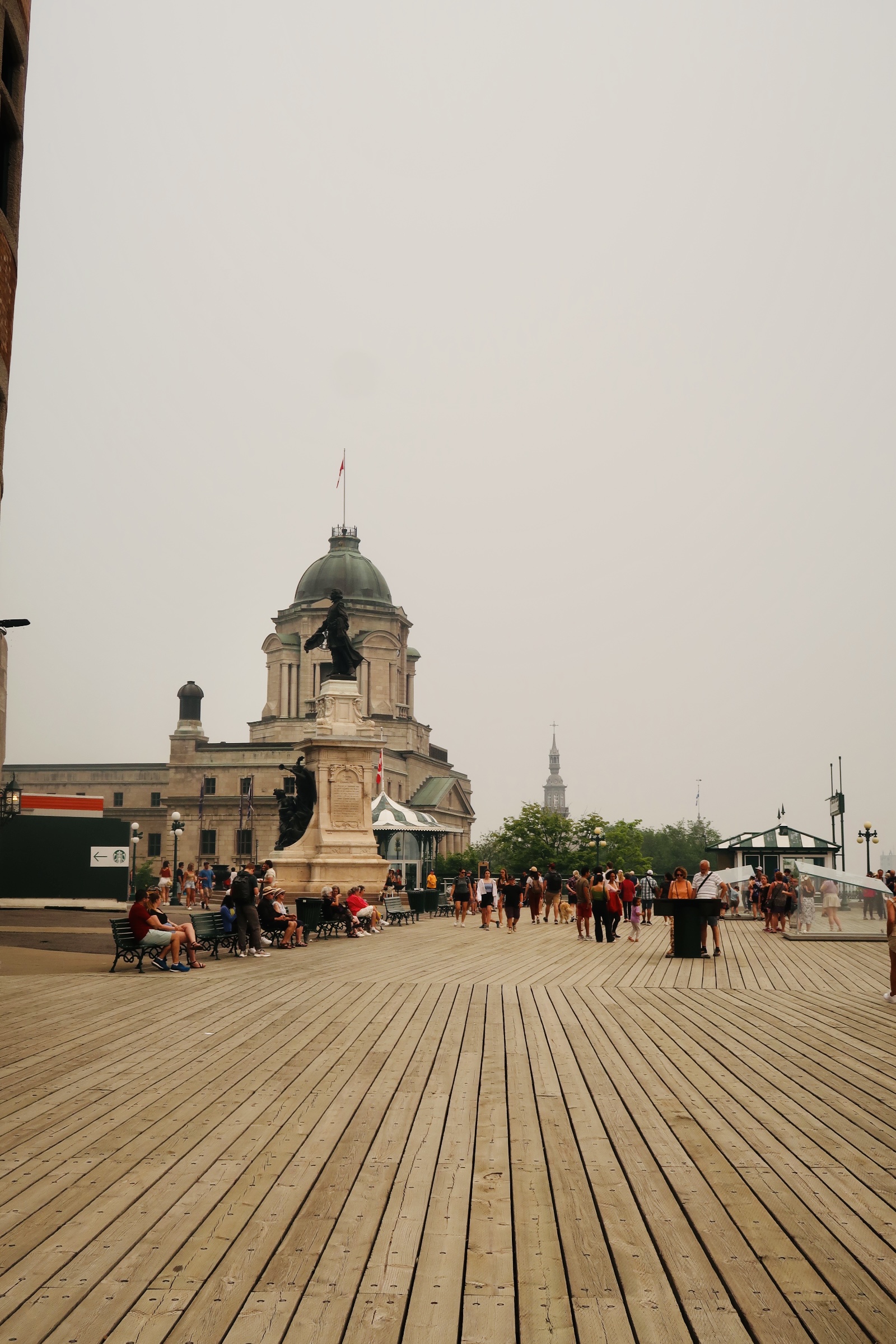
We spent three nights in Quebec City and the bulk of our time was spent wandering the city. We stopped in places from time to time, but we really just walked the streets of the city and enjoyed our time. I’ll highlight a couple of the spots we did go to and the history, but I highly recommend just wandering the city streets of both upper and lower downtown. The days that we were there we did (and you’ll see) have some air quality issues, with the wildfires raging out of control. 

A real quick note on the “Upper Town”/” Lower Town” designations. I’m not making these up- this is very much how they are referred to. Upper Town is the location of the military and civic/admin district. Most buildings in this area are 19th century, though there are some 17th/18th century ones. Lower Town is at the “bottom” of the cape. This is the site that Samuel de Champlain built a settlement. The Church Notre-Dame-des-Victoires is located in Lower Town (dated back to 1723) as well as the Musee de la civilization.

Quebec City dates back to 1608 when the French, specifically Samuel de Champlain, settled the area- making it one of the oldest European settlements in North America. The ramparts (which we walked) are the only remaining fortified city walls remaining in the North Americas (north of Mexico). The “Historic District of Old Quebec” is a World Heritage Site (as of 1985) and honestly one of the coolest spots to walk around. Now, while the French “founded” the city, it was actually an abandoned Iroquoian settlement called Stadacona. The city itself has quite the history, specifically during the French and Indian War where it served as the headquarters for raids against New England. However, Quebec was captured by the British in 1759 and held by them until the end of the war. It was then officially ceded to Britain, though Quebec is still heavily French and both French and English are spoken interchangeably (which gave our boys a chance to learn a couple phrases in a new language!). 

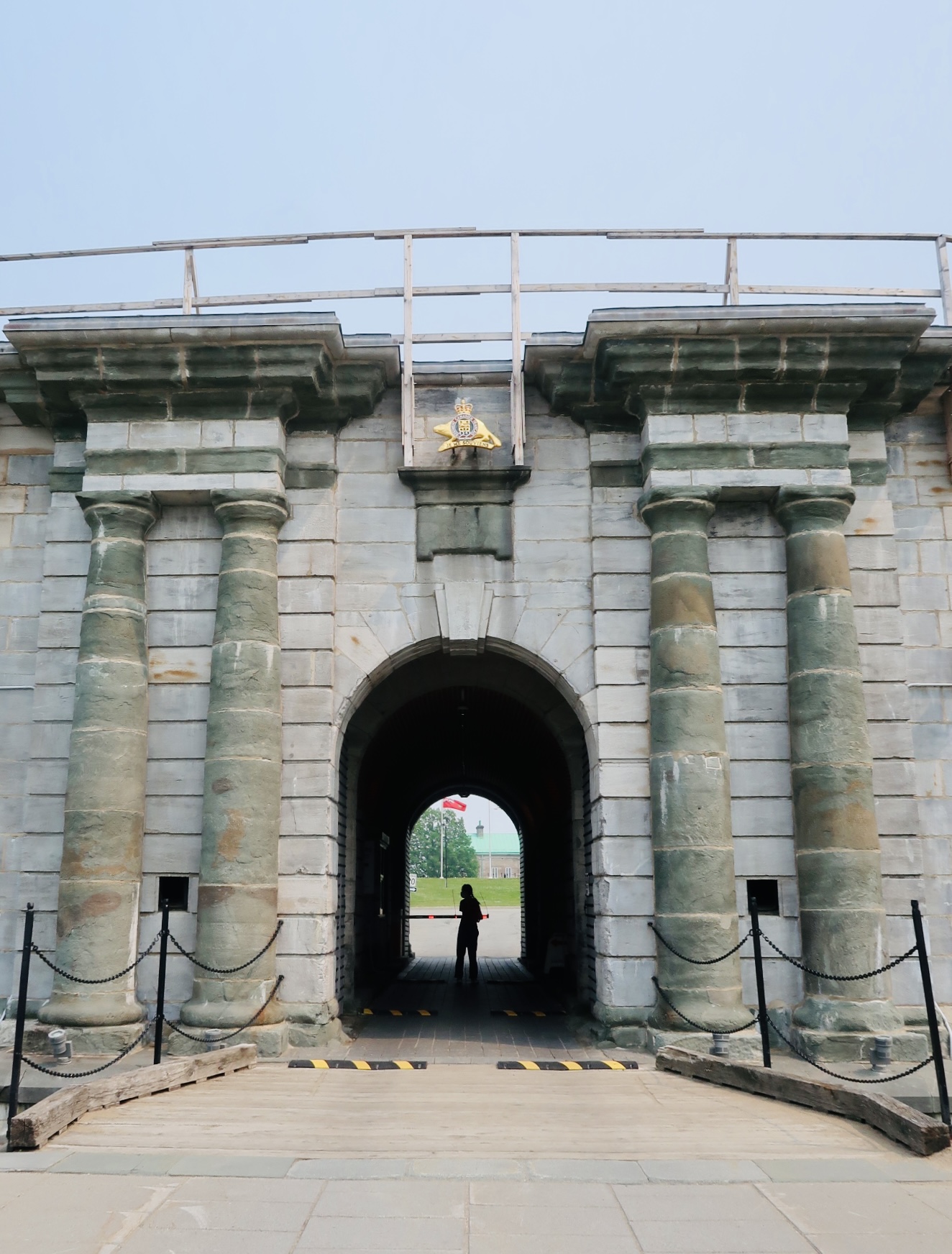
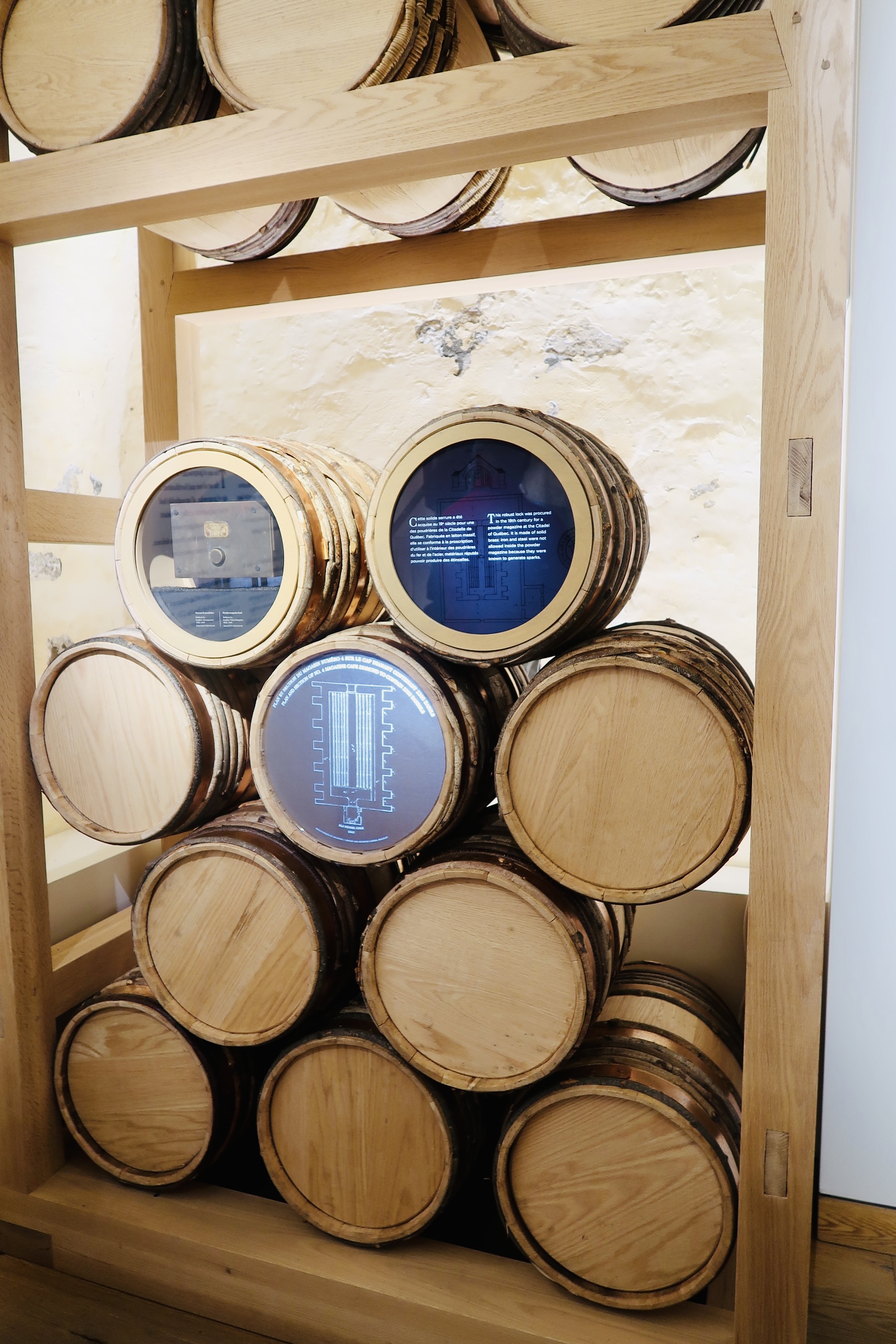
To get a little ahead of myself on our time in Quebec, but stick with the history, we spent an afternoon wandering and touring the Citadelle of Quebec. The Citadelle was initially built due to concerns of an American attack post the American Revolution and the War of 1812 (as America did try to “liberate” Canada from her Sovereign- unsuccessfully). Now, the Citadelle is an active military installation and a secondary (official) residence of the Canadian Monarch and governor general. The Citadelle does join the original fortifications, which is really cool when you think about the history of it all. The entire city itself is surrounded by fortifications. 

When Samuel de Champlain was initially building up the settlement of Quebec, he immediately noted that the Cap Diamant would be of importance and value to any fortifications of the region. When he built up the settlement, he built it in the way that the city would be at the base of the cape, thus allowing the landscape to provide a natural defense. The French initially built up the walls but determined that a fort would cost too much, and it wasn’t until Louisbourg fell that they felt a true need for a fort. The British saw the need for a full fort, but, similar to the French, didn’t want to pay the cost for a full fort. It wasn’t until the late 18th century that they fully committed to building the fort. The present star fort was built from 1820-1850, with the British remaining within the Citadelle until 1871. 

It was really neat to walk through the Citadelle, seeing and learning the history, as well as hearing about their mascot- a goat (affectionally named Batisse)! Even though it is a fully functioning military base, you are able to see quite a bit of the buildings and museums. It is well worth the visit.

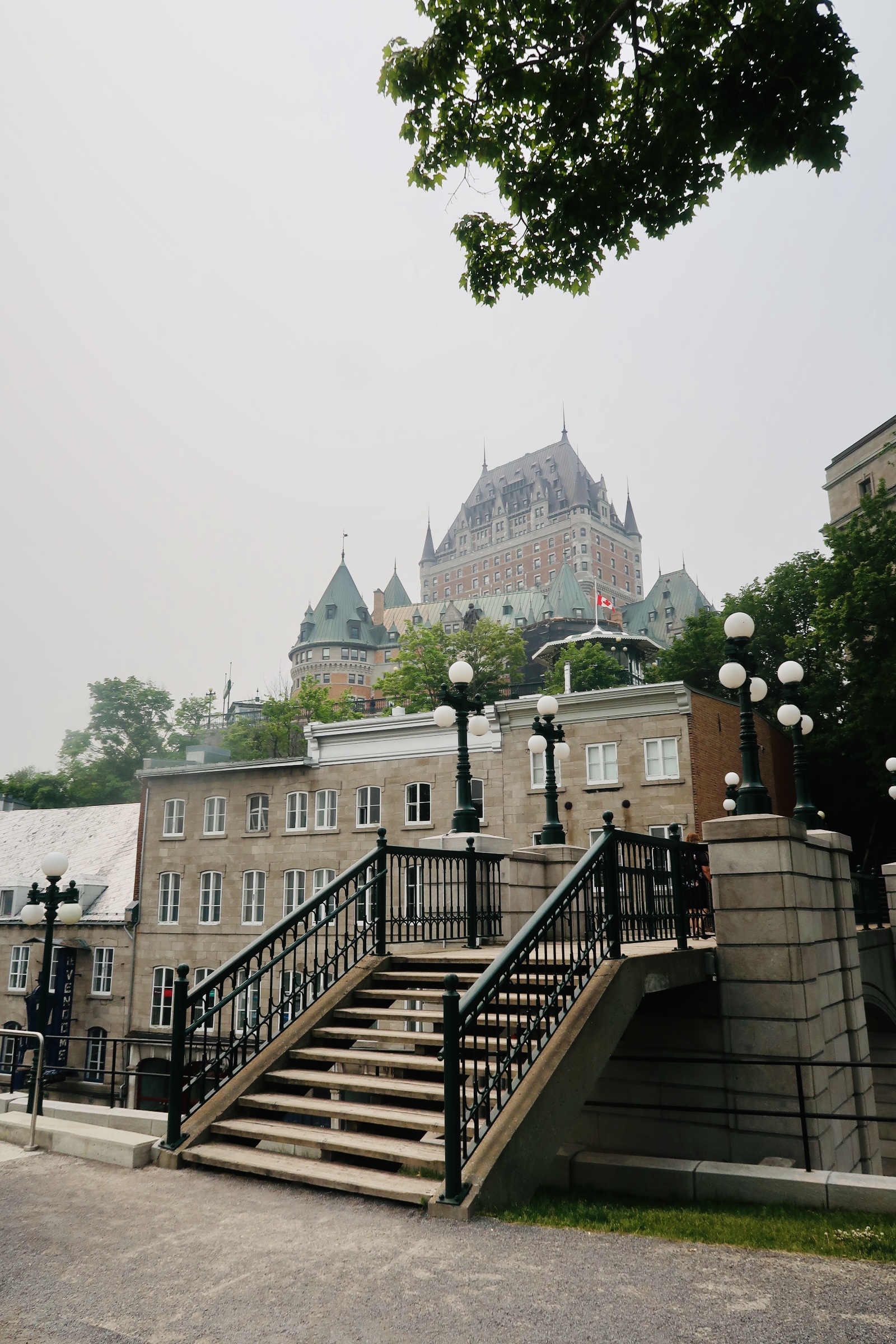
Now once you pass through the Old Fortifications to wander through downtown you can head through the streets and up towards the Promenade. This includes the cite of the Chateau Frontenac- one of the most photographed spots in Quebec City. Located in the Upper Town, it dates back to 1893 and was built by the Canadian Pacific Railway company. It is a National Historic Site of Canada and is one of the first completed grand railway hotels. These hotels are hotels that are built as an attachment to the major railways within Canada and were designed to serve railway passengers. A lot of these hotels then became landmarks and are linked to the history of the country itself. And I can definitely understand why- it is just as stunning in person as it is in photos.

Once you walk through the Promenade- called Terrasse Dufferin (and feel like you’ve stepped back into another era- just imagine it!), you can wander down to Lower Town. There are two ways to head down, by funicular or by stair. We chose the stair option because we have a thing for stairs (this is a long running theme from our European Travels). Lower Town has a very definitely different feeling to Upper Town. As you descend you can definitely feel a different vibe- in a way that…might even live up to the names. Upper Town is very…. business like, very prim and proper almost. Where Lower Town can have a bit of a frenetic feeling, a bit of a lighthearted, let loose, kind of feeling. Rue du Petit-Champlain in particular is very neat. We wandered through tight streets, picked up some ice cream, and sat riverside looking up at the Old City. 

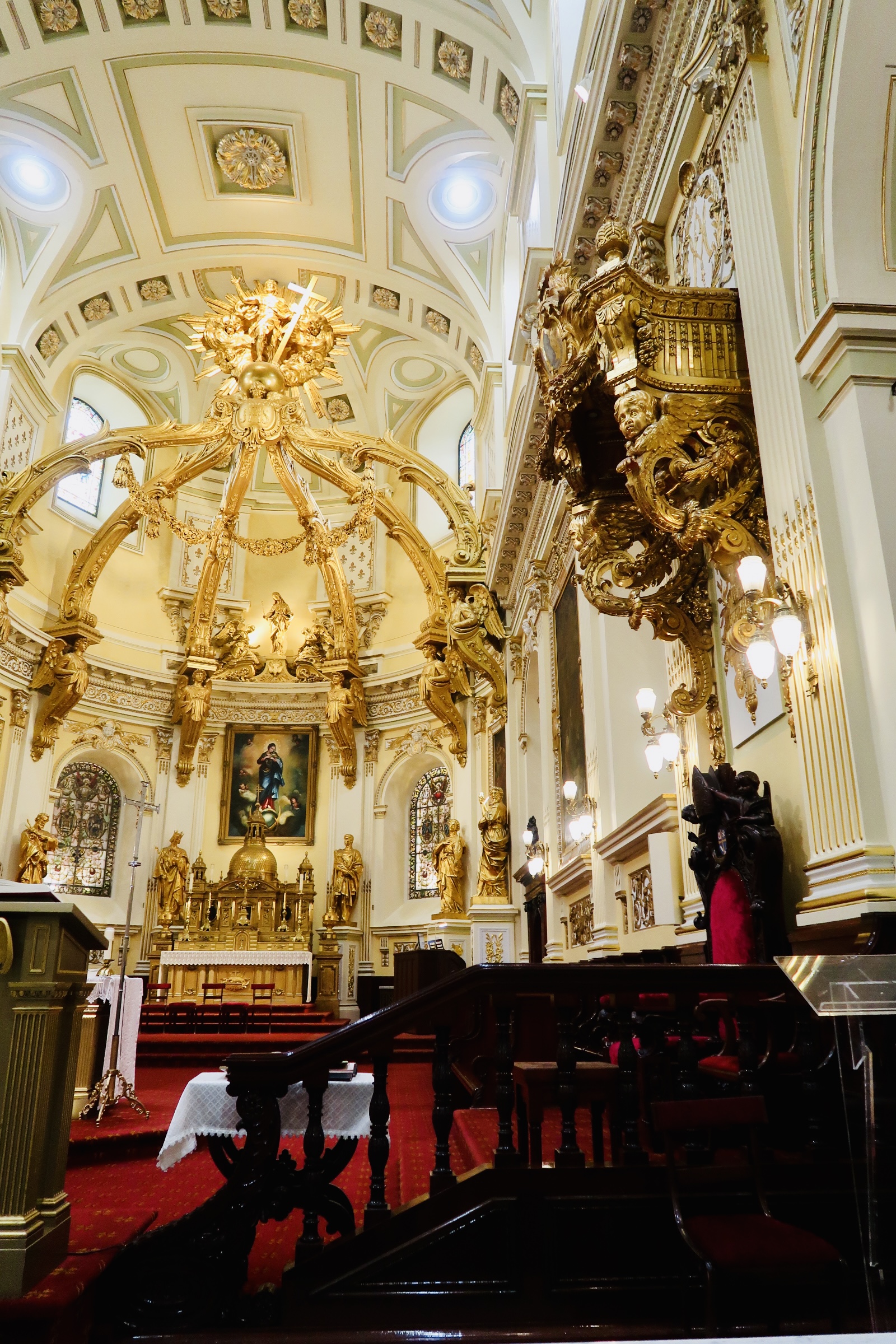
Cathedral-Basilica of Notre-Dame de Quebec was THE church we wandered through during our walks. And let me tell you…it lives up to that name. This is the oldest church in Canada and the first to gain the rank of minor basilica- which happened in 1874. However, this massive cathedral started off as a chapel- the Notre Dame de la Recouvrance- dating back to 1633. In 1647 construction of the actual Cathedral began under the name of Notre-Dame de la Paix. It was destroyed in 1759, rebuilt, and then destroyed again in 1922. Upon its 350th anniversary, a holy door was constructed, the second only to exist outside of Europe, only the eight in existence in the world. It was opened in 2013, for a little over a year, then opened again in 2015. It is not to be opened again until 2025. This particular Cathedral is absolutely incredible- it is pretty high up on my list of Cathedrals and churches, and I’ve seen my fair share. 

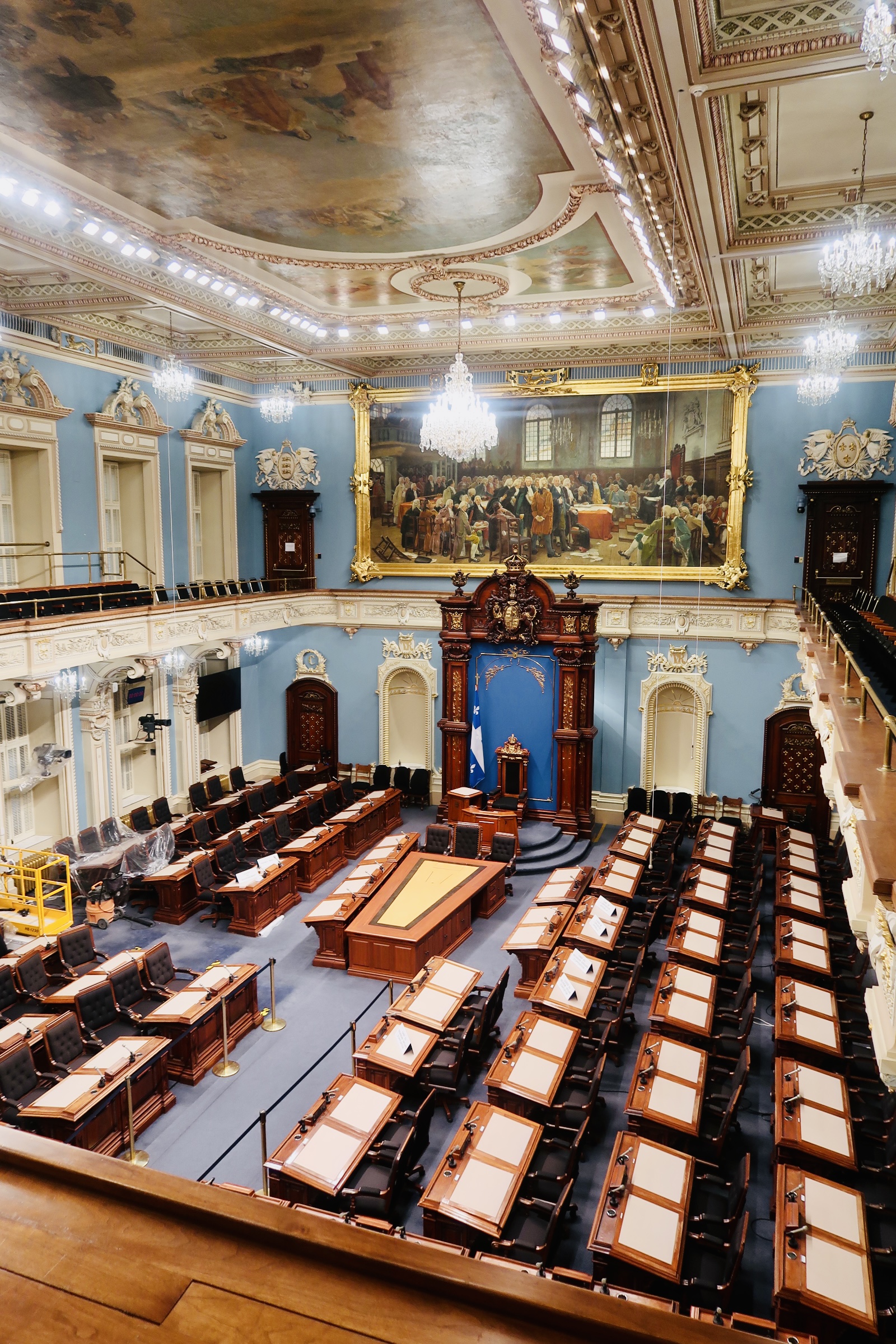
We spent a little bit of time exploring the Parliament Building of Quebec, which houses the National Assembly of Quebec. This present building was started in 1877, the first assembly met there in 1884, and the building was completed in 1886. The original building that housed the government was built in in 1648, rebuilt in 1694, and then destroyed in a fire in 1834. The clock tower was installed in 1888, the first addition was completed in 1915, and several more throughout it’s time. The new entrance was completed in 2019. We were able to walk through the halls, see where the government conducts business and learn a little about how it functions. 

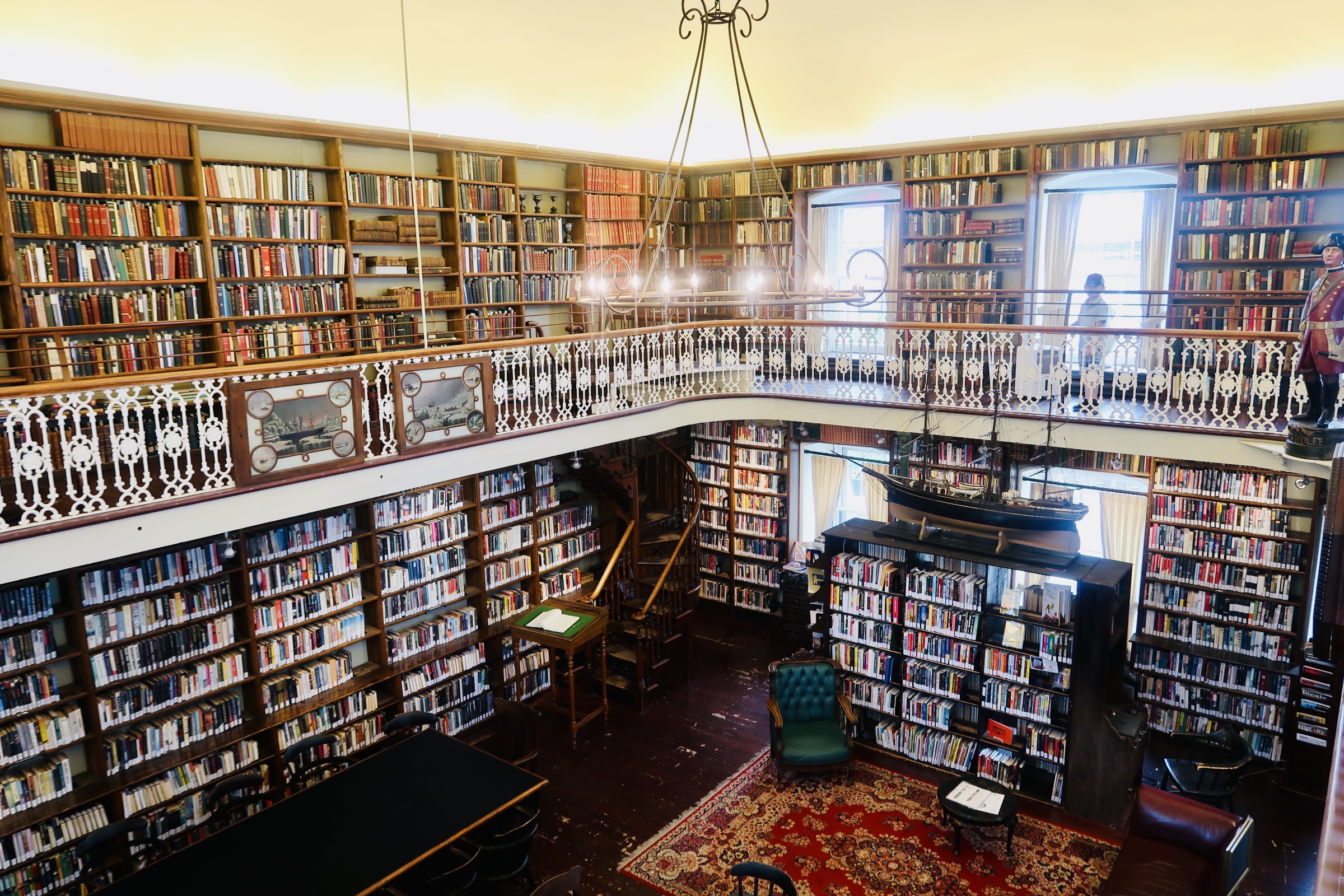
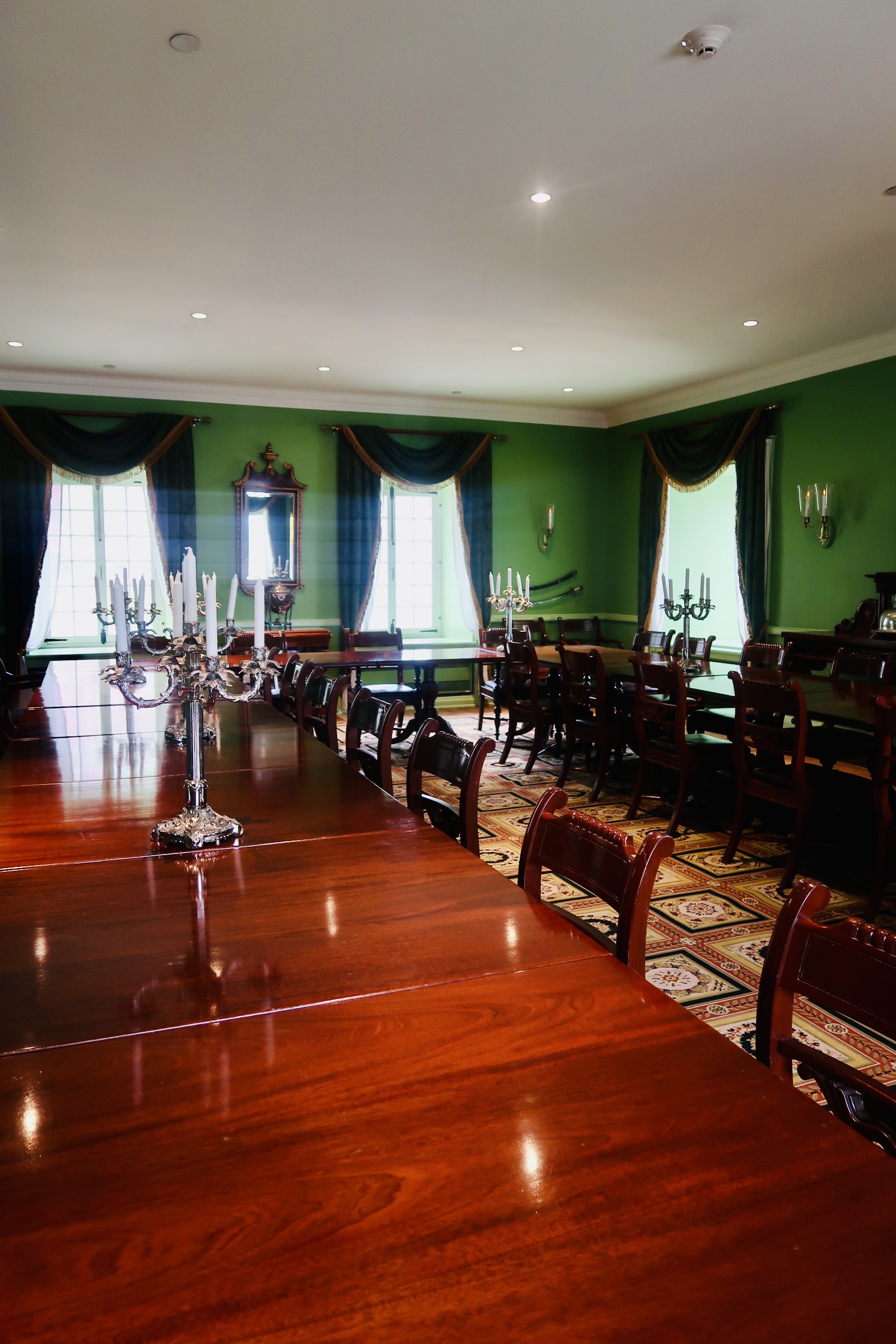
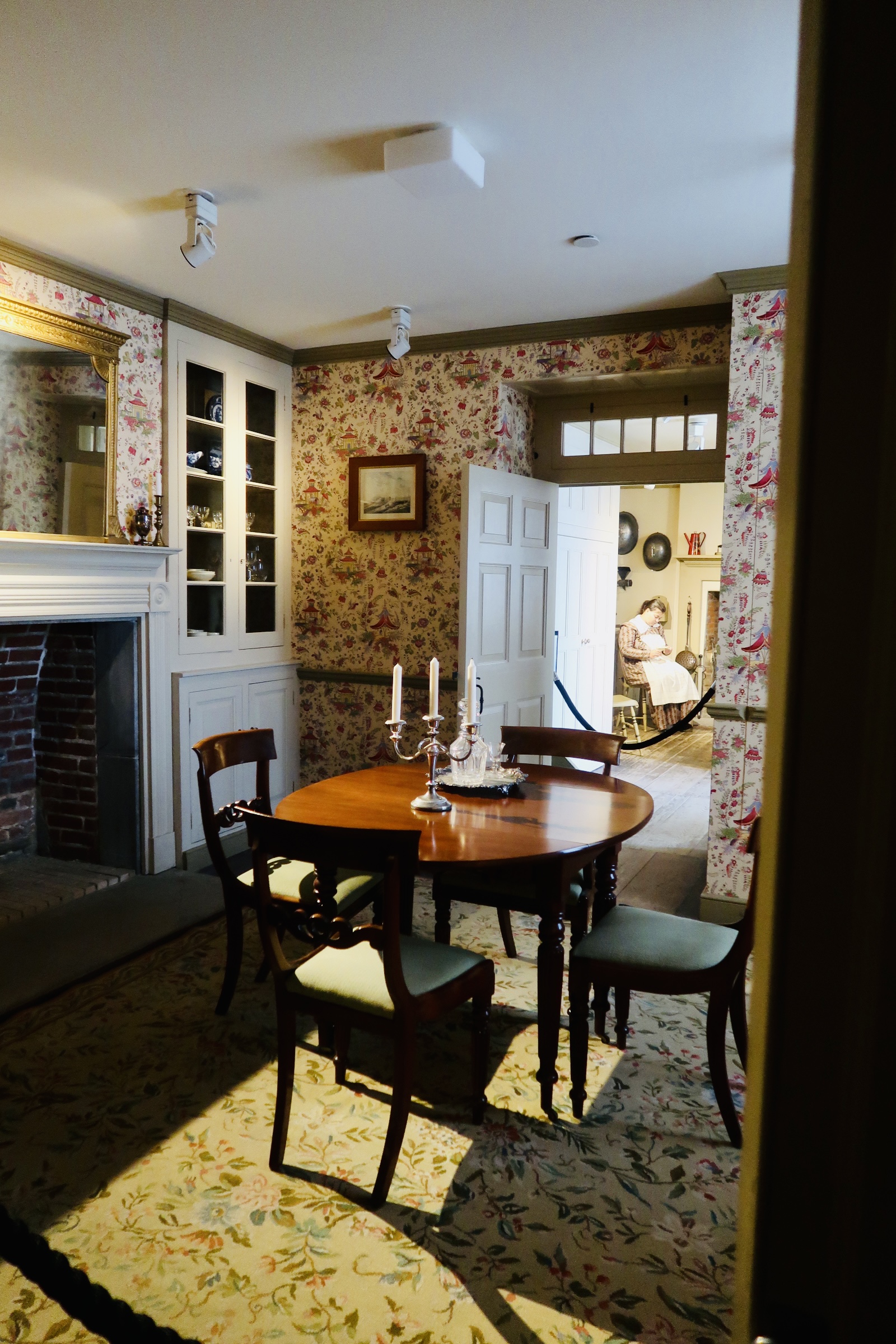
One of the final things I want to talk about in Quebec City is the Morrin Centre. This is a 200-year-old building that was initially one of the first jails in the city, turned school, and now is the leading English-language cultural centre and library. A little history, because this building has a LONG one. Initially this space was called the Redoute Royale and served as a military barracks, with the occasional prisoner of war. The original building was demolished in 1808, with the intention of building a new building to serve as the public prison. The new prison was completed and opened in 1813- though it housed prisoners starting in 1812. The prison was quickly put to full use and became overcrowded quickly. In fact, our tour guide told us that it was a common occurrence to get in light in trouble in order to go to the prison and get a meal. There was a total of 16 men hanged in front of the prison and you are able to walk the very same steps those men would have walked. You are also able to see a variety of markings in the basement cells from the prisoners. The prison was officially closed in 1867. 

However, the building history doesn’t end there- it is quickly turned from a prison to a college. Morrin College is the first English language higher education institute. The college partnered with McGill University to allow students to earn Arts degrees, and starting in 1885, the college admitted woman into the program. In 1868 the Literary and Historical Society of Quebec (dated back to 1824) moved into a wing of the College. This Society has played quite the role in preserving the history of Canada- not only gathering and preserving historical documents, but also creating the National Archives, creating a lending library focusing heavily on English-language books, and republishing rare manuscripts. 

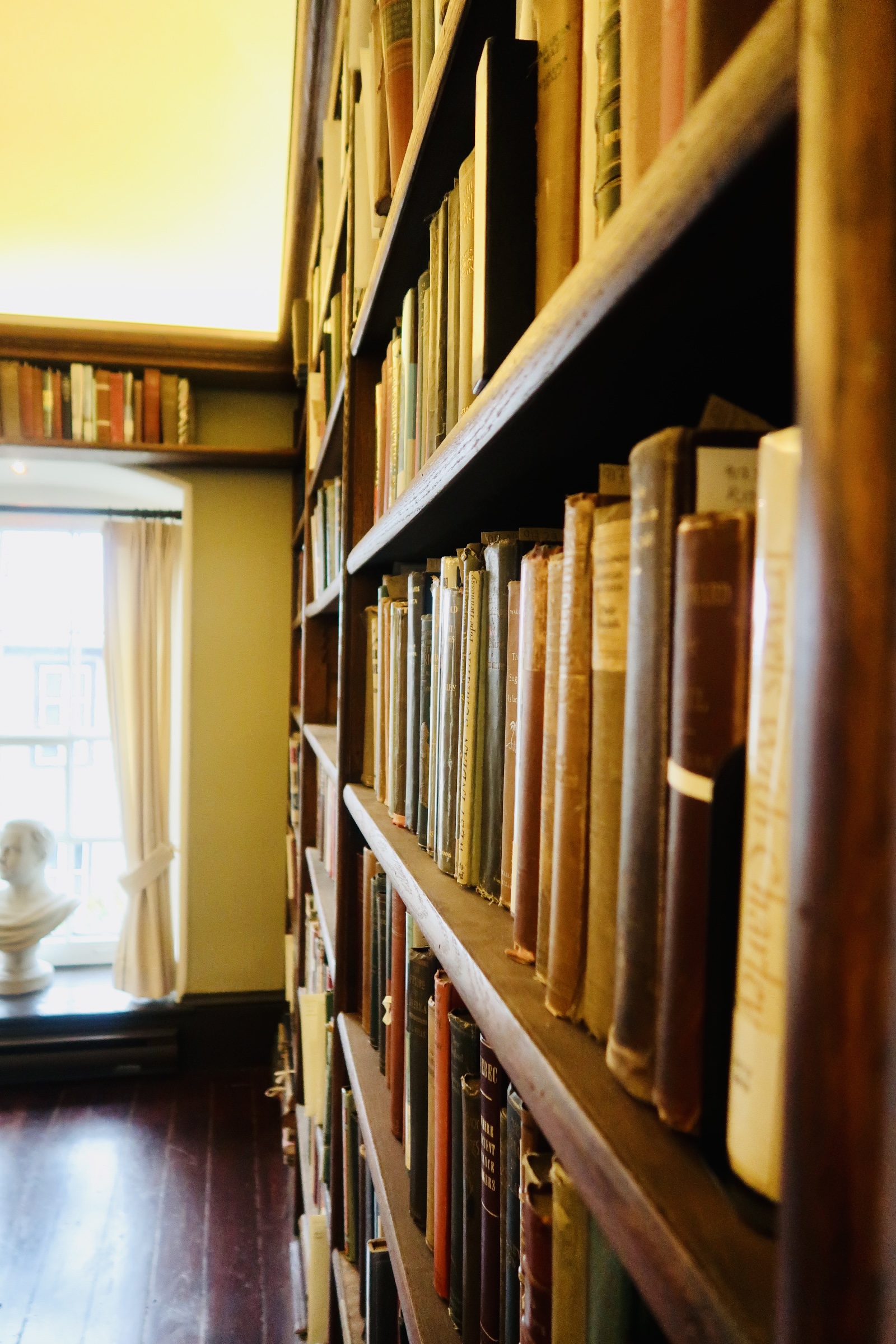
The building presently serves as a museum, a cultural centre, as well as a fully functioning library. But also, I mean look at this library- is it not dreamy?

The final stop on our time in Quebec City was the Artillery Park, which is part of the Fortifications of Quebec. This is a “living history” museum that combines actors and artifacts to give a hands-on experience of life under the different rulers of Quebec. We got to experience the British, the French, and the Canadians. The “tour” starts in the arsenal foundry which gives you a full history of the City and its’ fortifications, then a model of Quebec City before you head down to the Dauphine Redoubt- one of the oldest military buildings in North America. Again, you experience life during different military rules. Finally, you stop in the Officer’s Quarters and see how they would have lived in the military area of the city. This building was actually originally a bakery but was repurposed to hold and officer and family. Definitely worth a stop!

And that really wraps up some of the highlights of our time in Quebec City. I will say- we really enjoyed our time. I always note what cities we like to be in (as we aren’t really a city family) and it’s always these Older European or full-on history spots that we prefer. Somewhere we can walk everywhere, see some architectural variety, and surround ourselves with history on every corner. 

Ottawa, Tulips, & Mother’s Day

Over Mother’s Day Weekend we took a quick overnight trip up to Ottawa to not only visit the city once again (this time as more experienced travelers), but also to see their famous Tulip Festival. A little moment to say, that above all, the Tulip is my favorite flower. When we went to the gardens at Keukenhof I was beyond excited and, when my husband had sent me the link to this festival in Ottawa I couldn’t wait to go. 

The Canadian Tulip Festival boasts that it’s the world’s largest tulip festival- which I suppose if you look at the basics of that statement, would be factually correct. That’s not an insult, or to say that it is anything but gorgeous to walk through the park and along the water and just marvel at the beauty. I’m just saying that the reason they can claim that is because places like Keukenhof plant beyond just the tulips they are known for. 

This festival, and partnership with The Netherlands, dates back to World War Two. The Royal Family of The Netherlands, Crown Princess Juliana, secretly fled to Ottawa for safety, and in fact Prince Margriet was born IN Canada in 1943. In 1945, Canadian Troops played a sizeable role in the liberation of The Netherlands. Every year since, the government of The Netherlands has sent a package of Tulip Bulbs to Canada. In fact, much of the stops on the park walk speak about Dutch War Brides immigrating to Canada with their soldiers and making new lives together. 

The festival itself is free of charge and open to the public. It is a STUNNING to walk through- there is no bones about that. There are activities for children, food trucks, and education throughout. As with any “touristy” thing, I would highly suggest getting there early. We got there about 11 and it was already pretty packed with people. We wandered through the festival, stopping to look at all the varieties of tulips, as well as snap a couple of photos. I would say overall we spent a couple hours at the park total, we could have spent longer, but the kids were feeling a bit out of sorts, so we headed out.


One of the spots right near the main festival is the Canada Agriculture and Food Festival. This is, ironically, the spot that actually stuck with both boys and we all found something neat in it. This museum is actually part of a larger connection of museums that make up Ingenium. The idea behind the brand is to provide an experience that immerses all, showcasing how science and technology influence and connect with our everyday lives. It’s built three museums, each with their own focus, but the Agriculture and Food Museum is unique in that isn’t the only working farm in the heart of a capital city. Visitors are able to see a variety of farm animals, as well as learn about the history of farming in Canada, and the relationship between us, our food, and our environment. We wandered through the exhibits (there was a really interesting one on sustainable salmon farming), checked out the animals, and were able to watch a cow milking demonstration (which happened to be our older son’s favorite thing). 

I already mentioned that this was just an overnight trip for us (and actually upon review, one we could have just done as a day trip), but before we headed home, we decided to go walk through Ottawa a bit. We’ve done this before, but it was fun to do again. We wandered around (the exterior) of Parliament, down to the massive Spider statue, through more tulip displays, and finished off with a bookstore run.

We then headed over to the Canadian War Museum. These stops are as much for my husband as they are for our boys. This museum is Canada’s national museum of military history and has been recognized for its incredible study and understanding of conflict. Dating back to 1880, the current museum opened in 2005, on the 60thAnniversary of V-E Day. The unique part of this museum is that not only do you learn the history of the wars, but you learn a lot of information about war at home- what it was like for those at home during war time (something that I’ve always wanted to learn more about). The analysis is not only on the wars/conflicts, but how those conflicts pushed nations forward. 

The museum contains A LOT of artifacts- some you might even be surprised (Hitler’s limousine with bullet holes? Fuselage of a plane that belonged – and was salvaged- from one of the most famous pilots in Canadian History? And a whole floor of JUST military vehicles- some of which were used during WW1.). It was truly incredible to see the sheer amount of history amassed in this one building. Not just in military terms, but also in everyday terms- artifacts from any conflict that Canada has been involved with- games for kids, toys, newspapers, books, clothes and tv shows. It is all there. It’s really a spot that will have something for everyone. 

Our final stop was just outside of Kingston, and it was the tunnel for the Railway Tunnel. The tunnel is right off of Brockville’s waterfront and is about ½ a kilometer long. You are able to walk the entirety of it, with lights and music to guide your way. Stop at signs throughout that read through the history as well as the natural landscape of the tunnel. The tunnel dates back to the 1850’s and was intended to be able to connect the industrial Brockville area to other areas along the river. There were detractors to the plan to build the tunnel, in fact, the highest engineer in Canada was not on board. Work began in 1854, however quickly ground to a halt due to financial difficulties and wasn’t started again until 1856. The first train pulled through the tunnel in 1860 (just barley squeezed in on December 31) and trains ran through the tunnel until 1970. It is now a walking path, but there is hope for more development in the area. 

I will say- it was a pretty cool stop to see this history and stretch our legs. If you are in the vicinity, driving through or what not, take a stop. It’s only about 20 minutes to go through and you can say you walked right through history. 

All in all, it was an absolutely lovely weekend! And it’s revitalized our traveling- we don’t travel as much in the winter months, but with summer coming up soon we are planning some trips. 

A Weekend in The Adirondacks – 2022

It is that time of year again- the time when the world reminds us just how stunning mother nature can be. That’s right, it’s Autumn foliage time and this year really solidified to me that nowhere truly does it like The Adirondacks. Seriously- it’s got everything, the foliage, the small towns, the outdoor activities, but also plenty to do if you’re not into that- EVERYTHING. Last year we rv’d to Lake Placid/Whiteface Mountain, and we would have RV’d to this year’s location, but our schedules just didn’t really permit that to happen. So, instead we took two nights to go the North Creek/Gore Mountain area. To compare a bit between the two (you can read about our Lake Placid trip HERE) …

Geographically Lake Placid is in the more Northeastern section of the Adirondacks, whereas North Creek/Gore Mountain is in the Southeastern section. We live on the middle Western section of The Adirondacks- just outside of the region. 

In terms of peak foliage, we were in the region for the Peak Colors of the season this year. Peak can last anywhere from a day to a week- there are so many factors at play. Last year we missed the full-on peak by maybe a few days. Once the leaves start to fall, they all tend to come down fairly fast. Last year was a much rainier season, so they fell earlier, whereas this year it’s been a bit dryer, they’ve stayed a bit longer, even if they started popping color earlier. 

I will say, I still think RV’ing or renting a small cabin in a wooded spot or along the lakes is the way to go. You can fully immerse in all the Autumnal Glory that way in a way that staying in a hotel doesn’t quite provide. 

Now, on to our actually trip. Like I said, this year we headed to the Gore Mountain/North Creek area. We really booked this location to go rail biking with Revolution Rail. This is something I’ve wanted to do since finding out we were going to be living in Upstate NY. They’ve got fantastic locations out here, and the rides are great. You can find their website HERE. However, we booked an afternoon ride on Saturday, so we had all Saturday morning to enjoy the area.

Saturday morning my husband decided to surprise us with a gondola ride and morning at Gore Mountain. Gore Mountain is home to New York’s largest ski resort. It boasts 4 Unique Peaks with a large, varied number of trails down the mountains. Dating back to 1934 (with development in 1964) and the only still operating Gondola in New York State, Gore Mountain is constantly updating, upgrading, and adjusting both its trails and the operating systems and lodges to meet the future. And- if you’re truly an expert skier, Gore Mountain has a trail that is a 70% pitch, one of the steepest in the East.  

We took a lift up to the top of one of the peaks to take in the beauty of Autumn in The Adirondacks. Honestly, I think the best time to see the actual sea of colors is while you are on the lift (I thought this with Whiteface too- the drive up is where you’ll get the best opportunity to capture that “sea” effect), but the view from the top is pretty incredible too. Plus, there was snow on the top! So, we got to experience that as well! If you’re interested, most of the ski mountains offer both mountain biking and hiking throughout the summer and fall season, something to keep in mind!

While we were at Gore Mountain, they were having their Harvest Festival, so we were able to enjoy live music, vendors from a wide variety of businesses, and some fun games. It made for a fun kick off morning. 

From there we headed down to North Creek NY for the event that we really came to this area for- Rail Biking along the Hudson River. When I had first learned that we were getting stationed in Upstate NY (after I got over all the feelings of leaving Germany) I knew that I wanted to go rail biking. It really just seemed like a fun and unique experience. Now, there are a couple different companies and locations for rail biking, but we decided to go with Revolution Rail. They offered a rail biking experience right in the “heart” of The Adirondacks and would give us a new way to experience the autumn foliage. I recognize that this is one of those things that is…very “us” as a family, but we actually really loved it. 

So, Revolution Rail was started in 2016 in North Creek NY. They launched in 2017 with 6 railbikes. The general idea is to turn the unused old railroad tracks into an opportunity. The railbike is either two or four seats and sits comfortably on the track. The ride itself is actually relatively easy- more comfortable than biking (because you’re on an actual seat) and any time it gets difficult- which is none- all you have to do is marvel at the world around you and it gets easy again. The railbikes are able to accommodate just about anyone- we had a wide variety of ages and skill level (you’re in a group of 10-20 bikes) and they are able to allow babies in strapped on carriers (like an ergo or bjorn). Revolution Rail is not only in New York, they offer trails in Colorado and New Jersey (and I think I might have seen one other location coming soon).  Both the Colorado and New York locations offer special combined experiences- usually involving the rail biking and a water experience. 

We did the South River Run ride which was a little over 2 hours (I would say about 2.5). We rode about 3.5 miles, stopped for a break and history chat, then biked the 3.5 miles back. It was incredibly beautiful and an experience that I honestly would repeat again and again. The boys weren’t able to pedal (they could barely reach- so we told them to relax and enjoy the ride) and Robert and I didn’t have any issues leisurely pedaling. I just can’t say enough fun good things about this little adventure, I highly recommend it. 

From there we wandered through the main street of North Creek, checking out the glassblowing- super cool- and other little shops. We stopped for dinner and headed back to the motel for the evening. 

The next morning, we packed up and headed out to make our way back home. We stopped at one more place though before reaching our home- The Adirondack Experience. The Adirondack Experience is a museum spread across a tract of land that walks visitors through the history, the use, and the relationship between the people and the wilderness of the Adirondacks. The land was originally purchased in 1867 by a Connecticut Farmer who used the land for a logging and lumbering operations. When The Adirondacks started to become a popular tourist spot, Tyler Merwin (the son of Miles Merwin who originally purchased the land) allowed for overnight guests. In 1880 he built a hotel on the location with the hotel growing to house 100 guests in 1907. While visiting the Experience, you are actually able to see and walk in the Log Hotel, originally of 1876 and named on the National Register of Historic Places. The Blue Mountain House continued in operations until the twentieth century- though it switched owners. In 1948 the hotels new owner, William Wessels, teamed up with Harold K Hochschild, a business exec and amateur historian, to form the Adirondack Historical Association. The original Adirondack Museum opened in August 1957 with the goal of showing the relationship between humans and the wilderness of the Adirondacks. The Experience features not only several buildings of exhibits, but also a steamboat, a railroad engine and passenger car, a stagecoach, canoe, and several other horse drawn vehicles. 
So, we actually spent a good 3-4 hours just exploring the grounds and learning all about the Adirondack region as a whole. The experience is very self-guided, with tour guides within exhibits from time to time. We started with the Boats & boating and learned about the evolution of the boating industry as it related to the Adirondacks (boats used to be the only way to get around!). We wandered over to the kids cabin and schoolhouse, where the boys got to experience not only what the schoolhouse offered, but also the various responsibilities kids had back in the early 1900’s. We wandered through Sunset Cottage, and the exterior of Log Hotel, which was closed at the time, as well as the Artist’s Cottage. The Life in the Adirondacks talked a lot about how man tried to work with the land, as well as the Indigenous Peoples of the regions. I would say this was one of the more interesting buildings of the group. We stopped at the river pavilion, which is where the steamboat and train are housed, headed up to bull Cottage, which aside from maybe being a bit small for us, is really our dream location. Finally, we stopped at the Work in the Woods, which talks about the logging industry, in both good and bad terms. It was well worth the stop, and they have a good number of hands on and hands off options. 

All in all- Leaf-Stravaganza 2022 was a big success (that’s what I’m calling this moving forward…). I truly don’t know if there is anything out there that can compare to Autumn in Upstate New York- it’s magical. I’m sharing every bit of the excitement and beauty over on Instagram- @acuppacosy, so follow there for the day-to-day beauty (even though we are past peak). 

A Weekend in A Camper

Over Labor Day weekend we decided it was time to take another camper trip. To be honest, I’ve been kind of itching to get back into a camper, get out into nature, and take some massive steps back from the world. There’s just something about being in a camper, disconnected, in nature that really just works for me. It gives me that much needed “silence the world” feeling. 

Now, last year when we did our camper trip it was in October to the Lake Placid area, and it was glorious- the beauty of Autumn in the Adirondacks is unparalleled and unreal. You can read that HERE. It was our first time in a camper, and we fell in love (if you can’t tell). 

This time we decided to go to another famed region of New York- Letchworth State Park. Known as the “Grand Canyon of the East” it is known to be one of the most “scenically magnificent areas” of the eastern part of the country. It is home to a lot of hiking, horseback riding, white water rafting and kayaking, hot air balloon rides, as well as a variety of lodging right within the park. 

We decided to stay outside of the park, mostly because most of the spots were already reserved when we looked (these spots, both, book up FAST). We chose a KOA campground on the southern end of the park and we’re actually very pleased with it! I know that in some instances KOA’s can get a bit of a bad rep, and sure being as close to neighbors isn’t like…great, but our experiences thus far have been great. We arrived in the afternoon on Friday and spent the first few hours getting settled in, unpacking, letting the kids run free and wild. 

The next morning dawned bright and clear so after breakfast we headed out to Letchworth State Park. Letchworth State Park follows the course of the Genesee River for about 17 miles as the river goes over a total of 3 waterfalls and cuts a gorge through the landscape. It crosses two counties as well as 5 cities. The park dates back to 1859 when William Pryor Letchworth started purchasing the land. He started with the land nearest to the Middle Falls, built his home and then started to look beyond. In the end by 1906 he had 1,000 acre’s that he bequeathed to the state of New York. The park contains three waterfalls, Upper, Middle, and Lower. Each are unique, each are located within the southern section of the park (yes there is a southern/northern line, and it is marked within the park-it is THAT big). Upper Falls has an active Railway arch bridge above it, creating quite the photo backdrop, but also historic as that railroad bridge path dates back to 1875. Middle Falls is the highest of the three waterfalls at 107-foot drop and is just the powerhouse you expect it to be. Lower Falls is exactly what you would think from the name, a lower “calmer” fall over several levels, with a stone bridge just below. There is one smaller, ribbon waterfall, however most of the time you are not able to truly see it. 

My initial thought was to hike the distance between the three waterfalls; HOWEVER, this is a 7-mile hike and is listed as a “moderate” level hike but has a steep incline/decline that we didn’t know about until we overheard some hikers speak about it. We decided at the middle falls that hiking the full way was not feasible with two little kids on an 80 something degree day. This is fine as not only can you drive the entire park, but you are also able to stop at more than enough spots to get out, take in the gorge, the river, and the falls. There are two parking lots for the falls, one located in between upper and middle, and then one close to lower falls. (To be honest- I was also ok with not hiking as most of the hike is above the river, rather than within the gorge.)

I think that the park itself is incredible and definitely worth a visit, and the amenities for camping or staying within the park are great, but if you are looking for river/waterfall/gorge hiking, I would recommend Watkins Glen State Park. Obviously, these are two VERY different parks and I hate to even put the comparison there, but I would definitely say I preferred that one to Letchworth if we are talking about water adjacent hikes/locations. 

We basically spent all day within the state park, as planned, and just decided that when we were done, we would head back to the campsite. The KOA campground had live music both nights right near our site, so we had an enjoyable evening next to the fire. 

We slept in a bit the next morning and it was a bit more overcast than Saturday. We knew there was a possibility of rain later in the day (hence the State Park on Saturday), so we decided to choose things a bit more…low key. We gave the kids an option of two activities, both geared towards their interests (but we would enjoy too). The first was a train ride that would span the countryside, the second being an animal safari. It was a tough decision, but they ultimately chose the animal safari. 

Now, let me say this first- I am always wary of the animal sanctuary/roadside zoo style places. I tend to…avoid or research the practices prior to visiting. I just wanted to share that before getting into this. I think, like anything else, there are good places and bad and it’s up to us to look into each place before we visit. 

So, we decided to spend a couple hours at Hidden Valley Animal Adventure. We opted to do the safari they offered, in their vehicles with a tour guide, rather than our own. We did a more mid-day tour time and our tour guide ended up being one of the animal care takers. So, we not only learned what the park was like, but the specifics in how they care for the animals and how they manage heards, relationships, and the like. Not to mention how they…simply maintain and provide the best for the animals. We were able to see quite a variety of animals, but I never felt like they were animals that were…inappropriate or overly exotic for the location. We did get to feed them which was cool, and the guide was incredible in passing along knowledge and letting us know when to step away. After the safari you are able to walk up to the petting zoo and feed the goats or down to the Koi Pond and feed the fish (or both really). It was a great couple hours.

Thankfully the rain held off until after we got back to camp and didn’t properly start coming down until later in the evening. We started up the fire to try and enjoy one last one, cooked up some dinner, and just relaxed. When it started to rain, the pitter patter created quite the perfect ambiance for us and the live band for the evening were great! 

That really wraps up our weekend. It was a much needed, very relaxed, leisurely weekend unplugged and away. One of my goals in the coming years is to make these Camper trips more than a once-a-year occasion. We really enjoy them and, eventually, want to get a camper of our own. 

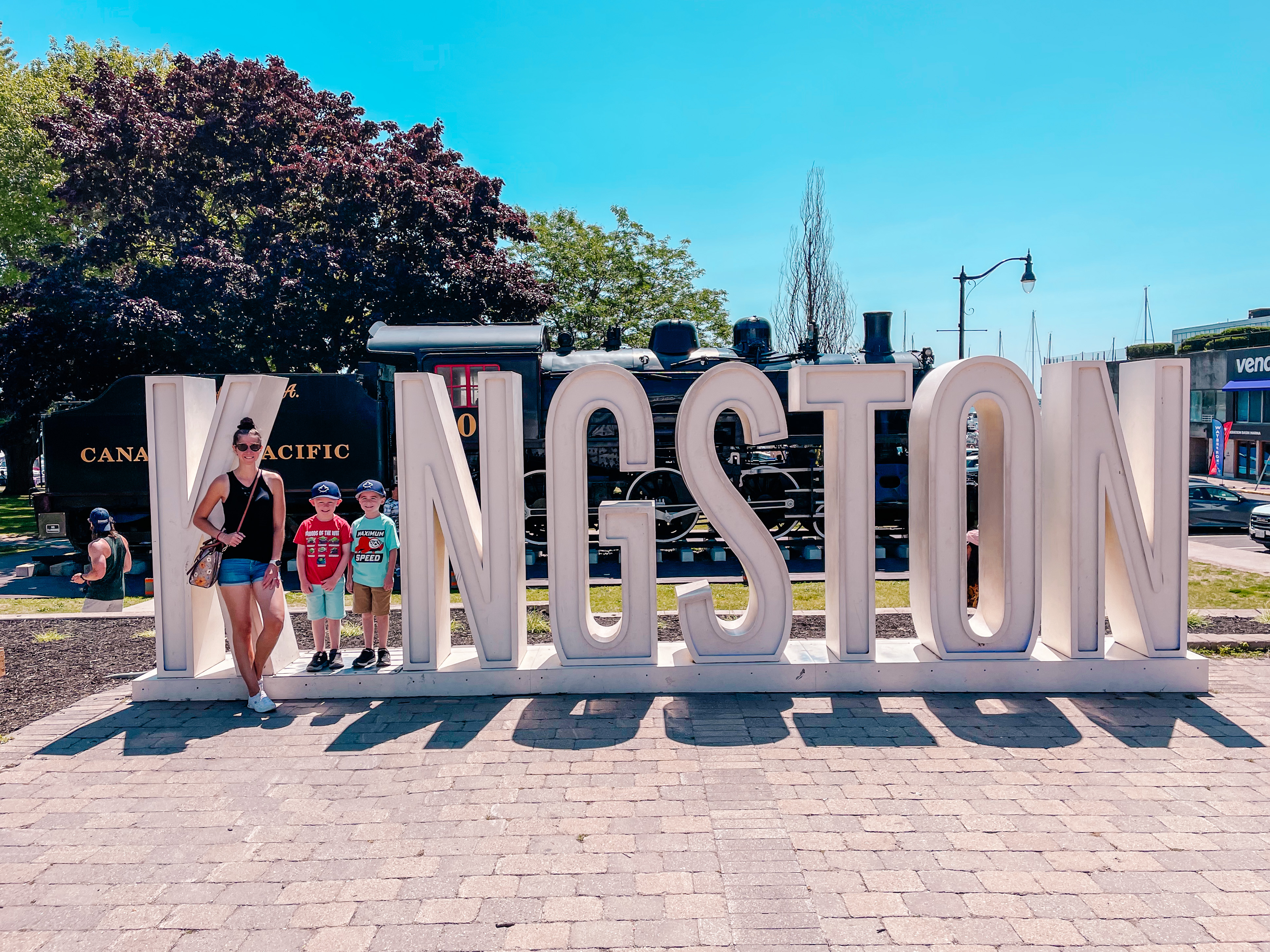
A Cuppa Cosy Summer Holiday 2022 – Kingston, Ontario

I went back and forth as to whether to write this final post on our summer trip. Kingston is incredibly close to where we live, we didn’t do much while we were there (except one really cool tour, which is why I decided to write this) and we were definitely at the end of our…travel excitement. However, I decided to write it to not only share the cool spot we toured, but also just a little insight into what our final day or two was like in Canada- because boy did things happen that made me think. 

As always, let’s start with a little history of the area. 

Kingston was originally named Cataraqui and inhabited by the Five Nations Iroquois (though the Wyandot People – of Huron origins- were the first occupants). The French arrived in 1615 and established Fort Cataraqui in 1673 to serve as a military and trade base. The fort itself was occupied on and off, would be destroyed and rebuilt several times over, until finally the British took possession in 1783. The renamed it Tete-de-Pont Barracks in 1787, then turned over to the Canadian military in 1870. It is still in use today; however, it is now named Fort Frontenac. 

Kingston played a bit of a role in the American Revolutionary War as a home location for Loyalists (those who were loyal to the British Crown and wanted to remain a part of the United Kingdom). In order to make “space” for the Loyalists the British worked with the Mississaugas to purchase land. The Loyalists gave the settlement the name of “King’s Town” – which would eventually turn in to Kingston. 

One of the bigger military times for Kingston was the War of 1812. Kingston became a major military town and engaged in an arms race with the American Fleet stationed in Sackets Harbor. The base of Fort Henry, later known at Point Henry, was built to help protect the Canadian Fleet and garrisoned until 1871. It’s now a World Heritage Site. 

Once incorporated as a town, it held the largest population in Upper Canada until the 1840’s (it became a city in 1846). From what I can see- Kingston is really known in terms of cultural hot spots. They host several film festivals, music festivals, writer retreats, as well as Busker events (we’ll get in to that last one). A lot of musician and actors name Kingston as their birthplace, most notable being Dan Aykroyd (there are many more musicians that I could name as well). A final notable fact, the first high school in the province was established in Kingston in 1792 by a Loyalist! 

I’ve been to Kingston now twice, the first being a fun girlie day out where we wandered the streets of downtown, stopped in a local independent bookstore (spent some money…), and grabbed lunch at a great Tex-Mex spot, Lone Star Grill. The second time was this trip with both boys and my husband. 

We headed to Kingston from Toronto on the day where half the nation of Canada was crippled by a software glitch. The communication servers for about half of the country simply went down. This was horrifying on so many levels- people weren’t able to work, weren’t able to pay for products (it affected the banking lines, so no debit or electronic means of payments, BUT they could accept credit cards, not debit as credit, but actual credit cards), but people were not able to communicate via phones, the hospitals were impacted, emergency services. It really crippled that portion of the country for the entire day- I believe it started sometime in the wee hours of the morning and didn’t get fully restored until well past midnight. Thankfully it did get restored and everything returned to “normal”, but it did make you think…about a) how reliant we are on technology, and b) just how…dominating our technology/processing world is by very few companies that so much went down. 

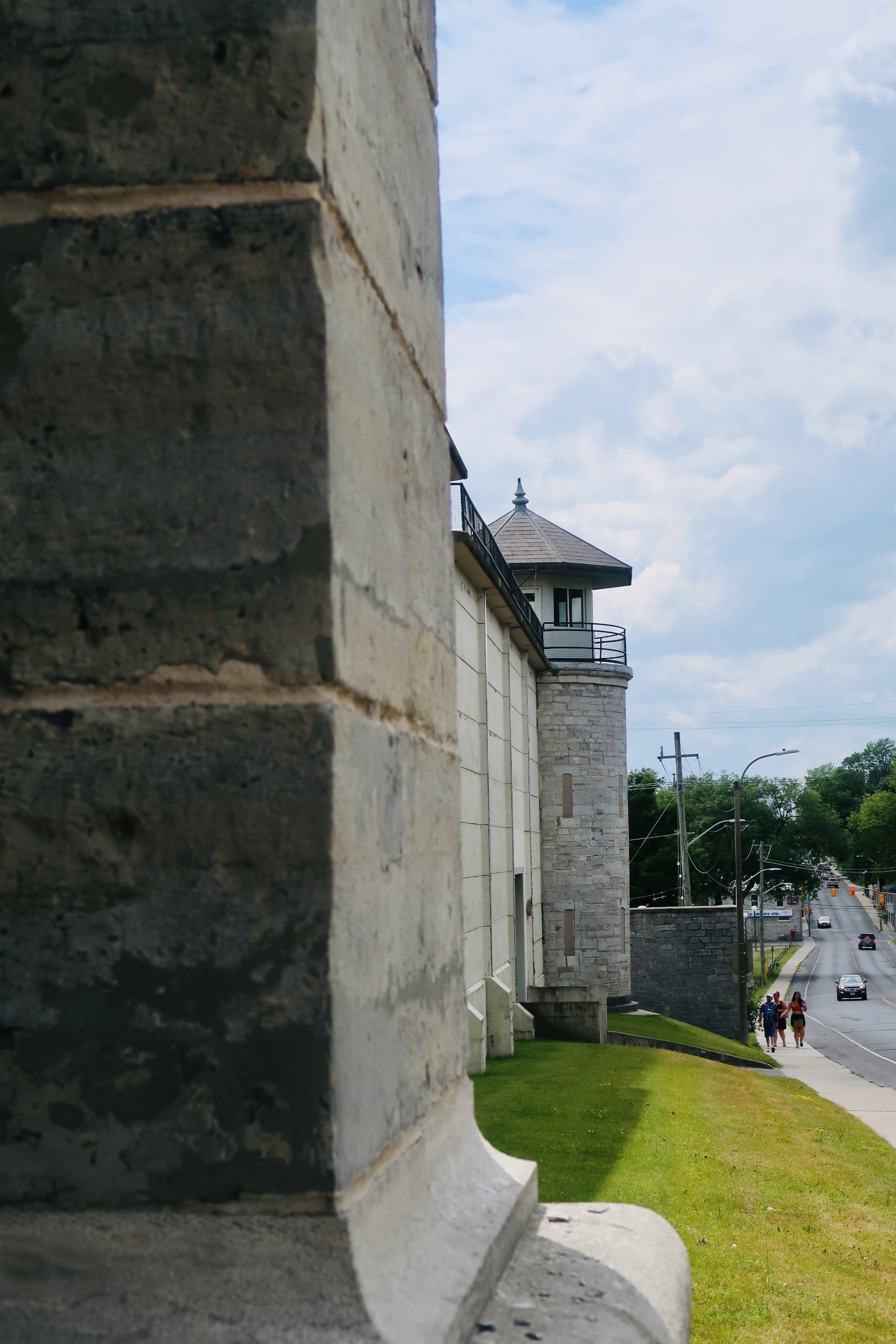
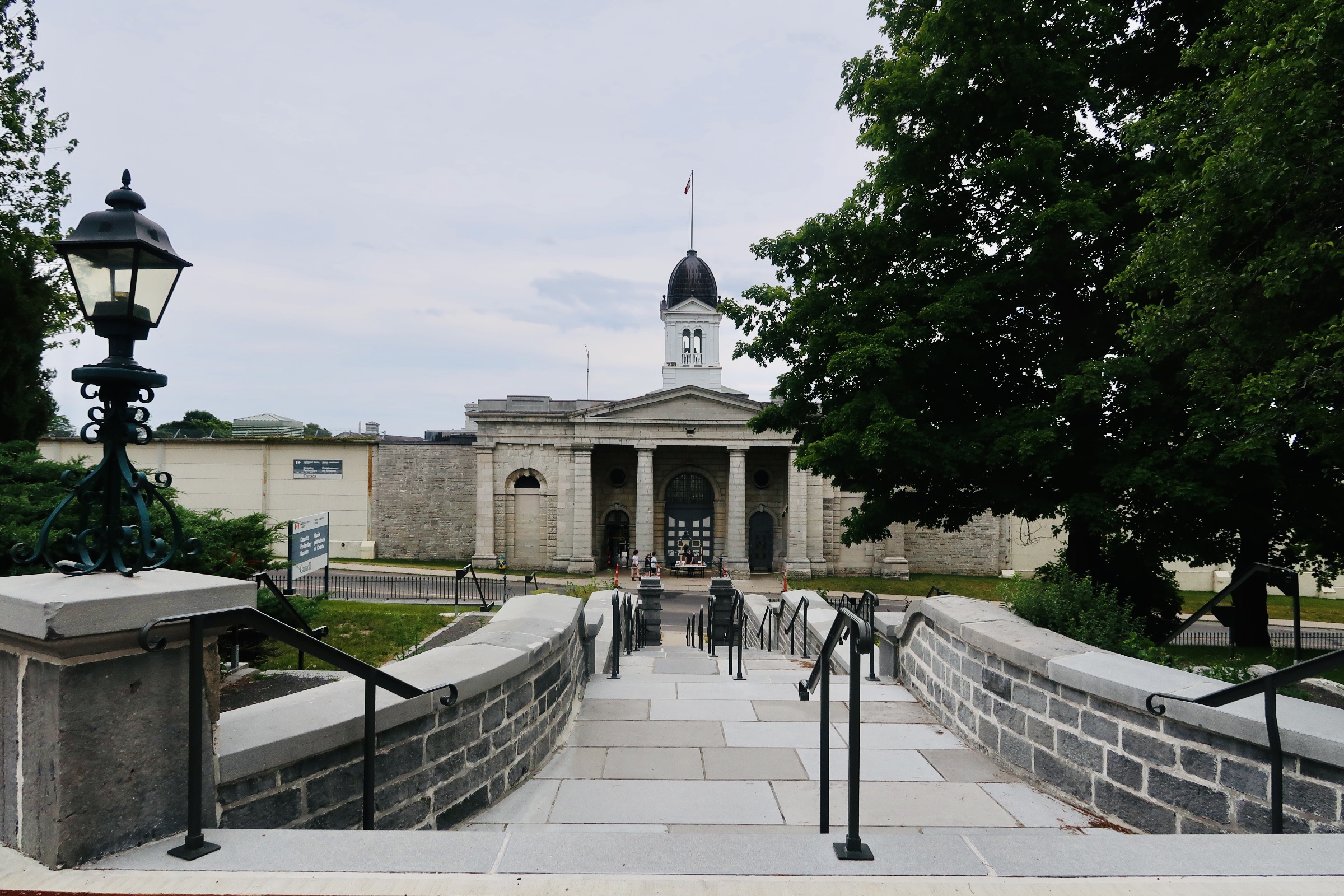
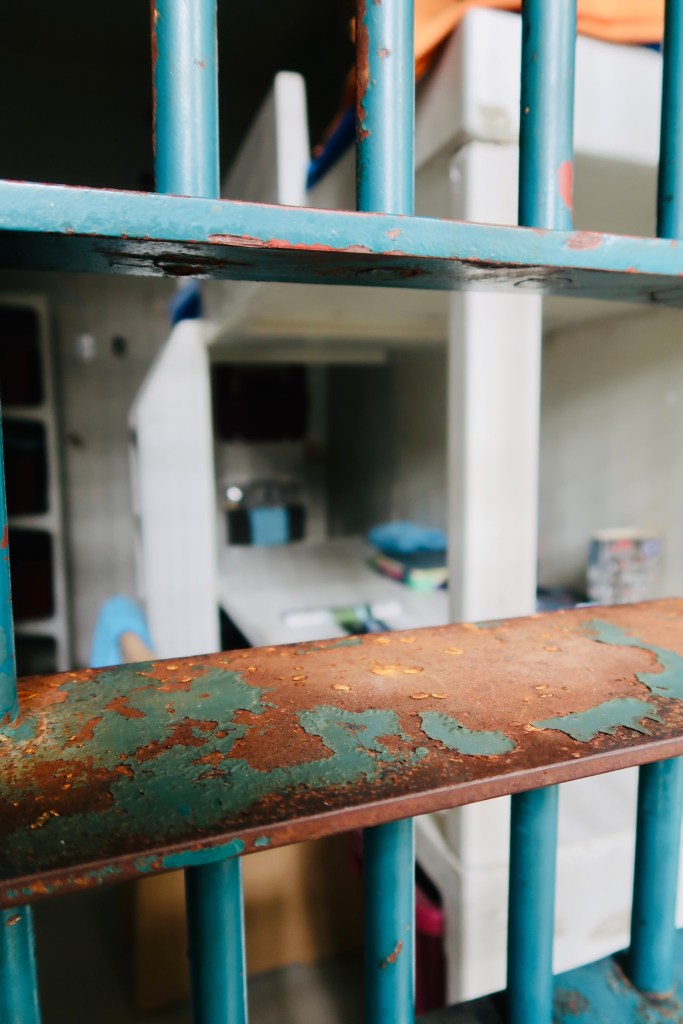
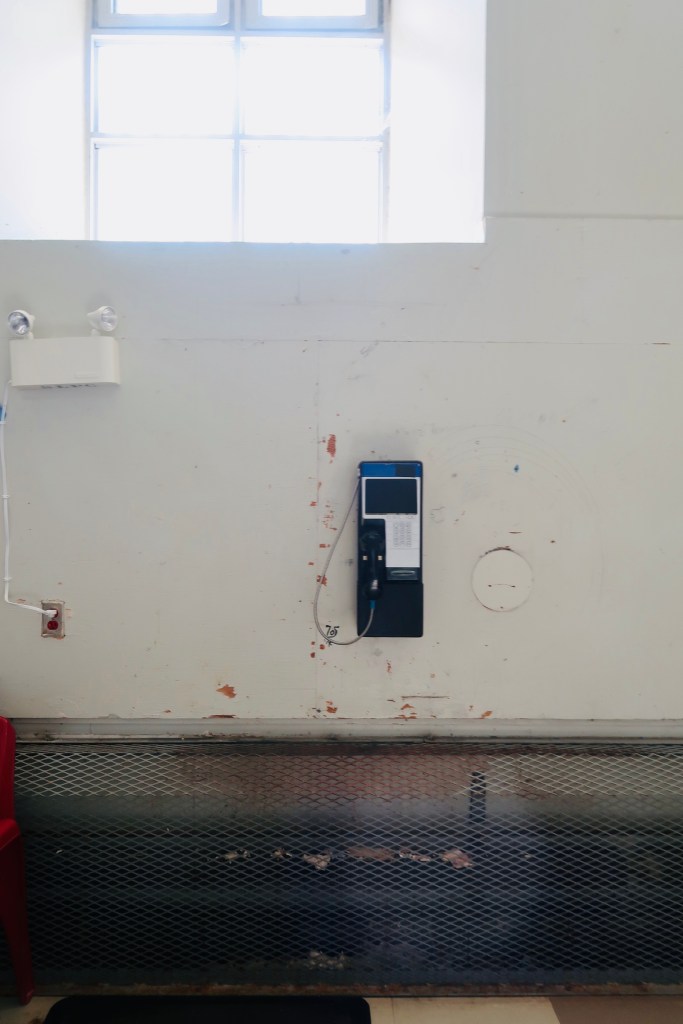
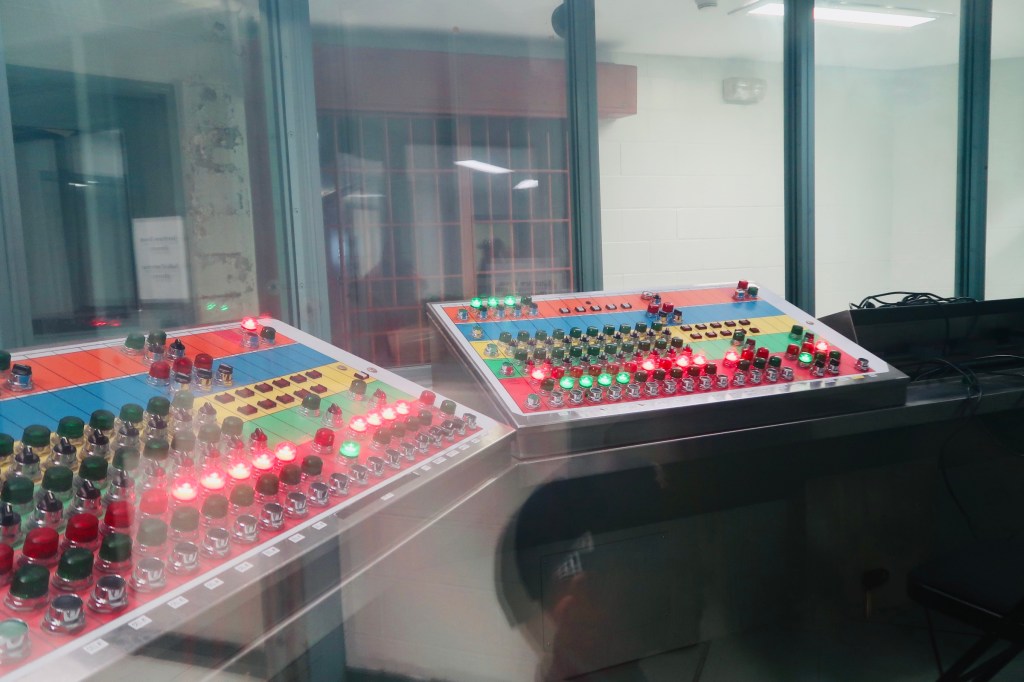
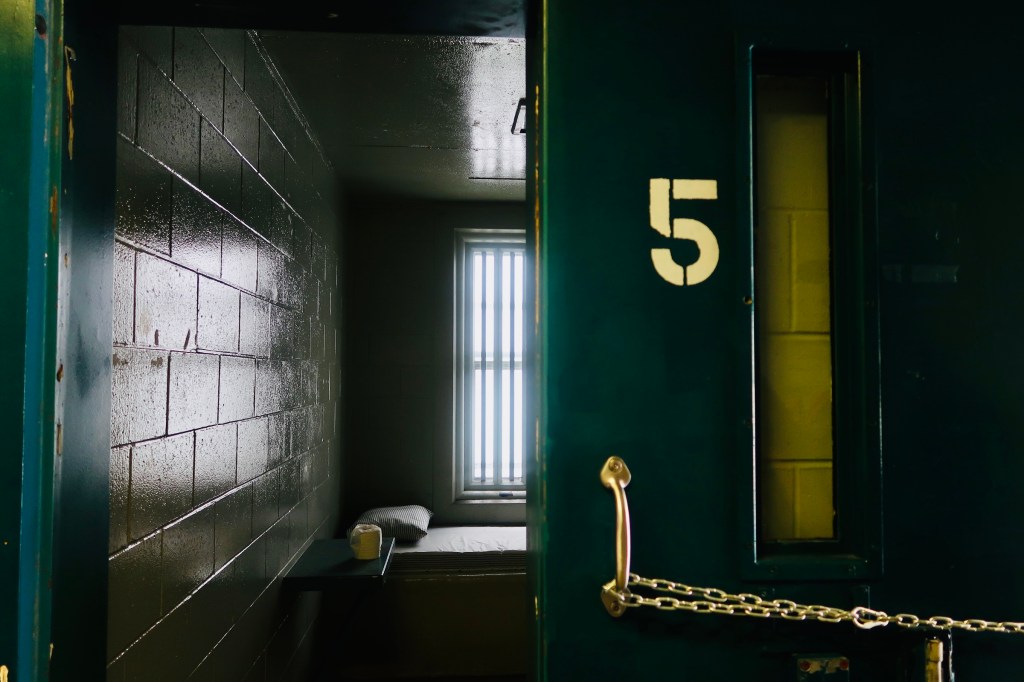
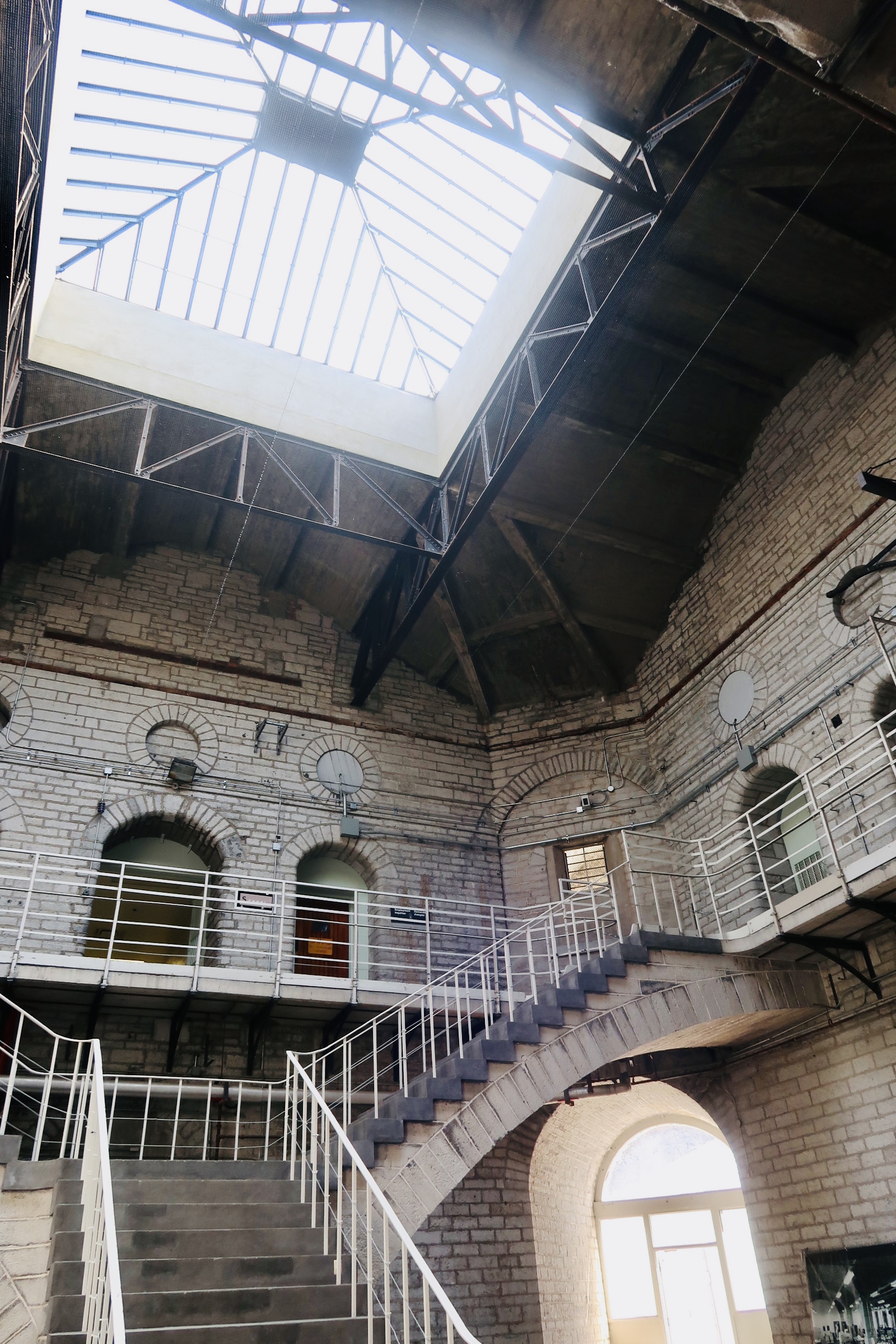
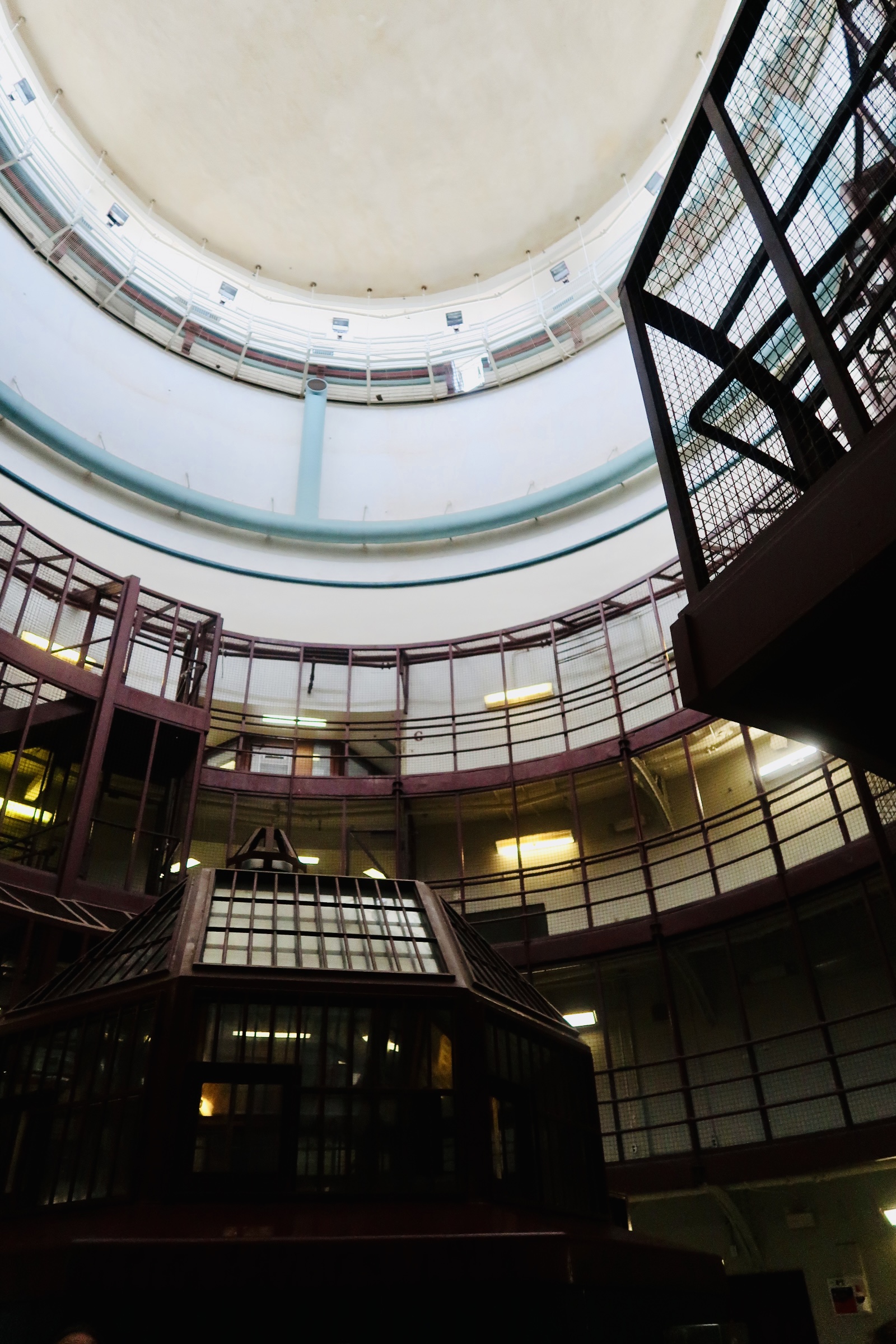
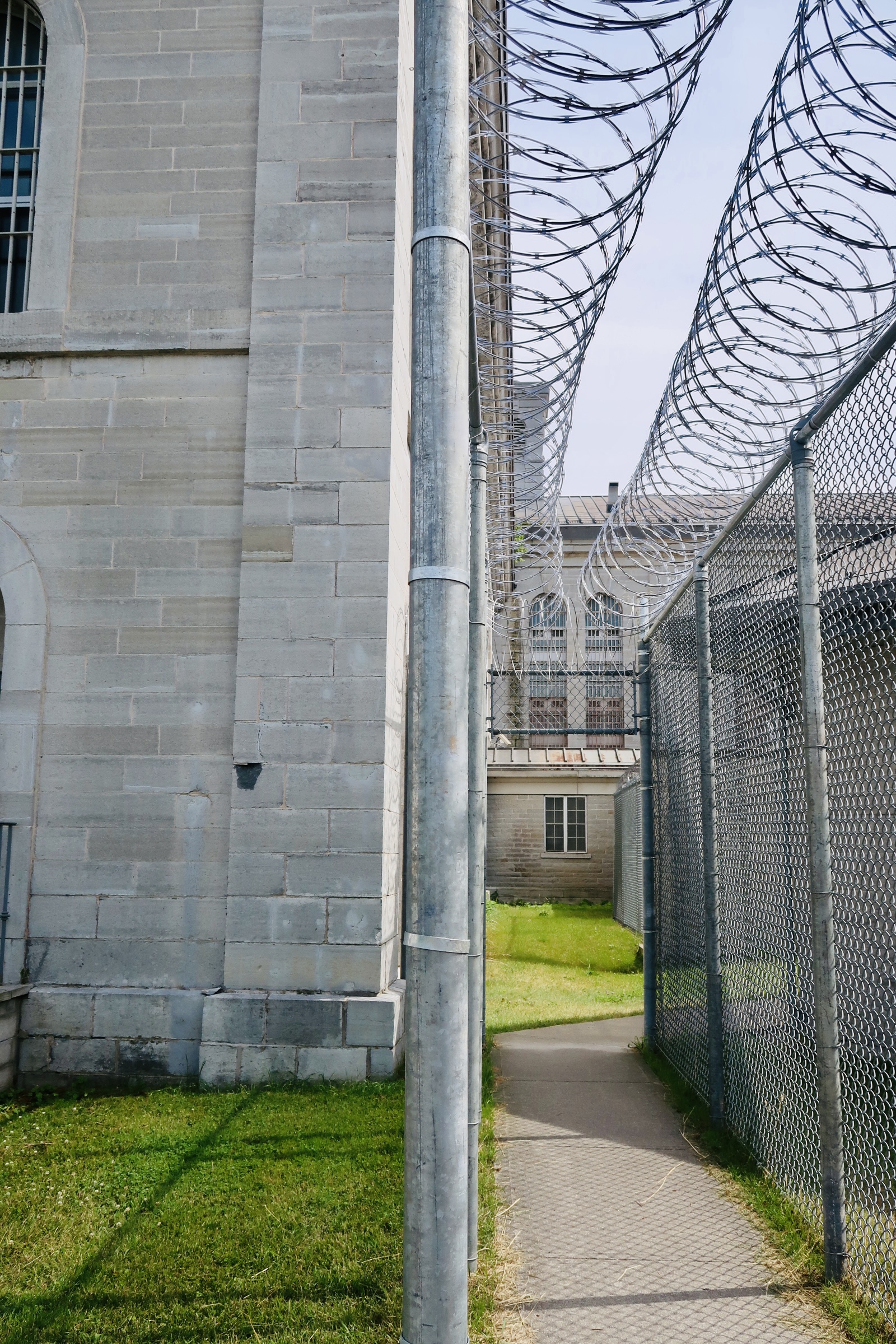
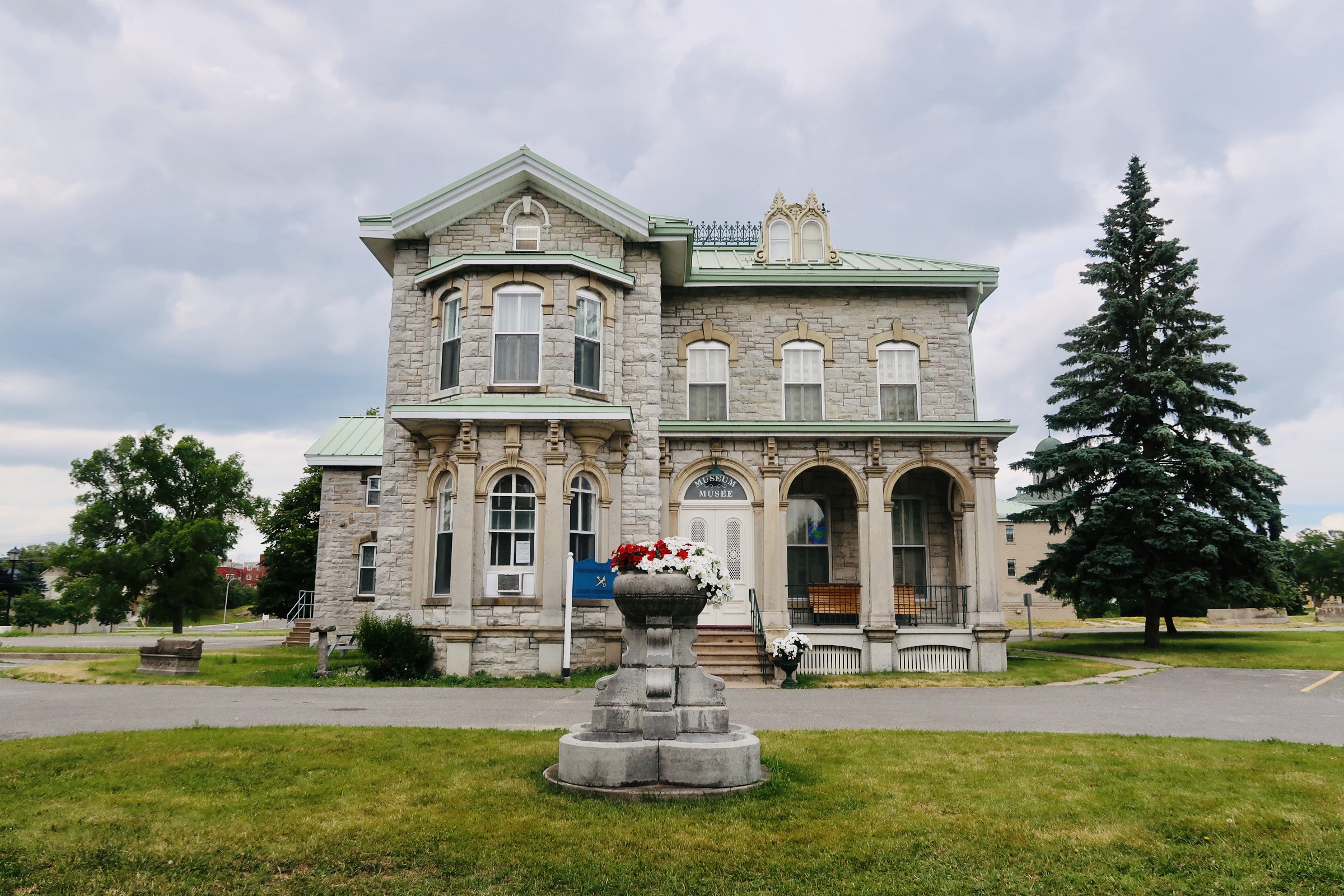
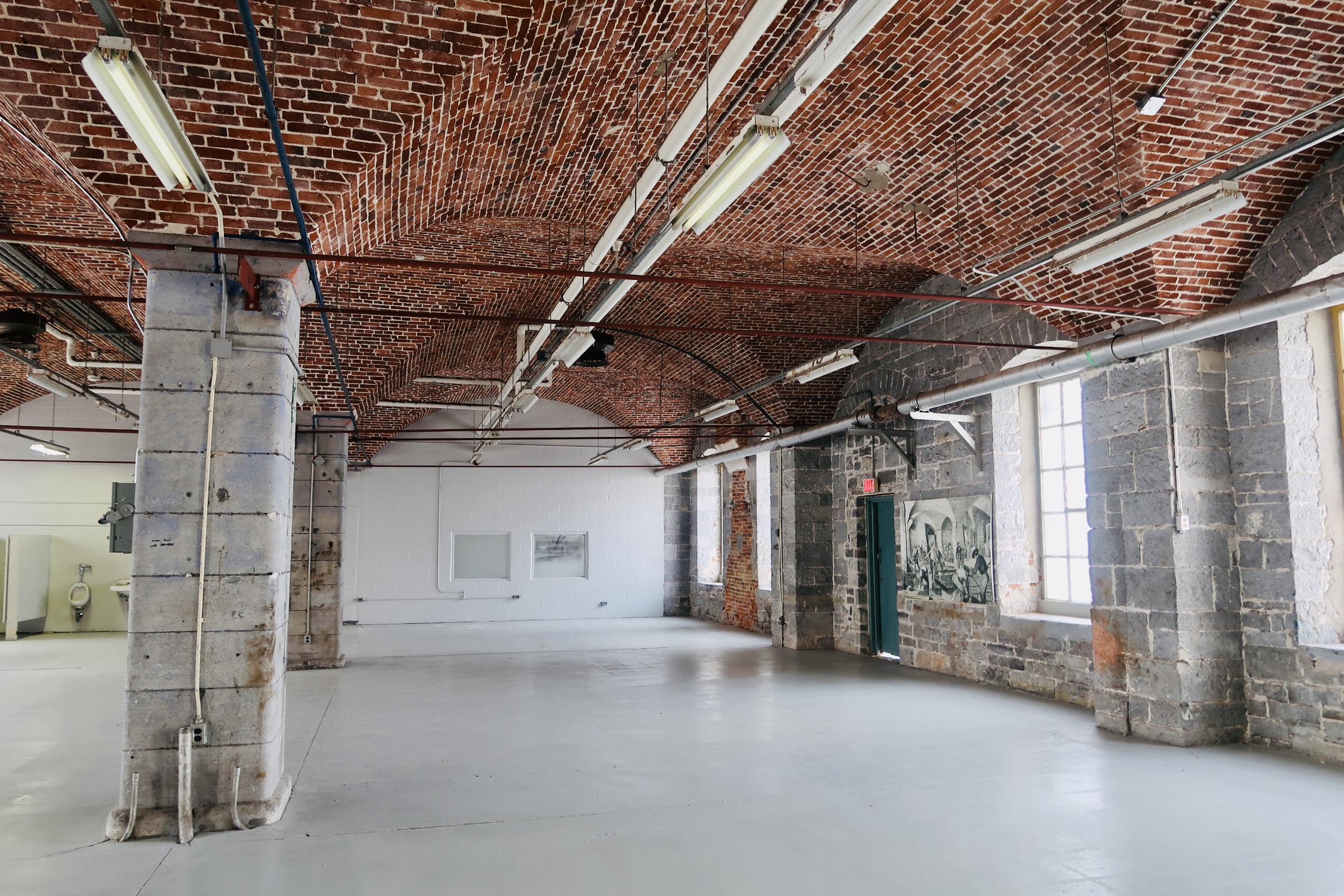
Once we arrived in Kingston and we immediately went off to our single scheduled event- a tour of the Kingston Penitentiary. Kingston Penitentiary was a maximum-security prison that has only recently closed in 2013- actually at the time of closing it was one of the oldest prisons in continuous use in the world. Originally opened in 1835 as a provincial penitentiary, it was one of nine prisons in the area. The building site was selected due mostly to the ready access to water and abundant fine limestone. It first housed six inmates, though it could hold 564 inmates total by the time it closed (this does not include the treatment center within the prison I don’t believe). Across the street to the north is the Kingston Prison for Women which operated from 1934-2000 to allow for more space- women had previously simply been segregated in the main facility. 

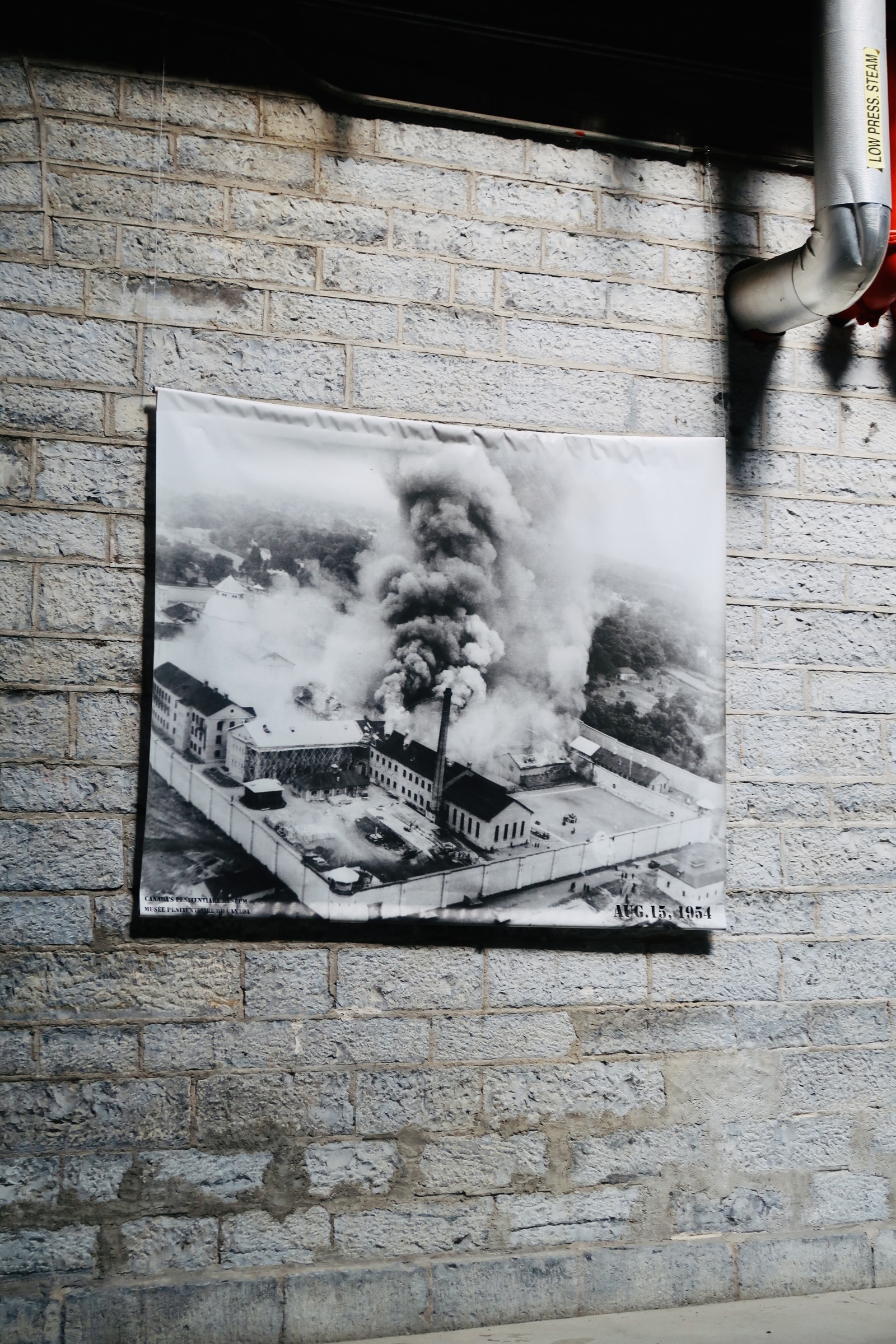
This penitentiary has seen two riots, one in 1954 and another in 1971. In 1954 there was a two-hour riot (which at that point was the worst in history) involving almost 900 inmates. A breakout was attempted coinciding with the riot, however, was not successful. This particular riot started in the exercise yard, led to several fires in different buildings, 50 ringleaders going to solitary confinement, $2 million in damages, and the involvement of both the Canadian Army and the Royal Canadian Mounted Police. The second riot was much worse. 

In 1971 there was a four-day riot within the prison that led to two inmates dying, six guards being held hostage, and much of the prison destroyed. The riot was instigated by concerns about future conditions at a separate prison transfer, lack of work/recreational time and other prisoner issues. Once the riot was quelled, an investigation was opened, and it found that the prisoners were not wrong in their complaints. A number of issues were noted, least of which being overcrowding and shortage of staff, but also prisoners who did not require maximum security, a lack of channels to deal with prisoner complaints and requests, as well as aged physical facilities. This riot led to committees being form and new jobs being created to help deal with these complaints and issues within the prison. 

There have been three escapes recorded from this maximum-security prison: 1923, 1947, and 1999. The first was Norman “Red” Ryan, who was an Irish Catholic Gangster. He escaped with several other inmates in September 1923 by setting a fire as a distraction, going over the wall, and stealing a car. However, he was caught again in Minnesota and brought back. Once back in prison he became a “model prisoner” and the poster child for prison/parole reform. He was released, went on to denounce his prior criminal activities and be a model citizen in public…all while going on an armed robbery spree. During one of these armed robberies the little gang he had formed ended up in a shootout of sorts. While Norman continued to present himself as the model citizen, even offering to help police and detectives figure out what happened, he was found out a few months later and died in a shootout with police at a liquor store. The second escape was fairly straightforward, 3 inmates went over the wall, 2 came back, 1 was never found. 

The third escape was by Ty Conn in 1999. Ty Conn was the first to evade capture for weeks and weeks since the last “successful” escape in 1958 (this is after 26+ attempts by inmates since 1836). Abandoned by both his parents, put up for adoption by his maternal grandparents he was adopted by a psychiatrist and his, alleged/described, mentally unstable wife. That only lasted about eight years before he was “returned” and placed in and out of foster and group homes, and youth detention facilities. As a young child in his adoptive family, he started stealing – first food then cars in his teenage years. By the time of his death, he was only “legally at large” (free) for 69 days (this is from age 13-death). After notifying prison guards at Millhaven Prison that several inmates were planning to escape, he was placed in protective custody and transferred to Kingston Penitentiary. His own escape utilized not only a rope ladder and grappling hook (that he made himself), but also cayenne pepper to throw the scent off to the dogs. He was found two weeks later in Toronto where he committed suicide, rather than go back to prison. 

I have to interject my personal opinion here for a moment because in listening to the tour guide speak about Ty Conn and the brief history I’ve learned about him- he really is one of those…cases for prison reform and slip through the crack’s instances. There is a book currently out by Theresa Burke and Linden MacIntyre, both have met and had interaction with Ty Conn, titled Who Killed Ty Conn. Together they paint a different picture and one that is worth understanding and knowing. It’s a book that I’ve added to my list to read at some point. 

From 1971-1981 Kingston Penitentiary also served as the Regions Reception Center. Every inmate in the prison system would come to Kingston Penitentiary first. It also held a Regional Treatment Centre within the prison which allowed up to 120 inmates who were in recovery. In 1990 Kingston Penitentiary was designated a National Historic Site and it was officially closed on September 30, 2013. A month or so later it was opened for tours- all of which are given by former guards and employees of the prison. 

 Kingston Penitentiary has seen it all and boy, if walls could talk. The tour was, quite honestly, incredible. Not only do you get to see how the prison changed throughout the long years it was used, but you also get to hear real experiences from employees and guards. It gives you a real insight in to not only these prisoners live within the prison, but also insight in to how the prison structure works/operates/could improve. The tour guides were not able to talk about the actual prisoners as it’s against Canadian privacy laws, but a quick search gives you an idea of some of the infamous prisoners housed in those walls. 

We stopped for a bite to eat after the tour (and a gas up- thankfully we found a station that was able to take credit cards!) at Montana’s BBQ & Bar- which was delicious and supplied quite the Long Island Iced Tea ;). 

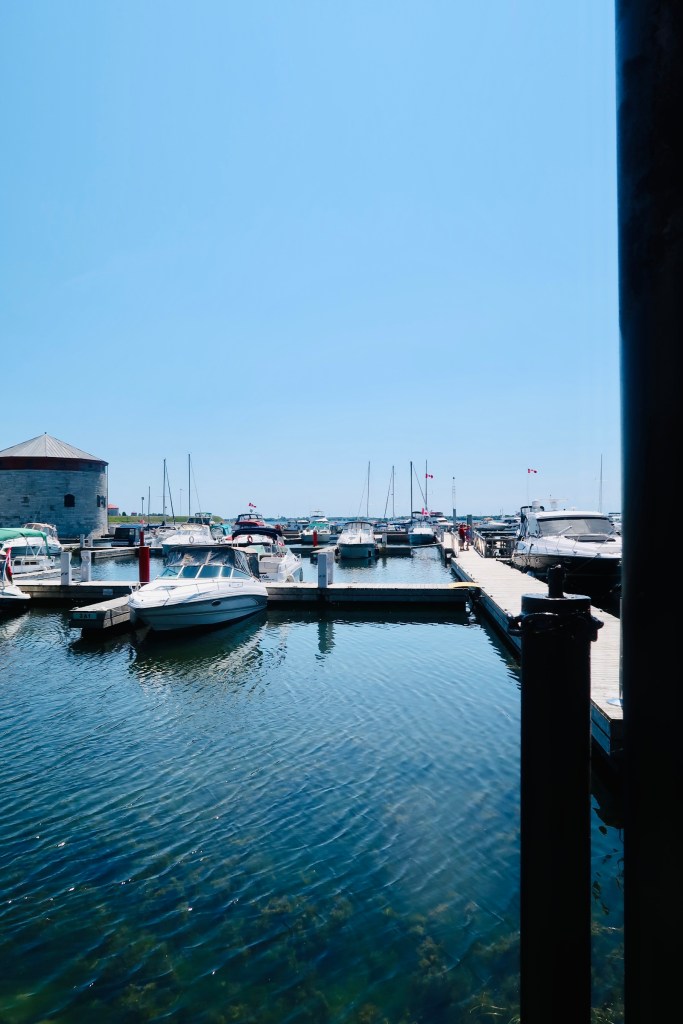
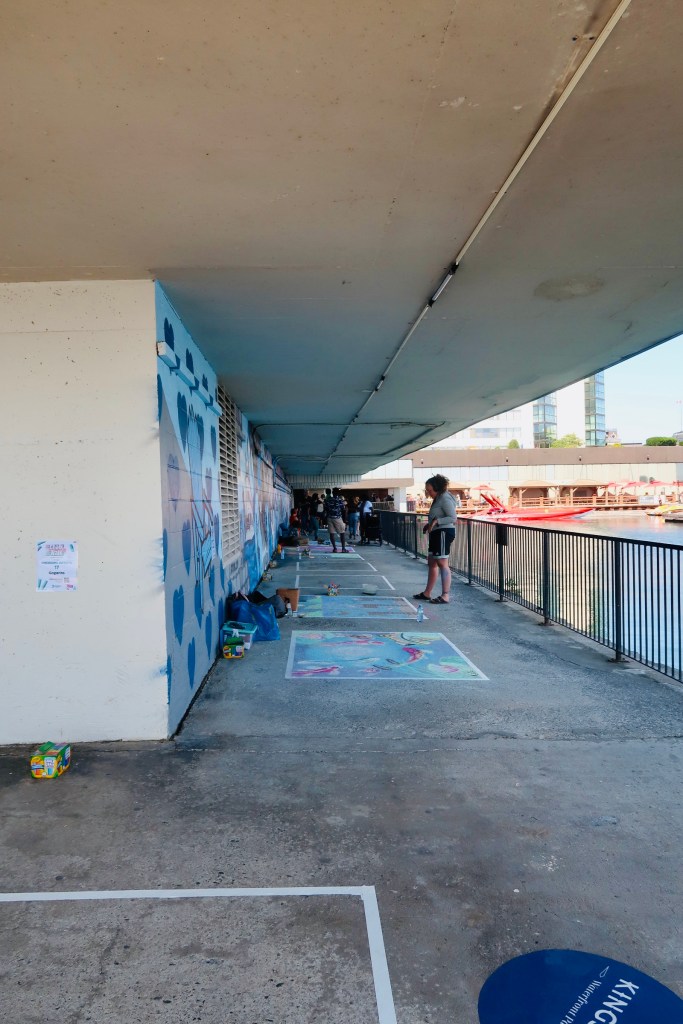
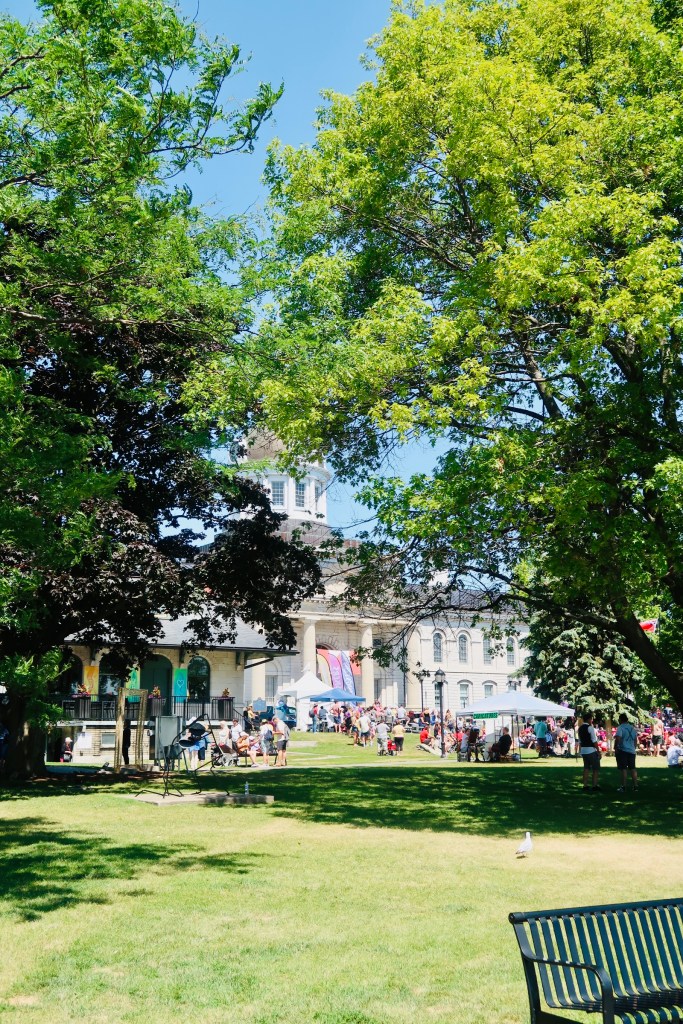
The next morning, we headed more towards downtown to walk along the river and the store fronts. We were pleasantly greeted by a Busker Festival. If you don’t know, a busker is a street performer. So, the folks that you walk past that are performing on sidewalks or subway stations for donations and your enjoyment? Buskers. And Kingston had an entire weekend full of entertainment lined up. The streets were blocked off to allow several performers, with a good distance between, there was a stage set up at the water, as well as food, face paint, and a sidewalk chalk competition. 

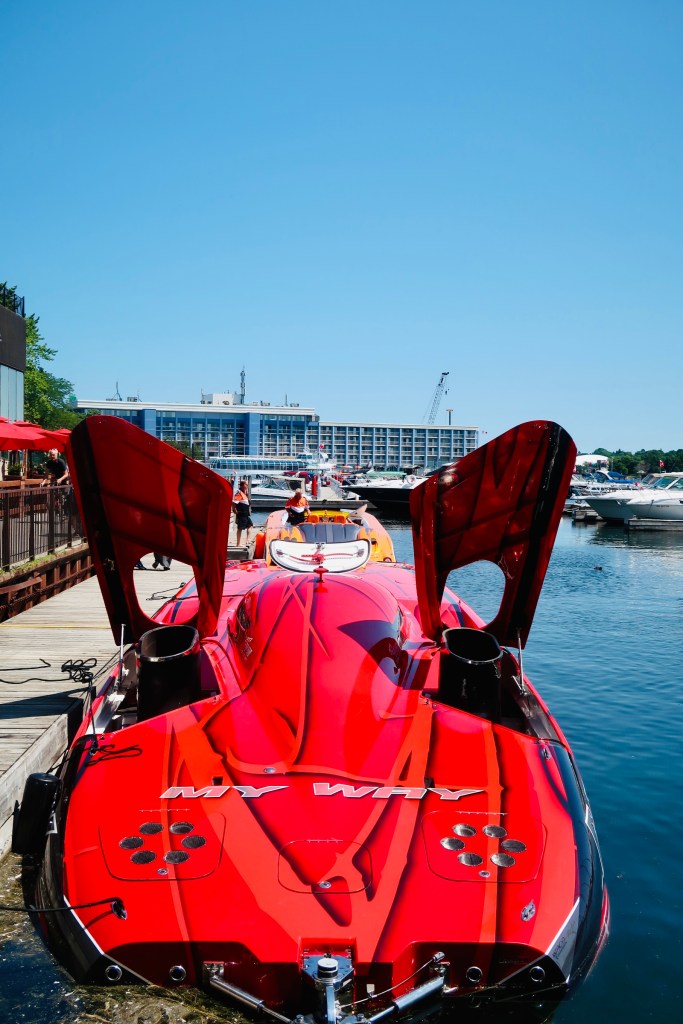
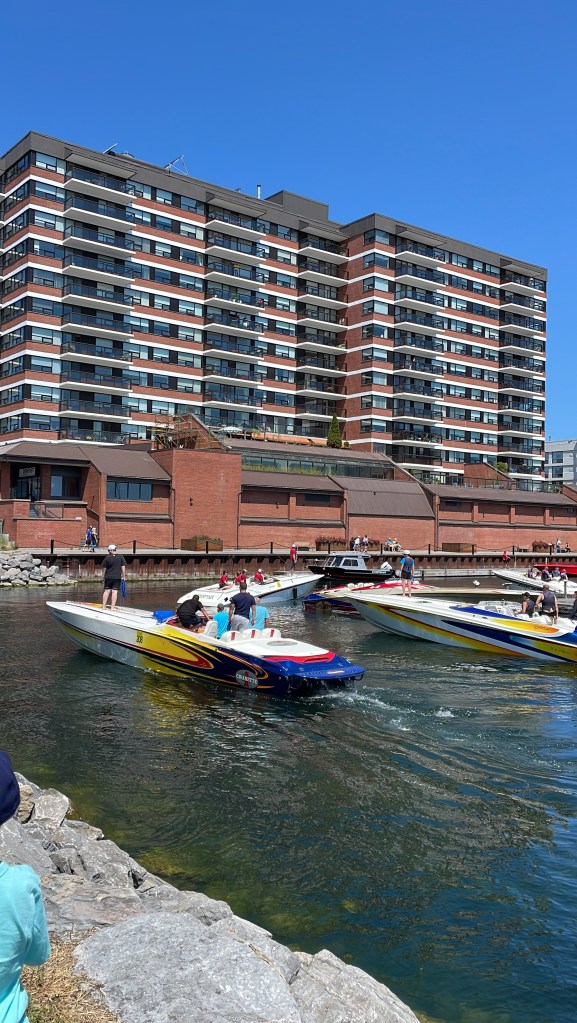
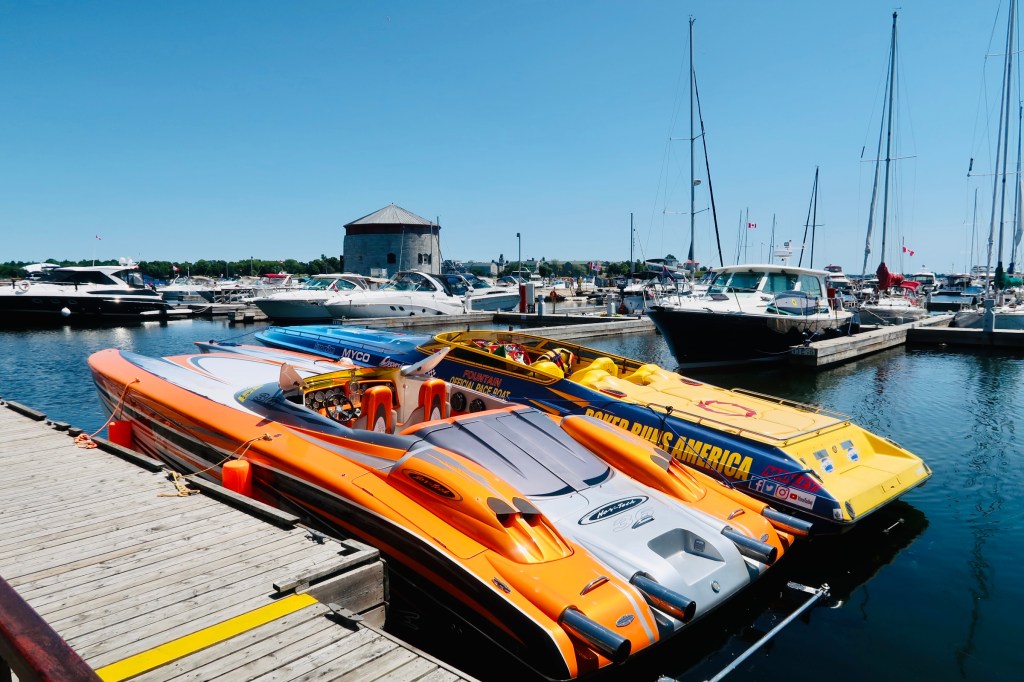
Coinciding with that event, it was also the weekend of a boat race, so while we were walking along the water, we were treated with the site of these souped-up boats, with wonderful sounding engines pull in to dock for lunch. 

We did just a little walking and then, finally, headed back across the border to the states and back home. And that wraps up our Summer Holiday (finally!). Which was your favorite to hear about? NIAGARA, DETROIT, UPPER PENINSULA, SUDBURY, TORONTO, or Kingston? Have you added any to your to visit list? And if you haven’t- you HAVE to add Mackinac Island/Upper Peninsula straight away. Let me know!

A Cuppa Cosy Summer Holiday 2022 – Toronto, Ontario

Ok, another preface to another travel blog post…actually two. So, first up, our time in Toronto was not utilized very well. We got late starts every morning we were there, and we didn’t really do any planning for our time there. What I’m going to do is talk about what we actually did, and then share a couple of the spots that I wish that we had gone to. 

A second preface regarding the Covid crossing. A basic reiteration as to what I said in my first post (and apologies for not including it in my Sudbury post- I forgot and it worked out as that post went a lot longer than I thought it would). These may or may not be up to date when you are reading this post (as they still change day to day), so I would recommend checking the Canada travel site HERE for the most up to date information. To enter Canada as an adult you must be fully vaccinated and fill out the Arrive CAN app on the phone (you can do this via we browser and print the certificate as well if that is easier for you, I believe). Kids aged 5 & up are required to be vaccinated unless they are traveling with fully vaccinated adults. For the vast majority of Ontario, we were not required to wear masks.

So, on to Toronto…

Toronto is the most populous city in Canada, the fourth most populous in the North America Region (it’s also the fastest growing city, and second fastest growing metro region in the North America’s). It’s location at the entrance of a route to the NW (one of the oldest there is) has been inhabited and used since the 1600’s by the Huron, Iroquois, and Ojibwe. In the 1660’s the Iroquois created two towns, but then they left the area after the Beaver Wars. In 1701 the Mississaugas took over the region and were there until 1750 when the French established Fort Rouille (they were still in the region, but the French started to cultivate the region). Once the Seven Years War ended the French left and the region became part of British Quebec. The American Revolution saw an influx in Loyalists escaping America and in 1787 Toronto officially became a British Territory with the Toronto Purchase. Toronto wasn’t always known as Toronto, in fact in 1793 it was the Town of York, and it became the capital of Upper Canada the same year. When slavery was banned in 1834, the newly renamed city of Toronto, became a refuge for former slaves and all people of color. Toronto has had two “Great Fires”, the Cathedral fire in 1849 which destroyed most of the Market district as well as St. James Cathedral, and the Great Fire in 1902 which destroyed more than 100 buildings and killed one person. A final fun fact for you: Toronto was once the largest alcohol distribution center- it specialized in spirits, and in the 1860’s Gooderham and Worts Distillery was the largest whisky factory in the world. 

The first night in Toronto we simply did a little walking, did a little eating, and settled into our hotel. We stayed in the Chelsea Hotel (the largest in Canada), and it was both a good hotel as well as a good local spot. We started at Old City Hall and Nathan Phillips Square, then over to Toronto Eaton Centre, which is a massive, covered shopping mall. We then walked down to Yonge- Dundas Square, which is similar (but a bit smaller) to Times Square. Opened in 2002 it is central to Downtown Yonge’s entertainment and shopping. 

The next morning, we set out for our first “must see” of Toronto, the Hockey Hall of Fame.

The Hockey Hall of Fame is credited to James T. Sutherland who was involved in the sport. He believed the Hall of Fame should be located in Kingston as he saw that as the birthplace of Hockey. However, there were quite a few funding issues trying to create a permanent building (even after inductions began in 1945), and, in 1961, it was moved to Toronto. Initially the Hockey Hall of Fame shared space with the Canadian Sports Hall of Fame, but in 1986 they ran out of space and in 1993 they moved to the current location inside Brookfield Place/Bank of Montreal Building. Within the museum you’ll find not only history pieces, trophies and rings, team memorabilia, and the like, but also an entire interactive zone where you can practice shooting pucks against a goalie, being a goalie, as well as learn how television broadcasting works. It was quite a way to spend the morning and we loved getting this deep dive into Hockey History. 

From there we wandered over to St. Lawrence Market. In the early 1800’s the governor recognized that the town needed to have a central market location, with specific dates and times that it would be operational. And so, St. Lawrence Market was opened. This heart of the town was not only a market, but also served as an auction space, a place of public punishment, and for a time, was the seat of the city council. A temporary structure was first introduced in 1814, with a permanent structure built in 1820. This led to a long road of construction, remodeling, destruction (it went down during the Cathedral Fire), and re building. The present St. Lawrence Market South Building dates back to 1845 (rebuilt in 1850 and remodeled in 1972). Originally there was two buildings, however the North building was demolished in 2015. It is full of just about any vendor you could think of, from food, to jewelry, stationary, clothes and beyond. It is a hectic, but fun stop to see. We wandered up and down the aisles of two floors and admired all the goodies being sold.  

From the market we wandered over to the “old district” which didn’t have much that we could see- we actually got a little bit confused over the whole thing. We did see Toronto’s First Post Office, the De La Salle Institute, and St. Andrew’s Church. We ended our day on the docks, watching the water.

The next morning, we headed out once again, this time over to Allan Gardens Conservatory. This was a stop mostly for me, as I wanted to see all the plants. The area dates back to 1858 when George Allan donated a small plot of land to the Horticultural Society. The city then approached him to purchase the surrounding land to expand, which George agreed to as long as they kept it publicly accessible free of charge. It originally opened in 1879 before a fire damaged it in 1902. The present gardens opened in 1910 with the domed Palm House, which were quickly added to in both the 1920’s as well as late 1950. It’s not large, and to be honest not entirely necessary to see, but it was nice to pop in to somewhere to be surrounded by plants for an hour. The boys stopped and played at the nearby playground for a little bit while we tried to figure out what else we wanted to do. At this point we only had half a day left in Toronto, which cut out a lot of things that we wanted to do (like I said- we didn’t plan this stop well at all). 

We decided to head over to Ripley’s Aquarium as the boys have never been to one and it would be a fun stop for everyone that was also nearby. The Aquarium is really known for its Sharks and Sting Rays (in my opinion), and they are also the most active of all the fish. We were able to see not only those, but also a very active octopus, sea turtles, and jelly fish. It was a decent stop and a good way to cool off. 

From there we headed across the street to the Roundhouse Park & Toronto Railway Museum. I’ll be honest…I don’t think this is really worth the stop, even if your kids are massively into trains. The roundhouse park is really cool, first built in 1929 and the last in downtown Toronto, it’s a 32-stall house featuring, at that time, the most modern of technology. It closed operations in 1982 and became a Canadian National Historic Site in 1990. The museum opened in 2010 and features quite a lot of history on the Canadian Pacific Railway, artifacts from bygone times, as well as the ability to drive a simulated train. The boys liked to drive the simulation, but beyond that they didn’t care about any of the rest of it. You are able to see all the 10 train cars featured in the museum on the outside (without going into the museum) as well as take the mini railway. I don’t normally say that a museum isn’t worth going to because I believe in history, in museums, and in learning about the past, but this is one that I don’t think you need to go to. 

And that really wraps up our time in Toronto…

Now, some of the things I actually wished we did were:

Spend a day on Toronto Islands. The Toronto Islands consist of 15 small islands just south of the mainland. You are able to take a boat ferry from Toronto over to the Island Park and, like Mackinac Island, the Islands are car-free. We could have biked through Toronto Island Park, the Centreville Amusement Park, as well as walked and relax on the beach. We actually thought about maybe going for half the day but didn’t think it wise to try and beat the rush at the amusement park and get back to the mainland. I didn’t want to be rushed. 

We thought about going over to Casa Loma, however it was a bit out of the way of the other ideas we had and to take a tour within the castle was a bit pricey. It’s one of those- we saw so many real, old, historic castles in Europe that we haven’t found one here in North America that “measures up” to what we’ve come to expect (yes, I really said that and cringed every word through). I do think it still would have been nice to experience though. 

And, finally, I think that going to the Toronto Botanical Gardens would have been nice. I would have probably preferred them to the Allen Garden Conservatory, but it just didn’t fit in to our schedule or route in any way. 

I do think the Hockey Hall of Fame and St. Lawrence Market are must visits during your time in Toronto. I would say most of the rest, if you walk past or through on a route is fine, but not necessarily worth going out of your way to see. 

So, there you have it. Our 3 nights in Toronto. Up next is our final stop on our Summer Holiday…

A Cuppa Cosy Summer Holiday 2022 – Sudbury, Ontario

The next stop on our trip was a bit of an “place to stop on the way” kind of stop, but we were pleasantly surprised with the city of Sudbury. It has a lot of history, a lot of mining history, it was actually such a good spot to stay for a night or two. We learned so much not only about the city itself, but actually about mining, its history and its effects on our world, as well as what we can do to protect it. Whew, we might go a little deep in this post, but this city is such a…surprise.  

Quickly before we get too deep into the Sudbury history and stop, we did make a short stop at Onaping Falls.

So, the thought is that about 1.85 billion years ago a meteorite hit Earth and this crater, that has since been filled with all sorts of debris and formed and re shaped by nature, is where the A.Y. Jackson Lookout and Onaping Falls is. Sudbury City Center lies at the south, this lookout at the north. We started at the Lookout with a view of the Onaping River and High Falls- a drop of 46 meters of several falls. From there we hiked down through the rocky terrain (which I somehow did in my Birkenstocks- possible but not recommended) and up over to the bridge. The bridge is right on the rim of the crater and offers views of the river and falls. It was a great stop and a way to stretch our legs all while being right in the heart of both outside the planet and the nature of earth. 

From there we headed into Sudbury. So, a little history…

Similar to our previous stop in the region, Sudbury was initially inhabited by the Ojibwe of Algonquin People some 9,000 years ago. However, in 1850 they struck a deal with the British Crown (the Robinson Huron Treaty) that they would share the region with the Crown if they were paid a tax. The first French Jesuits established the Saint-Anne-des-Pins- coincidentally the patron Saint of minors. A little foreshadowing for the area possibly. 

During the excavation and paving for the Canadian Pacific Railway in 1883 high concentrations of nickel-copper ore were found in the rock that formed Murray Mine. Nickel-Sulphide Ore was also located in the region. This led to a boon of workers and opportunity both in the mines, but also for railway workers trying to establish and run the railway. Thomas Edison (visiting as a prospector) found an ore body in Falconbridge. Through this boon to the region, two companies emerged, Inco (1902) and Falconbridge (1928). They went on to become two of the largest employers of the region as well as two of the world’s leading producers of Nickel. 

Because the region was so rich, they were able to bounce back from the Great Depression much quicker than many other places in the world- in fact, the problems that they dealt with during the Great Depression ended up being a lack of infrastructure to meet the rapid growth of the city and industry. The Frood Mines produced 40% of all the nickel in Allied artillery production, as well as was a main supplier to the U.S. during the Cold War. It’s hard to make clear just what the impact of these mines were on the region- at one point Sudbury was the wealthiest and fastest growing city in the country. 

However, for all the wealth and good economic value the mines brought to Sudbury, they also completely destroyed the green life in the city. The slag heaps, open coke beds, and various logging caused almost all the natural plants to die. Not only that, but they experienced the left-over rocky outcroppings turn charcoal black and acid rain. An environmental crisis caused by the mines. 

Not to catastrophize, because this story has a “happy” ending in that the once the Inco Superstack was built (in 1972 to help disperse the the sulphuric acid further distances to cut down on the acid rain) they were able to bring in a team of environmentalists and ecologists to help find solutions. They started in the early 1970’s by putting lime on the charred soil, laying wild grass seed, and planting trees (9.2 million planted as of 2010). With that initial push completed, they went to work on the slag heaps- rehabilitating them with biosolids (basically compost), as well as grass seed and trees. In fact, we learned that the mines are the perfect greenhouses- but more on that a bit later. The city of Sudbury has actually been recognized by the United Nations for its regreening and improved mining practices. They have a long way to go though, there are still 74,000 acres of land still to be touched by rehabilitation. 

In 1978 there was a strike at Inco over production and employment cutbacks. This strike completely shuttered Sudbury’s economy and since then they’ve been trying to diversify the local economy…which is where we get into what we did in the city. 

One quick fun fact before we go, quite a bit of the famous Canadians come from Sudbury- like Alex Trebeck! Sudbury has also produced something like 81 National Hockey League players- the largest of any European City, and several NHL Hall of Famers. 

So, first off, we visited Dynamic Earth and the Big Nickel. Well…technically first we visited Bay Used Books, but I don’t think I really need to go into details on that- if you’re in the area give them a visit! 

Dynamic Earth is an Earth Sciences Museum opened in 2003 that focuses heavily on the geology and mining activities of the region. Not only were we able to tour an underground model mine that showed us the different forms mining took over the years (and it’s gone through A LOT of changes), but we were also able to learn about how the local city and mines are trying to repair the damage done to the environment and nature of the region. We learned about how a mine is actually the perfect greenhouse (with some light and such) for plants as it stays the same temperature year-round. So, the mines use unused tunnels as greenhouses in an effort to grow the number of trees to rehabilitate various parts of the grounds. Once you finish with the tour of the mine (which is an optional addition to the museum that I would recommend), you are able to walk through a short video presentation that goes through what happens after the rock is mined. This shows how they manipulate the rocks and get the nickel and other metals out and then, further, what those metals are used for. A very kid friendly, but good for adults too, style video. Within the museum you are also able to use the tools that would be available to miners, both for kids and adults. For the kids there is a soft play style playground that has everything an old mine would have, the carts, the belt up and down, as well as a variety of tools and “rocks”. The adults are able to manipulate an actual drill located deep within the model mine. You are also able to pan for gold, explore and learn about all sorts of different kinds of rocks and stones in the exhibits. One final piece of importance about Dynamic Earth- it was the first museum in Canadian history where a private enterprise and public education collaborated to provide on-site training. 

Inside the museum was easily my favorite part and I really enjoyed learning about mining, where it started, and what companies are realizing is harmful, but I couldn’t deny that the statue outside is one of the biggest draws to the area…The Big Nickel. 

The Big Nickel, a 9-meter replica of the 1951 Canadian Nickel, is a world-renowned landmark that turned Sudbury in to a tourist stop. The idea came from Ted Szilva when the city was soliciting for ideas to celebrate the Canadian Centennial. The city, of course, did not like his idea, but he persisted. His full idea was to have the nickel, a mining center, and an underground mind. He faced quite a bit of back and forth (and opposition from the city), but finally opened the Big Nickel for visitors in 1964. He picked the 1951 nickel for three reasons: commemorate the 200th anniversary of isolating nickel into a metal, show where Sudbury’s wealth came from, and to honor the mine workers of the region. His dream didn’t stop there as he had Maclsaac Mining and Tunneling Co build the very same mine we toured in 1965 (they then expanded it in 1969). 

His final dream was to form the Sudbury Science Centre – later known as Science North- though the city initially opposed that too as it was proposed to be a private enterprise. However, much like the Big Nickel, after some time and some fierce determination, he succeeded and now known as, Science North came to be. 

Science North is Northern Ontario’s most popular tourist attraction- an interactive science museum. And it deserves every bit of that hype as it is such a cool spot to spend some time. In fact, you could easily spend a whole day just within the complex. The complex consists of two buildings connected by an underground tunnel sitting on a geographic fault. The buildings were not initially built on this fault; however, it was discovered when they were building. The first portion features an IMAX theatre and planetarium, as well as a boat tour and board walk. The second building is the museum itself which consist of a wide variety of exhibits from the natural region of the area to more STEM related exhibits. Our favorites were easily the insect pavilion where you were able to see different varieties of insects with far too many legs (belaugh), the Animals of Lakes & Rivers, as well as Northern Forests which featured rehabilitated animals like a porcupine, turtles, snakes, and a beaver. We also highly enjoyed the BodyZone, which dealt with the body and all of its’ functions and wonders, as well as the Space Place which had a “fly your own plane” exhibit, as well as a mechanical arm where you could practice your grabbing skills. 

I think if you are going to these two places, start early early at Dynamic Earth and plan on spending ¾ of your day at Science North. Once we finished at both, we walked along the Boardwalk for a little way before getting dinner and heading to the hotel for a swim and bed. 

Which wraps up our time in Sudbury. As I already mentioned- this city was a surprise to both of us. We knew there were things to do, but we didn’t know how rich the history was of the city and how big a role Mining played.