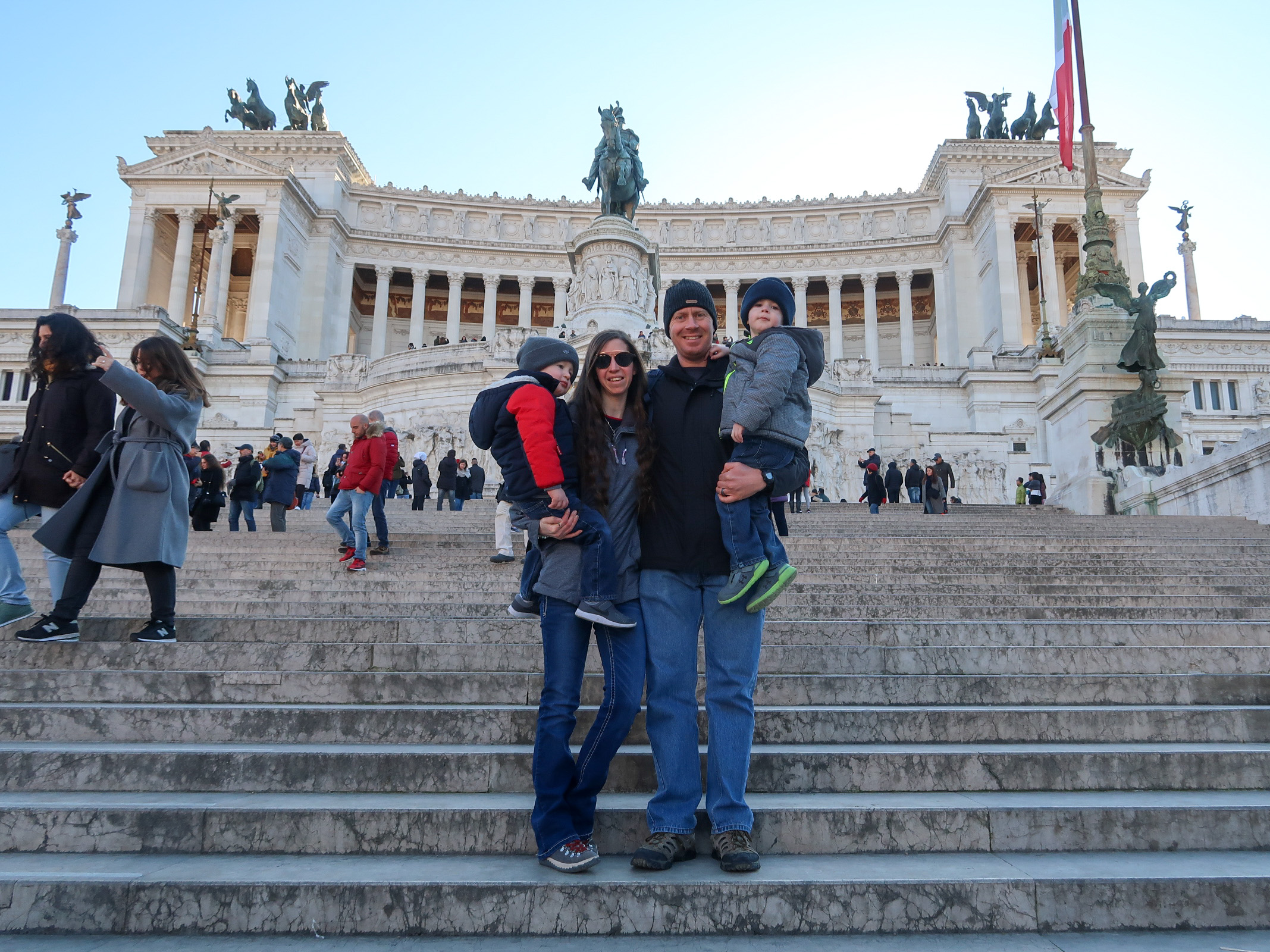
A Cuppa Cosy Summer Holiday 2023 – Halifax, Nova Scotia

I know I said that we really loved everywhere that we stopped on this year’s Summer Holiday, but I feel like Halifax might…just might have topped the list? I don’t know, so many good stops, but this one was just…stuck with me. Maybe it’s because of timing and what we did, maybe it’s the vibe of where we were, maybe it’s just a magical thing that Halifax has. Regardless, I am so excited to talk about the few days we spent in Halifax. 

We arrived in Halifax on Canada Day. And everyone has asked (especially with our timelines of summer travel), what Canada Day is like in Canada. Is it similar to America’s Independence Day? Is it wildly different? What is it like?

And I am here to say- it’s by and large probably about the same. You have some people who are loudly pro Canada and choose Canada Day to proclaim it, but honestly, for the most part people…calmly celebrated? I don’t know how to explain it. For us in Halifax, everyone was wearing red/white, there was a massive block party on the pier, but it was also just chill. Some of that was possibly due to weather- it was overcast day with low hanging clouds (so no plane show or fireworks), but I do also wonder if this is just the way the people of Canada celebrate. 

So, we had a delightful first afternoon/evening in Halifax. After checking in, we headed over to the Halifax Citadel. But let’s talk a little history first. 

Halifax is the capital, and largest city, in Nova Scotia. Originally known as Mi ’ kma ’ ki it is the ancestral home of the Mi ‘ kmaq people- something they acknowledge and honor very well. The “Town of Halifax” was established in 1749 and marked the beginning of Father Le Loutre’s War. The establishment of Halifax the British violated their treaties with the Mi’kmaq. To bolster the town defenses, the British built the Citadel in Halifax, along with several other fortifications in neighboring areas. 

Halifax Citadel was initially fortified in 1749 intended to not only serve Halifax defensively, but also as a counterbalance to the French Louisbourg. It was small, part of a western perimeter wall and was protected by five stockaded forts. The city of Halifax was raided four times during that initial war; however, the Citadel was taken care of, and by 1761 it had deteriorated so much that the British built a new one…in 1776 (thanks to the Seven Years War). This second fort was a permanent fortification. There were redans, a blockhouse, and 72 mounted guns. This Citadel gave the Royal Navy the most secure and strategic base in North America. Halifax became known as the “Warden of the North”. It is also thought that this presence is why Nova Scotia stayed loyal to the British during the Revolutionary War. However, permanent these fortifications were intended, by 1784 they were once again in ruins and with the French Revolutionary War coming (and parts of Canada very much French), a new Citadel was designed and built. With the Third Citadel, they levelled and lowered the ground to allow for a larger fortification. We see the initial signs of the current set up, with four bastions surrounding the barracks and magazine. In 1803 the Halifax Town Clock was opened to keep time for the soldiers (this was a real issue then). This third Citadel is also where we see the system of flag communications come into play. While it didn’t fall into complete disrepair, it did need a new magazine and a slew of repairs when the War of 1812 came around. However, in 1825 they decided to scrap most of the citadel (due to disrepair) and rebuild. After 28 long years of construction, the Citadel as we see it today opened in 1856. The overall history of the military AT the Citadel has been quite varied. It’s seen a fair number of soldiers, but never an attack. The British Army pulled out in 1906, with Canada taking over. 

While the hill and fortifications were designated historic sites in 1935, there was still quite a bit of talk about tearing it down. Thankfully that was struck down, and in 1956 it opened some of its’ doors to the public. Over time it has been repaired and in the 1990’s it became fully restored to the Fourth Citadel appearance. Nowadays it is fully open to the public, with it transforming into a living history museum during the spring/summer months. There is a noon-time canon firing, a war museum, ghost tours in October, and reenactments throughout the year. We always enjoy walking through military history- especially if it’s from another country, with a different insight. And in this case, it was a defensive fort that never really got attacked. 

While in town we also wandered over to the Old Burying Ground. The cemetery was founded in 1749- with its’ first burial taking place the same year. Intended as a common burial ground it remained open for burials until 1844, when Camp Hill Cemetery was established. If you’ve read enough of my travel blog posts, you’ll know we find it interesting and cool and just a piece of history to wander through older cemeteries. In the 1980’s the site was restored by the Old Burying Ground Foundation, who now not only maintain the cemetery, but also work to restore the grave markers. This particular cemetery is said to hold 12,000 graves, to include the British Major General who burned the White House during the War of 1812. The monument at the front of the cemetery is the Welsford-Parker Monument. This is the first public monument in Nova Scotia, and the fourth oldest in all of Canada (and the only monument to the Crimean War in North America). Built after the cemetery closed, it commemorates British Victory in Crimea and serves as the last grave marker in the cemetery. 

I would say the real highlight of our entire Summer Holiday occurred on our second night in Halifax. We were able to attend the Royal Nova Scotia International Tattoo. And honestly, before I go any further, if you are ever able to make it to an International Tattoo- go. It is incredible to watch.

The Tattoo is intended to serve as a theatrical experience where military bands and display teams are able to showcase their abilities. The Halifax one has been taking place since 1979- ever year. Aside from being able to showcase a variety of military bands across the world, there is also a theme of friendship and bonds between countries in each year’s performances. The Halifax Tattoo was given the “Royal” designation from Queen Elizabeth II in 2006. This past year we were able to watch acts not just from the United Kingdom, America, and Canada, but also from Germany and South Korea- which was really cool! Germany was a hilarious performance, and the boys loved the Sweet Caroline singalong as well as the bagpipe rock n roll. My personal favorite was the Switzerland Drummers. For a little insight into the performance- check out my Instagram where I’ve posted a video. It was incredible- a real highlight. 

Our last day in Halifax we started off back at the Marina and checking out the Maritime Museum of the Atlantic. Located at the HMC Dockyard, this is the first known maritime museum in Canada and also includes a visit to the CSS Acadia.  The Museum has a large number of artifacts and photos, but also charts and rare books. You can see everything from the artifacts to replica’s that are being worked on (and the workshop where they get worked on!). You can wander through numerous exhibits, and the boys got to learn how to spell their name in Morse Code. There are actually two truly notable exhibits in the museum- one on the RMS Titanic and one on the Halifax Explosion. 

The Halifax Explosion was one of the largest artificial non-nuclear explosions (and is actually a standard of measurement for other large blasts). In December of 1917 a French Cargo Ship collided with a Norwegian Ship in the harbor. This is actually quite a tragic, but fascinating event in their history. The Mont-Blanc was carrying quite a high number of explosives (unannounced too so only those on board knew), which upon the crash caught fire and exploded. The explosion destroyed almost all the immediate radios buildings, and anything that wasn’t immediately destroyed by the explosion was then destroyed by the pressure wave and tsunami.  1600 people were killed instantly and 300 of the 9000 injured succumbed to those injuries. A good amount of the city ended up burning due to the gas stoves and lamps, and if you had been watching the fire? You surely lost your sight when the explosion blew your windows out. In fact- there is an exhibit of replacement eyeballs. 

To make matters worse- the day after a blizzard dropped 16 inches of snow on Halifax the next day. Not only stalling recovery efforts and supply deliveries, but also making it incredibly difficult for those trying to find shelter. 

While it was a horrifying event, it did lead to some good- quite a few medical advances came from the months post explosion- specifically in eye care, public sanitation, and maternity care. It also helped deepen the bond between Boston and Halifax (which dated back to the founding of Halifax). Boston was such a help that every year Halifax sends a Christmas Tree to Boston- which is the official Christmas Tree of Boston and is on the Boston Commons every year. 

The Titanic Exhibit is equally fascinating as it has the foremost collection of wooden artifacts from the Titanic (including one of those infamous deck chairs). Nova Scotia and Halifax in particular played a large part in the collection of bodies from the Titanic. As the only unfrozen port, they were dispatched to help provide assistance. I’ve already mentioned the deck chair, but they’ve also got the shoes that were used to identify the “unknown child” of Titanic, an original copy of the senate hearings/testimony from after the sinking, and so much more. We were at the museum not long after the situation with the Titan, which made it all the more real and sobering for the kids (who followed what was happening with the submersible). 

We did two more things during our time in Halifax, one being a wander through the Halifax Public Gardens. This is a Victorian-era public gardens dating back to 1867. The Public Gardens are 16 acres, landscaped in the Victorian style, with all the standard garden fare, but also three fountains, two stone bridges, three ponds and a concession stand. There is a public bandstand that allows for concerts in the summer, and we spent a lovely hour or so wandering through the gardens. 

And how did we find the gardens? Well, yes, it’s on Trip Advisor and such, but also by taking a Duck Boat tour of the city. Yep, we finally did a ride along tour of a city. The boys saw these vehicles that would drive around on land, but also head into the water and they were obsessed. Since the weather wasn’t entirely cooperative during our stay (though we still loved it), we decided why not. It was actually a really interesting time, and we enjoyed learning a little bit more about city and some little bits and pieces we probably wouldn’t have learned. And of course- the boys loved when the truck turned into a boat, and they got to ride along the harbor in the water. 

And that basically sums up our time in Halifax! In just looking at the length of this post, I think you could probably tell how much I enjoyed our time there, but in case you can’t- we really did like it. There’s only one more post coming about our Summer Holiday- I’m sad to say a farewell to it, but it was a good one. 
A Cuppa Cosy Winter Holiday 2019 – Rome The Final Days

And so, we come to our final “what we did” post of our Winter Holiday. Our trip was jam packed from start to finish, although there was a definite difference to the second half of our trip. Vatican City was a nice way to “break up” the week we were there as that trip was about halfway through. We’d covered most of the Tourist Spots in our first few days in Rome (read that HERE), we covered Vatican City at that halfway mark (you can read that HERE), then Ancient Rome (one of my absolute FAVORITES read HERE)and now all we had left was New Year’s Day and then some.

So, a quick brief breakdown, Day 1 was spent at Castel Sant’Angelo, checking into our Bed & Breakfast, The Spanish Steps and The Trevi Fountain. Day 2 was spent at Piazza Navona, The Pantheon, and Piazza del Popolo. Day 3 was spent at Santa Maria in Aracoeli, The Alter of the Fatherland, and Quirinale Palace. Each day also consisted of a lot of just walking the streets of Rome- you see so much more by just walking around and you get such a great feel of the place. Day 4 was spent at Vatican City walking the halls of Vatican Museum, the Sistine Chapel, and St. Peter’s Basilica. Day 5 was spent going back in time to Ancient Rome and discovering what life was like in a vastly different era. So, that brings us to New Year’s Day and Day 6 of our trip…

A Cuppa Cosy Winter Holiday - The Final Days

Day 6: New Year’s Day

Oh, New Years in Europe. New Years in Europe is like nothing I’ve experienced before. I’ll be honest, I wasn’t that big of a New Years party goer, but saw the Times Square parties on TV and have heard enough to stories to have what I think is a good idea and I can tell you… the United States doesn’t have much on Europe. And most of the celebrations continue through to the next day. The streets on New Year’s Day are full of celebration, most places are closed, and the atmosphere just feels fun!

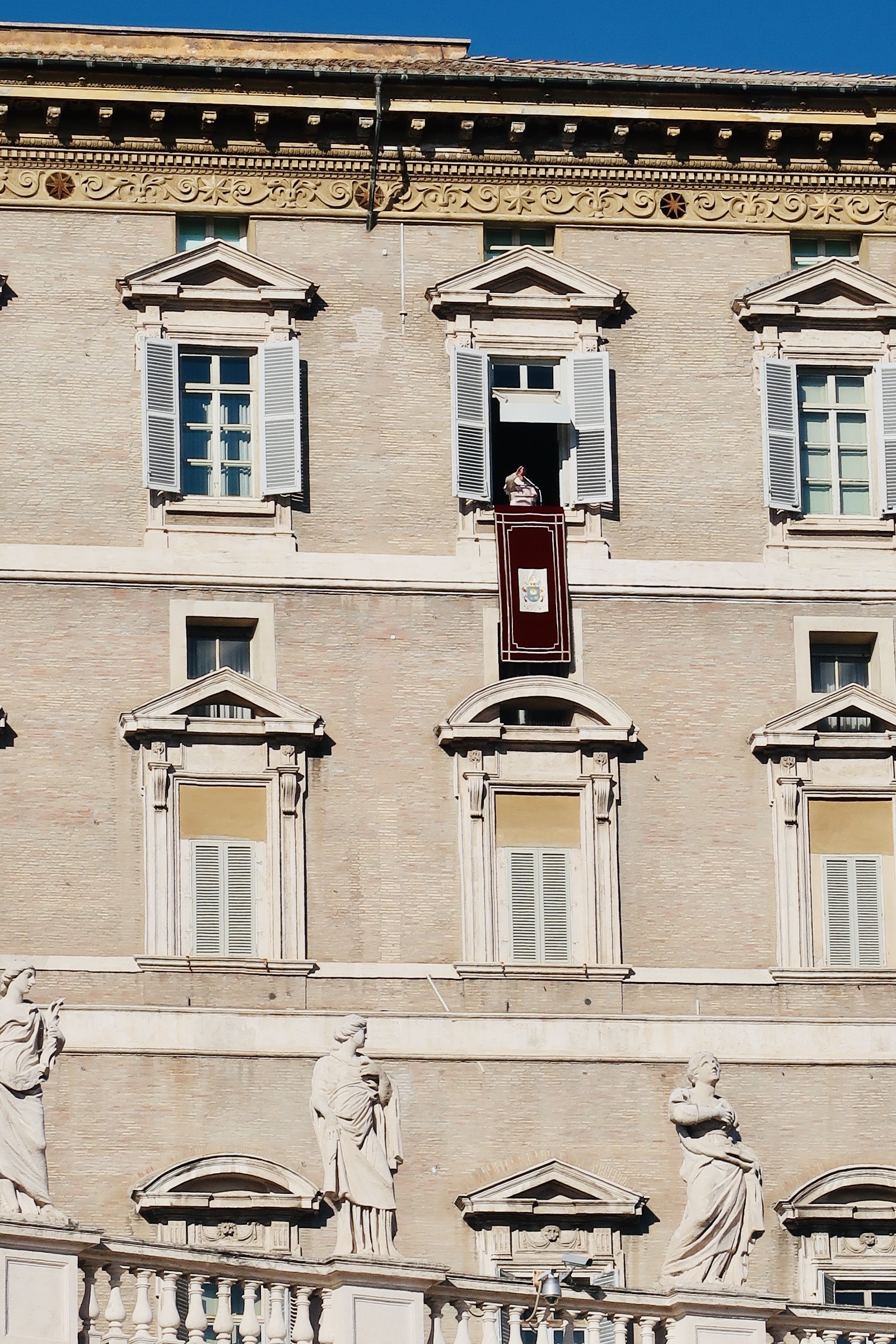
We started off the New Year with a breakfast at The Loft, where we had previously eaten. Ate some delicious food, drank some delicious coffee, and then headed out to a very exciting event. We were able to attend the Pope’s New Years Day Prayer. IMG_5054Now, the prayer is actually the Angelus and he will also give a reflection on the Gospel of the day, and on the day that we were there, some additional commentary. Here’s a secret, you can go to this most Sunday’s at noon and participate in this very special moment. I have included a link to the commentary that he gave on New Year’s Day (HERE), and you can view his “schedule” HERE to check if he will be doing the prayer while you are there (if this is something you are interested in). The entire prayer and comments lasts about 15-20 minutes and he speaks into a microphone from the window to the right of St. Peter’s Basilica. It was an incredible moment, so moving and you could feel everyone around you just being swept away by his words and his speaking. It’s something to be experienced, whether you are religious or not.
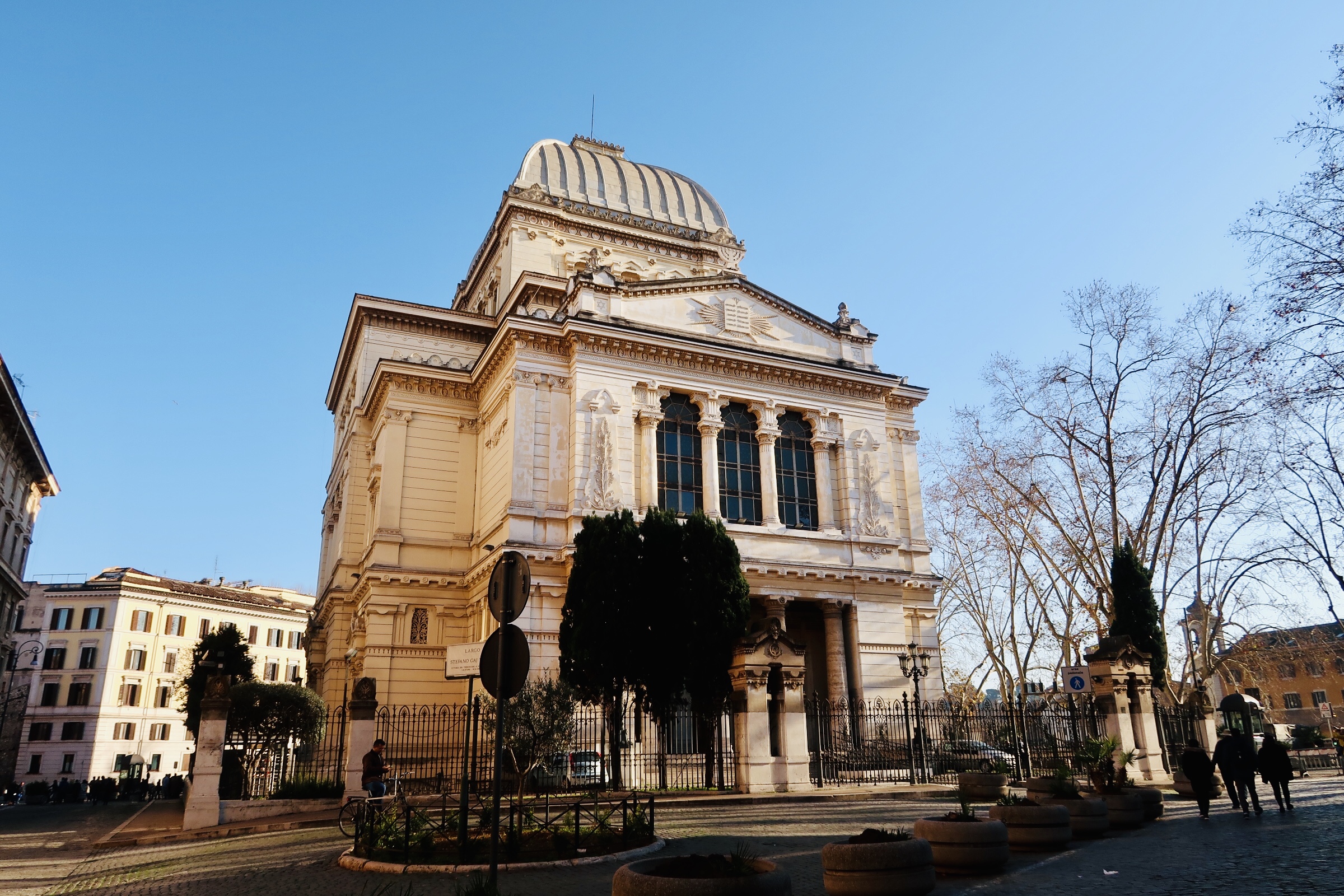
After the address we decided to further our religious experiences and head over to the Great Synagogue of Rome.

IMG_5064

This Jewish Quarter is one of the oldest, most intact in the world and the Roman Synagogue and Museum reflect both the community and the history. There has been a Jewish presence in Rome since at least the 2nd Century B.C and the museum, located in the basement of the synagogue, displays the history of the community, several artifacts through the history, and is a wealth of information about the traditions and rights of passage of the religion. For me personally, having grown up in a Jewish family, I found it really welcoming and heartwarming to see so much of what I know in such a positive, beautiful light. It was neat to learn some facts about the history of the Jews in Rome and how they were saved during World War 2. Before we get into that, first you need to know that Rome is the ONLY city in Europe to never expel it’s Jews. Did it try to convert them? Yes, there was even a Jewish Ghetto in the 16th century, but it never expelled them (and the Ghetto was abolished in the 19th century- the last in Europe to do so). When the Germans occupied Rome in 1943 the Jewish Community was told it could be saved by giving 50kg of gold. The was given to the Germans and included contributions by non-Jews as well, but the agreement never ended up being upheld. About 2000 Jews were still sent to concentration camps.

Admission to the Museum includes admission and a short tour of the Synagogue.

The Synagogue itself is incredible, dating back to the 19th century and  featuring several different styles which you can see simply by looking from the ground up to the ceiling. You can see the various cultural and design elements (including Spanish, Egyptian, & Roman) and it feels like a good representation of what the community is now. After all, it is an eclectic meld of a wide variety of people from all around Europe. It also features a square aluminum dome which causes it to stand out amongst the other dome’s and, as such, is easily identifiable.  The Synagogue has been visited by 3 different Pope’s, the first of which being a surprise visit in the 1980’s (and marked the first visit since the early history of the Catholic Church).

Finally, we spent our first night of 2020 watching the Sunset over the Roman Forum.

I’ve said it before and I’ll probably say it for a really long time, Roman Sunsets are incredible. I’ve always just really been a Sunrise fan, but this trip in particular reminded me just how beautiful a sunset can be.

Day 7:

Our final day in Rome was one that we weren’t really sure what to do with. We had almost the entire day to explore and weren’t quite sure what else to really do. Most of our “big ticket” items that we wanted to see we had seen, so we decided to just jump on the subway, pick a random spot and explore from there. Lucky for us the “stars aligned” and we wound up at Villa Borghese Gardens.

Listed as the third largest public park in the city, it’s a little haven of beauty in the city. Dating back to the early 17th century, when Cardinal Borghese decided to turn his vineyard into an extensive set of gardens. Within the gardens there is The Temple of Aesculapius, which has a beautiful lake around it and a Piazza that has been turned into a dog park, but was previously used as an equestrian track. There is also the famous Galleria Borghese (that you need to purchase tickets in advance to see) and its garden, the Villa Medici, which now houses a French Academy, a replica of the Globe Theatre, and a Zoo.

We wandered through the Gardens, which was a really nice little nature break, saw the Water Clock and Temple, stopped by the Borghese Gallery, and then headed to the Zoo. This is the Exposition Zoo, which features minimal caging and contains a little museum. I was really surprised by this zoo, the number of animals it contained, and how well cared for they were. Some of the things that I am normally concerned with in terms of zoo’s, were handled well at this particular one. The boys really enjoyed their time there, noting the Elephant, Snakes, and Crocodile as their best and worst animals (the crocodile because it was “scary”).

These couple spots seemed to be the perfect way to end our trip, which worked out well because shortly after our Zoo visit we headed to the train station and made our way back home.

IMG_4773

The entire trip still feels so incredibly surreal and one that I really loved. In my first post, I talked about how we handled this holiday a little bit differently than our Summer one and I can definitely see the benefits to both ways of traveling (the go, go, go vs. take it easy and truly vacationing). We just had such a lovely time and, yet again, a dream trip come true.

I hope that you enjoyed coming along with us! I hope I’ve done it just a little bit of justice for you.

A Cuppa Cosy Winter Holiday 2019 – Rome The First Days

For our winter holiday this past year we decided (somewhat last minute- have to get a bit better about that) to start knocking some of our Italy spots off our bucket list. We started with the big one, Rome.

We did things a little bit differently with this holiday, deciding to devote our entire week to only Rome, to an overnight train as our form of travel, staying in a Bed & Breakfast style hotel, and doing a couple guided tours during our holiday. Honestly, our holiday couldn’t have been more perfect in any other way.

Untitled Design 29

This morning starts the full holiday blog posts except rather than breaking them down by location (as I did for our Summer Holiday), I’ll be breaking them down in chunks of time. Today’s post will cover our first few days, then we will talk about our day at The Vatican in another post, then conclude things with our last few days. As always, I will also have a separate post detailing out my recommendations and tips at the end of the “series”.

***I want to make a note that I am not going to be detailing every single place we ate/drank/food related. You may think that that is crazy- oh but it’s Italy how can you not talk about the food?. I’ll be talking about the food, but honestly we ate at so many spots that I don’t remember every single one, AND there are very few spots that you can really go wrong food wise in Italy. It’s delicious just about anywhere. I’ll name the spots that stuck out to me that I remember and were above delicious, but overall you can’t go wrong with food in Italy.***

So, as I’ve already mentioned we decided to train over to Rome for this trip. There were several reasons behind this decision, BUT ultimately it came down to price and ease.Let’s be honest, as much as we like driving, it’s not always the easiest or fastest option. Driving would have allowed us to maybe make a stop or two on the way there/the way back, BUT driving IN Italy is a bit tricky (and there are tolls) and we definitely didn’t want to drive in the city. This meant that we would have to find parking for the car, and figure out what tolls we would hit on the way down. It also just meant a long drive (13 or so hrs.) and when the train option presented itself, we figured we might as well give it a shot.

We picked an overnight train which was about 13-14 hours long, leaving around dinner time/late evening and arriving the next morning. Overnight meant that most of our travel the boys were sleeping (and we could try and catch some z’s too), so less of an issue of keeping them occupied. We booked a standard (nonsleeping) compartment that came with six seats, so two additional passengers could be in our compartment, but a sliding door to shut and the seats themselves folded down for comfort during the trip. It was a super easy trip (once the boys calmed down from the train excitement) and definitely an option that we will keep in mind for future travels.

Rome Day 1:

When we arrived in Rome we basically hit the ground running. After a stop to drop our luggage off at our Bed & Breakfast (I’ll touch on this in a bit), we headed straight out for food, coffee, and a wander. We started our tourist exploring at Castel Sant’Angelo (actually called Mausoleum of Hadrian) right on the Tiber River. There was a small line to get in, but it moved quickly and the castle itself wasn’t crowded once you got in. This particular castle is actually a mausoleum (now) and has previously been used as a fortress for both Emperors and Popes alike.

Construction on the castle started in 135, finished 4 years later, became a military fortress in the 5th century, and then around the 13th century, a corridor was added connecting it to Vatican City in case of danger to the Pope (this corridor did end up getting used in the 16th century!). While walking through the castle you are able to see exactly how and what the castle was used for. Both the military fortress aspects and mausoleum parts have been very well preserved AND you get an excellent view of this side of the city from above (including a clear shot towards Vatican City and St. Peter’s Basilica).

It was probably one of the best clearest viewpoints we got, aside from Alter of the Fatherland. We spent a good hour or so here wandering the corridors, ramparts, and park.

Once done there, we were able to go back to our Bed & Breakfast and properly check in. We stayed at Tibullo Guesthouse Rome and it was a great spot for us. We chose a larger room that contained one double bed and two singles as well as a separate, but private, bathroom. It was reasonably priced and is not 10 minutes away from the Vatican or Castel Sant’Angelo. The hosts were incredible, so incredibly warm and welcoming, and made sure that we had everything that we needed (and then some!). The actual guesthouse is quite small, and breakfast is offered and is served in the comfort of your own room should you choose to do that.

After settling into our rooms and freshening up, we decided to head out again. This time heading into the heart of Rome and the most touristy/heavily populated spots. We hopped the metro and headed into the heart of the city. We started at the Piazza di Spagna, home of the Spanish Steps.

Dating back to the 18th century, The Spanish Steps are one of the most famous spots (although could be arguable). They’ve been home to poets, authors, painters, a very special tearoom and, most importantly, connect the church at the top of the hill to the square at the bottom. These famous steps are quite incredible to look at and we definitely had a lovely time climbing them, stopping for a little Audrey Hepburn moment, and then watching a Roman Sunset to end our first day. I think this might have been one of the most surreal moments (up until going to Ancient Rome and the Vatican).

After the sun set we got to see the city come alive (all over again) and headed over to Trevi Fountain.

Trevi Fountain. Where are the words? The Trevi Fountain is the largest Baroque Fountain within Rome and easily one of the most talked about in the world. Built in the 18th Century and centered at the cross of three roads, which also marks three points of aqueducts. It is absolutely incredible, a true feat of architecture, and at night it is completely lit up. Absolutely gorgeous. A fun thing to do (if you want to fight the crowds), is to actually toss a coin in the fountain. You are allowed to do this, and by tossing it behind your back it is said that you will return to Rome. The city actually collects the coins and donates them to a charity so your money will not be wasted if you choose to do this. We had a quick stop at the fountain as it was packed to the brim and we had a sleepy toddler (napping on my hip), but it was truly incredible to see.

We did quickly stop in Oratorio di Santa Maria in Trivio, a church across from the fountain before heading away to dinner and then the Bed & Breakfast for sleep.

Rome Day 2:

A1EBE0B8-5250-40F8-8B2A-2582F3F6D6C3.JPG

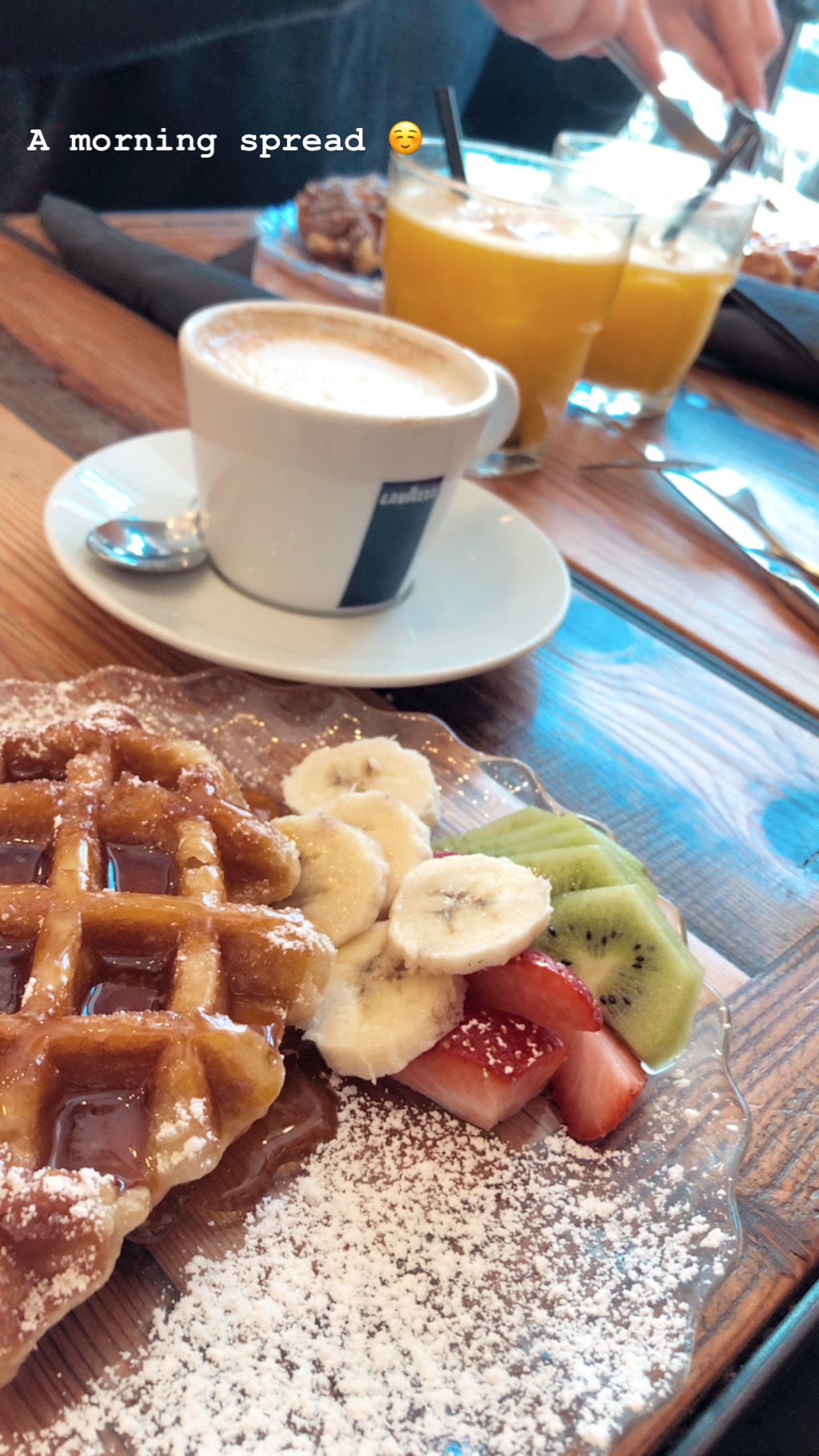
For our second day in Rome we had a bit of a sleep in. After being exhausted from all our travels the day before and hitting the ground running, we took it easy first thing in the morning. When we finally emerged from our room, it was to head out for brunch and then exploring. We stopped at The Loft for brunch and this was a great stop (we liked it so much we actually came back a second time and probably would have more if we had the time). After a breakfast of waffles and cappuccino’s and fresh squeezed orange juice, we hit the metro to head to our first stop.


We started our day at Piazza Navona.

This is a public square that was originally intended as a stadium which dates back to the 1st century. This was changed around the 15th century when it was turned in the city marketplace, Piazza Navona is now a square that holds markets, fountains, and a slew of restaurants and stores. There is also a very small Gladiator Museum on one entrance side to the square, which we did visit. If you are interested in Gladiators and replica’s then it is a neat visit. If it isn’t something that you are interested in, or you want something much more in depth, then give it a miss. There are a couple other stores of note, a toy store in one of the main entryways provides a bit of delight for adults and children and there are two “Made in Italy” shops that have some of my favorite leather-bound journals that I’ve ever seen. When we visited the Piazza, they had a little Christmas Market going on. Christmas is a bit different in Italy, celebrated on January 6 (Three Kings Day/Epiphany- long story which I can talk about on a different post), so they still had this little market going. It’s geared mostly towards children with games and such, only a couple booths have items to purchase or food.

From there we headed over to the Pantheon.

The Pantheon was originally used as a temple dating back to around the 2nd century (it might even be a little older than that as the current Pantheon was built on the remains of another temple). It’s most striking feature (because 12 columns and sheer size isn’t enough) is the opening in the ceiling that looks out to the sky above. There is what we would call a hole in the ceiling, not only that but the dome is the world’s largest unreinforced concrete dome. This is also known for being one of the best preserved Ancient Roman Buildings. After being used as a temple, it was transformed into a church and is still in use today. It was absolutely incredible to walk through and in this building.

From the Pantheon we just headed out to walk the streets. Honestly, that was a lot of our following days, just walking the streets of Rome.

No matter when or where, you can always find anything just by walking the streets. We wandered the streets finding hidden columns, little squares, and paths upwards. Our general goal was to make it over to Villa de Medici, but when we arrived our boys were in no mood to join in on a guided tour. We cut our losses on that, rather walking the gardens right next to the villa (somewhat near Borghese) and seeing the start of the sunset at the top of Piazza del Popolo.

This was one of the coolest squares that we saw, at one end was the Porto del Popolo, a massive arched entryway to the square. At the opposite end are two churches. Right in the center of the square is the Fontana dell’Obelisco; a massive fountain with lions on each corner and an obelisk rising from the center.

We ended up having dinner at a restaurant called Don Chisciotte and feasted on delicious homemade pasta & sauce, wines, tiramisu and cheesecake.

The perfect end to our day!

Rome Day 3:

We started our 3rd day with breakfast at a little café, Café MeMe. After a delicious heaping of eggs, bagels, pancakes, cappuccino’s, and smoothies (I promise you- this was spread across the 4 of us), we decided to hit one of the biggest monuments that we were seeing from every vantage point of the city…The Alter of the Fatherland. Before actually going to the monument we stopped at the church right behind it, Santa Maria in Aracoeli.

I don’t have any pictures to post from the inside, but I promise you- you MUST go to this church. It is absolutely incredible, just achingly beautiful. This may have been one of our favorite churches EVER and we’ve been to a lot so far. It is literally right next to the monument and so easy to just stop in to. And now, The Alter of the Fatherland.

IMG_4164

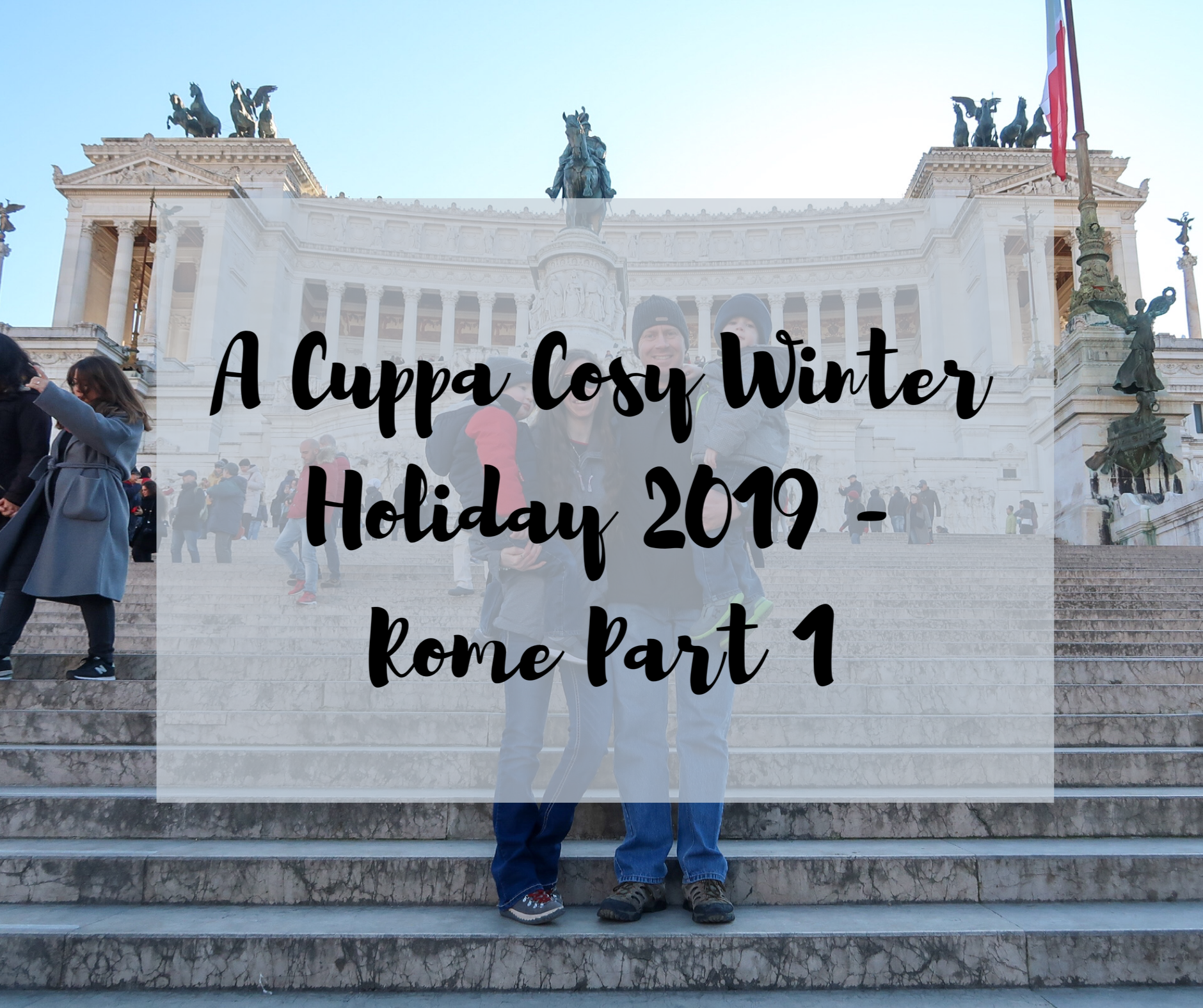
That name is actually not the correct name, although it is referred by that name regularly. This monument is the Victor Emmanuel II Monument and it is a masterpiece. Before we get into the history, let me just say that this structure with all its steps, individual monuments and sections, the museum within, and the view from the top is absolutely incredible. It sits in between Ancient Rome (right next to the Forum and atop Capitoline Hill- the center of Ancient Rome) and the more modern city of Rome via the Piazza Venezia. Work started in the late 19th century being completed in the very early 20th century and since then, this building more than anything else is seen as the “symbol of Italy”.

Not only do you have the steps leading up to the first landing, at that first landing is their Italian Unknown Soldier tomb (which is guarded), then there is a second landing which is the Portico, and then a third landing which you can walk around towards the back for the elevator to the top. Honestly, this is a most stop spot. Climb the steps, pay homage, and see the view of the city from above. I think this might have been my favorite “view from above” of Rome as you can see EVERYTHING.

It’s a great overlook of Ancient Rome, a great look of the modern city, and you see the domes of the churches and basilicas stacked up.

From there we stopped for a late lunch at Ristorante Il Miraggio which was a restaurant that we found randomly, looking for bathrooms, but it was one of the best random finds we had. It was down a side street and we had the best waiter I think we’ve ever had. It was so much fun to just watch him work, greet and entertain everyone from the paying diners to the random people walking down the street.

The food was delicious (as I said earlier- you can’t really go wrong wherever you go), and I had one of the best cups of standard black tea that I’ve had in a long time. It was the perfect stop and felt like such a good little spot.

After feeling refreshed from lunch, we started walking down the road once again. We headed up to Quirinale Palace.

This was a last minute, half hazard decision, and one of the few that worked out for us, but also didn’t work out. We headed up to the palace to go see it, but it was starting to get a bit later in the day and on the way up I ended up pinching a nerve in my back. So, we pretty much got to the actual palace (which wasn’t too bad) and then turned around to head back to the Tiber River. This was kind of a bummer as I would have liked to actually go in and experience it, but it wasn’t in the cards. This is the reality of traveling sometimes.

After a little rest, and some medication for my back, we just wandered along the Tiber River, crossing over at the pedestrian bridge and just wandering the neighborhoods. Which is such a nice perfect way to end this first post about our Winter Holiday. It was a long one and if you made it to the end…thank you. What was your favorite spot that we went to in these first couple days?