Ottawa, Tulips, & Mother’s Day

Over Mother’s Day Weekend we took a quick overnight trip up to Ottawa to not only visit the city once again (this time as more experienced travelers), but also to see their famous Tulip Festival. A little moment to say, that above all, the Tulip is my favorite flower. When we went to the gardens at Keukenhof I was beyond excited and, when my husband had sent me the link to this festival in Ottawa I couldn’t wait to go. 

The Canadian Tulip Festival boasts that it’s the world’s largest tulip festival- which I suppose if you look at the basics of that statement, would be factually correct. That’s not an insult, or to say that it is anything but gorgeous to walk through the park and along the water and just marvel at the beauty. I’m just saying that the reason they can claim that is because places like Keukenhof plant beyond just the tulips they are known for. 

This festival, and partnership with The Netherlands, dates back to World War Two. The Royal Family of The Netherlands, Crown Princess Juliana, secretly fled to Ottawa for safety, and in fact Prince Margriet was born IN Canada in 1943. In 1945, Canadian Troops played a sizeable role in the liberation of The Netherlands. Every year since, the government of The Netherlands has sent a package of Tulip Bulbs to Canada. In fact, much of the stops on the park walk speak about Dutch War Brides immigrating to Canada with their soldiers and making new lives together. 

The festival itself is free of charge and open to the public. It is a STUNNING to walk through- there is no bones about that. There are activities for children, food trucks, and education throughout. As with any “touristy” thing, I would highly suggest getting there early. We got there about 11 and it was already pretty packed with people. We wandered through the festival, stopping to look at all the varieties of tulips, as well as snap a couple of photos. I would say overall we spent a couple hours at the park total, we could have spent longer, but the kids were feeling a bit out of sorts, so we headed out.


One of the spots right near the main festival is the Canada Agriculture and Food Festival. This is, ironically, the spot that actually stuck with both boys and we all found something neat in it. This museum is actually part of a larger connection of museums that make up Ingenium. The idea behind the brand is to provide an experience that immerses all, showcasing how science and technology influence and connect with our everyday lives. It’s built three museums, each with their own focus, but the Agriculture and Food Museum is unique in that isn’t the only working farm in the heart of a capital city. Visitors are able to see a variety of farm animals, as well as learn about the history of farming in Canada, and the relationship between us, our food, and our environment. We wandered through the exhibits (there was a really interesting one on sustainable salmon farming), checked out the animals, and were able to watch a cow milking demonstration (which happened to be our older son’s favorite thing). 

I already mentioned that this was just an overnight trip for us (and actually upon review, one we could have just done as a day trip), but before we headed home, we decided to go walk through Ottawa a bit. We’ve done this before, but it was fun to do again. We wandered around (the exterior) of Parliament, down to the massive Spider statue, through more tulip displays, and finished off with a bookstore run.

We then headed over to the Canadian War Museum. These stops are as much for my husband as they are for our boys. This museum is Canada’s national museum of military history and has been recognized for its incredible study and understanding of conflict. Dating back to 1880, the current museum opened in 2005, on the 60thAnniversary of V-E Day. The unique part of this museum is that not only do you learn the history of the wars, but you learn a lot of information about war at home- what it was like for those at home during war time (something that I’ve always wanted to learn more about). The analysis is not only on the wars/conflicts, but how those conflicts pushed nations forward. 

The museum contains A LOT of artifacts- some you might even be surprised (Hitler’s limousine with bullet holes? Fuselage of a plane that belonged – and was salvaged- from one of the most famous pilots in Canadian History? And a whole floor of JUST military vehicles- some of which were used during WW1.). It was truly incredible to see the sheer amount of history amassed in this one building. Not just in military terms, but also in everyday terms- artifacts from any conflict that Canada has been involved with- games for kids, toys, newspapers, books, clothes and tv shows. It is all there. It’s really a spot that will have something for everyone. 

Our final stop was just outside of Kingston, and it was the tunnel for the Railway Tunnel. The tunnel is right off of Brockville’s waterfront and is about ½ a kilometer long. You are able to walk the entirety of it, with lights and music to guide your way. Stop at signs throughout that read through the history as well as the natural landscape of the tunnel. The tunnel dates back to the 1850’s and was intended to be able to connect the industrial Brockville area to other areas along the river. There were detractors to the plan to build the tunnel, in fact, the highest engineer in Canada was not on board. Work began in 1854, however quickly ground to a halt due to financial difficulties and wasn’t started again until 1856. The first train pulled through the tunnel in 1860 (just barley squeezed in on December 31) and trains ran through the tunnel until 1970. It is now a walking path, but there is hope for more development in the area. 

I will say- it was a pretty cool stop to see this history and stretch our legs. If you are in the vicinity, driving through or what not, take a stop. It’s only about 20 minutes to go through and you can say you walked right through history. 

All in all, it was an absolutely lovely weekend! And it’s revitalized our traveling- we don’t travel as much in the winter months, but with summer coming up soon we are planning some trips. 
A Cuppa Cosy Summer Holiday 2022 – Kingston, Ontario

I went back and forth as to whether to write this final post on our summer trip. Kingston is incredibly close to where we live, we didn’t do much while we were there (except one really cool tour, which is why I decided to write this) and we were definitely at the end of our…travel excitement. However, I decided to write it to not only share the cool spot we toured, but also just a little insight into what our final day or two was like in Canada- because boy did things happen that made me think. 

As always, let’s start with a little history of the area. 

Kingston was originally named Cataraqui and inhabited by the Five Nations Iroquois (though the Wyandot People – of Huron origins- were the first occupants). The French arrived in 1615 and established Fort Cataraqui in 1673 to serve as a military and trade base. The fort itself was occupied on and off, would be destroyed and rebuilt several times over, until finally the British took possession in 1783. The renamed it Tete-de-Pont Barracks in 1787, then turned over to the Canadian military in 1870. It is still in use today; however, it is now named Fort Frontenac. 

Kingston played a bit of a role in the American Revolutionary War as a home location for Loyalists (those who were loyal to the British Crown and wanted to remain a part of the United Kingdom). In order to make “space” for the Loyalists the British worked with the Mississaugas to purchase land. The Loyalists gave the settlement the name of “King’s Town” – which would eventually turn in to Kingston. 

One of the bigger military times for Kingston was the War of 1812. Kingston became a major military town and engaged in an arms race with the American Fleet stationed in Sackets Harbor. The base of Fort Henry, later known at Point Henry, was built to help protect the Canadian Fleet and garrisoned until 1871. It’s now a World Heritage Site. 

Once incorporated as a town, it held the largest population in Upper Canada until the 1840’s (it became a city in 1846). From what I can see- Kingston is really known in terms of cultural hot spots. They host several film festivals, music festivals, writer retreats, as well as Busker events (we’ll get in to that last one). A lot of musician and actors name Kingston as their birthplace, most notable being Dan Aykroyd (there are many more musicians that I could name as well). A final notable fact, the first high school in the province was established in Kingston in 1792 by a Loyalist! 

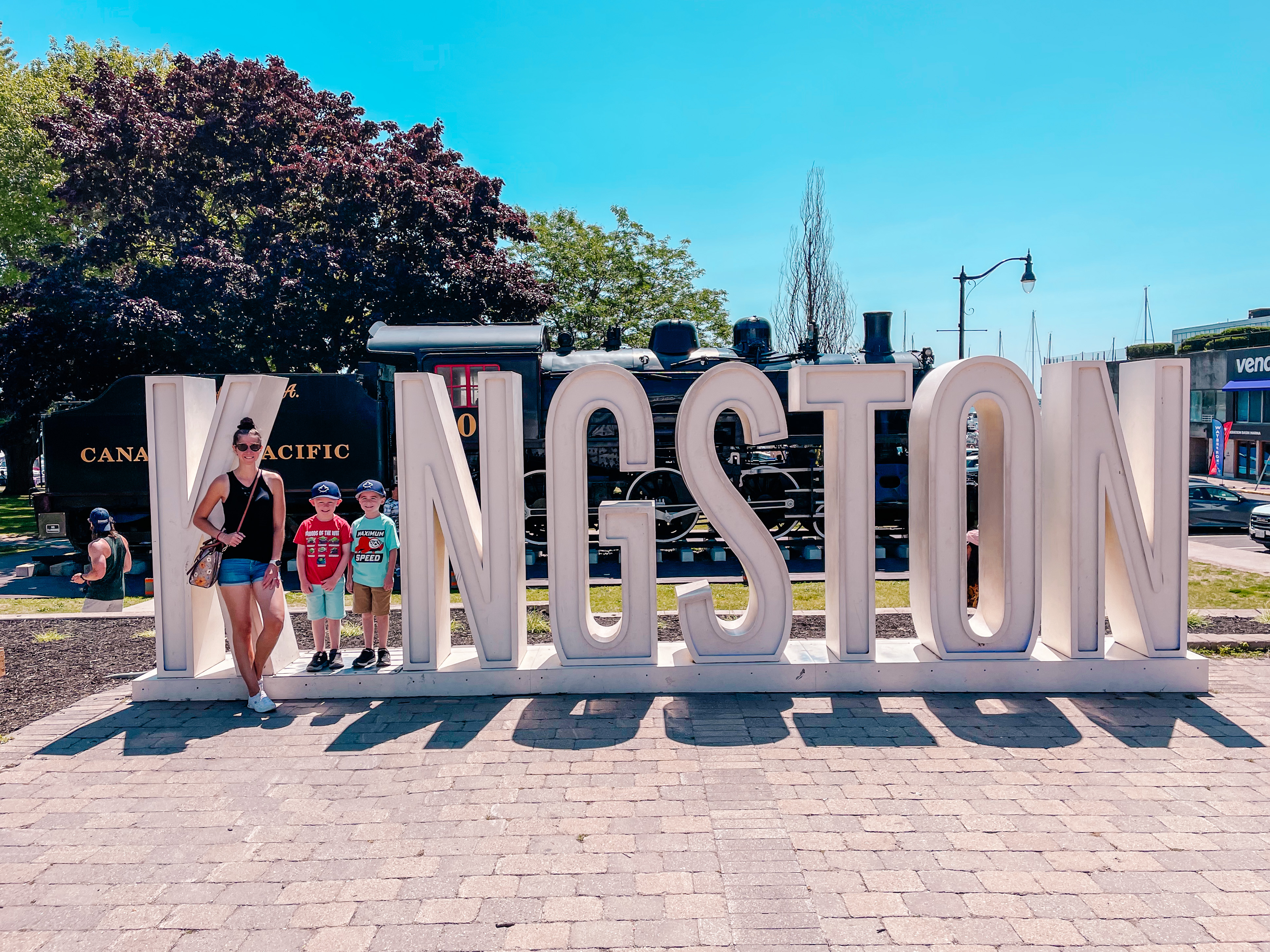
I’ve been to Kingston now twice, the first being a fun girlie day out where we wandered the streets of downtown, stopped in a local independent bookstore (spent some money…), and grabbed lunch at a great Tex-Mex spot, Lone Star Grill. The second time was this trip with both boys and my husband. 

We headed to Kingston from Toronto on the day where half the nation of Canada was crippled by a software glitch. The communication servers for about half of the country simply went down. This was horrifying on so many levels- people weren’t able to work, weren’t able to pay for products (it affected the banking lines, so no debit or electronic means of payments, BUT they could accept credit cards, not debit as credit, but actual credit cards), but people were not able to communicate via phones, the hospitals were impacted, emergency services. It really crippled that portion of the country for the entire day- I believe it started sometime in the wee hours of the morning and didn’t get fully restored until well past midnight. Thankfully it did get restored and everything returned to “normal”, but it did make you think…about a) how reliant we are on technology, and b) just how…dominating our technology/processing world is by very few companies that so much went down. 

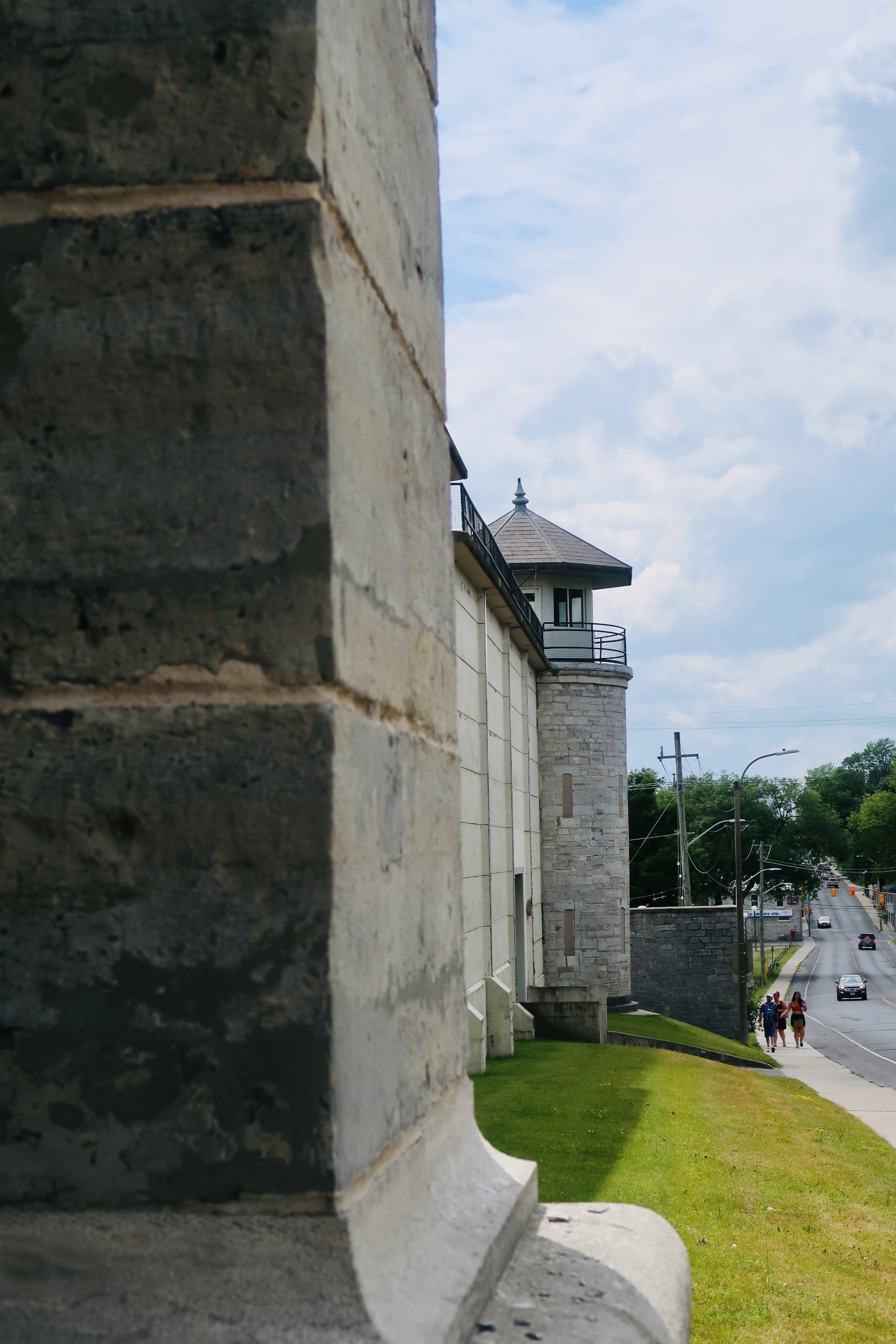
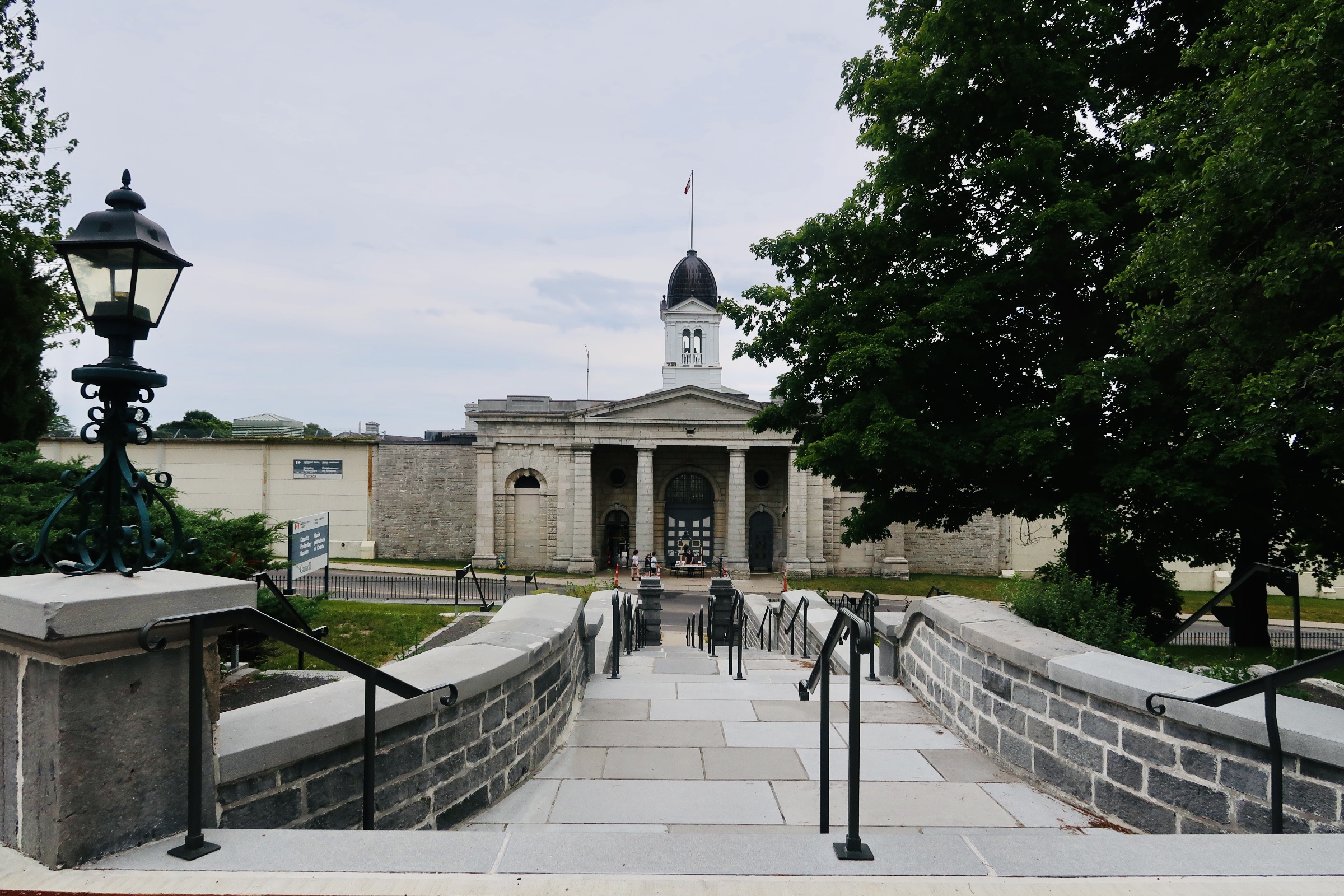
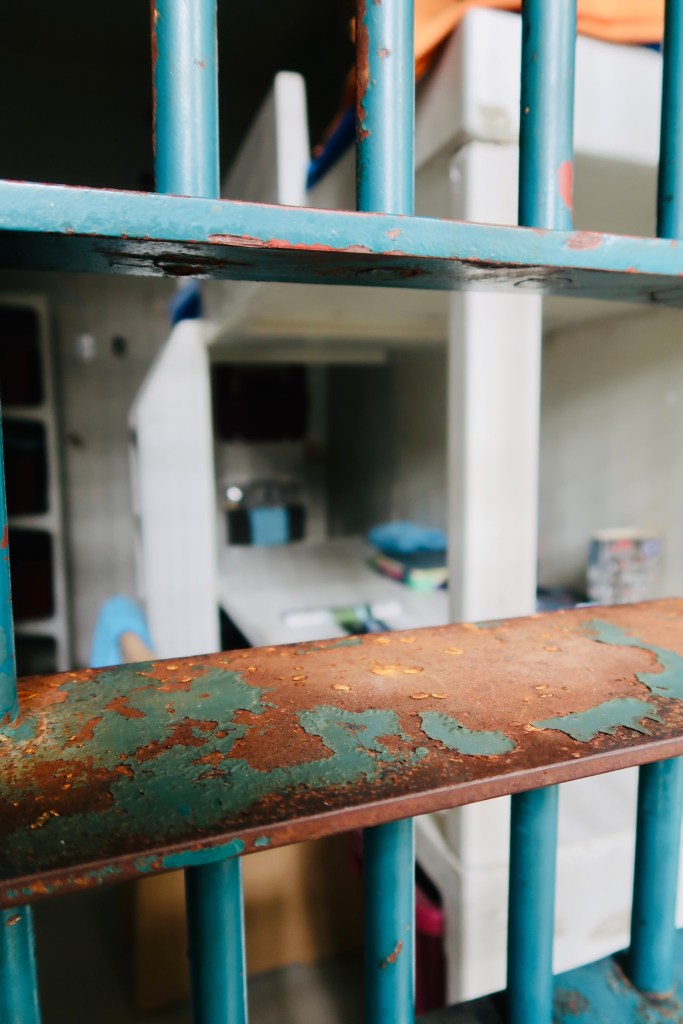
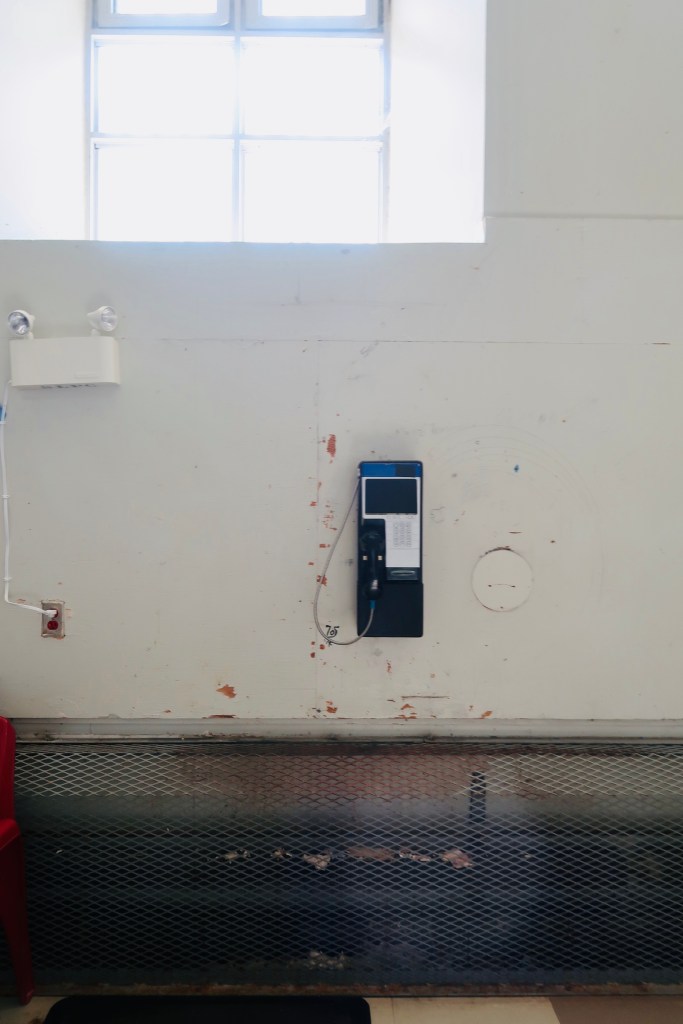
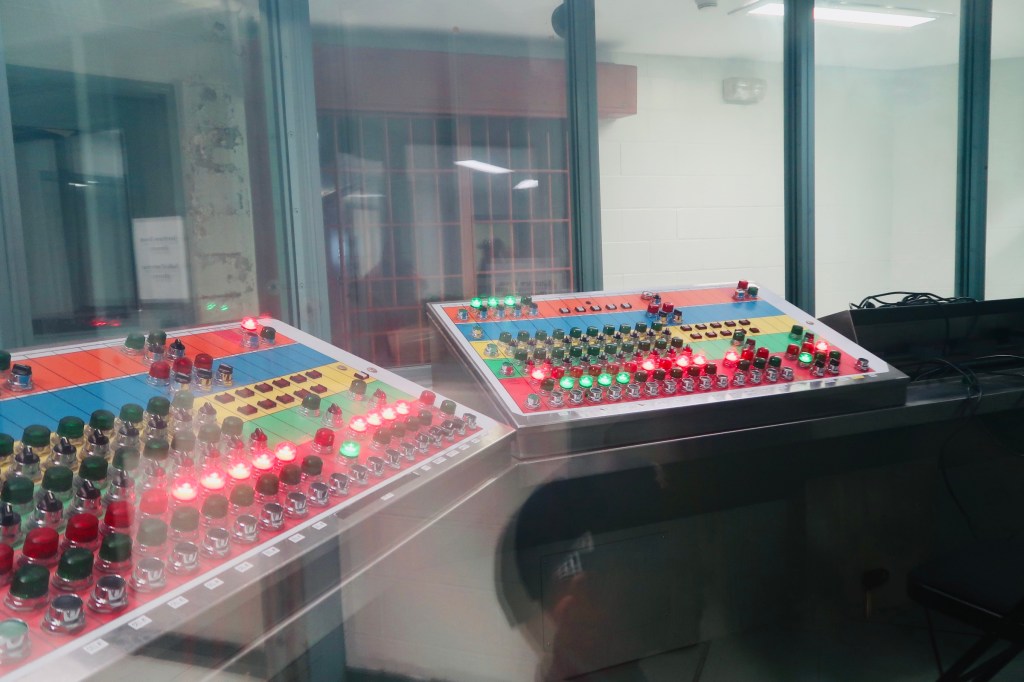
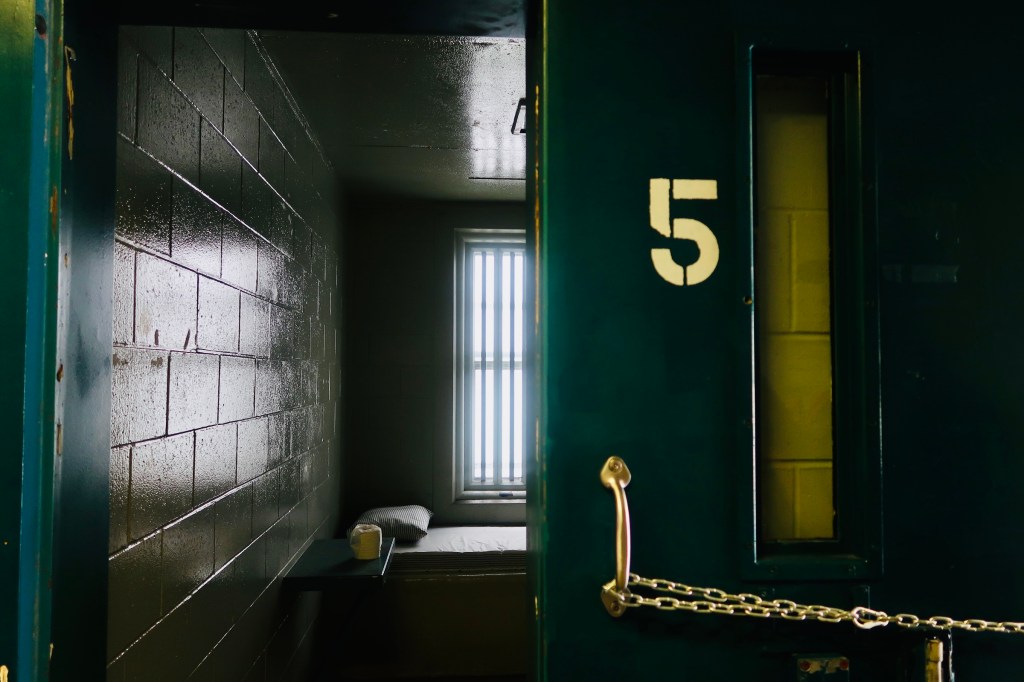
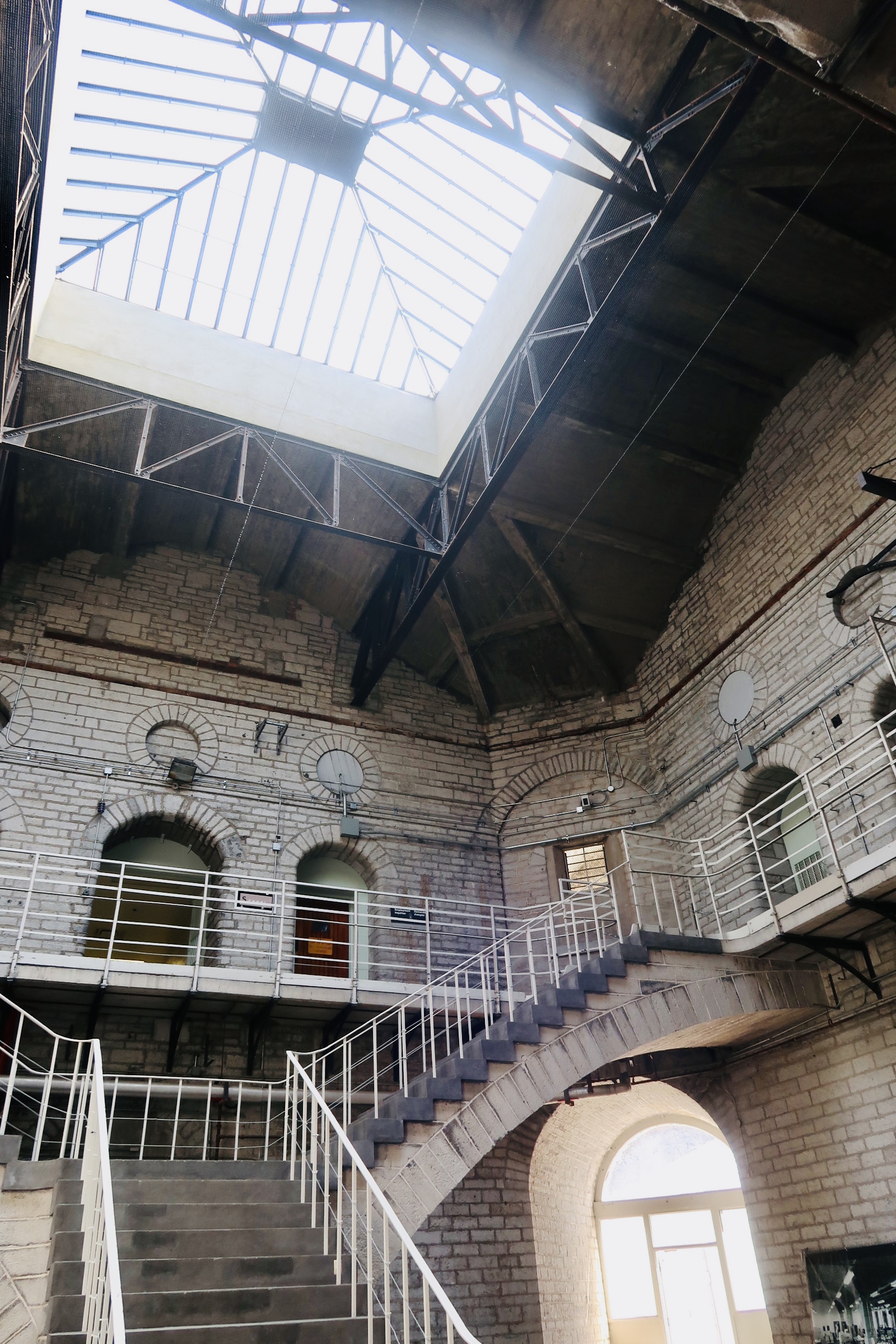
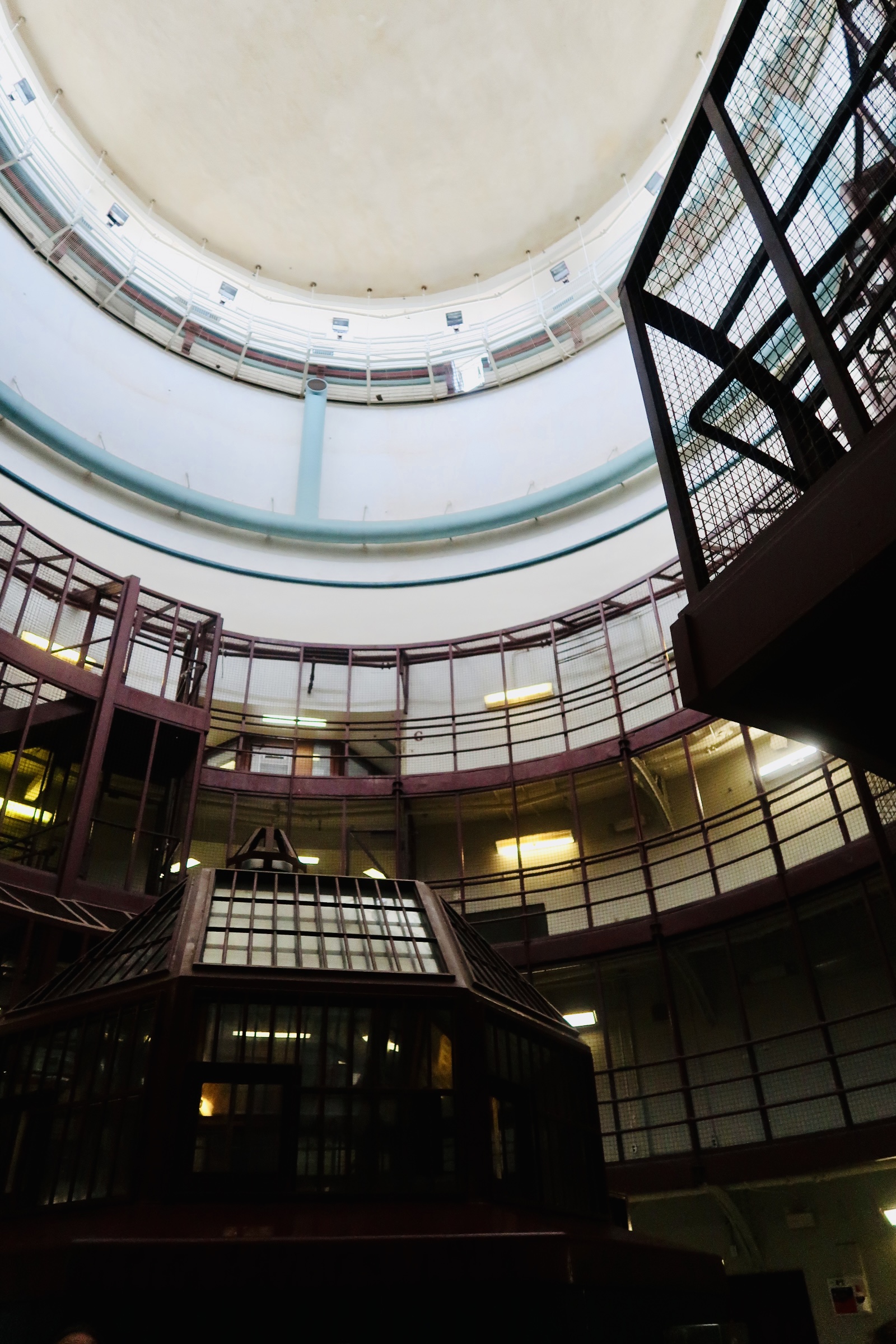
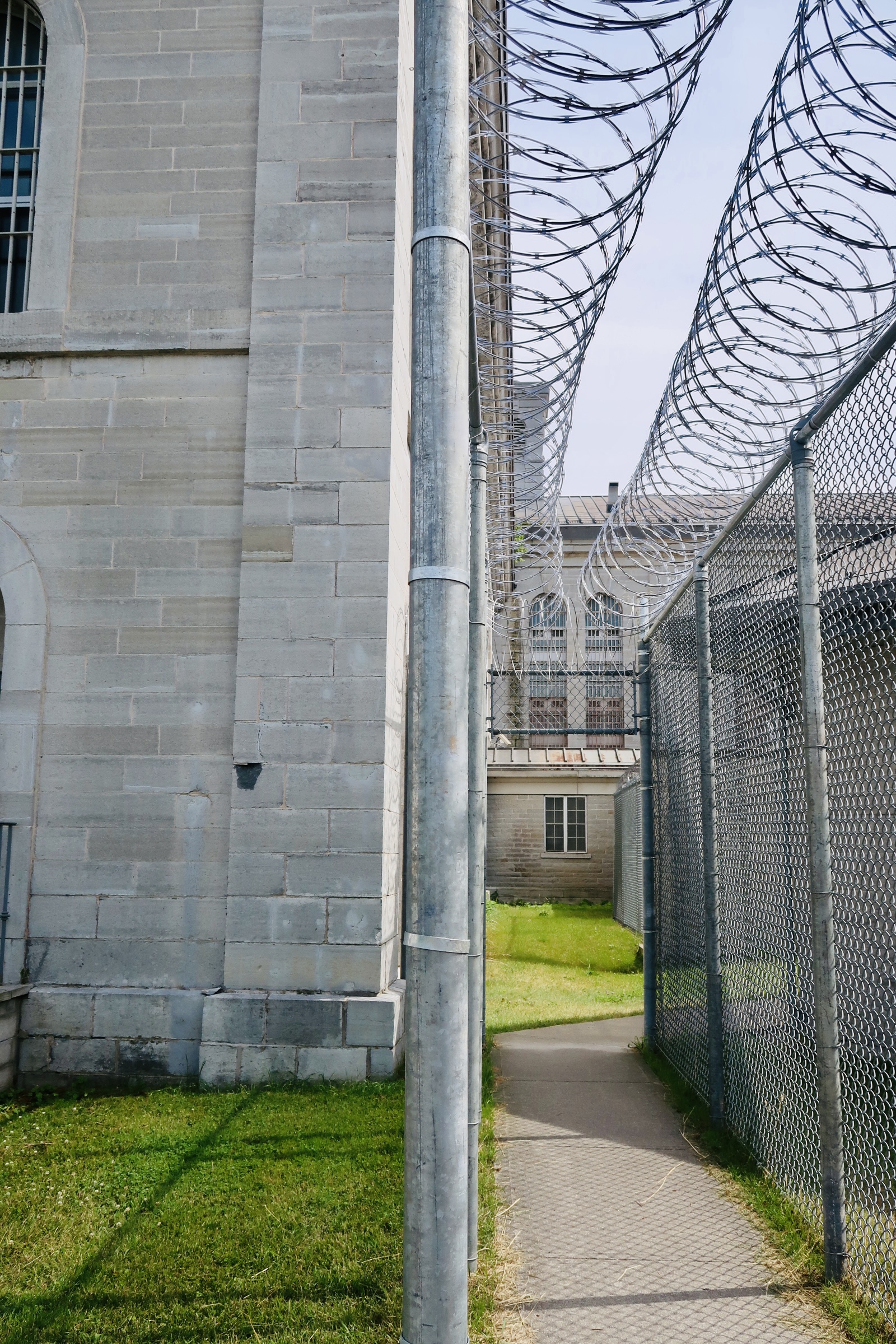
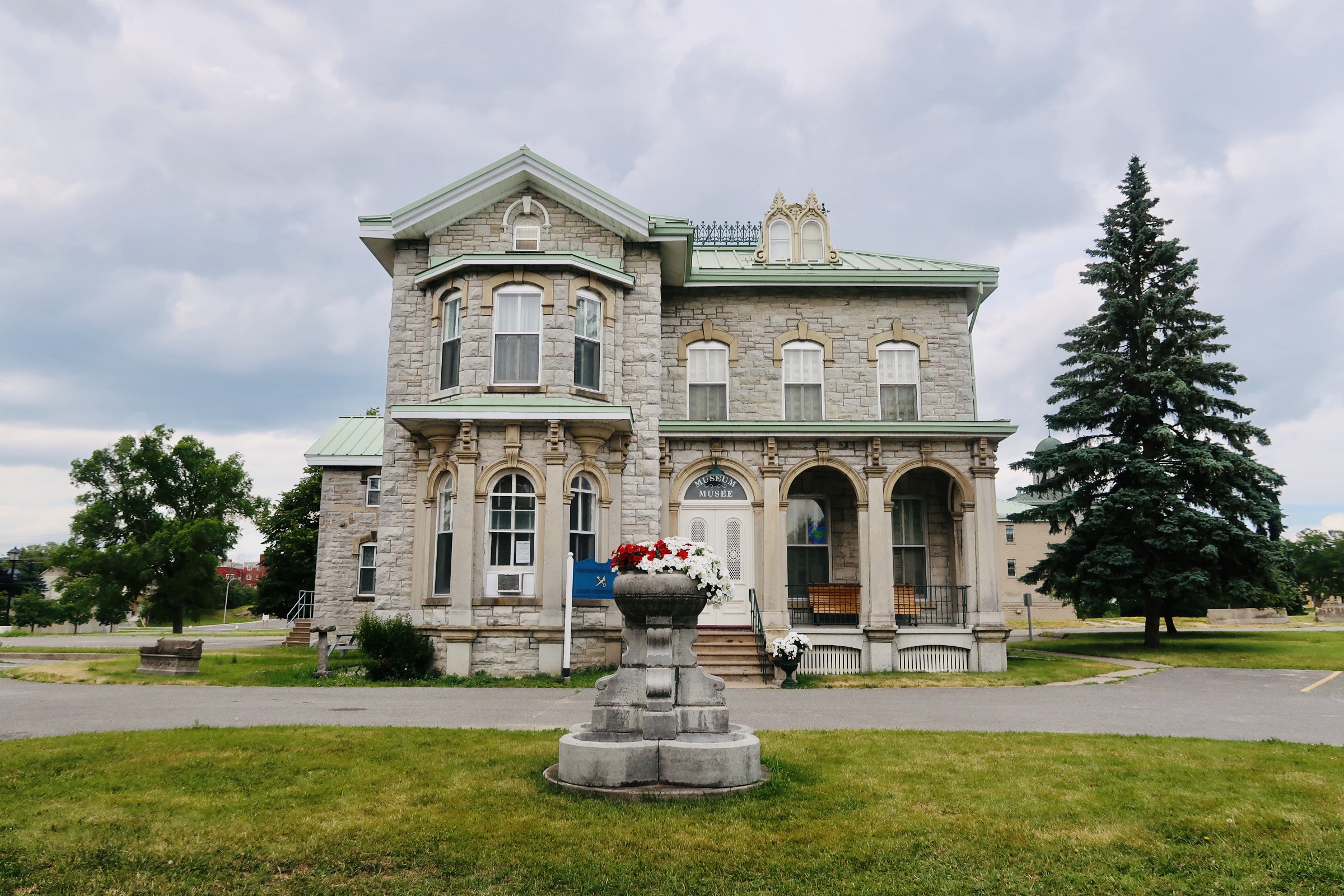
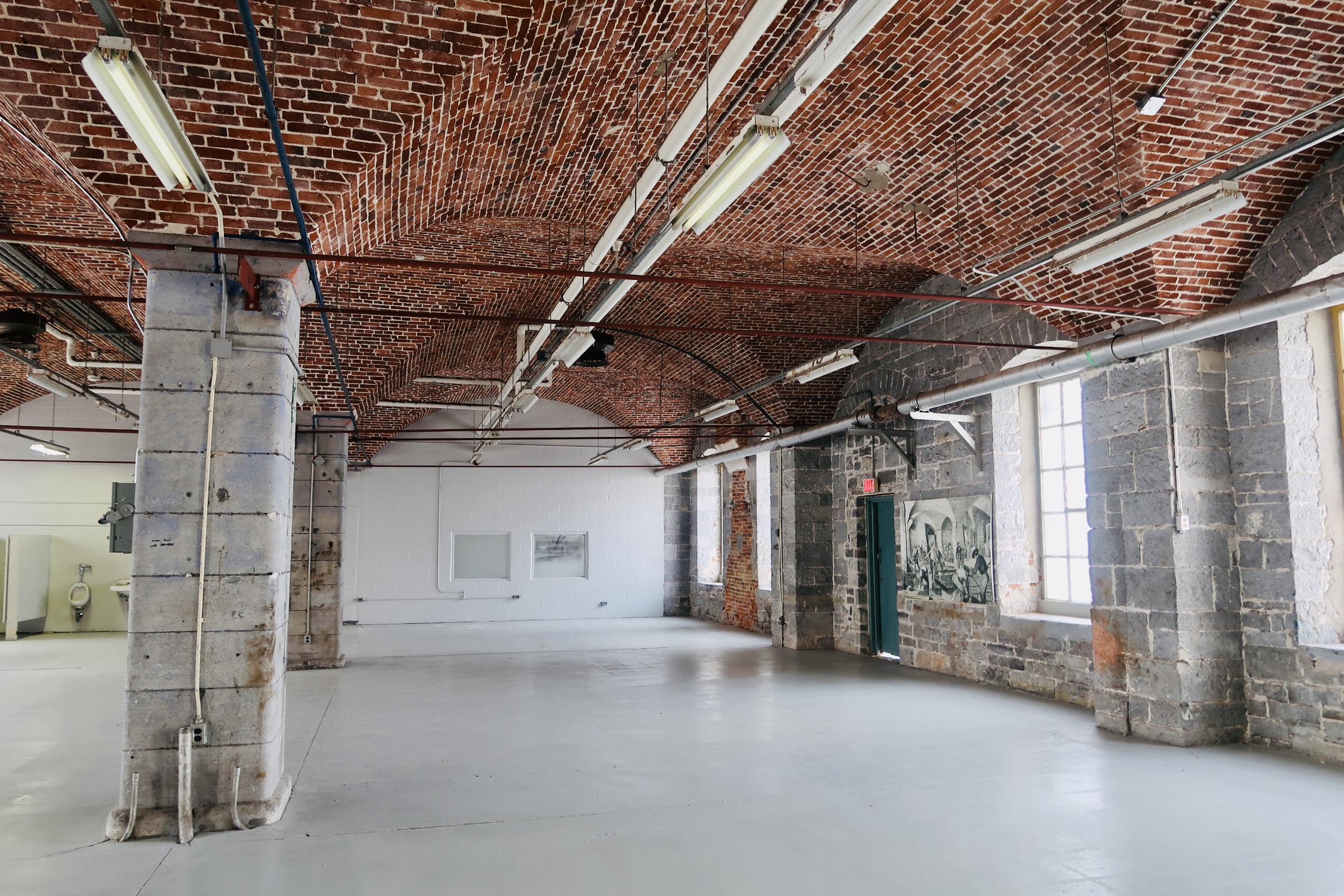
Once we arrived in Kingston and we immediately went off to our single scheduled event- a tour of the Kingston Penitentiary. Kingston Penitentiary was a maximum-security prison that has only recently closed in 2013- actually at the time of closing it was one of the oldest prisons in continuous use in the world. Originally opened in 1835 as a provincial penitentiary, it was one of nine prisons in the area. The building site was selected due mostly to the ready access to water and abundant fine limestone. It first housed six inmates, though it could hold 564 inmates total by the time it closed (this does not include the treatment center within the prison I don’t believe). Across the street to the north is the Kingston Prison for Women which operated from 1934-2000 to allow for more space- women had previously simply been segregated in the main facility. 

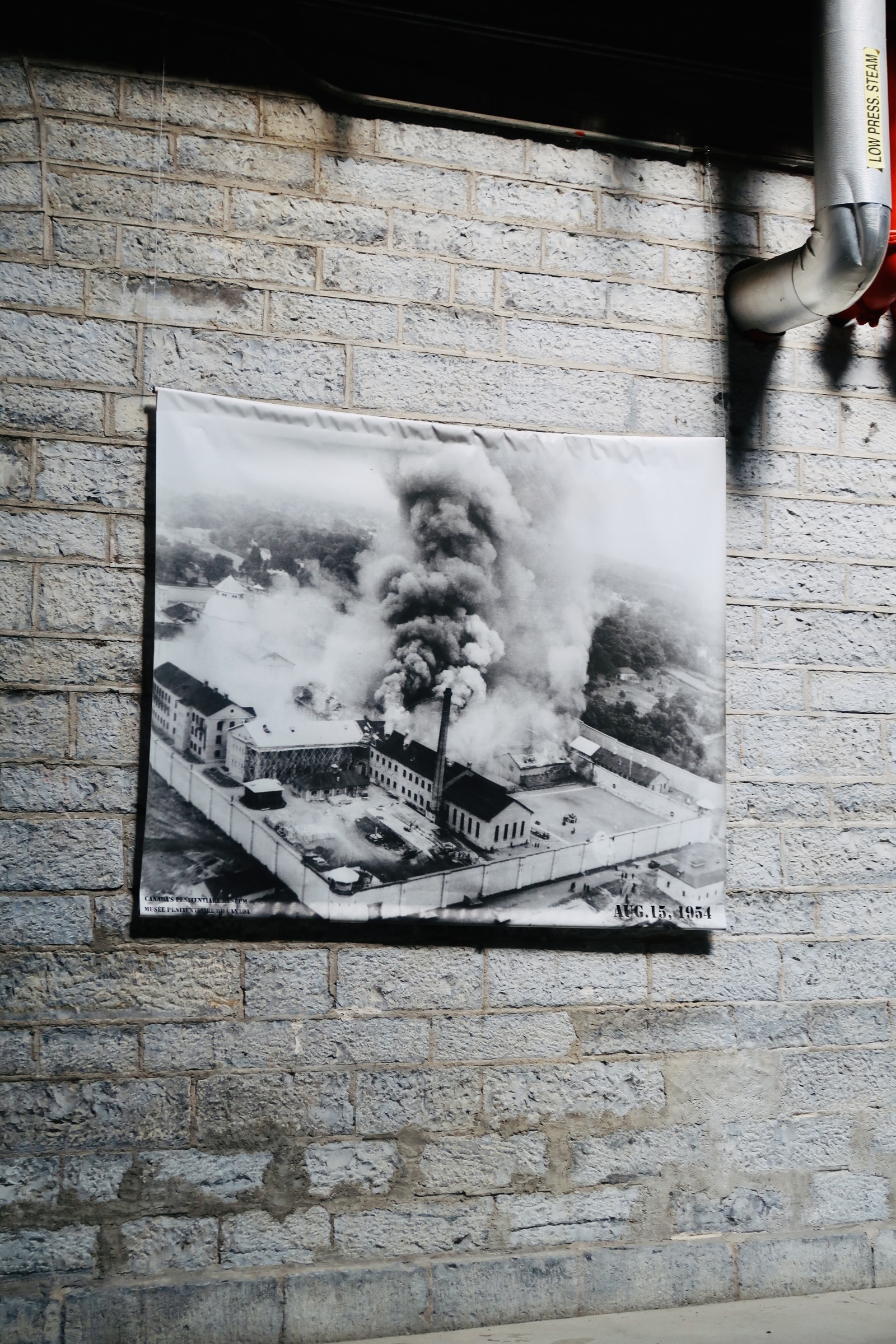
This penitentiary has seen two riots, one in 1954 and another in 1971. In 1954 there was a two-hour riot (which at that point was the worst in history) involving almost 900 inmates. A breakout was attempted coinciding with the riot, however, was not successful. This particular riot started in the exercise yard, led to several fires in different buildings, 50 ringleaders going to solitary confinement, $2 million in damages, and the involvement of both the Canadian Army and the Royal Canadian Mounted Police. The second riot was much worse. 

In 1971 there was a four-day riot within the prison that led to two inmates dying, six guards being held hostage, and much of the prison destroyed. The riot was instigated by concerns about future conditions at a separate prison transfer, lack of work/recreational time and other prisoner issues. Once the riot was quelled, an investigation was opened, and it found that the prisoners were not wrong in their complaints. A number of issues were noted, least of which being overcrowding and shortage of staff, but also prisoners who did not require maximum security, a lack of channels to deal with prisoner complaints and requests, as well as aged physical facilities. This riot led to committees being form and new jobs being created to help deal with these complaints and issues within the prison. 

There have been three escapes recorded from this maximum-security prison: 1923, 1947, and 1999. The first was Norman “Red” Ryan, who was an Irish Catholic Gangster. He escaped with several other inmates in September 1923 by setting a fire as a distraction, going over the wall, and stealing a car. However, he was caught again in Minnesota and brought back. Once back in prison he became a “model prisoner” and the poster child for prison/parole reform. He was released, went on to denounce his prior criminal activities and be a model citizen in public…all while going on an armed robbery spree. During one of these armed robberies the little gang he had formed ended up in a shootout of sorts. While Norman continued to present himself as the model citizen, even offering to help police and detectives figure out what happened, he was found out a few months later and died in a shootout with police at a liquor store. The second escape was fairly straightforward, 3 inmates went over the wall, 2 came back, 1 was never found. 

The third escape was by Ty Conn in 1999. Ty Conn was the first to evade capture for weeks and weeks since the last “successful” escape in 1958 (this is after 26+ attempts by inmates since 1836). Abandoned by both his parents, put up for adoption by his maternal grandparents he was adopted by a psychiatrist and his, alleged/described, mentally unstable wife. That only lasted about eight years before he was “returned” and placed in and out of foster and group homes, and youth detention facilities. As a young child in his adoptive family, he started stealing – first food then cars in his teenage years. By the time of his death, he was only “legally at large” (free) for 69 days (this is from age 13-death). After notifying prison guards at Millhaven Prison that several inmates were planning to escape, he was placed in protective custody and transferred to Kingston Penitentiary. His own escape utilized not only a rope ladder and grappling hook (that he made himself), but also cayenne pepper to throw the scent off to the dogs. He was found two weeks later in Toronto where he committed suicide, rather than go back to prison. 

I have to interject my personal opinion here for a moment because in listening to the tour guide speak about Ty Conn and the brief history I’ve learned about him- he really is one of those…cases for prison reform and slip through the crack’s instances. There is a book currently out by Theresa Burke and Linden MacIntyre, both have met and had interaction with Ty Conn, titled Who Killed Ty Conn. Together they paint a different picture and one that is worth understanding and knowing. It’s a book that I’ve added to my list to read at some point. 

From 1971-1981 Kingston Penitentiary also served as the Regions Reception Center. Every inmate in the prison system would come to Kingston Penitentiary first. It also held a Regional Treatment Centre within the prison which allowed up to 120 inmates who were in recovery. In 1990 Kingston Penitentiary was designated a National Historic Site and it was officially closed on September 30, 2013. A month or so later it was opened for tours- all of which are given by former guards and employees of the prison. 

 Kingston Penitentiary has seen it all and boy, if walls could talk. The tour was, quite honestly, incredible. Not only do you get to see how the prison changed throughout the long years it was used, but you also get to hear real experiences from employees and guards. It gives you a real insight in to not only these prisoners live within the prison, but also insight in to how the prison structure works/operates/could improve. The tour guides were not able to talk about the actual prisoners as it’s against Canadian privacy laws, but a quick search gives you an idea of some of the infamous prisoners housed in those walls. 

We stopped for a bite to eat after the tour (and a gas up- thankfully we found a station that was able to take credit cards!) at Montana’s BBQ & Bar- which was delicious and supplied quite the Long Island Iced Tea ;). 

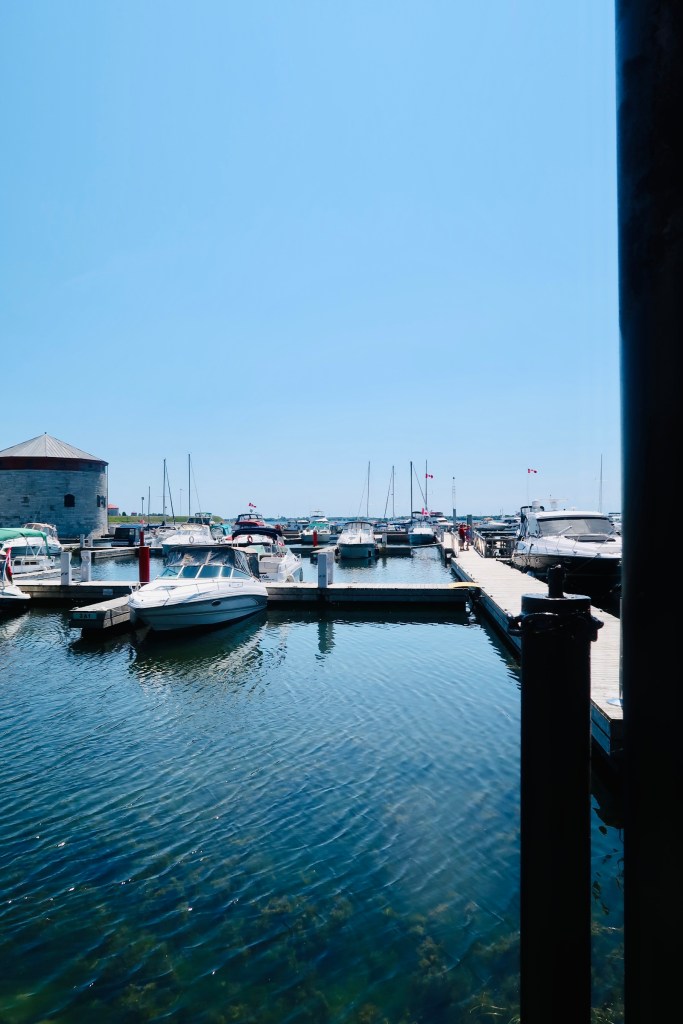
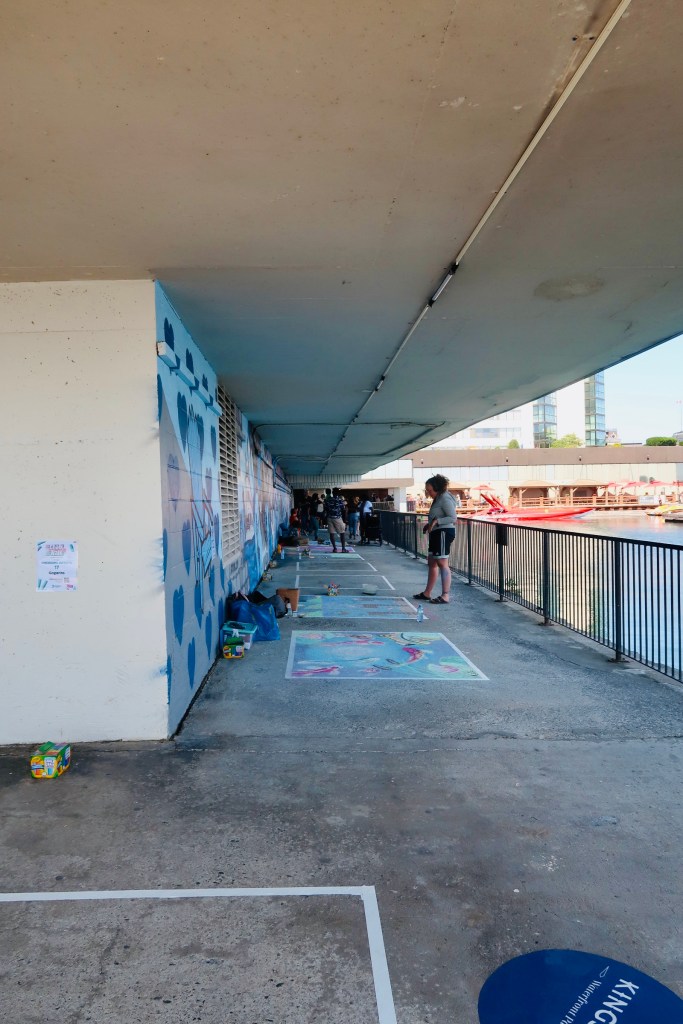
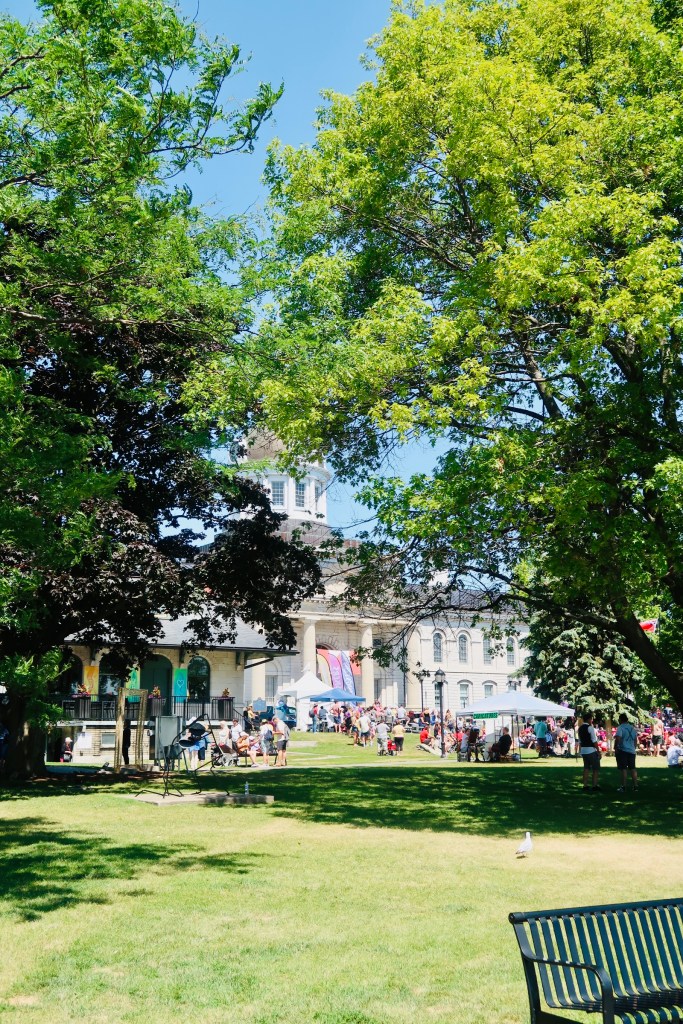
The next morning, we headed more towards downtown to walk along the river and the store fronts. We were pleasantly greeted by a Busker Festival. If you don’t know, a busker is a street performer. So, the folks that you walk past that are performing on sidewalks or subway stations for donations and your enjoyment? Buskers. And Kingston had an entire weekend full of entertainment lined up. The streets were blocked off to allow several performers, with a good distance between, there was a stage set up at the water, as well as food, face paint, and a sidewalk chalk competition. 

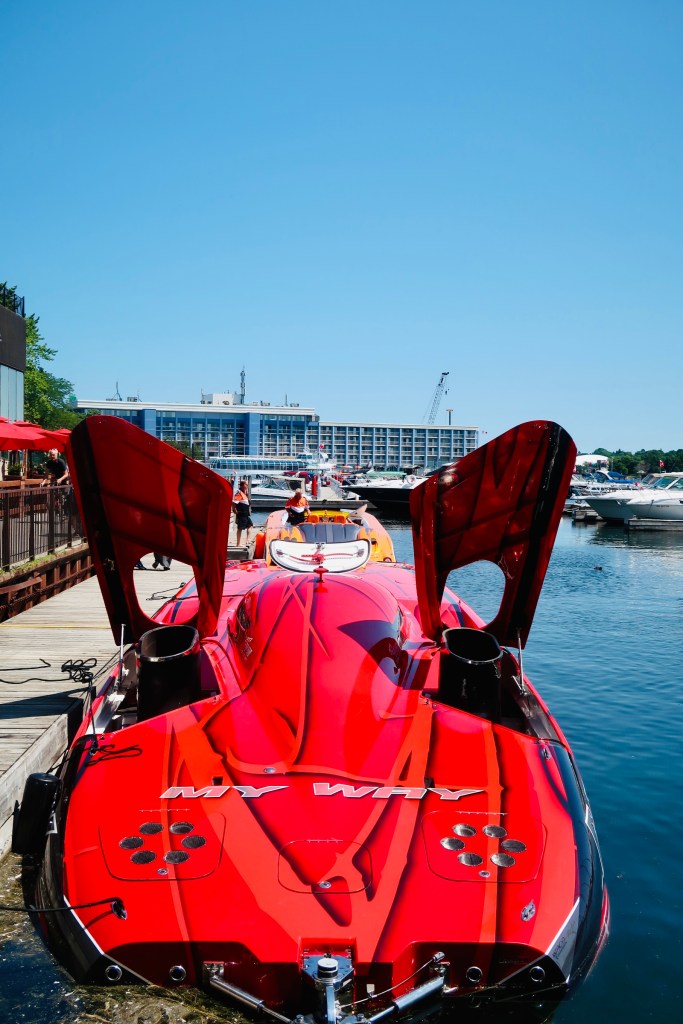
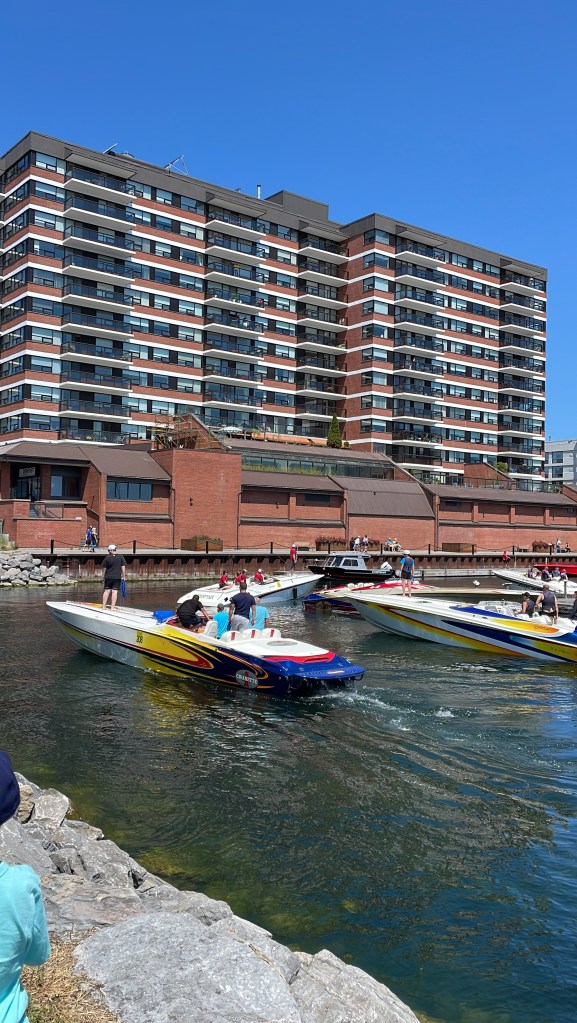
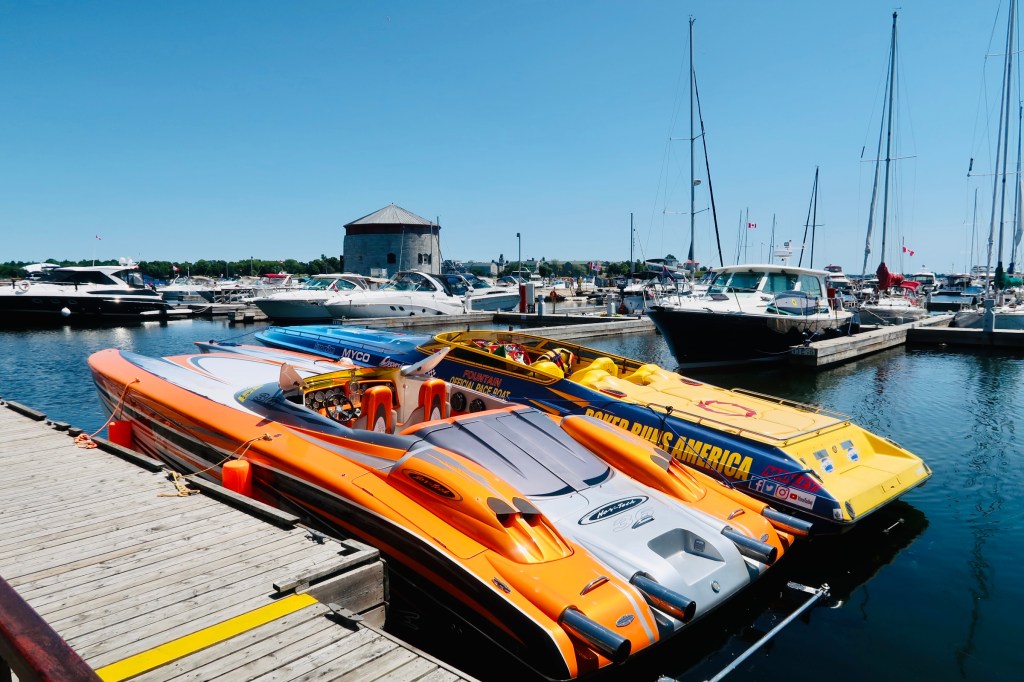
Coinciding with that event, it was also the weekend of a boat race, so while we were walking along the water, we were treated with the site of these souped-up boats, with wonderful sounding engines pull in to dock for lunch. 

We did just a little walking and then, finally, headed back across the border to the states and back home. And that wraps up our Summer Holiday (finally!). Which was your favorite to hear about? NIAGARA, DETROIT, UPPER PENINSULA, SUDBURY, TORONTO, or Kingston? Have you added any to your to visit list? And if you haven’t- you HAVE to add Mackinac Island/Upper Peninsula straight away. Let me know!