A Morning in Salem

It’s officially October, officially the Spooky Month, and officially time for me to talk about our stop during our Summer Holiday (HERE, HERE, HERE, HERE) that I haven’t yet. I’ve been waiting, because to me, Salem is the heart of October, and while we went during the middle of Summer, I held on to that spooky feeling the entire time. We only stopped for a few hours, for several reasons, and didn’t do much, but it was a really exciting stop. 

With all of that, it’s definitely time for me to level with you…I went to Salem mostly for Hocus Pocus. I wanted to see the history, pay homage to those who were killed during the Witch Trials and learn their stories, but I also very much wanted to stop at certain points for filming purposes to see them for myself. There was A LOT more that we could have done, but after leaving Boston, the boys were tired, it was sunny and hot, and so we tried to limit our stops. 

So, a little recap on Salem history…

Salem was founded in 1626 by a group of immigrants from Cape Ann, with the Massachusetts Bay Company arriving two years later in 1628 to settle it for the Puritans. Over the following decades the town grows, militia is established (Salem would later be recognized as the birthplace of the National Guard), trade is established, a cemetery is created (“Old Burying Ground” or Charter Street Cemetery), a custom house is built to deal with taxes, and so on. In 1668 the House of Seven Gables is built, known later as a home of Nathaniel Hawthorne, and in 1675 the Witch House is completed, which played a large role in the Salem Witch Trials as one of the presiding judges lived there and some cases were heard in the home.  Finally, in 1692 the Salem Witch Trials, what would bring this little town to the history books, began. I think we all have a fairly good idea of what the Salem Witch Trials were, but you can read through HERE to get a good look into that history. The trials concluded (after a whopping 3 months and an accusation levered at the governor’s wife) with at least 20 dead by ruling and many others dying in prison. 

After the trials, life in Salem quieted down for a time until 1775 when Salem conducted the first armed resistance of the Revolution. The British were attempting to collect ammunition that had been stored in the town, but the militia of Salem successfully blocked them. The town of Salem continues to grow and expand and in 1799 a group of Sea Captains worked together to found the Peabody Essex Museum, the oldest continuously operating museum in the country. It features culture from the New England area, as well as around the world. 

Once again, a period of time passes; Nathaniel Hawthorne publishes a Salem local book (Fanshawe in 1828 and in 1836 Salem is incorporated as an actual City.  Then, thanks to Nathaniel Hawthorne, Salem comes back in the spotlight with the publishing of The Scarlet Letter in 1850. The residents were not a fan as they felt it mis portrayed the residents. However, Hawthorne followed up with The House of the Seven Gables, which turned the house into one of the most famous historic houses in the country. In 1866 Salem held the first public demonstration of a long-distance phone call. 

After a massive and devastating fire in 1914, and a National Historic Site designation in 1938, Salem becomes part of pop culture when the seventh season of the show Bewitched is filmed in town. This reignites interest in the city and the city starts to lean a bit more into its…darker past. In 1982 it hosted a one-day Haunted Happenings Festival, which still continues to this day (every October for the entire month now) and offers a variety of spooky and historical events to attend. You can see the site HERE if you’re interested! 

In 1992 they added the Witch Trials Memorial, which is simple, but contains stone benches around the perimeter with the names of every accused witch along with the execution date.  Finally, in 1993 Hocus Pocus is released into theatres and catapults Salem not only from the history books, but into a constant pop culture sphere (in my opinion). Fun fact, the very very opening scenes (think like opening credits) were actually filmed overhead the Plymouth Patuxet that we visited in Plymouth (you can follow the first link in my vacation above or HERE). 

So, what did we actually manage to see on our quick morning? Well, first I could not help myself but see the house from Hocus Pocus. It’s privately owned and while they don’t mind folks taking photos of the front, be courteous. Don’t leave your trash, don’t block traffic, don’t blast their personal information (such as cars, license plates, etc.) into the online world. We literally pulled over long enough for me to take a couple photos and then we left- a total of maybe 5 minutes. Then, we parked at the downtown mall, paid for two hours parking, and trekked through main street. 

We stopped to pay our respect to the accused Witches at the Memorial, we wandered over to Town Hall, to the Witch House, and stopped at the Ropes Mansion. The main street is absolutely delightful and the perfect spot to buy all your souvenirs, take in the sights, grab a bite to eat and just enjoy the small-town vibes. It was all in all, a delightful stop and I would definitely recommend making a least half a day to a full day to learn the history and take a step into both real life history and a world of pop culture.

A Weekend Upstate

One of our final Summer Hurrahs was a weekend in the greater Albany region. We spent a total of 3 nights in Schenectady, exploring Saratoga Springs, Schenectady, and Albany. It was a relaxed weekend trip that covered quite a few cute spots. Our first evening was spent getting settled into our Airbnb and heading over to a nearby park for some live music. We didn’t really “start” our exploring until the next morning. 

Fueled with some delicious bagels, we headed out for a day in Saratoga Springs. Saratoga Springs is really known for two things, horse racing and spring spas. The city’s slogan is actually “Health, History, Horses”. We started with the latter and ended with the former. So, Spring Spa’s. This dates back to the Native Americans believing that the springs (High Rock Spring) held medicinal properties- this is nothing new, there has long standing been a belief that mineral springs are good for you/your soul/your body/etc. This was then expanded when a British soldier was brought by the Native Americans to the spring to treat wounds from the French and Indian War. 

But back up for a moment… The land was originally “settled” by the British who built the Fort Saratoga in 1691, which was actually now Schuylerville. This is most noted in the location of The Battle of Saratoga, which actually took place in what is now Stillwater and the surrender at Saratoga took place in Schuylerville. Saratoga Springs was settled in 1819, incorporated in 1826, and then became a city in 1915. There are two turning points for tourism in the history, one of which was the arrival of the railroad, which made it much more possible for anyone to visit and be cured by the legendary springs. The second was the doctor Simon Baruch advocating for the “European Spa” (aka springs and bathhouses) coming to America. At one point in time, Saratoga Springs was the home of the largest hotel in the world.

Saratoga Spring State Park was developed in 1962 when the state of New York to control to preserve the springs. The property was then labeled a state park and gained National Historic Landmark status about 25 years later. There is a wide variety of activities to do within the park, between walking trails and taking in the springs, to snowshoe and cross-country skiing in the winter, to golf courses and pools to enjoy. We enjoyed walking along the creek and seeing a couple of the springs, as well as the wells that would have been used in its heyday. 

After we were entirely relaxed from the Springs, we headed over to the excitement of the Racetrack. The Saratoga Racecourse is the fourth oldest racecourse in the US, though many think it is the oldest. The track dates back to 1863 and has been in use almost every year since (notable exceptions would be during an anti-gambling legislation, as well as during World War II). The track itself has three tracks within the complex, a dirt track, a turf track, and a second inner turf track, which offers steeplechase races. We watched I think 4 or 5 races and enjoyed the excitement of the tracks and were swept away in the anticipation of the race. The boys enjoyed it and then were able to go in the kids’ zone to play some games in between. It was a fun way to spend a couple hours and an experience to have (this was my second time going to the races). 

We spent much of the rest of the day wandering the downtown shopping district, popping into bookstores, clothing stores, and tea shops and enjoying the afternoon in the quaint little town. It was a lovely way to spend a day in Saratoga Springs and the city itself is a really nice spot to stop for a weekend of fun and relaxation. 

Our second day of the weekend we headed into Albany. Albany is the state capital of New York (as of 1797) and a relatively modern city in the area (whereas quite a bit still has some original architecture, I saw a much more modern look to Albany). Originally founded by Dutch colonists in 1614 (though inhabited by the Mohican tribe at the time), the city of Albany was officially chartered in 1686 (under the English). The Albany region has its’ own long and storied history involving the Native Americans, the fur trade, and the shipping trade. It is one of the oldest of the original 13 Colonies and the longest continuously chartered city.  We headed into the city with no real plan, just a list of sites we’d like to see. This actually came out to be quite handy as we quickly learned that there is very little open in the city on Monday’s and Tuesdays. Every museum and attraction, save for the State Museum is actually closed those two days of the week. A bit of a bummer, we ended up driving past two of the attractions we wanted to see (The Schuyler House and The USS Slater (DE-766)) so we could still see them, even if we couldn’t tour them. The one place we were actually able to visit was the New York State Museum. Located within the Empire State Plaza (which also houses the State Library and Archives) and across from the Capital, this imposing building and museum details the history of the state of New York. It is the oldest and largest state museum in the US. As we walked through, we learned about the mining activities, the native American presence in the state, the history of New York City and its diverse makeup and neighborhoods. There is also a section devoted to September 11, which was incredibly meaningful and special to see. 

From the state museum we walked over to the Capital (though due to security you are not able to tour it at this time), and up through some of the neighborhood streets, admiring the old architecture (all of which is plaque dated and so awesome). We spent most of the rest of the day stopping in at different antique stores and bookstores as we wandered from little town to little town. 

The final thing we did on this little weekend away was see one of the Erie Canal Locks. The Erie Canal was built to provide a route from the Atlantic to the Great Lakes (Hudson River to Lake Erie was the original stretch). Originally proposed in the 1780’s, it was considered again in 1807, this time gaining approval and funding. Construction started in 1817 and finished in 1825 with a total of 34 locks. At the time water was the most cost-effective way to ship goods (as there were no railways) and this was a way to transport goods at less cost and faster transport. By and large this is considered the most successful human built waterway and one of the most important works of civil engineering in the United States. We saw Lock 7, also known as Vischer Ferry, though we also drove past Lock 8 (and have since seen the Oswego Canal). I will say, the sheer engineering of these locks is impressive, and it was very cool to stand right at the edge and see it first-hand. 

And that was our weekend in Upstate New York.

A Cuppa Cosy Summer Holiday 2021 – Boston, MA Pt.2

It is time for the second part of our few days in Boston (you can read the first part HERE). As much as I had thought that I wouldn’t write too much about the history, I found myself getting swept away in it all. So, here we are, a second post. Todays post is going to be all about The Freedom Trail located within Boston. We split the Freedom Trail into two days, doing half each day, but it is completely feasible to do it in one day if you’d like. I always appreciate when a city puts something like this together (and trust them when they do) as they usually have the best directions to hit everything you want to see- Luxembourg City did this very well too.

The Freedom Trail is a highlight of a trip to Boston as it is a 2.5 mile red line that wanders through the city, taking you to all the important spots in Boston history. Dating back to 1950, it allows you to view museums, meeting houses, churches, and other buildings that hold a special significance to the city. Anything from churches and cemeteries (with Samuel Adams, Paul Revere, and others gravesites) to a plaque on the side of a building signifying the first book store, The Freedom Trail will give you a little bit of everything. The tour (or at least the direction we went with) starts you off in Boston Commons. 

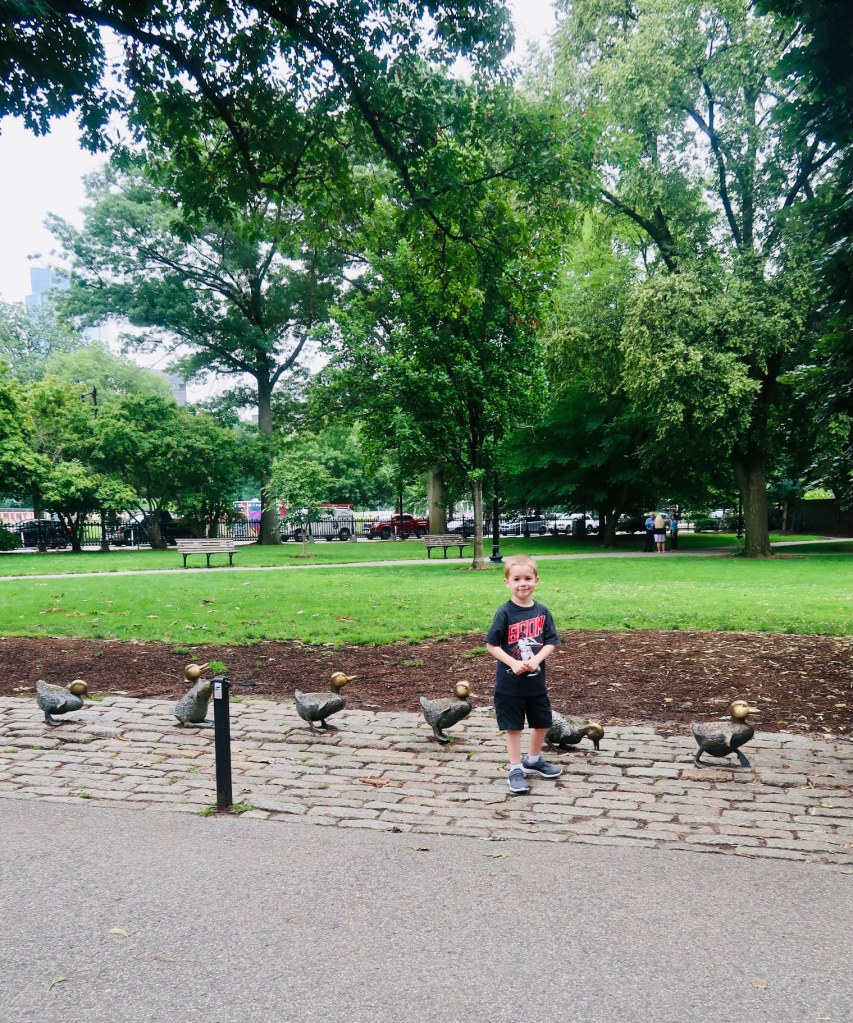
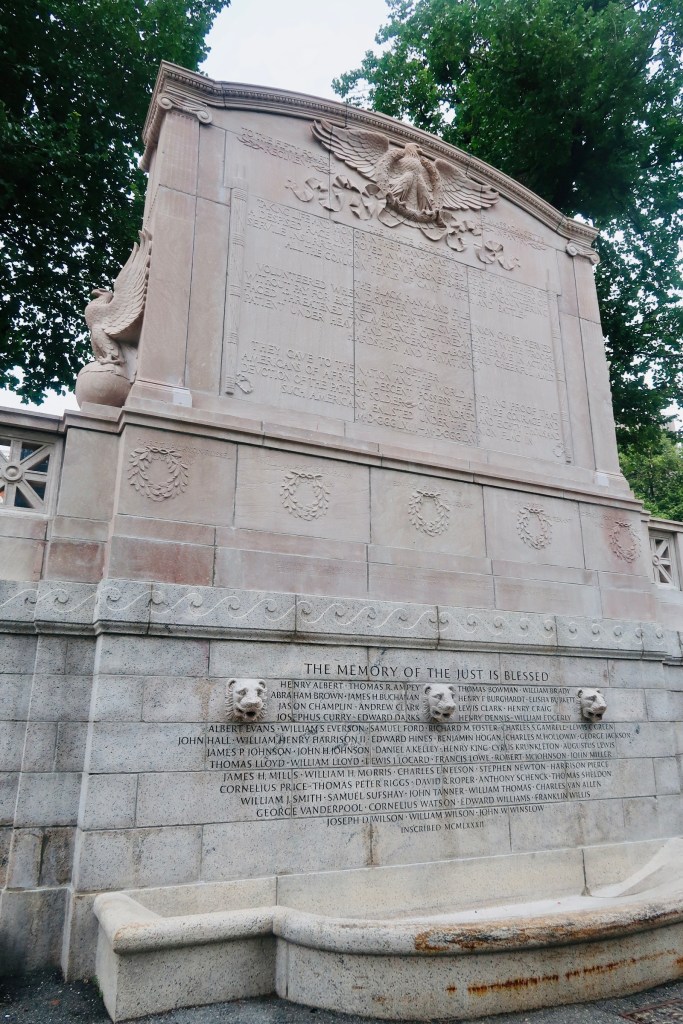
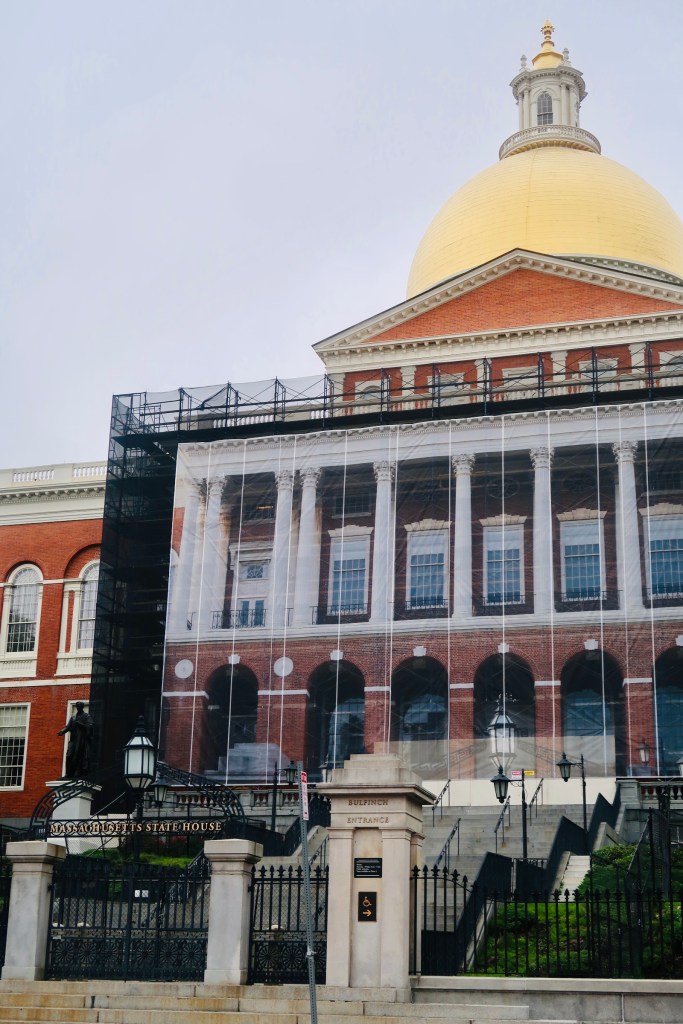
Boston Common is America’s oldest public park, dating back to 1634. The Puritans purchased the grounds from William Blackstone, it was originally used as a common grazing land for local livestock. It also became a spot for public punishments (featuring everything from stocks and pillory for theft to the hanging of witches and others). During the Revolution it served as a training and camp ground for the British. Today it serves as a public park (the smaller park across the street is where you can find the famous ducks) and a place for rallies and marches, as well as live music and festivals. Towards the end of the park there is a monument to Robert Gould Shaw and the 54th Regiment. This memorial honors and commemorates the first all-Black volunteer regiment during the Civil War. Most of them died during an assault in South Carolina, but they are forever memorialized here.** You also get a glimpse of the Massachusetts State House as you exit the Common. This has been the home of the state government since it was opened in 1798. 

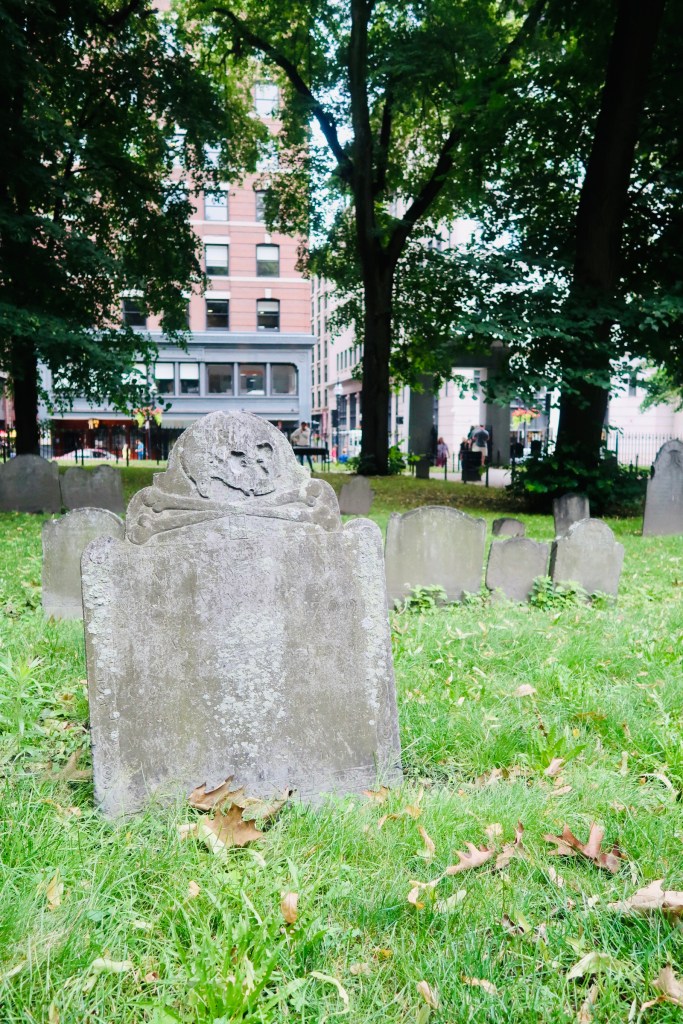
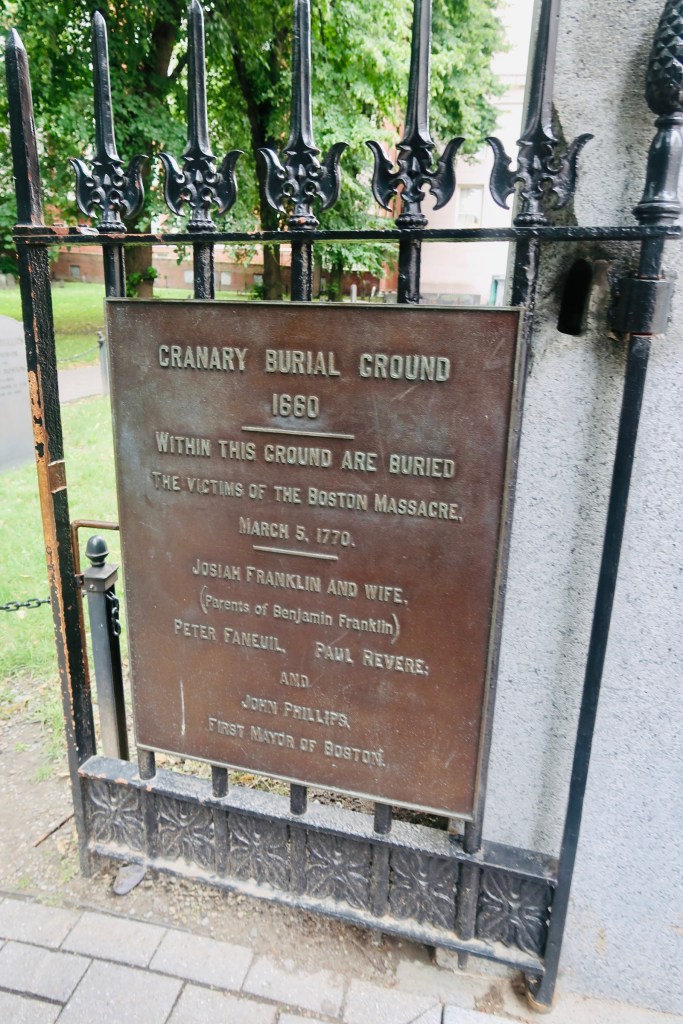
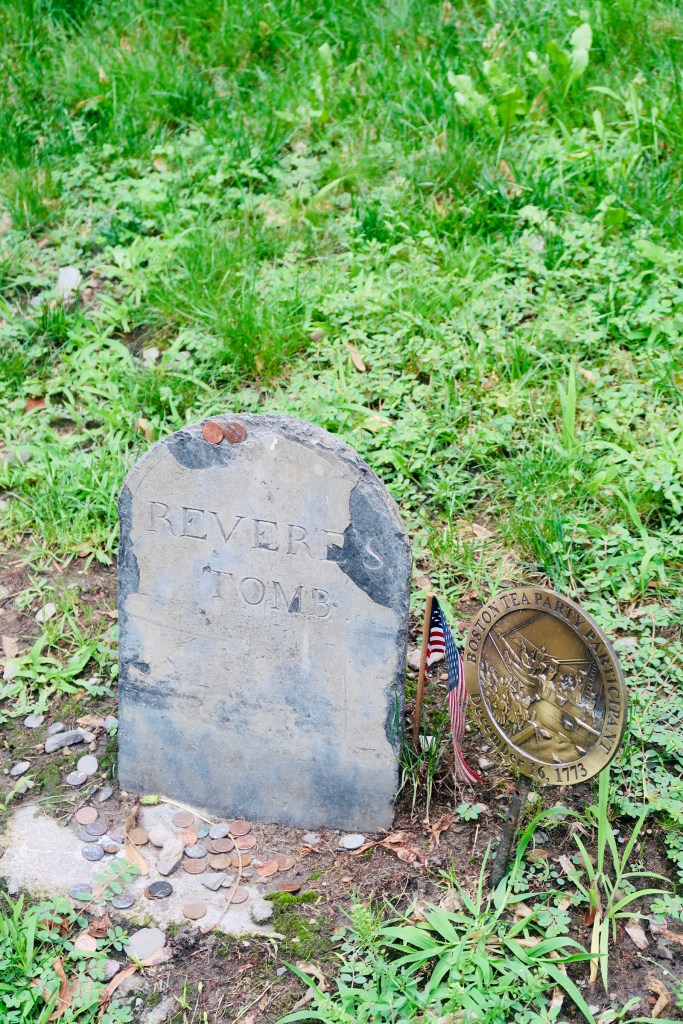
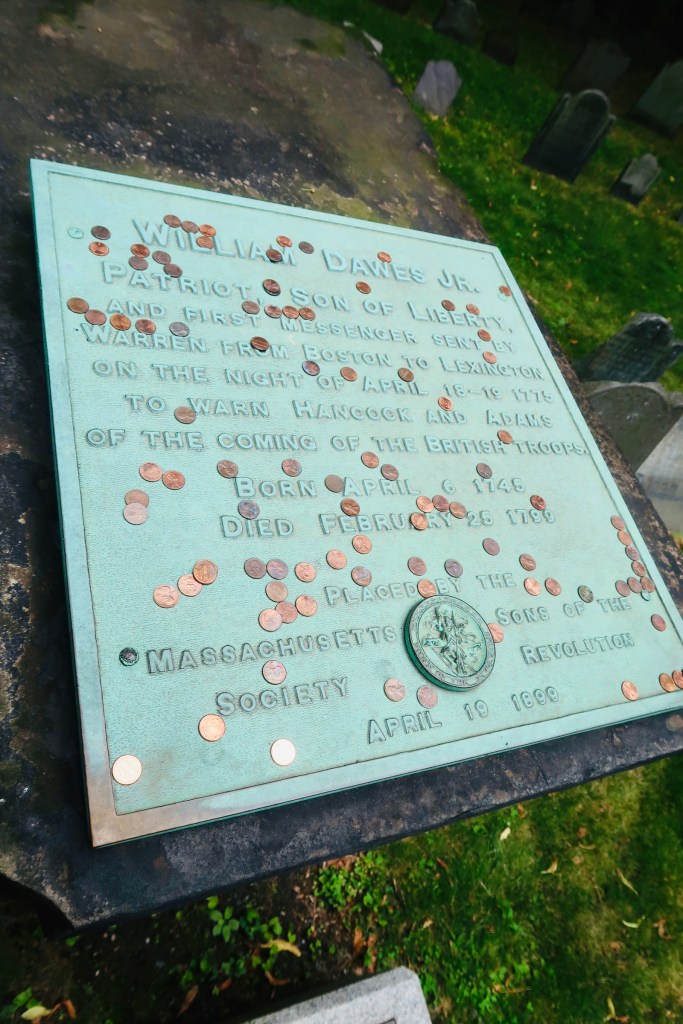
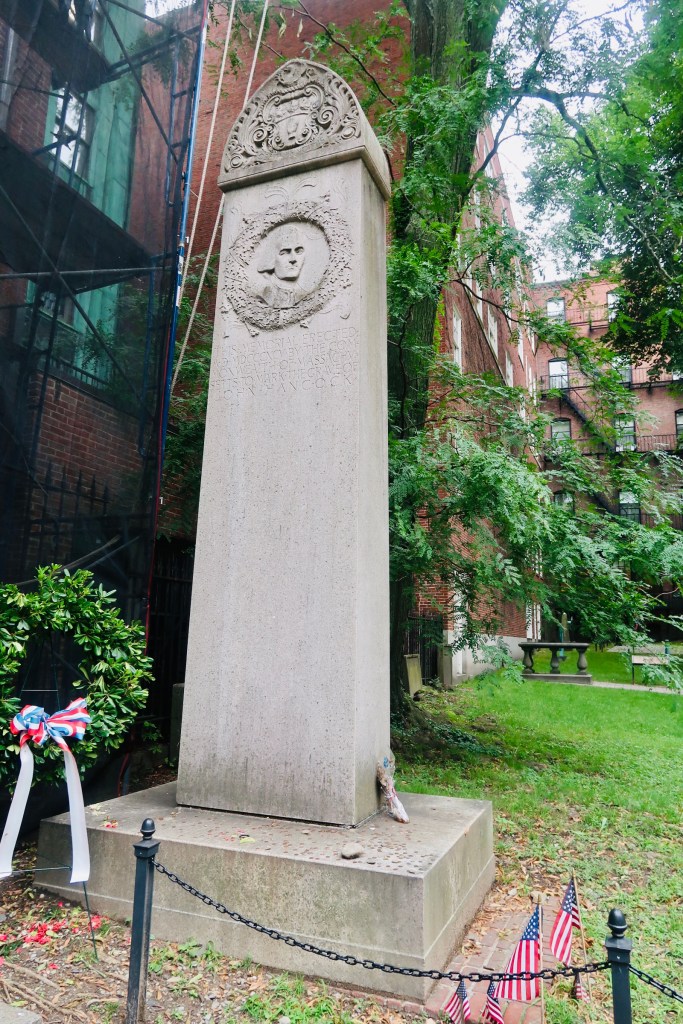
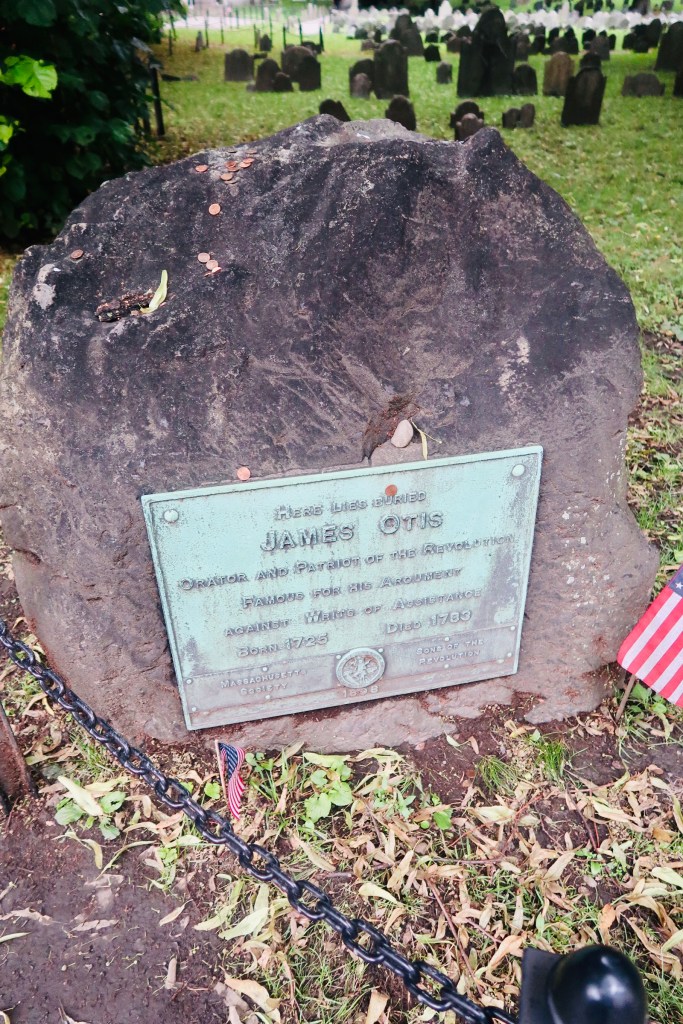
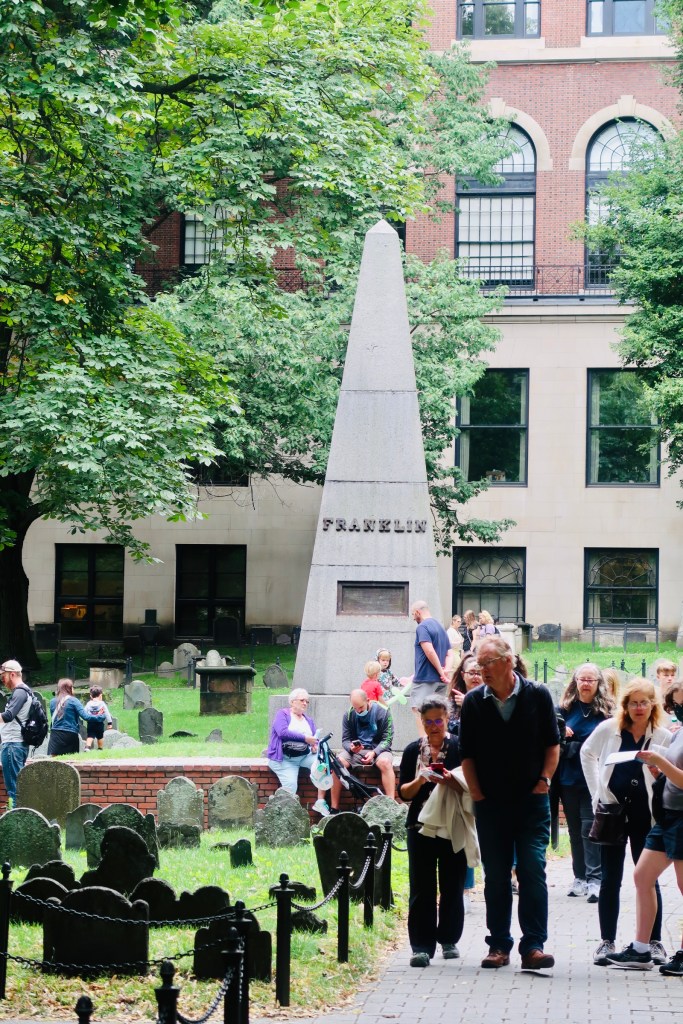
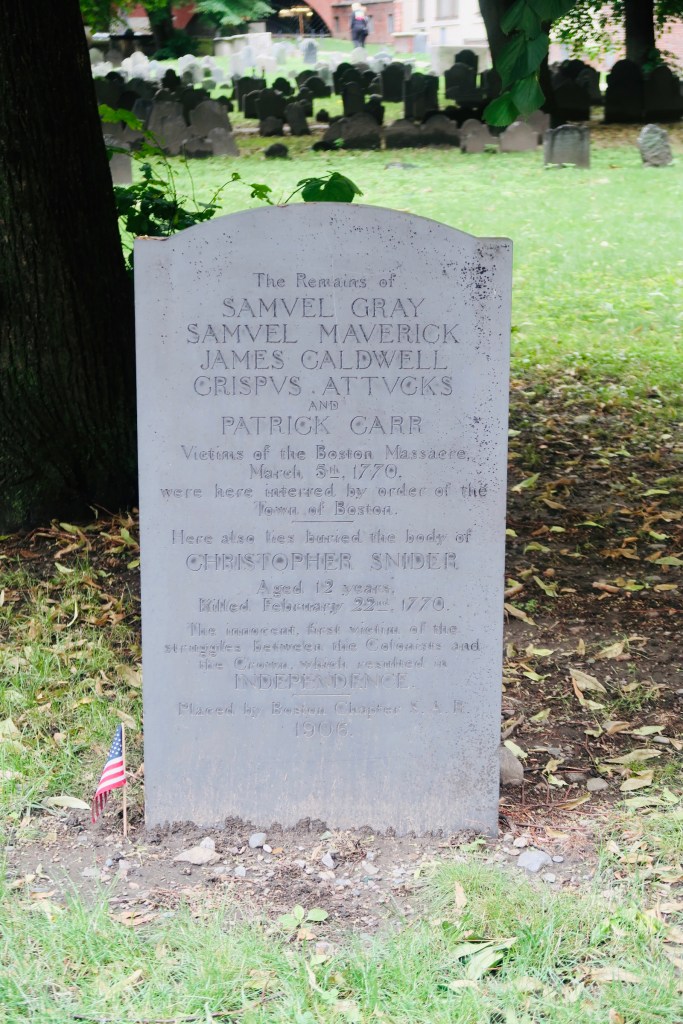
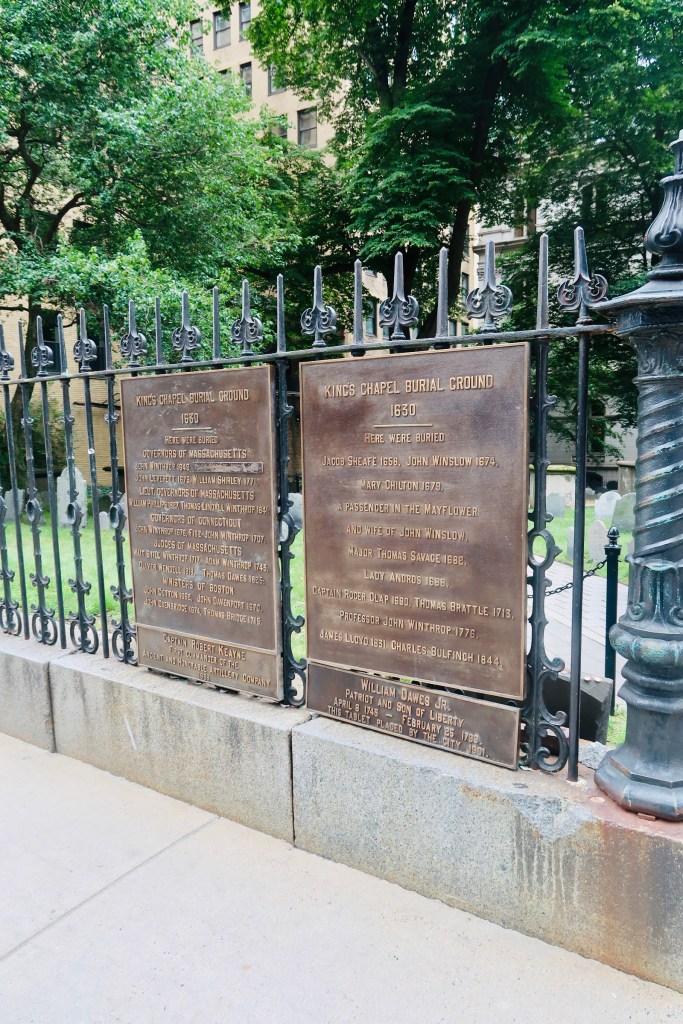
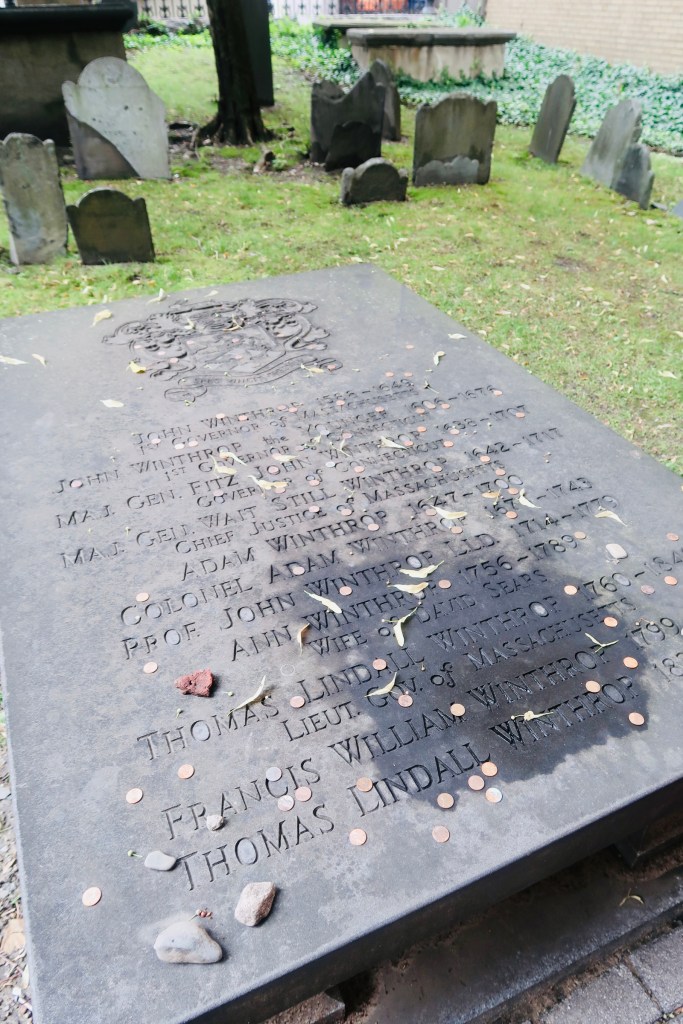
The next stop on The Freedom Trail that we made was to the Park Street Church and Granary Burying Ground. The church dates to the early 1800’s, but the burying ground is the real attraction at this stop. This cemetery is the final resting place for some of the key players of the founding and fighting for the colonies of America. This is the final resting place for around 5,000 of Boston’s own, though there are only markers and knowledge of 2,300. Notably buried here are Benjamin Franklin, Paul Revere, John Hancock, Samuel Adams, and a memorial for those massacred at the Boston Massacre. On these headstones you won’t find religious markers, rather these motifs of skulls with wings (to symbolize flying to heaven). Keep an eye out for grave markers- similar to those in Plymouth, there are metal markers signifying when the person participated in a momentous occasion, such as the Boston Tea Party. You are also able to go to another church and burying ground- the oldest in the city. We didn’t end up going in the church, but we did have a peak at the cemetery. Similar to Granary, this boasts several “big names”, the first woman off the Mayflower, Mary Chilton, William Dawes Jr, messenger sent to warn that the British were coming, as well as many others. 
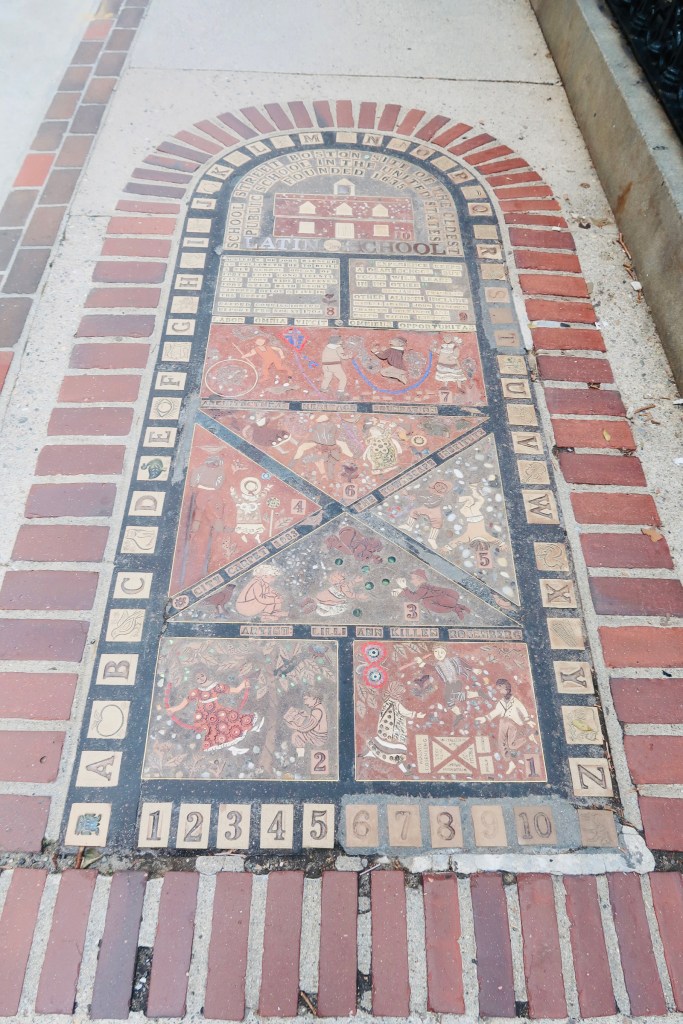
The next few stops on the trail are “bunched” together in that you have the first public school of America (which boasts educating 5 of the signers of the Declaration of Independence), a statue of Benjamin Franklin (who actually dropped out of the school just mentioned), and the Old Corner Bookstore, which is the oldest commercial building in the city (it’s now a Chipotle). 

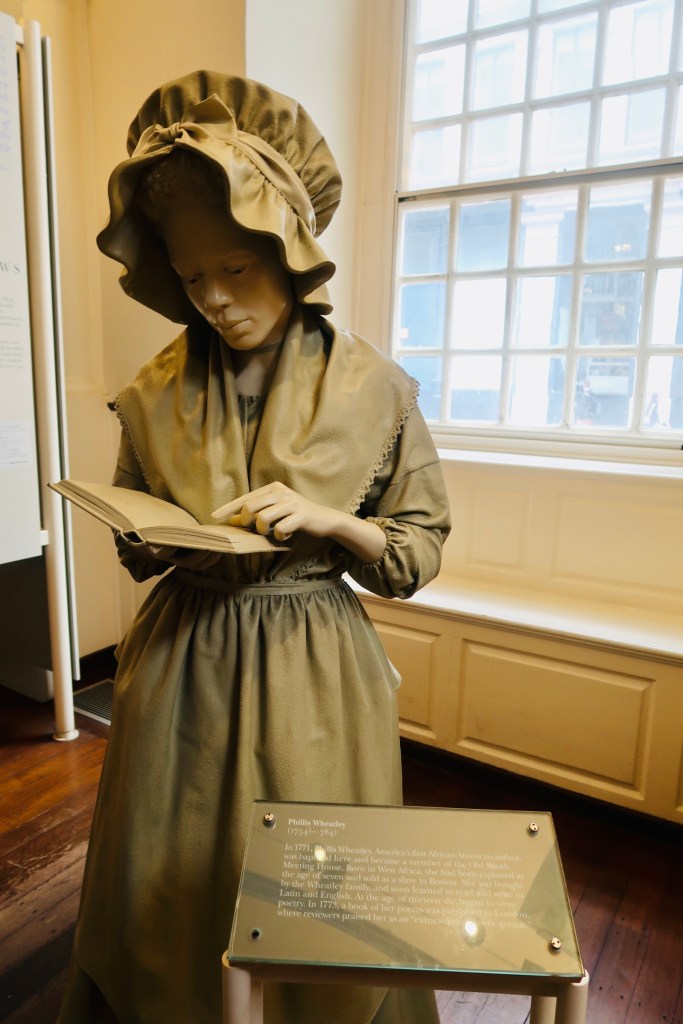
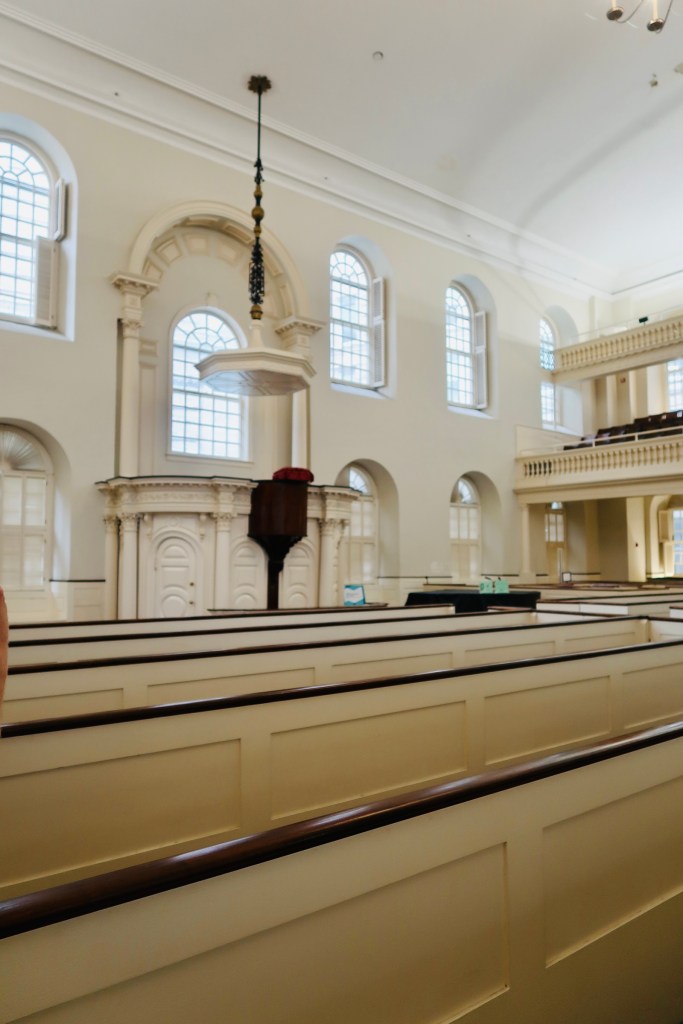
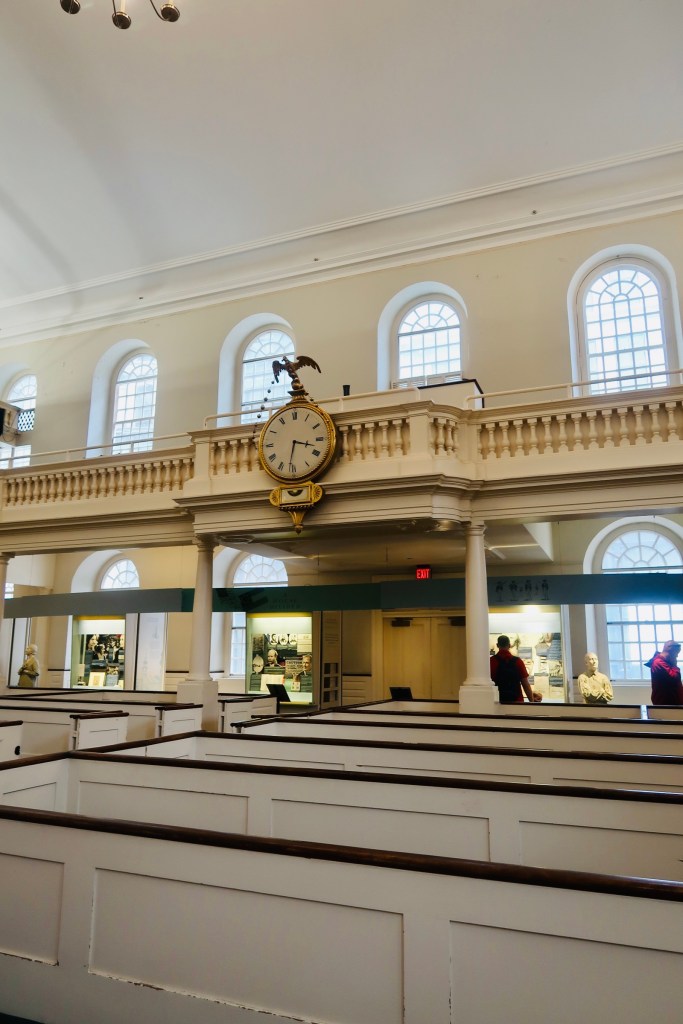
From there we headed over to the Old South Meeting House (this deviates slightly from the trail, but as I said, we split this in half so there was some deviations here and there). The Old South Meeting House is “the room where it happened”. It was the center piece to debate, to sermons, to public meetings. The largest building in colonial Boston, this was originally built as a Puritan meeting house. The congregation boasted members such as Samuel Adams, William Otis, William Dawes, Benjamin Franklin, and Phillis Wheatley, the first women and enslaved women to publish a book. The building also served as THE site, where the Boston Tea Party was decided, with 5,000 men in attendance debating the tax and what to do about it.  It now is recognized as the first in what are now regular history conservation projects. But the road was not easy, the building was actually sold in the 1870’s and it took a group of 20 women to save the building from being demolished (which also makes it the first building to be saved due to historical significance- lots of history in just one building). It has been a museum since 1877 thanks to their efforts. 
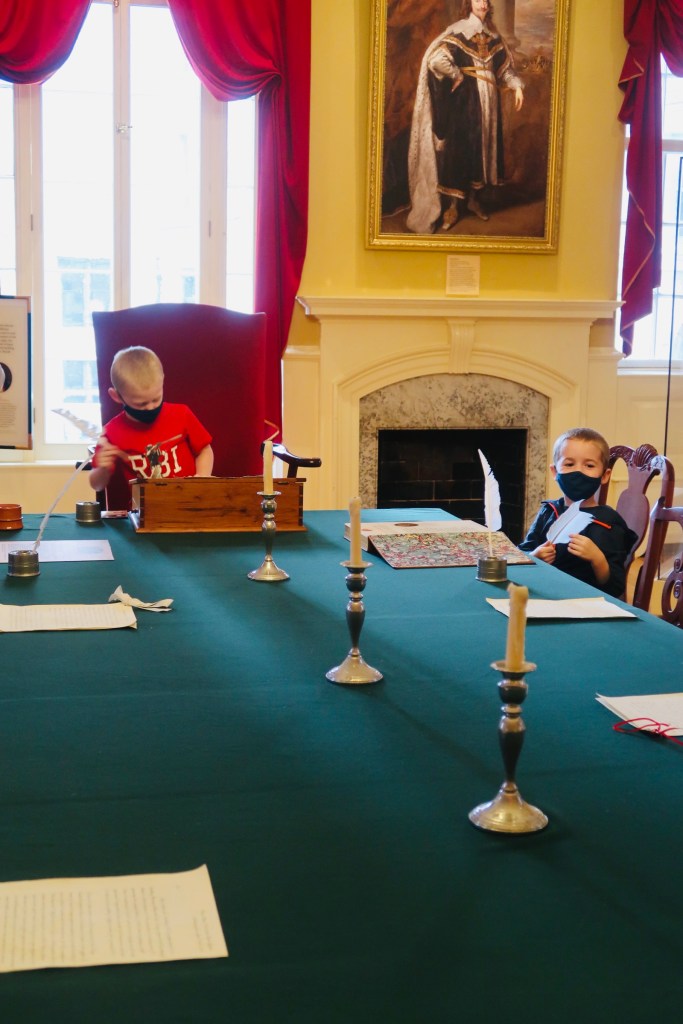
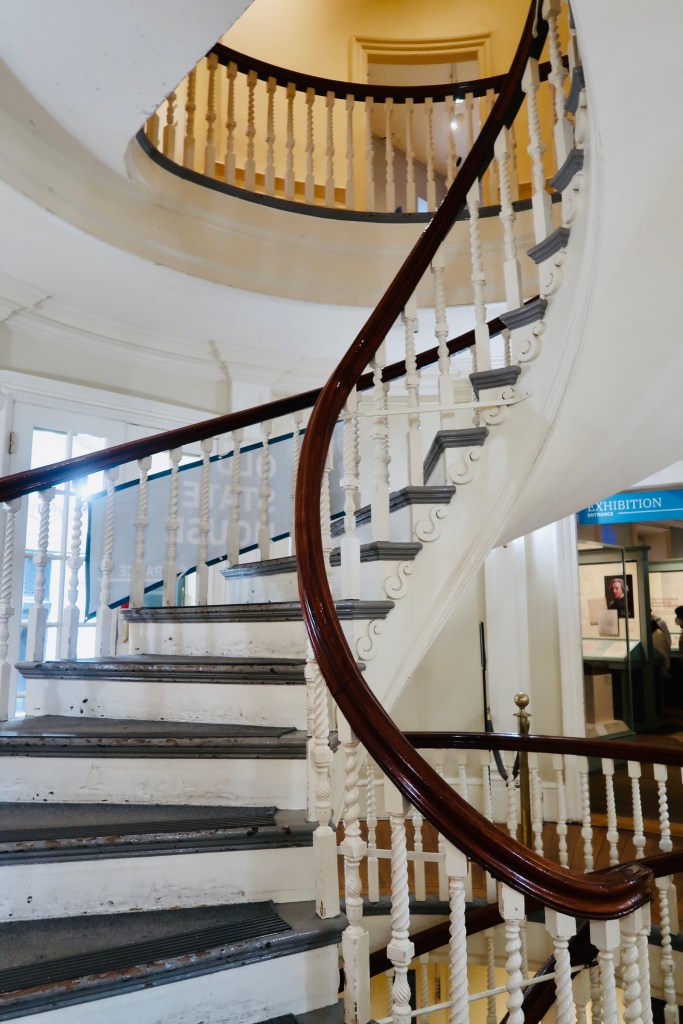
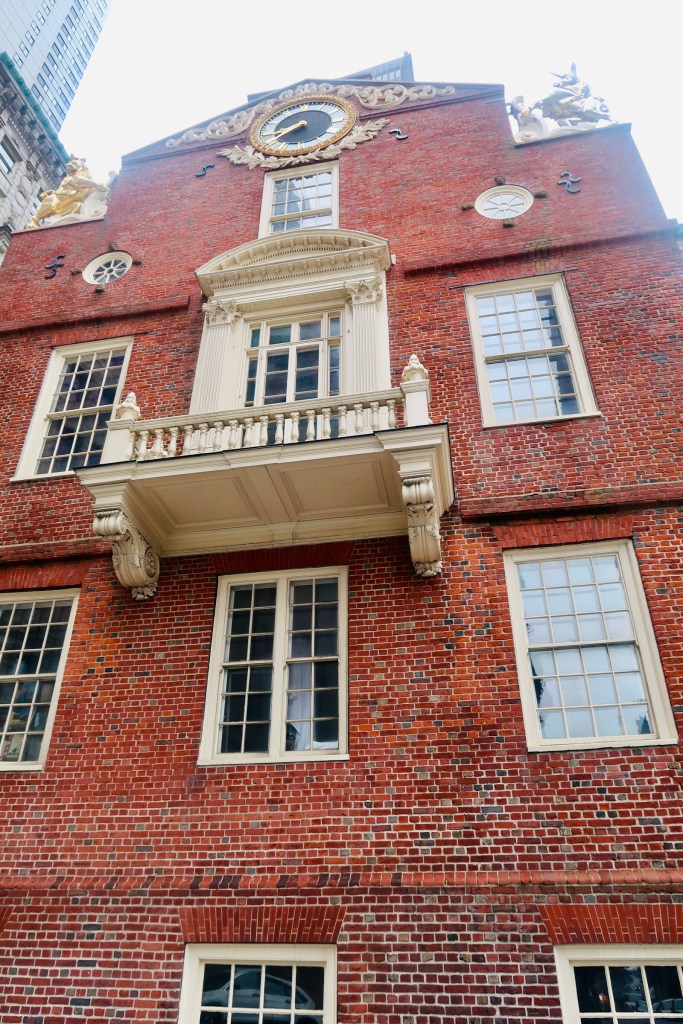
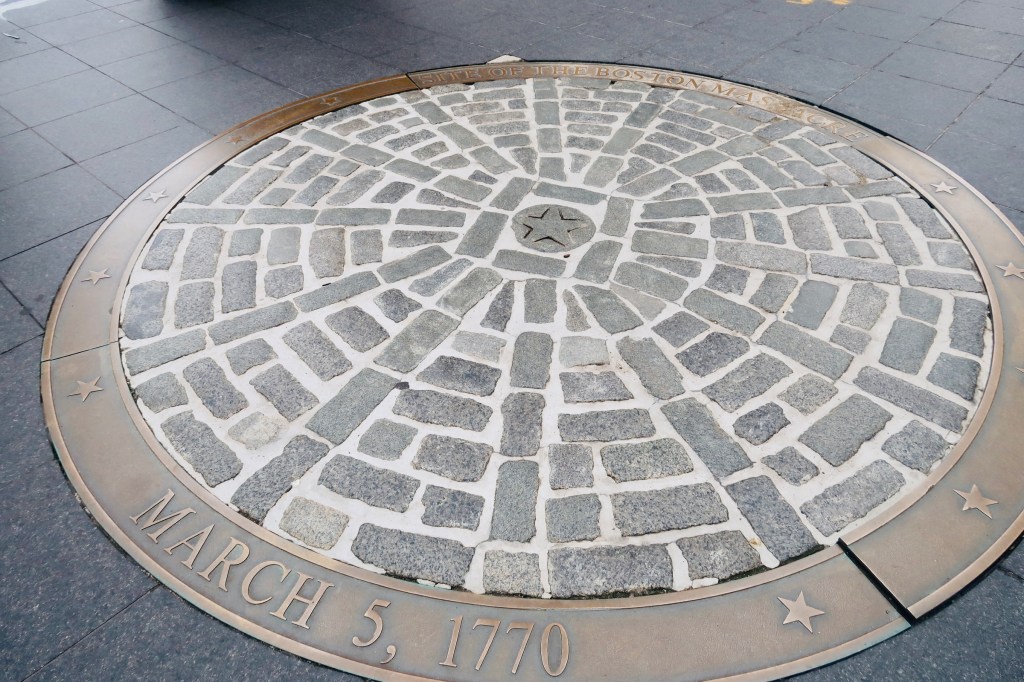
We made a last stop on our first day of the Freedom Trail over to the site of the Boston Massacre and the Old State House. The Old State House is the oldest surviving public building in the city, dating back to 1713. It now serves as a multi functional museum, documenting not only life in Boston, but the revolution, the Boston Massacre, and has a hands on second floor exhibit for kids to see what certain aspects of life were like. The boys especially loved this as they got to play “King” and “Governor” and dictate things. Right in front of the Old State House is a marker for the location of the Boston Massacre. Taking place on March 5, 1770 the Boston Massacre was a fight between the Redcoats and the people of Boston that ended with the death of 5 people. The tension between the two groups of people had finally boiled over and this tragedy became a turning point leading to the fight for independence. 

The next stops on the Freedom Trail are to Faneuil Hall/Quincy Market. I talked about Quincy Market in my previous Boston Post (HERE) and we didn’t actually get to properly go into Faneuil Hall during our time in Boston. Faneuil Hall served as a meeting place for public speech and commerce. You were able to protest, loudly, you could conduct various forms of business, you could swear an oath of allegiance. Basically it was a center of politics, conveniently located right next to the markets and commerce place. 

And that was the end of our first half of the Freedom Trail. I am noting this BECAUSE I feel like, if you want to split it into two days, that is a good place to split it. Most of the above attractions are within the same are of Boston, with convenient and easy walking distances. Then, the below would be the other half of The Freedom Trail. Again, you can do it in one day if you like (and public transport is actually decent if you need it), but this would also be a good stopping point for the day. 

**I also want to note, that there is an African American portion of The Freedom Trail. This trail takes you through the sections that the freed African Americans would have lived, their meeting house, the various monuments (including Phillis Wheatley) and other spots. You can find the trail right off of the Robert Gould Shaw Memorial at the end of the Boston Common. 

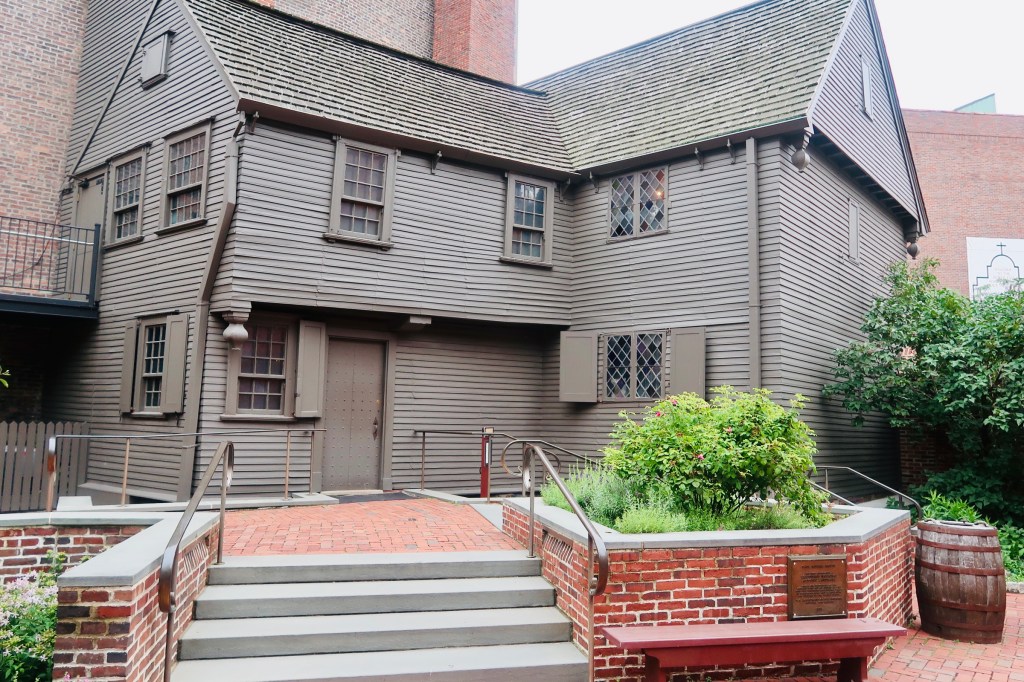
The second half of the Freedom Trail gets a little bit more into the battles of the city. Starting at Paul Revere’s home, you are able to get a good glimpse into how folks of his stature, in his time, would have lived. Built sometime near 1680, his home is the oldest remaining structure in downtown Boston. It is also the only “home” listed as part of the Freedom Trail. You are able to walk through the home, see the kitchen, the sleeping areas, AND see quite a few of the artifacts from his life. You can also see the famous Revere Bell (as we always seem to forget the Paul Revere actually was a craftsman by trade). THis is a quick but easy stop to make and a great way to start off a second day of the trail. 

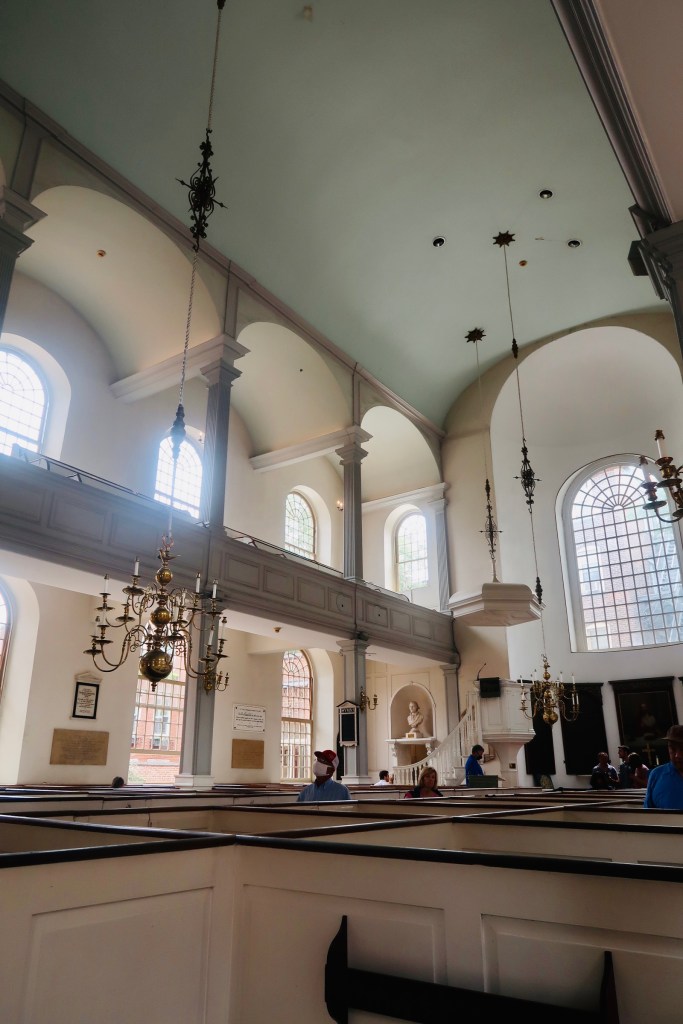
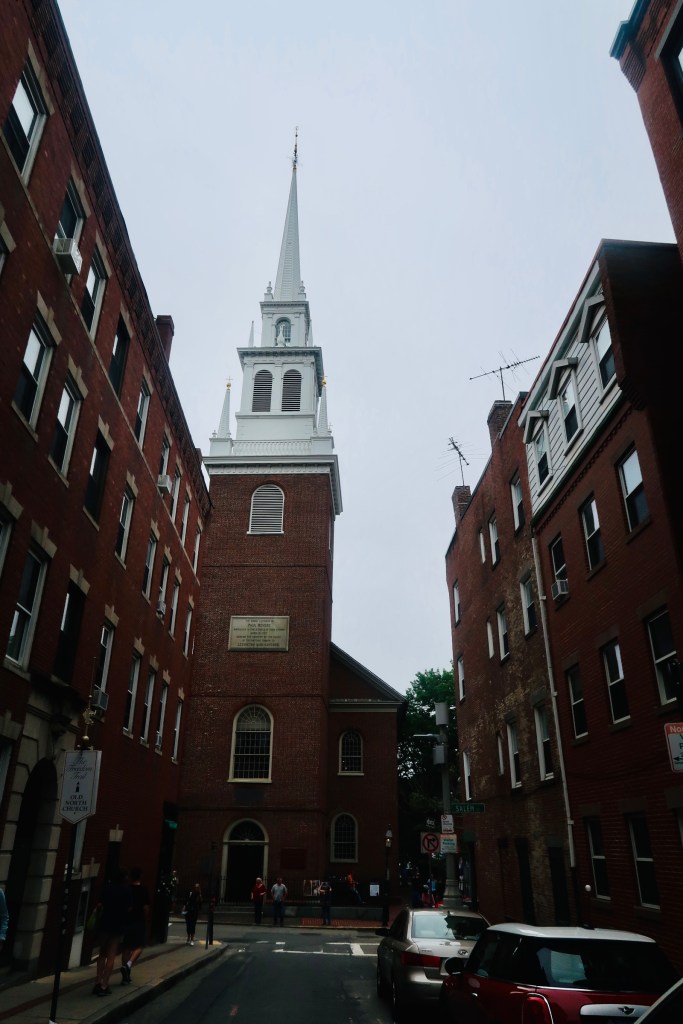
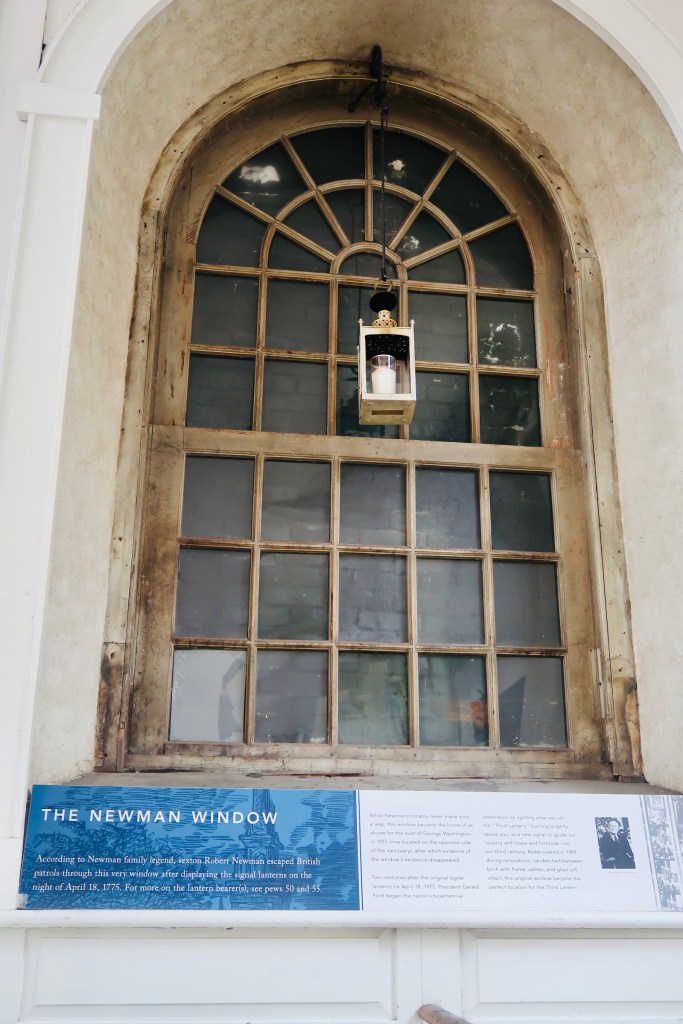
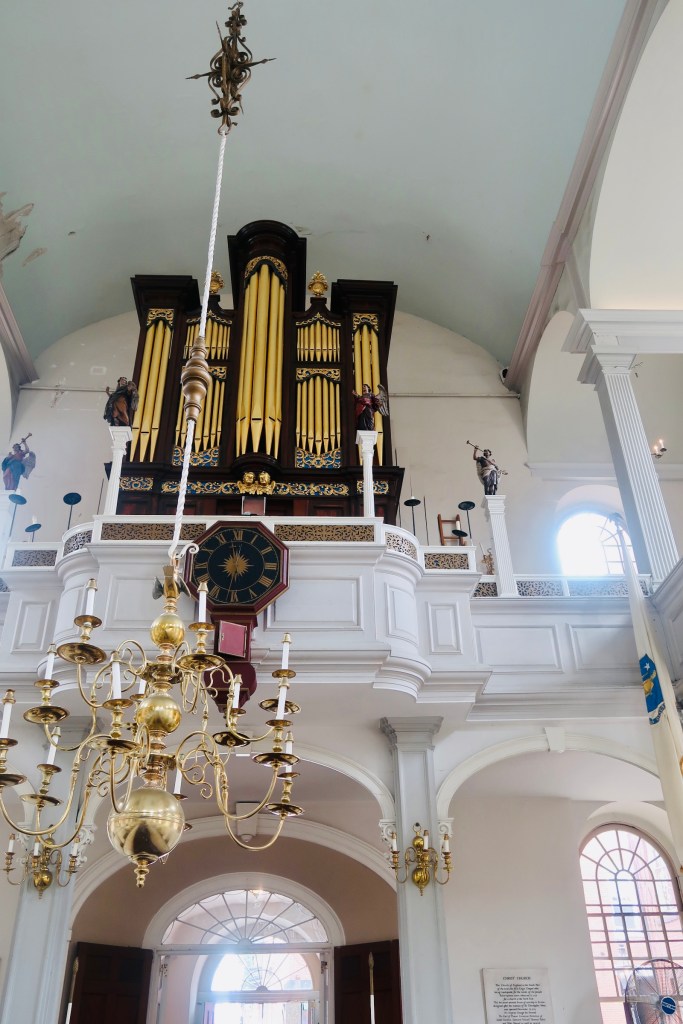
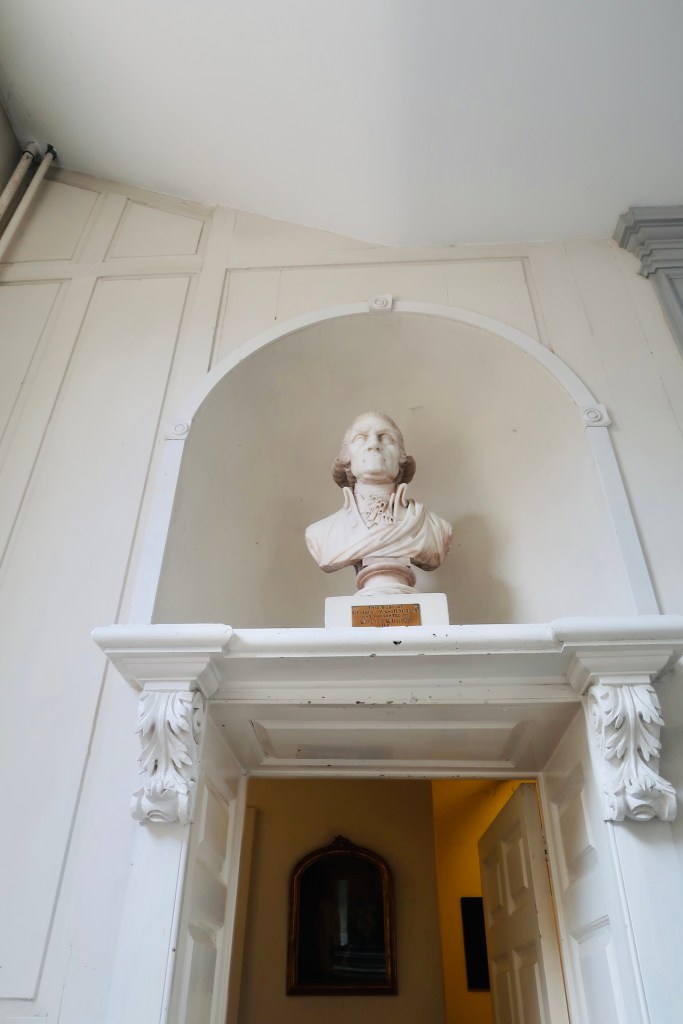
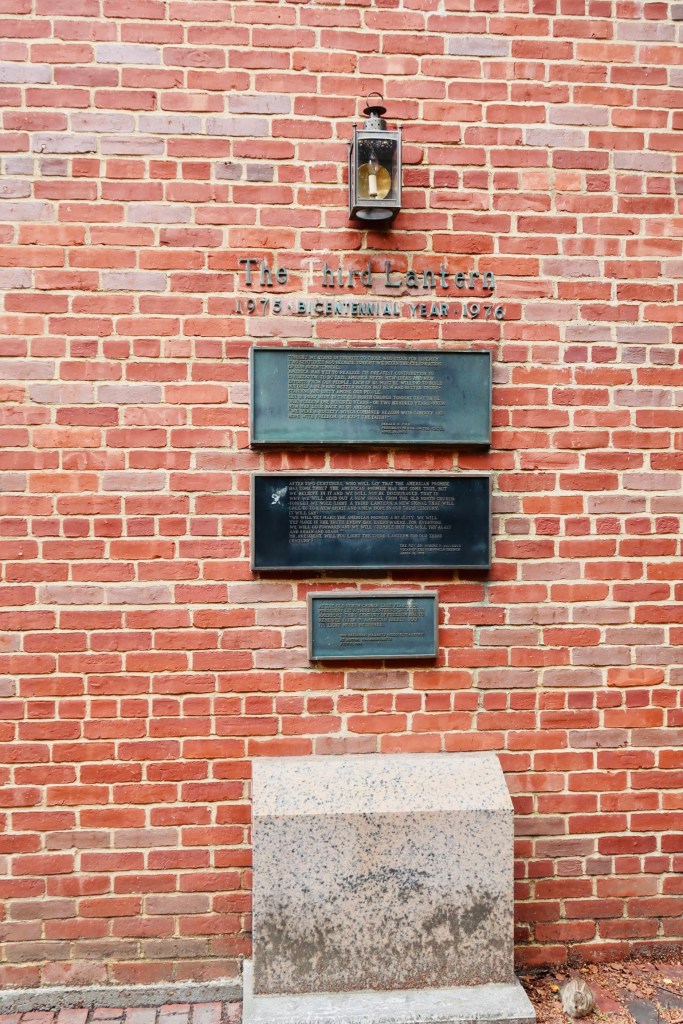
From the house, you then head over to your third and final church The North Church. This church plays an important role (maybe even more important than the other two) as it was THE church that the light was put up in to signal the midnight ride. Dating back to 1723, inside the church you are actually able to see one of the lanterns that was placed in the window for the ride. You are also able to see the bust of George Washington that Lafayette said was the best representation of him. Right around the corner from the church is Copp’s Hill Burying Ground. This was, by and large, the burying site of many of the craftsmen and merchants that lived on the North side of Boston. A couple notable people buried are two of the ministers involved in the Salem Witch Trials, the founder of the Black Freemasonry, as well as the man who hung the lanterns on the night of Pau Revere’s ride, and a builder of the USS Constitution. This particular burying ground was also a marker for the British to aim at during the Battle of Bunker Hill (which we ARE getting to, I promise). 

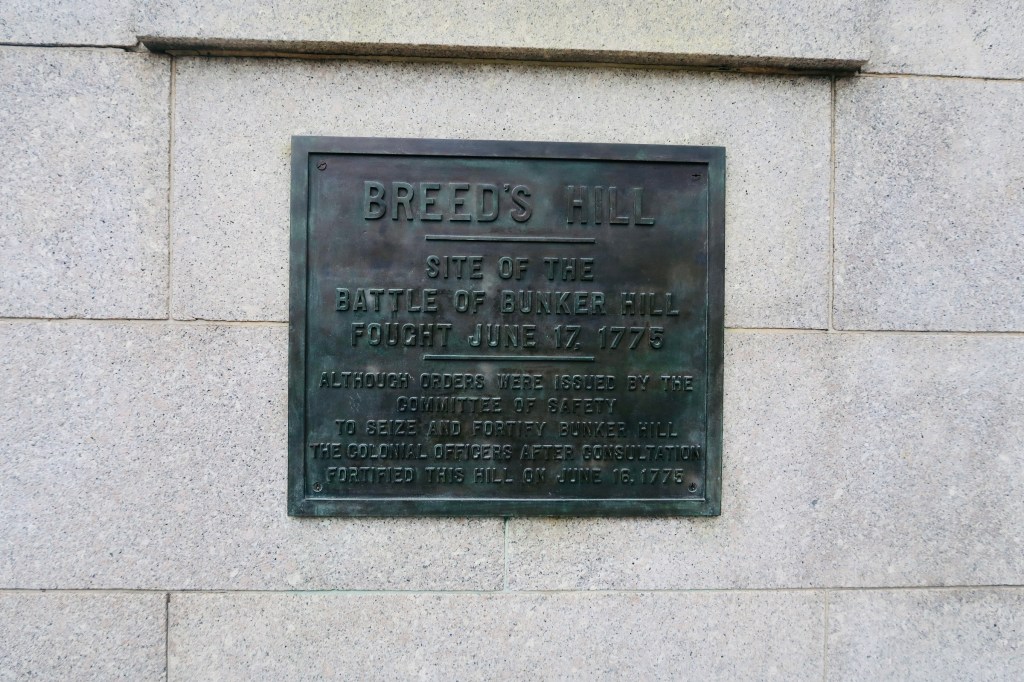
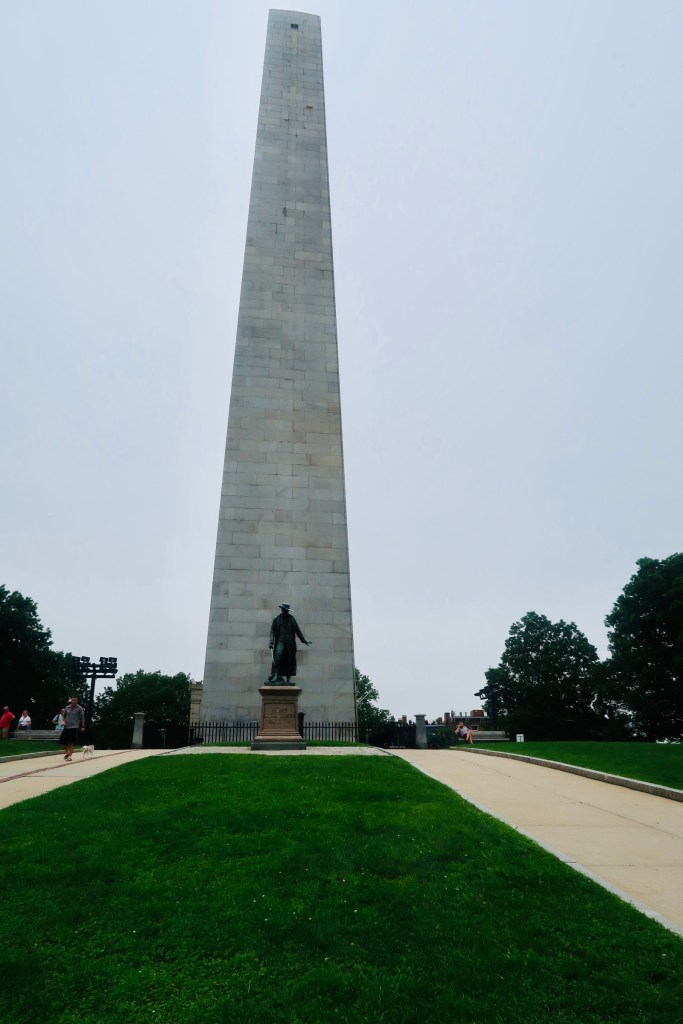
Speaking of, the next stops that you can make are entirely up to you. You can either go up to Bunker Hill at this point (which is what we did), OR you can go down to the USS Constitution. We chose to go up first, then back down, and at the end we took the Ferry back to the “main” part of Boston. It is entirely up to you how you want to walk this part. 

The Battle of Bunker Hill was the first battle of the Revolutions, and while the British technically won (after three assaults) it did prove that the colonists were not going to go down without a fight. The order of “Don’t fire until you see the whites of their eyes” is believed to have originated in this very battle. The monument was started with the laying of the first stone by Lafayette (excuse me, The Marquis De Lafayette) in 1825. It was completed in 1842. 

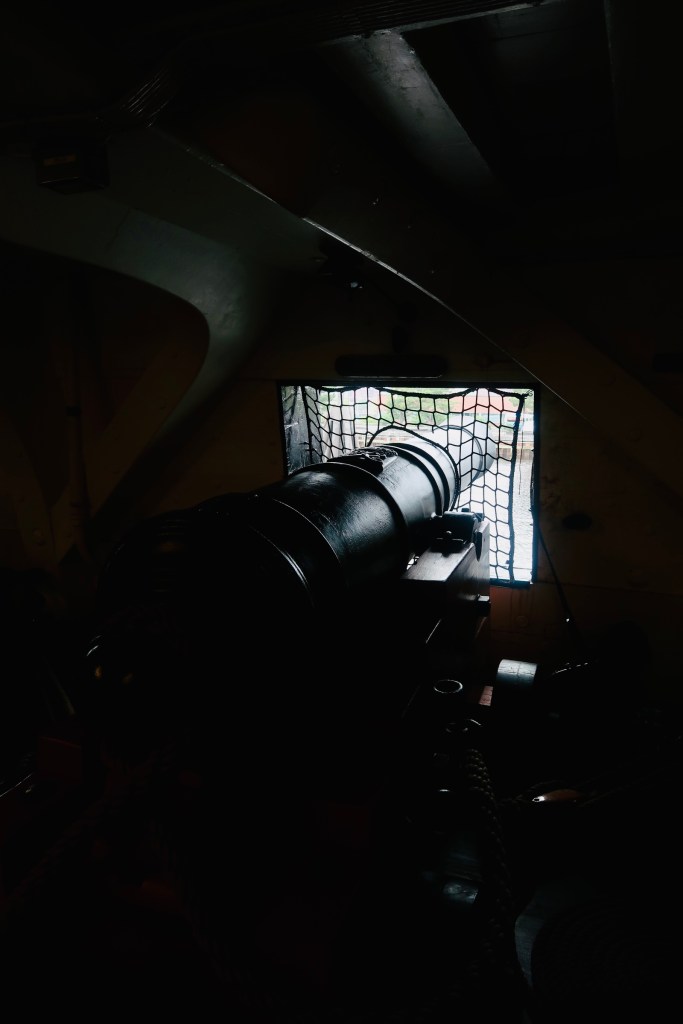
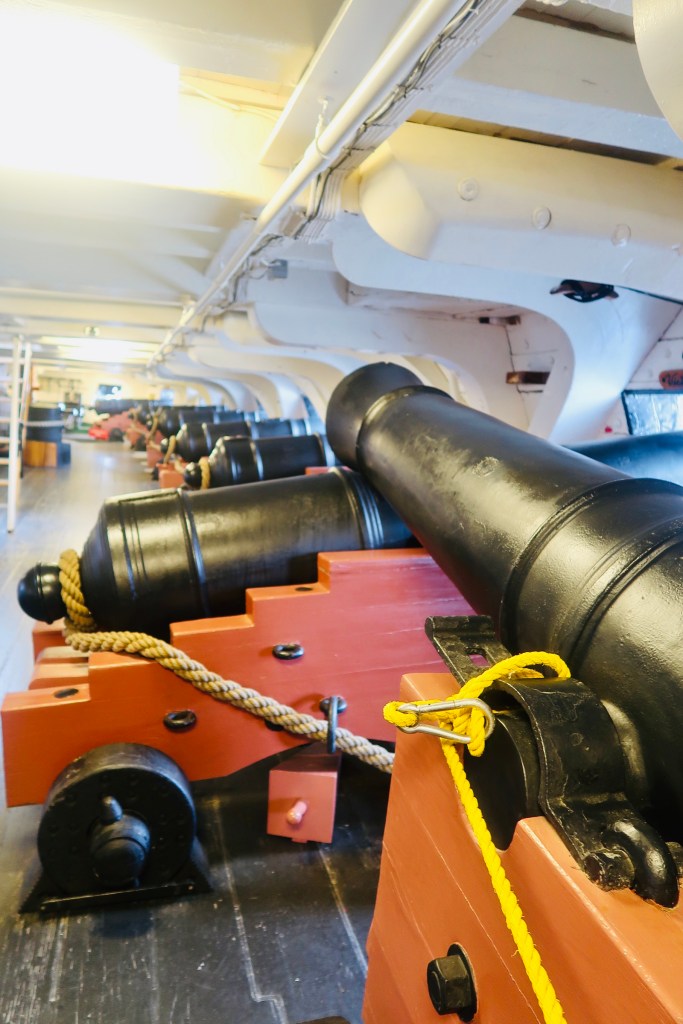
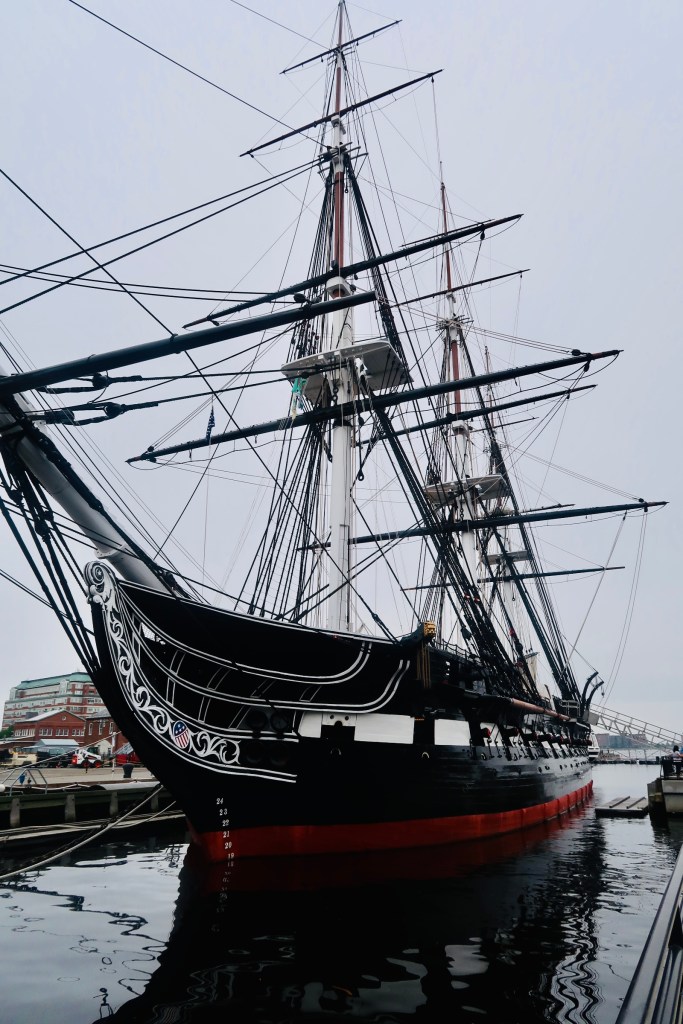
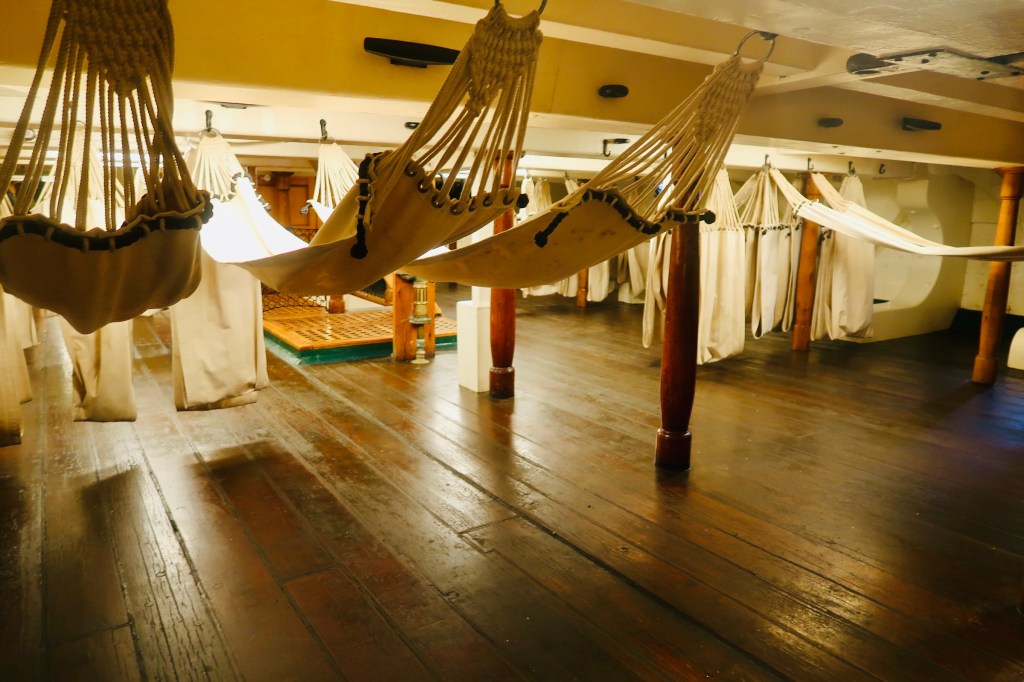
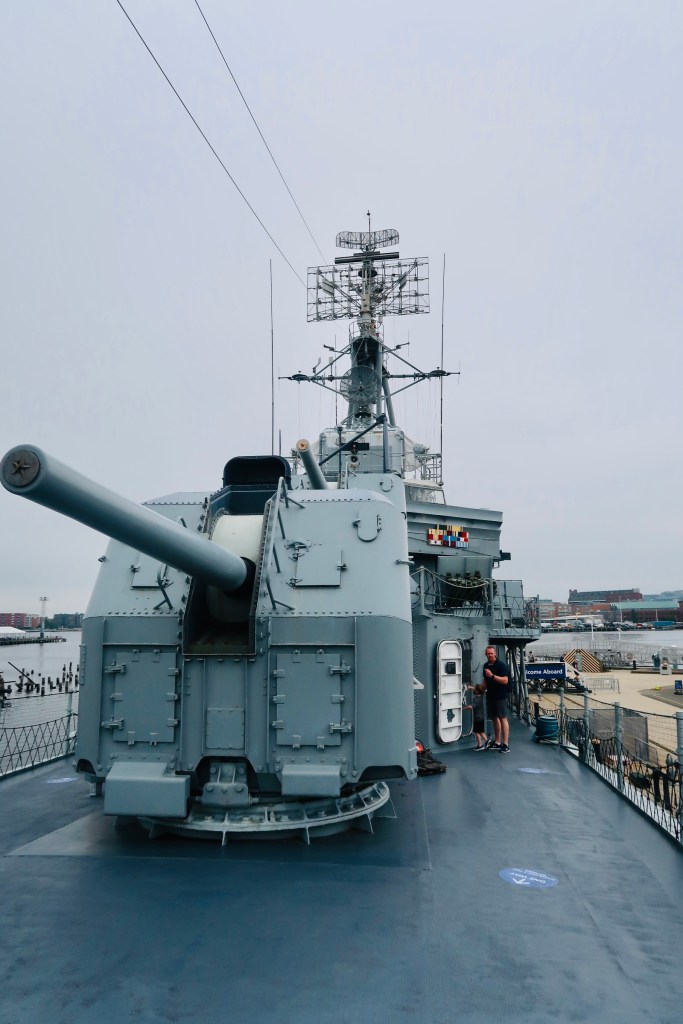
The final stop (for us) on the trail was at the USS Constitution (and then the USS Cassin Young DD 793). The USS Constitution is the oldest, still afloat, commissioned warship. It was launched in 1797 as a three-masted heavy frigate, one of six authorized by the Naval Act of 1794. The ship is known for the War of 1812 and the defeat of 5 British Warships and where the nickname of “Old Ironsides” was given. The Constitution was retired in 1881and was designated a museum ship in 1907. It is still a fully commissioned Navy ship and is manned by active duty Navy personnel on special duty assignment. 

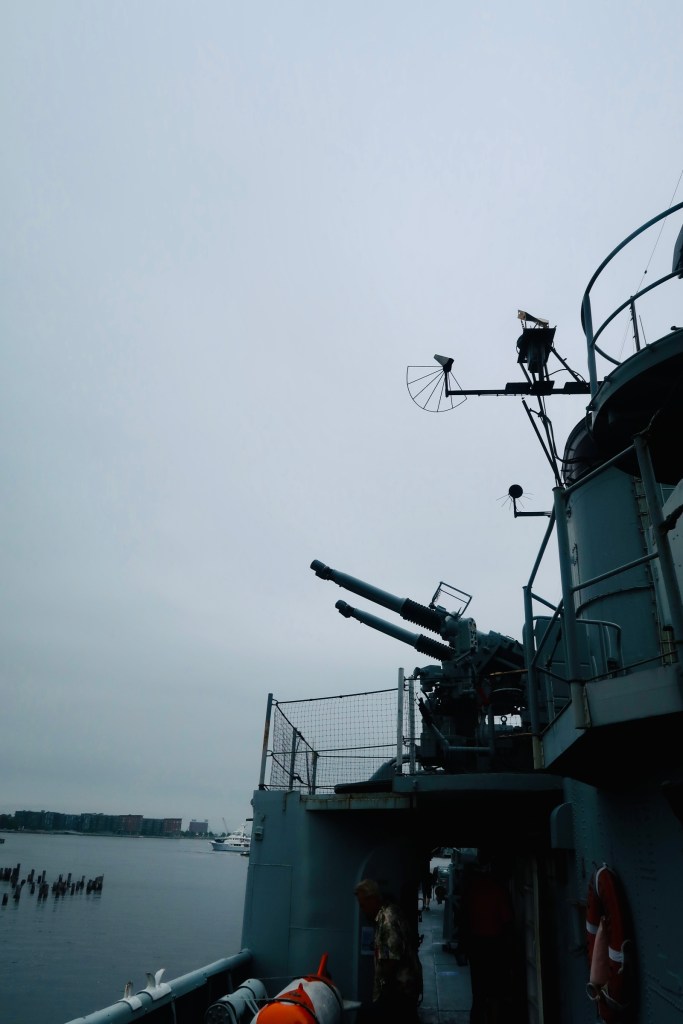
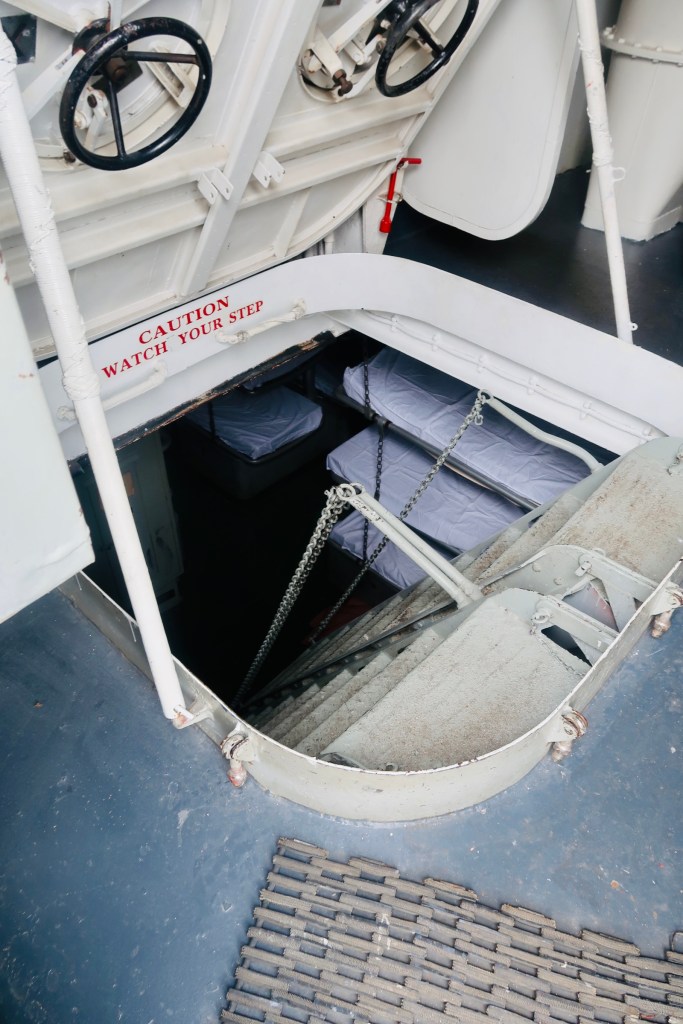
The USS Cassin Young is a destroyer from World War II. It was launched in 1943 and is only one of four of the Fletcher Class destroyers still afloat. The ship served in both World War II (where it was damaged in two kamikaze attacks) and the Korean War, being retired in 1960 and serving as a memorial ship ever since. The ship was intended to serve as an escort to the larger ships and defend them from attack. Unlike the USS Constitution, this ship has been permanently loaned to the National Park Service and it maintained and operated by them rather than The Navy. 

And that wrapped up our time in Boston! Boston was a definite highlight for our entire family. The boys loved the history, the boats, the endless exploring and my husband and I loved the pace of the city (and obviously the history). I don’t know that we’d ever be “city people” (most are just too crowded and busy for us), but Boston was such a nice surprise! 

A Cuppa Cosy Summer Holiday 2021 – Boston, MA Pt. 1

The second stop on our Summer Holiday was undoubtedly our favorite and that was Boston. I think this is going to have to be divided up into two posts just due to the amount that I will actually blabber during this post. Again, I know that a good amount of people know a good amount of American History, so I’m just going to touch on basics or little tidbits as I talk about what we did/saw, but I really just love learning about the history and interesting facts about places we visit. Boston is the center of A LOT of the United States of America’s history and it has done a really good job and transitioning through history and coming into a more modern era, without losing any of the historic sites or feel to the city. So, a post today and a post on Friday (woop- a bonus post!) to cover everything I want to share and not overwhelm or bore you.

Before we start, I also want to note that for a “big city” Boston felt quite relaxed. In a lot of the “big cities” you get that big city rush feeling, where everyone is just go, go, go as fast as you can. Boston was refreshingly relaxed (or at least from what we saw and experienced). It was something that we actually really enjoyed about our time there. I’m not sure if this was a covid specific instance or if it’s always this way. Regardless Boston has definitely become a highlight for us. 

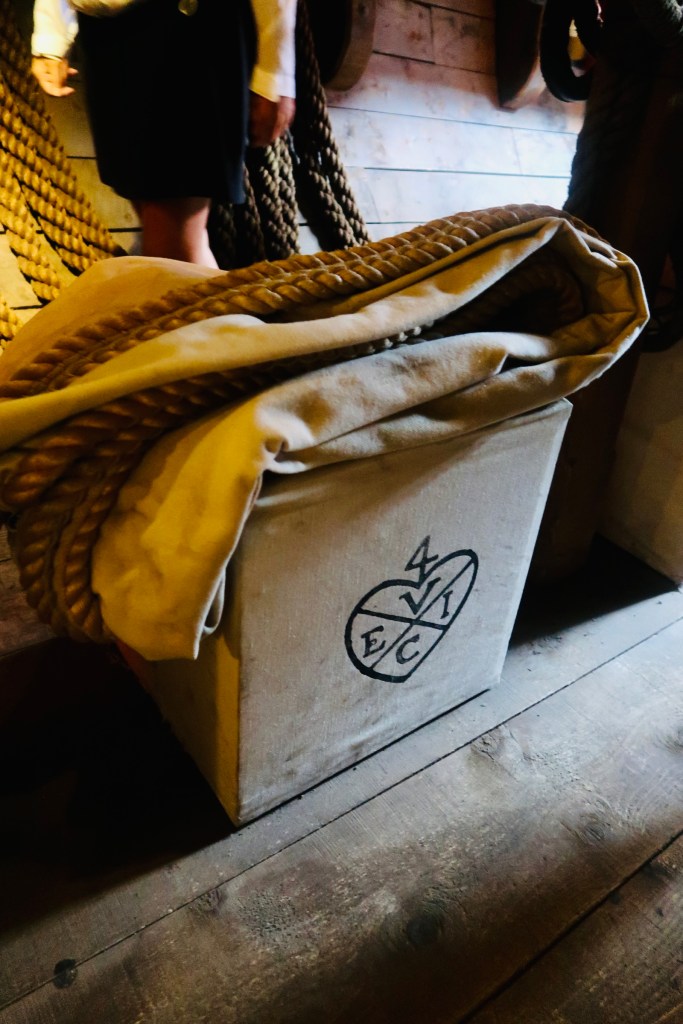
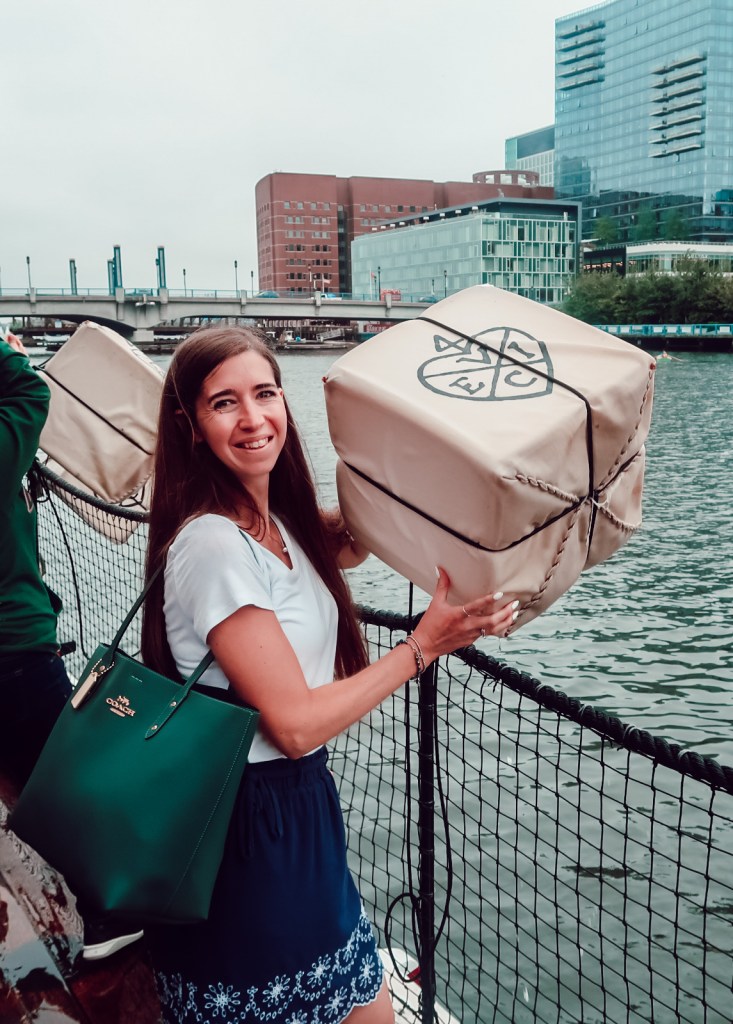
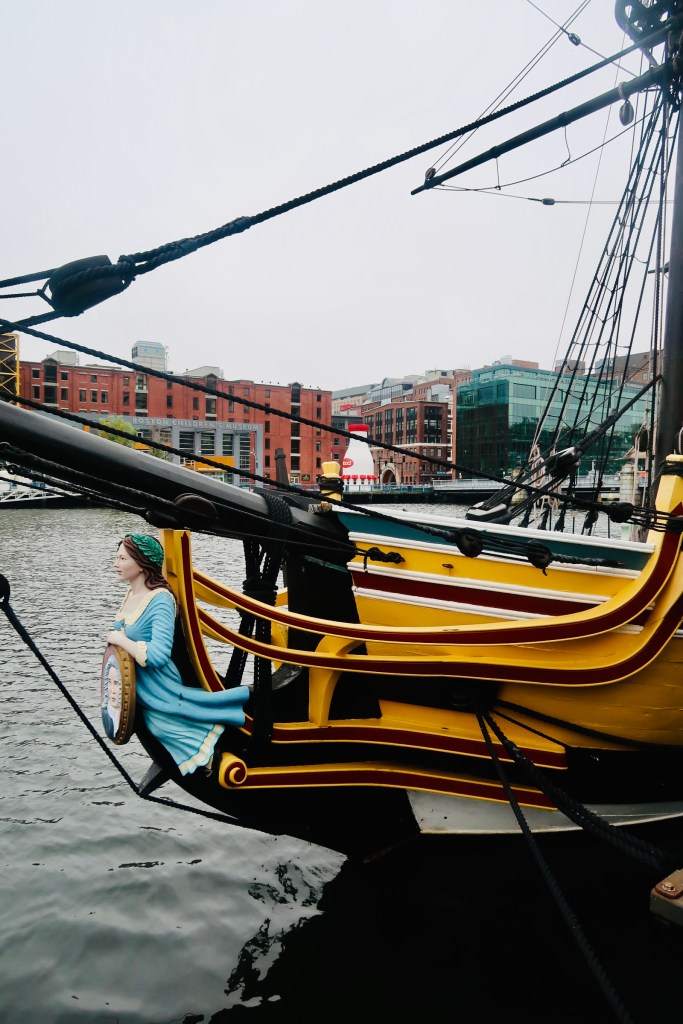
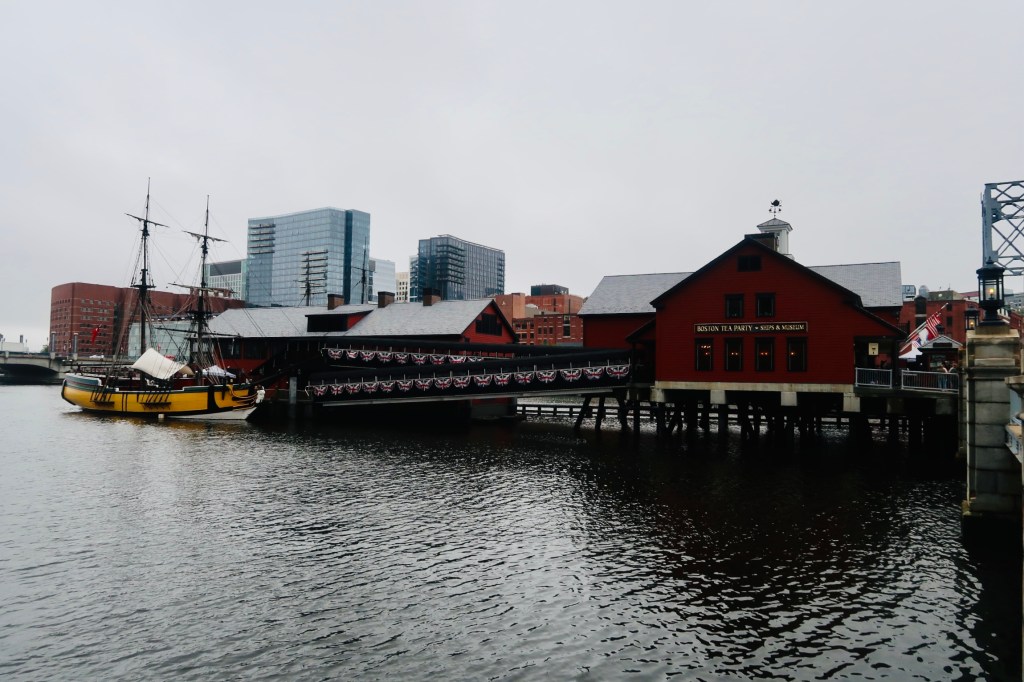
So, our time in Boston started where much of the history started (or at least the history of the start of the revolution), at the Boston Tea Party Ships & Museum. I think a good amount of us know the history of the Boston Tea Party. In December 1773, disguised men from the “Sons of Liberty”, after immense planning, quietly boarded the Beaver Dartmouth, and Eleanor with the intention of destroying the tea. They destroyed 92,000 pounds of tea (in 340 chests), but only the tea. They did not steal tea, they did not steel or even so much as touch anything else aboard the ship. The statement they wanted to make was abundantly clear, which was “we will not take your leadership any longer”. The British Tea Party was but one step in a much larger fight, which was against the crown and the ability for someone so far away to hold governance in the colonies. Of course after the destruction the “Sons of Liberty” who participated had to flee Boston, and those who stayed would go out in boats to the harbor to continue to ensure that any tea or tea chests in the harbor were not able to be rescued or used. The Boston Tea Party was an incredible success, but it created hardship for the colonists as well, sparking more and more “rebellious talk” and ultimately (after several more edicts and back and forth with the King of England) sparked the American Revolution in April of 1775.

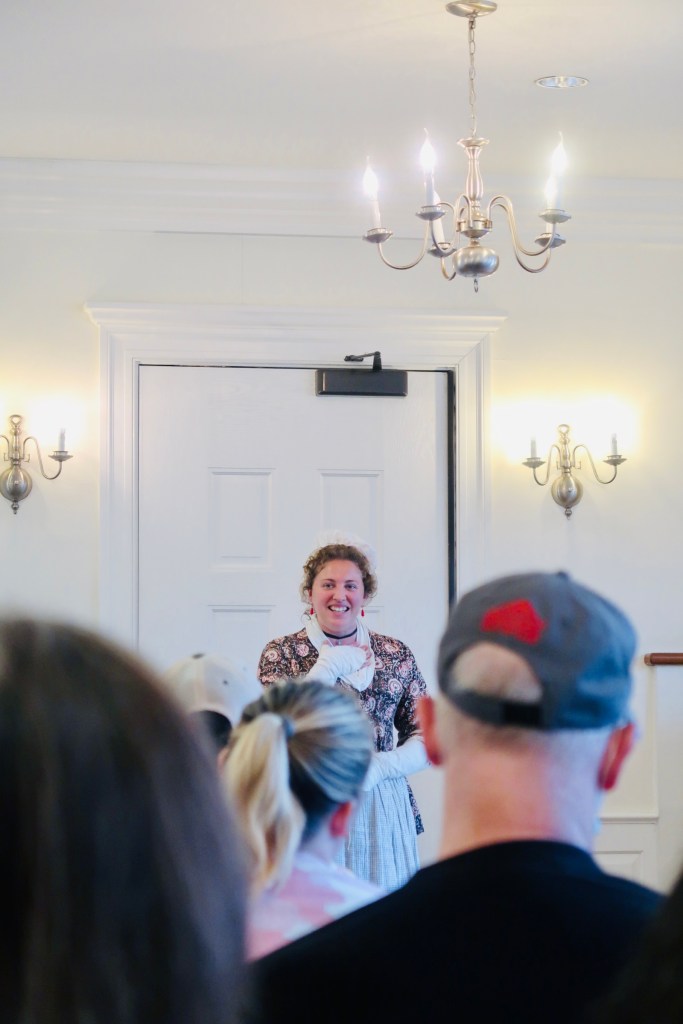
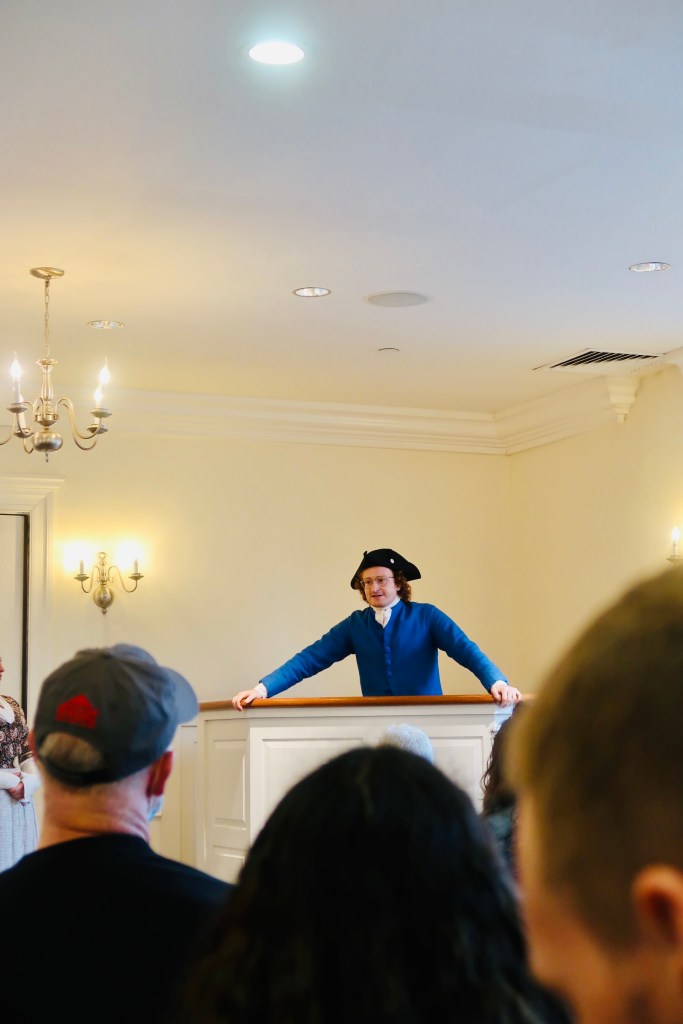
At The Boston Tea Party Ships & Museum, they do an excellent job of utilizing first person interpreters to put you right in the action of that fateful night in December. You are given character cards that tell you about a single person who lived in Boston at the time- these are then yours to keep as you continue along your tour. You start in the “state hall” with two actors taking you right up to those destructive lines uttered. Then you follow over to the boat where you can see what the Sons of Liberty would have seen, and throw your own tea overboard into the harbor. From there, you walk through the museum that talks about (with actual talking projectors and portraits) what followed the tea party. There is an original chest to see, along with a small vial of the tea that was tossed overboard (who rescued it remains a mystery). Finally, you can finish up at Abigail’s Tea Room, where you can sample the 5 tea blends that would have been on board the ship in the harbor (and subsequently enjoyed). It was the perfect start to our time in Boston and really put us in the revolutionary spirit. 

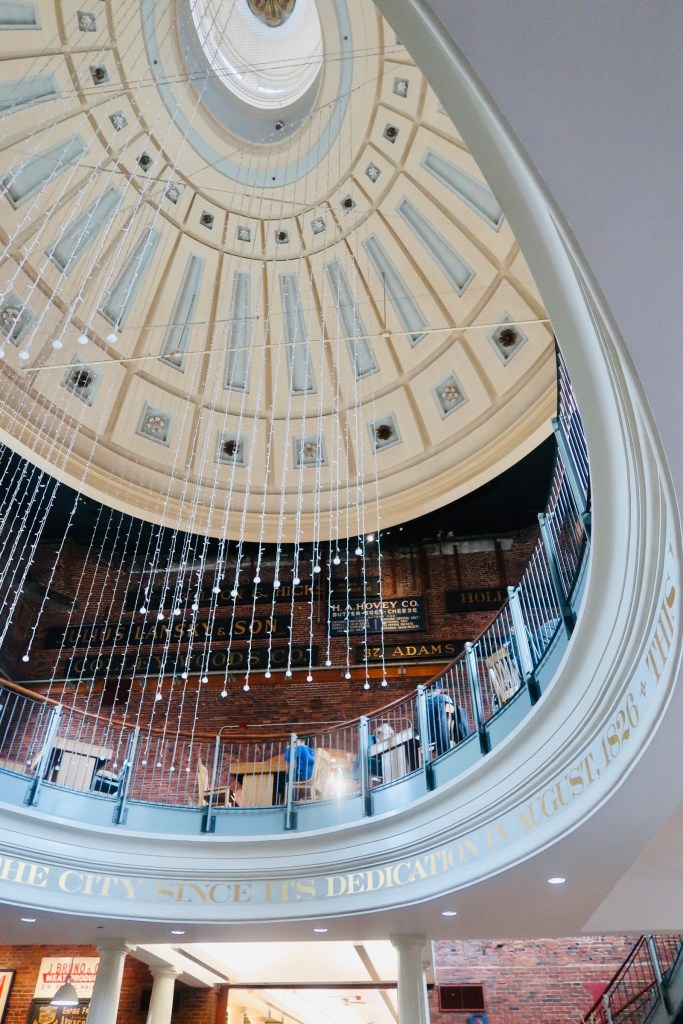
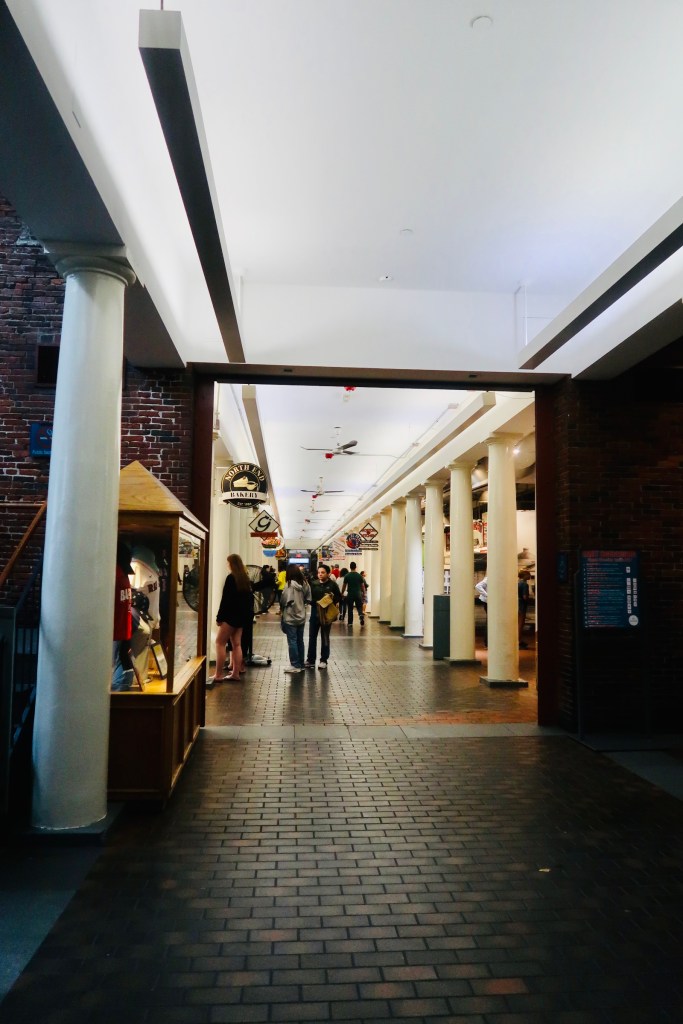
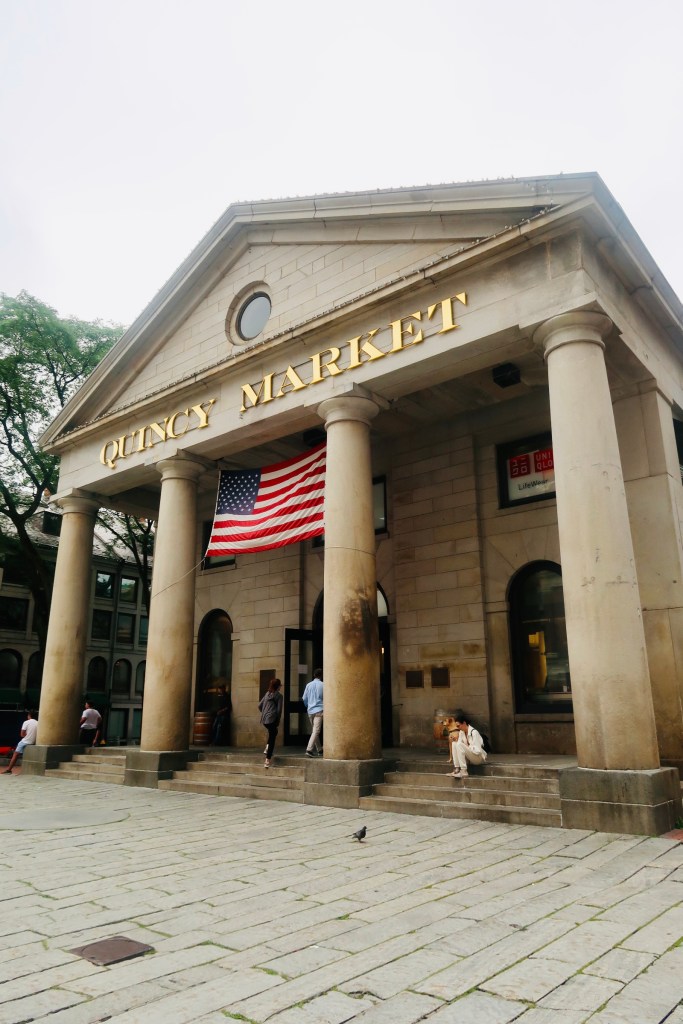
From there we mostly meandered around the area, letting the boys play at a playground (after being cooped up in a car and then on best behavior at the museum they were due to expend some energy) and trying to decide what we wanted to do. It was a bit later in the day, so we couldn’t do much more in terms of touristy bits. We ended up wandering over to Quincy Market (in a bid to see a museum which ended up being closed on that day anyways) and grabbing dinner at the food stalls located inside. I really loved Quincy Market. It reminded me of being at a farmers market of sorts and I had some of the best pizza since returning from Europe.

Quincy Market has quite the history. Dating back to 1826, the idea for the market came from Mayor Josiah Quincy. Shortly after being elected, Josiah realized just how much he disliked the chaotic, noisy, dirty view from his office in Faneuil Hall. This view was mostly due to the fact that the large marketplace was bursting at its’ seams. There was simply not enough space to cater the amount of stalls and sheds and the overall needs the city required. Not pleased with any ideas, he came up with his own development for a new marketplace. The only “thorn” in his side for this new market place was a landowner by the name of Nathan Spear, who refused to negotiate in regards to the property lines and deeds. No matter though, the construction went ahead with Josiah Quincy laying the first stone in April, 1825, with the market completed and opened in August of 1826. Officially named Faneuil Hall Market, it is more commonly known as Quincy Market. The market was enlarged throughout the following years (as it reached its initial capacity in 1850) and the market continued to serve the community. A restoration project was started in the 1970’s that not only including restoring parts of the market, but also additions to the rotunda and new dining areas. 

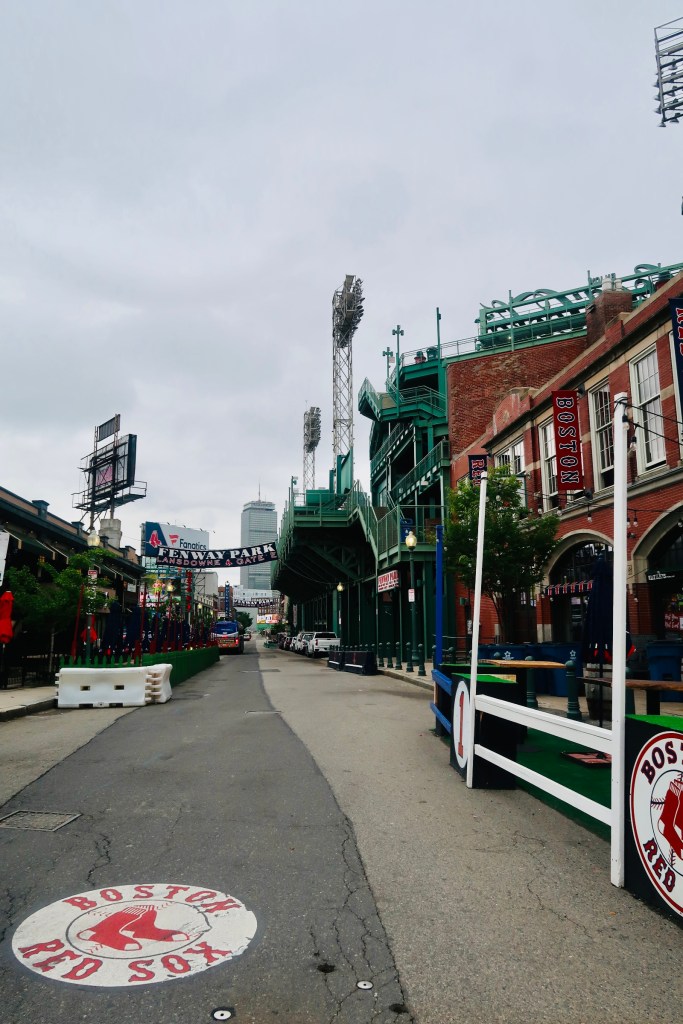
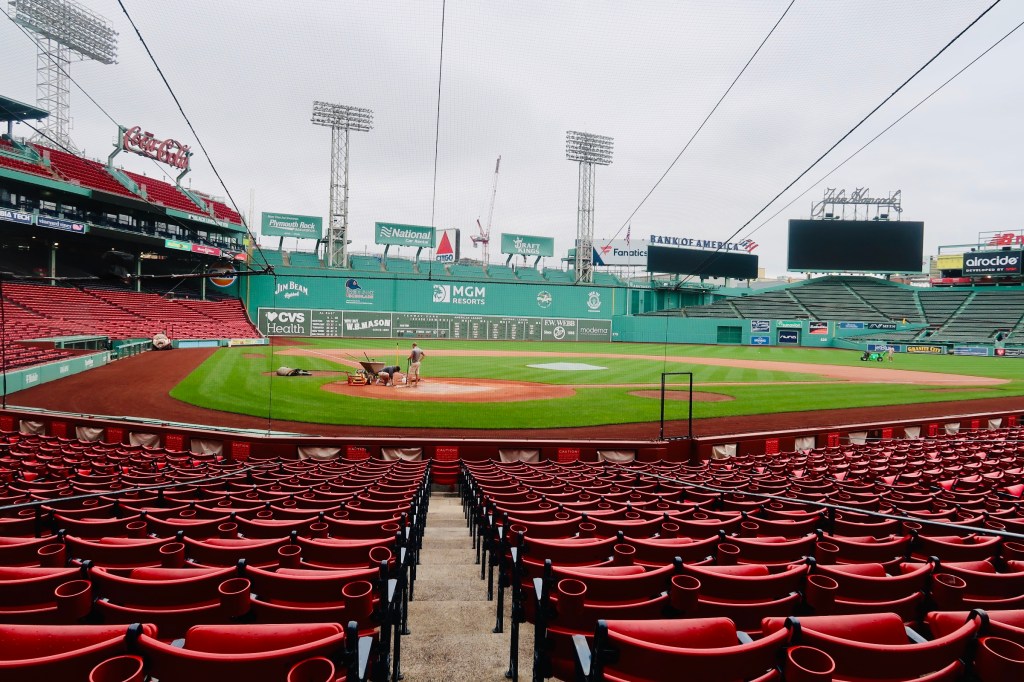
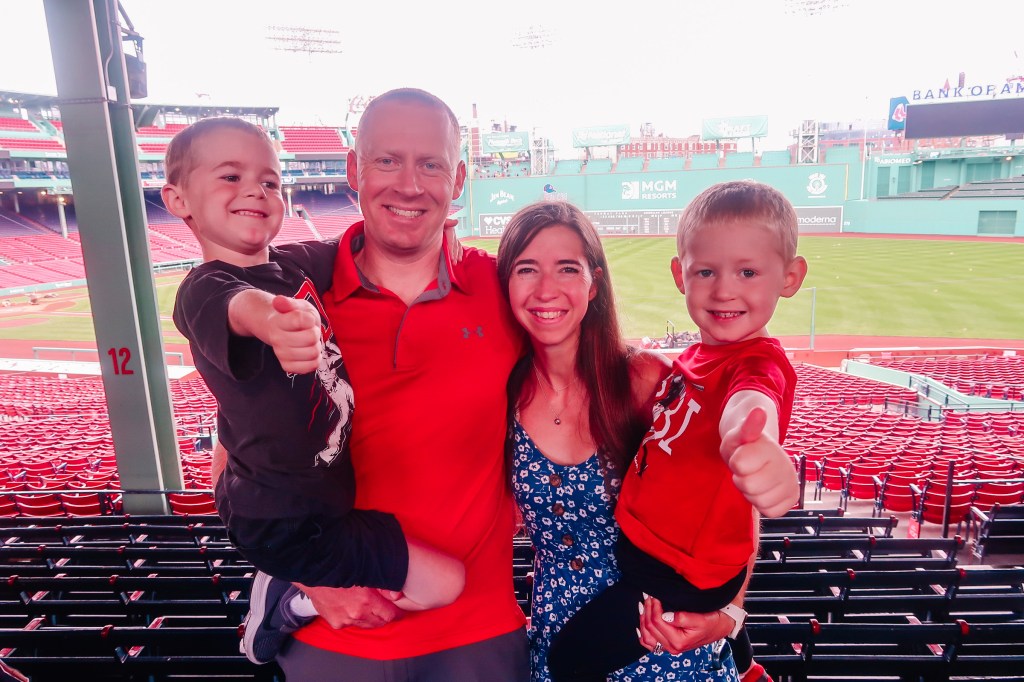
The next morning we were up bright and early to embark on one of my husbands most anticipated stops, Fenway Park (ok the kids and I were also very excited about this too). Where do I even begin with the history? I’m not going to go into the history of baseball (because oof), or of the actual Boston Red Sox (because, again oof), but rather the history of this particular ballpark. 

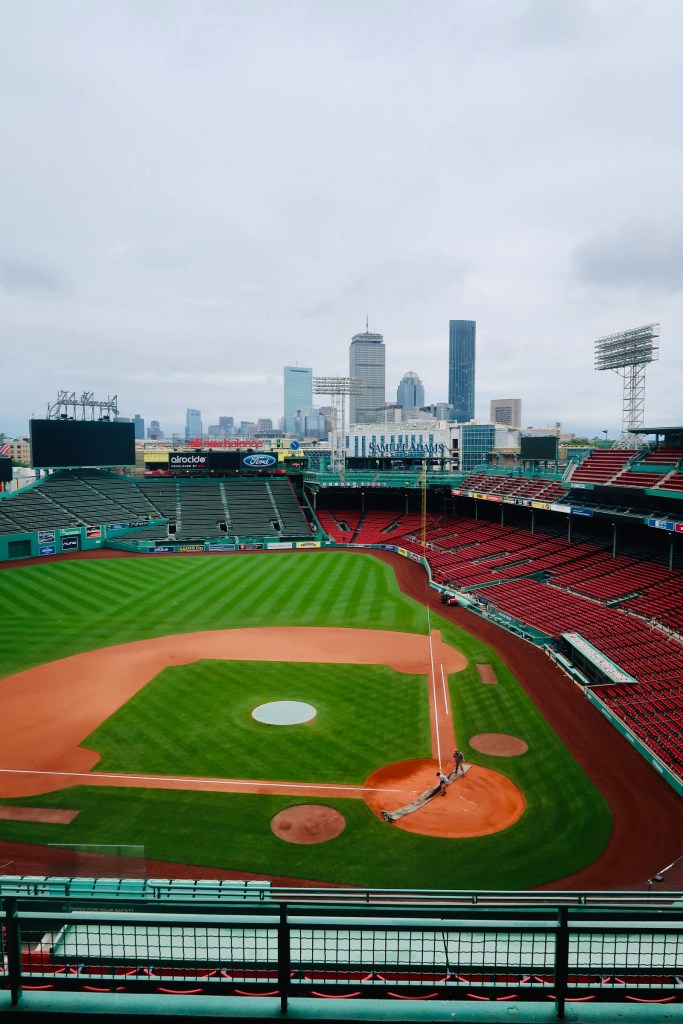
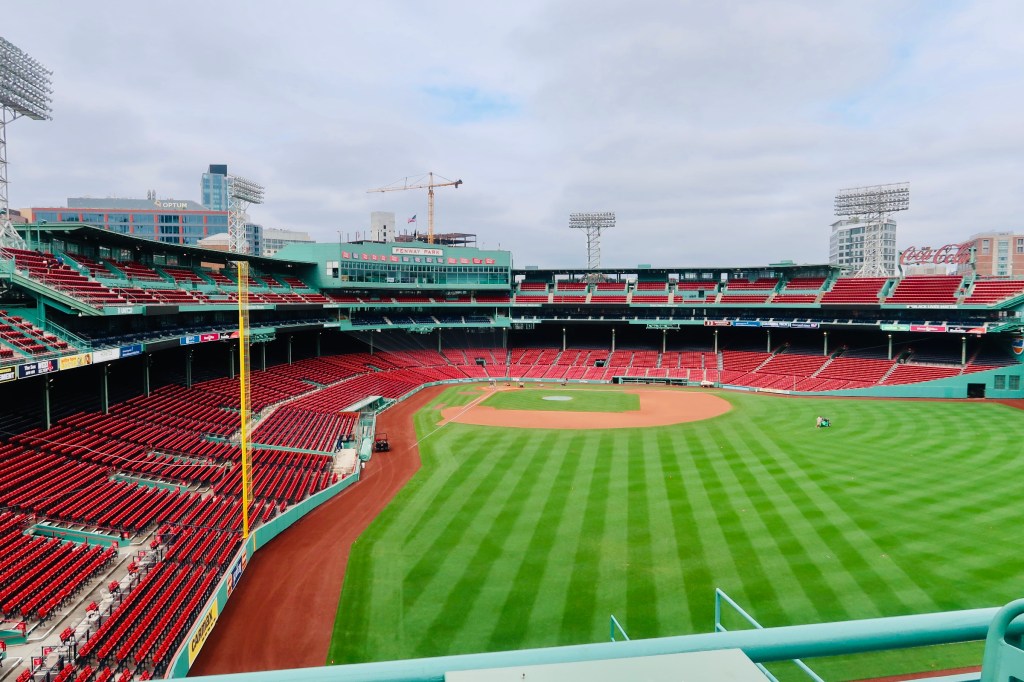
Some quick facts, Fenway Park is the oldest active ballpark in the MLB (109 years this year), it was actually rebuilt in 1934, and the location (within tight busy streets of Boston) lends itself to a unique set of features, the most popular being The Green Monster. It is the fifth smallest stadium within the MLB, only able to seat a little under 38,000. Finally, the first game ( a win for the Red Sox played in 11 innings) was actually overshadowed by the continued coverage of the tragic Titanic sinking. 

The Red Sox had been playing at the Huntington Avenue Grounds for 10 years, but Red Sox Owner John I. Taylor was looking for something different, something that would make a splash, something in Boston. He was also looking at potentially selling the team to a new owner, which played a massive role in the relocation. February of 1911 brought a group of real estate entrepreneurs together to become the “Fenway Improvement Association”. Subsequently one of the leaders, General Charles H. Taylor (yep- John’s father), acquired a large amount of land which the young John Taylor then announced his intention to use it to build a new home for the Red Sox. Ground broke for the ballpark, without the proper permits approved or assurances that they would be approved, on September 25, 1911 and by he end of the calendar year the foundations were in place, the roof framed, and plans in place to continue. Fenway Park hosted its first game April 9, 1912, with the first official game occurring 11 days later. Construction continued during Away Games, with the left and right field bleachers completed in time for the World Series. There were several renovations and additions given to the park over its long history, too many for me to actually get into and list, you can read the full history HERE, but it’s safe to say that this is a true landmark of the city and of the sport. 

The park has also been used for other sporting events, being home to matches of boxing, soccer, American football, Hurling, Gaelic Football, Hockey, Ice Skating, and Ski and Snowboard events. It also has hosted Concerts and Rallies/Public Addresses. 

There was one instance where the ballpark was in jeopardy, in 1999 the Red Sox CEO announced plans for a new Fenway Park. This, understandably, came under a lot of fire from all around, and led to a long round of talks, negotiations, and different plans. At the end of it all there was no resolution to be found and in 2005 it was announced that the Red Sox would stay at the current Fenway Park. This then led to a 10 year significant renovation of the park led by Janet Marie Smith (who is wholeheartedly credited with saving the park). 

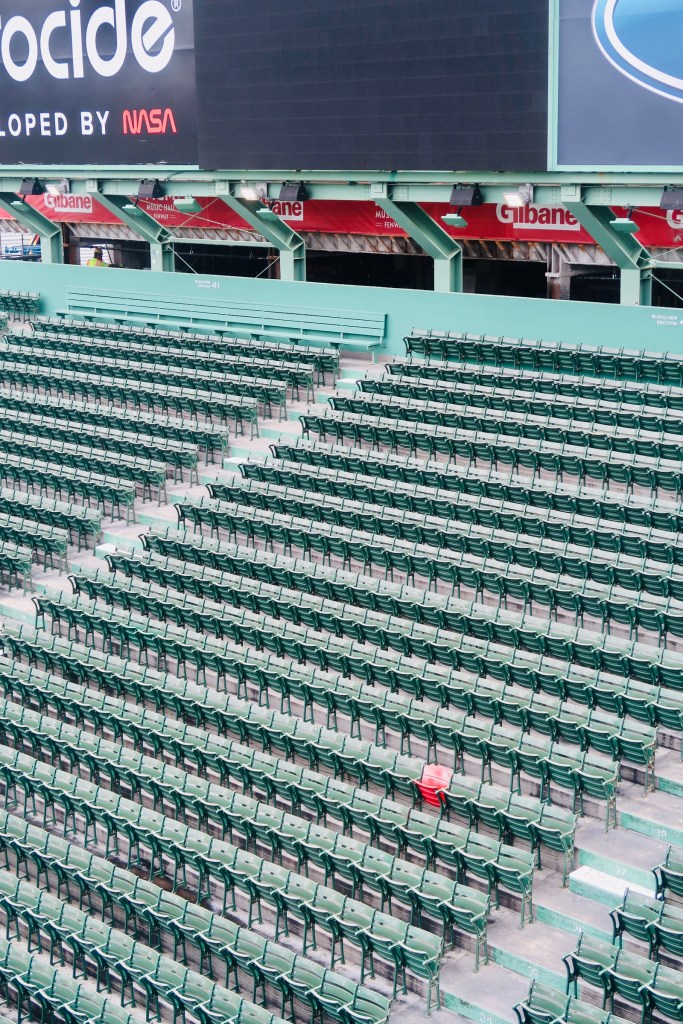
One final note, which is the lone red seat. The lone red seat signifies the spot of the longest home run ever hit at Fenway Park. Ted Williams hit a home run June 9, 1946, which hit Joseph A Boucher right in the head (through his straw hat), then bounced several rows above. If it hadn’t hit Boucher, it could have reached a length of 520-535 feet, but rather it hit 502 feet. 

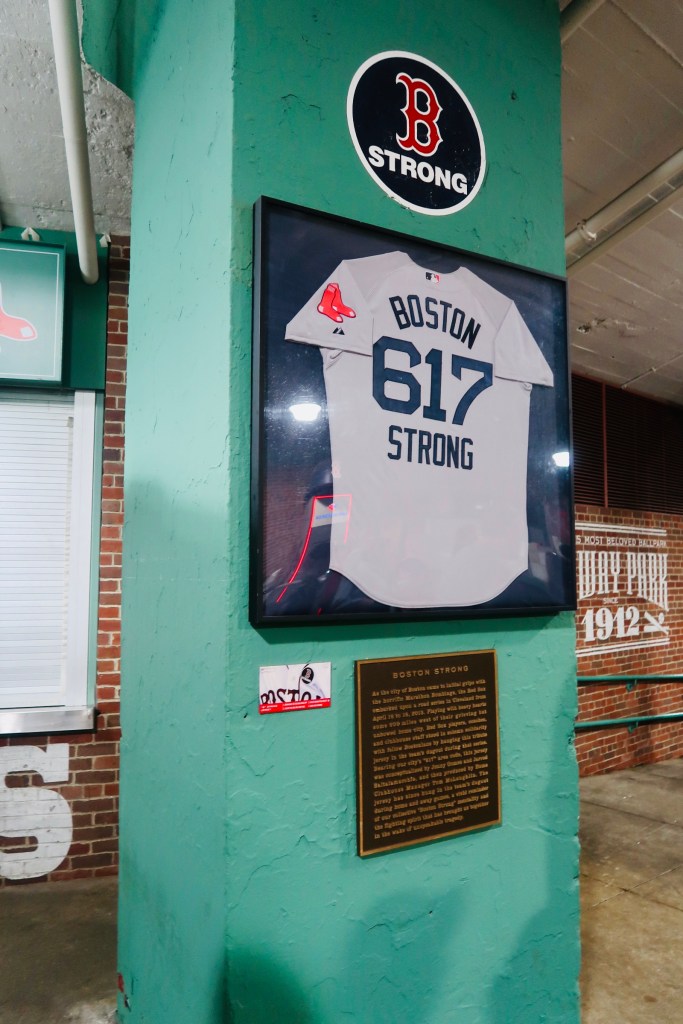
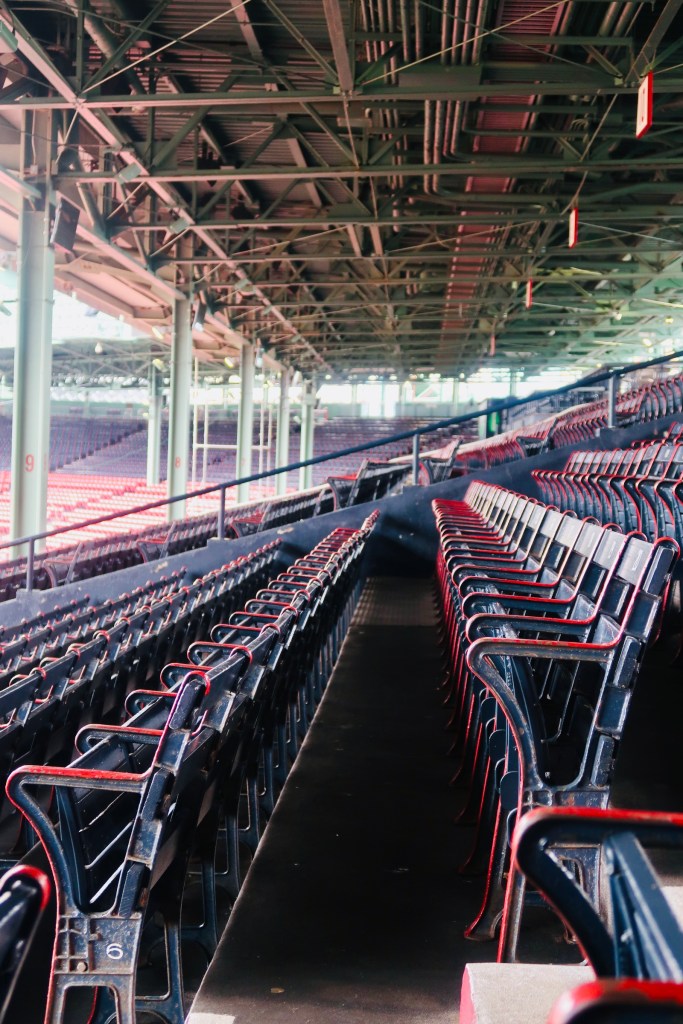
As part of the tour you are able to see the interior of the park (where two movies have been shot- including THAT scene from The Town), sit in the old wooden seats in the Grandstand section, head through the museum which contains collections of bats, balls, seating, jerseys, and more throughout the Red Sox history, head up to the top of the upper seating, go through the Press Box, and over to the Green Monster (which only added seats added to it in 2003 and they are the most expensive and contested seats in the park). All while being told the history of the stadium, a couple of dad jokes (maybe you want to hear one now? “The distance between all the bases is equal, however why does it take a runner longer to get from second to third? Because there’s a short stop” Ahahahahahaha- ok done now), and seeing some epic views from every spot in the park. It truly was an incredible tour and very well worth our time. If you are even the slightest baseball fan, this is a definite go to (but if you’re a baseball fan it’s probably already on your list to visit). 

And that wraps up this first part of my two part Boston posts. The second part (coming out this Friday!) will be focused exclusively on the Freedom Trail and the sights we saw as part of that.