A Cuppa Cosy Summer Holiday 2023 – Quebec City

It is finally time to start breaking down our Summer Holiday. It’s a bit late in the posting lineup, but we had a truly fantastic trip, and I can’t wait to share all the details! We did a bit of an East Canada tour de force- starting in Quebec City and ending back in New York. I think this was one of our top trips in that we loved everywhere we went. We found some real gems in these cities and really fell in love with some of these spots. So, here we go with where we started…

We spent three nights in Quebec City and the bulk of our time was spent wandering the city. We stopped in places from time to time, but we really just walked the streets of the city and enjoyed our time. I’ll highlight a couple of the spots we did go to and the history, but I highly recommend just wandering the city streets of both upper and lower downtown. The days that we were there we did (and you’ll see) have some air quality issues, with the wildfires raging out of control. 

A real quick note on the “Upper Town”/” Lower Town” designations. I’m not making these up- this is very much how they are referred to. Upper Town is the location of the military and civic/admin district. Most buildings in this area are 19th century, though there are some 17th/18th century ones. Lower Town is at the “bottom” of the cape. This is the site that Samuel de Champlain built a settlement. The Church Notre-Dame-des-Victoires is located in Lower Town (dated back to 1723) as well as the Musee de la civilization.

Quebec City dates back to 1608 when the French, specifically Samuel de Champlain, settled the area- making it one of the oldest European settlements in North America. The ramparts (which we walked) are the only remaining fortified city walls remaining in the North Americas (north of Mexico). The “Historic District of Old Quebec” is a World Heritage Site (as of 1985) and honestly one of the coolest spots to walk around. Now, while the French “founded” the city, it was actually an abandoned Iroquoian settlement called Stadacona. The city itself has quite the history, specifically during the French and Indian War where it served as the headquarters for raids against New England. However, Quebec was captured by the British in 1759 and held by them until the end of the war. It was then officially ceded to Britain, though Quebec is still heavily French and both French and English are spoken interchangeably (which gave our boys a chance to learn a couple phrases in a new language!). 

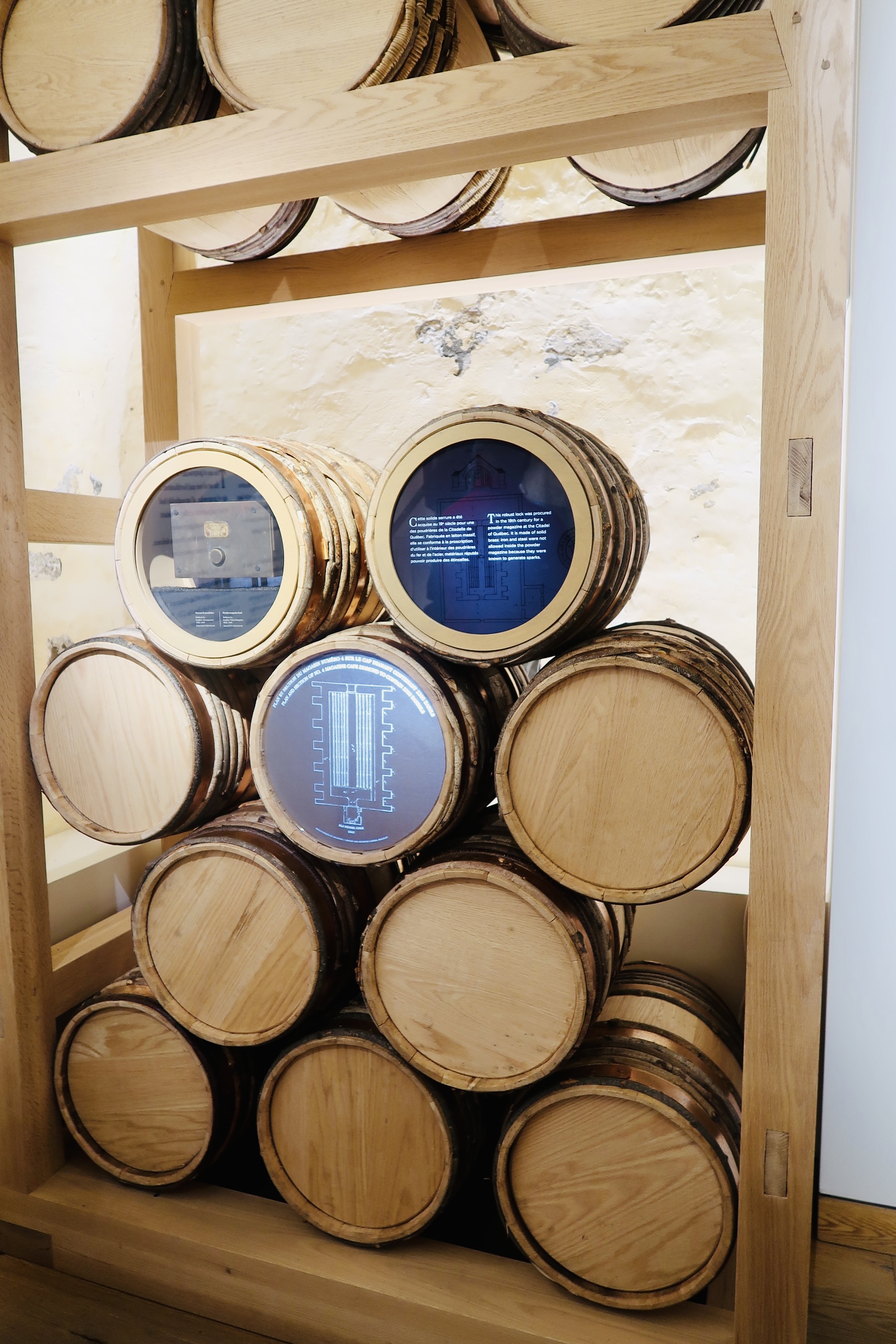
To get a little ahead of myself on our time in Quebec, but stick with the history, we spent an afternoon wandering and touring the Citadelle of Quebec. The Citadelle was initially built due to concerns of an American attack post the American Revolution and the War of 1812 (as America did try to “liberate” Canada from her Sovereign- unsuccessfully). Now, the Citadelle is an active military installation and a secondary (official) residence of the Canadian Monarch and governor general. The Citadelle does join the original fortifications, which is really cool when you think about the history of it all. The entire city itself is surrounded by fortifications. 

When Samuel de Champlain was initially building up the settlement of Quebec, he immediately noted that the Cap Diamant would be of importance and value to any fortifications of the region. When he built up the settlement, he built it in the way that the city would be at the base of the cape, thus allowing the landscape to provide a natural defense. The French initially built up the walls but determined that a fort would cost too much, and it wasn’t until Louisbourg fell that they felt a true need for a fort. The British saw the need for a full fort, but, similar to the French, didn’t want to pay the cost for a full fort. It wasn’t until the late 18th century that they fully committed to building the fort. The present star fort was built from 1820-1850, with the British remaining within the Citadelle until 1871. 
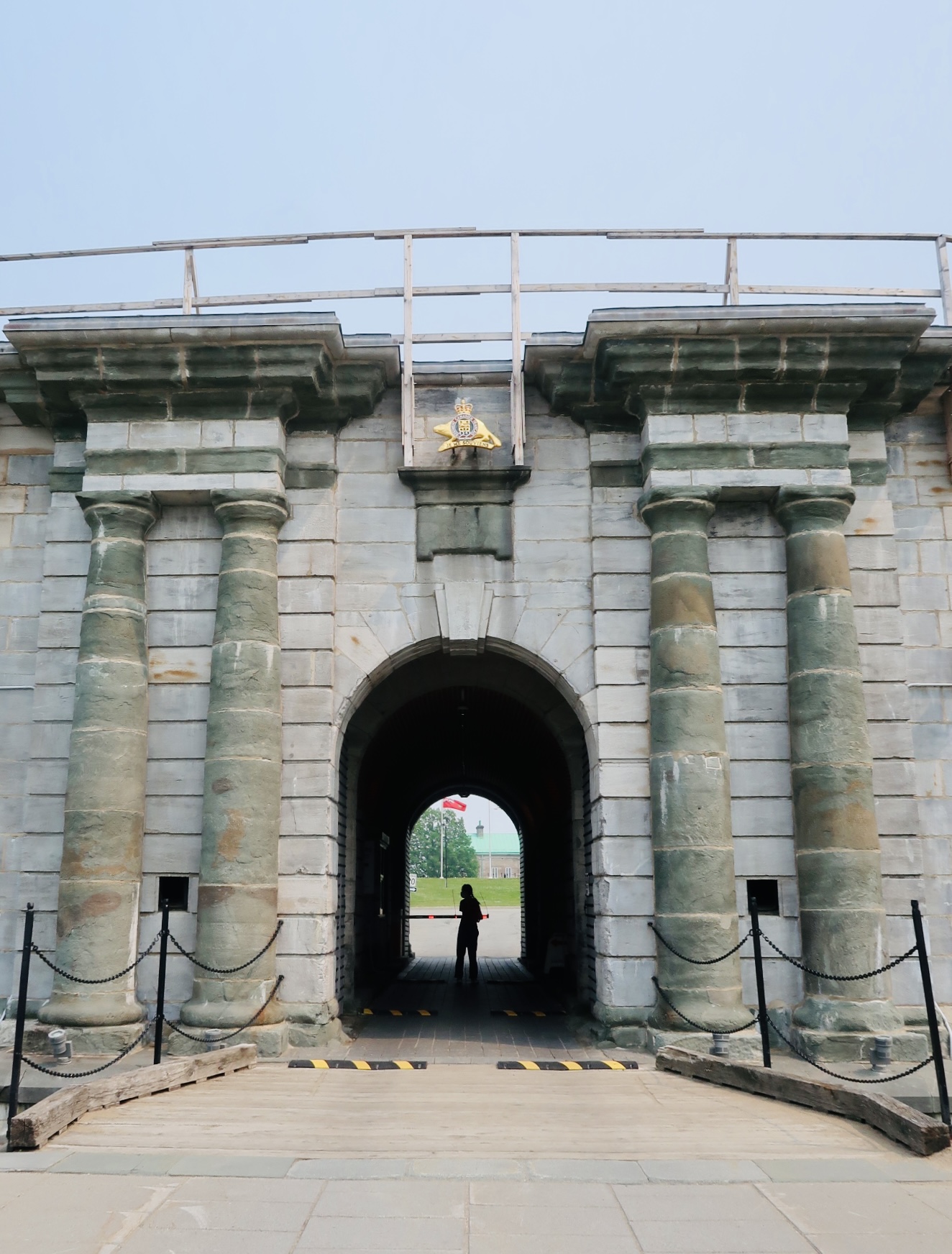
It was really neat to walk through the Citadelle, seeing and learning the history, as well as hearing about their mascot- a goat (affectionally named Batisse)! Even though it is a fully functioning military base, you are able to see quite a bit of the buildings and museums. It is well worth the visit.

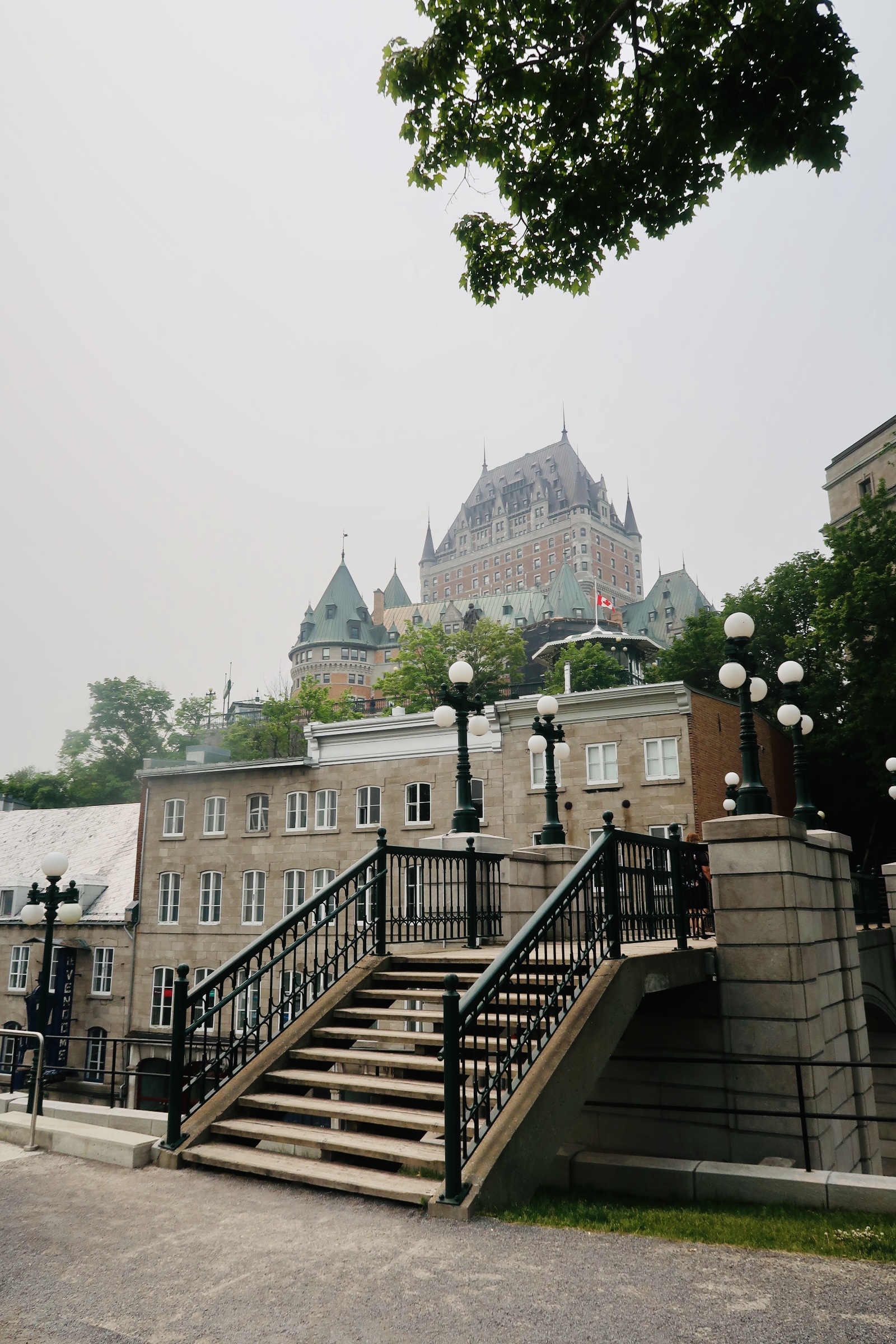
Now once you pass through the Old Fortifications to wander through downtown you can head through the streets and up towards the Promenade. This includes the cite of the Chateau Frontenac- one of the most photographed spots in Quebec City. Located in the Upper Town, it dates back to 1893 and was built by the Canadian Pacific Railway company. It is a National Historic Site of Canada and is one of the first completed grand railway hotels. These hotels are hotels that are built as an attachment to the major railways within Canada and were designed to serve railway passengers. A lot of these hotels then became landmarks and are linked to the history of the country itself. And I can definitely understand why- it is just as stunning in person as it is in photos.
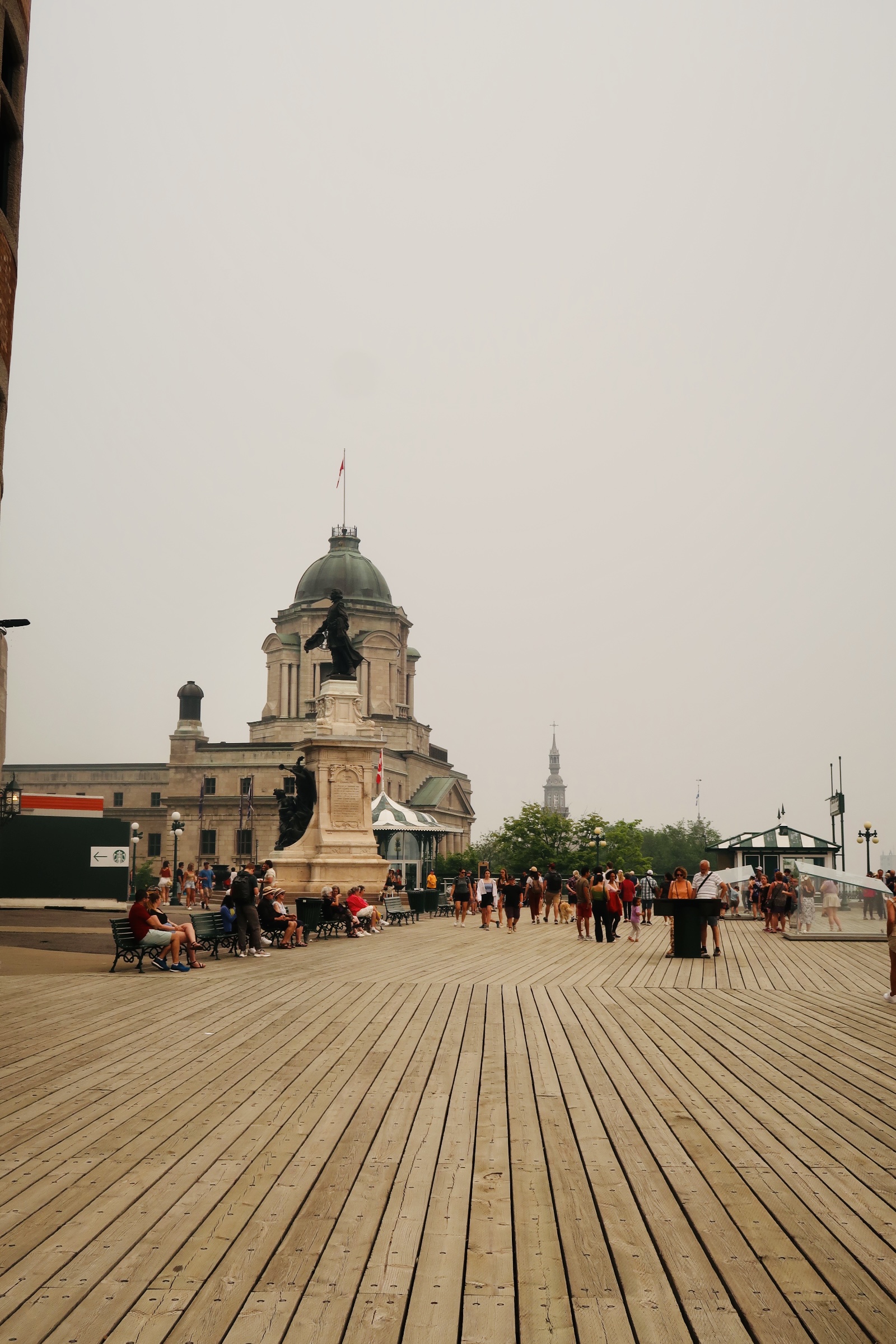
Once you walk through the Promenade- called Terrasse Dufferin (and feel like you’ve stepped back into another era- just imagine it!), you can wander down to Lower Town. There are two ways to head down, by funicular or by stair. We chose the stair option because we have a thing for stairs (this is a long running theme from our European Travels). Lower Town has a very definitely different feeling to Upper Town. As you descend you can definitely feel a different vibe- in a way that…might even live up to the names. Upper Town is very…. business like, very prim and proper almost. Where Lower Town can have a bit of a frenetic feeling, a bit of a lighthearted, let loose, kind of feeling. Rue du Petit-Champlain in particular is very neat. We wandered through tight streets, picked up some ice cream, and sat riverside looking up at the Old City. 

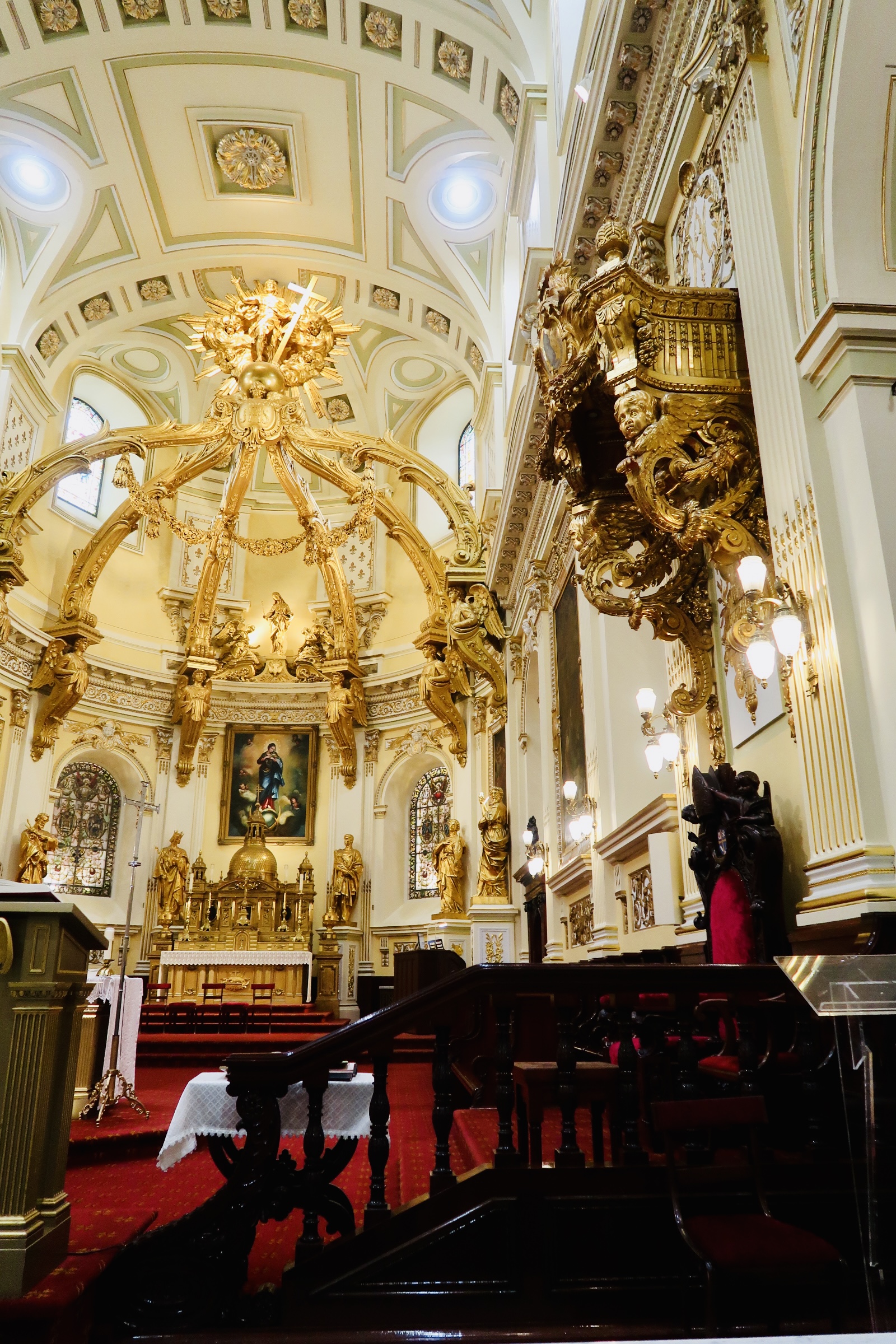
Cathedral-Basilica of Notre-Dame de Quebec was THE church we wandered through during our walks. And let me tell you…it lives up to that name. This is the oldest church in Canada and the first to gain the rank of minor basilica- which happened in 1874. However, this massive cathedral started off as a chapel- the Notre Dame de la Recouvrance- dating back to 1633. In 1647 construction of the actual Cathedral began under the name of Notre-Dame de la Paix. It was destroyed in 1759, rebuilt, and then destroyed again in 1922. Upon its 350th anniversary, a holy door was constructed, the second only to exist outside of Europe, only the eight in existence in the world. It was opened in 2013, for a little over a year, then opened again in 2015. It is not to be opened again until 2025. This particular Cathedral is absolutely incredible- it is pretty high up on my list of Cathedrals and churches, and I’ve seen my fair share. 

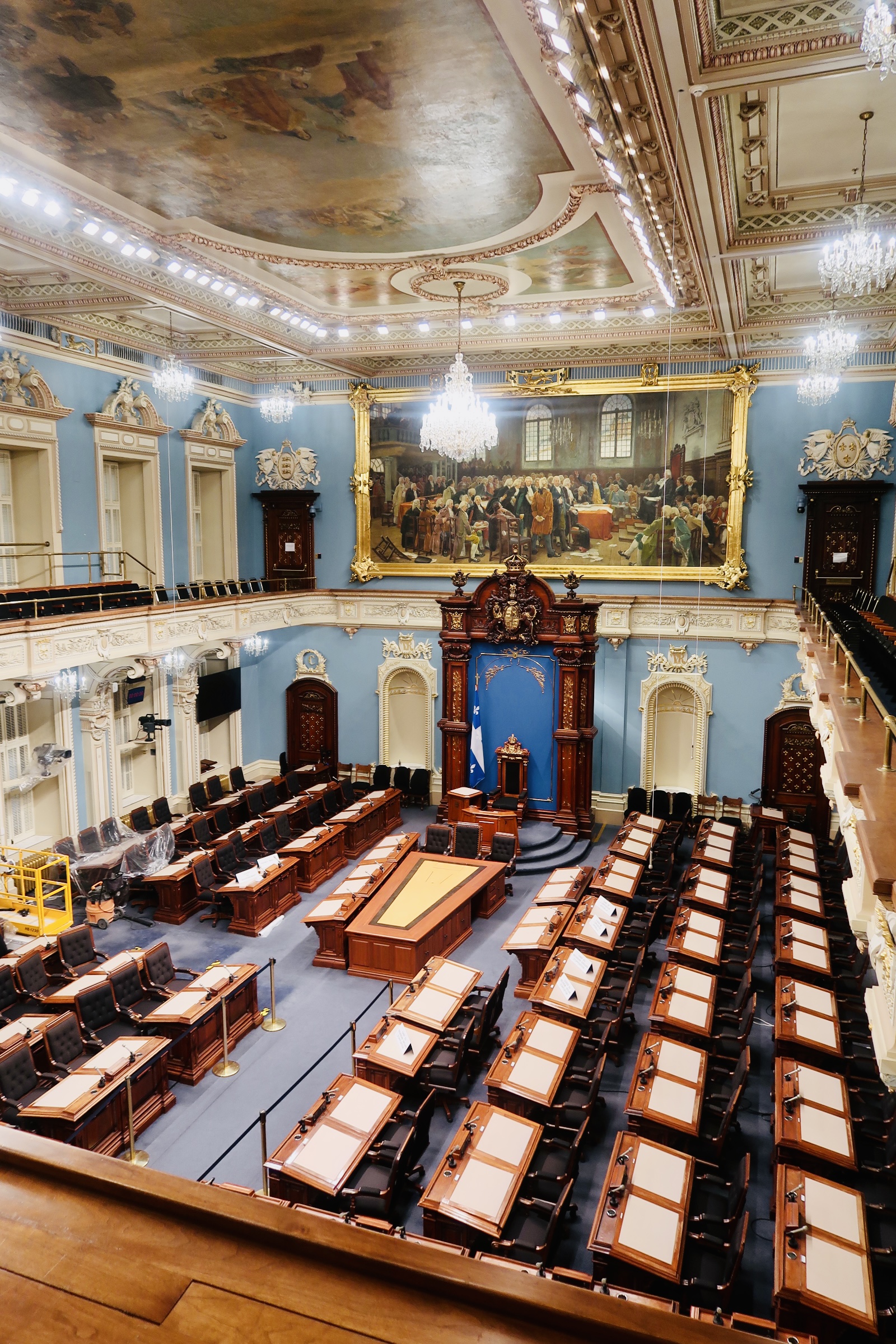
We spent a little bit of time exploring the Parliament Building of Quebec, which houses the National Assembly of Quebec. This present building was started in 1877, the first assembly met there in 1884, and the building was completed in 1886. The original building that housed the government was built in in 1648, rebuilt in 1694, and then destroyed in a fire in 1834. The clock tower was installed in 1888, the first addition was completed in 1915, and several more throughout it’s time. The new entrance was completed in 2019. We were able to walk through the halls, see where the government conducts business and learn a little about how it functions. 

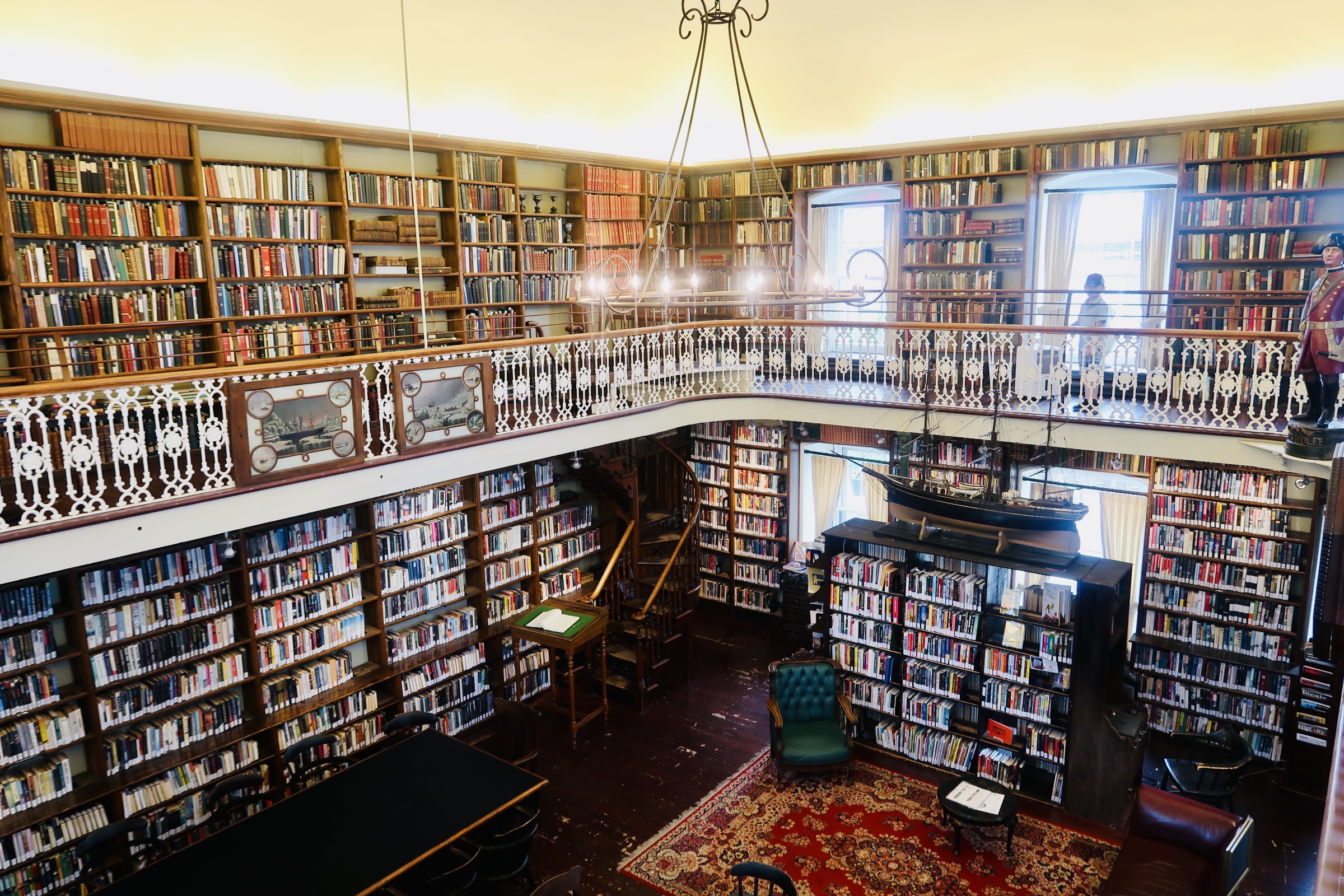
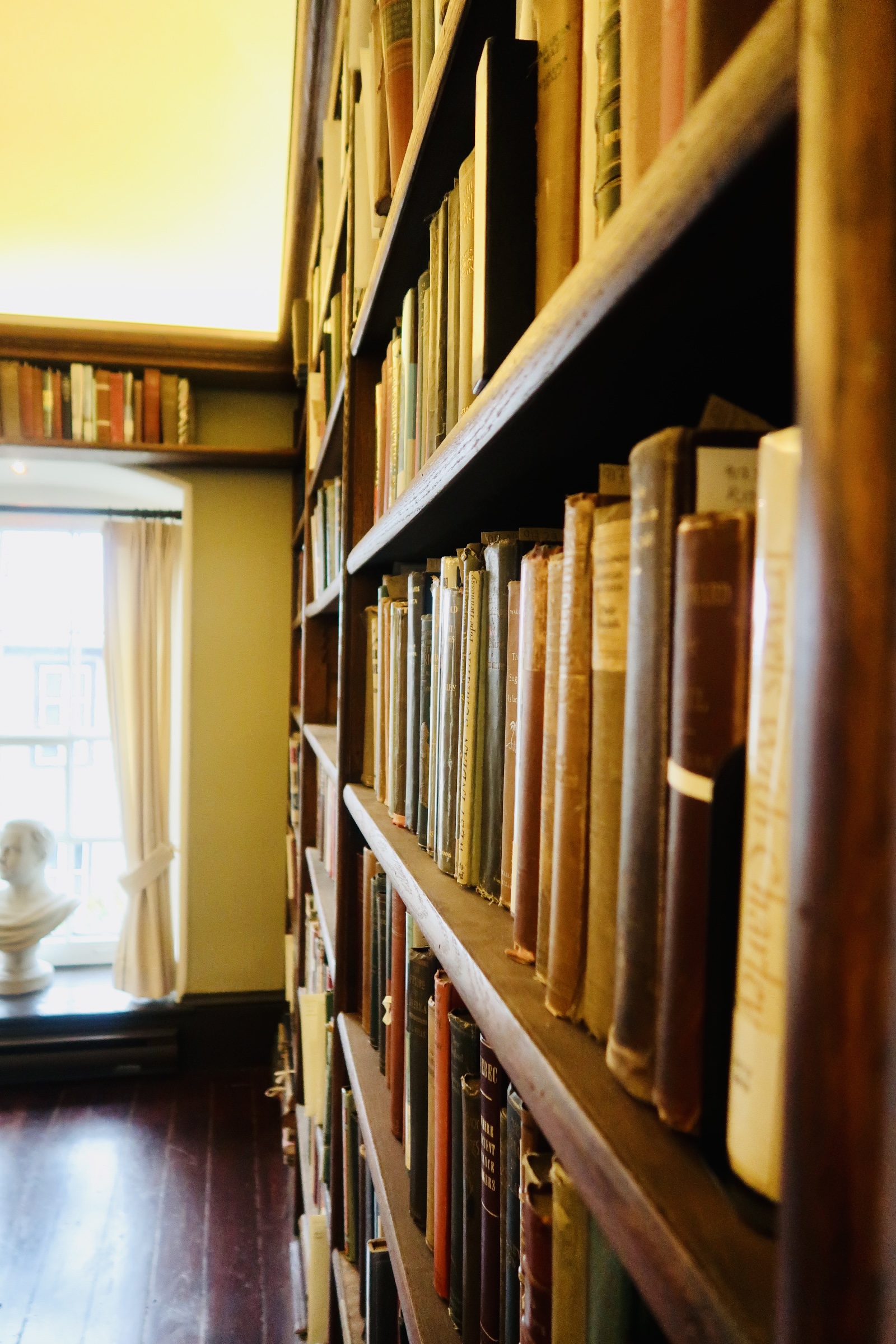
One of the final things I want to talk about in Quebec City is the Morrin Centre. This is a 200-year-old building that was initially one of the first jails in the city, turned school, and now is the leading English-language cultural centre and library. A little history, because this building has a LONG one. Initially this space was called the Redoute Royale and served as a military barracks, with the occasional prisoner of war. The original building was demolished in 1808, with the intention of building a new building to serve as the public prison. The new prison was completed and opened in 1813- though it housed prisoners starting in 1812. The prison was quickly put to full use and became overcrowded quickly. In fact, our tour guide told us that it was a common occurrence to get in light in trouble in order to go to the prison and get a meal. There was a total of 16 men hanged in front of the prison and you are able to walk the very same steps those men would have walked. You are also able to see a variety of markings in the basement cells from the prisoners. The prison was officially closed in 1867. 

However, the building history doesn’t end there- it is quickly turned from a prison to a college. Morrin College is the first English language higher education institute. The college partnered with McGill University to allow students to earn Arts degrees, and starting in 1885, the college admitted woman into the program. In 1868 the Literary and Historical Society of Quebec (dated back to 1824) moved into a wing of the College. This Society has played quite the role in preserving the history of Canada- not only gathering and preserving historical documents, but also creating the National Archives, creating a lending library focusing heavily on English-language books, and republishing rare manuscripts. 

The building presently serves as a museum, a cultural centre, as well as a fully functioning library. But also, I mean look at this library- is it not dreamy?
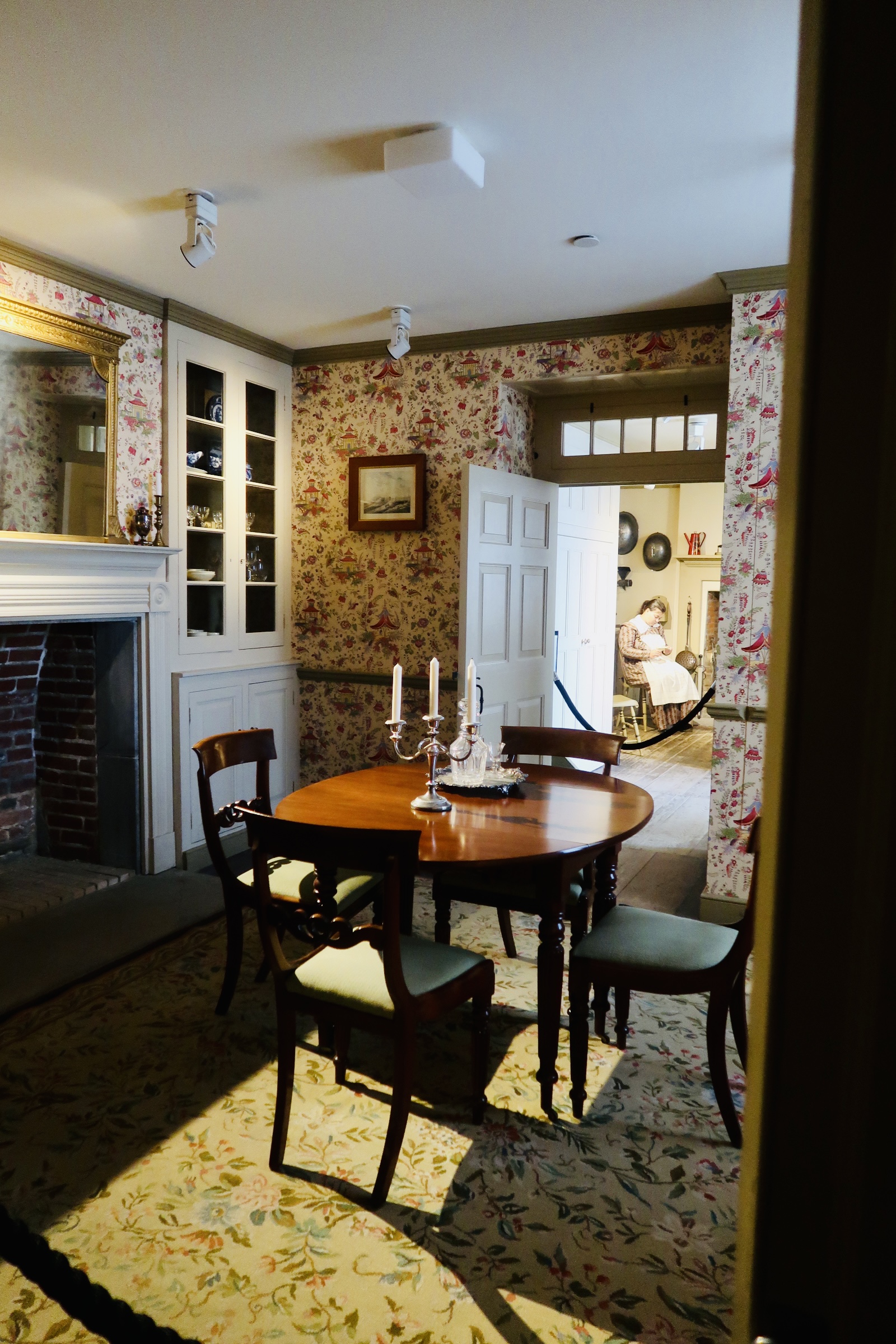
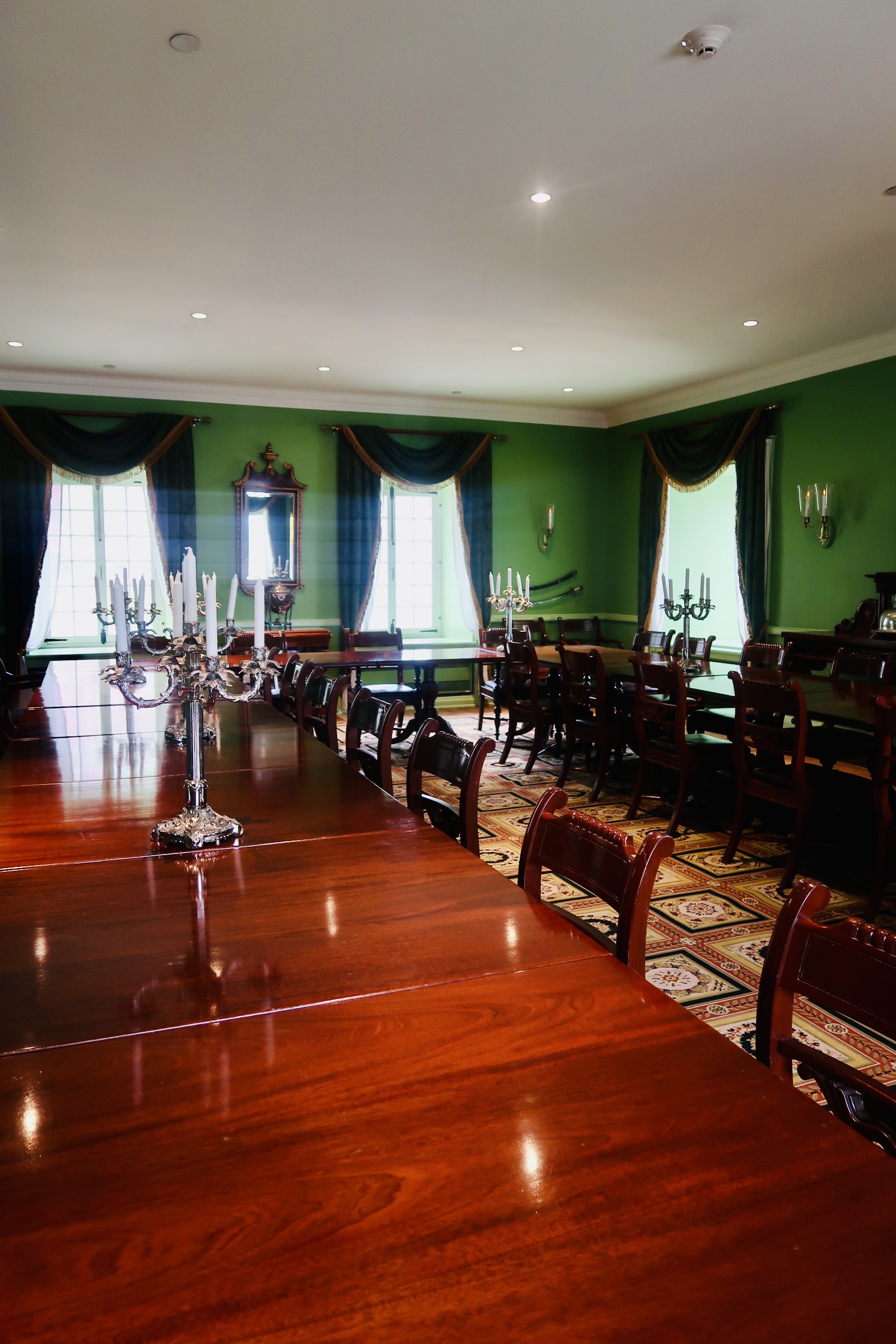
The final stop on our time in Quebec City was the Artillery Park, which is part of the Fortifications of Quebec. This is a “living history” museum that combines actors and artifacts to give a hands-on experience of life under the different rulers of Quebec. We got to experience the British, the French, and the Canadians. The “tour” starts in the arsenal foundry which gives you a full history of the City and its’ fortifications, then a model of Quebec City before you head down to the Dauphine Redoubt- one of the oldest military buildings in North America. Again, you experience life during different military rules. Finally, you stop in the Officer’s Quarters and see how they would have lived in the military area of the city. This building was actually originally a bakery but was repurposed to hold and officer and family. Definitely worth a stop!

And that really wraps up some of the highlights of our time in Quebec City. I will say- we really enjoyed our time. I always note what cities we like to be in (as we aren’t really a city family) and it’s always these Older European or full-on history spots that we prefer. Somewhere we can walk everywhere, see some architectural variety, and surround ourselves with history on every corner. 

A Cuppa Cosy Summer Holiday 2022 – Toronto, Ontario

Ok, another preface to another travel blog post…actually two. So, first up, our time in Toronto was not utilized very well. We got late starts every morning we were there, and we didn’t really do any planning for our time there. What I’m going to do is talk about what we actually did, and then share a couple of the spots that I wish that we had gone to. 

A second preface regarding the Covid crossing. A basic reiteration as to what I said in my first post (and apologies for not including it in my Sudbury post- I forgot and it worked out as that post went a lot longer than I thought it would). These may or may not be up to date when you are reading this post (as they still change day to day), so I would recommend checking the Canada travel site HERE for the most up to date information. To enter Canada as an adult you must be fully vaccinated and fill out the Arrive CAN app on the phone (you can do this via we browser and print the certificate as well if that is easier for you, I believe). Kids aged 5 & up are required to be vaccinated unless they are traveling with fully vaccinated adults. For the vast majority of Ontario, we were not required to wear masks.

So, on to Toronto…

Toronto is the most populous city in Canada, the fourth most populous in the North America Region (it’s also the fastest growing city, and second fastest growing metro region in the North America’s). It’s location at the entrance of a route to the NW (one of the oldest there is) has been inhabited and used since the 1600’s by the Huron, Iroquois, and Ojibwe. In the 1660’s the Iroquois created two towns, but then they left the area after the Beaver Wars. In 1701 the Mississaugas took over the region and were there until 1750 when the French established Fort Rouille (they were still in the region, but the French started to cultivate the region). Once the Seven Years War ended the French left and the region became part of British Quebec. The American Revolution saw an influx in Loyalists escaping America and in 1787 Toronto officially became a British Territory with the Toronto Purchase. Toronto wasn’t always known as Toronto, in fact in 1793 it was the Town of York, and it became the capital of Upper Canada the same year. When slavery was banned in 1834, the newly renamed city of Toronto, became a refuge for former slaves and all people of color. Toronto has had two “Great Fires”, the Cathedral fire in 1849 which destroyed most of the Market district as well as St. James Cathedral, and the Great Fire in 1902 which destroyed more than 100 buildings and killed one person. A final fun fact for you: Toronto was once the largest alcohol distribution center- it specialized in spirits, and in the 1860’s Gooderham and Worts Distillery was the largest whisky factory in the world. 

The first night in Toronto we simply did a little walking, did a little eating, and settled into our hotel. We stayed in the Chelsea Hotel (the largest in Canada), and it was both a good hotel as well as a good local spot. We started at Old City Hall and Nathan Phillips Square, then over to Toronto Eaton Centre, which is a massive, covered shopping mall. We then walked down to Yonge- Dundas Square, which is similar (but a bit smaller) to Times Square. Opened in 2002 it is central to Downtown Yonge’s entertainment and shopping. 

The next morning, we set out for our first “must see” of Toronto, the Hockey Hall of Fame.

The Hockey Hall of Fame is credited to James T. Sutherland who was involved in the sport. He believed the Hall of Fame should be located in Kingston as he saw that as the birthplace of Hockey. However, there were quite a few funding issues trying to create a permanent building (even after inductions began in 1945), and, in 1961, it was moved to Toronto. Initially the Hockey Hall of Fame shared space with the Canadian Sports Hall of Fame, but in 1986 they ran out of space and in 1993 they moved to the current location inside Brookfield Place/Bank of Montreal Building. Within the museum you’ll find not only history pieces, trophies and rings, team memorabilia, and the like, but also an entire interactive zone where you can practice shooting pucks against a goalie, being a goalie, as well as learn how television broadcasting works. It was quite a way to spend the morning and we loved getting this deep dive into Hockey History. 

From there we wandered over to St. Lawrence Market. In the early 1800’s the governor recognized that the town needed to have a central market location, with specific dates and times that it would be operational. And so, St. Lawrence Market was opened. This heart of the town was not only a market, but also served as an auction space, a place of public punishment, and for a time, was the seat of the city council. A temporary structure was first introduced in 1814, with a permanent structure built in 1820. This led to a long road of construction, remodeling, destruction (it went down during the Cathedral Fire), and re building. The present St. Lawrence Market South Building dates back to 1845 (rebuilt in 1850 and remodeled in 1972). Originally there was two buildings, however the North building was demolished in 2015. It is full of just about any vendor you could think of, from food, to jewelry, stationary, clothes and beyond. It is a hectic, but fun stop to see. We wandered up and down the aisles of two floors and admired all the goodies being sold.  

From the market we wandered over to the “old district” which didn’t have much that we could see- we actually got a little bit confused over the whole thing. We did see Toronto’s First Post Office, the De La Salle Institute, and St. Andrew’s Church. We ended our day on the docks, watching the water.

The next morning, we headed out once again, this time over to Allan Gardens Conservatory. This was a stop mostly for me, as I wanted to see all the plants. The area dates back to 1858 when George Allan donated a small plot of land to the Horticultural Society. The city then approached him to purchase the surrounding land to expand, which George agreed to as long as they kept it publicly accessible free of charge. It originally opened in 1879 before a fire damaged it in 1902. The present gardens opened in 1910 with the domed Palm House, which were quickly added to in both the 1920’s as well as late 1950. It’s not large, and to be honest not entirely necessary to see, but it was nice to pop in to somewhere to be surrounded by plants for an hour. The boys stopped and played at the nearby playground for a little bit while we tried to figure out what else we wanted to do. At this point we only had half a day left in Toronto, which cut out a lot of things that we wanted to do (like I said- we didn’t plan this stop well at all). 

We decided to head over to Ripley’s Aquarium as the boys have never been to one and it would be a fun stop for everyone that was also nearby. The Aquarium is really known for its Sharks and Sting Rays (in my opinion), and they are also the most active of all the fish. We were able to see not only those, but also a very active octopus, sea turtles, and jelly fish. It was a decent stop and a good way to cool off. 

From there we headed across the street to the Roundhouse Park & Toronto Railway Museum. I’ll be honest…I don’t think this is really worth the stop, even if your kids are massively into trains. The roundhouse park is really cool, first built in 1929 and the last in downtown Toronto, it’s a 32-stall house featuring, at that time, the most modern of technology. It closed operations in 1982 and became a Canadian National Historic Site in 1990. The museum opened in 2010 and features quite a lot of history on the Canadian Pacific Railway, artifacts from bygone times, as well as the ability to drive a simulated train. The boys liked to drive the simulation, but beyond that they didn’t care about any of the rest of it. You are able to see all the 10 train cars featured in the museum on the outside (without going into the museum) as well as take the mini railway. I don’t normally say that a museum isn’t worth going to because I believe in history, in museums, and in learning about the past, but this is one that I don’t think you need to go to. 

And that really wraps up our time in Toronto…

Now, some of the things I actually wished we did were:

Spend a day on Toronto Islands. The Toronto Islands consist of 15 small islands just south of the mainland. You are able to take a boat ferry from Toronto over to the Island Park and, like Mackinac Island, the Islands are car-free. We could have biked through Toronto Island Park, the Centreville Amusement Park, as well as walked and relax on the beach. We actually thought about maybe going for half the day but didn’t think it wise to try and beat the rush at the amusement park and get back to the mainland. I didn’t want to be rushed. 

We thought about going over to Casa Loma, however it was a bit out of the way of the other ideas we had and to take a tour within the castle was a bit pricey. It’s one of those- we saw so many real, old, historic castles in Europe that we haven’t found one here in North America that “measures up” to what we’ve come to expect (yes, I really said that and cringed every word through). I do think it still would have been nice to experience though. 

And, finally, I think that going to the Toronto Botanical Gardens would have been nice. I would have probably preferred them to the Allen Garden Conservatory, but it just didn’t fit in to our schedule or route in any way. 

I do think the Hockey Hall of Fame and St. Lawrence Market are must visits during your time in Toronto. I would say most of the rest, if you walk past or through on a route is fine, but not necessarily worth going out of your way to see. 

So, there you have it. Our 3 nights in Toronto. Up next is our final stop on our Summer Holiday…

A Weekend in Montreal

Over the Easter Holiday Weekend we decided to get out of town and head up north across the border to Montreal. We’ve been to Canada several times, but never Montreal. This comes on the heels of Andrew and I heading up north with a friend when the border re opened without testing for those who are vaccinated. We went up for a day to Kingston, shopping in a little district area (including an independent bookstore- finally!) grabbing some lunch and enjoying the beautiful waterfront that Kingston offers. After that little day trip, our plans for a longer weekend were solidified. We’ve always loved Canada and wanted to see more, and it’s gotten a bit easier for us to do that. 

First off, for full transparency, Covid protocols…you’ll want to check the Canada website HERE for a full breakdown of the most up to date rules. When we headed across the border by car, there were no testing requirements for fully vaccinated. The rules apply to all those age 5+, but there is some verbiage for families traveling together with young children who may not be fully vaccinated, but the adults are (it involves testing). Regardless of the protocol at the time, you will need to have downloaded and filled out the ArriveCan documentation, which is super simple and straightforward. You’ll input your passport info, vaccination or testing info, and travel info.  Specific requirements will also vary depending on what province you travel to. For instance, when we went to Kingston (in Ontario) masks were not required to be worn inside, but in Montreal (which is Quebec) they were mandatory. You’ll need to check the specific province and city you are heading to as with any other travel. Beyond those two items, traveling to Canada was much the same as it was when we went three or four years ago. 

So, our weekend in Montreal. Where do I begin?

We arrived around dinner time on Friday evening and immediately got settled in our hotel. We stayed at the Le Saint-Sulpice Hotel Montreal which was every bit of incredible. Located right behind the Notre-Dame Basilica Montreal it is located almost in the heart of the Old District of Montreal. It is also conveniently located right near the river, with the Rue St. Paul (the pedestrian shopping street of Montreal) just a 30 second walk away. We had a “ground floor” room with a window looking out on the street below. 

Once settled we decided to just take a quick walk around the district to get some of the road trip energy out for the boys before dinner. I will say that reservations are very much a thing in the city. Most restaurants will still be able to seat you, but if you have something in mind, I would definitely get on their books ahead of time. This was something we ran in to twice, once with a restaurant and once with the Biodome and Botanical Gardens. So, reserve, reserve, reserve. This is something that we normally do, but the lead up to this trip was a bit hectic between sickness and family visits. Anyways…

We didn’t have any definite plans while we were in Montreal, just a few general ideas. A spot we really wanted to see was the Biodome, botanical Gardens, and Olympic Complex, but we were not able to get the reservations in time (good thing Montreal is only a few hours away, so we could go back if we really wanted to). Instead, we decided to just sort of walk/wander the city- which is one of our favorite ways to see new cities. Our first stop was breakfast, and we really wanted some crepes to start our day. A quick stop at Chez Suzette for some truly delicious crepes and mimosa’s and we were set for the day. We started at the Notre-Dame Basilica of Montreal. 

This church dates back to 1672 when a small stone church was built. The church was quickly outgrown and the church as we see it started in 1824 after a long period for approval of the plans. As many cathedrals, it took quite a while to be built into the massive church we see today. In 1982 it was declared a minor Basilica by Pope John Paul II and in 1989 it was recognized as a national historic site. The crowning interior was designed and created by Victor Bourgeau and features a variety of pieces, including 4 scenes from the Old Testament at the altarpiece. The organ is a feature piece of the church currently featuring 7,000 pipes. There is also an incredible Notre-Dame du Sacre-Coeur Chapel in the back of the cathedral which features a bronze altarpiece. The altarpiece is said to represent humankinds overcoming life’s hardships in the march to the Holy Trinity. It was incredible to see. 

From the Basilica, I made a quick stop to Le Petit Dep, which is a small marche with several locations. Known for its bright green storefront, delicious coffees, and wide selection of local artisanal goods it was a nice little spot to grab a coffee or tea. Quick word of advice though- go during the “off” time of day unless you are prepared to wait. I grabbed a tea and a mug and was set to go- it was truly a charming little stop. 

Then we headed off on the Metro to Mont Royal Parc. The Mont Royal is first mentioned in our history by Jacques Cartier, but it was occupied, hunted, and used by Indigenous People (the Hochelaga are who showed Cartier the way) for long before that. However, it was Jacques Cartier, in 1535, who gave it the name Mont Royal. The mountain has been home/location for many things, the site of several cemeteries (which are still in existence- 1852), a religious site, a hospital (1861), a college (1821), and finally, a park. In 1872, after many discussions of what to do with the Mount, the city purchased the land to officially turn it into a park. Frederik Law Olmsted (of Central Park) was brought in to design the park with the goal of it being a refuge from the city at large. In 1876 the park was inaugurated with great fanfare. In 2005 the park gained heritage status and the land itself will be protected from further development. 

We hiked up the park using the stair option, which was not only quite a workout, but provided several spots to look out at the city and a peaceful refuge from the city. We stopped at the lookout spot in front of the Mount Royal Chalet. This chalet was built in the 1930’s as part of the Make-Work project during the Great Depression. It hosts historic works of arts, chandeliers, and such and is used today as not only a reception hall, but also a gift shop and restaurant. It was a really pretty spot to stop- not quite the summit of Mont Royal, but still a beautiful view. 

From the Chalet we ended up catching the bus over to Saint Joseph’s Oratory. Originally a small chapel built by Brother Andre in 1904 in honor of Saint Joseph. It very, very, quickly grew in both size and worship. In 1914 new plans were approved for what would become the current basilica. The Crypt church dates back to 1917, with the basilica construction starting in 1926. Brother Andre died in 1937, with over a million people visiting his coffin. In 1946 construction of the votive chapel and Brother Andre’s tomb alcove begin, with completion and blessing in 1950. In 1955 the Oratory is marked as a Minor Basilica and it was officially opened in 1956 with construction on the interior being completed in 1967. Fun fact, in 2010 Brother Andre was officially declared a Saint. There is currently construction taking place to make the Basilica easier to access by visitors, but that didn’t stop it from being incredible. 

My first thought upon seeing the exterior of the Oratory is that it is Montreal’s very own Sacre-Coeur. It is very reminiscent (though I don’t know which came first…ok just researched-the timelines ever so slightly overlap with Sacre-Coeur be finished as the design plans for the Oratory are released), though they say that they leaned towards the Italian Renaissance when designing. The interior of the Basilica is incredibly modern (even by today’s standards, let alone when it was actually built) and vast- seating 2028 people. There is also the Crypt Church which is located right off the Votive Chapel (we’re getting there). This church features a statue of the Saint Joseph, where Brother Andre would pray right at the heart of the sanctuary. Then there is the Votive Chapel. This is a space that wasn’t included in the original design, but rather added as a space between the Crypt Church (to connect it to the Basilica) and to provide a space for Brother Andre’s tomb. Opened in 1949, one of the unique features of this space is the cane’s/crutches that are hung between the pillars, left behind by pilgrims who visited during Brother Andre’s time. The central lampstand in front of the tomb features 3500 candles, and his tomb (located through a tunnel underneath) is made of black marble. Following a path behind the lampstand and tomb, you are able to see a statue of the Virgin Mary, between the chapel and the mount rock. 

It was an incredible site to see and history to learn, to know how this man impacted so many in his life. Once we finished at the Oratory, we caught the metro back to the Old District to find a spot for dinner. While walking through town, we headed in to the Bonsecours Market. This is a two-story domed public market. Located on Rue St. Paul, the market originally opened in 1847. This has not only been used as a marketplace, but also a banquet hall and at one point, hosting the Canadian Parliament for a session. It reached historic site status in 1984 and was a really neat space to walk through and see some local treasures. 

We ended the day with dinner at 3 Brasseurs, which features its own brewery and beers. The food and drinks were delicious, and everyone loved their meal. A final wander through Rue St. Paul as we headed back to our hotel and our time in Montreal ended. 

Overall, I would say that Montreal is a great, culturally driven city. It’s a great spot to stop for a night or two and just enjoy the “city” life while also knowing some of the history of the area. There’s plenty to do and see AND if you’re an art and culture lover- there is an abundance of galleries to explore.