A Cuppa Cosy Summer Holiday 2021 – Boston, MA Pt.2

It is time for the second part of our few days in Boston (you can read the first part HERE). As much as I had thought that I wouldn’t write too much about the history, I found myself getting swept away in it all. So, here we are, a second post. Todays post is going to be all about The Freedom Trail located within Boston. We split the Freedom Trail into two days, doing half each day, but it is completely feasible to do it in one day if you’d like. I always appreciate when a city puts something like this together (and trust them when they do) as they usually have the best directions to hit everything you want to see- Luxembourg City did this very well too.

The Freedom Trail is a highlight of a trip to Boston as it is a 2.5 mile red line that wanders through the city, taking you to all the important spots in Boston history. Dating back to 1950, it allows you to view museums, meeting houses, churches, and other buildings that hold a special significance to the city. Anything from churches and cemeteries (with Samuel Adams, Paul Revere, and others gravesites) to a plaque on the side of a building signifying the first book store, The Freedom Trail will give you a little bit of everything. The tour (or at least the direction we went with) starts you off in Boston Commons. 

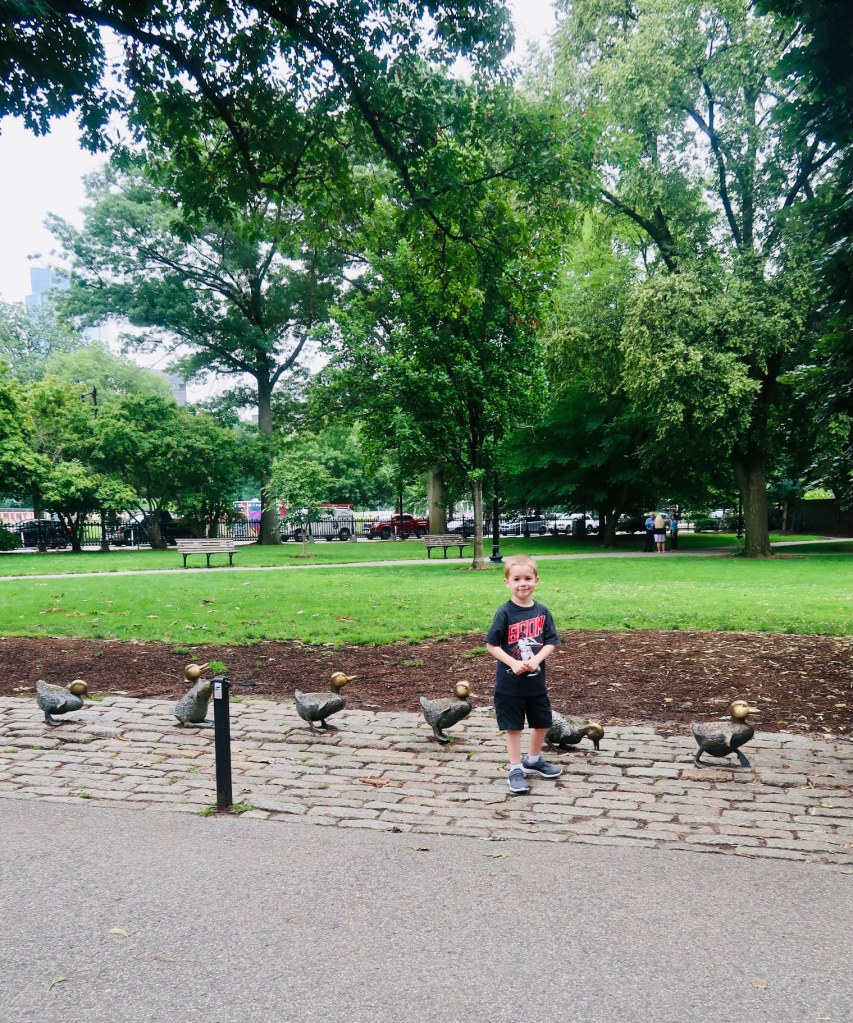
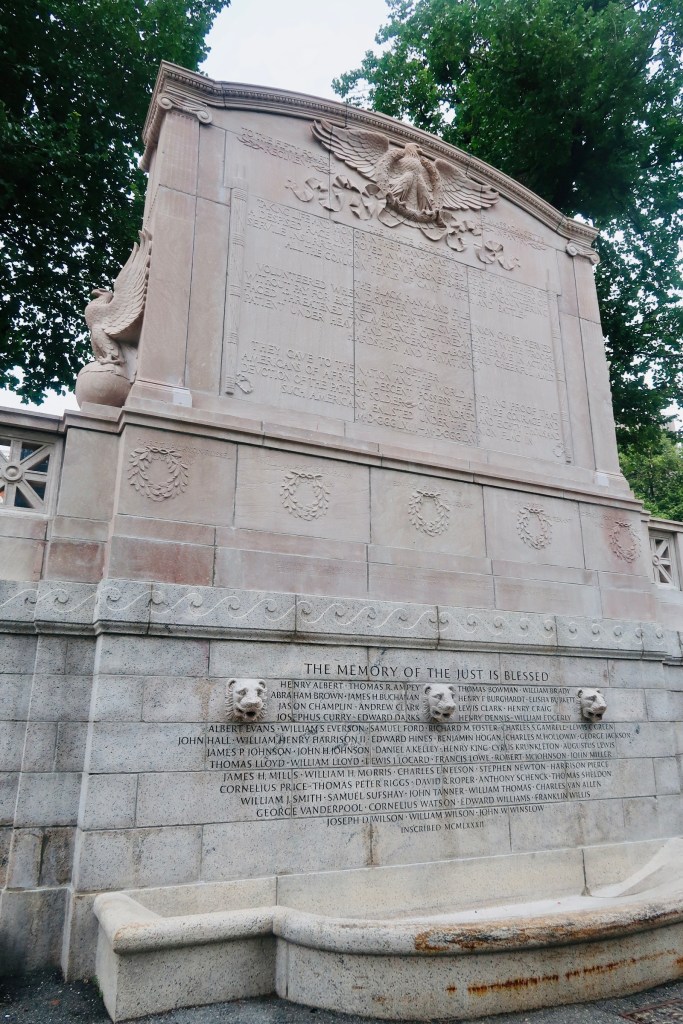
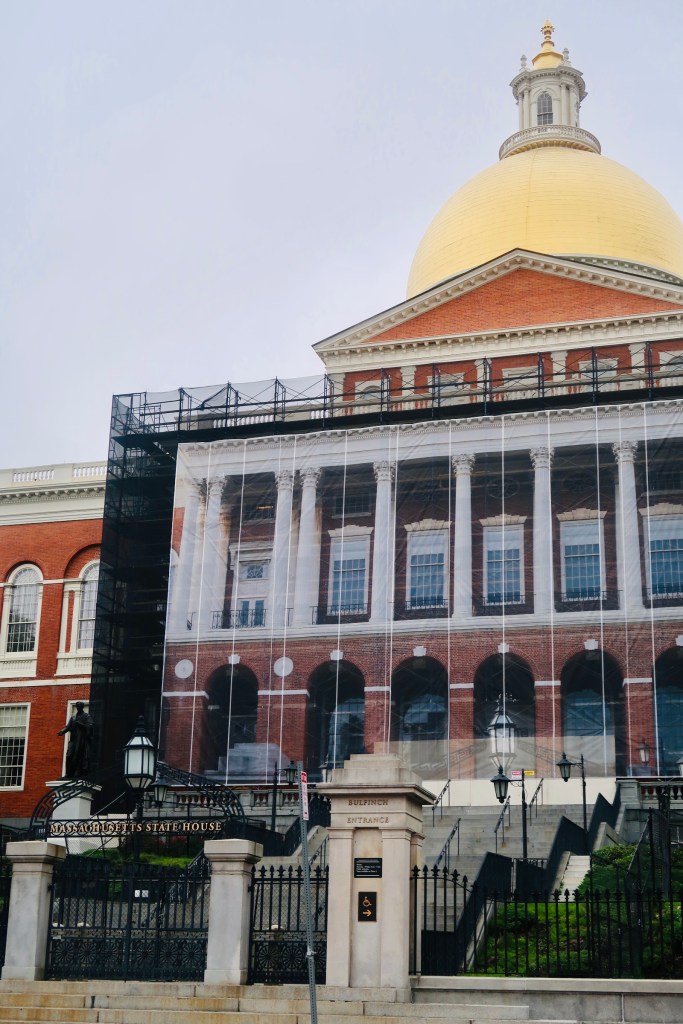
Boston Common is America’s oldest public park, dating back to 1634. The Puritans purchased the grounds from William Blackstone, it was originally used as a common grazing land for local livestock. It also became a spot for public punishments (featuring everything from stocks and pillory for theft to the hanging of witches and others). During the Revolution it served as a training and camp ground for the British. Today it serves as a public park (the smaller park across the street is where you can find the famous ducks) and a place for rallies and marches, as well as live music and festivals. Towards the end of the park there is a monument to Robert Gould Shaw and the 54th Regiment. This memorial honors and commemorates the first all-Black volunteer regiment during the Civil War. Most of them died during an assault in South Carolina, but they are forever memorialized here.** You also get a glimpse of the Massachusetts State House as you exit the Common. This has been the home of the state government since it was opened in 1798. 

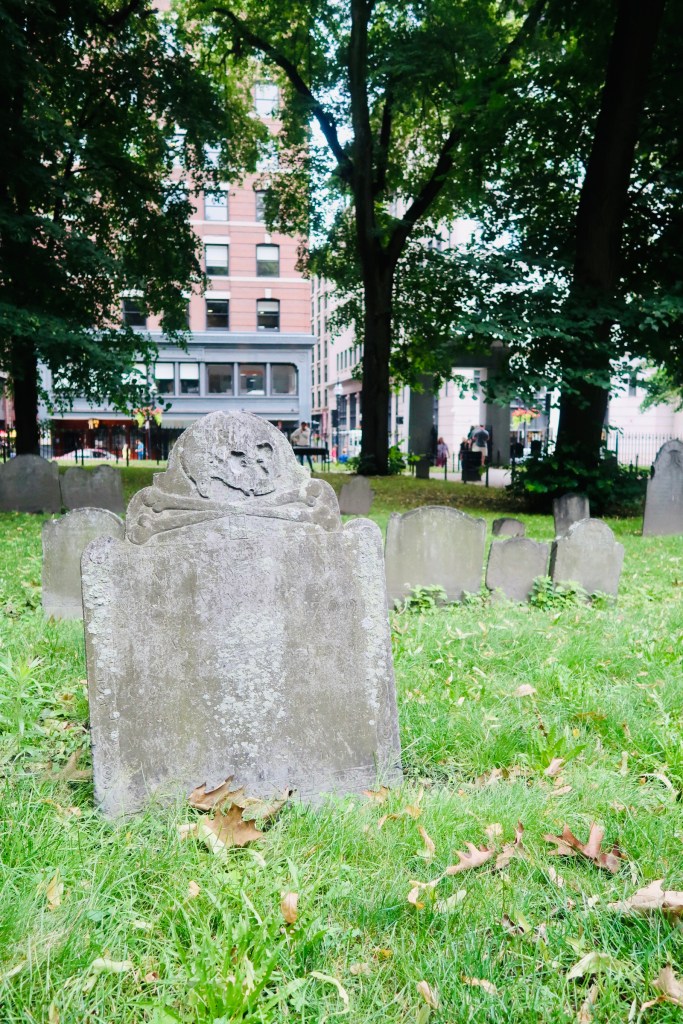
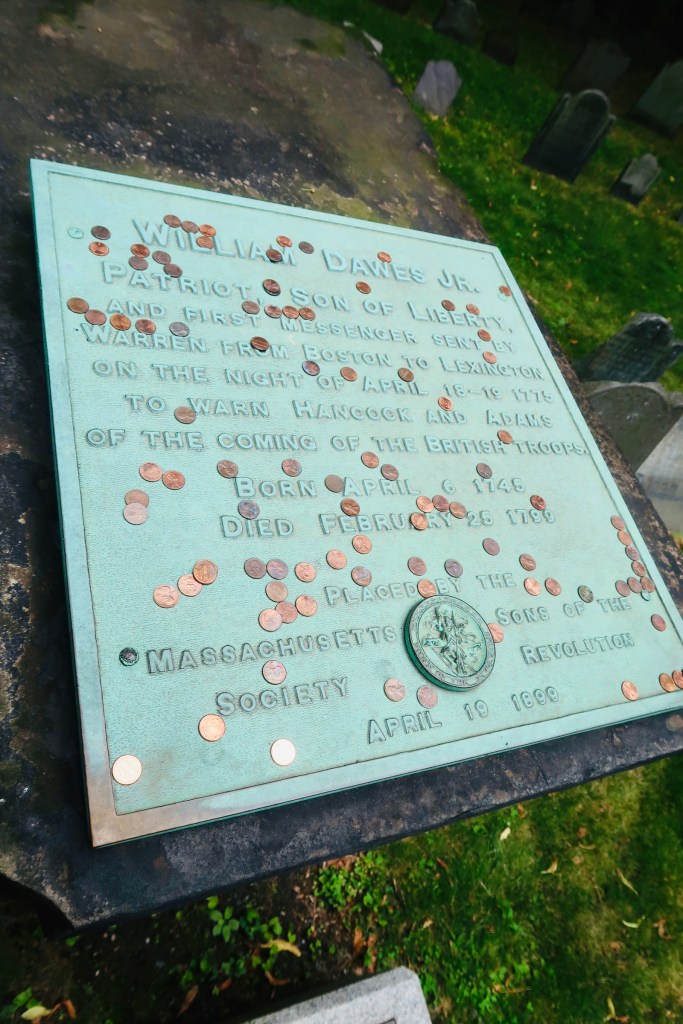
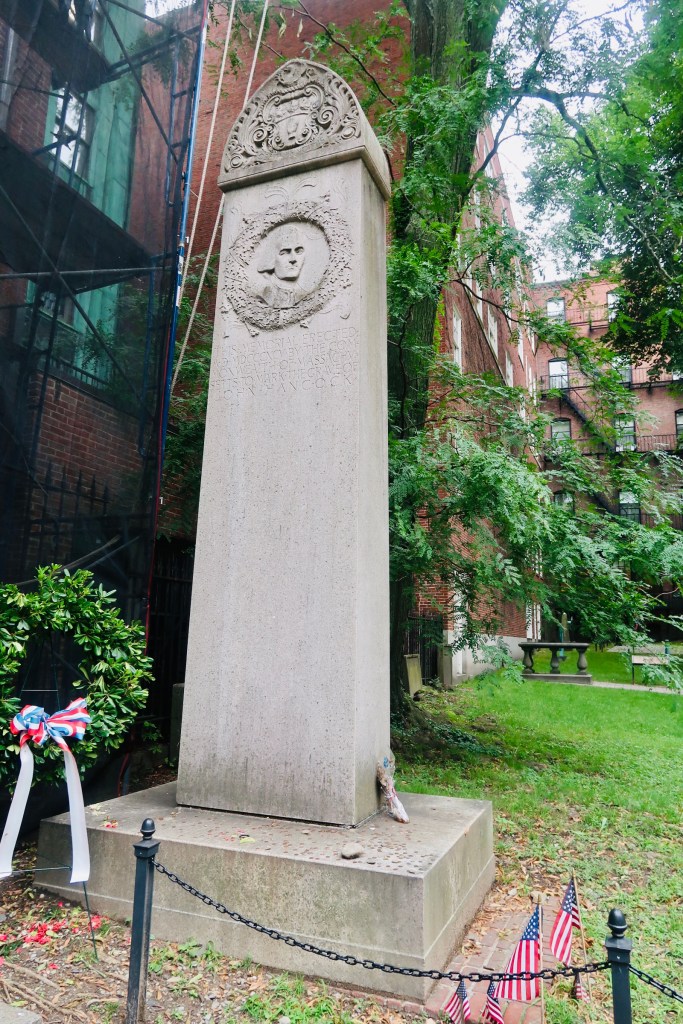
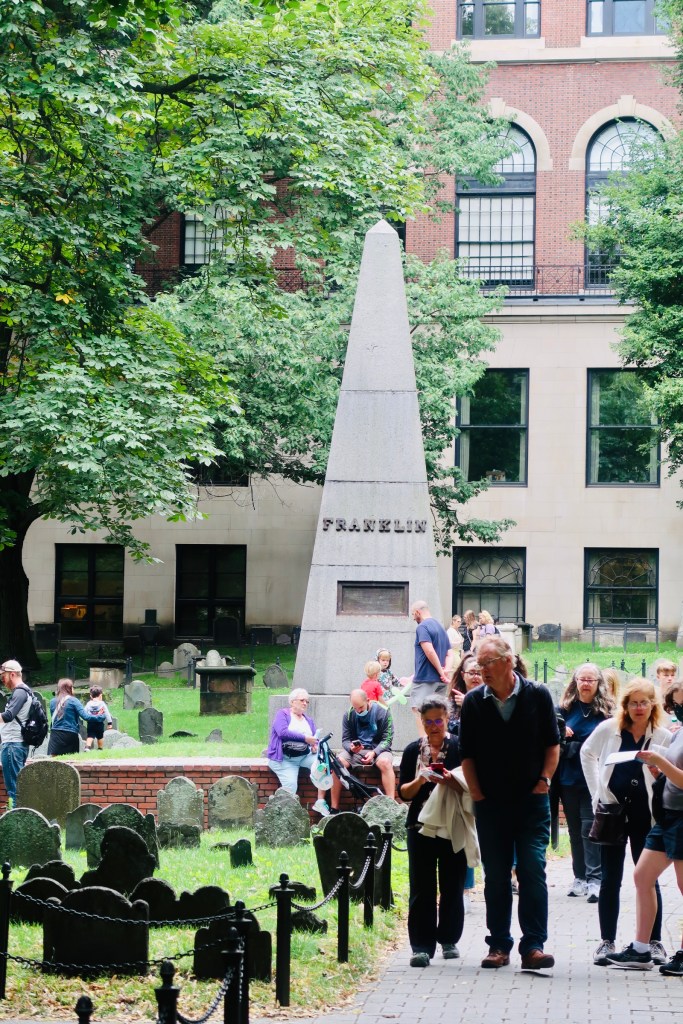
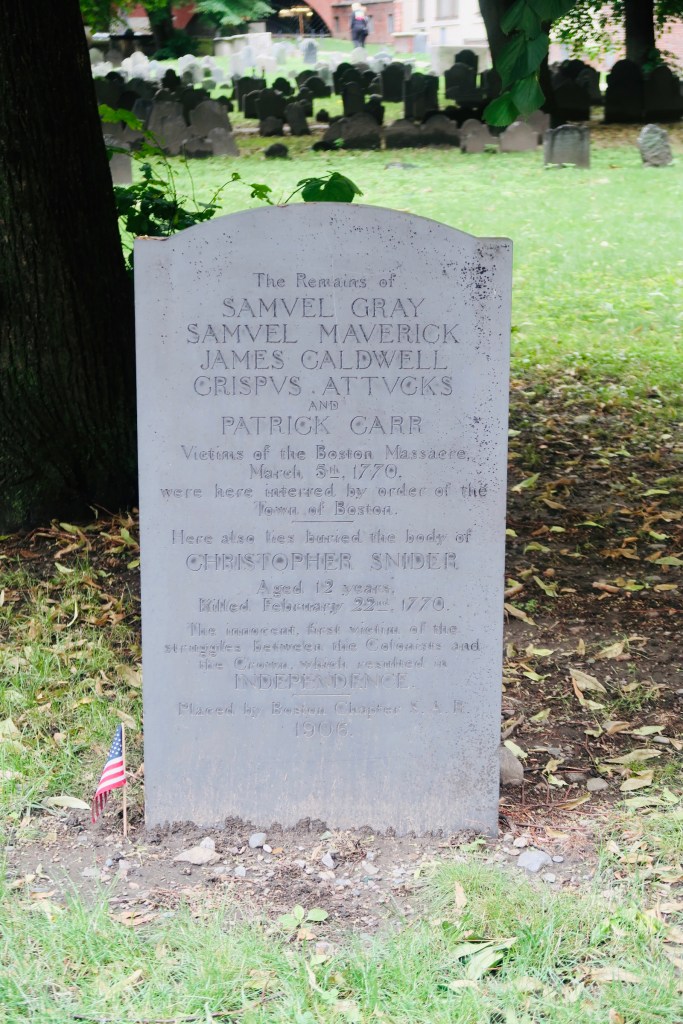
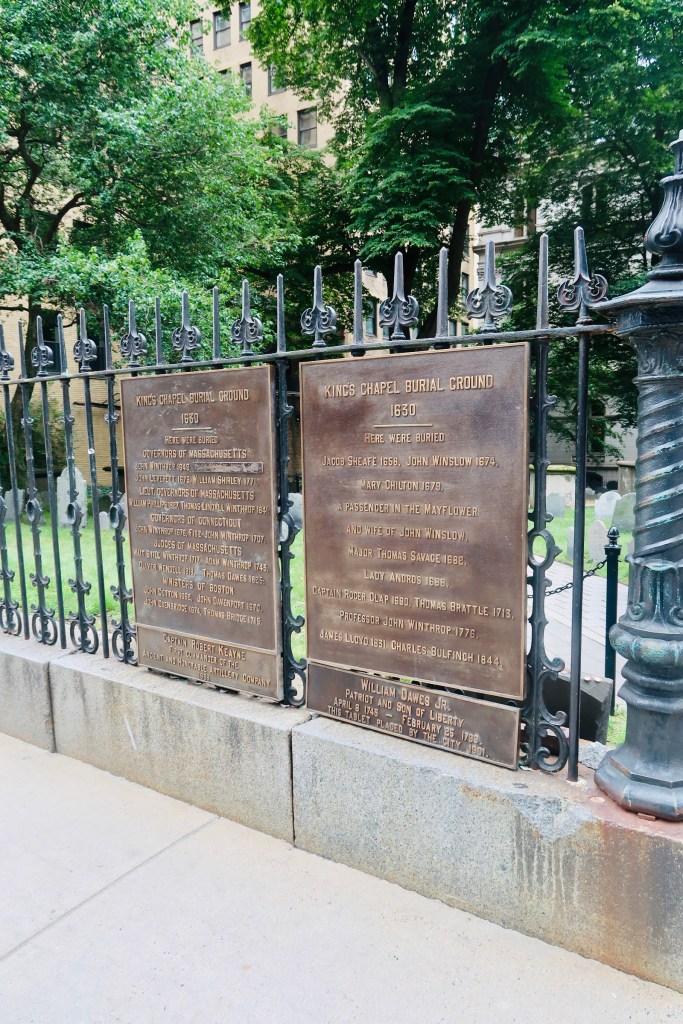
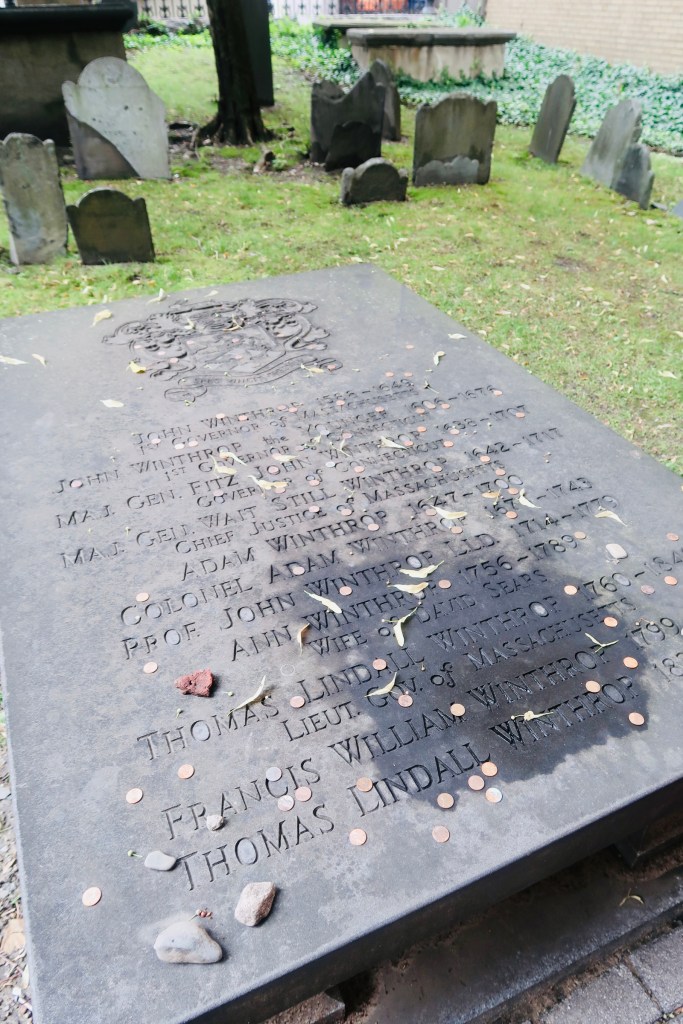
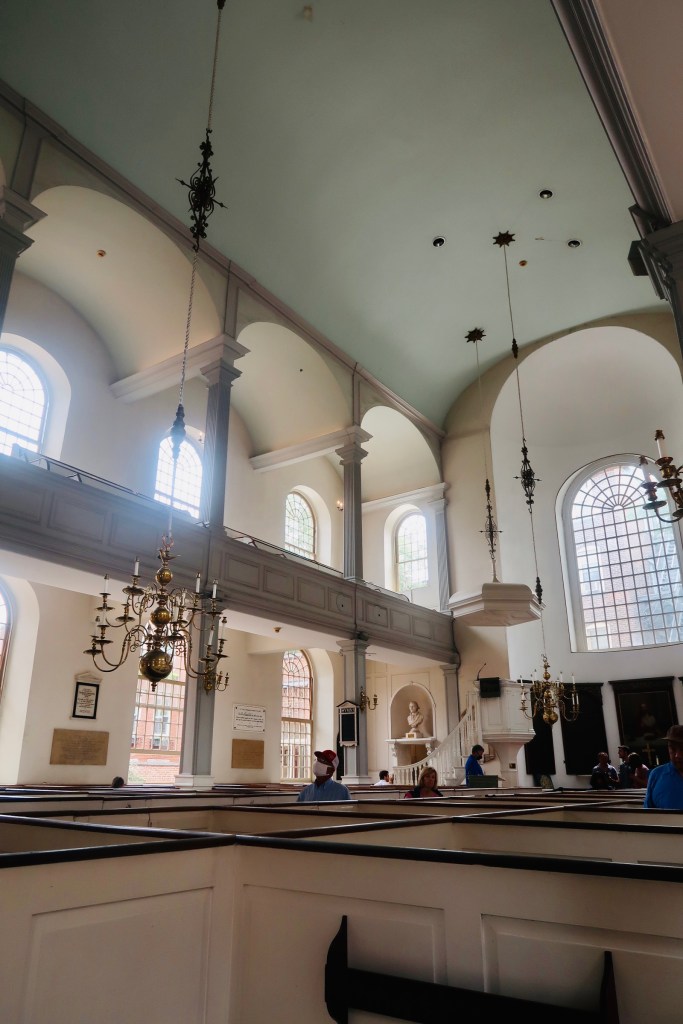
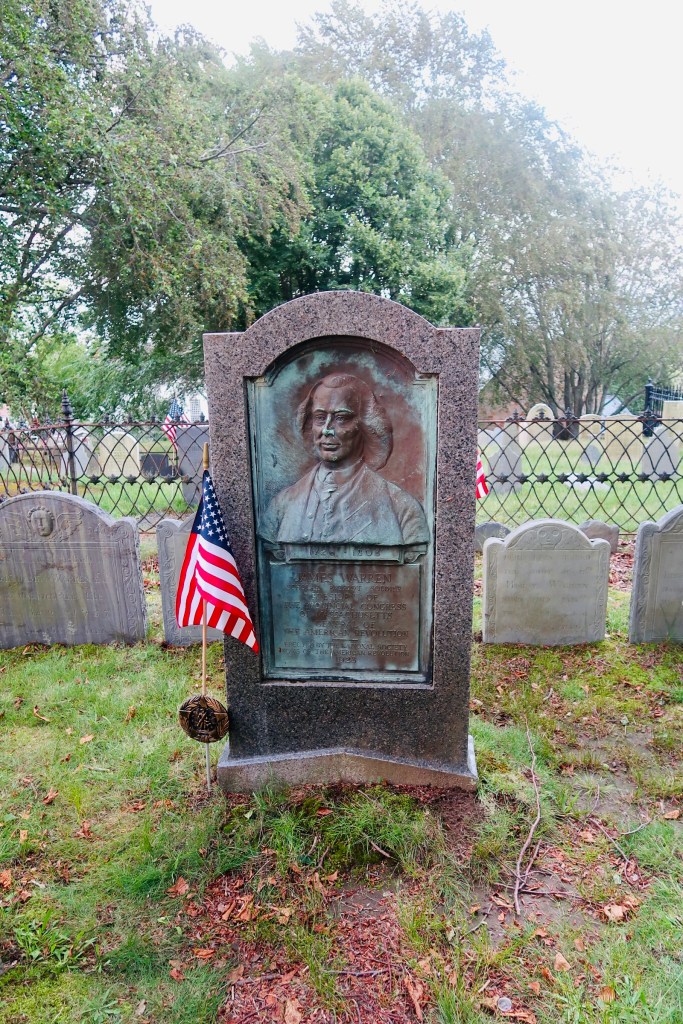
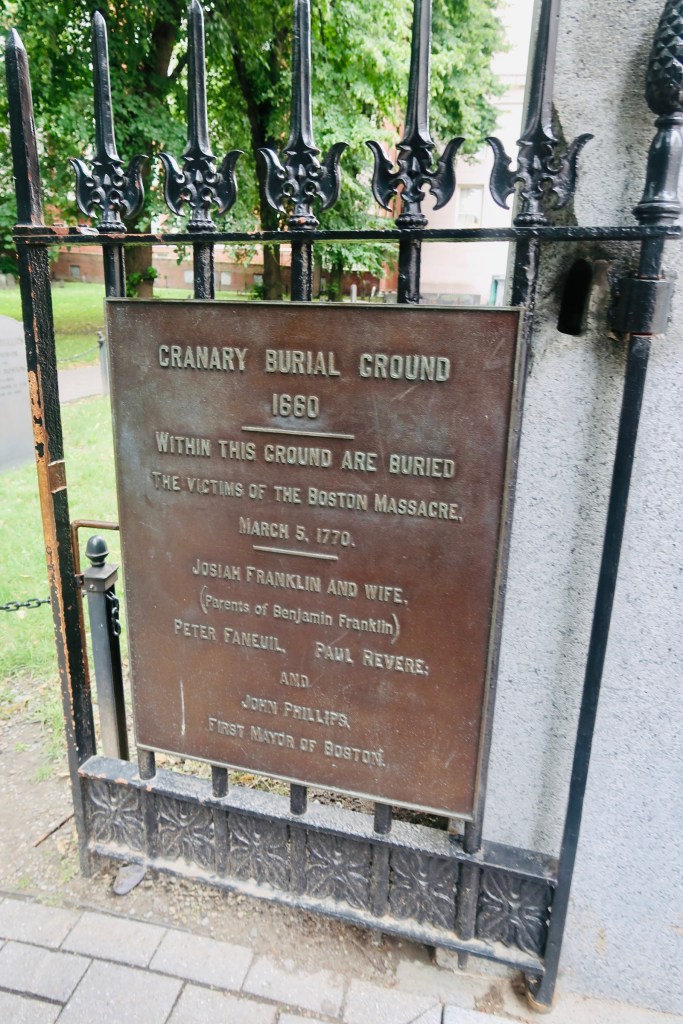
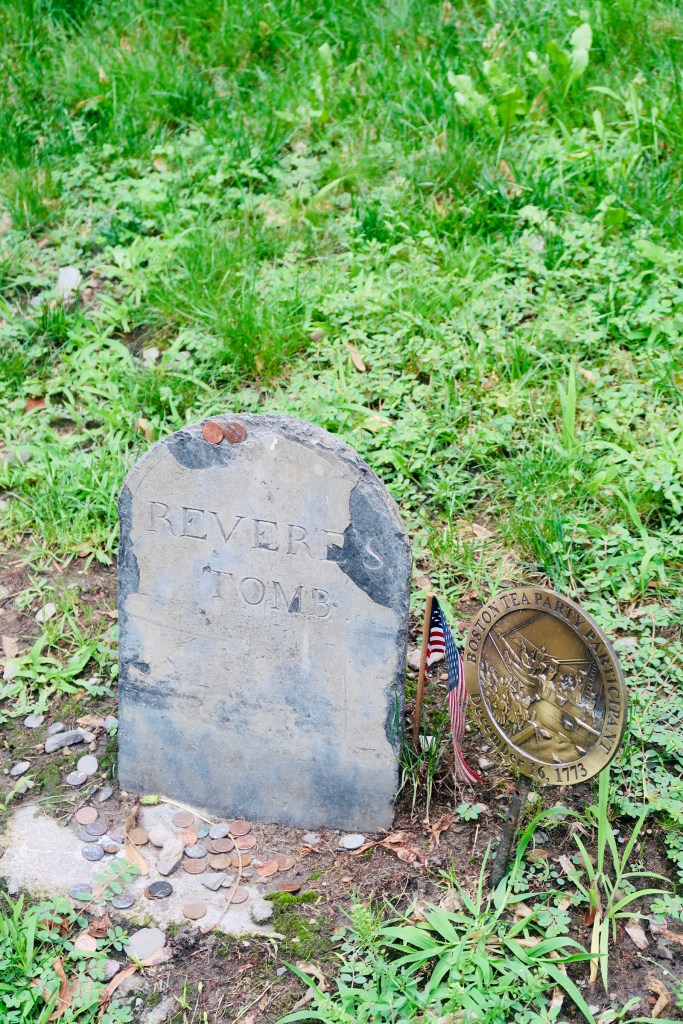
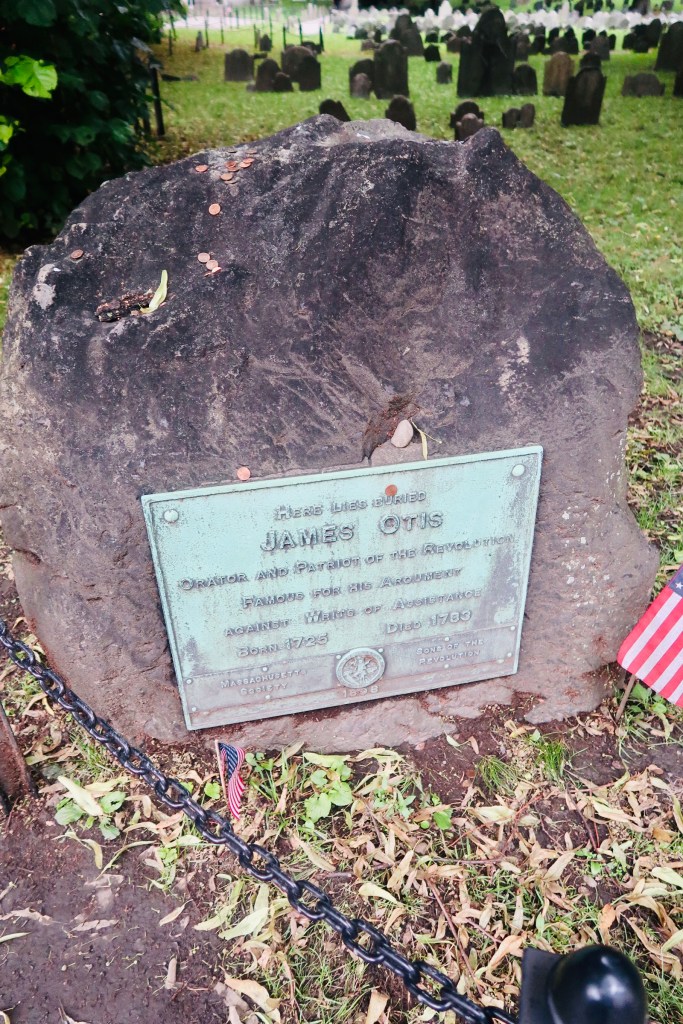
The next stop on The Freedom Trail that we made was to the Park Street Church and Granary Burying Ground. The church dates to the early 1800’s, but the burying ground is the real attraction at this stop. This cemetery is the final resting place for some of the key players of the founding and fighting for the colonies of America. This is the final resting place for around 5,000 of Boston’s own, though there are only markers and knowledge of 2,300. Notably buried here are Benjamin Franklin, Paul Revere, John Hancock, Samuel Adams, and a memorial for those massacred at the Boston Massacre. On these headstones you won’t find religious markers, rather these motifs of skulls with wings (to symbolize flying to heaven). Keep an eye out for grave markers- similar to those in Plymouth, there are metal markers signifying when the person participated in a momentous occasion, such as the Boston Tea Party. You are also able to go to another church and burying ground- the oldest in the city. We didn’t end up going in the church, but we did have a peak at the cemetery. Similar to Granary, this boasts several “big names”, the first woman off the Mayflower, Mary Chilton, William Dawes Jr, messenger sent to warn that the British were coming, as well as many others. 

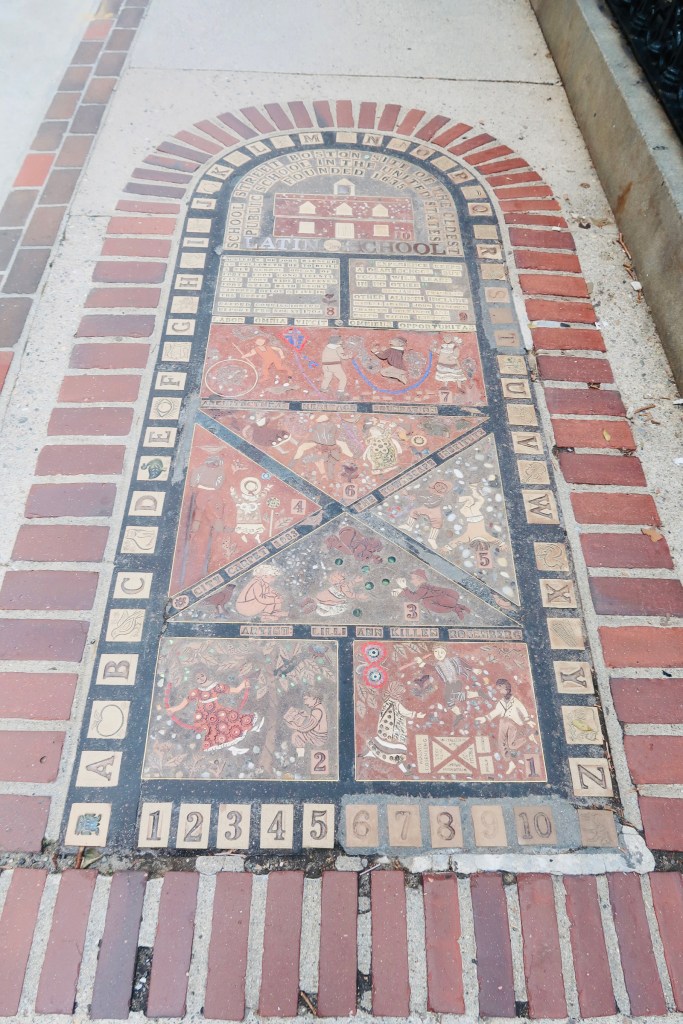
The next few stops on the trail are “bunched” together in that you have the first public school of America (which boasts educating 5 of the signers of the Declaration of Independence), a statue of Benjamin Franklin (who actually dropped out of the school just mentioned), and the Old Corner Bookstore, which is the oldest commercial building in the city (it’s now a Chipotle). 

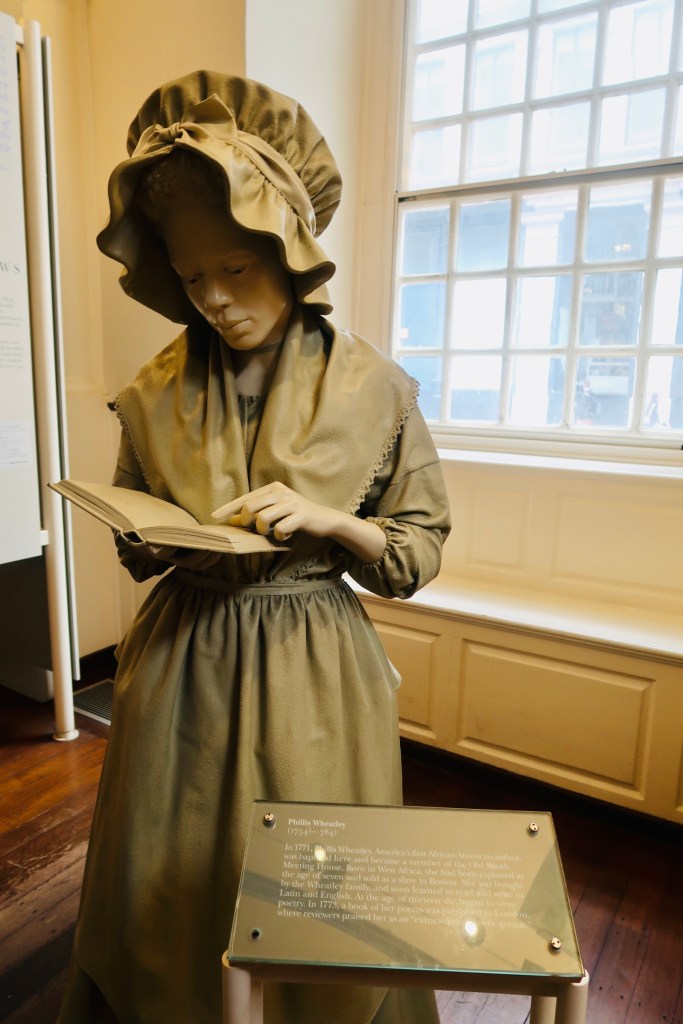
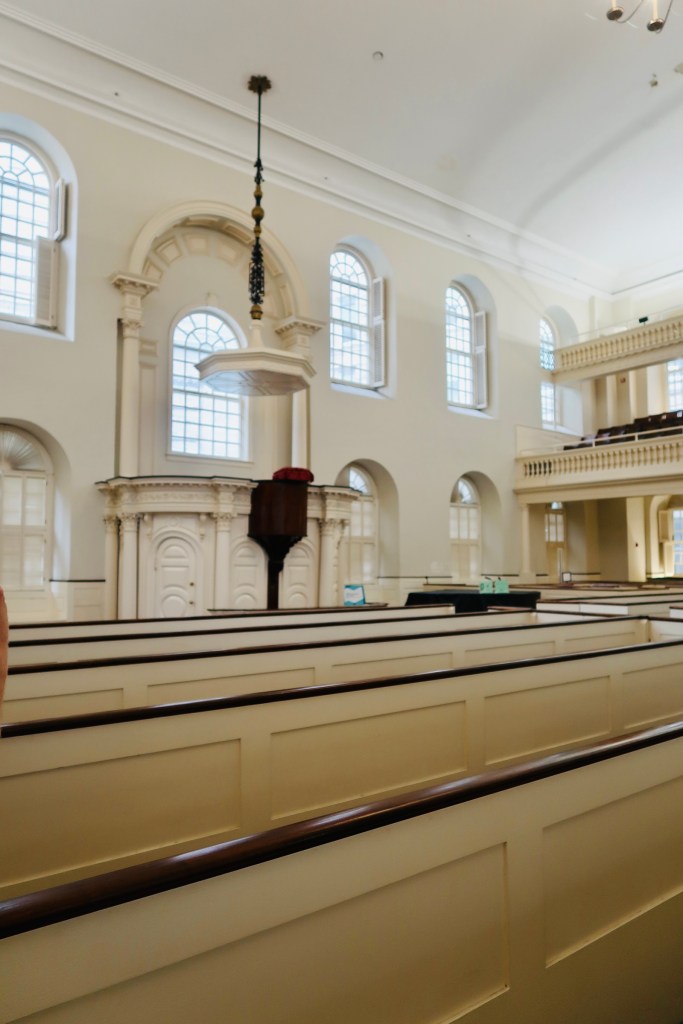
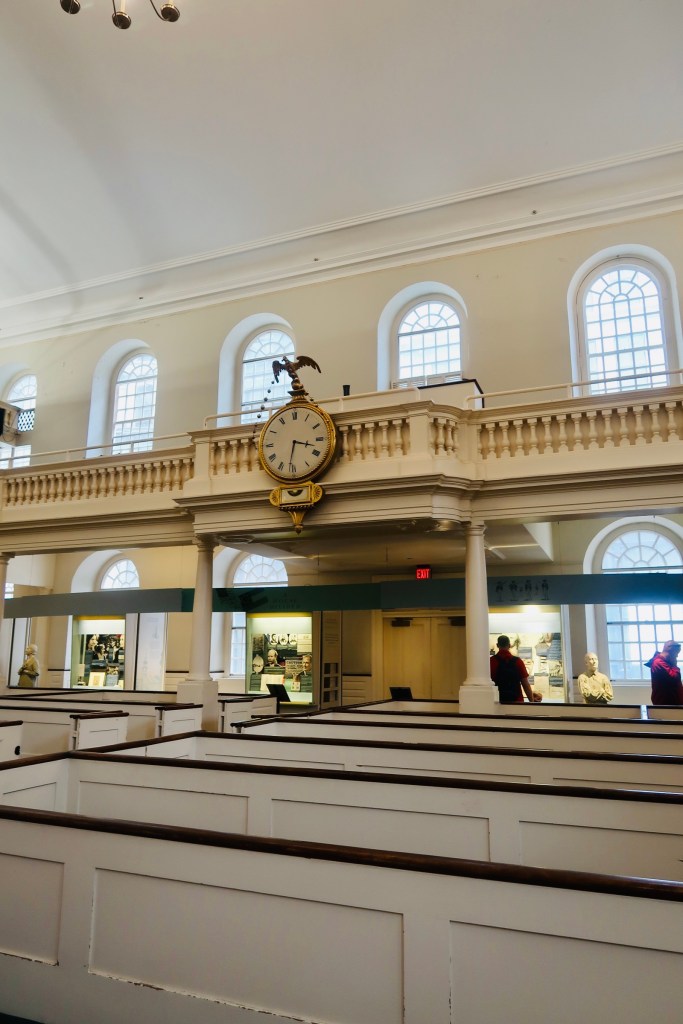
From there we headed over to the Old South Meeting House (this deviates slightly from the trail, but as I said, we split this in half so there was some deviations here and there). The Old South Meeting House is “the room where it happened”. It was the center piece to debate, to sermons, to public meetings. The largest building in colonial Boston, this was originally built as a Puritan meeting house. The congregation boasted members such as Samuel Adams, William Otis, William Dawes, Benjamin Franklin, and Phillis Wheatley, the first women and enslaved women to publish a book. The building also served as THE site, where the Boston Tea Party was decided, with 5,000 men in attendance debating the tax and what to do about it.  It now is recognized as the first in what are now regular history conservation projects. But the road was not easy, the building was actually sold in the 1870’s and it took a group of 20 women to save the building from being demolished (which also makes it the first building to be saved due to historical significance- lots of history in just one building). It has been a museum since 1877 thanks to their efforts. 
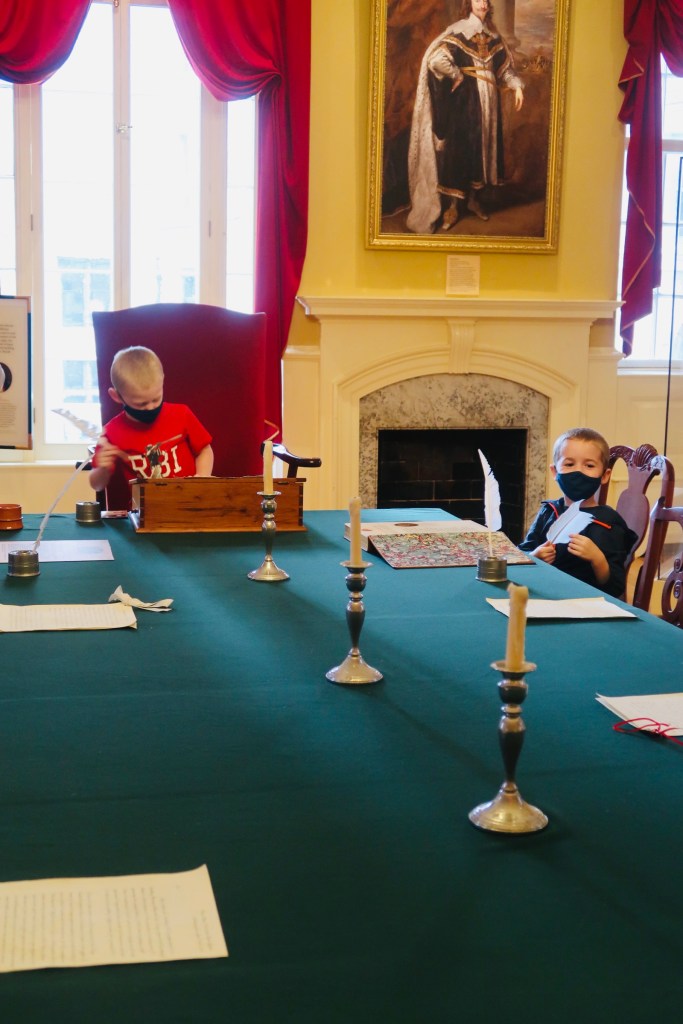
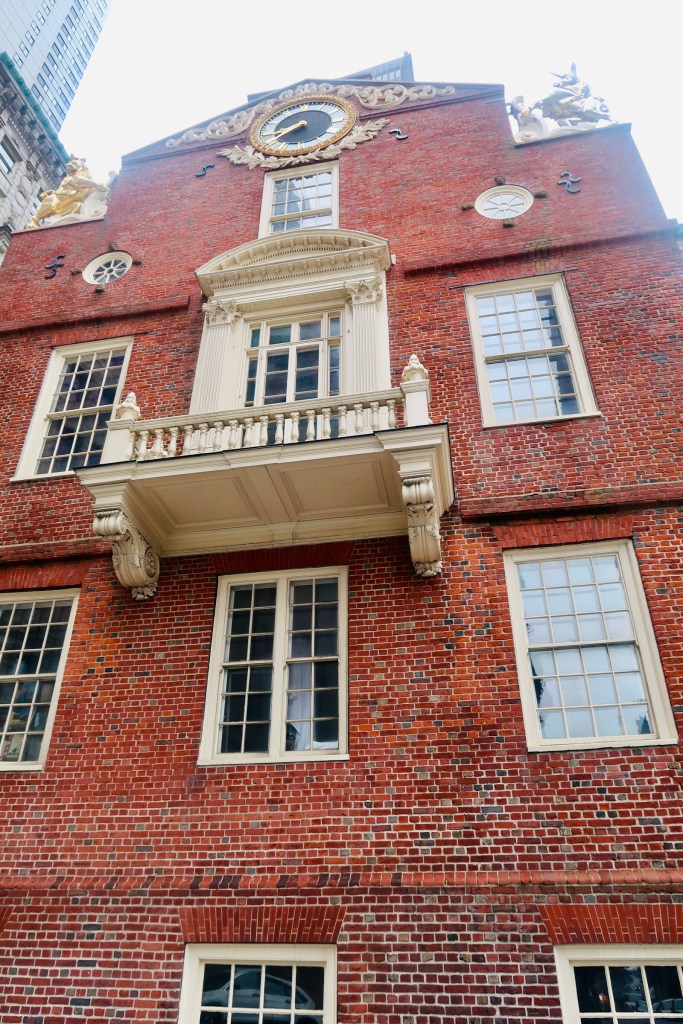
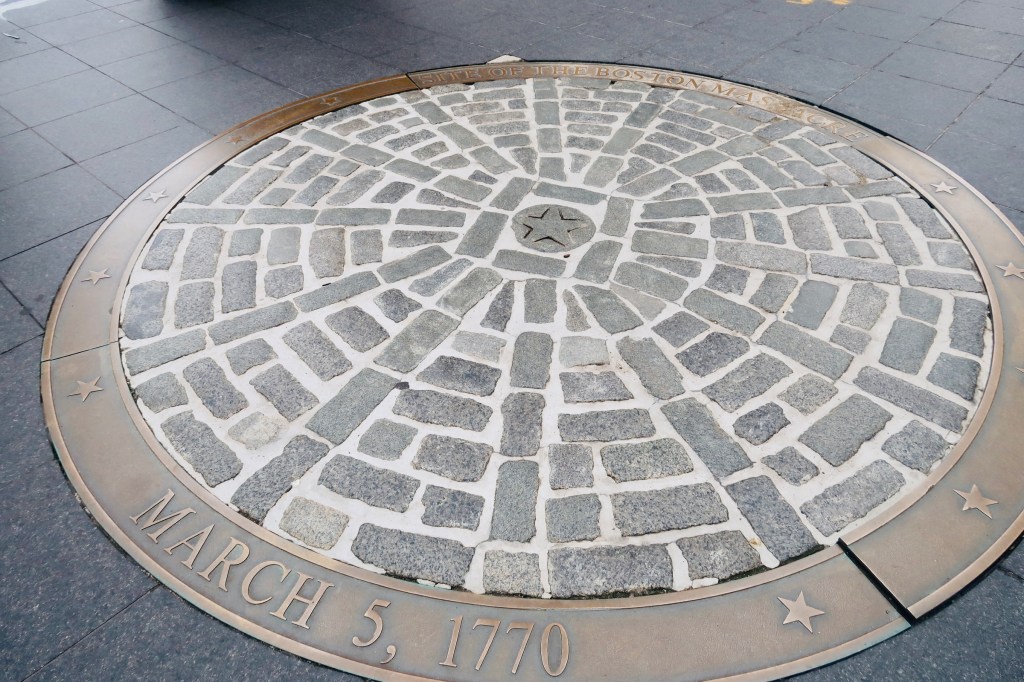
We made a last stop on our first day of the Freedom Trail over to the site of the Boston Massacre and the Old State House. The Old State House is the oldest surviving public building in the city, dating back to 1713. It now serves as a multi functional museum, documenting not only life in Boston, but the revolution, the Boston Massacre, and has a hands on second floor exhibit for kids to see what certain aspects of life were like. The boys especially loved this as they got to play “King” and “Governor” and dictate things. Right in front of the Old State House is a marker for the location of the Boston Massacre. Taking place on March 5, 1770 the Boston Massacre was a fight between the Redcoats and the people of Boston that ended with the death of 5 people. The tension between the two groups of people had finally boiled over and this tragedy became a turning point leading to the fight for independence. 

The next stops on the Freedom Trail are to Faneuil Hall/Quincy Market. I talked about Quincy Market in my previous Boston Post (HERE) and we didn’t actually get to properly go into Faneuil Hall during our time in Boston. Faneuil Hall served as a meeting place for public speech and commerce. You were able to protest, loudly, you could conduct various forms of business, you could swear an oath of allegiance. Basically it was a center of politics, conveniently located right next to the markets and commerce place. 

And that was the end of our first half of the Freedom Trail. I am noting this BECAUSE I feel like, if you want to split it into two days, that is a good place to split it. Most of the above attractions are within the same are of Boston, with convenient and easy walking distances. Then, the below would be the other half of The Freedom Trail. Again, you can do it in one day if you like (and public transport is actually decent if you need it), but this would also be a good stopping point for the day. 

**I also want to note, that there is an African American portion of The Freedom Trail. This trail takes you through the sections that the freed African Americans would have lived, their meeting house, the various monuments (including Phillis Wheatley) and other spots. You can find the trail right off of the Robert Gould Shaw Memorial at the end of the Boston Common. 

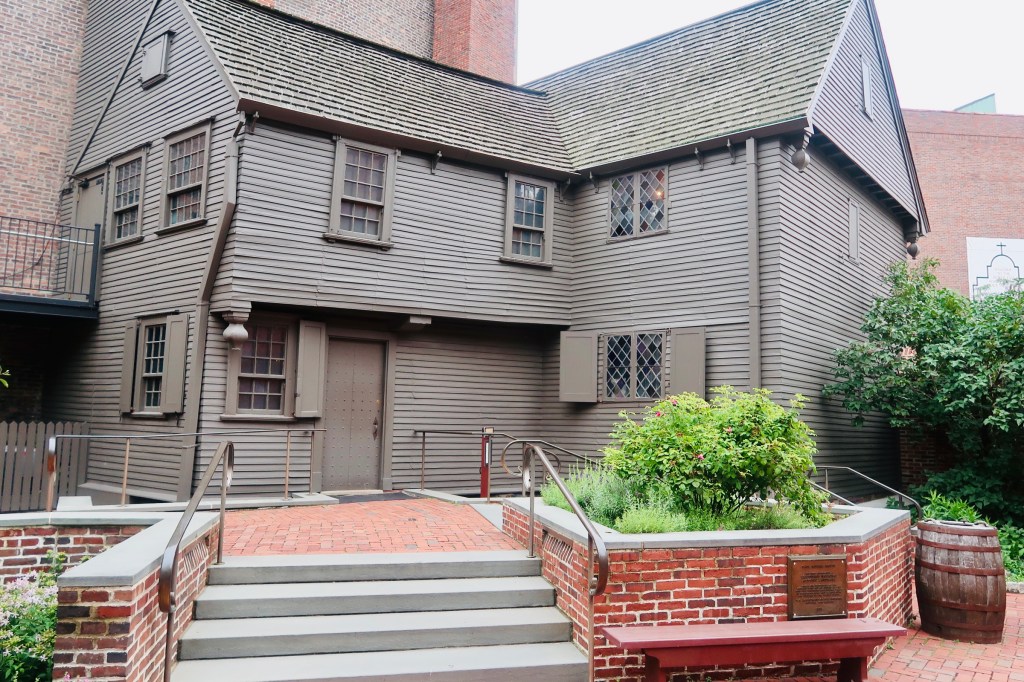
The second half of the Freedom Trail gets a little bit more into the battles of the city. Starting at Paul Revere’s home, you are able to get a good glimpse into how folks of his stature, in his time, would have lived. Built sometime near 1680, his home is the oldest remaining structure in downtown Boston. It is also the only “home” listed as part of the Freedom Trail. You are able to walk through the home, see the kitchen, the sleeping areas, AND see quite a few of the artifacts from his life. You can also see the famous Revere Bell (as we always seem to forget the Paul Revere actually was a craftsman by trade). THis is a quick but easy stop to make and a great way to start off a second day of the trail. 

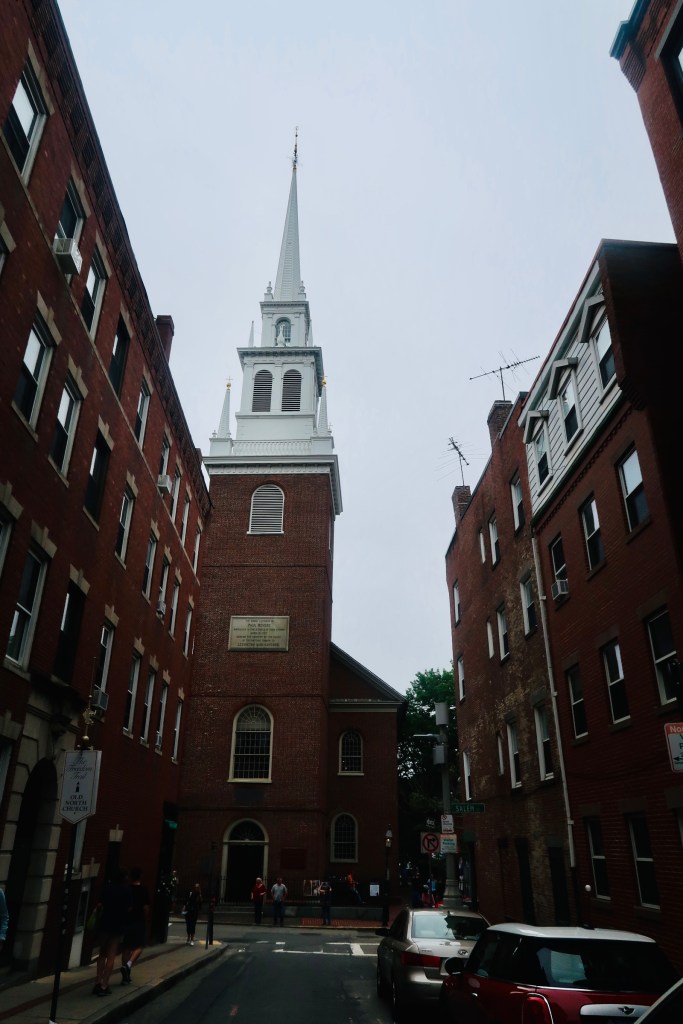
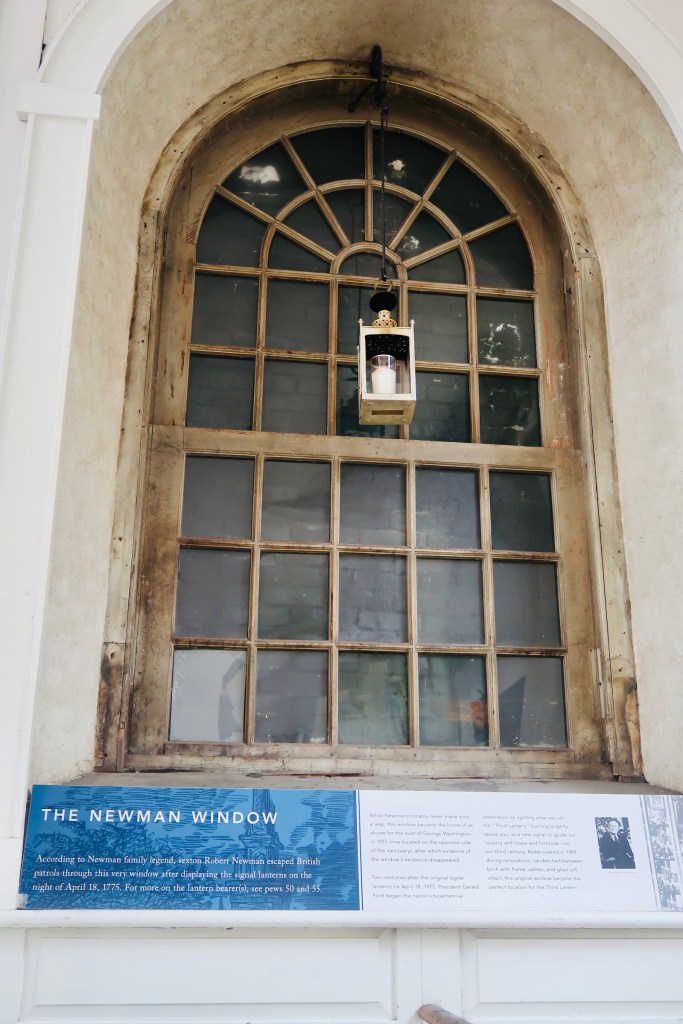
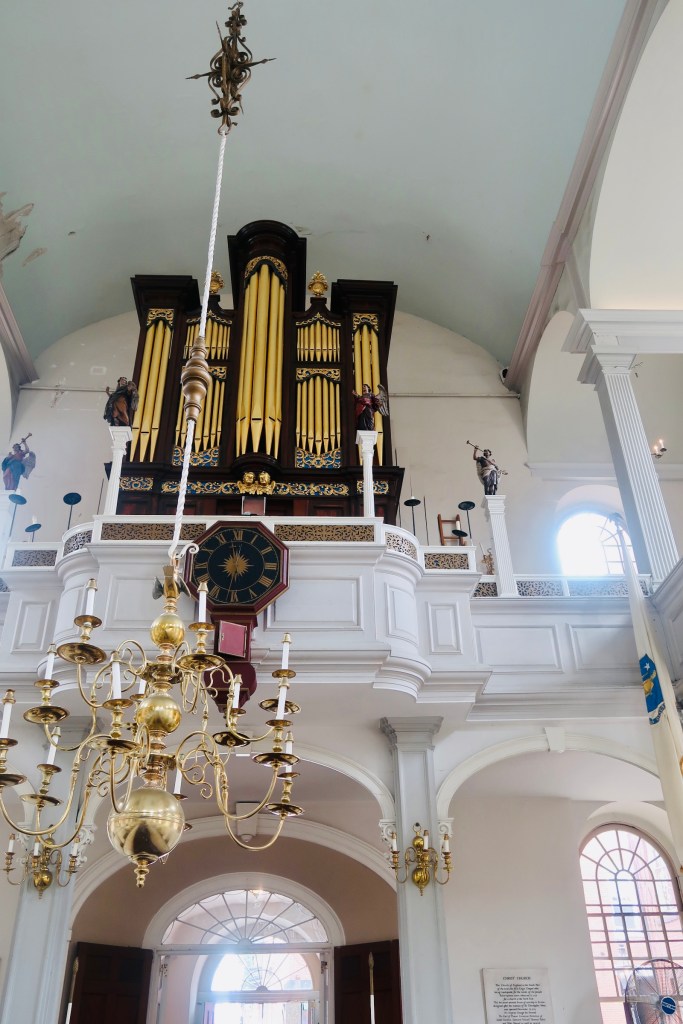
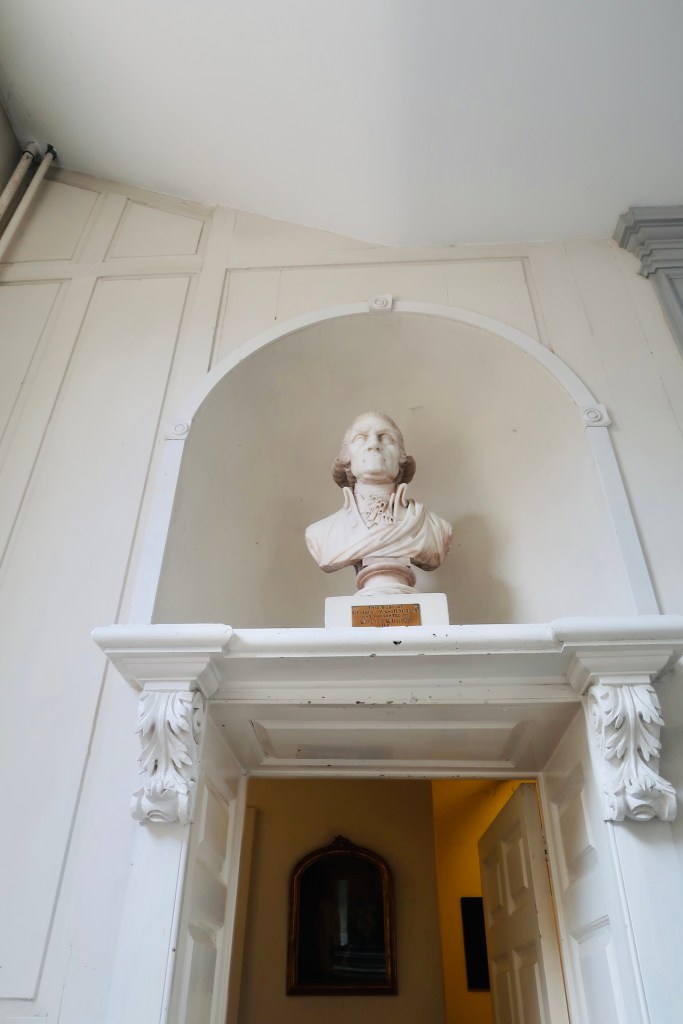
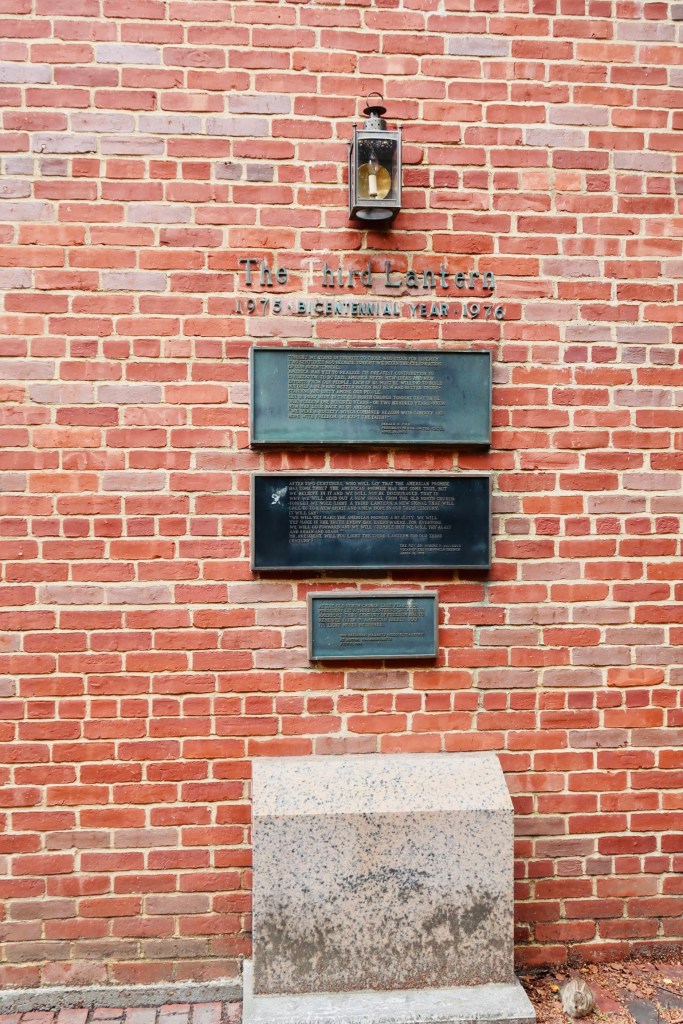
From the house, you then head over to your third and final church The North Church. This church plays an important role (maybe even more important than the other two) as it was THE church that the light was put up in to signal the midnight ride. Dating back to 1723, inside the church you are actually able to see one of the lanterns that was placed in the window for the ride. You are also able to see the bust of George Washington that Lafayette said was the best representation of him. Right around the corner from the church is Copp’s Hill Burying Ground. This was, by and large, the burying site of many of the craftsmen and merchants that lived on the North side of Boston. A couple notable people buried are two of the ministers involved in the Salem Witch Trials, the founder of the Black Freemasonry, as well as the man who hung the lanterns on the night of Pau Revere’s ride, and a builder of the USS Constitution. This particular burying ground was also a marker for the British to aim at during the Battle of Bunker Hill (which we ARE getting to, I promise). 

Speaking of, the next stops that you can make are entirely up to you. You can either go up to Bunker Hill at this point (which is what we did), OR you can go down to the USS Constitution. We chose to go up first, then back down, and at the end we took the Ferry back to the “main” part of Boston. It is entirely up to you how you want to walk this part. 

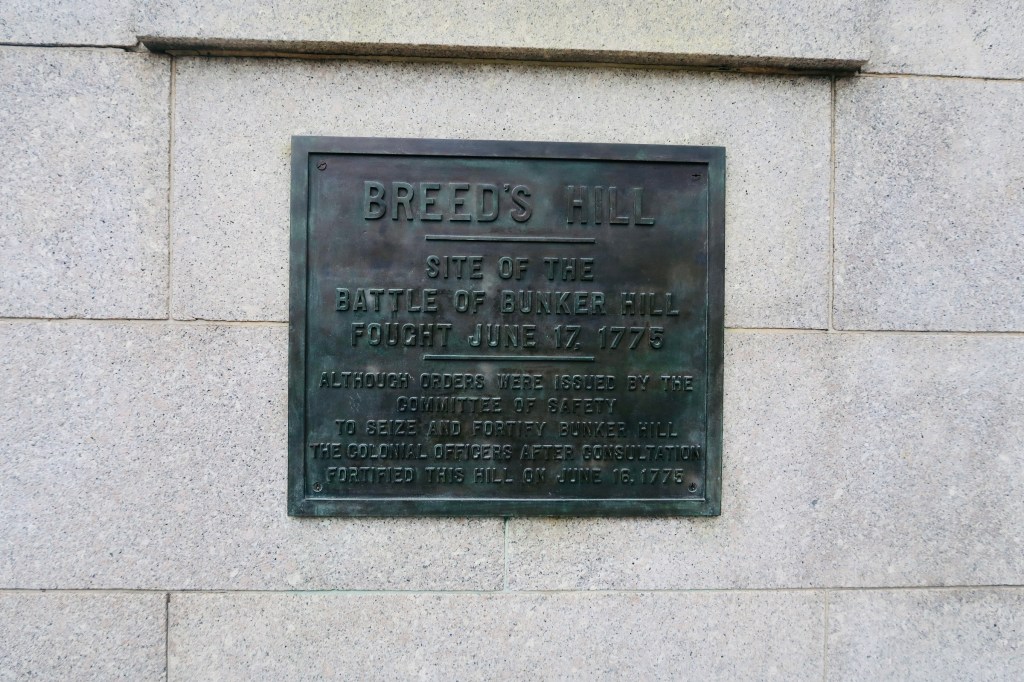
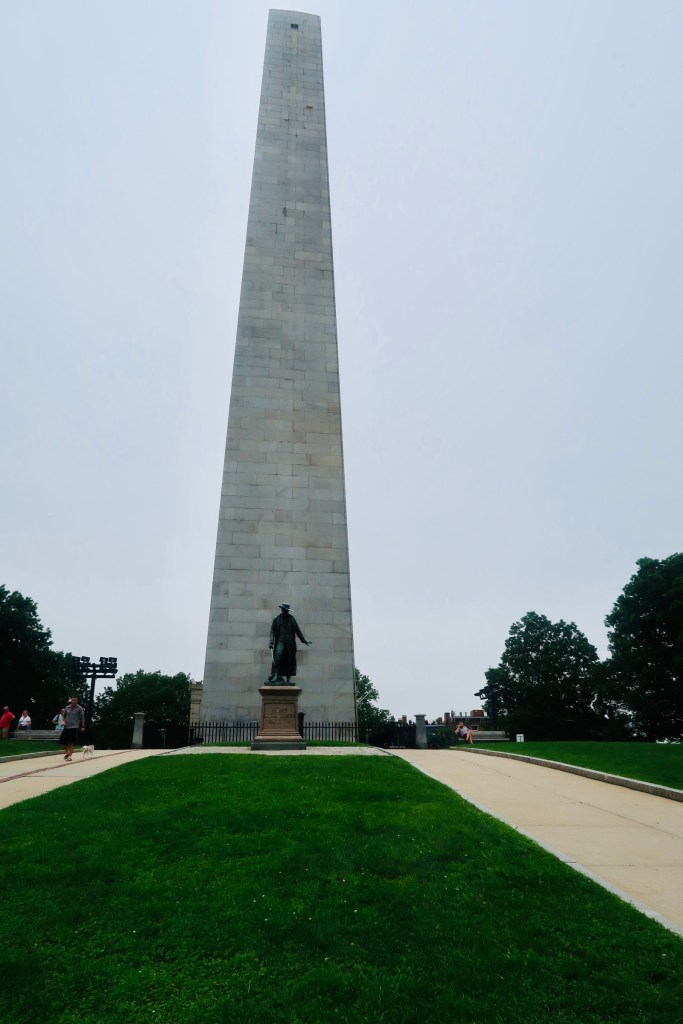
The Battle of Bunker Hill was the first battle of the Revolutions, and while the British technically won (after three assaults) it did prove that the colonists were not going to go down without a fight. The order of “Don’t fire until you see the whites of their eyes” is believed to have originated in this very battle. The monument was started with the laying of the first stone by Lafayette (excuse me, The Marquis De Lafayette) in 1825. It was completed in 1842. 

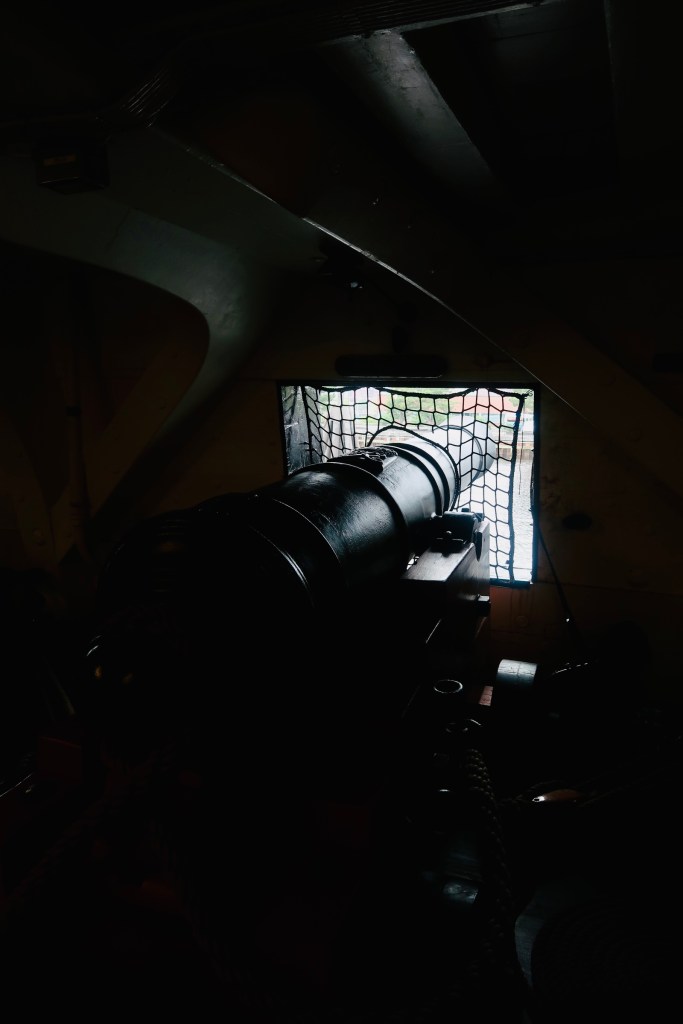
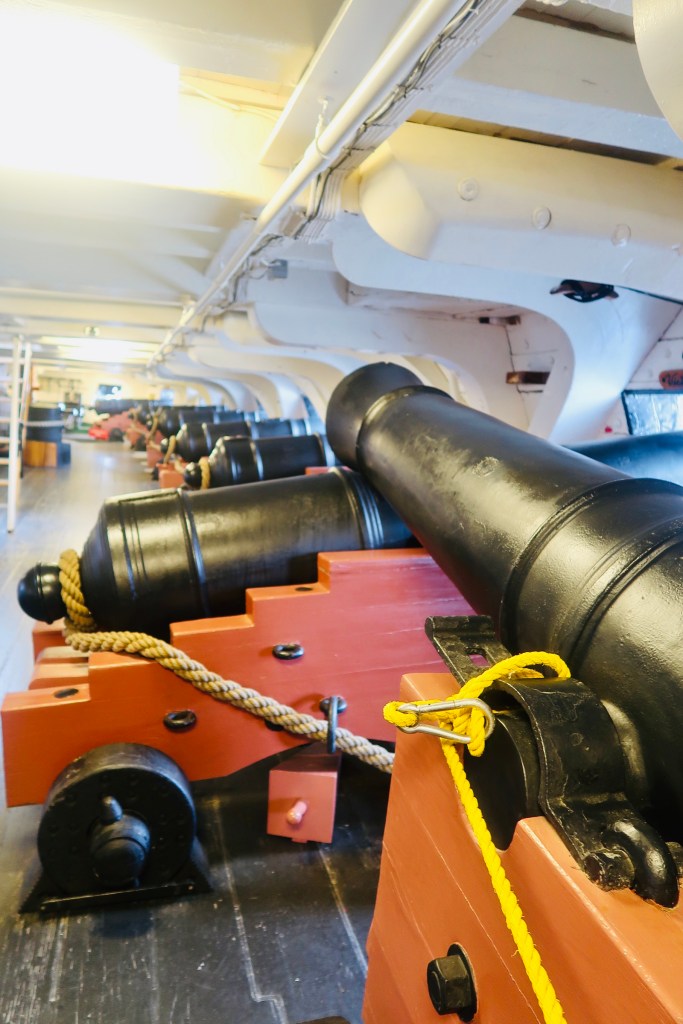
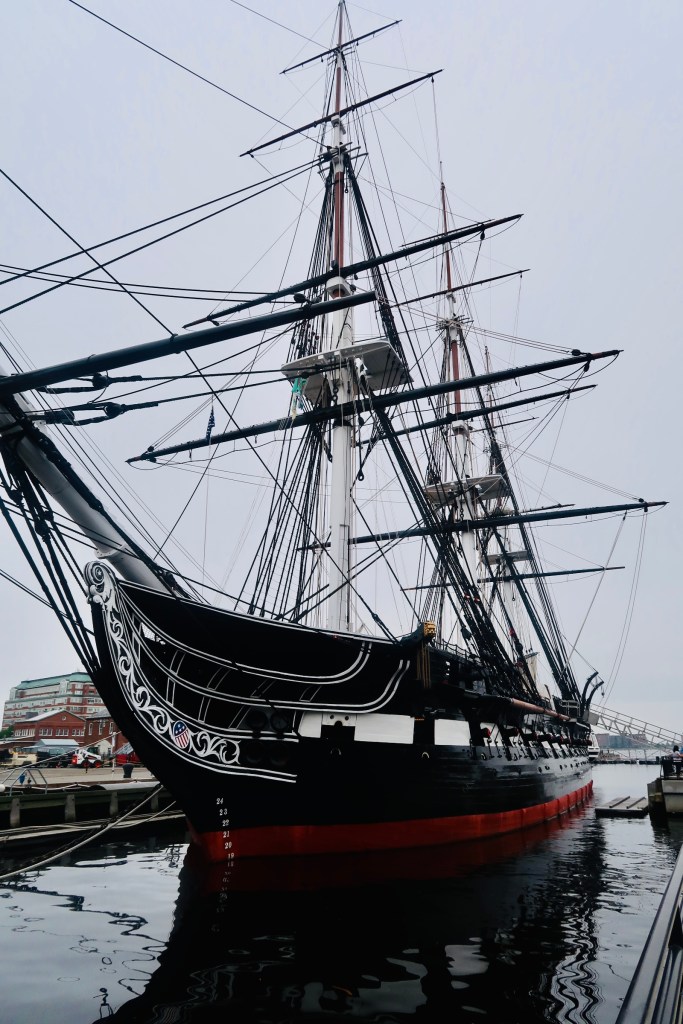
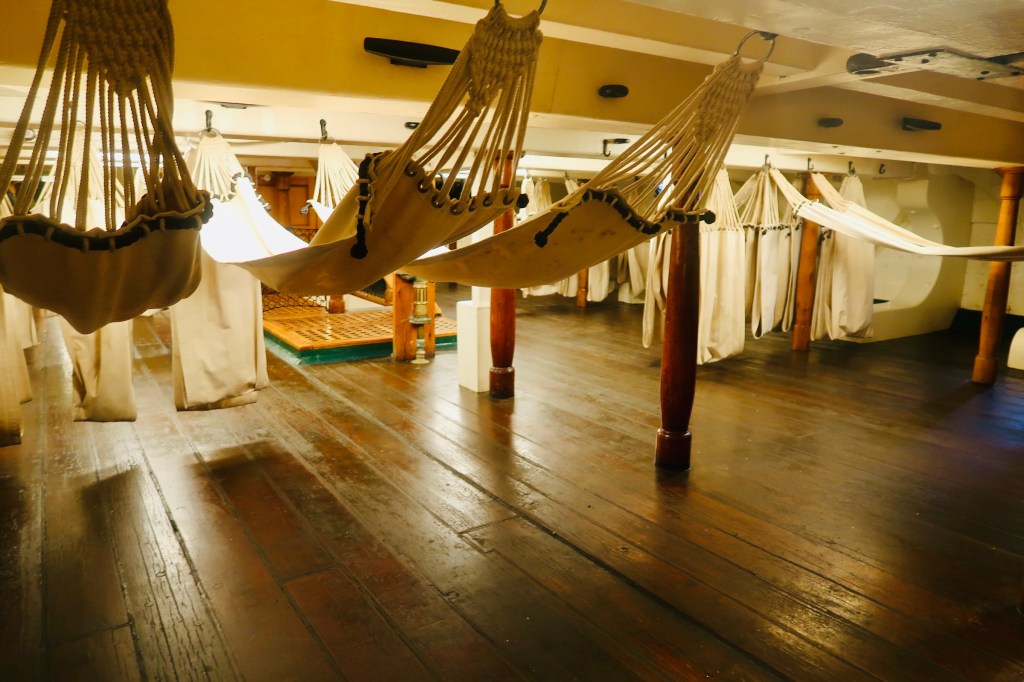
The final stop (for us) on the trail was at the USS Constitution (and then the USS Cassin Young DD 793). The USS Constitution is the oldest, still afloat, commissioned warship. It was launched in 1797 as a three-masted heavy frigate, one of six authorized by the Naval Act of 1794. The ship is known for the War of 1812 and the defeat of 5 British Warships and where the nickname of “Old Ironsides” was given. The Constitution was retired in 1881and was designated a museum ship in 1907. It is still a fully commissioned Navy ship and is manned by active duty Navy personnel on special duty assignment. 

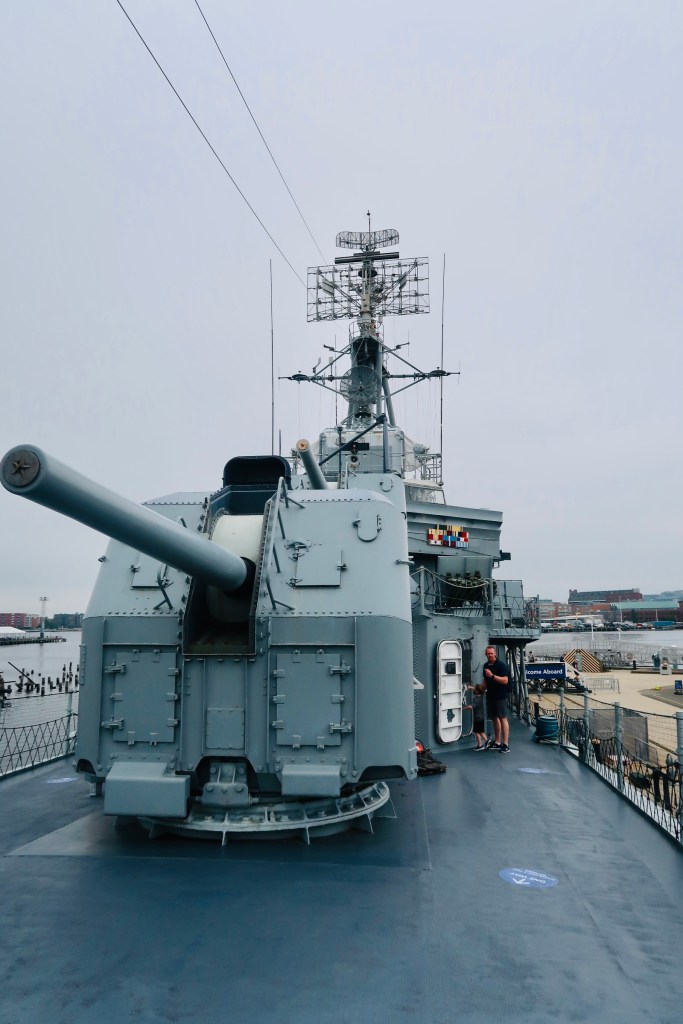
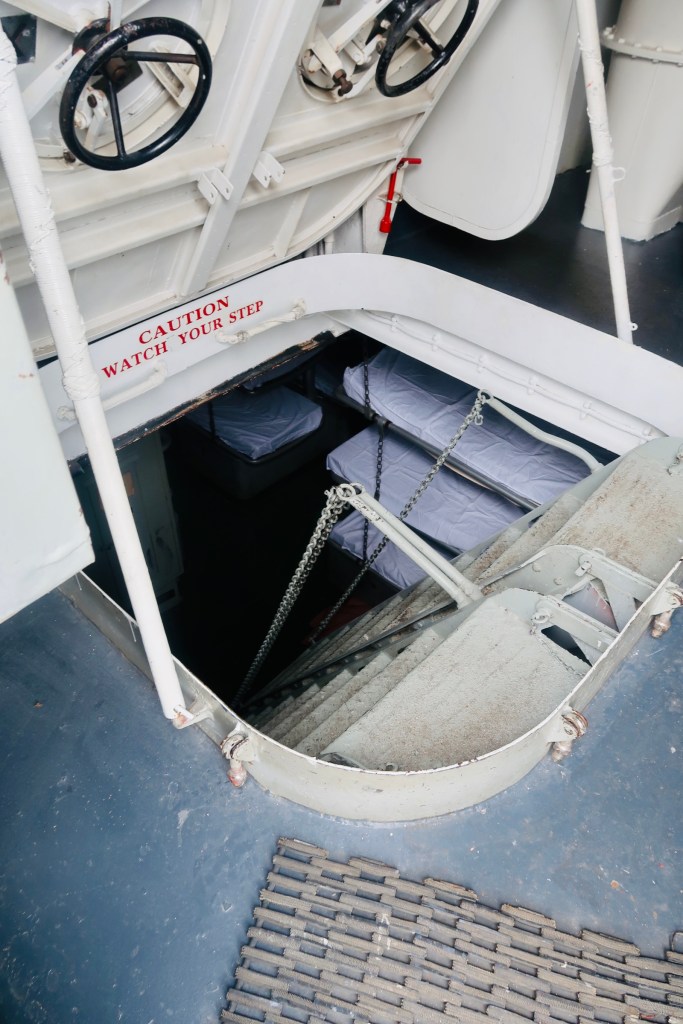
The USS Cassin Young is a destroyer from World War II. It was launched in 1943 and is only one of four of the Fletcher Class destroyers still afloat. The ship served in both World War II (where it was damaged in two kamikaze attacks) and the Korean War, being retired in 1960 and serving as a memorial ship ever since. The ship was intended to serve as an escort to the larger ships and defend them from attack. Unlike the USS Constitution, this ship has been permanently loaned to the National Park Service and it maintained and operated by them rather than The Navy. 

And that wrapped up our time in Boston! Boston was a definite highlight for our entire family. The boys loved the history, the boats, the endless exploring and my husband and I loved the pace of the city (and obviously the history). I don’t know that we’d ever be “city people” (most are just too crowded and busy for us), but Boston was such a nice surprise! 

A Cuppa Cosy Summer Holiday 2021 – Boston, MA Pt. 1

The second stop on our Summer Holiday was undoubtedly our favorite and that was Boston. I think this is going to have to be divided up into two posts just due to the amount that I will actually blabber during this post. Again, I know that a good amount of people know a good amount of American History, so I’m just going to touch on basics or little tidbits as I talk about what we did/saw, but I really just love learning about the history and interesting facts about places we visit. Boston is the center of A LOT of the United States of America’s history and it has done a really good job and transitioning through history and coming into a more modern era, without losing any of the historic sites or feel to the city. So, a post today and a post on Friday (woop- a bonus post!) to cover everything I want to share and not overwhelm or bore you.

Before we start, I also want to note that for a “big city” Boston felt quite relaxed. In a lot of the “big cities” you get that big city rush feeling, where everyone is just go, go, go as fast as you can. Boston was refreshingly relaxed (or at least from what we saw and experienced). It was something that we actually really enjoyed about our time there. I’m not sure if this was a covid specific instance or if it’s always this way. Regardless Boston has definitely become a highlight for us. 

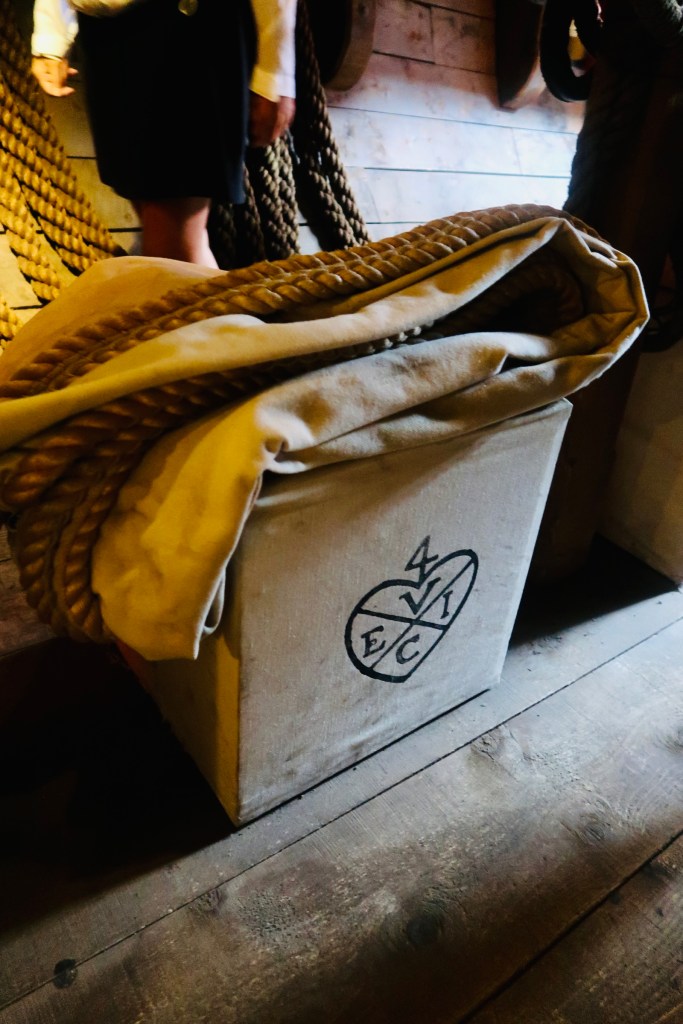
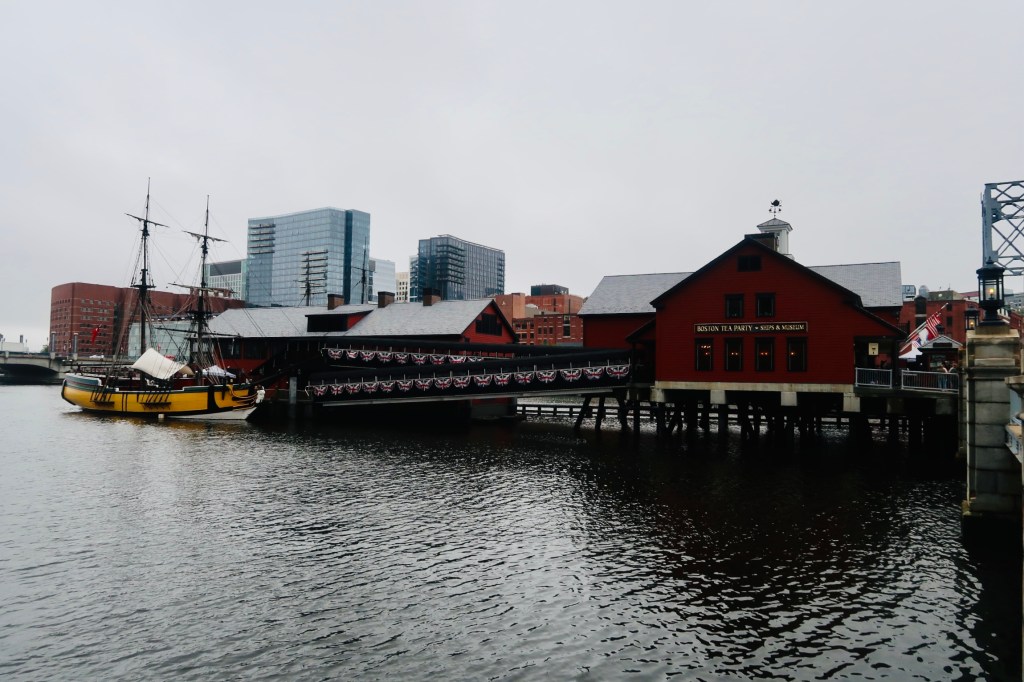
So, our time in Boston started where much of the history started (or at least the history of the start of the revolution), at the Boston Tea Party Ships & Museum. I think a good amount of us know the history of the Boston Tea Party. In December 1773, disguised men from the “Sons of Liberty”, after immense planning, quietly boarded the Beaver Dartmouth, and Eleanor with the intention of destroying the tea. They destroyed 92,000 pounds of tea (in 340 chests), but only the tea. They did not steal tea, they did not steel or even so much as touch anything else aboard the ship. The statement they wanted to make was abundantly clear, which was “we will not take your leadership any longer”. The British Tea Party was but one step in a much larger fight, which was against the crown and the ability for someone so far away to hold governance in the colonies. Of course after the destruction the “Sons of Liberty” who participated had to flee Boston, and those who stayed would go out in boats to the harbor to continue to ensure that any tea or tea chests in the harbor were not able to be rescued or used. The Boston Tea Party was an incredible success, but it created hardship for the colonists as well, sparking more and more “rebellious talk” and ultimately (after several more edicts and back and forth with the King of England) sparked the American Revolution in April of 1775.

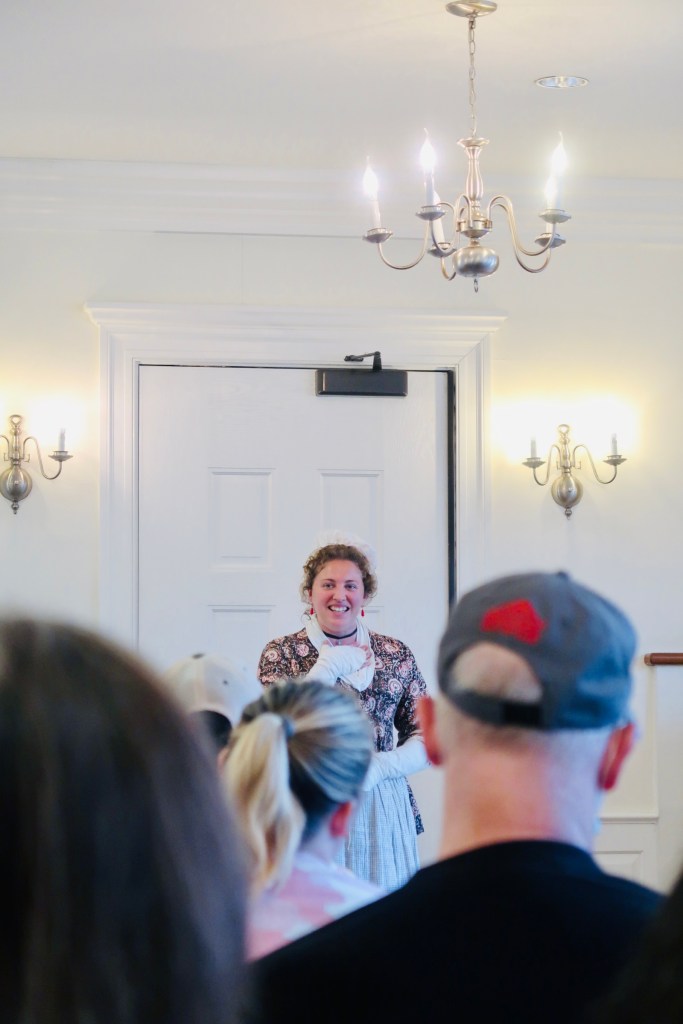
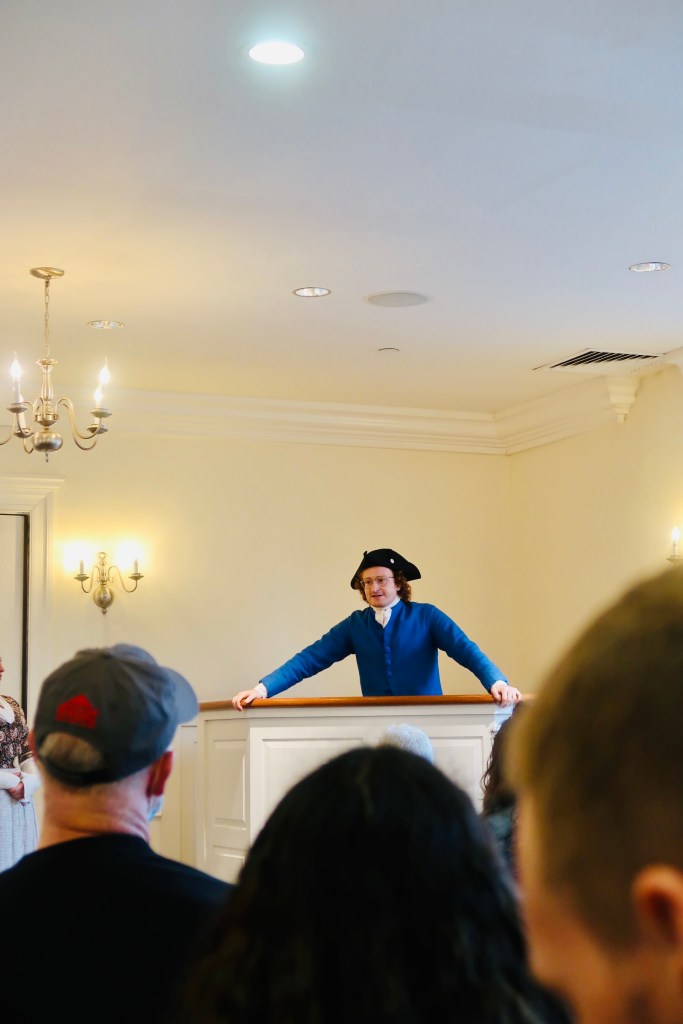
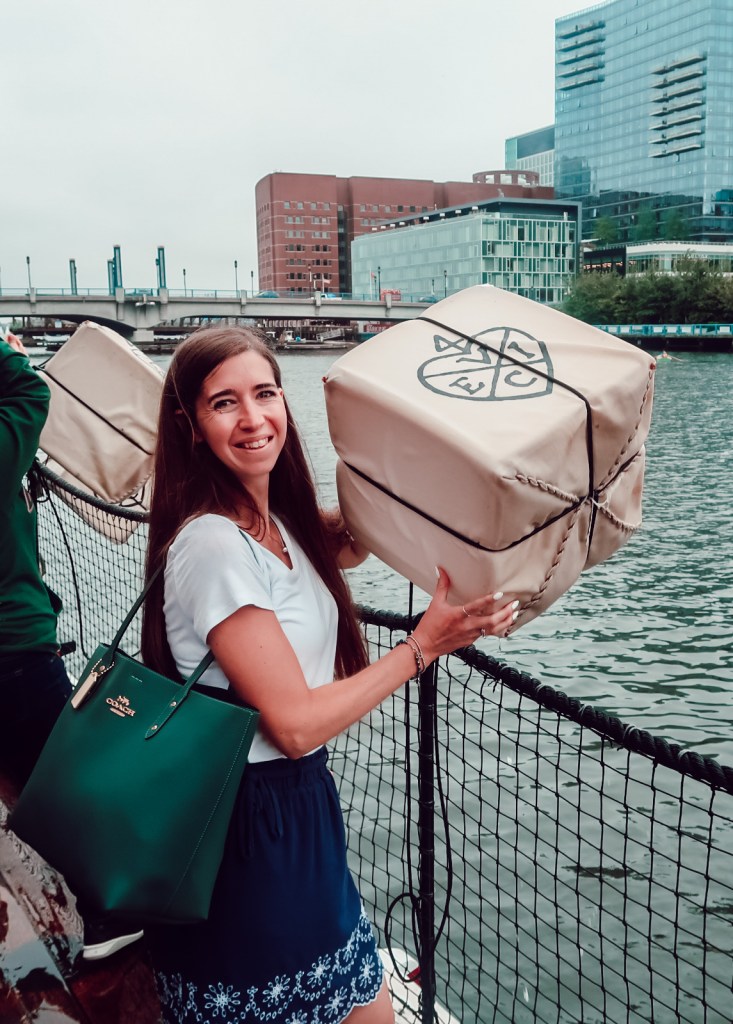
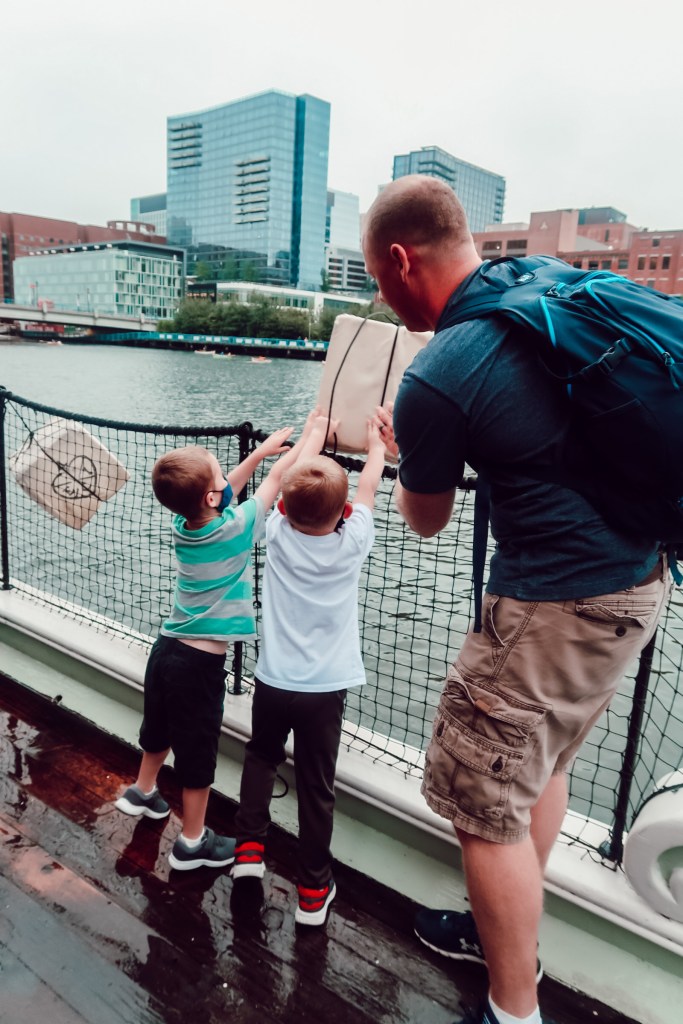
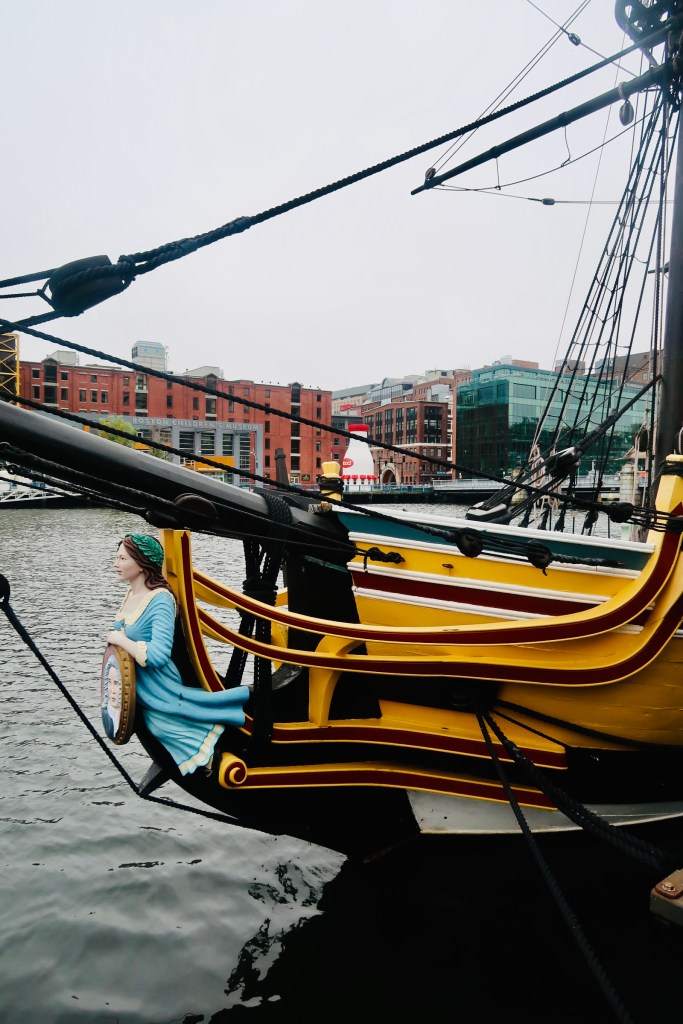
At The Boston Tea Party Ships & Museum, they do an excellent job of utilizing first person interpreters to put you right in the action of that fateful night in December. You are given character cards that tell you about a single person who lived in Boston at the time- these are then yours to keep as you continue along your tour. You start in the “state hall” with two actors taking you right up to those destructive lines uttered. Then you follow over to the boat where you can see what the Sons of Liberty would have seen, and throw your own tea overboard into the harbor. From there, you walk through the museum that talks about (with actual talking projectors and portraits) what followed the tea party. There is an original chest to see, along with a small vial of the tea that was tossed overboard (who rescued it remains a mystery). Finally, you can finish up at Abigail’s Tea Room, where you can sample the 5 tea blends that would have been on board the ship in the harbor (and subsequently enjoyed). It was the perfect start to our time in Boston and really put us in the revolutionary spirit. 

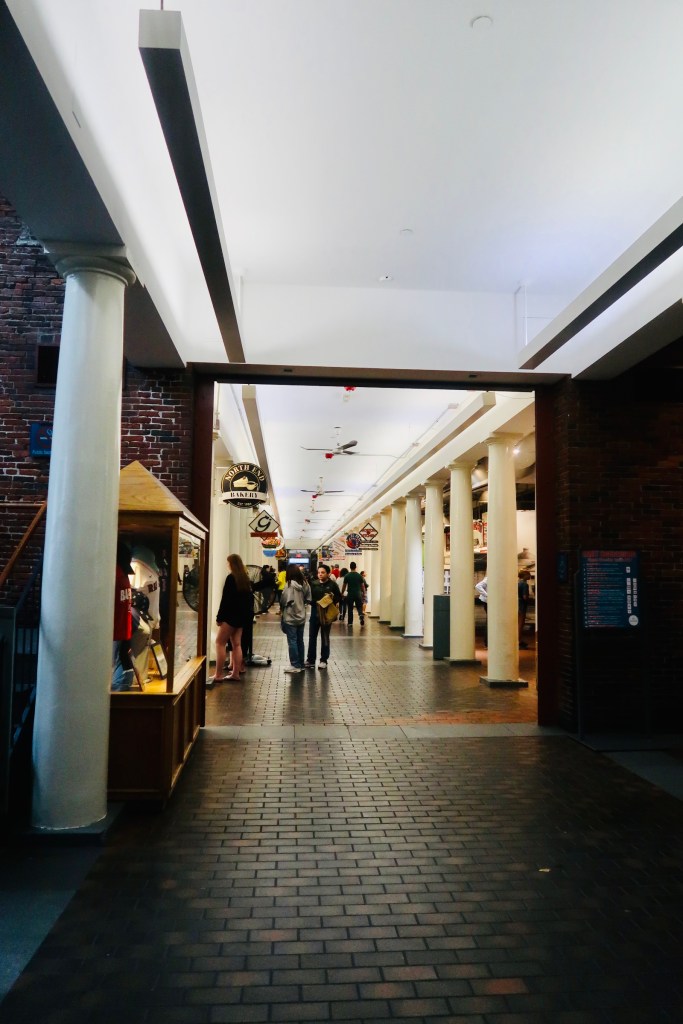
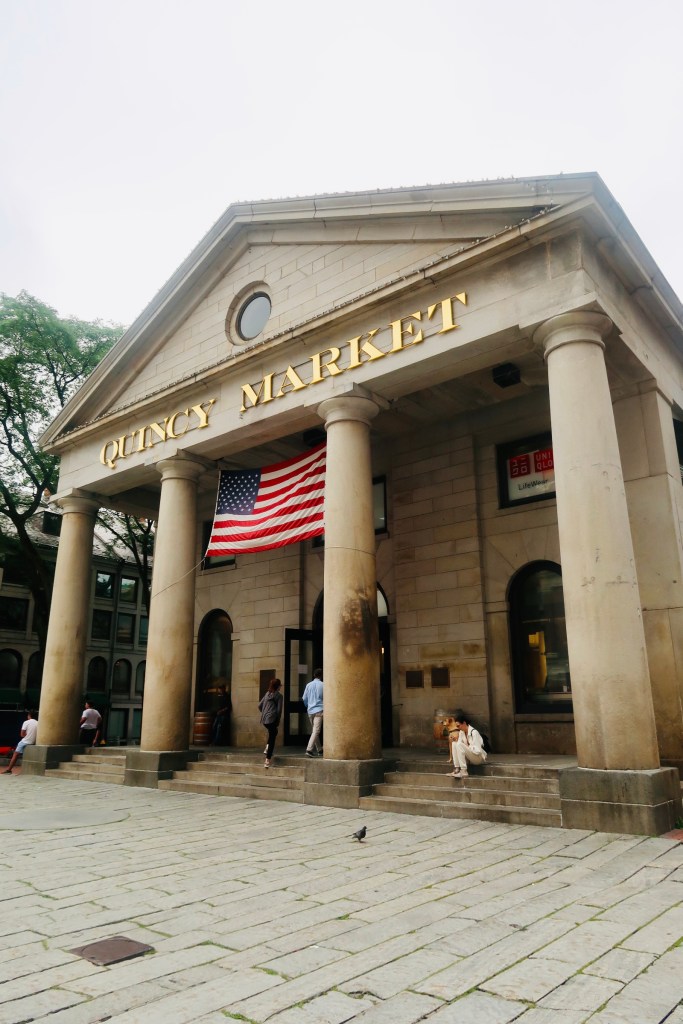
From there we mostly meandered around the area, letting the boys play at a playground (after being cooped up in a car and then on best behavior at the museum they were due to expend some energy) and trying to decide what we wanted to do. It was a bit later in the day, so we couldn’t do much more in terms of touristy bits. We ended up wandering over to Quincy Market (in a bid to see a museum which ended up being closed on that day anyways) and grabbing dinner at the food stalls located inside. I really loved Quincy Market. It reminded me of being at a farmers market of sorts and I had some of the best pizza since returning from Europe.

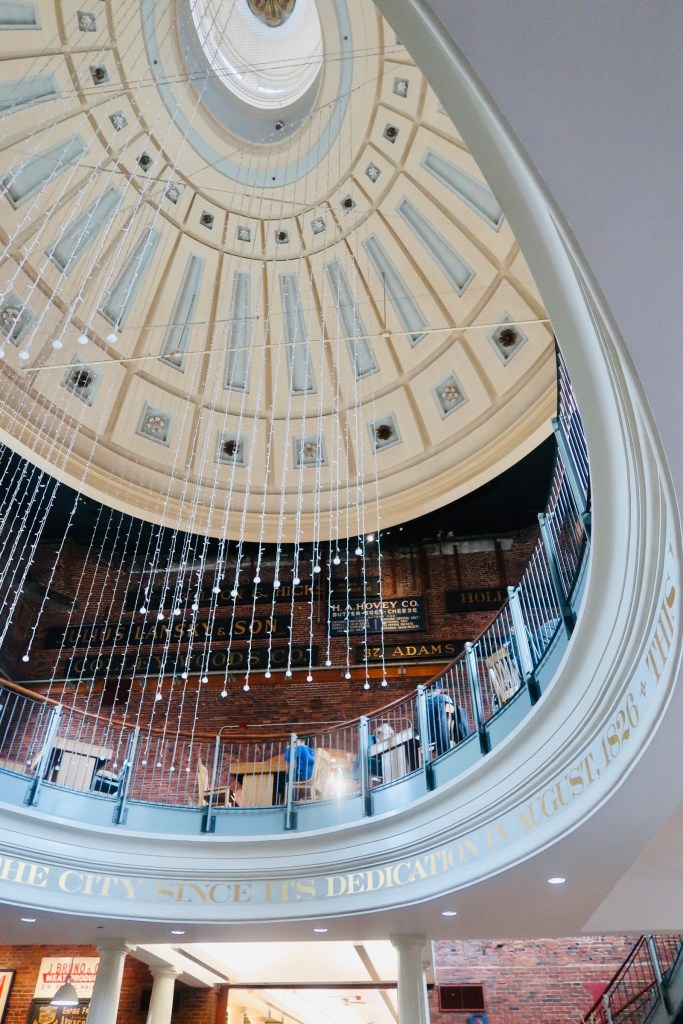
Quincy Market has quite the history. Dating back to 1826, the idea for the market came from Mayor Josiah Quincy. Shortly after being elected, Josiah realized just how much he disliked the chaotic, noisy, dirty view from his office in Faneuil Hall. This view was mostly due to the fact that the large marketplace was bursting at its’ seams. There was simply not enough space to cater the amount of stalls and sheds and the overall needs the city required. Not pleased with any ideas, he came up with his own development for a new marketplace. The only “thorn” in his side for this new market place was a landowner by the name of Nathan Spear, who refused to negotiate in regards to the property lines and deeds. No matter though, the construction went ahead with Josiah Quincy laying the first stone in April, 1825, with the market completed and opened in August of 1826. Officially named Faneuil Hall Market, it is more commonly known as Quincy Market. The market was enlarged throughout the following years (as it reached its initial capacity in 1850) and the market continued to serve the community. A restoration project was started in the 1970’s that not only including restoring parts of the market, but also additions to the rotunda and new dining areas. 

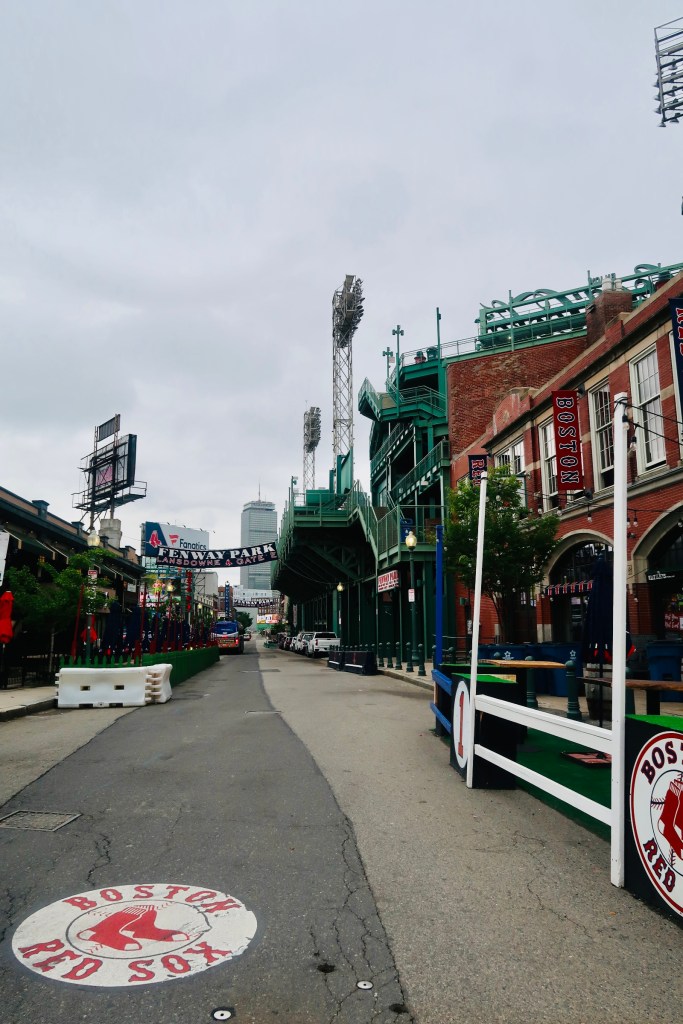
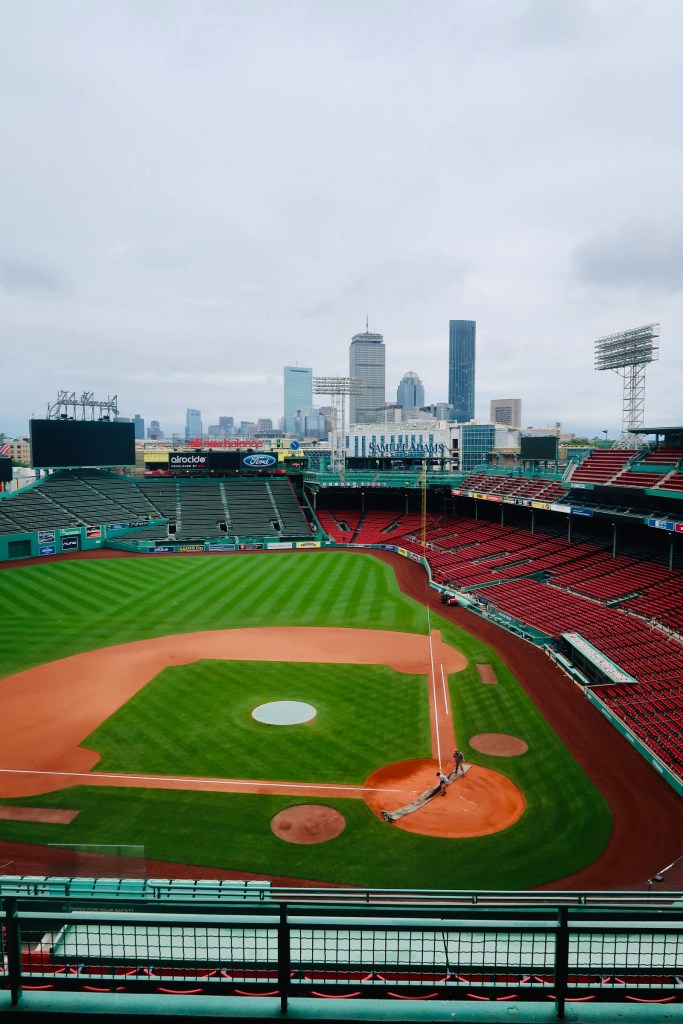
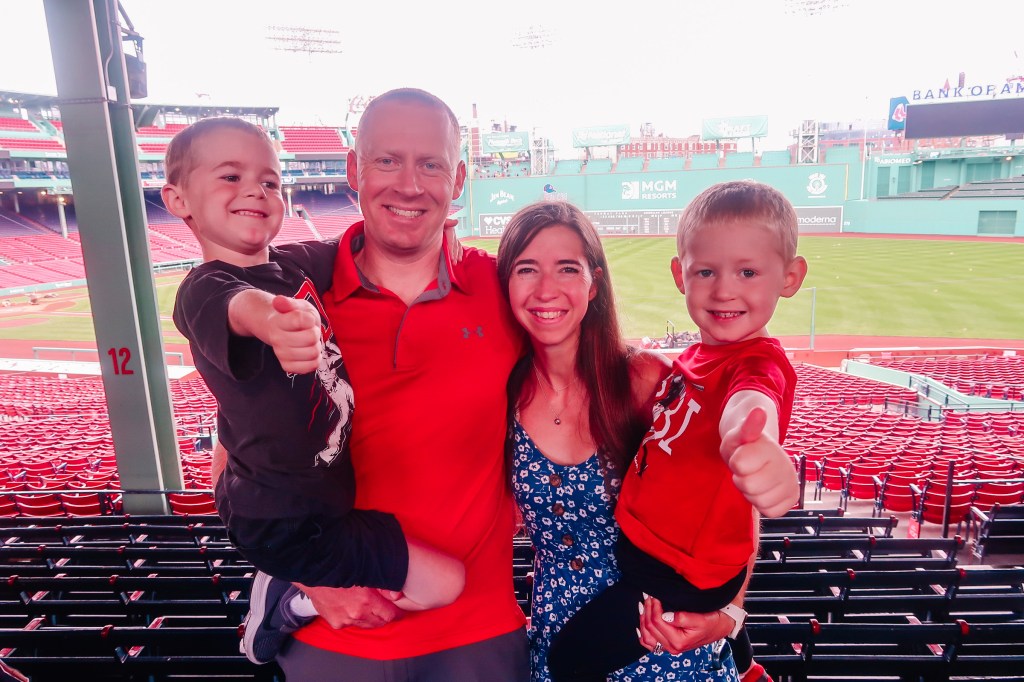
The next morning we were up bright and early to embark on one of my husbands most anticipated stops, Fenway Park (ok the kids and I were also very excited about this too). Where do I even begin with the history? I’m not going to go into the history of baseball (because oof), or of the actual Boston Red Sox (because, again oof), but rather the history of this particular ballpark. 

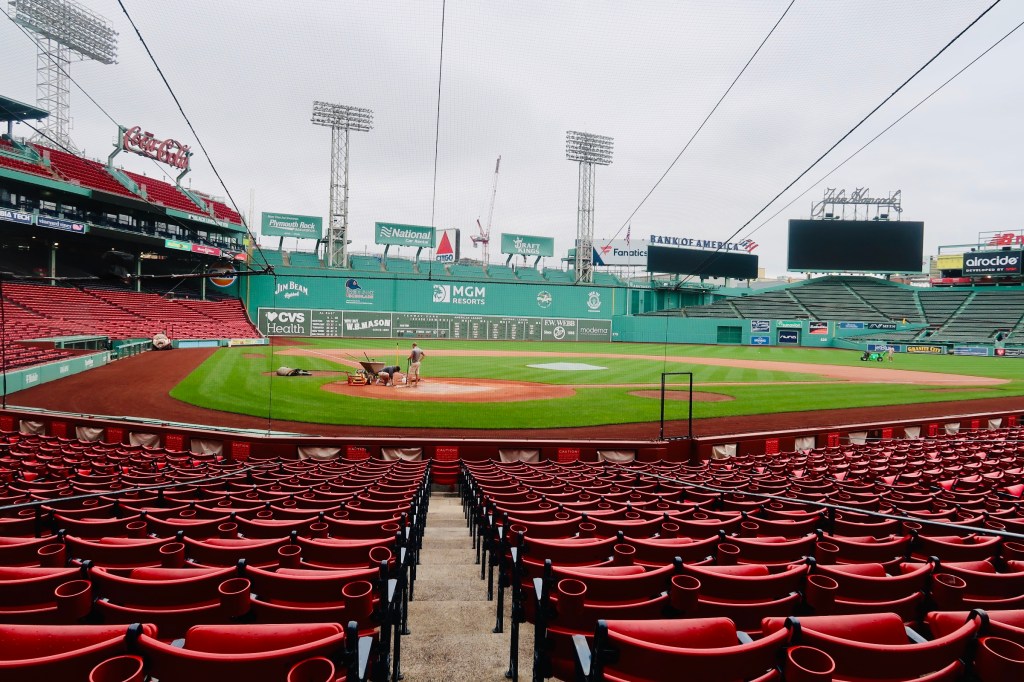
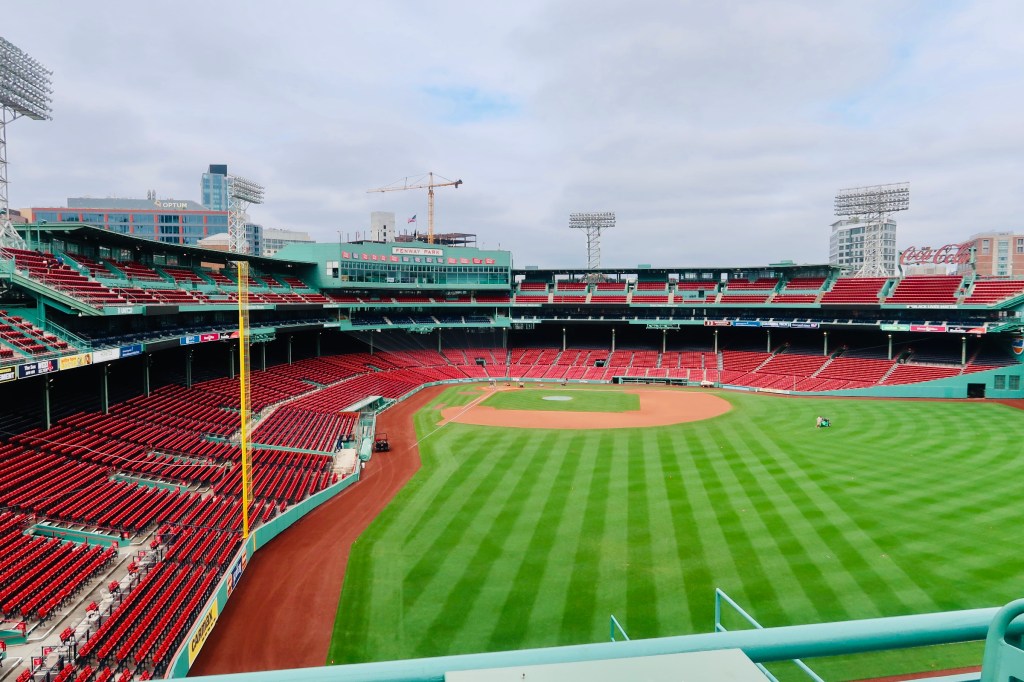
Some quick facts, Fenway Park is the oldest active ballpark in the MLB (109 years this year), it was actually rebuilt in 1934, and the location (within tight busy streets of Boston) lends itself to a unique set of features, the most popular being The Green Monster. It is the fifth smallest stadium within the MLB, only able to seat a little under 38,000. Finally, the first game ( a win for the Red Sox played in 11 innings) was actually overshadowed by the continued coverage of the tragic Titanic sinking. 

The Red Sox had been playing at the Huntington Avenue Grounds for 10 years, but Red Sox Owner John I. Taylor was looking for something different, something that would make a splash, something in Boston. He was also looking at potentially selling the team to a new owner, which played a massive role in the relocation. February of 1911 brought a group of real estate entrepreneurs together to become the “Fenway Improvement Association”. Subsequently one of the leaders, General Charles H. Taylor (yep- John’s father), acquired a large amount of land which the young John Taylor then announced his intention to use it to build a new home for the Red Sox. Ground broke for the ballpark, without the proper permits approved or assurances that they would be approved, on September 25, 1911 and by he end of the calendar year the foundations were in place, the roof framed, and plans in place to continue. Fenway Park hosted its first game April 9, 1912, with the first official game occurring 11 days later. Construction continued during Away Games, with the left and right field bleachers completed in time for the World Series. There were several renovations and additions given to the park over its long history, too many for me to actually get into and list, you can read the full history HERE, but it’s safe to say that this is a true landmark of the city and of the sport. 

The park has also been used for other sporting events, being home to matches of boxing, soccer, American football, Hurling, Gaelic Football, Hockey, Ice Skating, and Ski and Snowboard events. It also has hosted Concerts and Rallies/Public Addresses. 

There was one instance where the ballpark was in jeopardy, in 1999 the Red Sox CEO announced plans for a new Fenway Park. This, understandably, came under a lot of fire from all around, and led to a long round of talks, negotiations, and different plans. At the end of it all there was no resolution to be found and in 2005 it was announced that the Red Sox would stay at the current Fenway Park. This then led to a 10 year significant renovation of the park led by Janet Marie Smith (who is wholeheartedly credited with saving the park). 

One final note, which is the lone red seat. The lone red seat signifies the spot of the longest home run ever hit at Fenway Park. Ted Williams hit a home run June 9, 1946, which hit Joseph A Boucher right in the head (through his straw hat), then bounced several rows above. If it hadn’t hit Boucher, it could have reached a length of 520-535 feet, but rather it hit 502 feet. 

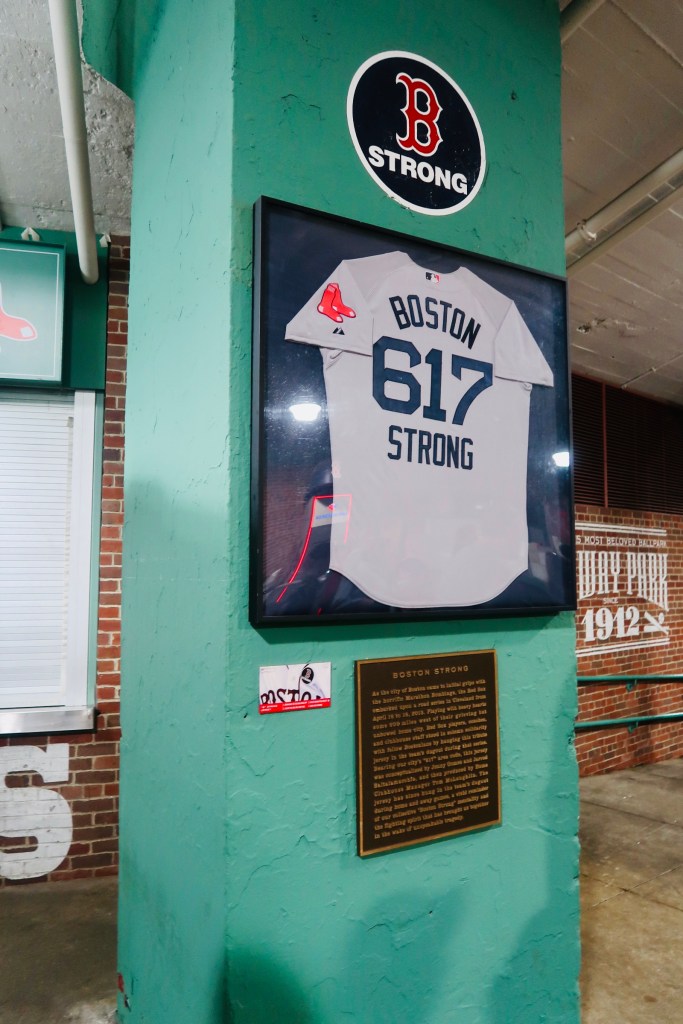
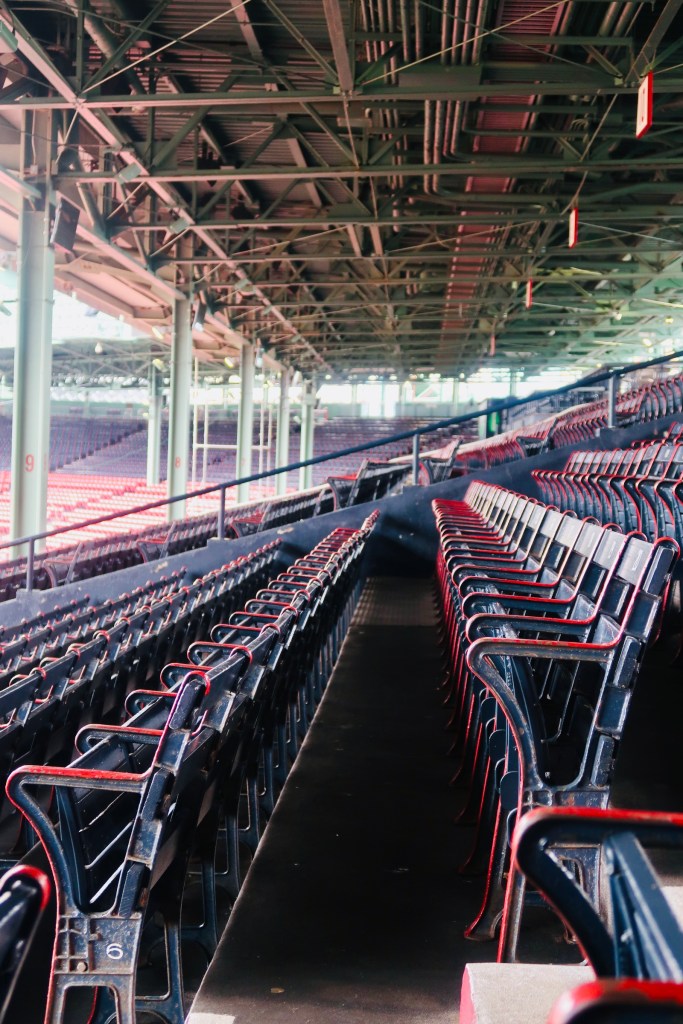
As part of the tour you are able to see the interior of the park (where two movies have been shot- including THAT scene from The Town), sit in the old wooden seats in the Grandstand section, head through the museum which contains collections of bats, balls, seating, jerseys, and more throughout the Red Sox history, head up to the top of the upper seating, go through the Press Box, and over to the Green Monster (which only added seats added to it in 2003 and they are the most expensive and contested seats in the park). All while being told the history of the stadium, a couple of dad jokes (maybe you want to hear one now? “The distance between all the bases is equal, however why does it take a runner longer to get from second to third? Because there’s a short stop” Ahahahahahaha- ok done now), and seeing some epic views from every spot in the park. It truly was an incredible tour and very well worth our time. If you are even the slightest baseball fan, this is a definite go to (but if you’re a baseball fan it’s probably already on your list to visit). 

And that wraps up this first part of my two part Boston posts. The second part (coming out this Friday!) will be focused exclusively on the Freedom Trail and the sights we saw as part of that. 

A Cuppa Cosy Summer Holiday 2021 – Plymouth MA

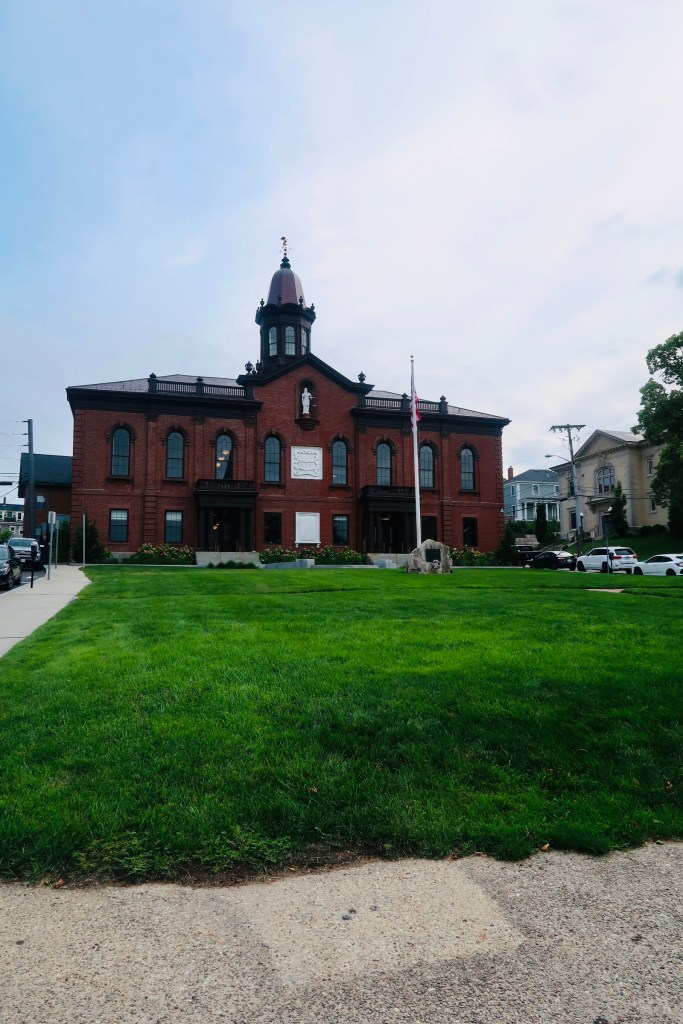
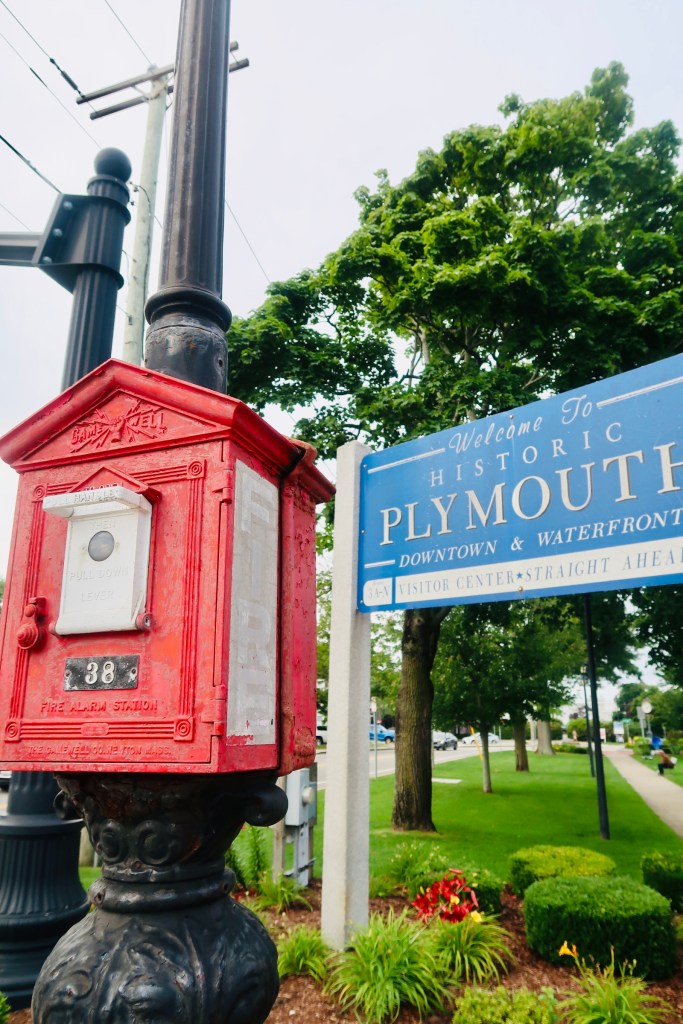
It is time to talk about our annual summer holiday and travels! This year we decided to do a “USA history” tour of sorts, starting in Plymouth Massachusetts, then heading up to Boston, MA, a quick stop in Salem, MA and ending in Portland ME. Honestly, the trip was overall so relaxing and enjoyable. I don’t know if it was the amount of time in each stop, or if it was just the fact that the boys are older, we are more “travel experienced”, and that we haven’t traveled (thus the excitement is greater), whatever it was, this really worked for us. A quick overview of our trip, we did two nights in Plymouth, three in Boston, two in Portland. 

We arrived mid afternoon in Plymouth on our first day, prior to the check in time at our hotel, so we decided to just head over to a first stop. We started at Plimouth Patuxet. 

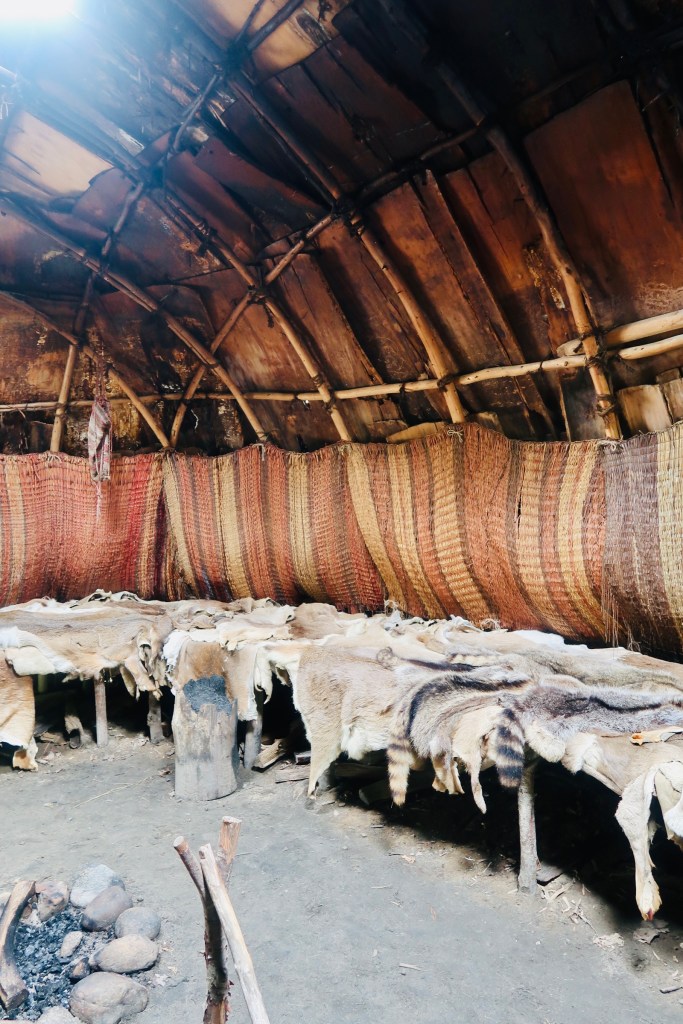
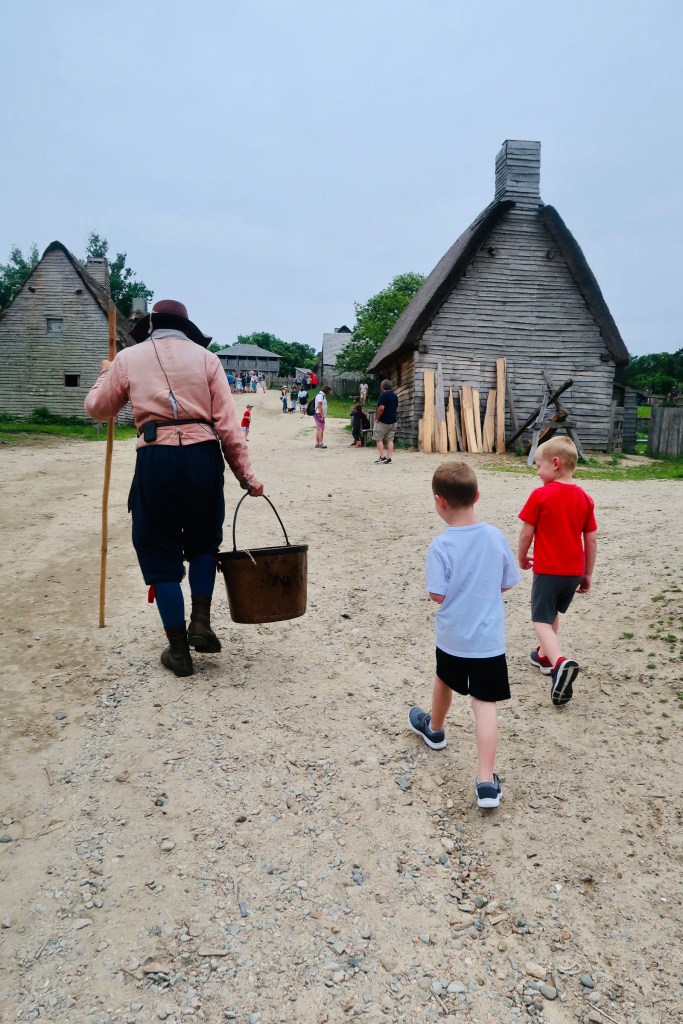
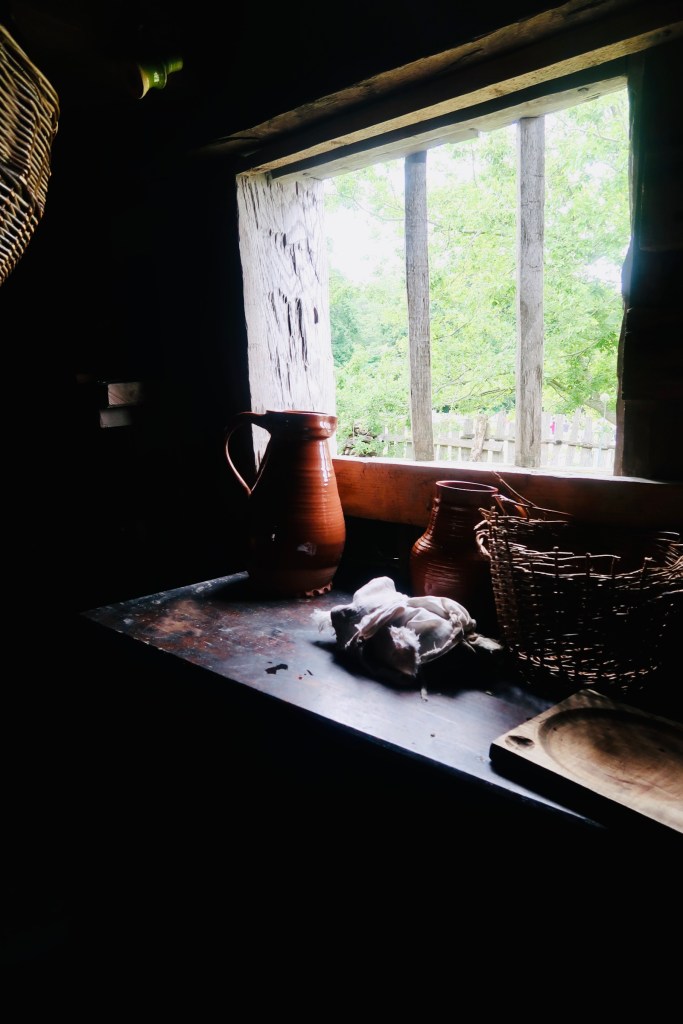
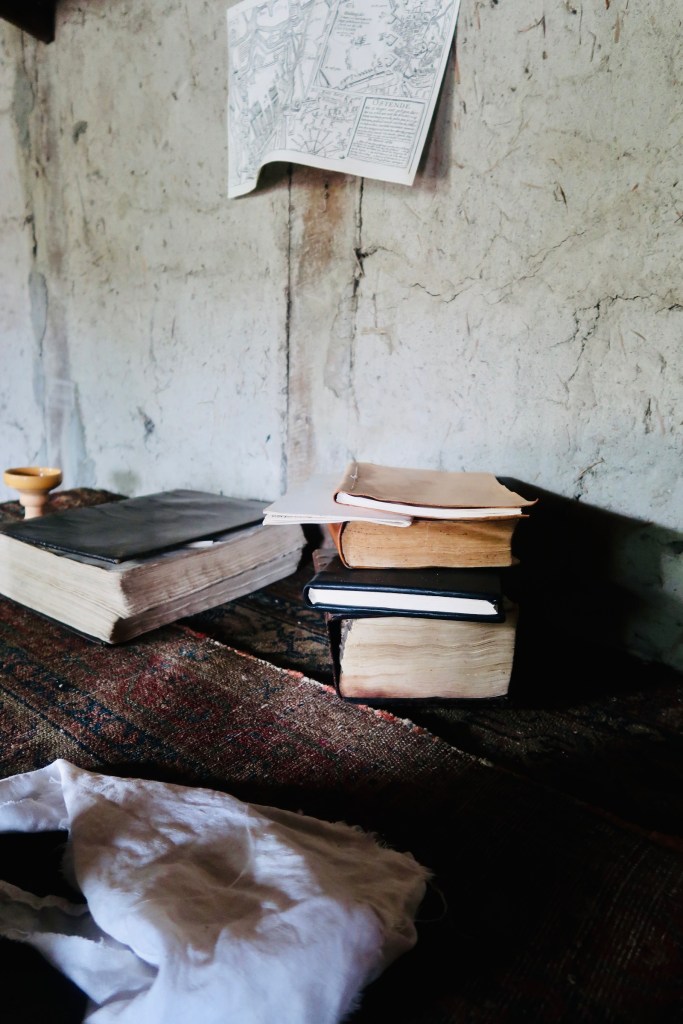
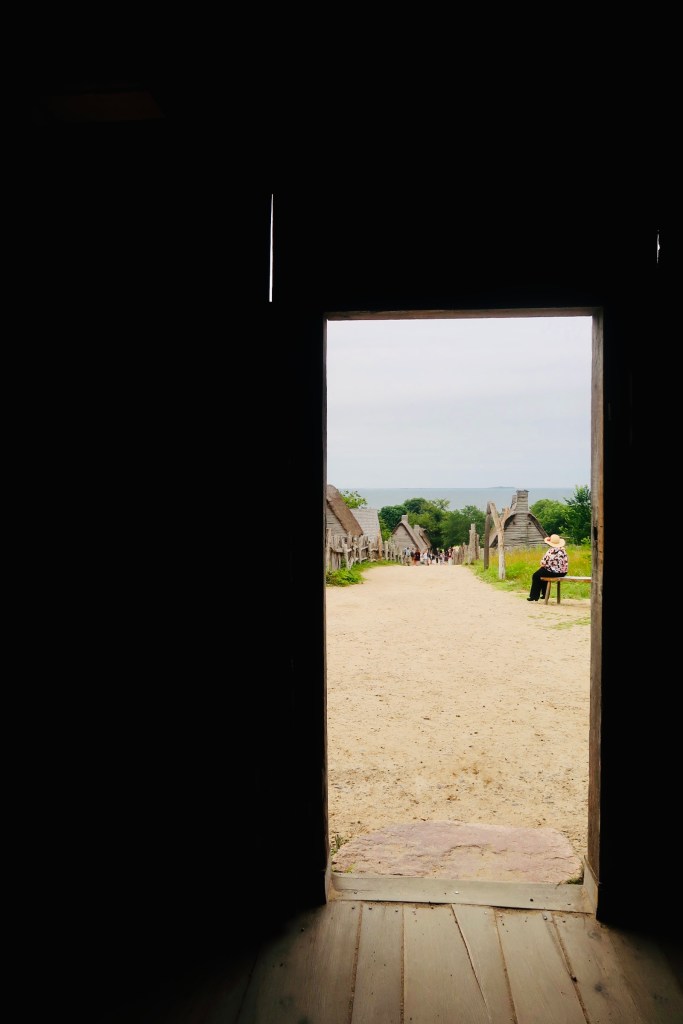
The Plimouth Patuxet or Plimouth Plantation (the original name) is what’s known as a living museum. Started in 1947 it features two central locations, plus the Mayflower II and the Grist Mill (in separate locations), one a replica of the village of Plymouth from 1627 with first person historical “actors” and the second is a replica of the Wampanoag village as it would have stood in the 17th century along with guides to help visitors understand life for them. It gives visitors an insight into not only what life would look like and be like, but a chance to learn about some of the people who would have lived in the Plymouth Colony.

Most of us know the history of America, the Colonies, etc., so I’m not going to focus too much on it, but I will say that there is a big difference between the colonies of Jamestown (the first) and Plymouth. Jamestown was founded by entrepreneurs who were seeking new land to develop, live and to expand fortunes. Plymouth was founded by a sect of Puritans (later as we all know as Pilgrims) who were fleeing religious persecution. They did not actually sale directly to the “America’s” though, they first went to The Netherlands to avoid the persecution. That didn’t end up working and they ended up making the journey towards the “America’s”. 

The Patuxet was really neat to walk through and I found it to actually be quite respectful to both the Wampanoag, the Patuxet, and the Colonists. The boys really appreciated the first person actors and being able to be involved in this living history (even though they truly couldn’t comprehend the entire grasp of it). 

We spent a couple hours at the Patuxet, then headed over to check in to our hotel. We stayed at the John Carver Inn for two reasons, one being its location right off the main street of town, and the other being the very cool pool that it offered. I will say, that while we loved the pool (which has a makeshift Plymouth rock holding the hot tub, and a slide within the “mayflower”), the hotel rooms were a bit dated. There isn’t anything wrong with that and we enjoyed our stay, just something to note. After checking in, we decided to just go venture out on the town.

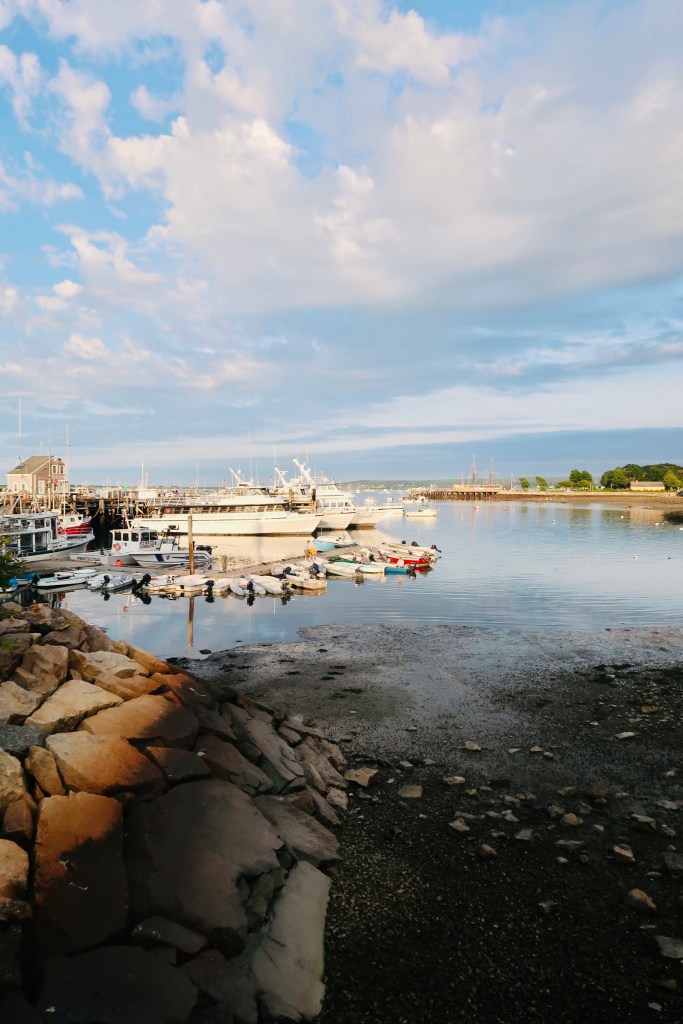
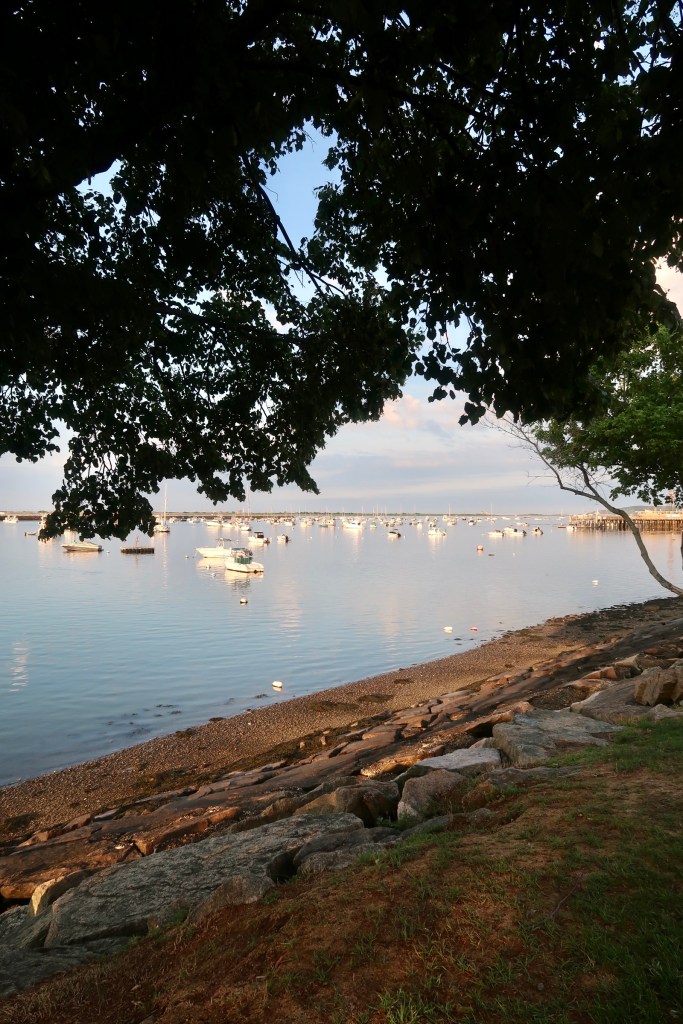
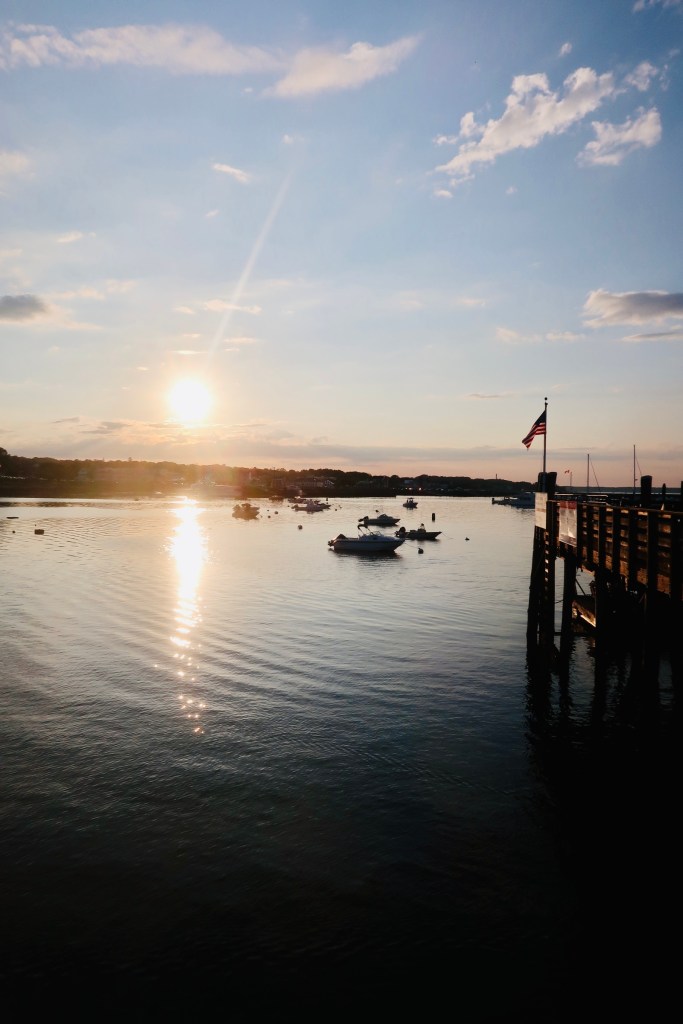
Wandering along the main streets of downtown Plymouth offered a variety of breweries, small boutiques, and tourist shops. We ended up stopping at Tavern on the Wharf for dinner that first night, watching the sun light up the water as it started to set. From dinner, we continued to walk along the bay, watching the sun set slowly over the bay. Walking along the bay puts you right at the Plymouth Rock. This is when I would recommend seeing because a) you get to see the sunset on the water, and b) it tends to not be as crowded. 

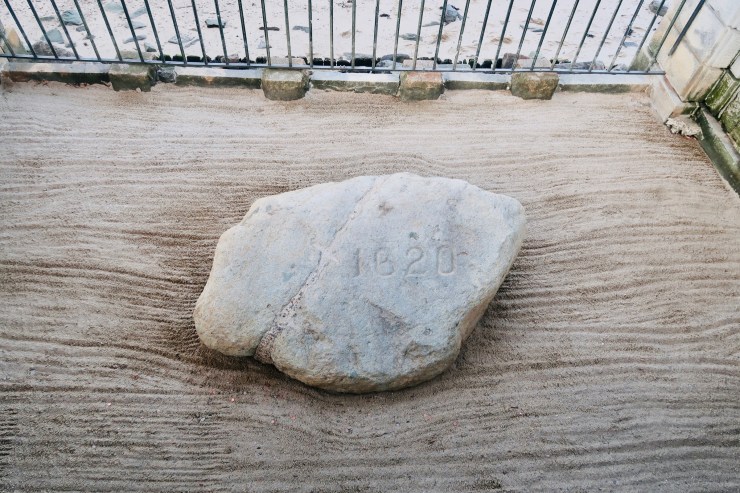
So, Plymouth Rock. I want to start with the fact that there is no writing from the Pilgrims in regards to Plymouth Rock. It wasn’t recorded until ~1715 when it was used as part of the town boundaries and was simply a “great rock” and there wasn’t even a claim to it being the landing place until 1741 (~120 years later). Second, the rock itself (as it stands today) is quite small. It is not even the full size of the “original Plymouth Rock” due to its being moved around and pieces being taken, bought, and sold. Today it stands at about 1/3 of the size that it actually was. There is also a crack in the rock where it was broken in an attempt to place it in the town square, the two portions were put back together and the date was stamped in the 1770’s. So, it’s cool to see, but also a bit anticlimactic in a way. 

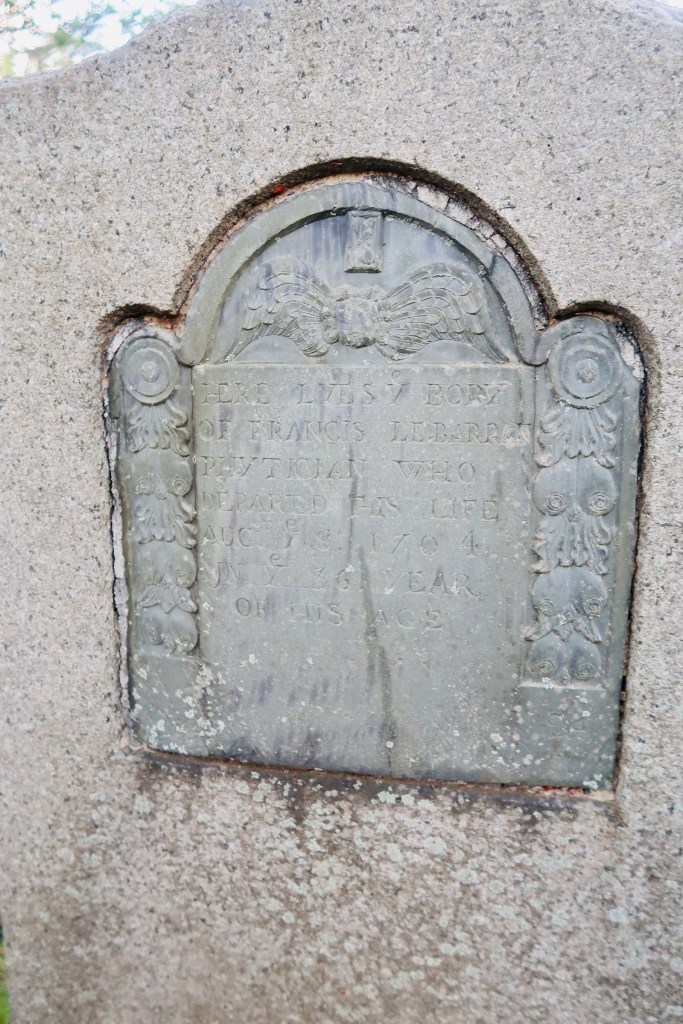
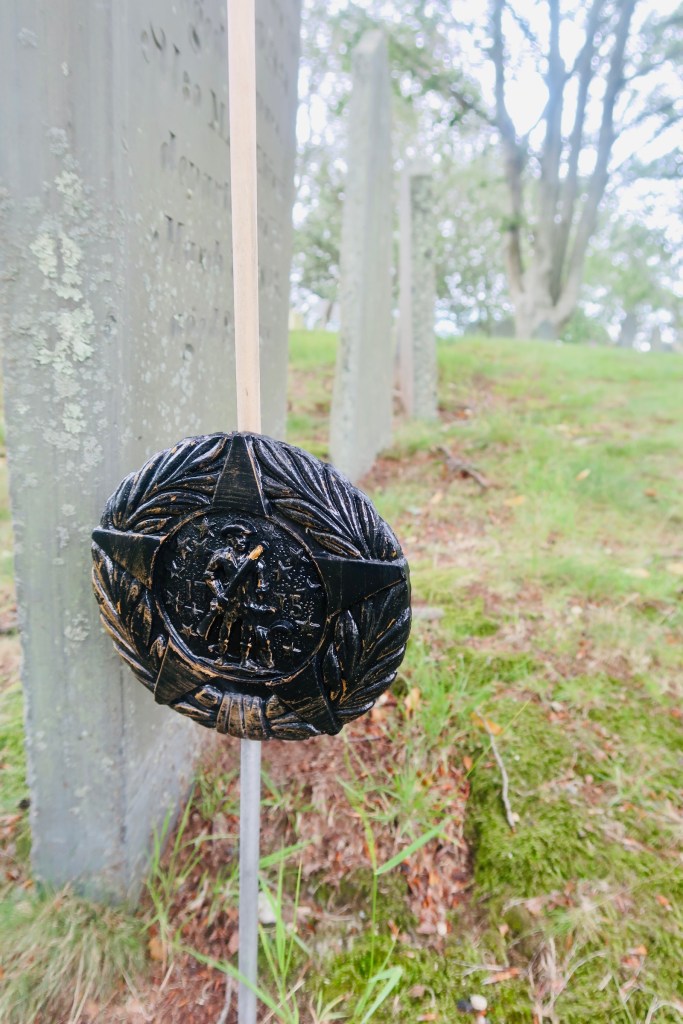
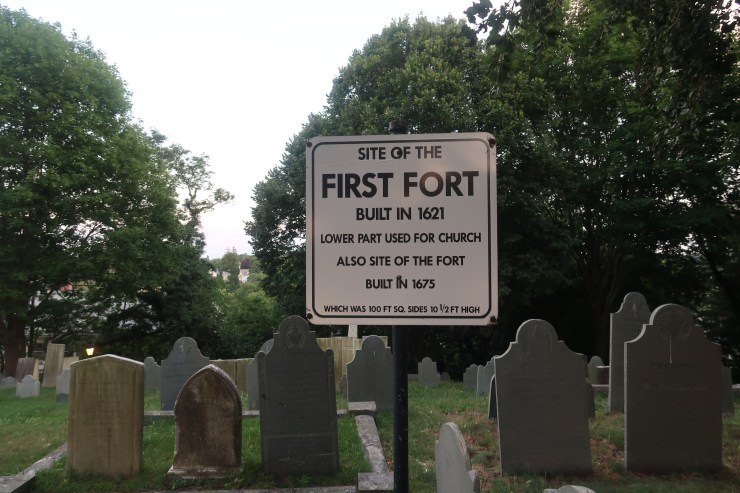
We finished out the evening with a  stop at Burial Hill, which was located right behind the John Carver Inn. Since there was still daylight (this cemetery sits much higher than the bay), we decided to take a little wander through the cemetery and see some of the oldest gravesites in our country (documented- there are much much older sites obviously from the indigenous peoples). Burial Hill was originally the site of the Pilgrims first meeting house and was first used as a burial spot in the 1620’s. There are Pilgrims and Mayflower passengers buried in the cemetery, as well as various revolutionaries and soldiers. Any person that has a history tied to a battle/war, the Mayflower, or the colonists has a medallion placed next to the grave marker (some of these still stand, some have been destroyed over time by the elements). 

The next morning we started out somewhat early, to get some breakfast from Munchies & Milkshakes. Robert had found this spot and read reviews about donuts and baked goodies, so we figured why not give it a try. I can tell you, it did not disappoint. We took our donuts to a bench overlooking the Mayflower II and the bay and had a lovely little picnic. Then it was off to tour the Mayflower II. 

As the same organization owns all three “Pilgrim”/Plymouth related attractions, you are able to purchase one ticket for all three locations, which is what we did. I can’t say that it was a cheaper option or a good bargain deal, but I can say that it was definitely easier when it came time to visit the other locations. We walked right into the Mayflower II and were able to get on the boat almost immediately. 

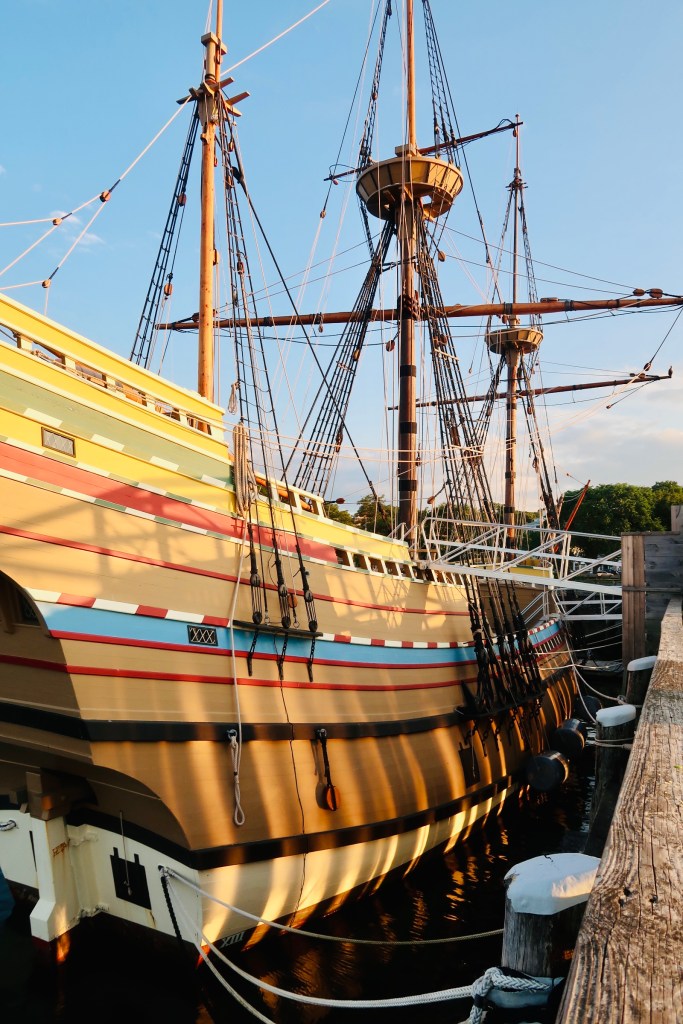
The Mayflower II is a reproduction of the original Mayflower. It was built in the 1950’s in partnership between an English builder and the Plimouth Patuxet. It was a partnership to honor the alliance between the United States and the United Kingdom during World War 2. Considered a generic reproduction with modern additions (like electric lights and a ladder) it sailed from Plymouth, Devon recreating the historical journey of the Pilgrims, landing at Plymouth Massachusetts after about 2 months. It has journeyed through various ports and cities on the East Coast both for tours and for restorations, but in 2020 it made a permanent return to Plymouth in honor of the 400th anniversary (lucky for us!). 

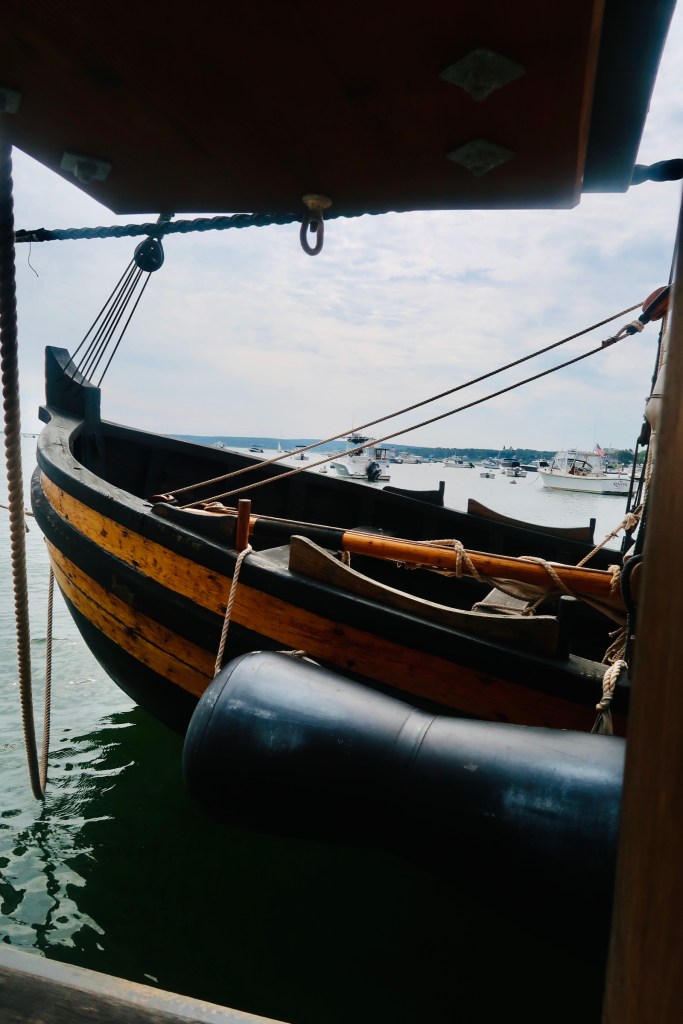
I do think that this is a very worthwhile attraction to see. Not only does it put the voyage in perspective and the conditions and turmoil that the Pilgrims faced during their voyage, but it also is neat to check out. The “crew” on board is a mixture of modern day guides and first person interpreters and you are able to see just about every area of the ship, including the mooring boat that they would have used to send expeditions from the ship to the mainland to find a settlement space. 

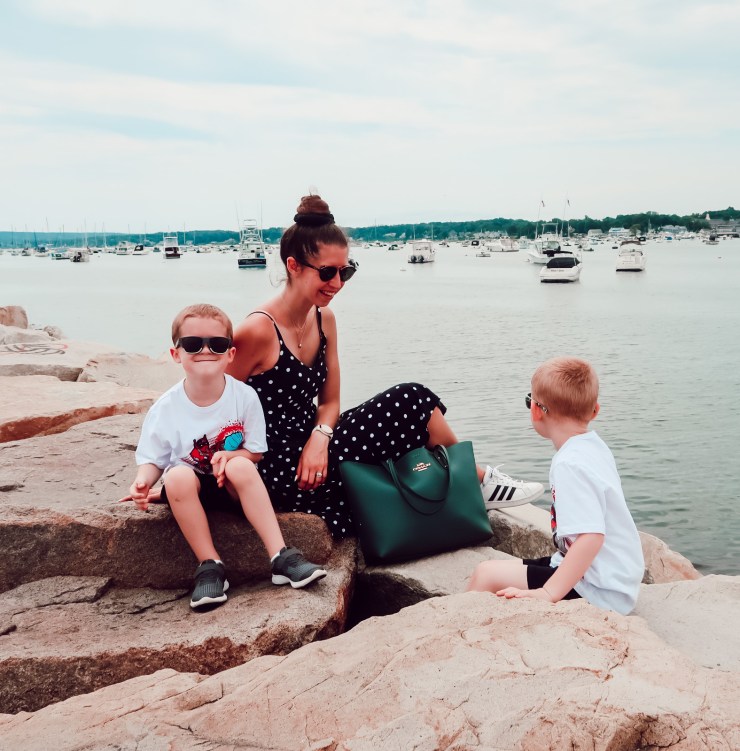
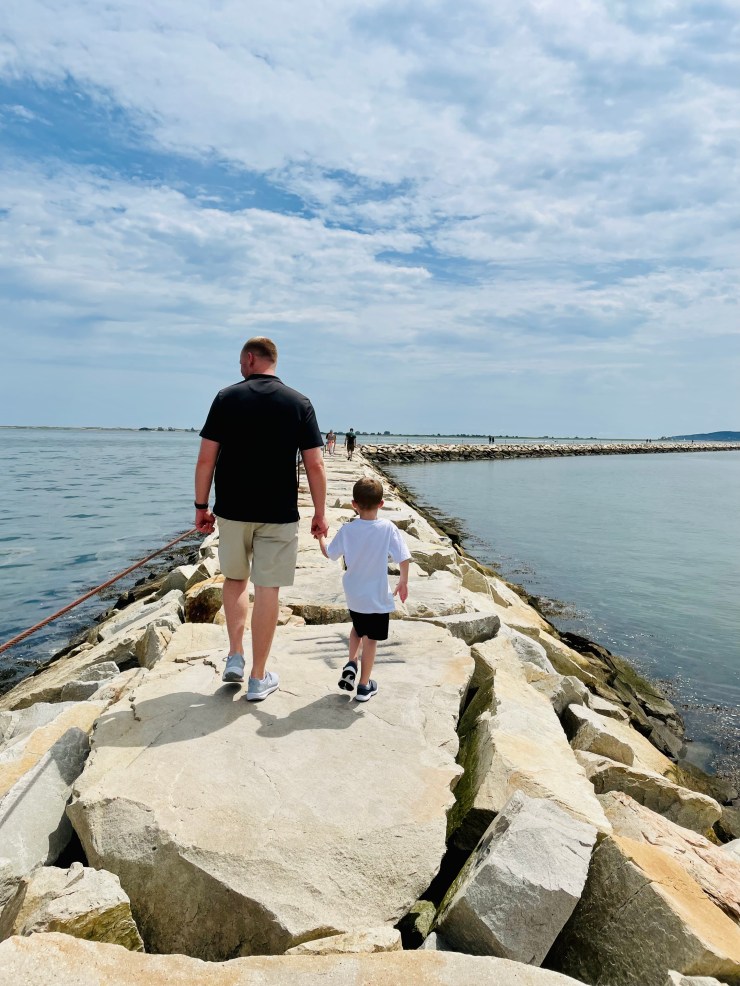
From the Mayflower II we walked the opposite direction (away from Plymouth rock and towards the shipyard area) to walk the riverfront. The town has a rocky area that you are able to walk a bit out into the bay waters and see the town from the water (in a way). Now, you are walking on rocks that have been piled up and around coming out of the water to form a walkway. It’s not a “sidewalk” or anything of that nature, just a man made path. We walked about halfway out and decided to turn back (as it’s just an outcropping to see the view). 

At that point in the day we were reaching the peak of the sun and heat, so we decided to head back to the hotel and spend a bit of time at the pool. This is something we don’t often do, but we had partly booked this hotel for the pool, so we figured we should take advantage of it. It was a lot of fun and allowed some of that sun and heat to pass over us. 

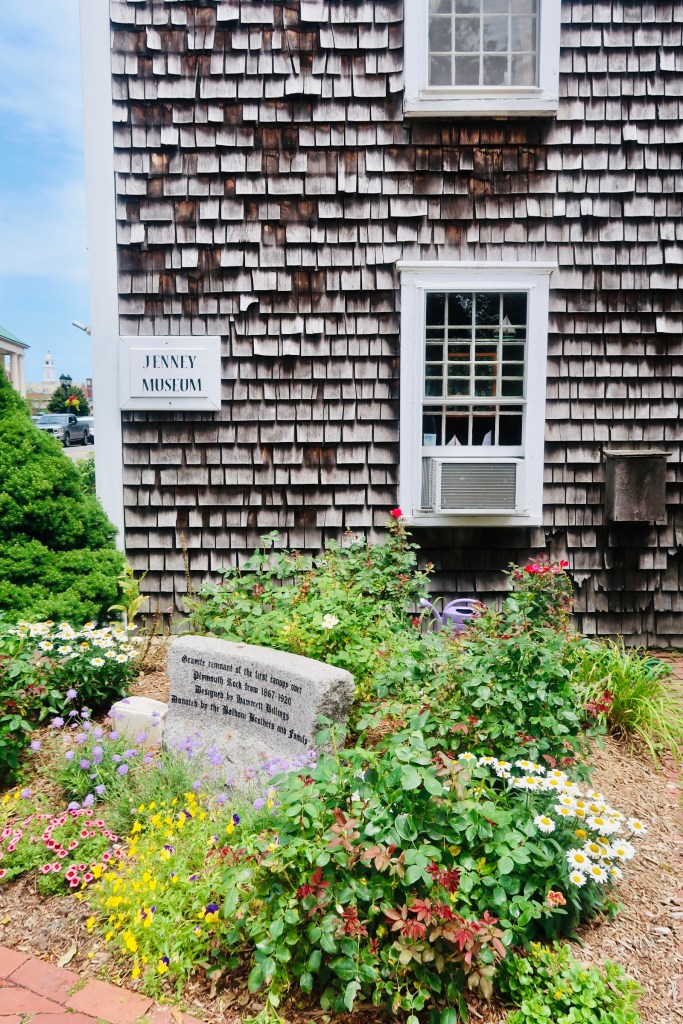
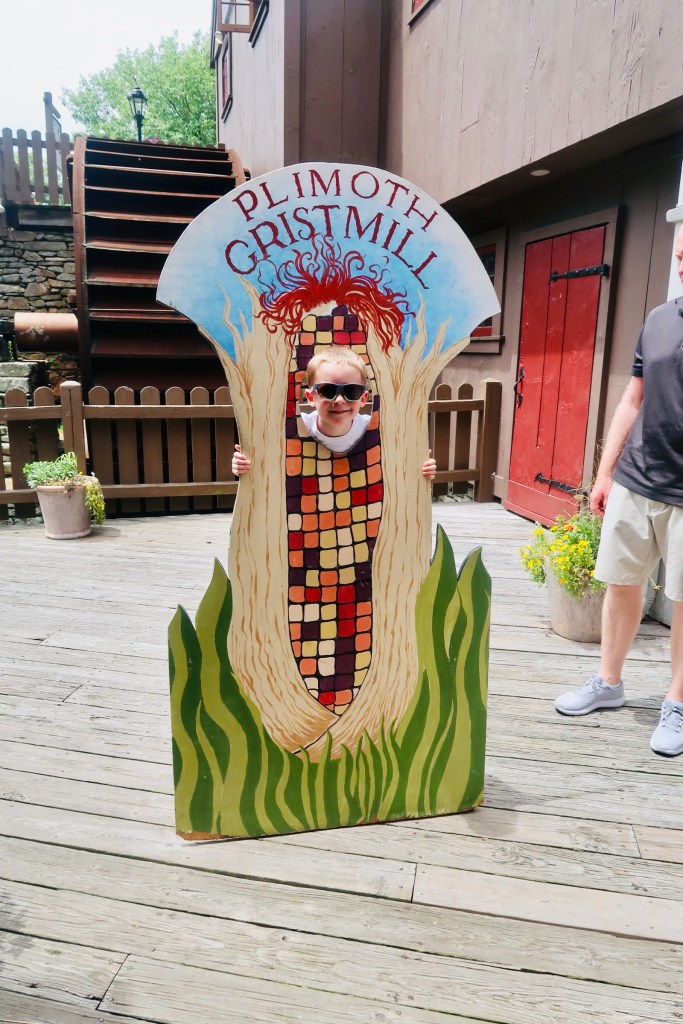
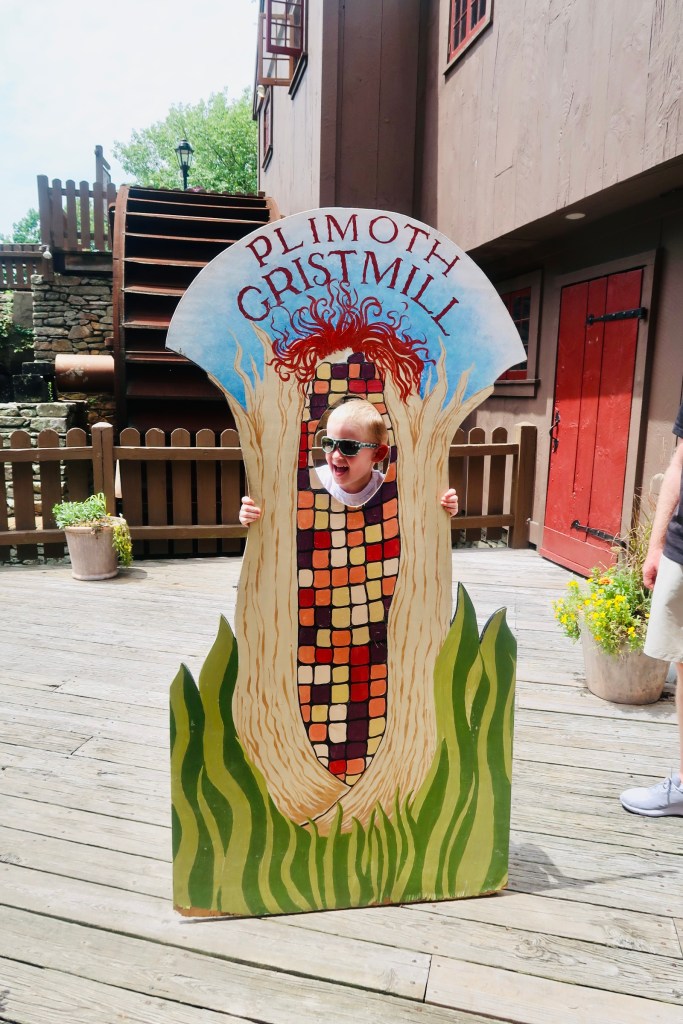
After a brief lull, we headed back out, this time to the Plymouth Grist Mill. This Grist Mill is a working mill recreated on the site (and similar to) the Jenney Grist Mill, which was one of the first operating mills from the Pilgrims in Plymouth (built and operated by John Jenney who came over on the Little James in 1623). The Mill was originally built in 1636 and remained in operation, though passing through different hands as owners passed away or sold, until it burned down in 1840’s. The property stood as it was until the town went through some re devolopment and mill was rebuilt/reproduced in 1969. It is a fully functioning mill processing what, rye, barley, and corn (which is ground on the primary millstones). You are able to watch the mill at work if it is the time of year for it to run, otherwise you are able to tour the mill and the workers will show you how everything operates. A Very kind tour guide turned on the outside portion for the boys to watch. 

I will say, this was another neat stop to make, BUT if you can’t fit it in or you are wondering which of the three attractions you don’t need to visit- this can be cut from your itinerary. It’s a short visit (which worked out really well for us), but I wouldn’t say it provided much “first hand” insight. Cool to see, but not necessary.

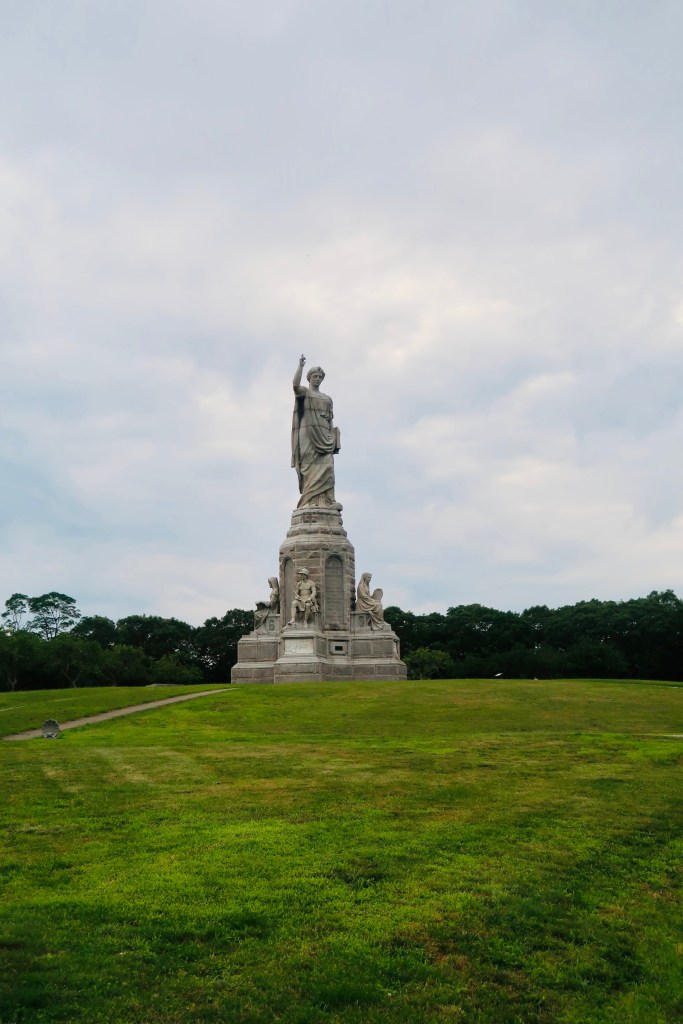
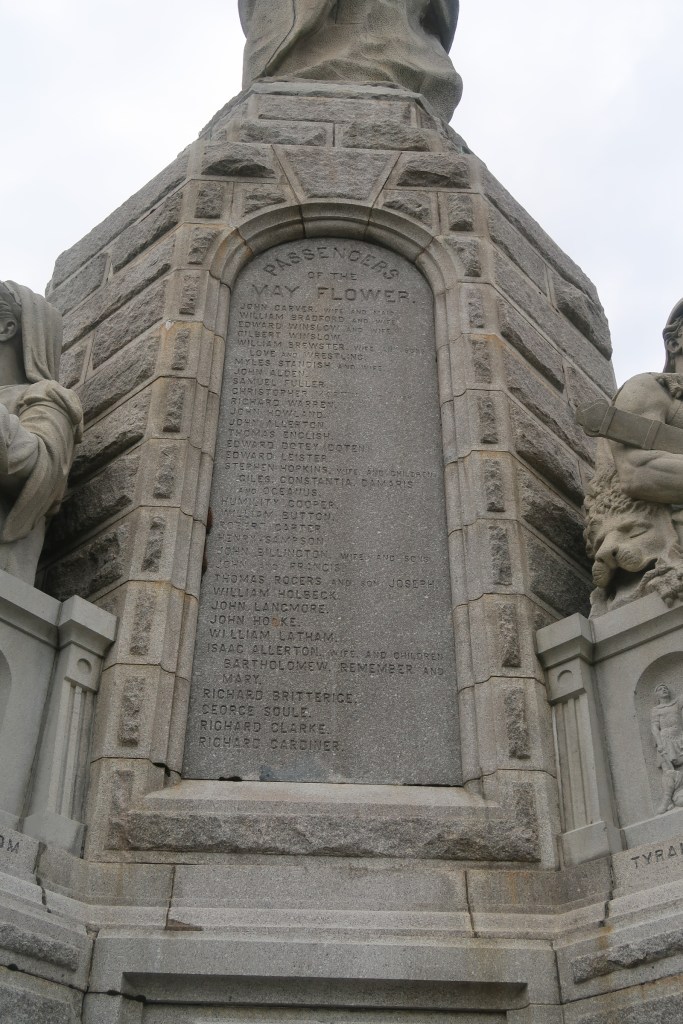
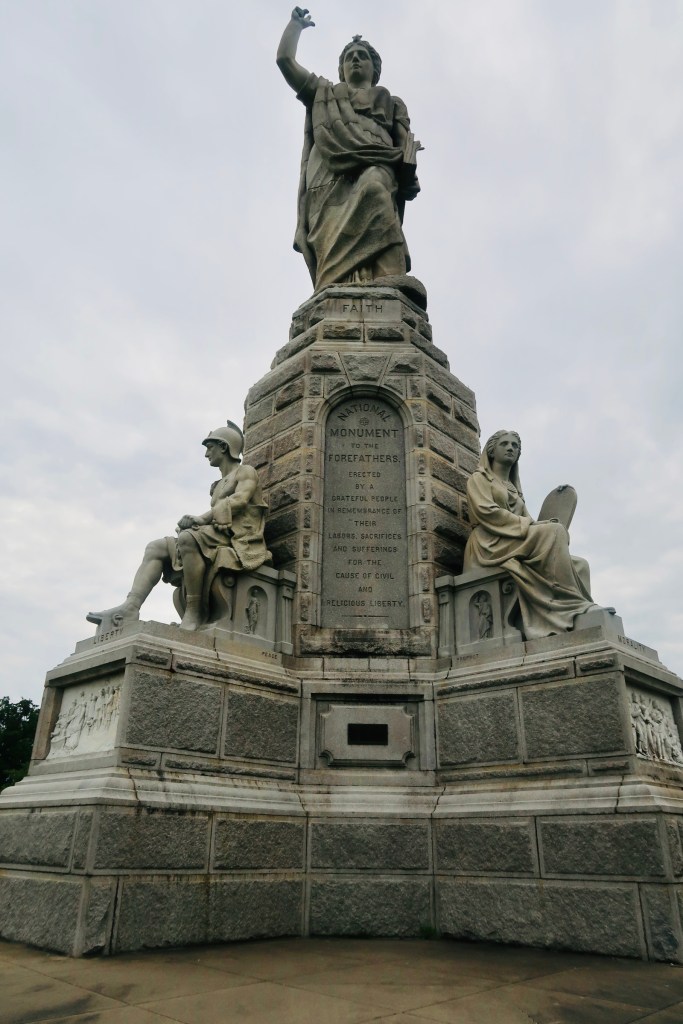
The final stop we made in Plymouth was the National Monument to the Forefathers. Originally known as the Pilgrim Monument, this is thought to be the worlds largest solid granite monument standing at 81 feet tall. It is dedicated to and commemorates the Mayflower Pilgrims and their ideals. The idea dates back to 1820, but the cornerstone was not laid until 1859 (after plans started almost 10 years earlier). It opened in 1889 and features a total of 5 figures. The top one is known as “Faith”, with the four buttresses featuring “Morality”, “Law”, “Education”, and “Liberty”. These are then broken down further on each buttress to give more ideals for each overarching concept. The front and rear panels both have quotes engraved, with the side panels containing the names of those on the original Mayflower. 

We wandered from the monument, which is tucked up on a hill back in a neighborhood, back down to the main street and stopped for dinner at the Waterfront Bar & Grill before heading back to the hotel to pack and leave the next morning. 

And that wraps up the first stop in our 2021 Summer Holiday. I will say, I’ve only ever been mildly interested in the Pilgrims tale (more so in a respectful manner of history), so while this was a cool spot and town was pretty, this wasn’t a highlight for me. It also wasn’t for the kids (minus the pool), but that’s because they much preferred the next stop on our destination…

A Cuppa Cosy Reads – July 2021

Happy August! I’ve just got a quick reading catch up post today as I’ve become quite a bit behind (due to summer holidays) on…well just everything. I don’t truly remember all of my thoughts for these books, but I’ll do my best to give some brief opinions. I ended up reading a total of 9 books and giving an average rating of 3.875, so a quite good month. I did also DNF (Did Not Finish) some books, so I’ll talk about those at the end. 

Red, White, & Royal Blue by Casey McQuiston 4 Stars – I really enjoyed this contemporary novel, even if I found it to be a bit of wishful escapism. I’m kind of a sucker for royal family stories though.  

The Empress of Salt and Fortune by Nghi Vo 4 Stars This was a beautiful and captivating story that just had me in a trance from start to finish. 

Get a Life, Chloe Brown by Talia Hibbert 4 Stars Yet another cute contemporary story that I really enjoyed. 

Dial A for Aunties by Jesse Q. Sutanto 4 Stars I think this might have been one of my favorites for the month, this was just such a great romantic comedy of errors. I will most definitely be reading the next one just to see the family antics once again. 

The Hollow Places by T. Kingfisher 4 Stars This is one of those horror books that I think will just live in my brain for a little bit, kind of like The Troop by Nick Cutter or maybe even The Hunger by Alma Katsu (I recommend the former, but maybe not the latter). I didn’t realize that it had truly gotten under my skin until we were on holiday and I saw something that was described in the book and it spooked me a bit haha. 

When the Tiger Came Down the Mountain by Nghi Vo 4 Stars This is the second in what I think is just a companion grouping of stories following a “recorder of history”. Again, I found myself entranced in the story and swept away by the writing. 

The Remains of the Day by Kazuo Ishiguro 4 Stars This was my second Ishiguru novel and I did, once again, enjoy it. I liked Never Let Me Go a bit more, but it was a VERY different book to this. I found the conversation within our relationship to our work, to our employers, to our own morals and values and the relationship of those with our work and our employers. 

The Maidens by Alex Michaelides 3 Stars Ah, this was a bit of a disappointment and the more I think about it, the more I talk about it, the more upset I get about it. It wasn’t BAD, by any stretch, but I also felt like it…had a lot of far reaching stretches for our main character and the twist made ZERO sense. I also wasn’t a fan of the main character, but that could just be a me thing. 

Upstairs at the White House: My Life with the First Ladies by J.B. West NR A memoir of sorts, this book talks about what it is actually like working in and running the White House, on the family side of things. He doesn’t speak badly about any of the families, instead highlighting the differences and similarities and personal relationships of each family. 

And finally, the books that I…gave up on: Reputation by Lex Croucher and The Binding by Bridget Collins. I have actually fully gotten rid of Reputation. It was a bit TOO spot on for what it was trying to be and the main character was obnoxious. The Binding I might try again another time as I didn’t feel strongly about it either way, which is why I stopped reading it. 

And that’s it for July! I’ve got big plans for the rest of the year for reading and I’m very excited. 

An Ode to 10 Years and a Toast to Many More

10 years. 120 Months. 3,650 Days. 87,600 Hours. I could go on, but you aren’t here to read about how I can use a calculator to accomplish basic multiplication. 10 years ago I walked out of my parents home to meet a guy. My first glimpse was actually not of the guy, but of his lifted white pick up truck, but I knew that he was special (and it wasn’t because of the truck). I’ve talked about most of this in prior mushy posts (I do these approximately twice a year), so I won’t repeat myself (but maybe you can read some of those posts HERE?), but I find myself reflecting on this bigger moment. 

To be together for 10 years in one of those weird accomplishments. Like we don’t consider it one, but it’s also a milestone that should be marked? A testament to your strength and ability to choose your partner, your marriage, your family, every single day. To grow and change together. To know that you’ve found something solid, something good, something lasting. To know that the person you’ve said forever to is good, is accepting. 

This isn’t our wedding anniversary, we’ve only been married for 7 of those 10 years, but in some ways, I feel that this anniversary is the more important of the two we celebrate. For if this date hadn’t happened 10 years ago, none of the rest would have happened. And I will forever be grateful for this day those years ago, for dinner at the restaurant, a moonlit stroll through a garden, and a night that never ended; the precursor to our fairytale. The beginning of forever, for we both new that night that we found something special. 

So, to my husband, my forever heart, to our life together, our marriage, and our happiness. This first decade together has been nothing short of magical and incredible; I cannot wait to see where the next few take us. 

Mid Year Book Freakout Tag 2021

I figured this year, since I’m sharing more of my reading, it would be fun to talk about the books I’ve read so far this year and where I stand with my reading. A good way to do that is the Mid Year Book Freak Out Tag, which was created on youtube by Chami (HERE), though she doesn’t have the video up anymore to my knowledge. I find it’s a good way to sit down and look at your reading so far and see where things stand.

For me, something I realized is that I’ve been VERY stingy about giving out 5 stars to books this year. I’ve read a lot of great novels, but I have been sticking to the 4 star rating. Out of the almost 50 books I’ve read this year so far, I think I’ve given maybe 2 or 3 a proper 5 Star rating. 

Best Book You’ve Read So Far

Just starting off with the big guns, right? I mean I could list so many books, but I think The Golem & the Jinni takes the cake for me personally. I’ve read a lot of good ones though. 

Best Sequel You’ve Read So Far

Hands Down, The Hidden Palace by Helene Wecker. These two books will always have my heart. I would also count The Galaxy and the Ground Within by Becky Chambers, which was the final companion novel in the Wayfarers Quartet. 

New Release You Haven’t Read Yet, But Want To

The Maidens by Alex Michaelides. This year I’m trying to read new releases/new books I’ve purchased as I purchase them, so I’m not just buying and adding to the endless tbr shelf. 

Most Anticipated Release for the second Half of the Year

I’ve got a few: A Lesson in Vengeance by Victoria Lee, Defy the Night by Brigid Kemmerer, and Cytonic by Brandon Sanderson. There are so many coming out though that I’m sure I’ll only be adding to that. 

Biggest Disappointment

The Lost Apothecary by Sarah Penner. I had such high hopes for this one and the more that I think about the more disappointed I get. I would also add Answered Prayers by Truman Capote as well. I very rarely wholeheartedly say not to read something, but this is one of those times. 

Favorite New Author (debut or new to you)

Ok, I’m trying not to repeat any of my previous answers (like by the end of this post you will know that I love Helene Wecker and her Golem & Jinni books), so I’ll go with Becky Chambers for this one. Her stories in the Wayfarers Quartet (companions) were great. I also would add Arkady Martine, who wrote A Memory Called Empire, which was great as well. 

Newest Fictional Crush

I don’t really do the whole fictional crush thing haha.

Newest Favorite Character

I don’t really do like favorite characters either. 

Book the Made You Cry

I have not read a book this year that has properly made me cry (Addie LaRue came close though- that one delivered a couple of punches right to my heart).

Book that Made You Happy

Ok, so instead of happy, I’m going to talk about the book that just gave me warm fuzzy feelings, which was The Thursday Murder Club by Richard Osman. There’s just something about reading about these 70+ year olds solving crimes and being underhanded about information. 

The Most Beautiful Book You’ve Bought This Year (or Received)

The Invisible Life of Addie LaRue by V. E. Schwab. This edition was not only beautiful, the story was beautiful, AND it was the sweetest gift from my best friend. 

What Books Do You Need to Read by the End of the Year           

Ah, I want to finish the Greatcoats Series by Sebastien De Castell (I have two more to go), as well as the Skyward series by Brandon Sanderson. 

Favorite Book to Movie Adaptation you’ve Seen this year

The only one I’ve seen this year (that I can recall) is the Netfix Shadow & Bone Season 1 and I loved it. 

And that’s it for the Tag Questions! It’s been a great reading year so far, even though I’ve had a couple of duds, and I’m looking forward to seeing what the second half of 2021 contains in books. 

Let me know, what’s been the best book you’ve read so far? The worst?

A Cuppa Cosy Reads – June 2021

Somehow it is the end of the month already! At halfway through 2021, how did THAT happen? I feel like this year, unlike last, is flying by. So many things to get done and not nearly enough time to do them, and that includes reading all the books I want to read this year! We’ll be talking through some of those next week when I do the Mid-Year Book Freak Out Tag, BUT this week we are focusing on the books that I’ve read in the month of June. Overall, I read a total of 11 books with an average rating of 3.46.

Let’s get into then, shall we?

Anne of Green Gables, the Graphic Novel Adapted by Mariah Marsden (PURCHASE) 4 Stars This was just darling. Whether you’re familiar with the story of Anne or not, this was a lovely adaptation that I enjoyed in an afternoon on the porch with a cup of tea. 

Plain Bad Heroines by Emily M Danforth (PURCHASE) 3 Stars Ah this book, where do I begin? In this book you are, at the heart, following a school/parcel of land and its…questionable haunting activities. Set in two timelines, one when the school was open and one in present day when a movie is being filmed about the goings on at the school and a cast of about 6 women at the heart of the story. I enjoyed the premise and even the set up (a book about a movie about a book), BUT I think this could have greatly benefited from being a duology. One book to the past timeline and the happenings at the school, and a second book about the present-day filming and hauntings. When smashed together in one book it felt a bit…rushed and not quite fleshed out fully. 

A Memory Called Empire by Arkady Martine (PURCHASE) 3.5 Stars This one is a conflict in my own head over the rating. In this story we are following a young woman who has recently become the ambassador to a foreign empire. From the moment she lands she is thrust into political upheaval as the empire struggles against itself AND a murder mystery she must solve before she is killed next. I really loved this book after about 150 pages. At one point I thought this book might be a bit too political (which is saying A LOT), but once I gained an understanding off the underlying speech, and the book narrowed down its’ focus, the story became really enjoyable. 

The Thursday Murder Club by Richard Osman (PURCHASE) 4 Stars Well, this was just the quaintest little story. In The Thursday Murder Club, we are following a small retirement community and 4 of its 70 yr. old + residents as they attempt to solve a series of murders. Let me tell you, the plot is OK, but the characters are classic and will keep you going through the story. 

The Hidden Palace by Helene Wecker (PURCHASE) 5 Stars This was one of my most anticipated releases of the year and I’ll just leave it at…it did not disappoint. I love that our characters were pushed farther, new characters were introduced (on all sides), old characters came back, the world widened, and every single character was confronted with their worst possible selves. It was brilliant. It also, once again like the first one, was left in a way that could welcome yet another OR could be finished. I’m good either way. 

Banned Book Club by (PURCHASE) NR This was a story about a young girl in South Korea who attends college in the hopes of studying literature. What she founds is an underground resistance movement of other young people who want to truly learn about the world around them, beyond the government propaganda. What follows is a series of clashes with government inspectors and employees as the students fight back more and more. This was such a good and important read and I highly recommend it. It’s based on real instances, though specifics have been changed to protect individuals. 

Answered Prayers by Truman Capote (PURCHASE) 2 Stars I consider myself a fan of Truman Capote. I loved In Cold Blood and Summer Crossing and enjoyed Breakfast at Tiffany’s. I had heard this book referenced repeatedly in Plain Bad Heroines as a muse, so I decided to pick it up. Unfortunately, I found this to be the bitter, intoxicated ramblings of a man at the edge. I know the history of it (he started it before he found fame, re wrote it after In Cold Blood and other stories, and ultimately never finished it) and found the introduction to be quite helpful in understanding the chapters, BUT that did not change my overall reading experience and opinion, which was decidedly NOT good. 

The House in the Cerulean Sea by TJ Klune (PURCHASE) 3 Stars This book is…tough. I think it’s important to understand the controversy that surrounds the book itself currently. TJ Klune has mentioned that he had a loose idea of the plot, but then took quite a fair amount of inspiration from the 60’s sweep (referring to the Residential Schools for Indigenous People) as well as various other events that had people be “rounded up” and ostracized into boarding facilities for being “different”. So, we need to acknowledge that this book is steeped in some very real pain and trauma, and we need to learn about what happened with the residential schools, as well as what happened with ICE detentions and other “round up” situations. HOWEVER, I think that this book being told from the perspective of a “government worker” who believes he is doing the best for the kids and seeing him change his perspective, for so much of the story to be steeped in this “feel good” and “be kind and accepting” is also important to note. My good reads review has SO MUCH more information and thoughts and can be read <a href="http://<a href="https://www.goodreads.com/book/show/45047384-the-house-in-the-cerulean-sea&quot; style="float: left; padding-right: 20px"><img border="0" alt="The House in the Cerulean Sea" src="https://i.gr-assets.com/images/S/compressed.photo.goodreads.com/books/1569514209l/45047384._SX98_.jpg&quot; /></a><a href="https://www.goodreads.com/book/show/45047384-the-house-in-the-cerulean-sea">The House in the Cerulean Sea</a> by <a href="https://www.goodreads.com/author/show/5073330.T_J_Klune">T.J. Klune</a><br/> My rating: <a href="https://www.goodreads.com/review/show/4070176770">3 of 5 stars</a><br /><br /> I think it’s important to note a couple of things about this book, so this might be a bit longer than my normal reviews. <br /><br />First off, we must address where the inspiration comes from for the story. TJ Klune has talked about the fact that he had a character and a rough idea for the story, but it became fully developed as he learned about the 60’s sweep and looked at a variety of different residential schools, ICE facilities, and other detainment/assimilation places. While I would not necessarily critique where authors get inspiration from (as that would be futile as books have been written about a variety of different traumatic events), I think it’s important to understand the history of residential schools and recognize that there is a very real, very current trauma surrounding the inspiration for this story. <br /><br />However, we should not immediately brush the book aside because there are A LOT of excellent conversations had in the story, and an over arching commentary/feeling about kindness and difference. There is something to be said for framing the story from a government workers perspective, a pencil pusher in so many words, who realizes that maybe his own opinions, what he thought was best and right, isn’t in fact what is best and right. <br /><br />It’s also important to note that while the “orphanage” did feel very much like it’s real life equivalent and there wasn’t quite a…”happy ending” beyond what was presented (and what we would have probably all preferred to see), that it was not directly representative of what it drew inspiration from, and yet still realistic in that change doesn’t come about immediately and in the way we want or think is fair. <br /><br />Ultimately, anyones thoughts and commentary on this book are their own and are valid in their own way. <br /><br />While I am rating this book a solid 3 Stars, I can see why/how it earned such a high rating. The story is heartwarming and feel good. If you are concerned about the inspiration then do some additional reading and learning about the 60’s sweep, residential schools, and the trauma of the Indigenous peoples and First Nations (as I will be doing). <br/><br/> <a href="https://www.goodreads.com/review/list/41246937-a-cuppa-cosy">View all my reviews</a>" data-type="URL" data-id="<a href="https://www.goodreads.com/book/show/45047384-the-house-in-the-cerulean-sea&quot; style="float: left; padding-right: 20px"><img border="0" alt="The House in the Cerulean Sea" src="https://i.gr-assets.com/images/S/compressed.photo.goodreads.com/books/1569514209l/45047384._SX98_.jpg&quot; /></a><a href="https://www.goodreads.com/book/show/45047384-the-house-in-the-cerulean-sea">The House in the Cerulean Sea</a> by <a href="https://www.goodreads.com/author/show/5073330.T_J_Klune">T.J. Klune</a><br/> My rating: <a href="https://www.goodreads.com/review/show/4070176770">3 of 5 stars</a><br /><br /> I think it’s important to note a couple of things about this book, so this might be a bit longer than my normal reviews. <br /><br />First off, we must address where the inspiration comes from for the story. TJ Klune has talked about the fact that he had a character and a rough idea for the story, but it became fully developed as he learned about the 60’s sweep and looked at a variety of different residential schools, ICE facilities, and other detainment/assimilation places. While I would not necessarily critique where authors get inspiration from (as that would be futile as books have been written about a variety of different traumatic events), I think it’s important to understand the history of residential schools and recognize that there is a very real, very current trauma surrounding the inspiration for this story. <br /><br />However, we should not immediately brush the book aside because there are A LOT of excellent conversations had in the story, and an over arching commentary/feeling about kindness and difference. There is something to be said for framing the story from a government workers perspective, a pencil pusher in so many words, who realizes that maybe his own opinions, what he thought was best and right, isn’t in fact what is best and right. <br /><br />It’s also important to note that while the “orphanage” did feel very much like it’s real life equivalent and there wasn’t quite a…”happy ending” beyond what was presented (and what we would have probably all preferred to see), that it was not directly representative of what it drew inspiration from, and yet still realistic in that change doesn’t come about immediately and in the way we want or think is fair. <br /><br />Ultimately, anyones thoughts and commentary on this book are their own and are valid in their own way. <br /><br />While I am rating this book a solid 3 Stars, I can see why/how it earned such a high rating. The story is heartwarming and feel good. If you are concerned about the inspiration then do some additional reading and learning about the 60’s sweep, residential schools, and the trauma of the Indigenous peoples and First Nations (as I will be doing). <br/><br/> <a href="https://www.goodreads.com/review/list/41246937-a-cuppa-cosy">View all my reviewsHERE. 

A Dead Djinn in Cairo by P. Djeli Clark (PURCHASE) NR This is a novella that takes place just prior to A Master of Djinn and does a little bit of the set-up work for the book. As I’m writing this, I’m about halfway through Master of Djinn and I don’t know how necessary it is for you to read this first (which is why I read it first). It provides context and background, but not more than you would get throughout the book itself. 
No Exit by Taylor Adams (PURCHASE) 3.5 I don’t have too much to say about the next two books, except that they were solid thrillers. Neither was a standout, but I would say I think I probably got a bit more of the heart pounding thriller vibes from this one more. The premise is that there are strangers stranded in a snowstorm at a middle of nowhere rest stop. 5 Strangers and one little girl locked in a cage in a van. Where did she come from and who can you trust? 

The Guest List by Lucy Foley (PURCHASE) 3.5 Stars This was the last book that I finished in June, and it was a solid way to end the month. I enjoyed the premise and I definitely think this is a good twist and turn kind of thriller, but I didn’t feel the fear or ticking clock or atmosphere of the book as I did with No Exit. 

Finally, two final books to mention. I am currently reading A Master of Djinn by P Djeli Clark and while I’m not loving it per se (and I’ve stopped and started throughout), I’m not hating it either. We have also started reading some more chapter books with the boys, starting with the Magic Tree House Series. They’ve quickly fallen in to reading a chapter or two before bed and are excited to read more of them (the other night consisted of “one more chapter mommy”). 

So, that rounds up my month in reading! What about you? Any new favorites?

Welcome to Our Home: The Sunroom

Introducing the surprise “bonus” room that we were able to work out in our New York home, the “Sunroom”. Much like a home library, I’ve always dreamed of having a sort of conservatory, indoor porch, sunroom set up in my forever home, so being able to style this room up in a similar manner has made me very happy. This room is set off the kitchen and dining room and was a kind of odd set up. It wasn’t quite deep enough to really use for a certain purpose, and since the floors are all laminate in this section of the house, I didn’t really want to turn any area in this home into a play area (just for the pure noise control factor). So, I took some of the items that we already had that didn’t have a final home (such as my reading chair, the rug, and the two cabinets) and fashioned a little seating area. 

So, let’s talk it through. The only new item I really needed to purchase was the bench against the wall, which is the Christopher Knight Home Mission Ottoman from, you guessed in, Target (linked HERE). It opens to a decent storage space, which currently holds all our candle stuff. I’ve topped with a knitted blanket and one of the pillows we purchase at Ikea when we moved to Germany. In the left corner we have my mug cabinet (of which I have cleared out my collection of quite drastically), and opposite is my husbands’ memorabilia cabinet. Then we’ve got my reading chair, which is one of the comfiest places to sit in our entire house, facing out the window so I can watch as the kids play in the backyard. This little spot also gives enough separation from the kids play area that I can both sit and enjoy my coffee or tea or conversation with friends, but also spin around and see what is going on in the play area. The chair is actually from Babies R Us, so I can’t link it for you unfortunately. The rug is from Ikea (linked HERE) and is still one of my favorite pieces. There are two smaller cabinets that serve as a table for the chair, and a storage spot for plants & outside shoes. 

On the walls we have three photographs from our time in Germany, all taken in the Fussen/Neuschwanstein area of Germany. The center being the overlook of Hohenschwangau and the lakes, the left being at Fussen Castle, and the right being a corner of Hohenschwangau Castle. 

This room serves as a second purpose though (because we are practical in this home), this room also serves as the drying room for hang dry clothes during laundry days. The dryer rack plops right on the rug and all the clothes are up on top. I can’t have you thinking our home is all glamorous all the time now, can I?

I know this was a bit of a shorter “Welcome to Our Home” post, but I sure you hope you liked seeing this little bonus area that I was so excited about. It’s the perfect morning or afternoon tea spot. 

Welcome to our Home: The Home Library (and Kids Space)

It is finally time to start talking about our new home! It’s been a long time coming (not really, hard to believe but we’ve only been in this house for 2 ½ months), but I think it’s finally time to start sharing. I think I’m going to do this in a couple different posts, sectioning out our downstairs into 5 or 6 posts. This is the only part of my house (and just home in general) that I do share as I am going to keep the bedrooms and office private. 

I figured I would start things off with what may be one of the most important spaces in our home (in only my opinion…my husband and kids beg to differ), our home library. While I couldn’t recreate my “wall of books” (HERE) from our last home, I was able to create a cozy little space and a full chunk of our downstairs just to the shelves. 

So, we’ve got a little corner nook set up in this home, just off the main living room. In the center is the boys school table where they do their schoolwork as needed. I liked that I could have a similar “library” set up as you would find at their school with a table in the center. The way the house is laid out and the other rooms are set up, I ended up preferring this to have my reading chair in the corner. 

Aside from the main shelves, which we will get to in the moment, I do have one end table that holds a variety of “coffee table” books that I reach for frequently, as well as my current month “TBR” stack of books. On the top of the shelves there is a wide variety of décor, the various castles we’ve visited on our travel, some important books (both childhood and adulthood), as well as a framed quote from Pride and Prejudice, my wedding dress, and a framed piece of quilled paper artwork. 
Now on to the shelves themselves. There is a total of 5 (though I would like to get one more at some point and I’m sure I’ll need more in the future), and they are the Threshold Carson bookshelves from Target (HERE) in Espresso Brown. They’ve held up through two to three moves now and we’ve been really pleased with them.
A note of my organization system, I organize by “category” and then author last name within that. So, we’ve got (from right to left): Classics, Non-Fiction, General Fiction, Collections, Poetry, Memoir/Self Help, Religious/Belief/Spiritual, Manga & Graphic Novels. The final bookcase on the far left is my unread books. The goal is to keep my unread books to only one bookcase, preferably even less than that at some point, but as I’m a mostly mood reader that can only go so far. 

I also split this chunk of our downstairs (which is an open floor plan) into both the Home Library as well as a kid’s space to play downstairs. As much as our boys love to play in their room (though not as much as we would maybe prefer) they inevitably bring toys downstairs and want to play near us. I wanted to have a spot for them to do that that was still “connected” to where we would be, but not right in our faces for noise purposes. This is also a Lego spot for them to have all their Legos to build and play as they want. 

They have a main table (which is our old coffee table), then a little cabinet in the corner which holds books and school supplies (in the drawer), and a little shelf system which holds some more books. In between the two is where the Lego’s get stored in little plastic containers. The name signs are 3D printed from an Etsy shop called (linked HERE). I thought it would be a nice, personalized touch, as well as help with name recognition and spelling. They can also hang art projects if they like on the walls. 

So, that’s the home library and kids’ section of the downstairs of our house, AS WELL AS the first look into our New York home. I hope you enjoyed this first peak, and I look forward to sharing more with you! If you have any specific questions, please let me know in the comments below. 

A Day in Alexandria Bay

We recently spent a day exploring a little bit of Alexandria Bay and the Thousand Islands Region. The entire Thousand Island Region is absolutely gorgeous, and we really wanted the chance to explore it a bit more (we recently took a weekend to see Sackett’s Harbor and Wellesley Island which you can read about HERE), so we decided that a boat tour was the best way to go. Not only did this give us a chance to see the waterways, the summer vacation homes that most of us dream of, we also were able to stop at Boldt Castle, a well-known spot in the region. *A note that you can visit Boldt Castle and Singer Castle by personal boat if you have your own- they have docking options. *

Let’s back up a bit and touch a little on Alexandria Bay. Alexandria Bay was originally home to the Iroquois & Algonquin tribes, who would use the area as a Summer Hunting and Fishing spot. During the American Revolution (and shortly after) the land was purchased, then it passed hands after the War of 1812, the continued to be passed around for some time. Eventually the goal was to bring the Islands and Alexandria Bay to become a premier Sumer destination and, after the Civil War and a visit by Ulysses S. Grant, it did. Another period of time that did the region a lot of good was Prohibition when the narrow river ways would allow alcohol to be covertly brought into New York from Canada. To this day you can still find bottles at the bottom of the water from when they were tossed over as law enforcement approached. 

While we were in the area our main focus was the boat tour and Boldt Castle, but we did wander up through James St (and pick up a wine slushie- delicious) and a little bit along the river walk. There is plenty for us to go back and wander through and I can totally see the allure of this area as a summer hotspot. It brings all the charm of a “Bay Town” with just enough history and a variety of things to do. It’s also close to the Canadian Border (when it opens) if you want to pop over. 
Now, on to our main events, Uncle Sams Boat Tour and Boldt Castle.

Uncle Sam’s Boat Tour is one of the companies that operates tours throughout the water ways of the St. Lawrence River. They have several different tour options for you to choose from, each a variety of sites to see and costs. You can also choose to simply take their ferry over to the castle if that’s all you want to see. I personally would recommend taking one of the full tours so you can see the area a bit more in depth. We chose to do the American Narrows Tour (link) which gave us a good variety of the Islands, a stop at Boldt Castle, and was a good amount of time for our children too. Each tour comes with a tour guide on hand that takes you through this history and current information for the area AND a snack/drink bar. At some point I would like to do the tour that takes you out to Singer Castle as well. 

A couple of tour highlights for us were the Skull & Bones Society clubhouse. Story goes that the original owner of the Island was a part of the Skull & Bones Society at Yale and upon graduation (club rule) willed the entire Island to the club. There was also an island that had a partially sunken boat where the captain decided that steering the boat as it was out of the narrows was not worth it, so he simply left it on the side. Another interesting spot that gained some fame? An island that was owned by The Claudia Family that has both a home and an old monastery. Not only the monastery claimed to be haunted, but the island also served as a stop on the Underground Railroad. The TAPS team from Ghost Hunters and Meatloaf came out to film an episode of the show and feature the “haunted island”. One final fun story (or rather not fun for the people involved) was our tour was about a man-made island. Story goes a man wanted to buy an island and summer home for his wife, so he sent her up to the region to search for the one she wanted. She searched and searched and didn’t find one she liked, so he purchased some of the underwater ground and BUILT an island for her. He then built the house on it and presented it to her. But, as you may see where this is going, she didn’t like it, and ultimately decided she didn’t like him. The island and home still stand today, presumably with a happier family in residence. 

The last, well only, stop on the tour is at the famed Boldt Castle. 

George Boldt immigrated from Prussia to America in 1864 at age 13. He started at the bottom as a kitchen worker before climbing up the chain of the hotel industry. At 30 he purchased his own hotel (The Bellevue) and thus continued his rise. Ultimately, he would become the proprietor of the merged Waldorf Astoria (after mediating a feud between William and Jacob Astor). He is also the very man who made the Thousand Island Dressing so famous, having his maître-d include it on the menu of his hotel restaurant. 

In the beginning of 1900, he purchased Heart Island with the sole purpose of building a Rhineland Castle as a symbol of the love he had for his wife, Louise. The plan for the castle was a 6-story building with 120 rooms, along with tunnels a powerhouse, Italian Gardens, a Children’s playhouse, drawbridge and more. It was to be a massive castle. Work had been underway on the home for a few years before Louise suddenly died from pneumonia, at which point George, in his grief, ordered all work to be stopped and never stepped foot on the island for the rest of his life. 

An ultimate symbol of love (if you ask me). 

As the home and island fell into disrepair, it was eventually purchased by the Thousand Islands Bridge Authority to restore and open the home/grounds. You are able to tour both the home (both the completed and incomplete areas) and the grounds and all proceeds from shop and ticket sales go directly back into the restoration. 

Now, let me say this straight away, the home and grounds are IMPRESSIVE. We loved our day there and I’ll share all the things about it, BUT I don’t know if I would classify it as a castle, more so as an estate. Semantics, I know, but that’s just my thoughts. 

So, some of the highlights for us…

The Entry Arch. Modeled off of the Roman Arches and maybe a little inspiration from the Arc De Triumphe, this was supposed to serve as the formal entry point to the island. It is topped with 3 Stag Deer (a theme throughout).

The Power House and Clock Tower. This is the most photographed spot on the property (and probably one of my favorite little nooks) and served as the home to the 2 generators that would have been used to power the home and island. It was designed to appear like a medieval tower rising directly from the water and features a beautiful bridge across the water for access. The clock tower was modeled and formed off of the chime tower at Westminster in London. 

The interior of the home was where I really saw the more modern (or rather of the time) American inspiration. Yes, we feature the massive fireplaces and the brick/stonework that you could find in other European Castles, but the marble flooring, the grand staircase, and the overall look of the interior was much more of its time and place. You can see both the hotel and concern for guests in the home, as well as the fact that he wanted to make it homelike for his family. The library and kitchen were personal favorites of mine, but I also wouldn’t have minded one of the open windowed natural light bedrooms on the second floor (I believe it was intended to be Louise’s). 

Of course, one cannot forget the Mother in Law suite that we learned about while on the boat. Allegedly the little house directly to the side of the main Island, accessible only by boat, was intended for George Boldt’s Mother-in-Law. There was a long funny story that was told to go along with this information, but I don’t know how factual any of it was, so I won’t share it here. It was funny though. 

Finally, we stopped over to the Yacht House across the river from the main house. The Yacht house served as the lodge for the Boldt’s houseboat and various yachts and speed or race boats they owned. There is a free shuttle from Heart Island that takes you over and you can either purchase tickets at Boldt Castle (a combined ticket) OR at the boathouse. The Yacht house currently holds a collection of antique boats on display, as well as a steam engine, and a steam Yacht that is on loan, but would have been similar to what the Boldt’s would have owned. The building itself is listed on the National Register of Historic Places. 

Overall, we had such a beautiful day exploring the Islands, the Castle, and a little bit of Alexandria Bay. I can see this being a spot we come back to again.