Visiting Holocaust Sites Part 1: Dachau and Lidice

**A couple disclaimers before we get into this post…

  1. This is obviously going to contain graphic and triggering content. Please proceed with caution. Obviously my hope is that you read this and take something away, but I fully understand that this is a difficult topic to read about.
  2. I am Jewish. That colors everything, I do. Every part of who I am. More so now as I am starting to learn and realize some things from my past and my relationship with Judaism. But I am Jewish.
  3. This post is going to be jumbled. I don’t know how this is going to go, how this is going to get broken down, how it will be received, how much is just going to be a rambling stream of conscious. I don’t care. This is important.
  4. If you are someone who is a holocaust denier, a holocaust minimizer, an antisemite, racist, or want to disagree you may just move on. (It makes me very….grrr angry and heartbroken that I even have to say something like this, but it needs to be said.)
  5. (I’m just now adding these as I am writing this post). I think this is going to be a two-parter as I’ve only just finished the Dachau portion and I’m already pushing past 1500 words. The second part will be up in short time though- you won’t be waiting long for that.
  6. The second part was written after the incident of Domestic Terrorism on the US Capital, in which the most blatant display of antisemitism was exhibited in my life. I personally saw footage of “heil hitler”, camp Auschwitz sweatshirts, and two congressmen use Hitler’s rhetoric or name. If the tone is off in this second part as opposed to the first, please understand why.
  7. Finally, we are facing drastically rising Jew hatred not only in our country, but across the world. It’s often times hard to voice concerns, content, and information not only about this but also just about being Jewish. In a personal way, I am still learning and trying to figure out how I want to use my voice in regards to this.
  8. This post is being posted way after I originally intended to, but here it is.

Disclaimers over.**

Where do I even begin? During our two years in Germany, we visited a total of 4 Holocaust specific sites, along with numerous monuments and locations relating to World War 2. I’ve written specific blog posts that are just a presentation of the history and facts of each place that I’ll link as I talk about them, but I wanted to talk about the actual opinions and feelings that I experienced at each place. I didn’t do this in the posts for a couple different reasons, most importantly being that I think the actual cold hard facts of these places are not to be overlooked by our feelings of them. But also, I quite simply couldn’t talk about them. I didn’t have the words. I didn’t have the feelings. There is absolutely NOTHING that can prepare anyone for a visit to these places. These places where entire generations of your own people, your own ethnicity, were brutally murdered. I think for a long time after visiting, I found comfort (the very wrong word in this situation, but it’s the only one that makes sense) in the cold hard facts. In not coloring what happened with my own complicated heartbreak. But things change and as I see what is happening in our modern world, our current times, I think that it’s time for me to talk about what this experience was really like. 

I’ve always been well understood, well read, well watched and versed, in the Holocaust. I think I was 11/12 when I really started deep diving into the history of it all. What could make a person single out one group of people as the cause for everything bad in the world? How? I couldn’t understand. I still can’t understand. And there is so much we still don’t know. We will never know. Either way, I learned A LOT. This was in part as it was part of my heritage, of who I was, but also because of the psychology of it all. When we got the orders to come to Germany, I knew that we were going to be visiting some of the camps, maybe even some of the locations that were in shambles, were barely even remembrances of what they were at the time. I had no idea what to expect and, as I said before, nothing could prepare me for what these visits would be.

I think I am going to break this up by location, in the order that we visited each location. Again, I’ll link each location to the “facts/history” post that I’ve already written, but this is just going to be purely my experience at each- good and bad. Each location is unique in both what we see/what you hear/your overall experience. For example, I would say Dachau Concentration Camp is more graphic in its imagery. The museum is excellent, but holds nothing back. A good amount of a visit to Dachau is going to be based in the imagery of the museum and the restorations/recreations of areas. Whereas Auschwitz-Birkenau is vastly different. First off, I would highly recommend a guided tour (first in when the camp opens purely because it’s so much quieter and so much more…just more) and so then you are HEARING. There are few pictures of the atrocities on display, it’s more what your tour guide tells you (which is very graphic) and the artifacts that you see. BUT we will get into all of that. 

Dachau Concentration Camp (FACTS/HISTORY POST)

This was not the first World War 2 site we visited (we had been to both Nuremberg for a day trip and Berlin for a long weekend and seen several memorials/museums), but this was the first concentration camp. And, like many to follow, there are certain aspects that are etched in my mind, firmly planted and tied to my experience. The first being that the day we visited was a brilliant spring day. It was warm, but not hot; brightly sunny and the clearest blue skies you’d ever seen. It was, quite honestly, the perfect spring day and we were spending it visiting one of the most horrific places. That jarring difference made such an impact as the location of the camp, the property was beautiful area of the country and to have this beauty as a backdrop just made the horror of what we were seeing etch in my mind further. Those that lived here didn’t think it was beautiful, and when it was “in action” it definitely wasn’t this beautiful. 

Walking through the museum is an abbreviated look into just how bad Dachau was. Obviously, a good amount of the world knows about the Holocaust and has seen pictures or such in some form. The museum on the campsite is located in the “entrance” building where prisoners would be processed, so you are walked through the camp system from start to finish. You are able to see artifacts, hear stories from prisoners, and see what kept them going. While most of this you may know, there is something unique to visiting it where it actually happened. You are able to see bits from the camp itself, including the actual original gate to the camp (and yes the “Arbeit Macht Frei”) as well as other sculptures relating to the camp and prisoners. The thing from the museum that is really etched in my mind is the story of how this memorializing of the camps came to be. The government wanted to destroy it, but it was actually the prisoners and families that said no and wanted to do something with the camps. Such strength and resilience. 

Something else that will forever be etched in my mind is how…not big it was. When you walk out of the museum you are on the “parade ground” where they would take the roll call of all the prisoners, where they would discipline, and have other displays. You are able to look back along where the “cabins” would be that actually held the prisoners. It’s not big. There are only two prison cabins still intact, which show the progression of the “cabins” as the camp filled and filled and filled. But then, you look back and see the raised bricks where each would be. I repeat, it wasn’t big.

The final memory, the one that will forever haunt me and would haunt anyone that visits, they are where the Nazi’s killed and disposed. Dachau wasn’t set up to be an extermination camp (like Auschwitz-Birkenau was), so the facilities in the back corner of the camp (that you actually leave the fenced area of the camp to walk into another fenced area) are small. In fact, there are two sets of ovens as the original set became quickly overwhelmed with the rate that they were being used. I will NEVER forget walking through this area of the camp. Walking through the showers, into the room where the ovens were is etched so permanently into my brain. When you are in that room you can feel the difference. The difference in the air, in the emotions of the room, in the stillness. It was in that moment that I could feel the air change, I could feel the sheer hatred of a people whose goal was to exterminate. It disgusted me. It terrified me. It changed me. Walking out from that building into the bright spring air was a weird kind of relieving rebirth of sorts. Dachau was not an extermination camp, it was not intended to be used as such, and yet here it was…the extermination techniques. 

I left Dachau feeling raw, beyond upset, and in a bit of a state of shock. You don’t truly understand what these camps were like, unless you are a survivor, but visiting them, walking those steps gets a close idea. This was also the first time I had been exposed to such…hatred. Such callous treatment of other people. Such little care for the lives of those around you. And this was “right down the road” from us…kind of. It was only 1.5-hour drive from us. Even now, I don’t know if I have the right words to express the sheer amount of sadness, anger, fear, heartbreak, sickness, that was going through my body and my mind. 

Lidice (FACTS/HISTORY POST)

If Dachau Concentration Camp wasn’t enough, over the Thanksgiving weekend, we traveled a little bit into the Czech Republic. In between our drive from Karlovy Vary to Prague we stopped at, what was, a little town of Lidice. By the time I left I felt pure anger mixed with just shock. This was the only time where my emotions ran into the facts post because it was horrendous in a completely different way. 

The town of Lidice was destroyed. Completely. Razed over. Homes burned to the ground. Livestock killed. Families killed or sent to camps. Children GASSED. BUT, but, but, but, that simply wasn’t enough. No, they couldn’t just destroy the town, no, they CHANGED THE TOPOGRAPHY OF THE REGION. The leveled the ground, filled the river, and PLANTED CROPS over the town. Because they wanted no trace of a city that MAY have held resistance fighters. Later they found the resistance fighters that they thought were in Lidice somewhere else, but it wouldn’t have mattered. 

The difference for me, from Dachau and Lidice were night and day. When walking in Dachau it was pure shock, the pure feeling of standing there where all this had happened. Everything that I had read and learned about and here I was. Lidice I didn’t have all this foreword knowledge of, I was learning as I was walking and then later on when we got back home. I felt heartbroken for everyone who lived there at the time, but mostly I can single my feelings to shock and anger. The lengths that were taken to completely wipe this village from every map, every memory, over the sheer rumor of resistance. Those feelings are etched in my mind and will be forever. 

One other thing etched in my mind from Lidice is a statue/monument that they have to the children of Lidice. I’ve never seen a sculpture be able to convey the very real emotions in a moment until stepping up to this monument. The hollowness, the fear, the sheer shock of the situation. I WILL NEVER not see those eyes in my mind whenever I think about Lidice. 
Linderhof Palace

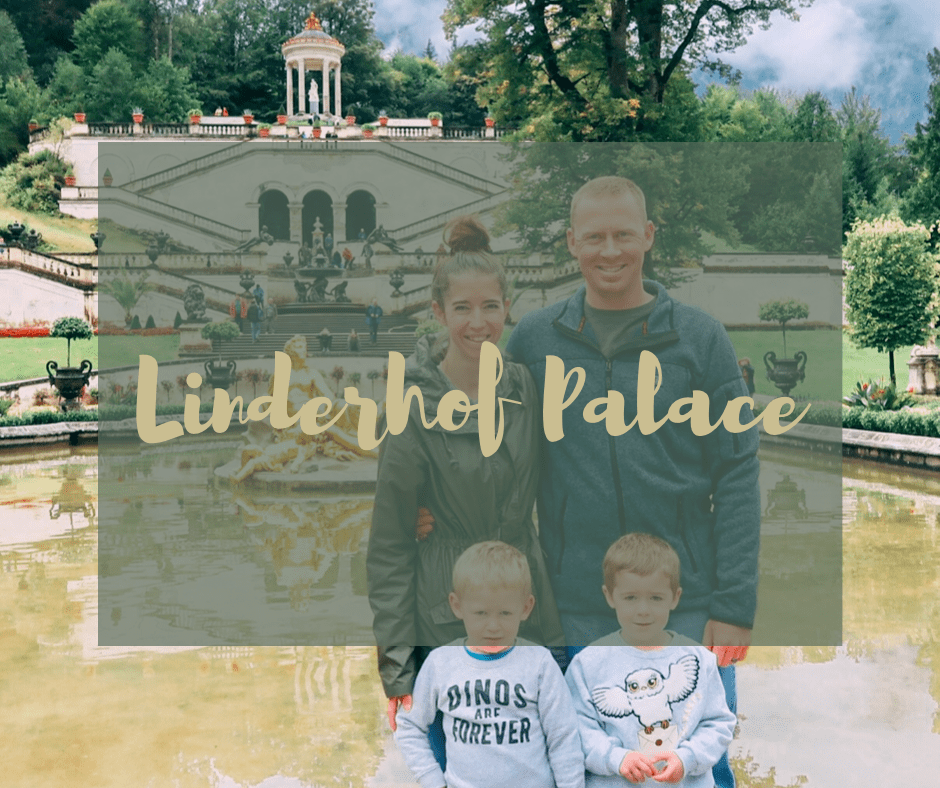
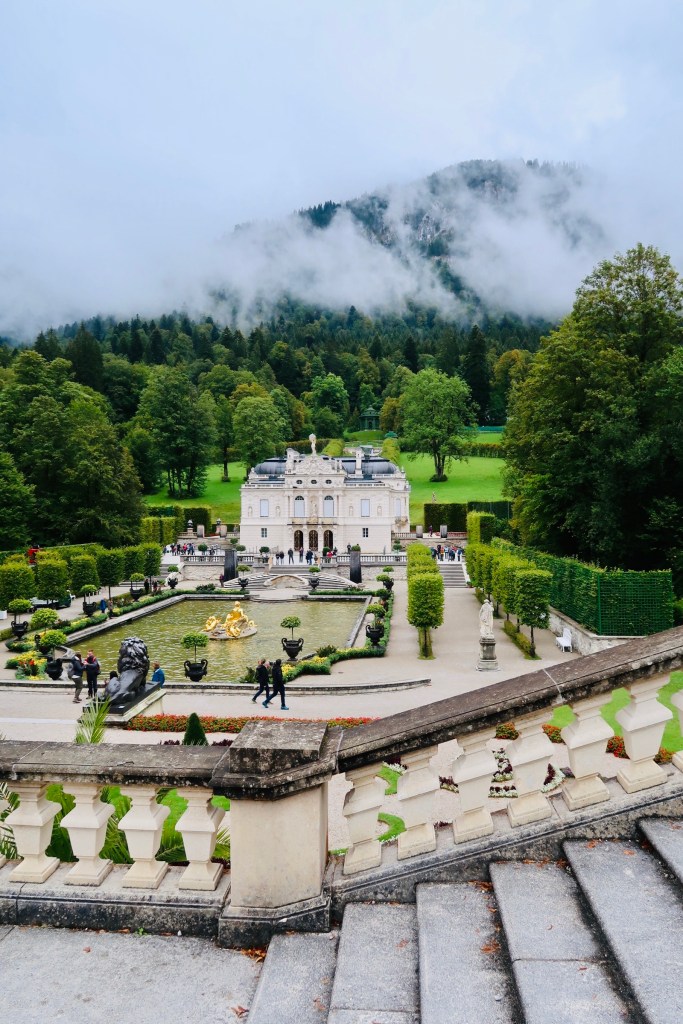
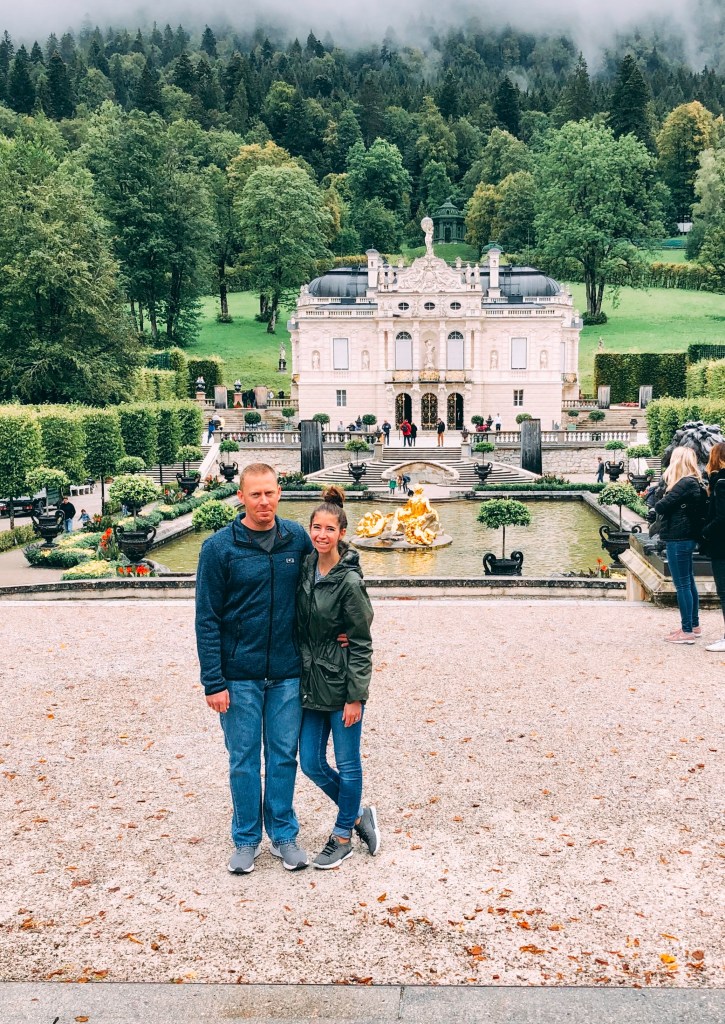
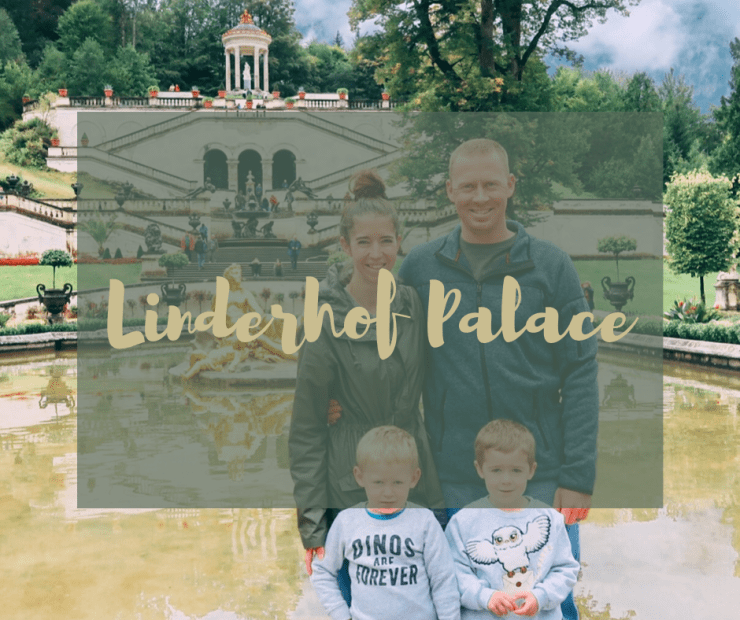
We went to Linderhof Palace as part of our weekend in the Garmisch-Partenkirchen region (HERE) and it has to be close to one of my favorite castles. Ornate, ostentatious, and only meant to be used for personal residence, this palace was nowhere near what I expected and yet exactly what I expected. 

A quick note- photography was not allowed inside the castle itself (as with many of the castles in our region). I will do my best to describe the rooms in detail, but you are also able to look at the Linderhof Palace website HERE and see for yourself. 

Linderhof Palace was commissioned by Ludwig II, who seemed to want to rebuild everything he could and commission as many monuments as he could during his short reign. Ludwig II was crowned in 1864, and started his first plans for Linderhof in 1868 (after already redesigning his Munich Residence AND laying the foundation stone for Neuschwanstein). Linderhof was originally a forester’s house used by Maximilian II (Ludwig’s father) as a hunting lodge. In 1874 it was completely torn down and moved about 200 meters for its final spot. The final building was completed in 1886, with a final phase of rebuilding his bedroom (which we will get into in a minute). Linderhof is the smallest of the three palaces he commissioned, but the only one he saw completed in his lifetime. 

Ludwig II was a bit obsessed with the French Monarchy and the ideals presented. He loved what he saw of Versailles and tried to channel a lot of both Versailles, and the French monarchies rooms within Linderhof. You can see these influences in the gold adornments covering the walls, and the tapestries and paintings throughout the interior. There are also paintings of various members of the French Monarchy, such as Louis CV, Marie Antoinette, and others.

There are a total of 4 rooms within the palace (again- it was intended as a private residence), each more over the top than the previous. The ones that stood out to me the most were the Hall of Mirrors, which was used as a living room of sorts. It is said that Ludwig II would sleep during the day and be up at night, and the mirrors combined with candles would create an illusion of a never-ending room. The Bedchamber was another that stood out to me, mostly because of it’s incredibly over the top nature. Ludwig II pulled on his inspiration and admiration of Louis XIV when designing this room. He was fascinated by how the French King would hold morning audiences in his bedchamber as he got ready for the day. While this was a private residence, and there would not be much business or visitors at Linderhof, Ludwig II still wanted to create this grand appearance. The bed itself is massive and a beautiful blue coloring, but is positioned in a way that idolizes Ludwig II (had you happen to see him there in his life). The entire room boasts of glass, porcelain, and gold. 

Though it appeared that most rooms were coated in gold, there actually was not a lot of gold used. If you had melted down all of the gold in the palace, it would have only yielded under 10kg of gold. It was more so for the sake of appearing wealthy than of actually being wealthy (although the cost of the palace was still a hefty 8 million marks). 

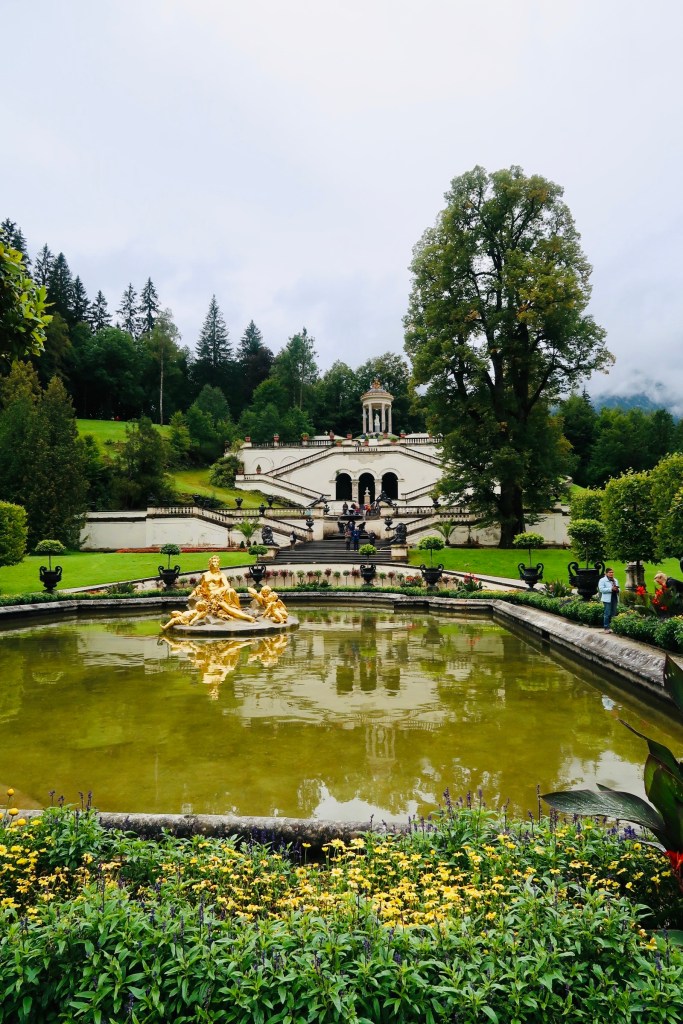
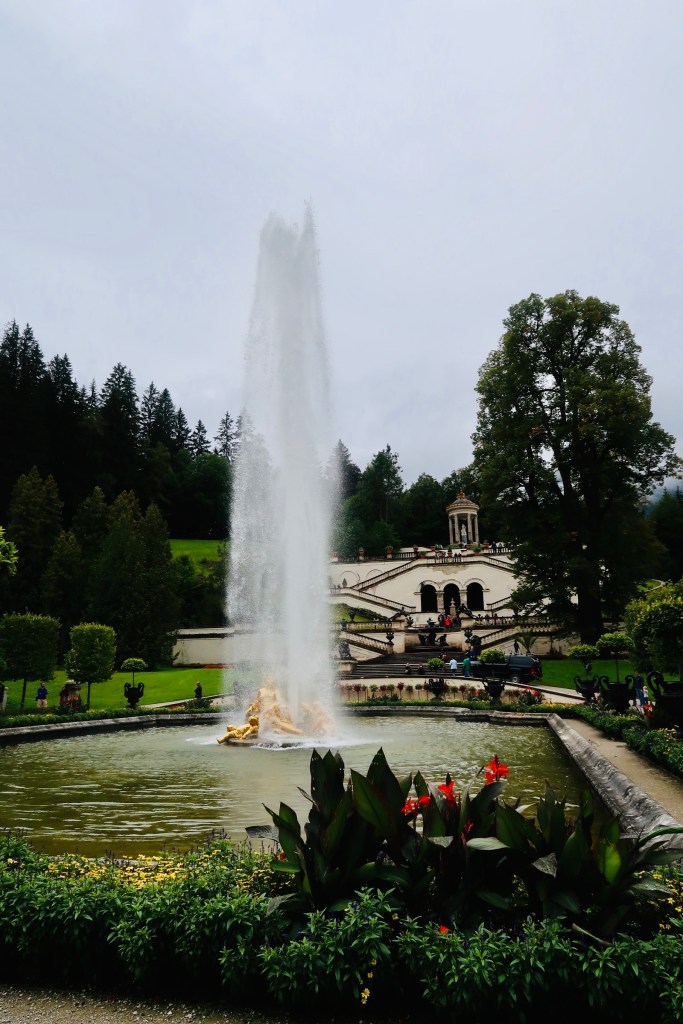
The grounds of Linderhof are equally stunning. Set almost right into the Bavarian Alps, you can’t help but feel as if you are in a secret oasis, with only the mountains around you. In front of the entrance to the Palace is a large pool with a 25-meter-high fountain. Continuing on there are three terrace gardens that lead up to a temple. Behind the palace is a cascading water display topped by a small music pavilion. There are also several other features to see, including a grotto, the Morocco House, and the Hunding’s Hut. 

The combination of the grounds and the palace give a very overwhelming effect. Here lived a king. And he did. He found himself staying at Linderhof for a couple weeks a month.  Overall, this is a must see spot, especially if you like secluded mountain oasis spots. 

A Girls Weekend- Heidelberg

After months and months, I finally was able to do my little girls’ getaway! Back in March I was supposed to go on a girl’s weekend to Prague. This was something that we had planned, booked train tickets, an Airbnb, and some things to do while we were there. Then everything shut down in Europe and we had to cancel the entire trip (and any hopes of doing any girls things at all that weekend-even locally). In the grand scheme of things, it wasn’t that bad, but it was definitely a bummer for us, and I’ve been waiting since then to be able to do a little get away. So, when a free weekend popped up, I took it and one of my best friends, Kim, and I headed out to Heidelberg.

Heidelberg is a university town in south-west Germany, right on the Neckar River. The city itself has been designated a “City of Literature” and has quite a scientific hub as well within the university. The city also serves as the site of the remains of the earliest signs of human life in Europe ( a jawbone was found in 1907 dating back 600,000-200,000 years ago). Heidelberg as a region dates back to the 5th century BC, with the Celtic people and then the Byzantine/Roman Emperor Valentinian building homes in the location. In the 1st century AD a Christian church was founded inside the Celtic Fortress, with a Monastery and Abbey being added in the 12th century.  The actual founding of Heidelberg is considered to be in 1196. Heidelberg then went through two changes of “rulers” first the house of Hohenstaufen, then the Duke of Bavaria, Ludwig I acquired the city. In 1386, Heidelberg University was founded and, finally, of the upmost importance to me, Heidelberg’s library was founded in 1421, making it the oldest (public library) in Germany. So, a lot happened in the town’s history, long before our more modern history.  

A couple other random facts about Heidelberg, before I get into what we did on our 24 hrs…

Heidelberg went through quite the religious battle (as did most of Europe at one point or another), concerning Lutheranism and Calvinism. In fact, it played a leading role in the conflict, hosting Martin Luther shortly after his Ninety-Five Theses. Heidelberg was also a key player in the beginning of the Thirty Years War, after Frederick V was overthrown in 1621 by the House of Habsburg. Heidelberg has seen several different countries invade, including Sweden and France. And, during World War 2, Heidelberg was a stronghold for the Nazi Party (the NSDAP-National Socialist German Workers Party). The local populace was very much on the side of the Nazi’s and the university served to build an amphitheater and hold rallies during Hitler’s rise. While Heidelberg wasn’t targeted by bombings or other air raid actions, the old treasure bridge was destroyed (3 arches) by Germans fleeing in March of 1945. One final note, Heidelberg has one of the largest American communities outside of the United States (and I can definitely see why), along with an overall large population of expats from around the world. 

Ok, so now that we’ve got the history of the city out of the way (seriously- that was much longer than I had originally intended), let’s talk about what we did. We basically spent 24 hours wandering the Altstadt (Old Town), just reveling in being in an old German Town. The fact that it’s home to so  much history gives it a certain…feel and we just wanted to soak that up. 

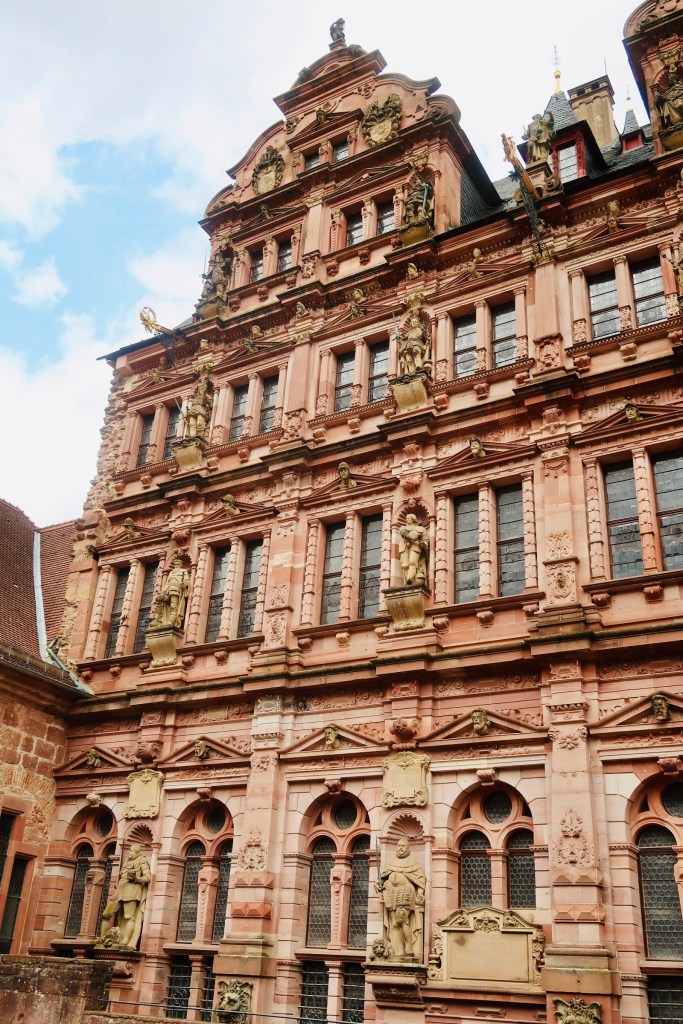
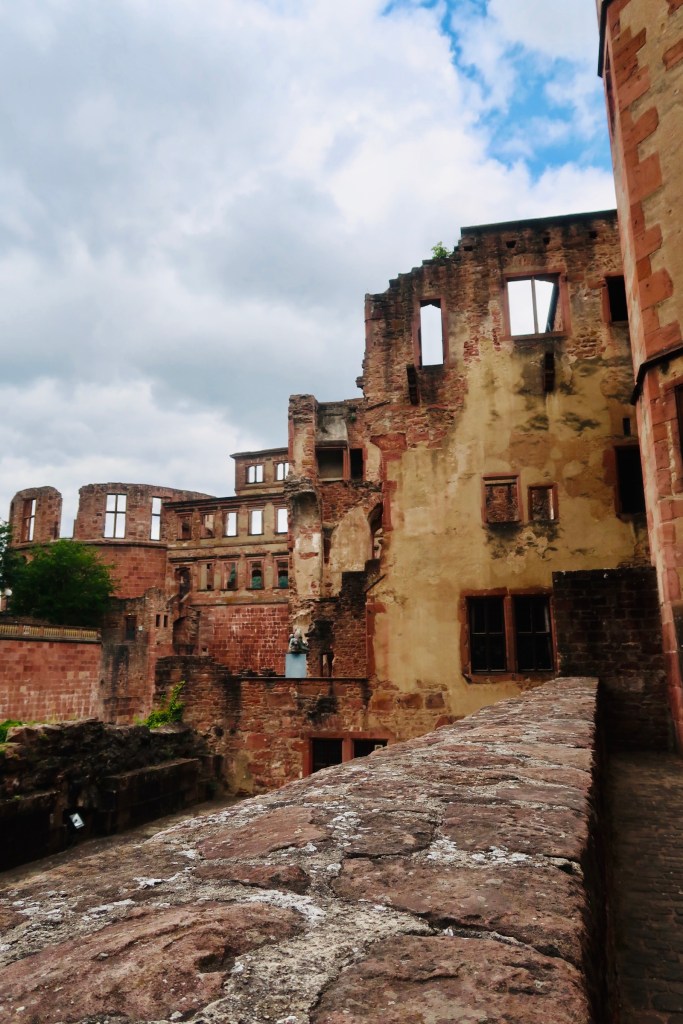
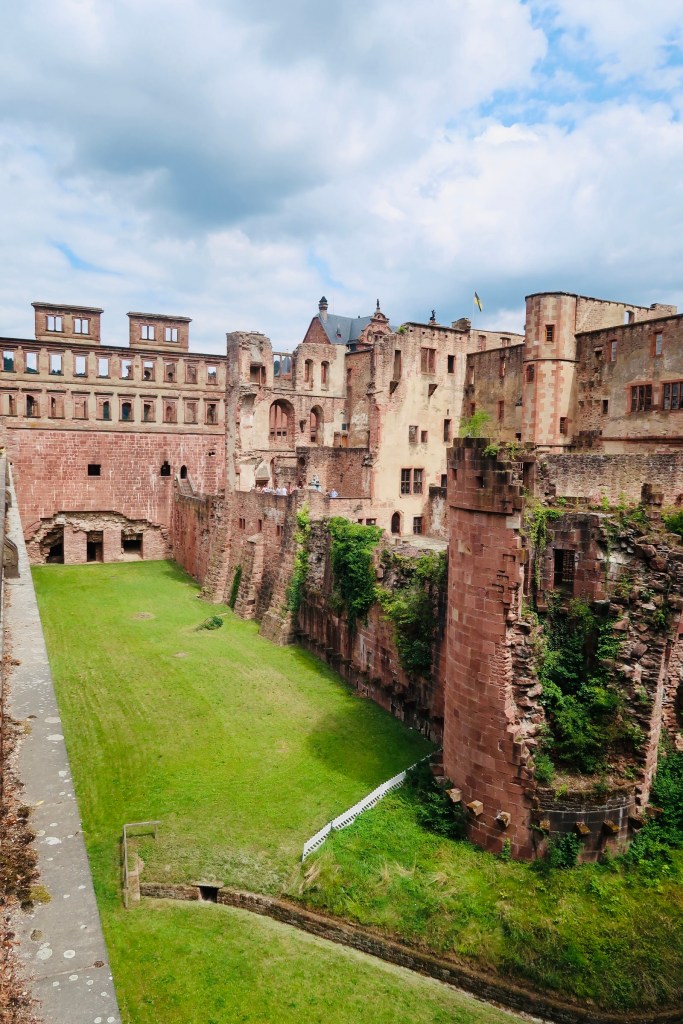
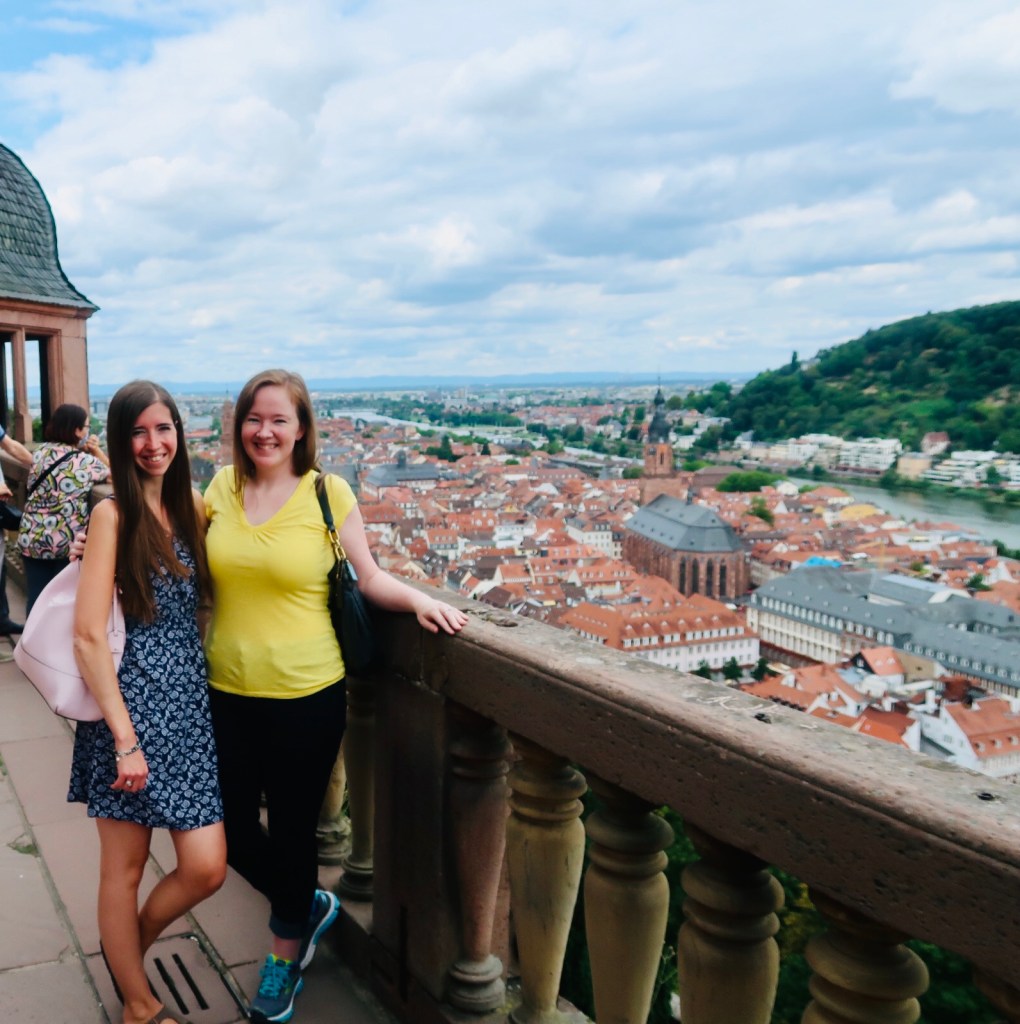
We started off at Heidelberg Castle. I’ll be doing a full castle post on it, but I’ll touch on some of the basic information in this post.

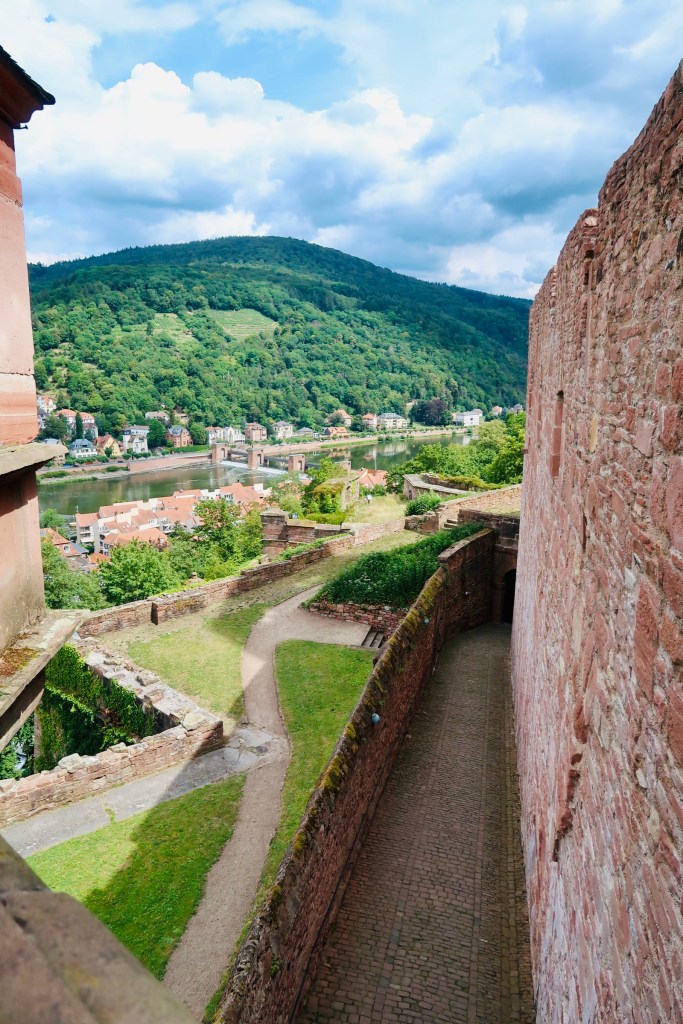
The castle was first mentioned in the early 2nd century when the Duke of Bavaria (Louis I) received it from the Hohenstaufen Emperor. From that point on, the castle became two castles, upper and lower. The Upper castle was destroyed by a lightning bolt in 1537. The present castle was expanded in 1650, to then be damaged by war and fires, before another lightning bolt struck in 1764. It was incredible to walk through the walls of the castle, then along the ramparts overlooking the city, and finally just outside the main walls along the side of the complex. It has a real feel of history and tells a multitude of stories. 

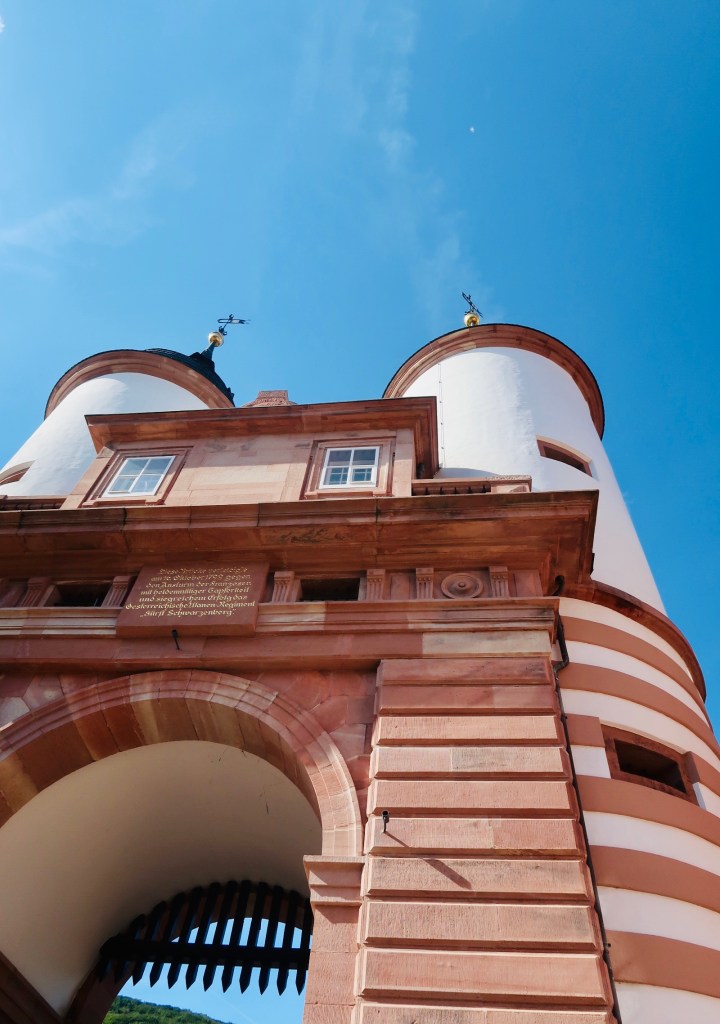
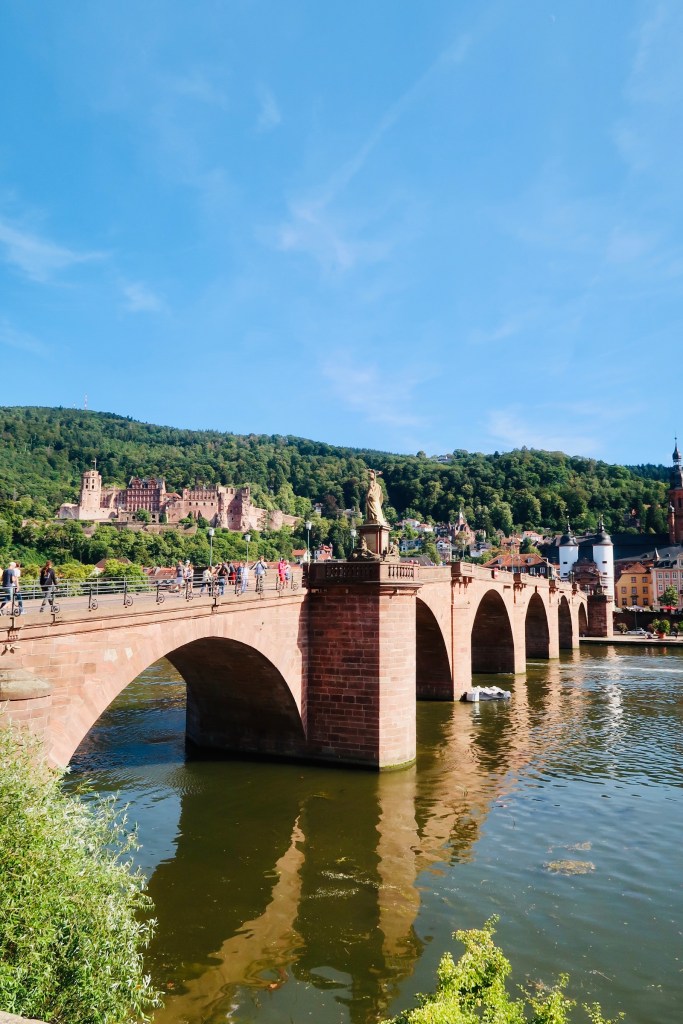
From the castle, we checked into our hotel, and headed to the Old Bridge. The Old Bridge is actually the Karl Theodor Bridge, an arch bridge that crosses the Neckar River.

The current bridge is actually the ninth built and is dated back to 1788. The bridge location has a storied history (it had to have been with Heidelberg being on its’ ninth bridge) of bridges being destroyed by mother nature and wars alike. The medieval bridge gate on the Old Town side of the bridge dates back to the original town wall, however the tower helmets were added with the new stone bridge in 1788.  

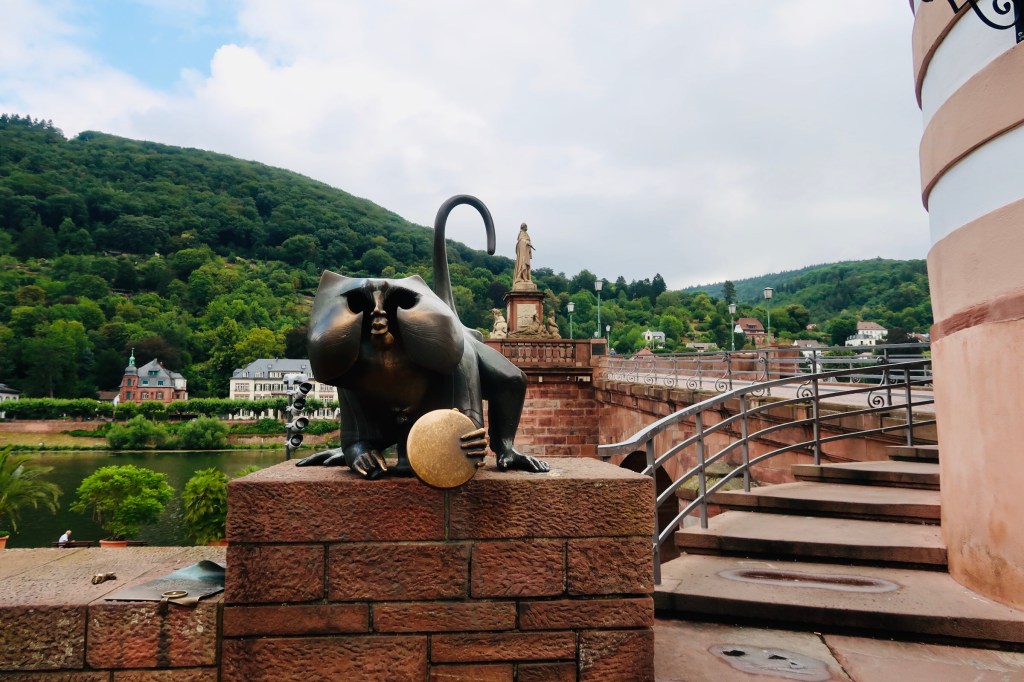
A fun fact, on the gate side of the bridge there is the statue of a monkey (it’s ok if you don’t see the monkey until you read that it was a monkey- we originally thought it was a cat) which has quite the story attached.

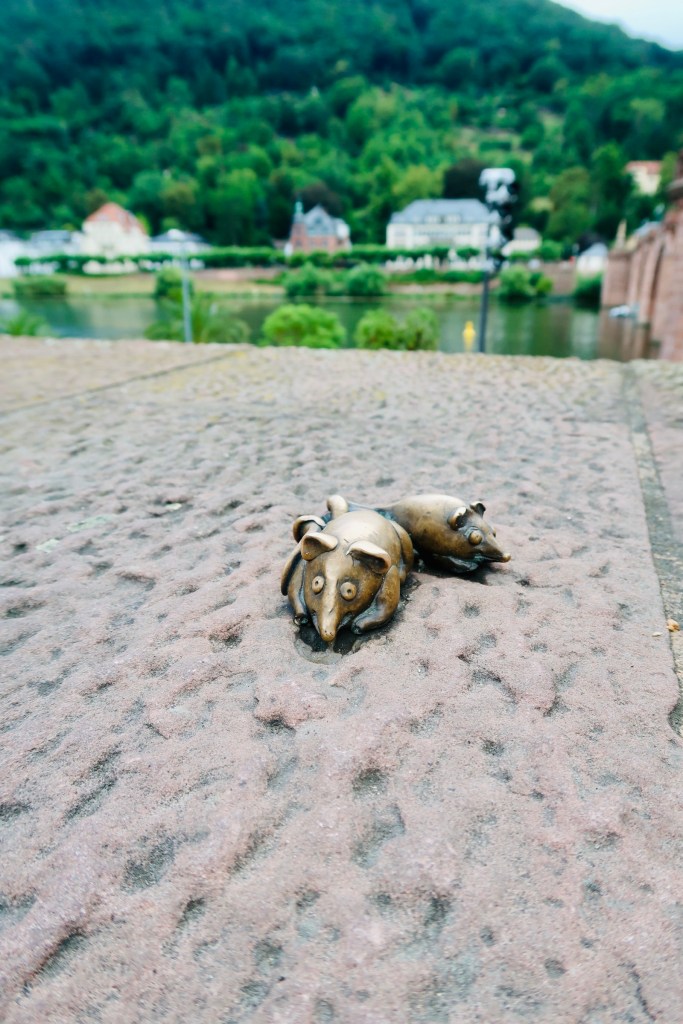
The original monkey dates back to the 15th century and was placed within the tower to represent mockery against the tower’s representation of fear and respect. The monkey had a mirror in one hand (to encourage critical self-reflection) and his other hand on his…rear end. This was turned so that his rear end was facing across the river towards Mainz; which in turn was how the people of Heidelberg told the Bishop of Mainz that he had no power in Heidelberg. The 15th century version of an…eff you. The current bronze statue was installed in 1979 and legend says that if a visitor touches the horns, they will return to Heidelberg, the mice will provide fertility, and the mirror will provide wealth or good luck.

Our hotel was right at the Altstadt side of the bridge, so we were on it…a lot. We walked across to the other side of the Neckar and wandered down the water a bit before heading back over. We got some dinner right off the bridge and then wandered down and around the main street of the Altstadt. It was fun to just wander the streets and take in everything. 

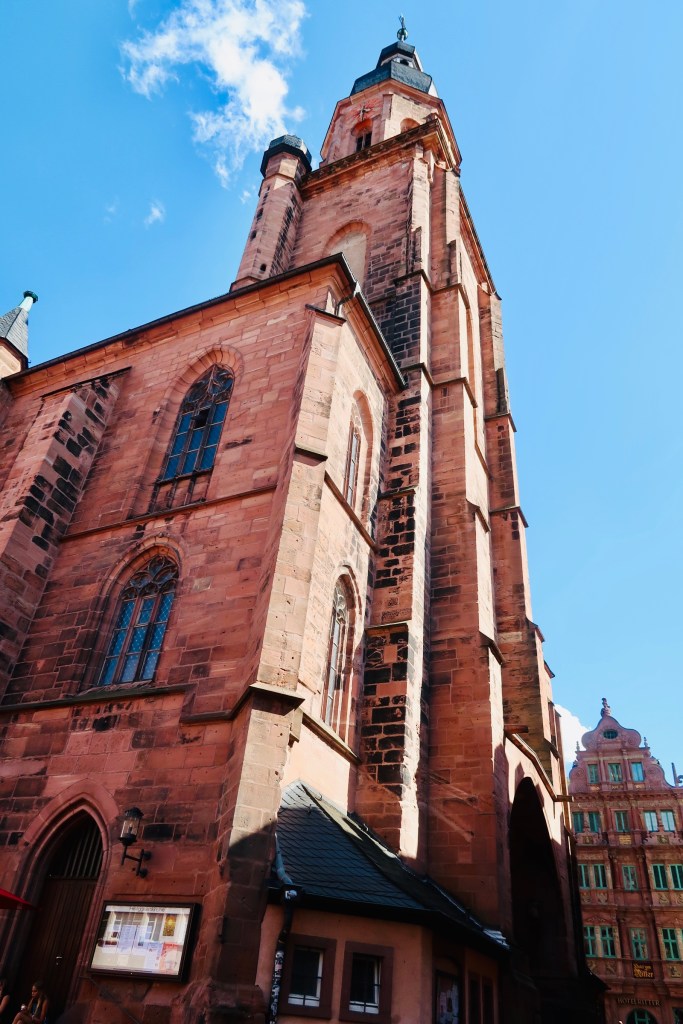
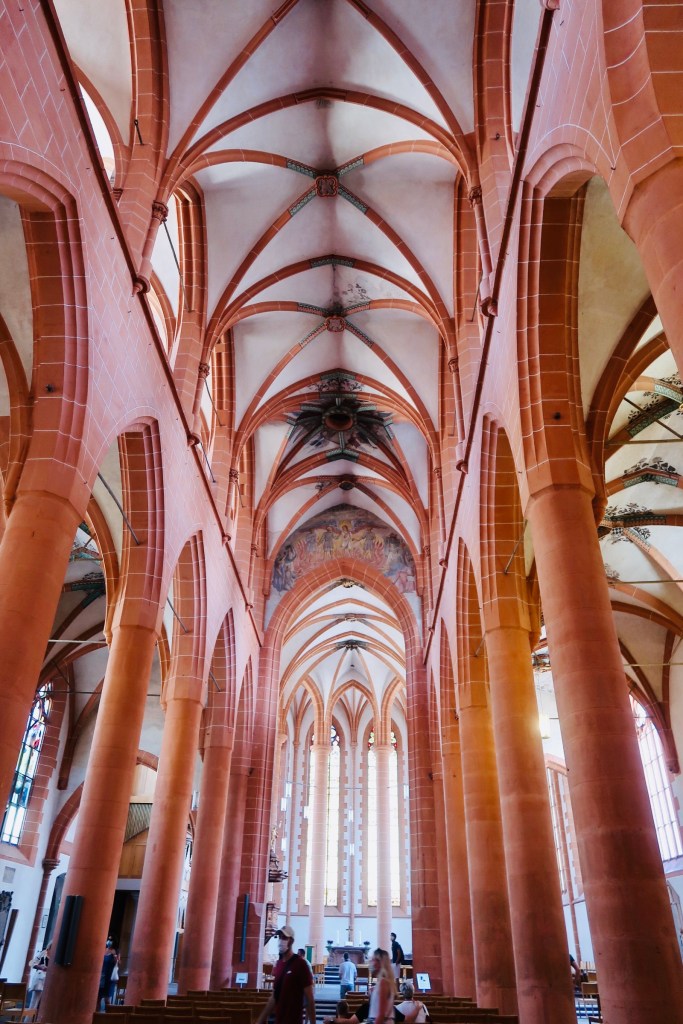
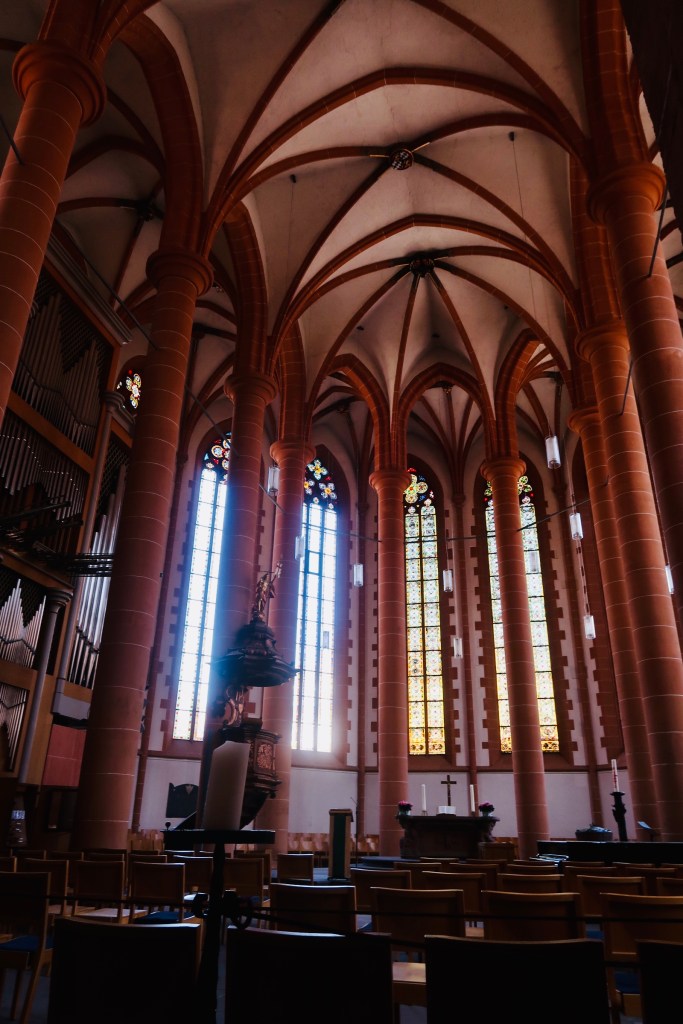
Our final stop of our trip was a stop into the Church of the Holy Spirit, a church that dominates the main square of the Altstadt (and the steeple dominates the entire city).

The first mention of a church on this site is from the 13th  century, then in the 14th century another Gothic Church, and finally this church during the 15thcentury. The construction took around 150 years to complete, however it was interrupted for a period of time, and has been rebuilt once due to being set on fire by the French. The church did have the Palatine Library; however, the collection was taken during the Thirty Years War to the Pope and are now, on the whole (only about 885 manuscripts were returned) in a dedicated section at the Vatican Library. 

One of the things that I really liked about the church was how there was a little market set up on the direct outer walls of the church. Market stalls were set up within the walls of all different varieties, which reminded me of something straight out of a Ken Follett novel. The church itself was incredible and not what we were expecting at all. The walls and ceiling had a pink hue to them and the church itself had a simple elegance to it. 

The only thing that we did not get to do, but wanted to was walk up the Philosophers Walk. This is a walk (or hike) that offers scenic views of the old town from the opposite side of the river. It was a tradition of the philosophers and professors at the university to walk and talk along the path. If you hike a bit farther up you can see the ruins of the Monastery, the amphitheater, and the Celtic fort.

Overall though, we had such a wonderful time and I really recommend a trip over to Heidelberg. It, once again, reminded me just how much I love Germany and the German Old Towns. There is not a bad choice to make anywhere within the Altstadt and even just sitting along the river is incredibly peaceful.