COCHEM IMPERIAL CASTLE

We went to Cochem Imperial Castle as part of our time in Cochem on our Summer Holiday (COCHEM). This was the first place we went when we arrived in Cochem and while it may not be one of the top castles, it was so cool to explore its courtyards and rooms and hear its extensive history. 
The first written mention of Reichsburg Cochem is in 1051, however it is assumed that the castle was built around 1000. Built by Palatinate Count Ezzo, the castle was given to count Henry I in 1051 ( by Richeza, former Queen of Poland). In the 12th century King Konrad III took control of the region and castle, turning it into an imperial fiefdom. The castle then became an imperial castle. It was pawned to Austria to pay for a coronation (King Adolf of Nassau), but the debt was never able to be collected. During the Nine Years War, Louis XIV invaded Cochem and the Imperial Castle before destroying it by fire (and then an explosion which almost took out the entire town of Cochem). The ruined castle wasn’t touched again until it was purchased in 1868 by Louis Frederic Jacques Ravene  who rebuilt the castle into the Neo Gothic style you see today. The castle was transferred to Cochem’s ownership in 1978 and is now able to be toured by the general public. 

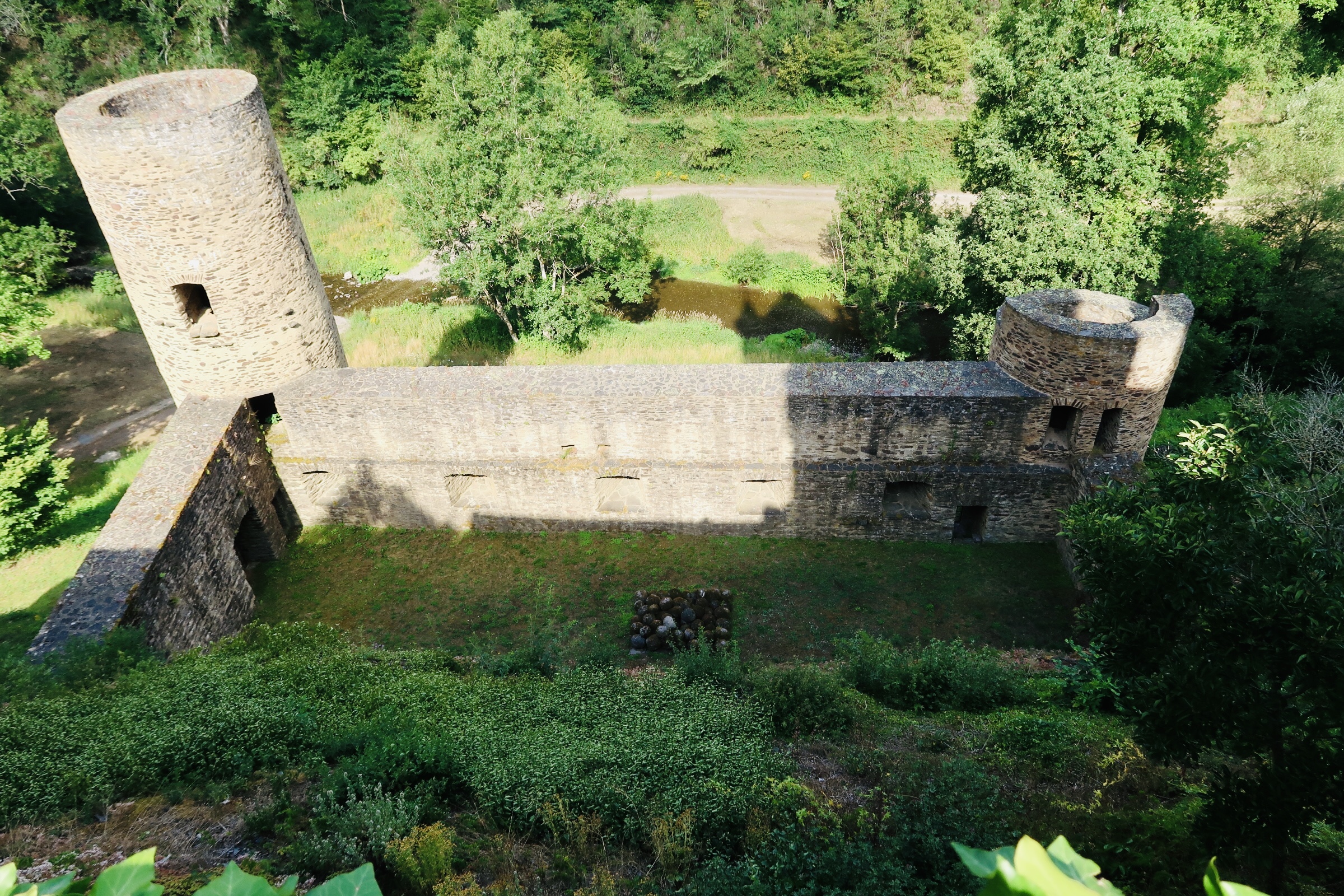
The best part of this castle is, hands down, the view. Situated high above the Moselle River, you are able to see Cochem, the river, the wineries, and much more. It is a stunning view from almost anywhere within the castle. The courtyard is incredible too, with a well in the center as it would have been in early times to collect rainwater. You are also able to see the round tower, which somehow survived the destruction by Louis XIV. It was a guard tower during the castle’s time and if you follow it around, you are able to see a large mosaic of St. Christopher. 

I know this wasn’t as long as my normal Castle Post, but this is a pretty straightforward castle. It is definitely one I recommend touring if you are in Cochem as it is really interesting to see how they would have lived in the castle, as well as all of the defensive measures that were set up. 
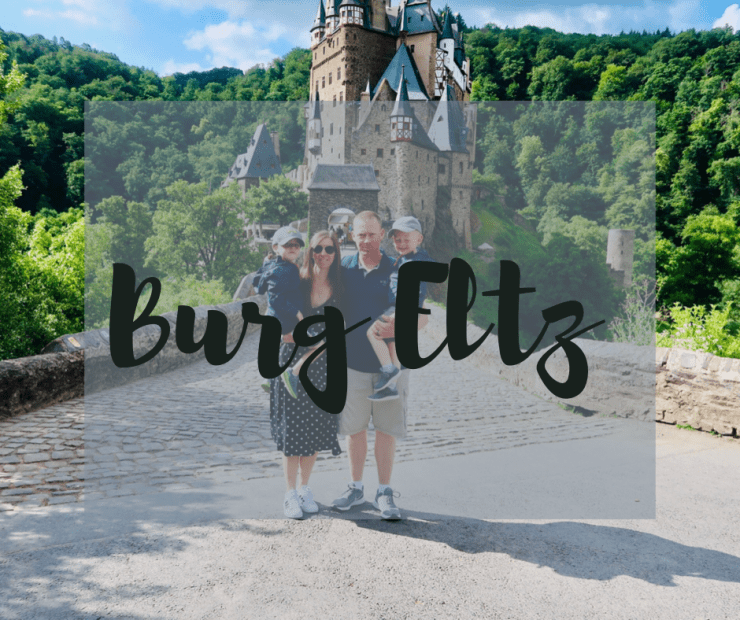
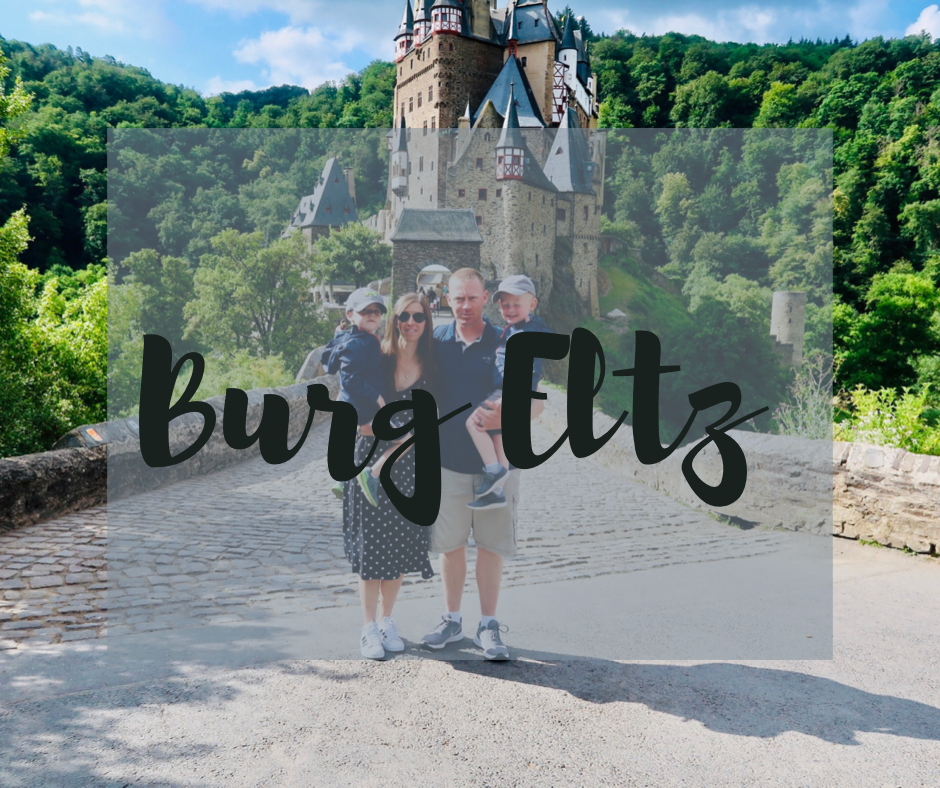
Burg Eltz

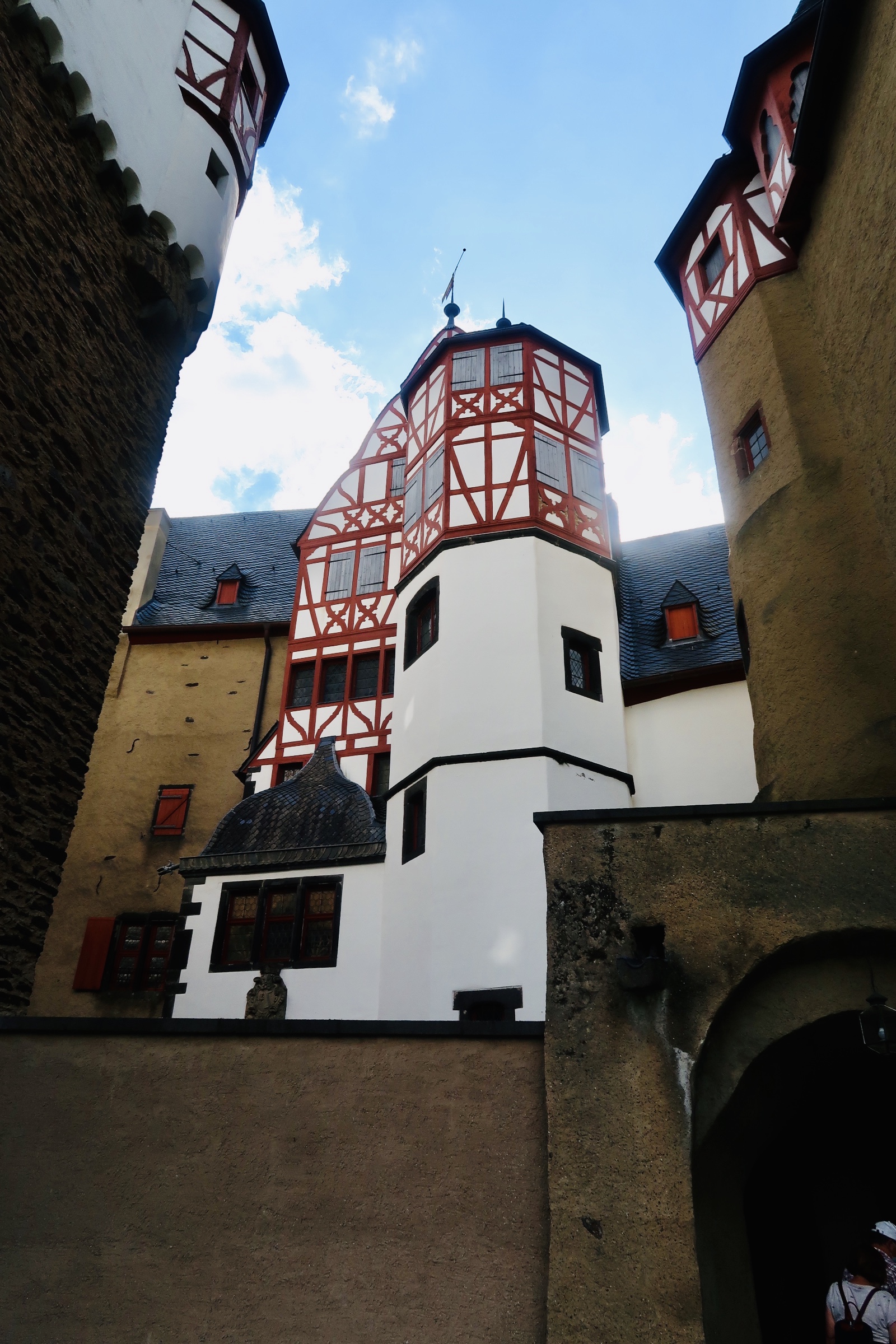
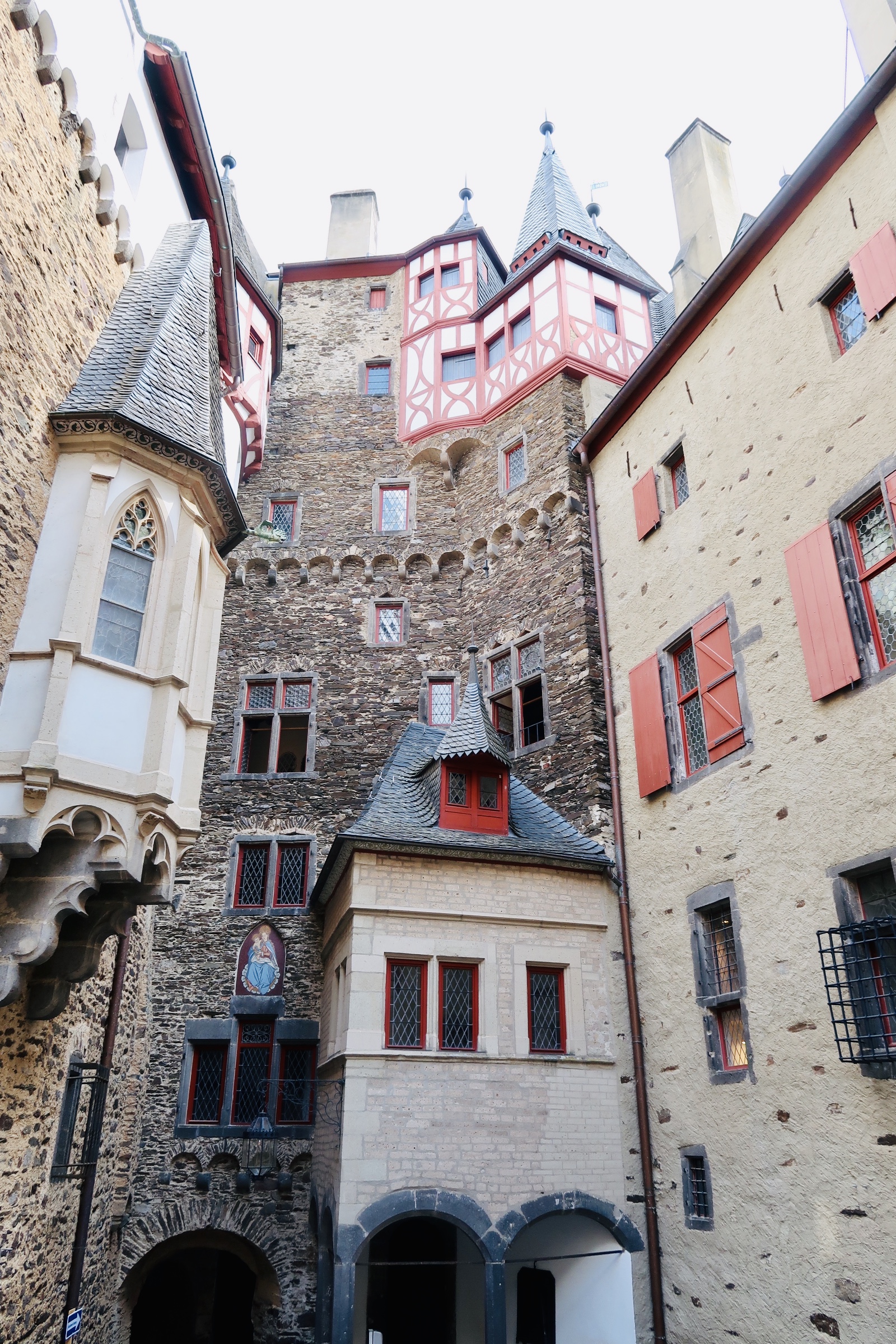
Ah, Burg Eltz. It’s one of the most photographed castles and takes its place as a top castle to visit with Neuschwanstein Castle, Lichtenstein Castle, and others. During our Summer Holiday, we made a stop at Burg Eltz to see what it was like. Burg Eltz is one of only three castles in the Rhine region that have never been destroyed and so, it was incredible to see how the different eras of the castle and families had left their own imprints. The house is joint owned by three families, Rubenach, Rodendorf, and Kempenich. You are able to tour two of the portions (Rubenach and Rodendorf), while the third is currently occupied by the family.

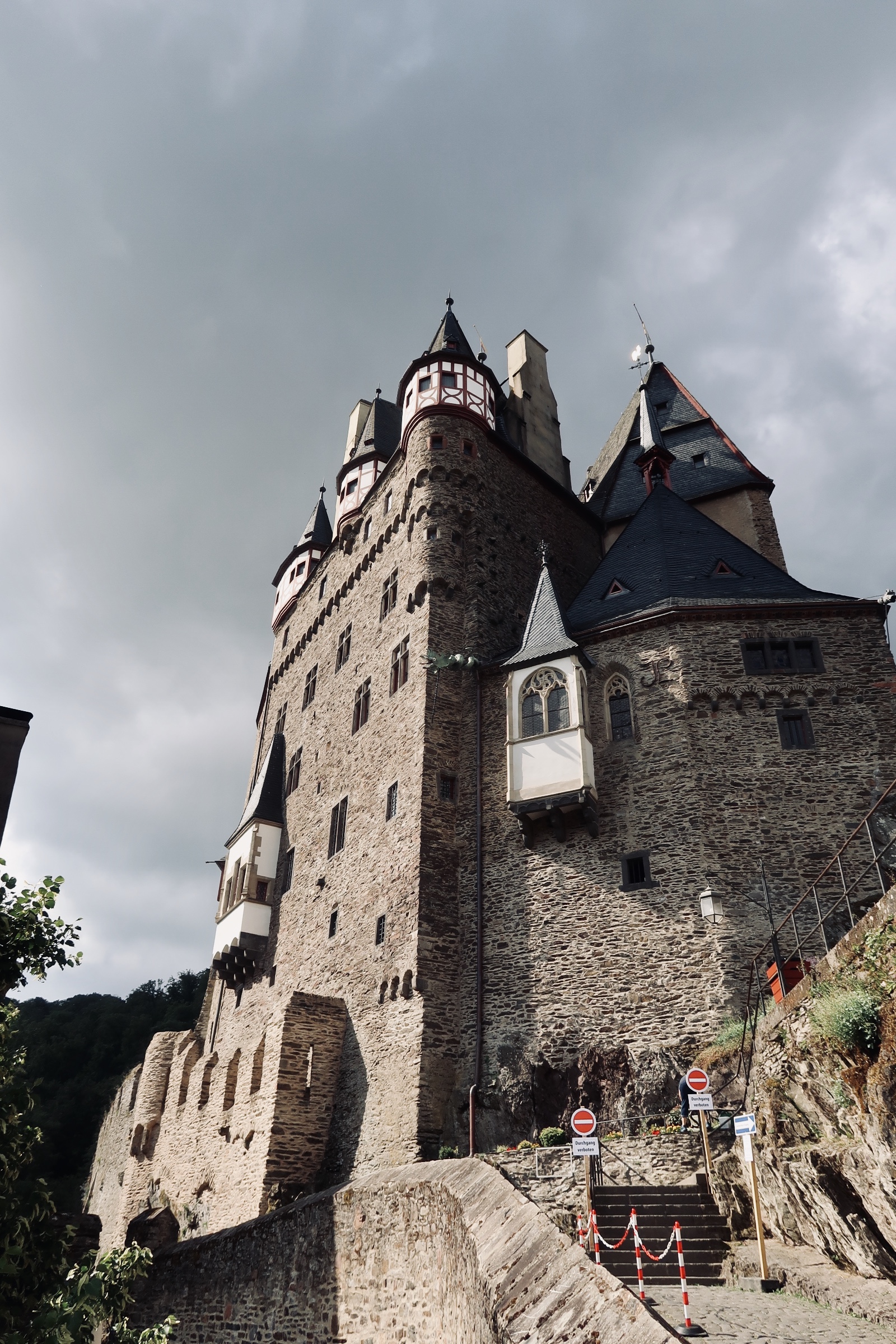
The oldest part of the castle is a Roman style keep that was initially built in the 9th century. It was intended to be a simple manor, but by the 12th century it became an incredibly important Roman Empire fortress. Built on top of a rock, the castle doesn’t quite stand perfectly upright, rather following the shape of the rock as it juts upward (similar to Mont Saint Michel in a way). In the mid 13th century (not long after the initial castle was completed) the three brothers of the Eltz family had a bit of a dispute which ended up leading to the castle and estate being split into three. The tower keep in the north was the beginning of the Rodendorf portion (which dates back to 1300) and the Rubenach house had its start in 1311. 

The only military conflicts to occur in the Eltz castle occurred in the 1330’s when the lords of Eltzer opposed the territorial policy of the Archbishop of Trier. This led to a siege of the castle, which led to another smaller siege castle on the northern side (the remains of which you can still see today). The siege ended two years later (when the “free” imperial knights gave up their “freedom”) and with it, along with clever politics and support from its neighbors, the castle did not see any other battle action.

In 1472 the Rubenach house was completed (as part of the Greater Rodendorf House) after being commissioned by Philipp zu Eltz. Then the Kempenich house replaced the original hall in 1615. Eltz castle was one of the few castles lucky enough to come through the Palatine Wars of Succession (leading to the French rule) unscathed as many others were destroyed. This was due to a high-ranking officer in the French Army, Hans Anton zu Eltz-Uttingen, who saved the castle. However, Eltz Castle still came into the French possession after Count Hugo Phillipp zu Eltz fled during the French rule of the Rhine region. He was then treated as an emigrant and all of the properties owned by the Eltz family, even those beyond the castle, were confiscated. These only came back into his possession in 1815 when he was able to purchase it (if you’re curious- during the French rule Count Hugo hid out in Mainz, Germany). Finally, in the 19th century the Count Karl zu Eltz decided to restore the castle and commissioned extensive work to preserve the existing castle. 

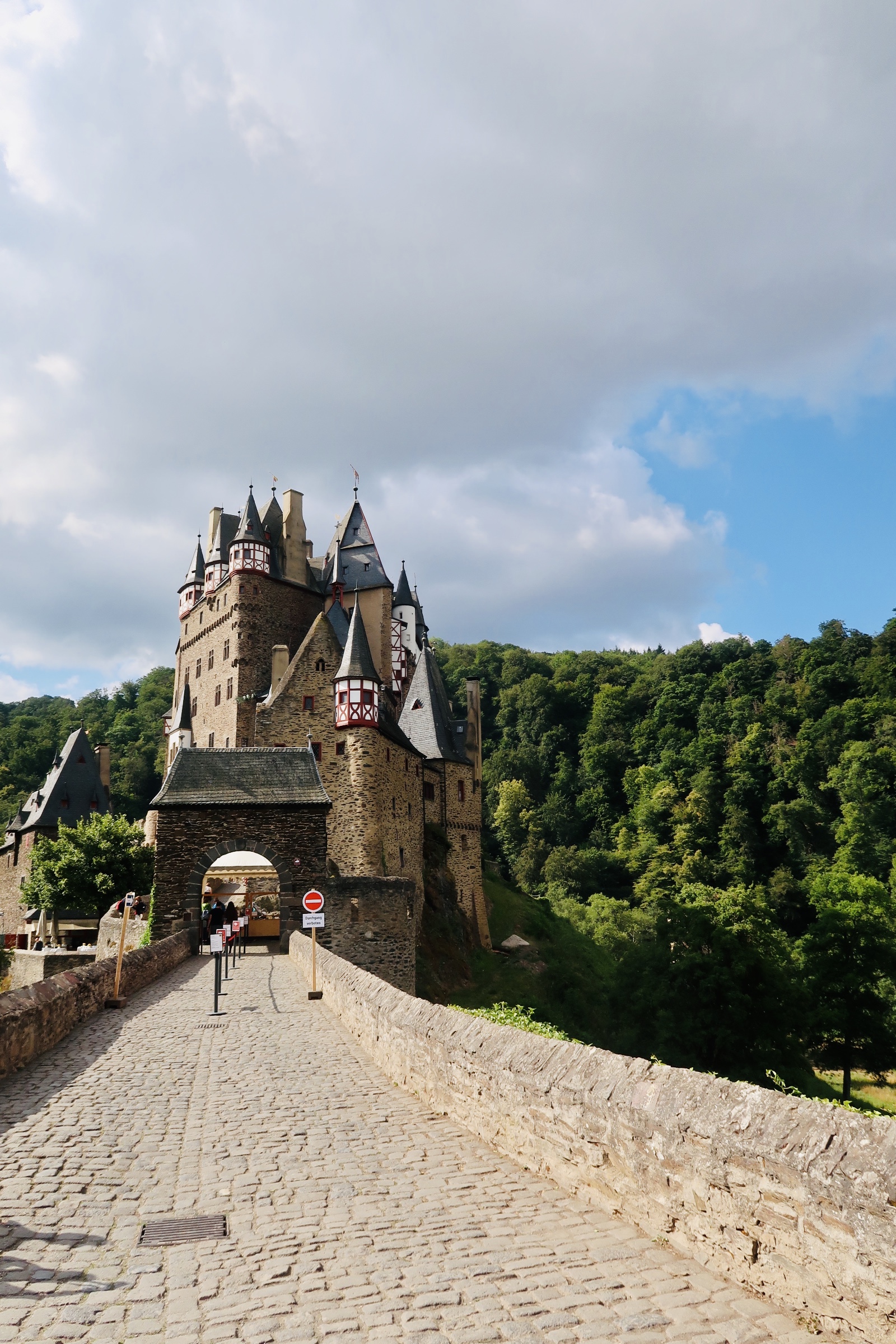
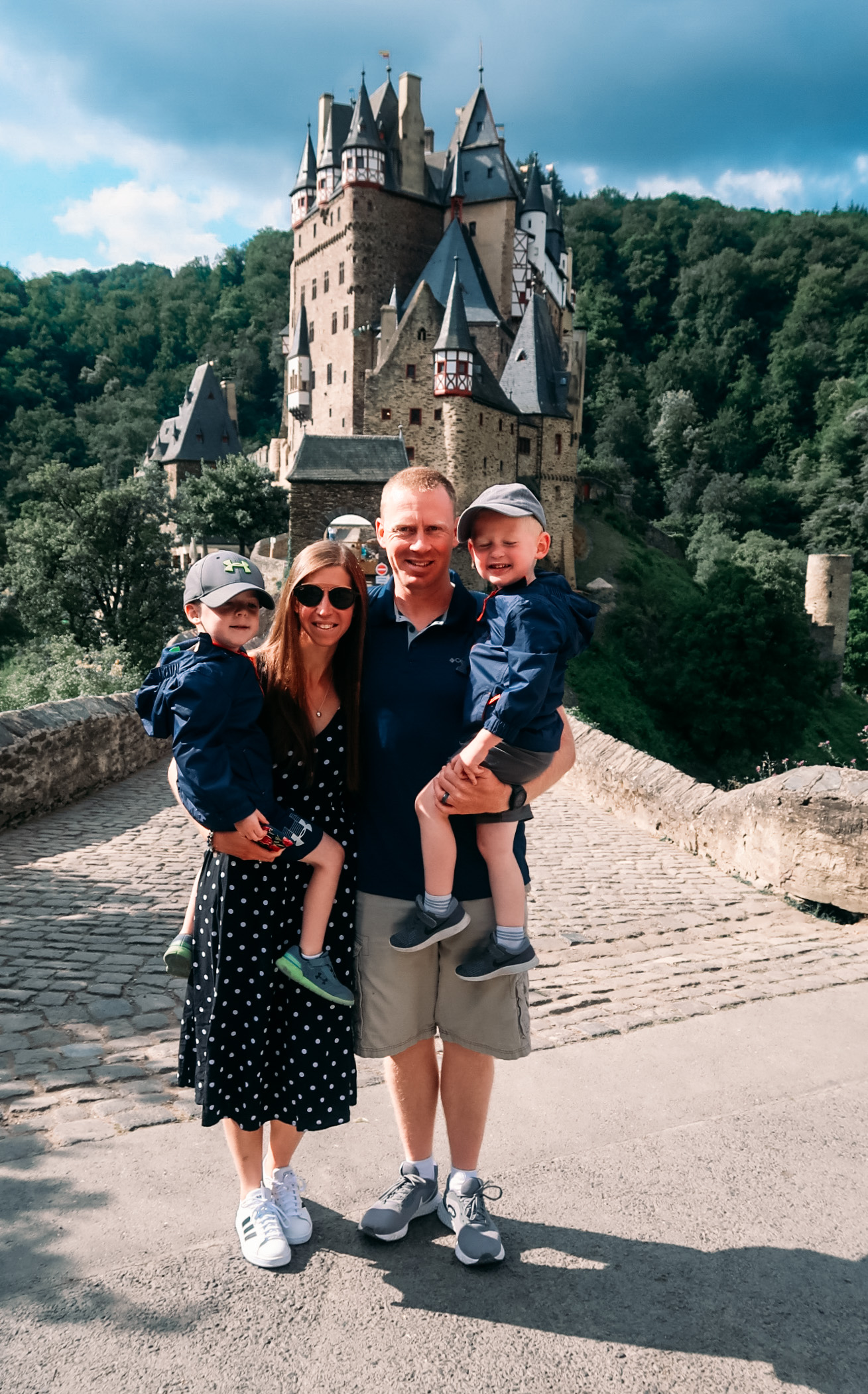
I’ve got to say- this castle really lives up to the expectation. You’ve got the perfect fairytale location, literally nestled right into the trees and valley between hills. You’ve got the picture-perfect bridge leading up to the castle itself, where you can marvel at this towering not quite straight towers looming above you. And you’ve got the visual history right in front of you. You are able to literally walk-through different eras of time and see how they lived in these different houses in the same castle. 

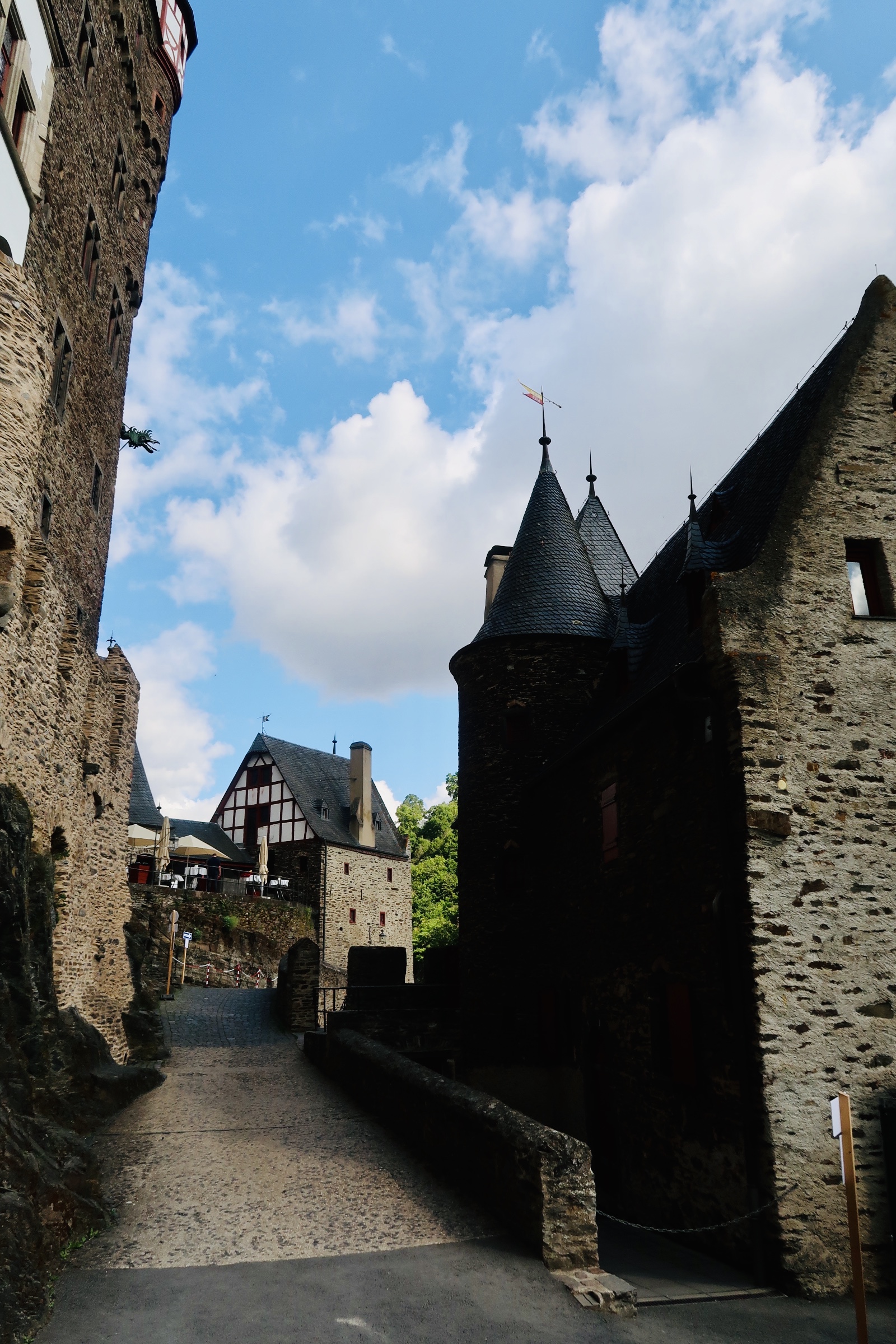
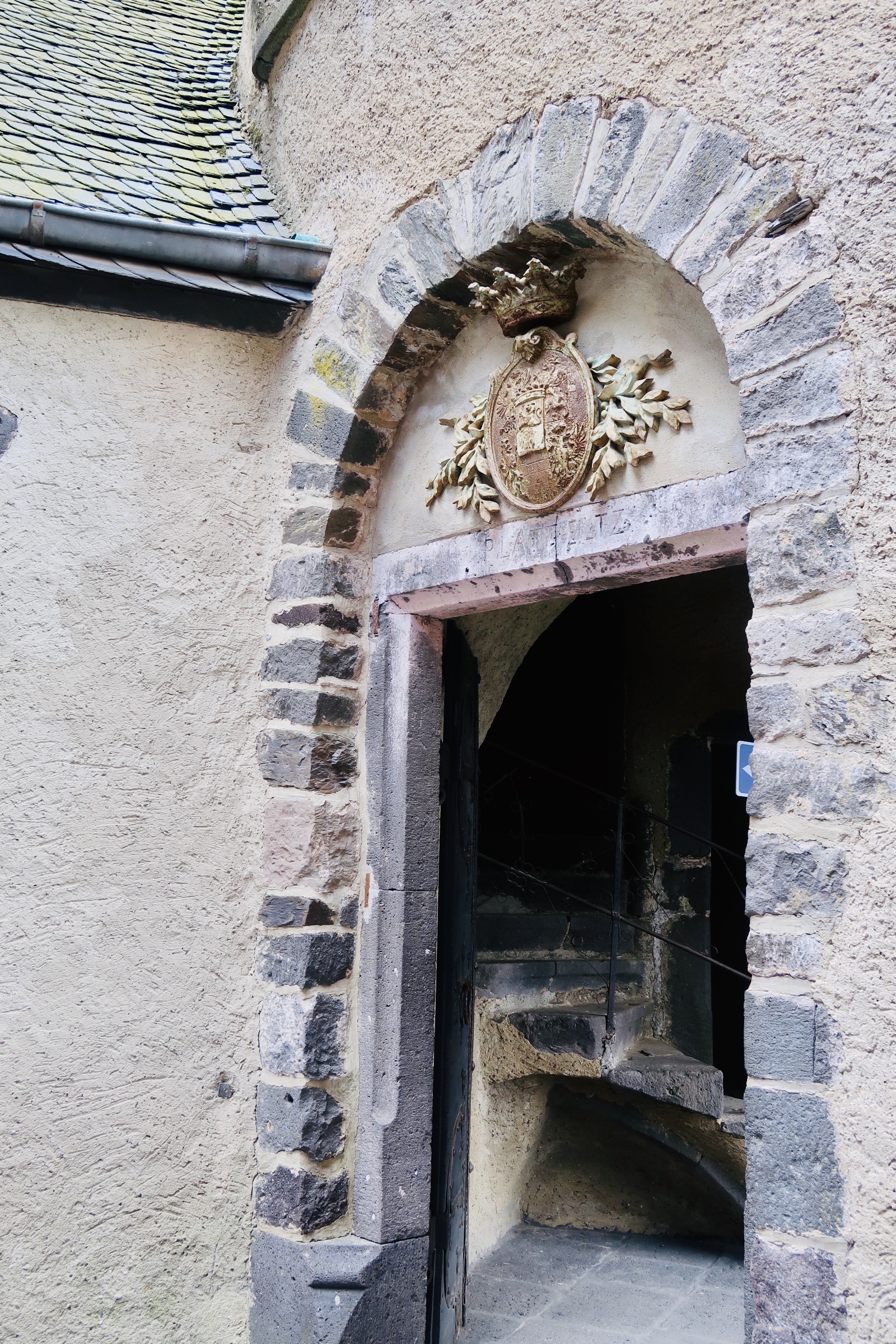
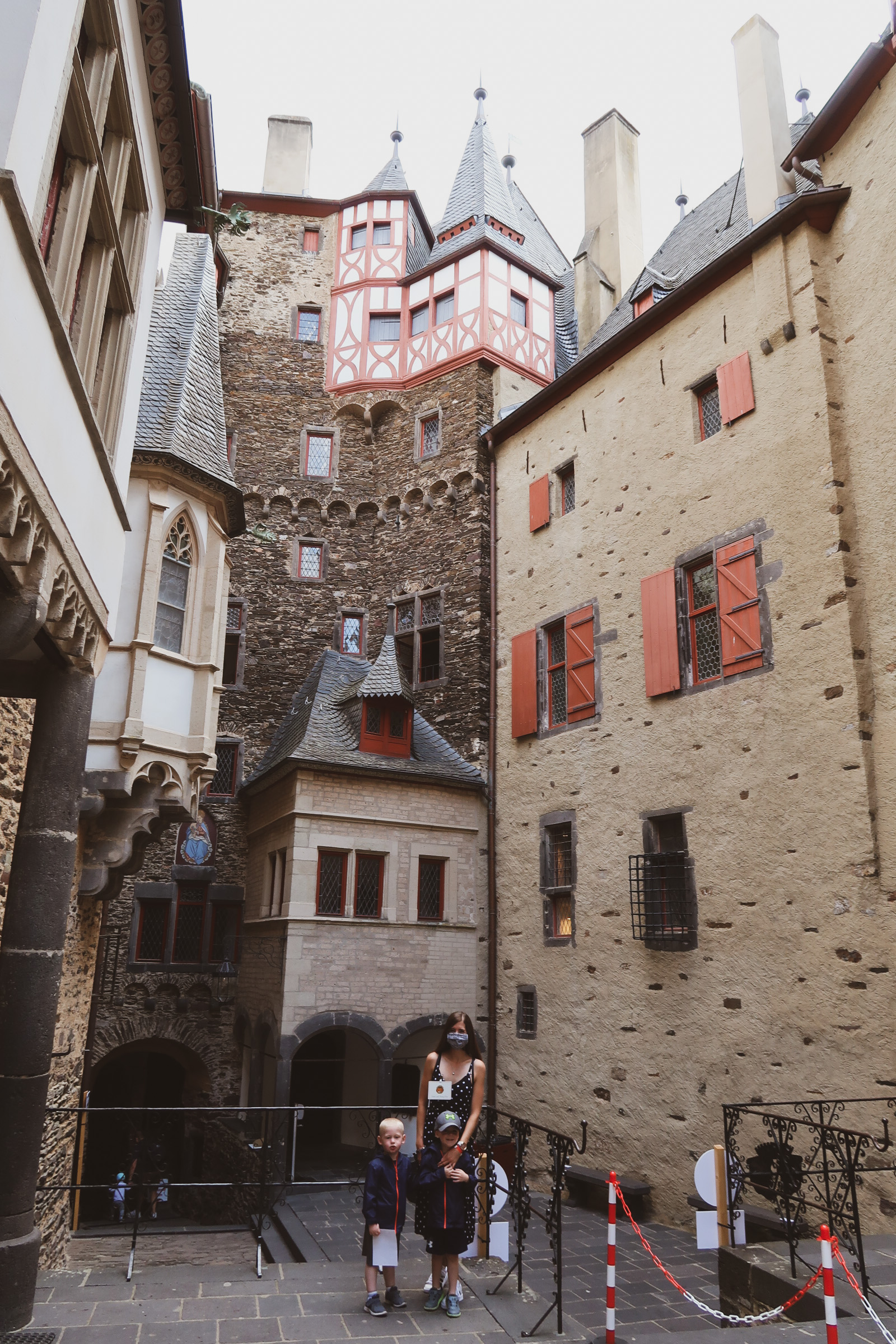
As I said, this castle was occupied by several families and each lived differently, both in station, in time, and in family structure. This meant that each has its own little differences and while each room has all of the crests and you can see some of the commonalities, they are also unique to their family. The interior was as I had expected in a way, overstated but also warm and welcoming. Rich tones and lots of wood, but also little hide away rooms and staircases. 

If you’re visiting, I would recommend getting there right when they open to avoid the lines for tours. The tour, which starts in the courtyard at the center of the complex, takes you through two portions of the house, as well as the treasury and armory (which are self-guided portions). There is a little bit of a walk from the parking lot to the castle itself (or alternatively you can hike the trails to get to the castle if you’d like), but there is also a small shuttle that you can choose to take. 

Schloss Lichtenstein – A Day Trip

The final castle we went to to round out our weekend away was Schloss Lichtenstein. One of the more popular and breathtaking castles, this one did not disappoint in any way. We even had the perfect weather to set the scene- fog all through the valley, swirling amongst the rockface where the castle comes out. Talk about perfection!

The original site (premodern day castle) dates back to 1100, although the structure that exists now does not hold much in common with the house that existed back then. Originally owned by ministerial it has passed many hands, although the one thing they all have in common is that the castle was frequently under attack. In the early early 1800’s (think 1802), after being in disrepair, the castle was dismantled, and a hunting lodge was erected in its place. This then fell into disrepair as well. Eventually the Duke Wilhelm von Urach purchased the estate and decided to turn it into a medieval castle that he could live in. He was very much inspired by the book Lichtenstein (Wilhelm Hauff- I now kind of want to read it out of curiosity) and the castle was able to be lived in in 1842 (with it becoming the official residence in 1869). This particular sustained damage during World War 2, of which you can see while on a tour inside, but this damage was repaired immediately after the war concluded. It is still currently in use as a part time/temporary residence.

Lichtenstein is one of the more popular castles’ in Germany due to its incredibly dramatic location. Set on the top of a rocky embankment looking precariously balanced, it gives any visitor a breathtaking look.

You have two options when visiting Lichtenstein, just walk the castle grounds or get a full tour of the interior. Each has a cost (although a difference of about 6 Euro) and honestly, if you’re already at the grounds, you might as well head inside too. The tour is given entirely in German, although they do give a pamphlet that has the English Translation and you see a fair amount of rooms that depict both the Hunting Lodge AND the actual castle life. There is still one spot where you can see the damage that was done during WW2, a bullet hole in a shattered mirror and that was pretty cool to see as most castles have either been repaired or were not affected during the war.

I think this was the perfect castle to round out our trip as it isn’t a super long tour or visit, but is still an incredible stop. I would definitely say you should go and visit Lichtenstein Castle, but know that it isn’t as big or as grandiose as some of the other castles you will see in Germany.