Autumn in Bavaria

I’m interrupting all of the travel content for this very special post…

Ok, maybe it’s not that special, but I wanted to do a post acknowledging two things:

1) This is my 300-blog post published to A Cuppa Cosy. 300 posts. While my content has bounced all over the place, it is still crazy to think that I have written and published 300 posts in this little corner of mine. And for my 300th post I wanted to focus on something I love, something that just kind of perfectly coincided with the timing of this post and everything else and that is…

2) Autumn. Specifically, Autumn in Bavaria. 

Autumn officially begins next week, but we’ve been officially welcoming it since September 1st (as we do every year) and I think this year, given everything, there is nothing wrong with celebrating the changing season a bit early. 

I’ve lived a fair amount of places that have had beautiful Autumnal Seasons, and a couple that don’t really get an Autumn at all, but it is my personal opinion that Bavaria just takes the cake (at this time, I’m sure in the coming years that may change, but I don’t know that I’ll ever forget the incredible season here). Between the weather, the festivals, the leaves, it just creates the best of the best of Autumn. 

Let’s start with the weather.

If you know me, you know that Autumn has always been my favorite season. I’m really kind of obsessed with the two transitional seasons- Spring and Autumn, but Autumn takes the cake. I’ve loved Autumn before it became the “basic girl” thing to love. Something about the heat fading away, the days slowly going shorter, the start of the school year, the crisper air moving in, and the leaves changing colors just made me feel so alive. And I know I’m not alone in that feeling.

I’m a massive rain fan and Autumn in Bavaria has its fair share of rainy days. This isn’t necessarily the hard rains of spring and summer storms, but rather that soft, sometimes mist like, rain that just peppers the ground and bounces gently off the roofs. The overcast nature of many of the Autumn days gives the perfect backdrop for the bright red and oranges that the leaves turn throughout the months before falling to a damp ground. The air starts to slowly turn crisp with the cool crisp air settling just in time for apple and pumpkin picking. Don’t worry though, it’s not always rainy and cool, there are those brilliant sunny days peppered throughout the 3 or so months that encompass the changing season. Those sunny days are full of life and joy and somehow…always happen on festival days. It’s a time where you may have to pack up the shorts, tanks, and summer dresses, but you can still wear t-shirts and such for a little bit longer. Same for sandals and boots, you get a great chance to wear both throughout the month of September. 

Let’s briefly talk leaves. 

I mentioned the fall colors, but something about the vibrance here in Bavaria makes a difference. Maybe it’s the rolling hills and alps that are just peppered with trees. Maybe it’s the balance of the “evergreen” trees and the changing leaves. Maybe it’s the fact that the sky has just always seemed a bit bluer and clearer in Bavaria. Whatever it is, the changing leaves are absolutely incredible here. You get a real range not only in color, but in timelines as well. It takes a full month to month and a half for the full process of changing colors and falling leaves and it is EVERYWHERE. You don’t have to drive far to get just the simple beauty of the season, you can walk right down the road. You don’t need to take any random country back roads or make a special trip (although you certainly can do that) in order to get the real pretty views. And you can get everything range of colors at any times, from the lighter green, to yellow, to the fiery reds, and brick oranges, all peppered against a brilliant blue sky or overcast gray. It’s truly incredible. 

Finally, let’s talk ambiance. 

Autumn is all about getting cozy. It’s about family, friends, changing weather, and the upcoming holiday season. It’s full of celebration and nobody does celebration better than Bavaria. Autumn, at times, almost feels like, after the grueling heat and harvest filled months of summer have ended and everything can take a deep breath again. Not only can you breathe, but you can celebrate, and Germany sure knows how to celebrate. 

***Obviously celebration will look drastically different this year due to Covid-19. I haven’t seen much about how some of the festivals that we attended last year will happen or not happen this year, but I am looking to see what I can find, and, in the meantime, I have linked a couple of posts from last year.***

The season kicks off with Almatrieb, which is a festival to celebrate the cattle (and sometimes sheep too) coming down from the mountains in anticipation of the colder weather. The cows are decorated with floral crowns, given massive bells, and then paraded on their route to pasture. It’s a massive party, which you can read about HERE. Everyone knows about Oktoberfest, the biggest party in Germany (which actually occurs in late September-usually ending the first week in October). We attended Munich’s Oktoberfest last year and had a blast (you can read that post HERE), but there are also a lot of smaller versions of Munich’s AND there are a multitude of other festivals throughout Autumn. One that I went to last year was Ertedankfest (you can read about that weekend HERE), which is a celebration of the harvest, complete with dried hops decorations. There are also the obvious, plentiful, markets in every town. 

Overall, Autumn in Bavaria is the perfect combination of sunny crisp days and grey rainy days, celebration of the changing season and getting cozy in our own homes. I don’t know that I’ve experienced the perfection of Autumn until I’ve been here. Maybe it’s just the changing season, the sentimental nature of who I am, or just the love I have for Bavaria, but I have truly found my happy spot of the year. 

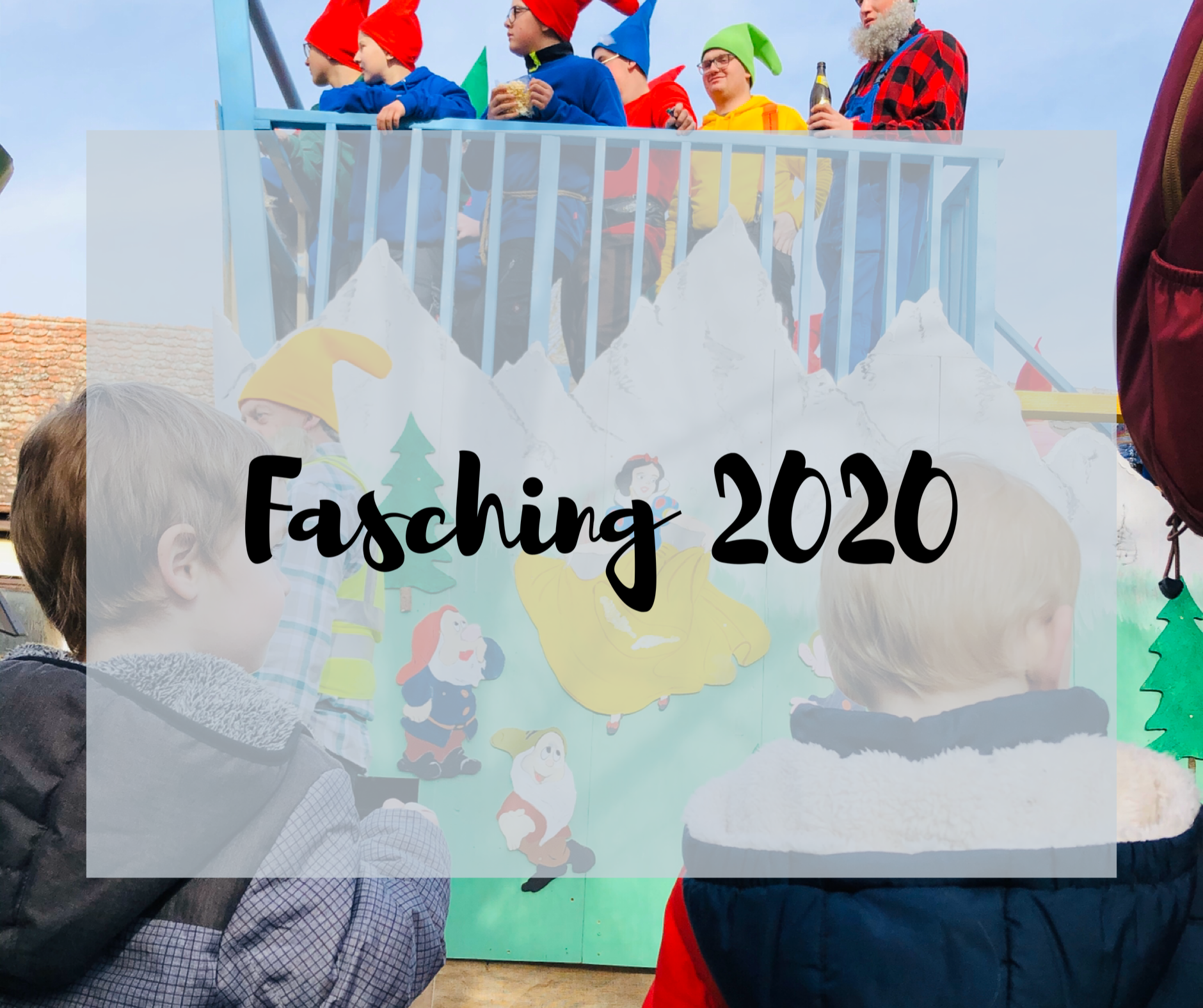
Fasching 2020

Here in Bavaria (a state within Germany) they are highly religious. Every holiday is celebrated with the appropriate parameters and one of those celebrations is Fasching, or Carnival. We experienced our first Fasching parade last year, but we were still so new that I didn’t feel comfortable talking about it much. Now, a year later I feel a bit more comfortable. I may not know all the ins and outs, but I feel a little bit more of a connection with the culture and having seen two very different parades, feel like chatting about it. This will be similar to my “Bavarian Weekend” post, in which I talk about some of the traditions of the region that we live in.

Untitled Design 34

Fasching is also known as Carnival or Fastungnacht and refers to the time leading up to Lent. In much of Germany carnival season actually starts around Epiphany (January 6, also known as Three Kings Day) and continues through to the Tuesday before Ash Wednesday. Most parades and parties occur in February, with many being the weekend right before Ash Wednesday. Overall though, the days of carnival signify a party; a last shebang if you will before the seriousness of Lent.

Carnival occurs across Germany, as well as Switzerland, Italy, some areas of Austria, Luxembourg, Lichtenstein, but other countries have also adapted Carnival to their own traditions such as Latin America, and even New Orleans’ “Mardi Gras”. It didn’t really pick up much steam in regard to the United Kingdom or United States of America due to the history of Henry VIII moving away from the church and such. The history of Carnival (or of this style of celebration) can be traced back quite a ways, but the oldest mention is somewhere in the 13th century.

Basically, it is a chance to party and enjoy life, before repenting all the sins and it is very much enjoyed by all.

Last year we attended a small-town Fasching Parade which consisted mostly of very small floats being pulled by small tractors or by hand. All of the floats usually had some parody of local and international politics. All of the floats (whether about politics or not) all reflected what was trending in the world at the time of the parade or within the last year. For example, there was a cart referencing the Border Wall from last year. When attending a Fasching Parade or Event (they have balls and other parties as well), it is expected that you dress up. For the parade it is a chance to dress up in a costume of your favorite character and there is candy tossed for the kids, shots of alcohol for the adults.

So, last year’s small-town parade was a really nice introduction to the concept of carnival.

The kids got to experience the parade, load up on candy, and it wasn’t a “big production”. This year we went to a slightly bigger town (that is in fact closer to our house) and got a much bigger taste of what Fasching can actually be. We had so much fun getting swept away by the excitement of the crowd, the party atmosphere, and just the general feeling of “fun” that the Germans have when it comes to life.

At this year’s parade, we saw floats about Star Wars, Frozen, Vikings, Snow White, Coronavirus, and so much more. We collected an incredibly large amount of candy (that my kids will definitely take a year to eat), and I even got to have a shot.

The entire afternoon was set up as one big celebration and we definitely got a little swept away in the atmosphere. This year’s parade was exactly what we want when we look for these celebrations- not too small, but also not too big. There are much larger, much more well-known parades and parties that we could attend, but I like the small-town community feel of our neighboring larger towns. This is how I would recommend celebrating the Fasching or Carnival period. I say that, but I may have a larger plan for next year to attend one of the bigger ones in our area (bigger than this year), in order to experience what the larger one is like.

I don’t know if this post really went a direction that I intended it to, but I hope that you enjoyed learning a little bit more about Fasching and getting a little glimpse into some of the celebrations that we experience living here.

A Bavarian Culture Evening – December 2019

Imagine…

A cold blustery evening, the sun has set. All bundled up with your friends and family by your side, in the town square you eagerly wait for the show to begin. Everyone told you that this you had to see, for not only was the show exciting, the culture couldn’t be beat. The square gets darker and soon a low rumble begins. An announcer’s voice starts to tell the story of Krampus and St. Nick. Slowly terrifying horned creatures fill the square carrying switches and sticks, bells clanging.

This begins the Krampus show that we went to this past month.

Untitled Design 25

Krampus has been set deep in the culture here and is known just as widely as St. Nick and Santa Claus. There is a troupe of performances who dress up in costume and put on a great fire show to tell the story and activities of Krampus during the Christmas Season. Before we chat on the performance I’ll share a bit of the history of Krampus that we know.

Krampus dates back to when pre-Germanic tribes practiced paganism and originally had no relation to Christmas. Krampus is described in folklore as a half goat half demon creature and beyond dating him to pre-Germanic origins, there really isn’t much more history on Krampus. Saint Nicholas became popular around the 11-12th century, with Krampus following suit in the 16th century. During the 16th century masked devils would run around acting as nuisances opposite of the St. Nicholas displays. In modern times Krampus “flies” with St. Nicholas on December 5 punishing all the bad little boys and girls (while St. Nicholas awards the good children). Krampus has horns on the top of his head, a long tongue, a face that seems to be in a perpetual howl or evil expression, chains (as an attempt to bind him), and hooves. He typically carries a birch switch and has bells somewhere on his person.

A much darker version has Krampus kidnapping and torturing those who are bad (which is what has been picked up in America/Hollywood/Movie Producers).

There are a couple different ways to see Krampus, one is a performance (which is what we did), the second is a Krampus Run (which is something the bigger cities will hold), and the third is to run into him at a Christmas Market. The one thing they all have in common is that Krampus has no boundaries. His job is to cause havoc and mischief and he definitely succeeds at that.

When I originally heard about Krampus, I knew I wanted to go to one of the fire shows. It seemed the best way to experience the entire “effect” of Krampus. You see him both causing mischief (as the no boundaries includes the shows), but also how they work with the fire.

I’ll let the pictures from the show do most of the talking for this post, but let me just say this, if you EVER have a chance to go to a Krampus fire performance…go. It was so cool to not only see Krampus, but also see the work that they did with the fire, see the performers in their element, and feel the culture of Krampus and the Christmas Season.

He is terrifying (especially if you go up and ask for a picture- if you have any boundary issues DO NOT do this), but at the same time, there is something inherently awesome about the whole show. The troupe that we saw was Oberpfalzer Schlossteufeln e.V. and they were fantastic. They truly put on a show and they lived up to the Krampus legend.

And that was our Bavarian Cultural Evening for the Christmas season. We did combine it with attending the Christmas Market at Amberg, but the market itself was quite small so I didn’t have enough to really make a good market post on it.

A Bavarian Weekend – September 2019

The last weekend in September we got to do several different local cultural things. There wasn’t enough to do a single post for each event, and since they all occurred over the same weekend, I figured I would condense them into a single “Bavarian Weekend” blog post. We had so much fun and I am excited to share these two events with you.

The first event we attended was at the St. Peter’s Cathedral in Regensburg Germany. This was a light show that was displayed against the Regensburg Cathedral (known as the Dom St. Peter or Regensburg Dom, the second being the most common name, in German) and it depicted the history of the cathedral and church. This cathedral isn’t the original church, as the original church burned in 1273. This was the third fire and this one rendered the church a complete loss. Thankfully, Regensburg was able to rebuild and build an absolutely gorgeous cathedral. In 1869, the two towers of the church were finally completed, and the light show we attended was to celebrate 150 years of the completion of the towers.


We ended up seeing the light show twice as my husband was not able to go with us on the first evening. Setting the history of the cathedral aside, the show itself was absolutely incredible. To have a) the backdrop of the cathedral (which is incredible as it is), b)the musical choices which matched perfectly with the feelings in each section, and c) the sheer enormity that must have been creating and engineering the light portion of the show. It was an experience that we will not be forgetting anytime soon.

With the end of summer/beginning of Autumn it becomes festival season here in Germany. Obviously there is the Almabtrieb (which you can read about HERE) and then Oktoberfest (blog post coming next week), but there is also a little holiday called Erntedankfest. Erntedankfest is the German Thanksgiving or Harvest Festival. It is celebrated at the end of the Harvest season typically on the first Sunday in October. This year the official date was October 6, but one of the little towns semi near us held their festival on the last Sunday of September.

The holiday/festival is intended to give thanks to the gods for a good, bountiful harvest. There is almost always a mass or church service at the start of the festival, that can also have a procession during the service through the town. There will also always be “bounty” at the center of the church and town square. This bounty highlights a “Harvest Crown” made of wheat and a large amount of produce from the season.

The practice of Thanksgiving, or a Harvest Festival, can be dated back to the Ancient Roman Empire (!) and is practiced all over the world with slight variations based on climate, region, and even religion. Fun fact: in 1934 Thanksgiving became an official holiday in Germany occurring every year on the first Sunday after September 29.

The Erntedankfest that we attended was in a little town in the heart of Hops Farming. They had local performers for music and dancing (although we didn’t get to stay long enough to see a lot of the performances), as well as food and drinks. We treated ourselves to a meander through the craft booths seeing everything from handmade mugs, handmade wood carved items (with him carving in front of us), to jewelry, and dirndls. Each of the booths were decorated with over harvested hops, which added such a nice touch, and spoke to the local farms. Everyone was dressed in their best (which was lederhosen and dirndl’s) and we simply soaked up all of the culture. There was an air of gathering, freedom, and happiness to this festival.

We treated ourselves to a giant pretzel (which was a struggle to eat split between 5!) and I treated myself to a couple new mugs. We had glorious blue skies and sunshine and it was just a really fun way to end the weekend on a high note. The kids loved seeing all of the booths and dancing along with the music.

And that was our Bavarian Weekend! I hope you enjoyed seeing some of these cultural events through our eyes.