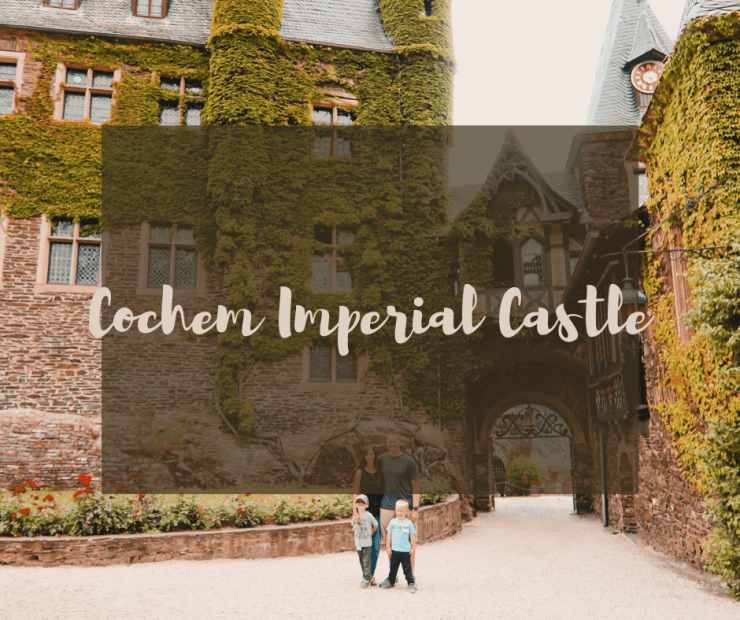
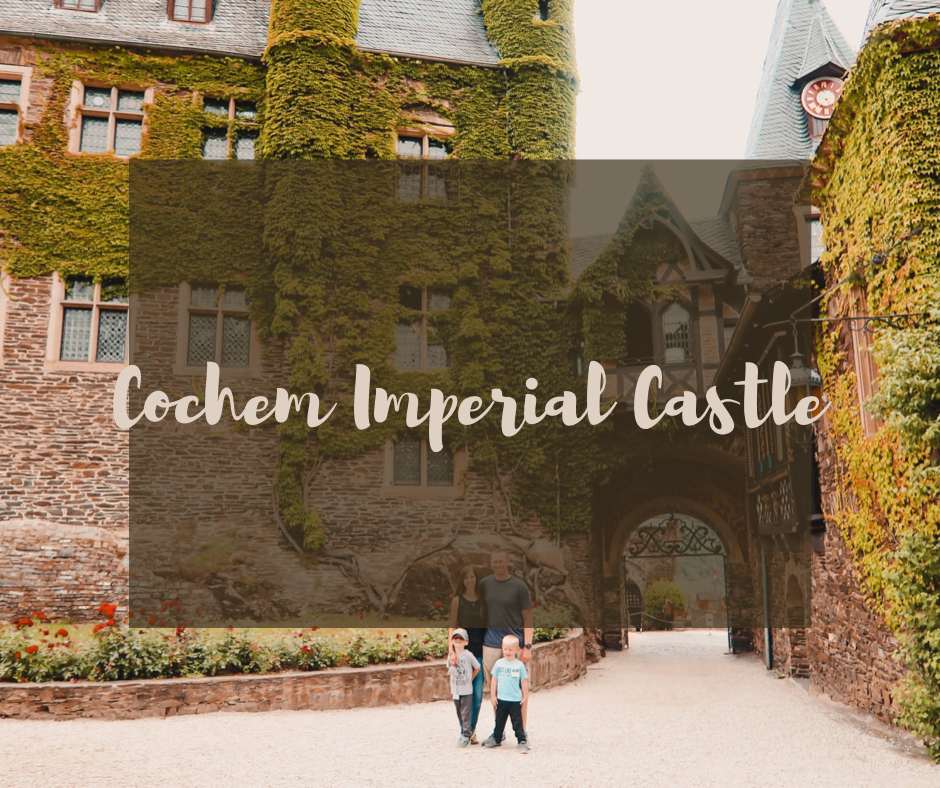
COCHEM IMPERIAL CASTLE

We went to Cochem Imperial Castle as part of our time in Cochem on our Summer Holiday (COCHEM). This was the first place we went when we arrived in Cochem and while it may not be one of the top castles, it was so cool to explore its courtyards and rooms and hear its extensive history. 
The first written mention of Reichsburg Cochem is in 1051, however it is assumed that the castle was built around 1000. Built by Palatinate Count Ezzo, the castle was given to count Henry I in 1051 ( by Richeza, former Queen of Poland). In the 12th century King Konrad III took control of the region and castle, turning it into an imperial fiefdom. The castle then became an imperial castle. It was pawned to Austria to pay for a coronation (King Adolf of Nassau), but the debt was never able to be collected. During the Nine Years War, Louis XIV invaded Cochem and the Imperial Castle before destroying it by fire (and then an explosion which almost took out the entire town of Cochem). The ruined castle wasn’t touched again until it was purchased in 1868 by Louis Frederic Jacques Ravene  who rebuilt the castle into the Neo Gothic style you see today. The castle was transferred to Cochem’s ownership in 1978 and is now able to be toured by the general public. 

The best part of this castle is, hands down, the view. Situated high above the Moselle River, you are able to see Cochem, the river, the wineries, and much more. It is a stunning view from almost anywhere within the castle. The courtyard is incredible too, with a well in the center as it would have been in early times to collect rainwater. You are also able to see the round tower, which somehow survived the destruction by Louis XIV. It was a guard tower during the castle’s time and if you follow it around, you are able to see a large mosaic of St. Christopher. 

I know this wasn’t as long as my normal Castle Post, but this is a pretty straightforward castle. It is definitely one I recommend touring if you are in Cochem as it is really interesting to see how they would have lived in the castle, as well as all of the defensive measures that were set up. 
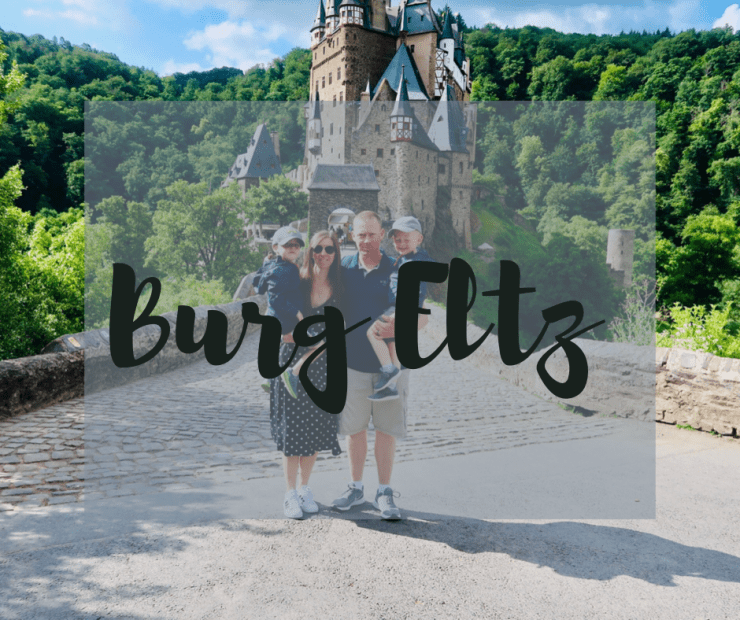
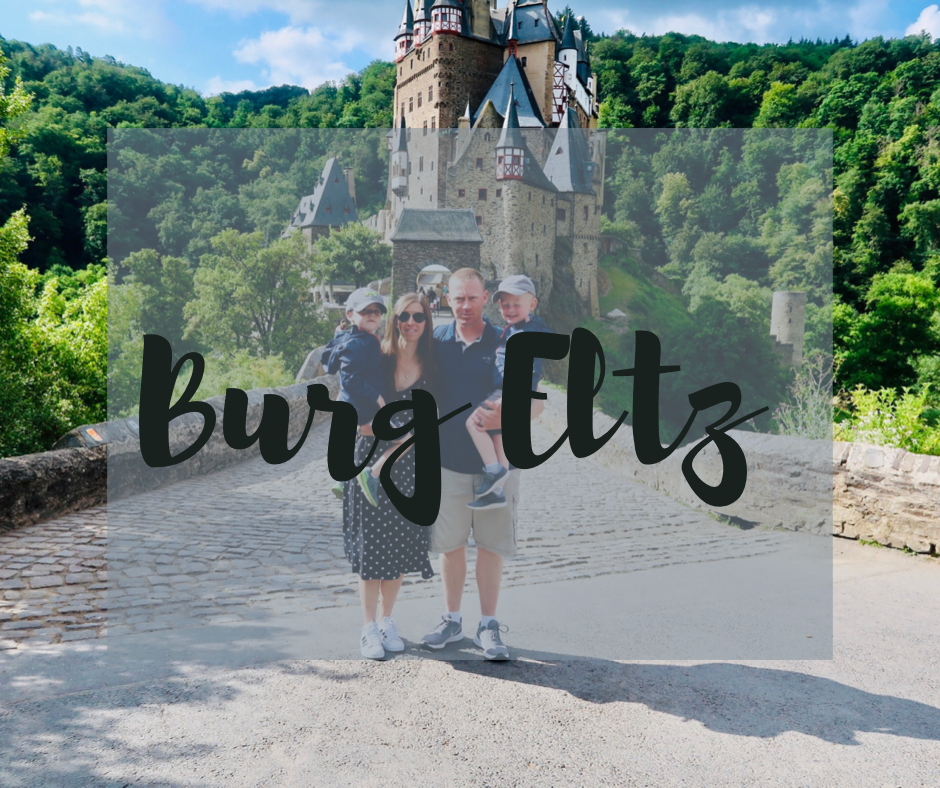
Burg Eltz

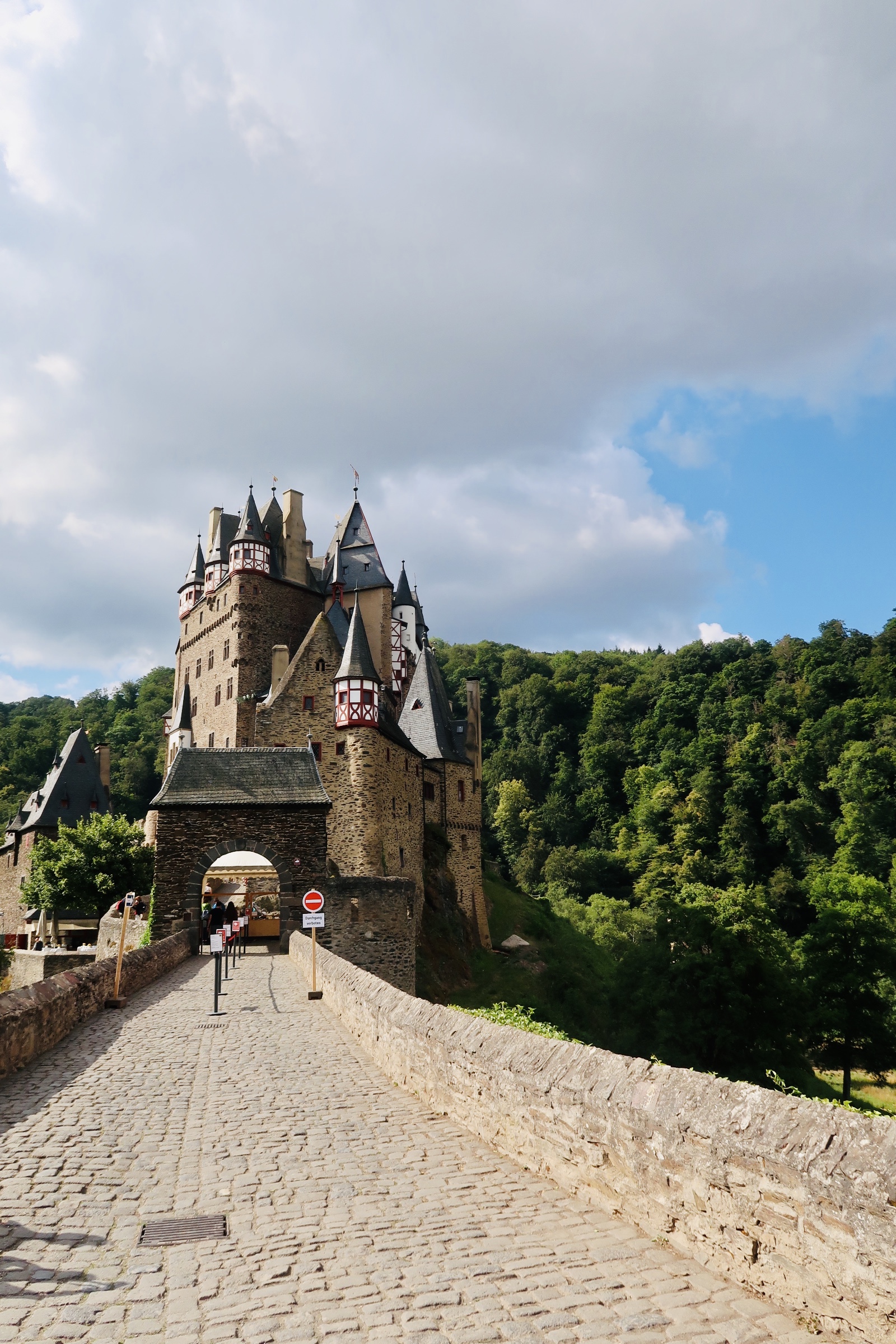
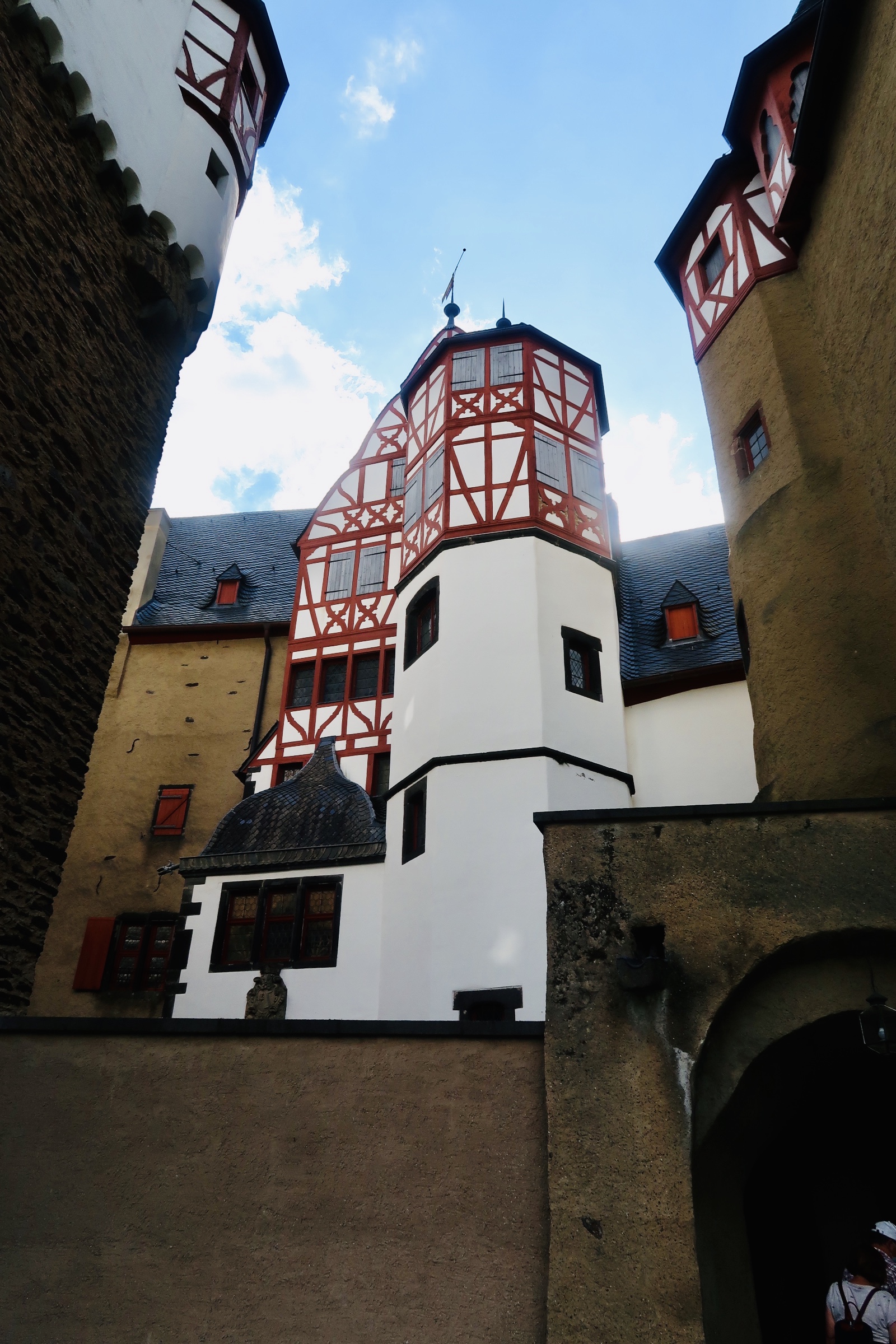
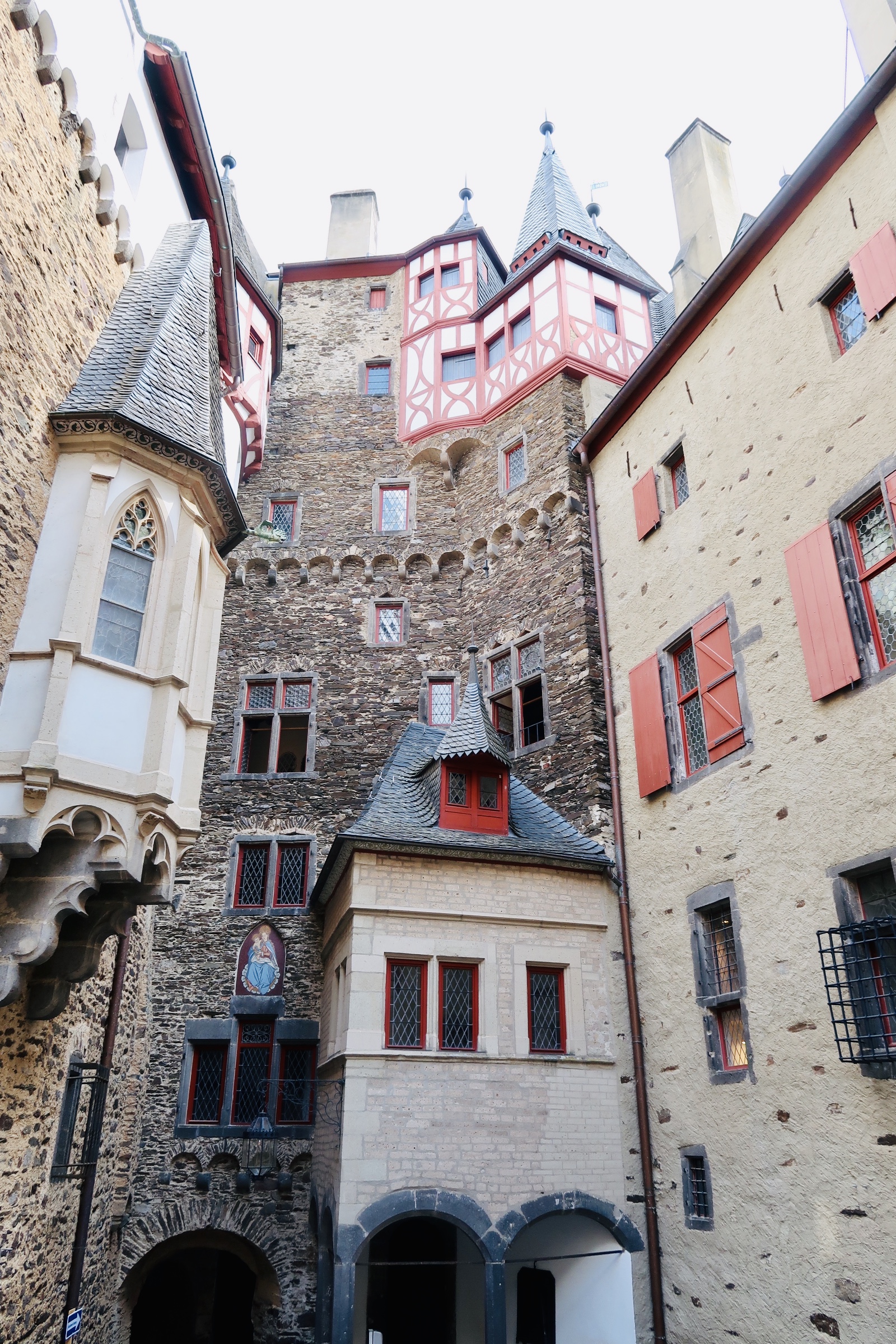
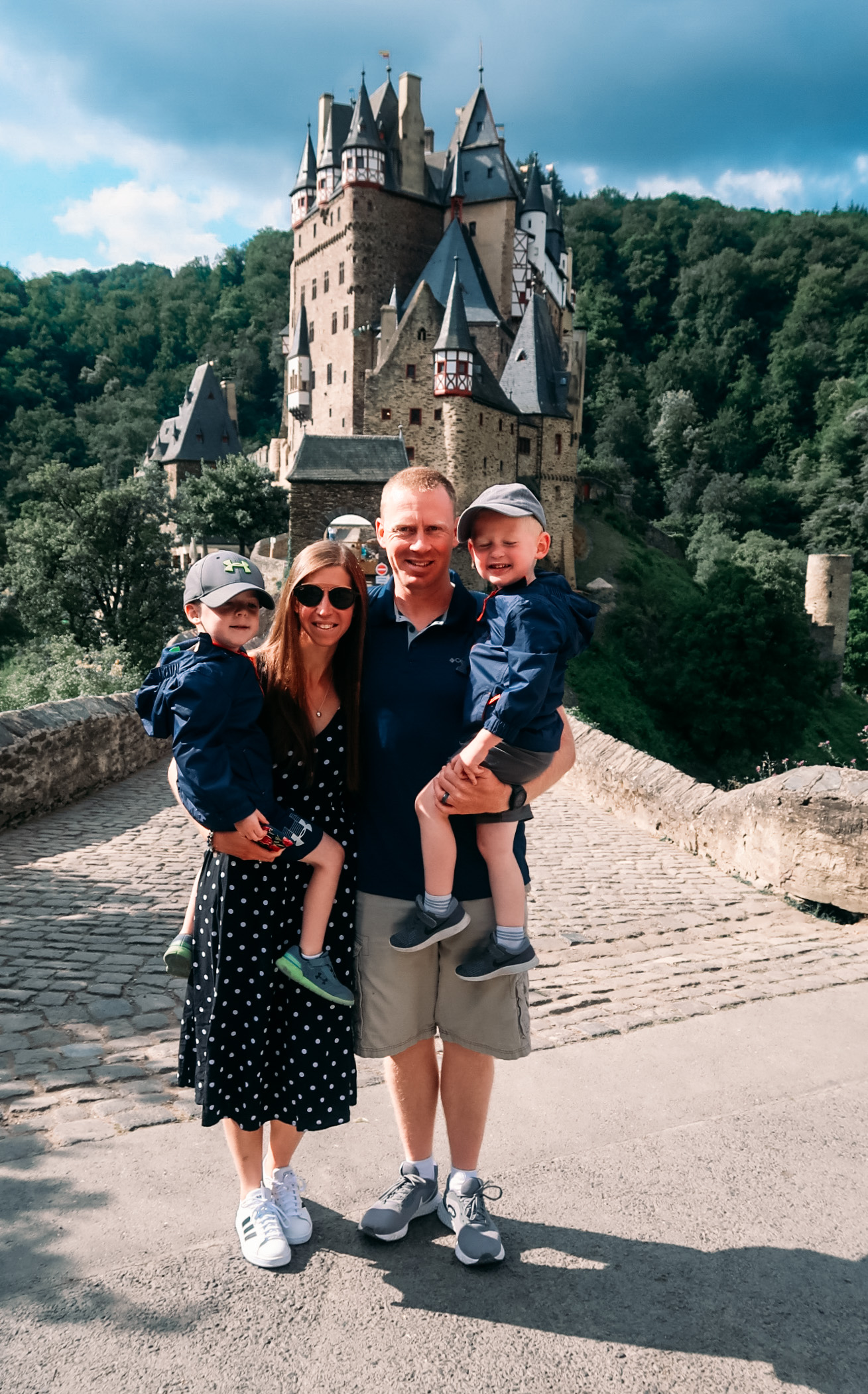
Ah, Burg Eltz. It’s one of the most photographed castles and takes its place as a top castle to visit with Neuschwanstein Castle, Lichtenstein Castle, and others. During our Summer Holiday, we made a stop at Burg Eltz to see what it was like. Burg Eltz is one of only three castles in the Rhine region that have never been destroyed and so, it was incredible to see how the different eras of the castle and families had left their own imprints. The house is joint owned by three families, Rubenach, Rodendorf, and Kempenich. You are able to tour two of the portions (Rubenach and Rodendorf), while the third is currently occupied by the family.

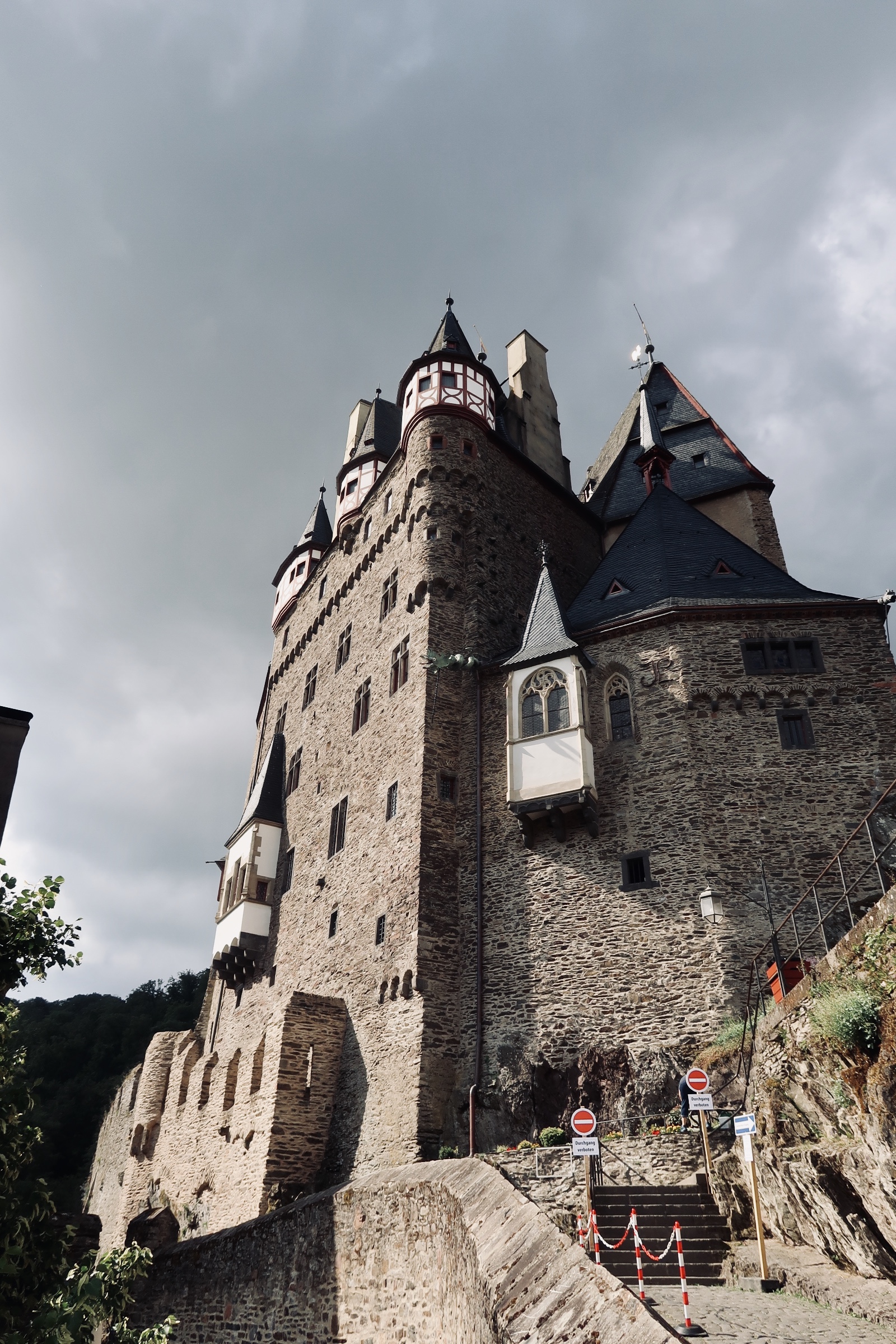
The oldest part of the castle is a Roman style keep that was initially built in the 9th century. It was intended to be a simple manor, but by the 12th century it became an incredibly important Roman Empire fortress. Built on top of a rock, the castle doesn’t quite stand perfectly upright, rather following the shape of the rock as it juts upward (similar to Mont Saint Michel in a way). In the mid 13th century (not long after the initial castle was completed) the three brothers of the Eltz family had a bit of a dispute which ended up leading to the castle and estate being split into three. The tower keep in the north was the beginning of the Rodendorf portion (which dates back to 1300) and the Rubenach house had its start in 1311. 

The only military conflicts to occur in the Eltz castle occurred in the 1330’s when the lords of Eltzer opposed the territorial policy of the Archbishop of Trier. This led to a siege of the castle, which led to another smaller siege castle on the northern side (the remains of which you can still see today). The siege ended two years later (when the “free” imperial knights gave up their “freedom”) and with it, along with clever politics and support from its neighbors, the castle did not see any other battle action.

In 1472 the Rubenach house was completed (as part of the Greater Rodendorf House) after being commissioned by Philipp zu Eltz. Then the Kempenich house replaced the original hall in 1615. Eltz castle was one of the few castles lucky enough to come through the Palatine Wars of Succession (leading to the French rule) unscathed as many others were destroyed. This was due to a high-ranking officer in the French Army, Hans Anton zu Eltz-Uttingen, who saved the castle. However, Eltz Castle still came into the French possession after Count Hugo Phillipp zu Eltz fled during the French rule of the Rhine region. He was then treated as an emigrant and all of the properties owned by the Eltz family, even those beyond the castle, were confiscated. These only came back into his possession in 1815 when he was able to purchase it (if you’re curious- during the French rule Count Hugo hid out in Mainz, Germany). Finally, in the 19th century the Count Karl zu Eltz decided to restore the castle and commissioned extensive work to preserve the existing castle. 

I’ve got to say- this castle really lives up to the expectation. You’ve got the perfect fairytale location, literally nestled right into the trees and valley between hills. You’ve got the picture-perfect bridge leading up to the castle itself, where you can marvel at this towering not quite straight towers looming above you. And you’ve got the visual history right in front of you. You are able to literally walk-through different eras of time and see how they lived in these different houses in the same castle. 

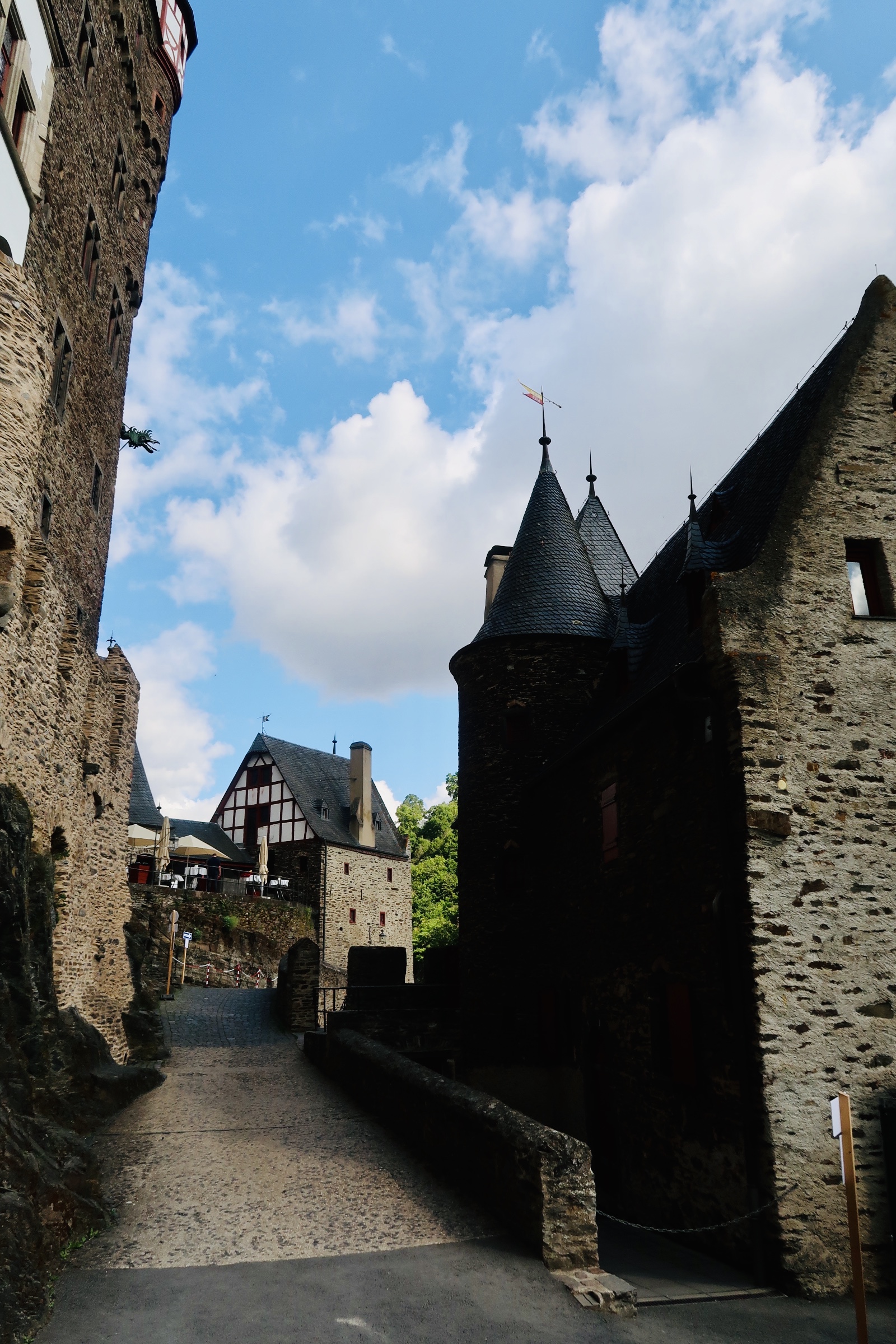
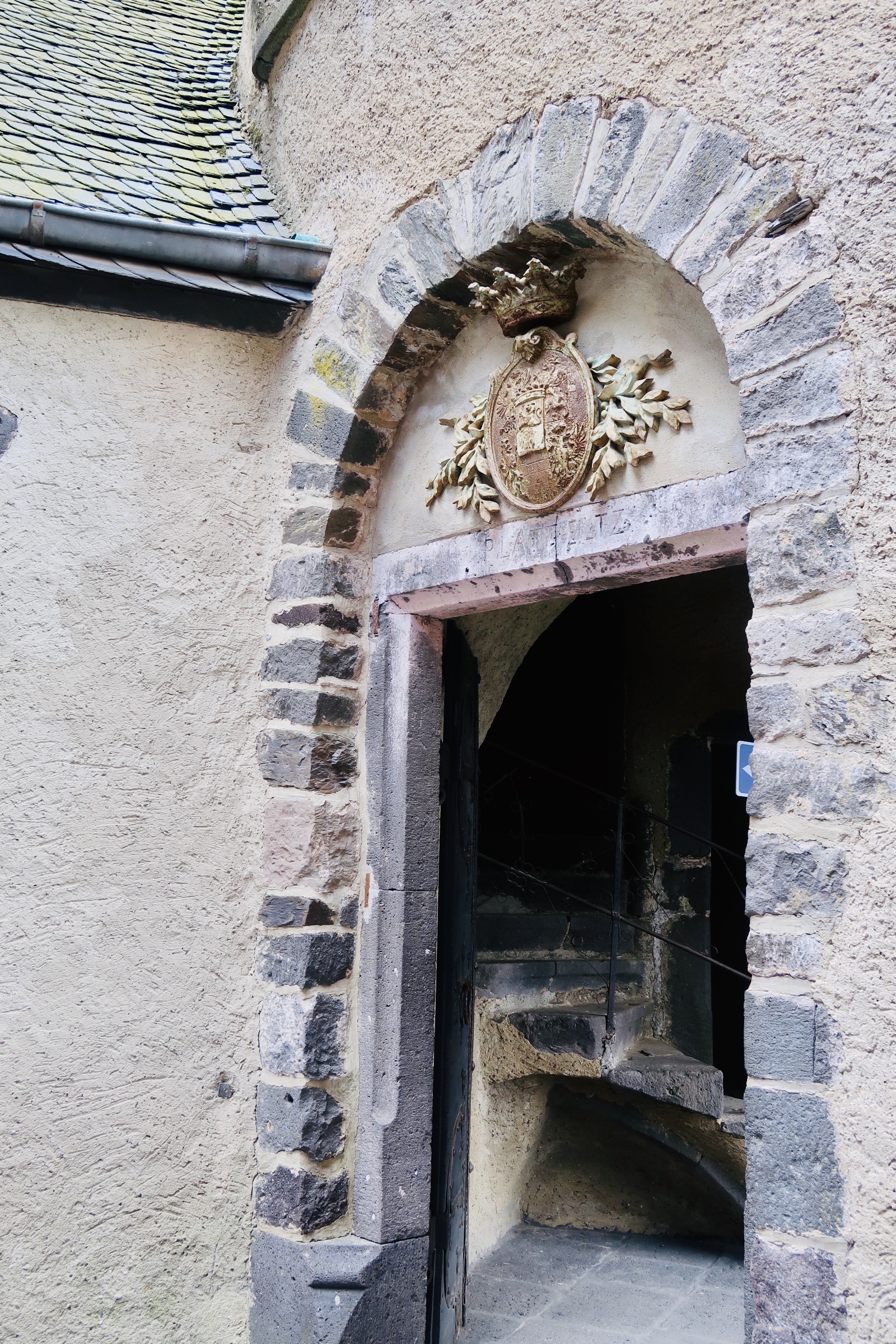
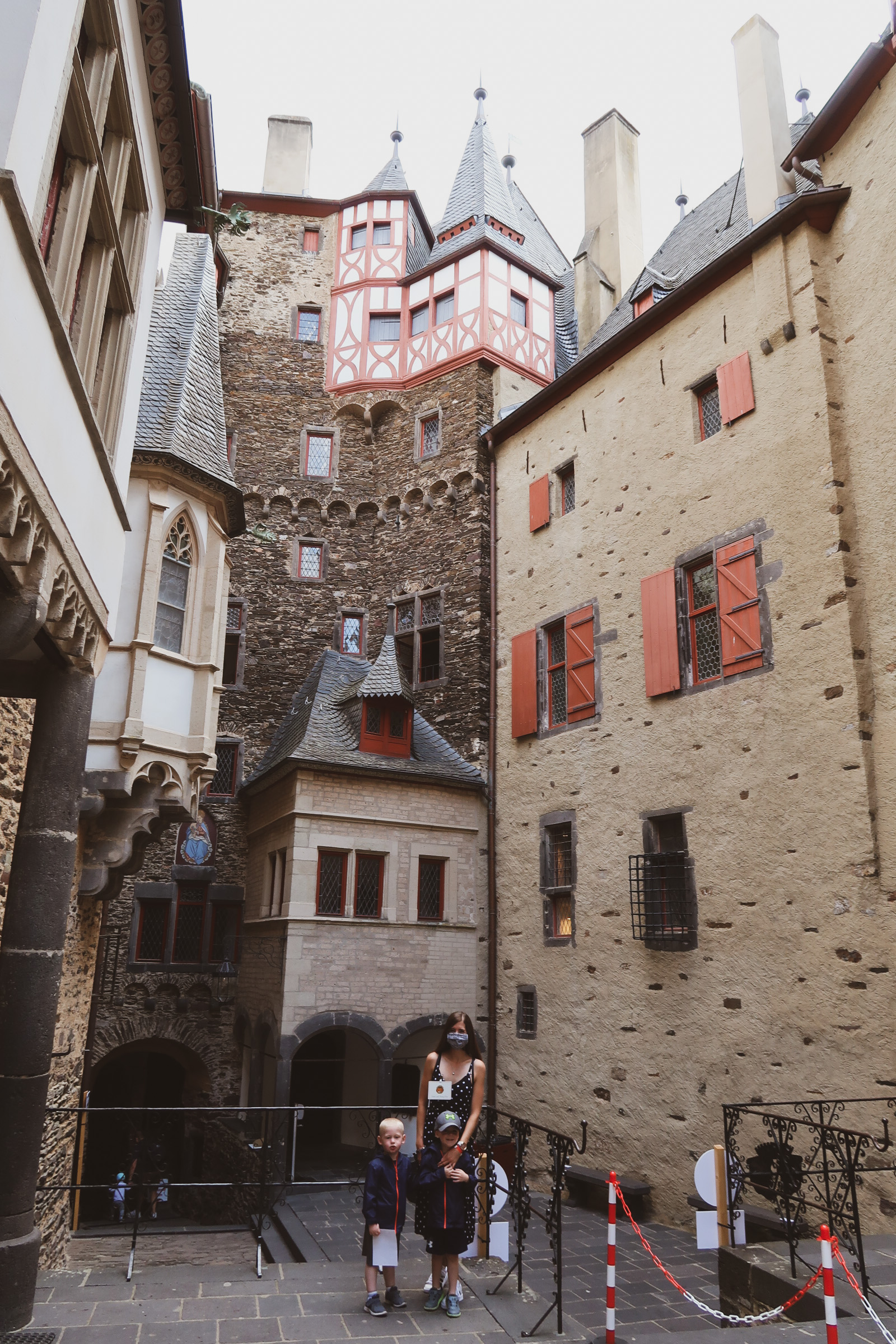
As I said, this castle was occupied by several families and each lived differently, both in station, in time, and in family structure. This meant that each has its own little differences and while each room has all of the crests and you can see some of the commonalities, they are also unique to their family. The interior was as I had expected in a way, overstated but also warm and welcoming. Rich tones and lots of wood, but also little hide away rooms and staircases. 

If you’re visiting, I would recommend getting there right when they open to avoid the lines for tours. The tour, which starts in the courtyard at the center of the complex, takes you through two portions of the house, as well as the treasury and armory (which are self-guided portions). There is a little bit of a walk from the parking lot to the castle itself (or alternatively you can hike the trails to get to the castle if you’d like), but there is also a small shuttle that you can choose to take. 

All the Castles – Germany Edition!

While we still are in a “safer at home” state, the world is slowly starting to open back up again (in fact, while finalizing some of my research for this post I’ve learned that Lichtenstein is in fact open with restrictions!). I’m still over here dreaming about all of the places we can visit and the countries we plan on going to over the next bit of 2020 (once the borders open of course), but I figured today I would do a fun little round up on the blog and start talking about some of the castles we’ve been to.

In compiling this list, I’ve realized that we’ve been to more castles than I had originally realized, so, as the title suggests, this will be full construction German Castles. I will do a separate post for the United Kingdom (which will include palaces as well!), other European Countries, as well as the ruins that we’ve explored. I will also include at the end of each blog post any Castles that are still on our “to go to” list for each region (so at the end of this post I’ll have a list of the castles I would still like to go to in Germany). Once we go to a few more, I’ll do another round up of those as well.

As always, I’ll link to full blog posts where applicable, but I am going to include pictures, a little history, and my own thoughts as we go along.

It seems like people who go to castles fall into two categories, the “you’ve been to one you’ve been to them all” or “they are all different and we should see them all”. If anything, I fall into that second category as not only do I LOVE castles and see differences in each one, but I also LOVE the history of each castle. In most cases these houses are beyond our comprehension in terms of age and what actually went into the planning and construction of these castles is incredible (and yes, some have a dark history as well). I’m just a bit of a history nerd over it all.

So, with all of that blabbering out of the way, let’s get into the castles…

Hohenschwangau Castle (BLOG POST, MORE INFORMATION)

7045257599026111161_IMG_3112

We are going to start our post with the little sister to Neuschwanstein, Hohenschwangau. Nestled in the Alps at the German Austrian border, this castle is absolutely stunning. It is first mentioned in the 12th Century and was owned by the Knights of Schwangau until the 16th century. Eventually in the early 19th century King Maximillian took ownership, and had it rebuilt per its original plans. It was used by the royal family as a summer and hunting residence up until King Ludwig II decided to build his private residence of Neuschwanstein.

Hohenschwangau is a beautiful castle to see. It’s one that I feel like sometimes gets a bit neglected with Neuschwanstein being right next to it, but it is gorgeous, mixing the perfect location with the perfect interiors. In fact, you actually get to see more of the interior of Hohenschwangau than you get to of Neuschwanstein. The gardens have some stunning views of the lakes and alps and the castle itself has a fuller story to tell (you’ll see why when you read on). I actually initially ranked Hohenschwangau higher on my list of castles because of this.

Neuschwanstein Castle (BLOG POST, MORE INFORMATION)

-8329587099912118466_IMG_3378

Ah, one of the most famous castles. The inspiration for Disney Castles. The most picturesque of all the castles, Neuschwanstein. It’s only when you learn the history of the castle and its King that it becomes a bit different looking. Neuschwanstein Castle was built for King Ludwig II as a private residence; a refuge from the public. It was intended as a sort of rebuild of Hohenschwangau, but bigger and better. The construction began in 1868 with completion in 1892. It was at the forefront of technology both in the construction of the castle and the methods used, to the interior of the castle. The large windows were unusual for the time as was the heating and serving methods within the castle. However, King Ludwig only spent 11 nights in his dream castle before his death (this is an interesting story- it was claimed that he had gone mad and he was found drowned alongside his psychiatrist. There are different stories claiming whether he was or was not mad, what role his mistress played in the entire affair, and how he actually died).

As picturesque as Neuschwanstein is (and IT IS picturesque), I found it to be a bit…dark and small when compared to Hohenschwangua. This could be because you don’t see nearly as much of the castle (part of this was due to the reconstruction that was going on while we were there). It wasn’t my favorite, even though I still absolutely loved it. It was a good look see for the pictures and views. Looking back now, knowing the full history of the castle it definitely holds a little bit more of an air of mystery and intrigue.

Hohenzollern Castle (BLOG POST, MORE INFORMATION)

IMG_0003 3

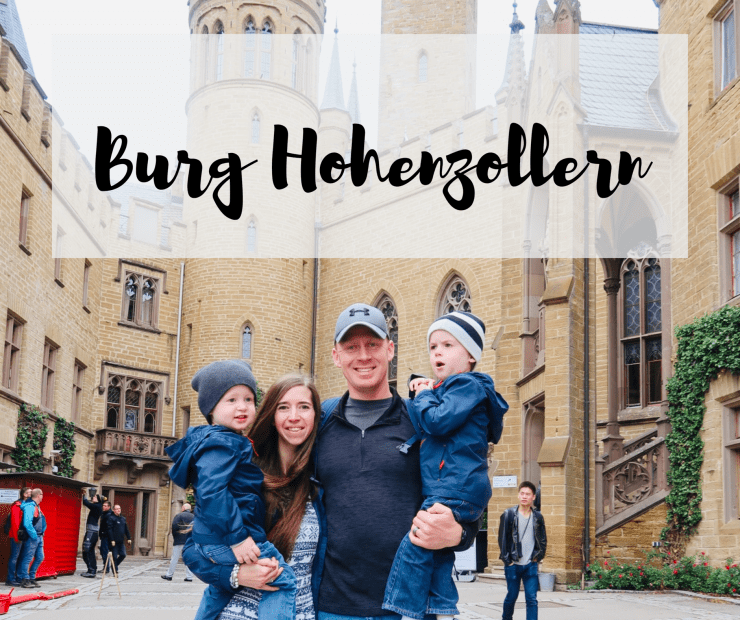
At this time, I think this is my favorite German Castle. It is just…foreboding but quaint, set high on a hilltop with stunning views and yet so warm and home-y. It also has quite the history and, unlike the above two, was never built to be a residence. First mentioned directly in 1267, this is the ancestral seat of the Prussian Royal House and of the Hohenzollern Princes. It was rebuilt in the mid 15th century to become a bigger/better house and then became a fortress in the 17th century during the 30 Years War. After the war it fell into a bit of disrepair until the 19th century when Frederik of Prussia decided to reconstruct and turn it into a bit of a showpiece for the public. What we currently see of Hohenzollern dates back to 1850 and is considered an acclaimed masterpiece of military architecture. The only time that the castle was used as an actual temporary residence was during World War II.

I know I’ve already said it, but Hohenzollern is my favorite as it stands now. I loved our time wandering the battlements, walking the entry gate, seeing the various artworks detailing Prussian history (placed starting in the 1950s), and the courtyard…the courtyard made me swoon. This castle just had it all that you would want in a castle. In fact, I would like to go back for a Christmas Market (or really any market) if possible before our time in Europe is done.

Lichtenstein Castle (BLOG POST, MORE INFORMATION)

IMG_0295

Lichtenstein Castle is one of those castles that you just marvel at from start to finish. It seems to defy the rules of gravity, of building, of everything and is just a place to be experienced. First built in 1100 it went through a very destructive history of being built and destroyed several times. Despite that cycle, it withstood every attack and was considered the best fortified fortress of the middle ages (which it doesn’t take a military strategist to see why). In the second half of the 16th century it lost its ducal seat (and therefore lost its “castle” status) and started to deteriorate. In 1802 it was dismantled entirely to the bones and turned into a hunting lodge. Finally, in 1840 it was rebuilt for the final time into the castle we see today. Count Wilhelm was inspired by a novel called Lichtenstein by Wilhelm Hauffhe and decided to build a German Medieval Knights Castle. It is now privately owned and certain areas of the castle and courtyard are available for rental for performances or weddings!

Lichtenstein is just one of those castles you have to see. Perched right on the edge of a cliff you not only get the thrill from just feeling on the edge of the world, but this history of building, tearing down, and rebuilding is just incredible. It also has the only visible damage from World War 2 that we saw in all the castles (a bullet hole in a mirror that was fired during the war). What made our particular trip a bit cooler (in my opinion) was that it was rainy and foggy, so you could not only get the eerie feeling of being up on the mountains and this incredible castle looming over everything, but also just get a real taste of the history. However, as someone who is afraid of heights (or rather falling from a height), being there was a bit terrifying as well (walking across that bridge?!).

I want to do one Honorable mention of Dresden Castle (BLOG POST, MORE INFORMATION). We haven’t actually been properly to the castle itself, however we have walked the Procession of Princes, seen/walked the Zwinger Palace Courtyards, and seen the exterior of the castle.

The Dresden Castle was originally built around the beginning of the 13th century and (after a fire and rebuild in the early 18th century) has been home to Electors, Kings of Saxony, and Kings of Poland. It was fully destroyed in the bombing of Dresden in February of 1945 and the restoration didn’t start until the 1960’s. Overall, Dresden is a really neat city with a lot to see, learn, and explore, BUT the most incredible part of the city is that it was almost fully destroyed in that bombing and yet you wouldn’t know it by visiting it now. Save for the memorials and museums explaining what happened, the city itself doesn’t show the destruction that occurred in its architecture or buildings.

Finally, a list of the castles that we would still like to visit while we are here:

Burg Eltz

Heidelberg Castle

Schwerin Castle

Cochem Imperial Castle

Nuremberg Imperial Castle

I hope you enjoyed this first Castle Round Up! What was your favorite? Which would you most like to visit?

Schloss Lichtenstein – A Day Trip

The final castle we went to to round out our weekend away was Schloss Lichtenstein. One of the more popular and breathtaking castles, this one did not disappoint in any way. We even had the perfect weather to set the scene- fog all through the valley, swirling amongst the rockface where the castle comes out. Talk about perfection!

The original site (premodern day castle) dates back to 1100, although the structure that exists now does not hold much in common with the house that existed back then. Originally owned by ministerial it has passed many hands, although the one thing they all have in common is that the castle was frequently under attack. In the early early 1800’s (think 1802), after being in disrepair, the castle was dismantled, and a hunting lodge was erected in its place. This then fell into disrepair as well. Eventually the Duke Wilhelm von Urach purchased the estate and decided to turn it into a medieval castle that he could live in. He was very much inspired by the book Lichtenstein (Wilhelm Hauff- I now kind of want to read it out of curiosity) and the castle was able to be lived in in 1842 (with it becoming the official residence in 1869). This particular sustained damage during World War 2, of which you can see while on a tour inside, but this damage was repaired immediately after the war concluded. It is still currently in use as a part time/temporary residence.

Lichtenstein is one of the more popular castles’ in Germany due to its incredibly dramatic location. Set on the top of a rocky embankment looking precariously balanced, it gives any visitor a breathtaking look.

You have two options when visiting Lichtenstein, just walk the castle grounds or get a full tour of the interior. Each has a cost (although a difference of about 6 Euro) and honestly, if you’re already at the grounds, you might as well head inside too. The tour is given entirely in German, although they do give a pamphlet that has the English Translation and you see a fair amount of rooms that depict both the Hunting Lodge AND the actual castle life. There is still one spot where you can see the damage that was done during WW2, a bullet hole in a shattered mirror and that was pretty cool to see as most castles have either been repaired or were not affected during the war.

I think this was the perfect castle to round out our trip as it isn’t a super long tour or visit, but is still an incredible stop. I would definitely say you should go and visit Lichtenstein Castle, but know that it isn’t as big or as grandiose as some of the other castles you will see in Germany.

Burg Hohenzollern – A Day Trip

Full disclaimer- this was supposed to be one post on our full weekend away, HOWEVER I just had so much I wanted to share about each place we visited that I just couldn’t justify having yall read one super long post. Instead, I am going to break this up into three posts over the next couple of weeks covering each outing we did. We only had 3 days over the weekend, so we decided to knock out a couple of the castles that we’ve been wanting to check out. There are two castles that are within an hour (or so) of each other, so we decided to book an Airbnb somewhat in between the two and just go from there.

So, Friday morning we headed out and over to Burg Hohenzollern.

IMG_0003.jpg

Hohenzollern is possibly one of the most popular, but quietly popular castles in the region. It sits high on top of the hill, with views around all sides. It has quite the history of owners and destruction/reconstruction. To start with, Hohenzollern is the ancestral seat of the Prussian Royal House and references to this spot date back to the 1000’s. The house was reconstructed in the 1400’s to make it bigger and more formidable. It became a fortress, but after the war turned into ruins. In the 1800’s is was reconstructed and became the castle that we see today. It is heralded as “one of the most imposing Castle complexes in a neo-Gothic style” (via the website: https://burg-hohenzollern.com/castle-history.html).

Hohenzollern was very well worth the drive. Incredible from the moment you lay your eyes on it driving into the region, it definitely gives off all the castle on a hill vibes. We parked on the property and did a short hike to get to the entrance. There are two hike options, one where you can park at a lower level and hike through (this is the free parking I believe) or the one that we did, a shorter hike with paid parking (2 Euro for a car for parking). You are also able to take a shuttle bus from the paid parking area to the castle itself (the cost varies depending on what ride option you choose and how many are in your party). The hike is actually quite pretty, but steep and quite a few stairs.

This particular castle is one with two entrance areas. There are two large gates, one to simply “get into the property” and the second to get into the main courtyard. Before you pass the second gate you are treated to an interior garden lining the round walls, as well as some stunning views from the first lookout. This area is lined with various paths and the views of the town and valley below are stunning. You can walk all along the exterior to see the 360 views, but if you head inside and follow the tour, you will get this chance anyways.

When we went, there was a display at the second gate to see all of the coocoo clocks from area makers (this castle is quite near the Black Forest area- which is known for its coocoo clocks and woodworking). There are also festivals at different times of the year (A spring festival, Mother’s Day event, several performances/open air cinema days, an Autumn festival mid-October and then a Christmas Market in December).

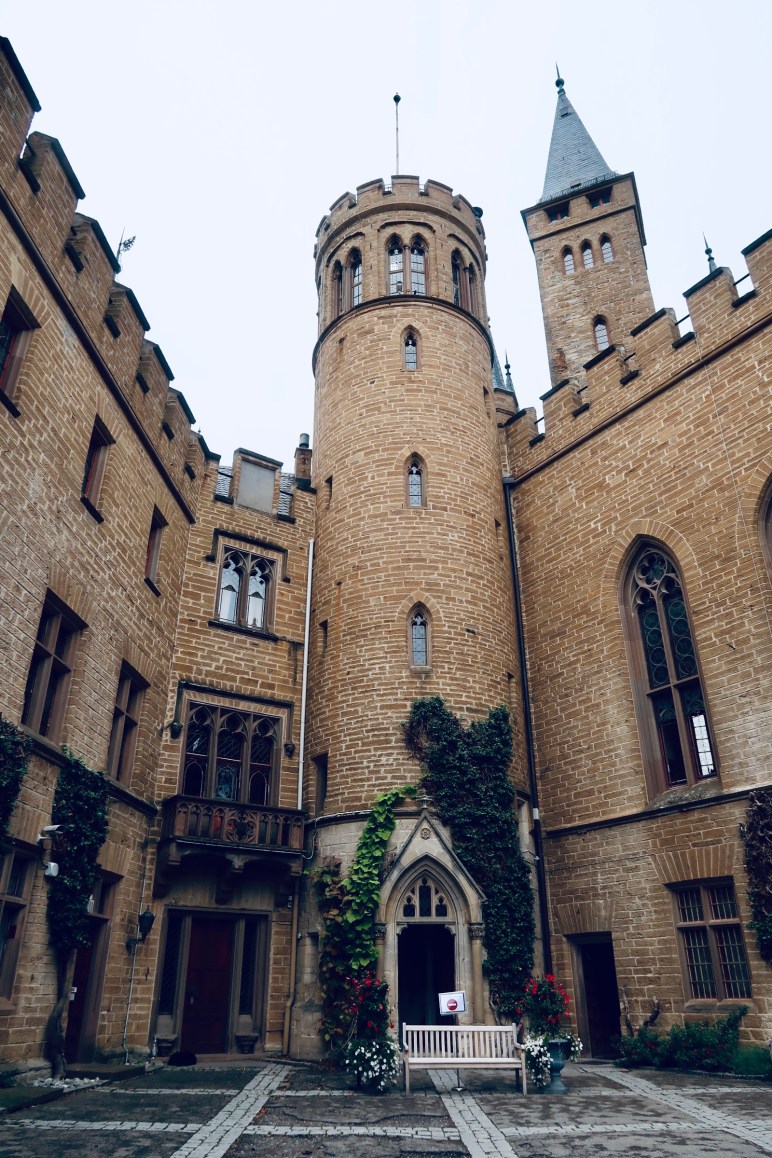
IMG_9935.jpgAfter the second gate, you are able to look right into the heart of the castle with the central courtyard. This particular courtyard is one of my favorites, just due to the look and views of it. I love the bench, the ivy, the brick. On your right is the chapel and church with stained glass windows dating back to the 1300’s. Then you see the “main event”, the castle itself.
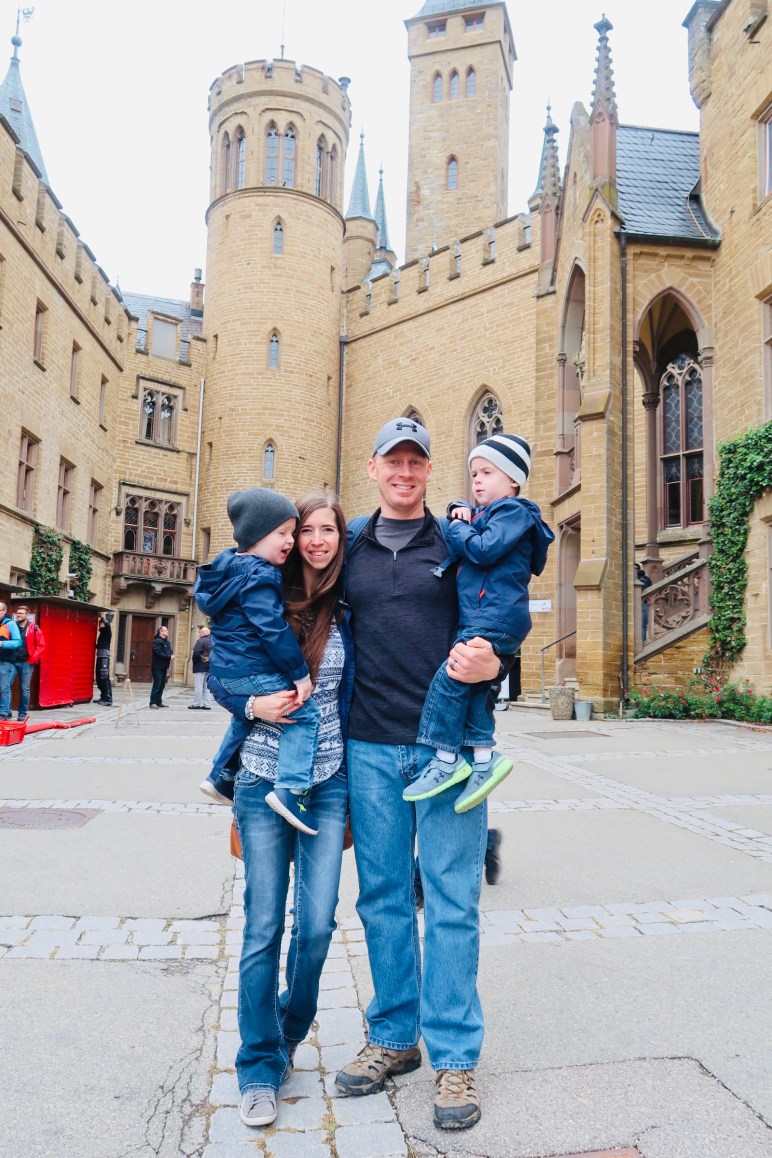
There are two options to see the castle, a guided tour or a “casual stroll”. The only real difference between the two is what you would assume, the guided tour gives you intimate details on the history of the castle and family, while the casual stroll only allows you in the castle. They do have a brochure that details out the information of the castle and its rooms if you want a little bit of both. Typically, the guided tour is given in German, but they do offer other languages on certain days and times.

We did the casual stroll and I don’t feel like we missed much by doing that. It allowed us to meander through the rooms how we wanted, and I felt like I got the chance to actually look around (although that might also be because I wasn’t spending the whole time trying to shush a toddler during a presentation). We saw several rooms, each more incredible than the last (my favorite was the Count’s Hall and The Blue Room). In order to preserve the interior, you are not allowed to take photos and you must wear the slippers they provide.

In addition to the interior rooms of the castle, you are also able to see the cellar, which has all the silver stores, and the casemates. These spots have their own special history and charm to them, and once finished you climb the steps to the outer embankment. This stroll gives you a chance to see just about everything the castle has to offer. I do want to note that there is also a café to eat at and a gift shop to get a little souvenir.

IMG_9992.jpgOverall Hohenzollern is 100% worth the trip and I think it should definitely go on your list of castles to see if you get the chance. We loved our time there and the views are quite gorgeous. You can definitely make this a good mid drive stop (as you only need a couple hours tops to visit and explore) or combine it with a couple other stops in the area as we did.
June In Travel – All the Ruins and Hikes

So, June has come to an end…what?! I remember posting earlier in the month that I couldn’t believe that the year was already halfway over and I am still heavily into that mindset. How are we already at this point in 2019? How are we already in 2019? I’m at a crisis point over here just thinking about how much time has already passed…

But that is not what we are here for today, so we will just put that thought to the side.

Today I am going to be re capping our month in travel, which to be honest is only mildly exciting this month. We have a very big travel month next month and have been preparing to move to our house for most of June (because somehow during our time in the hotel we managed to accumulate stuff, mostly books, and that all had to be packed up and moved). Originally we thought we were going to be moving into our house mid June, but that changed and we scrambled to find some weekend activities.

All that to say, that while we didn’t travel far, we managed to find quite a few fun/interesting things to do with our weekends.

I’ve always been really fascinated with ruins. I love to imagine what was, what could have been, what happened on the site, what the people living there were like, etc. It’s the nostalgia, the idea, the dreams of a different era and way of living. Ruins here are also great because a lot of the sites are open enough for the boys to run around and through the different passageways. It gives them a chance to stretch their legs, and learn how people used to live.

We have quite a few ruins in our nearby area and since the weather was nice, we decided to make those weekends into ruins weekends. We did two sites and then a third hike through the hills behind our house. I’ve got a couple more castles and ruins on my list that I hope to head to over the next couple months after we get back in town from vacation.

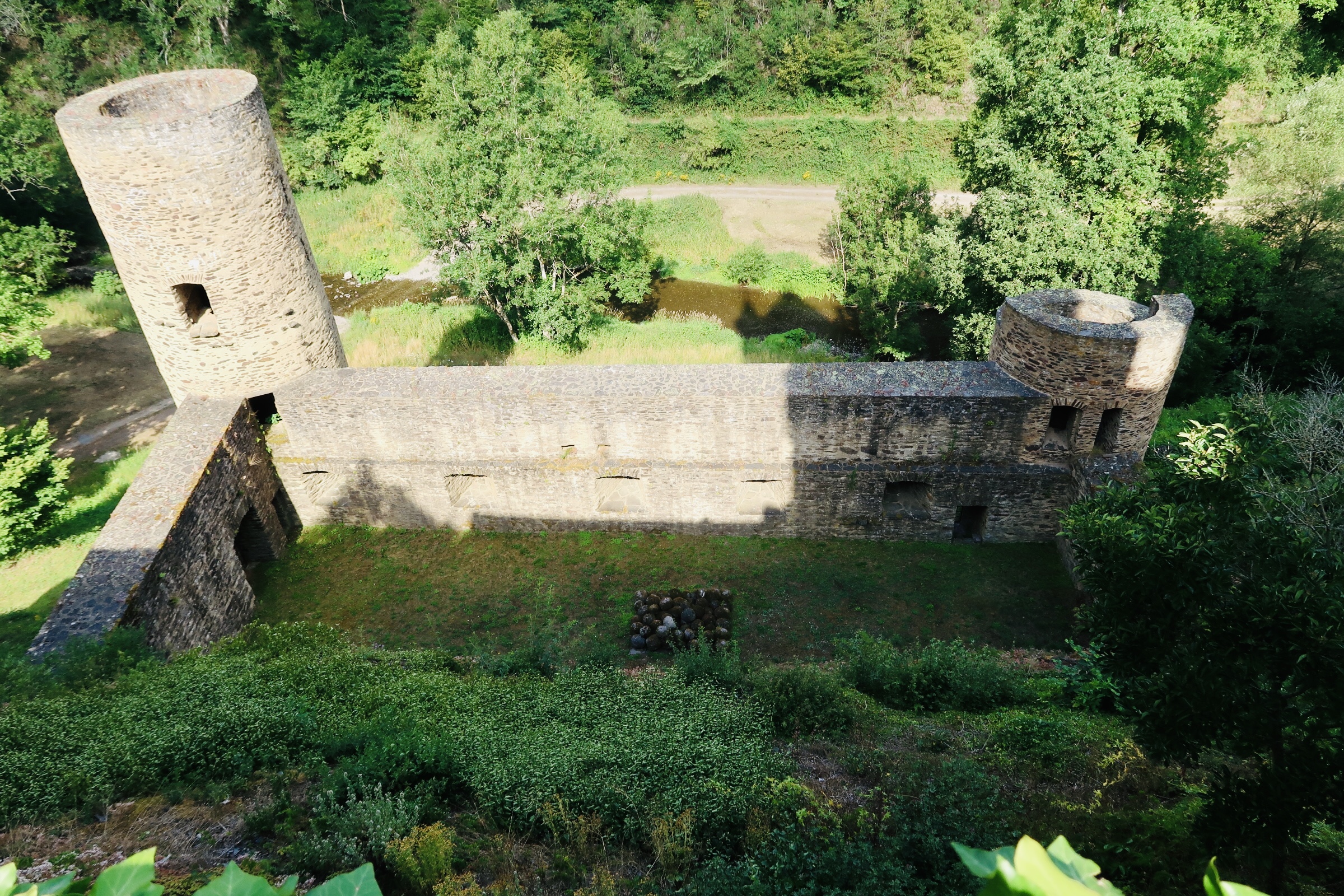
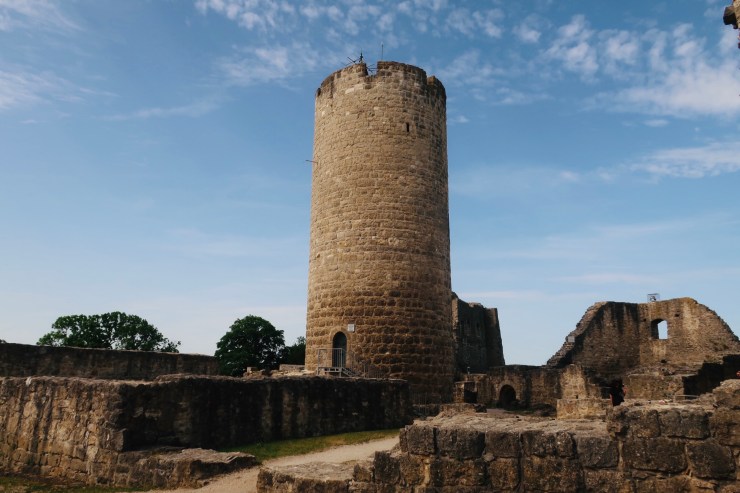
The first ruins site that we went to is the one that is closest and is also the one that we had to do a nice little hike up to. This is definitely more “ruins” than building, but we were able to see the barest outlines of what was and head up one of the turrets to see a beautiful overlook. After the ruins, we took another short hike through a nature preserve that we actually plan on going back to complete the full hike as it is a couple hours long.


The second site is Wolfstein Castle which is much more building structure and has a pretty good layout of what the castle actually looked like in its “heyday”. I think this might have been my favorite spot so far as it has so many little crevices and spots to look through. You can go through all sorts of good little rooms and areas. There is also a “turret” or tower that you can climb up to, although we don’t really know the rules for that and it wasn’t open when we were there. It has some beautiful overlooks of the city and there wasn’t a huge hike to get up there. As for castle ruins, right now it’s at the top of my very short list.

The final thing that we did was a short hike in the hills behind our hotel. We have been really outdoors this past month, choosing to be outside and walk as much as we can, but we decided to do something beyond our long walk to the park. We headed up the hills, in the woods, and off to a religious site. Now, religion is big here, so that wasn’t surprising, but the actual spot that we hiked to was so beautiful. I didn’t manage to get a lot of good shots of the actual spot because it was the top of a rock and trying to track both kids on the top of a rock is not good. But, trust me the whole hike was just wonderful!

And that was our month “in travel”. Definitely a little bit different than previous months, but still a really fun one! Next month we will be spending half the month in different countries so that’ll be an exciting month for us! Moving forward our travel will be changing a little bit due to my husbands schedule, so the Month in Travel posts might change a little bit, but I hope to still have a lot to share even if it is more local spots like these.

Fussen Germany – A Weekend Away

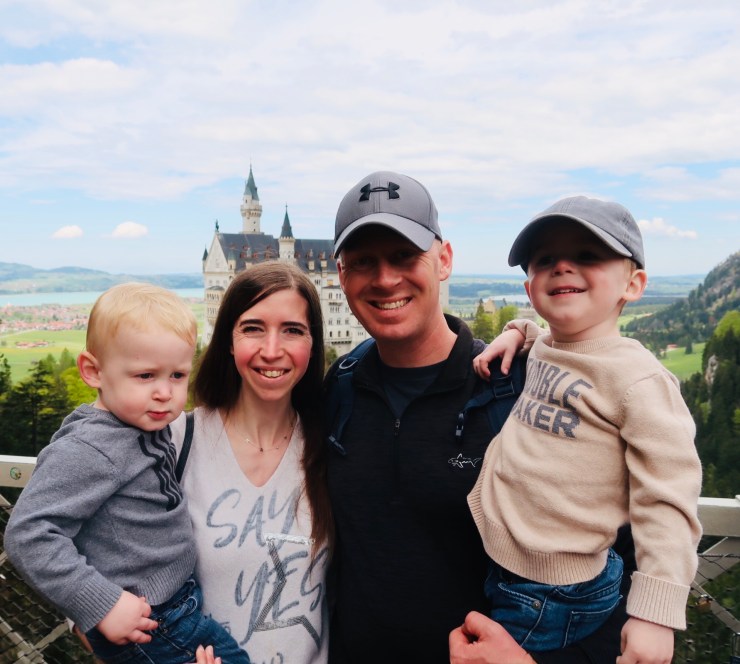
In May we spent a weekend away in a small town called Fussen Germany. We booked this trip to go and see the famed Neuschwanstein Castle, as well as Hohenschwangau Castle (same property). We had decided that when we got there we would decide what else we wanted to do that was nearby. We didn’t have too much of a plan and I decided that we should treat it as a little slow getaway. As a chance to relax, live a little bit slower, take it easy. It definitely was that!

We found a room on Airbnb at a place called Mein Lieber Schwan (website: https://www.meinlieberschwan.de). This has to be one of the best locations that we’ve booked and was the prettiest little apartment. We had a full kitchen/living room, bedroom, sitting room (we used this for the boy’s bedroom), and a little terrace that had an incredible view. From our bedroom window you could see the silhouette of Neuschwanstein Castle as well as the main town. This room was a dream and the location was perfect as it was walking distance from just about everything.

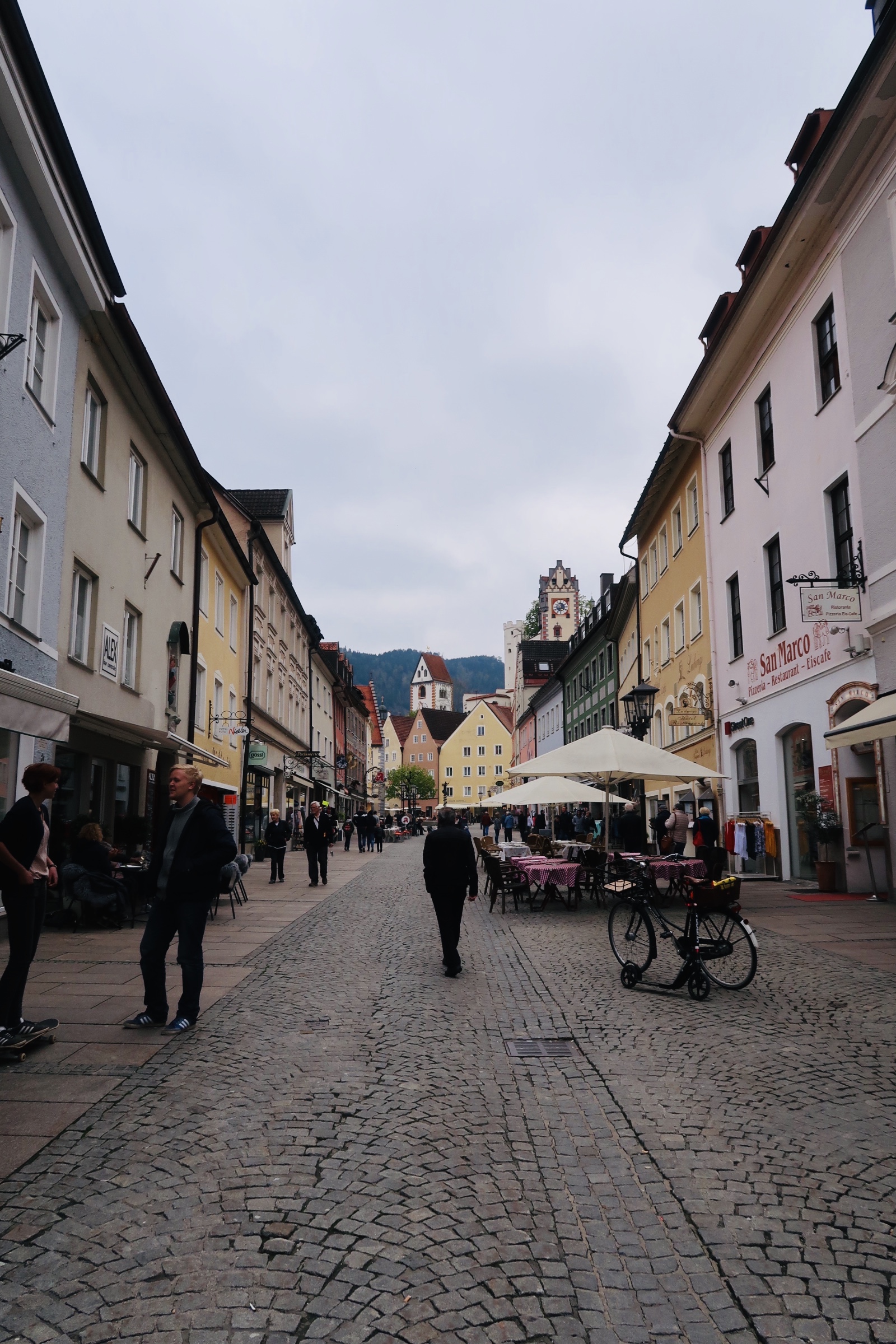
-1281214946695758235_IMG_2991Our first evening we wandered around the main town area before heading to dinner. The town itself is full of that European/German appeal that you come to expect. The main street/square is littered with café’s, restaurants, and shops.  It backs up to the Austrian Alps (you are right at the German/Austria border), so you can view the mountain range just about wherever you look. We wandered through the town, headed out to a short nature walk which went through a fort of some sort from 1897. We then headed out to dinner at a restaurant called Ritterstuben.


Our first full day in Fussen was our exciting day full of castle’s. We had decided to book to see both Hohenschwangau and Neuschwanstein Castle’s as we were interested in both and if we were already going to be there, we might as well see both. Our tour times were not too early, 9:55AM, but we weren’t sure of the parking situation, we had to pick up our tickets, and they are very strict on the entrance times for the castles. For these reasons, we decided to get to the castle about an hour early and boy, was I glad that we did. There is so much more to see to this spot than just the castles.

At the end of the property there is an absolutely beautiful spot; a lake that backs right up to the Austrian Alps that you can walk along for a stretch. The whole area is breathtakingly beautiful but for this lake/mountain/nature loving family it was something truly spectacular (honestly, no joke or exaggeration, rounding the corner to this took my breathe away). We got to have a beautiful start to our day watching the fog breakaway from both the lake and the castles, and the boys got to mingle with some very friendly ducks.

Our first castle tour was Hohenschwangau, which is the smaller of the two castles, the older of the two, and the most “finished” of the two. There is absolutely no photography allowed in the castle’s themselves and while I don’t precisely know why, I suspect the reason is twofold- price of the tickets and preservation of the castle. The interior is all original, from the fresco’s and paintings to the furniture, layout, and lighting. The preservation itself is phenomenal and the tour gave us a little insight into the lives of the royal family at the time. Hohenschwangau was predominantly used as a Summer and hunting home by King Maximillian II, his wife, Marie of Prussia, and as a childhood home for their children, King Ludwig II and Kong Otto I. The castle made it through both world wars without damage and portions are still in use today by members of the former royal family.

The tour is semi guided- you have a tour guide who opens the doors and points out little tidbits, but on the whole the tour itself is given in audio format (via little devices that you can either plug headphones into or hold up to your ear). All in all, the tour lasted about 30-40 minutes and gave us a pretty good look at the interior and the family’s life.

We had about an hour or so before our second tour began so we decided to take a carriage tour up to Neuschwanstein. There are three options to get from the Hohenschwangau castle to Neuschwanstein: bus, walk, or horse drawn carriage. Now we have two little toddlers who are excellent walkers, but also love to be carried. We had already walked quite a bit that day (and they did really really well on this past trip with walking) and we knew that we still had a lot more to go. We ended up deciding to take the horse drawn carriage up to the castle (I know horse drawn carriages have their own issues) and it was definitely a fun way to feel special heading up to the castle. Every girl can dream of having that Cinderella moment and this is a good way to get that experience.

If you were impressed by the beauty of Hohenschwangau castle, just wait till we talk through Neuschwanstein.


This takes the castle concept to a whole new level. In fact, Neuschwanstein castle inspired the “fairytale castle” for Walt Disney and Magic Kingdom. Neuschwanstein was built by King Ludwig II (fun fact- he could watch the castle being built from his room in Hohenschwangau, he had a telescope set up in the room to do so).

It was built in the 19thCentury, however the interior was not fully finished, and King Ludwig only spent a very short amount of time in the castle before his death. This castle also made it through both world wars without any damage. On the tour we were able to see the King’s Quarters, the Throne Room, the Grotto and another. The tour is handled in the same was as Hohenschwangau, an audio tour led by a guide and once again, I felt like we got a really good amount of information about the castle and the King.

The final stop on our “Castle” Day was Marienbrucke.

-8329587099912118466_IMG_3378

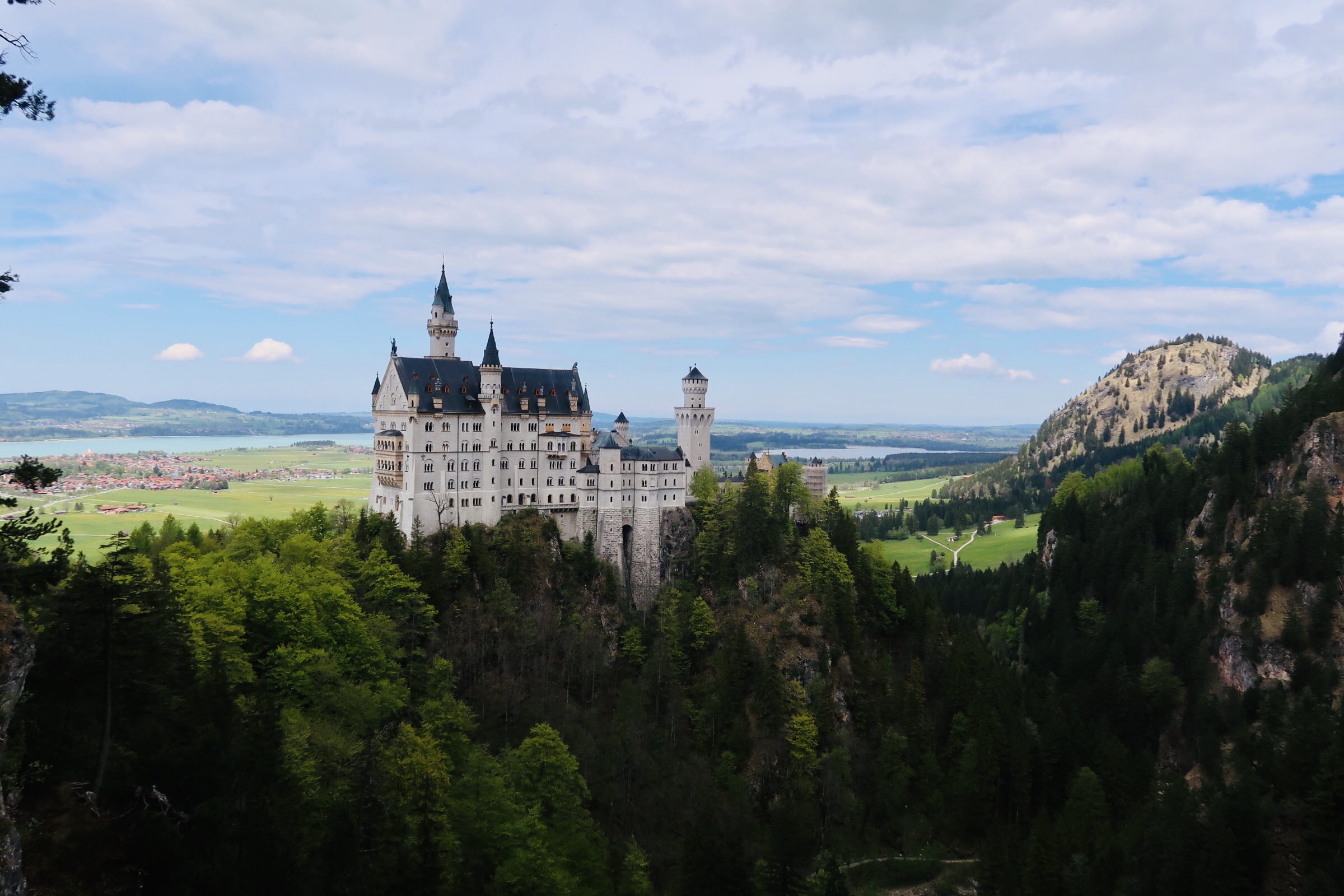
This is a bridge that crosses a valley on one side of the Neuschwanstein Castle. It provides not only a beautiful look at the castle, but also at the nature and mountains all around. It is absolutely stunning and well worth the short hike to get to it from Neuschwanstein (even for me who is absolutely terrified of heights/being suspended in air). Once again, an absolutely breathtaking sight. Most of the pictures that you see of Neuschwanstein are from this view point.

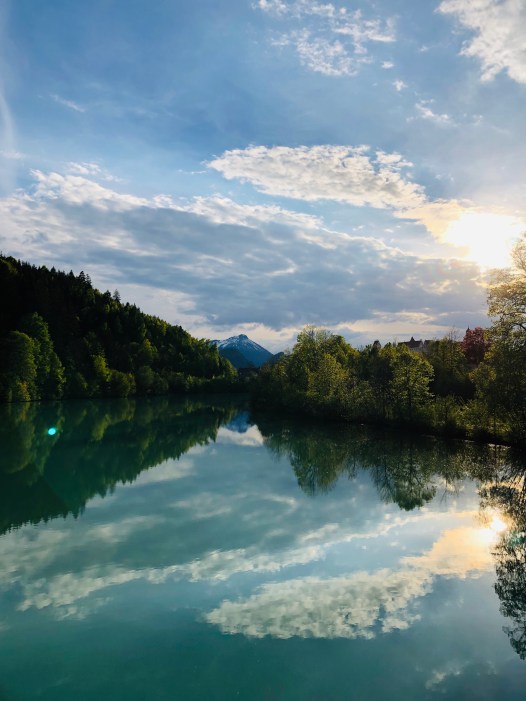
IMG_2068.jpgWe ended our day with another little walk through the town and dinner at a place called Gasthof Krone. This is a medieval restaurant that offers typical German food with the medieval environment. Beer is served in large mugs, soda’s and other drinks in pottery cups. They do set up shows and such, but for special groups and other times. It was a fun experience to have and we really enjoyed our meal (especially my husband who got some local dish). After dinner we headed out on a little mini hike back down to another bridge where we watched the sunset on the lake/alps. A Beautiful end to a perfect day.


Our third, and last full day in Fussen, we decided to do a morning breakfast at one of the cute café’s and then a hike. We’ve always loved being in nature/outdoors and if we can find something out in nature we will do it. This particular hike promised a fantastic overview of Fussen and a memorable experience. Breakfast was at one of the cutest little cafés’, Bio Café Baumgarten, that had both a fantastic backdrop and delicious food/drink. We fueled up with Crepe’s Croissants, and a Cappuccino for me, Blood Orange Juice for Rob. We actually stayed in this little spot for around an hour (the longest we’ve ever stayed like this) and it was just the most perfect start.

The sun really came out when we headed out for the hike to Kalvarienberg. The hike is uphill and touches on some religious aspects throughout. It does not have to be a religious experience if you do not want it to be, you can treat it as just a good hike. It is uphill to begin, alternating between steps and terrain and there a couple natural break spots should you need them.

Once you reach the top you are rewarded with one of the most spectacular views that you could ever dream of.

On one side you see both castles and lake along with the Austrian Alps and on the other you get a full look at the town of Fussen.  Again, breathtaking ( I feel like that word is really the only word that can adequately describe everything we saw and experienced on this weekend away). It was truly an incredible view to see.

On our way back down from the overlook we headed to Lechfalls, which is a waterfall system with an Austrian Alps backdrop.

The waterfall themselves were a beautiful sight and it was a really pretty hike to get to them and then get back to the room. The falls themselves are quite simple, it is more the backdrop I feel that adds the level of beauty.

Our final night included dinner at Alstadt Hotel. The dinner was fantastic, as always, and afterwards we wandered the Fussen Castle.

The town of Fussen has its own castle (though not as grand as the other two) and we wandered through its cobblestone entryway, read about its siege techniques, as well as the painting technique on the exterior (hint: all the bits you see are actually painted on to the walls, except for a certain few to give it a much more grand look). The castle itself is now an art gallery, although it was closed when we walked through.

This whole weekend away was beyond my expectations and dreams. I keep using the word breathtaking, but it is really the only word that can even come close to some of the sights that we saw and experienced. I’ll be doing a tips/tricks post, although it will be shorter than some of my past ones, but I highly recommend that you add Fussen and Neushwanstein on to your must-see list!

-2532635048888568572_IMG_3555.jpg