A Cuppa Cosy Summer Holiday 2020 – Paris Tips & Recommendations

Ah, Paris; the metropolitan city of love (and light). We spent two full days in the city and I still feel like we only scratched the surface. You can read about our Day 1 and Day 2, but today I am going to be touching a little bit on my tips and tricks for the city. I’ll be honest, I’m struggling a bit with this post for a couple different reasons. I feel like we didn’t get to see as much because we are traveling with our two young boys (so no museums, save for the one military one) and we traveled during the downside of a Global Pandemic (so closures and distancing measures were in place). So, I don’t know that I can give you ALL the details of what to see/do, but I can touch on what we did do. 

I will also say, (!!!UNPOPULAR OPINION ALERT!!!) Paris wasn’t our favorite of everywhere we’ve been. There were certain parts that we enjoyed, and we thought were cool, but it wasn’t a top spot. 
As I’ve been doing, I am going to touch on Public Transport as the first thing. We always utilize public transport when we travel as it’s easier (especially here in Europe) and it tends to be cheaper once we add all the costs up. Paris, like many other metropolitan cities in Europe, has an excellent metro system. The trains are fast, and the schedule/routes are fairly straightforward (even if the actual stations aren’t always). I will say, I have yet to run into a “bad” public transport option. 

Paris is a city that you’ll have to look up things (I know, a massive help here). If you are interested in certain art forms or artists, there is probably a museum devoted just to them. I would have liked to visit Monet’s studio or seen the Louvre Museum. I would say, my biggest recommendation for a trip to Paris is to plan it out a bit more. You can idly stroll the streets (which is completely fine and very Parisian), but it’s not as easy to see all the things by doing that. 

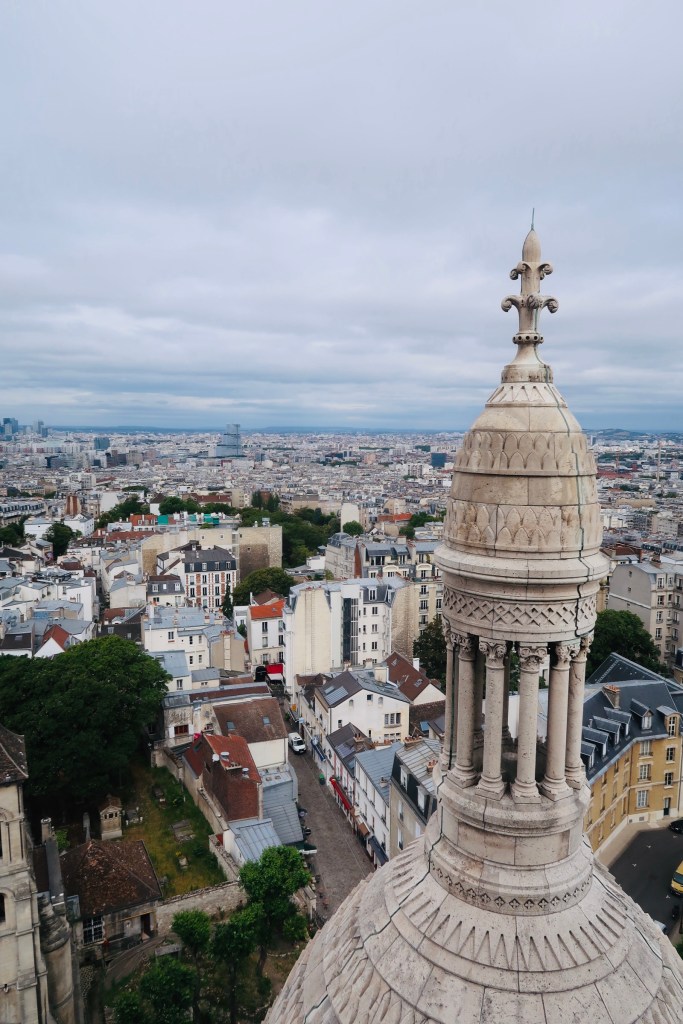
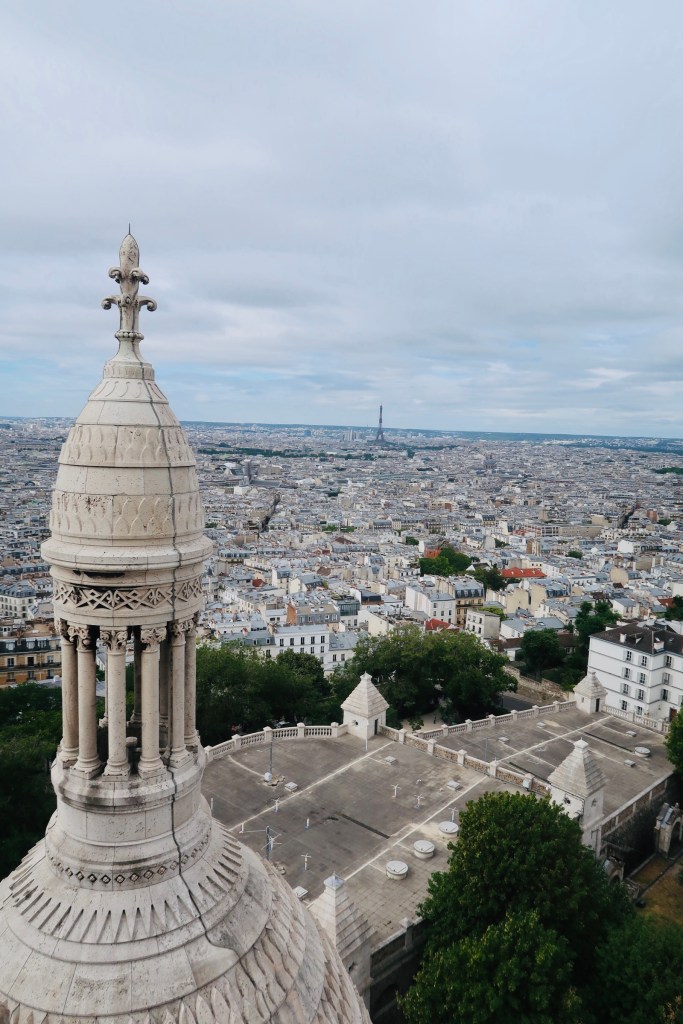
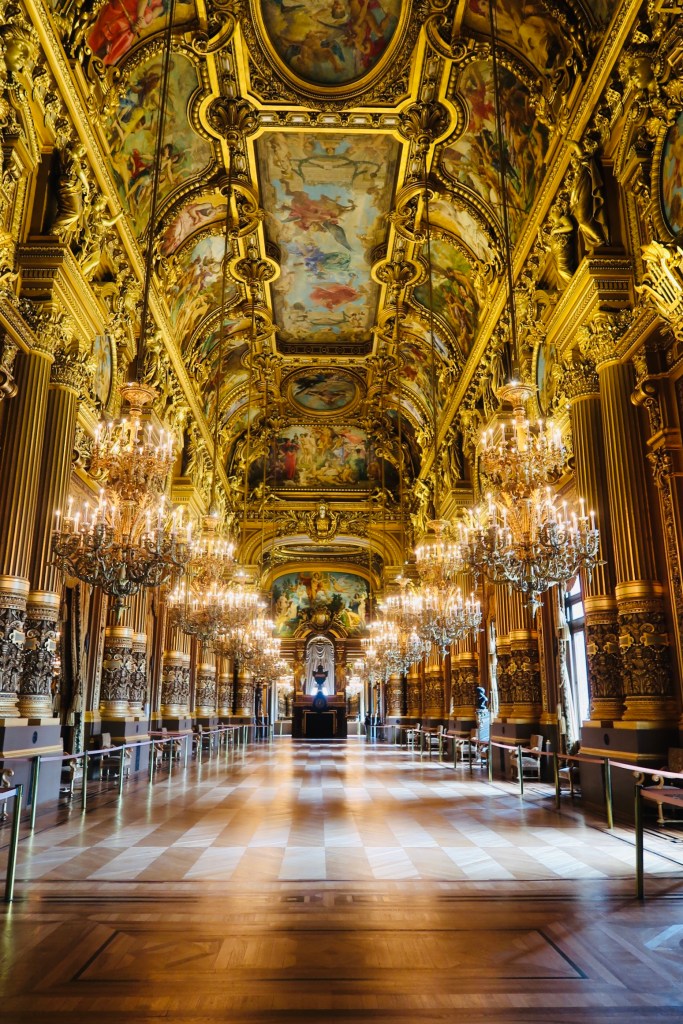
If you want to see the height of Parisian opulence and grandeur, go to the Opera House. If you have no interest in seeing that, go to the Opera House. If you only see one thing in Paris, go to the Opera House. Can you tell that I loved the Opera house? Unfortunately, we did not get to see the Louvre, so I can’t attest to it, but it’s obviously a hot spot. For an Eagle Eye view of the city, opt for the Dome of the Sacre-Coeur Basilica over the Eiffel Tower. You’ll see much more of the city. Make sure to snack on some Crepe’s and Macaroons (obviously), and try some of the local wines. 

Parisians are not rude. I don’t know if it was our timing (with tourism being down) or that we learn some basic words in the language, but we didn’t face any of the “rudeness” that everyone talks about. I’ve actually just found this to be a great thing to do anywhere you travel- learn a few common phrases or words (we usually try to learn hello, goodbye, thank you, please, good, do you speak English, and bathroom). It just goes a long way. 

Otherwise, I don’t have too much more to say about Paris. Of course, if you have any questions I can certainly try my best to answer them, so leave those below. 
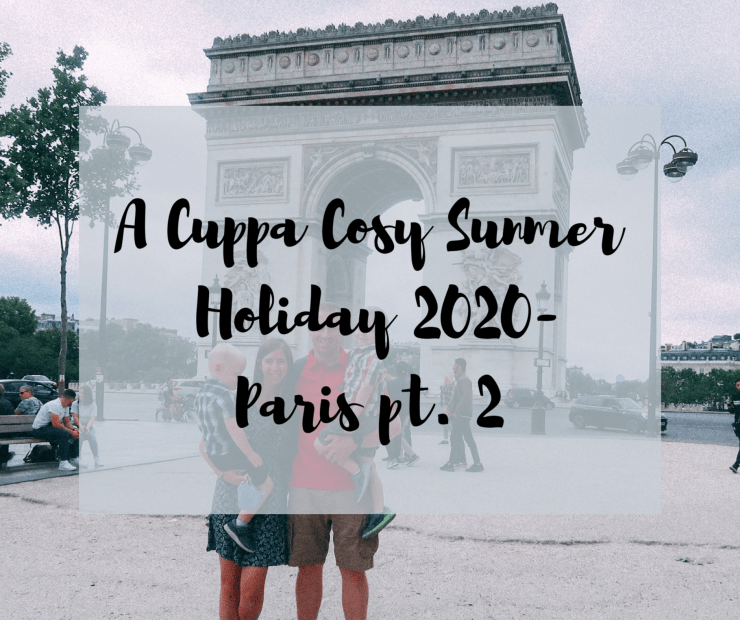
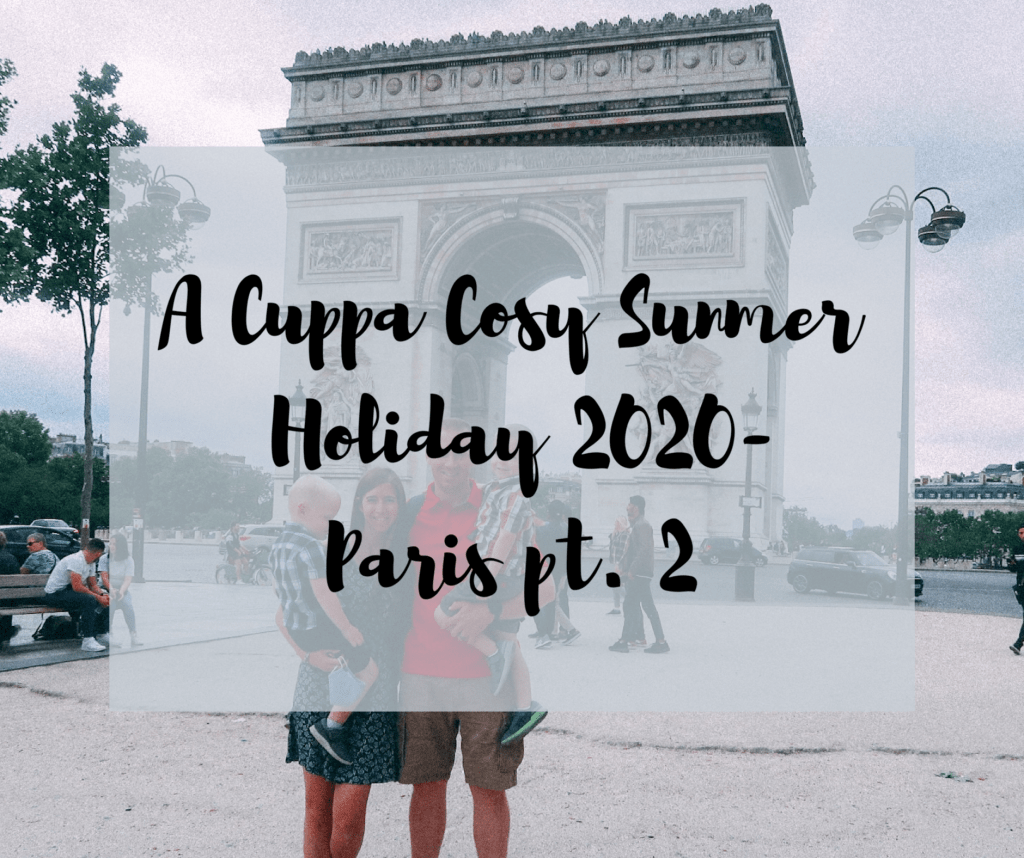
A Cuppa Cosy Summer Holiday 2020 – Paris pt. 2

There is a word derived from French, flaneur, and it means to stroll and observe; which is basically what we spent our second day in Paris doing. If our first day was spent dotting from here to there, hopping off and on public transport and staying on more of the Notre Dame side of things (read about it HERE), our second day was spent truly walking the streets of Paris. We utilized public transport twice, once heading in and then again heading back out. So, what did we do?

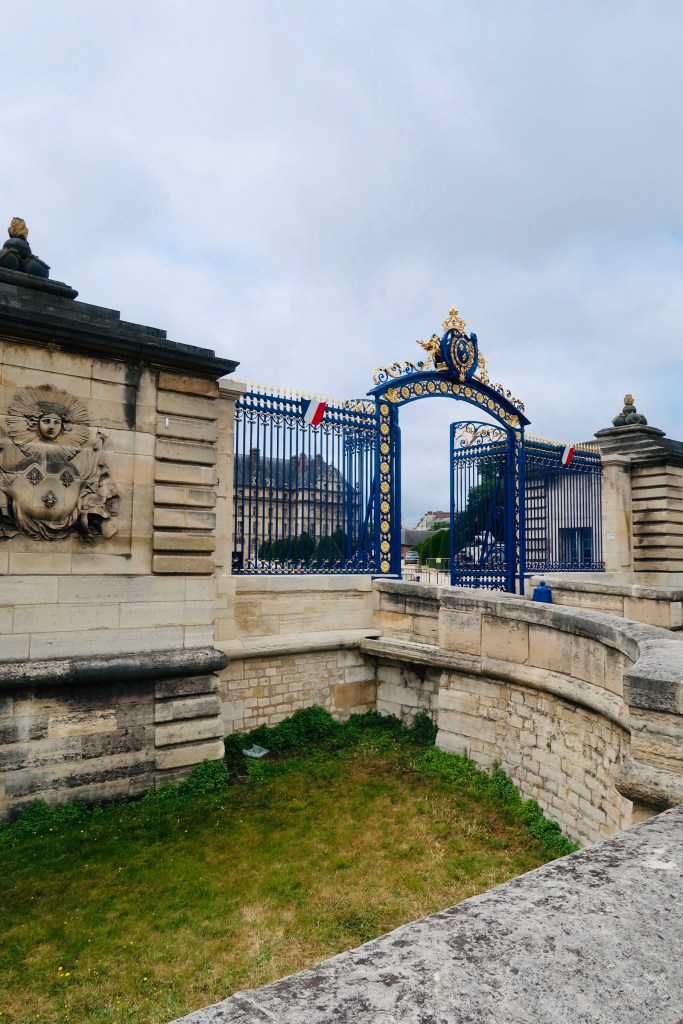
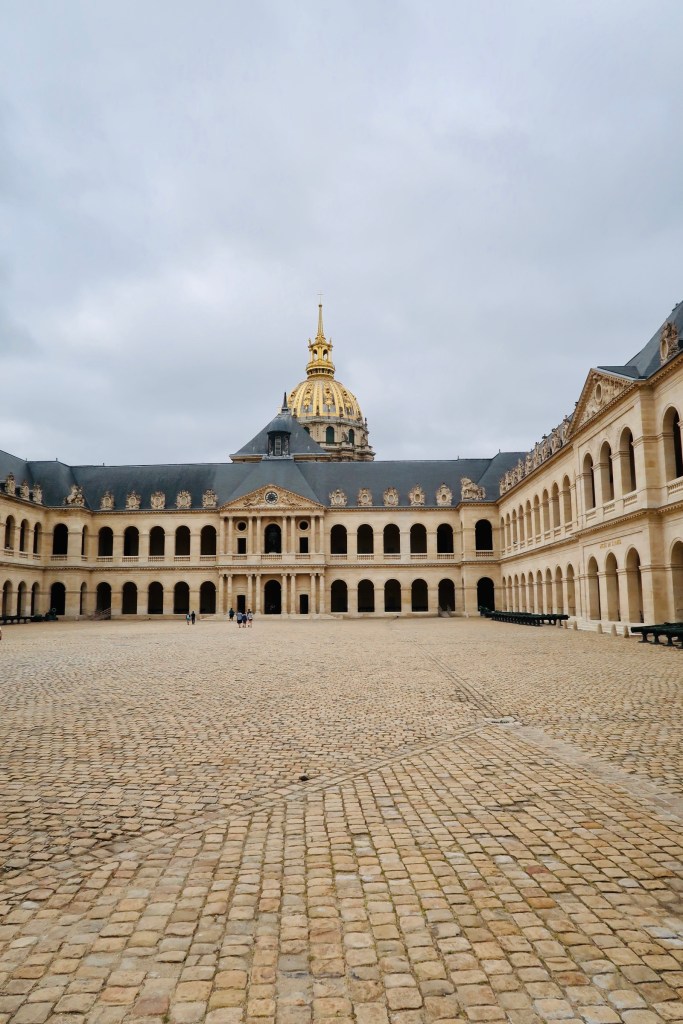
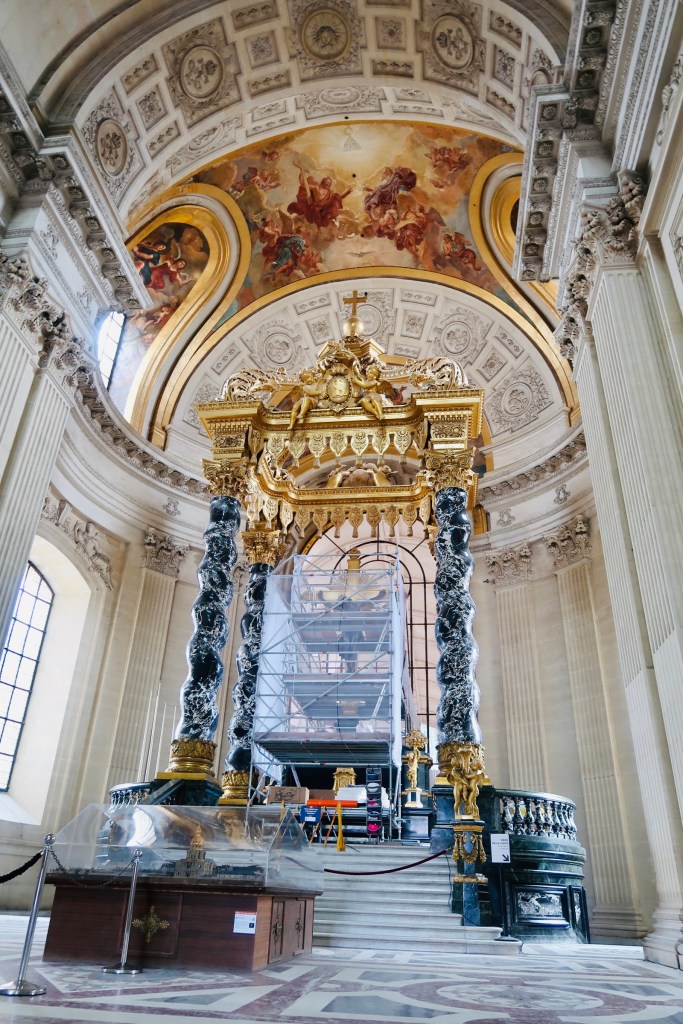
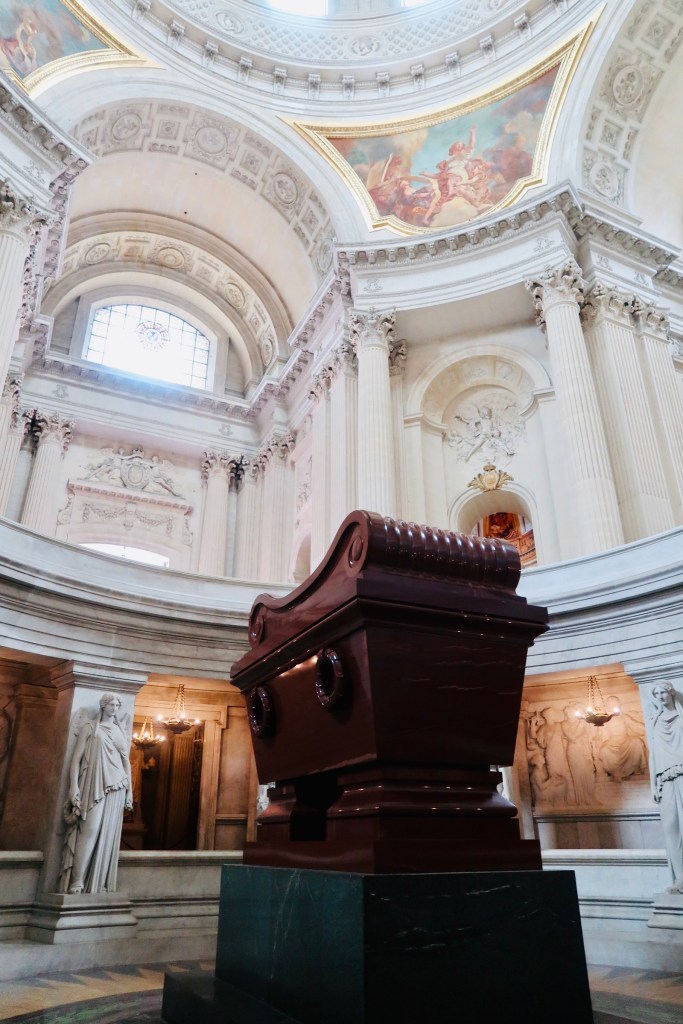
We started our day off at Hotel national des Invalides, or The National Residence of the Invalids. This building has several different facets, but it’s original use was as a military hospital and retirement home for war veterans. It also holds a large church with the tallest dome in Paris and the tombs of some very notable war heroes (we will break this down in a bit, but <cough, cough> Napoleon <cough, cough>).

The original project was commissioned by Louis XIV in the 17th century and it has some key history beyond just serving as a military hospital. During the French Revolution it was stormed by rioters and used against the Bastille, it also served as an important spot in the degradation, and then rehabilitation, of Captain Alfred Dreyfus (which I am just now learning about?!), and holds the sarcophagus of Napoleon Bonaparte. Of course, Napoleon is not the only Frenchmen interred in the dome, there is an exhaustive list of tombs, vaults, and hearts that are in Les Invalides. 

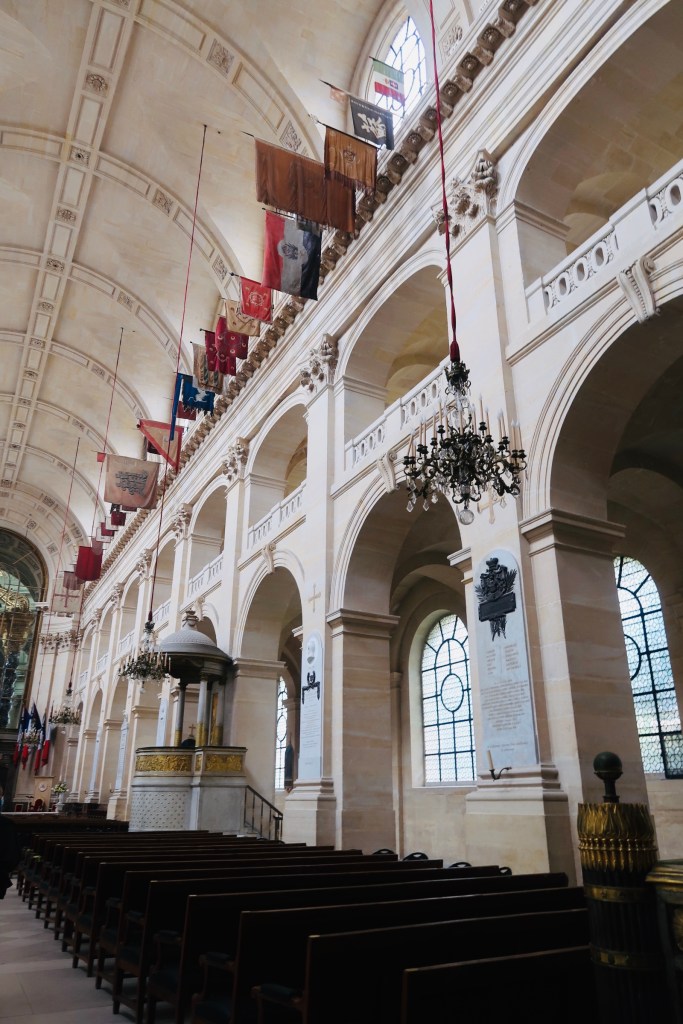
These days the property not only serves as a facility for veterans (it still holds a medical and rehabilitation center), but it also serves as a museum center with museums detailing war history as well as an archive center for the 20th century archives. The complex is massive, and we spent a few hours walking through all of the sections. The amount of compiled information just in the museum portion is a lot and spans not just French history, but quite a few other countries as well. They’ve got a lot of little models of battlefields and battles that our boys enjoyed. The church and dome are also quite grand and incredible in their own ways and of course, the tomb of Napoleon is front and center. 

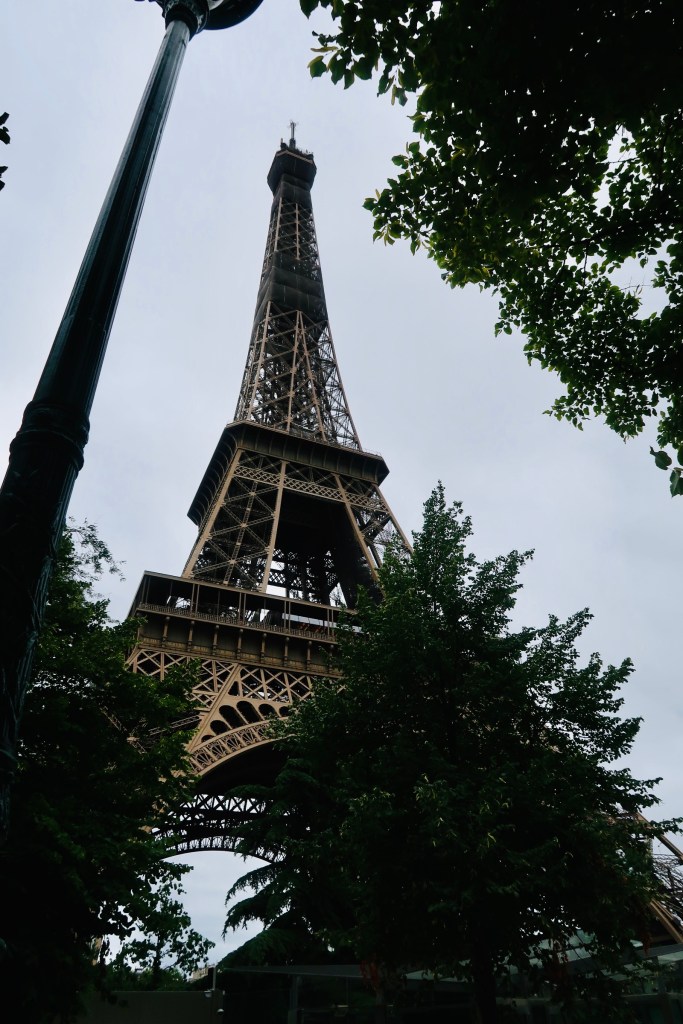
From the Hotel des Invalides we walked over to the Eiffel Tower. We chose to simply walk as the distance is not that far and it’s an easy route (you just keep the tower in your sights…). It was actually a really nice walk that allowed us to see a bit more of the Paris architecture (that is different from the countryside in my opinion). 

So, the Eiffel Tower. Constructed in the late 19th century for the 1889 World’s Fair, it “towers” over Paris at 324 meters tall. I feel like it should be noted that this particular World’s Fair was held to celebrate the centennial of the French Revolution. As with the Louvre Pyramid, there were objectors on several fronts (although the Eiffel Tower massively predates the Louvre Pyramid- HERE). The two popular counter arguments to the Tower were those who objected on aesthetic grounds and those that did not believe that such a tower could be constructed. Gustave Eiffel fought back, had powerful people behind him, and so the tower went ahead. The tower has a storied history, but survived both World Wars (narrowly in the second as Hitler did order it to be destroyed) and still stands today. There are three platforms with the third being at the very top. We were not able to go up to the third due to Coronavirus, and ended up choosing not to participate in going in the Eiffel Tower at all. Instead, we walked “under” (really beside it), across the Pont D’lena bridge and over to the Trocardie Gardens for a view of the full tower. We didn’t linger to long, partly because you can see the Eiffel Tower from any viewpoint on this side of the city of Paris, choosing instead to head over to our next stop of the day. 

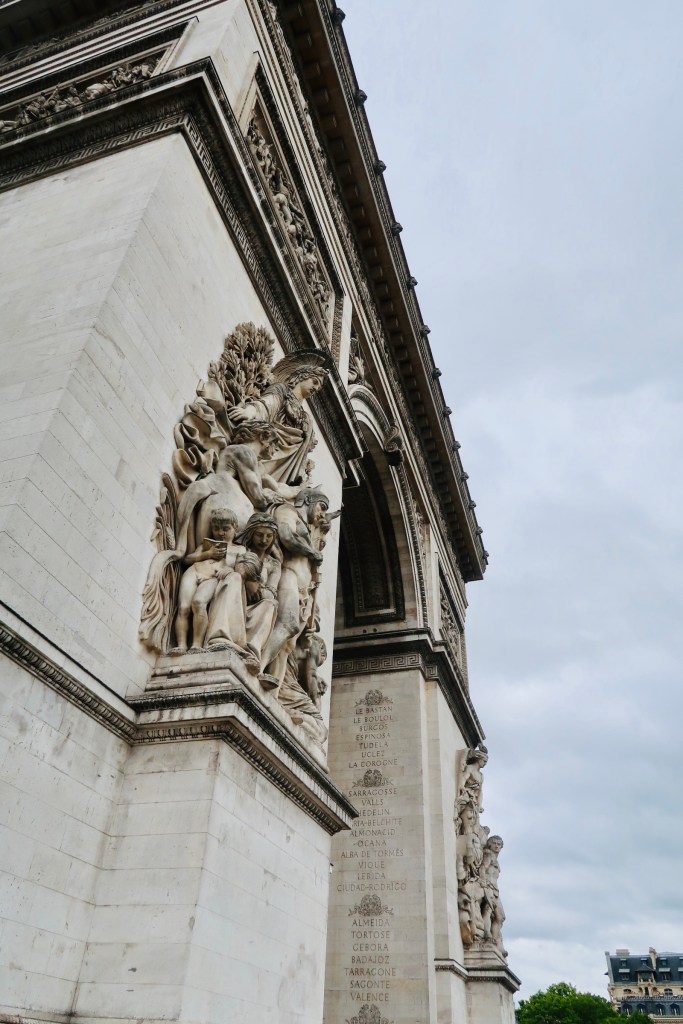
From the Eiffel Tower we walked along towards the Arc de Triomphe. The route that we ended up walking allowed us to see a bit more of the “white collar” business side of Paris (I say white collar very lightly) as well as a part of their embassy section. It wasn’t a bad walk and before long we were right at the Arc. 

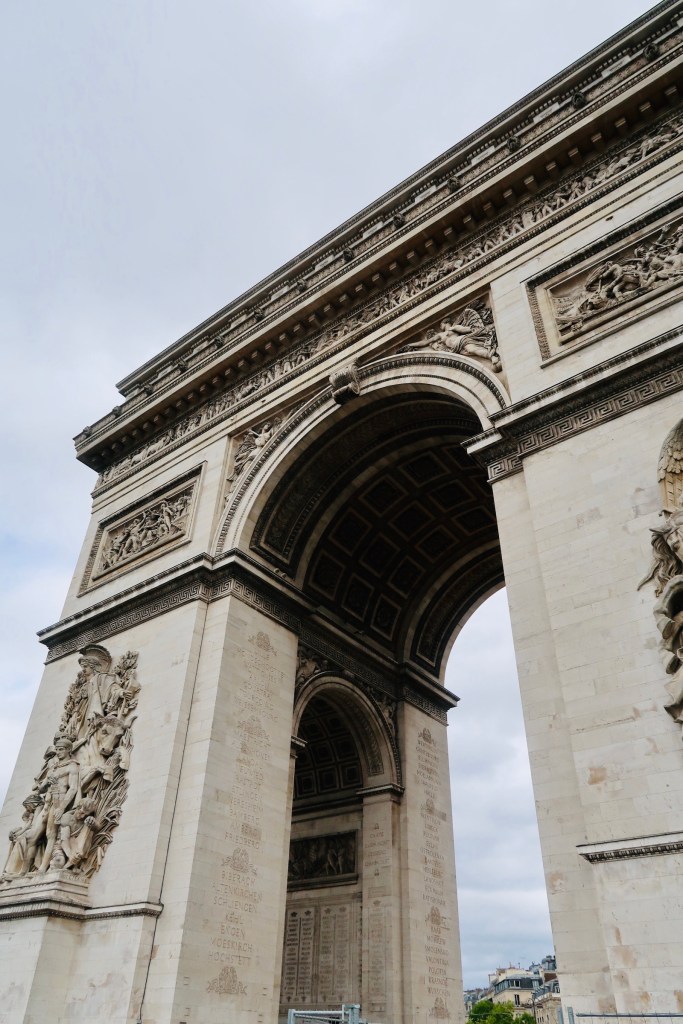
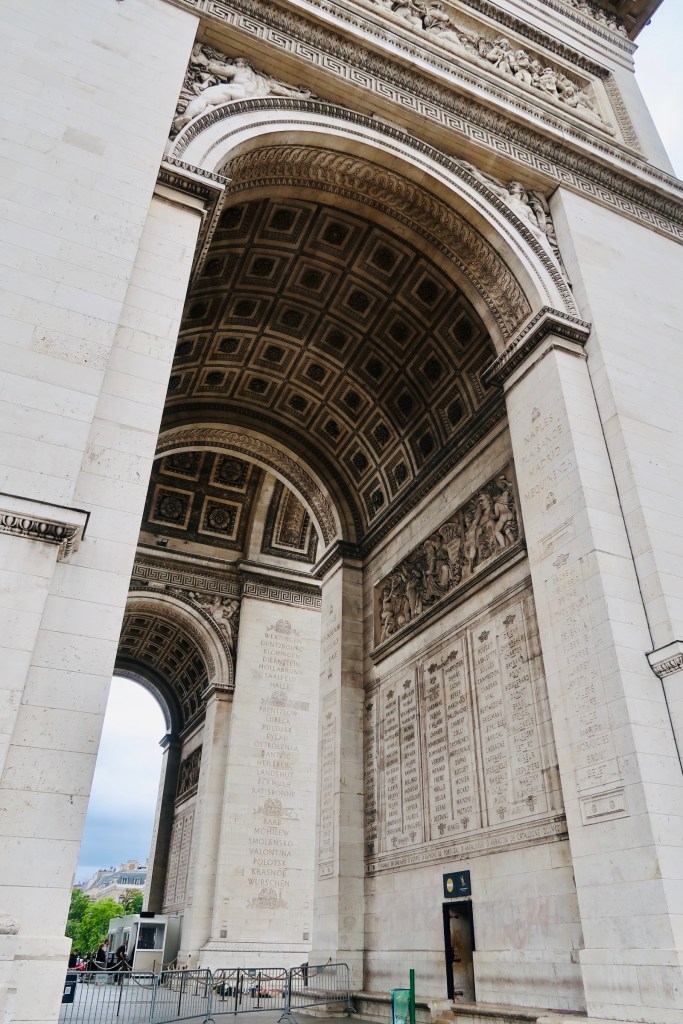
Commissioned by Napoleon towards the beginning of the 19th century, the Arc de Triomphe is a tribute to the armies of the Revolution and the French Empire. Napoleon really liked Roman antiquity (and you see this theme in quite a few of the buildings he commissioned) so there are a lot of similarities between this arc and those in the Roman Forum. It was placed in a central point of the city, with the Emperors residence at one end of the walkway (now the Avenue des Champs-Elysees) and became a central point for numerous roads leaving from the arc (did that make any sense?). Construction on the Arc was quite start and stop, however once completed it became a rallying spot for the French Army and is home to several large military parades and demonstrations. In 1920 the Tomb of the Unknown Soldier was interred beneath the Arc and the first eternal flame in Western/Eastern Europe since the Vestal Virgins was lit. There are a lot of architectural details and war history carved into the Arc and you are able to go to the top of the Arc and see the expanse of Paris. We declined to do so, but wandered around the base reading the names and paying our respects to their tomb. 

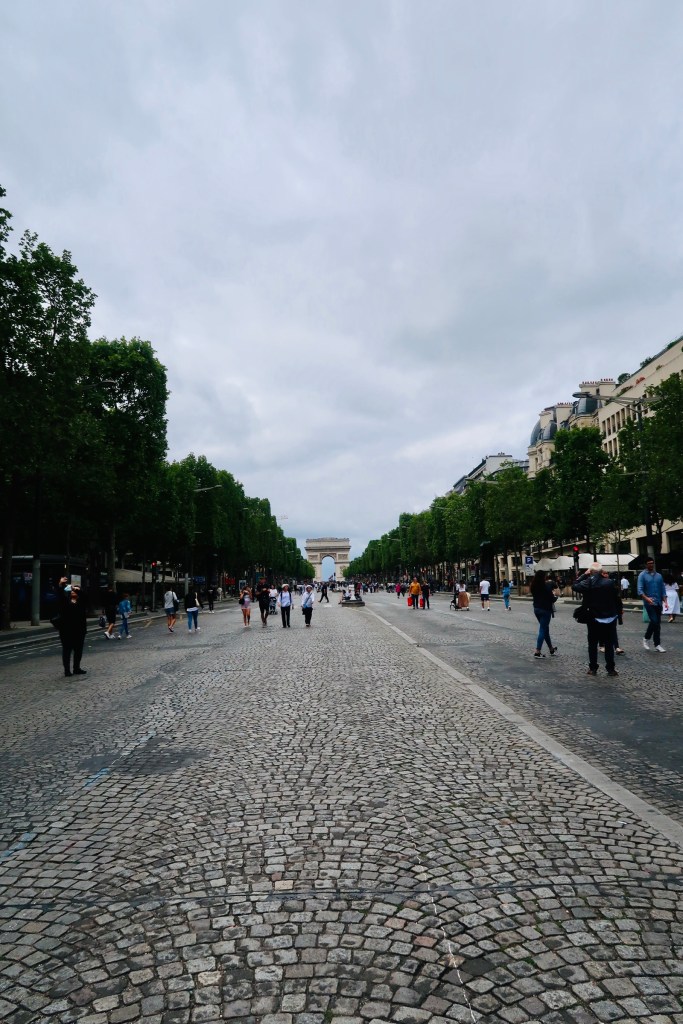
From there we wandered down the Avenue des Champs-Elysees which was open to foot traffic (not vehicular). The Champs-Elysees is an avenue that runs from the public square of the Place de la Concorde to the Arc de Triomphe. It is home to luxury stores and boutiques as well as military parades and other major events. Originally called the Grand Promenade it was originally an extension of the Tuileries Garden and the Tuileries Palace. It quickly was extended (several times) and then became home to townhouses of the nobility before finally, much much later in history (not entirely- right around the 1860’s) settling to the shopping center it has become. The avenue is not only famous for its shopping, but also for its military parades. The Germans had two victory parades, but the most joyous were of the parades of the French and American forces after liberating the city. While we didn’t do any magical, high end shopping, we did stop for dinner on the avenue and treated ourselves to a nice little feast before continuing on. 

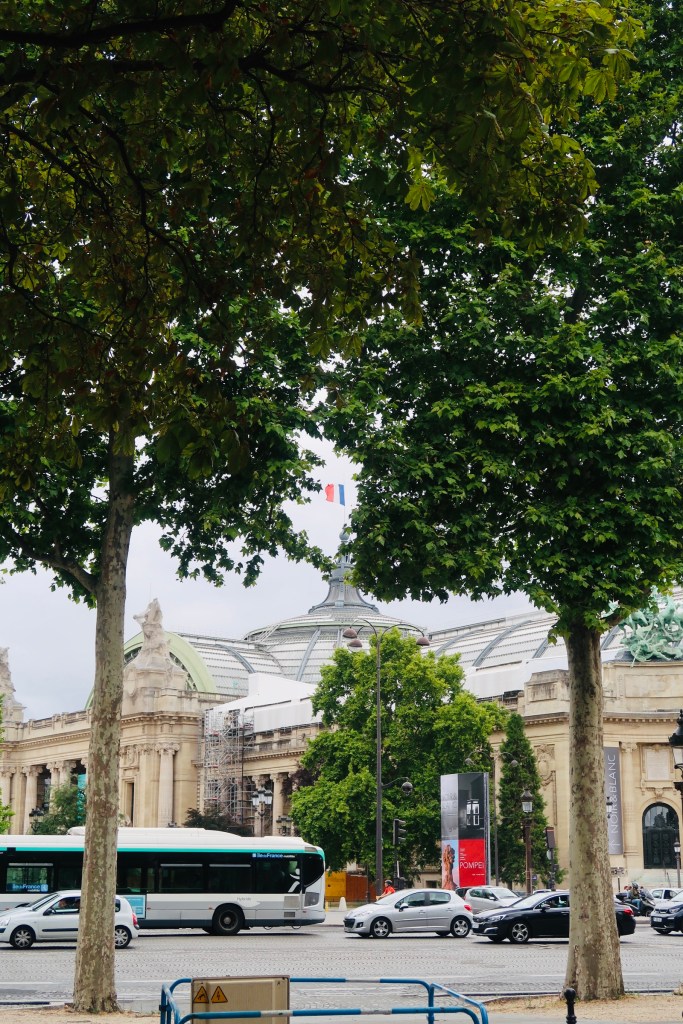
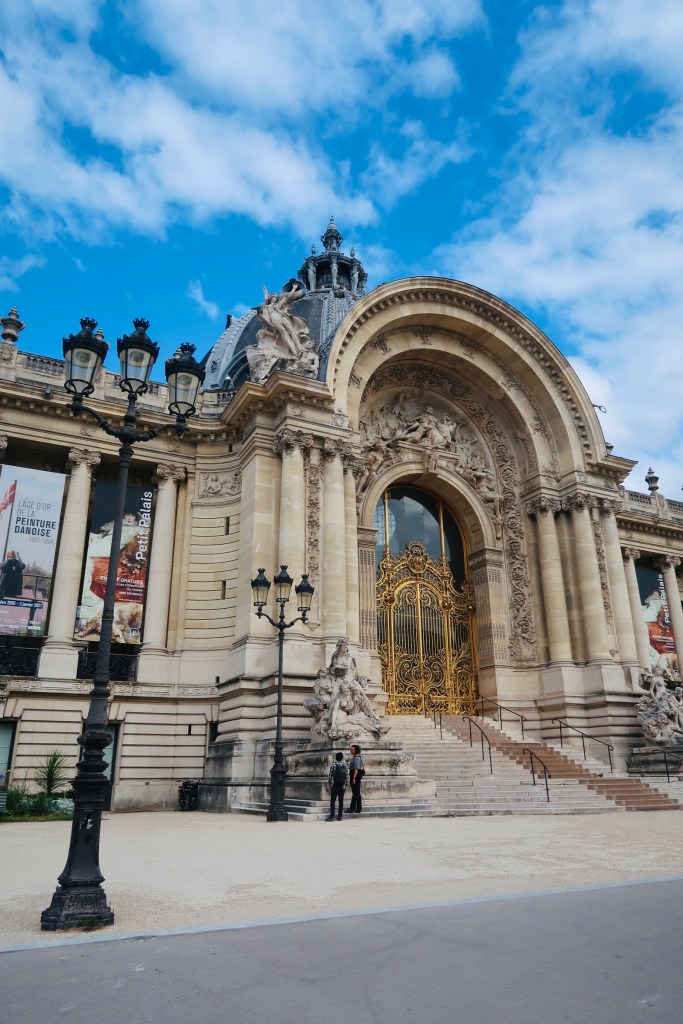
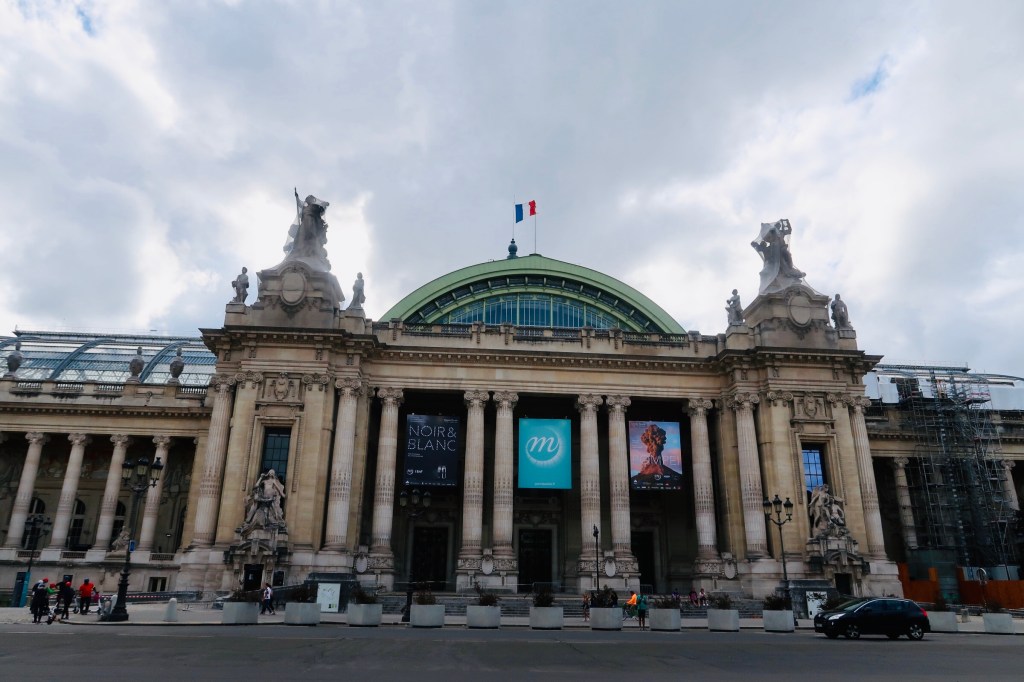
We wandered over towards the Grand and Petite Palais on Winston Churchill Avenue. The Grand Palais is an exhibition hall and museum dating back to the late 19th century. It is dedicated and intended for the arts and showcased objects innovation and modern technology (think planes, automobiles, household goods). During World War 1 it was used as a war hospital and during World War 2 it was used (by the Germans) as a truck depot and propaganda center. The Petit Palais is directly across the avenue and is an art museum and dates back to the 1900 World’s Fair. 

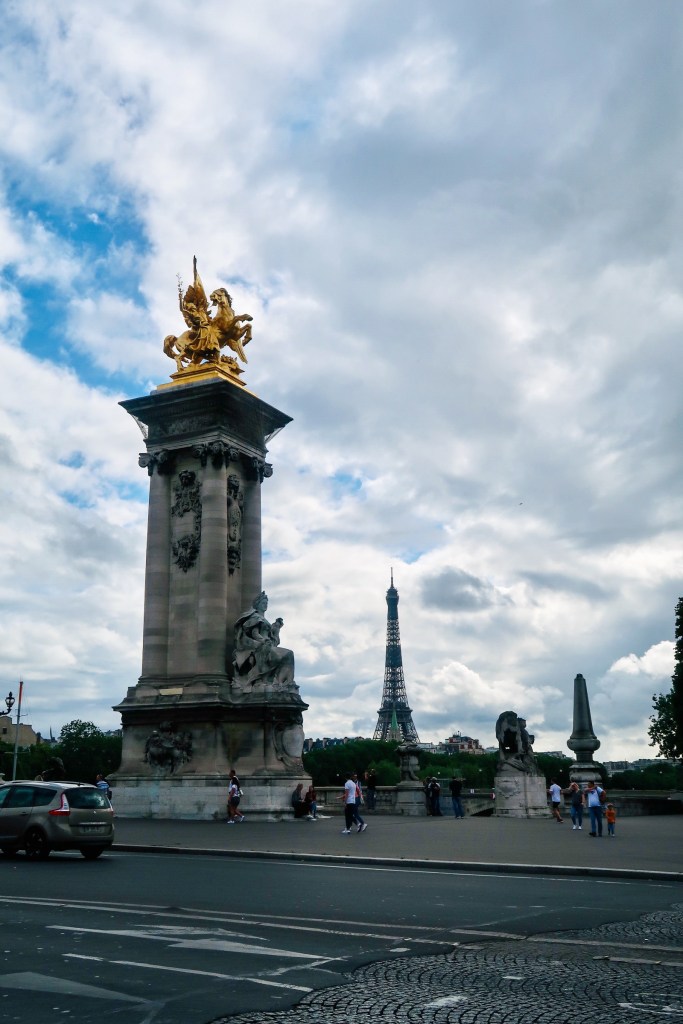
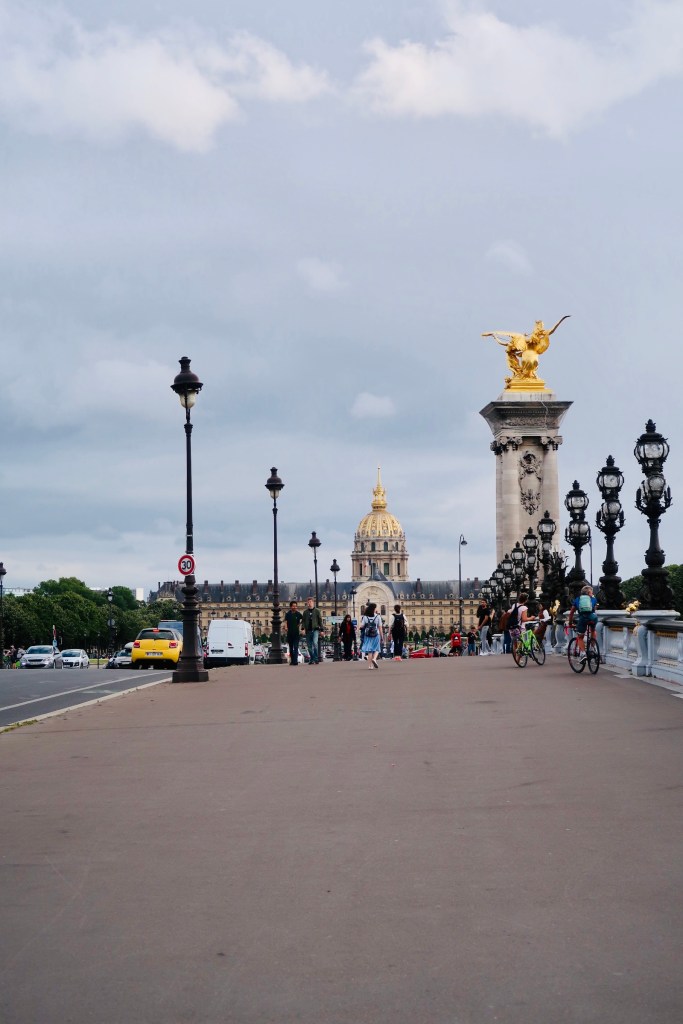
From there we walked across Pont Alexander III Bridge, which was built to connect the Champs-Elysees with the Hotel des Invalides and Eiffel Tower. Named after the Tsar Alexander III it was commissioned and built in the late 19th century. It is the most ornate and extravagant bridge in the city and boasts incredible views- from one side the Grand Palais, the other the Hotel des Invalides and out towards the water you see the Eiffel Tower. 

And that concludes our time in Paris!  

A Cuppa Cosy Summer Holiday 2020 – Paris pt. 1

It is time for the second stop on our Summer Holiday, the much-anticipated Paris- city of love. I am going to divide our time in Paris up into two different posts (this has been determined after editing this together- it’s simply too much for one) and I am going to be splitting them by day for Paris (the rest should be fine simply by location). 

So, Paris, the city of Love. This was just a short few hours’ drive from Luxembourg City, so we looked around to see if there was anything on our route that we wanted to see. We had planned on 3 nights in Paris (giving us 2 full days, plus some, to see Paris). My husband managed to find a World War 1 battleground and memorial that he wanted to check out, so we decided to make a little lunchtime stop. 

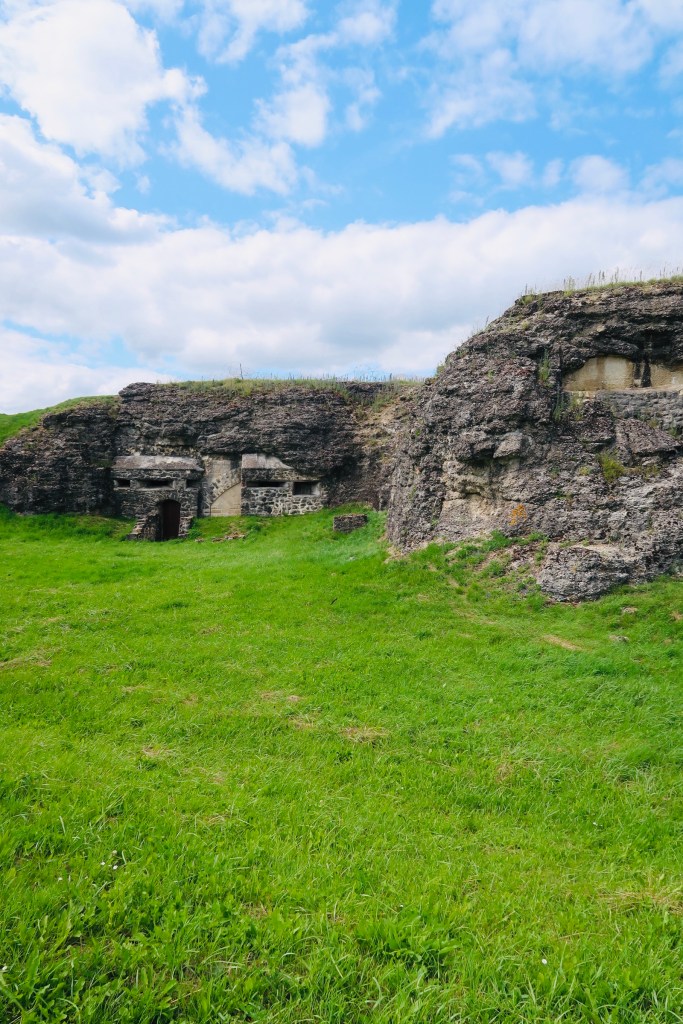
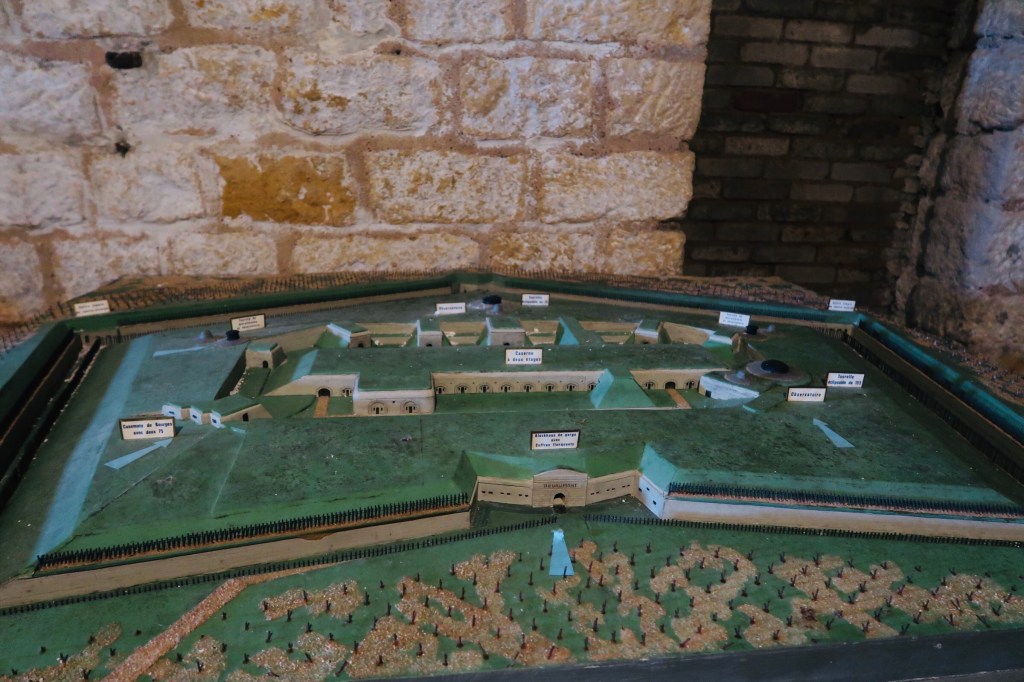
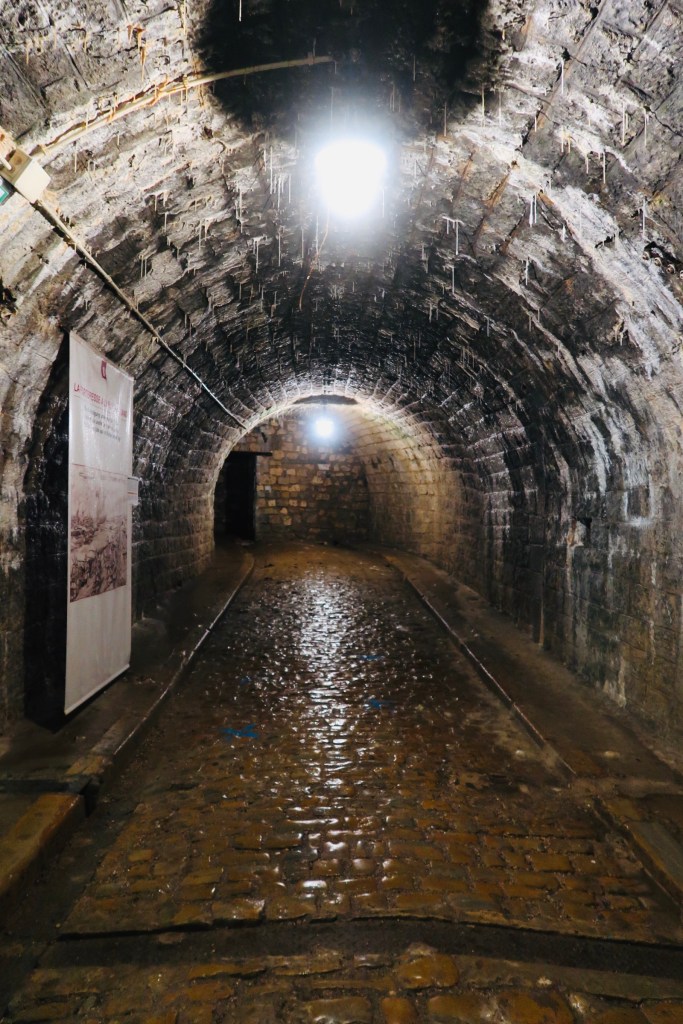
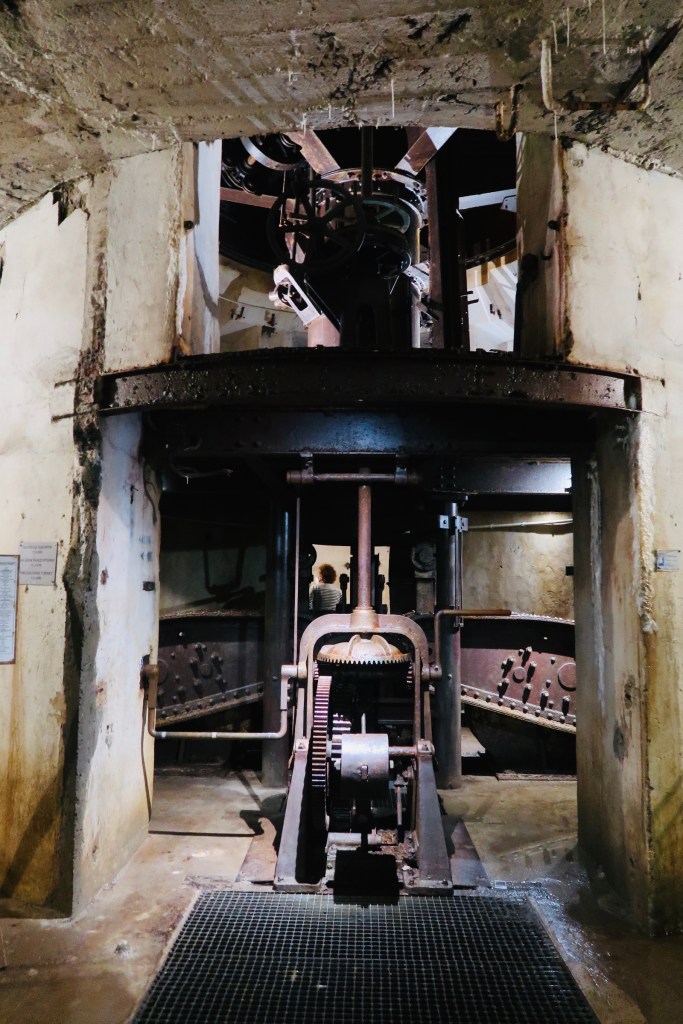
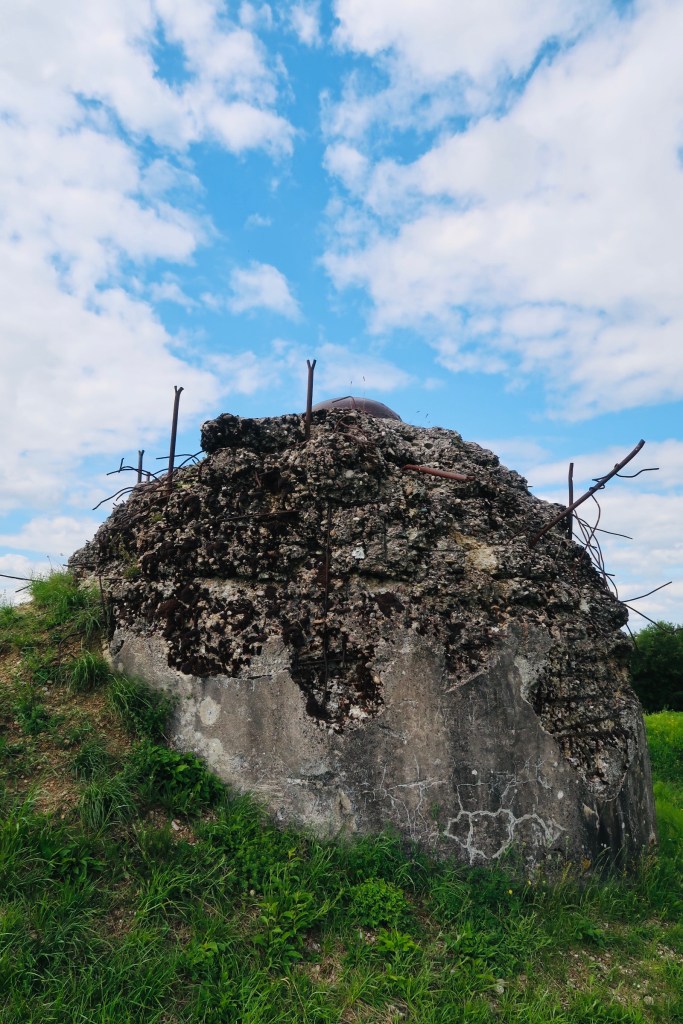
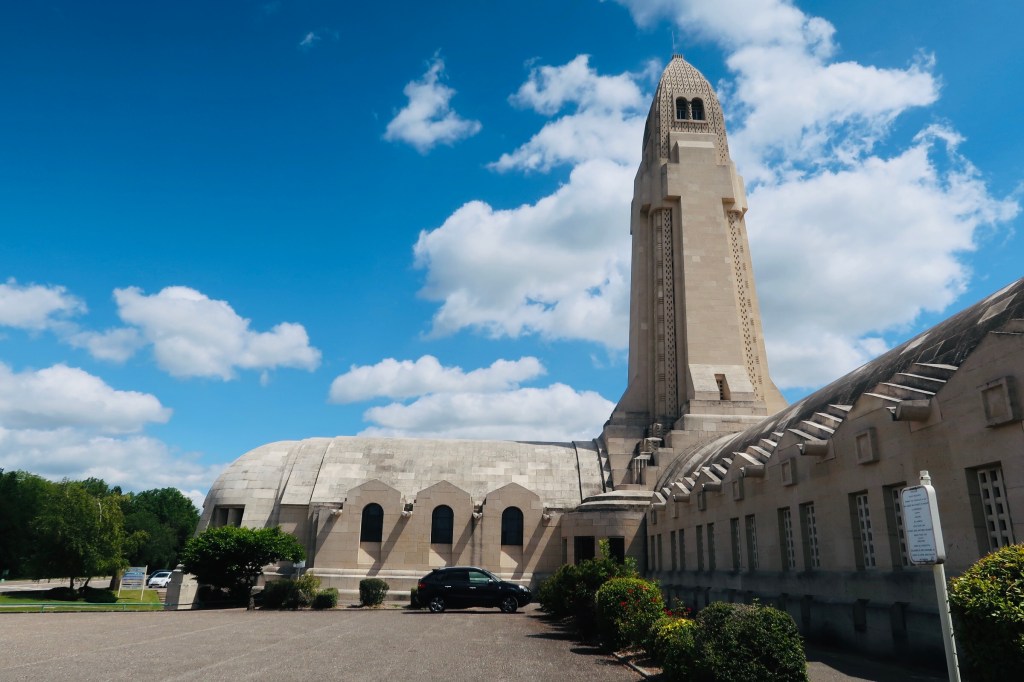
Our first stop on this section of our holiday was Fort Douaumont. This fort is the largest and highest of the ring of positions that protected Verdun France. This particular fort has quite the history of capture and re capture in 1916 after being determined ineffective. The fort itself dates back to the late 19th century and a lot of the fort is actually tunnels and an underground network. During a tour you are able to walk through the hallways and listen to the history of the fort, how it was used by both the French and the Germans, as well as see some of the actual fire power that was used at that time. You can then walk above the fort and see the ramparts and exterior gun positions. 

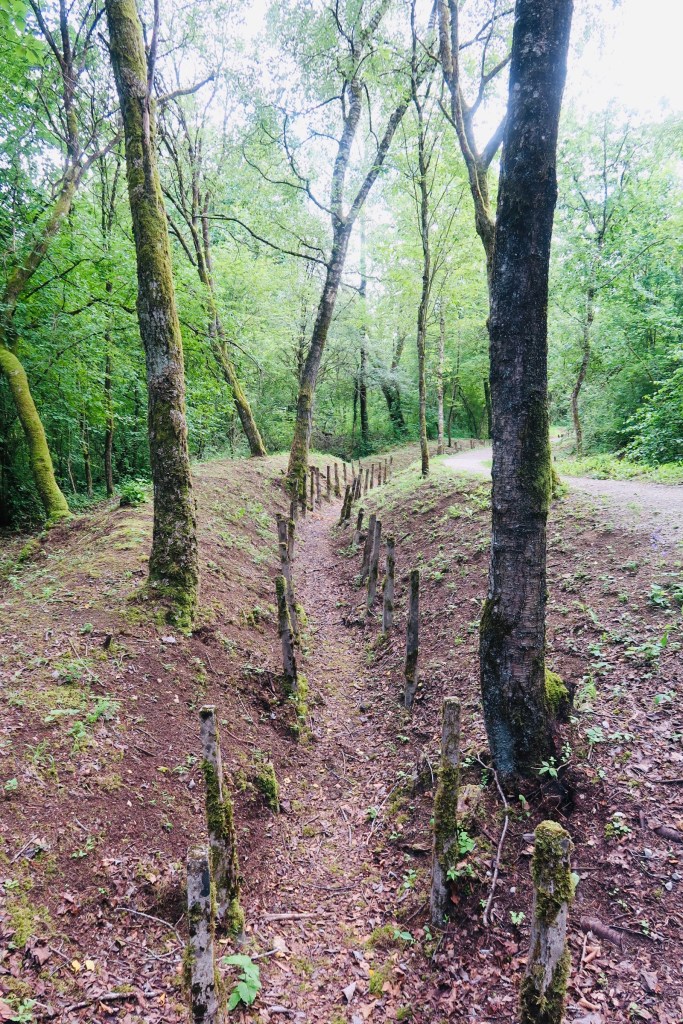
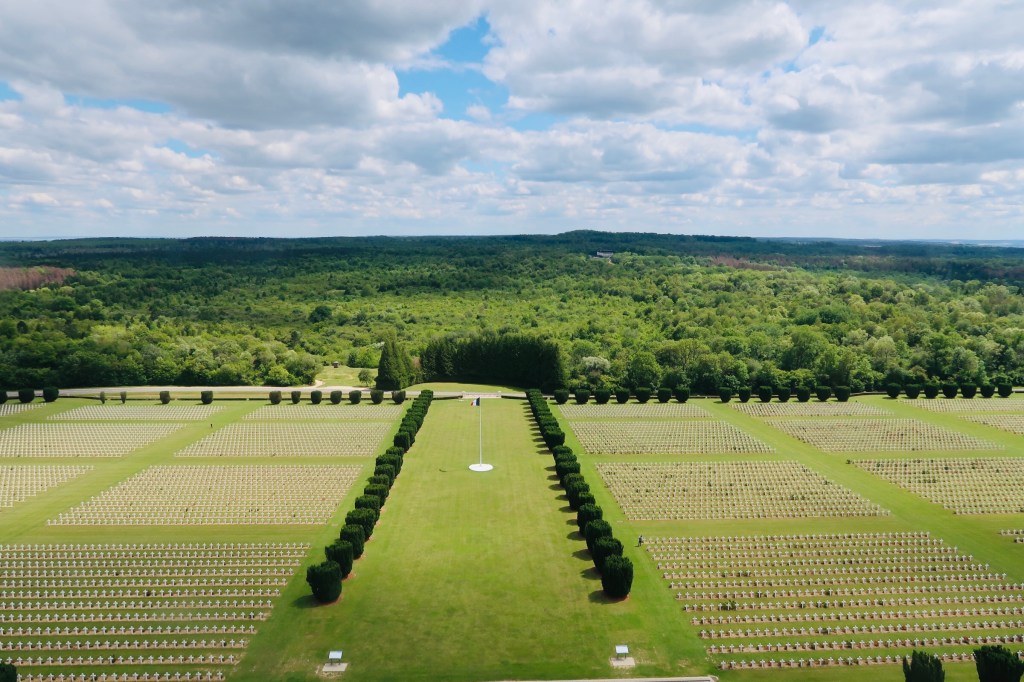
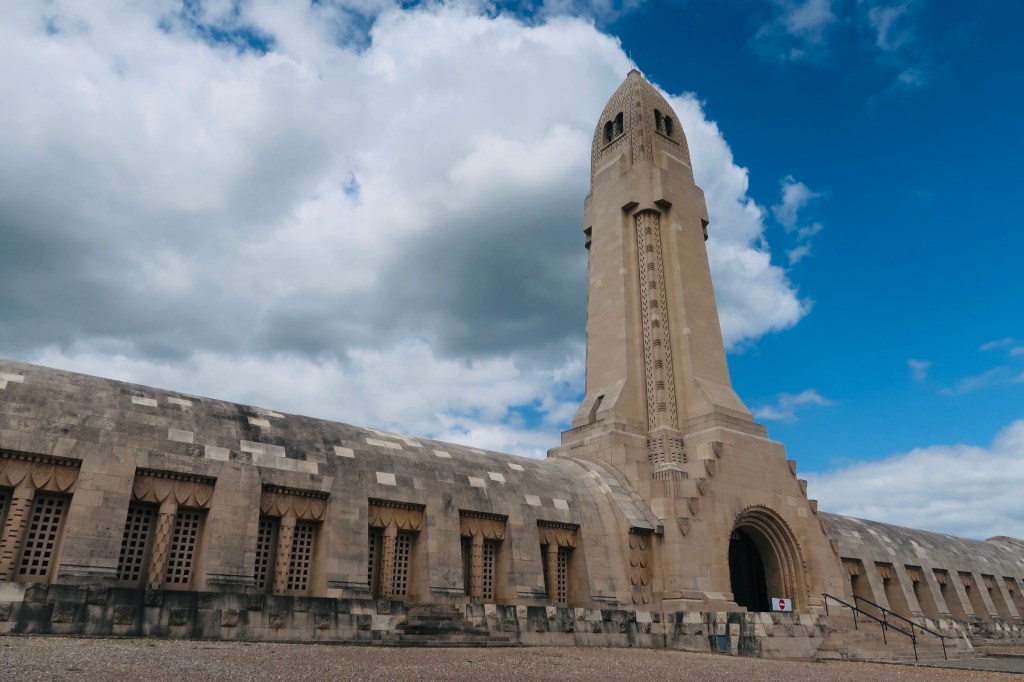
While at Fort Douaumont, you are able to do a couple other things as well, such as walk the trenches and see one of the battle positions (which now serves as a memorial). You are also a very short drive (like a couple minutes max) from the Douauomont Ossuary, which is a war memorial from the Battle of Verdun in World War 1.

A rather large monument, legend says that it was designed to appear as a sword being shoved into the ground and you are able to climb the tower and see a panoramic view of the cemetery and grounds. The small windows on the exterior contain alcoves that hold skeletons of unidentified soldiers from both sides of the war. The cemetery is the largest of the first World War in France.  

We spent several hours in the area exploring and learning before hitting the road again and heading to Paris. We did not actually make it into the city until well into the evening, so we chose to simply check in and have an easy evening in the hotel unpacking and resting. 

We divided Paris up into two different sections, with an invisible line drawn somewhere in the vicinity of the Louvre and Notre Dame Cathedral. So, that first day was full of metro rides and “exterior” sight-seeing (Covid-19). While the second day was a more walking locations that were closer to each other. 

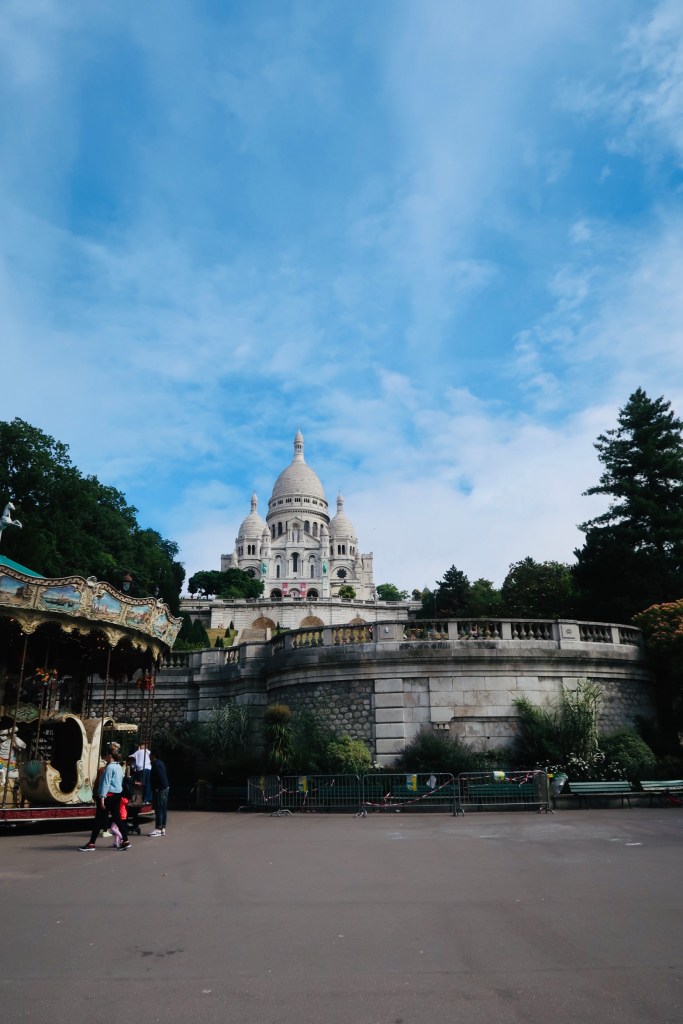
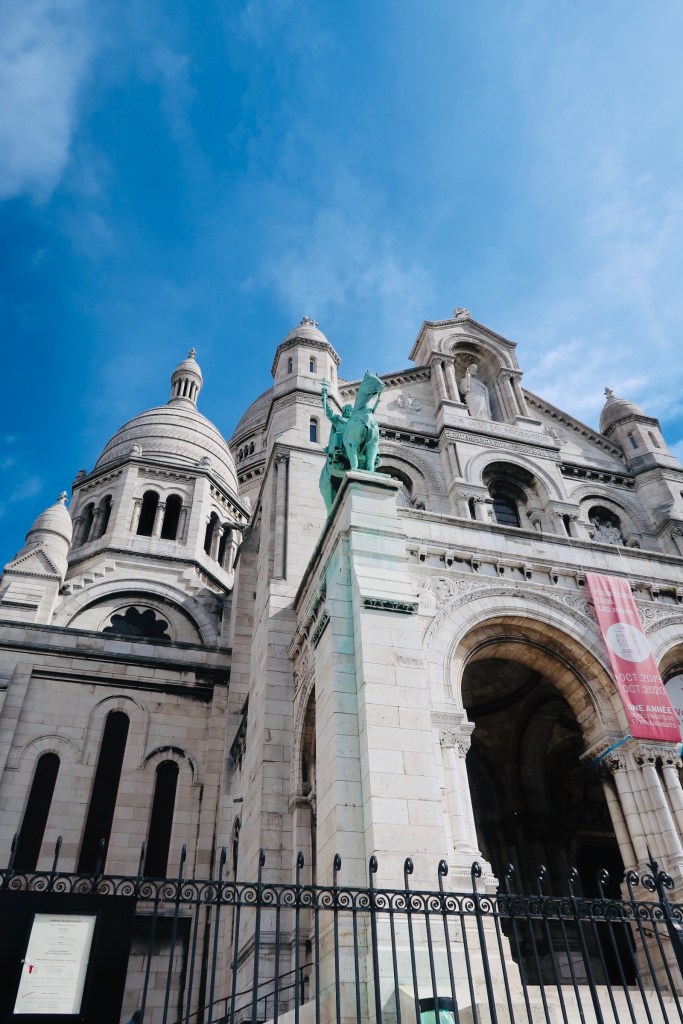
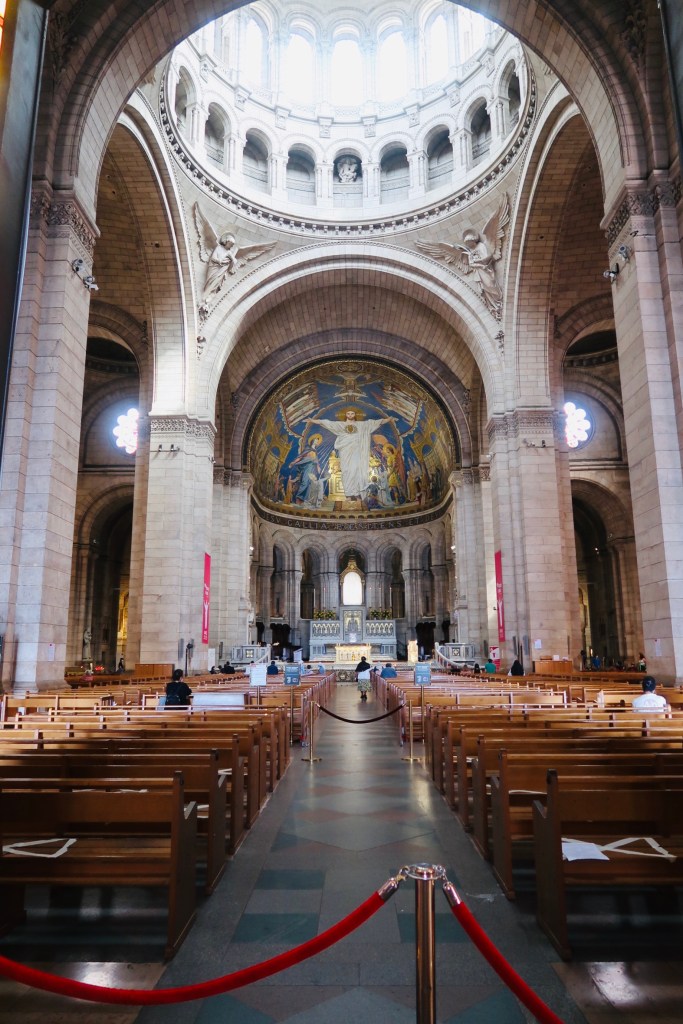
We started off at the Sacre-Coeur Basilica in the Montmartre area. This is the second most visited monument in Paris, a Roman Catholic church that stands at the summit of the highest point in the city. Built at the end of the 19th century/beginning of the 20th century with the beginning of perpetual adoration in August of 1885. It boasts a dome of 83.33 meters, a bell tower of 84 meters, and an annual visitor/pilgrimage of 11 million.

I have to say, this basilica was incredible, not just from an architectural exterior, but also its interior manages to take your breath away. Inside, there is a mosaic of Christ in Glory which is one of the largest in the world. It is truly amazing to see. We did climb the dome and were treated to an incredible view of the entire city. You are able to see everything, and it was a real treat to feel like an eagle at the top. 

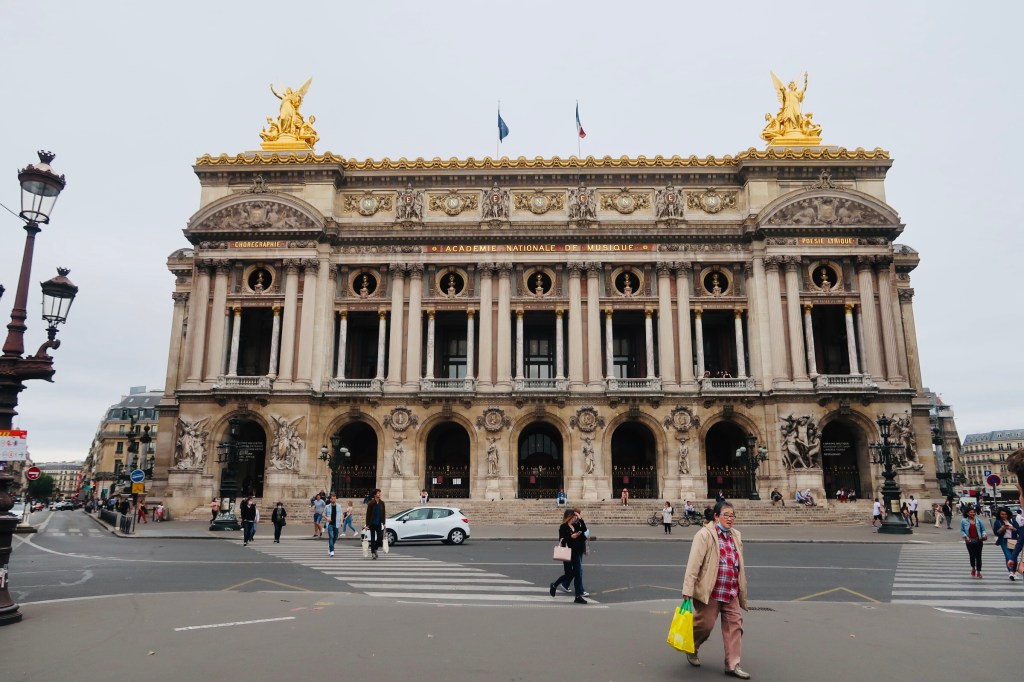
From the Montmartre area we started to work our way back into the city hitting some of the hotspots that we wanted to see. I will make a note, we did not hit Moulin Rouge as it was closed due to Covid-19. We knew we were somewhat “short” on our time, so rather than hop the metro, just to hop the metro again, we decided to skim a few things. However, we did hit the Palais Garnier. 

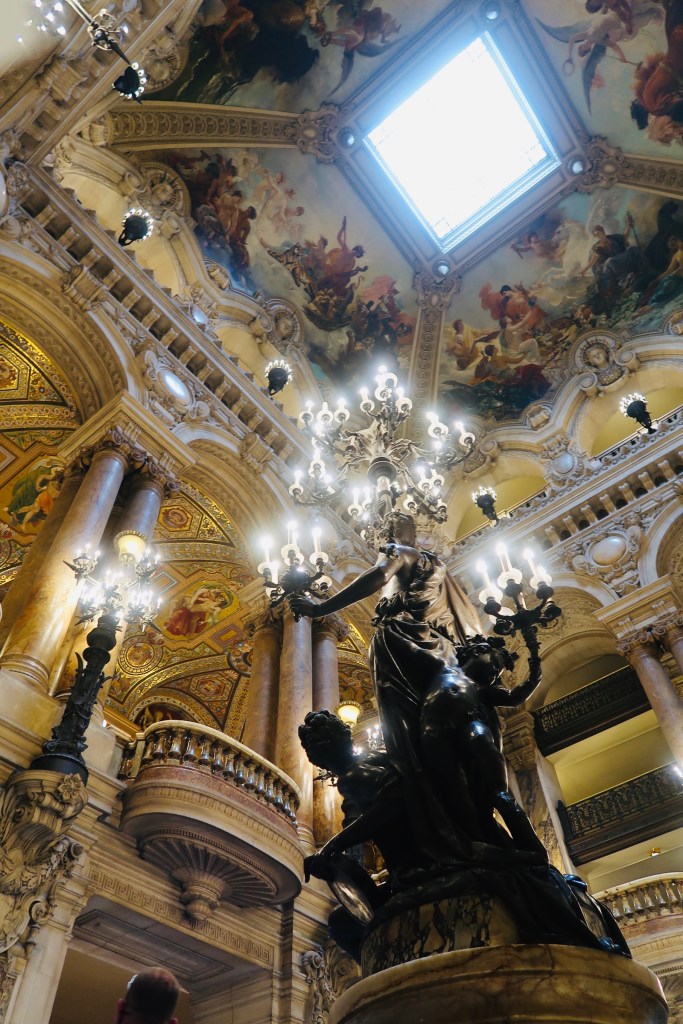
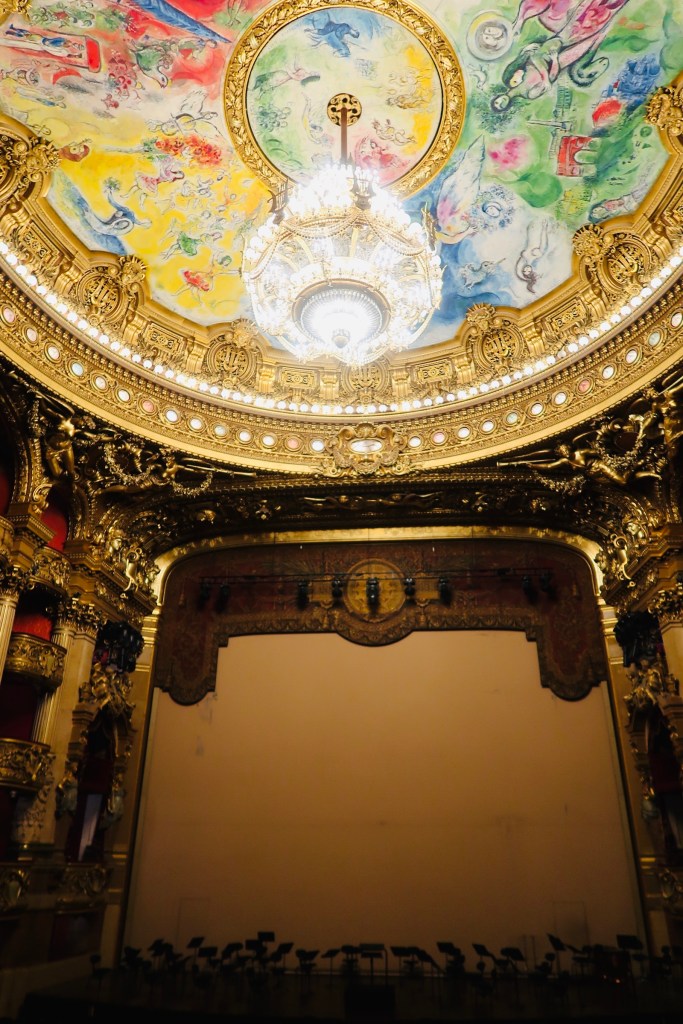
The Palais Garnier or Opera Garnier is THE Paris Opera house (think like Phantom of the Opera). Seating just under 2000 it was commissioned by Emperor Napoleon III in the late 19th century. This is one of the mast famous (if not the) Opera houses and has inspired so many other Opera Houses and buildings (including the Thomas Jefferson building at the Library of Congress!). Of the era it was the most expensive as well as a masterpiece of the time. Now, if I thought I cried/got emotional at the Globe Theatre in London, it was nothing compared to how I felt at the Opera house. The Palais Garnier is easily the most beautiful, incredible, ostentatious, singularly “French” thing I’ve ever seen. It’s just mind blowing. From the Grand Staircase of white marble and painted ceilings, to the auditorium and the bronze and crystal chandelier, to the Grand Foyer with its gold and yellow opulence, there is not a single place that doesn’t just amaze and leave one breathless. 

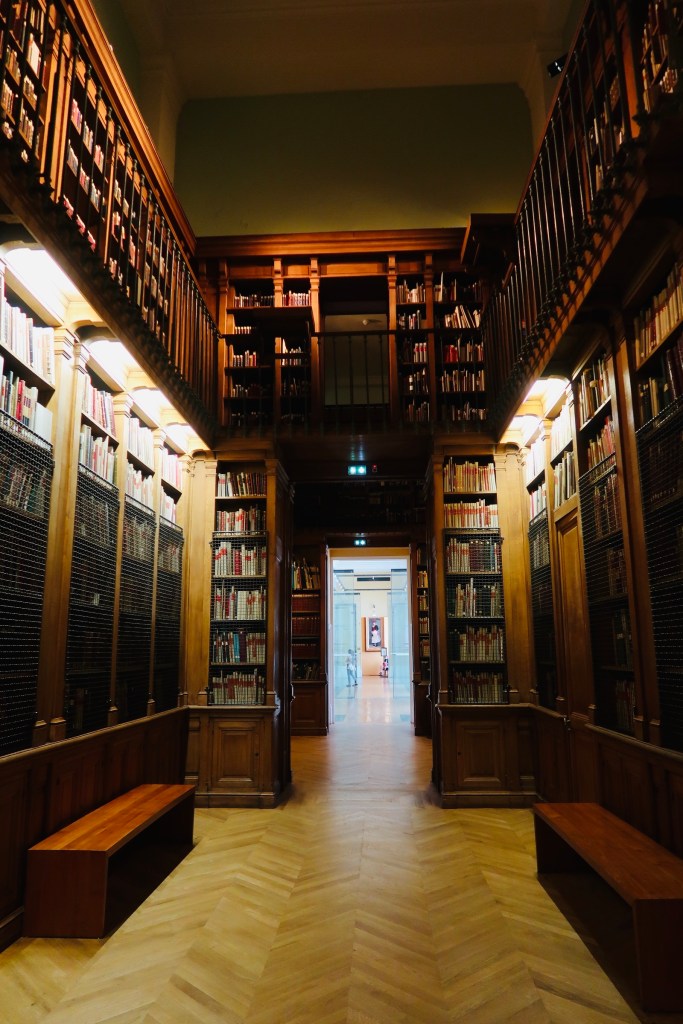
If those things weren’t enough, I wandered down a quiet corridor and came upon something even more incredible. The Paris Opera House is also home to the Bibliotheque-Musee de L’Opera de Paris, or the Paris Opera Library-Museum and oh my goodness, was it heaven to walk through the walls and walls of books. Of course, most of these items are archival items including books, music scores, autographed items, photographs, and other “paper” items (a total of 600,000 documents!). There is also a museum attached to this section that displays paintings, costumes, scenery and scale models of sets. It is incredible (and it was like a little quiet slice of heaven in heaven). 

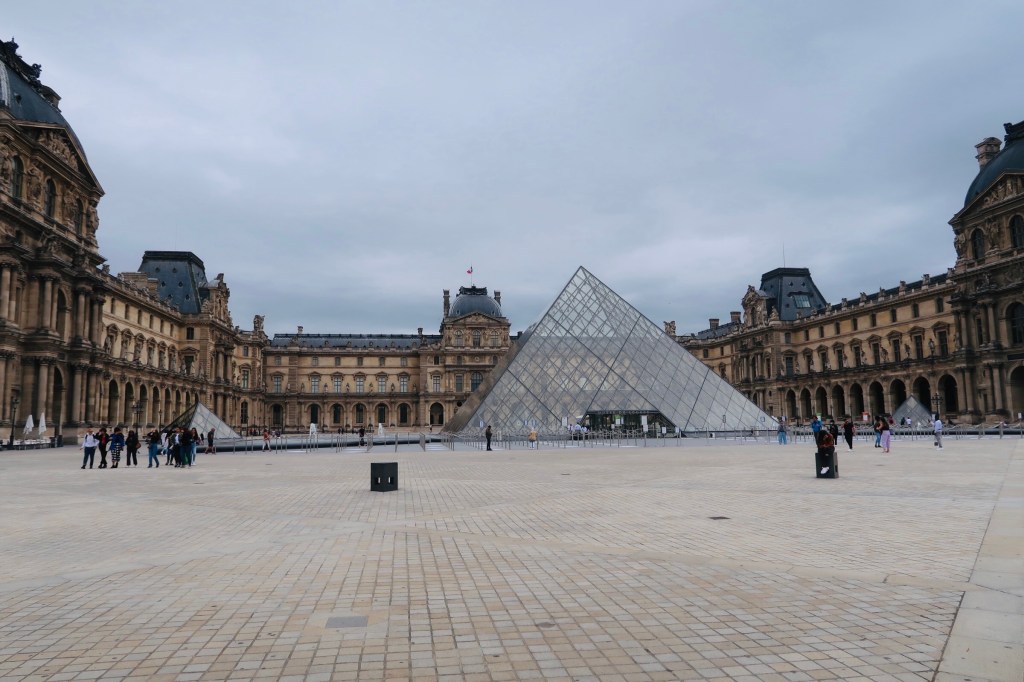
From the Opera House we took a quick metro bus over to The Louvre Museum. Now, The Louvre was not in fact open, it was scheduled to re-open (post Covid-19) the Monday that we were leaving so we didn’t get a chance to go inside. Instead we were able to see the pyramid, and the square without the crowds of people, which was pretty cool anyways.

I won’t hark on about this stop too much as we weren’t really able to visit the museum, but I will say that the controversy that surrounded building the pyramid entrance is actually quite interesting. Those who were against it had varied arguments from aesthetic reasons to being against the President at the time (along with the more important of the history of the Pyramid itself- not this glass design). Regardless, it was commissioned, and it provides a striking entrance and separates the Louvre from being “just another museum in another ‘old’ building” (besides the fact that some of the famous pieces of artwork reside there). 

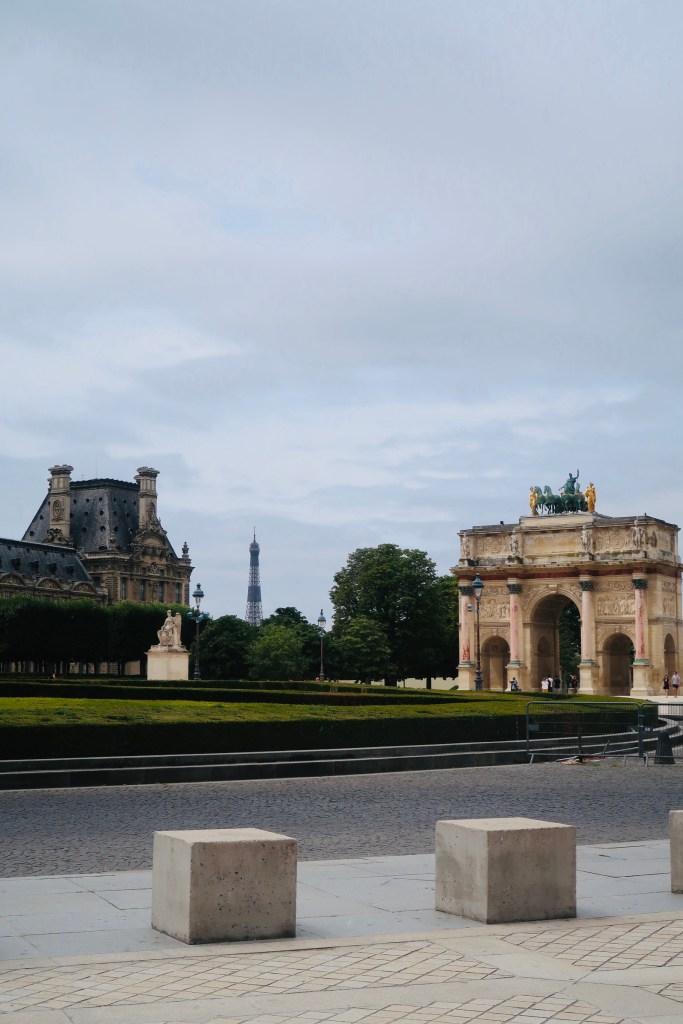
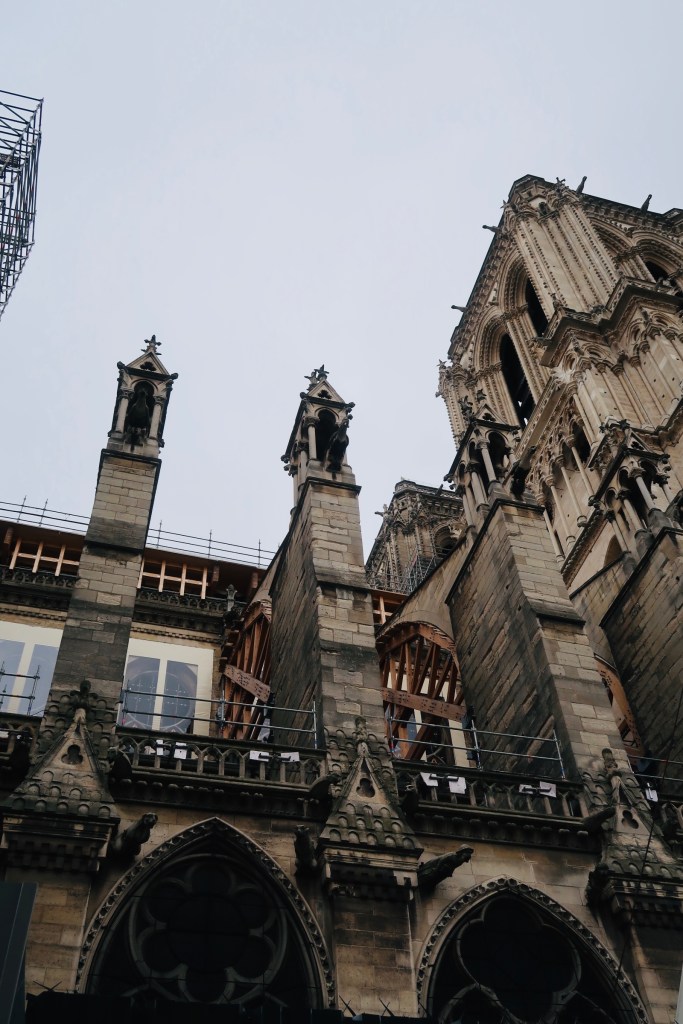
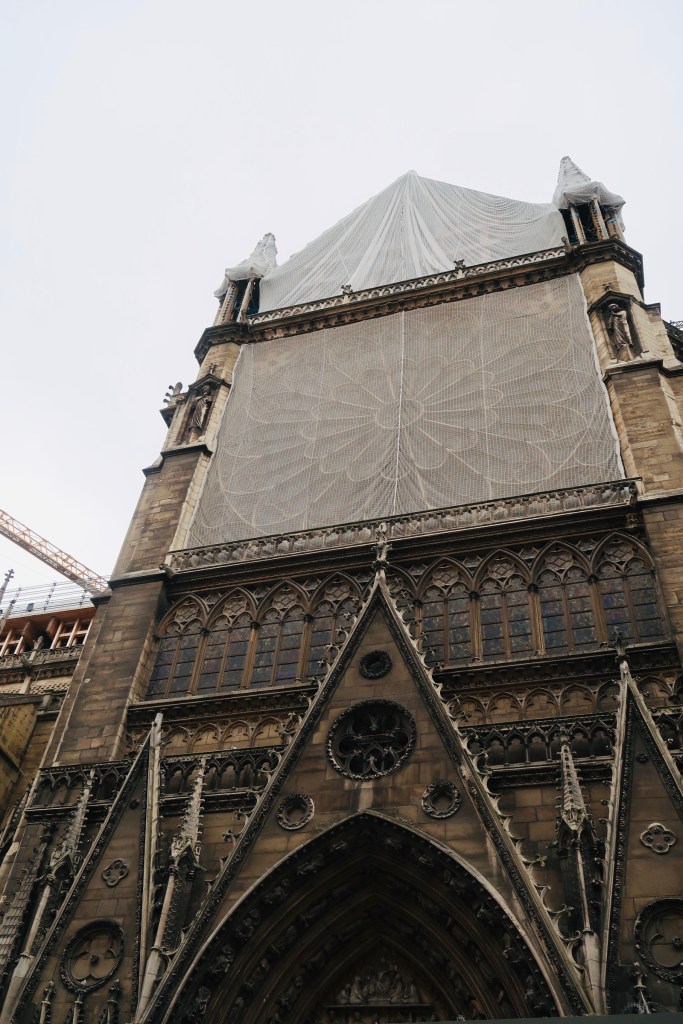
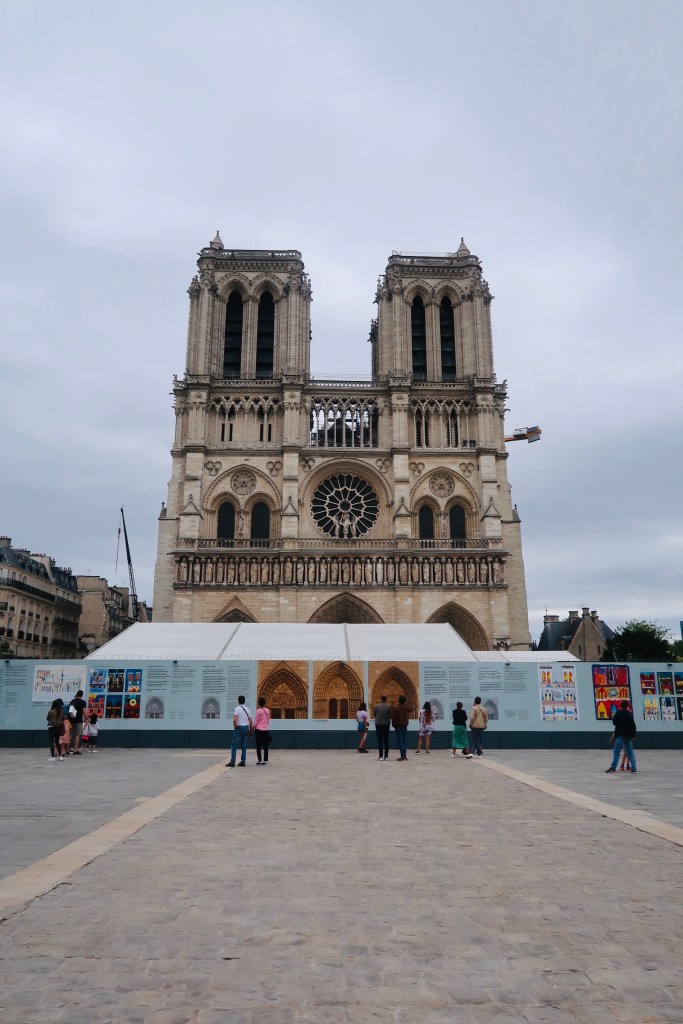
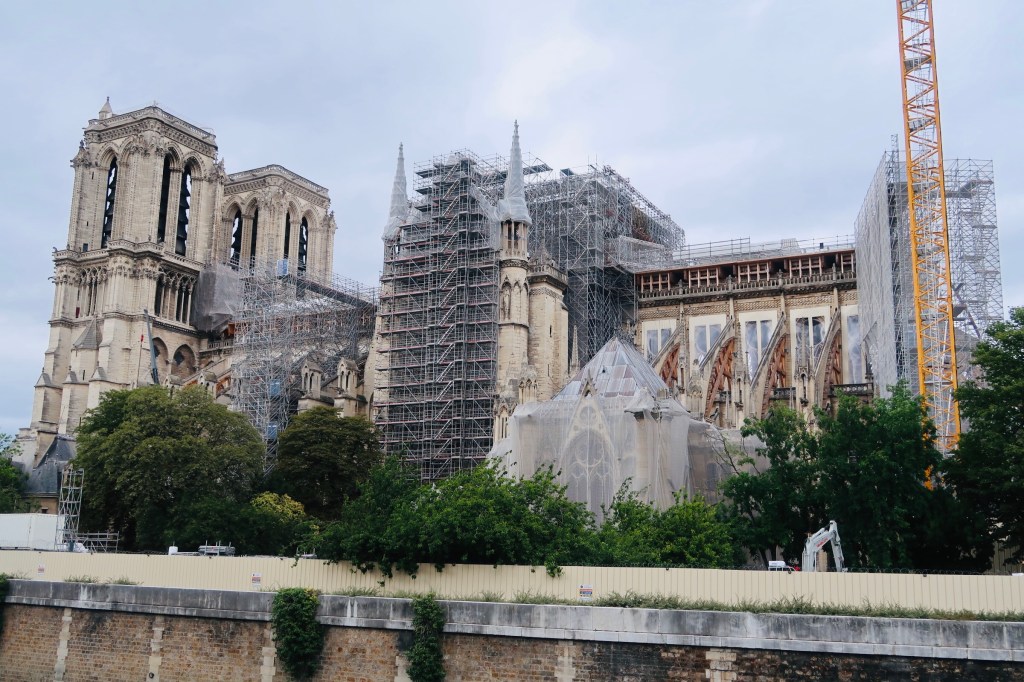
This stop also gave us another glimpse of the Eiffel Tower as well as a smaller version of the Arc de Triumph, the Arc de Triomphe du Carrousel.  From there we decided to walk over the Notre Dame. I will say, obviously, we didn’t get to go inside. However, it was still important to me to see it as this is a historic moment for the cathedral. 

The Notre Dame de Paris is a cathedral dating back to construction in the 12th century. It has gone through quite the long and storied history, but has only been desecrated once in the 1790’s during the French Revolution. One of the early restorations projects occurred in the 1800’s shortly after the Hunchback of Notre Dame was published. It was cleaned of soot and grim from the world wars in the 1960’s and then again in the 1990’s. During the most recent restoration in 2019 the roof caught fire and burned for 15-16 hours causing major damage. The Notre Dame is the Archdiocese of Paris, has an honorary title of minor basilica, and is the most visited monument in Paris.

When we visited we could see not only where the destruction occurred, but you are also able to see quite a lot of the restoration/rebuilding part of it. It’s almost like watching a surgery in action as you can see inside a lot of the vaulting and wooden roofing. The fencing all around the Cathedral itself depicts the fire, the damage (both internal and external), plans for rebuilding and what the rebuild looks like. So, even though we weren’t able to go in and revel in the beauty, I still felt like it was incredible to see. 

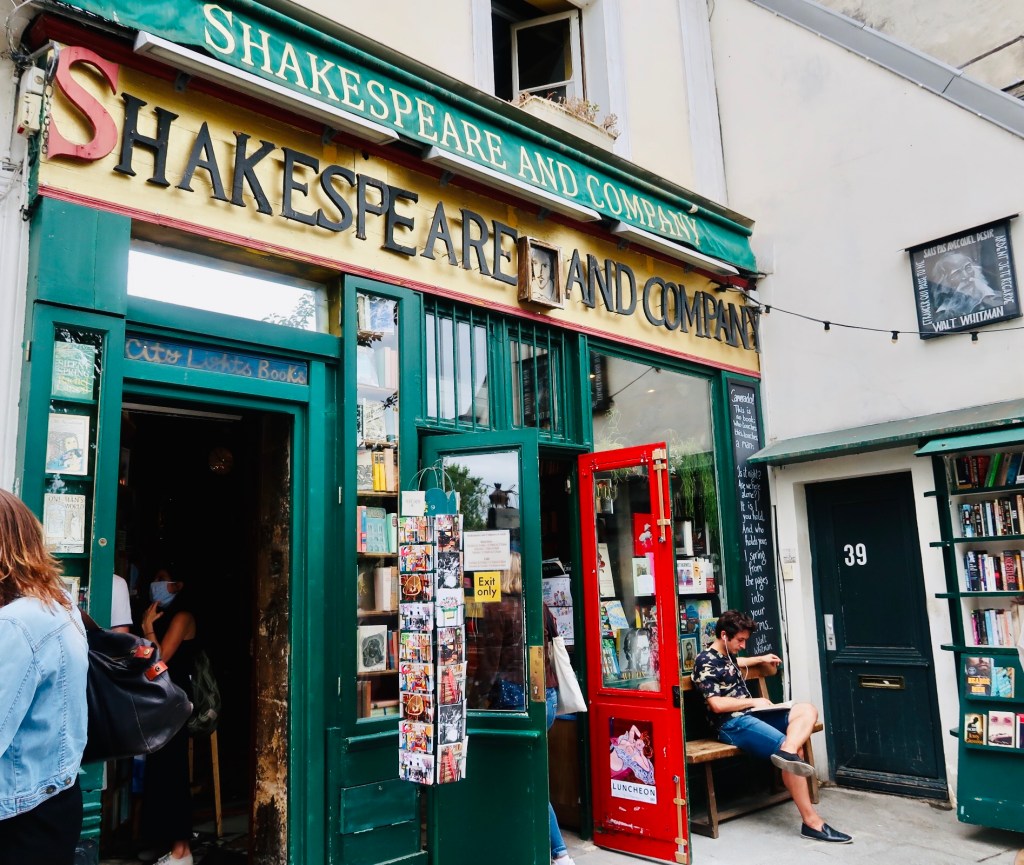
After the cathedral, we walked across the river to go to Shakespeare and Company. If you are a book lover (and a traveler) you probably have heard of Shakespeare and Company in some form.

It is an English bookstore on the Left Bank of Paris, right across from the Notre Dame. Opened in 1951 its location originally was home to a monastery. In 1964 the owner, George Whitman changed the name to Shakespeare and Company (on the 400th anniversary of Shakespeare’s birth) after another bookseller that he admired, Sylvia Beach- owner of the original Shakespeare and Company. Not only is the store and incredible independent bookstore (which you can shop online at HERE), but it is also a community. Tens of Thousands (the website quotes 30,000, but I’m sure it’s grown in size) of writers and artists have stayed in the shop and worked. Called Tumbleweeds, they are asked to do several simple things: read one book a day, help out in the shop, and write a one-page autobiography. These are collected and then placed in the shops’ archive. These days the shop has grown from its humble beginnings and hosts the Paris Literary Prize, a literary festival, as well as weekly literary events. It was a dream come true to walk through the store, admiring all of the books on the shelves (and buying a few of them…) and just take in the atmosphere. 

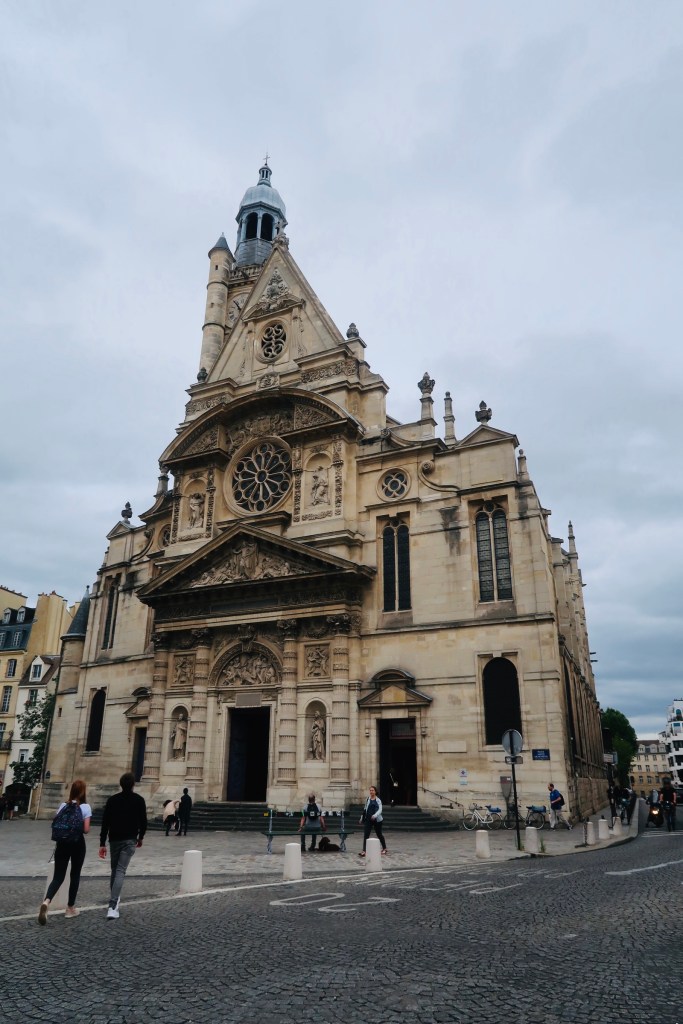
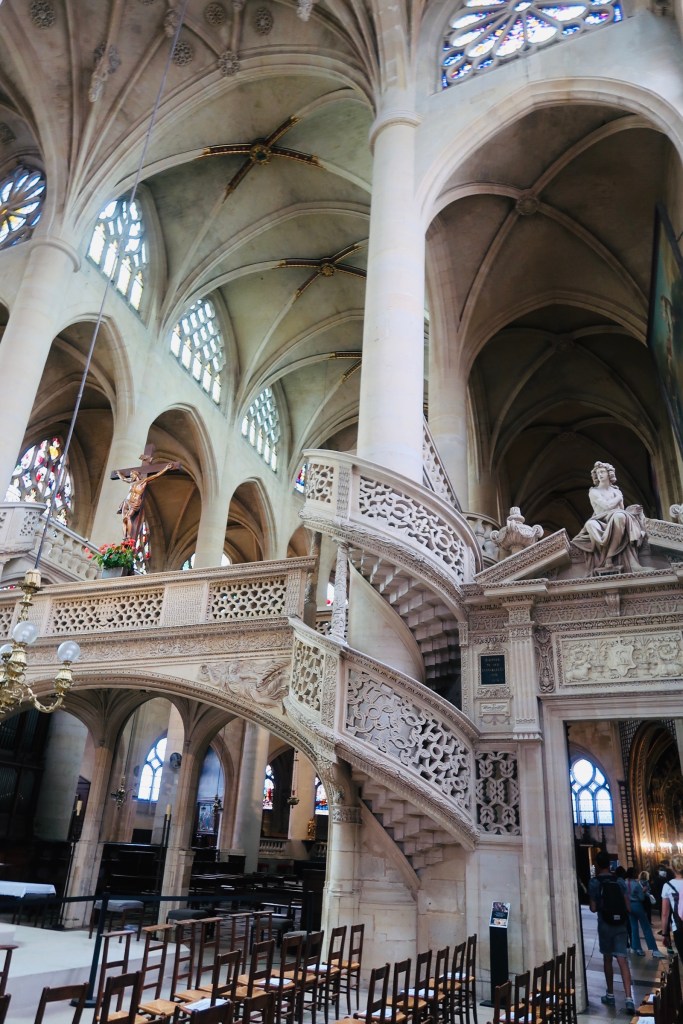
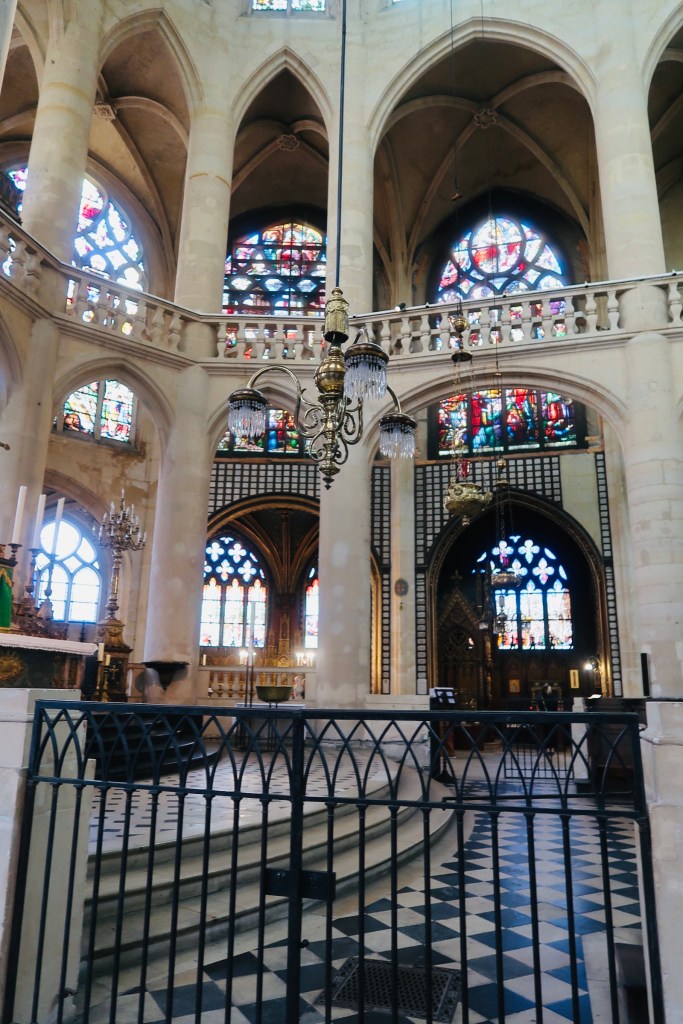
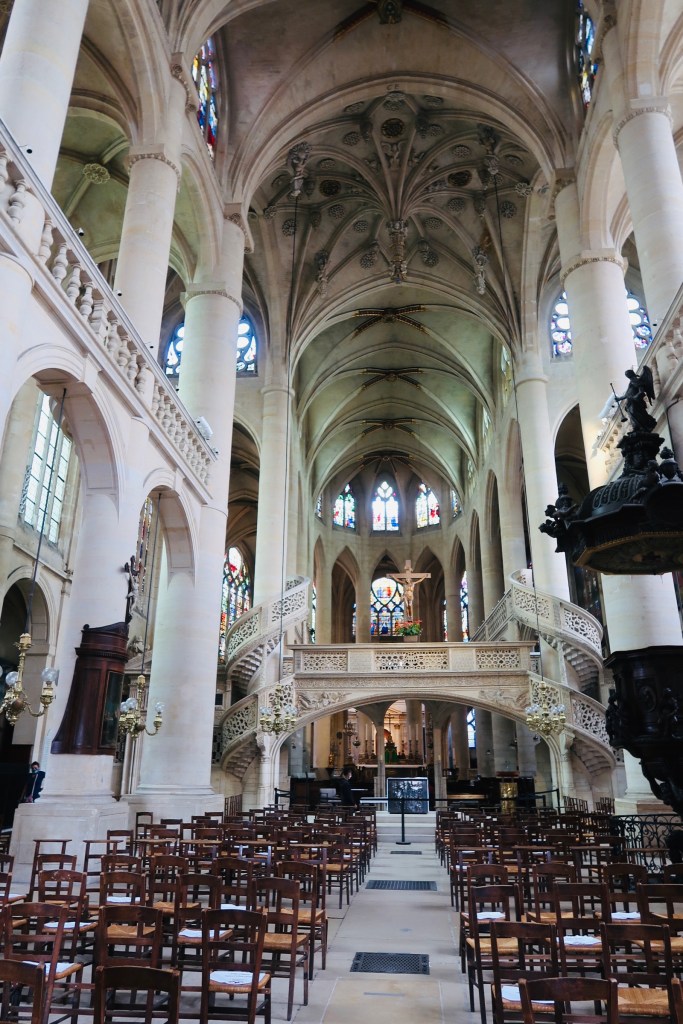
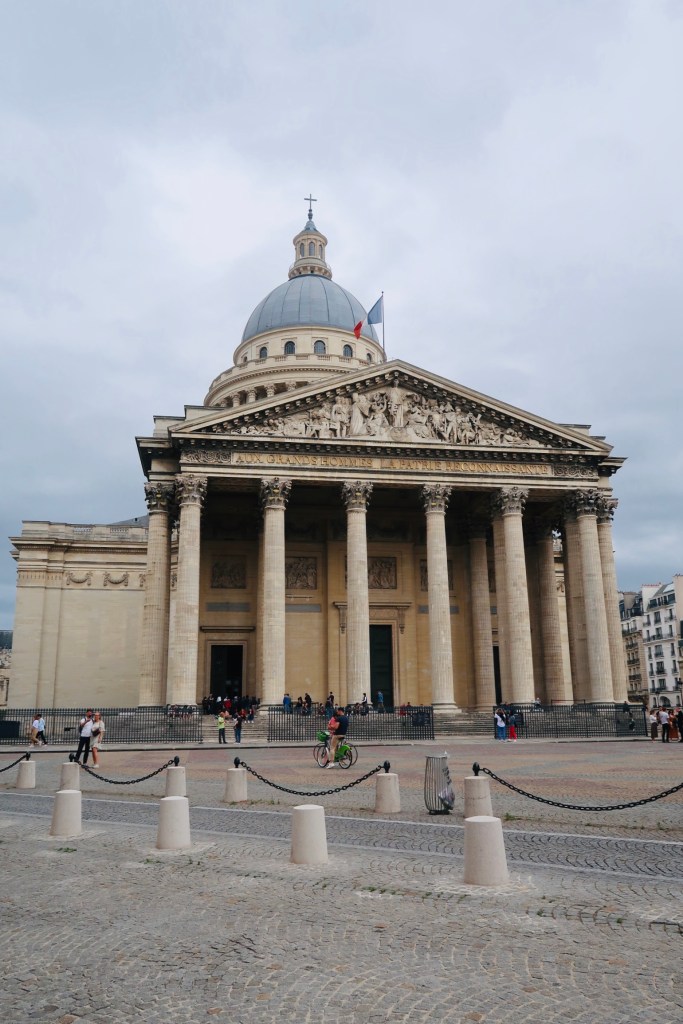
From Shakespeare and Company, we simply wandered the streets of Paris for a little bit longer. We were able to view the Place Sainte-Genevieve, The Pantheon, and the Eglise Sainte-Etienne-du-Mont.

Then it was off to dinner and back to the hotel to rest up for Day 2.  

A Cuppa Cosy Summer Holiday 2020 – Luxembourg Tips & Tricks

On Monday I shared the first stop of our Summer Holiday 2020, which was Luxembourg City. You can read about everything we did on our ~36 hours in the city HERE and today I am going to continue on with the theme of Luxembourg and talk about my Tips and Recommendations for Luxembourg City. 

This particular post is going to be a bit different from my typical “Tips & Recommendations” posts as I don’t really have a lot of either category. To be completely, bluntly, honest…there isn’t A LOT to Luxembourg City. I don’t think you need more than a day to see everything you’d like (we definitely did what we wanted in a day and could have stopped at a couple more places – aka museums and such- if we wanted to) and it is relatively “central” in the fact that you can just walk the entire city and see everything there is to see. 

Honestly, that is what I would recommend that you do- walk the city. As I mentioned, we did the Wenzel and City Promenade Walking Tour. If you stop of the tourism office, you can get a guide pamphlet and map that takes you along the bigger sites in the city and the important monuments. You are also able to kind of tailor this to what you want to see. For instance, we wanted to see the main squares and monuments, but mostly had our sights set on seeing the Casemates and Old Fortifications, so we spent most of our day in that area, with shorter stops at the beginning. 

If you do get the pamphlet from the tourist office, then I would start with the tour they outline, but once you get to the Casemates, I would head down towards the Grund Gate and across the road to walk through the walls (in the direction of the Neimenster area. This gives you the chance to see quite a bit more of the older fortifications as well as a really nice walk along the river. The signs will directly you back towards the bridge and then you can continue the City Promenade tour if you would like. At the simplest, these are two “separate” tours, but between the two of them you can see the most of Luxembourg City. Just note, that they are separate so to see everything, you’ll need to combine them. 

Public Transport

I think I am going to make public transport its own category in these posts as it seems to be something I talk about at every location we travel to. So, Luxembourg City public transport is free within the country. Let me repeat, FREE within the country. You can just hop on a bus and go from (for example) the airport to the center of town, free of charge. This is a recent change, but one I am totally on board with. Trams and such within the city are free as well. The only time that you have to pay for public transportation is if you are crossing the border or outside the city (I believe- check the tourism website HERE for all of the details). 

I think that pretty much covers my opinions and tips as far as Luxembourg is concerned. Since visiting, I’ve come to realize that a lot of Luxembourg is inspired by the French (and a bit of Spanish as well). Most of the city seems to be made up of a cultural meld of visitors and immigrants from the surrounding country. While we enjoyed our time there, we don’t plan on going back, nor would we recommend a trip solely to see the city (just as a stop if you are maybe already traveling through). I didn’t hate it and actually found it pretty cool in spots, but I wasn’t overly in love either. 

If you want to know the Covid-19 specifics (do you?) I found Luxembourg City to be the strictest of all the places that we’ve visited, and they’ve actually recently gone “red” again with visitors and numbers (and we are no longer allowed to travel there due to personal work restrictions). Masks were required in stores, restaurants (unless you were seated at your table), physical distancing was enforced, and their law enforcement was on alert reminding those who weren’t abiding by the rules. 

A Cuppa Cosy Summer Holiday 2020 – Luxembourg City

I’ll start our Summer Holiday posts by saying, our ultimate destination we had in mind with this trip was the Normandy Region of France. My husband is a massive War History person, with an emphasis on World War 2. He had his heart set on visiting the beaches, the cemetery, and a couple other spots and I was interested in seeing them to. As opposed to last summer, this year we decided to stop for multiple nights at each location (a minimum of 2 nights a place). Spreading out our trip a bit more made it much easier for us pace wise (one of my biggest complaints from last year was by the time that we arrived at our last destination, we were so worn out from the pace of the first chunk that while we enjoyed it, it was a different enjoyment). 

So, in keeping this in mind, our first stop on our Summer Holiday was Luxembourg City. Luxembourg is a smaller country bordering France, Germany, and Belgium. It was a good first stop to have as there wasn’t a lot, a lot to do, but it was somewhere that we wanted to see. We visited the capital, Luxembourg City, which also happens to be one of the European Union Capitals. Luxembourg itself has quite a long, hard fought history that has formed it into the independent country it is today. The city of Luxembourg is actually listed as an UNESCO World Heritage site and on the whole, we spent a lovely time there. 

We arrived in the afternoon on Wednesday and checked in to our hotel. We stayed at an Ibis outside of the center of town (actually at the airport), but public transportation was very easy and there was a bus stop right at the hotel. The hotel itself was nice and clean and had plenty of modern amenities. The boys loved staying in the bunk beds and it’s a chain that I wouldn’t mind staying in again (and we did later in the trip).

After getting settled we headed out to start wandering around. We didn’t have any major plans for that first night as we wanted to do the city offered “Wenzel Circular Tour” which would be a full day long event. So, instead of doing much planning, we hopped on a bus and just headed for an overlook. 

Our first “view” of Luxembourg City was Le Chemin de la Corniche, one of the “most beautiful” balconies in Europe (claimed by a Luxembourg writer- so maybe a little bias? Ha-ha).

Between the overlook and the walk leading up to it, you can get a fairly good look at Luxembourg City and its history (you can see the Grund and the Casemates). This spot was built by both the French and the Spanish in the 17th century and, once the fortress was dismantled, was levelled off. I will say- it was a beautiful look out point and it was really nice to see the river cut between the houses and roads.  

We headed away from the balcony as a good amount of the spots over there we were planning on seeing the next day, and headed into the old town area of the city. We made a quick stop into Saint Michael Church.

This is the oldest church in Luxembourg and its location has been mentioned back to the 10th century. This particular church area has, similar to the city itself, had quite a turbulent history with the current standing church dating to the 17th century. You can see from the interior that the church itself is on the smaller side (in comparison to other churches and cathedrals), but still grand and incredible in its own way. You are also able to see areas that showed some of the previous structures that have been destroyed and rebuilt. From the church we wandered towards the main square and towards some dinner. We ate dinner at a restaurant called La Boucherie (Colton’s pick because they had a cow statue…) where we dined on meats and beers. 

After dinner we decided to walk over to the Adolphe Bridge.

One of the more well-known bridges in Luxembourg this is a double deck arch bridge (with the lower suspension bridge opening in 2018 for pedestrian and bike traffic). Originally built in the early (very early) 1900’s this bridge is known to the people as the New Bridge and has stood as a symbol of Luxembourg independence. The lower deck has become a large tourist attraction and we decided to take our chance and walk across (this was before I realized that it was basically just another lower road, rather than any form of “scarier” bridge). It did provide a unique view of some of the lower walkways and was a fun experience. 

Our full day in Luxembourg City was the day that we had planned to see it all. Luxembourg City Tourism offers a free, self-paced and guided walking tour called the Wenzel Circular Walk. It covers the history as well as the modern touches to give you a full picture. It also takes you through some of the nature walks. We knew that Luxembourg City wasn’t big, and we figured this was our best way to “see it all” (as tourist offices tend to be good places to start in these cases). You can start at the tourism office by picking up your guide pamphlet, which is also offered in a kid’s version with activities, and head out on your way. 

***A Quick Interjection here- if you don’t check my Tips & Tricks post coming on Wednesday (which will have A LOT more details about this walking tour and my full thoughts on how best to see the city) I would recommend stopping at the tourist office, but also making sure that you have downloaded into your phone the pamphlet from the website. The tourist office gave out a City Promenade guide, which will guide you to most of the same sites, but the signs and guide can conflict with each other, so having both options is better. The two pamphlets have different stopping points (mostly because I think they are actually different) and they cover different spots.  We ended up following signs at some of the points and putting the pamphlet aside- especially around the casemates area.***

I’m not going to go through every single stop on the tour, but will give a general overview and highlights of some of the big ones. The tour starts in William Square (which is kind of tucked almost “above”/”parallel” the new square that holds more restaurants and other spots) and covers the town hall, statues, and the Grand Ducal Palace. From there we walked through to the Cercle Cite and the other squares, and then over to the Bibliotheque Nationale (The National Library- we found two libraries by happenstance in Luxembourg City) and the Cathedral to the Blessed Virgin. 

Also known as the Cathedral Notre-Dame de Luxembourg this is the largest church (and only Cathedral in the country) in Luxembourg. Dating back to the early 17th century, this was originally a Jesuit church that was then consecrated and elevated to a cathedral in the late 1800’s. Something interesting I learned was that this cathedral had a fire as well (thinking along the lines of Notre Dame in Paris). In the 1980’s (on Good Friday actually) there was a fire in the towers that destroyed the church bells, the west tower collapsed, and the roof was partly damaged. This cathedral was incredible with all of the artwork and stained glass, it was just a special place. 

From the cathedral we stopped at a couple more monuments, but mostly made our way over to the Bock Promontory and Casemates.

At the Promontory you are able to see several things, the original, uncovered foundation walls of the very first stronghold, the original castle bridge,  and the Bock Casemates right below the street. These are the longest casemates of the world and are able to be walked through during certain times of year (unfortunately not for us due to Covid-19). However, we were still able to walk along the wall, the defenses, see the holes in the wall where canons would go, and much more. 

***This is where we started following the signs for Wenzel Walk, as opposed to the City Promenade map that we were given at the Tourist Office. The signs are placed at various spots that allow you to get the most out of the “lower” portion of Luxembourg City.***

Heading downwards, we walked through the Grund Gate and along the wall of the Promontory towards the Wenzel Wall.

We crossed the water at the Stierchen, which was really cool, then walked down the stairs and along the water. This was probably my favorite part of our entire day as it was basically (at this point) a nature walk. It was beautiful. If you would like, you are able to walk through “Neimenster”, which is now just a social cultural center, but has quite the history as an abbey, a prison, and a military hospital. We chose to head up the stairs to see some more of the tower and lookout points from the original fortifications. 

The signs then gently nudge and directly back around towards Adolphe Bridge through a series of walled pathways (original fortifications) before dropping you at the base of the Bridge. 

And that pretty much concluded both our walking tour of Luxembourg City. It also concluded our time in Luxembourg as we ate some dinner, headed back to the hotel to get ready to leave early the next day. Which concludes this first post of our Summer Holiday.  

Travel & Covid-19: My Experience

We recently got home from a trip to several different countries outside of our own (we currently live in Germany) and I figured I would share a little insight into OUR experience. Obviously this is all very new and things are constantly changing from location to location, but this is what I experienced and saw. 

This isn’t a debatable post, nor is it a place for opinions to be spewed one way or the other, I want to make that very clear. This is a place for those who may be traveling soon or want insight on what travel even looks like currently. Also, I don’t have the current accurate case numbers for Covid-19 and I wouldn’t share them if I did. These numbers and information changes daily and I would refer you to check the WHO, EU, or CDC websites for further details. Finally, I am going to give a very brief rundown of our situation. My husband is in the military and we are stationed here in Germany (I don’t talk about this much and wont moving forward very often, but need to address it for the sake of this post). We have our own restrictions set in place by nature of his job, above the European Union and Germany restrictions which do include where/how we travel currently. 

Another – shorter & quicker – note we traveled to Luxembourg, France, Belgium, and a smaller town in Germany. I would say we experienced everything from strict enforcement to relatively relaxed enforcement in terms of recommendations and Covid-19. I feel like we experienced enough to actually speak about not only what we did, but how we felt and what the experience was like. I’ll be sharing everything from masks, to shopping, to border crossings and finishing up with my thoughts. 

I’ll start by saying that masks are recommended across the board in Europe. In some countries they are required, but not all (for example in Brussels they were mostly recommended, but not required and in Luxembourg they were required inside at all times). In countries that require masks, they are required in any indoor situation (so a museum, church, store, etc.). They also recommend and ask that you have a mask in any outdoor setting where being able to be physically distant from others is not feasible. You are not required to wear a mask outside (unless that specific establishment ask that you do) and I found that most places that had outdoor exhibits chose to minimize the amount of people allowed in at one time over requiring a mask. One final mask note in regard to dining out. In the countries we went to, you wore your mask to enter the restaurant, go to the bathroom, and leave the restaurant. The wait staff wore masks through the entirety, but you were not required to wear one once you were seated at the table. 

Public transportation was something that I was the most intrigued about as it is what we use the most when we travel. We rely on a metro or bus system, so when figuring our trip out, this was what I wanted to know the most about. AND aside from a mask requirement and limited seating options (to ensure people from separate households minimize contact) everything seemed business as usual. The limited seating falls into this: if someone is sitting on a seat, the seat next to them (or in some cases behind- basically the seat touching them) should not be occupied by someone other than a member of their own household. Obviously they would prefer that you not get on a train that is already close to capacity (so don’t pack in like sardines), but there wasn’t any sort of force enforcing that. Public Transportation seemed very…”business as usual, but with masks”.

Everywhere we went, no matter mask requirement, you could count on markers (whether signs or tape on the floor) directing the flow of traffic as well as minimizing the amount of people in an establishment at one time. There is no disruption in any way to doing things this way. In fact, I somewhat prefer it. Most tourist locations know their sights the best and know the best way for visitors to get the most out of their visits. They have engineered the markers to take you along the best routes and allow you to get the most out of your visit. Marking the direction of traffic not only allows them to safely have people on the premises, but minimizes a lot of flow problems and allows you to end up seeing exactly what you want to see without a crowd of people or backtrackers. We didn’t run into any issues with making it into locations or museums due to the smaller group sizes, nor did our wait time to anything get too astronomical (except our last day at a suspension bridge). Honestly, I found it to be a bit more enjoyable. 

Since we are on the topic (kind of) of the smaller tour groups, I will say we didn’t see an overwhelming number of tourists, until we came back to Germany. Paris seemed almost empty (and in fact a few people that have been previous to Covid have said my pictures made it look almost like a ghost town) and most of the “tourists” we did run into were “within country” folks (people who are sticking within borders). I will say, it was a bittersweet addition to our trip. I know how important tourism can be, how many are suffering and dealing with Covid (in any way from actually being sick, to dealing with job cuts, to being higher risk for it), BUT I would be lying if I said that we didn’t enjoy being able to truly enjoy the various spots without all of the crowds. It was a unique experience. 

No matter what country you were in, whenever you entered an establishment there was a hand sanitizer station set up. These varied from just regular sanitizer bottles, to fancy foot pump bottles, to wipes (in only one or two locations). It was expected that when you walked in, you sanitized your hands (and our kid’s hands) and then again when you walked out. What varied the most with this from country to country was the guidelines of what to do after you touched something. This is a guideline I’m not even sure what or how I would advise, but we saw one location where they sanitized items right after you touched them, others would take them to the back (I’m guessing to wait out some time period), and some would do nothing at all (now some of this made sense depending on what it is that the store was selling), but otherwise shopping wasn’t very much interrupted. Most places had some form of clear material around their cash registers and I found stock wise things were good. 

A note on dining out in restaurants. We found that we didn’t need a reservation 90% of the time. Of course, you can make one to guarantee you have a table (as you would regularly), but it wasn’t required. We were able to walk into most restaurants and find a table to eat. Tables were placed at generous spacing and those in the middle would occasionally have those same clear barriers on either side of the table. As I already stated, masks were required until you were seated at your table. In the strictest location, restaurants had paper recyclable menus, but most had standard menus that would get sanitized after every use. Wait staff wear masks through their entire shift, but that is really the only “abnormality” (you could say). 

As far as crossing borders, we didn’t run into any issues. The European Union (and our little area) has open borders and at this time there aren’t any border checks for the countries we visited. Of course, you can always get randomly stopped and screened, but we didn’t actually experience that. We drove so I can’t speak to what planes or trains look like unfortunately. 

My Thoughts/Feelings

Honestly, I was a bit nervous going into this trip. I didn’t know what to expect, I didn’t know what the right steps to do to prepare, how paranoid I should get, etc. Now that we’ve gone and done it I have no fears. Well that may not be entirely true, I am definitely still worried about Covid and everything involved with that, HOWEVER I didn’t feel…unsafe in that sense whatsoever. Basically, a lot of what you do (just in general with travel right now) is going to be what you’re comfortable with. We wore masks inside even if they weren’t required, because that is what felt right for us (for numerous reasons). We tried to stay physically distant as much as we were able to and only going into places that we really wanted to. I think once we got into the swing of things it became second nature quite quickly. It really wasn’t all that bad. 

So, that’s that! Do you have any questions that I didn’t cover or that you want a bit more information on? Let me know!

Round the Kettle Ep. 26: Home Again

Hello! Long-ish time no blog. It’s been a nice little breathing point; I’ve been able to focus on our traveling and some much-needed family moments. It’s funny as this blog is my hobby. It’s my outlet. It’s like my library- my little corner in this great big world. And it’s a lot of work. It’s something that I love to do, that I feel a responsibility with, and that also takes up a lot of my brain space. I love it, but I get worn out from time to time. It’s not just sitting down at the computer, typing up some words, and then pressing publish (although it has been and can be that at times- especially these Round the Kettle posts). I try to put thought and information into each post I publish, I try to make it cohesive, and try to correct my grammar throughout each post. A break is a good thing every once in a while, to let my brain pause and let new ideas come. 

So, what did I do with my break? We took a little summer holiday. I spoke about our decision to start traveling HERE and originally that was limited to within Germany (where we live). However, we got a last minute “OK” to travel to some other countries (this is a longer story and maybe I’ll talk about it sometime…) and we jumped at the opportunity. We took a little under 2 weeks and explored areas of Luxembourg, France, and Belgium. 

I’ll be honest…it was glorious. Yes, we were overly precautious with masks, hand sanitizer, and washing our hands, but we also got to see places without the bulk of tourists. While there are positives and negatives to tourism and seeing tourist hotspots with all of the tourists, I won’t deny that walking through parts of Paris without a million other people was incredible. I will have blog posts and tip posts for every location, but it was a really great time overall. I didn’t know how much I truly missed (and needed) travel until we started traveling again. It was like something clicked back into place in my soul and I realized just how important that is. 

We do not have any immediate plans to travel again (beyond our German borders), as work schedules will start to pick back up again, school will start at some point in some way, and we are still carefully evaluating locations based on numbers (and approval). We have hopes though that late fall will have us planning another trip as well as sometime in the holiday season. 

Finally, now that I am starting to work through blog posts and content I wanted to give a little insight as to what you can expect coming up on the blog…

To start off I am going to be doing a little post about what the actual travel and Covid restrictions were like. What we noticed, what we practiced, and just what that was like. If you have any questions, please let me know and I’ll try to address them in that post. I will say- I cannot advise plane travel as we drove. 

Then, much like every other holiday, I will have blog posts on each city we went to, along with the tips/tricks posts, and a couple of castle posts (as we visited a couple of those). I’ve got a lot of thoughts and opinions to share on this particular trip so I’m looking forward to compiling those together. 

I will also have my standard reading wrap up post coming up at the end of this month/beginning of the next, a chatty post about the upcoming school year, AND hopefully a big announcement towards the end of next month (August/September time frame). 

All of this kicks off on Wednesday with my experience traveling in this new unprecedented time. 

How have you been? Have you started to see things open up near you?

All the Castles: United Kingdom Edition

Today we are heading back to the United Kingdom for our All the Castles blog post. I loved almost all of the castles that we visited during our Summer Holiday to London and Scotland, with one exception (more on that later). I am bending my own “only castle” rule with including Holyrood House in Edinburgh and Balmoral (although technically that is Balmoral Castle). 

Dover Castle (MORE INFORMATION, BLOG POST)

Known as the “Key to England” Dover Castle dates back to William the Conqueror and the 11th Century. The current castle was rebuilt by Henry II in the late 12th century and has withstood two sieges (1216 & 1265). In the 18th Century a network of tunnels dug into the castle and those tunnels became most famous in World War Two during Operation Dynamo. Dover Castle also became the Regional Seat of Government during the Cold War and was garrisoned up until 1958. 

Dover Castle was really cool because not only does it have the long history, but it has still played a large role in our more recent history (like many of the castles in the United Kingdom). I really enjoyed wandering the courtyard, the main tower (which was a signature of William the Conqueror) as well as the various outlying embankments. You are able to wander the tunnels; however, you will want to do that at the beginning of your trip, otherwise you will be standing in line for quite a while (it’s one of the most popular attractions within the castle). 

The Tower London (MORE INFORMATION, BLOG POST)

The Tower dates back to William the Conqueror as he set out to build a might stone tower at the center of his fortress in London. The Tower is the most secure castle in the United Kingdom and is the largest & strongest concentric castle. Its defenses have only fallen once, in the 14th century during the Peasants Revolt. The Tower has had several different uses throughout its time from a prison (800 years), to Luxurious apartments for Royals, to housing a menagerie of wild animals, to an execution ground. It is most known for being a prison and for the executions of three queens, Anne Boleyn, Catherine Howard, and Lady Jane Grey. Now The Tower is home to the Yeoman Warders (they’ve lived in The Tower since Henry VIII decreed they stay there) and their families, a Resident Governor, a garrison of soldiers, a doctor, chaplain, and a small pub. It is also home to the closely guarded Crown Jewels. 

Probably one of the most talked about, most popular, most famous and infamous castles in our history, The Tower of London is incredible. There is just so much to see and do within the walls! We ended up spending almost half a day between the Yeoman Warder tour (which I highly recommend), the changing of the guard, and just wandering all of the various spots. You can see so much and such a wide variety of stuff and time periods.  

Edinburgh Castle (MORE INFORMATION, BLOG POST)

Edinburgh Castle has noted human occupation since around the 2nd century, with the castle dating the 12thcentury. Even though its location was prime for a fortress of defensive castle, it did not become a primary military garrison until the 17th century. It is the most besieged castle in Great Britain, topping out at 26 sieges, and is the most attacked castle in the world. In the 15th century a large canon called the Mons Meg was delivered and set up on the rampart, and you can still see that today. You are also able to walk through St. Margaret’s Chapel which is the oldest chapel in Edinburgh (12th century). Finally, Edinburgh Castle is home to the Scottish Crown Jewels which have quite the history themselves (amongst other things, they were hidden in a bathroom during World War II!). Finally, Edinburgh Castle did not actually house many royals for long periods, it was a very cold, very damp castle and most royals preferred the comfort of Holyrood House located at the other end of the Royal Mile and Arthur’s Seat. 

I LOVED Edinburgh Castle, the history, the brooding castle on the hill overlooking the city, the just darker, grimmer defenses, the history, it’s just one of my favorites. I really enjoyed our time there, walking the castle ramparts, through the church, and listening to the audio guide. We did get to see the canon get fired during our time there, which I would recommend (it’s just a fun thing to do).

Balmoral Castle (MORE INFORMATION, BLOG POST)

Balmoral Castle is actually a family home, tucked in the Scottish Highlands, for the British Royal Family. It came into the family’s possession in 1848 (first leased then purchased) and they promptly built a new home on the property. The foundation stone was laid in 1853 and it was completed in 1856. This particular castle is a favorite of the Royal Family and I can see why!

The grounds themselves are incredible (you are only able to walk the grounds and see the ballroom, nothing else), not to mention the way the house is just tucked into the beautiful Scottish scenery. It was incredible and, like I’ve said, I can see why the Royal Family loves it so much. 

Urquhart Castle (MORE INFORMATION, BLOG POST)

Urquhart Castle is a ruined castle on Loch Ness in the highlands of Scotland. It dates the 13th-16th century, with an intentional destruction by the owners in 1692 to prevent Jacobite use. Its major note was playing a role in the Wars of Scottish Independence in the 14th century. These days the castle is mostly noted as a romantic ruin, hosting visitors and events every day. 

I think, on the whole, this is probably my least favorite of the castles that we saw. While it was cool to see and walk through and provided some really beautiful pictures, I don’t think that it was really worth the cost. It’s definitely overcrowded at times as well. There are other spots to see the castle from that might be better. 

Palace of Holyrood House (MORE INFORMATION, BLOG POST)

The final spot on this All The Castle’s edition is not a castle, but the royal home of Holyrood House. Holyrood House is the official residence of the Royal Family in Scotland. The abbey was founded in the 12th century and James IV built the first palace on the property in the 16th century. On the tour you are able to see various works of art, but the real draw is Queen Mary of Scotland’s royal rooms. These rooms have been at the heart of intrigue and assassination and are a real treat into the history of the area.

I really loved seeing and wandering Holyrood House. The rooms are beautiful with a lot of historical information and artwork, the rooms of Mary Queen of Scots are incredible to walk through (along with the staircase), and the gardens are beautiful. We were also able to see the wedding display from Meghan and Harry’s wedding (including the outfits they wore!) which was really cool. 

And that wraps up this edition of All The Castle’s! Have you been to any? Which is your favorite? Which would you most like to visit?

All the Castles – Germany Edition!

While we still are in a “safer at home” state, the world is slowly starting to open back up again (in fact, while finalizing some of my research for this post I’ve learned that Lichtenstein is in fact open with restrictions!). I’m still over here dreaming about all of the places we can visit and the countries we plan on going to over the next bit of 2020 (once the borders open of course), but I figured today I would do a fun little round up on the blog and start talking about some of the castles we’ve been to.

In compiling this list, I’ve realized that we’ve been to more castles than I had originally realized, so, as the title suggests, this will be full construction German Castles. I will do a separate post for the United Kingdom (which will include palaces as well!), other European Countries, as well as the ruins that we’ve explored. I will also include at the end of each blog post any Castles that are still on our “to go to” list for each region (so at the end of this post I’ll have a list of the castles I would still like to go to in Germany). Once we go to a few more, I’ll do another round up of those as well.

As always, I’ll link to full blog posts where applicable, but I am going to include pictures, a little history, and my own thoughts as we go along.

It seems like people who go to castles fall into two categories, the “you’ve been to one you’ve been to them all” or “they are all different and we should see them all”. If anything, I fall into that second category as not only do I LOVE castles and see differences in each one, but I also LOVE the history of each castle. In most cases these houses are beyond our comprehension in terms of age and what actually went into the planning and construction of these castles is incredible (and yes, some have a dark history as well). I’m just a bit of a history nerd over it all.

So, with all of that blabbering out of the way, let’s get into the castles…

Hohenschwangau Castle (BLOG POST, MORE INFORMATION)

7045257599026111161_IMG_3112

We are going to start our post with the little sister to Neuschwanstein, Hohenschwangau. Nestled in the Alps at the German Austrian border, this castle is absolutely stunning. It is first mentioned in the 12th Century and was owned by the Knights of Schwangau until the 16th century. Eventually in the early 19th century King Maximillian took ownership, and had it rebuilt per its original plans. It was used by the royal family as a summer and hunting residence up until King Ludwig II decided to build his private residence of Neuschwanstein.

Hohenschwangau is a beautiful castle to see. It’s one that I feel like sometimes gets a bit neglected with Neuschwanstein being right next to it, but it is gorgeous, mixing the perfect location with the perfect interiors. In fact, you actually get to see more of the interior of Hohenschwangau than you get to of Neuschwanstein. The gardens have some stunning views of the lakes and alps and the castle itself has a fuller story to tell (you’ll see why when you read on). I actually initially ranked Hohenschwangau higher on my list of castles because of this.

Neuschwanstein Castle (BLOG POST, MORE INFORMATION)

-8329587099912118466_IMG_3378

Ah, one of the most famous castles. The inspiration for Disney Castles. The most picturesque of all the castles, Neuschwanstein. It’s only when you learn the history of the castle and its King that it becomes a bit different looking. Neuschwanstein Castle was built for King Ludwig II as a private residence; a refuge from the public. It was intended as a sort of rebuild of Hohenschwangau, but bigger and better. The construction began in 1868 with completion in 1892. It was at the forefront of technology both in the construction of the castle and the methods used, to the interior of the castle. The large windows were unusual for the time as was the heating and serving methods within the castle. However, King Ludwig only spent 11 nights in his dream castle before his death (this is an interesting story- it was claimed that he had gone mad and he was found drowned alongside his psychiatrist. There are different stories claiming whether he was or was not mad, what role his mistress played in the entire affair, and how he actually died).

As picturesque as Neuschwanstein is (and IT IS picturesque), I found it to be a bit…dark and small when compared to Hohenschwangua. This could be because you don’t see nearly as much of the castle (part of this was due to the reconstruction that was going on while we were there). It wasn’t my favorite, even though I still absolutely loved it. It was a good look see for the pictures and views. Looking back now, knowing the full history of the castle it definitely holds a little bit more of an air of mystery and intrigue.

Hohenzollern Castle (BLOG POST, MORE INFORMATION)

IMG_0003 3

At this time, I think this is my favorite German Castle. It is just…foreboding but quaint, set high on a hilltop with stunning views and yet so warm and home-y. It also has quite the history and, unlike the above two, was never built to be a residence. First mentioned directly in 1267, this is the ancestral seat of the Prussian Royal House and of the Hohenzollern Princes. It was rebuilt in the mid 15th century to become a bigger/better house and then became a fortress in the 17th century during the 30 Years War. After the war it fell into a bit of disrepair until the 19th century when Frederik of Prussia decided to reconstruct and turn it into a bit of a showpiece for the public. What we currently see of Hohenzollern dates back to 1850 and is considered an acclaimed masterpiece of military architecture. The only time that the castle was used as an actual temporary residence was during World War II.

I know I’ve already said it, but Hohenzollern is my favorite as it stands now. I loved our time wandering the battlements, walking the entry gate, seeing the various artworks detailing Prussian history (placed starting in the 1950s), and the courtyard…the courtyard made me swoon. This castle just had it all that you would want in a castle. In fact, I would like to go back for a Christmas Market (or really any market) if possible before our time in Europe is done.
Lichtenstein Castle (BLOG POST, MORE INFORMATION)

IMG_0295

Lichtenstein Castle is one of those castles that you just marvel at from start to finish. It seems to defy the rules of gravity, of building, of everything and is just a place to be experienced. First built in 1100 it went through a very destructive history of being built and destroyed several times. Despite that cycle, it withstood every attack and was considered the best fortified fortress of the middle ages (which it doesn’t take a military strategist to see why). In the second half of the 16th century it lost its ducal seat (and therefore lost its “castle” status) and started to deteriorate. In 1802 it was dismantled entirely to the bones and turned into a hunting lodge. Finally, in 1840 it was rebuilt for the final time into the castle we see today. Count Wilhelm was inspired by a novel called Lichtenstein by Wilhelm Hauffhe and decided to build a German Medieval Knights Castle. It is now privately owned and certain areas of the castle and courtyard are available for rental for performances or weddings!

Lichtenstein is just one of those castles you have to see. Perched right on the edge of a cliff you not only get the thrill from just feeling on the edge of the world, but this history of building, tearing down, and rebuilding is just incredible. It also has the only visible damage from World War 2 that we saw in all the castles (a bullet hole in a mirror that was fired during the war). What made our particular trip a bit cooler (in my opinion) was that it was rainy and foggy, so you could not only get the eerie feeling of being up on the mountains and this incredible castle looming over everything, but also just get a real taste of the history. However, as someone who is afraid of heights (or rather falling from a height), being there was a bit terrifying as well (walking across that bridge?!).

I want to do one Honorable mention of Dresden Castle (BLOG POST, MORE INFORMATION). We haven’t actually been properly to the castle itself, however we have walked the Procession of Princes, seen/walked the Zwinger Palace Courtyards, and seen the exterior of the castle.

The Dresden Castle was originally built around the beginning of the 13th century and (after a fire and rebuild in the early 18th century) has been home to Electors, Kings of Saxony, and Kings of Poland. It was fully destroyed in the bombing of Dresden in February of 1945 and the restoration didn’t start until the 1960’s. Overall, Dresden is a really neat city with a lot to see, learn, and explore, BUT the most incredible part of the city is that it was almost fully destroyed in that bombing and yet you wouldn’t know it by visiting it now. Save for the memorials and museums explaining what happened, the city itself doesn’t show the destruction that occurred in its architecture or buildings.
Finally, a list of the castles that we would still like to visit while we are here:

Burg Eltz

Heidelberg Castle

Schwerin Castle

Cochem Imperial Castle

Nuremberg Imperial Castle

I hope you enjoyed this first Castle Round Up! What was your favorite? Which would you most like to visit?

Recommendations and Tips for – A Trip to Rome

We spent a magical week in Rome over the Winter Holidays and today I am going to share some of the spots I think you HAVE to go to, some of the spots that may not be as incredible as you think, and some tips for navigating your time in Rome. All of these kind of wrap together, so this Recommendations and Tips post might weave in and out between tips and recommendations. If you are interested in finding out exactly what we did you can find the following posts on that subject: The First Few Days, Vatican City, Ancient Rome, The Final Days.

Untitled Design 32

Recommendations:

My first recommendation is to take at least 5 days to visit Rome. It IS doable in a 4-day weekend, but you will get no rest and feel like you are just shuffling from place to place and not getting a chance to soak everything in. I feel like 5 days is the perfect amount of time to hit each spot without being rushed. I would say you don’t need any more than 7 days (if you really want to go longer) as at that point you’ve started to exhaust some of the area. Ultimately, it’ll be more focused on what you want to do and see than anything else.

In terms of the sights you have to see, you can “knock out” most of the tourist spots in one day. Starting at the Spanish Steps, then to Trevi Fountain, Piazza Navona, and The Pantheon (or you can do that backwards if you would like to see sunset on the Spanish Steps- which I would recommend). I would save Vatican City and Castel Sant’Angelo for a day together (as they are right next to each other). You’ll spend over half a day at The Vatican, so make sure you plan accordingly. I would also devote the Roman Forum, Colosseum, and Alter of the Fatherland to its own day (I would end the day at the monument as watching the sunset on the Forum is just incredible).

Honestly, I can’t recommend walking around Rome enough (fun fact- I said the same thing about London). There is just so much to see and the history of the city is so rich, that you can just turn a corner and there are the columns of an Ancient Rome building or see the culture up close and personal with people chatting about life in Rome. It’s just incredible. Everyone is incredibly hospitable as well and are happy to help in stores, restaurants, hotels.

In terms of eating- there is very little that you can do wrong in Rome. Thing is, a lot of the blogs that I read before going there said that the best restaurants are the ones off the beaten path, that don’t have the waiters waiting outside to lure you in, and I don’t know if I agree with that necessarily. Rome is a tourist spot and so, yes the restaurants are going to do whatever they can to get folks seated in their restaurant. I can tell you this, hole in the wall or on the tourist pathway, we did not have one bad meal. For specific recommendations: we loved The Loft for breakfast/brunch and Il Miraggio for lunch (and dinner), as well as Don Chisciotte. Those are the three that really stood out, but you can look back through my posts to see where else we ate.

Tips:

As always, I highly recommend using public transportation. Driving in Rome is not dissimilar to driving in New York City. The underground metro system is great and easy to navigate and, while the bus system isn’t the greatest, it will get you from place A to place B easier than if you tried to drive it yourself. You can buy a 7-day pass for the transport system and it is reasonably priced and well worth it.

Something you already probably know is that Rome is a tourist destination. There is no doubt that it is packed with people and the tourist spots (like Trevi Fountain) are going to be incredibly crowded. Be aware of yourself, your belongings, and your children (as you would any other time of traveling). But also, if you are wanting to get “the picture”, don’t be afraid to go to a different spot. You don’t need to queue in line with a bunch of other people, walk to another corner or spot and you’ll not only get a unique shot, but it’ll also be much easier to see things a little differently. You don’t always have to fight the crowds to see the scene.

I think that that is all I’ve got for tips and recommendations. Honestly, there is very little that you can really go wrong with in Rome! I LOVED everything we did and saw while there. Everything is just such a dream and so surreal and the people were so welcoming. However, I know that this post was vague at times, so if you have more specific questions, please feel free to send me a message or email and I can go into more specifics!