Kurbisausstellung Ludwigsburg – An Autumnal Weekend

When you talk about Germany in Autumn, about moving to Germany or visiting, people usually talk about Oktoberfest, seeing the leaves turn in Bavaria, watching an Almabtrieb, or the gray, foggy, rainy days. BUT there is a festival that occurs September through November (or into December) every year that is quite the show to see…the Kurbisausstellung Ludwigsburg, or Ludwigsburg Pumpkin Festival. This was the final piece of my Autumn in Germany trifecta and I was so happy that we were able to get to make it this year. 

To start with, this festival is the largest pumpkin festival in the world. It is hosted on the grounds of the Residential Palace of Ludwigsburg and boasts over 450,000 pumpkins (600 varieties). Pumpkins are used from everything to display, carving, eating, even rowing in (although due to Covid-19 this did not happen in 2020). Most of the pumpkins are grown locally in the district, however all are from within Germany. 

I don’t really have a lot of history on the festival itself, but rather sharing what made this so much cooler than just going to a pumpkin patch for a day. There are basically two things that set the Ludwigsburg Pumpkin Festival apart, the food and the sculptures. 

Every year there is a theme set for the festival and it sets the tone for all of the pumpkin sculptures. For the year 2020, the theme was “Music”, so we saw sculptures of famous musicians (check out the Kiss tongue and Beethoven), various musical instruments, and musicians themselves playing instruments (that DJ was MASSIVE). The sculptures are constructed using pumpkins, locally sourced wood, and locally sourced straw. That was one of the things that I really admired about the festival, the idea of locally sourcing materials- it’s a great way to boost local produce and reduce waste. 

Most of the walkways are laid with wooden paths and the route to take is somewhat easily laid out. Once you walk through the entrance and the first set of gardens, which contain bred pumpkins and a few carved sculptures (don’t miss those!), you are in the main “sculpture garden”. This was where we saw most of the sculptures (although there are plenty spread throughout), various activities (except the regatta, which is held up on a higher separate end) and where a good majority of the food and shopping vendors are. You are able to not only purchase pumpkins and pumpkin related food/drinks (I’ll get into this later), but you are also able to purchase a selection of local items AND various items featuring shots of the current year sculptures. 

While the pumpkin festival is the main focus of this time at the Palace, you are able to explore the full gardens and see all the little nooks and crannies, such as the fairy-tale garden. The Fairy-Tale Garden offers an adventure all its own with its historic play spots, fairytale renderings, and boat and train rides. We had a lot of fun wandering the enchanted pathways and stopping to see all the fairytales come to life (note- these are more along the line of the actual Grimm Fairytale style, not the Disney rendition). 

As you walk through the garden you are led through to the castle (part of the Fairy-Tale Garden) and then led back towards the Large Bird garden. Everything loops back around, and you find yourself back in the main sculpture garden (if you choose to loop around). It’s a beautiful tour of the gardens and a nice way to spend the day. 

Now, the second draw of the Pumpkin Festival…all the pumpkin food items. From pumpkin seeds to pumpkin pesto to pumpkin drinks, the festival is a foodie and/or pumpkin flavor fiends dream. I’ll be honest, I’m not the biggest fan of pumpkin flavoring, but I was game to try whatever and came away with a couple of new things.

For lunch we got the Penne with Pumpkin Pesto and the Pumpkin Spaetzle with pumpkin and cream sauce. My husband really like the Spaetzle and I LOVED the pumpkin pesto. So much so, that I picked up a jar to take home with me. We both opted to drink the sparkling pumpkin water, which was less of a hit ( I couldn’t finish mine). Too much pumpkin flavoring in that, I’m more of a hint of pumpkin kinda gal. To take home and try I picked up a black tea as well as the sparkling Pumpkin Wine, which I heard SO MANY people talk about and knew I had to try. Will report back as to whether I enjoyed both of those. ***Update- I really enjoyed the Pumpkin Wine- will be ordering a full bottle of that***

Finally, on the way out of the festival we were able to see the largest pumpkin contest. This contest is normally open to breeders all over the world, but given the pandemic, this year only included Germany and Austria. There are several categories, but the winner this year was a pumpkin weighing 745 kilograms (1645lbs!). It’s a massive pumpkin and you are able to check it out, along with second and third and other notable entries at the front of the palace. 

On the whole, we loved our time at the Kurbisausstellung Ludwigsburg and I’m so glad we went. This is a must-see event that runs every year September through November (and sometimes into December weather/pumpkin/pandemic providing). Ludwigsburg also advertises another adventure farm festival at Jucker Farm to check out as well, so maybe add that to the list as well. 

Autumn in Bavaria

I’m interrupting all of the travel content for this very special post…

Ok, maybe it’s not that special, but I wanted to do a post acknowledging two things:

1) This is my 300-blog post published to A Cuppa Cosy. 300 posts. While my content has bounced all over the place, it is still crazy to think that I have written and published 300 posts in this little corner of mine. And for my 300th post I wanted to focus on something I love, something that just kind of perfectly coincided with the timing of this post and everything else and that is…

2) Autumn. Specifically, Autumn in Bavaria. 

Autumn officially begins next week, but we’ve been officially welcoming it since September 1st (as we do every year) and I think this year, given everything, there is nothing wrong with celebrating the changing season a bit early. 

I’ve lived a fair amount of places that have had beautiful Autumnal Seasons, and a couple that don’t really get an Autumn at all, but it is my personal opinion that Bavaria just takes the cake (at this time, I’m sure in the coming years that may change, but I don’t know that I’ll ever forget the incredible season here). Between the weather, the festivals, the leaves, it just creates the best of the best of Autumn. 

Let’s start with the weather.

If you know me, you know that Autumn has always been my favorite season. I’m really kind of obsessed with the two transitional seasons- Spring and Autumn, but Autumn takes the cake. I’ve loved Autumn before it became the “basic girl” thing to love. Something about the heat fading away, the days slowly going shorter, the start of the school year, the crisper air moving in, and the leaves changing colors just made me feel so alive. And I know I’m not alone in that feeling.

I’m a massive rain fan and Autumn in Bavaria has its fair share of rainy days. This isn’t necessarily the hard rains of spring and summer storms, but rather that soft, sometimes mist like, rain that just peppers the ground and bounces gently off the roofs. The overcast nature of many of the Autumn days gives the perfect backdrop for the bright red and oranges that the leaves turn throughout the months before falling to a damp ground. The air starts to slowly turn crisp with the cool crisp air settling just in time for apple and pumpkin picking. Don’t worry though, it’s not always rainy and cool, there are those brilliant sunny days peppered throughout the 3 or so months that encompass the changing season. Those sunny days are full of life and joy and somehow…always happen on festival days. It’s a time where you may have to pack up the shorts, tanks, and summer dresses, but you can still wear t-shirts and such for a little bit longer. Same for sandals and boots, you get a great chance to wear both throughout the month of September. 

Let’s briefly talk leaves. 

I mentioned the fall colors, but something about the vibrance here in Bavaria makes a difference. Maybe it’s the rolling hills and alps that are just peppered with trees. Maybe it’s the balance of the “evergreen” trees and the changing leaves. Maybe it’s the fact that the sky has just always seemed a bit bluer and clearer in Bavaria. Whatever it is, the changing leaves are absolutely incredible here. You get a real range not only in color, but in timelines as well. It takes a full month to month and a half for the full process of changing colors and falling leaves and it is EVERYWHERE. You don’t have to drive far to get just the simple beauty of the season, you can walk right down the road. You don’t need to take any random country back roads or make a special trip (although you certainly can do that) in order to get the real pretty views. And you can get everything range of colors at any times, from the lighter green, to yellow, to the fiery reds, and brick oranges, all peppered against a brilliant blue sky or overcast gray. It’s truly incredible. 

Finally, let’s talk ambiance. 

Autumn is all about getting cozy. It’s about family, friends, changing weather, and the upcoming holiday season. It’s full of celebration and nobody does celebration better than Bavaria. Autumn, at times, almost feels like, after the grueling heat and harvest filled months of summer have ended and everything can take a deep breath again. Not only can you breathe, but you can celebrate, and Germany sure knows how to celebrate. 

***Obviously celebration will look drastically different this year due to Covid-19. I haven’t seen much about how some of the festivals that we attended last year will happen or not happen this year, but I am looking to see what I can find, and, in the meantime, I have linked a couple of posts from last year.***

The season kicks off with Almatrieb, which is a festival to celebrate the cattle (and sometimes sheep too) coming down from the mountains in anticipation of the colder weather. The cows are decorated with floral crowns, given massive bells, and then paraded on their route to pasture. It’s a massive party, which you can read about HERE. Everyone knows about Oktoberfest, the biggest party in Germany (which actually occurs in late September-usually ending the first week in October). We attended Munich’s Oktoberfest last year and had a blast (you can read that post HERE), but there are also a lot of smaller versions of Munich’s AND there are a multitude of other festivals throughout Autumn. One that I went to last year was Ertedankfest (you can read about that weekend HERE), which is a celebration of the harvest, complete with dried hops decorations. There are also the obvious, plentiful, markets in every town. 

Overall, Autumn in Bavaria is the perfect combination of sunny crisp days and grey rainy days, celebration of the changing season and getting cozy in our own homes. I don’t know that I’ve experienced the perfection of Autumn until I’ve been here. Maybe it’s just the changing season, the sentimental nature of who I am, or just the love I have for Bavaria, but I have truly found my happy spot of the year. 

Oktoberfest 2019

It’s the event of the year, the event that everyone talks about, the event everyone mentions when talking about Germany. It’s Oktoberfest. This past week we got the chance to go to Oktoberfest and today I am going to share what that experience was like, some tips if you want to attend, as well as a little history of the festival.

Untitled Design

Oktoberfest originated in 1810 as a wedding celebration for Ludwig I (Crown Prince, later King) and Therese (Princess of Saxony- Hildburghausen). The citizens of Munich were invited to attend the festivities of the wedding reception held in front of the city gates. It has since evolved into the festival you see today. From horse racing being the exciting event, to agricultural shows, amusement rides and carnival games. From Beer stands to beer tents. Fun fact: Oktoberfest has only been canceled 24 times in the 209 years it’s been around (these were only due to illness outbreaks and war).

A couple more fun facts about this year’s Oktoberfest (from the Oktoberfest website)…

There was a total of 17 beer tents, the largest tent being Hofbräu at 9,991 seats. The beer that is served comes from the six major breweries in Munich (Augustiner, Hacker-Pschorr, Löwenbräu, Paulaner, Spaten and Staatliches Hofbräuhaus). There are actually three sections to Oktoberfest: The Large Oktoberfest Grounds (Grosse Wiesn), Vintage Oktoberfest (which is actually part of the large Oktoberfest called Oide Wiesn), and the Small Oktoberfest Grounds (Kleine Wiesn). The Vintage Oktoberfest is the only part of the festival that costs money to get into.

Now onto our day at Oktoberfest…

IMG_8972.jpgTo start with, we wore our German best, our Dirndl and Lederhosen. We had gone shopping about a month back to pick out our outfits to wear not only to Oktoberfest, but to any festival that we attend. There is always a chance to wear them at festivals and picking out a good selection that fitted us properly was important. We were fitted and put together in our best by Moser and I would highly recommend them if you are up for paying a little extra to get “the real deal”.

IMG_8979.jpgGetting to Oktoberfest is super easy by train, about a 2-hour ride for us, and the train ride is already full of the brimming excitement. Having a drink or two on the train ride is completely normal during Oktoberfest and most people you see will actually have a beer in their hand while chatting with their friends. We sat back, relaxed and enjoyed the ride over.

The train dropped us right off at the main Munich Station and from there it was about a 20-minute walk to the actual fair grounds. Super easy to navigate as they have dedicated blocks/signs on the sidewalk showing you the way. There are also crowds and crowds of people heading there, so it’s hard to miss.

Once on the actual fairgrounds we headed straight for the beer tent. We were all meeting up at the Hofbrau Tent, which is the biggest, most packed tent. This year we did not have a reservation (more on that later), so we knew that the earlier we got into the tent the better chance we would have to get a seat. Luckily we were able to go right in, be seated at the table, and have our first beers in a matter of minutes.

You have a wide variety of beer (and alcohol) options, but even just the standard beer was delicious. I say this as a non-beer drinker. You are served full liters of beer, so be sure that you know your limits and can pace yourself properly. There is a couple of non-alcoholic beverages as well if you would like those. Now, within the tent you are able to order a variety of German Delicacies to eat, as well as pick up a Pretzel and a wide variety of souvenirs. We ended up not eating in the tent itself, just drinking some beer, and decided to walk the grounds instead, picking up food from one of the many vendors outside.

The atmosphere inside the tent is infectious. The high volume of people all feeling festive, feeling the alcohol, combined with the music and just the noise is incredible. It has a way of making you feel intoxicated when you haven’t even had anything to drink, and you really feel that “let loose” feeling. It’s fun to just sit and watch the people around you and allow yourself to get swept away. But, after some time it’s good to get out, get some air, and maybe take a little walk through the festival grounds.

Outside the beer tents, is a carnival set up. You’ve got carnival games, roller coaster rides, even a Ferris wheel and carousel. There are a lot of food vendors selling anything from chocolate, to candies, to nuts, and traditional German food. Honestly, we just wandered through the various streets, soaking in the atmosphere. Outside the tents is extremely family friendly (more on that later) and we saw plenty of families enjoying the carnival atmosphere.

Overall, we had such a blast and are definitely going to be attending every year that we are here. It is well worth…well everything, and we loved being able to just let loose and really experience the culture.

Some tips for you if you would like to go…

Tip #1: Take public transportation. Here’s the deal, you can drive there. You can park nearby and take a bus to the grounds. It is an option and may be the best option in some cases. HOWEVER, I feel like it is safer, faster, and easier to take the train. Not only are you avoiding the obvious drinking conundrum, you are also avoiding the traffic and parking. When we were leaving (by train), we happened to go right past the Autobahn, and it was completely stopped. No movement in any way. It’s a long day, don’t make it longer (or dangerous).

Tip #2: Reserve a table. You don’t HAVE to do this, however if you want to be guaranteed a table in the tent that you want to be in, reserve a table. You are able to reserve tables anytime from {just about} the conclusion of Oktoberfest up until a month or two before it opens. You may be able to get a seat when you arrive without a reservation or you may not. If you decide to reserve a table (or a seat), your reservation ticket comes with a beer, a meal, and a guaranteed time to have a seat.

Tip #3: Don’t bring a bag. Large bags are not permitted on the fairgrounds, and even small bags can be a bit of a hindrance. I took a small crossbody bag to hold our things (as we didn’t really have any pockets to use) and that was it. Diaper bags are not allowed. You can check the Oktoberfest website for full details on the size limitations if you absolutely need to bring a bag.

Tip #4: All About the Family. My honest opinion on Oktoberfest…don’t bring the kids. This is not to say that you can’t bring kids or that the event isn’t kid friendly. Outside the tents is actually quite family and kid friendly. They also offer family days where it may be a little “tamer”, but honestly, in the tents it gets crowded quite quickly and the spaces are so tight and packed that it may be a better option to not bring the kids. Strollers are allowed outside on the grounds Sunday through Friday till 6PM (not on Saturdays or the Public Holiday), and there are biergartens that you can sit, drink and eat at if you like. They do also do a “child finder” bracelet for young children (I’ve read about this, but did not have the kids with me so I don’t know how that works). It is entirely up to you and your family, but I don’t know that our children will every actually attend Oktoberfest.

Tip #5 Check the Oktoberfest Website. Oktoberfest is run by a great organization and the website is top notch. They have a map of the fairgrounds, including information on where everything is located, AND a really great tool to see what the crowd situation will look like while you are there. They have statistics from previous years, as well as any changes or improvements for the current year. There is also an app that you can download on your phone. It’s a really great option while you are trying to figure out your Oktoberfest experience.


And that’s it! I hope you enjoyed learning and experiencing Oktoberfest with us! Honestly, if you are planning a trip and happen to be around on the same dates, make a day to go. It’s not only about drinking, it’s also the festival and just letting loose.

Almabtrieb 2019

There is an annual event here in Germany, Austria, and Switzerland (basically in the alps) that came from humble origins and has turned into a large festival. There are several throughout a couple week time period, in different locations, all involving cows.

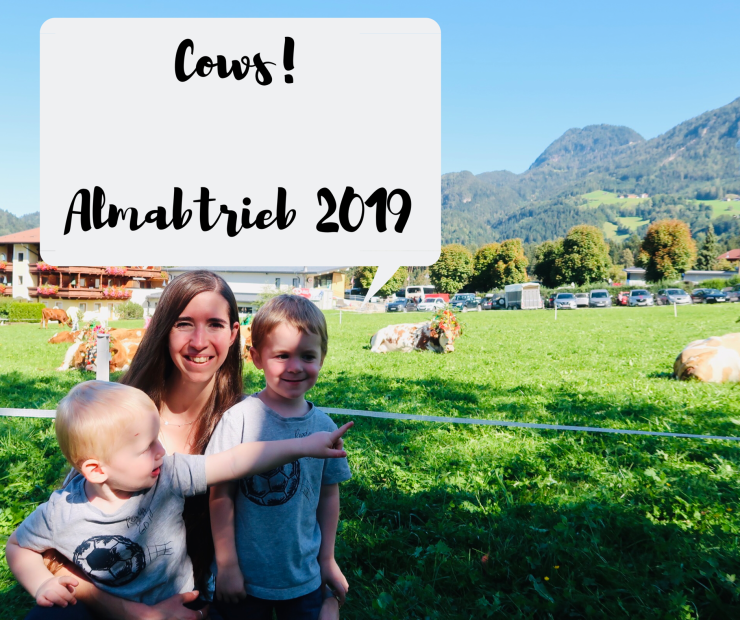
The Almabtrieb is the cattle drive from the alpine pastures to the valley barns. During the summer months the cattle herd will feed on pastures in the alpine regions of Germany, Austria, and Switzerland. When Autumn starts to come around there is one drive for each area of towns to bring the cattle down to the valleys and back to the barns of their farms. Over time, these cattle drives have turned into large festivals, with the cows being “dressed” in wreaths and crowns, and the towns and villages coming out for a grand party. During the festival (which involves a lot of craft booths, drinking, food, and music), the cows are herded right through the center streets for all to see. They typically have large bells to signal their entrance and at the one we went to, they used the fire department bell to signal movement, so there is no chance of missing the cows.

I’m going to breakdown our experience and then I’m going to give a couple of tips that I found helpful when we went in case you get a chance to go…

This year we got to experience an Almabtrieb in a little town called Reith Im Alpbachtal in Austria. It’s about a 3-hour drive for us that is really pretty. Austria itself is a gorgeous country, it’s on my favorite spots we’ve been. In terms of the festival itself, there was a lot! It was much bigger than I was expecting with a lot more people. The streets are blocked off (obviously) and lined on each side with booths full of small businesses, food, and drinks.

The cows themselves are adorned with crowns and bells at the start of the drive and then paraded through the street.

I don’t think that this happens at every Almabtrieb ( I know of one person who has attended one where they didn’t “dress the cow” as they call it), but I think it is at most of them. There isn’t any rope or barrier, so you will actually be right next to the cow as it walks down. The herders walk alongside the cows to make sure nothing happens and to keep the cows moving along.

Once the cattle have been through the streets you may be able to go see them in the pasture. I would encourage you to do this as they are able to rest and the bells no longer sound obnoxious in the close confines of the streets, but rather like beautiful wind chimes in the mountains.

This particular festival had several forms of entertainment between these street performers, a whip performance, and different bands that alternated throughout the festival and throughout the day.

We stopped and bought cowbells, food, and did a little wood project sawing off our own souvenir.

IMG_7978

My tips/things I learned:

  • Staying the night isn’t essential. Obviously this tip really only applies to those who are in our area of Bavaria/Germany or if you are going to be traveling through the area. We are early risers as it is, and I didn’t find getting up a little bit earlier to be that bad. I also didn’t see that it was so bad of a drive for a trip. If you want to stay in the area for longer you certainly can, but I didn’t find it necessary just for the festival.
  • Be prepared for crowds at just about any Almabtrieb you go to. This has turned into quite a tourist spot and a full-on festival, so there will be a crowd. I found it to be fairly manageable, although I felt a little bit better that we went as a group rather than just me with both boys by myself.
  • Bring Euro. Most festivals here in Europe do not take cards, so Euro is essential. How much will depend on what all you want to get, but I would definitely bring more than you would think you would need. The booths are full of local hand-crafted items (my favorite way of shopping) and all of the food and drinks are delicious.
  • Arrive a little early to scope everything out and get into the festival mood. The festival that we went to opened at 10AM, but the cows were not to come through until about 12PM. WE used the couple hours to do a little shopping, let the kids run that pent up car ride energy off, and find the best place to sit once the first alarm sounded. There are actually several groups of cattle that come through, so if you miss the first round it doesn’t mean you won’t see any. We actually ended up seeing two or three herds come through by the time we headed to the pasture ourselves. They come through in bursts throughout the afternoon so you can eat, or shop in between as well or just enjoy the ambiance of the festival.

Overall, we had so much fun and I would honestly recommend that anyone and everyone attend. It is such a cool cultural thing to experience and the kids still haven’t stopped talking about it. So, if you’re visiting around this time of year (any time mid-September to early October) make sure to look up the Almabtrieb schedule.