Burg Eltz

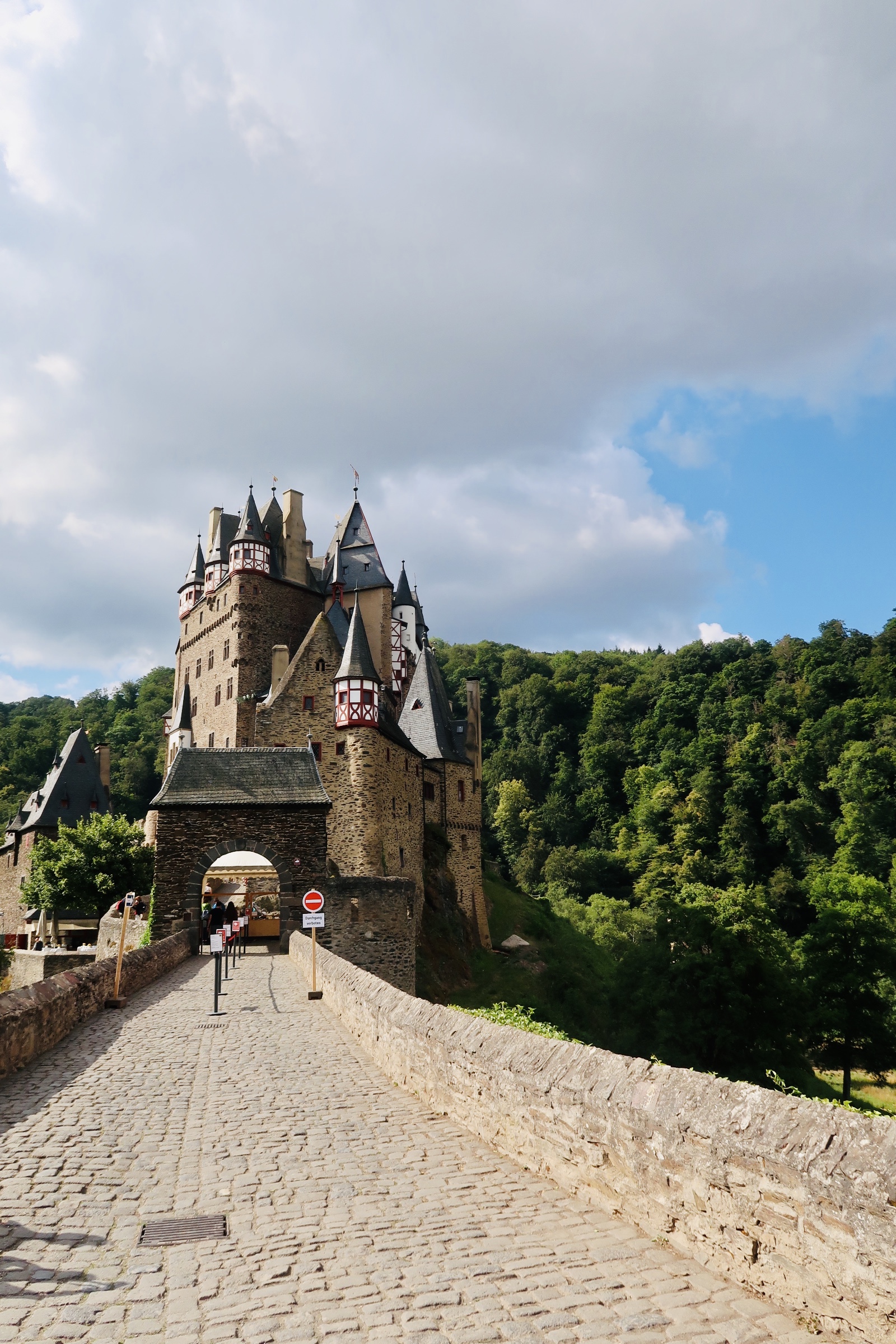
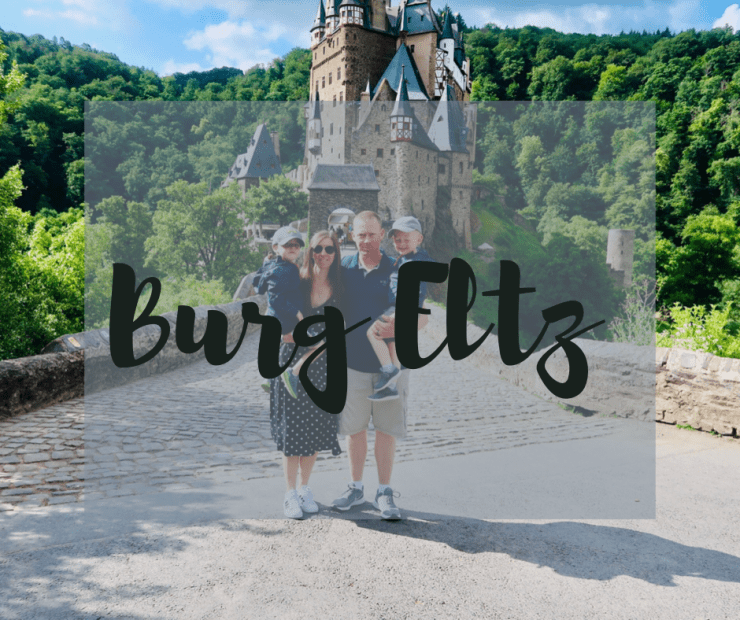
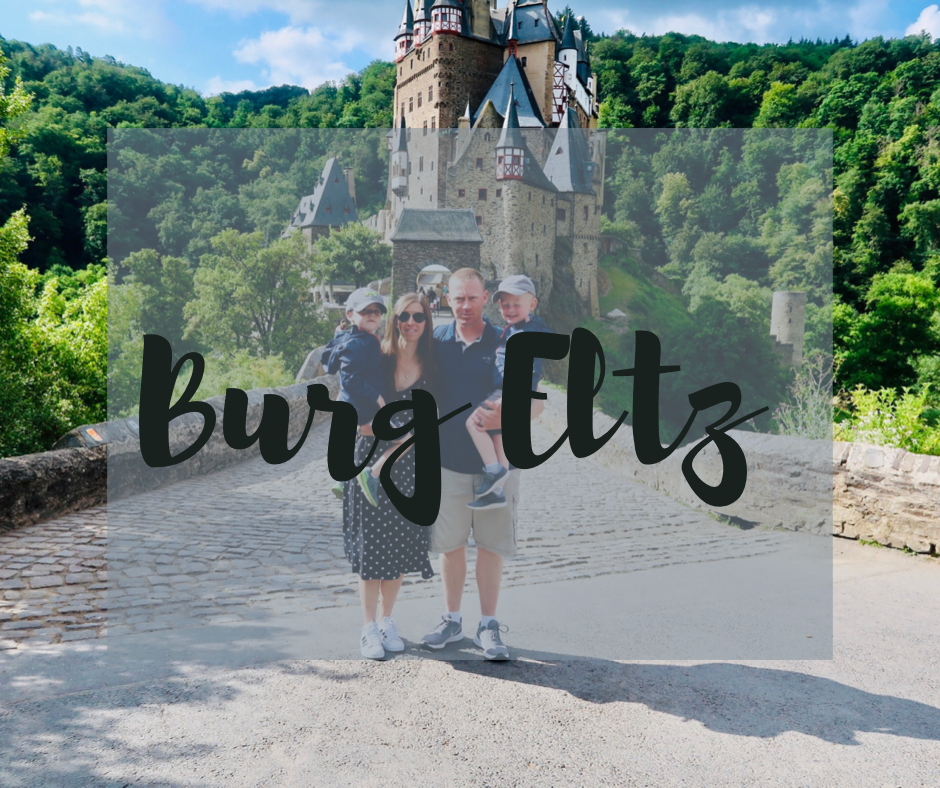
Ah, Burg Eltz. It’s one of the most photographed castles and takes its place as a top castle to visit with Neuschwanstein Castle, Lichtenstein Castle, and others. During our Summer Holiday, we made a stop at Burg Eltz to see what it was like. Burg Eltz is one of only three castles in the Rhine region that have never been destroyed and so, it was incredible to see how the different eras of the castle and families had left their own imprints. The house is joint owned by three families, Rubenach, Rodendorf, and Kempenich. You are able to tour two of the portions (Rubenach and Rodendorf), while the third is currently occupied by the family.
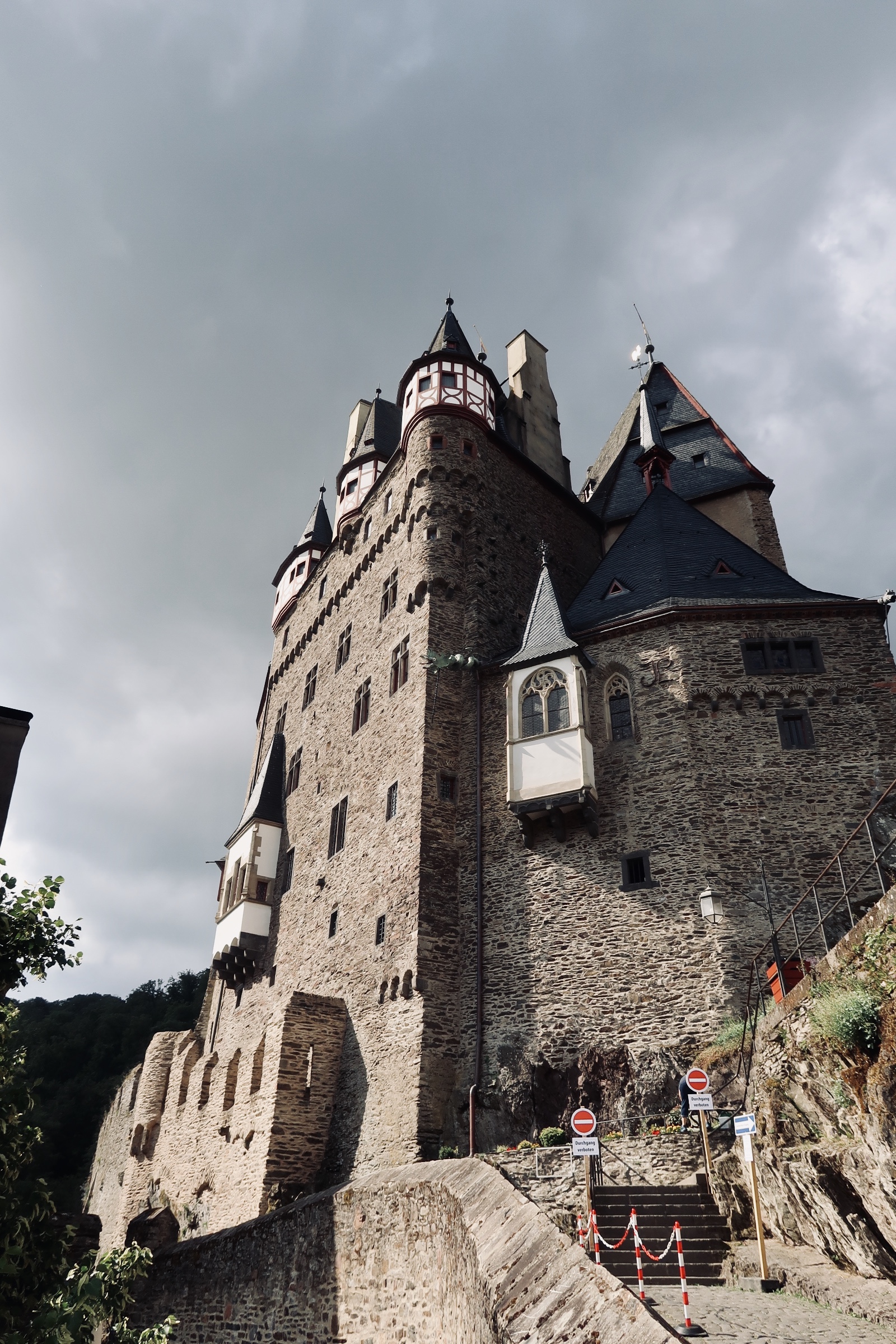
The oldest part of the castle is a Roman style keep that was initially built in the 9th century. It was intended to be a simple manor, but by the 12th century it became an incredibly important Roman Empire fortress. Built on top of a rock, the castle doesn’t quite stand perfectly upright, rather following the shape of the rock as it juts upward (similar to Mont Saint Michel in a way). In the mid 13th century (not long after the initial castle was completed) the three brothers of the Eltz family had a bit of a dispute which ended up leading to the castle and estate being split into three. The tower keep in the north was the beginning of the Rodendorf portion (which dates back to 1300) and the Rubenach house had its start in 1311. 

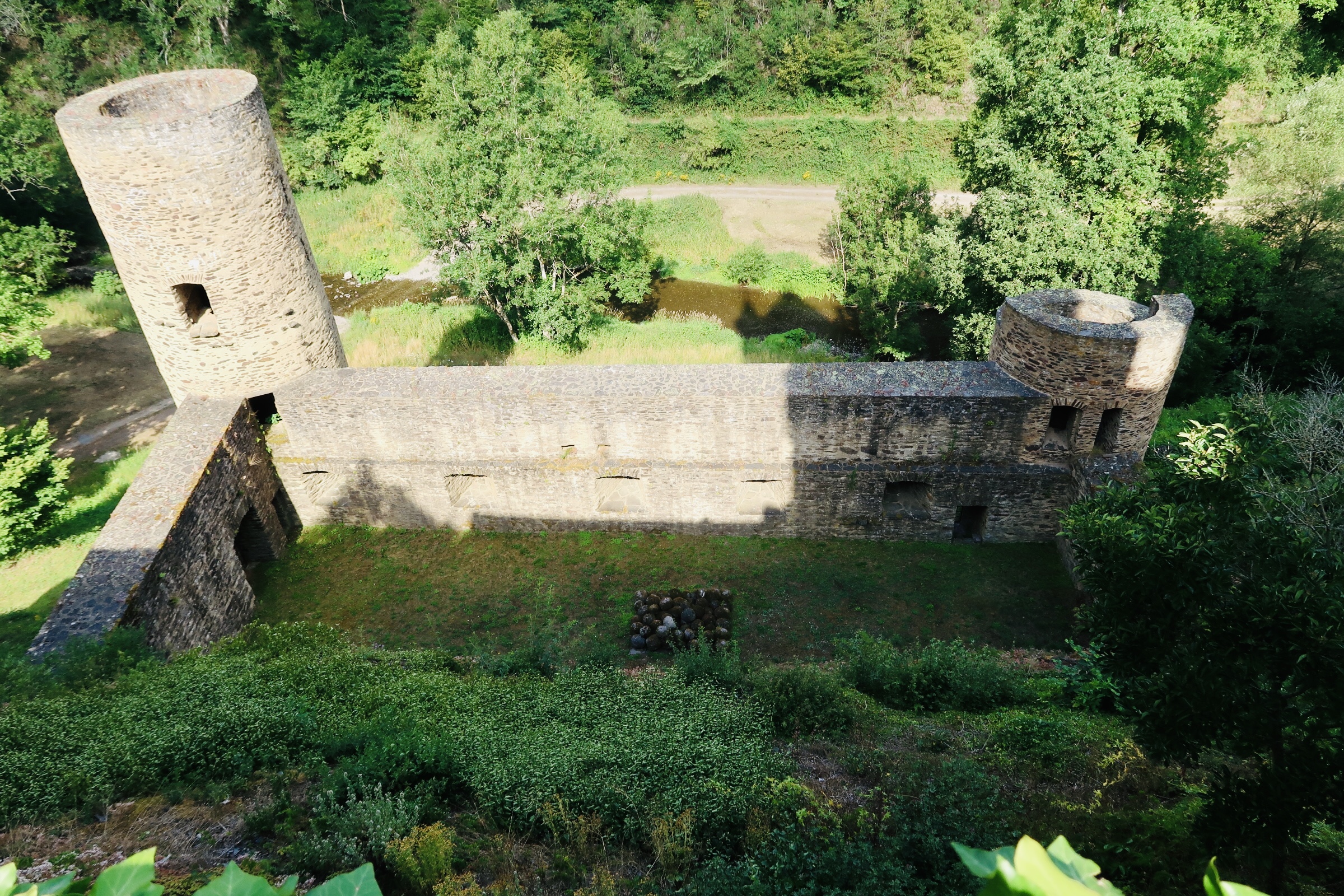
The only military conflicts to occur in the Eltz castle occurred in the 1330’s when the lords of Eltzer opposed the territorial policy of the Archbishop of Trier. This led to a siege of the castle, which led to another smaller siege castle on the northern side (the remains of which you can still see today). The siege ended two years later (when the “free” imperial knights gave up their “freedom”) and with it, along with clever politics and support from its neighbors, the castle did not see any other battle action.
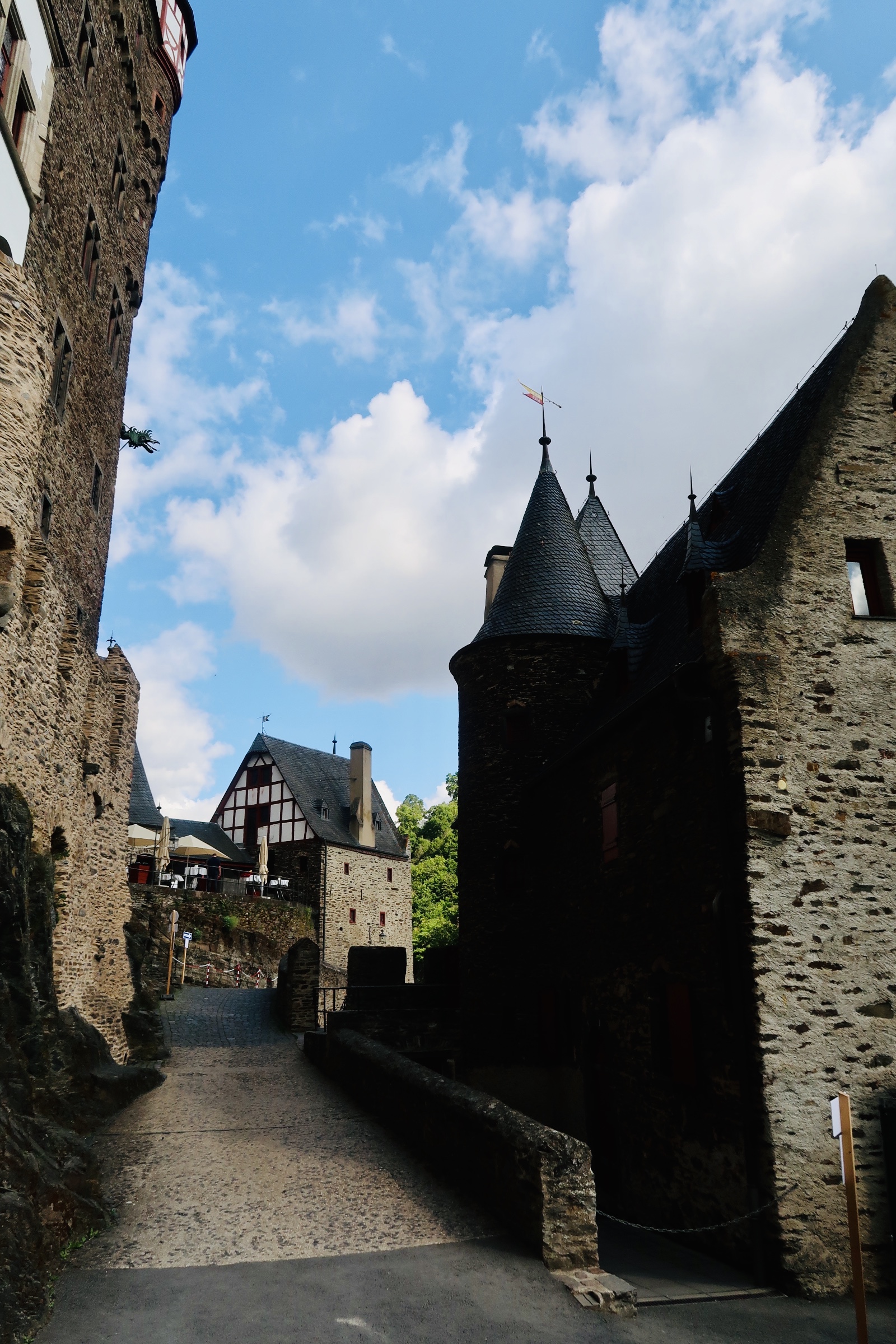
In 1472 the Rubenach house was completed (as part of the Greater Rodendorf House) after being commissioned by Philipp zu Eltz. Then the Kempenich house replaced the original hall in 1615. Eltz castle was one of the few castles lucky enough to come through the Palatine Wars of Succession (leading to the French rule) unscathed as many others were destroyed. This was due to a high-ranking officer in the French Army, Hans Anton zu Eltz-Uttingen, who saved the castle. However, Eltz Castle still came into the French possession after Count Hugo Phillipp zu Eltz fled during the French rule of the Rhine region. He was then treated as an emigrant and all of the properties owned by the Eltz family, even those beyond the castle, were confiscated. These only came back into his possession in 1815 when he was able to purchase it (if you’re curious- during the French rule Count Hugo hid out in Mainz, Germany). Finally, in the 19th century the Count Karl zu Eltz decided to restore the castle and commissioned extensive work to preserve the existing castle. 
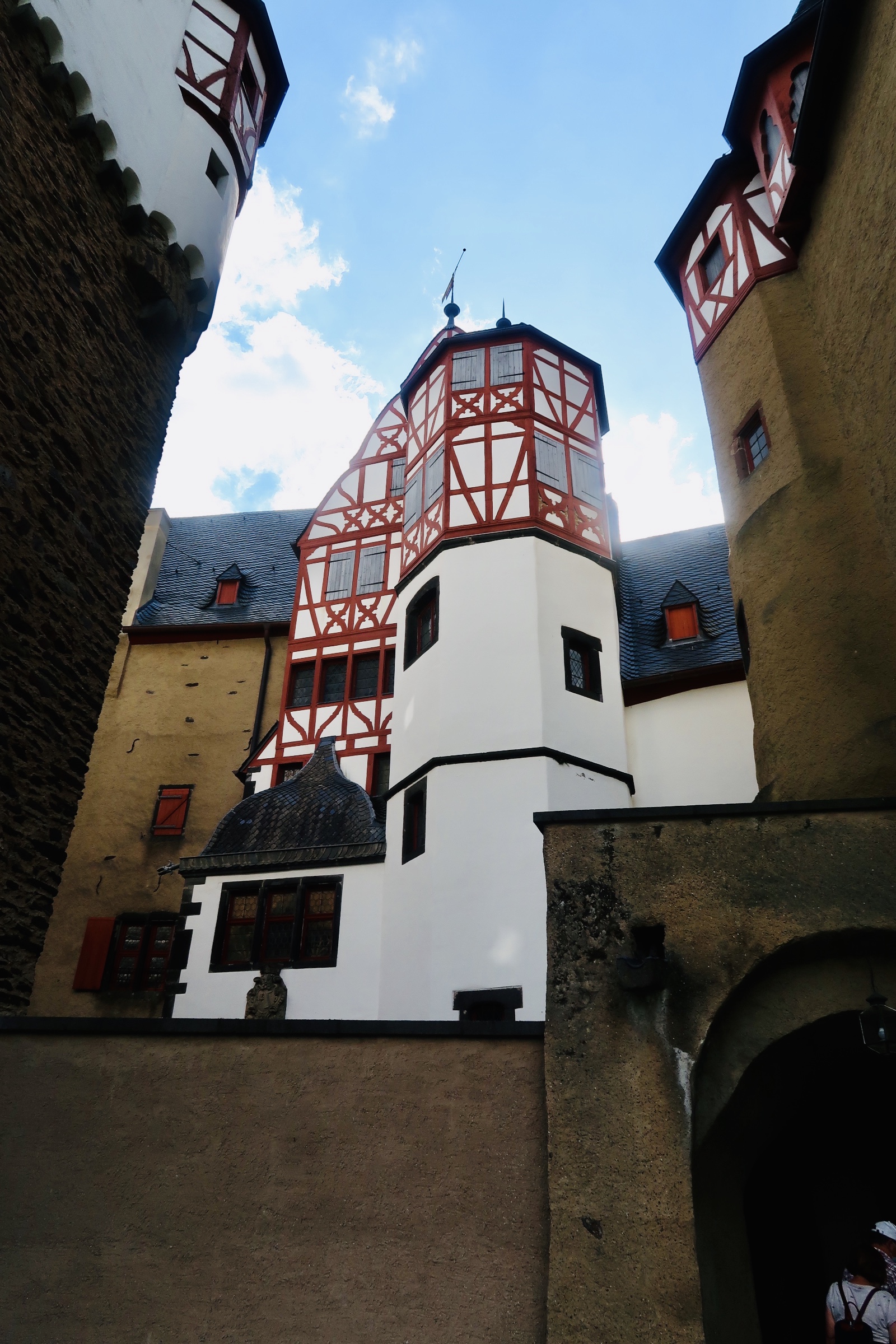
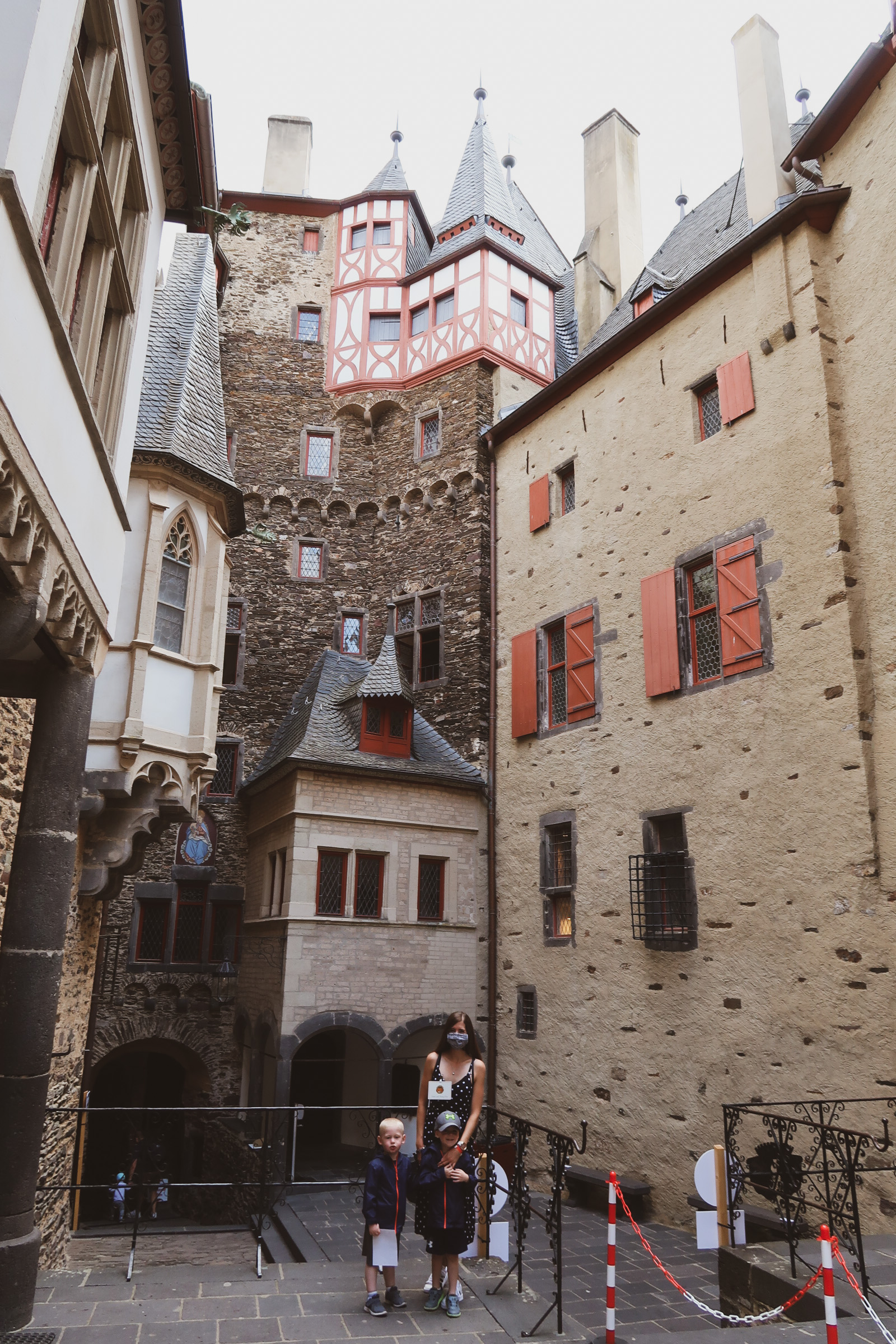
I’ve got to say- this castle really lives up to the expectation. You’ve got the perfect fairytale location, literally nestled right into the trees and valley between hills. You’ve got the picture-perfect bridge leading up to the castle itself, where you can marvel at this towering not quite straight towers looming above you. And you’ve got the visual history right in front of you. You are able to literally walk-through different eras of time and see how they lived in these different houses in the same castle. 

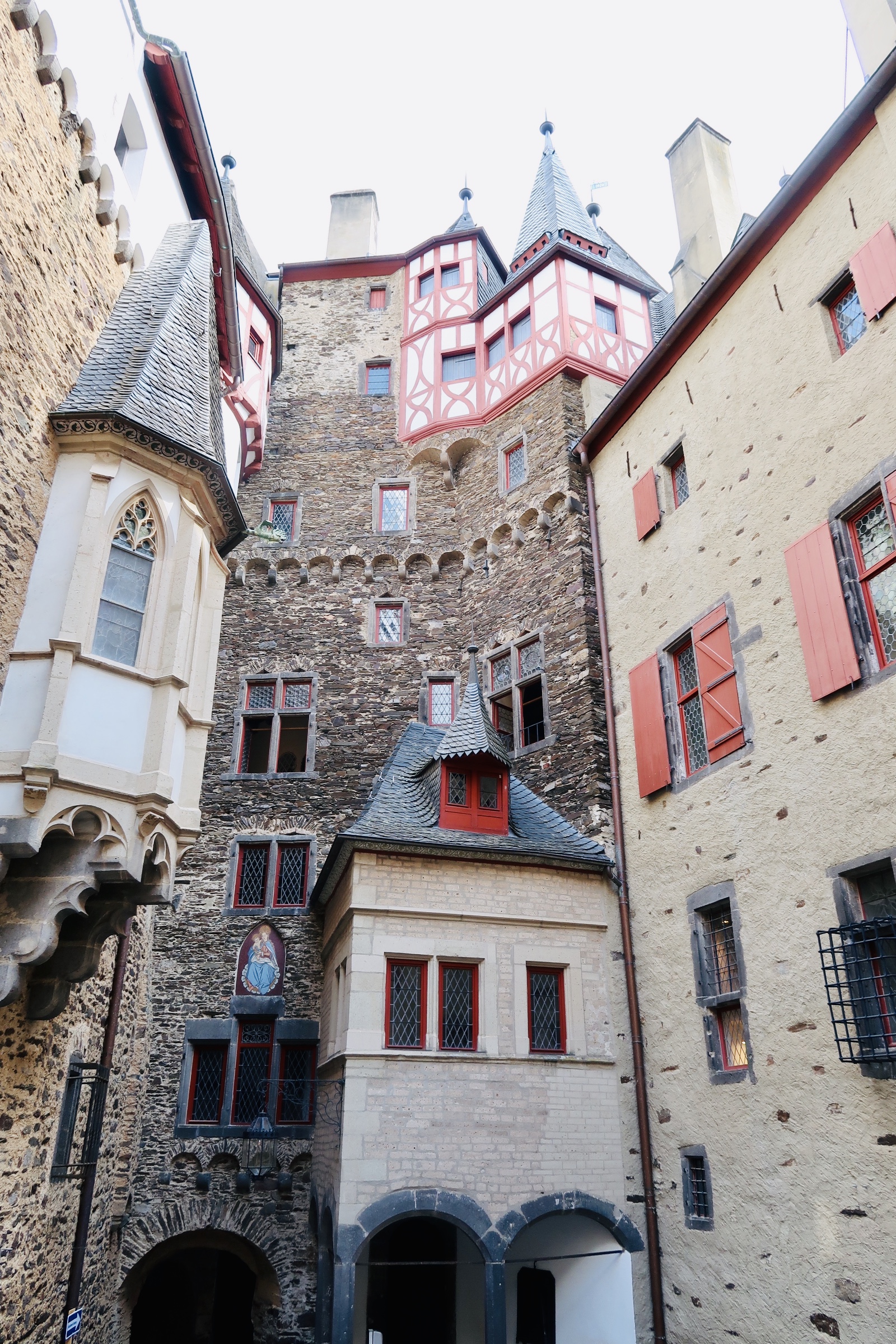
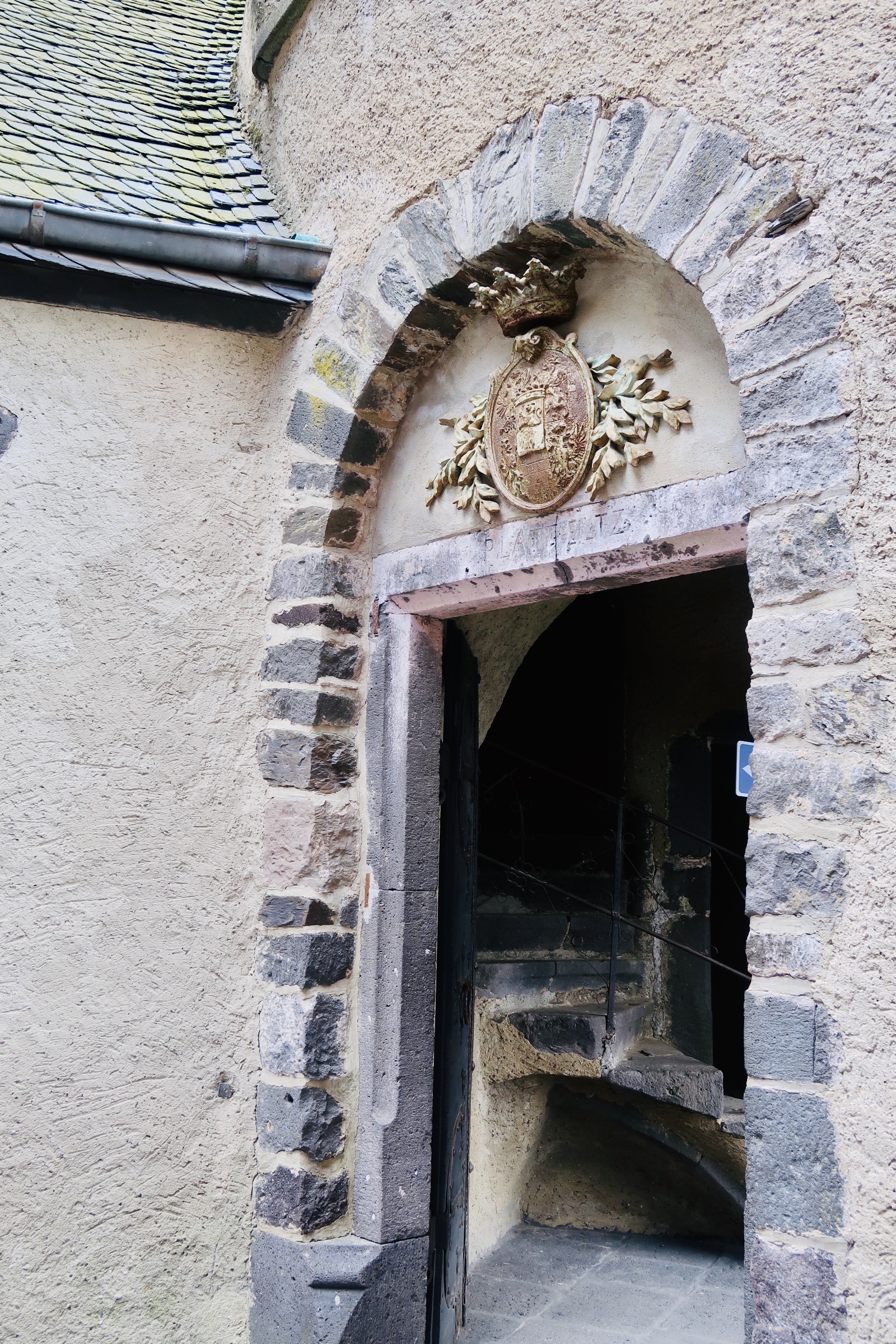
As I said, this castle was occupied by several families and each lived differently, both in station, in time, and in family structure. This meant that each has its own little differences and while each room has all of the crests and you can see some of the commonalities, they are also unique to their family. The interior was as I had expected in a way, overstated but also warm and welcoming. Rich tones and lots of wood, but also little hide away rooms and staircases. 
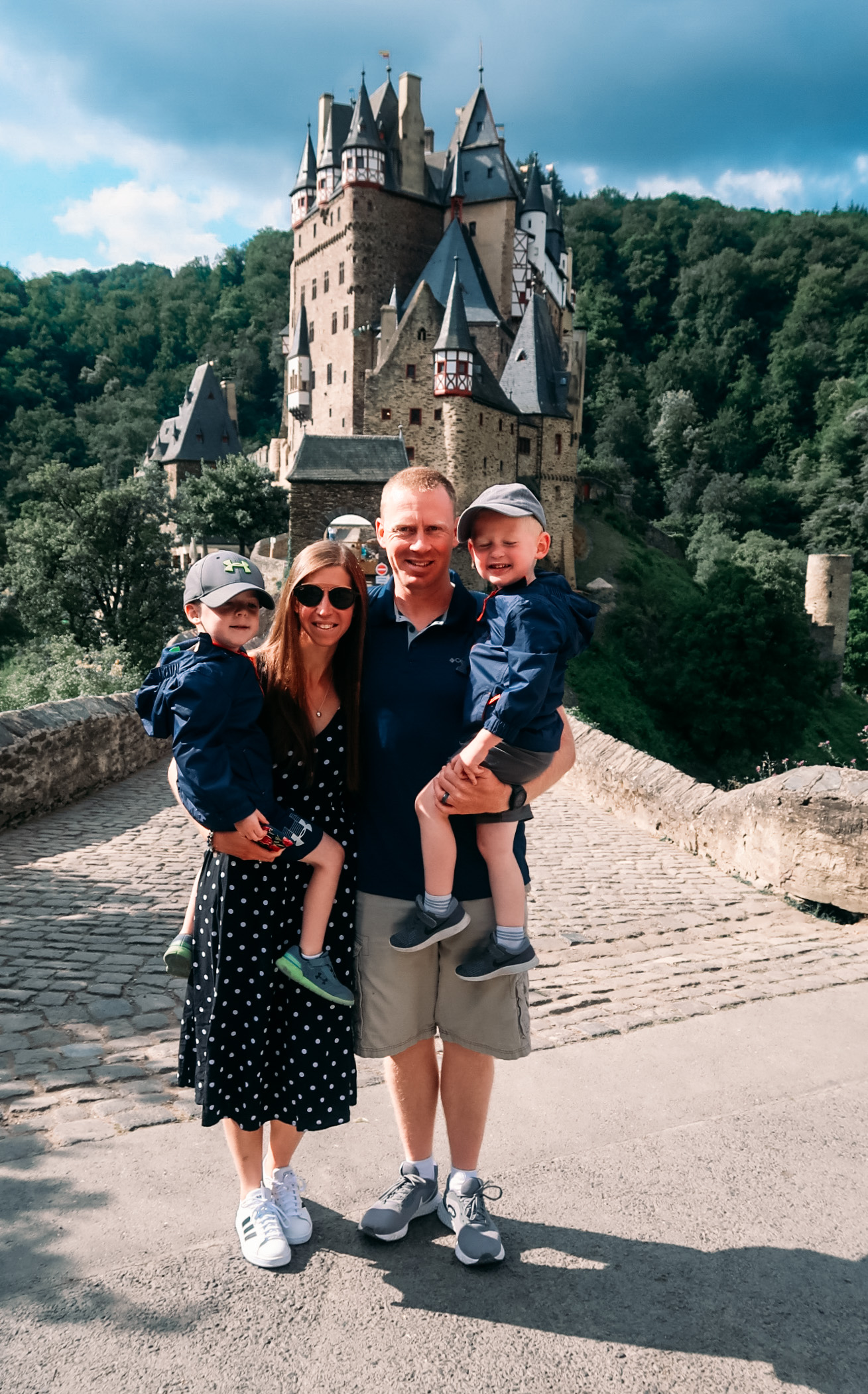
If you’re visiting, I would recommend getting there right when they open to avoid the lines for tours. The tour, which starts in the courtyard at the center of the complex, takes you through two portions of the house, as well as the treasury and armory (which are self-guided portions). There is a little bit of a walk from the parking lot to the castle itself (or alternatively you can hike the trails to get to the castle if you’d like), but there is also a small shuttle that you can choose to take. 

All the Castles – Germany Edition!

While we still are in a “safer at home” state, the world is slowly starting to open back up again (in fact, while finalizing some of my research for this post I’ve learned that Lichtenstein is in fact open with restrictions!). I’m still over here dreaming about all of the places we can visit and the countries we plan on going to over the next bit of 2020 (once the borders open of course), but I figured today I would do a fun little round up on the blog and start talking about some of the castles we’ve been to.

In compiling this list, I’ve realized that we’ve been to more castles than I had originally realized, so, as the title suggests, this will be full construction German Castles. I will do a separate post for the United Kingdom (which will include palaces as well!), other European Countries, as well as the ruins that we’ve explored. I will also include at the end of each blog post any Castles that are still on our “to go to” list for each region (so at the end of this post I’ll have a list of the castles I would still like to go to in Germany). Once we go to a few more, I’ll do another round up of those as well.

As always, I’ll link to full blog posts where applicable, but I am going to include pictures, a little history, and my own thoughts as we go along.

It seems like people who go to castles fall into two categories, the “you’ve been to one you’ve been to them all” or “they are all different and we should see them all”. If anything, I fall into that second category as not only do I LOVE castles and see differences in each one, but I also LOVE the history of each castle. In most cases these houses are beyond our comprehension in terms of age and what actually went into the planning and construction of these castles is incredible (and yes, some have a dark history as well). I’m just a bit of a history nerd over it all.

So, with all of that blabbering out of the way, let’s get into the castles…

Hohenschwangau Castle (BLOG POST, MORE INFORMATION)

7045257599026111161_IMG_3112

We are going to start our post with the little sister to Neuschwanstein, Hohenschwangau. Nestled in the Alps at the German Austrian border, this castle is absolutely stunning. It is first mentioned in the 12th Century and was owned by the Knights of Schwangau until the 16th century. Eventually in the early 19th century King Maximillian took ownership, and had it rebuilt per its original plans. It was used by the royal family as a summer and hunting residence up until King Ludwig II decided to build his private residence of Neuschwanstein.

Hohenschwangau is a beautiful castle to see. It’s one that I feel like sometimes gets a bit neglected with Neuschwanstein being right next to it, but it is gorgeous, mixing the perfect location with the perfect interiors. In fact, you actually get to see more of the interior of Hohenschwangau than you get to of Neuschwanstein. The gardens have some stunning views of the lakes and alps and the castle itself has a fuller story to tell (you’ll see why when you read on). I actually initially ranked Hohenschwangau higher on my list of castles because of this.

Neuschwanstein Castle (BLOG POST, MORE INFORMATION)

-8329587099912118466_IMG_3378

Ah, one of the most famous castles. The inspiration for Disney Castles. The most picturesque of all the castles, Neuschwanstein. It’s only when you learn the history of the castle and its King that it becomes a bit different looking. Neuschwanstein Castle was built for King Ludwig II as a private residence; a refuge from the public. It was intended as a sort of rebuild of Hohenschwangau, but bigger and better. The construction began in 1868 with completion in 1892. It was at the forefront of technology both in the construction of the castle and the methods used, to the interior of the castle. The large windows were unusual for the time as was the heating and serving methods within the castle. However, King Ludwig only spent 11 nights in his dream castle before his death (this is an interesting story- it was claimed that he had gone mad and he was found drowned alongside his psychiatrist. There are different stories claiming whether he was or was not mad, what role his mistress played in the entire affair, and how he actually died).

As picturesque as Neuschwanstein is (and IT IS picturesque), I found it to be a bit…dark and small when compared to Hohenschwangua. This could be because you don’t see nearly as much of the castle (part of this was due to the reconstruction that was going on while we were there). It wasn’t my favorite, even though I still absolutely loved it. It was a good look see for the pictures and views. Looking back now, knowing the full history of the castle it definitely holds a little bit more of an air of mystery and intrigue.

Hohenzollern Castle (BLOG POST, MORE INFORMATION)

IMG_0003 3

At this time, I think this is my favorite German Castle. It is just…foreboding but quaint, set high on a hilltop with stunning views and yet so warm and home-y. It also has quite the history and, unlike the above two, was never built to be a residence. First mentioned directly in 1267, this is the ancestral seat of the Prussian Royal House and of the Hohenzollern Princes. It was rebuilt in the mid 15th century to become a bigger/better house and then became a fortress in the 17th century during the 30 Years War. After the war it fell into a bit of disrepair until the 19th century when Frederik of Prussia decided to reconstruct and turn it into a bit of a showpiece for the public. What we currently see of Hohenzollern dates back to 1850 and is considered an acclaimed masterpiece of military architecture. The only time that the castle was used as an actual temporary residence was during World War II.

I know I’ve already said it, but Hohenzollern is my favorite as it stands now. I loved our time wandering the battlements, walking the entry gate, seeing the various artworks detailing Prussian history (placed starting in the 1950s), and the courtyard…the courtyard made me swoon. This castle just had it all that you would want in a castle. In fact, I would like to go back for a Christmas Market (or really any market) if possible before our time in Europe is done.

Lichtenstein Castle (BLOG POST, MORE INFORMATION)

IMG_0295

Lichtenstein Castle is one of those castles that you just marvel at from start to finish. It seems to defy the rules of gravity, of building, of everything and is just a place to be experienced. First built in 1100 it went through a very destructive history of being built and destroyed several times. Despite that cycle, it withstood every attack and was considered the best fortified fortress of the middle ages (which it doesn’t take a military strategist to see why). In the second half of the 16th century it lost its ducal seat (and therefore lost its “castle” status) and started to deteriorate. In 1802 it was dismantled entirely to the bones and turned into a hunting lodge. Finally, in 1840 it was rebuilt for the final time into the castle we see today. Count Wilhelm was inspired by a novel called Lichtenstein by Wilhelm Hauffhe and decided to build a German Medieval Knights Castle. It is now privately owned and certain areas of the castle and courtyard are available for rental for performances or weddings!

Lichtenstein is just one of those castles you have to see. Perched right on the edge of a cliff you not only get the thrill from just feeling on the edge of the world, but this history of building, tearing down, and rebuilding is just incredible. It also has the only visible damage from World War 2 that we saw in all the castles (a bullet hole in a mirror that was fired during the war). What made our particular trip a bit cooler (in my opinion) was that it was rainy and foggy, so you could not only get the eerie feeling of being up on the mountains and this incredible castle looming over everything, but also just get a real taste of the history. However, as someone who is afraid of heights (or rather falling from a height), being there was a bit terrifying as well (walking across that bridge?!).

I want to do one Honorable mention of Dresden Castle (BLOG POST, MORE INFORMATION). We haven’t actually been properly to the castle itself, however we have walked the Procession of Princes, seen/walked the Zwinger Palace Courtyards, and seen the exterior of the castle.

The Dresden Castle was originally built around the beginning of the 13th century and (after a fire and rebuild in the early 18th century) has been home to Electors, Kings of Saxony, and Kings of Poland. It was fully destroyed in the bombing of Dresden in February of 1945 and the restoration didn’t start until the 1960’s. Overall, Dresden is a really neat city with a lot to see, learn, and explore, BUT the most incredible part of the city is that it was almost fully destroyed in that bombing and yet you wouldn’t know it by visiting it now. Save for the memorials and museums explaining what happened, the city itself doesn’t show the destruction that occurred in its architecture or buildings.

Finally, a list of the castles that we would still like to visit while we are here:

Burg Eltz

Heidelberg Castle

Schwerin Castle

Cochem Imperial Castle

Nuremberg Imperial Castle

I hope you enjoyed this first Castle Round Up! What was your favorite? Which would you most like to visit?