A Day in Alexandria Bay

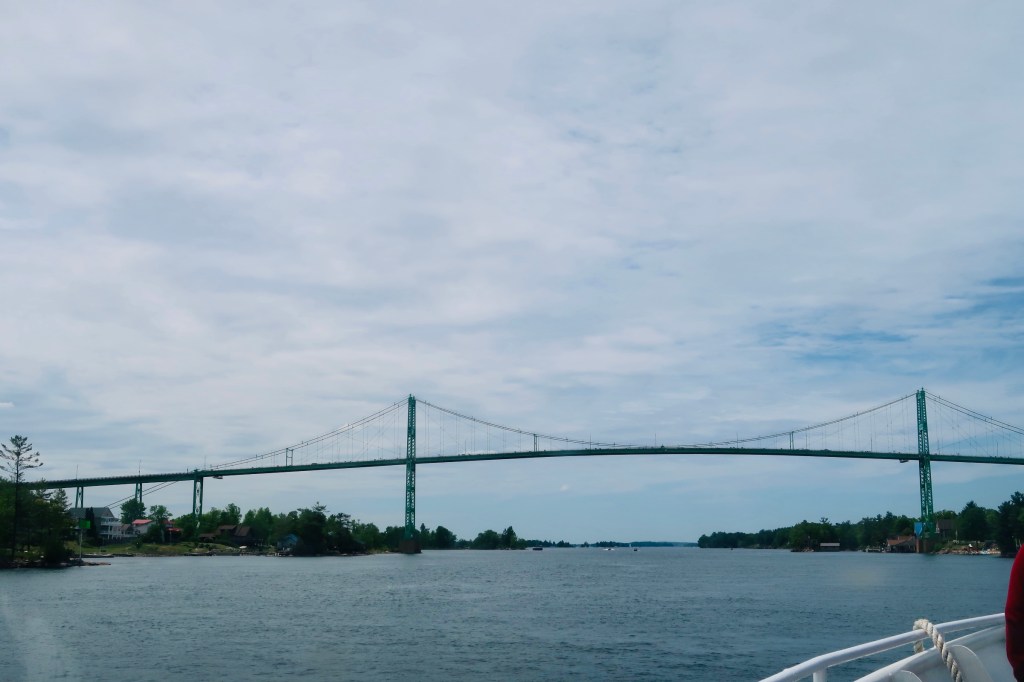
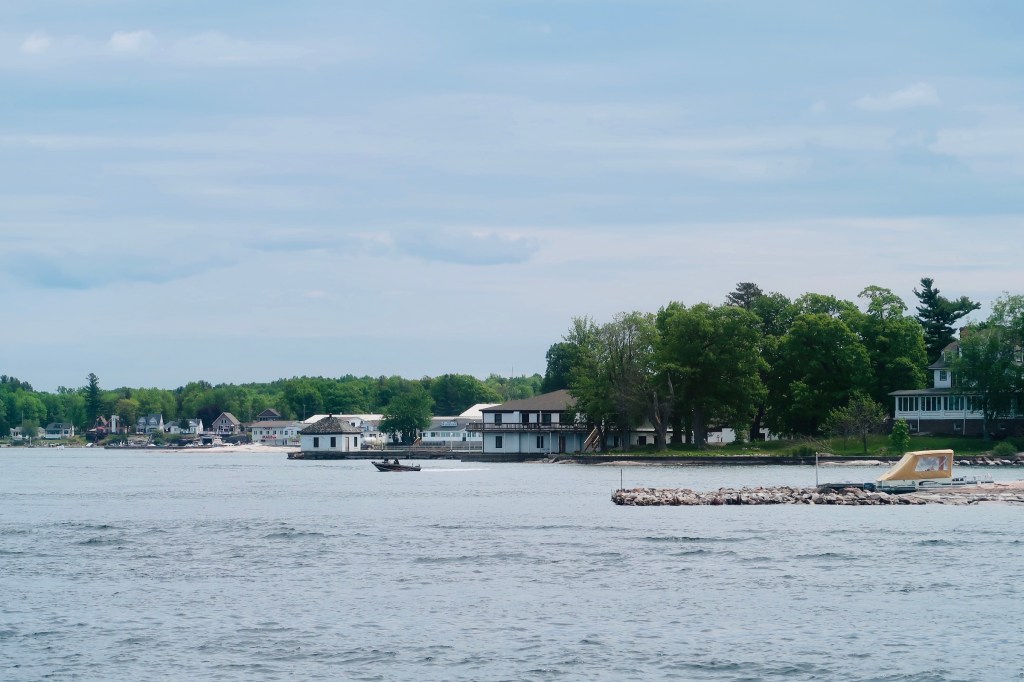
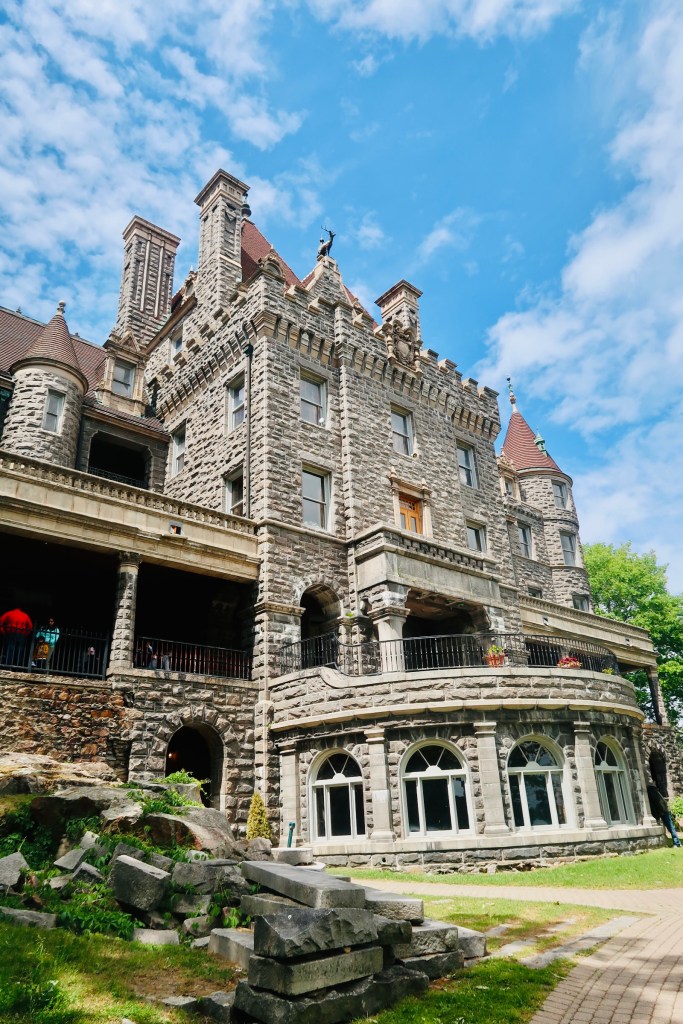
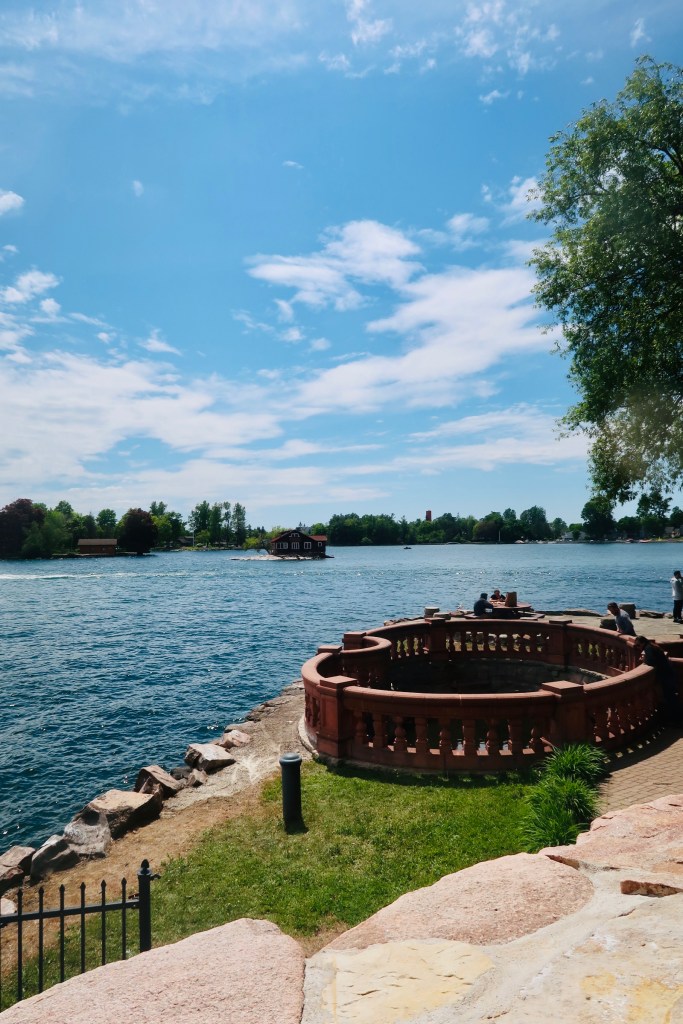
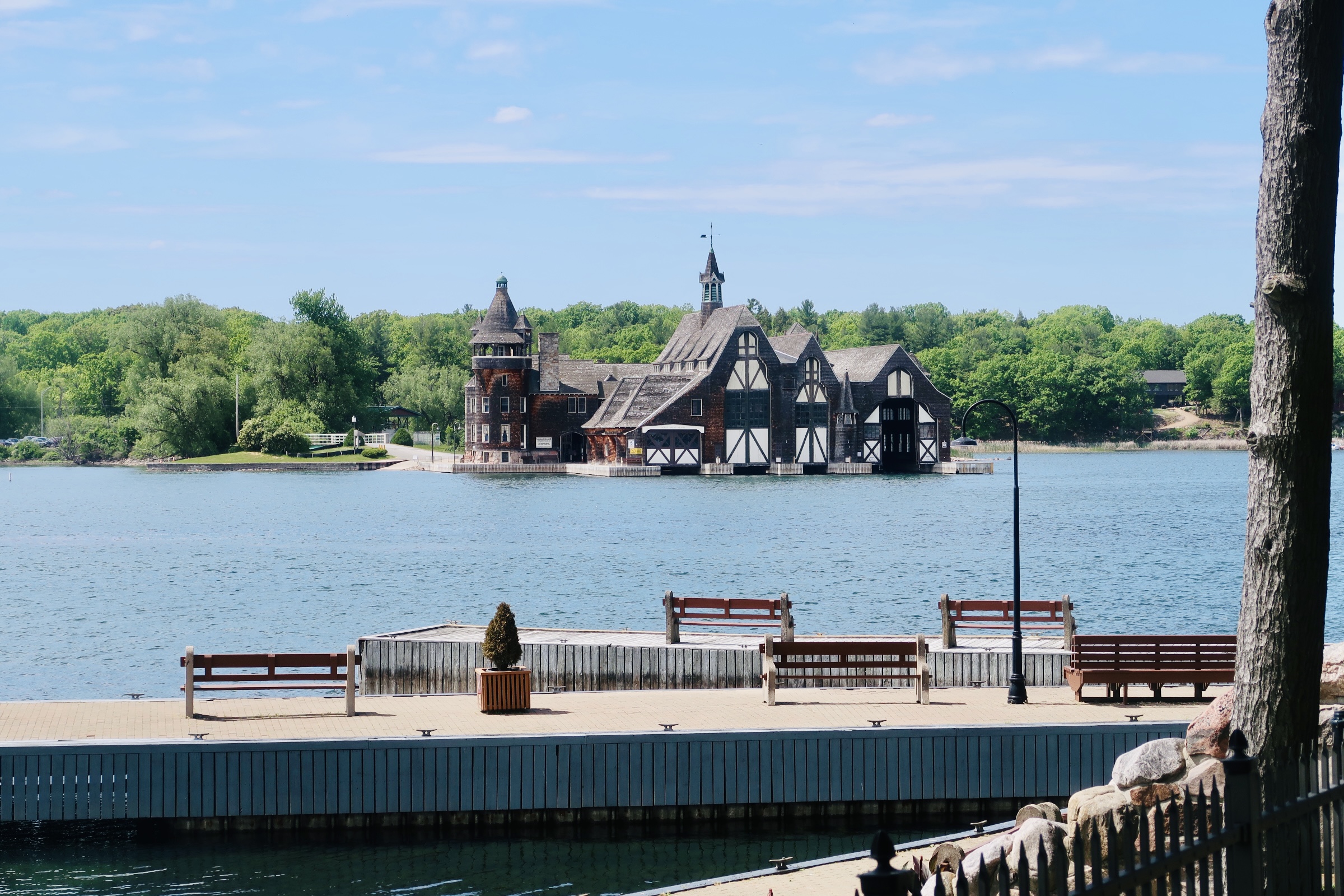
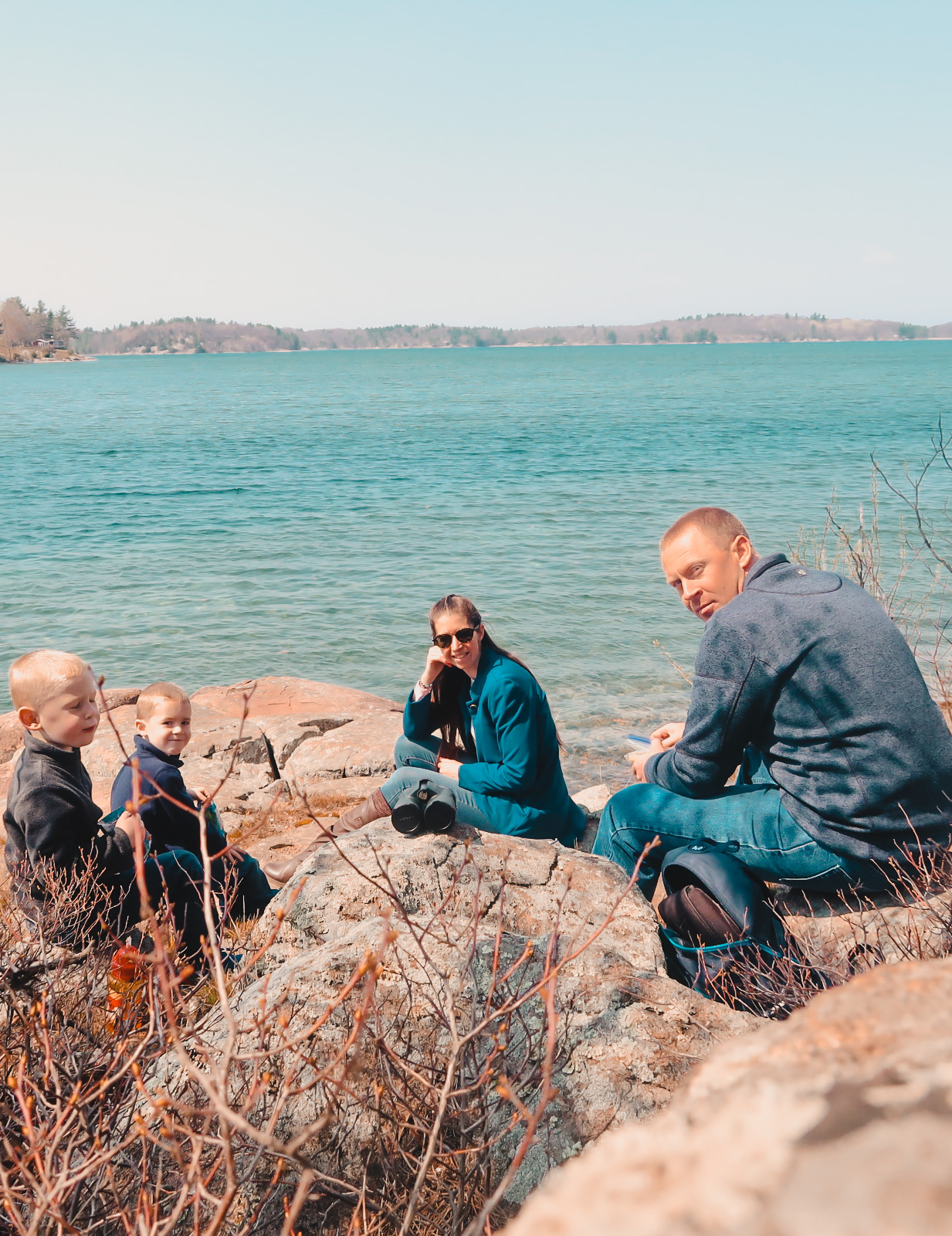
We recently spent a day exploring a little bit of Alexandria Bay and the Thousand Islands Region. The entire Thousand Island Region is absolutely gorgeous, and we really wanted the chance to explore it a bit more (we recently took a weekend to see Sackett’s Harbor and Wellesley Island which you can read about HERE), so we decided that a boat tour was the best way to go. Not only did this give us a chance to see the waterways, the summer vacation homes that most of us dream of, we also were able to stop at Boldt Castle, a well-known spot in the region. *A note that you can visit Boldt Castle and Singer Castle by personal boat if you have your own- they have docking options. *

Let’s back up a bit and touch a little on Alexandria Bay. Alexandria Bay was originally home to the Iroquois & Algonquin tribes, who would use the area as a Summer Hunting and Fishing spot. During the American Revolution (and shortly after) the land was purchased, then it passed hands after the War of 1812, the continued to be passed around for some time. Eventually the goal was to bring the Islands and Alexandria Bay to become a premier Sumer destination and, after the Civil War and a visit by Ulysses S. Grant, it did. Another period of time that did the region a lot of good was Prohibition when the narrow river ways would allow alcohol to be covertly brought into New York from Canada. To this day you can still find bottles at the bottom of the water from when they were tossed over as law enforcement approached. 

While we were in the area our main focus was the boat tour and Boldt Castle, but we did wander up through James St (and pick up a wine slushie- delicious) and a little bit along the river walk. There is plenty for us to go back and wander through and I can totally see the allure of this area as a summer hotspot. It brings all the charm of a “Bay Town” with just enough history and a variety of things to do. It’s also close to the Canadian Border (when it opens) if you want to pop over. 

Now, on to our main events, Uncle Sams Boat Tour and Boldt Castle.

Uncle Sam’s Boat Tour is one of the companies that operates tours throughout the water ways of the St. Lawrence River. They have several different tour options for you to choose from, each a variety of sites to see and costs. You can also choose to simply take their ferry over to the castle if that’s all you want to see. I personally would recommend taking one of the full tours so you can see the area a bit more in depth. We chose to do the American Narrows Tour (link) which gave us a good variety of the Islands, a stop at Boldt Castle, and was a good amount of time for our children too. Each tour comes with a tour guide on hand that takes you through this history and current information for the area AND a snack/drink bar. At some point I would like to do the tour that takes you out to Singer Castle as well. 
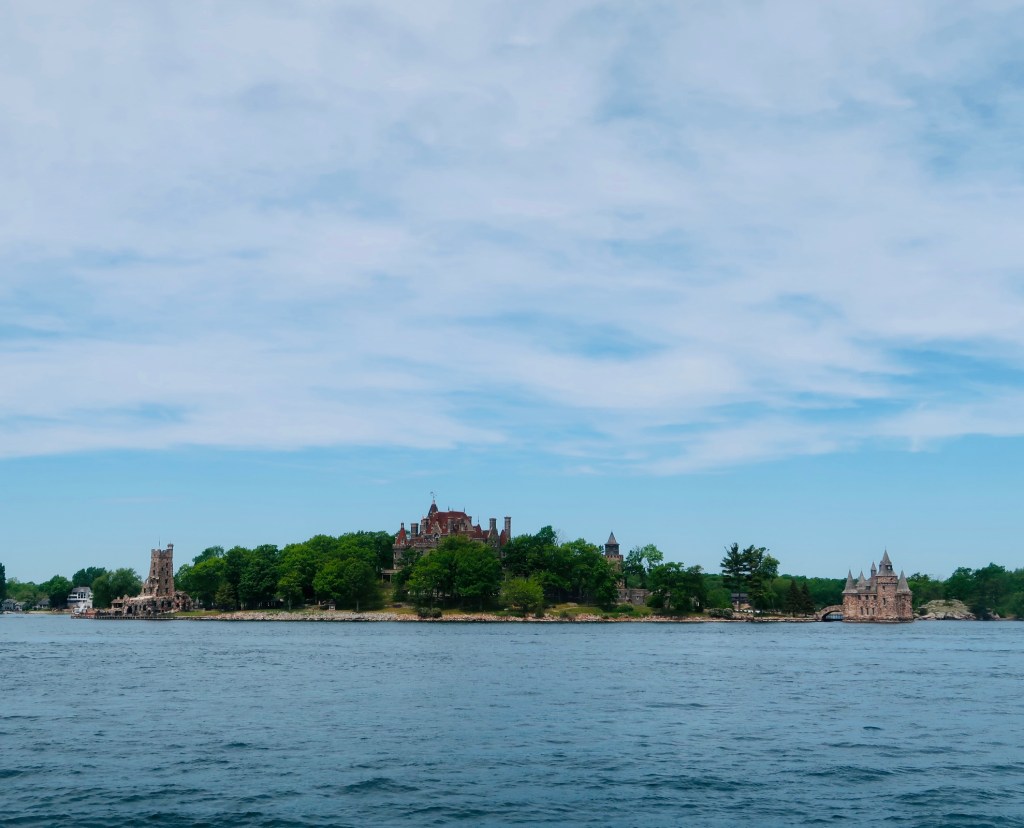
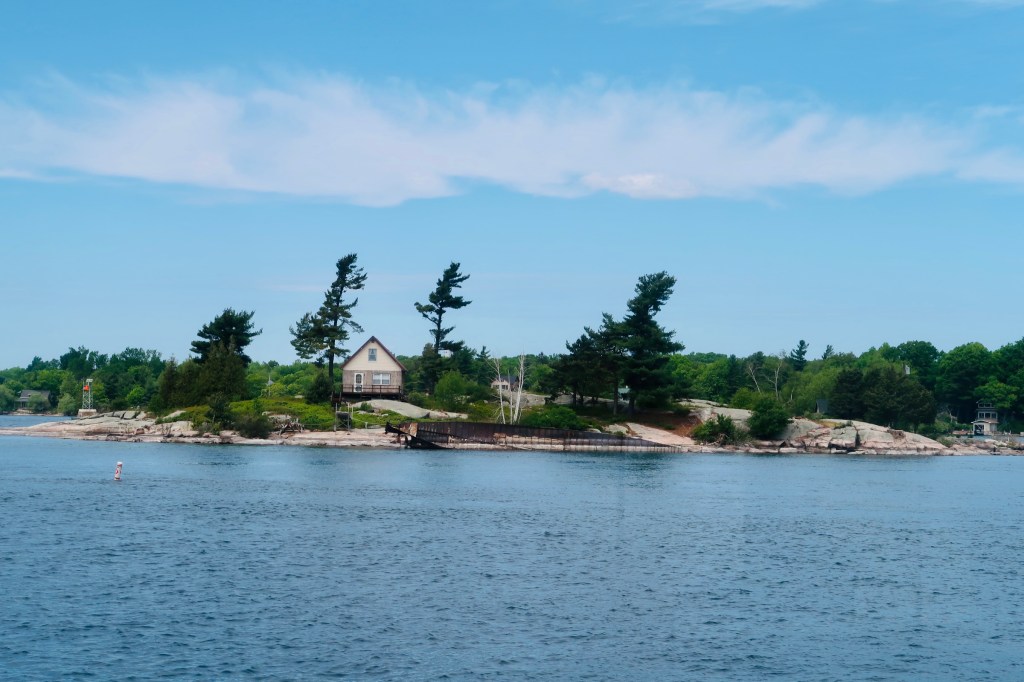
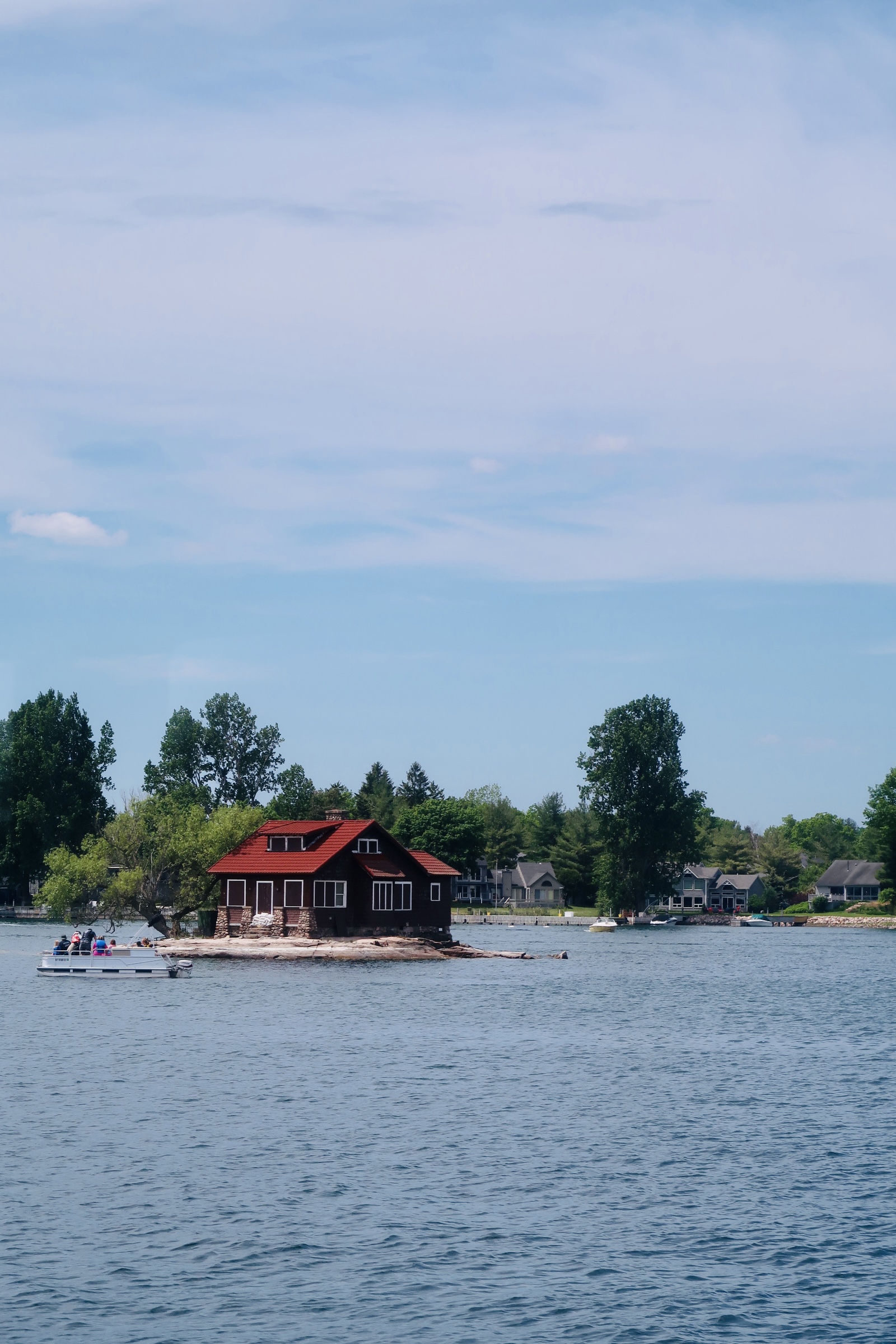
A couple of tour highlights for us were the Skull & Bones Society clubhouse. Story goes that the original owner of the Island was a part of the Skull & Bones Society at Yale and upon graduation (club rule) willed the entire Island to the club. There was also an island that had a partially sunken boat where the captain decided that steering the boat as it was out of the narrows was not worth it, so he simply left it on the side. Another interesting spot that gained some fame? An island that was owned by The Claudia Family that has both a home and an old monastery. Not only the monastery claimed to be haunted, but the island also served as a stop on the Underground Railroad. The TAPS team from Ghost Hunters and Meatloaf came out to film an episode of the show and feature the “haunted island”. One final fun story (or rather not fun for the people involved) was our tour was about a man-made island. Story goes a man wanted to buy an island and summer home for his wife, so he sent her up to the region to search for the one she wanted. She searched and searched and didn’t find one she liked, so he purchased some of the underwater ground and BUILT an island for her. He then built the house on it and presented it to her. But, as you may see where this is going, she didn’t like it, and ultimately decided she didn’t like him. The island and home still stand today, presumably with a happier family in residence. 

The last, well only, stop on the tour is at the famed Boldt Castle. 
George Boldt immigrated from Prussia to America in 1864 at age 13. He started at the bottom as a kitchen worker before climbing up the chain of the hotel industry. At 30 he purchased his own hotel (The Bellevue) and thus continued his rise. Ultimately, he would become the proprietor of the merged Waldorf Astoria (after mediating a feud between William and Jacob Astor). He is also the very man who made the Thousand Island Dressing so famous, having his maître-d include it on the menu of his hotel restaurant. 

In the beginning of 1900, he purchased Heart Island with the sole purpose of building a Rhineland Castle as a symbol of the love he had for his wife, Louise. The plan for the castle was a 6-story building with 120 rooms, along with tunnels a powerhouse, Italian Gardens, a Children’s playhouse, drawbridge and more. It was to be a massive castle. Work had been underway on the home for a few years before Louise suddenly died from pneumonia, at which point George, in his grief, ordered all work to be stopped and never stepped foot on the island for the rest of his life. 

An ultimate symbol of love (if you ask me). 

As the home and island fell into disrepair, it was eventually purchased by the Thousand Islands Bridge Authority to restore and open the home/grounds. You are able to tour both the home (both the completed and incomplete areas) and the grounds and all proceeds from shop and ticket sales go directly back into the restoration. 

Now, let me say this straight away, the home and grounds are IMPRESSIVE. We loved our day there and I’ll share all the things about it, BUT I don’t know if I would classify it as a castle, more so as an estate. Semantics, I know, but that’s just my thoughts. 

So, some of the highlights for us…
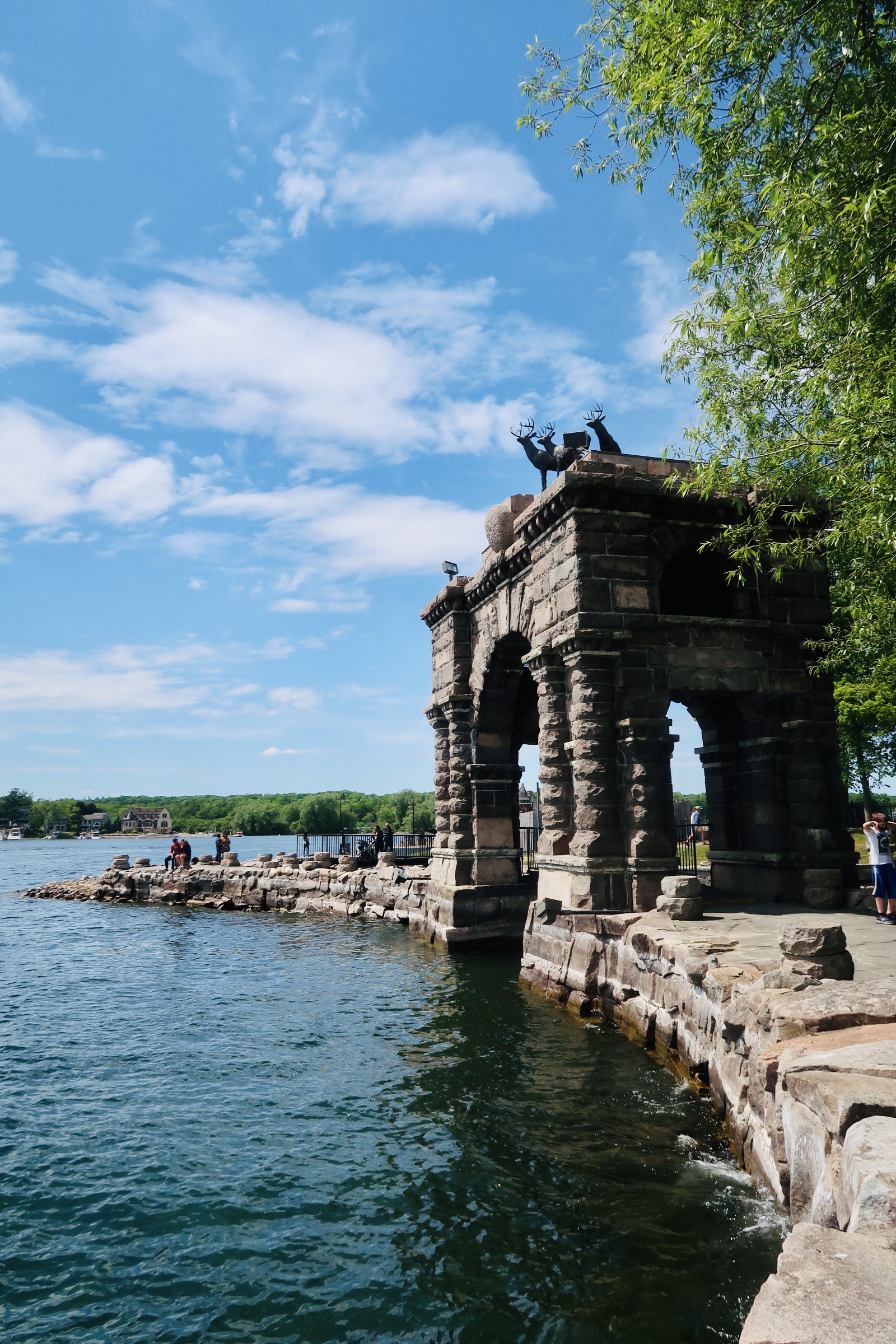
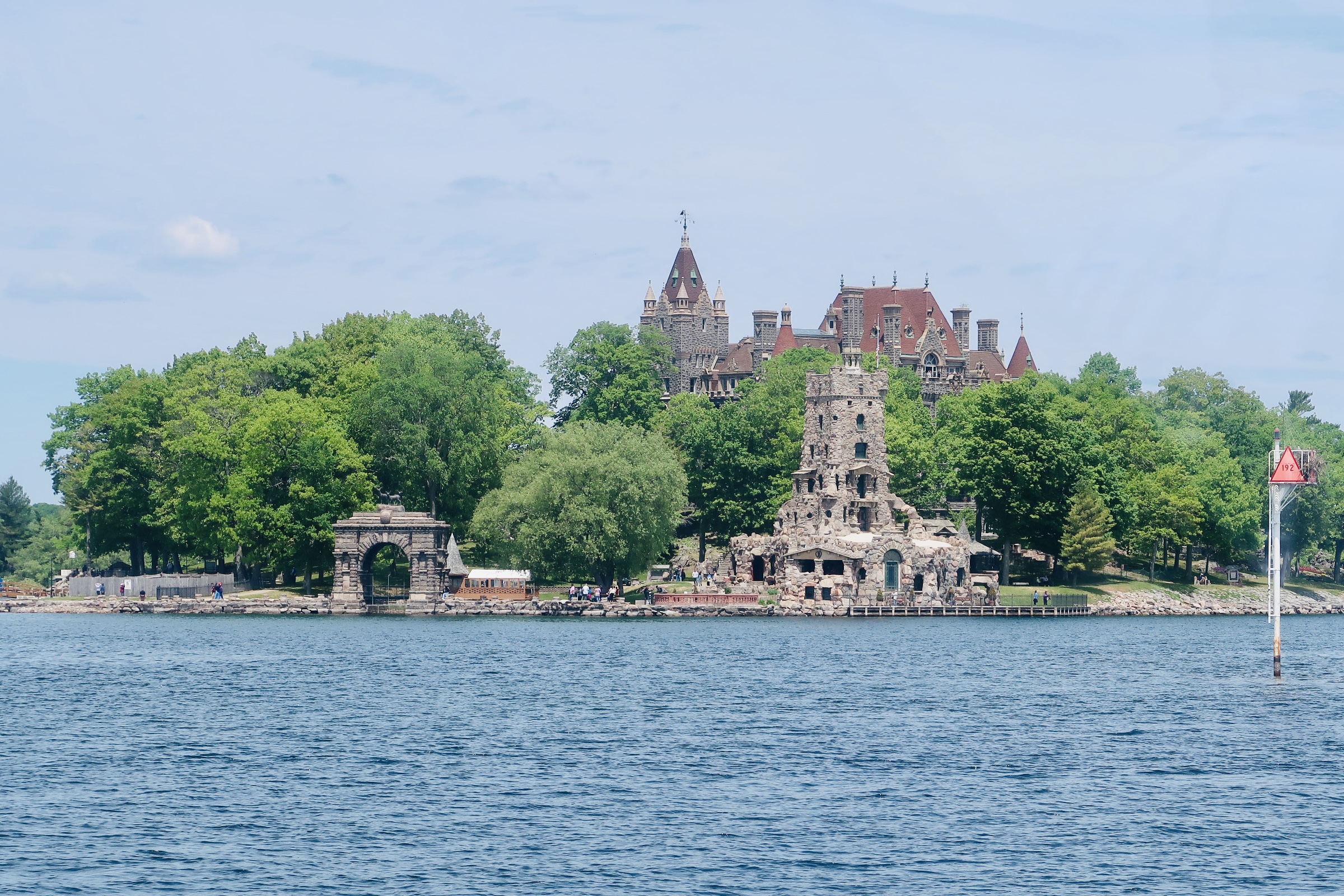
The Entry Arch. Modeled off of the Roman Arches and maybe a little inspiration from the Arc De Triumphe, this was supposed to serve as the formal entry point to the island. It is topped with 3 Stag Deer (a theme throughout).
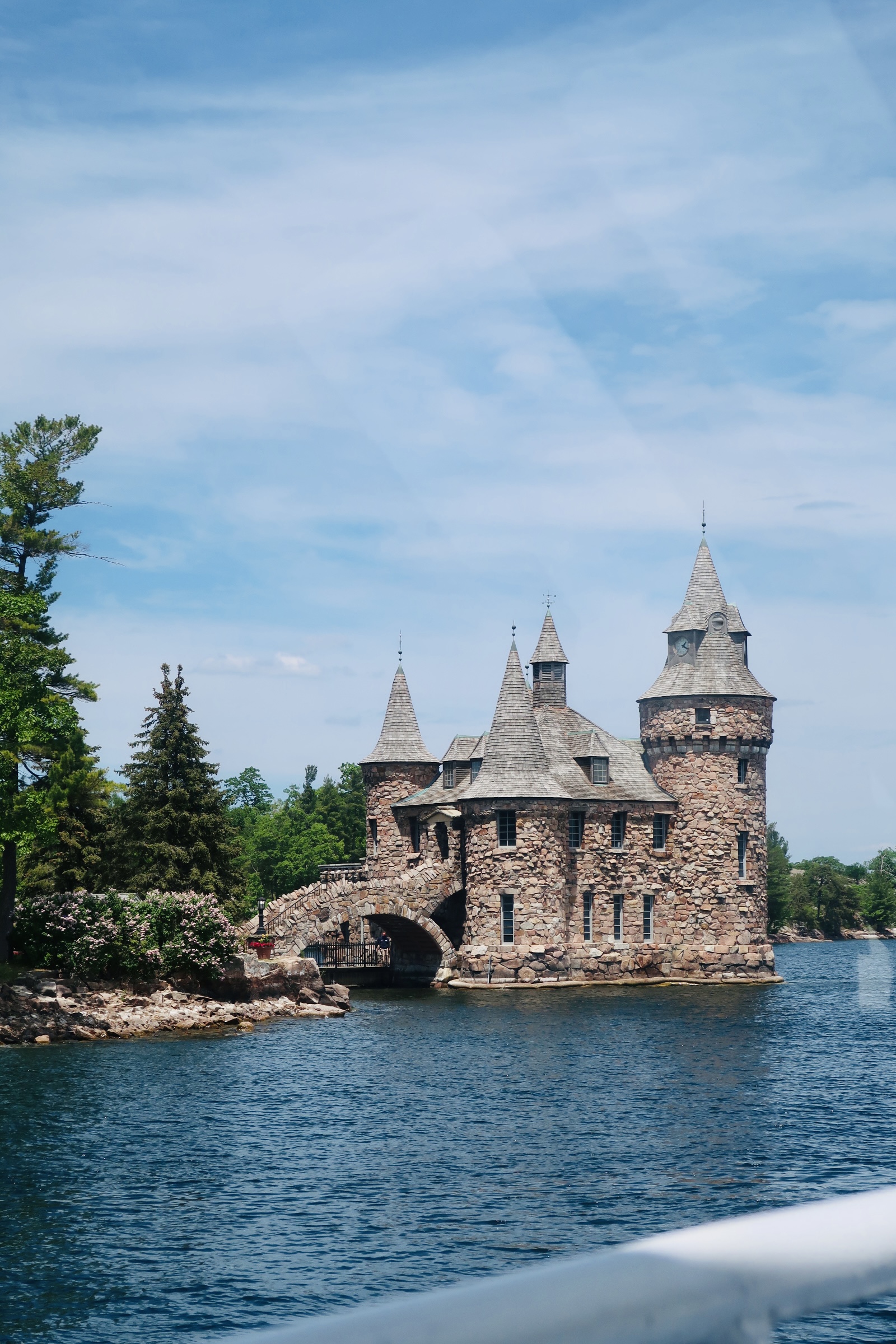
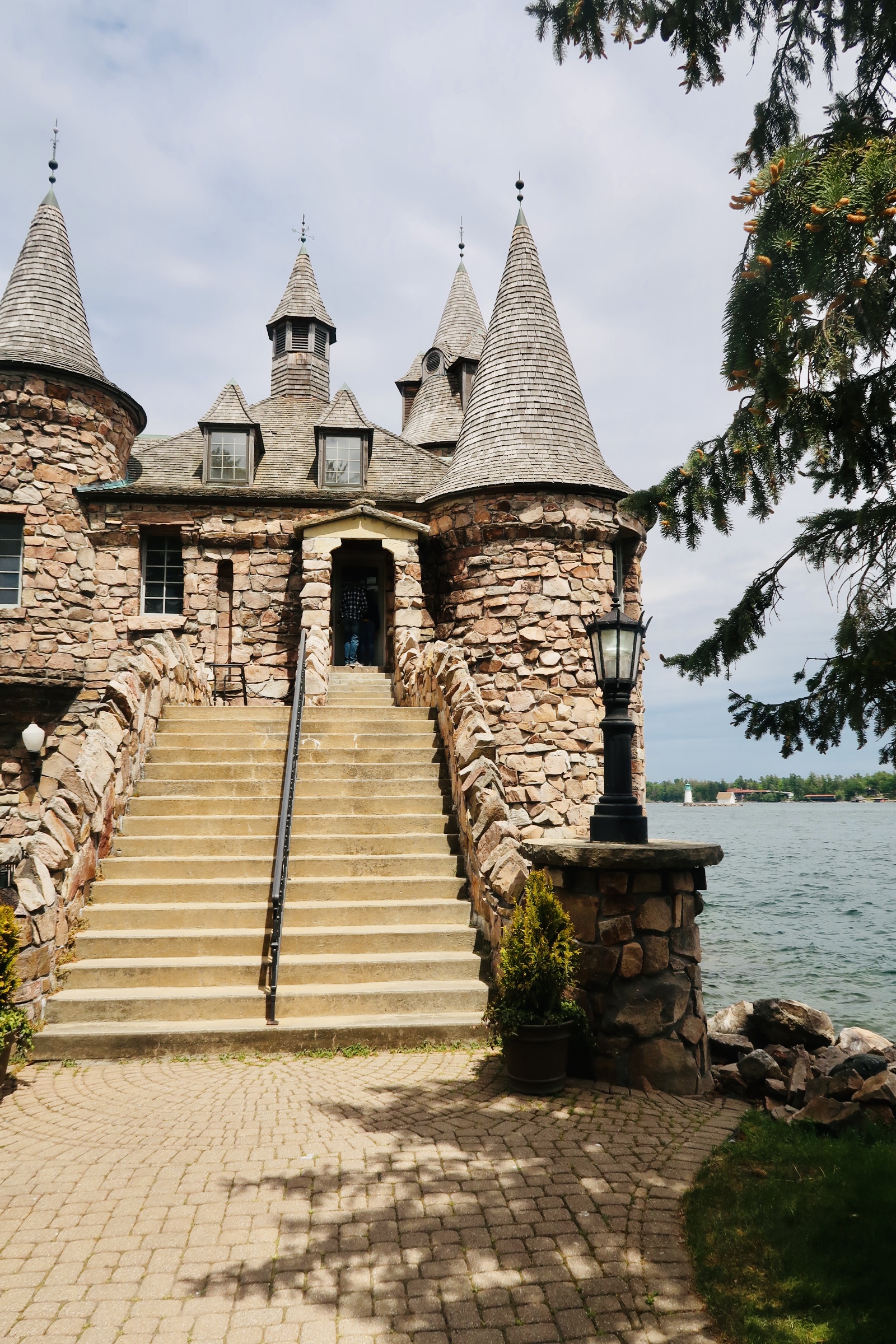
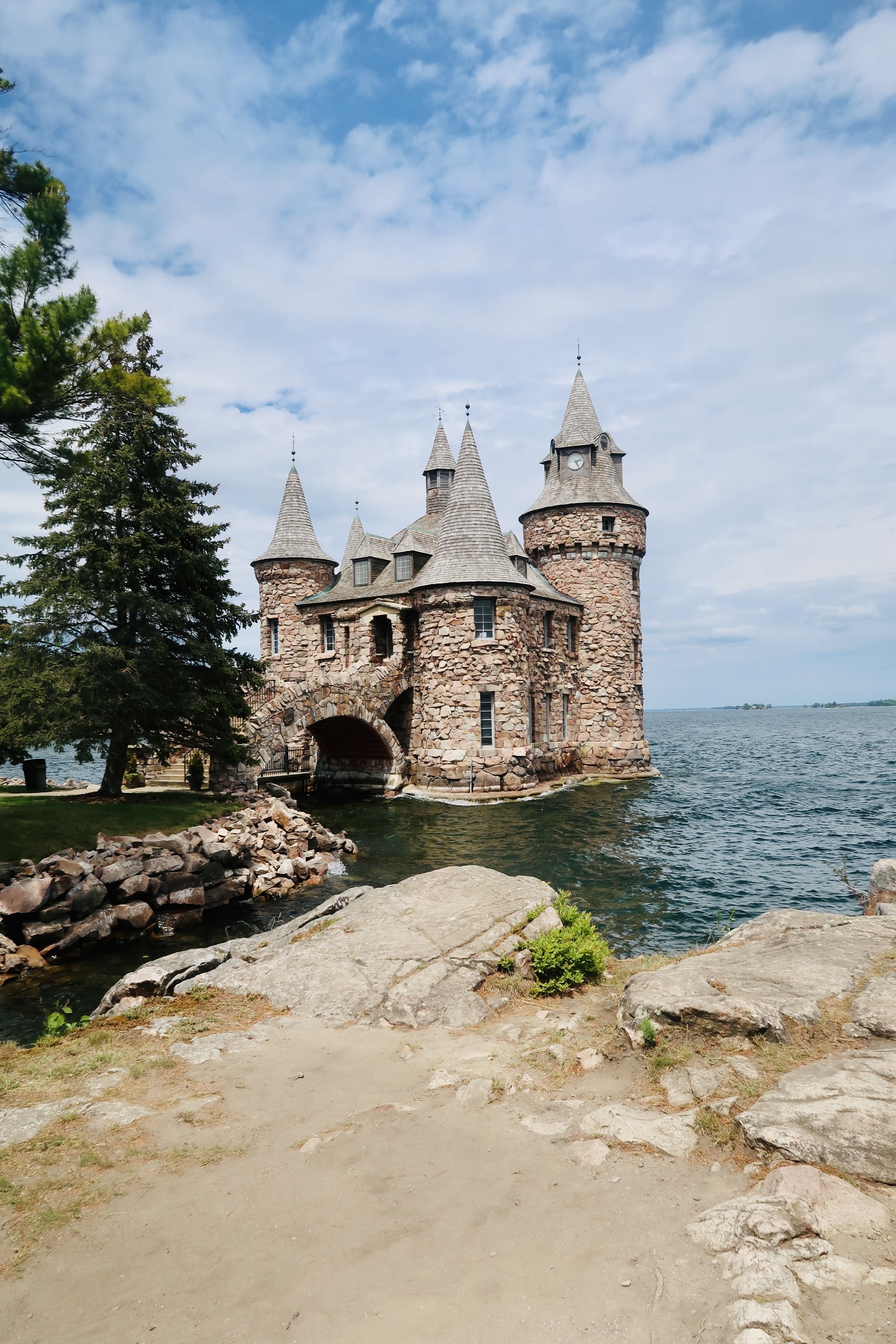
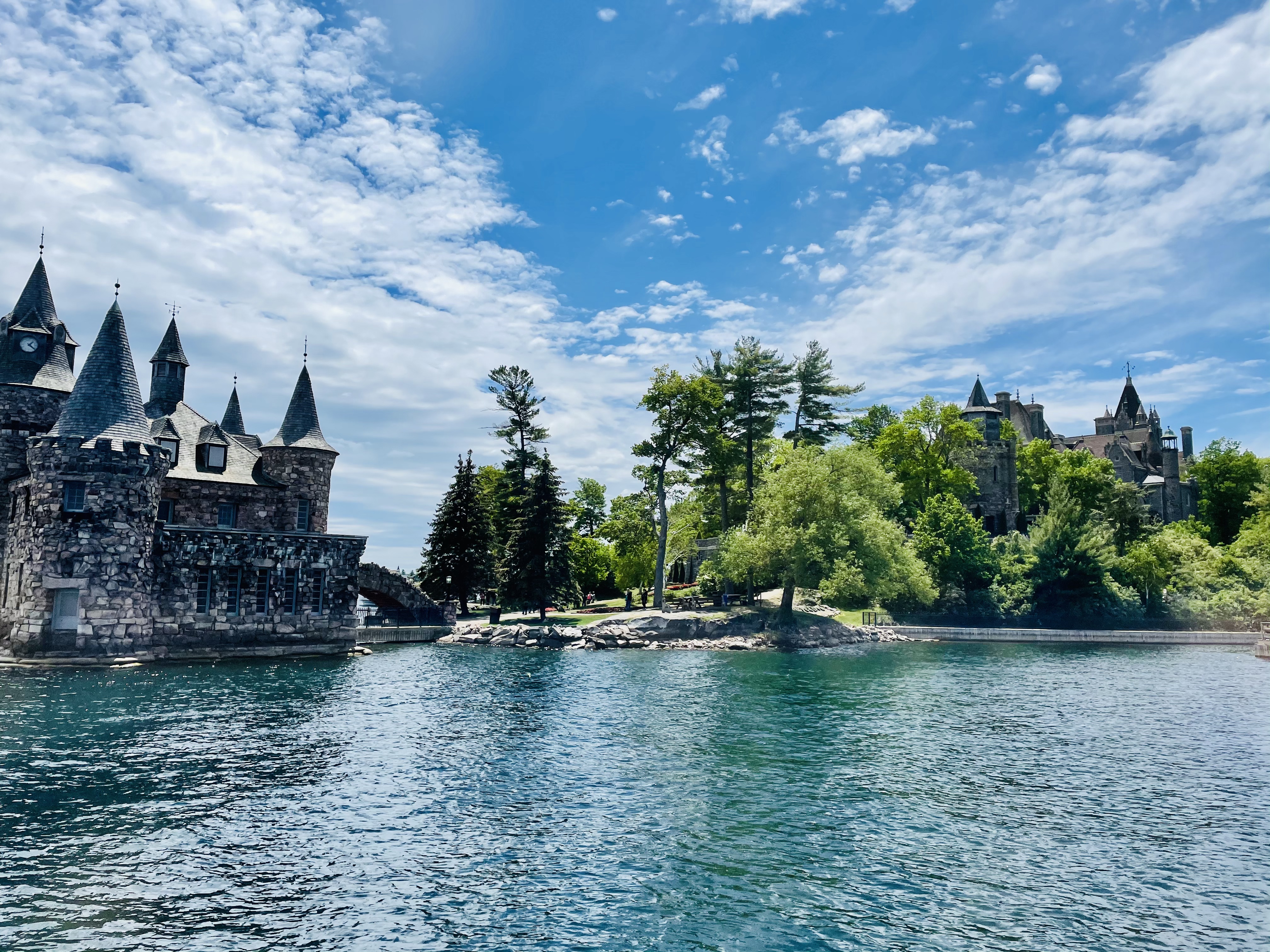
The Power House and Clock Tower. This is the most photographed spot on the property (and probably one of my favorite little nooks) and served as the home to the 2 generators that would have been used to power the home and island. It was designed to appear like a medieval tower rising directly from the water and features a beautiful bridge across the water for access. The clock tower was modeled and formed off of the chime tower at Westminster in London. 
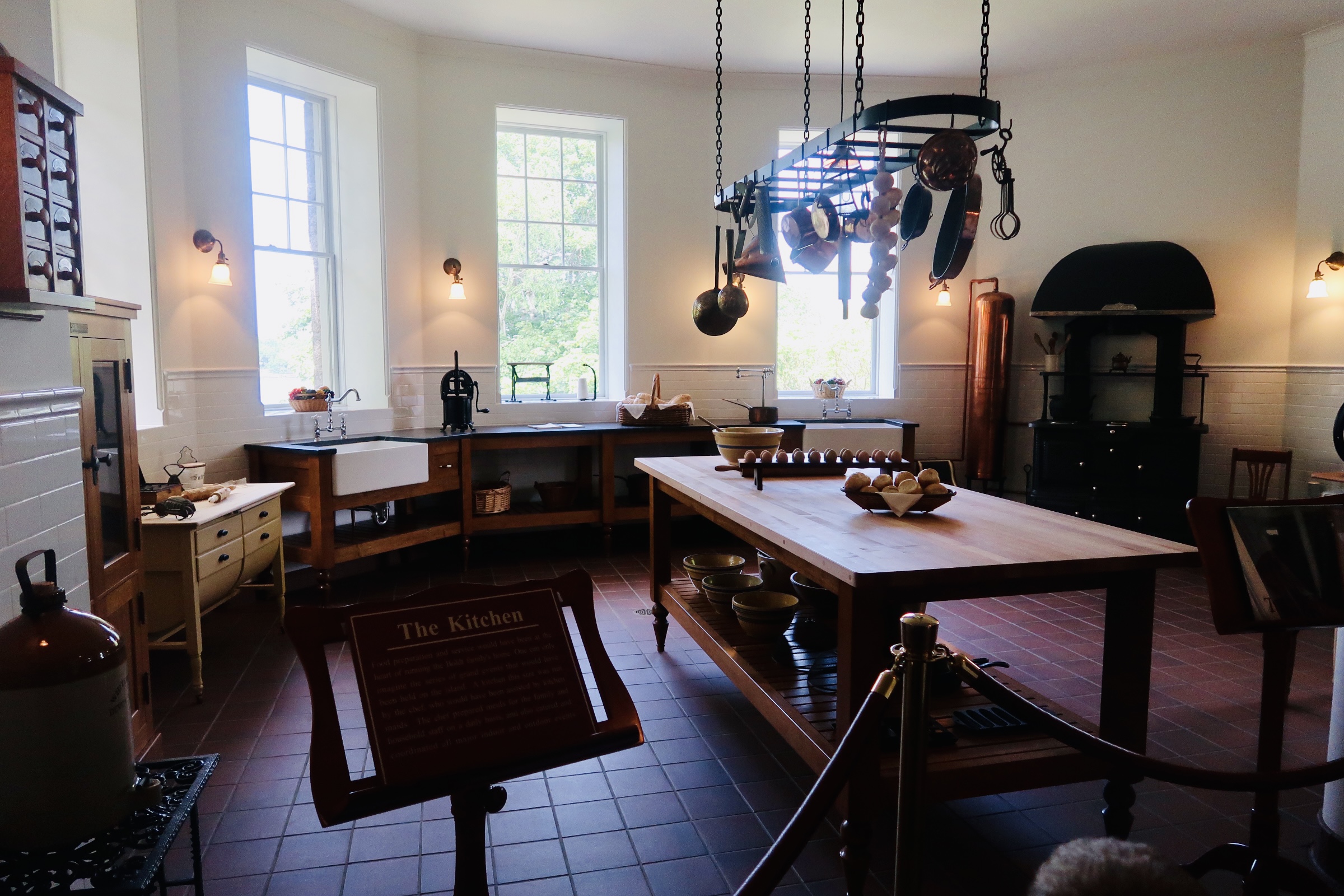
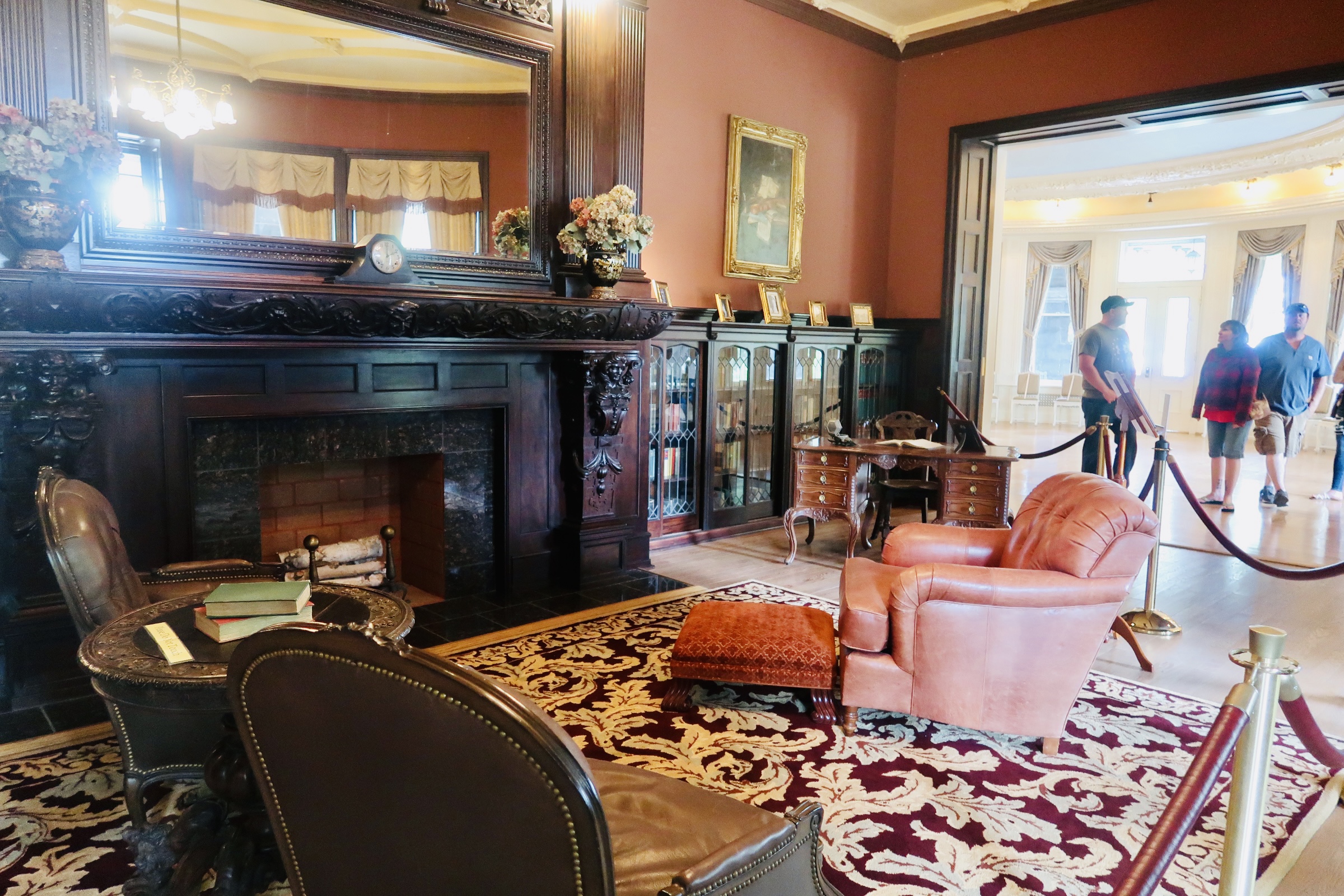
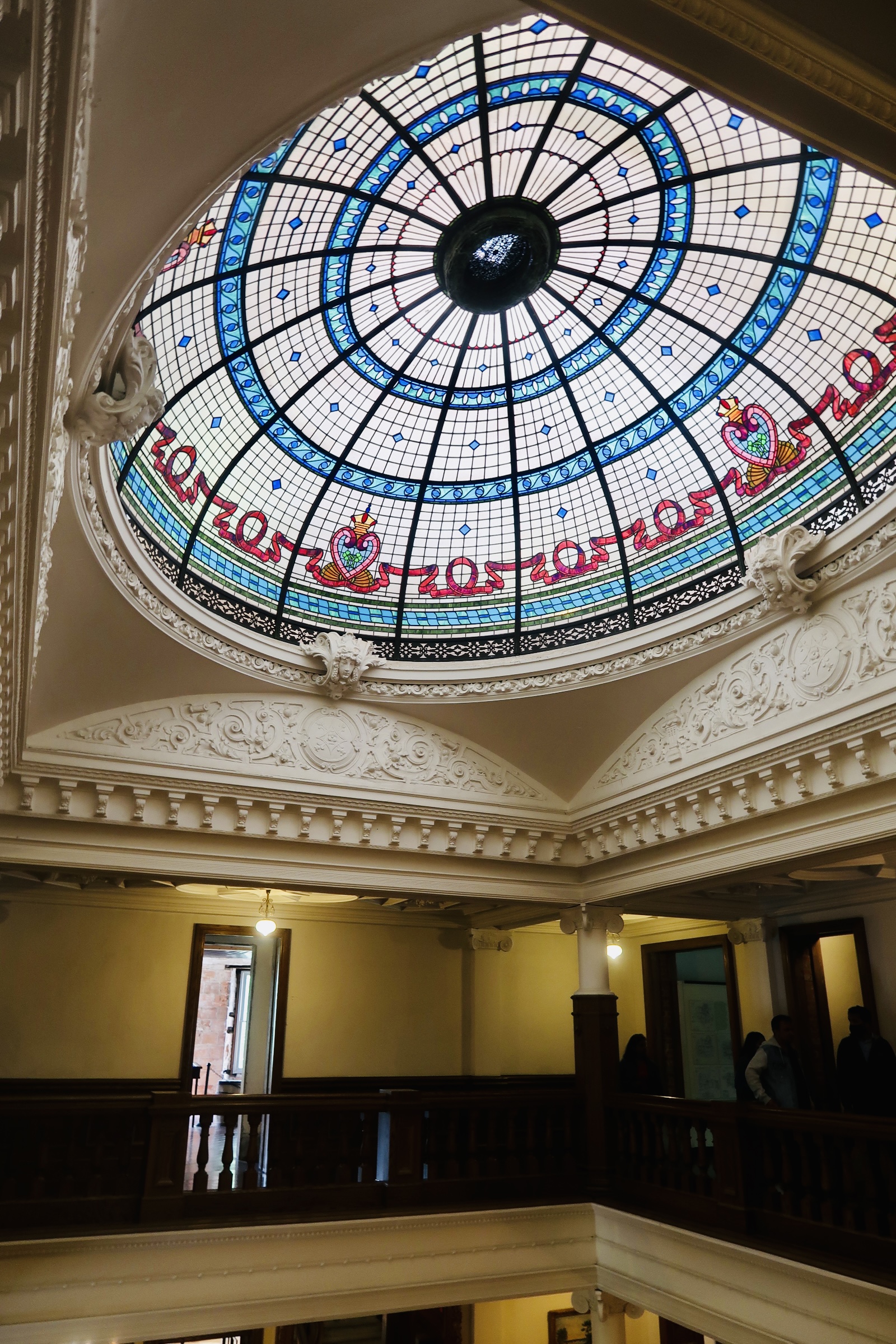
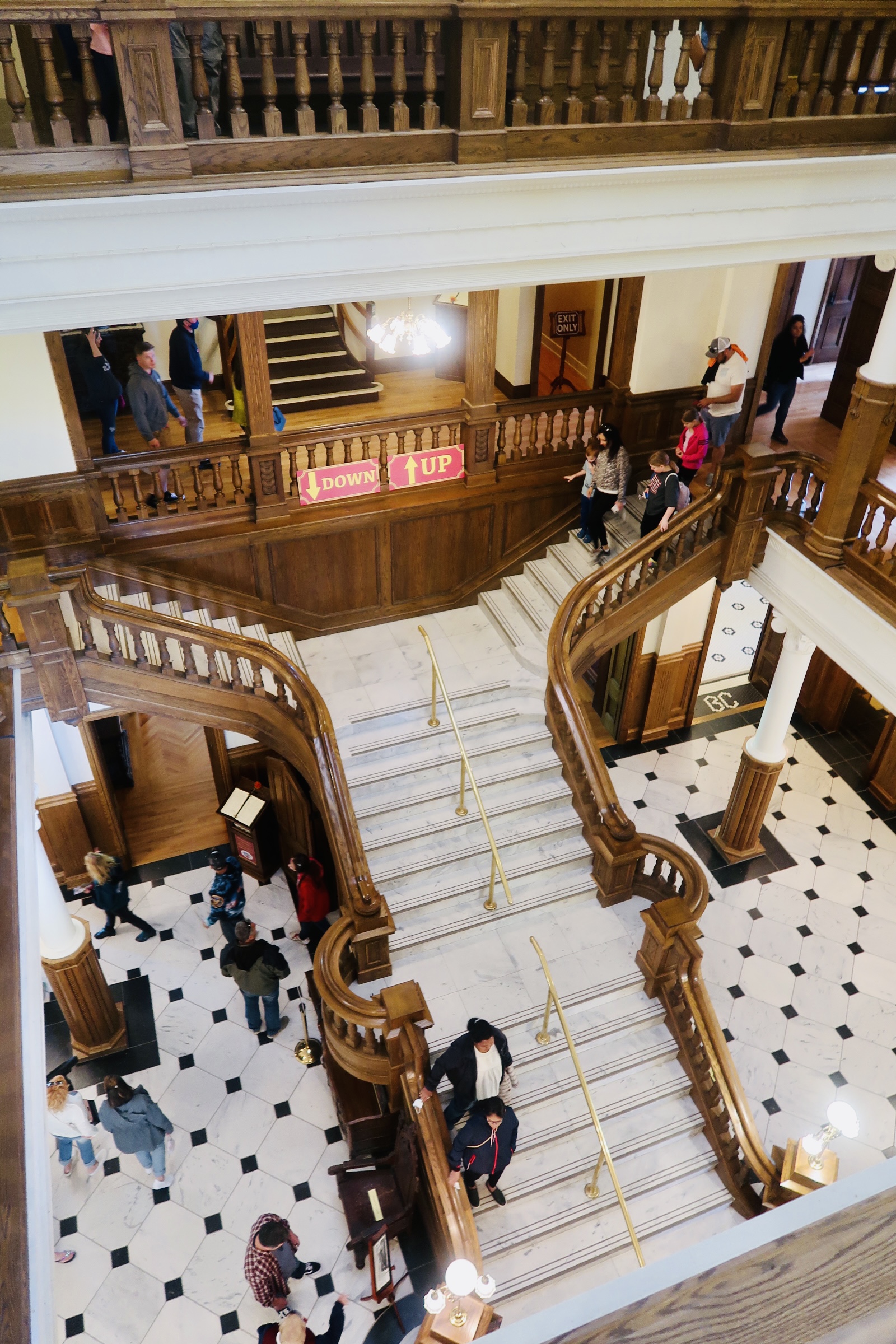
The interior of the home was where I really saw the more modern (or rather of the time) American inspiration. Yes, we feature the massive fireplaces and the brick/stonework that you could find in other European Castles, but the marble flooring, the grand staircase, and the overall look of the interior was much more of its time and place. You can see both the hotel and concern for guests in the home, as well as the fact that he wanted to make it homelike for his family. The library and kitchen were personal favorites of mine, but I also wouldn’t have minded one of the open windowed natural light bedrooms on the second floor (I believe it was intended to be Louise’s). 
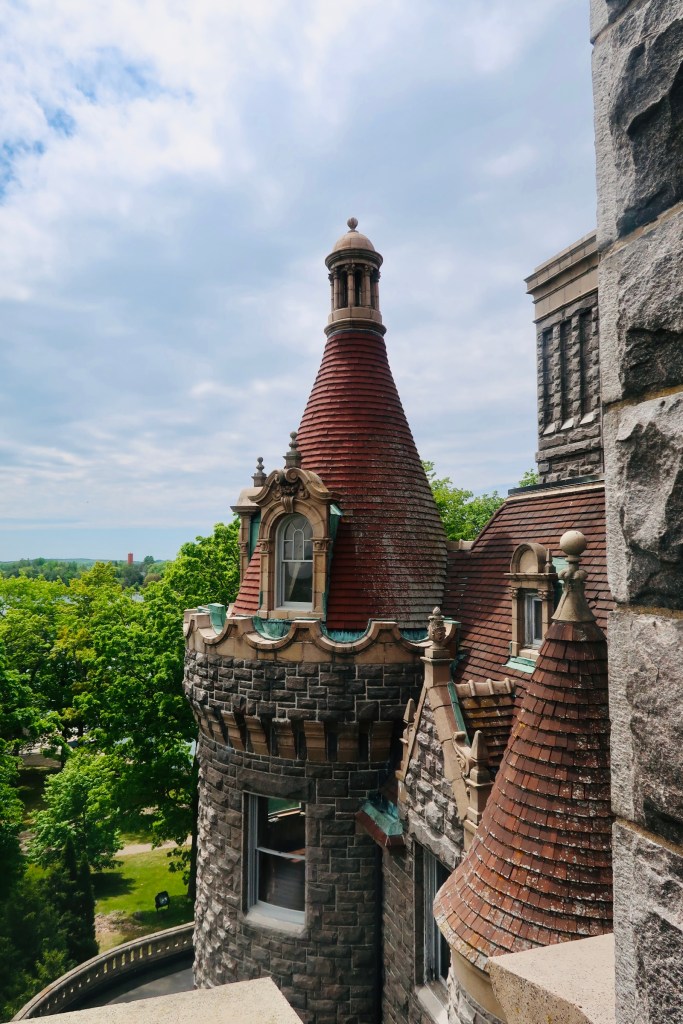
Of course, one cannot forget the Mother in Law suite that we learned about while on the boat. Allegedly the little house directly to the side of the main Island, accessible only by boat, was intended for George Boldt’s Mother-in-Law. There was a long funny story that was told to go along with this information, but I don’t know how factual any of it was, so I won’t share it here. It was funny though. 

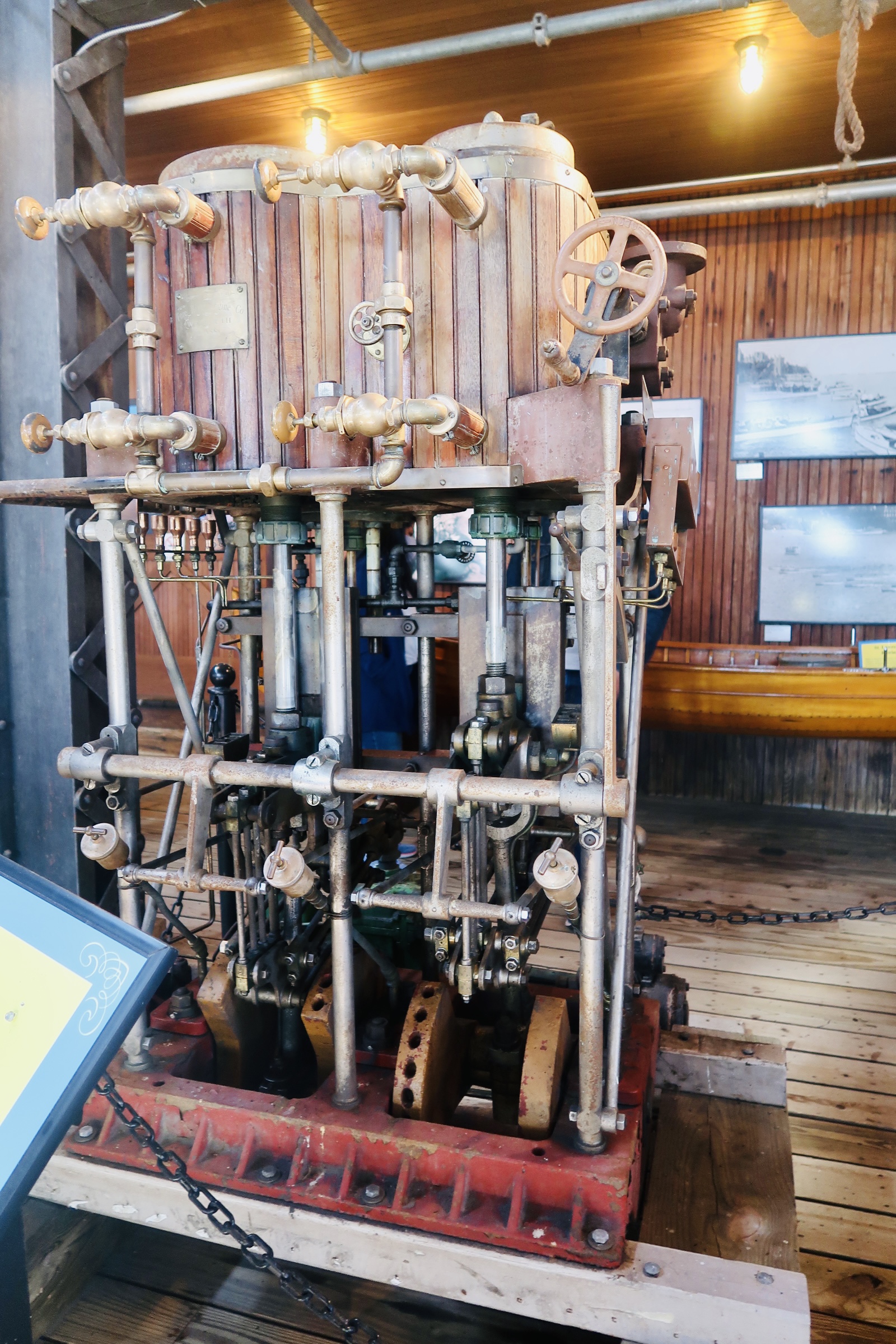
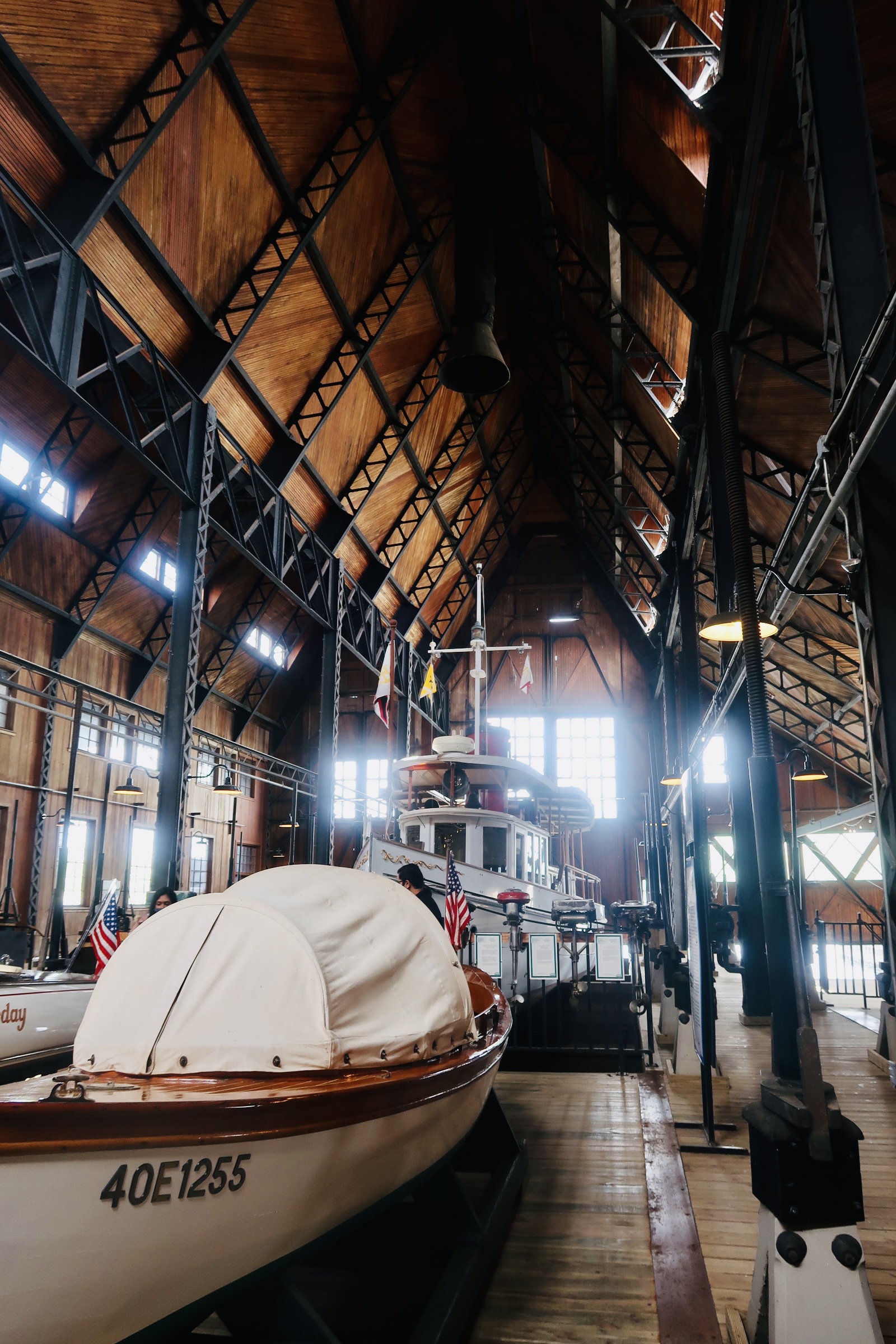
Finally, we stopped over to the Yacht House across the river from the main house. The Yacht house served as the lodge for the Boldt’s houseboat and various yachts and speed or race boats they owned. There is a free shuttle from Heart Island that takes you over and you can either purchase tickets at Boldt Castle (a combined ticket) OR at the boathouse. The Yacht house currently holds a collection of antique boats on display, as well as a steam engine, and a steam Yacht that is on loan, but would have been similar to what the Boldt’s would have owned. The building itself is listed on the National Register of Historic Places. 
Overall, we had such a beautiful day exploring the Islands, the Castle, and a little bit of Alexandria Bay. I can see this being a spot we come back to again. 
A Stone’s Throw – 2 Day Trips

Sackets Harbor

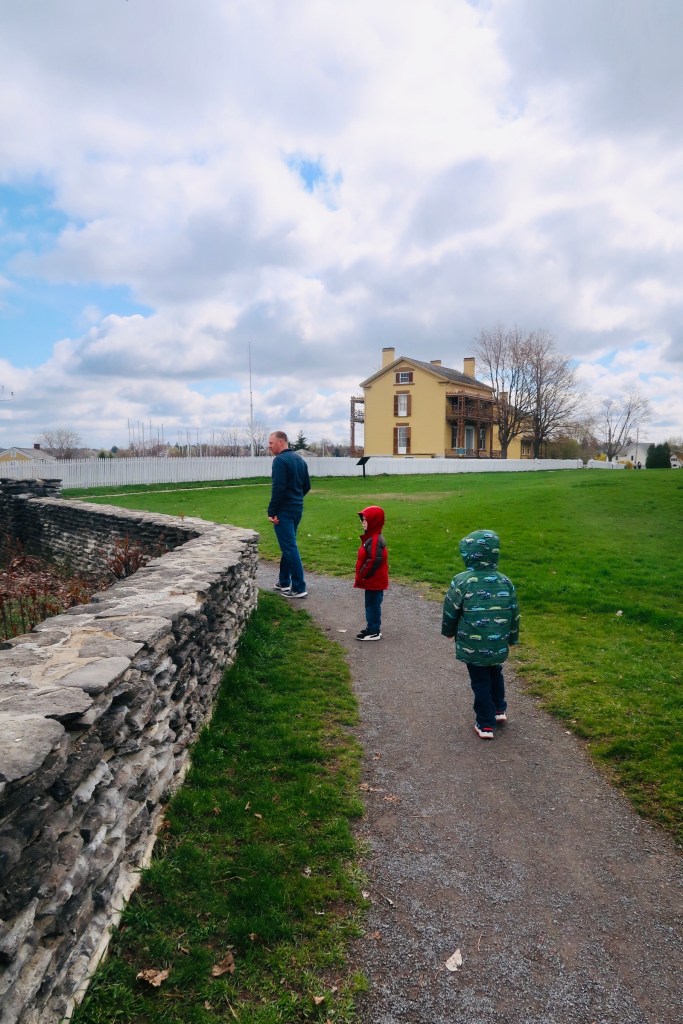
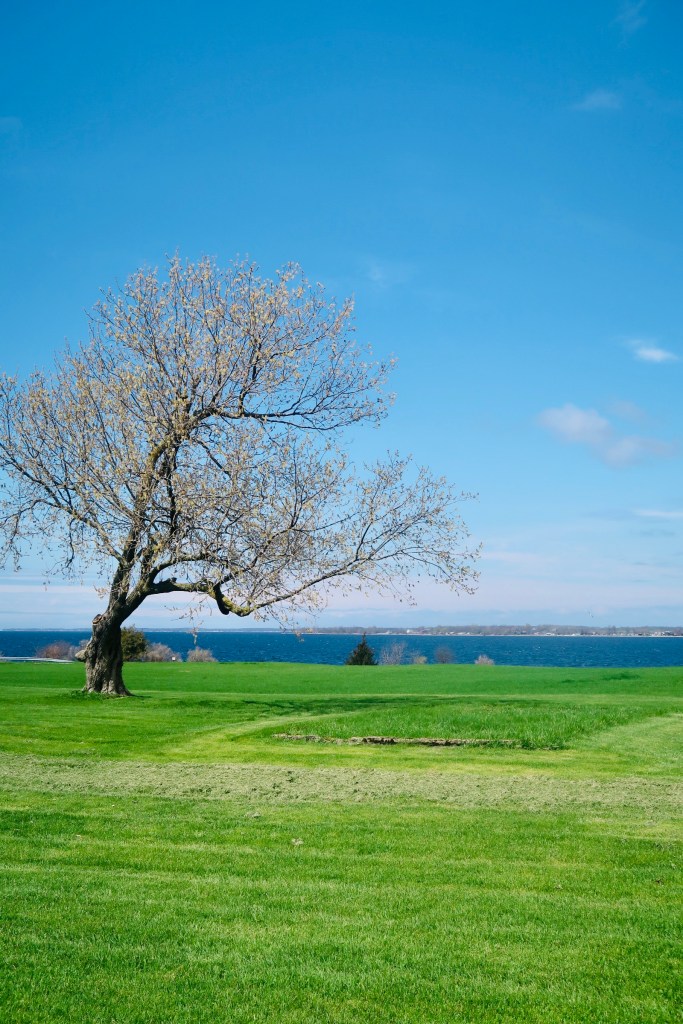
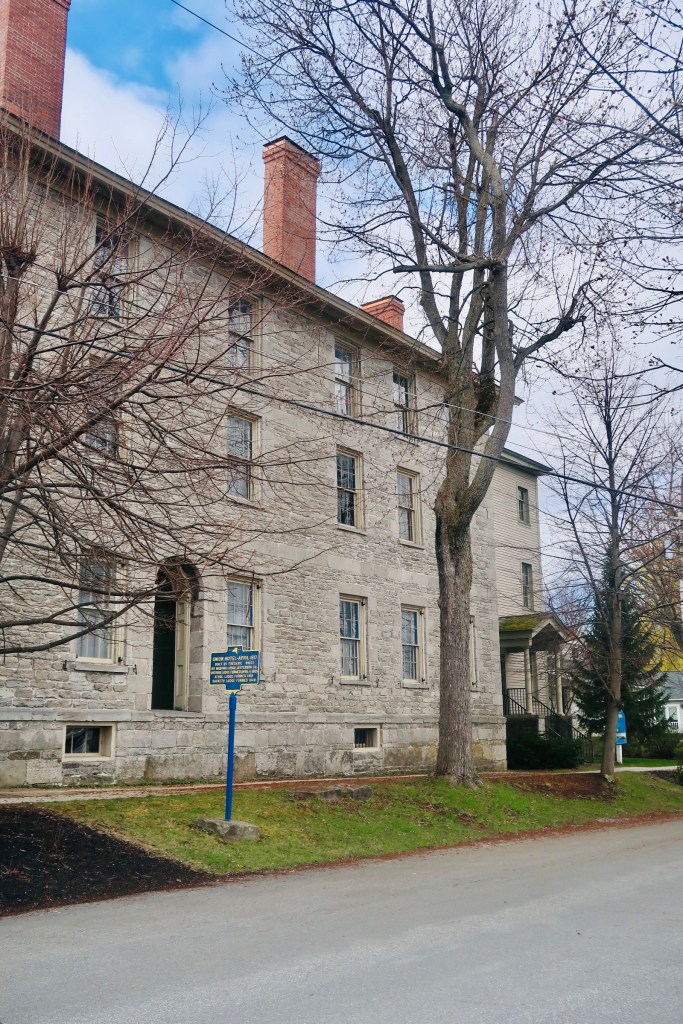
Sackets Harbor was our first day trip and our first little exploration after moving to upstate NY. It’s a small bay town that sits on an inlet of Lake Ontario. Founded in the early 1800’s, it’s been on the list of Historic Places since the 1980’s for its well-preserved buildings and historic district. Aside from views, it’s most known for its support during the War of 1812. The Navy used Sackets Harbor as a major shipyard and turned the quiet little town into a major city, the third largest populated in the state at the time. Shortly after the war a selection of local businessman helped support the building of the first US Steamboat, Ontario. 

In Sackets Harbor you are able to walk the battlefields from the War of 1812 that take you alongside the lake as well as through the town (depending on which route you take). You can, when open for the season, walk through the various buildings that talk about life at the time. You can also walk-through Main Street and feel that old small-town vibe, popping into various little shops or cafés as your day goes on. 

We walked through a portion of the battlefield (we have plans to go back and bike ride the entire path), walked through a bit of the harbor, and then along Main St. We stopped in to the Junk in you Trunk antique store, which was one of the coolest little spots we’ve stumbled upon. They had everything from modern to antique, local businesses, and nationally sourced small business. We also stopped in Tea Thyme; a small tea shop that made all my tea loving dreams come true. I picked up a couple samples to try out. Overall, I think it would be one of those spots where you can easily spend a Spring day.

Wellesley Island (Thousand Islands)

Original called Wells Island (renamed Wellesley to honor the 1st Duke of Wellington in 1815), Wellesley Island is located partially in Canada and partially in America. It is one of the largest of the Thousand Islands, it is home to not only a thriving community, but also two State Parks, a nature center, and several golf courses. 

We spent a day visiting a section of the Wellesley Island State Park. This State park in particular offers a life guarded beach, nature center (with the cutest little chipmunk), hiking, hunting, fishing, snow shoeing/cross country skiing, boating and a marina, as well as a variety of camping spots and options (everything from primitive to cabins to rv’s). We hiked from the Nature Center over to Eel Bay, through the Narrows, and an inter trail or two through the woods. It was seriously one of the prettiest spots, reminding me so much of Eibsee and Konigsee in Germany. We stopped for a snack on one of the rocky inlets, resting, watching wildlife, and enjoying the sun and water. 

We did also walk briefly through the nature center, where they have educational materials about the different wildlife located on and around the island, as well as a little chipmunk that was attacked by a dog. 

I can foresee this being one of those spots that we return again and again, hiking different trails and doing a little boating and camping. We drove around a little after our visit to look at the different amenities and were very impressed by the sheer variety of options. It’s an incredibly family friendly area, however someone without kids would enjoy it just as much. Both of these day trips are within a “stone’s throw” and make us very excited to be able to explore more or our area. We seem to have a good combination of historical small towns and nature trails, which, in all honesty, is our happy spot of living locations. We are very excited by all of the hike and outdoor activities that are around and, with the weather starting to shift, we are looking forward to getting some more h

Leaving Germany

January 17- I don’t really know how this post is going to go. I have no idea how to even begin, when to begin, how to process my feelings and then write them out, no ideas. So, I think I am going to treat it a bit like a diary of sorts. A dated registry of my feelings every so often (I’m thinking maybe two or three of these dated bits) as things happen or what not. I hope that this turns out ok and that it ends up being a good representation of this move. It could also end up being totally bad…if it is, then I’m sorry. My goal is to have a bit of a “part 1 on the road home-leaving” followed by a “part 2 on the road home-adjusting” that will be up in March. And if you’re reading this, then I’ve succeeded. Maybe. 

So, we are about a couple weeks out from our flight back to the US. Our home has been packed up, crated, and is slowly making its way to the shipping facility to be shipped back. It’s been a tense time between trying to corral two very curious, very active little boys, track what the movers are doing, handle schoolwork, and just keep sane. Getting your entire house packed up and emptied out slowly (this was done over two days) makes a move even more real. The second day we were all cooped up in our Master Bedroom and walking out to things being wrapped and then later to a completely empty living room was…a bit heartbreaking. 

I’ve spoken before about how much of a home and life we’ve made here in Germany. This is one of the first places in our moves that has felt…so much like home. We’ve made a little community for ourselves here and while we’ve known this move was coming since summer, this moving day kind of…came all too fast and all too final. Germany has taught us and given us so much. We’ve learned how to live a slower, less complicated life; how to be a bit more “go with the flow” (ok, ok, 2020 and Covid really taught us that); how to actual live life, rather than plod through it. We’ve seen history in ways we couldn’t imagine, been to places we’ve dreamed about, and we’ve been able to learn and grow as a family. We’ve made some incredible friends, a best friend who will forever be in my heart. I’ve found some new facets of myself and a little piece of our family’s heart will always remain here. 

And now, as we are about to start cleaning our house, making the last of our meals, and getting everything together for the last shipment of stuff consolidated, and really look at leaving, I’m getting that antsy anxious feeling. That feeling that says, “C’mon let’s just get on with it already”. The whole, just rip the Band-Aid off, feeling…except just break my heart instead. 

January 29 – Today was our move out day. Out of all the days that we have had to prepare and adjust to this move, today was the day that it decidedly felt real. We loaded the massive van we rented, did a final walk through ourselves (due to Covid) and then drove away. I had a tear or two (or a sob fest) as we drove the route towards base one final time. There was a finality to this. Previously, we could almost fool our brains into thinking that this wasn’t coming, wasn’t happening, that we were just doing things (don’t ask me to explain the psychology of it because I can’t). But driving away that final time, knowing we were done in that house, that we were properly leaving was hard. 

February 4 – Well, the road hasn’t been easy the past 48ish hours, but we are finally on a plane heading back to the USA. We were supposed to be on a plane 2 days ago, but due to circumstances beyond anyone’s control, the planes were not coming or going, and we ended up in a hotel without our luggage for that period of time with all of our fellow travelers. Thankfully everyone’s spirits were high, the hotel did an exceptional job housing us all at the last minute (and feeding us, keeping us informed as the changes kept coming, etc.), and on the last day we had a bit of free time between our arrival at the terminal and our security time, so we could go purchase some clothes or anything else we might have needed at that point (we did have a grocery a short walk away, so simple things were able to be purchased on the first day). 

Needless to say, having this experience of leaving, changed my reaction to finally boarding the plane and now, writing this while in flight. I thought that I would have some tears, some sadness at leaving a place that had come so close to home for me, but instead I was filled with excitement at the thought of actually boarding the plane and heading home. I had said my farewells to everything and everyone in preparation for our Tuesday flight, and now, after all the delays, I just wanted to go. 

So, not the way I had thought I would end this post, but here we are. I think that this was a way for me to be “ok” with leaving Germany. Maybe “Germany”/A Higher Being/The Universe/Whatever you want to call it thought I needed a little push to leave and this was how that happened. I’m still feeling a bit emotional at leaving, but mostly what I feel is relief to be leaving this limbo that we’ve been in.

Auf Wiedersehen für jetzt Deutschland.  Wir werden dich vermissen und die Erinnerungen und Freundschaften schätzen, die wir geschlossen haben.  Bis zum nächsten Mal.

COCHEM IMPERIAL CASTLE

We went to Cochem Imperial Castle as part of our time in Cochem on our Summer Holiday (COCHEM). This was the first place we went when we arrived in Cochem and while it may not be one of the top castles, it was so cool to explore its courtyards and rooms and hear its extensive history. 

The first written mention of Reichsburg Cochem is in 1051, however it is assumed that the castle was built around 1000. Built by Palatinate Count Ezzo, the castle was given to count Henry I in 1051 ( by Richeza, former Queen of Poland). In the 12th century King Konrad III took control of the region and castle, turning it into an imperial fiefdom. The castle then became an imperial castle. It was pawned to Austria to pay for a coronation (King Adolf of Nassau), but the debt was never able to be collected. During the Nine Years War, Louis XIV invaded Cochem and the Imperial Castle before destroying it by fire (and then an explosion which almost took out the entire town of Cochem). The ruined castle wasn’t touched again until it was purchased in 1868 by Louis Frederic Jacques Ravene  who rebuilt the castle into the Neo Gothic style you see today. The castle was transferred to Cochem’s ownership in 1978 and is now able to be toured by the general public. 

The best part of this castle is, hands down, the view. Situated high above the Moselle River, you are able to see Cochem, the river, the wineries, and much more. It is a stunning view from almost anywhere within the castle. The courtyard is incredible too, with a well in the center as it would have been in early times to collect rainwater. You are also able to see the round tower, which somehow survived the destruction by Louis XIV. It was a guard tower during the castle’s time and if you follow it around, you are able to see a large mosaic of St. Christopher. 

I know this wasn’t as long as my normal Castle Post, but this is a pretty straightforward castle. It is definitely one I recommend touring if you are in Cochem as it is really interesting to see how they would have lived in the castle, as well as all of the defensive measures that were set up. 

2020 – A Year in Review

2020. What a year. Where do I even begin?

We all know the big moments of 2020. The Pandemic. The Murders, Uprise, and Unrest (I really hate calling it that though- this is simple human rights). The Election. The unprecedented highs and lows that this year has brought have been like we haven’t seen. And, I don’t know about you, but I’m kind of tired of talking about them. I feel like so much of our lives this year have been focused so heavily on these few moments, which while are drastic and life altering, are not the entire story of our year. They have shaped the year, shaped our experiences, shaped how we cope and handle things, but there are also a million other smaller moments that are overlooked as well. So, I’m going to focus on those little moments. Sure, I’ll cover the things that I have learned about myself, the things that have been shaped by those bigger things, but there not the sole focus of this post. 

Gosh, so a year in review…

Well, our year started by getting blessed by the Pope at St. Peter’s square and then visiting the Great Roman Synagogue. A good start, no? We started our year off in Rome, which was a place that I hadn’t expected to fall in love with as much as I did (you can read my blog posts HERE, HERE, HERE, and HERE). If there is one place in our travels that I would say, “I thought I would love it, but I didn’t know how much I would love it”, Rome and Italy would be one of those places. The other? Switzerland. BUT, when it comes to Switzerland, I think that could be said for anyone. More on that in a minute. However, Rome wasn’t our only destination in the year 2020. We managed to squeeze in several trips this year due to a lessening of restrictions and safe traveling. We managed to hit a total of 5  additional countries, France (PARIS 1, PARIS 2, MONT SAINT MICHEL, NORMANDY), Luxembourg (HERE), Belgium (BRUSSELS), Switzerland (INTERLAKEN/LAUTERBRUNNEN), and Poland (KRAKOW, AUSCHWITZ). With Switzerland topping all of the lists. There really are no words on the beauty of that area of the world. It is beyond worth the trip and I think everyone should experience it. 

Our year abruptly changed/came to a halt when we got the surprising news that we would be moving back to the United States quite a bit sooner than expected…a whole year sooner! We initially got the news about mid-summer, then finalized the information late Autumn, and determined that our next spot would be in New York. I talked about it briefly in my announcement post (HERE) and I’m sure I will be talking about it once again here soon as our move date approaches. I’m still fairly heartbroken about moving back, but I am trying to stay positive and see the positives (because there are some positives to this).

Once again, our boys have grown…A LOT. I think this year, more than ever, I have keenly felt the passage of time and what things look like with these two proper, independent kids. Colton started preschool (and then promptly stopped…only to start up again virtually and then finally start the new school year in school…only to go back to virtual right before Christmas break hahaha). When I say he is a completely different child from last year, I mean he is a completely different child. His progress reports have shown drastic improvement as he surpasses the goals initially set out. He’s quite the little boy. Andrew has changed quite a bit too…gone is my little angelic little boy who would occasionally get a super serious contemplative expression. He’s been replaced with a temperamental 3-year-old that loves to exploit the rules and then give you a winning sly grin to get out of trouble. He keeps me on my toes between the troublemaker antics and the never-ending stomach room ha-ha. Together they either love or hate and they definitely make life interesting. 

But, watching how much they’ve changed, how much they’ve grown, has been bittersweet. As any parent will tell you, there is a certain sadness when your children start to grow. This year has definitely brought a level of independence for our boys (they can do SO MUCH MORE without us needing to help), which in so many ways has been nice, it has me savoring the moments where they want to snuggle up on the couch or need mommy to kiss something better. 

This year hasn’t been all sunshine and daisies and rainbows. There have been low points as well. We’ve faced a global pandemic that had us here in Germany stuck in our homes. At the height of Spring, we were not allowed to leave our homes save for grocery shopping (and this was JUST groceries, any stores that sold both groceries and home goods, you could only purchase groceries), doctors’ appointments, exercise (to be done by yourself), and for essential work. No seeing friends, seeing family, popping to wander through the aisles of a store, we were all stuck at home. While this had positives, there were also negatives. This was also a time when I learned a…not so pleasant tidbit about myself (which then led to one of my lows of the year).

I love my family. I’ve loved having extra time with my husband, for us all to be together and really soak up the extra minutes we get together. BUT I don’t like noise. I don’t like constant, loud, noise. I.E. The noise that comes when your entire rambunctious family is home with loads of energy and nothing really to do to kill off that energy (sometimes even our long walks did nothing to curb it). The kind of noise that you can’t really escape from, that only ends when everyone goes to bed and you are left alone, exhausted and trying to savor the quiet while also wanting to sleep. The kind of noise that just wears on you, day after day after day. The kind of noise that, as an introvert, I HAVE to break away from just to recharge. So, that was fun to learn…NOT. I spent quite a bit of quarantine trying to figure out how to adjust my own expectations and needs with what the situation presented, so that I could be the positive, more even keeled person. It was a time and while I don’t have the entire thing figured out (I’m mostly still dragging little moments out until I can get to the next one), I do feel a bit better than I did at the beginning. 

Another low point was the murder of George Floyd, Breonna Taylor, and so, so many others that all deserved to have their names spoken over and over and over again. Not to mention justice. This summer was eye opening in so many ways on a civil level and one that I am making sure I continue to learn and educate myself as we move away from the initial “push” of the unrest. There was also an alarming amount of anti-Semitism that popped up in 2020 as well, which is…scary. To be honest, the sheer level of hatred in our country, in our world, is scary. 

In all honesty, I am glad to wave 2020 farewell. It’s been a year of highs and lows and draining. While I don’t think we are going to wake up in 2021 and everything will magically be good, I am kind of looking forward to a new year. To another fresh start. 

Krakow, Poland – A Long Weekend

I’ve spoken about our visit to Auschwitz (HERE), but we spent a good amount of that weekend checking out Krakow, Poland. A sprawling city development that still has the European Charm that we’ve come to expect (castle, legends, cobblestones), we found our time in Krakow (a total of 36 hours tops) to be the perfect amount of time to see what we wanted. Krakow is the second largest city in Poland and, dating back to the 7th century, one of the oldest in the country. In fact, Krakow’s Old Town was declared the first UNESCO World Heritage Site. 

The city began with a small settlement on Wawel Hill. Legend says that Krakus built the settlement above a cave that was home to a dragon, Smok Wawelski. During the 10th century is when Krakow saw it’s first significant growth. The castle was constructed, churches and a basilica, as well as a flourishing trade center. That first city was then sacked and burned (by the Mongolians), however rebuilt identically in the following years. During the 14th century the city started to head into a Golden Age, with the construction of a university. That Golden Age continued through the 15th and 16th centuries. This was when the Jewish Quarter was created, and the Old Synagogue was built. Things came to an end though in 1572 when the last ruler, King Sigismund II passed without any children. His death was followed by many many changes in leadership as various other countries ruled. Finally, an outbreak of Bubonic Plague and a Swedish Invasion spelled the end of their Golden Age and the end of the ruling houses residence in Krakow. Things didn’t really get any better in Krakow as it continued to almost bounce between various countries rule until 1866 when Krakow started to see a degree of political freedom and, once again, became a national symbol of Poland. 

When Poland was invaded by Nazi Germany, Krakow became the capital of the German General Government. They saw Krakow as a vision of Krakow becoming completely “Germanized”. Krakow had a very large communities of Jews living in its city at this point (statistics say over 5% of the entire population of the Krakow District was Jewish). Prior to the invasion and subsequent creation of the Ghetto (and then camps) the Jews were encouraged to flee the city. Things started to go sour shortly after the invasion with the creation of the “Judenrate” or Jewish Councils. These were run by Jewish citizens for the express purpose of carrying out Nazi orders, such as tax collection, forced labor, and citizen registration. Around 4 months later the Jewish Ghetto was created in the Podgorze District. The ghetto was only in existence for 2 years, with residents really only living there for 15 months (the majority of deportations were completed by June 1942- though the final Krakow Jew deportations were until September 1943-, after the ghetto initially being “designated” in March 1941). Many people know the story of Oskar Schindler, his enamel factory, and his work to save as many as he could.     

Aside from the destruction of the German occupation and the immeasurable loss of life, Krakow remained undamaged as a whole throughout the second world war. Once the war ended the city was turned from a university to industrial with the new government. 

One final note, the Pope John Paul II was Karol Wojtyla, archbishop of Krakow. He was elevated to papacy in 1978 and was the first non-Italian pope in 455 years. The same year of his election, Krakow was officially approved on the UNESCO World Heritage List. 

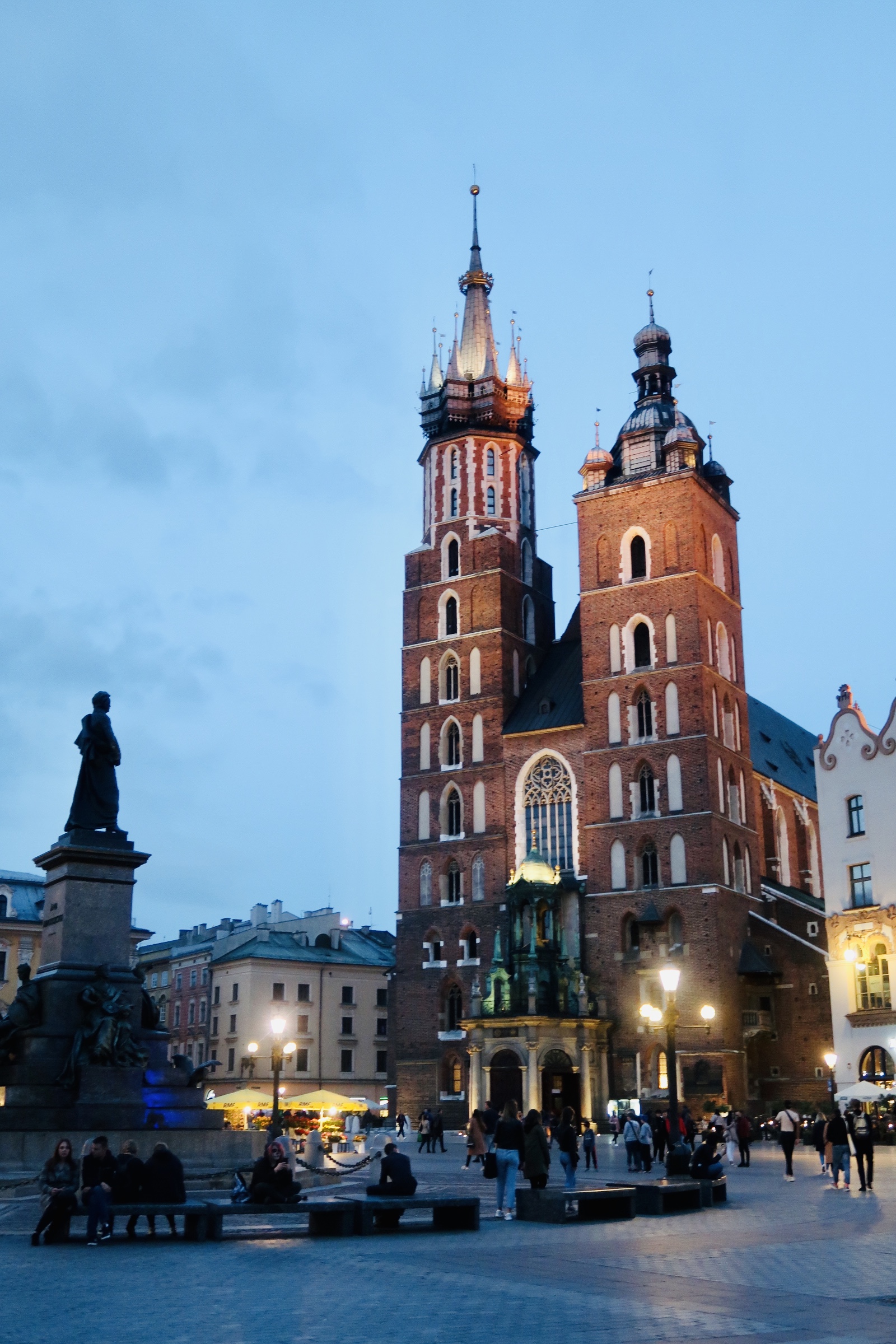
So, we actually started our trip in the early evening with a dinner in the main Old Town Square. We were able to watch the sunset on the Town Hall Tower as well as see the what the city is like in the evening. We stayed just outside of the Old Town (we actually walked our entire time in the city- no public transport, that’s how close we were to most everything).


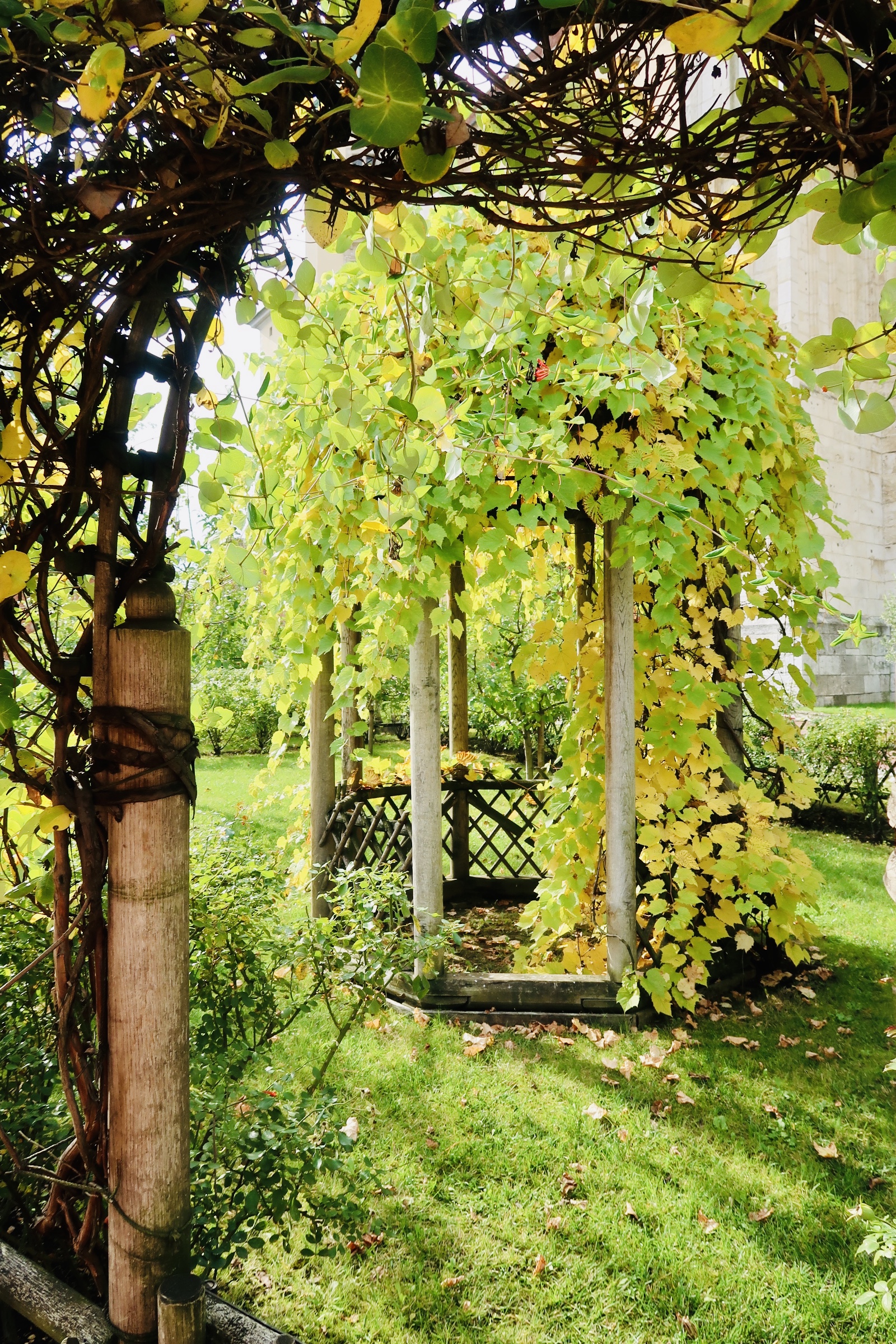
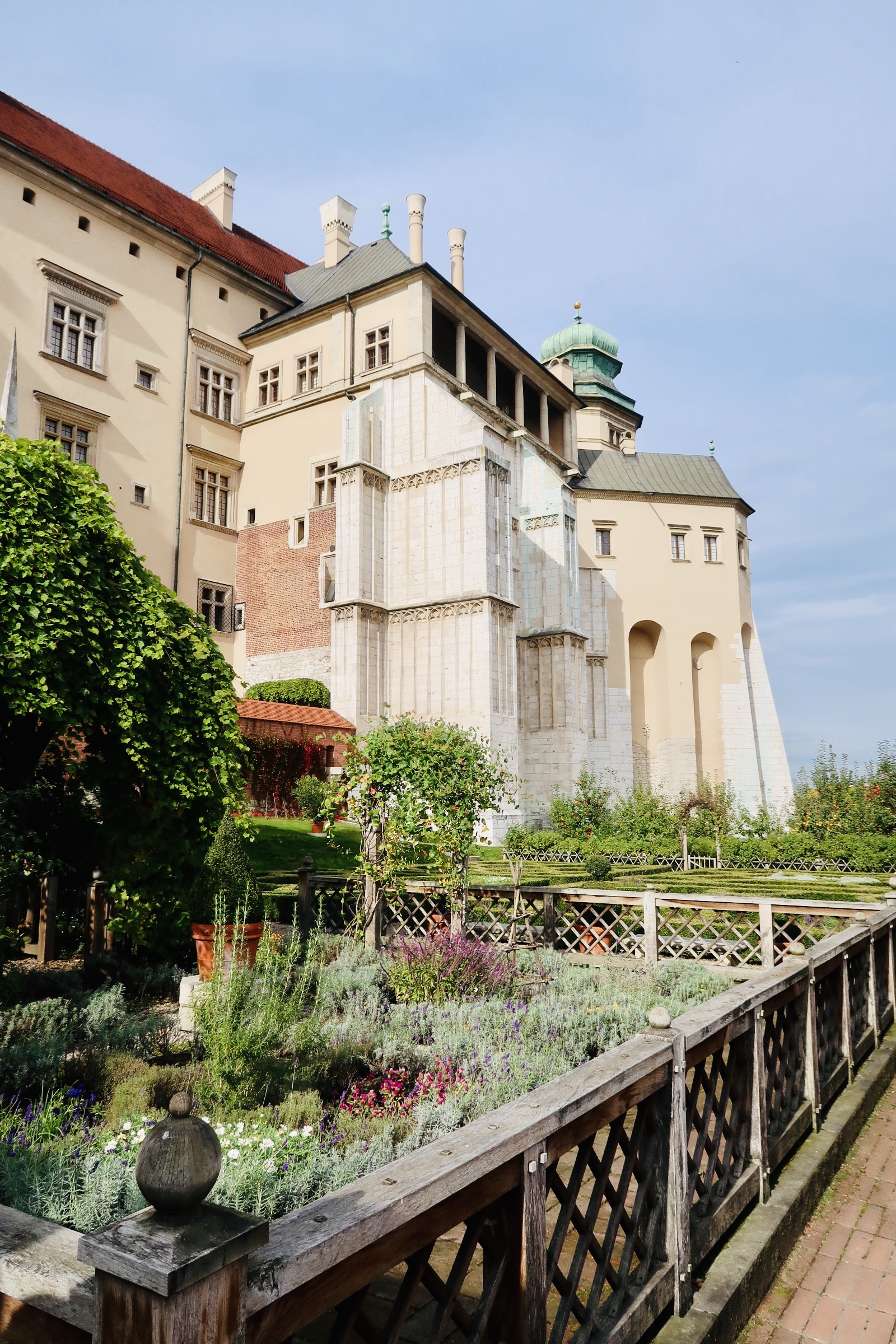
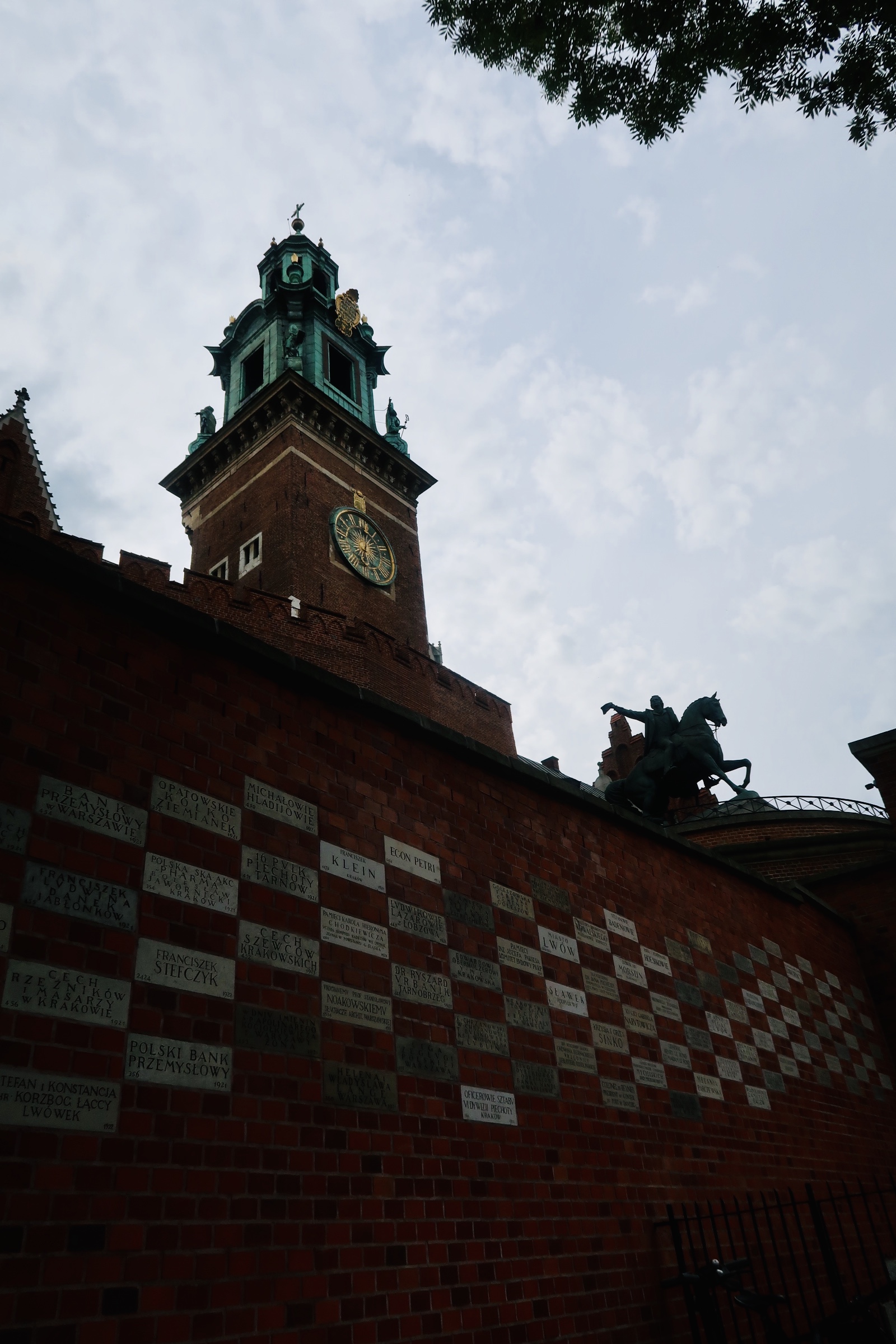
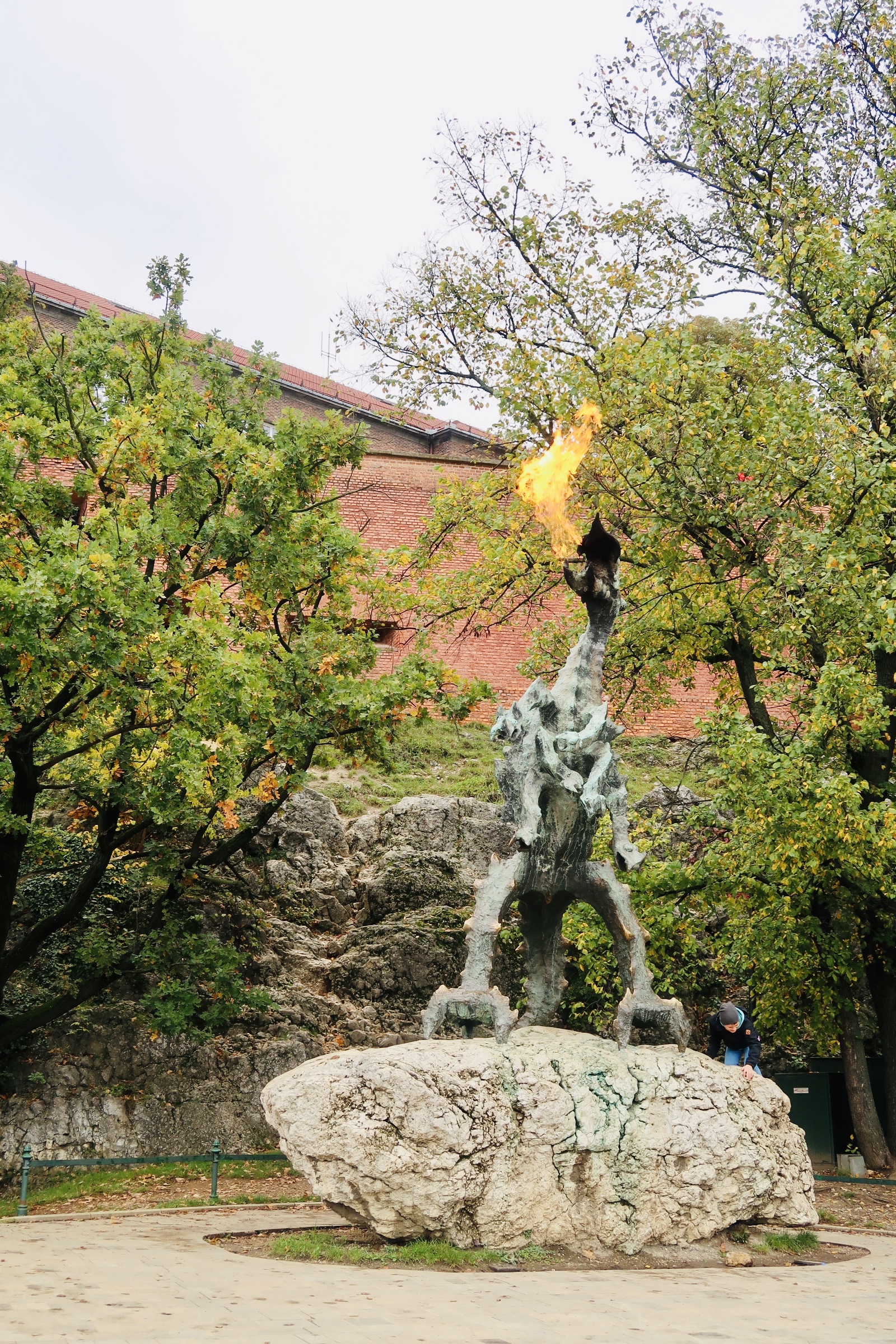
Our only full day in the city we started off at Wawel’s Castle and Wawel Hill. The castle was commissioned by King Casimir III the Great, but the current castle dates back to the 14th century. I’ve already touched on the legend of the Wawel Dragon, but it’s important to note just how deep that legend runs. Legend says that the dragon terrorized residents before being slayed by Krakus, a polish prince who then went on to found the city of Krakow and built the first royal residence on the hill above the dragon’s lair. These days, if you walk by the river you will see a metal statue of the dragon that is situated in front of the “den” and it shoots fire from time to time. The castle complex as it stands today consists of galleries, collections, and gardens. You are able to pick and choose which exhibitions you would like to visit on the castle grounds, as well as the option to visit the Cathedral once on the property. We chose the Private Apartments, Royal Chambers, the gardens, and then a walk into the Cathedral. 

I think one of the coolest bits on the interior was what was known as “Wawel’s Heads”. I don’t have any pictures (as pictures inside the castle were not allowed). In the throne room if you looked up at the ceiling there were a series of Heads that were carved out of the ceiling. In its height, there were a total of 194 heads looking down from the ceiling, overlooking the Polish King as he conducted business. Now there are only about 30 of the original heads left hanging. They depicted citizens from every walk of life that lived in the 16th century. There aren’t any true explanations as to why this was done, or how the people were selected, but it was a really interesting decoration to see. 

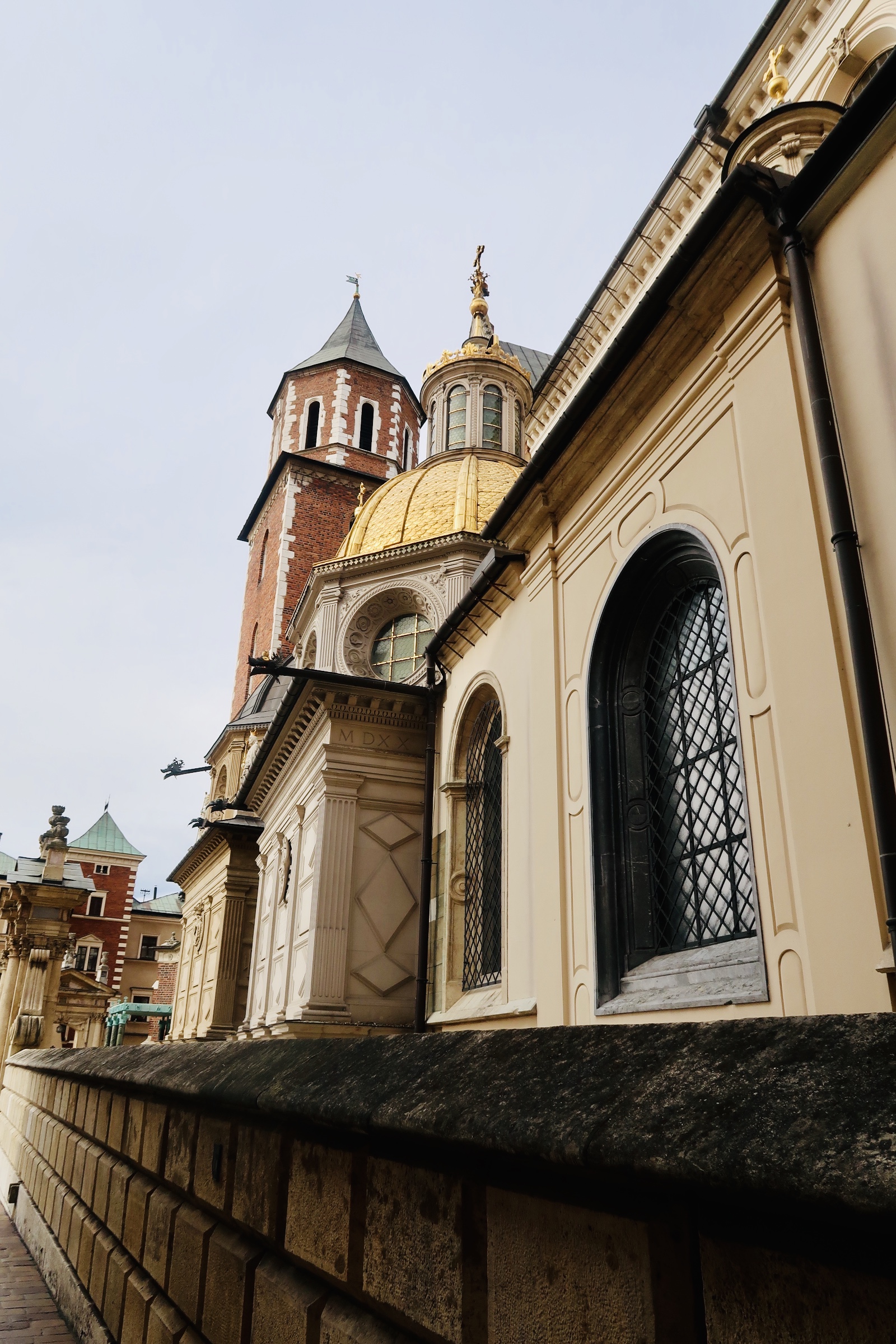
The final stop at the Castle is to stop in and see the Cathedral. The Cathedral is formally known as the Royal Arch cathedral Basilica of Saints Stanislaus and Wenceslaus on the Wawel Hill. This Roman Catholic church and cathedral is the home of the Archdiocese of Krakow and serves as the coronation site of the monarchy. The current standing cathedral is the third to have been built after the first (11th century) and second (12thcentury) were both destroyed by fire. Construction on the current cathedral began in the 14th century and is a true site to behold. Seemingly never ending with its various chapels, and little quiet spots. This cathedral is also the main burial site for the monarchy as well as national heroes, military members (generals), and other individuals important to Polish history (including two poets!). You are able to walk along the crypt to see the all the various tombs (although there are several on the main floor of the church as well). 

From visiting the castle, we headed back towards the main old town, wandering through cobblestoned side streets, stopping in to purchase some Polish pottery, lunch on the opposite side of the square as our dinner the night before, and then a walk through the Krakow Cloth Hall. 

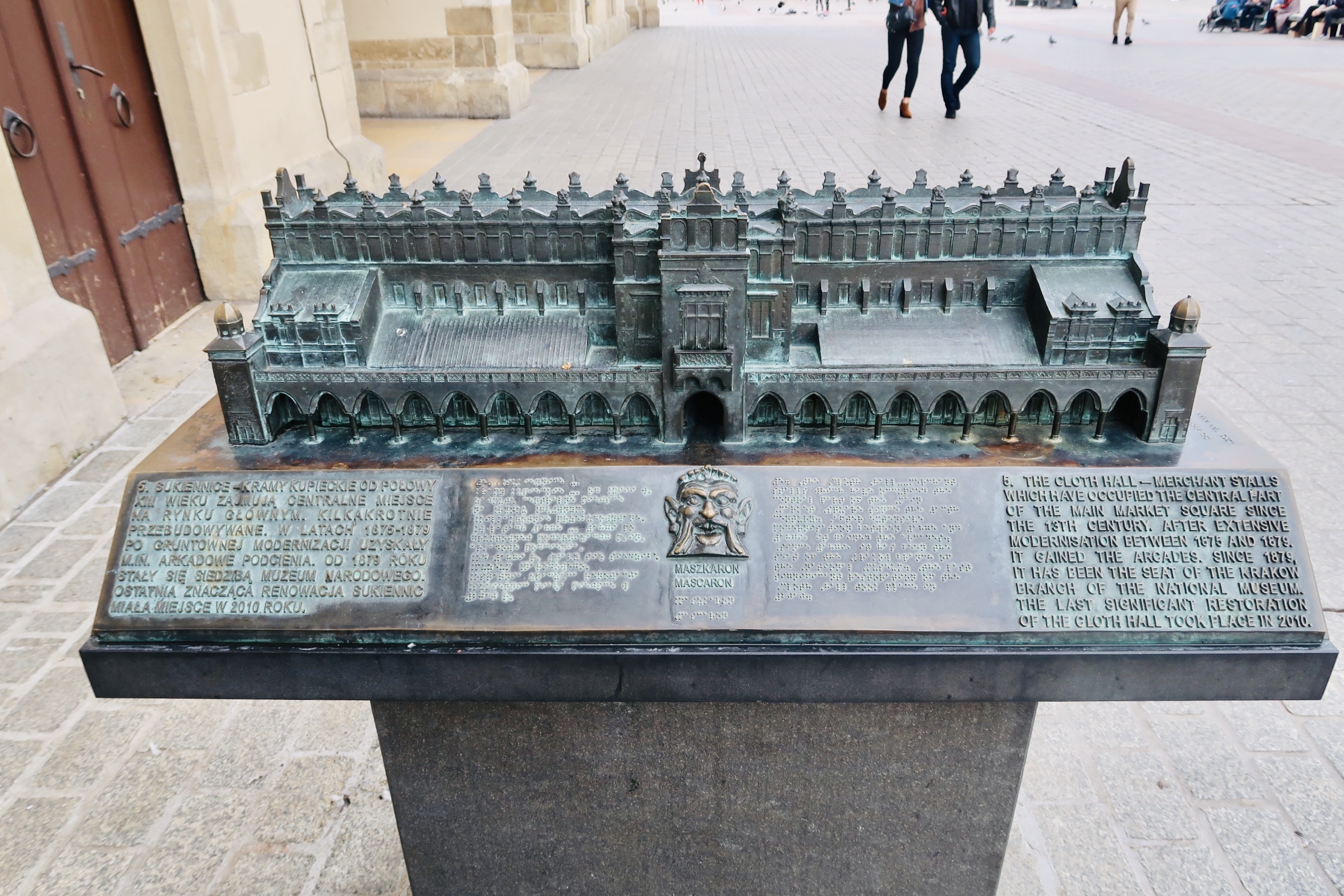
The Krakow Cloth Hall is one of the most recognizable features of Krakow and Krakow Old Town. Situated at the center of the Main Market Square, it dates back to the Polish Renaissance (that Golden Age in the 15th& 16th centuries). The interior of the hall contains shopping stalls which once held the bulk of the textile industry in Krakow. Buyers and Sellers would flock to the covered shopping center. It now not only serves as a shopping market, but also has an Upper floor museum that contains the largest collection of Polish painting and sculpture, and hosts monarchs and politicians from other countries (Prince Charles and Emperor Akihito visited in 2002). We did a little shopping within the hall and enjoyed seeing the variety of items offered, from tourist tchotchkes to hand crafted designs.

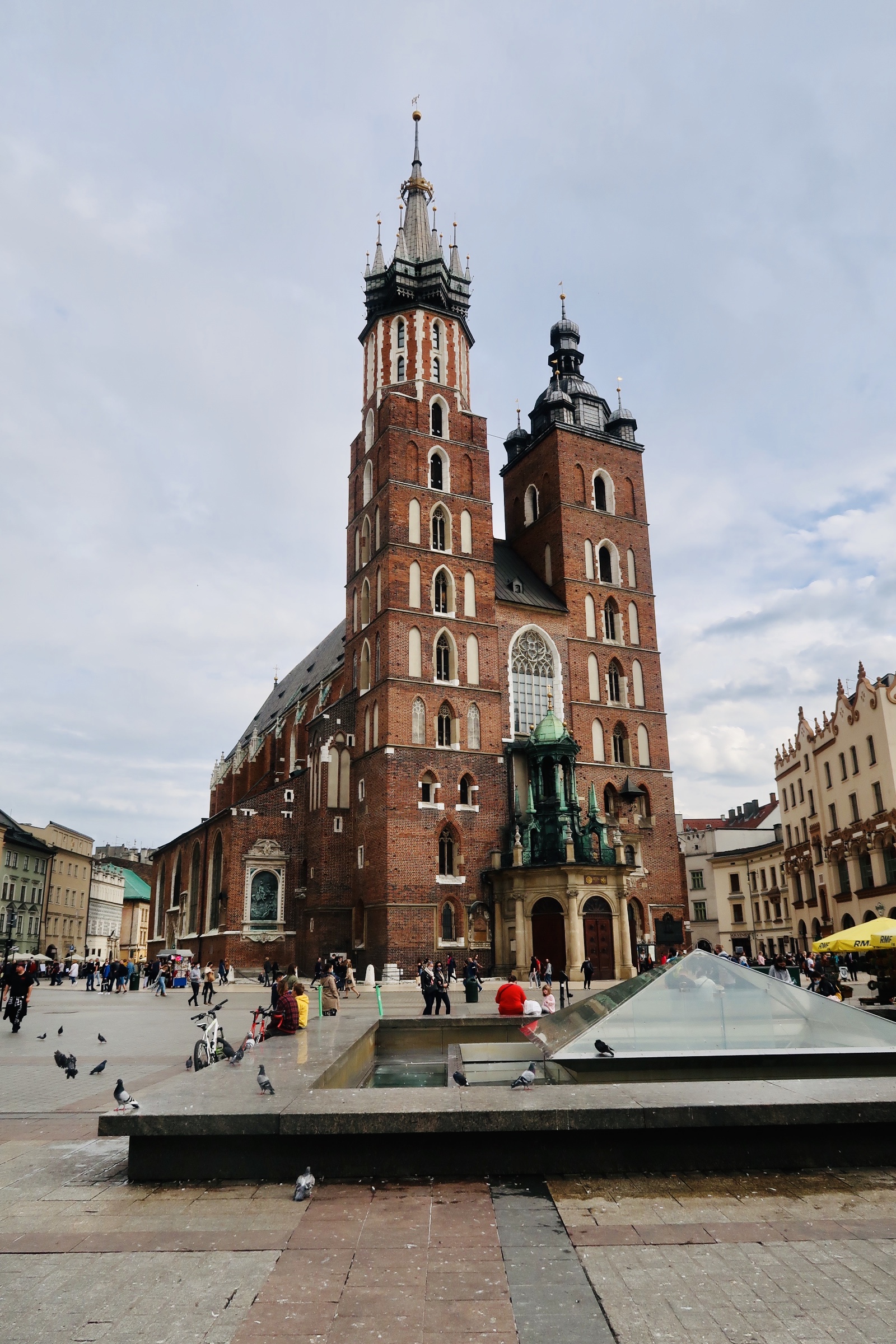
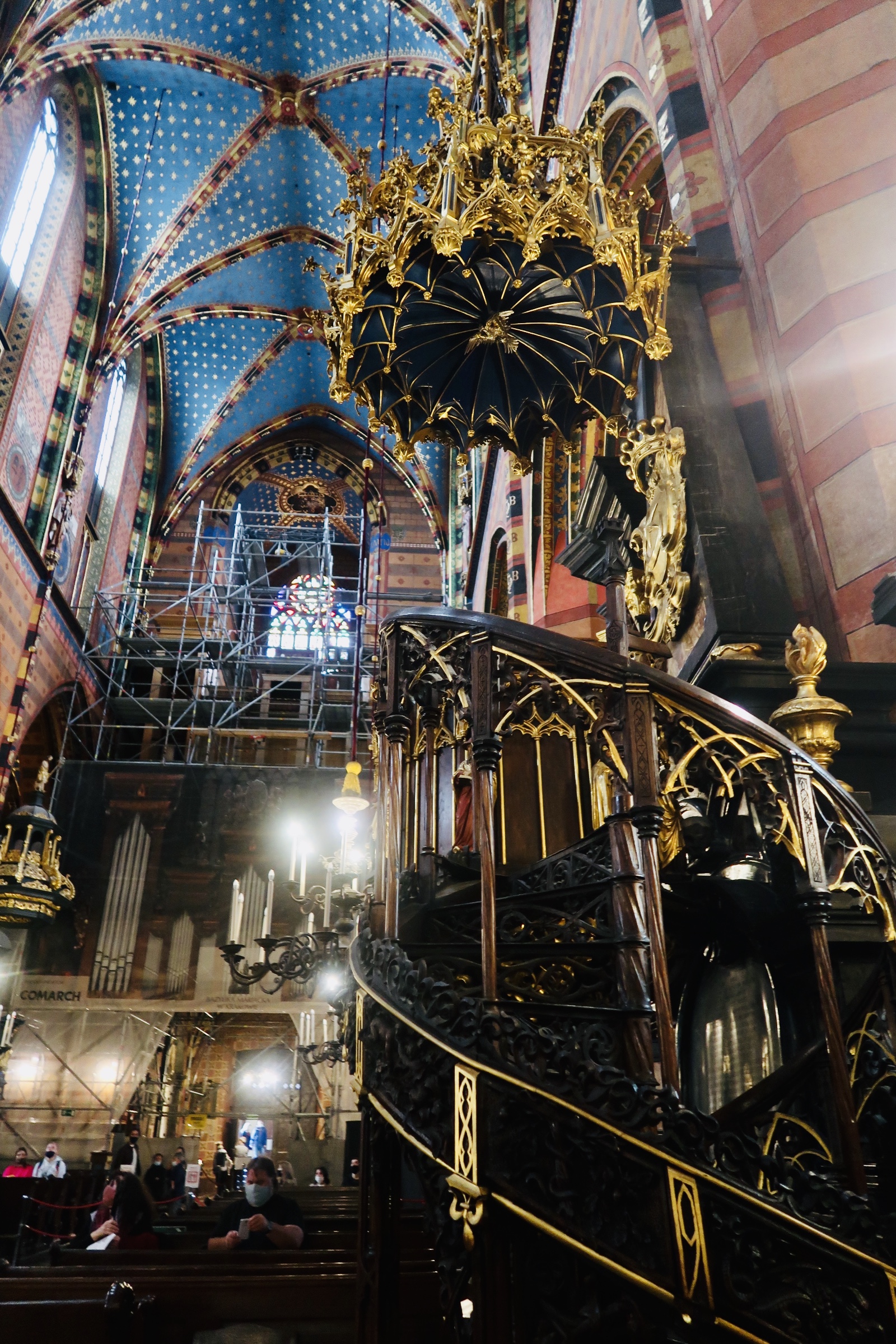
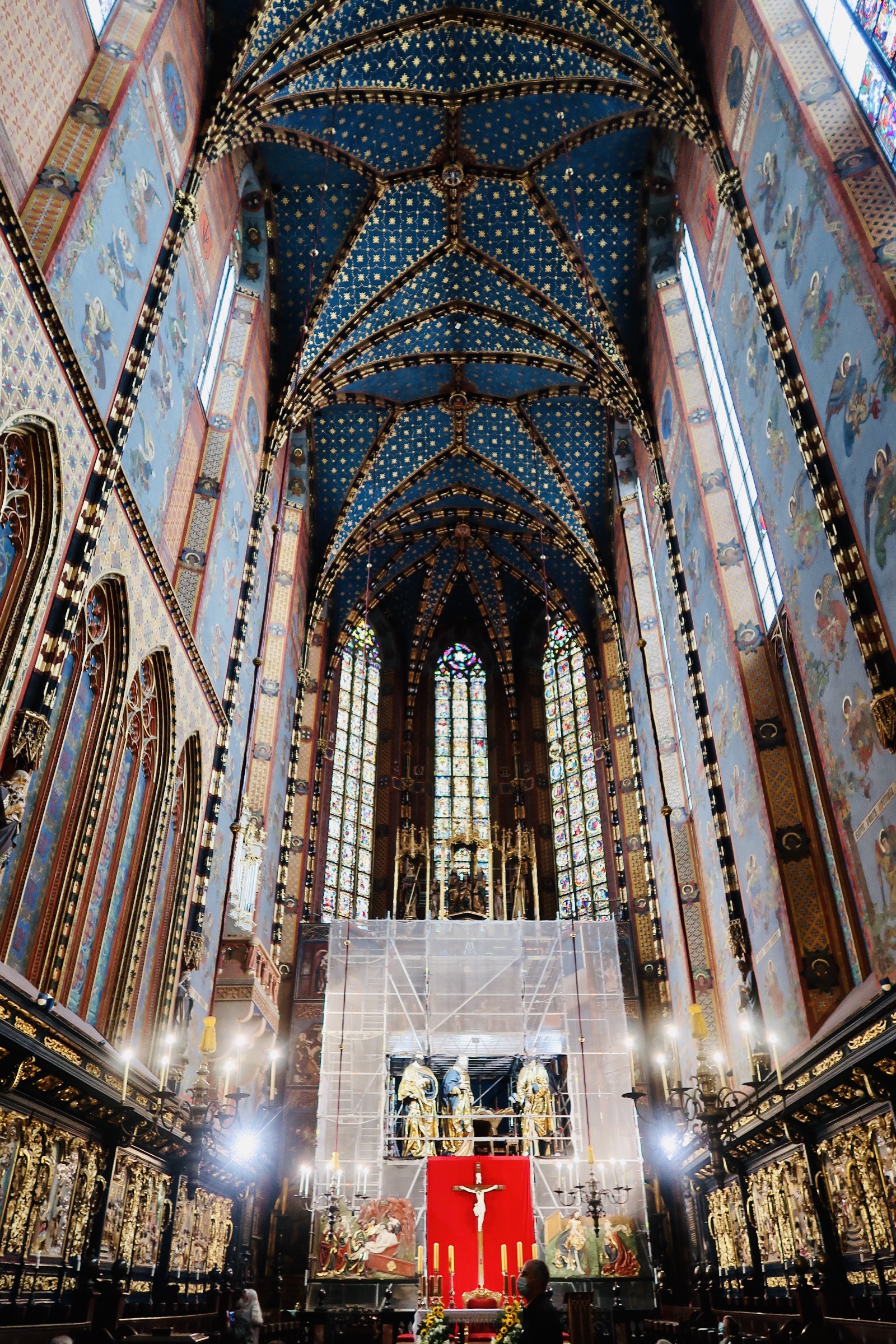
We also stopped in to see Saint Mary’s Basilica. With the foundations dating back to the 13th century (completion in the 14th century), this church is a great look into the Gothic Architecture of Poland. The current standing church is the third one, as the original (from the 1200’s) was destroyed by the Mongolians, and then the second was rebuilt under Casimir III’s rule. The interior is, one again, incredible. There are two main “focal” points of the Basilica. The first is the interior altarpiece. This was undergoing some restoration work, so we weren’t able to get a good view, but what we did see was stunning. The second point is the trumpeter of the basilica. A trumpet signal (the Hejnal Mariacki) is given at the top of every hour from the top of the taller tower. An interesting note while you listen- the song seems to end rather abruptly; this is to commemorate the trumpeter who used the signal to warn the city of the Mongolian Attack. During the signal he was shot in the throat. The signal is rumored to have been initially used to signify the open and close of the city gates (this was done across Europe), but there is no concrete evidence as to where this specific signal originated. 

We started off our Sunday morning with a visit to Auschwitz I and Auschwitz II-Birkenau. I’ve done a separate, dedicated blog post on this concentration camp, which you can find here. 

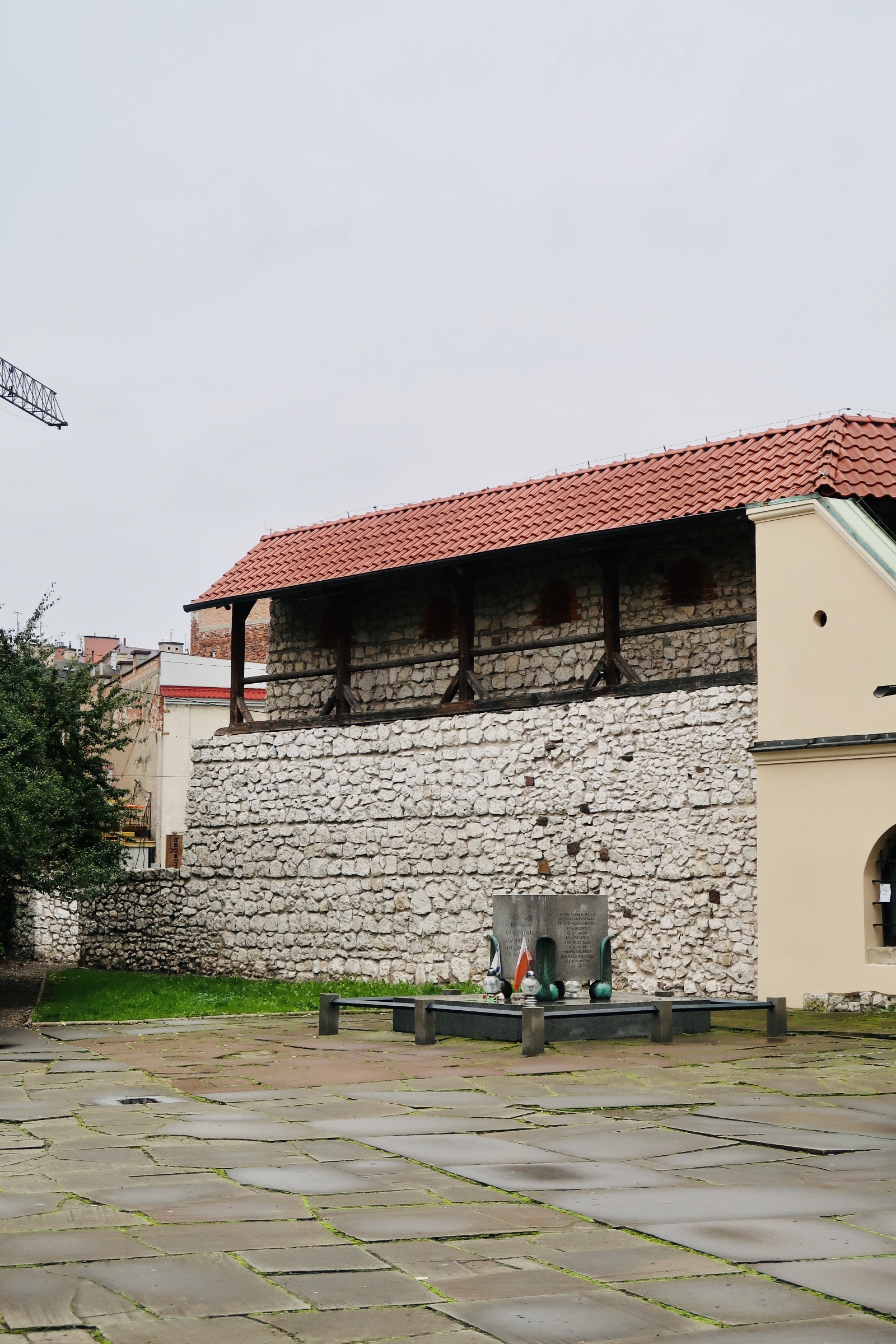
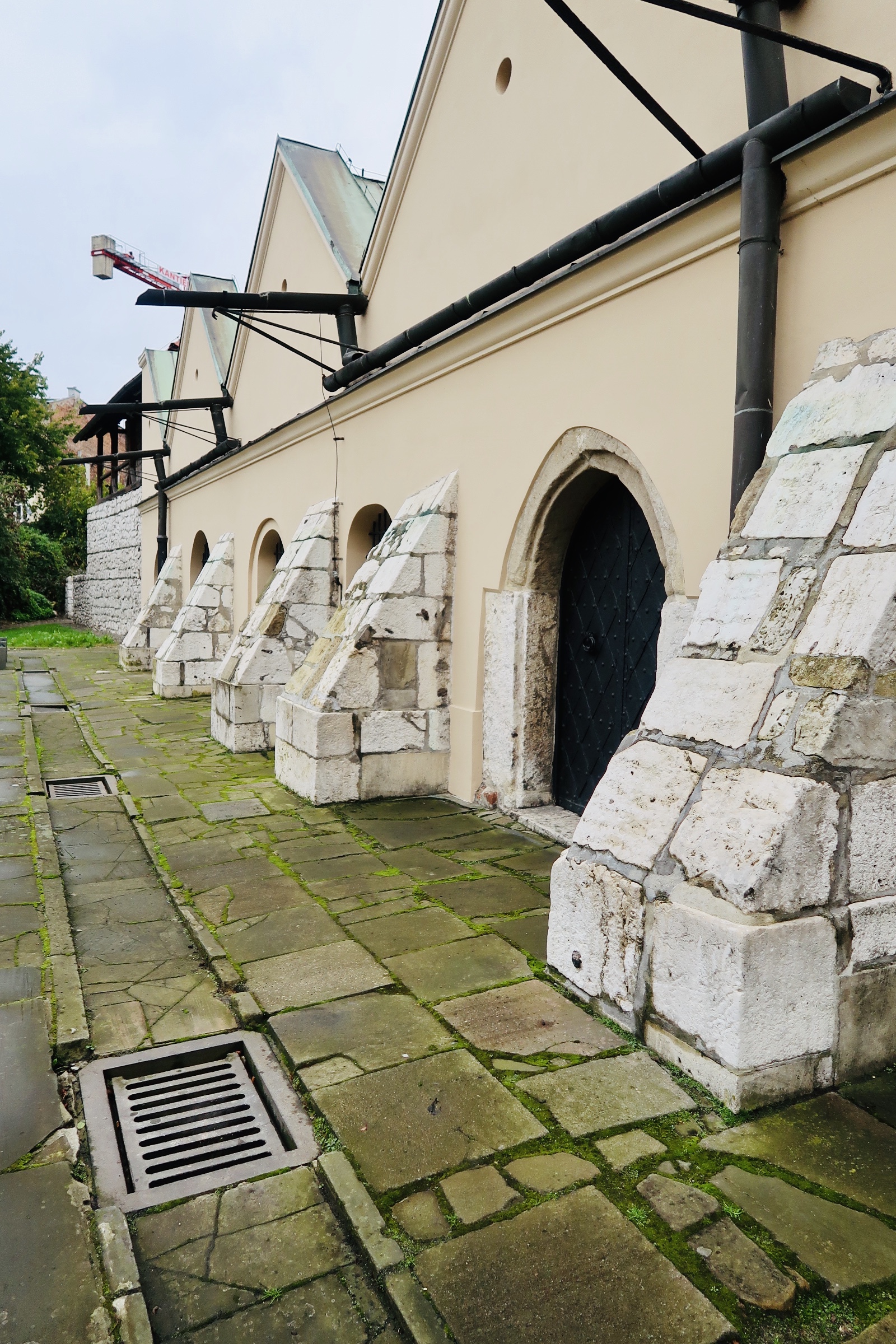
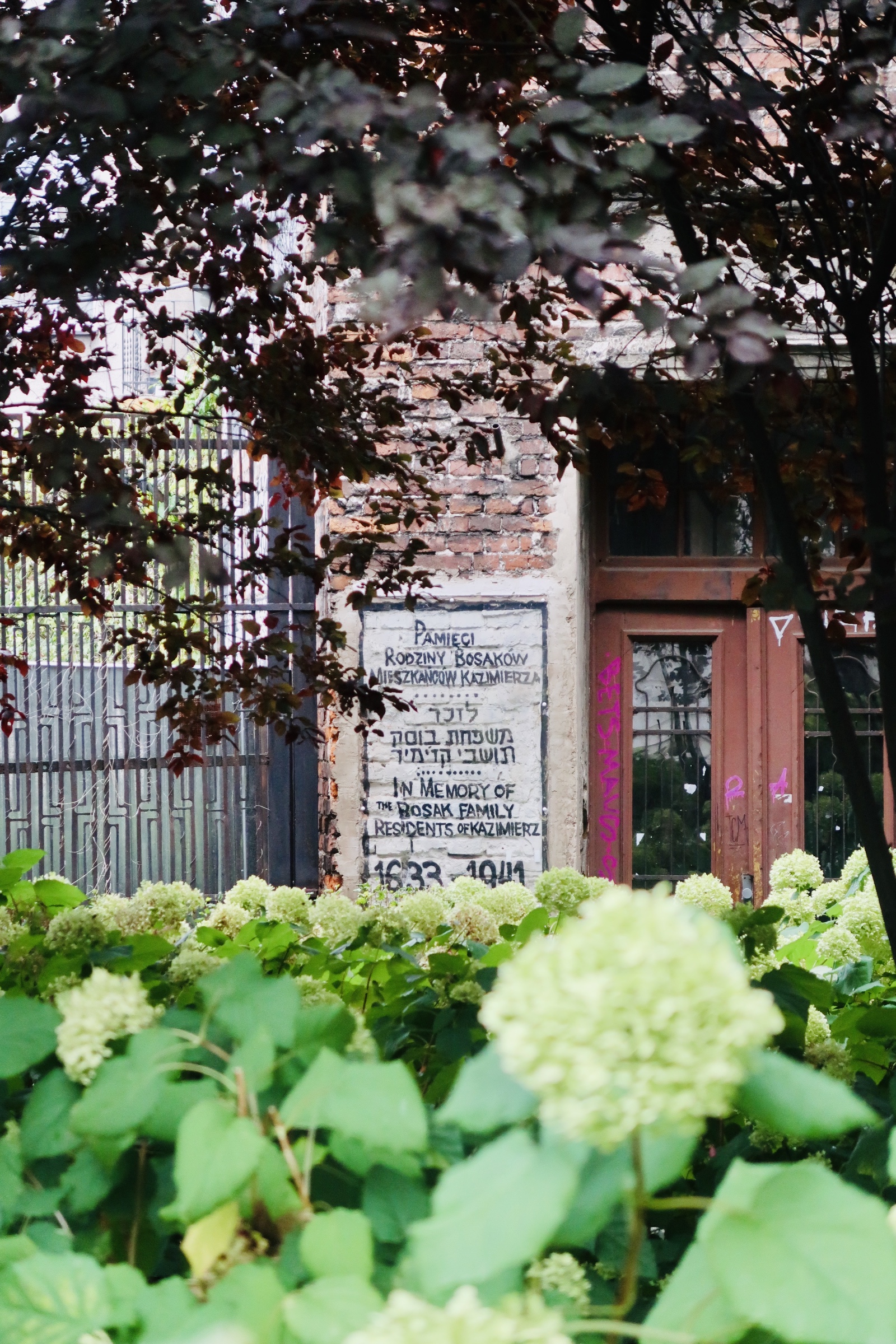
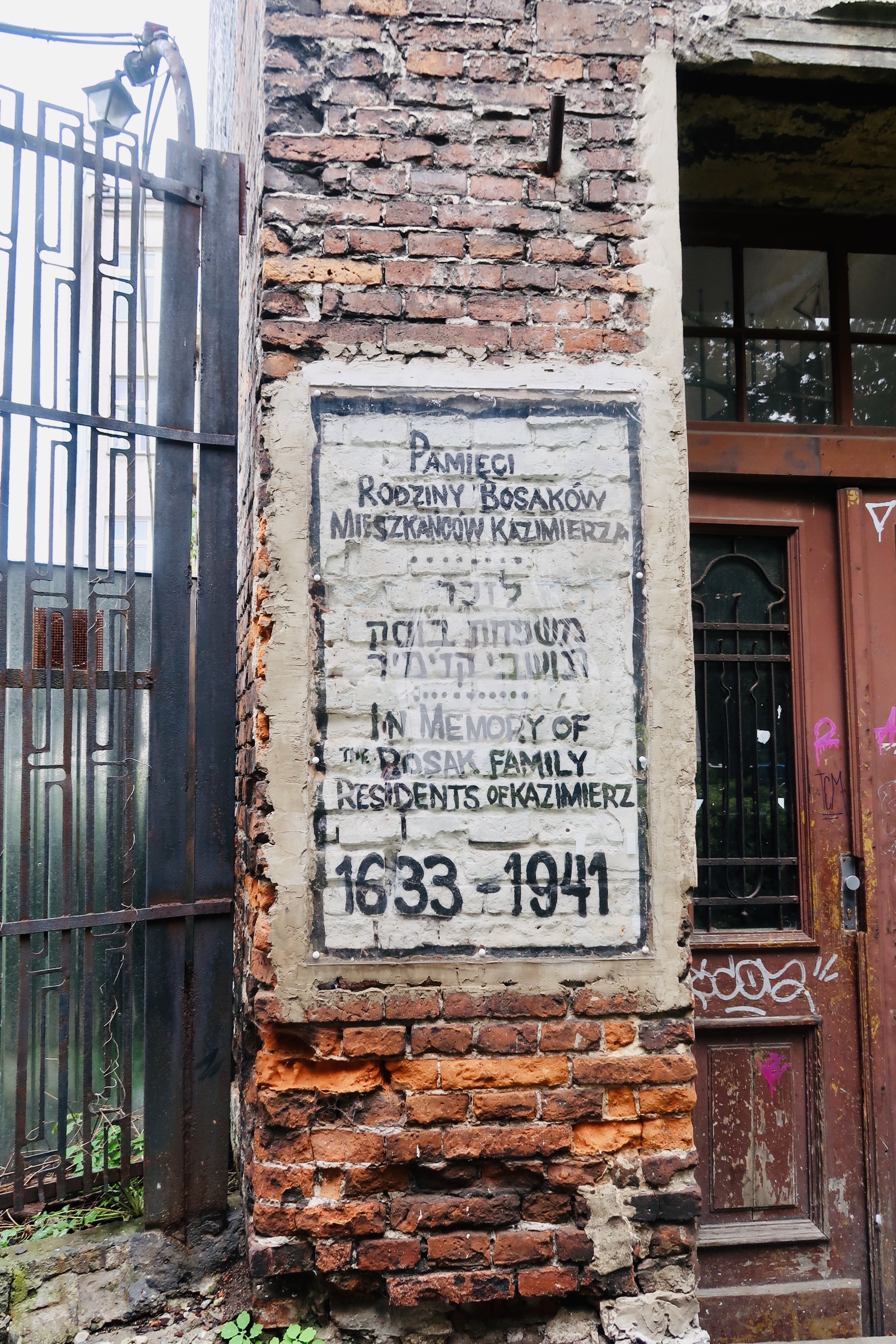
On Sunday afternoon we headed over to  the Jewish Quarter, Kazimierz. We visited during the High Holiday, Sukkot, so we were not able to go into any of the synagogues or such, but we still were able to see quite a bit walking around and get an idea of the history of the area. A Jewish community focus in Kazimierz came about in the 1400’s when anti-Semitism started to run rampant through Krakow. When a fire burned down a large part of Krakow in 1494, the Polish King transferred the Jews from the Old Town to the Bawol District of Kazimierz. The Jews then petitioned for rights to build its own defensive walls. The area within the walls was known as the Oppidum Judaeorum and was, geographically, only 1/5th of the size of Kazimierz, but held nearly half of the people of the city. The oldest Synagogue in Kazimierz was built in the early 1400’s (the actual year/date is disputed) and was an Orthodox fortress synagogue (known in Yiddish as Alta Shul). The initial golden age for the Jewish Quarter came to an end in the 18th century when the Austrian Emperor disbanded the area and tore down the walls. Not long after that, Kazimierz lost its city status and was brought into the newly formed district of Krakow. Kazimierz kept the “Jewish District” status due to the fact that the majority of the Jews stayed close and within the limits of the city. 

Up until the invasion of Poland by the Nazi’s, this was the most important synagogue in the city and the main center of the Jewish community (beyond just religion- it also was a social and organizational center). During the Nazi’s reign, the synagogue was ransacked, destroyed, and used as a warehouse. It also has one (at least) instance of the defensive wall being used as an execution site for Polish hostages by the Nazi’s. Kazimierz was not the location of the crowded ghetto of Krakow though, most of the Jews of Krakow were transferred to a ghetto location in Podgorze (another heavily Jewish area across the river in Krakow) and then either killed in the ghetto or at the death camps. After World War 2, the Jewish District was largely neglected, but starting in the 1980’s started to see growth and a resurgence of Jewish Culture. It now has quite a community built to celebrate. 

Once we finished up in the Jewish District, we headed back over to Wawel’s Castle to visit the dragon and walk along the river. I’ve already talked about the legend of Wawel’s Dragon, but we wanted to see the statue for ourselves. The boys also got to pick up a couple of stuffed small dragons to take home as a little souvenir. We didn’t stay out too long as the temperature very quickly started dropping and we had had quite the long day. One final dinner in the main market square and back to the hotel we went. 

And just like that, our weekend in Krakow came to an end. 

Auschwitz I & Auschwitz II-Birkenau Concentration Camps

***Disclaimer at the beginning of this post , there may be content in here that is painful to view . Please be cautioned***

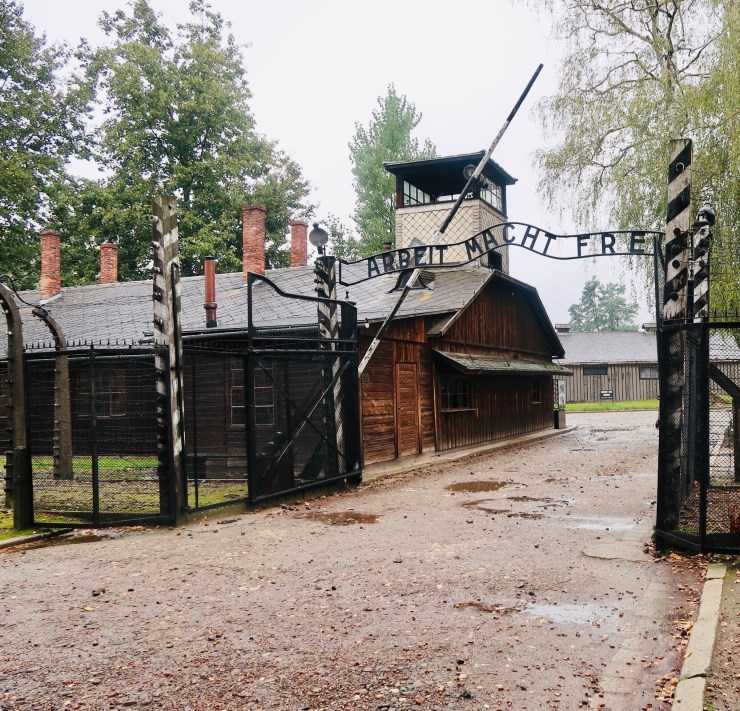
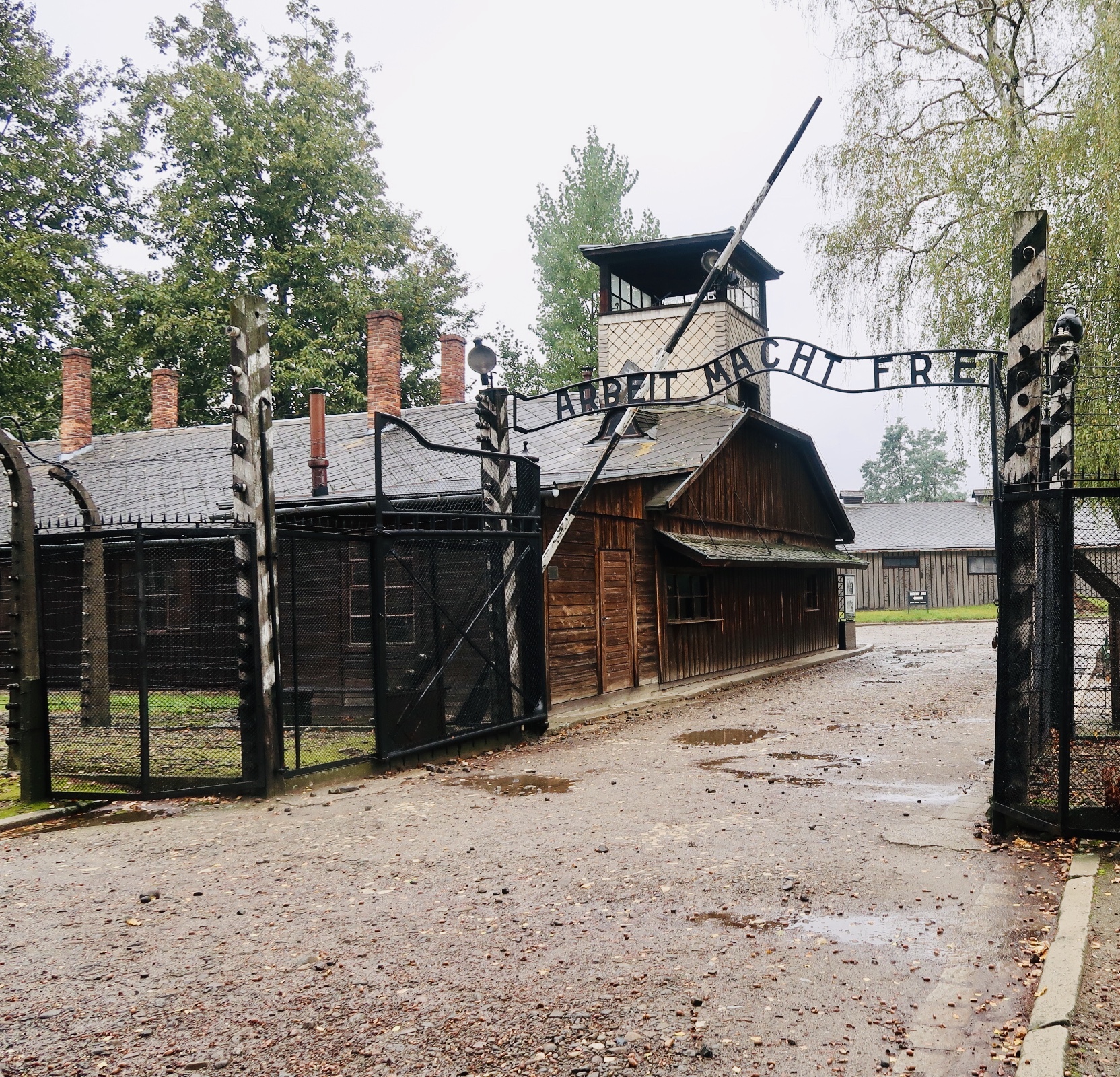
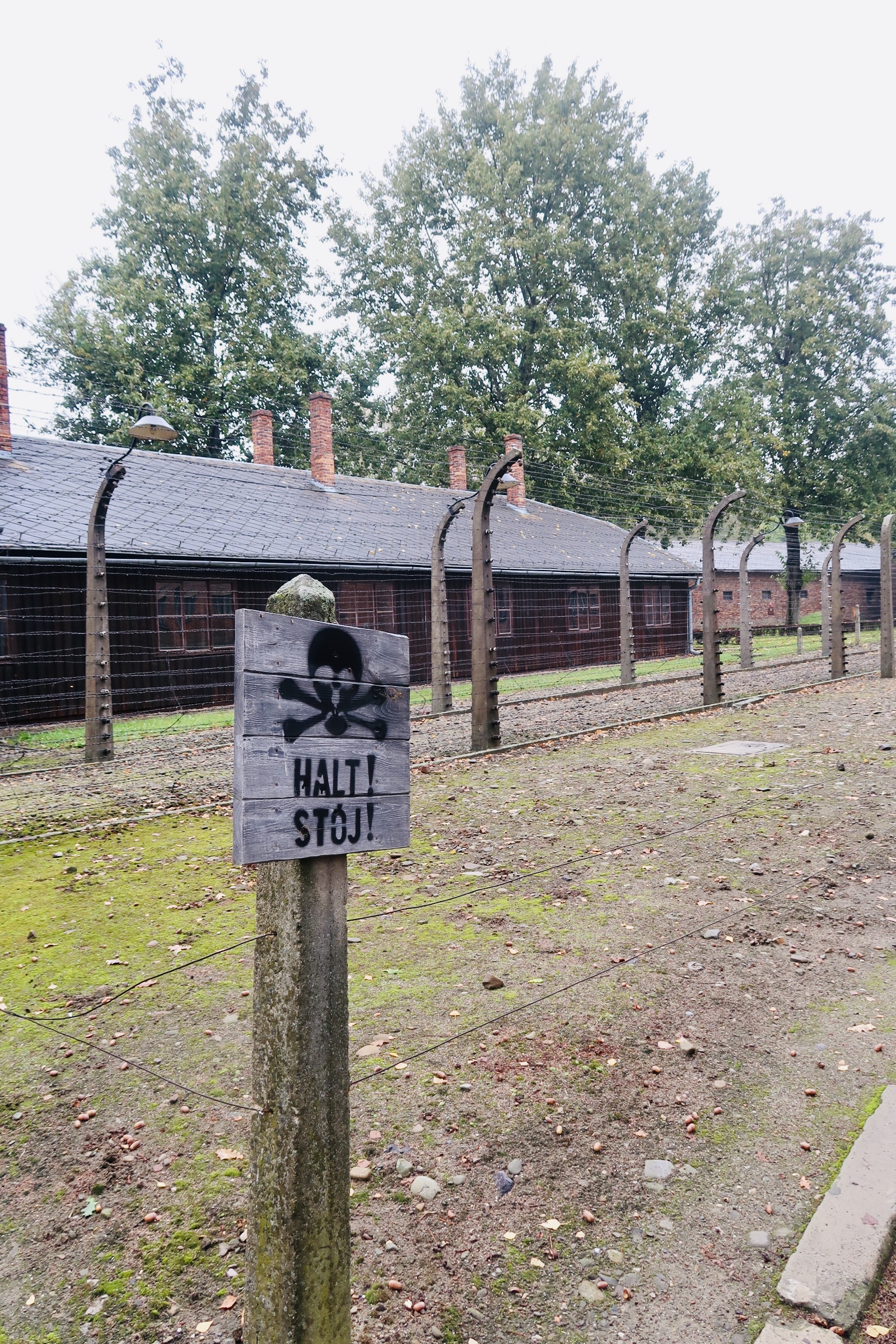
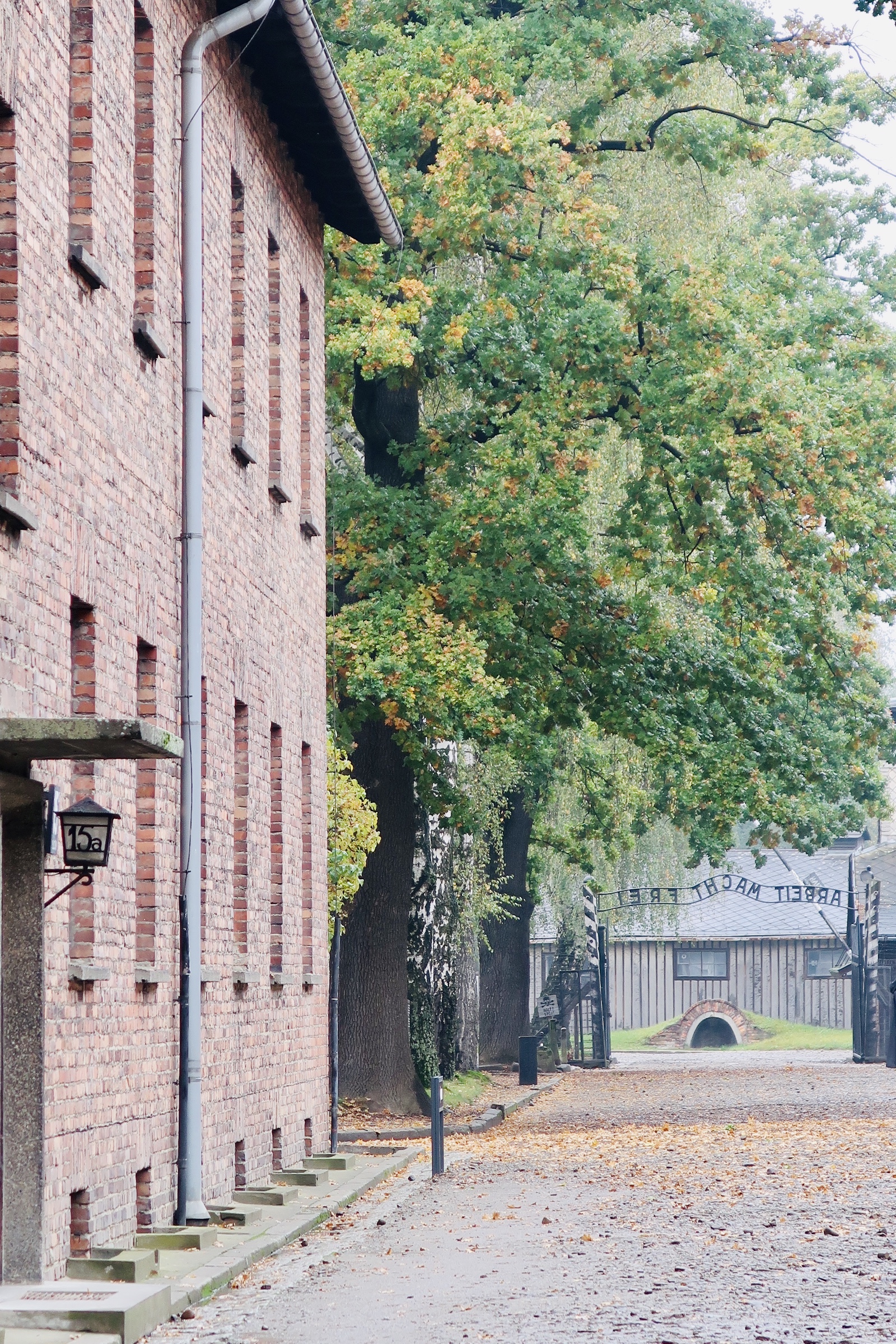
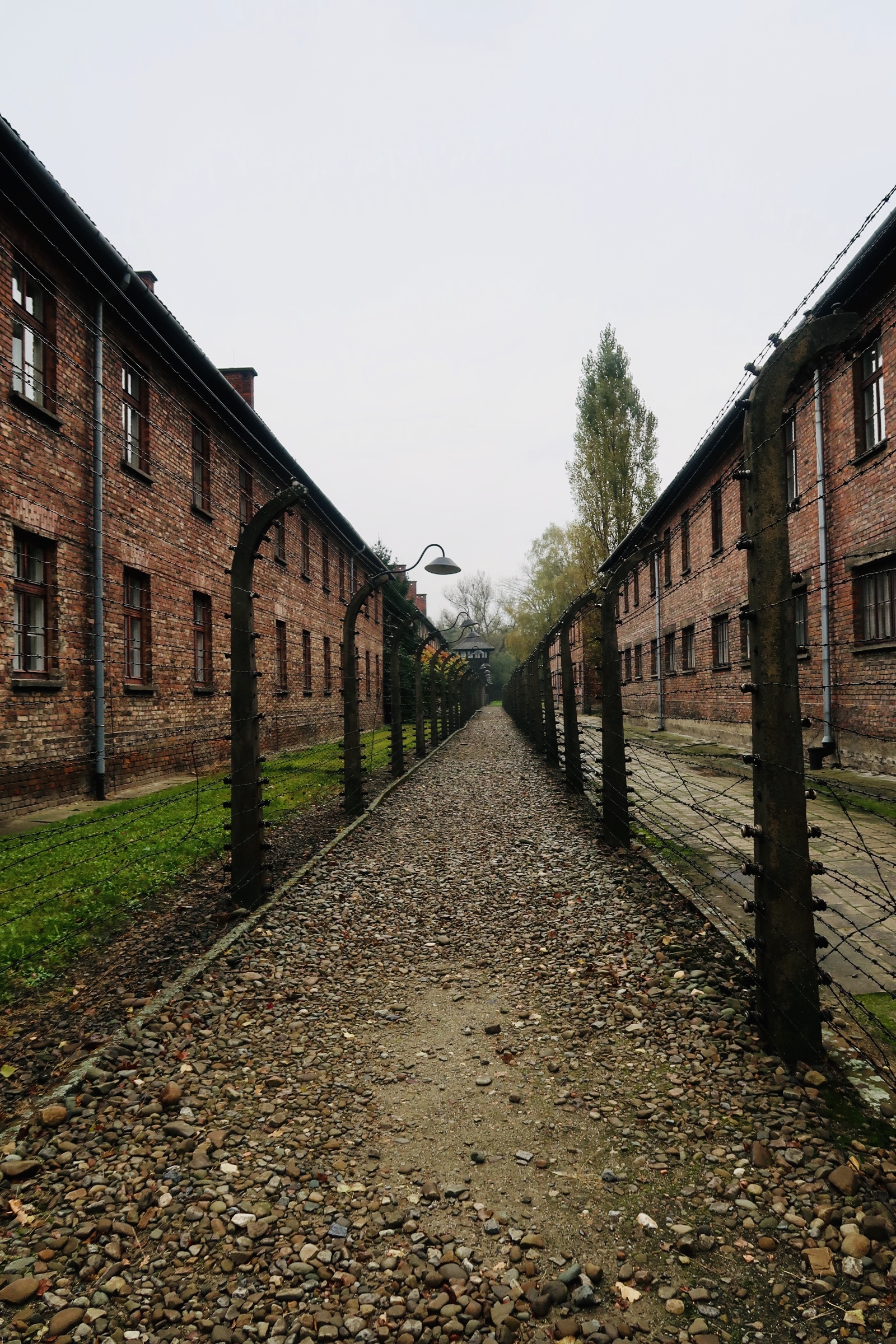
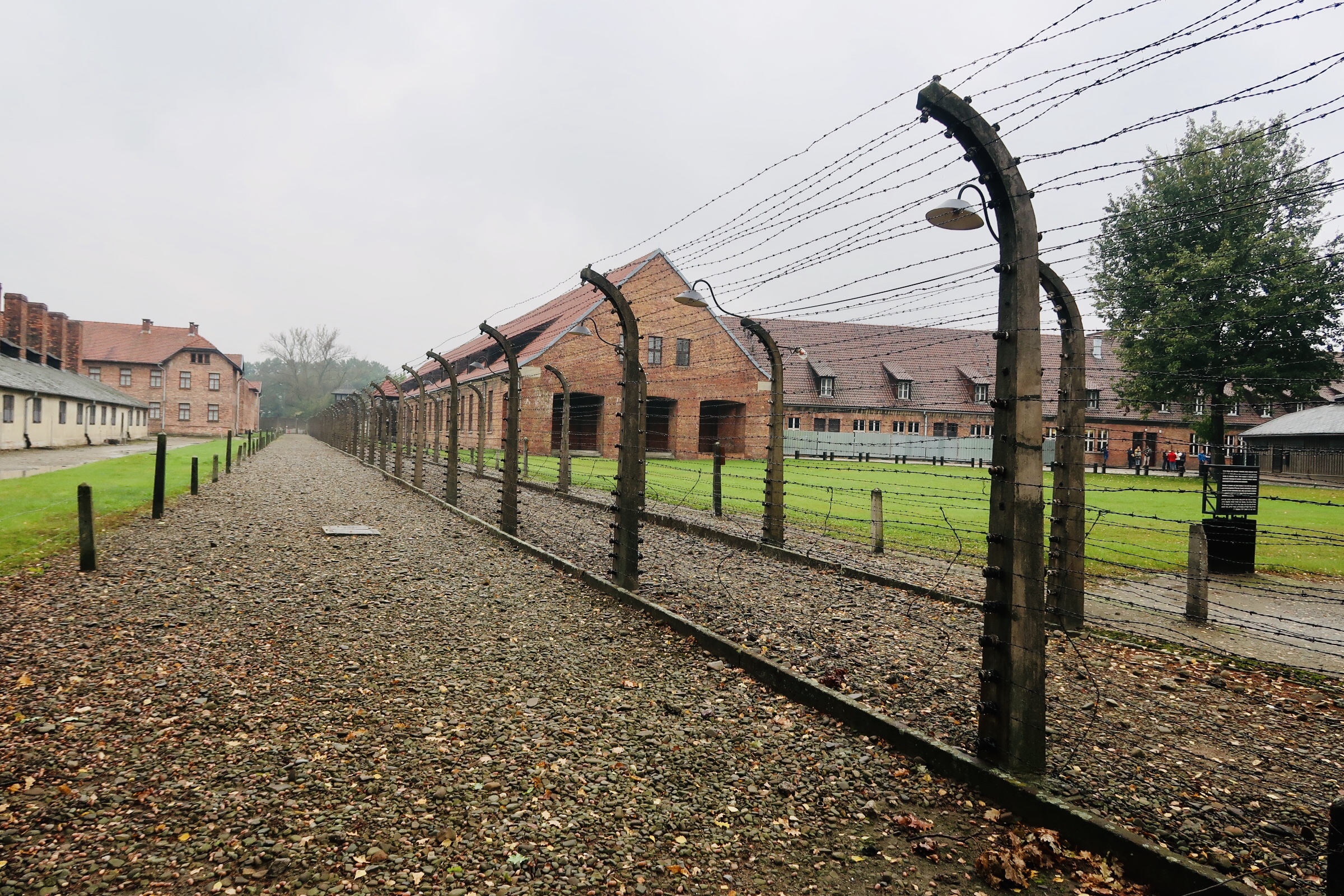
We recently spent a morning visiting Auschwitz I and Auschwitz II-Birkenau in Poland. This was our third concentration camp (fourth overall site as we also visited Lidice), we had done Dachau Concentration Camp and Kaufering VII, a Dachau subcamp. Visiting Auschwitz was different from the first due to its history and the information we learned after the liberation. Similar to my previous Concentration Camp posts, I don’t truly have the words for what this experience was like. There is nothing to truly do it justice, so instead of writing a whole bunch of words that will not come close, I am going to let the pictures tell the story. Maybe I’ll share my personal thoughts/experiences/tips in a later post. 

A quick note on our visit before anything else. We went early Sunday morning (an 8:30AM tour time) and took a guided tour. While I would recommend visiting in the early hours, as it is emptier and quieter, whether you take a tour or not is completely your choice. As someone who is Jewish, was raised in the faith and still maintains the faith (to an extent and for another post entirely), I am incredibly familiar with The Holocaust and the concentration camp history. My husband is familiar with the history as well. I don’t know that I learned any new information, BUT the guide helped put things into perspective and really walked you through the barracks and locations. The tour guides (at least ours) do not mince words. Everything is in exacting detail, which can be something to take note of. We did take our boys (aged 4 &3) and they were incredibly respectful throughout our entire visit (I don’t know that I am really going to talk about this decision- to each their own in this instance). 

If you do choose to visit, please note that the two camps are not truly within walking distance of each other. Auschwitz I does have a bus that runs between the camps OR you can drive. If you take a tour, you will start at Auschwitz I and then take the bus over to Auschwitz II-Birkenau to continue. Both are necessary to visit. 

I’m going to start with some brief history of the camps before I get into the photos. This will brief, if you are wanting a full breakdown, I would suggest any of the many books and survivors’ experiences (I find that a combination of both will be best). You can also see the Auschwitz website here for an introduction, however I would highly encourage you to do some reading in addition. It will allow you to get a true feeling for the time, the life, the camp. 

Auschwitz was established in 1940 (the first transport to arrive was actually mid Jan 1940) in the suburbs of a small city called Oswiecim. This city was annexed to the Nazi’s (The Third Reich) and later the residents and city was relocated as a way to hide what was happening within the camp. The original reason the camp was created was to house the Polish prisoners who were being arrested in large numbers. It was initially intended to simply serve a similar purpose to those the Nazi’s had already been setting up since the 1930’s (such as Dachau). True to its’ initial plan, Auschwitz did remain in this function of prison camp, even with the addition of the extermination centers. Auschwitz is actually 3 different camps. Auschwitz I was the “main camp” and held around 15,000-20,000 prisoners. The second was Birkenau, later known as Auschwitz II-Birkenau, which was the largest part of the complex and the main center of the Jewish population of the area, as well as the main extermination camp. The Nazi’s built up this second camp in 1941 (and this was when the residents were relocated) and, in 1944, it held over 90,000 prisoners.  The final camp was created from the largest sub camp (of which there were 40), Buna with 10,000 prisoners. It opened in 1942 and is not able to be visited (I believe it no longer exists).

In total, 1.3 million were sent to Auschwitz (across the board), within 1.1 million of those people dying. While the majority of the deaths were Jews (of the 960,000 that died, 865,000 died upon arrival), there were also Poles (non-Jewish), Roma, Soviet POW’s, and others. If the prisoners were not sent to the gas chambers, they died of starvation, disease, medical experiments, or from many other causes to include individual executions. The camp was liberated January 27, 1945, a day now commemorated as International Holocaust Remembrance Day, by the Soviet Red Army.  Auschwitz has become a symbol of the Holocaust and all of its atrocities and the location was named an UNESCO World Heritage Site in 1979. 

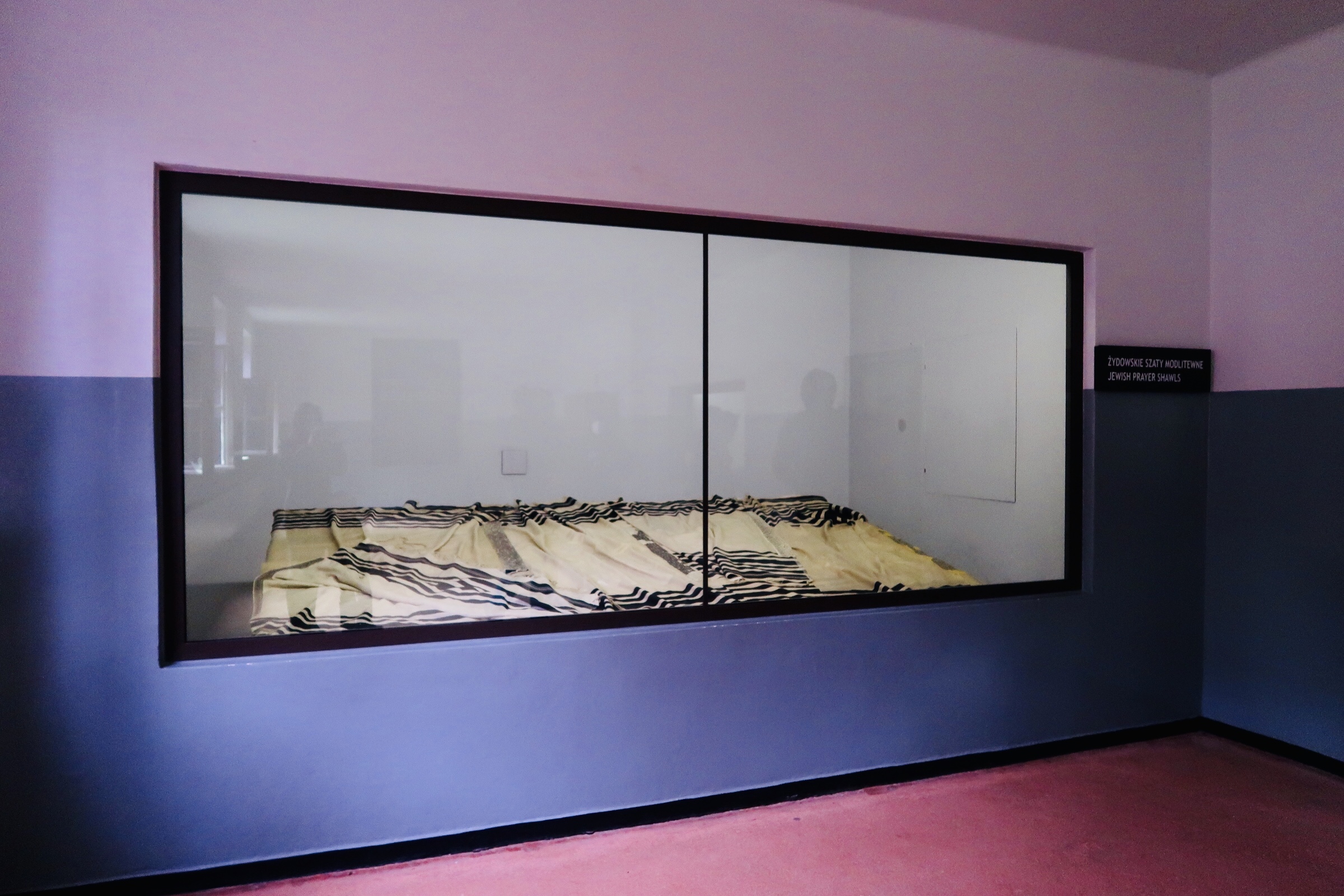
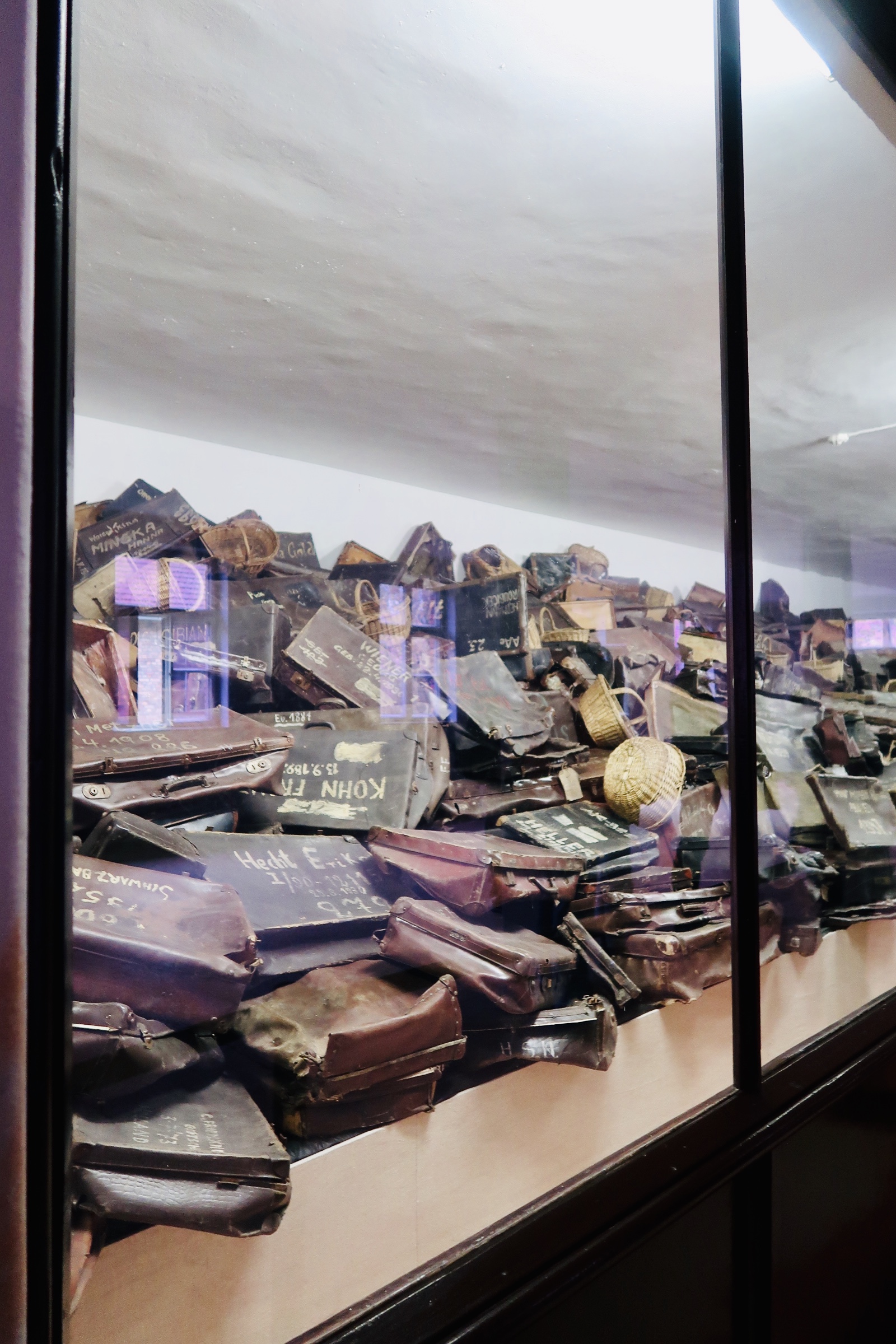
Most people know about Auschwitz and Dachau (and Treblinka or Bergen-Belson or some of the other known, but smaller camps). As I said with visiting Dachau, it is one thing to read/hear/talk about these places and the atrocities that occurred, but it is something wholly different to walk them. To walk these paths. To see the tons of shoes, or suitcases, or hair (so much hair) taken from the victims. To walk from the rail car to the chambers. To feel the weight of those who came and died before you. I am not going to mince words; you don’t need words. You need images. So, I’ll be giving you the general gist at the start of pictures (and you can hopefully see the captions under the pictures to tell you what’s what), but nothing more than that. 

***PLEASE NOTE THERE WILL BE IMAGES THAT ARE DISTURBING TO VIEW. PLEASE BE CAUTIONED***

So, as I’ve already mentioned, we started our tour at Auschwitz I. It’s important to note that this particular camp was for polish prisoners, military/command barracks, and was used for Nazi propaganda. This is not a camp that the Jews or…well anyone who wasn’t a polish prisoner, or a consumer of the propaganda would see. 

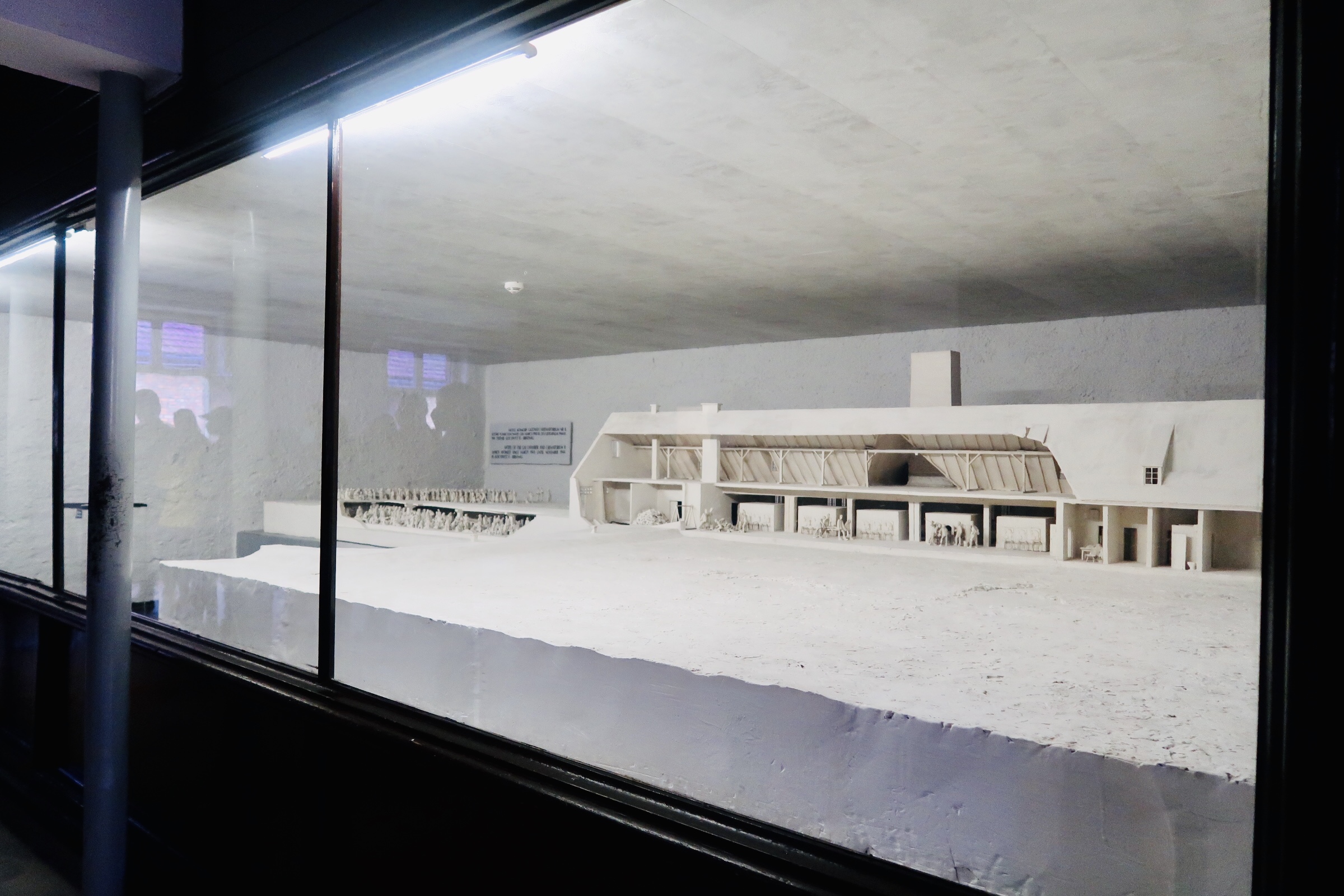
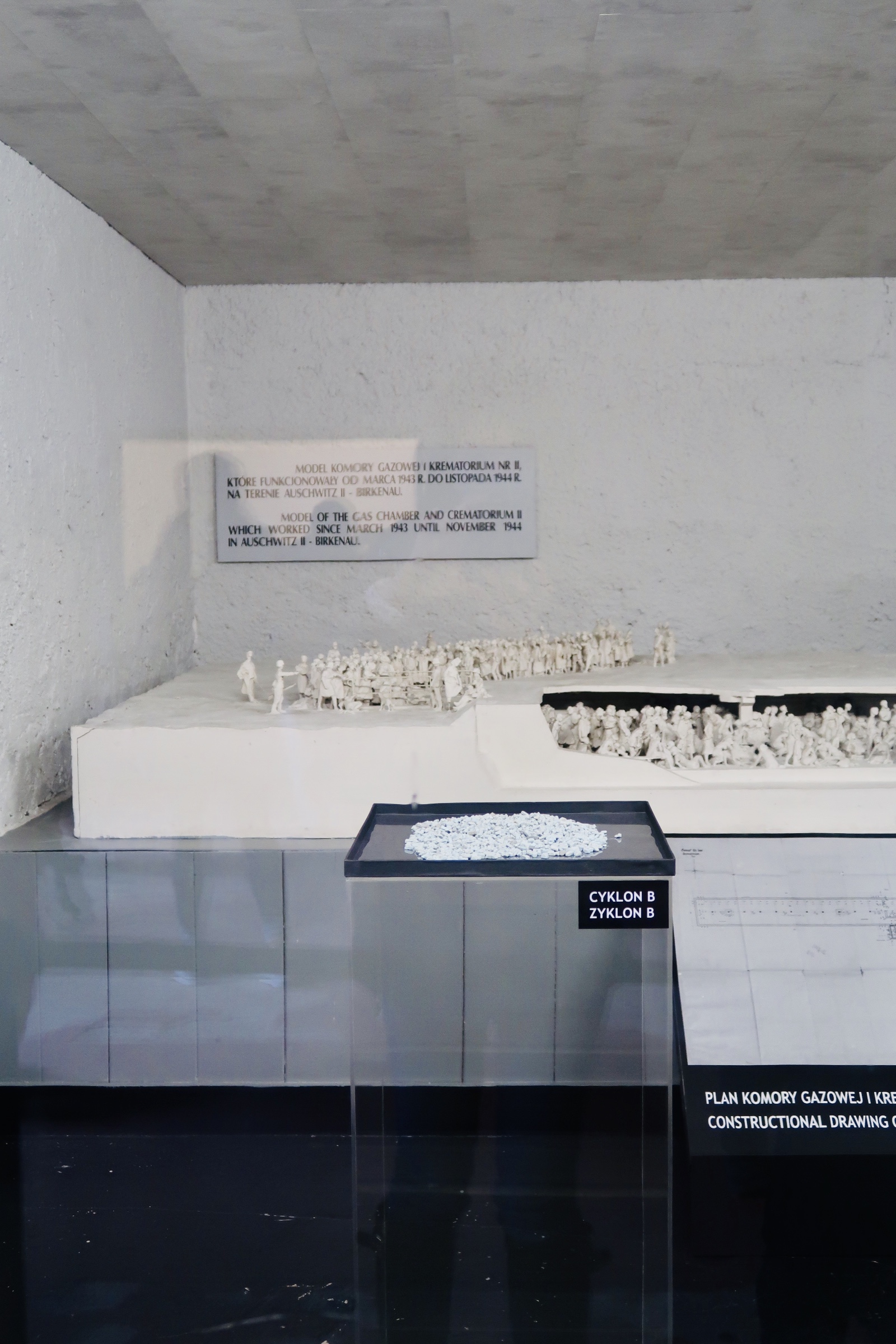
Within Auschwitz I there are displays set up to show not only how certain aspects of the camp were run, but also in memorial of the victims who were murdered. 

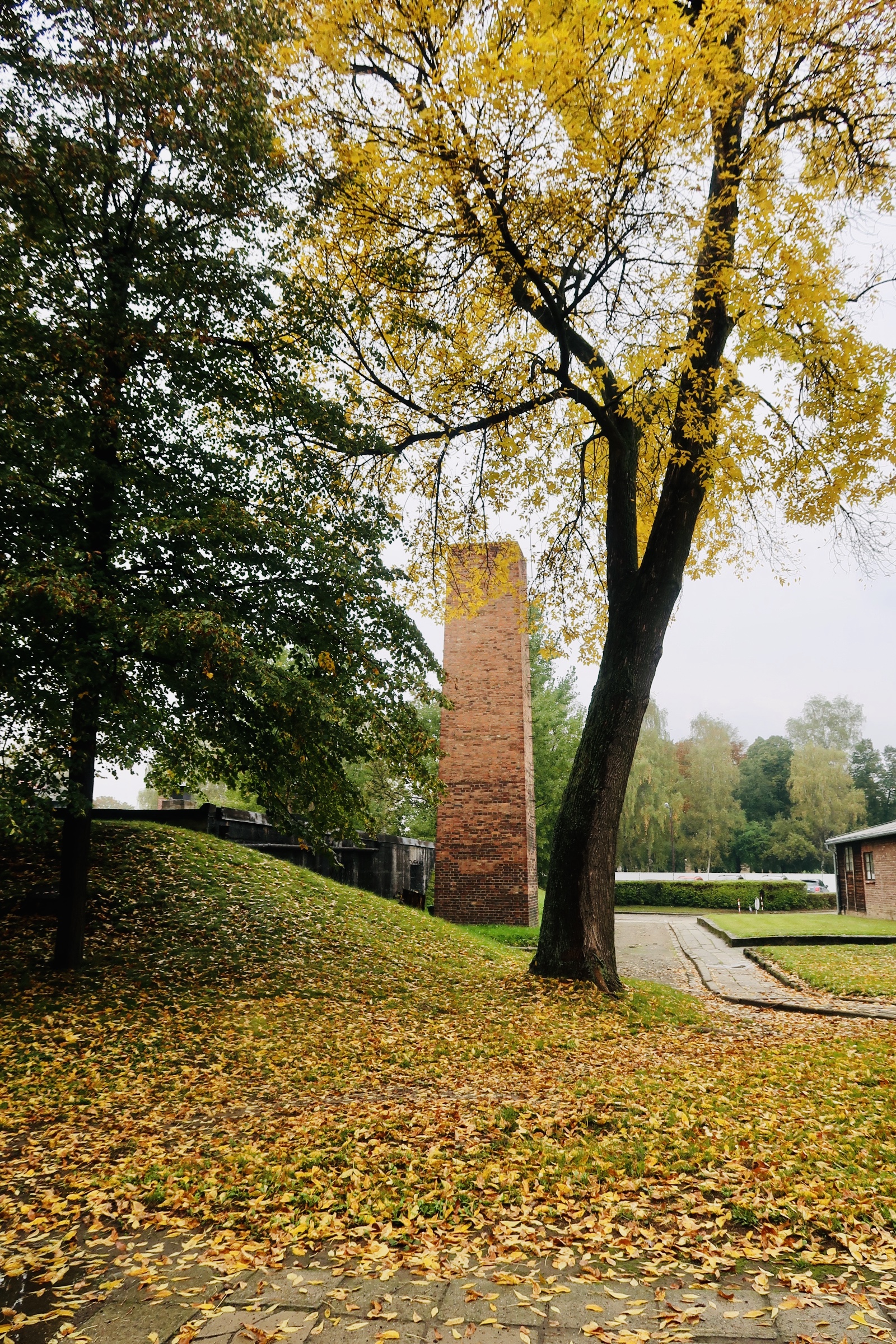
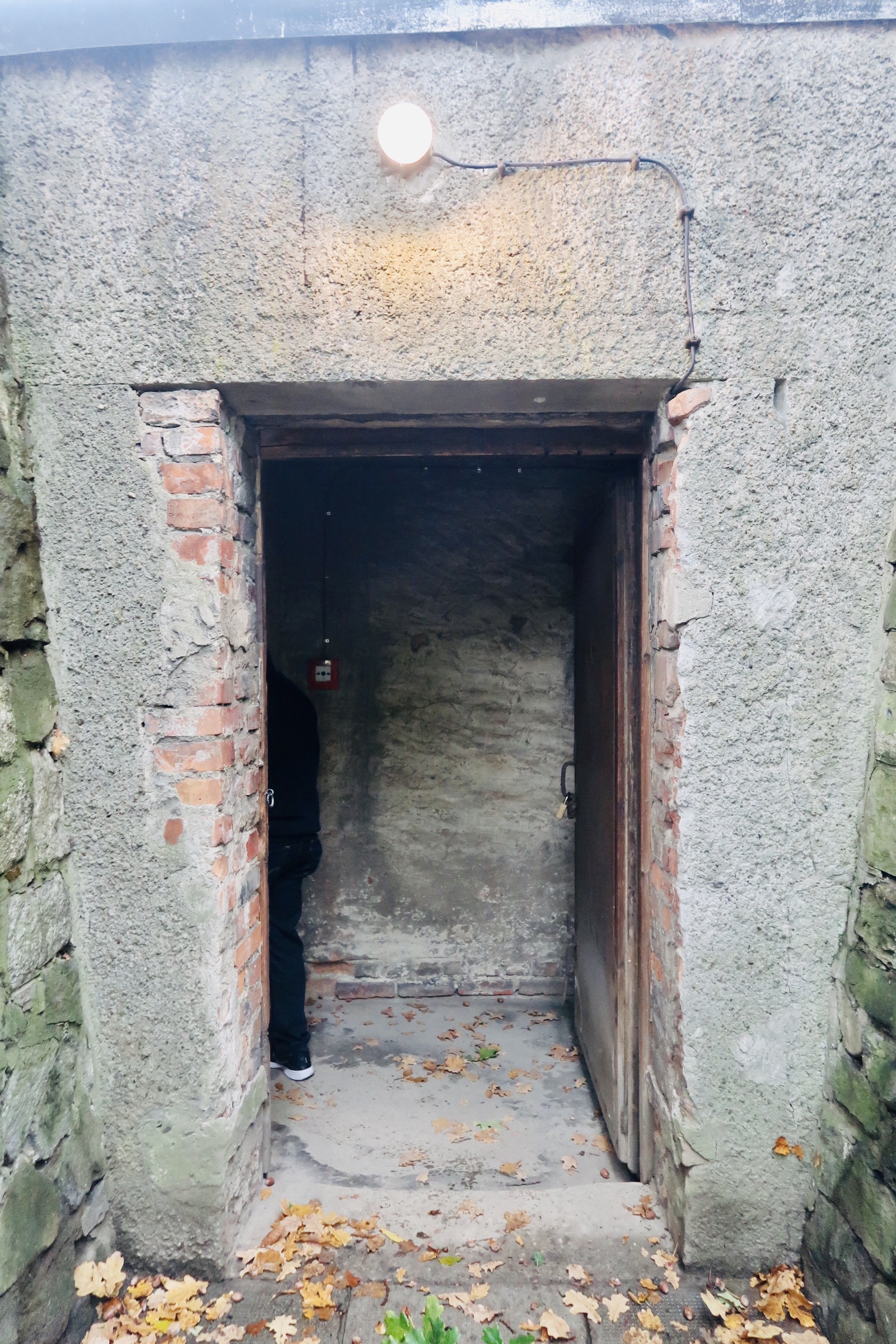
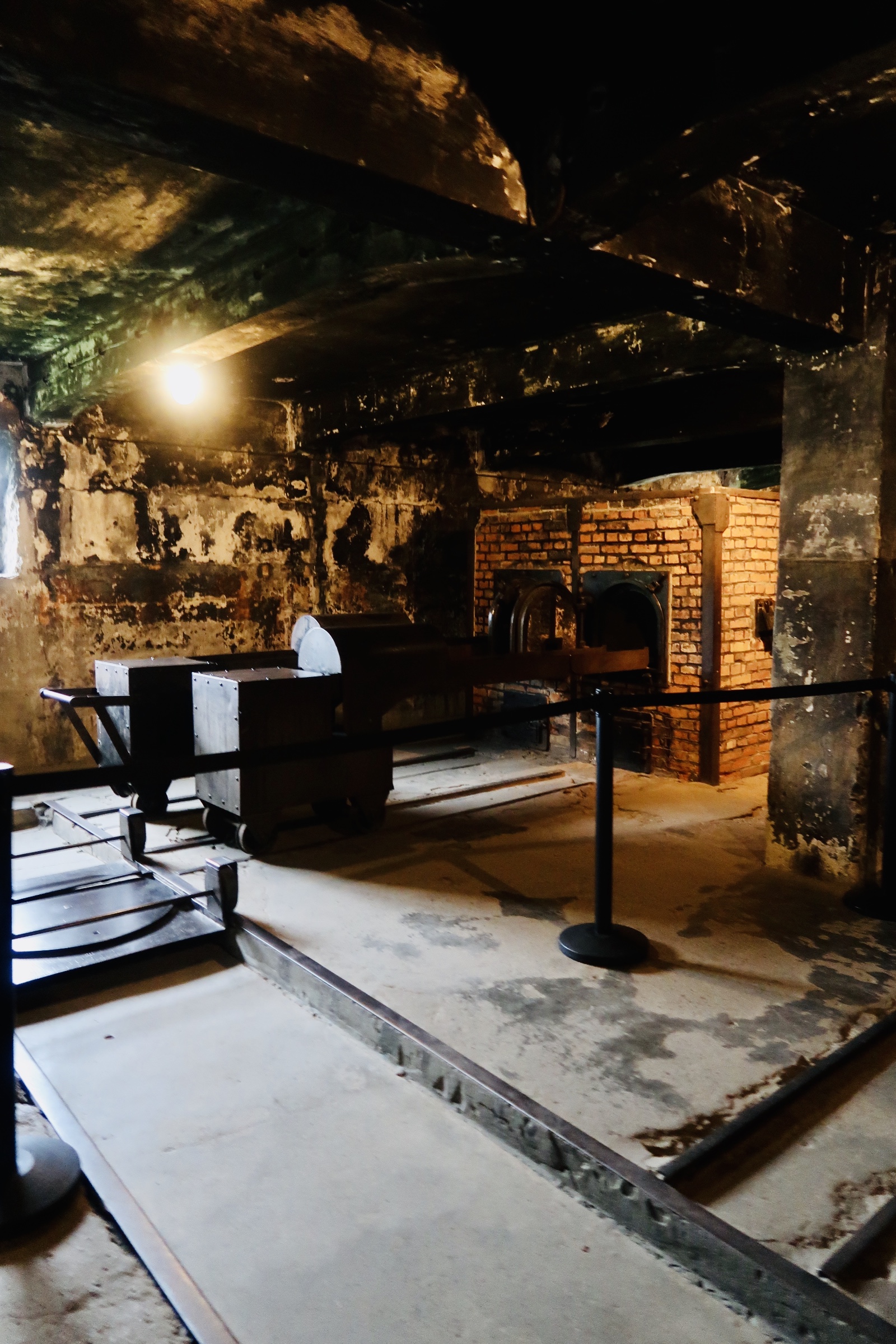
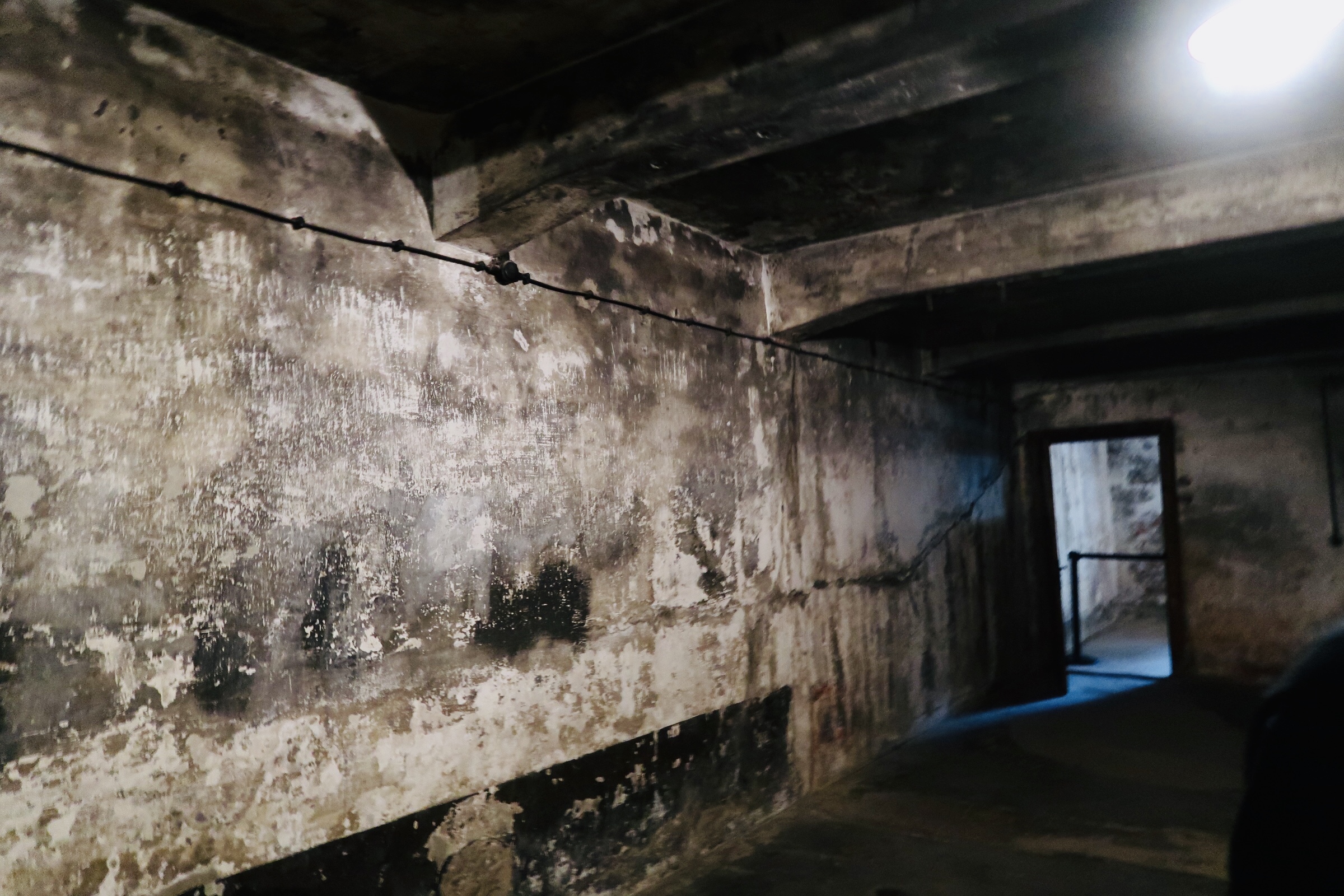
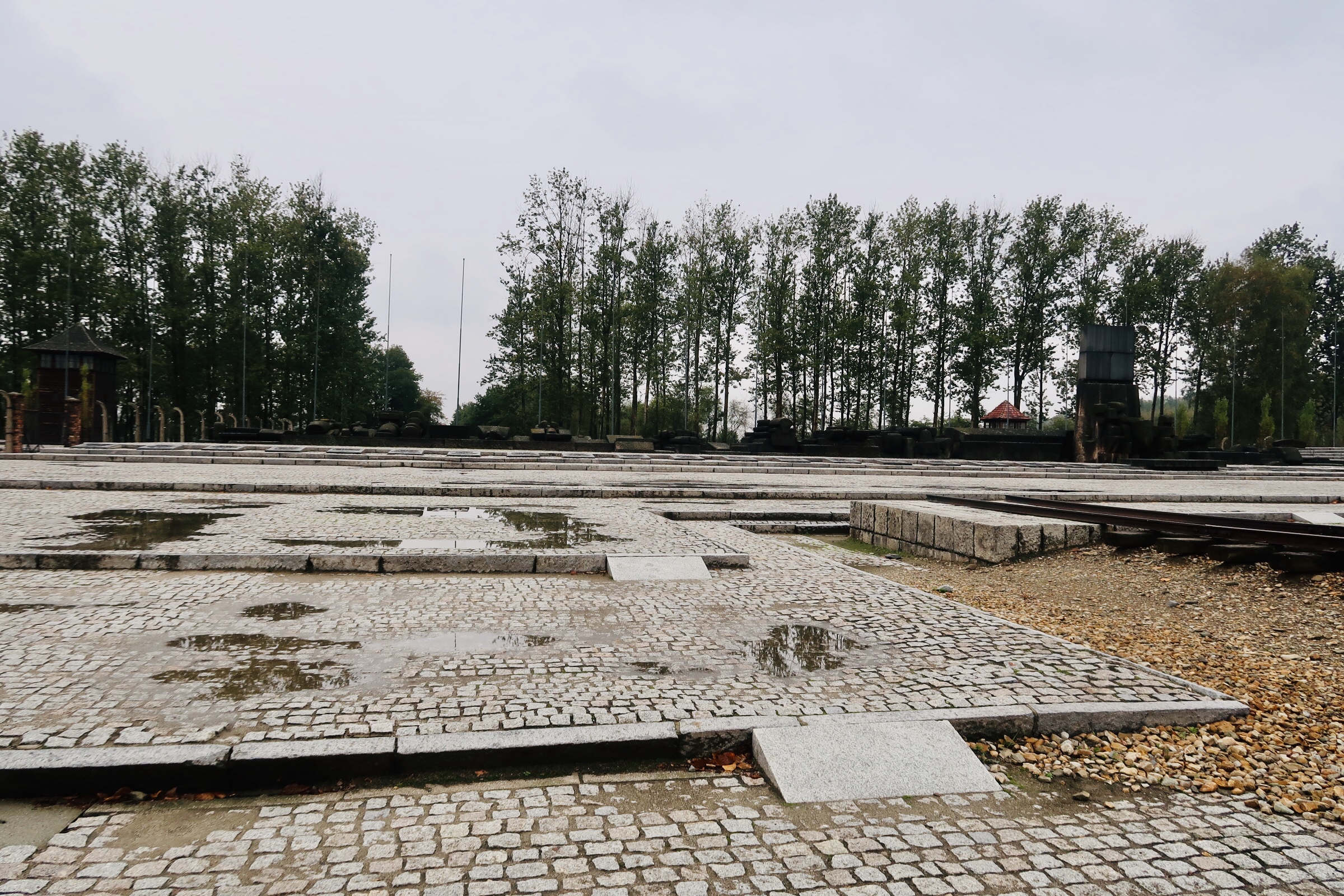
You are also able to walk through the gas chamber and crematorium of Auschwitz I. These were not the main locations of the mass extermination, just temporary. These are the only chambers and crematoria that you are able to see as the Nazi’s destroyed the main complexes. 

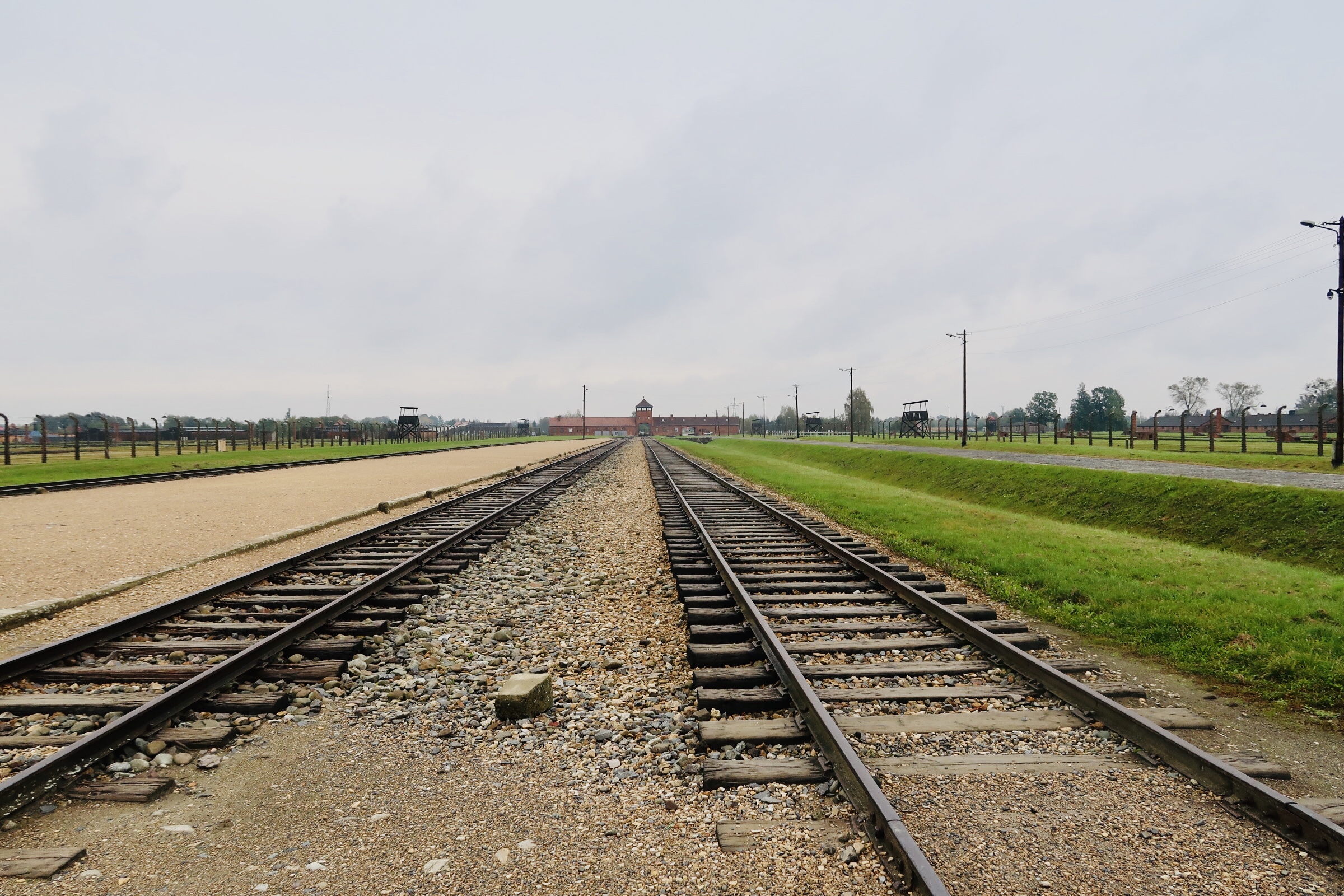
From Auschwitz I, we headed over to Auschwitz II-Birkenau. This was the main camp for the Jews, Roma, and anyone deemed “undesirable”. This was where they were brought (again, they didn’t see Auschwitz I, just this). Those that lived through transport were then selected for either the gas chambers, hard labor, or medical experiments.

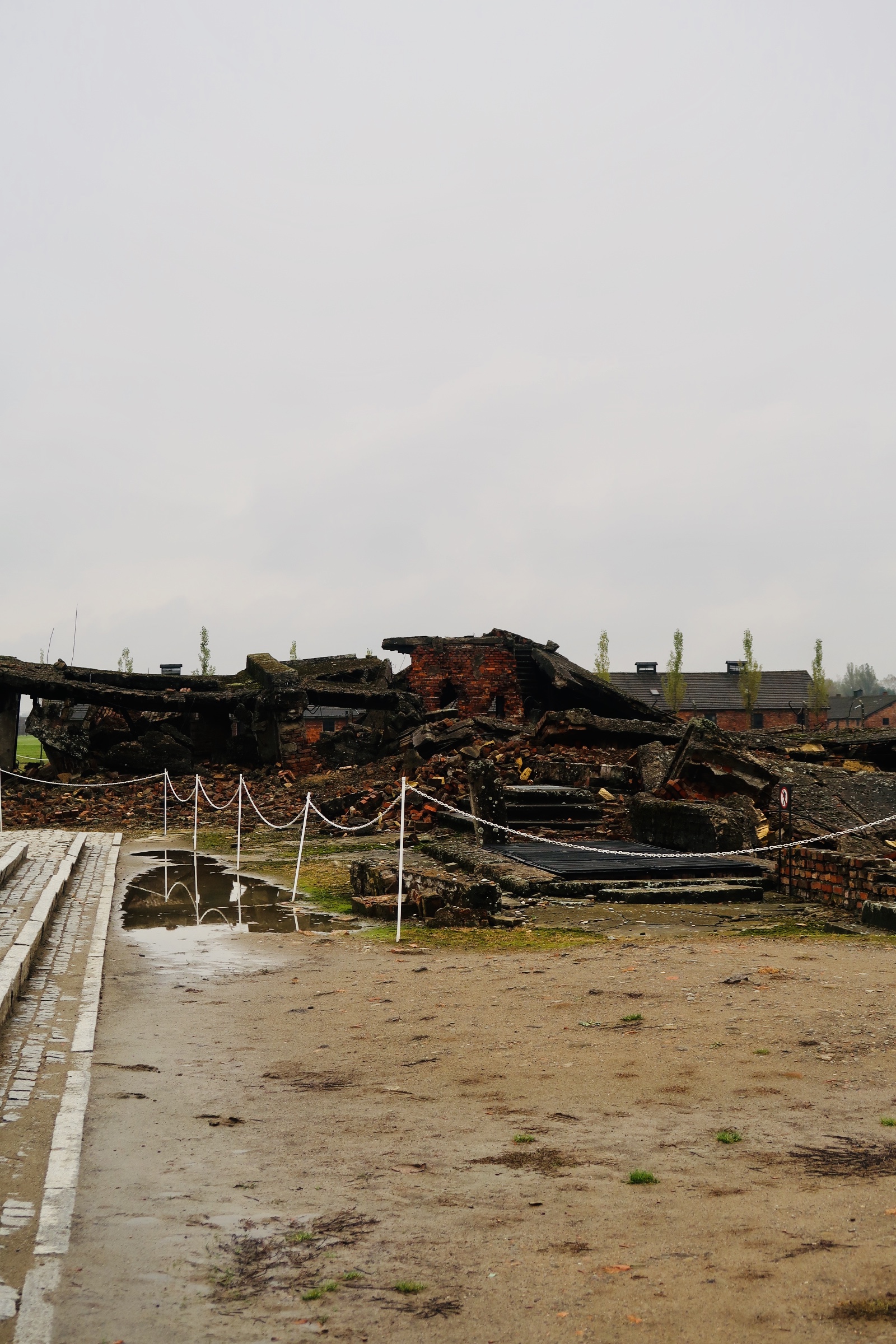
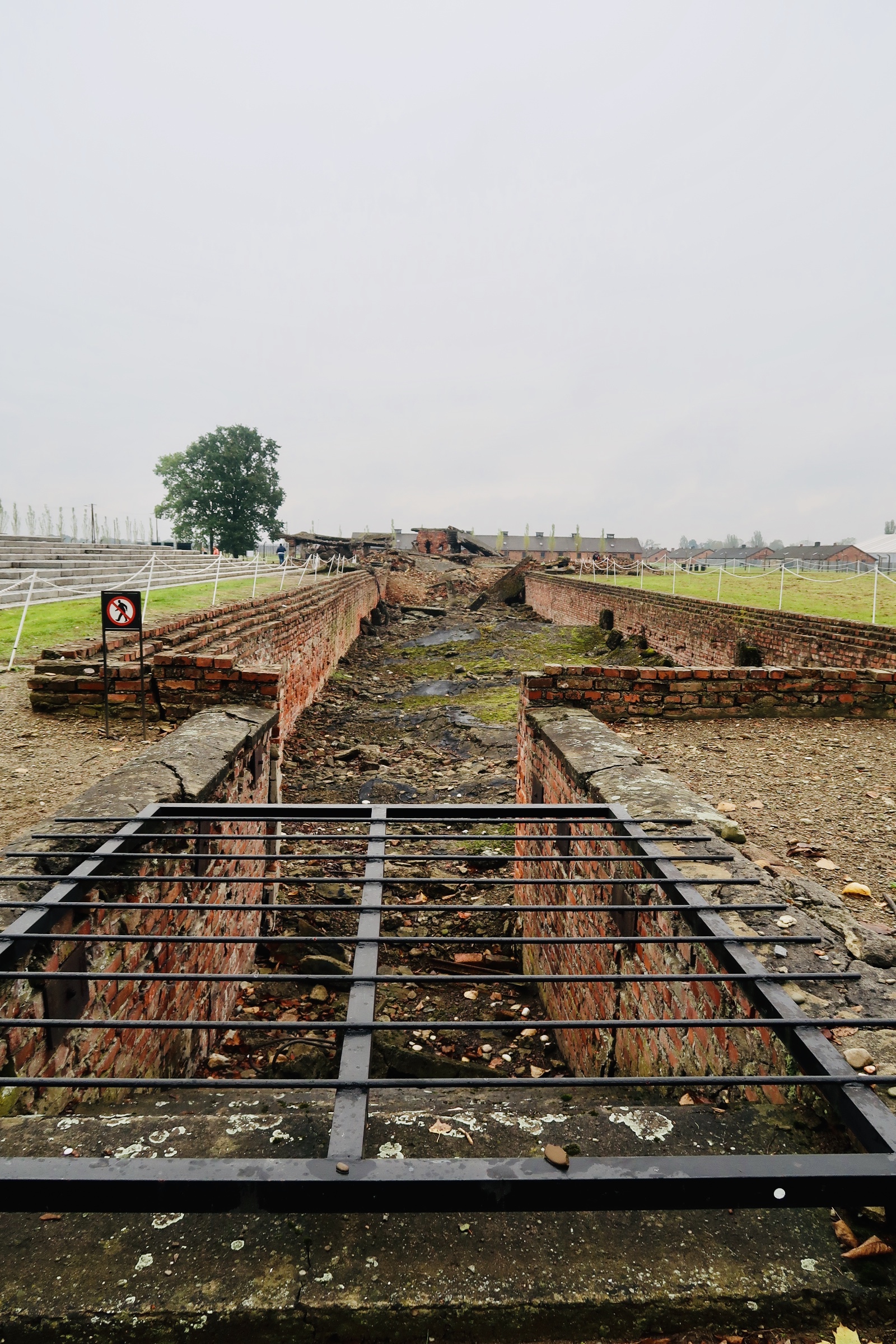
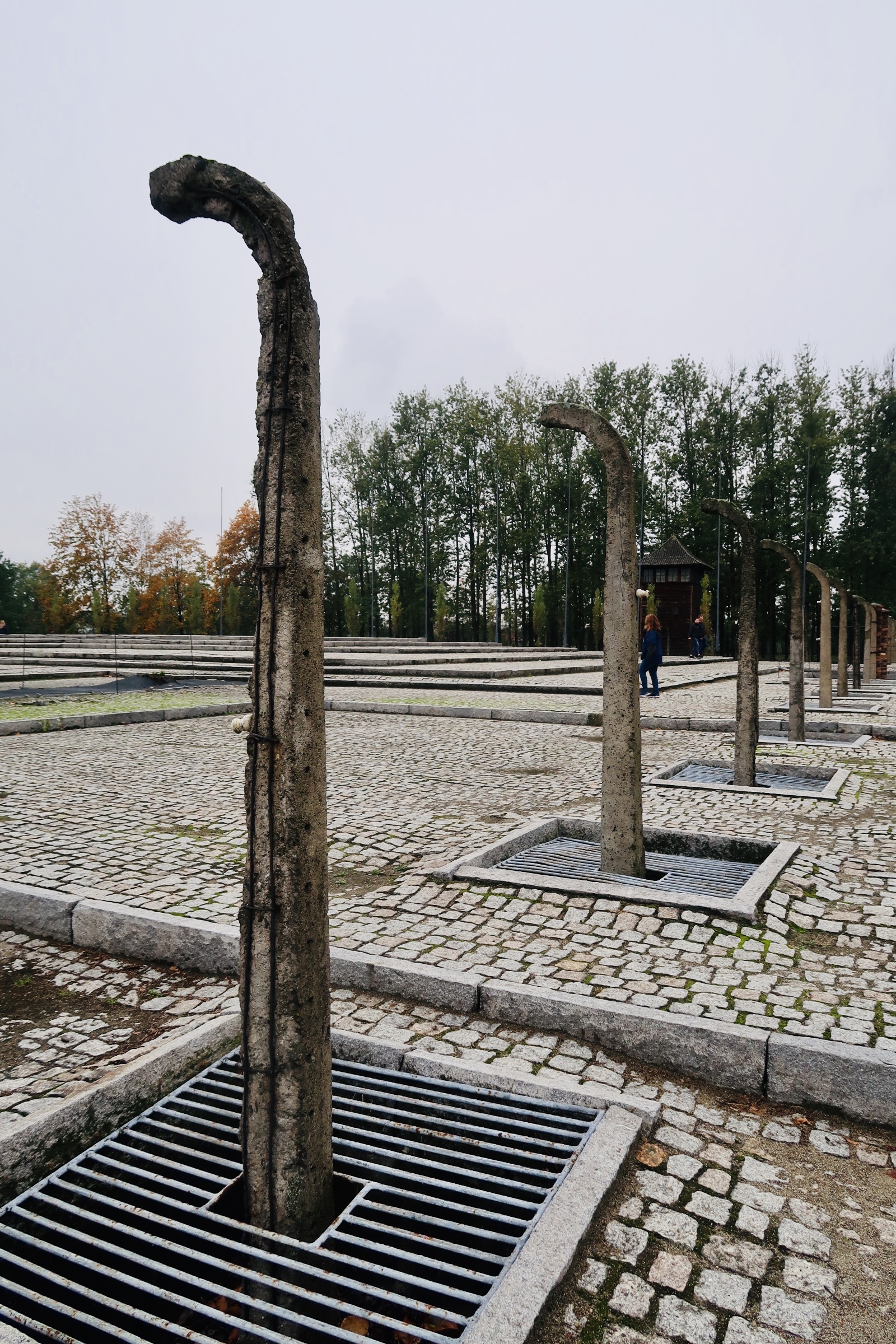
The two main gas chamber and crematoria complexes were exploded by the Nazi’s as they attempted to hide these atrocities, but the remains are here (and you are able to see how they were operated above).  

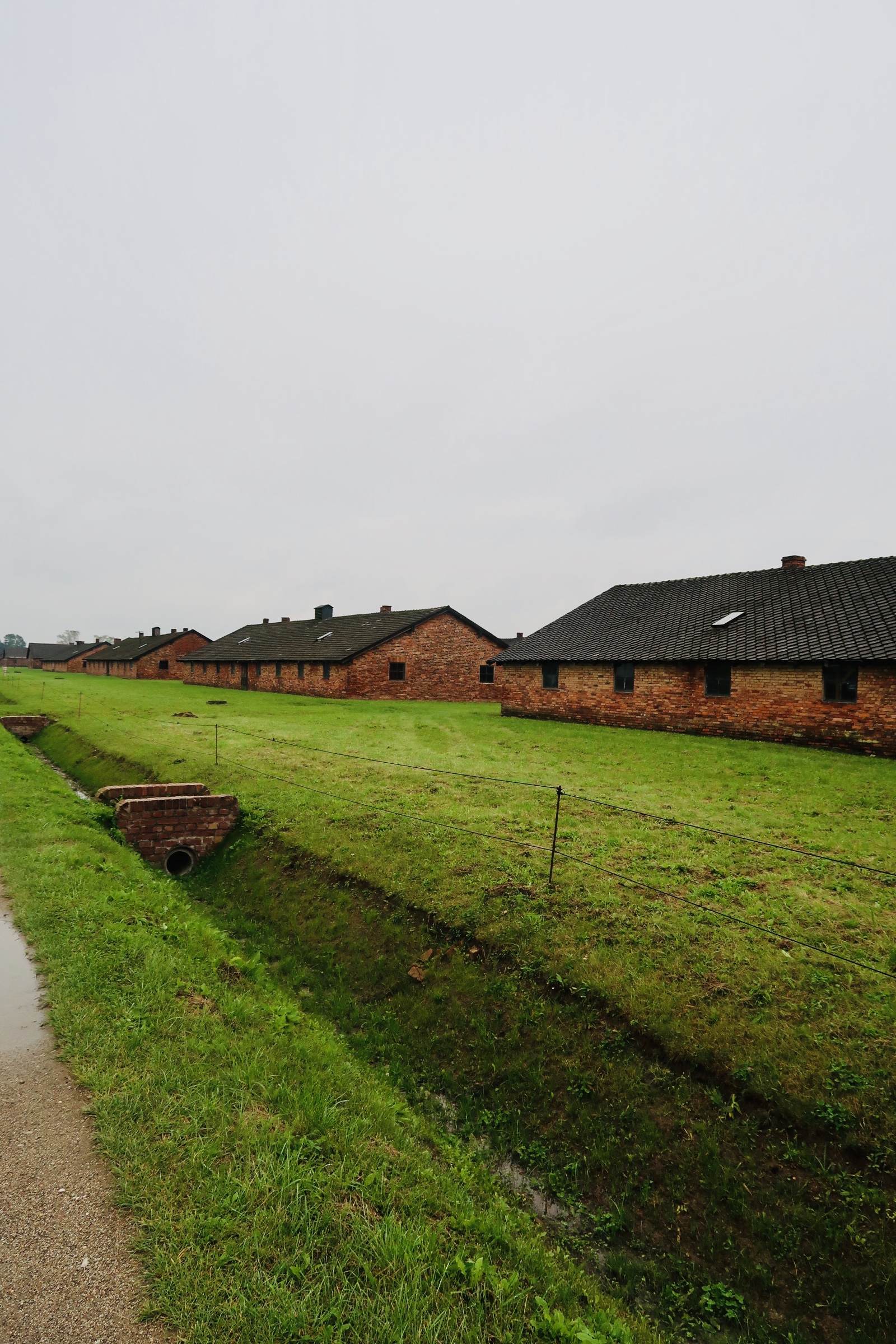
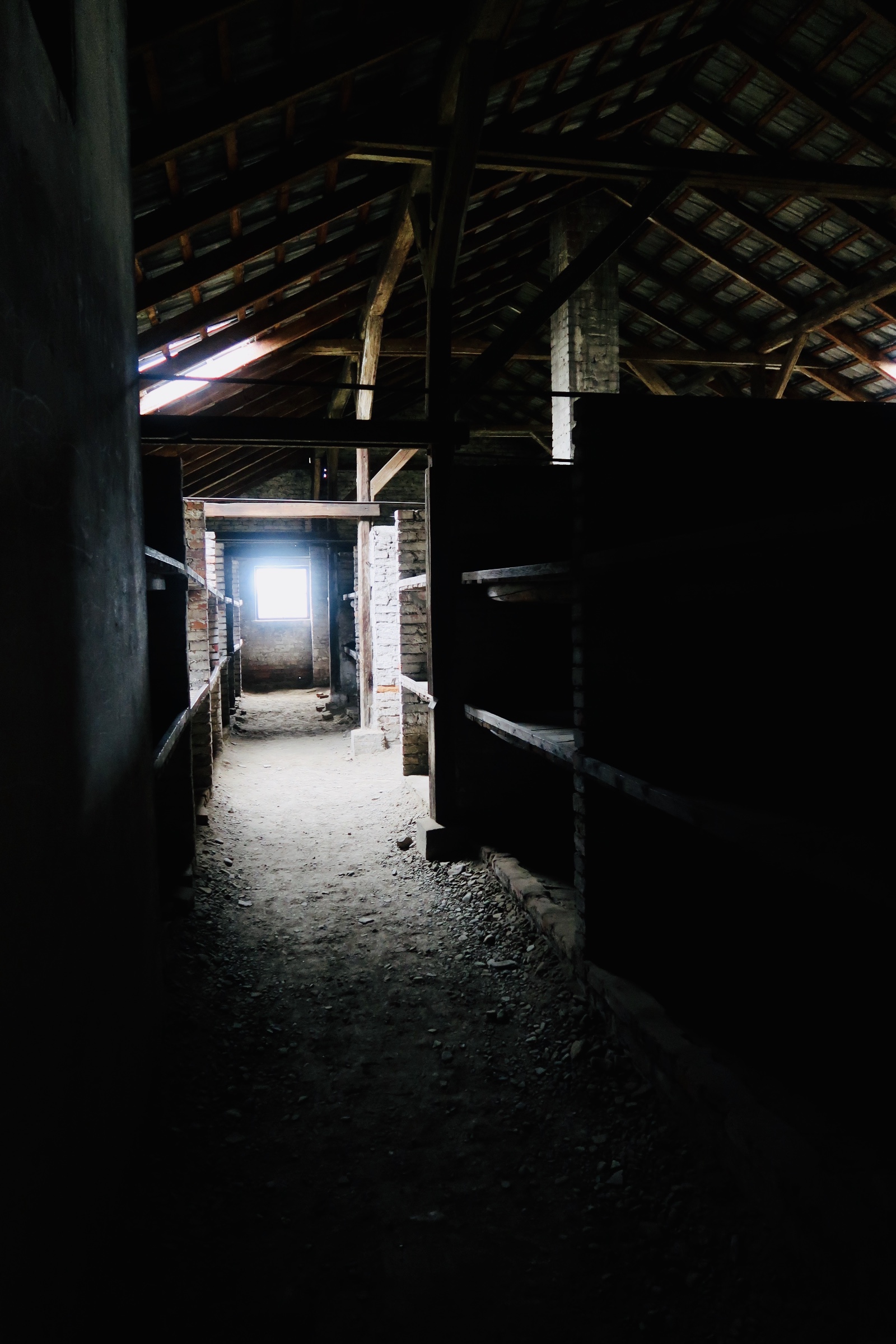
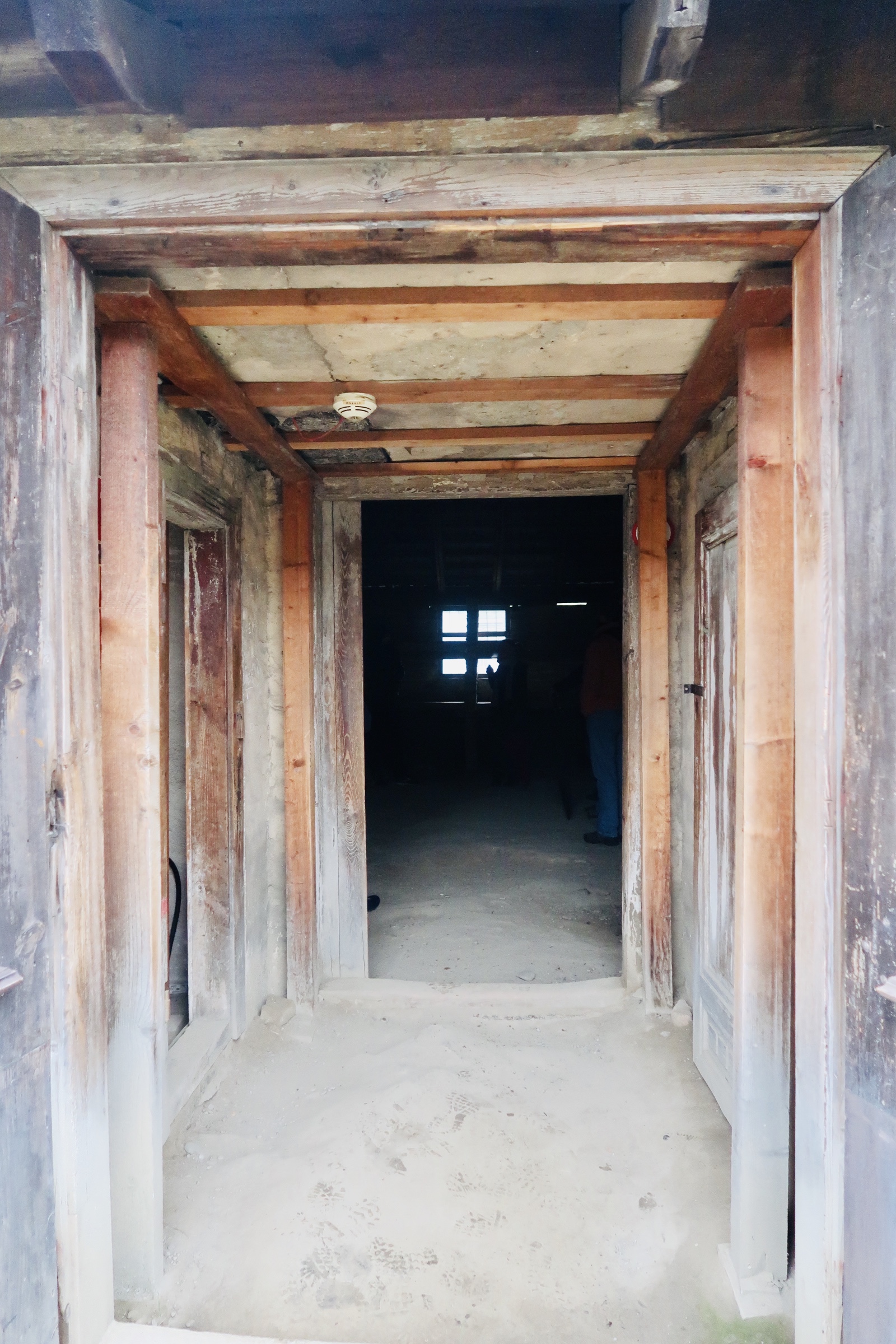
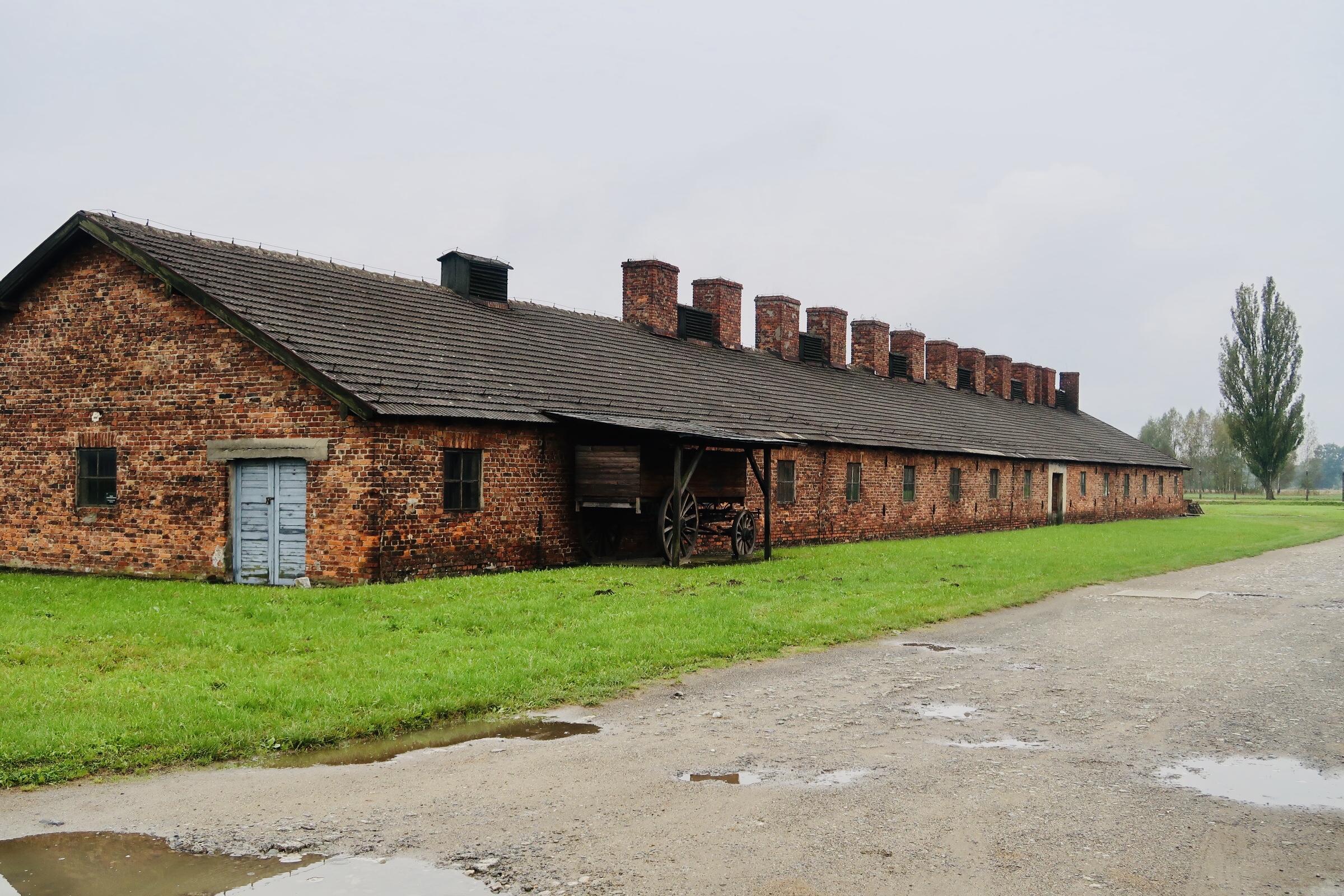
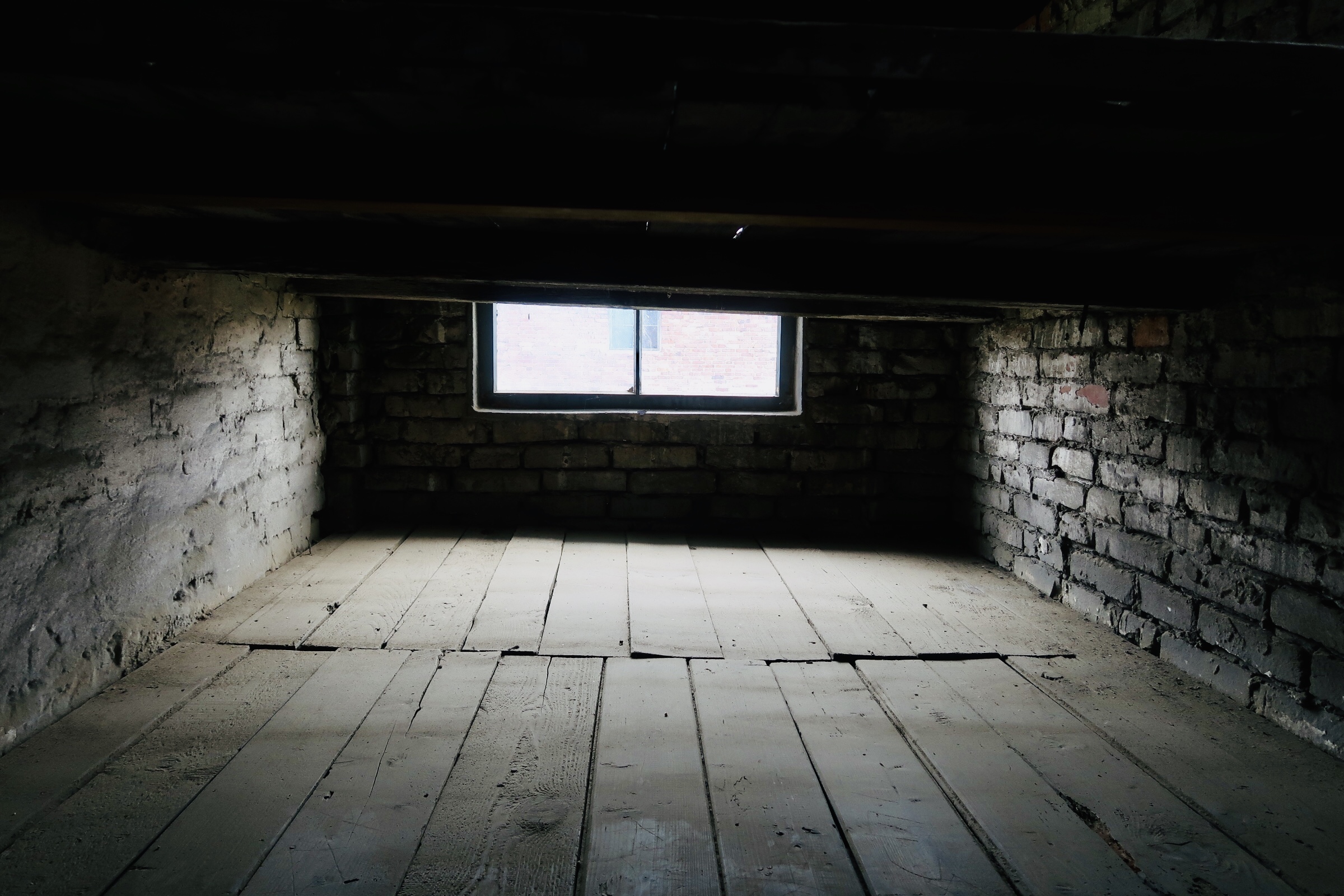
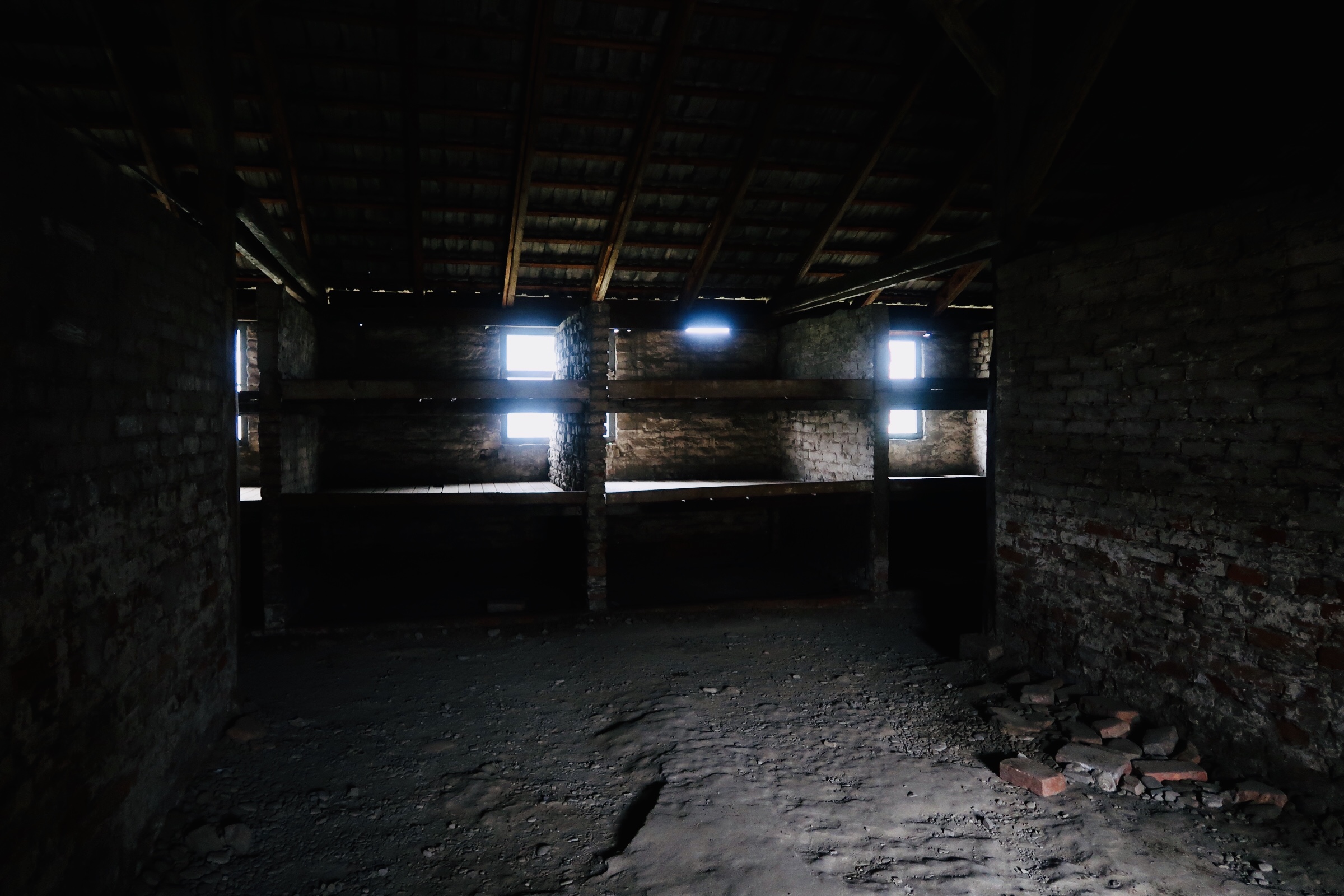
Finally, at Auschwitz II-Birkenau we were able to walk into one of the barracks that would have been used during the camps operation.

The one that we walked in was actually used for isolation of women prisoners who were selected as unfit and were to be sent to the gas chambers. If this barrack was full, they would be placed in the yard and the gate was locked until they were taken to the gas chambers. 

“For the dead and the living, we must bear witness” – Elie Wiesel

A Long Weekend in Garmisch – Partenkirchen

We recently took a little trip “to the mountains”. The Garmisch- Partenkirchen area is an area on the Austrian border in the Bavarian Alps. This area is a great one for hiking, mountain climbing, skiing, and just feeling right in the heart of the alps and nature. It has something for everyone. We took a quick weekend getaway and explored some of the top sites. 

Garmisch and Partenkirchen were two separate cities for quite a long time, up until 1935 when they were forced to “merge” for the Winter Olympics in 1936. Partenkirchen is the older of the two as it dates back to Roman times and A.D. 15. Garmisch was not mentioned until 800 years later. The two cities have quite the history between the land, the plague, and the witch trials. Not to mention, the Winter Olympics of 1936 (the first year Alpine Skiing was competed) and then World War II when the town held a major hospital for the German military. The towns have distinct differences, with Garmisch being more “modern” of the two and the area is now referred to as Garmish-Partenkirchen OR GAP (although many people try to simply say Garmisch).

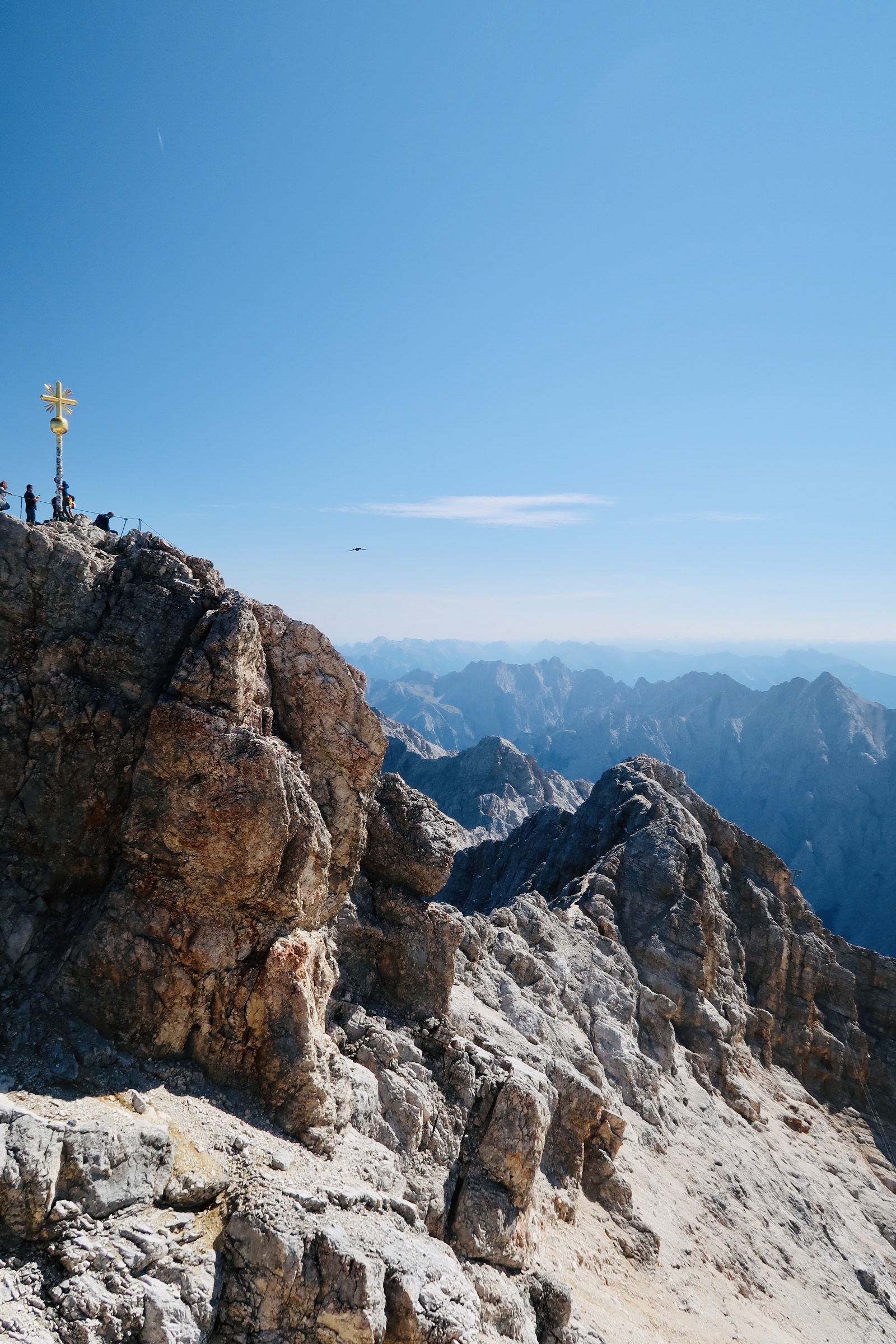
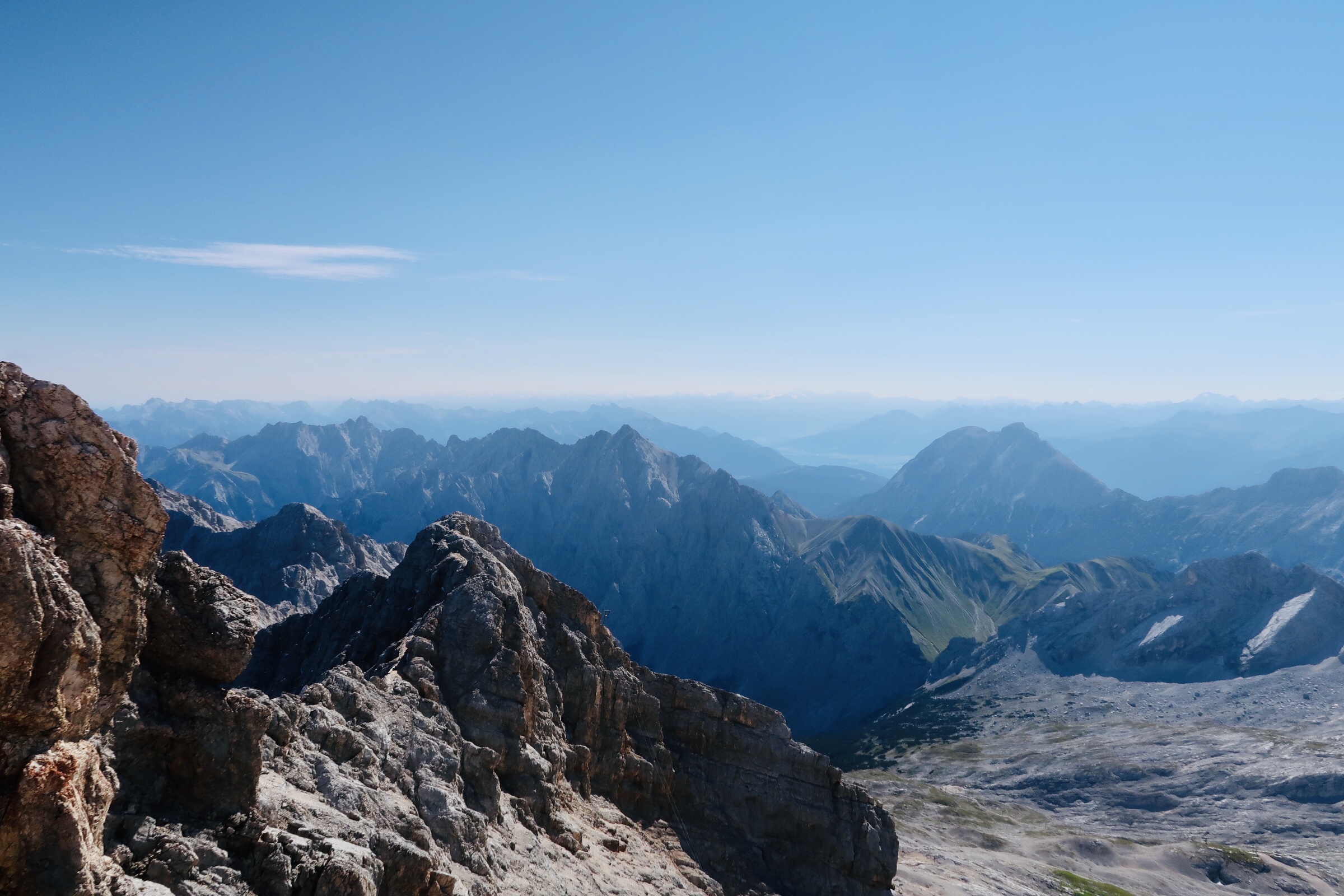
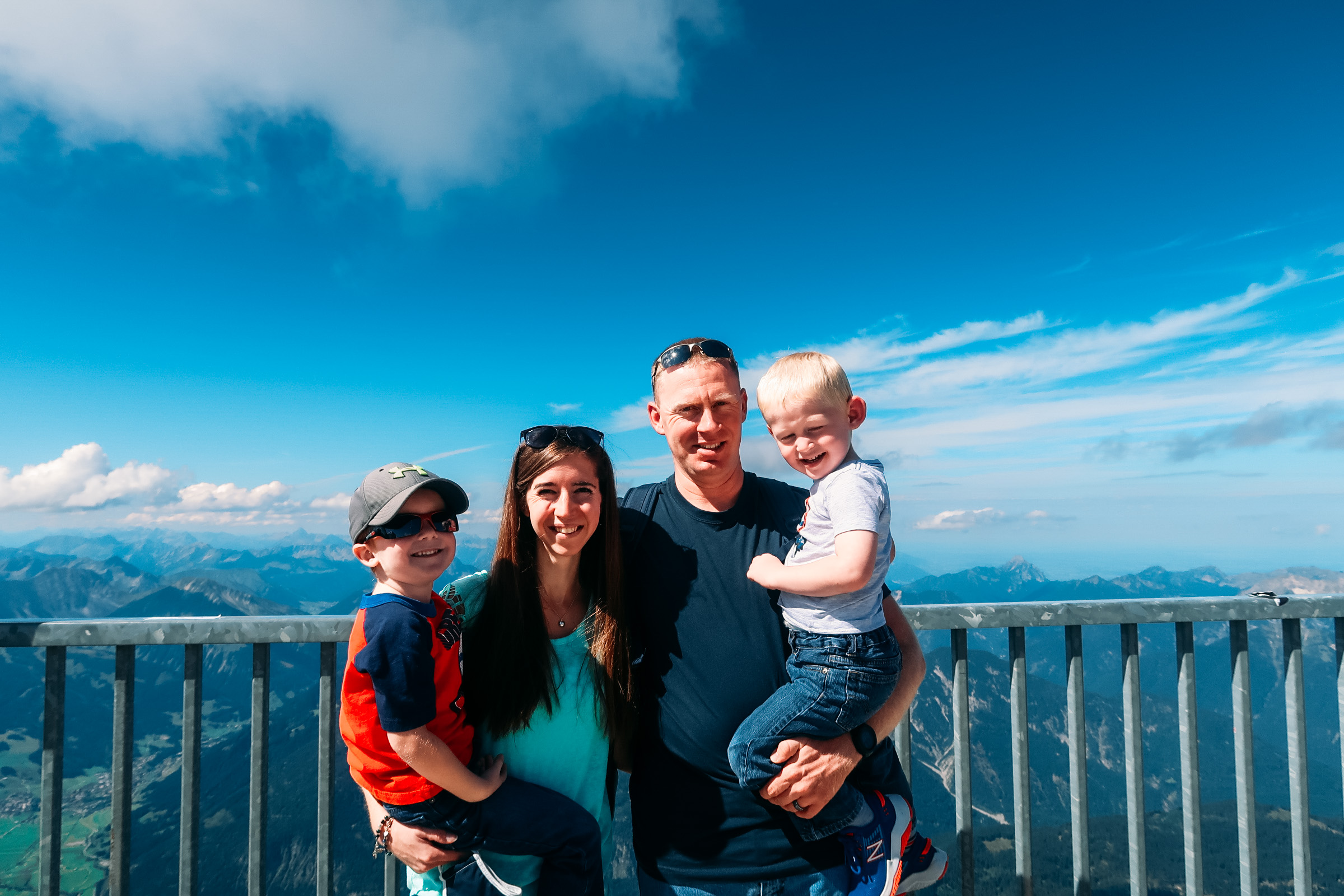
So, upon our arrival to Garmisch-Partenkirchen, we decided to start with a trip up the mountain, to the highest peak in Germany, Zugspitze.

The highest peak of the Wetterstein Mountains, this is one of the most incredible viewpoints in the region. The German/Austrian Border runs right through the peak, so you can head for lunch at the peak in Austria (or Germany) and see the beauty all around. The peak was first reached in 1820 by Josef Naus, Maier, and Johann George Tauschl. If you choose to climb, you have three routes to take, however if you’re like us, you can also choose from three different cable cars to “ride” up to the top. We took the Seilbahn Zugspitze up which provided us with some incredible views both on the way up and down. 

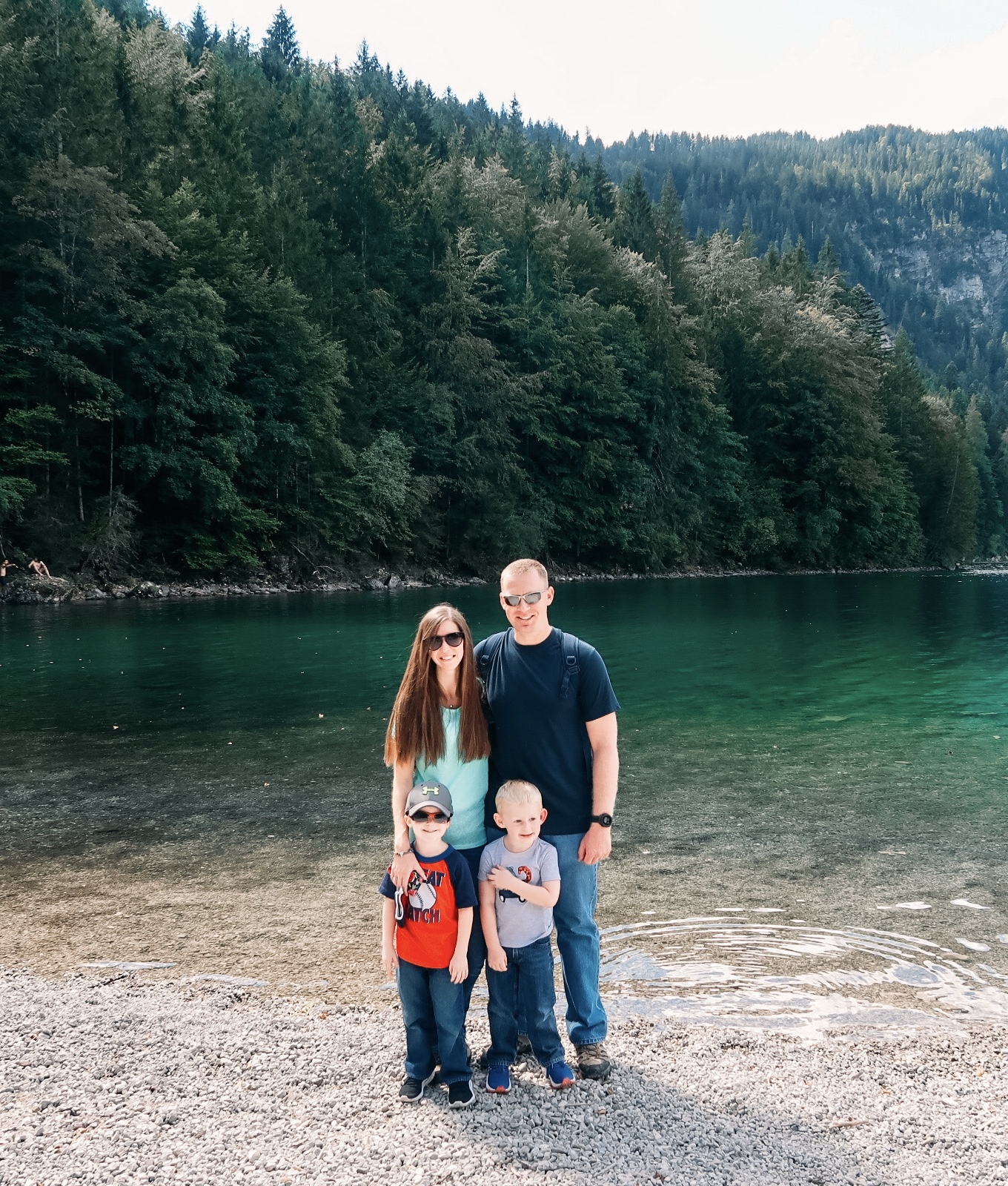
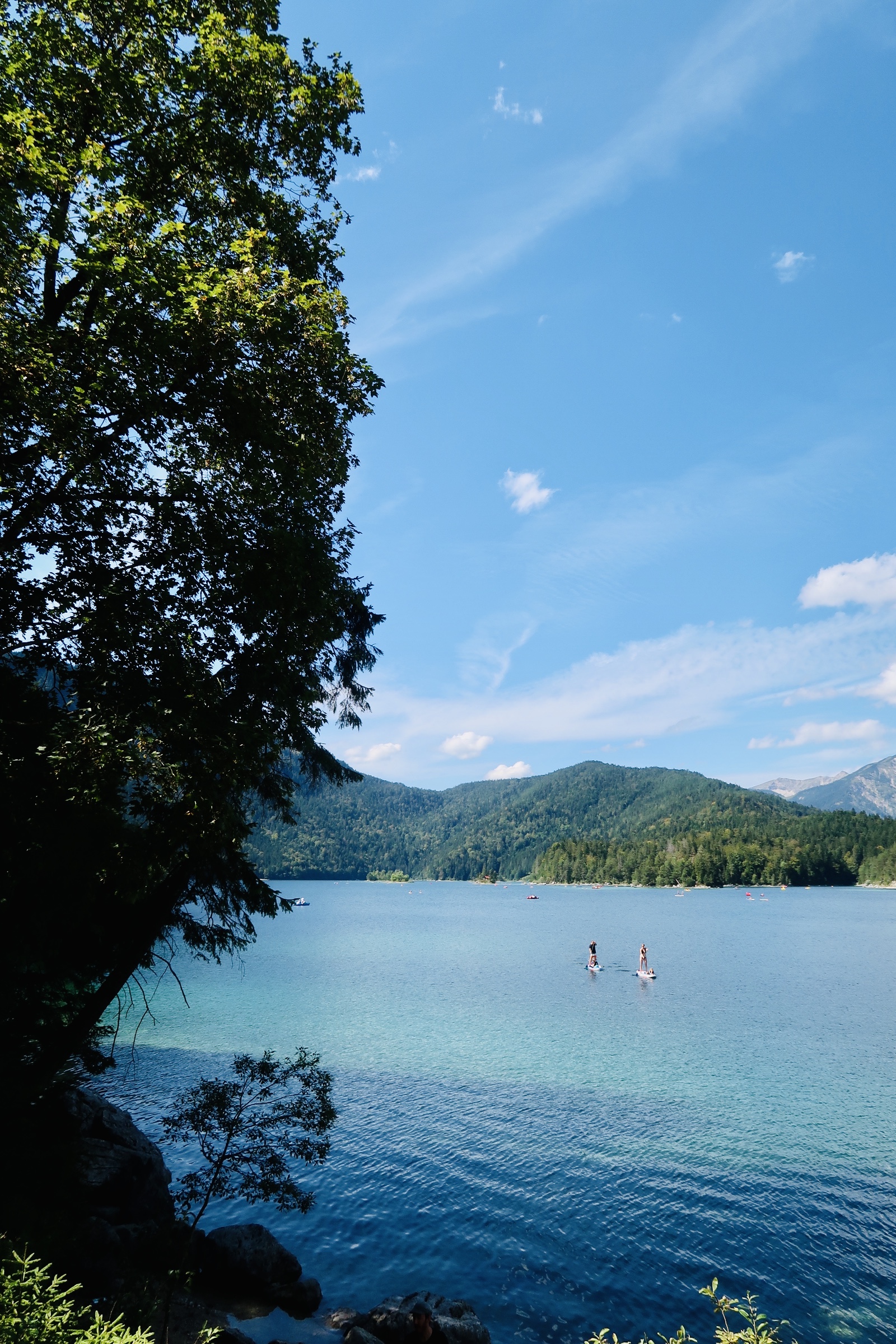
Once we came down, we walked down to Lake Eibsee. Lake Eibsee is one of those lakes that I feel like are beyond words. Created by a rock fall, the water is crystal clear, the deepest, prettiest shade of blues and greens that you could dream of, and provides the peace and clarity that only being by the water can provide. It is actually considered one of the purest lakes in the Alps. Similar to Alpsee at Hohenschwangau/Neuschwanstein or Forggensee in Fussen, this is a level of beauty that just seems to need to be seen (and then can’t be captured perfectly because you need to see it in person) and just held in your soul. We walked around a bit of the lake and found another little “hide away” lakes that was also incredibly gorgeous.

From there we headed in to town and over to our Hotel. We stayed at Reindl’s Partenkirchner Hof and I would highly recommend a stay here. The hotel was beautiful, and the room was incredible. They had offerings throughout the day, could arrange several activities for guests, and the location was great. From check in, we wandered over to the site of the Winter Olympics Ice Rink. Fun fact about me, I was a competitive figure skater for about 12 years. Seeing the history of the ice rink was awesome and seeing the location was really cool. We headed more into the Altstadt side of town and found a little restaurant to eat some dinner. We ate at a restaurant called Zum Wildfchutz and the food was delicious. I got a bread/pizza concoction and my husband got a meat dish. We also sampled the 2020 Oktoberfest beer from the Hacker-Pschorr brewery, which was also delicious (I think I’ve just decided that German beer is the only beer for me- especially the Oktoberfest brews). 

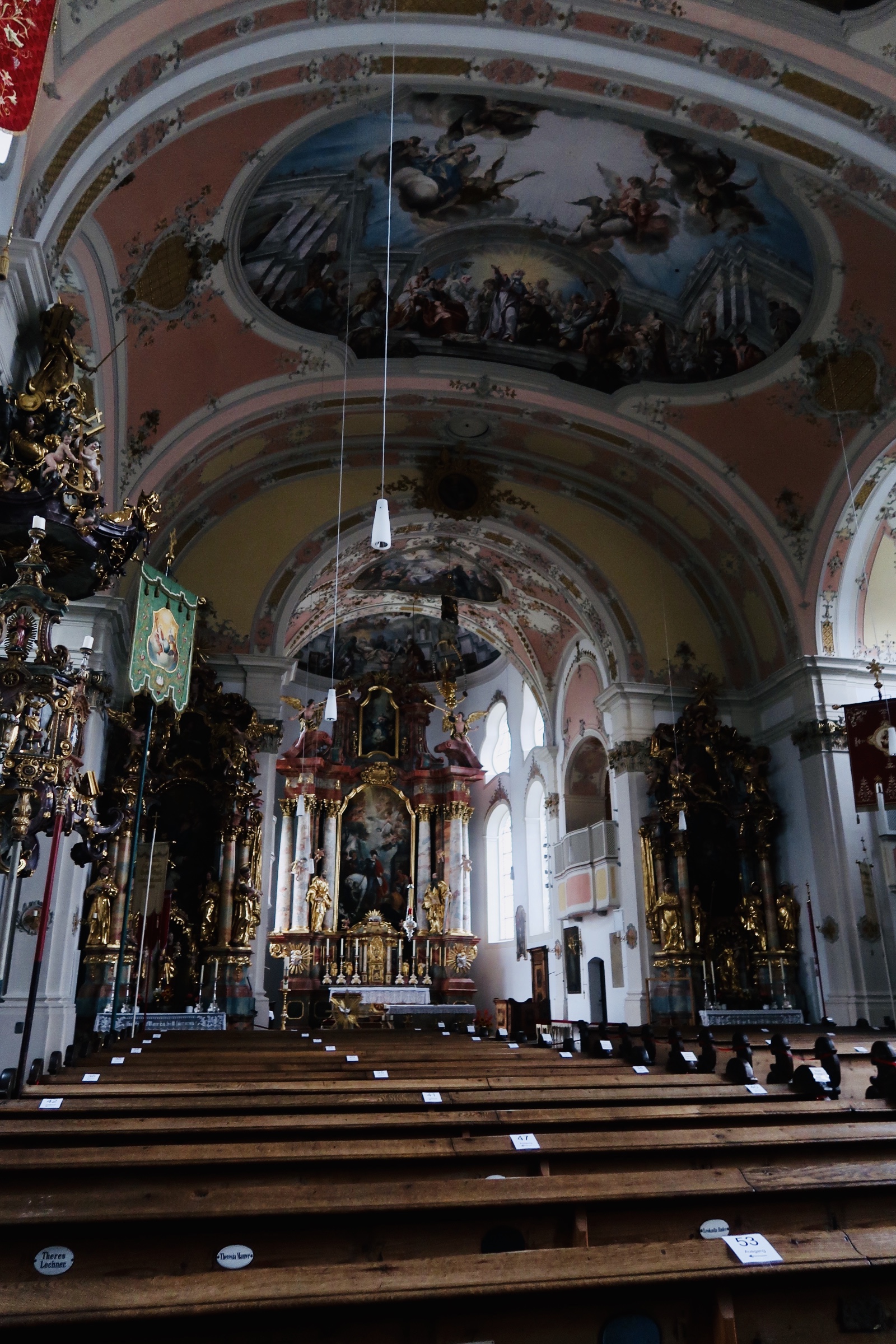
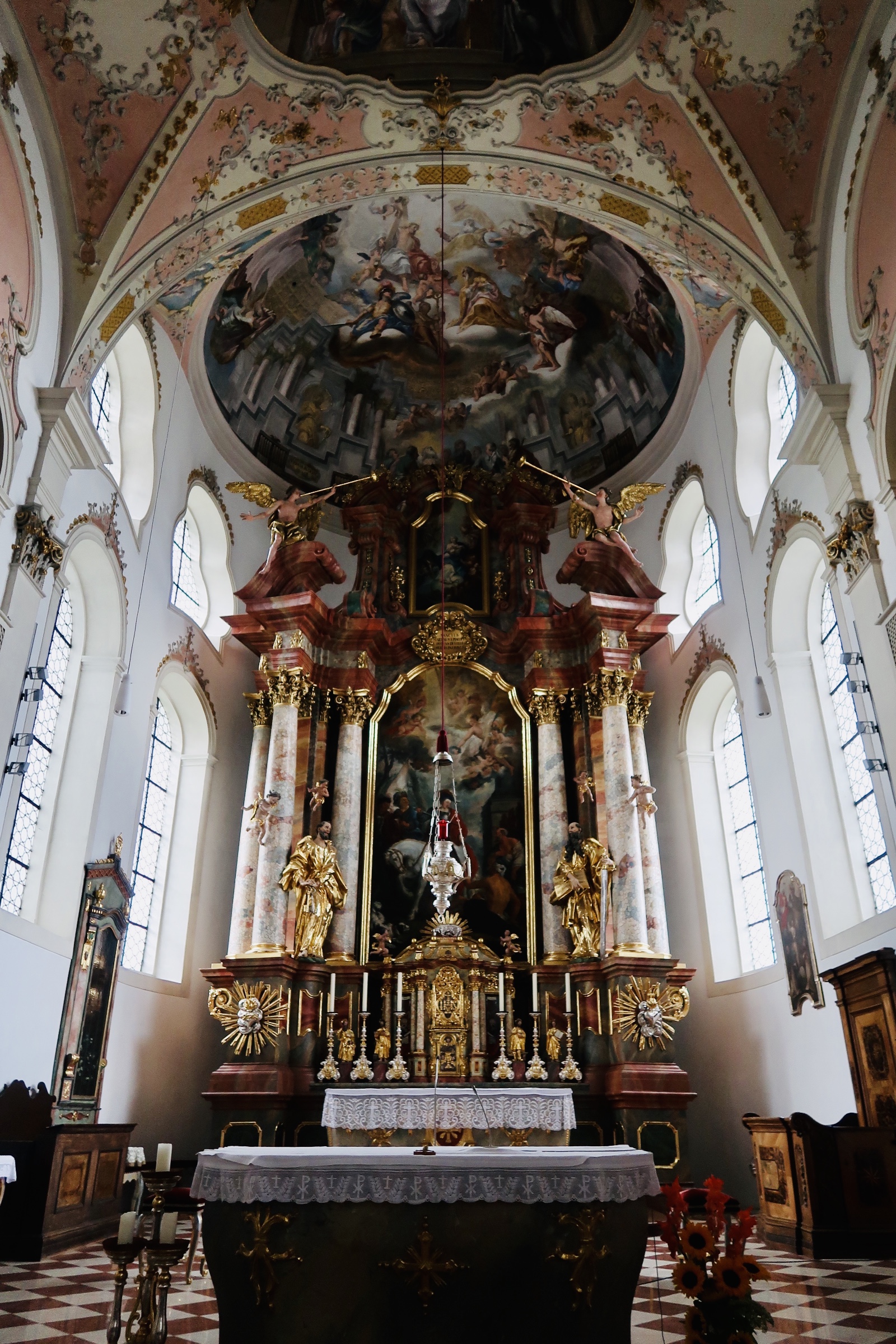
After the massive meal, we felt like walking a little bit longer (to walk off a bit of that delicious meal) and found ourselves in a church, Pfarrkirch St. Martin. This is one of those gems that you could very easily miss just by not walking in. I find churches to be some of the most incredible stops to make when traveling as they are all different in unique ways. Yes, the structure and such can be similar, but each church is still incredibly unique. And this church was breathtaking.

This particular church is first referenced (and an initial church was built) in the 18th century, with mentions going back to around 750. The current church was renovated starting in 2007 to repair the entire building (from the roof to the flooring). The ceiling paintings were painted by Matthaus Gunther. When we walked through an organist was playing the organ, which only added to the special feeling that we were experiencing. That was the perfect end to our day. 

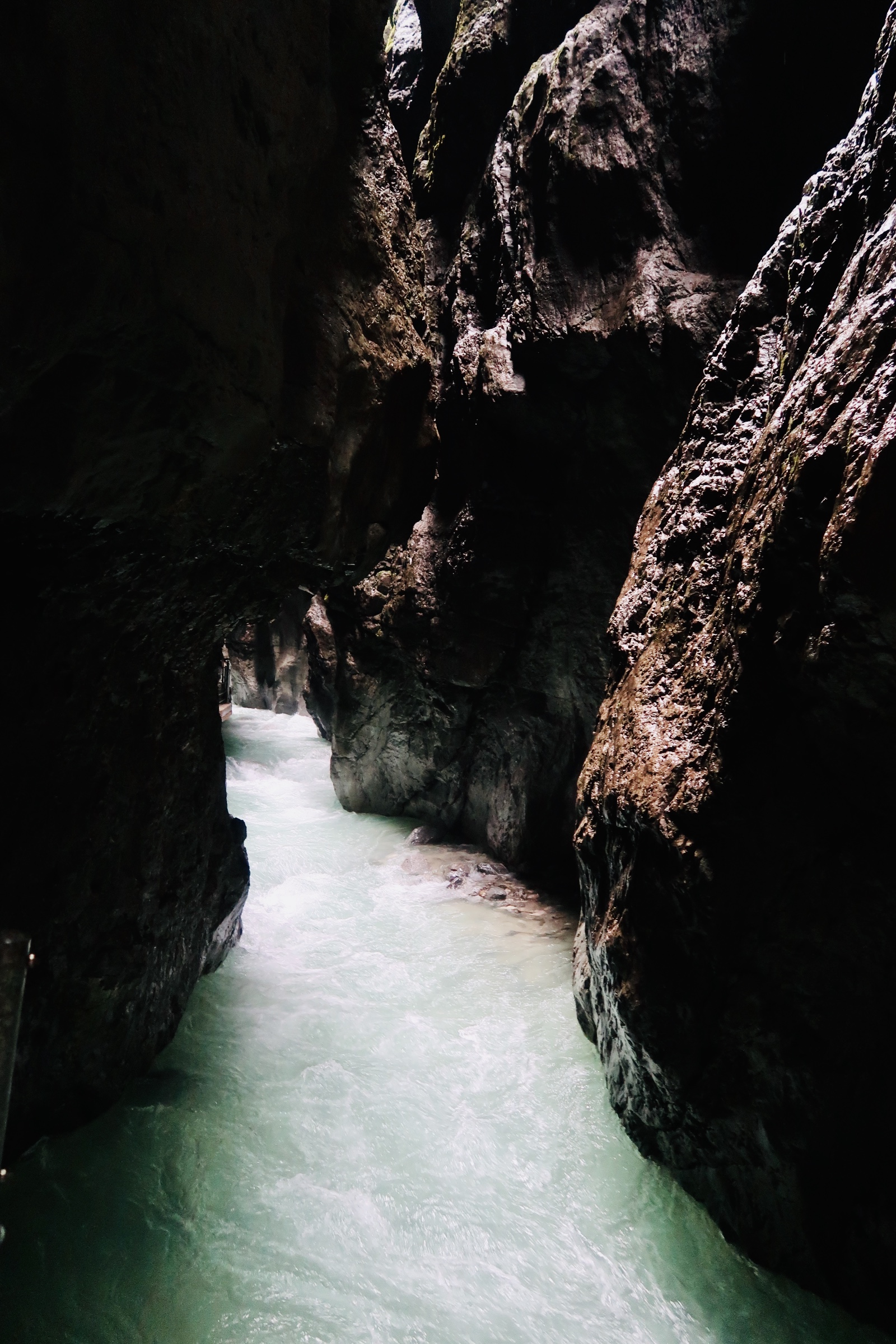
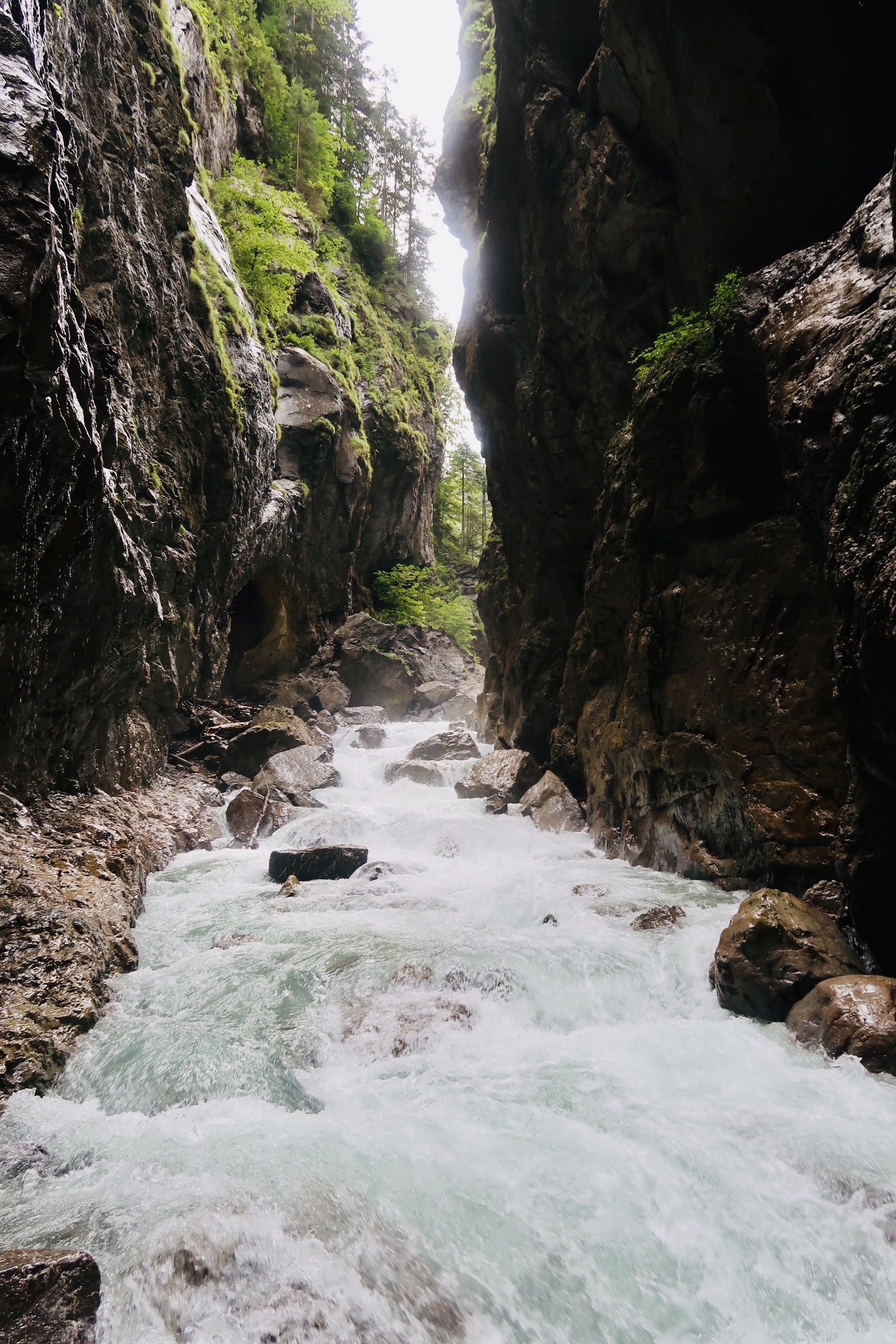
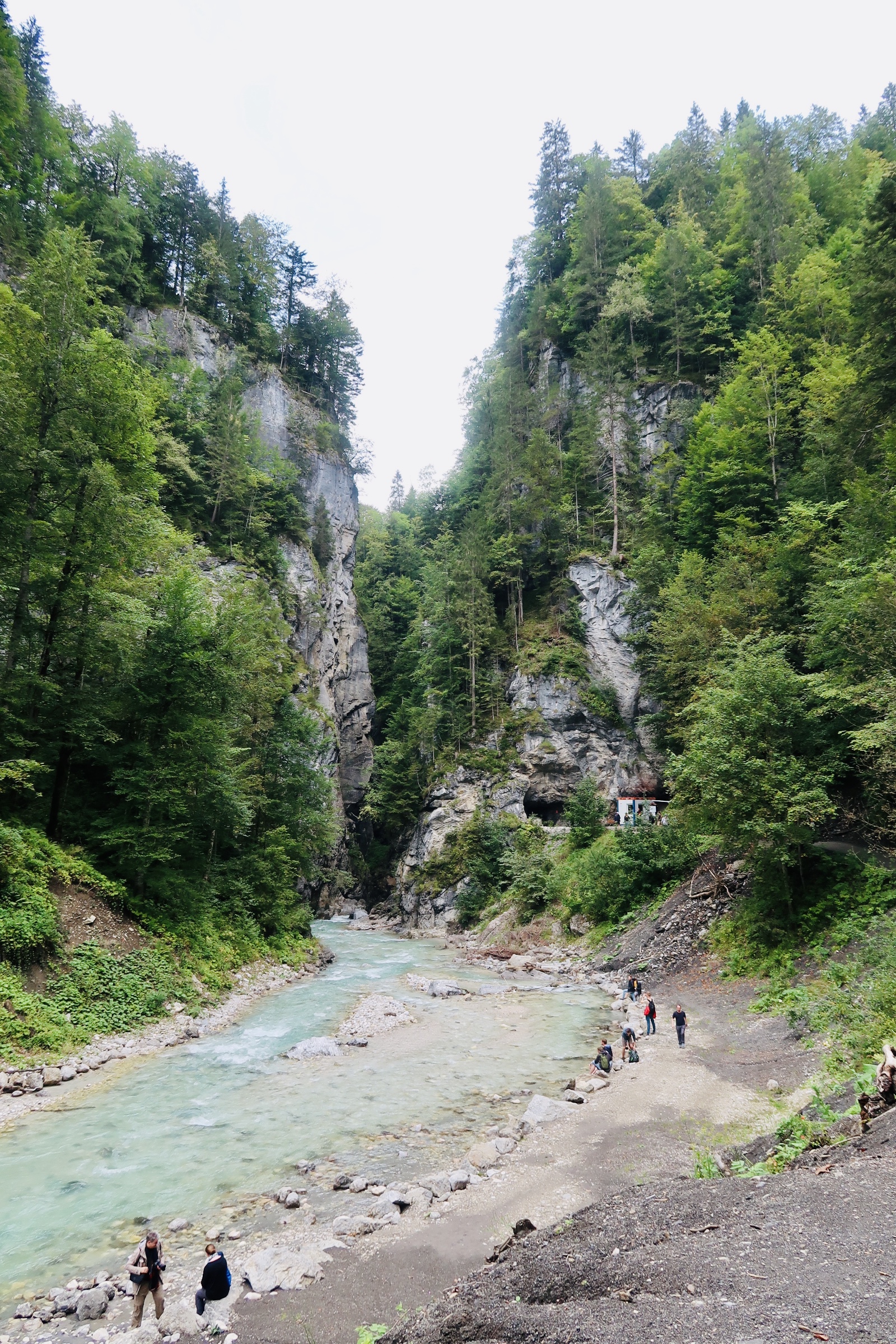
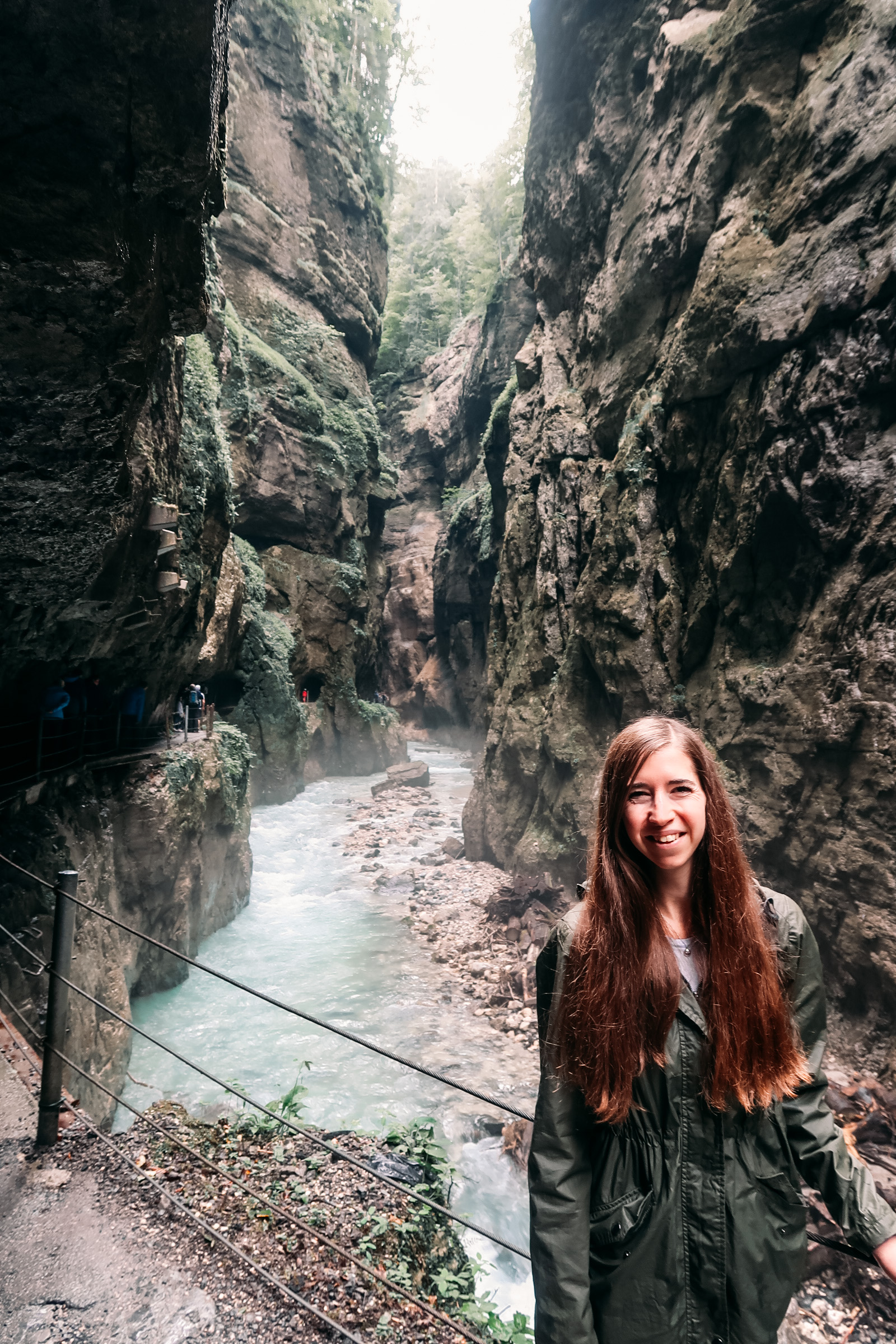
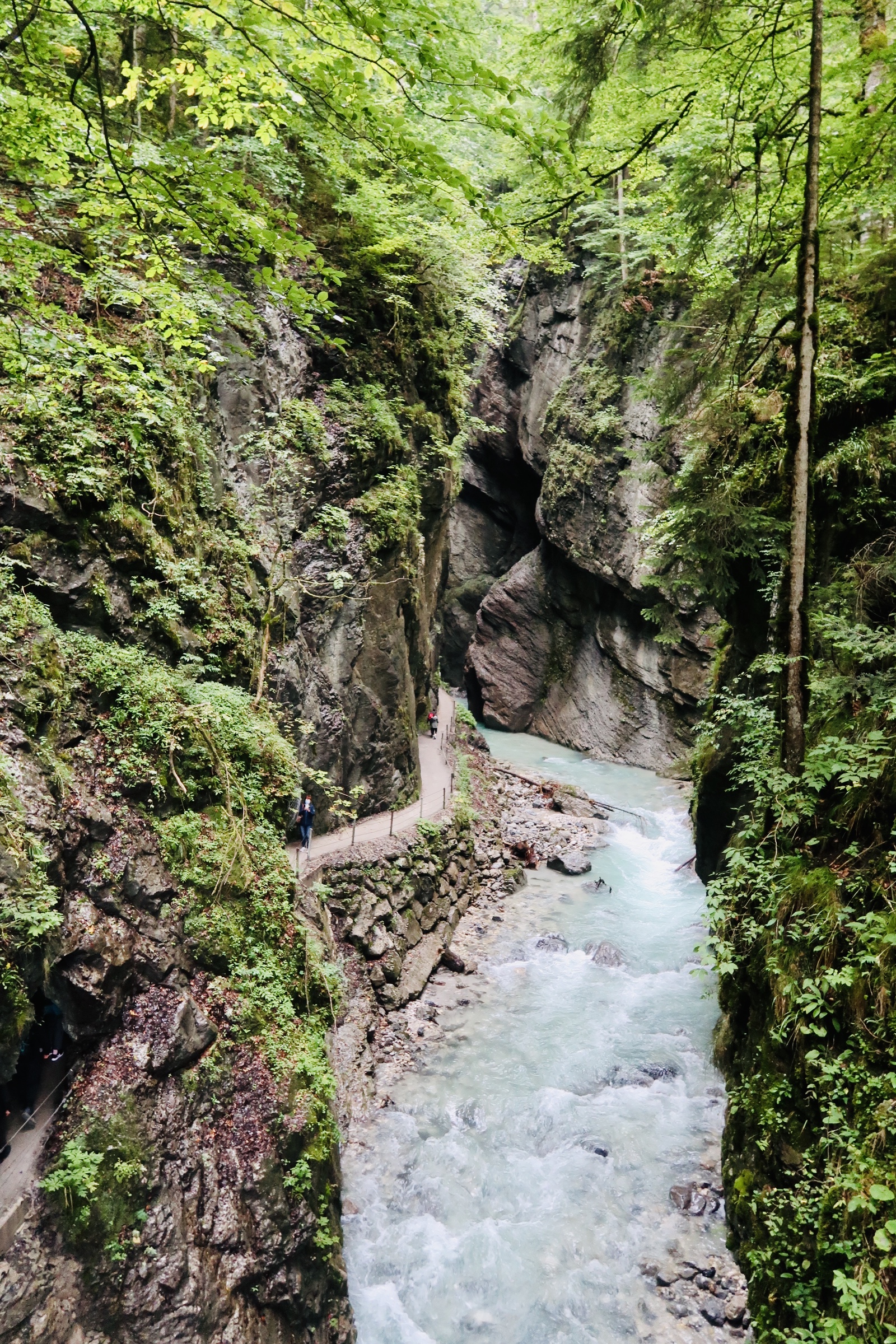
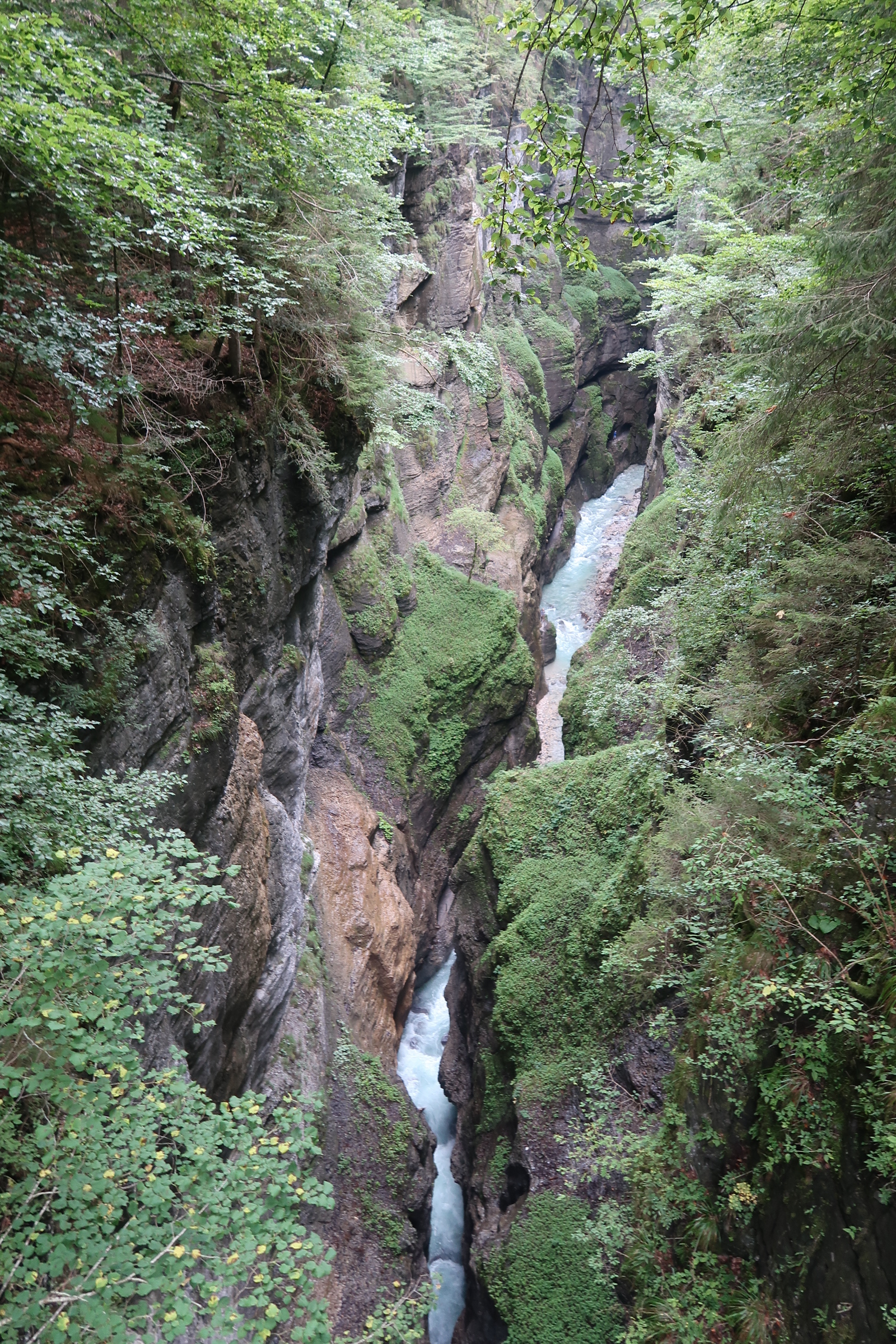
The next day we spent our entire day in the Partnach Gorge area. In its most basic (read: I am not a geologists and I don’t understand a vast majority of that) sense, the Partnach Gorge is a 702-meter-deep gorge that has been incised by a mountain stream. In some places the gorge is over 80 meters deep. The gorge was initially used by locals in the 18th century as a way to transport firewood, as well as a rafting stream (until the 1960’s). In 1912 the gorge started to be developed for tourists to visit and has undergone changes as the landscape changes (there was a rockfall in 1991 that changed the path), and the walk is…incredible. 

Sometimes we experience, or visit somewhere that we cannot put into words. Somewhere that just connects with every fiber of our being, and the experience of visiting that place just transcends everything else. That was Partnach Gorge for me. It was just incredible. The rush of the stream, the rockwall all around, it was an experience that I will never forget. Not to mention, the actual water itself was a gorgeous blue/green that you think only exists in highly edited photos. 

However, to back up for a minute (I got a little excited and ahead of myself), we started the day at the Olympic Ski Park. We didn’t climb the stairs to the top of the jump, but rather stopped on our way to the gorge (as you have to pass through to get to the walking path for the gorge). So, the Olympic Ski Stadium.

The 1936 Winter Olympics were only the fourth Winter Olympic Games and set quite a bit of records and history. You are able to climb to the top (although we did not do this) and you are also able to see what the skiers would have seen (and still do- there are two annual competitions held in this stadium). If you are into the Olympic sites and history, you are also able to visit the bobsled track which held the “most dangerous track” title for quite a long time. 

Now, after the Stadium and after you walk through the gorge, there are two different routes to get back to the gorge entrance (I’m actually pretty sure there are more than two, we just chose between two that we mapped out). We let our older son Colton choose the route, and he chose the “road less traveled”.

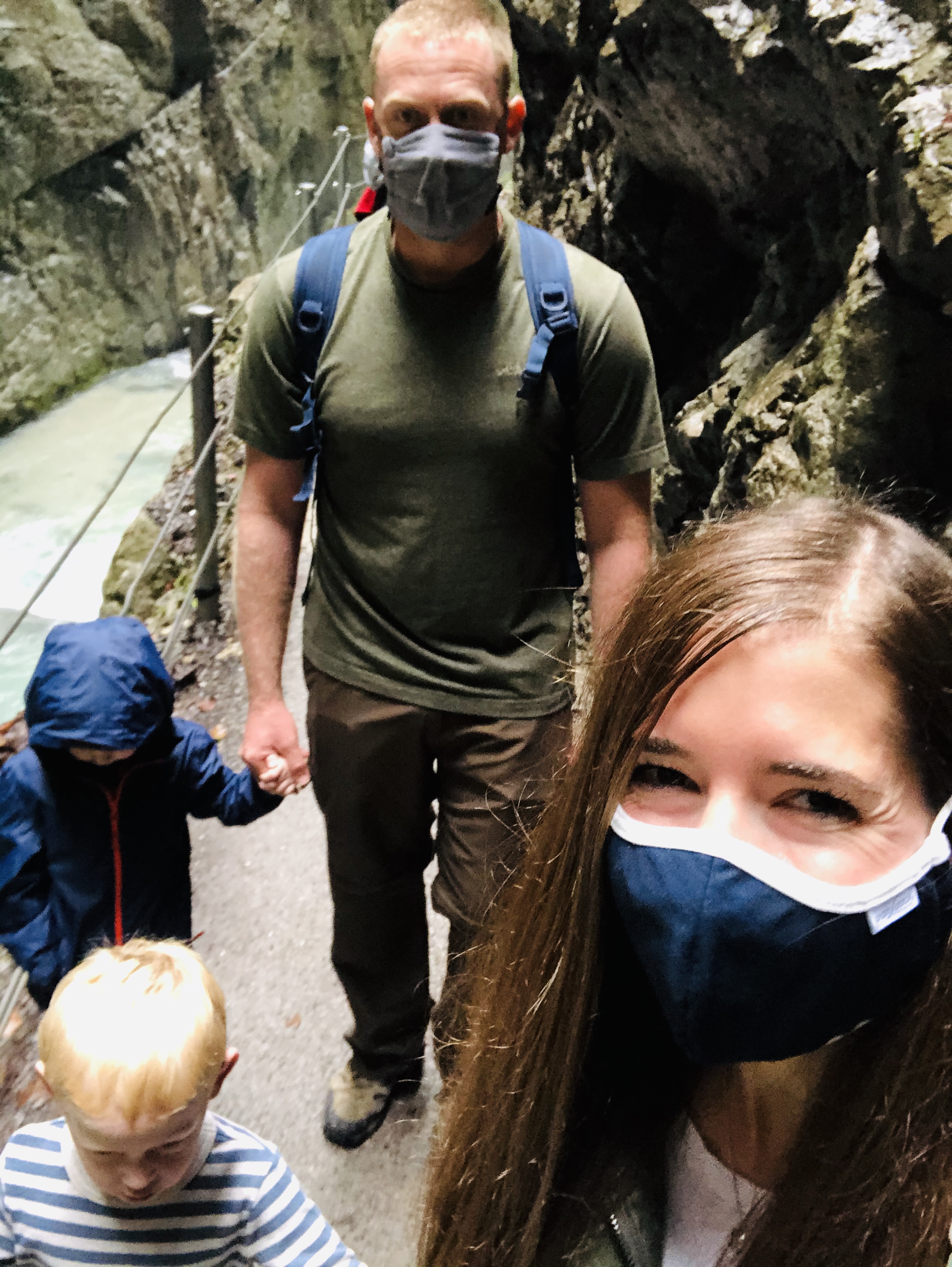
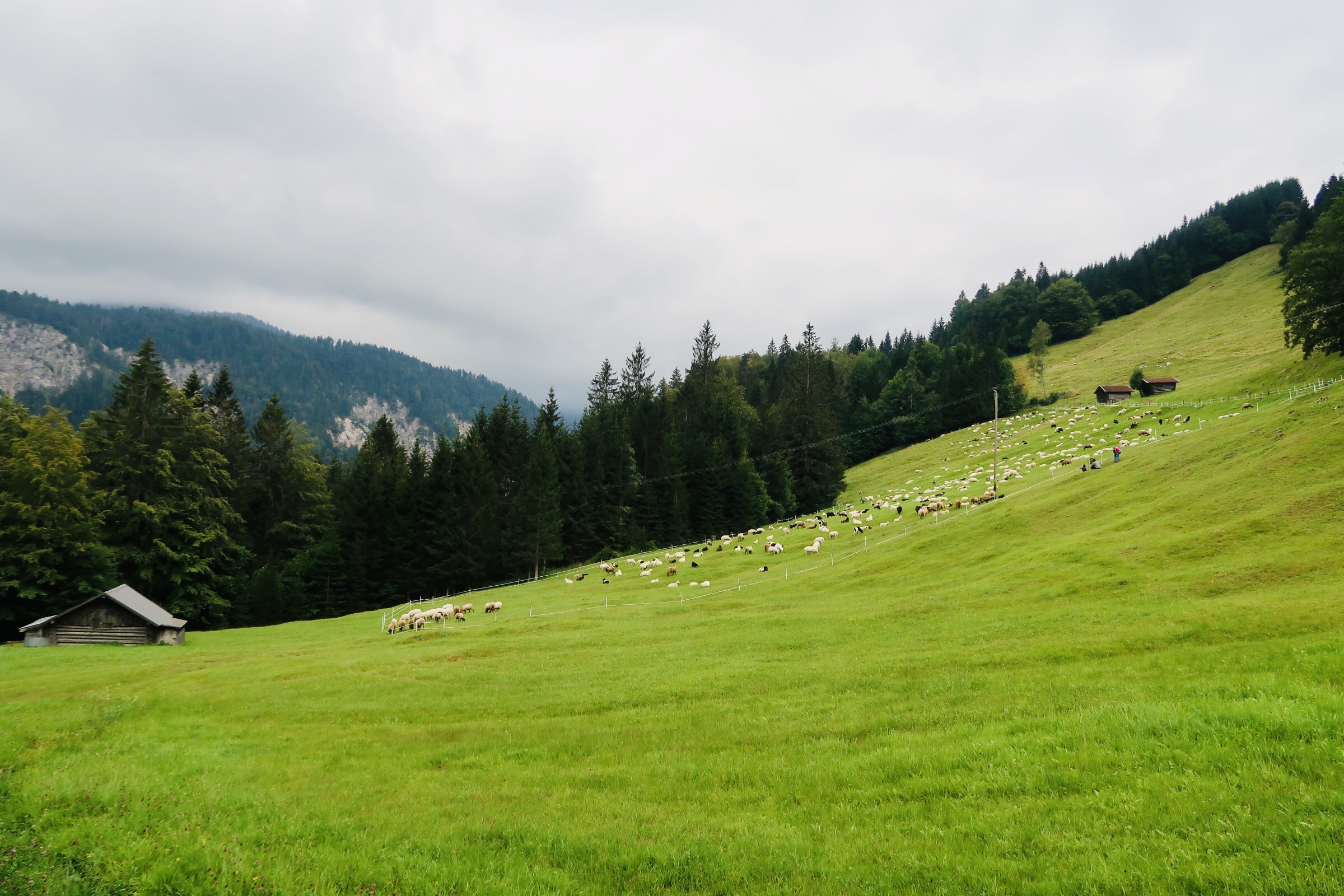
This path meant climbing partially up the side, then back down, and back up again. It was quite the hike, but so well worth it as the scenery of the Alps is unparalleled. Not only do you get the views within the Alps, but you are also able to see the gorge from above (though you can see this whichever path you choose- there are definitely easier paths to take). It was quite the way to spend our day and I loved every minute of it. 

Our final day on our weekend was our “head home” day, but we incorporated one final stop on our way home to Schloss Linderhof (or Linderhof Palace). Now, I’ll devote an entire post to Linderhof (just like I will for Heidelberg Castle, Cochem Castle, Burg Eltz, and all the rest- they ARE coming I promise), but I’ll give some bare bones here to hold you over till that post.

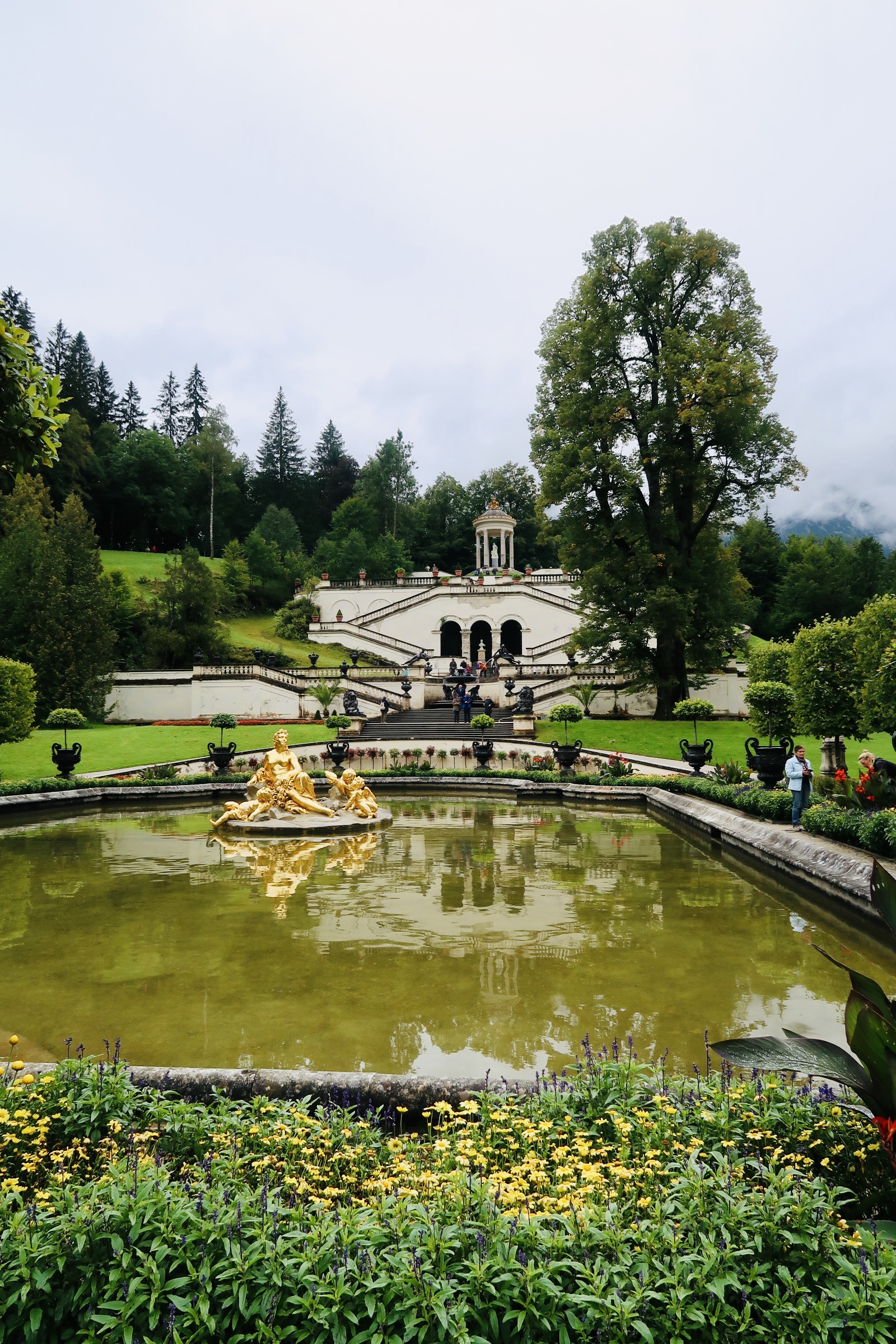
So, Linderhof. Ludwig II was quite the dreamer and builder. He commissioned a lot of different monuments and statues (Walhalla, Liberation Hall, Neuschwanstein, and many, many, more) and he turned these ideas into realities fairly quickly. Not long after redesigning rooms in his Munich residence and laying the foundation stone for Neuschwanstein, he started plans for Linderhof (all of this took place 4 years after he crowned King). His initial plans didn’t come to fruition, however what did was incredible. The original building was the Foresters house, which was used when the King (Ludwig’s Father, Maximilian) and Crown Prince would go on hunting trips. The palace was remodeled and rebuilt in various stages, but ended up being the only palace Ludwig II saw completed in his lifetime. 

This palace easily jumped to almost the top of my favorite castle list (it’s battling up against Hohenzollern Castle if you’re wondering) as both the building itself and the location is perfect. Ludwig II loved the concept of the French palaces (and Versailles in particular) and this most definitely reflected that love. It’s ornate, it’s incredible, and the attention to detail, to making smaller rooms appear larger, while still trying to keep them “cozy” is just wonderful. Not to mention the garden and the exterior and something to behold as well. What a way to end our weekend. 

A Girls Weekend- Heidelberg

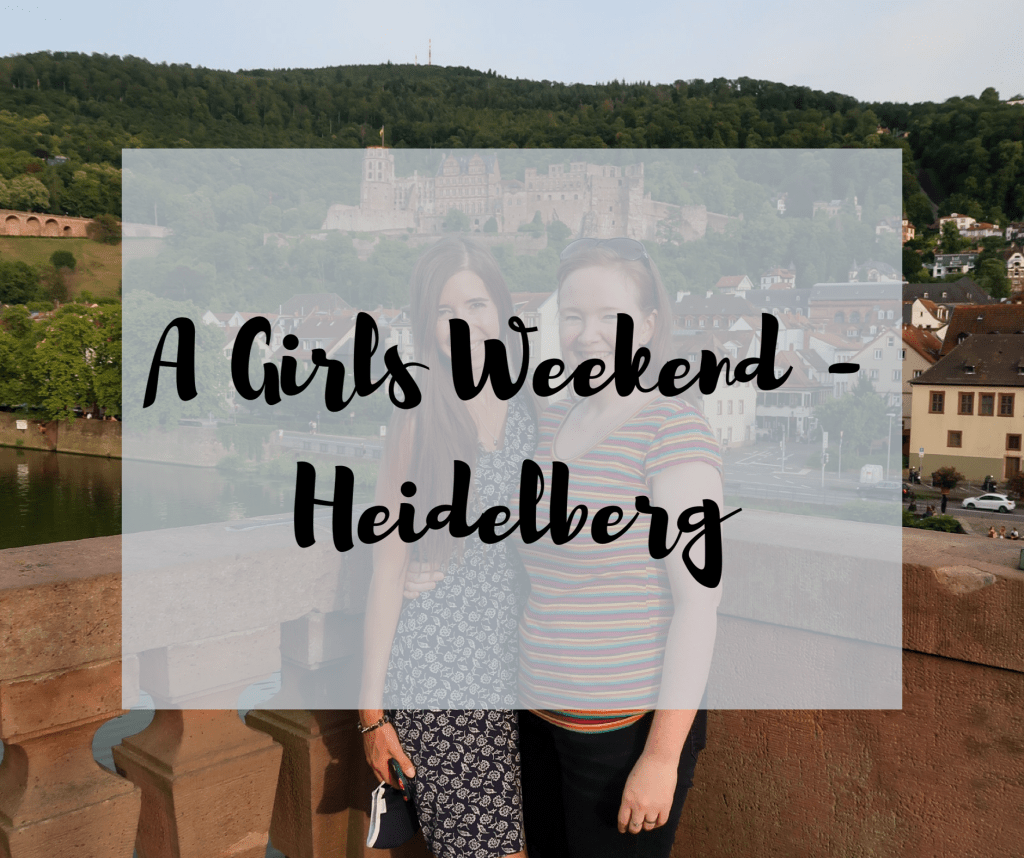
After months and months, I finally was able to do my little girls’ getaway! Back in March I was supposed to go on a girl’s weekend to Prague. This was something that we had planned, booked train tickets, an Airbnb, and some things to do while we were there. Then everything shut down in Europe and we had to cancel the entire trip (and any hopes of doing any girls things at all that weekend-even locally). In the grand scheme of things, it wasn’t that bad, but it was definitely a bummer for us, and I’ve been waiting since then to be able to do a little get away. So, when a free weekend popped up, I took it and one of my best friends, Kim, and I headed out to Heidelberg.

Heidelberg is a university town in south-west Germany, right on the Neckar River. The city itself has been designated a “City of Literature” and has quite a scientific hub as well within the university. The city also serves as the site of the remains of the earliest signs of human life in Europe ( a jawbone was found in 1907 dating back 600,000-200,000 years ago). Heidelberg as a region dates back to the 5th century BC, with the Celtic people and then the Byzantine/Roman Emperor Valentinian building homes in the location. In the 1st century AD a Christian church was founded inside the Celtic Fortress, with a Monastery and Abbey being added in the 12th century.  The actual founding of Heidelberg is considered to be in 1196. Heidelberg then went through two changes of “rulers” first the house of Hohenstaufen, then the Duke of Bavaria, Ludwig I acquired the city. In 1386, Heidelberg University was founded and, finally, of the upmost importance to me, Heidelberg’s library was founded in 1421, making it the oldest (public library) in Germany. So, a lot happened in the town’s history, long before our more modern history.  

A couple other random facts about Heidelberg, before I get into what we did on our 24 hrs…

Heidelberg went through quite the religious battle (as did most of Europe at one point or another), concerning Lutheranism and Calvinism. In fact, it played a leading role in the conflict, hosting Martin Luther shortly after his Ninety-Five Theses. Heidelberg was also a key player in the beginning of the Thirty Years War, after Frederick V was overthrown in 1621 by the House of Habsburg. Heidelberg has seen several different countries invade, including Sweden and France. And, during World War 2, Heidelberg was a stronghold for the Nazi Party (the NSDAP-National Socialist German Workers Party). The local populace was very much on the side of the Nazi’s and the university served to build an amphitheater and hold rallies during Hitler’s rise. While Heidelberg wasn’t targeted by bombings or other air raid actions, the old treasure bridge was destroyed (3 arches) by Germans fleeing in March of 1945. One final note, Heidelberg has one of the largest American communities outside of the United States (and I can definitely see why), along with an overall large population of expats from around the world. 

Ok, so now that we’ve got the history of the city out of the way (seriously- that was much longer than I had originally intended), let’s talk about what we did. We basically spent 24 hours wandering the Altstadt (Old Town), just reveling in being in an old German Town. The fact that it’s home to so  much history gives it a certain…feel and we just wanted to soak that up. 
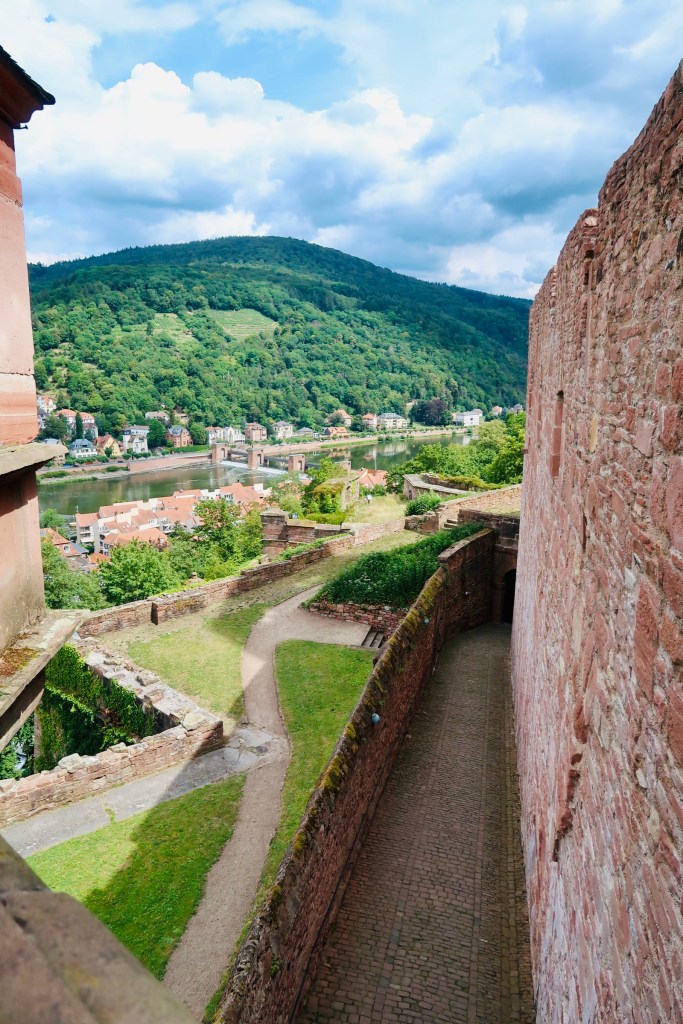
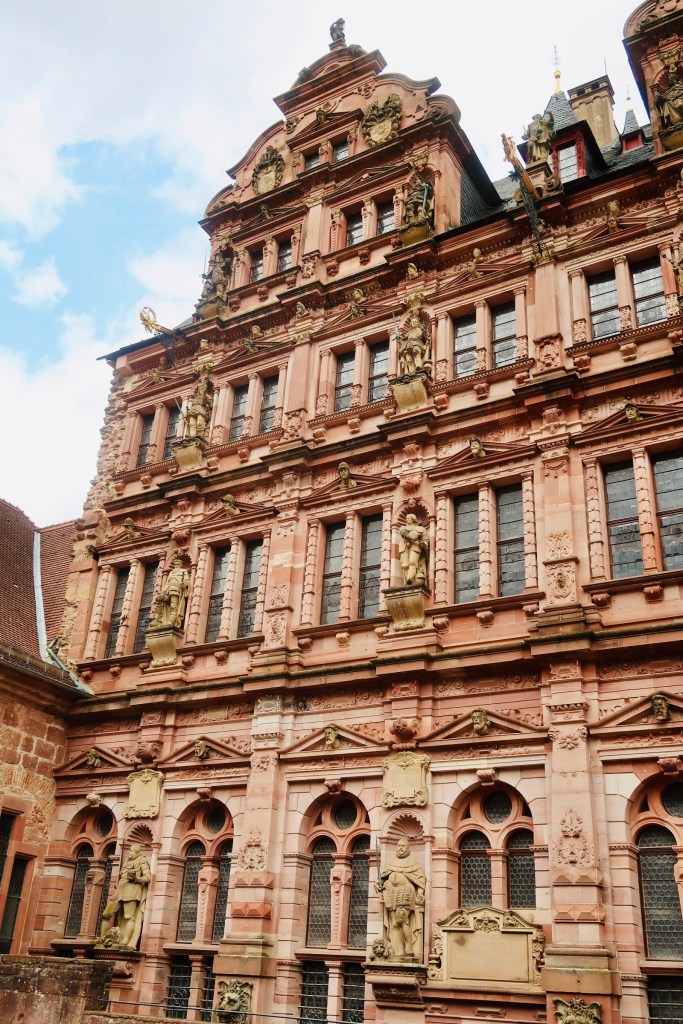
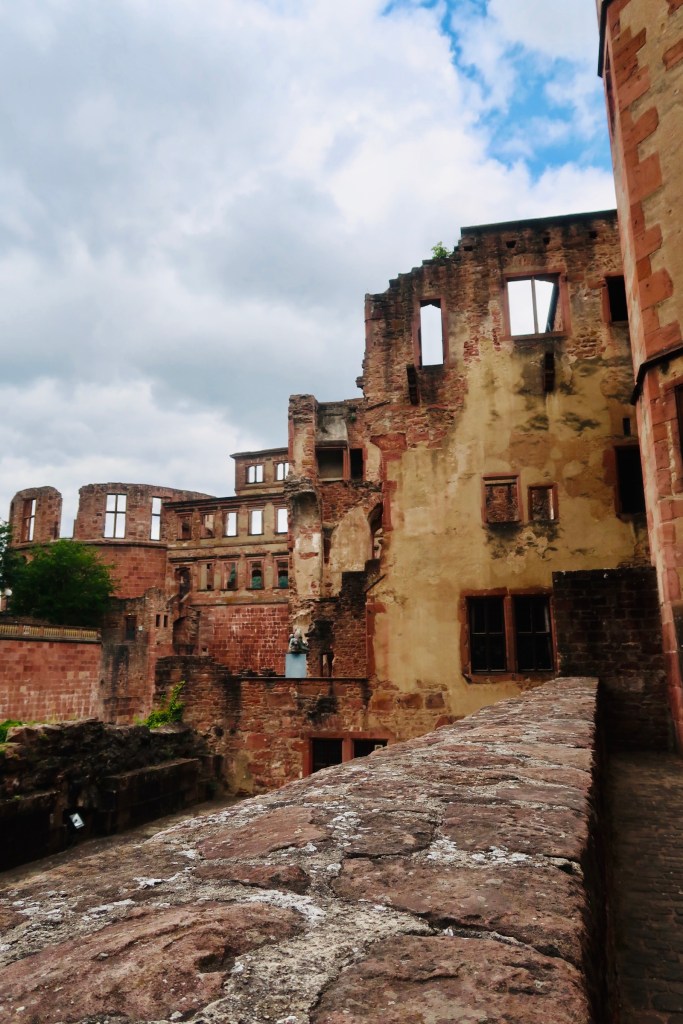
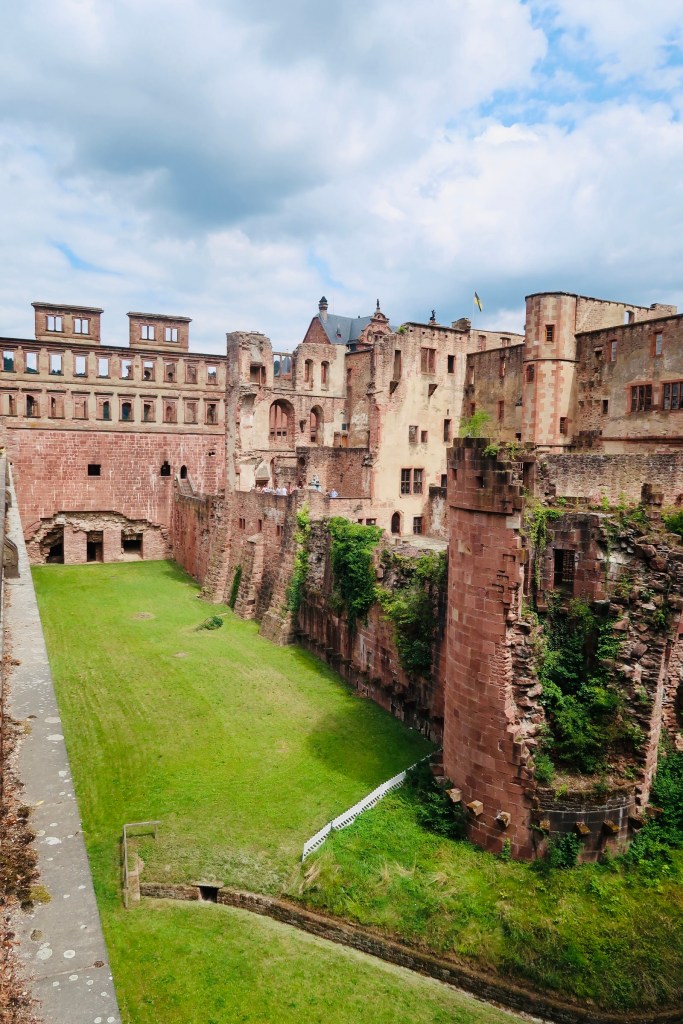
We started off at Heidelberg Castle. I’ll be doing a full castle post on it, but I’ll touch on some of the basic information in this post.

The castle was first mentioned in the early 2nd century when the Duke of Bavaria (Louis I) received it from the Hohenstaufen Emperor. From that point on, the castle became two castles, upper and lower. The Upper castle was destroyed by a lightning bolt in 1537. The present castle was expanded in 1650, to then be damaged by war and fires, before another lightning bolt struck in 1764. It was incredible to walk through the walls of the castle, then along the ramparts overlooking the city, and finally just outside the main walls along the side of the complex. It has a real feel of history and tells a multitude of stories. 

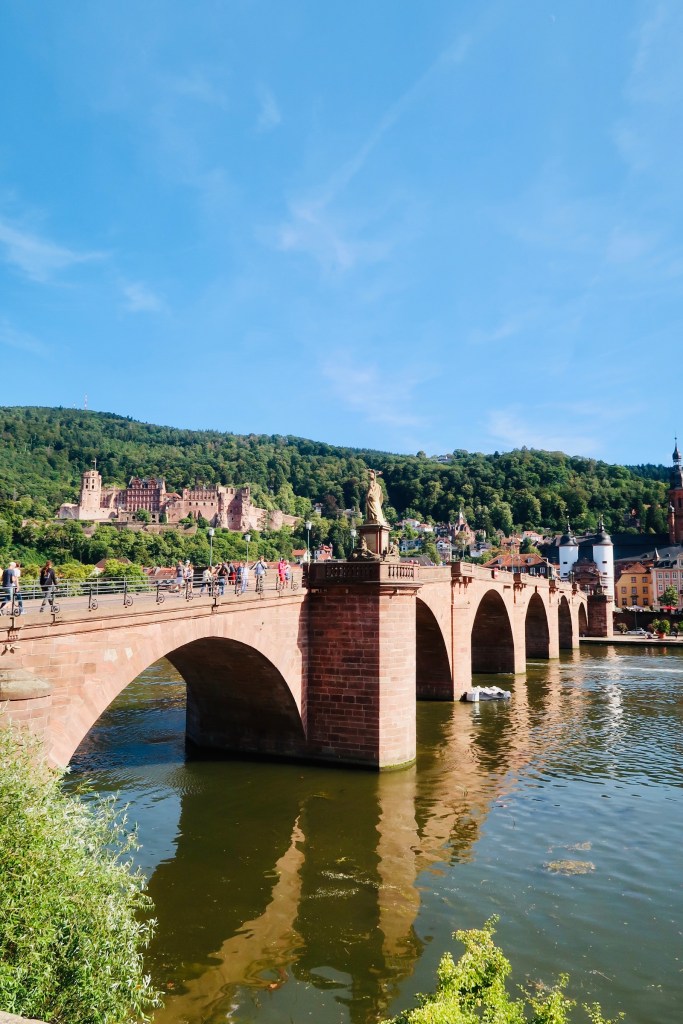
From the castle, we checked into our hotel, and headed to the Old Bridge. The Old Bridge is actually the Karl Theodor Bridge, an arch bridge that crosses the Neckar River.

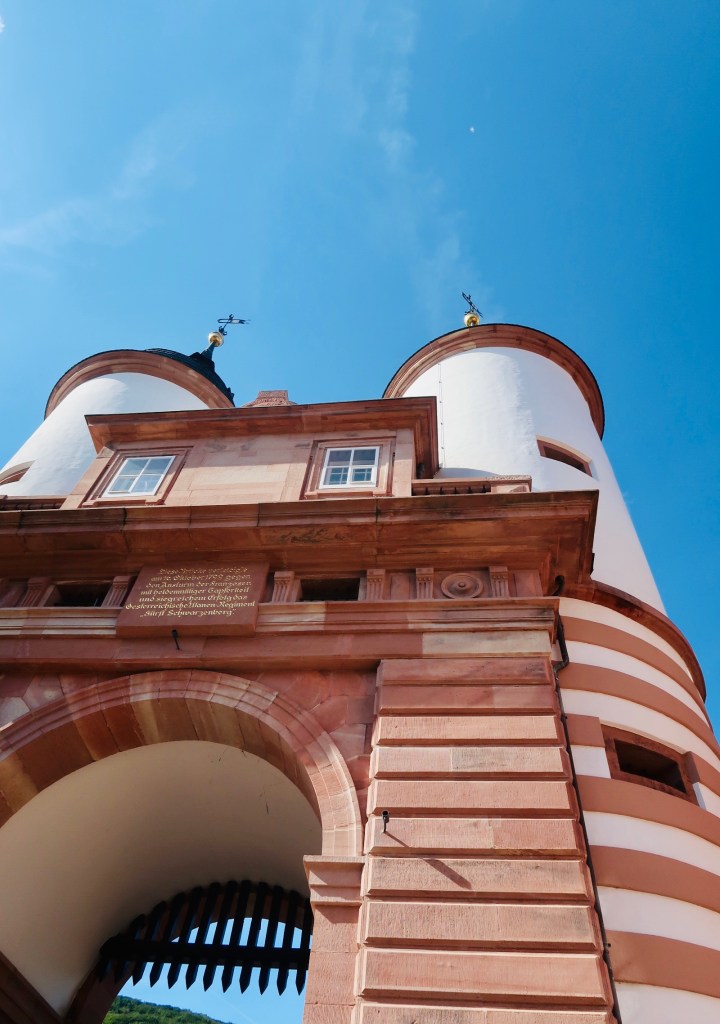
The current bridge is actually the ninth built and is dated back to 1788. The bridge location has a storied history (it had to have been with Heidelberg being on its’ ninth bridge) of bridges being destroyed by mother nature and wars alike. The medieval bridge gate on the Old Town side of the bridge dates back to the original town wall, however the tower helmets were added with the new stone bridge in 1788.  

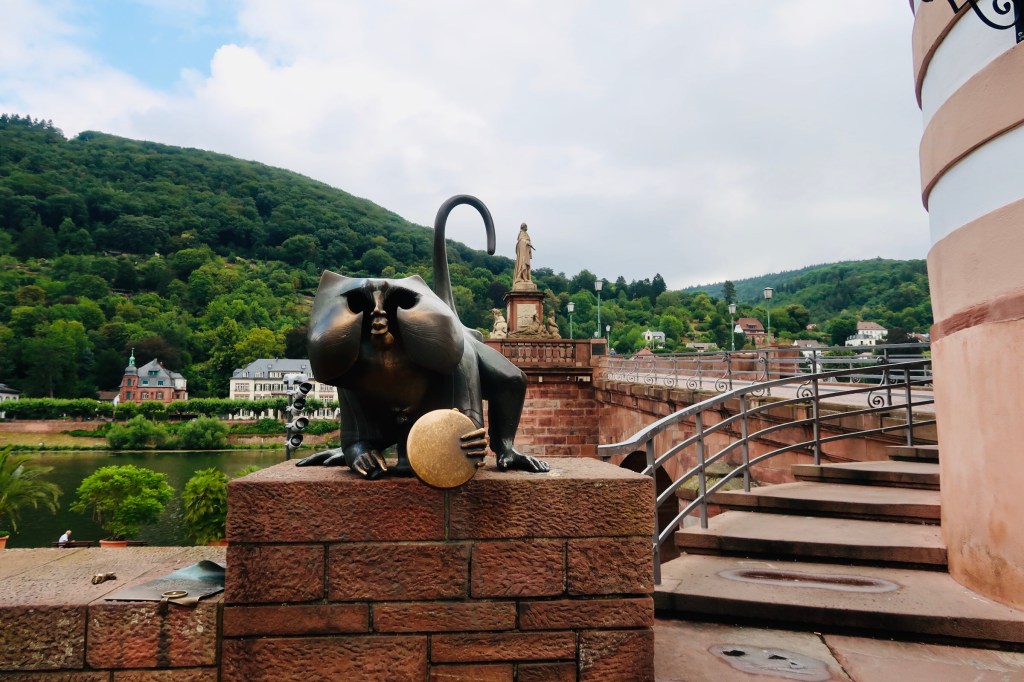
A fun fact, on the gate side of the bridge there is the statue of a monkey (it’s ok if you don’t see the monkey until you read that it was a monkey- we originally thought it was a cat) which has quite the story attached.

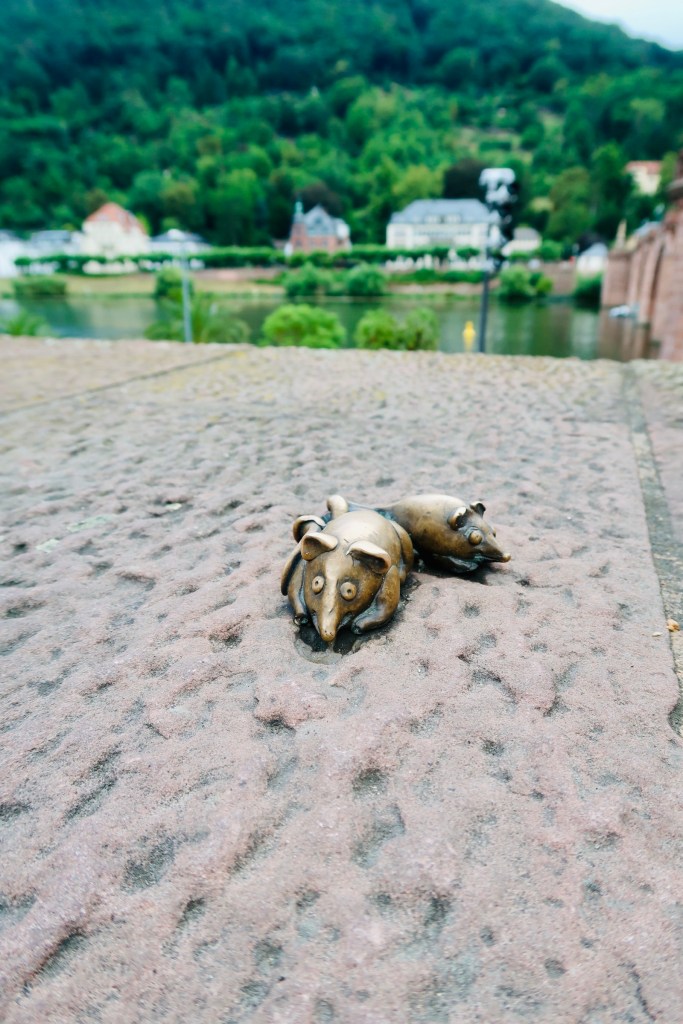
The original monkey dates back to the 15th century and was placed within the tower to represent mockery against the tower’s representation of fear and respect. The monkey had a mirror in one hand (to encourage critical self-reflection) and his other hand on his…rear end. This was turned so that his rear end was facing across the river towards Mainz; which in turn was how the people of Heidelberg told the Bishop of Mainz that he had no power in Heidelberg. The 15th century version of an…eff you. The current bronze statue was installed in 1979 and legend says that if a visitor touches the horns, they will return to Heidelberg, the mice will provide fertility, and the mirror will provide wealth or good luck.

Our hotel was right at the Altstadt side of the bridge, so we were on it…a lot. We walked across to the other side of the Neckar and wandered down the water a bit before heading back over. We got some dinner right off the bridge and then wandered down and around the main street of the Altstadt. It was fun to just wander the streets and take in everything. 

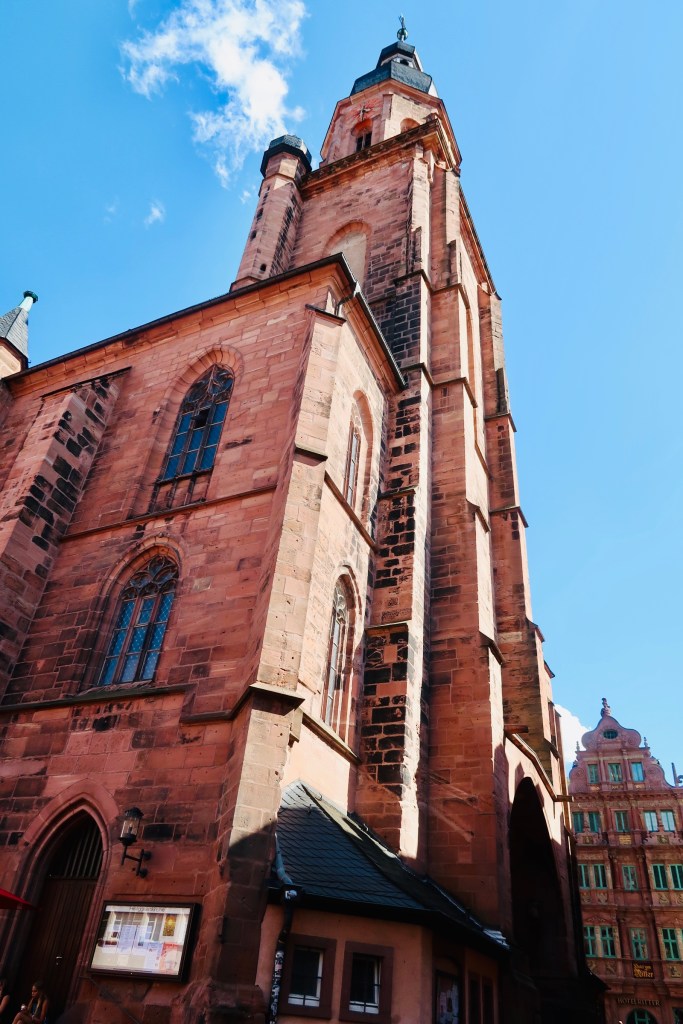
Our final stop of our trip was a stop into the Church of the Holy Spirit, a church that dominates the main square of the Altstadt (and the steeple dominates the entire city).

The first mention of a church on this site is from the 13th  century, then in the 14th century another Gothic Church, and finally this church during the 15thcentury. The construction took around 150 years to complete, however it was interrupted for a period of time, and has been rebuilt once due to being set on fire by the French. The church did have the Palatine Library; however, the collection was taken during the Thirty Years War to the Pope and are now, on the whole (only about 885 manuscripts were returned) in a dedicated section at the Vatican Library. 

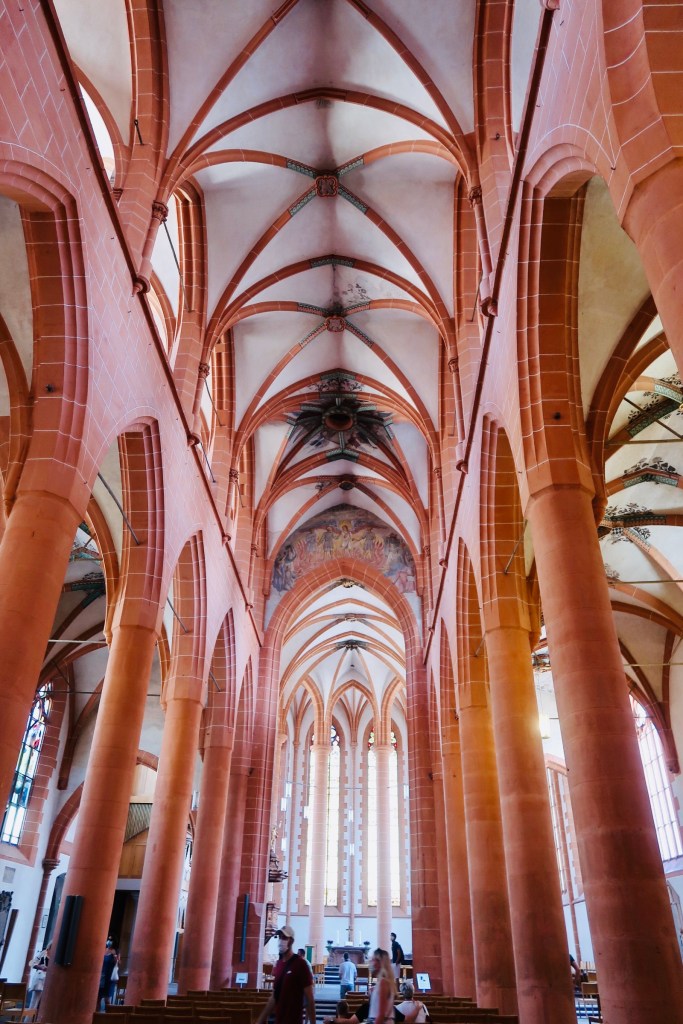
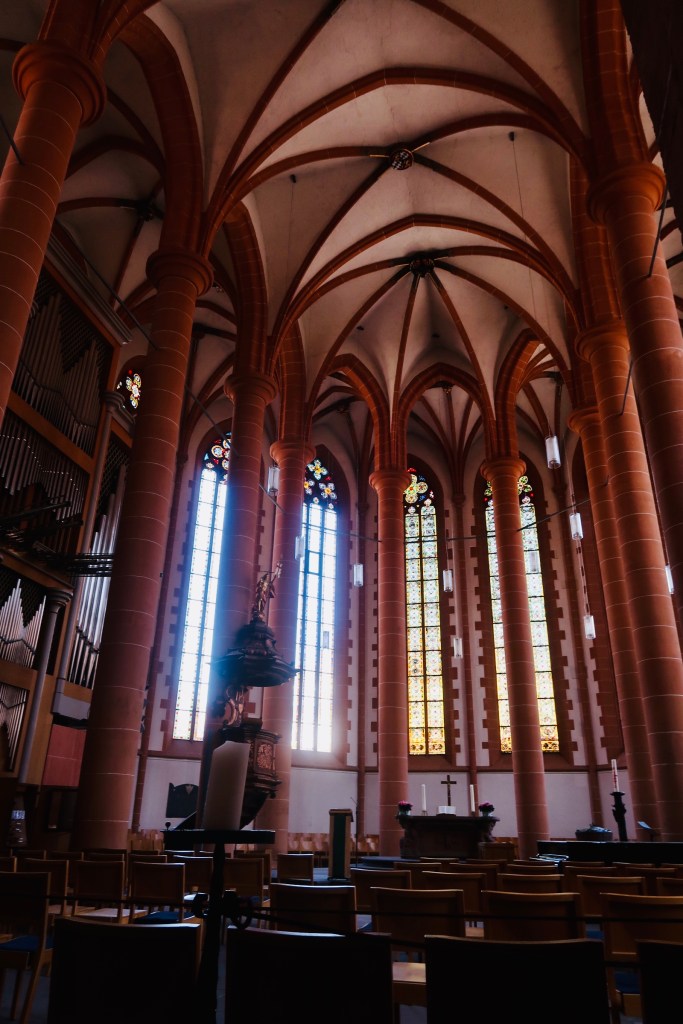
One of the things that I really liked about the church was how there was a little market set up on the direct outer walls of the church. Market stalls were set up within the walls of all different varieties, which reminded me of something straight out of a Ken Follett novel. The church itself was incredible and not what we were expecting at all. The walls and ceiling had a pink hue to them and the church itself had a simple elegance to it. 

The only thing that we did not get to do, but wanted to was walk up the Philosophers Walk. This is a walk (or hike) that offers scenic views of the old town from the opposite side of the river. It was a tradition of the philosophers and professors at the university to walk and talk along the path. If you hike a bit farther up you can see the ruins of the Monastery, the amphitheater, and the Celtic fort.

Overall though, we had such a wonderful time and I really recommend a trip over to Heidelberg. It, once again, reminded me just how much I love Germany and the German Old Towns. There is not a bad choice to make anywhere within the Altstadt and even just sitting along the river is incredibly peaceful. 

A Cuppa Cosy Summer Holiday 2020- Cochem

Our last stop on our Summer Holiday was back in Germany in a small town called Cochem. This is the weird part of the blog posts as I am going to do a general blog post today on Cochem and the couple of things that we did, but one of our reasons for stopping in Cochem, was its vicinity to a couple of castles we wanted to see. I’ll be giving full details on the castle’s in separate blog posts, but wanted to get this last stop blog post out for you. We really enjoyed the time we spent in Cochem (2 nights) and it really solidified how much we’ve fallen in love with Germany (which I’ll talk about at some other time). Regardless, after leaving Belgium, we crossed the border back into Germany and headed straight over to Cochem. 

Cochem is a small town (total population ~5300) on the Moselle River.

It has had settlements from the 1stcentury onwards, was an Imperial estate in the 13th century, and was granted town rights in the early 14thcentury. It’s been under the rule of Germany, France, and Prussia. During World War 2 there was an underground subcamp of the Natzweiler Concentration Camp with 13,000 prisoners at its height. It’s important to note that Cochem is located along the Mosel River which happens to be an area of Germany that produces, and is known for, wine. German Wine is typically a Riesling wine as that is the most widely planted grape, although they do produce a variety of white wines. (Luckily for me- I love a good Riesling so I was in the very right place ha-ha). 

The first place we stopped at, the minute we arrived in Cochem, was the Reichsburg Cochem, or Cochem Imperial Castle. As I said, I’ll be doing a whole separate post on Cochem Imperial Castle, but I’ll include a brief overview here as well.

Reichsburg Cochem dates back to around the 12th century when it was occupied and declared an Imperial Castle. In the 17th century the French King Louis XIV overran it and then destroyed it. In the 19th century a businessmen from Berlin purchased in and then reconstructed it. It is now owned by the town of Cochem. After a tour of the interior, we headed to our hotel and over to dinner. We stayed at Hotel Zenthof which was another perfect spot, right off the main bridge connecting the two sides of the river, and a view of the castle out the front. We had dinner right on the waterfront and watched the sunset with a lovely glass of Riesling for myself and a beer for my husband (this is the aforementioned moment where we just realized how perfect Germany has been for us). 

The next morning, we were up and off early (only stopping at a local supermarket to pick up some pastries for breakfast) to head over to our second castle, Burg Eltz.

Again, a full dedicated blog post is coming, but this is a medieval castle located in the heart of the hills above the Moselle River.  First dating back to the 12th century, this particular castle is still owned by the same family that lived there at that time (it was actually 4 families and quite an interesting tour!). We had the dreamiest morning walking along its walls and corridors. 

From there we went to do a little…adrenaline push. In Hunsruck there is a 360-meter suspension bridge (its height is 100 meters up) that you are able to walk across. The Geierlay Suspension Bridge was first suggested in 2006 and rejected, then re suggested in 2010 for a second look.

Modeled after the Nepalese suspension bridges (which means that it is “unstiffened”), construction started in 2015 (record time as the bridge opened 130 days later), and the bridge was inaugurated at the beginning of October of the same year. The bridge itself has a layer of local Douglas fir that you are actually walking on as you walk across the bridge.  Finally, the name was picked after an open competition and refers to the land and history of the area of the bridge.  The bridge itself is center to several hiking and biking spots, so you can definitely combine a hike with crossing the bridge.

Honestly, I am terrified of heights. Well, I mean really I suppose I am more terrified of falling, rather than heights, but the two go hand in hand. So, the idea of walking across this suspension bridge that moves with every movement (even more so in some areas than others) was not…appealing. As always, while I was on it I just stepped one foot in front of the other and just focused on that. I did, from time to time, look up to take in the absolute beauty that was around me, but on the whole it was an accomplishment to make it to other side breathing normally for me. And once I got to the other side? I felt like a bad ass ha-ha.

We decided to hike our way back to the car, rather than walk back across the bridge (this would have actually been preferrable, but my older son wasn’t keen on walking back across the bridge). The hike itself is gorgeous, taking you down into the valley before up the mountain side. It’s not a terrible hike, although I would recommend wearing comfortable shoes. 

A few things to note about the bridge currently (during Covid-19)- in order to maintain the appropriate health precautions, they are restricting movement on the bridge. This means that during the heightened visitor time (11-5 I think) they only allow foot traffic one way each hour. So odd hours going from one side, even from the other. This meant that we waited in line for about 2 hours to just make one pass on the bridge. One side is easily more packed than the other (as it would be) and the line wasn’t the most socially distanced it could have been. However, they grouped people together in groups of 10 or so that they would release on the bridge at a time, so it wasn’t a massive amount of people walking through at a time.  If you are going to go, I would recommend going outside of the popular visitor hours (I would recommend this regardless though). For example, I am looking at the webcam as I am writing this (10:26AM German time on a weekday) and there is hardly anyone on the bridge at this time. No lines, no crowds. 

And that wrapped up both our time in Cochem AND our Summer Holiday! What was your favorite stop? To recap on our entire Summer Holiday (or if you missed any) you can go along with us to LUXEMBOURG, PARIS (1 & 2), MONT-SAINT-MICHEL, NORMANDY, and BELGIUM.