
It’s the smallest country in the world. It’s among one of the holiest spots (save for Mecca/Jerusalem/and the like) in the world. It has quite the history in both good terms and bad terms. And we spent the better part of the day walking its paths, looking at its artwork, learning its history. Vatican City.
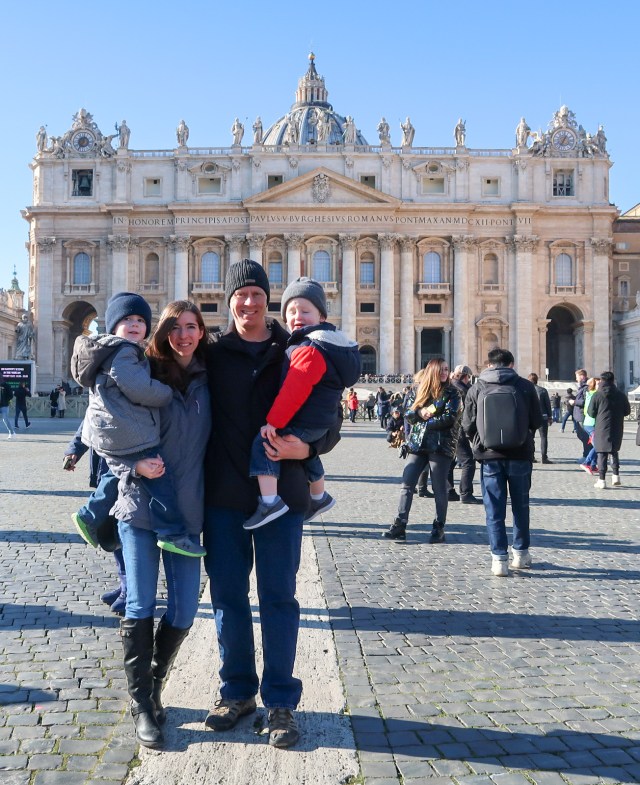
Where to even start? Our route was simple, we started in the Vatican Museum, then the Sistine Chapel, and finally to St. Peter’s Basilica. Before we even go much further I want to talk about how we saw Vatican City. We booked our tour through Through Eternity Tours (website HERE). They have a couple different options when it comes to Vatican Tours, but we decided to go with the Early Morning Vatican Tour with Sistine Chapel. It’s slighter more expensive (though still incredibly reasonable) and the timeline is specifically set up to get you the best time in the Sistine Chapel. I cannot recommend them enough. We had Federica as our tour guide, and she was great. She had not only great art knowledge and Vatican knowledge, but she also has a personal connection in that her husband works there, her son was baptized there (by the Pope himself!) and she shared not only the important stuff, but also little anecdotes. It may have been a very early morning, but it was very early. Honestly- if you are planning a trip and looking at different tour groups, this is the one that I would go with. They have their meeting place, their headset and ticket gathering down so that when you line up with the rest of the tour groups, you are already ready to go and one of the first groups in. (You’ll hear about them again in the next Rome post as well as we did a separate tour with them elsewhere)
Our tour started off with meeting Federica and picking up our headsets at 7AM. From there we headed to the entrance spot (one entrance!) and waited in line. We were up towards the front with only a couple groups in front of us. While we were waiting, Federica made use of the time giving us a quick rundown on the history of Vatican City and specifically the artwork and artists displayed within the walls.
The history of the Vatican dates back to the 4th century when the construction of St. Peter’s Basilica began over the grave of St. Peter (issued by Emperor Constantine I). As the chapel and location grew in popularity, so did the development of the city. The walls were originally commissioned in the 9th century (after an attack) and were expanded through to the 17th century. The Pope’s have not always lived in the Vatican; however, a residence was built in the 6th century with a tunnel connecting the Vatican to Castel Sant’Angelo ( from our first days in Rome HERE) added in the 13th century. The Catholic Church briefly left Vatican City to relocate to France, but returned relatively quickly and worked to restore and rebuild most of the country.
Much of the Vatican City that you see today was due to Pope Julius II (with a bit of Sixtus IV and his commissioning bits of the Sistine Chapel). Julius II not only commissioned Michelangelo to paint the Sistine Chapel, he also commissioned a new church (St. Peter’s Basilica), and a new courtyard.
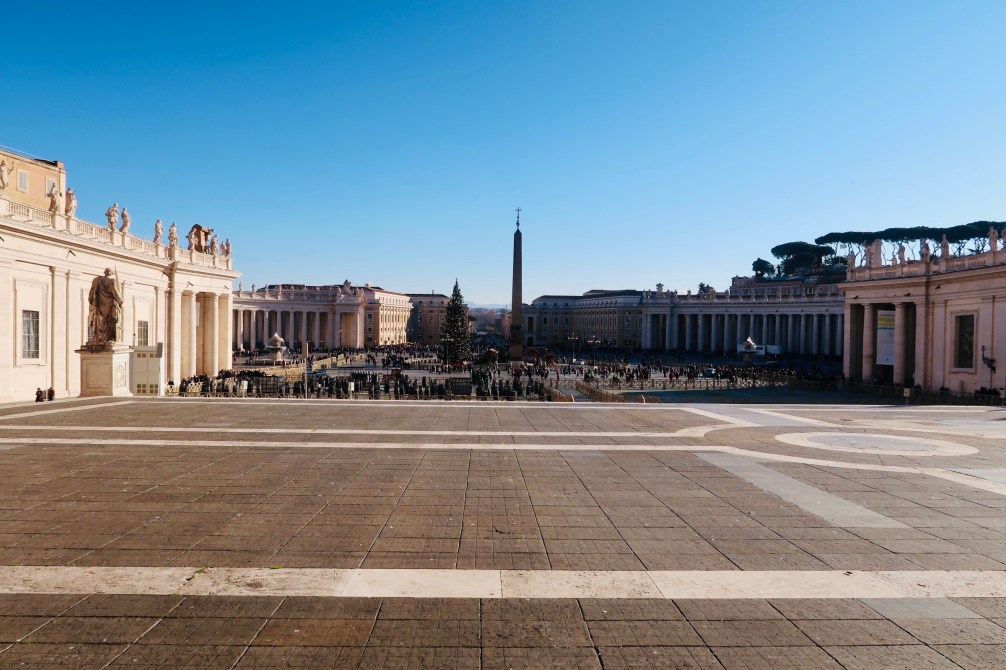
Now, a quick foray into the Politics of Vatican City being its own country, separate from Italy and some information about the country itself. The Pope originally held power over its regional territories, but in 1870 a unified Italian government decided to take back the land located outside the walls of the Vatican which caused some…issues. In the 1930’s Mussolini signed an agreement that allowed Vatican City to become a separate, sovereign entity and had them receive compensation for the loss of territories. The Pope now only had power over his country, which is 109 acres and has a 2-mile border. The smallest country in existence. As many of you have probably heard, the Vatican does have its own post office, banking system, and you can potentially (depending on who is working) get a Vatican City passport stamp.


Once we finished with the museum portion (the Borgia apartment is the last to see), we headed straight into the Sistine Chapel. 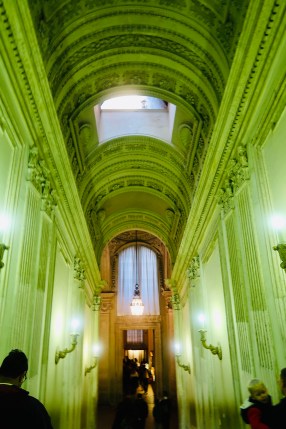 I have no pictures of the Sistine Chapel. First off, you are not allowed to take pictures in the chapel. Second, I don’t know that I would have wanted to take pictures even if you could. The Sistine Chapel is something that simply needs to be experienced, something that should just be taken in, without prior knowledge or warning. It is a spot to sit in silence and just revel at the beauty that is around you. It is truly incredible the amount of work, the paintings, the level of detail. Our tour guide, Federica, did a great job at pointing out a couple of spots for us to pay attention to when we did walk through. A couple of spots of note were the spots where Michelangelo inserted his…”opinion” on the commission. It is well known that Michelangelo had no interest in painting the fresco’s, he worked with marble, created statues- he hadn’t painted fresco’s in many many years. This “petty attitude” towards the Pope that he developed came through in some areas of the large painting (specifically where a little child is “flipping the pope off”). He also managed to apply this attitude to those who had…less than desirable opinions on the artwork (there is a Cardinal that is in a…precarious position in The Last Judgement).
We were able to spend 20 minutes in the Sistine Chapel before moving on to St. Peter’s Basilica.


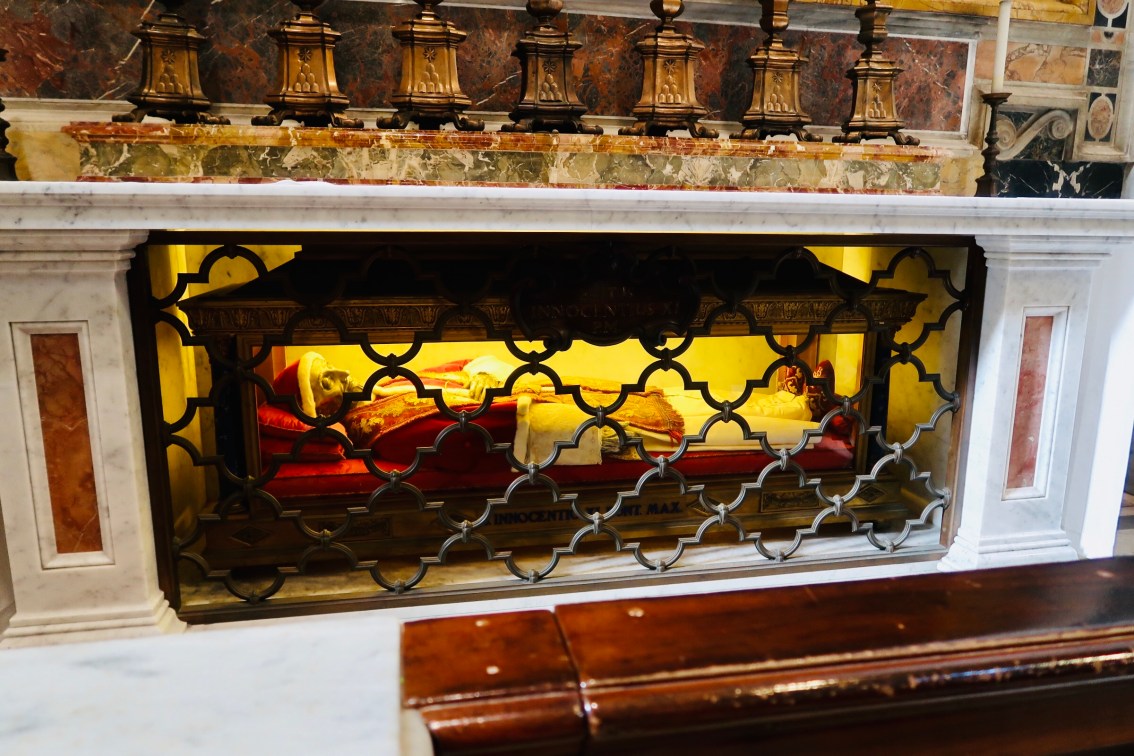
When they were ready to be entombed in the Grottoes, they actually were found to be in perfectly preserved condition. Instead of being placed down in the Grottoes, they were placed at two different spots within the church for all to see. That’s not to say you can’t see the other Pope’s, simply head down the stairs to the Grottoes and you can learn about the histories of each of the Pope’s. It’s a pretty incredible site to see.
Our final stop within Vatican City was not as part of the tour, but something we decided to do ourselves, and that was to climb to the top of the dome on St. Peter’s Basilica. We’ve always been “those travelers” who like to get above a city and get a sort of “eagle eye view” of the city. This was the perfect chance to get as high as we could and take a look.


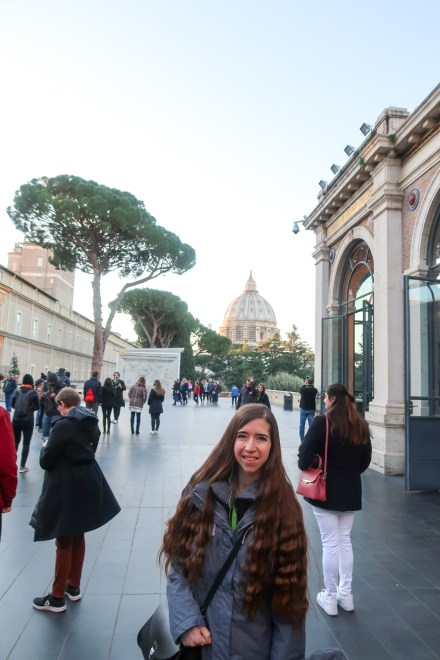 The Vatican was one of the most incredible parts of our visit and something that I am going to remember for the rest of my life. To stand in this most sacred spot for so many is something that words cannot describe and then you bring it’s long (and rich) history…it’s a lot. A lot of feelings. It is definitely a spot that you HAVE to go to if you are in Rome and a spot that I think is best done as part of a tour group (the line to get in without a pre-planned tour ticket was INSANE…heck the line to simply get into St. Peter’s Basilica without the tour was INSANE too). Through Eternity exceeded all of our expectations and we will definitely use them in the future if we are ever in need.
And that wraps up Day 4/Vatican City. I hope that you enjoyed!

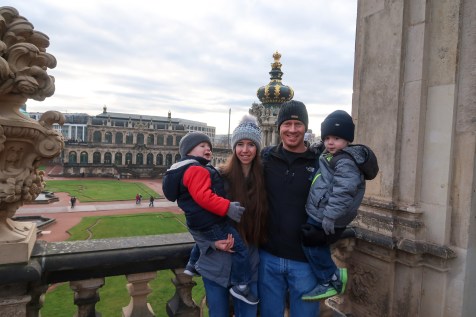
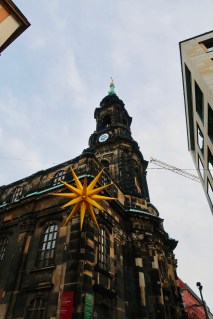 The first square is the main square and right off the main square is the Church of the Cross. This is actually the main church and the seat of the Evangelical-Lutheran Church in Saxony. It is also the largest church building in the state. The church itself has been through quite the history, but its current state retains the look of the church post Dresden bombing. It was decided to keep it in that state, rather than refurbish it to prewar designs.


 A Cuppa Cosy