Visiting Holocaust Sites Part 1: Dachau and Lidice

**A couple disclaimers before we get into this post…

  1. This is obviously going to contain graphic and triggering content. Please proceed with caution. Obviously my hope is that you read this and take something away, but I fully understand that this is a difficult topic to read about.
  2. I am Jewish. That colors everything, I do. Every part of who I am. More so now as I am starting to learn and realize some things from my past and my relationship with Judaism. But I am Jewish.
  3. This post is going to be jumbled. I don’t know how this is going to go, how this is going to get broken down, how it will be received, how much is just going to be a rambling stream of conscious. I don’t care. This is important.
  4. If you are someone who is a holocaust denier, a holocaust minimizer, an antisemite, racist, or want to disagree you may just move on. (It makes me very….grrr angry and heartbroken that I even have to say something like this, but it needs to be said.)
  5. (I’m just now adding these as I am writing this post). I think this is going to be a two-parter as I’ve only just finished the Dachau portion and I’m already pushing past 1500 words. The second part will be up in short time though- you won’t be waiting long for that.
  6. The second part was written after the incident of Domestic Terrorism on the US Capital, in which the most blatant display of antisemitism was exhibited in my life. I personally saw footage of “heil hitler”, camp Auschwitz sweatshirts, and two congressmen use Hitler’s rhetoric or name. If the tone is off in this second part as opposed to the first, please understand why.
  7. Finally, we are facing drastically rising Jew hatred not only in our country, but across the world. It’s often times hard to voice concerns, content, and information not only about this but also just about being Jewish. In a personal way, I am still learning and trying to figure out how I want to use my voice in regards to this.
  8. This post is being posted way after I originally intended to, but here it is.

Disclaimers over.**

Where do I even begin? During our two years in Germany, we visited a total of 4 Holocaust specific sites, along with numerous monuments and locations relating to World War 2. I’ve written specific blog posts that are just a presentation of the history and facts of each place that I’ll link as I talk about them, but I wanted to talk about the actual opinions and feelings that I experienced at each place. I didn’t do this in the posts for a couple different reasons, most importantly being that I think the actual cold hard facts of these places are not to be overlooked by our feelings of them. But also, I quite simply couldn’t talk about them. I didn’t have the words. I didn’t have the feelings. There is absolutely NOTHING that can prepare anyone for a visit to these places. These places where entire generations of your own people, your own ethnicity, were brutally murdered. I think for a long time after visiting, I found comfort (the very wrong word in this situation, but it’s the only one that makes sense) in the cold hard facts. In not coloring what happened with my own complicated heartbreak. But things change and as I see what is happening in our modern world, our current times, I think that it’s time for me to talk about what this experience was really like. 

I’ve always been well understood, well read, well watched and versed, in the Holocaust. I think I was 11/12 when I really started deep diving into the history of it all. What could make a person single out one group of people as the cause for everything bad in the world? How? I couldn’t understand. I still can’t understand. And there is so much we still don’t know. We will never know. Either way, I learned A LOT. This was in part as it was part of my heritage, of who I was, but also because of the psychology of it all. When we got the orders to come to Germany, I knew that we were going to be visiting some of the camps, maybe even some of the locations that were in shambles, were barely even remembrances of what they were at the time. I had no idea what to expect and, as I said before, nothing could prepare me for what these visits would be.

I think I am going to break this up by location, in the order that we visited each location. Again, I’ll link each location to the “facts/history” post that I’ve already written, but this is just going to be purely my experience at each- good and bad. Each location is unique in both what we see/what you hear/your overall experience. For example, I would say Dachau Concentration Camp is more graphic in its imagery. The museum is excellent, but holds nothing back. A good amount of a visit to Dachau is going to be based in the imagery of the museum and the restorations/recreations of areas. Whereas Auschwitz-Birkenau is vastly different. First off, I would highly recommend a guided tour (first in when the camp opens purely because it’s so much quieter and so much more…just more) and so then you are HEARING. There are few pictures of the atrocities on display, it’s more what your tour guide tells you (which is very graphic) and the artifacts that you see. BUT we will get into all of that. 

Dachau Concentration Camp (FACTS/HISTORY POST)

This was not the first World War 2 site we visited (we had been to both Nuremberg for a day trip and Berlin for a long weekend and seen several memorials/museums), but this was the first concentration camp. And, like many to follow, there are certain aspects that are etched in my mind, firmly planted and tied to my experience. The first being that the day we visited was a brilliant spring day. It was warm, but not hot; brightly sunny and the clearest blue skies you’d ever seen. It was, quite honestly, the perfect spring day and we were spending it visiting one of the most horrific places. That jarring difference made such an impact as the location of the camp, the property was beautiful area of the country and to have this beauty as a backdrop just made the horror of what we were seeing etch in my mind further. Those that lived here didn’t think it was beautiful, and when it was “in action” it definitely wasn’t this beautiful. 

Walking through the museum is an abbreviated look into just how bad Dachau was. Obviously, a good amount of the world knows about the Holocaust and has seen pictures or such in some form. The museum on the campsite is located in the “entrance” building where prisoners would be processed, so you are walked through the camp system from start to finish. You are able to see artifacts, hear stories from prisoners, and see what kept them going. While most of this you may know, there is something unique to visiting it where it actually happened. You are able to see bits from the camp itself, including the actual original gate to the camp (and yes the “Arbeit Macht Frei”) as well as other sculptures relating to the camp and prisoners. The thing from the museum that is really etched in my mind is the story of how this memorializing of the camps came to be. The government wanted to destroy it, but it was actually the prisoners and families that said no and wanted to do something with the camps. Such strength and resilience. 

Something else that will forever be etched in my mind is how…not big it was. When you walk out of the museum you are on the “parade ground” where they would take the roll call of all the prisoners, where they would discipline, and have other displays. You are able to look back along where the “cabins” would be that actually held the prisoners. It’s not big. There are only two prison cabins still intact, which show the progression of the “cabins” as the camp filled and filled and filled. But then, you look back and see the raised bricks where each would be. I repeat, it wasn’t big.

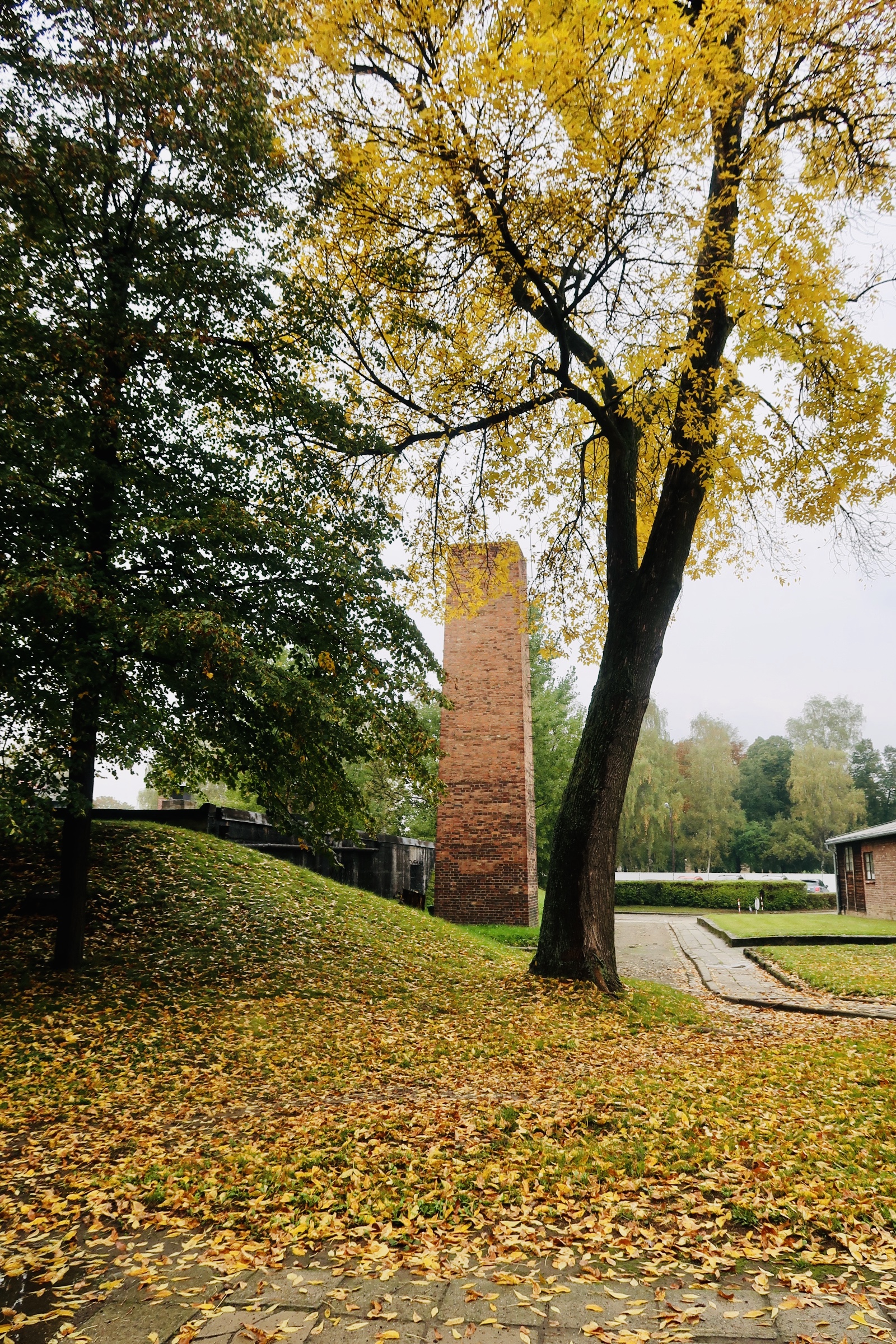
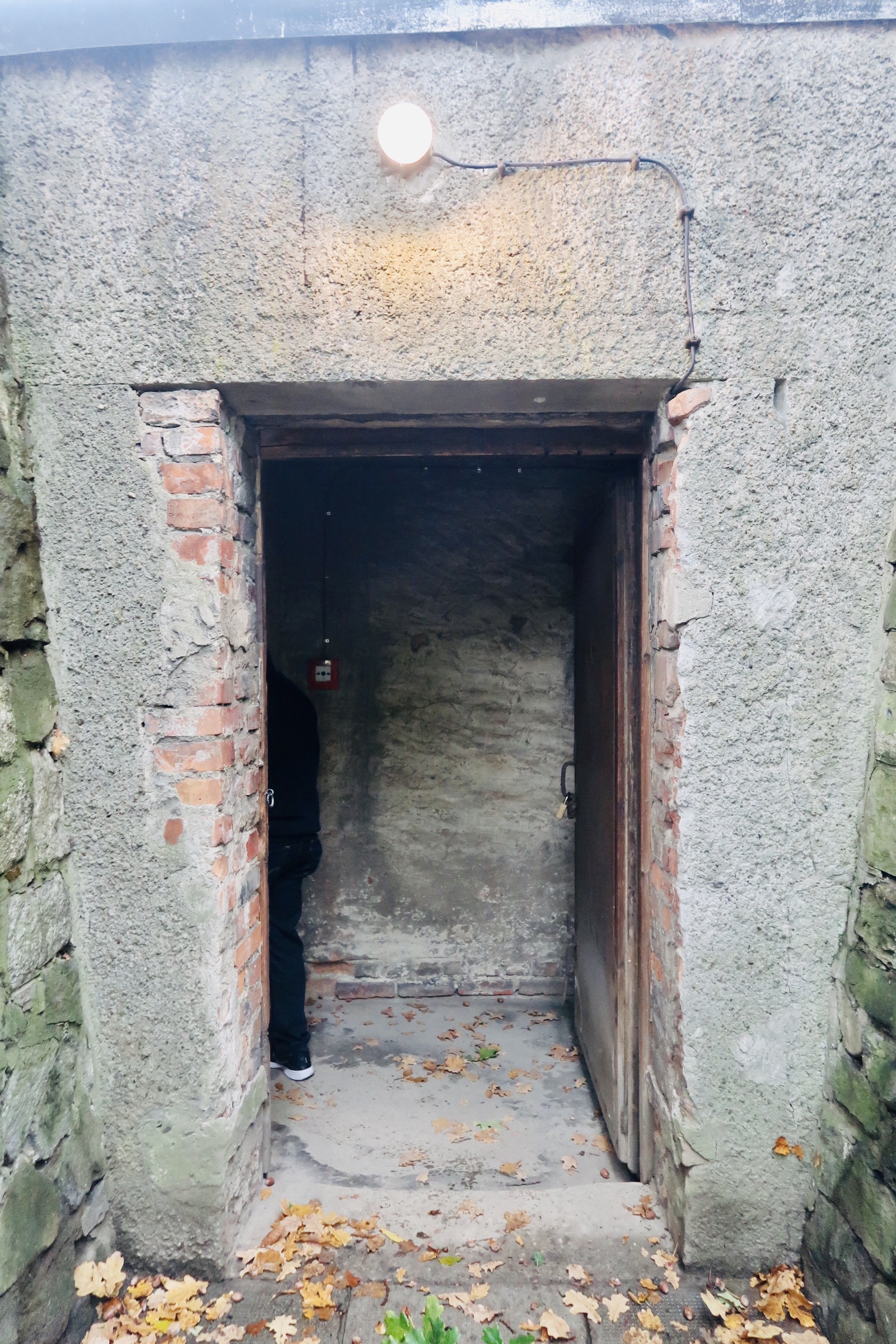
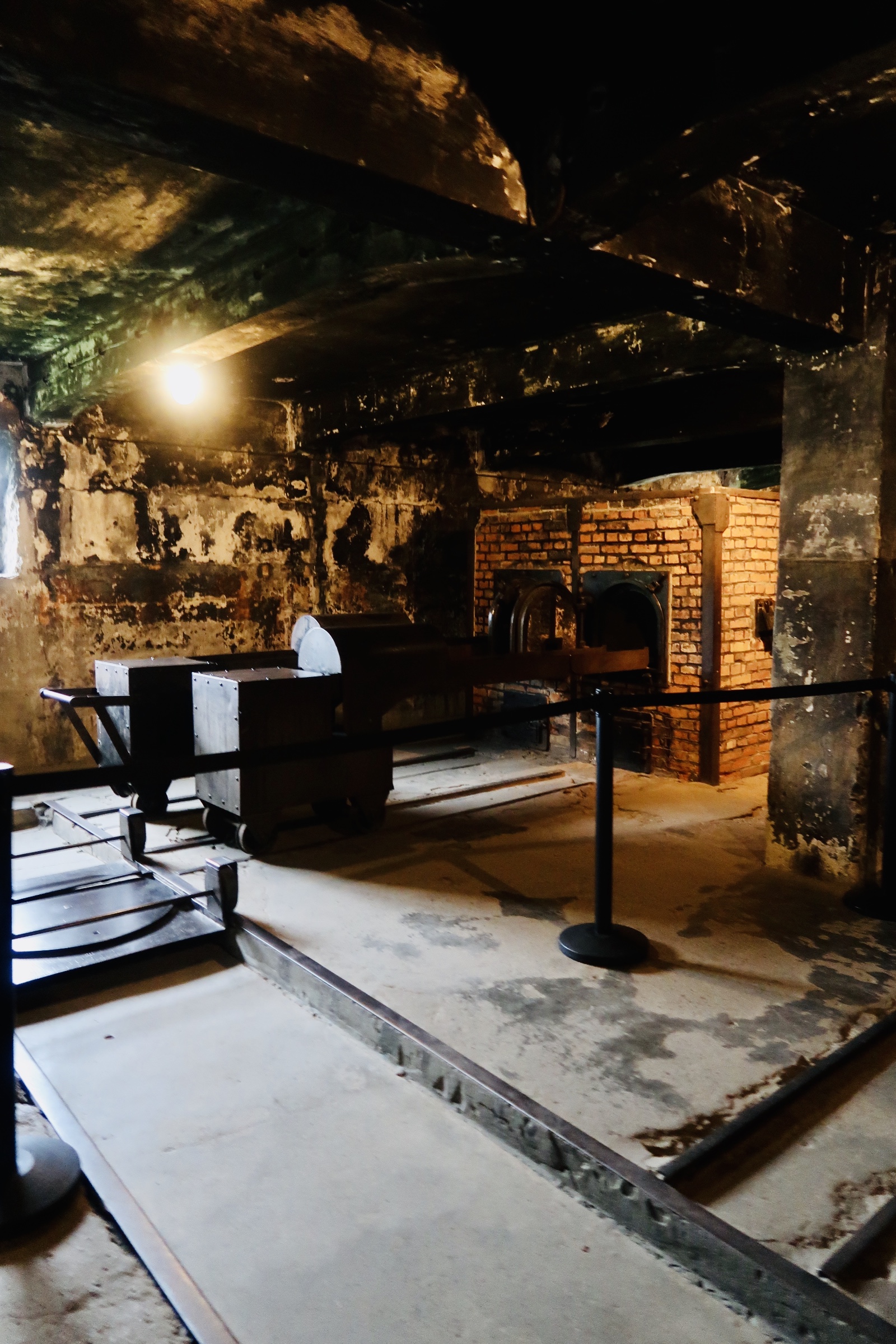
The final memory, the one that will forever haunt me and would haunt anyone that visits, they are where the Nazi’s killed and disposed. Dachau wasn’t set up to be an extermination camp (like Auschwitz-Birkenau was), so the facilities in the back corner of the camp (that you actually leave the fenced area of the camp to walk into another fenced area) are small. In fact, there are two sets of ovens as the original set became quickly overwhelmed with the rate that they were being used. I will NEVER forget walking through this area of the camp. Walking through the showers, into the room where the ovens were is etched so permanently into my brain. When you are in that room you can feel the difference. The difference in the air, in the emotions of the room, in the stillness. It was in that moment that I could feel the air change, I could feel the sheer hatred of a people whose goal was to exterminate. It disgusted me. It terrified me. It changed me. Walking out from that building into the bright spring air was a weird kind of relieving rebirth of sorts. Dachau was not an extermination camp, it was not intended to be used as such, and yet here it was…the extermination techniques. 

I left Dachau feeling raw, beyond upset, and in a bit of a state of shock. You don’t truly understand what these camps were like, unless you are a survivor, but visiting them, walking those steps gets a close idea. This was also the first time I had been exposed to such…hatred. Such callous treatment of other people. Such little care for the lives of those around you. And this was “right down the road” from us…kind of. It was only 1.5-hour drive from us. Even now, I don’t know if I have the right words to express the sheer amount of sadness, anger, fear, heartbreak, sickness, that was going through my body and my mind. 

Lidice (FACTS/HISTORY POST)

If Dachau Concentration Camp wasn’t enough, over the Thanksgiving weekend, we traveled a little bit into the Czech Republic. In between our drive from Karlovy Vary to Prague we stopped at, what was, a little town of Lidice. By the time I left I felt pure anger mixed with just shock. This was the only time where my emotions ran into the facts post because it was horrendous in a completely different way. 

The town of Lidice was destroyed. Completely. Razed over. Homes burned to the ground. Livestock killed. Families killed or sent to camps. Children GASSED. BUT, but, but, but, that simply wasn’t enough. No, they couldn’t just destroy the town, no, they CHANGED THE TOPOGRAPHY OF THE REGION. The leveled the ground, filled the river, and PLANTED CROPS over the town. Because they wanted no trace of a city that MAY have held resistance fighters. Later they found the resistance fighters that they thought were in Lidice somewhere else, but it wouldn’t have mattered. 

The difference for me, from Dachau and Lidice were night and day. When walking in Dachau it was pure shock, the pure feeling of standing there where all this had happened. Everything that I had read and learned about and here I was. Lidice I didn’t have all this foreword knowledge of, I was learning as I was walking and then later on when we got back home. I felt heartbroken for everyone who lived there at the time, but mostly I can single my feelings to shock and anger. The lengths that were taken to completely wipe this village from every map, every memory, over the sheer rumor of resistance. Those feelings are etched in my mind and will be forever. 

One other thing etched in my mind from Lidice is a statue/monument that they have to the children of Lidice. I’ve never seen a sculpture be able to convey the very real emotions in a moment until stepping up to this monument. The hollowness, the fear, the sheer shock of the situation. I WILL NEVER not see those eyes in my mind whenever I think about Lidice. 
Auschwitz I & Auschwitz II-Birkenau Concentration Camps

***Disclaimer at the beginning of this post , there may be content in here that is painful to view . Please be cautioned***

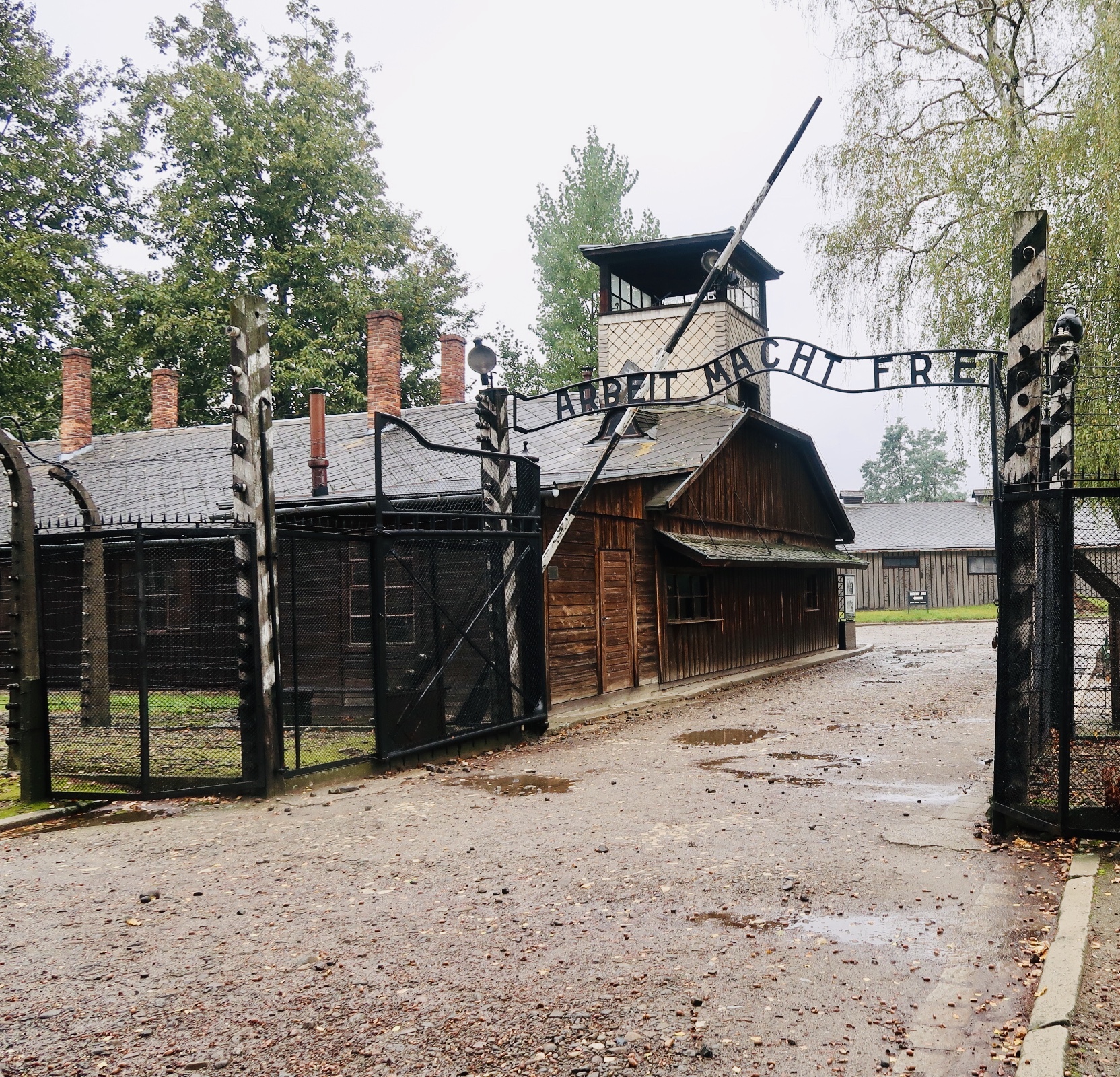
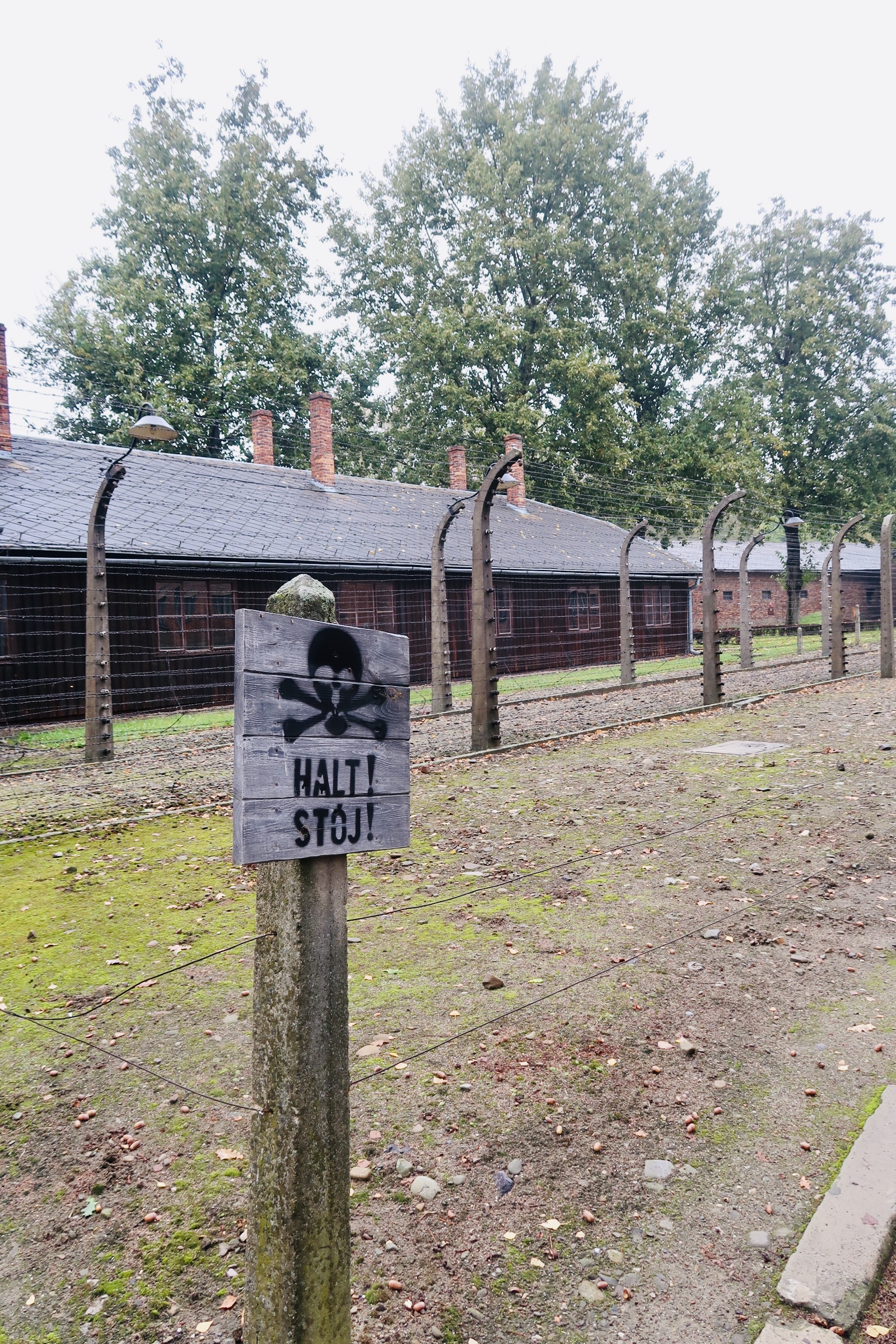
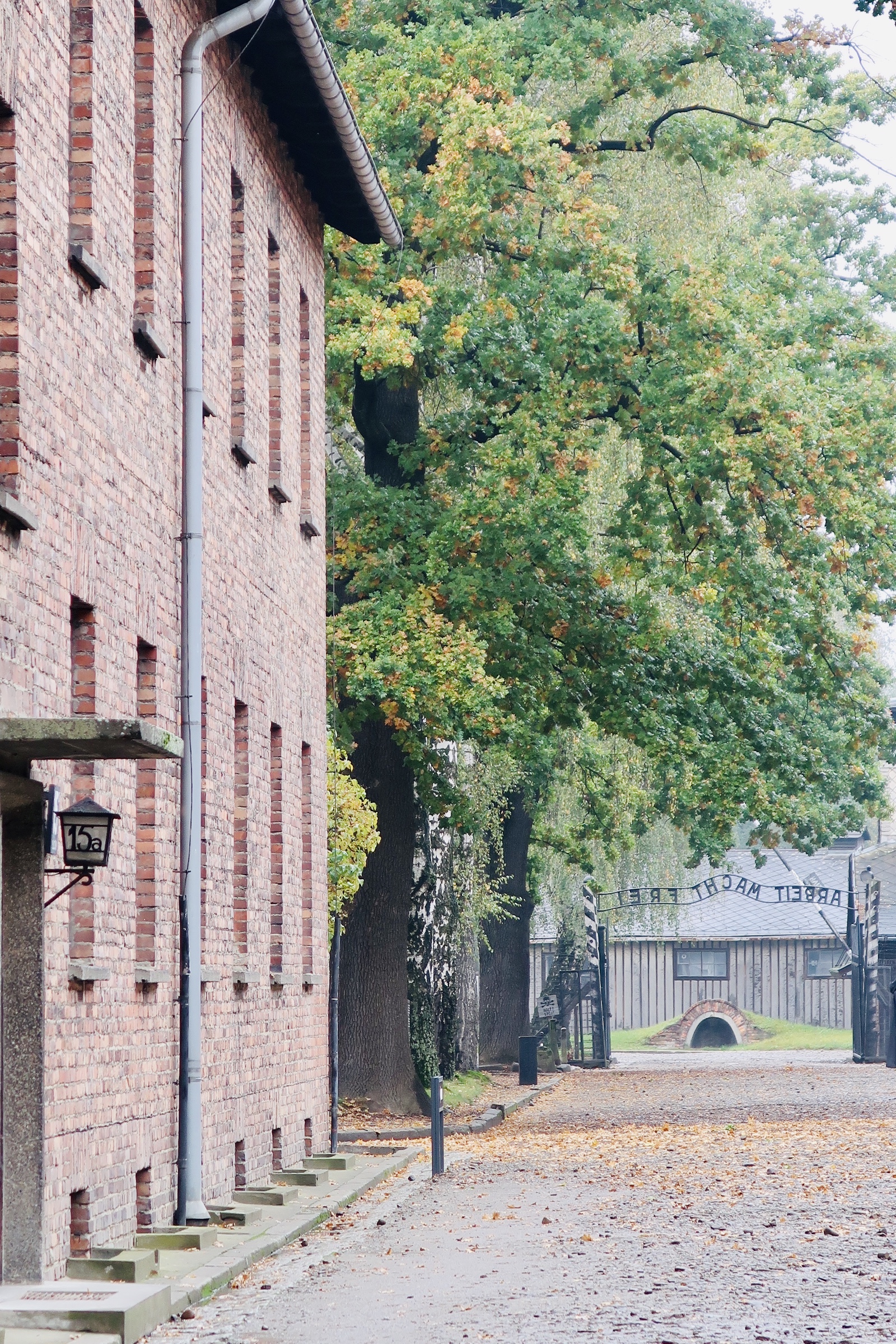
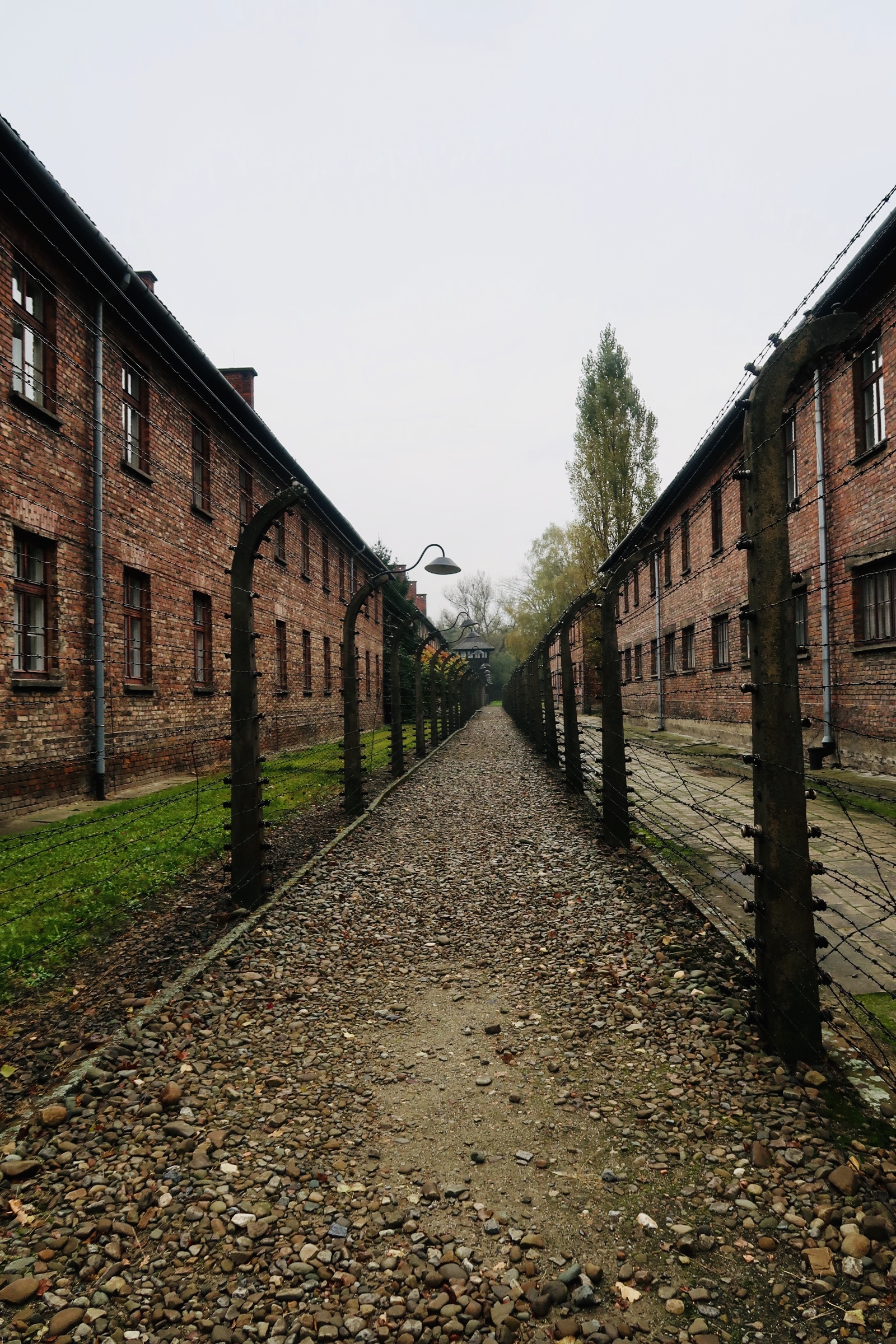
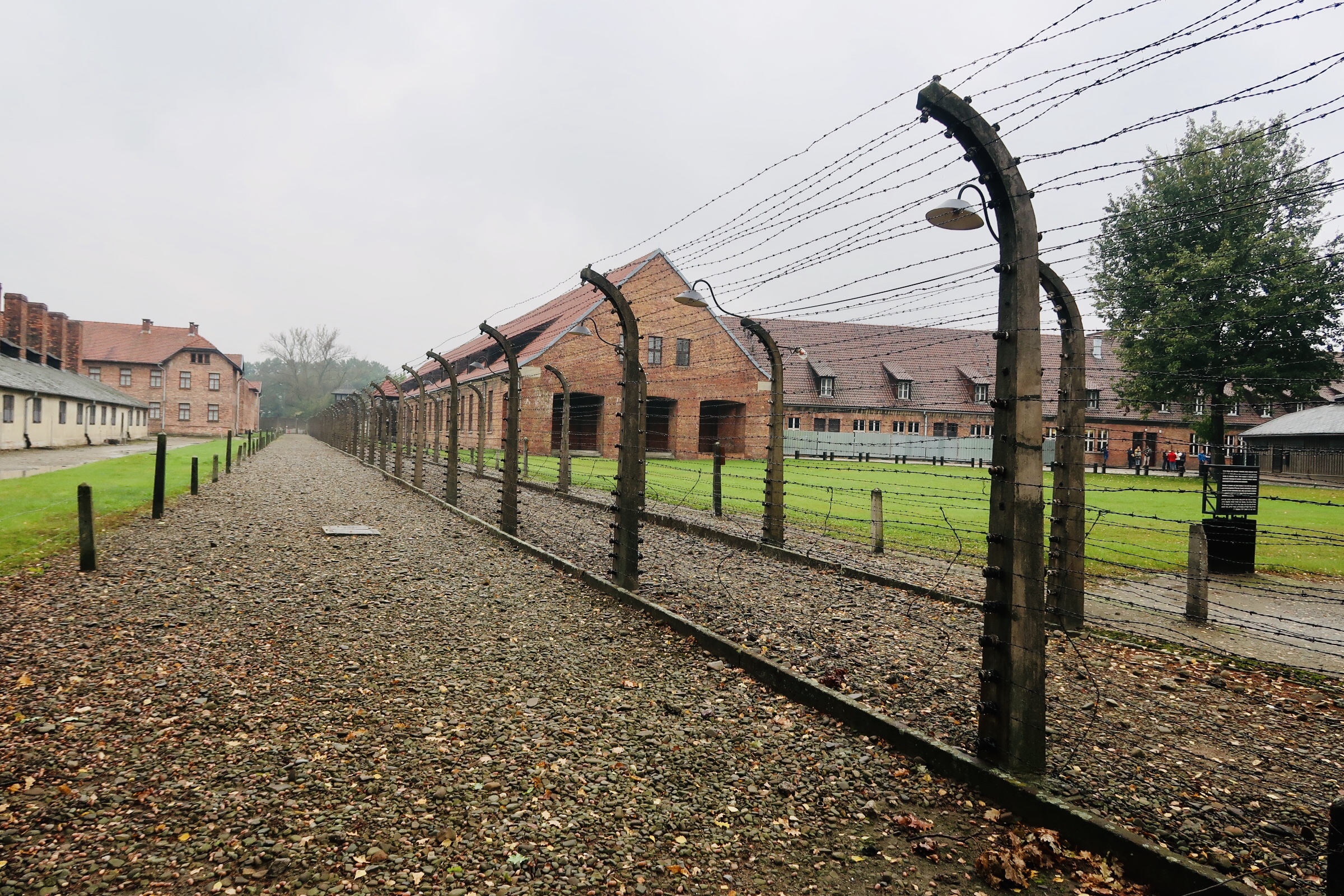
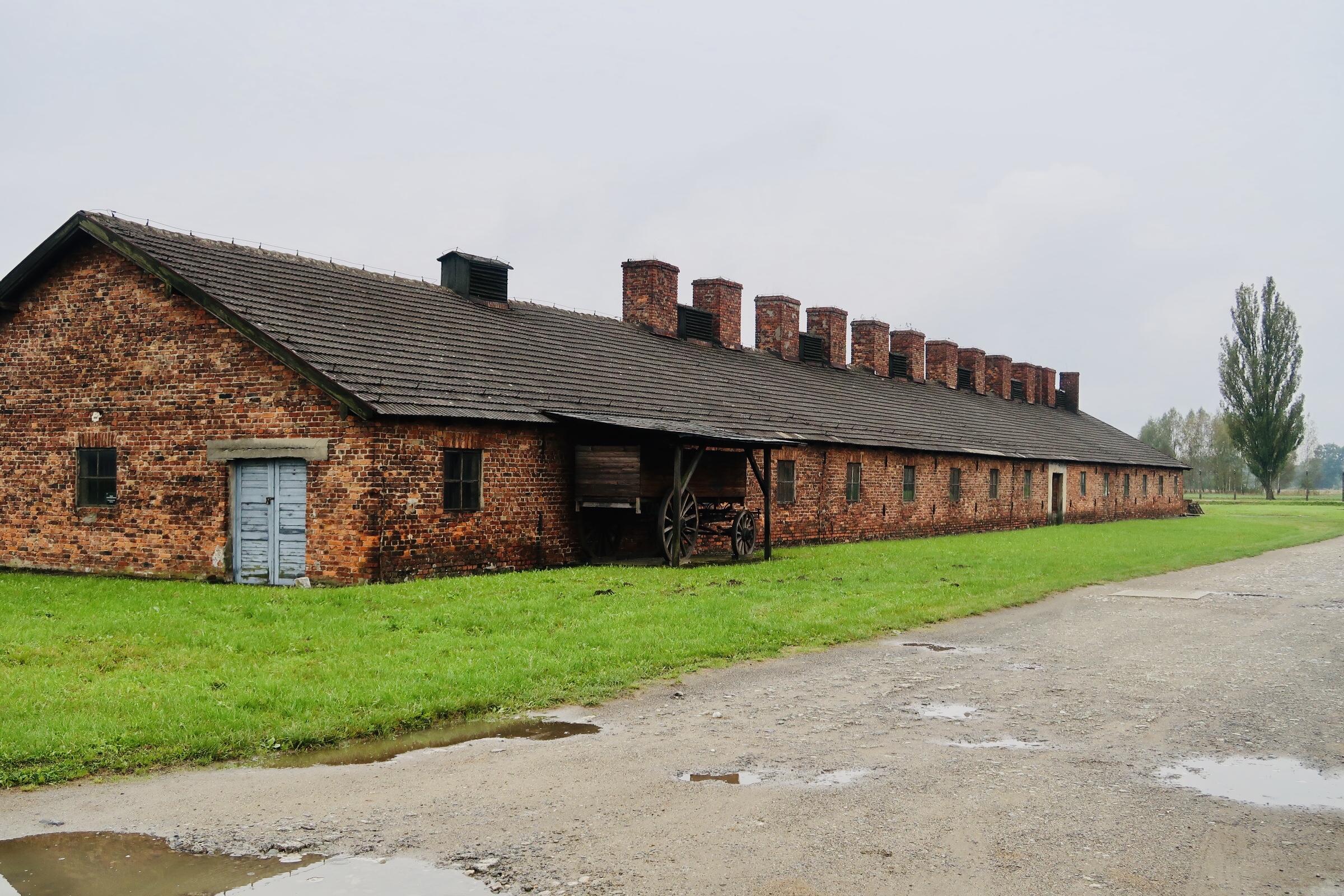
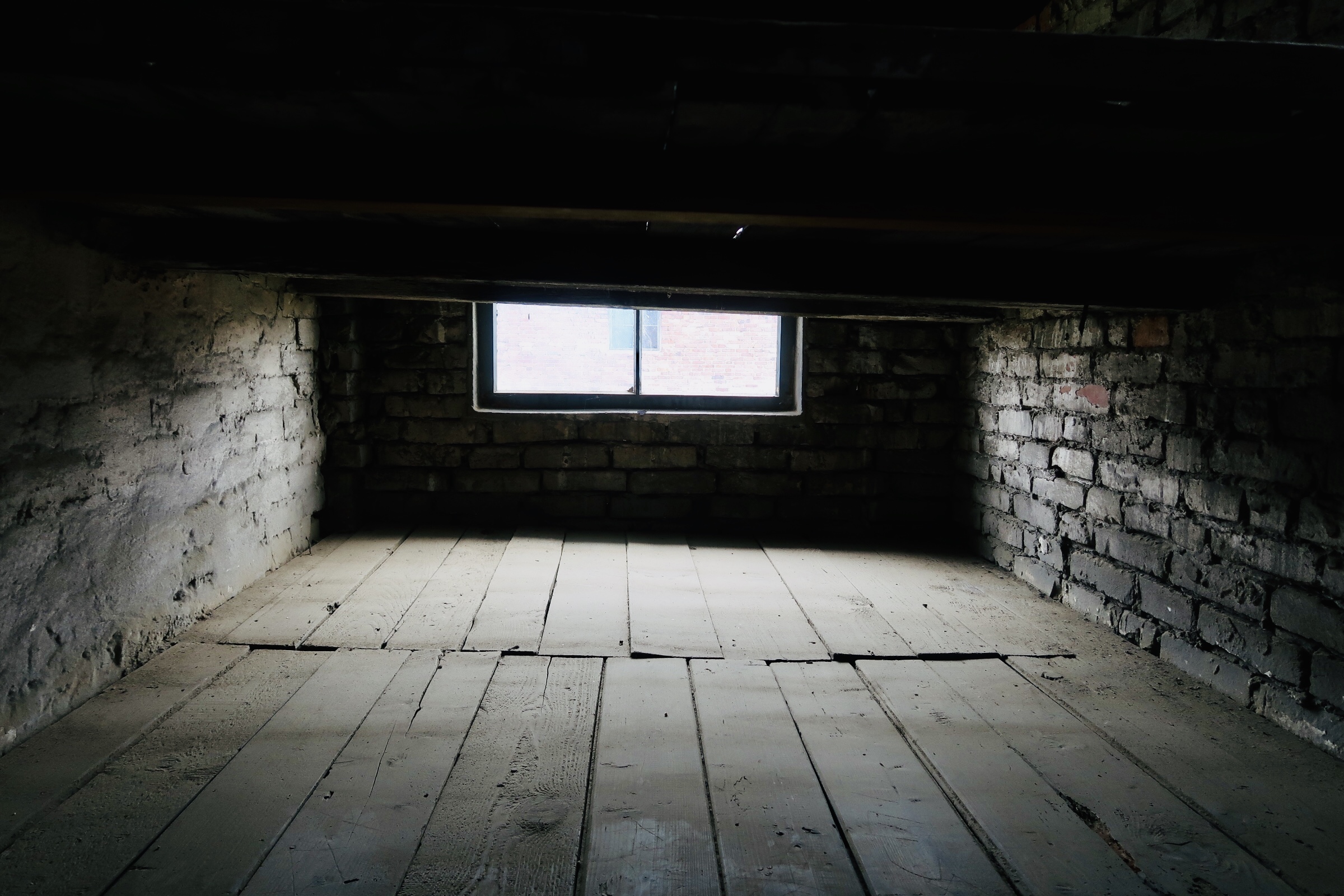
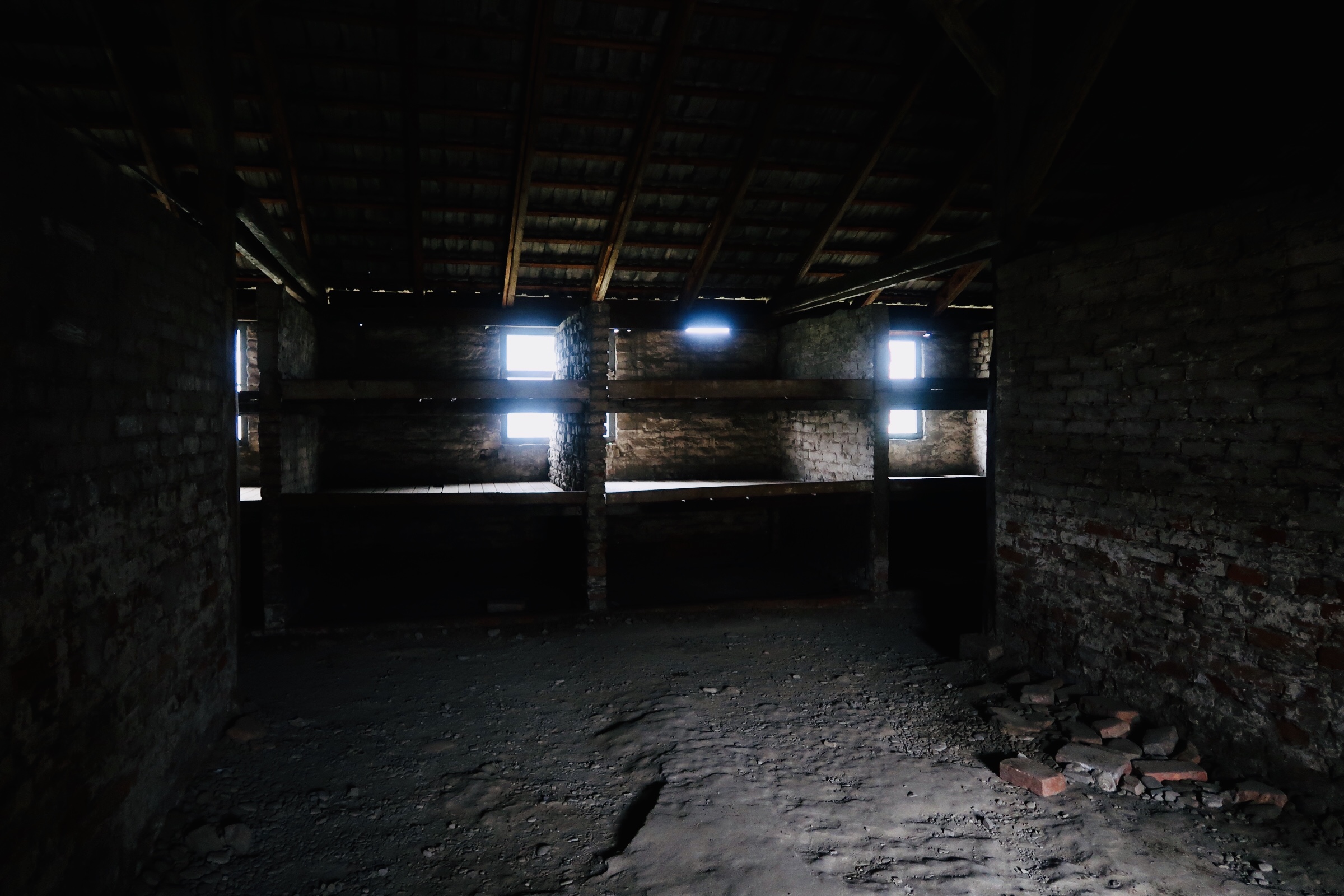
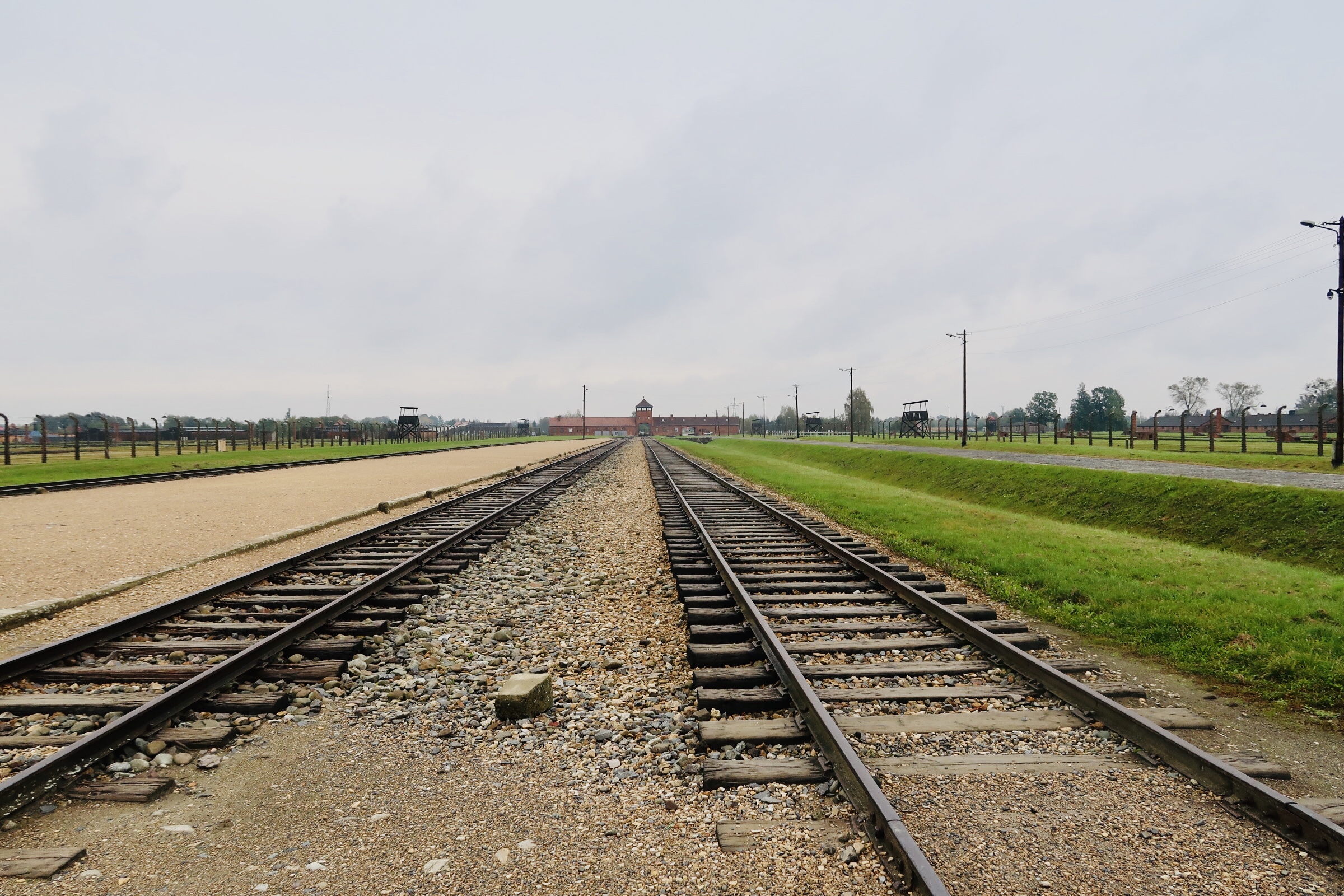
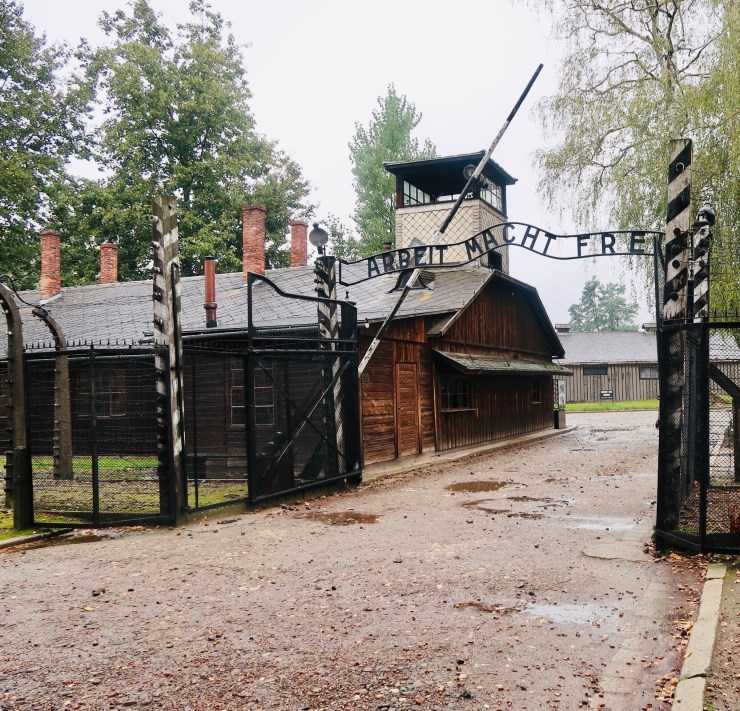
We recently spent a morning visiting Auschwitz I and Auschwitz II-Birkenau in Poland. This was our third concentration camp (fourth overall site as we also visited Lidice), we had done Dachau Concentration Camp and Kaufering VII, a Dachau subcamp. Visiting Auschwitz was different from the first due to its history and the information we learned after the liberation. Similar to my previous Concentration Camp posts, I don’t truly have the words for what this experience was like. There is nothing to truly do it justice, so instead of writing a whole bunch of words that will not come close, I am going to let the pictures tell the story. Maybe I’ll share my personal thoughts/experiences/tips in a later post. 

A quick note on our visit before anything else. We went early Sunday morning (an 8:30AM tour time) and took a guided tour. While I would recommend visiting in the early hours, as it is emptier and quieter, whether you take a tour or not is completely your choice. As someone who is Jewish, was raised in the faith and still maintains the faith (to an extent and for another post entirely), I am incredibly familiar with The Holocaust and the concentration camp history. My husband is familiar with the history as well. I don’t know that I learned any new information, BUT the guide helped put things into perspective and really walked you through the barracks and locations. The tour guides (at least ours) do not mince words. Everything is in exacting detail, which can be something to take note of. We did take our boys (aged 4 &3) and they were incredibly respectful throughout our entire visit (I don’t know that I am really going to talk about this decision- to each their own in this instance). 

If you do choose to visit, please note that the two camps are not truly within walking distance of each other. Auschwitz I does have a bus that runs between the camps OR you can drive. If you take a tour, you will start at Auschwitz I and then take the bus over to Auschwitz II-Birkenau to continue. Both are necessary to visit. 

I’m going to start with some brief history of the camps before I get into the photos. This will brief, if you are wanting a full breakdown, I would suggest any of the many books and survivors’ experiences (I find that a combination of both will be best). You can also see the Auschwitz website here for an introduction, however I would highly encourage you to do some reading in addition. It will allow you to get a true feeling for the time, the life, the camp. 

Auschwitz was established in 1940 (the first transport to arrive was actually mid Jan 1940) in the suburbs of a small city called Oswiecim. This city was annexed to the Nazi’s (The Third Reich) and later the residents and city was relocated as a way to hide what was happening within the camp. The original reason the camp was created was to house the Polish prisoners who were being arrested in large numbers. It was initially intended to simply serve a similar purpose to those the Nazi’s had already been setting up since the 1930’s (such as Dachau). True to its’ initial plan, Auschwitz did remain in this function of prison camp, even with the addition of the extermination centers. Auschwitz is actually 3 different camps. Auschwitz I was the “main camp” and held around 15,000-20,000 prisoners. The second was Birkenau, later known as Auschwitz II-Birkenau, which was the largest part of the complex and the main center of the Jewish population of the area, as well as the main extermination camp. The Nazi’s built up this second camp in 1941 (and this was when the residents were relocated) and, in 1944, it held over 90,000 prisoners.  The final camp was created from the largest sub camp (of which there were 40), Buna with 10,000 prisoners. It opened in 1942 and is not able to be visited (I believe it no longer exists).

In total, 1.3 million were sent to Auschwitz (across the board), within 1.1 million of those people dying. While the majority of the deaths were Jews (of the 960,000 that died, 865,000 died upon arrival), there were also Poles (non-Jewish), Roma, Soviet POW’s, and others. If the prisoners were not sent to the gas chambers, they died of starvation, disease, medical experiments, or from many other causes to include individual executions. The camp was liberated January 27, 1945, a day now commemorated as International Holocaust Remembrance Day, by the Soviet Red Army.  Auschwitz has become a symbol of the Holocaust and all of its atrocities and the location was named an UNESCO World Heritage Site in 1979. 

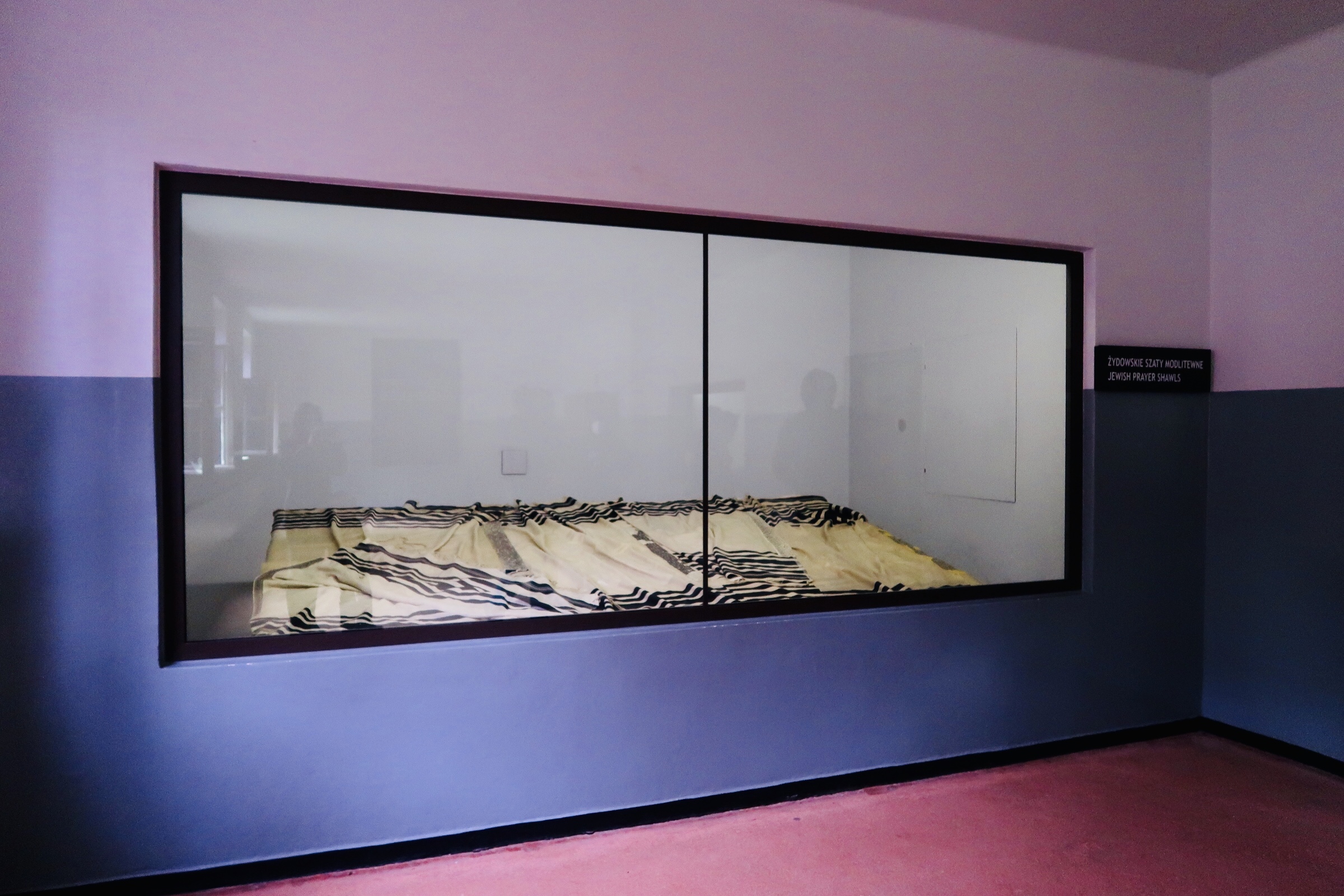
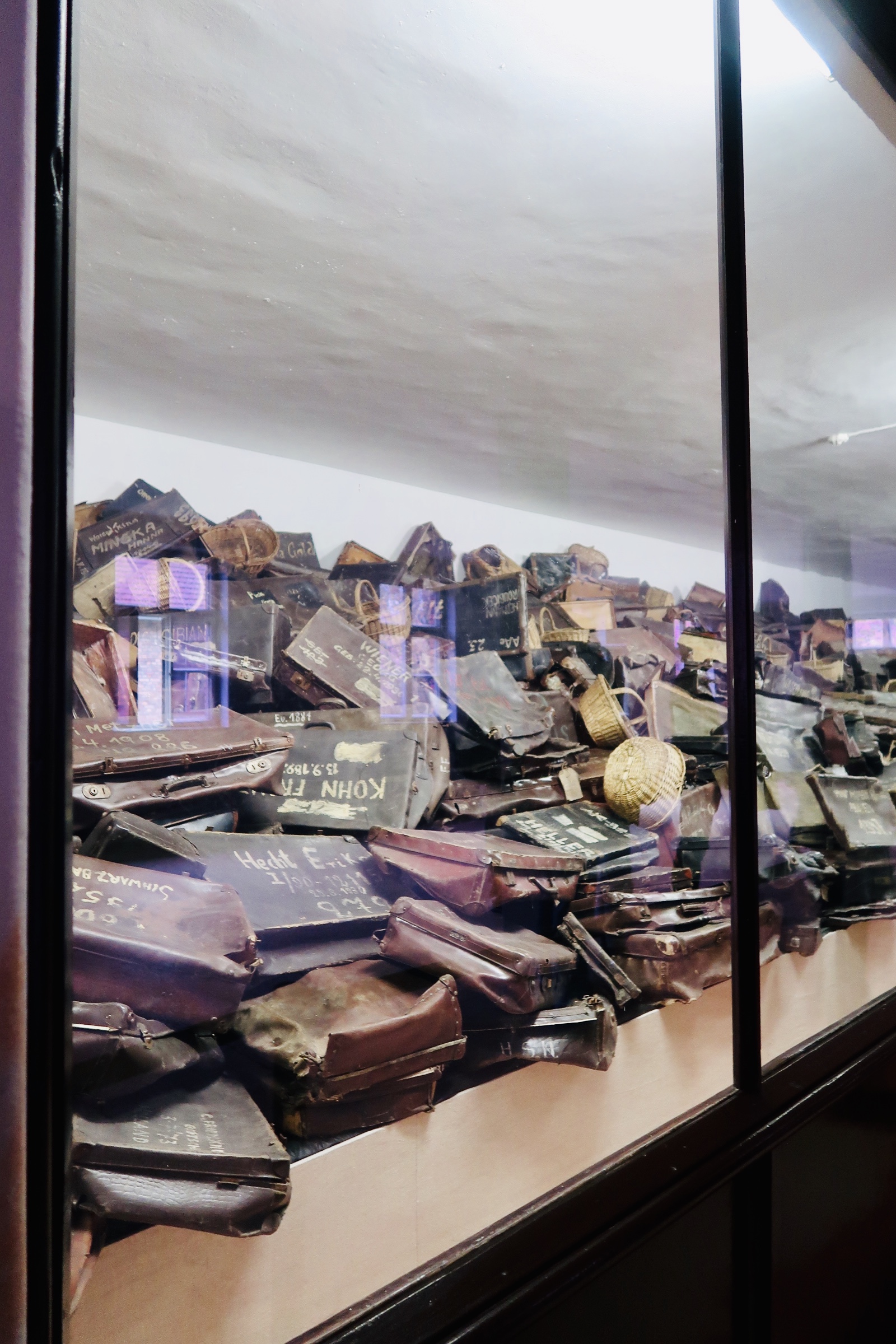
Most people know about Auschwitz and Dachau (and Treblinka or Bergen-Belson or some of the other known, but smaller camps). As I said with visiting Dachau, it is one thing to read/hear/talk about these places and the atrocities that occurred, but it is something wholly different to walk them. To walk these paths. To see the tons of shoes, or suitcases, or hair (so much hair) taken from the victims. To walk from the rail car to the chambers. To feel the weight of those who came and died before you. I am not going to mince words; you don’t need words. You need images. So, I’ll be giving you the general gist at the start of pictures (and you can hopefully see the captions under the pictures to tell you what’s what), but nothing more than that. 

***PLEASE NOTE THERE WILL BE IMAGES THAT ARE DISTURBING TO VIEW. PLEASE BE CAUTIONED***

So, as I’ve already mentioned, we started our tour at Auschwitz I. It’s important to note that this particular camp was for polish prisoners, military/command barracks, and was used for Nazi propaganda. This is not a camp that the Jews or…well anyone who wasn’t a polish prisoner, or a consumer of the propaganda would see. 

Within Auschwitz I there are displays set up to show not only how certain aspects of the camp were run, but also in memorial of the victims who were murdered. 

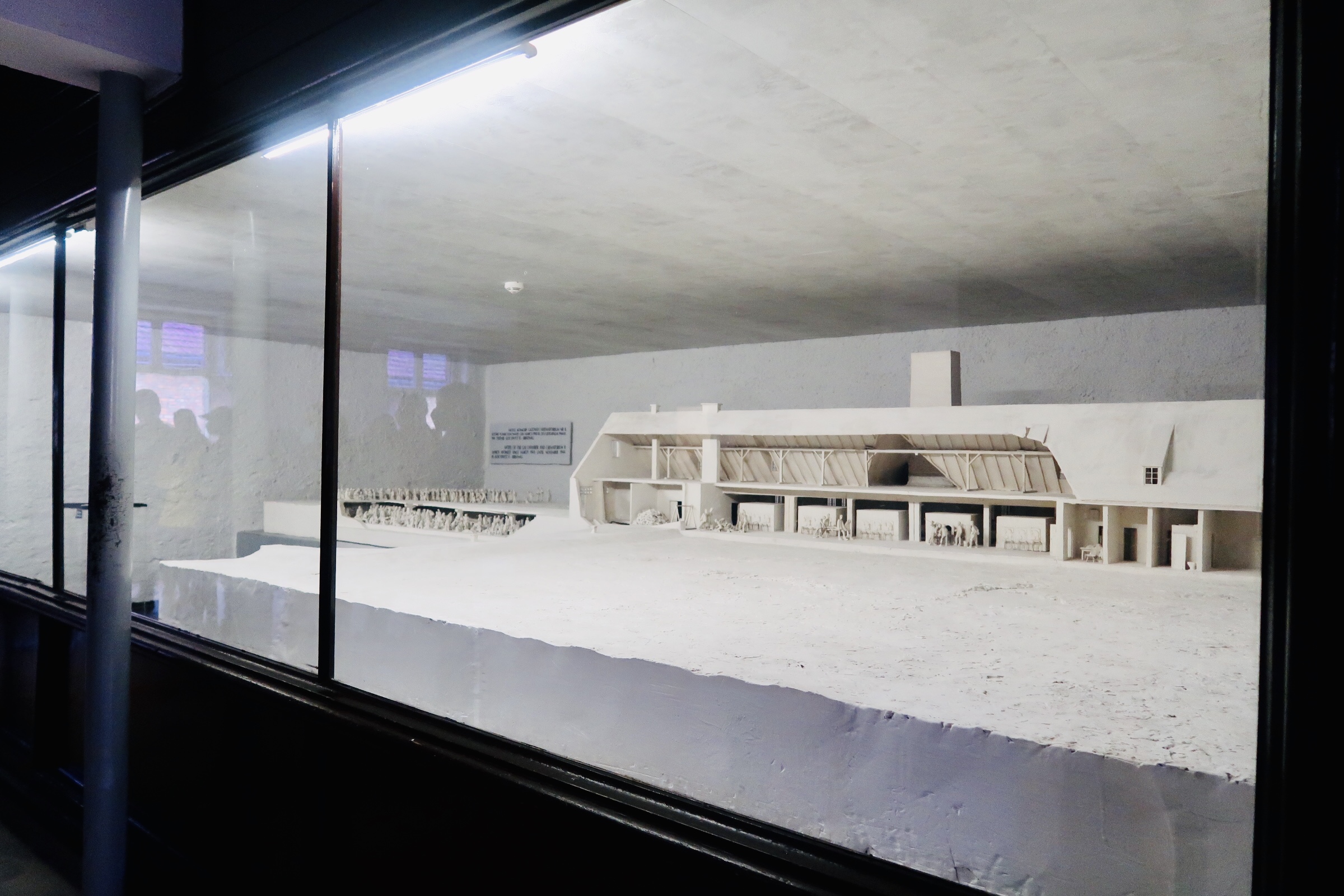
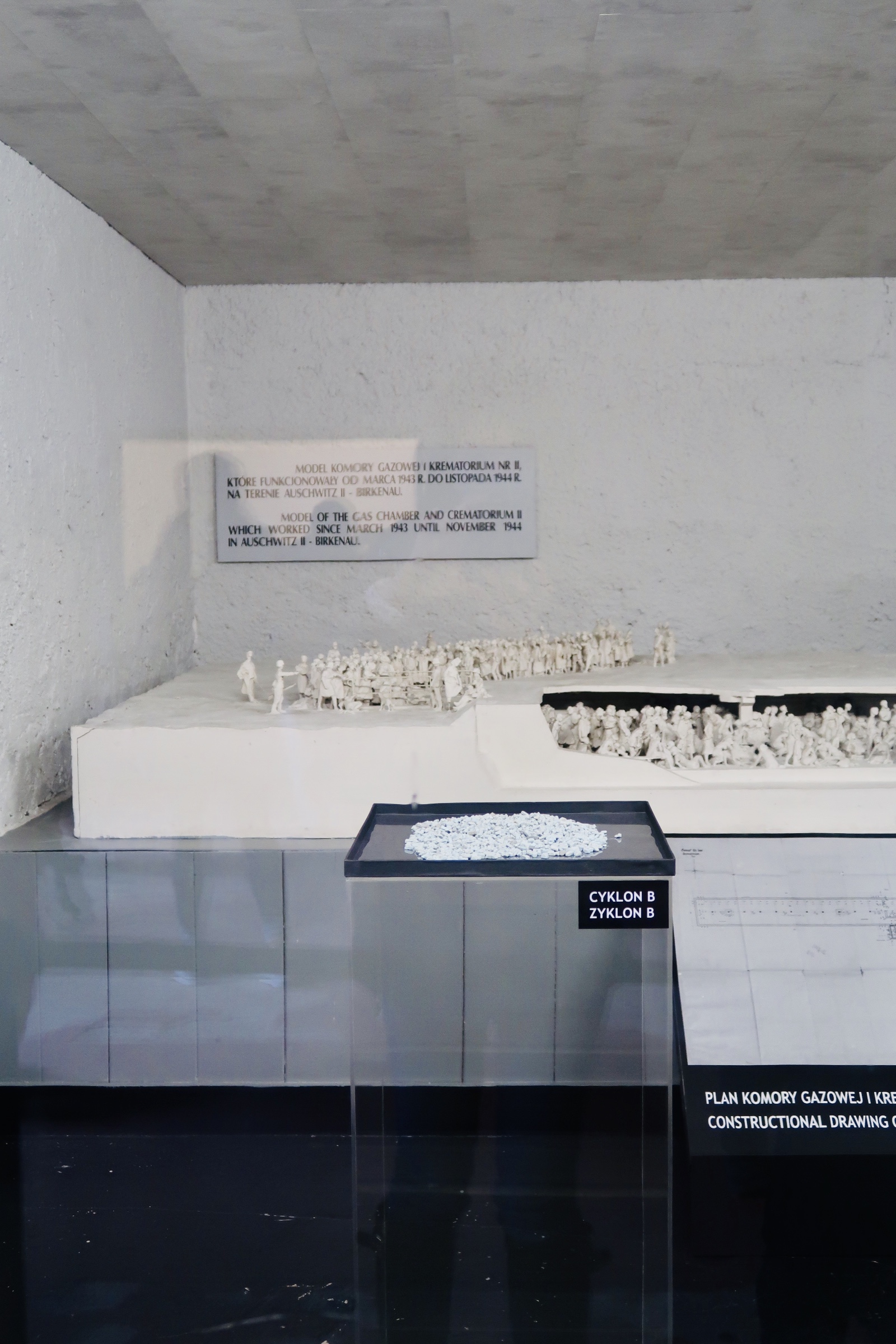
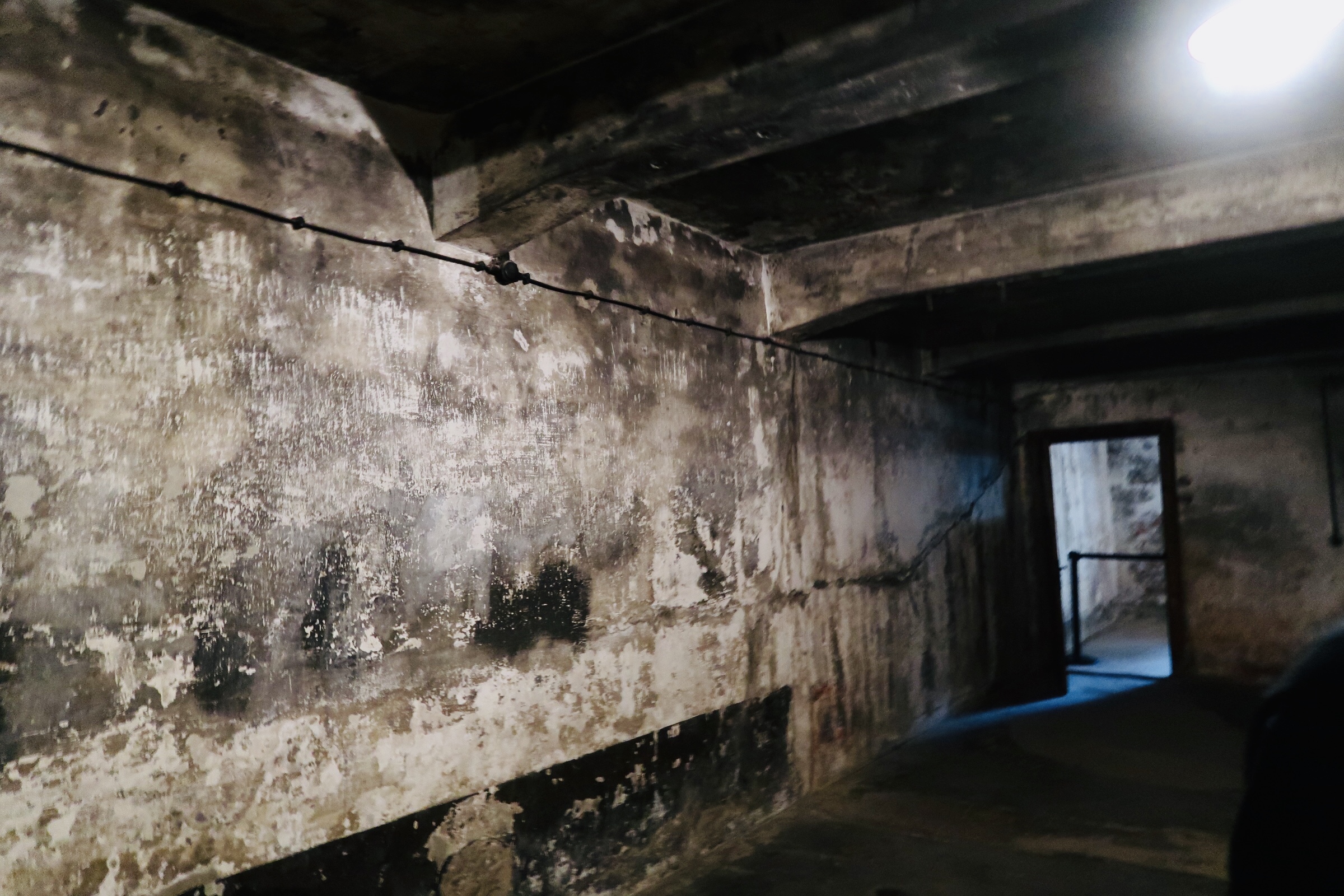
You are also able to walk through the gas chamber and crematorium of Auschwitz I. These were not the main locations of the mass extermination, just temporary. These are the only chambers and crematoria that you are able to see as the Nazi’s destroyed the main complexes. 

From Auschwitz I, we headed over to Auschwitz II-Birkenau. This was the main camp for the Jews, Roma, and anyone deemed “undesirable”. This was where they were brought (again, they didn’t see Auschwitz I, just this). Those that lived through transport were then selected for either the gas chambers, hard labor, or medical experiments.

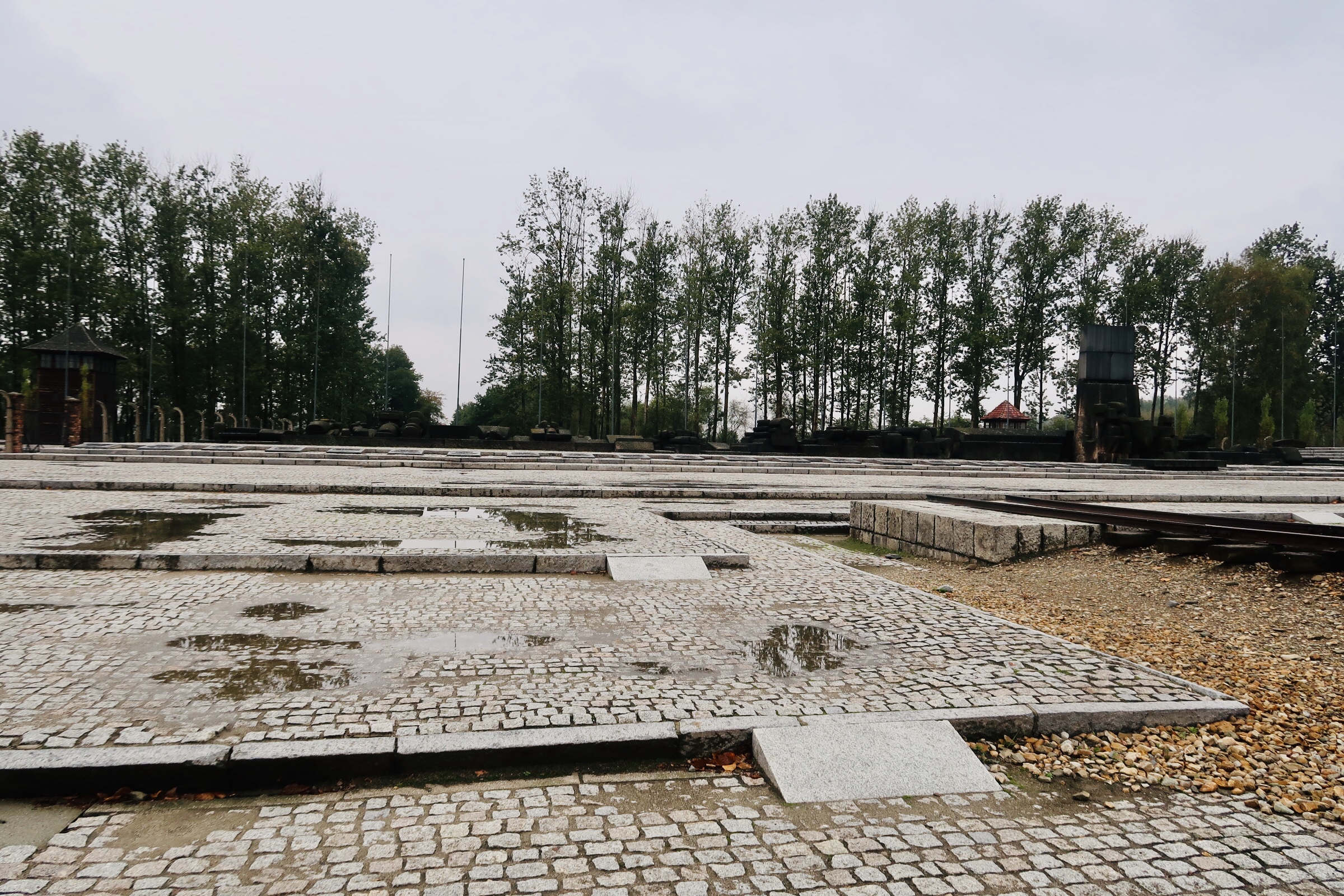
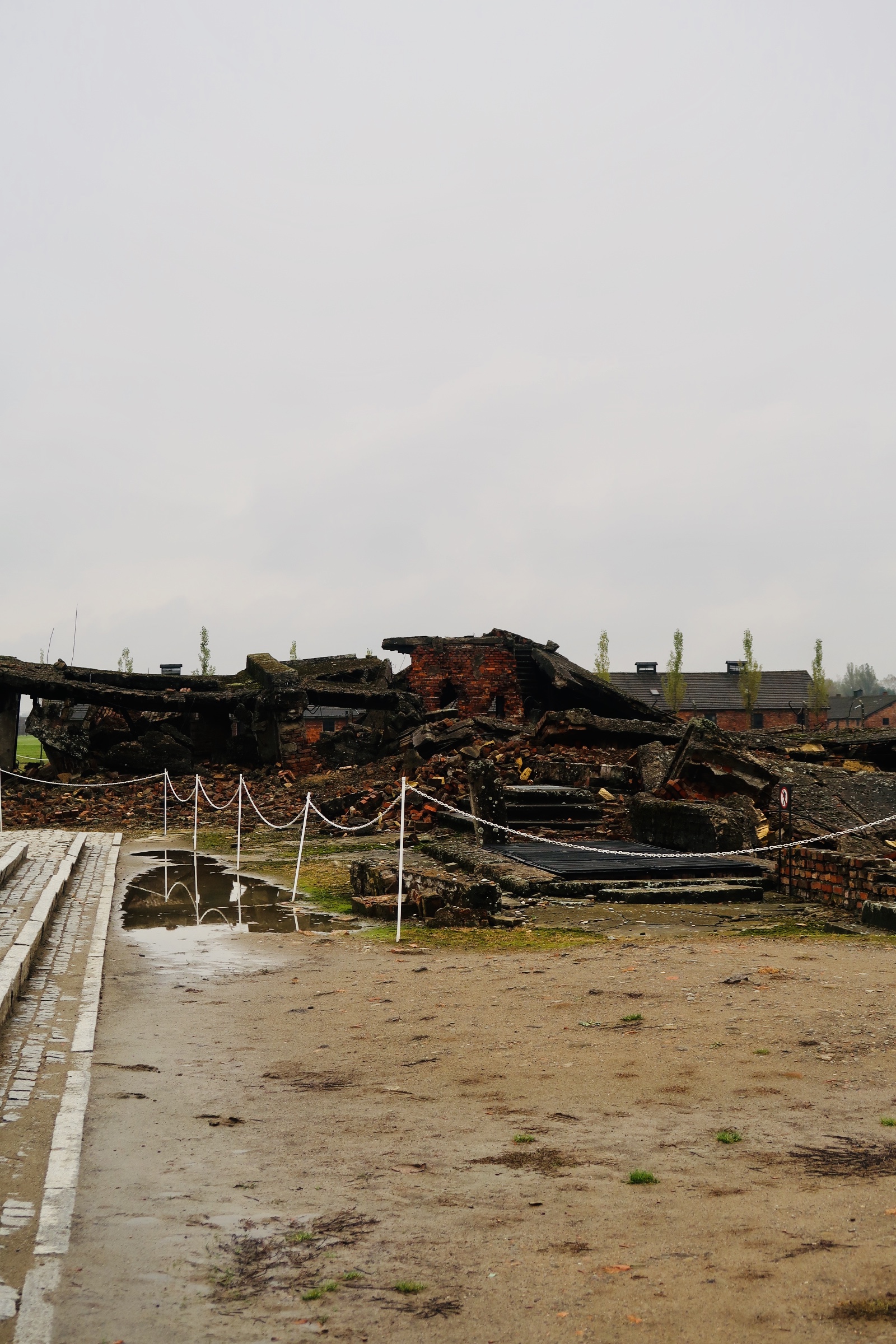
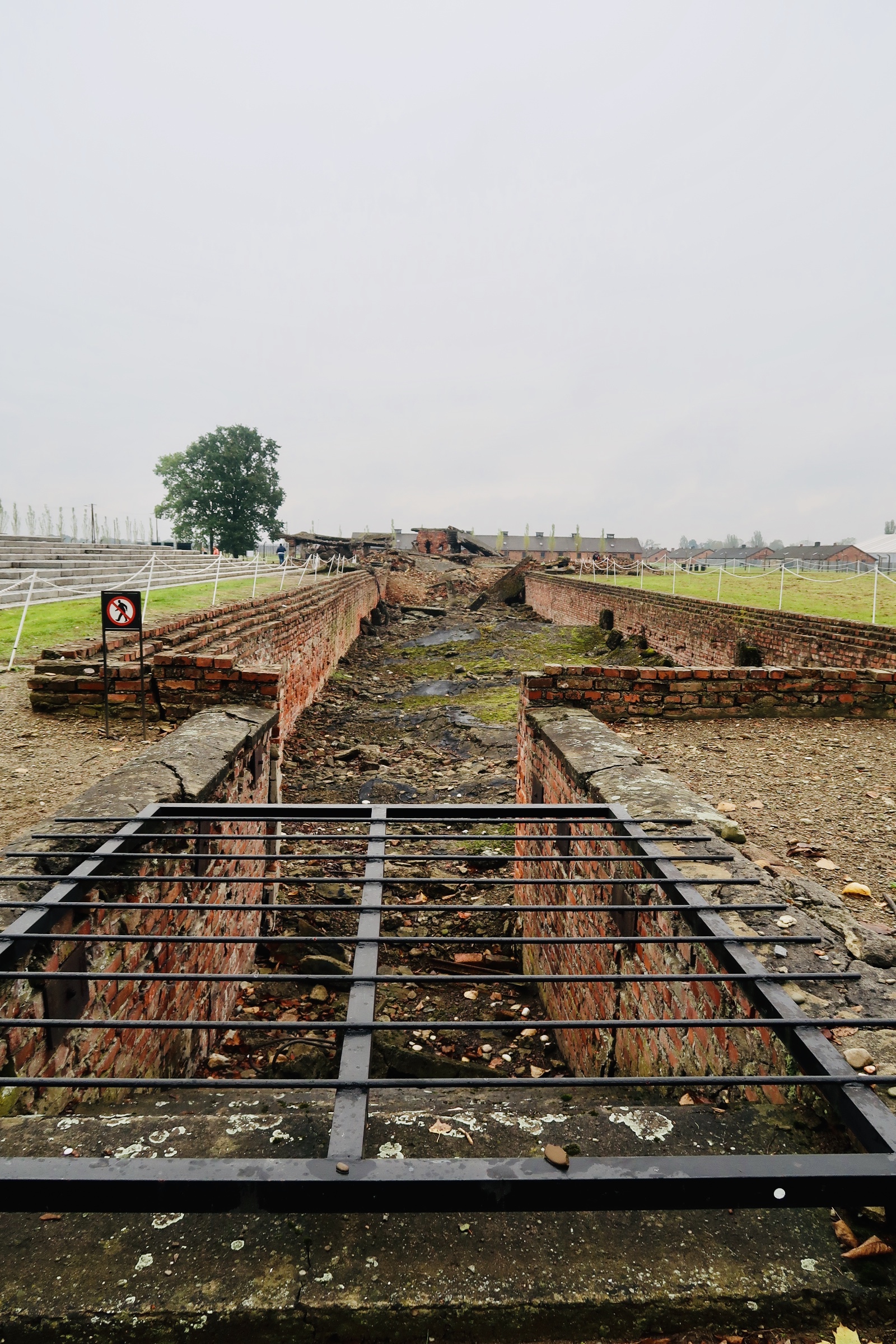
The two main gas chamber and crematoria complexes were exploded by the Nazi’s as they attempted to hide these atrocities, but the remains are here (and you are able to see how they were operated above).  

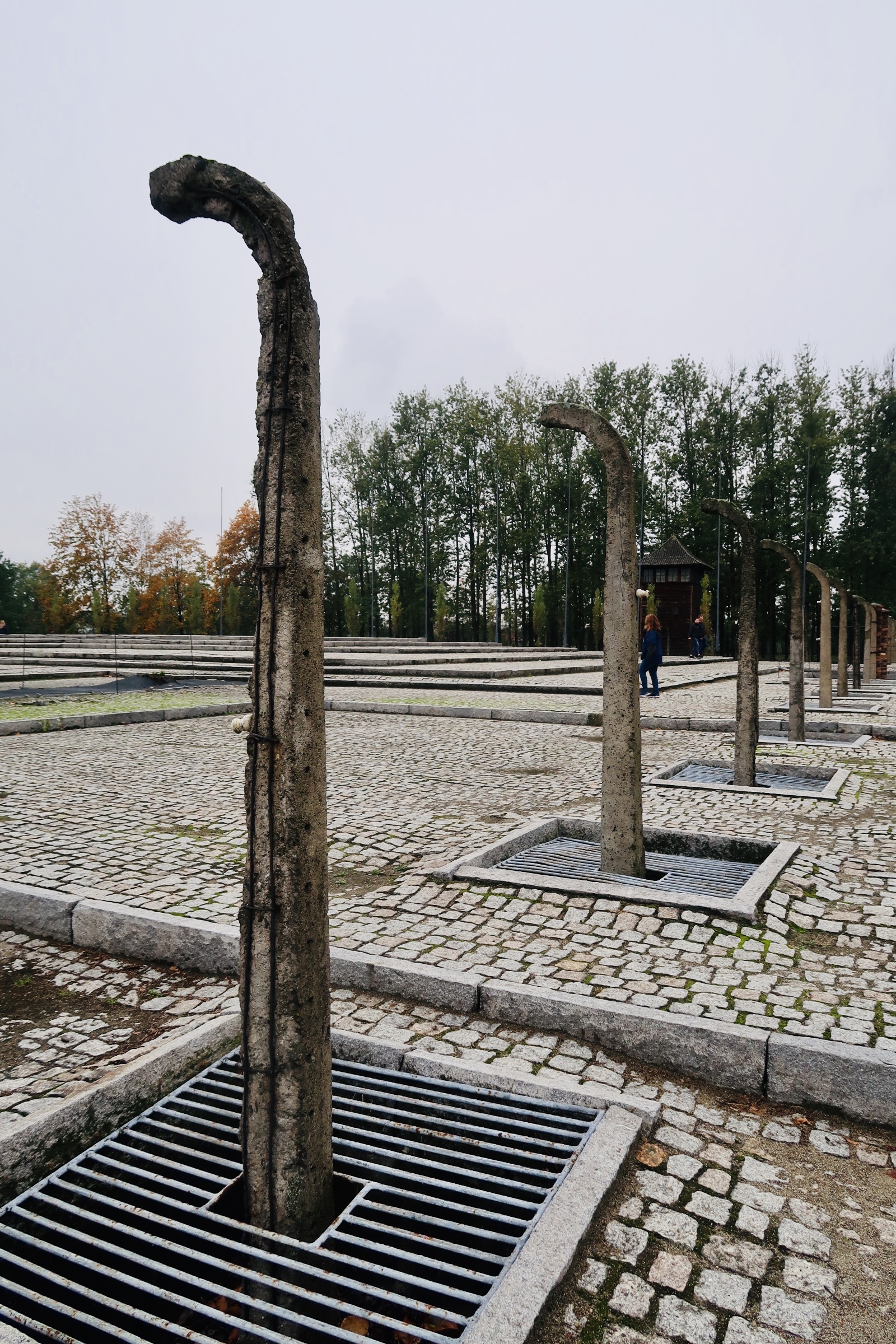
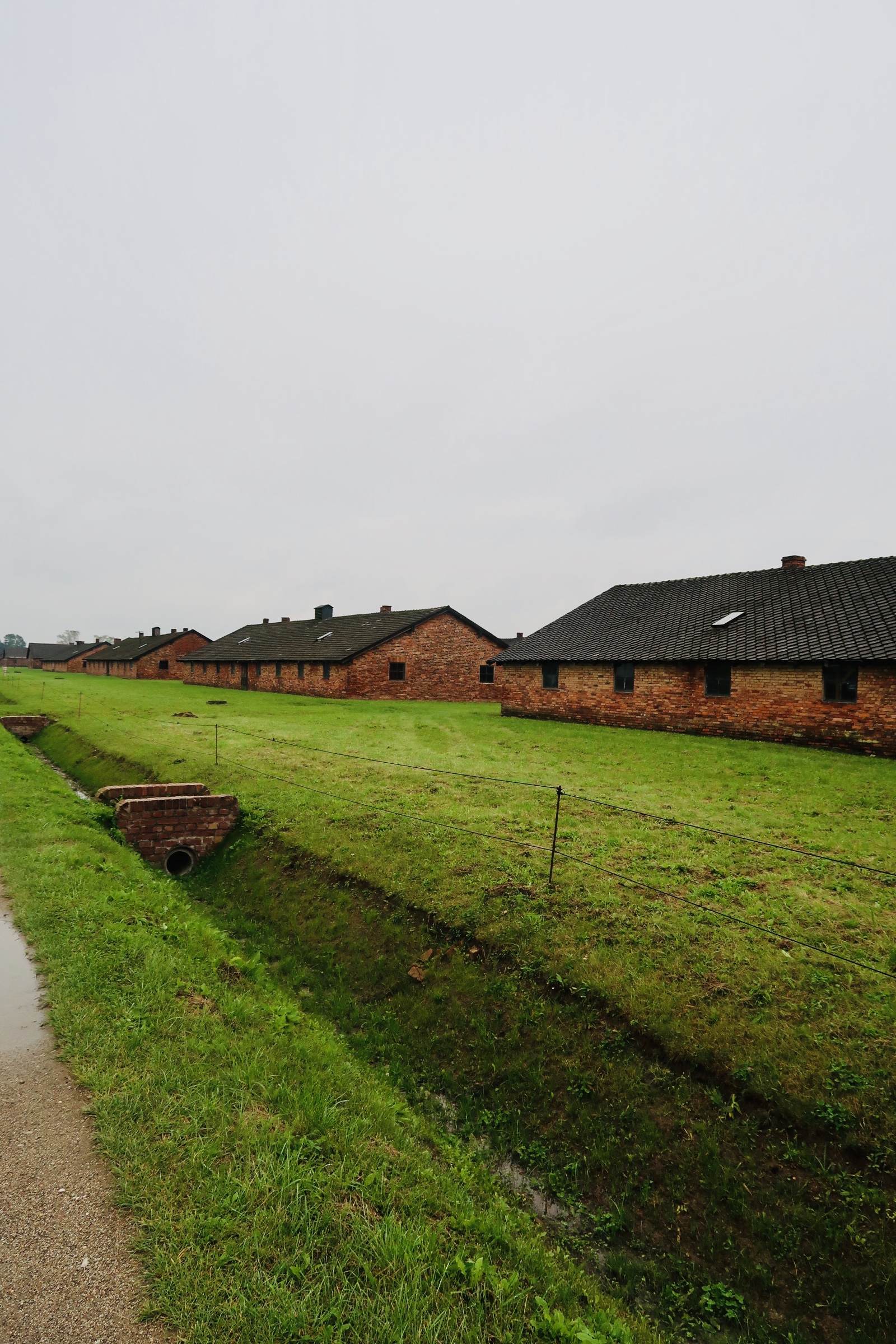
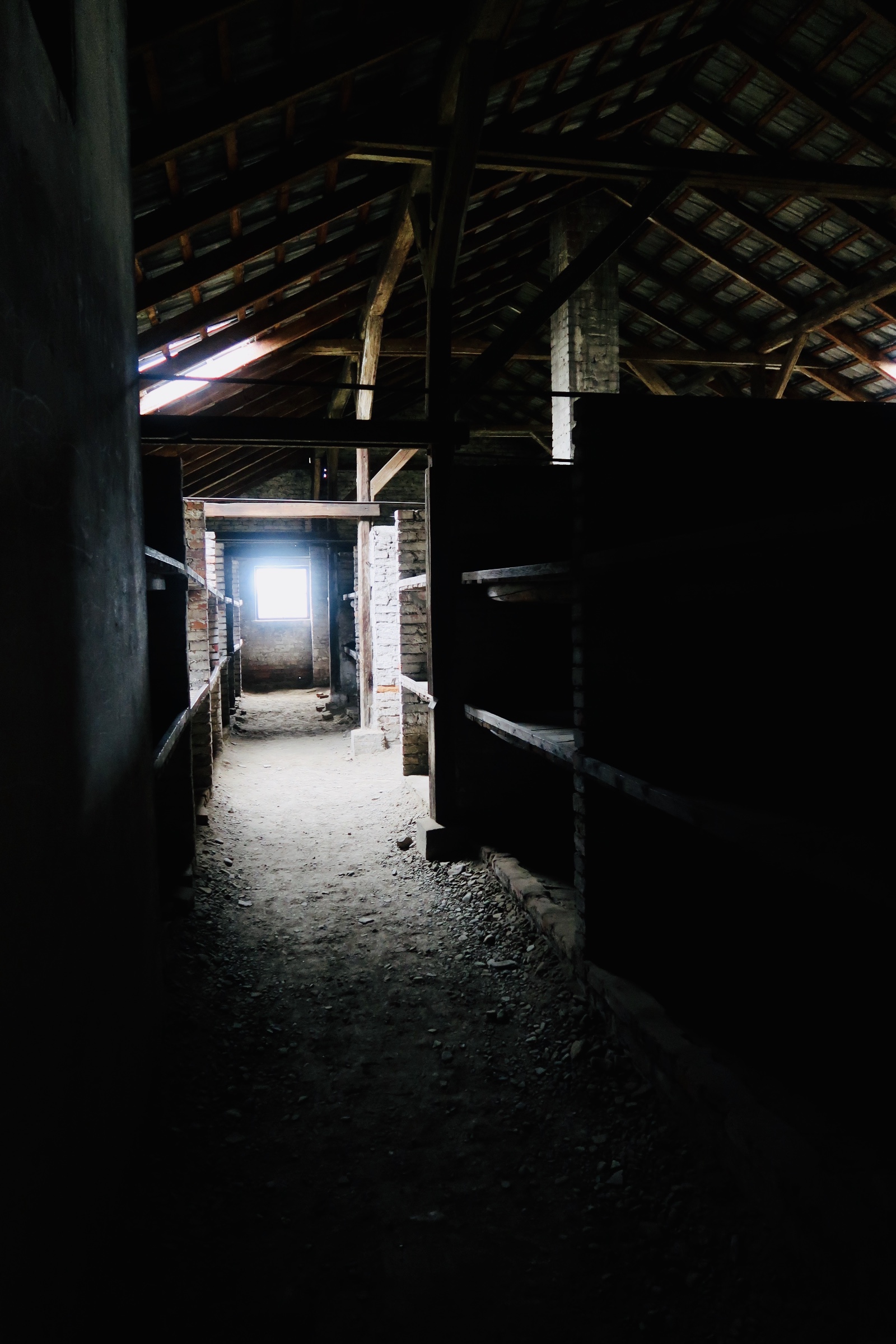
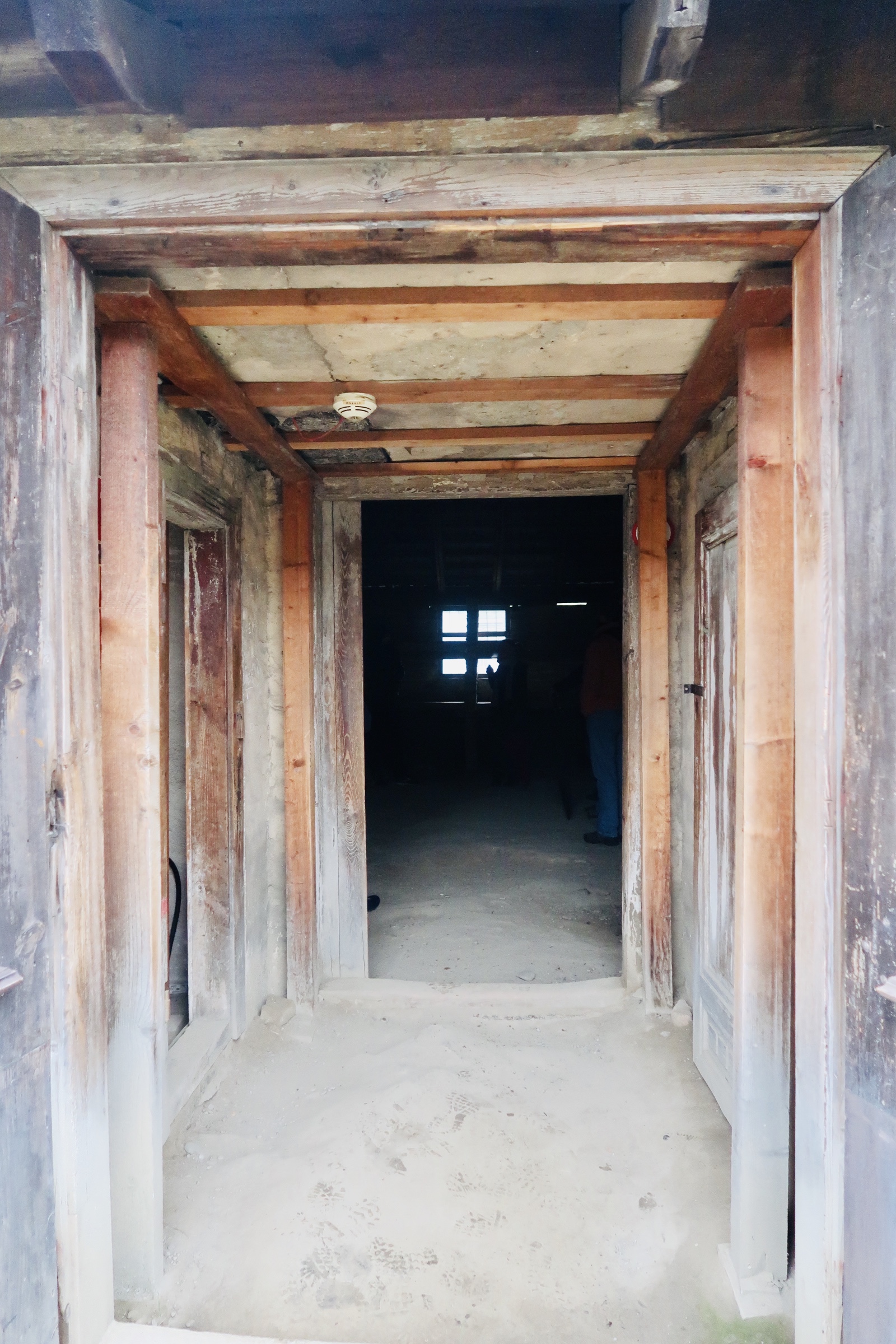
Finally, at Auschwitz II-Birkenau we were able to walk into one of the barracks that would have been used during the camps operation.

The one that we walked in was actually used for isolation of women prisoners who were selected as unfit and were to be sent to the gas chambers. If this barrack was full, they would be placed in the yard and the gate was locked until they were taken to the gas chambers. 

“For the dead and the living, we must bear witness” – Elie Wiesel

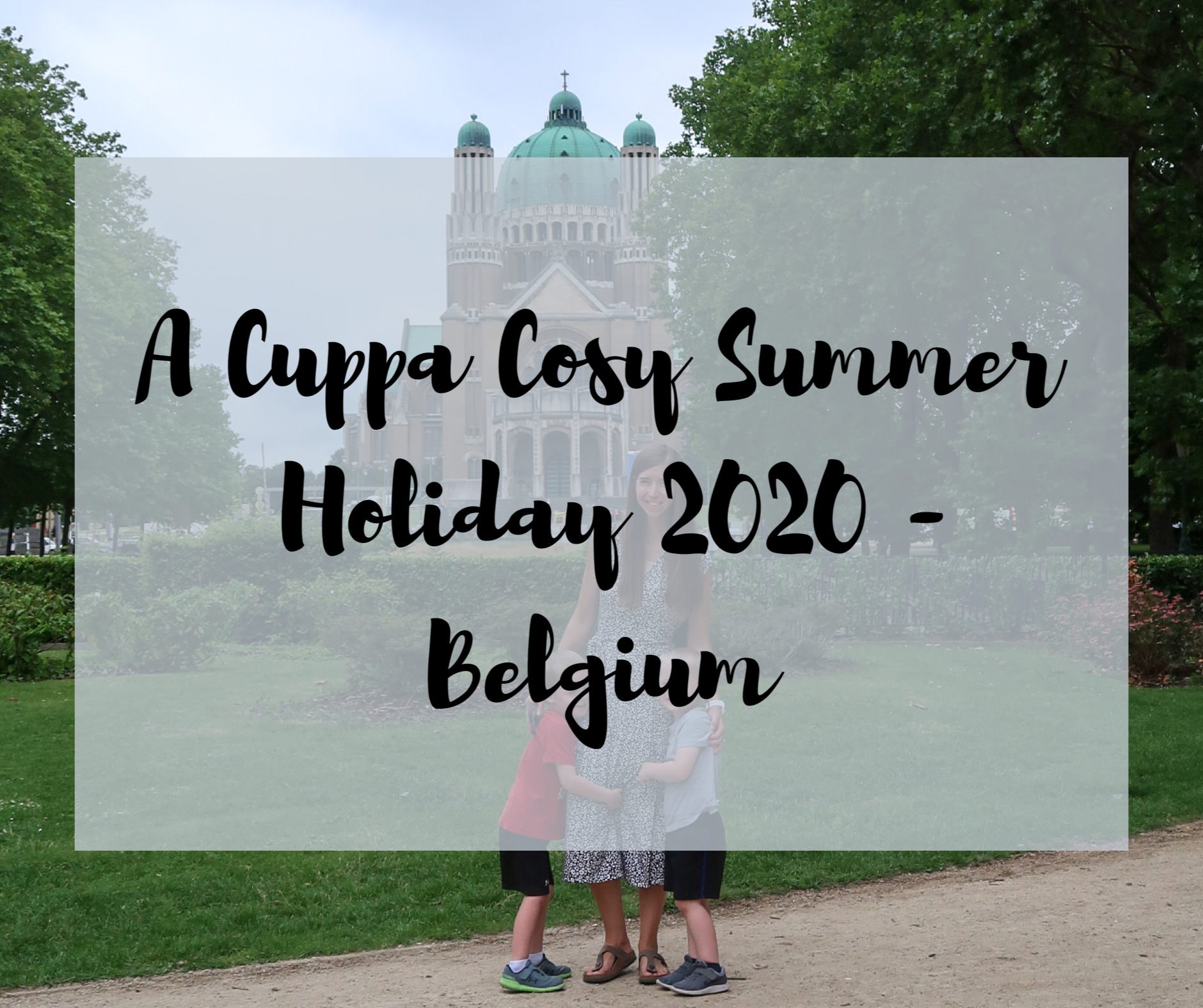
A Cuppa Cosy Summer Holiday 2020 – Belgium

Ah, Belgium. This was our second time in Belgium and I’m putting that very lightly as we visited a museum in Bastogne before heading to Luxembourg last year (we also went to Luxembourg this year). This year we wanted to not only stop in Bastogne again to see a couple more stops, but also to see Brussels, Belgium. There are a couple of really pretty cities in Belgium (Utrecht and Brugge are the tops), but we decided on Brussels.

Before we get into Brussels though, I want to talk about our stops on the way to Belgium. Our first stop was the Bayeux Cathedral. The Bayeux Cathedral is easily one of the coolest and most unique cathedrals I think I have yet to see. Consecrated in the late 11th century, this church is not only neat on both the exterior and interior, but also was the original home of the Bayeux Tapestry.

Our second stop was in Bastogne. After leaving Bayeux, we headed to Bastogne to look at the Foxholes and stop at the Airborne Museum in Bastogne. The Foxholes are exactly what you think they would be, but something about it just felt like walking on sacred ground. I think because we all know the story, we’ve heard the names, there is a bit more of a personal note, that walking the forest just felt…different to walking other places.

From the foxholes we went over to the 101 Airborne Museum. The museum is located in the former officer’s mess building of the Belgian Army, which was also used by the German Army during the occupation. Once the war ended, it was used as a Red Cross Hospital. It has been transformed into a museum that displays a collection of items from the fighting as well as a basement that has been transformed into a bomb shelter.

The museum is incredible, BUT fair warning on going down to the basement area. I would not say that it is…kid friendly, but it is important to experience. Walking down the stairs you are taken to a small dark room where you experience what it would be like to live during the battle for Bastogne and that was just…something that was hard to do. I don’t even have the words for that experience, just that I cannot imagine. From there you then walk along hallways that show various scenes (recreated…with mannequins- again not necessarily suitable for kids, depending on your children’s level of coping and understanding) from the battle. This includes the men fighting through crevices in the defenses of the building, to surgery scenes, to items that were found in the nearby forests and on the streets above. It was something to see and experience and something I will not forget for a long time.

Untitled Design 71

Brussels has long been a settlement, but it became fully known in the late 600’s when a chapel was built on the banks of the Senne River. The city was then officially founded about 300 years later and has been a place of rebellions, battles, and economic development. We spent most of our day in Brussels walking around the old town area, snacking on waffles, and absorbing the sights. Brussels was a really cool mix of old world and modern, with a hint of opulence and we enjoyed our day exploring. We stayed in a hotel called Hotel Noga and were very pleased with our room and the service.

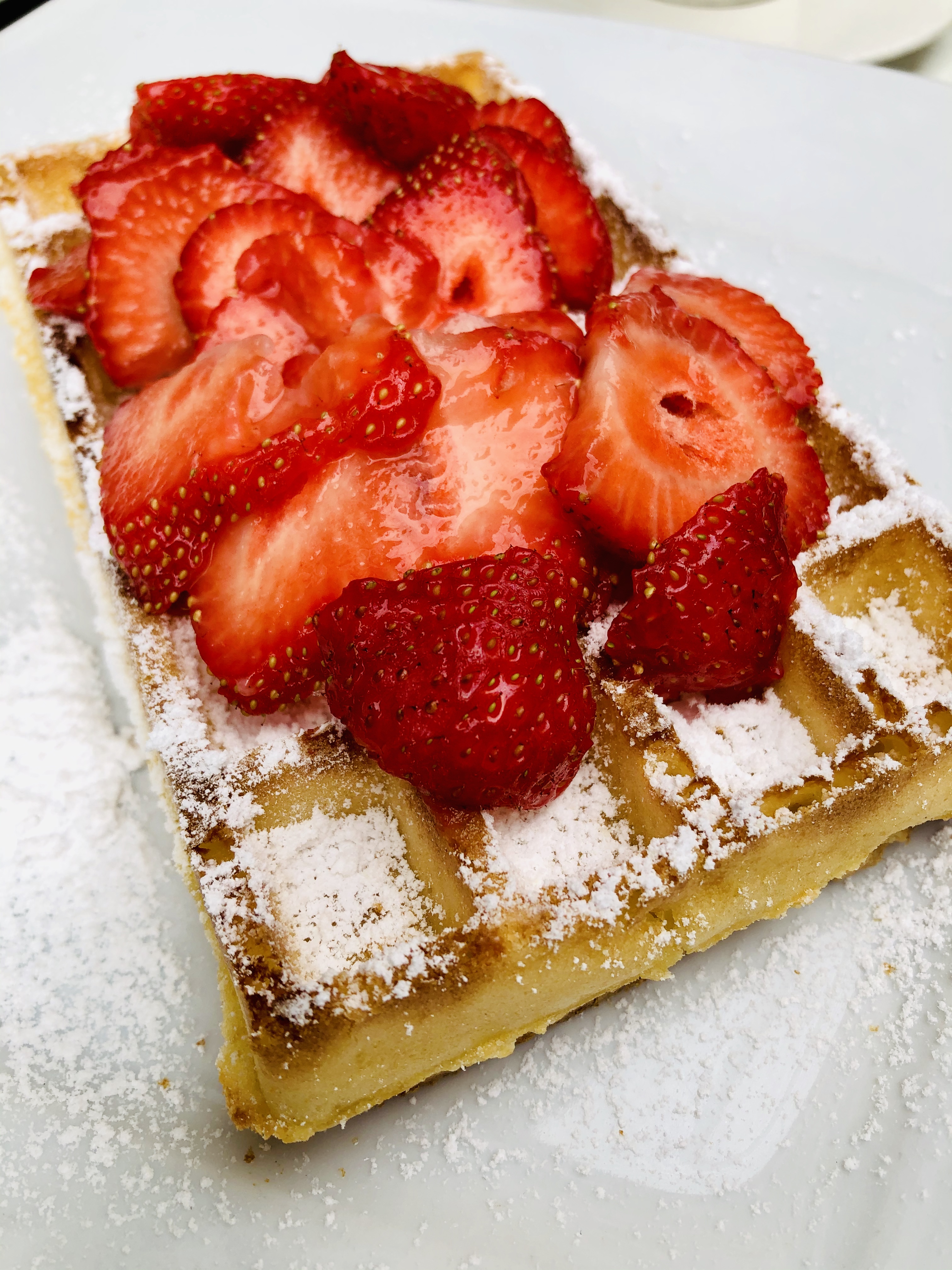
IMG_6854We started off with a breakfast of…(drumroll please)…waffles. I mean, we couldn’t go all the way to Belgium and not have some waffles. We stopped at a spot in the National Galerie called Mokafe and had some delicious waffles, Strawberry for myself, chocolate for the boys, and berry variety for my husband. Absolutely delicious. Fun fact about the waffles, there are actually two varieties: Brussels and Liege. Brussels are hard rectangle and topped with powdered sugar and some variety of berry or chocolate. Liege waffles are more oval and tend to be more of your…grab and go waffle. The sugar in Liege waffles is also baked directly into the waffle.

After filling up on the delicious waffle and cappuccino breakfast, we headed out to wander. We started our day at the Church of St. Michael and St. Gudula.

This is a relatively “modern” cathedral and church, having only gained cathedral status in the early 1960’s. The church itself dates back to the 11th century, with completion in the 16th, and is currently used for ceremonies of national interest (it is host to royal family events). It was stunning, one of those churches you can’t help but admire.

From there we headed through more of the Altstadt and over to the Grand-Place of Brussels. This seemed to be a common stop for us throughout the day as we gravitated back here several times- which makes sense as it is the central square of Brussels.

This UNESCO World Heritage Site is the most important tourist destination of Brussels, with guildhalls, Museum of the City of Brussels, and the Town Hall rising up around the square itself. The buildings are displays of opulence with gold touches and gothic architecture. It was voted (at one point) the most beautiful square in Europe and I think I would agree. The square is opulent, but not overbearingly so. It’s definitely the heart and was full of life each time we were there.

We also managed to see Manneken Pis. Yep, you read that right. Manneken Pis is a fountain sculpture of a little boy peeing into the fountain. The first mention of the fountain was from the 15th century when it is mentioned about drinking water for the residents. The first bronze statue was placed in the 17th century, with the current statue replacing it in the mid 20th century. The Mannekin Pis has been the subject of several thefts (of which the punishment was severe) and several legends (which are all quite…interesting to read about). One of the Mannekin Pis traditions is to be dressed up in a variety of different costumes. These can range from famous individuals, to sport options, to holiday attire. Overall though, the Mannekin Pis is a symbol to the people of Brussels; a symbol of the sense of humor that they share and their independence of mind.

The final thing we attraction we saw in Brussels was The Basilica of the Sacred Heart.

First commissioned by Leopold II in the early part of the 20th century after being fascinated by Paris. His original intent was to model his church off of the Sacre Coeur in Parish (HERE) with a street similar to Champs Elysees (HERE) connecting it to the main city center. The Church was consecrate in 1951, awarded the designation of “Basilica Minor” in 1952, completed in 1969, and is now the 5th largest church in the world. This church also holds two museums, The Black Sisters Museum and the Museum of Modern Religious Art. You are also able to go up to a balcony right under the dome to get a bird’s eye view of Brussels.

Once again, this was incredible due to the sheer size. You can definitely feel the more sleek, modern (almost non frivolous, sparse look), art deco style of the church throughout, but the size is just a site to behold.

After finishing up with the Basilica, we wandered back towards the main center square, did a little shopping and picked up some dinner before heading to our hotel. We definitely did not see everything that Brussels has to offer, not even close, but I feel like we got a good amount in our one day there, and were able to get the “feel” of the city.

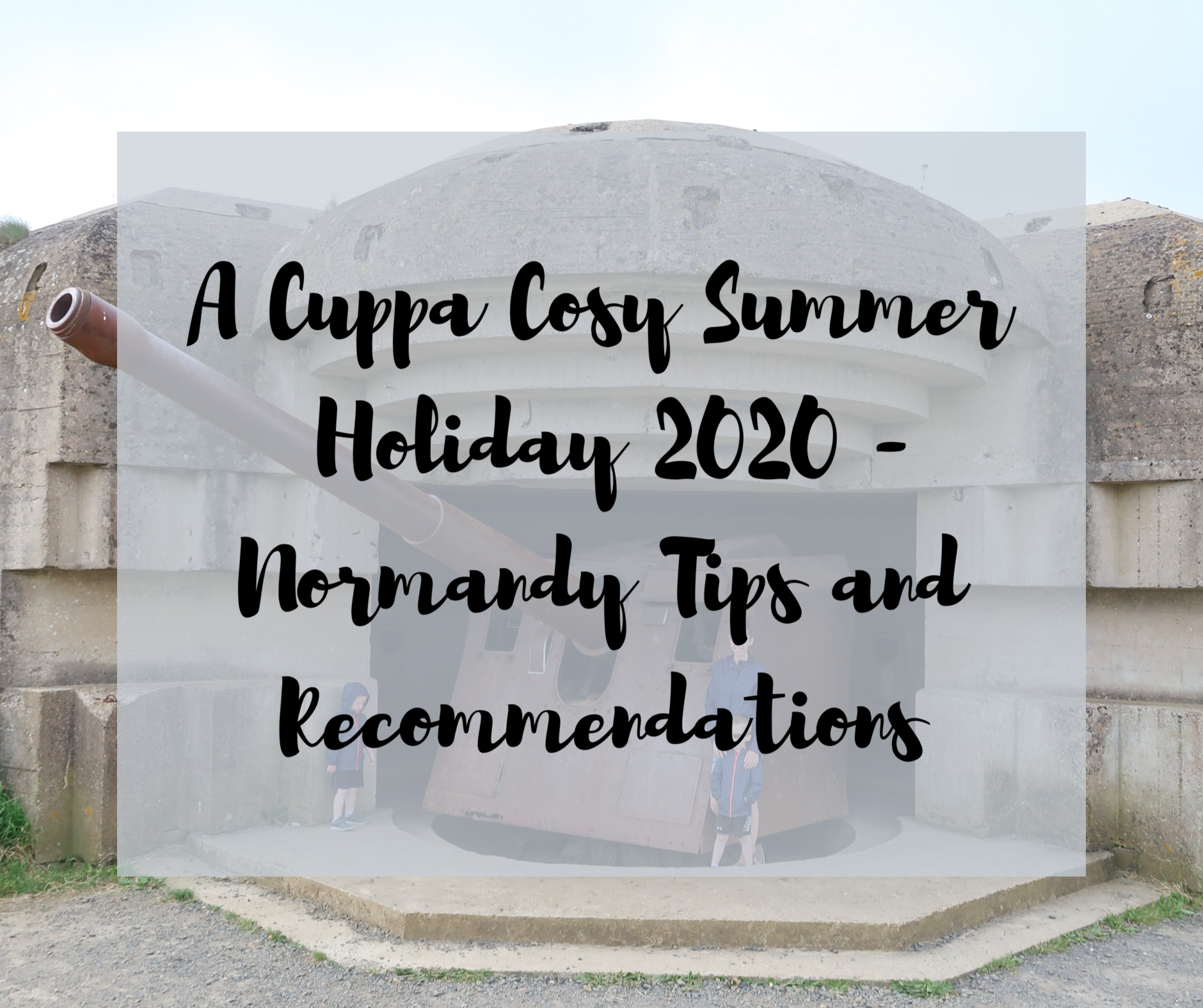
A Cuppa Cosy Summer Holiday 2020 – Normandy Tips & Recommendations

If you missed my “what we did” post detailing all the information about Normandy, you can read that HERE. I feel like this will be the most…different of all my tips/recommendations posts. Most of Normandy is largely based on what each individual wants to do. Some people want to walk the actual path of the World War 2 Soldiers. Some people want to see every museum there is in the vicinity. Some people just want to take in the sights. I feel like we did a little bit of both.

Untitled Design 70

Honestly, my tips and recommendations for the Normandy region are quite simple…

You’ll want a car. Similar to our time in Inverness, we spent a lot of time driving from one place to another. This wasn’t a bad thing as driving through the French countryside is kind of a dream AND you can stop in whatever little town you please. Some of the towns even have pictures of what they looked like after D-Day so you can see both the destruction and the re construction. The car also gave us a little chance to have a little downtime in between stops, and gave the boys a chance to eat some snacks and such.

You are able to camp out right off the beaches, but you don’t miss out on anything by staying in one of the little towns. We stayed in a tiny little fishing town, right on the docks, and still felt centralized to everything we wanted to see. We had thought about “camping” right off the beaches, but this ended up being a better option.

In terms of what to see, I think, at minimum, you should visit one beach, Pointe du Hoc, Sainte-Mere-Eglise, and/or one additional museum. I would add Lounges Battery if you have the time to as you are able to see everything almost exactly as it was in 1944. You could, in theory, do that in one day if you wanted, but I would stretch to two days in the region just to do more. The only museum we actually walked through was the Airborne Museum in Sainte-Mere-Eglise and that was such a good one both for us as adults, but also for our boys. There are so many museums though and each covers a different section of D-Day, Normandy, and World War 2 in France. Depending on what your specific interest is (my husband was interested in the Airborne and infantry portion), you can find a museum that will probably give you a wealth of information and artifacts to look at. In terms of beaches, I think (my opinion as a mom with two army heavy boys) that Utah Beach was a better option. They had more for the kids to see/do and really helped them gain a pretty clear idea of what D-Day was (Colton told quite a few people what happened on D-Day in the days following our trip).

Also, if you are in the Normandy region and have the time, I would highly, highly, recommend a visit over to Mont-Saint-Michel Abbey. I think I made it clear as to my thoughts in my previous blog post (HERE), but I will reiterate a smidge here. For us, staying in Port-En-Bessin-Huppain, it was about a 1 ½ drive and the drive itself was gorgeous. If you plan your time right, you can get to the abbey during the second tour, spend a few hours, and then head over to Sainte-Mere-Eglise (which is what we did), and still have time to walk the beach or enjoy an evening dinner somewhere. It is completely and totally worth it.

Finally, one thing we did notice was the hours of…well everything. Most restaurants didn’t open until well after 6 (sometimes even as late as 8) for dinner and most places (like the entirety of Sainte-Mere-Eglise) closed at 4pm. This isn’t necessarily a bad thing, it’s just something to keep in mind when looking for food or if you need a last-minute item. On the restaurant side of things, we weren’t sure if this was a Covid situation or if it was all the time, so I figured I would mention it here as an FYI.

Do you have any tips or recommendations for the Normandy region? There is so much to see and learn and I know we didn’t come close to doing half of what we could.

A Cuppa Cosy Summer Holiday 2020 – Normandy, France

We spent a total of 2 ½ days in Normandy (including our to “travel days” to and from as we did things on those days). You’ll have seen my post devoted to Mont-Saint-Michel already (if not it’s HERE), but we did so much more in Normandy than that. Normandy has played such a role in World History being a landing site and the beginning of the Allied Forces taking charge during World War 2, however before that it was just…an area of France. The beaches that were stormed were just beaches and the area is absolutely gorgeous. During our time in Normandy, save for the Mont-Saint-Michel reprieve, we focused very heavily on World War 2 history. My husband had a long list of places that he wanted to see, and we managed to see most of them. Not only that, but our children were able to learn and understand what happened during that war, but I’ll get into that a bit later.

Untitled Design 69

After checking in to our hotel (we stayed at an Ibis in Port-en-Bessin-Huppain which I would recommend), we decided to just hit the ground running and head off to our first spot. It only felt right to pay homage and respect to those who gave the ultimate sacrifice before anything else, so we started at the American Military Cemetery at Omaha Beach.

The cemetery was originally a temporary American cemetery established in June 1944 and was the first American Cemetery on European Soil in the war. The cemetery has 9,385 graves, most of those who perished in the D-Day Landings and following operations, as well as a Walls of the Missing monument that contains 1,557 names. There is a visitor center within the cemetery, although this was closed due to Covid and there was also a path from the cemetery to the beach, but that closed due to security a few years back. You are able to walk the entire cemetery, through several different pathways (should you choose to walk along the beach side, the center, or the roadside), the wall of the missing, and the monument that details out the landings and invasion.

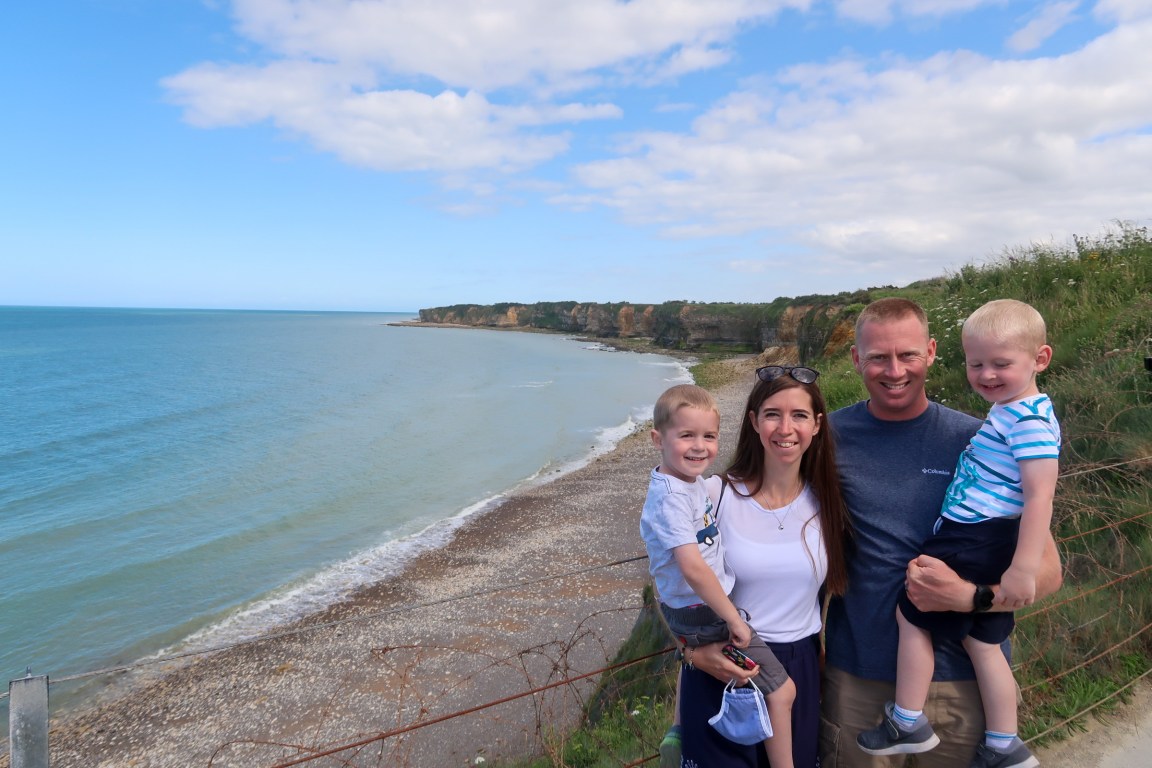
From the cemetery we went over to Point du Hoc. We wanted to make sure we were able to walk the area before it closed (as the locations with centers have opening and closing times, the beaches do not-you can walk those at any time), so we passed walking the beach until after. Pointe du Hoc is a little west of the center of Omaha Beach and a Ranger battalion was tasked with attacking and capturing the fortifications. Pointe du Hoc is a wall. A rock wall.

The Germans had a completed 4 casemates that housed guns, an observation bunker, and anti-aircraft guns.  The plan was to land by sea, scale the cliff and capture the area. There were quite a few problems that arose during the attack, a timing setback, the ladders weren’t long enough, and the second wave of soldiers did not get the flares in time and wound up landing on the beach rather than scaling the cliff. Now you are able to walk amongst the paths of the original fortifications and see the various gun mounts, observation deck, and bomb craters from World War 2. The site starts with a large plaque detailing what happened, and pointing out information before you start walking through the path. It ends at the monument to the battle.

We went to two beaches while we were in Normandy, Omaha and Utah Beach. I’m not going to go into all the history of what happened at the beaches as we should all have a basic understanding of D-Day and, quite honestly, there is so much information about the pre landings, landings, and ongoing battles afterward that it would be too much for this one post. However, I will do a brief rundown as to what we saw at each and a little comparison.

We went to Omaha Beach first.

Omaha Beach is probably the most “well known” of the beaches, the one that is featured in a lot of the films/movies, and the one that is talked about frequently. At Omaha Beach you are able to see the remains of the temporary harbor that was built after landing during low tide, as well as the memorial. The memorial is located at the center of the beach and features three independent sections. It was an incredible bit of time walking the same steps that a soldier might have taken.

Utah Beach was our second beach, visited on our second day, and it was another incredible experience.

Utah Beach was different from Omaha in that there was a lot more artifacts to explore. Utah Beach had one of the Huey Boats, had the anti-tank obstacles, had some tanks, and the museum also has airplanes and other items from D-Day. Our boys were able to have a much better understanding of what happened as they were able to see and visualize what it looked like.  It was something special to, once again stand there, but then see and wander through the various areas that…really haven’t changed in these 76 years.

After leaving Mont-Saint-Michel Abbey on our second day in the region, we headed over to the Airborne Museum in Sainte-Mere-Eglise. Sainte-Mere-Eglise is one of the well-known towns from the various battles in France during World War 2. The town was under German control and the airborne paratroopers were to drop in the town during the night. What led was one of many firefights to liberate the French town. Over 3 days the Americans managed to maintain control of the bridges through the town, liberate, and continue to move forward. Sainte-Mere-Eglise is one of the French towns that continues to hold the American Military and the night of liberation in the highest esteem. The town is milestone 0 of The Freedom Path which is the path taken by Patton’s 3rd Army from Sainte-Mere-Eglise to Bastogne.

The Airborne Museum was born out of a desire to continue the memories of those who gave all and of that night that the town was liberated, and all of World War 2. This was one of those museums that you just have to visit. Beyond the typical artifacts and such that were used in the war (which were incredible) the museum has debuted an interactive iPad experience. They also offer a simulated jump experience that replicates what it would have been like to jump during World War 2 as well as what the ensuing battle would have been like. Excellent for both kids and adults as it’s a bit tamer than some of the other WW2 museums we went to (like Bastogne…but that’s another post).

The final place we went to on our final morning in Normandy was Longues-sur-Mer battery.

This is a World War 2 German artillery battery that is still relatively intact. On another cliffside, this battery is between Omaha and Gold Beaches. This is the ONLY battery in Normandy to retain all the original guns in their original positions. Walking the path, you are able to see the 4 casemates and the observation tower all fully intact, as well as walk through the guns in the casemates. I don’t think we could have picked a better spot to end our time in Normandy as this was just…incredible. To see the guns in the places they would have been, the cliffside as it was, the debris in the water, the view from the observation tower…there are no words.

IMG_7026.JPG

And on that note, we drove out of Normandy and over to Belgium.

Kehlsteinhaus – A Day Trip

Over Labor Day Weekend we decided that instead of doing a long weekend away, that we would stick close to home and take a day trip or two. Now, we’ve been to Berchtesgaden before. We went on a long weekend back in May, but we were not able to do Kehlsteinhaus, The Eagle’s Nest, due to weather. It was on our list to go back to go see the area, but it’s a trip that you really have to monitor the weather for and be willing to just up and go when the window is right.

So, Labor Day Weekend became our weekend to see The Eagle’s Nest. The weather was supposed to be sunny and warm, clear skies except for maybe an hour or two for a storm. Since most of the day would be clear, we just decided to get up super early and make an attempt to do it. For us, it is about a 3-hour drive to get there, so totally doable for a day trip AND the Eagle’s Nest itself is a shorter visit, depending on you of course, so easy enough to fit into a day trip.

Some information about The Eagles’s Nest before we get into our trip.

IMG_9081

The Eagle’s Nest was built as a symbol of power and was a location where decisions were made in regard to Hitler’s plans for destruction. The house itself was built at the top of a mountain right over a sheer rock wall. The mountain was in some ways destroyed during the building of this house, having to cut through the terrain for a road and then equipping the mountain with an elevator to get up to the house. Where the house is actually located was known at the time as “the summit of all power”.

The Eagle’s Nest is one of the few buildings that WAS NOT destroyed post war which may lead to its popularity, along with it playing a prominent part in many US War Films (Band of Brothers anyone?). For all of its popularity, Hitler rarely actually visited the house, they only have 17 verifiable accounts of him being there.

These days,  The Eagle’s Nest is a restaurant that you can eat in on your lovely day their, which I actually recommend doing!

We arrived at The Eagle’s Nest around 9:15-9:30AM and I would recommend the same. You’ll want to get their early not only because the views and it being so clear, but also because of parking. Parking goes fast and, while you can park on the road (there is a lot of parking), the lower parking lot is definitely the better spot to be at.

You can purchase your ticket ahead of time or on site, we chose on site, so we had a little more freedom with our time in the morning (traffic, construction, etc.), and we had no problems getting a time close after purchase. To get to the elevator you can hike or ride the bus up. We have two young kids, so chose to do the bus. It was about a 20-minute ride and was absolutely beautiful. You get a good chance to see the entire area from different elevations.

Once you get to the tunnel and elevator entrance you need to give your return time to the bus organizer. Now, we planned for a total of 2 hours and that was more than enough time. That gave us time to leisurely look around the different overlooks and have a little lunch before needing to head back down. Depending on what you want to do (spend time sitting up there taking the beauty in, eat a longer meal, whatever) I think 2 hours is more than enough. If you do come down a little earlier than you expected you can speak with the bus drivers about taking an earlier bus.

Now, you get to go to the house, turned restaurant.

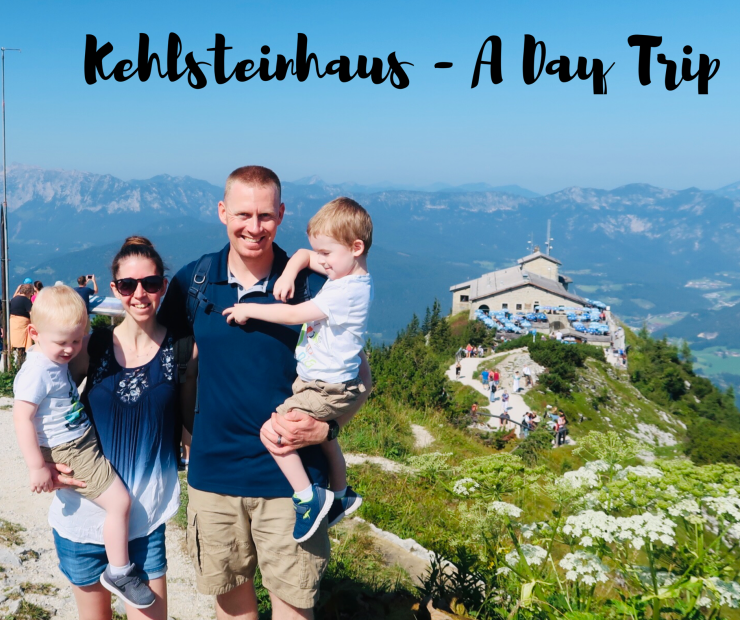
There are a couple of items of note within the house ( a fireplace, the sunroom, and a timeline of the build and who has been there), but the real beauty lays in what you see outside. The views from the mountain side are incredible. On a clear day you can see through to Salzburg (and they have the binocular bits set up so you can pay to really see it), you can see through the valleys of the Alps, and you can see Konigsee and the lake system nearby.

While we were there I was taken aback by just how, once again, stunning the views and beauty of this particular spot were and how this was also the spot where decisions were made that caused unspeakable hurt and terror. It’s such a hard idea to come to grips with and while doing a little extra research, I learned that in the case of The Eagle’s Nest, that was the point. The beautiful setting was intended to shadow all of the horrible actus. It was to give a pretty face at a time when many were starting to question as the war intensified.

IMG_9120We had a lovely little lunch on the restaurant terrace and then made our way back down to the Dokumentation Obersalzberg. This is what we would call a museum that talks about National Socialism, the major players in Hitler’s regime as well as the Obersalzberg area. Something I didn’t know is that The Eagle’s Nest and the Obersalzberg area was much more than just The Eagle’s Nest. There was an entire network of “high players” that had buildings or homes in the region. This center talks through the image that they tried to portray in the Obersalzberg and Berchtesgaden area along with history of the NS and World War 2 history and relics. As part of the entrance you are able to go down into the Bunker, which not only contains information about the bunker itself, but also has graffiti from the Soldiers who came through the area in WW2.


Overall, I would highly recommend a visit to the area in general and would recommend a stop at The Eagle’s Nest. You don’t need a full day set aside, just a few hours and it is well worth it.