Life in Europe – 1 Year In

Where to even begin with this post?! I mean, seriously…where do I even start? It’s been a year. We’ve been here a year. Well technically it’ll be a year on Friday, but still…a whole year. It’s hard to wrap my mind around.

A year ago, we stepped on a flight leaving out of Baltimore (after a flight from KY to MD) and into, at the time, the unknown. 8 hours later (or something like that) we stepped off the plane on a whole new continent that we hadn’t been to before, in a new country, ready for a new adventure. And an adventure it has been.

Untitled Design 33

Our first 5 months here consisted of living in a hotel, traveling (A LOT), and trying to learn our way around the customs and traditions of Germany. Things like stores being closed on Sundays, paying for restrooms, paying for water at restaurants, the dinners out that last hours, and driving as fast as we “like” on the autobahn (which isn’t as true or fun as you would think) were all new to us. After 5 ½ months in a hotel apartment, we got a house. A spacious 3 bedroom + to make all our own (well except for no painting, no major construction, etc.). We spent the rest of the year “settling in”. A year later and I feel like we finally feel settled, feel a part of our little community, have good friends that we can count on, and have things figured out.

And traveling. We’ve traveled more in the past year than I think we have in the span of our lives. We’ve learned more history, more culture, more information in the past year than ever before. We’ve seen the not so good parts of history up close, seen the gorgeous scenery of several countries, and have had one incredible trip after another. This first year taught us, more than anything, how to adapt, how to go with the flow, how to work with what we have. And, as much as it may seem like an “on the go” lifestyle, we’ve really slowed down in a way. We’ve stopped and smelled the roses for lack of a better phrase. We’ve taken so much more time as a family, exposing not only ourselves, but our children to different ways of living. One of the most incredible things was my older son telling us, at 4 years old, about The Colosseum and what used to happen. At 4 years old.

We’ve traveled to 11 countries, visited 14 castles, we’ve seen more churches than I can even count, seen the Tulips in The Netherlands, the Tower of London, the Dachau Concentration Camps, the filming locations for The Sound of Music, The Pantheon and Ancient Rome, and so, so much more. We’ve been to Oktoberfest, a whopping 7 cities (some of which had multiple within the city) Christmas Markets, and numerous cultural festivals and events. We’ve really tried to be involved and be a part of the culture in Germany. To celebrate with them, mourn with them, understand their history, culture, and what is important to them in life.

Even with all of that, we are still just living our life. We live our everyday lives. My husband goes to work in the morning, our oldest is starting school (just preschool, but still), both boys go to playgroup, I read and write every day, and we chat with friends over coffee or dinner. We just happen to be in Germany. I think this might be when I just get mind boggled the most. When I’m making that afternoon cup of tea or curling up in the evenings with my family. When I look at my backyard and it hits me…we are in Germany. This is when I count my blessings.

It’s hard to believe that we have our “home” days. That we aren’t always out adventuring, discovering new places, seeing more and more. I think that’s kind of the strange assumption that is made when you see someone who is able to move to a foreign country for a few years- that they are always going to be traveling. But that is just not the case for us. For us we have to have that down time. Not only do work and our boys make that a necessity, but it’s also just a quirk to us. We are homebodies by nature and so we usually need to have a little bit of home time in between all the travel, and it can’t just be a couple nights. Plus, there is adventure right in our backyard. There is so much to do and see right nearby us that it makes our home time weekends still full of fun.

This first year in Germany has been an adjustment, a whirlwind, an adventure. I can’t wait to see what the next two bring us.

Recommendations and Tips for – A Trip to Rome

We spent a magical week in Rome over the Winter Holidays and today I am going to share some of the spots I think you HAVE to go to, some of the spots that may not be as incredible as you think, and some tips for navigating your time in Rome. All of these kind of wrap together, so this Recommendations and Tips post might weave in and out between tips and recommendations. If you are interested in finding out exactly what we did you can find the following posts on that subject: The First Few Days, Vatican City, Ancient Rome, The Final Days.

Untitled Design 32

Recommendations:

My first recommendation is to take at least 5 days to visit Rome. It IS doable in a 4-day weekend, but you will get no rest and feel like you are just shuffling from place to place and not getting a chance to soak everything in. I feel like 5 days is the perfect amount of time to hit each spot without being rushed. I would say you don’t need any more than 7 days (if you really want to go longer) as at that point you’ve started to exhaust some of the area. Ultimately, it’ll be more focused on what you want to do and see than anything else.

In terms of the sights you have to see, you can “knock out” most of the tourist spots in one day. Starting at the Spanish Steps, then to Trevi Fountain, Piazza Navona, and The Pantheon (or you can do that backwards if you would like to see sunset on the Spanish Steps- which I would recommend). I would save Vatican City and Castel Sant’Angelo for a day together (as they are right next to each other). You’ll spend over half a day at The Vatican, so make sure you plan accordingly. I would also devote the Roman Forum, Colosseum, and Alter of the Fatherland to its own day (I would end the day at the monument as watching the sunset on the Forum is just incredible).

Honestly, I can’t recommend walking around Rome enough (fun fact- I said the same thing about London). There is just so much to see and the history of the city is so rich, that you can just turn a corner and there are the columns of an Ancient Rome building or see the culture up close and personal with people chatting about life in Rome. It’s just incredible. Everyone is incredibly hospitable as well and are happy to help in stores, restaurants, hotels.

In terms of eating- there is very little that you can do wrong in Rome. Thing is, a lot of the blogs that I read before going there said that the best restaurants are the ones off the beaten path, that don’t have the waiters waiting outside to lure you in, and I don’t know if I agree with that necessarily. Rome is a tourist spot and so, yes the restaurants are going to do whatever they can to get folks seated in their restaurant. I can tell you this, hole in the wall or on the tourist pathway, we did not have one bad meal. For specific recommendations: we loved The Loft for breakfast/brunch and Il Miraggio for lunch (and dinner), as well as Don Chisciotte. Those are the three that really stood out, but you can look back through my posts to see where else we ate.

Tips:

As always, I highly recommend using public transportation. Driving in Rome is not dissimilar to driving in New York City. The underground metro system is great and easy to navigate and, while the bus system isn’t the greatest, it will get you from place A to place B easier than if you tried to drive it yourself. You can buy a 7-day pass for the transport system and it is reasonably priced and well worth it.

Something you already probably know is that Rome is a tourist destination. There is no doubt that it is packed with people and the tourist spots (like Trevi Fountain) are going to be incredibly crowded. Be aware of yourself, your belongings, and your children (as you would any other time of traveling). But also, if you are wanting to get “the picture”, don’t be afraid to go to a different spot. You don’t need to queue in line with a bunch of other people, walk to another corner or spot and you’ll not only get a unique shot, but it’ll also be much easier to see things a little differently. You don’t always have to fight the crowds to see the scene.

I think that that is all I’ve got for tips and recommendations. Honestly, there is very little that you can really go wrong with in Rome! I LOVED everything we did and saw while there. Everything is just such a dream and so surreal and the people were so welcoming. However, I know that this post was vague at times, so if you have more specific questions, please feel free to send me a message or email and I can go into more specifics!

Round the Kettle Ep. 22- Entering February (finally!)

Oh hi. It’s been a while since I’ve done a Round the Kettle chatty post. They are still happening (as if you were really worried ha-ha), but I really felt the “workload” of the Christmas Season at the end of November and through December. I didn’t want to inundate your feed and email boxes with a ridiculous amount of posts, so I let them go until after the New Year past. This is probably going to be a “thing” that I do every year while we are in Europe. There is just so much to do and see around Christmas Season that I want to share, that they just aren’t possible.

IMG_2491 3

Let’s start with a little catch up…how are you doing?

So, a brief catch up…as you will now know we spent our New Years in Rome on a weeklong holiday that still seems just so surreal in my mind. I can’t believe that I can say that I’ve been to Rome…just like I can say I’ve been to Scotland, London, Dover, The Netherlands…I mean the list goes on. It’s even more surreal and reflective as we are starting to come up on our one-year mark of living in Germany (that post is coming up this coming week). It’s funny because we are just living our normal lives, day to day, and then going on these incredible adventures that we only dreamed about.

I digress…

January passed by as January always seems to, dragging by, giving all of us that New Year’s funk at the end and making us wonder…will February ever come?! Don’t worry, February is here, and we’ve all survived. In a way January wasn’t too bad for me this year, a couple rough spots here and there, but overall pretty good. But February? I anticipate February being a rough one. We’ve got quite a few changes coming our way starting on Monday and I just feel like settling into a new groove is going to be…interesting. Our oldest is starting his preschool program, my husband has been much busier with work in January and into February, and I’m trying to figure out what our “normal” is going to be moving forward once again. It’s all good things, but it just means we’ve got a bit of a transition to make.

With that being said, I am going to be taking a little step back from the blog for a couple weeks in February. This week there will be posts as normal, and then there will be two weeks where I am not going to have any blog posts going up. I will be active as normal on IG/FB, but in terms of blog content, it’ll be quiet. I really try to take a week or two weeks “off” a couple times of year as I find that it helps me quiet my mind and refresh my brain. I’ve been writing pretty consistently for a few months now without a break (I posted a 14 posts in December where I normally average 9-11 posts a month) and I really just need to take a minute, not stare at a blank word document, and just breathe. February tends to actually be a pretty good time to do this as it is slow and quiet as it is (we aren’t traveling at all this month) and with these couple things changing at home, I need to just be able to focus on life.

How was your January? Did you have a good month or are you just ready for February?


A Cuppa Cosy Reads – January 2020

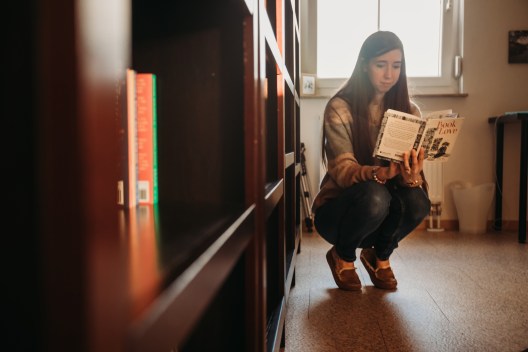
Welcome to my library. My domain. My happy place. In my library I’m in my element. Let’s talk books…

IMG_2735
Photo taken by Angie at A Cup of Grace Photography

I said that something I wanted to introduce a little more regularly on my little slice of the internet was books. I’m an avid reader and while I have an entire blog dedicated to books, I felt like that having such a big part of my life be so separate from my personal blog, was…strange to me. I’ve been sharing my reads as I am reading them on my social media, but I think I am also going to wrap up each month with a little post talking about what I’ve read that month. I’ll have the title, links to goodreads/purchasing options, my rating of the book, and then my thoughts of the book. (If you are curious about my library/office, you can see that post HERE).

In January I read a total of 7 books and listened to 1 audio book. Overall it was what I would consider a really good reading month, the lowest rating I gave out was a low 3 star and on the whole I actually enjoyed most of the books that I read. This month was the month of Dark, Thrilling, In One Sitting reads. I have added a new favorite genre (I’ve always loved it, but I have a name for it now and a narrowed down taste) and I’ve added an author to my “try some more” list. And now, I’m going to stop aimlessly waffling and start talking about the books…

*** I apologize for the Purchase links going to Amazon Audible options, you can select the physical or e-book version using the same link. I will have a different link moving forward***

Untitled Design 31

Desire by Haruki Murakami (Goodreads/Purchase): 4/5 Stars. This is a collection of short stories that revolve around desire (as the title would suggest). Murakami is a new to me author that I’ve been wanting to try for a while now, but haven’t pulled the plug on reading his book. In his own words, he takes quite a bit of inspiration from Kafka, Carver, Vonnegut, and Jazz Music. All of his works are also translated from the original Japanese text. I’ll be completely honest, it was the “inspiration from Kafka” that worried me. I’m not the biggest Kafka fan (which is putting that very lightly) and I have become wary of authors that pull inspiration from him. All that being said, I really enjoyed this little collection! It was a pleasure to read and I only had one Kafka-esque instance. I’ll definitely give another one of his full-length novels a try later this year to see if I still feel the same about his writing in a longer setting.

The Deal of a Lifetime by Frederik Backman (Goodreads/Purchase): 4/5 Stars. I have yet to read a Backman book that I haven’t enjoyed. This book is especially touching as we follow a man who is facing…a crisis of conscience (trying to figure out wording on this without giving away plot). It is written as a father to son letter and allows the reader to question some life decisions within the safety of “knowing the outcome”. Really enjoyed this read, as I always do, and I’m looking forward to picking up the last couple Backman books I have left on his published list.

The Secret History by Donna Tartt (Goodreads/Purchase): 4/5 Stars. This is THE BOOK of dark academia. The book that kind of “revived” the genre, gave it a name, brought it to the forefront. We are following a group of snobby Classic Majors at a prestigious university as they try to find a life beyond the humdrum. They become very much wrapped in the subject that they are studying (Latin/Classics) and very quickly things start to unravel. This book just has it all, a friend group, dynamic well-crafted characters, a storyline that follows through, a mystery (I wouldn’t go so far as to say Thriller), and some incredibly beautiful writing. This was my second Donna Tartt book and I enjoyed this one vastly more than The Goldfinch (my first of hers). I found sometimes the narrative would be a little meandering, or the writing would get a little too much, but overall I really enjoyed it.

The Starless Sea by Erin Morgenstern (Goodreads/Purchase): 3/5 Stars. Oh boy. It’s been a couple of weeks; I’ve had my book club discussion and I still don’t know what to really say about this book. Gear up, this is going to be a fun one. So much fun in fact that I am struggling to come up with a good description of what the book even is. We are following a young man who stumbles on a moment from his life that has wound up in a strange book. This book leads him and us down a rabbit hole (not entirely figurative) and into a world of stories. We follow his story, the fairytale stories, and a slew of side characters as they are trying to figure out the story. Confused yet? That’s how I was for a good amount of this book. I enjoyed the world (scratch that I loved the world, probably the one thing I really loved about this book), I enjoyed the characters (for the most part), but it was just too much story for one book. I would have preferred if she had stuck with one storyline and followed that through, instead of going on so many side stories that we, as readers, are left feeling like we’ve been chewed up, spit out, and no real conclusion. Just too much for one book and I think that that is why I struggled with it so much.

Lock Every Door by Riley Sager (Goodreads/Purchase): 5/5 Stars. This was the first book that I read in January that I would classify as a “thriller” and I loved every minute of it. Lock Every Door follows a young woman who has found herself in a bit of a tough life spot. That is until she stumbles upon an apartment sitting ad for an exclusive building. After a quick interview she lands the job, but not all is as it seems. Covering the span of just two weeks, the tension amps up quickly and doesn’t let go until the very last chapter. I read this book in basically one sitting because I just couldn’t put it down. I needed to know what was going to happen next, and even though I predicted who the “bad” person was, I couldn’t predict how everything would unravel and just how tense things would get. Highly, highly recommend this one if you are looking for a quick, captivating, read.

If We Were Villains by M.L. Rio (Goodreads/Purchase): 5/5 Stars. Dark Academia that is Shakespeare centered? Give me all of it!!!! Pulling a lot of inspiration from The Secret History, If We Were Villains follows a group of Shakespearean Actors at a prestigious college of the arts as they navigate their final year of school. As you would expect, things don’t quite go to plan, and one student ends up in jail. I have to say, this book did it all for me. I loved the Shakespeare references (of which there are too many to even begin), I loved the theatrical element, the school in the woods dark setting, and the twist towards the end. The level of drama was also incredible. I would say that if The Secret History daunts you, or if it you felt like it was too wordy, too long, but otherwise you like it (or the idea of it), then this will be a really good fit. It’s a much more palatable version of Dark Academia.

The Kept Woman by Karin Slaughter (Goodreads/Purchase): 4.5/5 Stars. After reading Pretty Girls by Karin Slaughter towards the end of last year, I’ve been anxious to pick up another of her books. I found this one by chance in our local library (where I also picked up Pretty Girls) and it sounded along the same vein as Pretty Girls in terms of pacing and storyline (although they are quite different). In the Kept Woman we follow a detective, Will, as he sets to solve a crime that he is way too connected to. As things start to get clearer in regard to the crime, they only seem to get “muddier” in his personal life. This book is excellently paced, and the characters have a depth to them that makes you feel like they are really standing in front of you. I enjoyed seeing the growth the characters showed, even if it seemed a little…forced at times (or easy at other times) and found that the author conveyed their personalities all too well. This wasn’t quite a 5-star read for me, but it is really up there and after reading, I actually found out that this book is part of a larger detective series (although it is not necessary to read previous or subsequent novels). I don’t think I’ll read any of the previous books, but I may end up picking up the next one in the series just to see.

The Husband Hunters by Anne de Courcy (Goodreads/Purchase): NR (No rating- I do not rate Nonfiction books). This was a random “I really want an audiobook to listen to” pick and I’m not mad about that. A nonfiction selection, this book details the lives of several young ladies (and their moms/families) in the late 19th/early 20th century who would travel to Europe to find husbands in the aristocracy. I don’t have too much to say about this, as it’s pretty straight forward, but I did really actually enjoy it. The author did a great job at giving the insight into WHY each of these girls found husbands in another country, background on the both the woman and man and their respective families, AND a little look at what happened after they got married. Some of the stories are wild and full of drama, others are fairly tame, but all were interesting.

And finally, I figured I would end this post (and future ones) with what I am currently reading. I am currently reading Eating Animals by Jonathan Safron Foer. I’ve only just started this, so I don’t have any thoughts quite yet, but I hope to enjoy this one. I think no matter what your ideals are, it’s good to see other aspects and points of view. It’s all about continuing to educate yourself and grow.


And now, that’s a wrap on all the books I’ve read in January! A couple questions…Did you enjoy this post? Did any of these books pique your interest, and if so, which ones? What did you most enjoy reading in January? Let me know!

A Cuppa Cosy Winter Holiday 2019 – Rome The Final Days

And so, we come to our final “what we did” post of our Winter Holiday. Our trip was jam packed from start to finish, although there was a definite difference to the second half of our trip. Vatican City was a nice way to “break up” the week we were there as that trip was about halfway through. We’d covered most of the Tourist Spots in our first few days in Rome (read that HERE), we covered Vatican City at that halfway mark (you can read that HERE), then Ancient Rome (one of my absolute FAVORITES read HERE)and now all we had left was New Year’s Day and then some.

So, a quick brief breakdown, Day 1 was spent at Castel Sant’Angelo, checking into our Bed & Breakfast, The Spanish Steps and The Trevi Fountain. Day 2 was spent at Piazza Navona, The Pantheon, and Piazza del Popolo. Day 3 was spent at Santa Maria in Aracoeli, The Alter of the Fatherland, and Quirinale Palace. Each day also consisted of a lot of just walking the streets of Rome- you see so much more by just walking around and you get such a great feel of the place. Day 4 was spent at Vatican City walking the halls of Vatican Museum, the Sistine Chapel, and St. Peter’s Basilica. Day 5 was spent going back in time to Ancient Rome and discovering what life was like in a vastly different era. So, that brings us to New Year’s Day and Day 6 of our trip…

A Cuppa Cosy Winter Holiday - The Final Days

Day 6: New Year’s Day

Oh, New Years in Europe. New Years in Europe is like nothing I’ve experienced before. I’ll be honest, I wasn’t that big of a New Years party goer, but saw the Times Square parties on TV and have heard enough to stories to have what I think is a good idea and I can tell you… the United States doesn’t have much on Europe. And most of the celebrations continue through to the next day. The streets on New Year’s Day are full of celebration, most places are closed, and the atmosphere just feels fun!

We started off the New Year with a breakfast at The Loft, where we had previously eaten. Ate some delicious food, drank some delicious coffee, and then headed out to a very exciting event. We were able to attend the Pope’s New Years Day Prayer. IMG_5054Now, the prayer is actually the Angelus and he will also give a reflection on the Gospel of the day, and on the day that we were there, some additional commentary. Here’s a secret, you can go to this most Sunday’s at noon and participate in this very special moment. I have included a link to the commentary that he gave on New Year’s Day (HERE), and you can view his “schedule” HERE to check if he will be doing the prayer while you are there (if this is something you are interested in). The entire prayer and comments lasts about 15-20 minutes and he speaks into a microphone from the window to the right of St. Peter’s Basilica. It was an incredible moment, so moving and you could feel everyone around you just being swept away by his words and his speaking. It’s something to be experienced, whether you are religious or not.
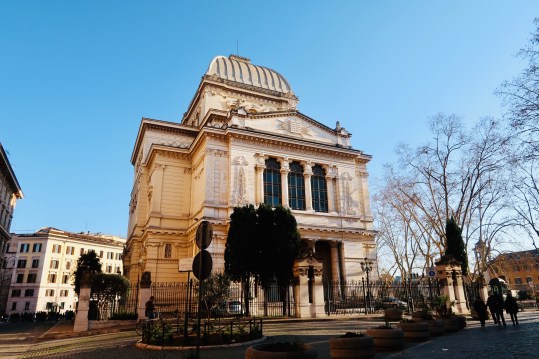
After the address we decided to further our religious experiences and head over to the Great Synagogue of Rome.

IMG_5064

This Jewish Quarter is one of the oldest, most intact in the world and the Roman Synagogue and Museum reflect both the community and the history. There has been a Jewish presence in Rome since at least the 2nd Century B.C and the museum, located in the basement of the synagogue, displays the history of the community, several artifacts through the history, and is a wealth of information about the traditions and rights of passage of the religion. For me personally, having grown up in a Jewish family, I found it really welcoming and heartwarming to see so much of what I know in such a positive, beautiful light. It was neat to learn some facts about the history of the Jews in Rome and how they were saved during World War 2. Before we get into that, first you need to know that Rome is the ONLY city in Europe to never expel it’s Jews. Did it try to convert them? Yes, there was even a Jewish Ghetto in the 16th century, but it never expelled them (and the Ghetto was abolished in the 19th century- the last in Europe to do so). When the Germans occupied Rome in 1943 the Jewish Community was told it could be saved by giving 50kg of gold. The was given to the Germans and included contributions by non-Jews as well, but the agreement never ended up being upheld. About 2000 Jews were still sent to concentration camps.

Admission to the Museum includes admission and a short tour of the Synagogue.

The Synagogue itself is incredible, dating back to the 19th century and  featuring several different styles which you can see simply by looking from the ground up to the ceiling. You can see the various cultural and design elements (including Spanish, Egyptian, & Roman) and it feels like a good representation of what the community is now. After all, it is an eclectic meld of a wide variety of people from all around Europe. It also features a square aluminum dome which causes it to stand out amongst the other dome’s and, as such, is easily identifiable.  The Synagogue has been visited by 3 different Pope’s, the first of which being a surprise visit in the 1980’s (and marked the first visit since the early history of the Catholic Church).

Finally, we spent our first night of 2020 watching the Sunset over the Roman Forum.

I’ve said it before and I’ll probably say it for a really long time, Roman Sunsets are incredible. I’ve always just really been a Sunrise fan, but this trip in particular reminded me just how beautiful a sunset can be.

Day 7:

Our final day in Rome was one that we weren’t really sure what to do with. We had almost the entire day to explore and weren’t quite sure what else to really do. Most of our “big ticket” items that we wanted to see we had seen, so we decided to just jump on the subway, pick a random spot and explore from there. Lucky for us the “stars aligned” and we wound up at Villa Borghese Gardens.

Listed as the third largest public park in the city, it’s a little haven of beauty in the city. Dating back to the early 17th century, when Cardinal Borghese decided to turn his vineyard into an extensive set of gardens. Within the gardens there is The Temple of Aesculapius, which has a beautiful lake around it and a Piazza that has been turned into a dog park, but was previously used as an equestrian track. There is also the famous Galleria Borghese (that you need to purchase tickets in advance to see) and its garden, the Villa Medici, which now houses a French Academy, a replica of the Globe Theatre, and a Zoo.

We wandered through the Gardens, which was a really nice little nature break, saw the Water Clock and Temple, stopped by the Borghese Gallery, and then headed to the Zoo. This is the Exposition Zoo, which features minimal caging and contains a little museum. I was really surprised by this zoo, the number of animals it contained, and how well cared for they were. Some of the things that I am normally concerned with in terms of zoo’s, were handled well at this particular one. The boys really enjoyed their time there, noting the Elephant, Snakes, and Crocodile as their best and worst animals (the crocodile because it was “scary”).

These couple spots seemed to be the perfect way to end our trip, which worked out well because shortly after our Zoo visit we headed to the train station and made our way back home.

IMG_4773

The entire trip still feels so incredibly surreal and one that I really loved. In my first post, I talked about how we handled this holiday a little bit differently than our Summer one and I can definitely see the benefits to both ways of traveling (the go, go, go vs. take it easy and truly vacationing). We just had such a lovely time and, yet again, a dream trip come true.

I hope that you enjoyed coming along with us! I hope I’ve done it just a little bit of justice for you.

A Cuppa Cosy Winter Holiday 2019 – Vatican City

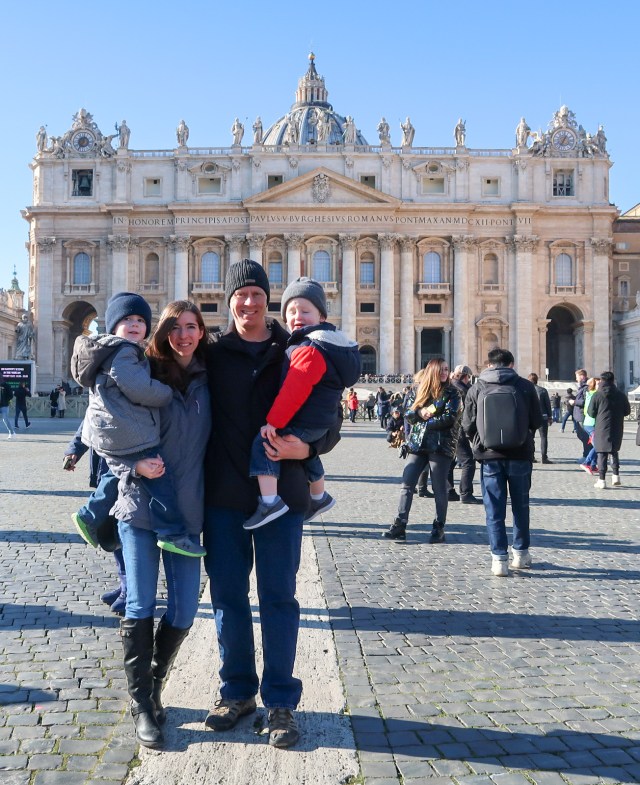
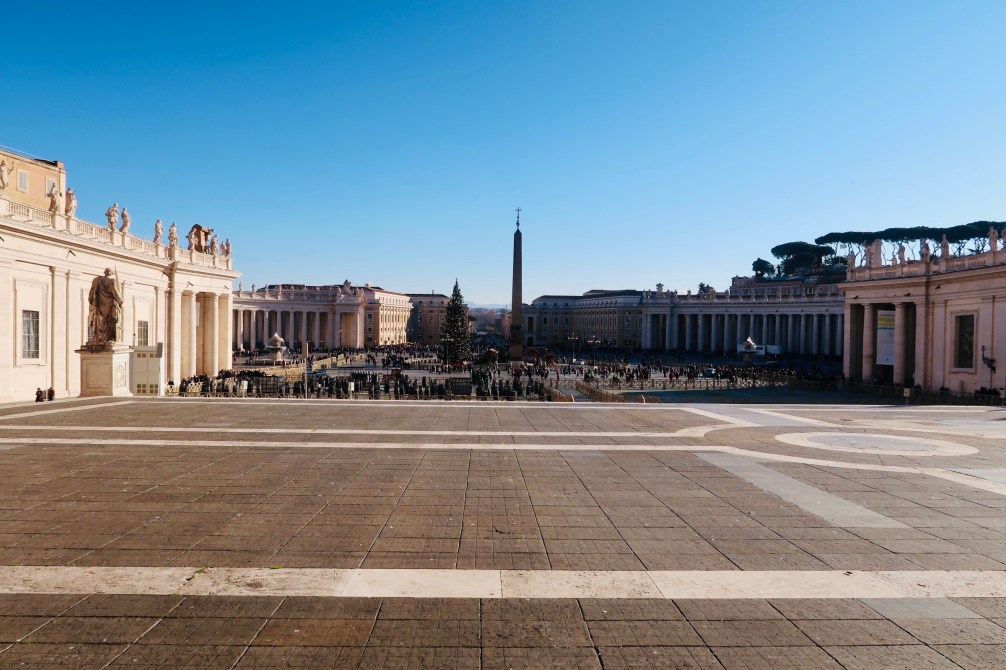
It’s the smallest country in the world. It’s among one of the holiest spots (save for Mecca/Jerusalem/and the like) in the world. It has quite the history in both good terms and bad terms. And we spent the better part of the day walking its paths, looking at its artwork, learning its history. Vatican City.

Untitled Design 30

Where to even start? Our route was simple, we started in the Vatican Museum, then the Sistine Chapel, and finally to St. Peter’s Basilica. Before we even go much further I want to talk about how we saw Vatican City. We booked our tour through Through Eternity Tours (website HERE). They have a couple different options when it comes to Vatican Tours, but we decided to go with the Early Morning Vatican Tour with Sistine Chapel. It’s slighter more expensive (though still incredibly reasonable) and the timeline is specifically set up to get you the best time in the Sistine Chapel. I cannot recommend them enough. We had Federica as our tour guide, and she was great. She had not only great art knowledge and Vatican knowledge, but she also has a personal connection in that her husband works there, her son was baptized there (by the Pope himself!) and she shared not only the important stuff, but also little anecdotes. It may have been a very early morning, but it was very early. Honestly- if you are planning a trip and looking at different tour groups, this is the one that I would go with. They have their meeting place, their headset and ticket gathering down so that when you line up with the rest of the tour groups, you are already ready to go and one of the first groups in. (You’ll hear about them again in the next Rome post as well as we did a separate tour with them elsewhere)

IMG_4604.JPG

Our tour started off with meeting Federica and picking up our headsets at 7AM. From there we headed to the entrance spot (one entrance!) and waited in line. We were up towards the front with only a couple groups in front of us. While we were waiting, Federica made use of the time giving us a quick rundown on the history of Vatican City and specifically the artwork and artists displayed within the walls.

The history of the Vatican dates back to the 4th century when the construction of St. Peter’s Basilica began over the grave of St. Peter (issued by Emperor Constantine I). As the chapel and location grew in popularity, so did the development of the city. The walls were originally commissioned in the 9th century (after an attack) and were expanded through to the 17th century. The Pope’s have not always lived in the Vatican; however, a residence was built in the 6th century with a tunnel connecting the Vatican to Castel Sant’Angelo ( from our first days in Rome HERE) added in the 13th century. The Catholic Church briefly left Vatican City to relocate to France, but returned relatively quickly and worked to restore and rebuild most of the country.

Much of the Vatican City that you see today was due to Pope Julius II (with a bit of Sixtus IV and his commissioning bits of the Sistine Chapel). Julius II not only commissioned Michelangelo to paint the Sistine Chapel, he also commissioned a new church (St. Peter’s Basilica), and a new courtyard.

IMG_4486.jpg

Now, a quick foray into the Politics of Vatican City being its own country, separate from Italy and some information about the country itself. The Pope originally held power over its regional territories, but in 1870 a unified Italian government decided to take back the land located outside the walls of the Vatican which caused some…issues. In the 1930’s Mussolini signed an agreement that allowed Vatican City to become a separate, sovereign entity and had them receive compensation for the loss of territories. The Pope now only had power over his country, which is 109 acres and has a 2-mile border. The smallest country in existence. As many of you have probably heard, the Vatican does have its own post office, banking system, and you can potentially (depending on who is working) get a Vatican City passport stamp.

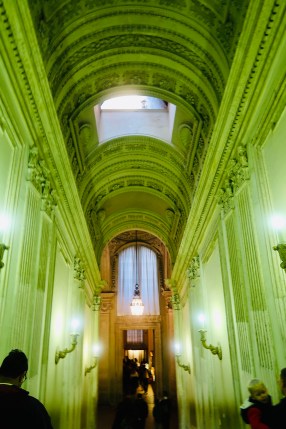
Our tour started in The Vatican Museum. The Vatican Museum actually takes you through the residence rooms of various Pope’s that contain artwork or statues that were either commissioned or used during their time as Pope. However, before you can get through to the artwork and rooms you go through the courtyard, statue, tapestry, and maps rooms. Each of these rooms featuring exactly what they are named for and each being almost more incredible than the last. Each room (or museum) has its own unique story and informational background. I’m going to link the official site of the museum and its history HERE as this blog post would get even longer than the last (and potentially more boring) if I went into elaborate detail about each spot. Instead of doing that, I’ll take a little bit to talk about each of my favorite one’s.

The map room in particular was incredible as the walls are lined with maps of Italy (and the islands) as it was seen at that time. It’s a much much different look at the world as this Gallery was opened in 1581. So much was still relatively “undiscovered” by Romans and their view of the world was much different. The walls of this room are lined with these maps and you can really see how they saw their “world” in a sense.

I also absolutely loved Raphael’s Rooms which, similar to the Sistine Chapel, were commissioned by Julius II and feature some absolutely incredible artwork. Raphael was given free reign over the design and depictions in the fresco’s and they are just an incredible sight to see.

A final cool spot (mostly because of the Pope) was Pope Alexander VI (Borgia)’s rooms. This particular pope is a very well known (some might say infamous) Pope and his rooms are exactly as you would expect. They are located in one of the most exclusive wings of the Apostolic Palace and were not inhabited by any other Pope’s. The ceiling of one of the rooms was decorated with pinecones, a symbol of fertility (yep you read that one right) and remained vacant after his death.

Something to note about the entire indoor areas of Vatican City is the floors. The floors are these absolutely incredible mosaic tiles, each individually laid and placed with care. These are the same floors that have been in existence since it’s origin. So, while you are walking through these various rooms, walking through the paths of artwork and statues, you are walking the same floors that many, many, great’s have walked before you. You are walking the same path that Michelangelo would have walked while he was working, the same path Raphael walked to get to this commissioned rooms. Just incredible to think about.

Once we finished with the museum portion (the Borgia apartment is the last to see), we headed straight into the Sistine Chapel. IMG_4474.jpgI have no pictures of the Sistine Chapel. First off, you are not allowed to take pictures in the chapel. Second, I don’t know that I would have wanted to take pictures even if you could. The Sistine Chapel is something that simply needs to be experienced, something that should just be taken in, without prior knowledge or warning. It is a spot to sit in silence and just revel at the beauty that is around you. It is truly incredible the amount of work, the paintings, the level of detail. Our tour guide, Federica, did a great job at pointing out a couple of spots for us to pay attention to when we did walk through. A couple of spots of note were the spots where Michelangelo inserted his…”opinion” on the commission. It is well known that Michelangelo had no interest in painting the fresco’s, he worked with marble, created statues- he hadn’t painted fresco’s in many many years. This “petty attitude” towards the Pope that he developed came through in some areas of the large painting (specifically where a little child is “flipping the pope off”). He also managed to apply this attitude to those who had…less than desirable opinions on the artwork (there is a Cardinal that is in a…precarious position in The Last Judgement).

We were able to spend 20 minutes in the Sistine Chapel before moving on to St. Peter’s Basilica.

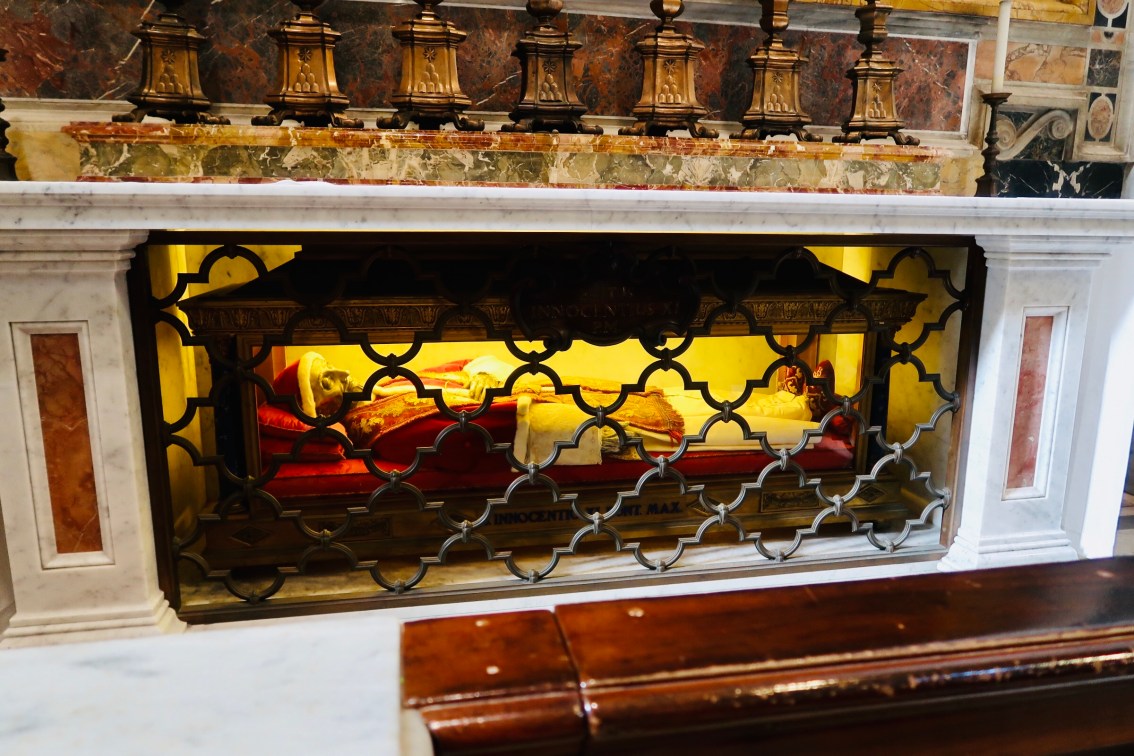
I’ve already briefly touched on St. Peter’s, but I’ll continue it here (very briefly to spare you). It took a little over 100 years to complete (after being commissioned in 1506) and the alter sits directly atop the shrine of St. Peter. It is truly a masterpiece just in terms of a church not even considering the incredible art inside the church. One of the major pieces that you can see within the church is the Pieta by Michelangelo. You are also able to see two pope’s that are “on display” within the church.

IMG_4537.jpg

When they were ready to be entombed in the Grottoes, they actually were found to be in perfectly preserved condition. Instead of being placed down in the Grottoes, they were placed at two different spots within the church for all to see. That’s not to say you can’t see the other Pope’s, simply head down the stairs to the Grottoes and you can learn about the histories of each of the Pope’s. It’s a pretty incredible site to see.

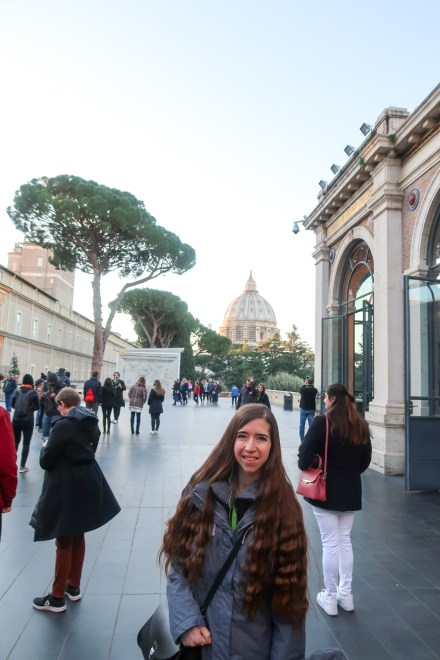
Our final stop within Vatican City was not as part of the tour, but something we decided to do ourselves, and that was to climb to the top of the dome on St. Peter’s Basilica. We’ve always been “those travelers” who like to get above a city and get a sort of “eagle eye view” of the city. This was the perfect chance to get as high as we could and take a look.

I will say this, despite my incredible fear of heights/falling from said heights, this view did not disappoint. It wasn’t my favorite of our entire trip (Alter of the Fatherland was as a side note), but this one was so special both for views and location. It is quite the climb up (500 something steps to the top), but you are able to take an elevator for about 200 of those steps. The elevator stops you at a higher point within the church, so you are able to see the interior of the dome a bit better and see down into the church from a higher viewpoint. Also, the steps aren’t really that bad as you are going up, you are able to tell each part of the dome that you are in.

IMG_4323 2.JPGThe Vatican was one of the most incredible parts of our visit and something that I am going to remember for the rest of my life. To stand in this most sacred spot for so many is something that words cannot describe and then you bring it’s long (and rich) history…it’s a lot. A lot of feelings. It is definitely a spot that you HAVE to go to if you are in Rome and a spot that I think is best done as part of a tour group (the line to get in without a pre-planned tour ticket was INSANE…heck the line to simply get into St. Peter’s Basilica without the tour was INSANE too). Through Eternity exceeded all of our expectations and we will definitely use them in the future if we are ever in need.
And that wraps up Day 4/Vatican City. I hope that you enjoyed!

A Cuppa Cosy Winter Holiday 2019 – Rome The First Days

For our winter holiday this past year we decided (somewhat last minute- have to get a bit better about that) to start knocking some of our Italy spots off our bucket list. We started with the big one, Rome.

We did things a little bit differently with this holiday, deciding to devote our entire week to only Rome, to an overnight train as our form of travel, staying in a Bed & Breakfast style hotel, and doing a couple guided tours during our holiday. Honestly, our holiday couldn’t have been more perfect in any other way.

Untitled Design 29

This morning starts the full holiday blog posts except rather than breaking them down by location (as I did for our Summer Holiday), I’ll be breaking them down in chunks of time. Today’s post will cover our first few days, then we will talk about our day at The Vatican in another post, then conclude things with our last few days. As always, I will also have a separate post detailing out my recommendations and tips at the end of the “series”.

***I want to make a note that I am not going to be detailing every single place we ate/drank/food related. You may think that that is crazy- oh but it’s Italy how can you not talk about the food?. I’ll be talking about the food, but honestly we ate at so many spots that I don’t remember every single one, AND there are very few spots that you can really go wrong food wise in Italy. It’s delicious just about anywhere. I’ll name the spots that stuck out to me that I remember and were above delicious, but overall you can’t go wrong with food in Italy.***

So, as I’ve already mentioned we decided to train over to Rome for this trip. There were several reasons behind this decision, BUT ultimately it came down to price and ease.Let’s be honest, as much as we like driving, it’s not always the easiest or fastest option. Driving would have allowed us to maybe make a stop or two on the way there/the way back, BUT driving IN Italy is a bit tricky (and there are tolls) and we definitely didn’t want to drive in the city. This meant that we would have to find parking for the car, and figure out what tolls we would hit on the way down. It also just meant a long drive (13 or so hrs.) and when the train option presented itself, we figured we might as well give it a shot.

We picked an overnight train which was about 13-14 hours long, leaving around dinner time/late evening and arriving the next morning. Overnight meant that most of our travel the boys were sleeping (and we could try and catch some z’s too), so less of an issue of keeping them occupied. We booked a standard (nonsleeping) compartment that came with six seats, so two additional passengers could be in our compartment, but a sliding door to shut and the seats themselves folded down for comfort during the trip. It was a super easy trip (once the boys calmed down from the train excitement) and definitely an option that we will keep in mind for future travels.

Rome Day 1:

When we arrived in Rome we basically hit the ground running. After a stop to drop our luggage off at our Bed & Breakfast (I’ll touch on this in a bit), we headed straight out for food, coffee, and a wander. We started our tourist exploring at Castel Sant’Angelo (actually called Mausoleum of Hadrian) right on the Tiber River. There was a small line to get in, but it moved quickly and the castle itself wasn’t crowded once you got in. This particular castle is actually a mausoleum (now) and has previously been used as a fortress for both Emperors and Popes alike.

Construction on the castle started in 135, finished 4 years later, became a military fortress in the 5th century, and then around the 13th century, a corridor was added connecting it to Vatican City in case of danger to the Pope (this corridor did end up getting used in the 16th century!). While walking through the castle you are able to see exactly how and what the castle was used for. Both the military fortress aspects and mausoleum parts have been very well preserved AND you get an excellent view of this side of the city from above (including a clear shot towards Vatican City and St. Peter’s Basilica).

It was probably one of the best clearest viewpoints we got, aside from Alter of the Fatherland. We spent a good hour or so here wandering the corridors, ramparts, and park.

Once done there, we were able to go back to our Bed & Breakfast and properly check in. We stayed at Tibullo Guesthouse Rome and it was a great spot for us. We chose a larger room that contained one double bed and two singles as well as a separate, but private, bathroom. It was reasonably priced and is not 10 minutes away from the Vatican or Castel Sant’Angelo. The hosts were incredible, so incredibly warm and welcoming, and made sure that we had everything that we needed (and then some!). The actual guesthouse is quite small, and breakfast is offered and is served in the comfort of your own room should you choose to do that.

After settling into our rooms and freshening up, we decided to head out again. This time heading into the heart of Rome and the most touristy/heavily populated spots. We hopped the metro and headed into the heart of the city. We started at the Piazza di Spagna, home of the Spanish Steps.

Dating back to the 18th century, The Spanish Steps are one of the most famous spots (although could be arguable). They’ve been home to poets, authors, painters, a very special tearoom and, most importantly, connect the church at the top of the hill to the square at the bottom. These famous steps are quite incredible to look at and we definitely had a lovely time climbing them, stopping for a little Audrey Hepburn moment, and then watching a Roman Sunset to end our first day. I think this might have been one of the most surreal moments (up until going to Ancient Rome and the Vatican).

After the sun set we got to see the city come alive (all over again) and headed over to Trevi Fountain.

Trevi Fountain. Where are the words? The Trevi Fountain is the largest Baroque Fountain within Rome and easily one of the most talked about in the world. Built in the 18th Century and centered at the cross of three roads, which also marks three points of aqueducts. It is absolutely incredible, a true feat of architecture, and at night it is completely lit up. Absolutely gorgeous. A fun thing to do (if you want to fight the crowds), is to actually toss a coin in the fountain. You are allowed to do this, and by tossing it behind your back it is said that you will return to Rome. The city actually collects the coins and donates them to a charity so your money will not be wasted if you choose to do this. We had a quick stop at the fountain as it was packed to the brim and we had a sleepy toddler (napping on my hip), but it was truly incredible to see.

We did quickly stop in Oratorio di Santa Maria in Trivio, a church across from the fountain before heading away to dinner and then the Bed & Breakfast for sleep.

Rome Day 2:

A1EBE0B8-5250-40F8-8B2A-2582F3F6D6C3.JPG

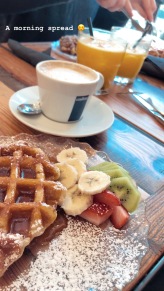
For our second day in Rome we had a bit of a sleep in. After being exhausted from all our travels the day before and hitting the ground running, we took it easy first thing in the morning. When we finally emerged from our room, it was to head out for brunch and then exploring. We stopped at The Loft for brunch and this was a great stop (we liked it so much we actually came back a second time and probably would have more if we had the time). After a breakfast of waffles and cappuccino’s and fresh squeezed orange juice, we hit the metro to head to our first stop.


We started our day at Piazza Navona.

This is a public square that was originally intended as a stadium which dates back to the 1st century. This was changed around the 15th century when it was turned in the city marketplace, Piazza Navona is now a square that holds markets, fountains, and a slew of restaurants and stores. There is also a very small Gladiator Museum on one entrance side to the square, which we did visit. If you are interested in Gladiators and replica’s then it is a neat visit. If it isn’t something that you are interested in, or you want something much more in depth, then give it a miss. There are a couple other stores of note, a toy store in one of the main entryways provides a bit of delight for adults and children and there are two “Made in Italy” shops that have some of my favorite leather-bound journals that I’ve ever seen. When we visited the Piazza, they had a little Christmas Market going on. Christmas is a bit different in Italy, celebrated on January 6 (Three Kings Day/Epiphany- long story which I can talk about on a different post), so they still had this little market going. It’s geared mostly towards children with games and such, only a couple booths have items to purchase or food.

From there we headed over to the Pantheon.

The Pantheon was originally used as a temple dating back to around the 2nd century (it might even be a little older than that as the current Pantheon was built on the remains of another temple). It’s most striking feature (because 12 columns and sheer size isn’t enough) is the opening in the ceiling that looks out to the sky above. There is what we would call a hole in the ceiling, not only that but the dome is the world’s largest unreinforced concrete dome. This is also known for being one of the best preserved Ancient Roman Buildings. After being used as a temple, it was transformed into a church and is still in use today. It was absolutely incredible to walk through and in this building.

From the Pantheon we just headed out to walk the streets. Honestly, that was a lot of our following days, just walking the streets of Rome.

No matter when or where, you can always find anything just by walking the streets. We wandered the streets finding hidden columns, little squares, and paths upwards. Our general goal was to make it over to Villa de Medici, but when we arrived our boys were in no mood to join in on a guided tour. We cut our losses on that, rather walking the gardens right next to the villa (somewhat near Borghese) and seeing the start of the sunset at the top of Piazza del Popolo.

This was one of the coolest squares that we saw, at one end was the Porto del Popolo, a massive arched entryway to the square. At the opposite end are two churches. Right in the center of the square is the Fontana dell’Obelisco; a massive fountain with lions on each corner and an obelisk rising from the center.

We ended up having dinner at a restaurant called Don Chisciotte and feasted on delicious homemade pasta & sauce, wines, tiramisu and cheesecake.

The perfect end to our day!

Rome Day 3:

We started our 3rd day with breakfast at a little café, Café MeMe. After a delicious heaping of eggs, bagels, pancakes, cappuccino’s, and smoothies (I promise you- this was spread across the 4 of us), we decided to hit one of the biggest monuments that we were seeing from every vantage point of the city…The Alter of the Fatherland. Before actually going to the monument we stopped at the church right behind it, Santa Maria in Aracoeli.

I don’t have any pictures to post from the inside, but I promise you- you MUST go to this church. It is absolutely incredible, just achingly beautiful. This may have been one of our favorite churches EVER and we’ve been to a lot so far. It is literally right next to the monument and so easy to just stop in to. And now, The Alter of the Fatherland.

IMG_4164

That name is actually not the correct name, although it is referred by that name regularly. This monument is the Victor Emmanuel II Monument and it is a masterpiece. Before we get into the history, let me just say that this structure with all its steps, individual monuments and sections, the museum within, and the view from the top is absolutely incredible. It sits in between Ancient Rome (right next to the Forum and atop Capitoline Hill- the center of Ancient Rome) and the more modern city of Rome via the Piazza Venezia. Work started in the late 19th century being completed in the very early 20th century and since then, this building more than anything else is seen as the “symbol of Italy”.

Not only do you have the steps leading up to the first landing, at that first landing is their Italian Unknown Soldier tomb (which is guarded), then there is a second landing which is the Portico, and then a third landing which you can walk around towards the back for the elevator to the top. Honestly, this is a most stop spot. Climb the steps, pay homage, and see the view of the city from above. I think this might have been my favorite “view from above” of Rome as you can see EVERYTHING.

It’s a great overlook of Ancient Rome, a great look of the modern city, and you see the domes of the churches and basilicas stacked up.

From there we stopped for a late lunch at Ristorante Il Miraggio which was a restaurant that we found randomly, looking for bathrooms, but it was one of the best random finds we had. It was down a side street and we had the best waiter I think we’ve ever had. It was so much fun to just watch him work, greet and entertain everyone from the paying diners to the random people walking down the street.

The food was delicious (as I said earlier- you can’t really go wrong wherever you go), and I had one of the best cups of standard black tea that I’ve had in a long time. It was the perfect stop and felt like such a good little spot.

After feeling refreshed from lunch, we started walking down the road once again. We headed up to Quirinale Palace.

This was a last minute, half hazard decision, and one of the few that worked out for us, but also didn’t work out. We headed up to the palace to go see it, but it was starting to get a bit later in the day and on the way up I ended up pinching a nerve in my back. So, we pretty much got to the actual palace (which wasn’t too bad) and then turned around to head back to the Tiber River. This was kind of a bummer as I would have liked to actually go in and experience it, but it wasn’t in the cards. This is the reality of traveling sometimes.

After a little rest, and some medication for my back, we just wandered along the Tiber River, crossing over at the pedestrian bridge and just wandering the neighborhoods. Which is such a nice perfect way to end this first post about our Winter Holiday. It was a long one and if you made it to the end…thank you. What was your favorite spot that we went to in these first couple days?

Dresden – An Overnight Trip

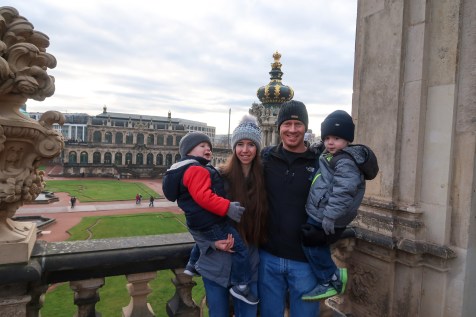
The weekend before Christmas we spent a very magical 24 hours in Dresden exploring Christmas Markets and landmarks alike. You can see my post on the Christmas Markets HERE, but today I am going to talk about some of the sights and my favorites about Dresden.

Untitled Design 28

Dresden is the state capital of Saxony and it is the 12th most populated city in Germany, the second largest city on the River Elbe. The city itself is relatively “recent” in comparison to the history of Germany, dating to around the 12th century. It has served as the seat of the state since it’s settlement and has also always been a center of culture, education, and politics in Germany. The most incredible thing about Dresden is that the entire city center was destroyed, along with 25,000 people killed, during the bombing of the city by Americans and British towards the end of World War 2. Certain parts of the inner city were completely reconstructed after the war including the Zwinger (the royal castle/palace).

I will be completely honest- a lot of my time in Dresden was taken up by either Christmas Markets or in awe of the architecture and landscape of the city itself. I’m looking back through my pictures and thinking “oh I loved that spot” and “that was pretty cool”, but not remember a lot of the details about the trip itself. Partially my fault for waiting this long to actually write this post (it’s now after New Year’s), but also Dresden was the second city that I really just let my “amateur photographer” heart fly free. I just took pictures (so many pictures) and wandered around. There wasn’t a lot of “specifics” to our trip. So, forgive me if this post is a little vague or different from previous posts. I’m still figuring out how to merge a couple different passions to put together the best posts that I can for you.

IMG_3300

So, since this post has already derailed into something very different than I anticipated, I’m just going to continue that trend…

While in Dresden we went square hopping pretty much. Each square has a “focal point” of sorts, whether it’s a palace, a statue, or a church. Each square also had a Christmas market, so we would start at the Christmas Market and then walk in to whatever the nearby attractions are. In our minds we had two or three “must see’s” on our list, but otherwise we just wandered around.

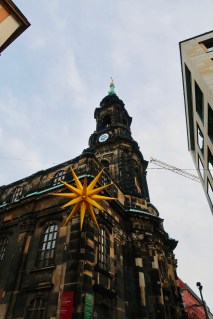
IMG_3137The first square is the main square and right off the main square is the Church of the Cross. This is actually the main church and the seat of the Evangelical-Lutheran Church in Saxony. It is also the largest church building in the state. The church itself has been through quite the history, but its current state retains the look of the church post Dresden bombing. It was decided to keep it in that state, rather than refurbish it to prewar designs.


Speaking of churches, we also went to The Catholic Church of the Royal Court of Saxony (also known as Dresden Cathedral/Katholische Hofkirche) and the Church of Our Lady (also known as Frauenkirche).

These were both absolutely incredible churches in full painted and designed glory. An interesting fact about Dresden (back in the day)- at the time the rulers were Catholic, BUT most of the residents were actually protestant. The Catholic Church of the Royal Court of Saxony is one of the foremost landmarks of Dresden. In fact, I can almost guarantee you’ve seen a picture of it, it’s incredible. The original church actually had a private high-level walkway from the Dresden Castle to the church for the rulers and other high-ranking officials to use. Of course, like much of Dresden, the bombing heavily damaged the church and it was fully restored following the reunification (including the private walkway between the castle and the church). The church does not only hold mass and services, but also (like many of the churches in Dresden) concerts throughout the year. In a slightly different tone, the Church of Our Lady was left in ruins after the bombing of Dresden to serve as a war memorial (for 50 years!). Originally built as a way for Dresden citizens to assert their will (by remaining protestant in the 18th century), the church was not rebuilt until the 1990’s-the early 2000’s.

Something that we had on our list and did see was the Procession of Princes or Furstenzung.

This is a 101-meter-long mural that shows the ruling family as a procession of various riders. It shows the Wettins’ family lineage through the years. Originally painted in the 19th century, it was replaced by porcelain tiles in the early (early- very early) 20th century due to the elements fading the paint. It is now known as the largest porcelain artwork in the world and is absolutely incredible to stand in front of. The members of the family are accompanied by various other “common folk”, scientists, children, and such.

We also managed to make a stop at The Zwinger, which was on our list.

The Zwinger has a long history, but I’ll be completely honest- I don’t quite understand it. So, I’m not going to try and talk about the things that I don’t know about it (as that would be wrong), but my basic understanding was that Augustus the Strong (who was recently made King of Poland and Elector of Saxony) wanted to have something similar to Louis XIV’s Palace of Versailles. It ended up getting changed around several times, halted, and finally completed at a much smaller scale. It was destroyed during the bombing, but was fairly quickly rebuilt (in the grand scheme of the other buildings listing within this post). You can walk the main garden levels, and then up higher in the ramparts. Within the buildings are museums containing artwork, porcelain, and jewelry.

Recommendations:

Honestly I would recommend just walking around Dresden.

Obviously going to the Zwinger, the museums, the Procession of Princes are all great places to start, but really I would recommend just walking around the city. The city (as many in Europe) is divided between “Old Town” and “New Town” by the river and it’s really neat to see both sides. By walking around you’ll see most of everything the city has to offer and then some. I would recommend separating your time by Old Town and New Town (whether you’re doing an overnight or day trip). If you are only going for a single day, I would stay with Old Town.

As for Parking, there are several parking lots within the city, both indoor and outdoor, with reasonable pricing. I would honestly go a bit further to go to one of the outdoor lots as people often times won’t go a little bit further, so there is a higher chance of them having open spots. Once you find a spot, I would just stick with it (some lots have the 24hr tickets) unless where you are staying is across town or you have a large amount of luggage. There is a large Galleria/Mall parking garage, however this is one of the first places that will fill up during the busy/Christmas season, so keep that in mind.

Depending on your travel plans (where you’re coming from, where you’re going, what you want to do), I don’t think that you realistically need more than the 24 hours to really get a good idea of the city. I felt like we got to see everything we wanted to and then some during our time there. You can definitely make it a longer trip, but I didn’t feel like it was super necessary to do so.

Overall we had a lot of fun on our little overnight get away and I really loved Dresden. It has elements similar to Prague, so if you loved Prague, you will probably love Dresden.


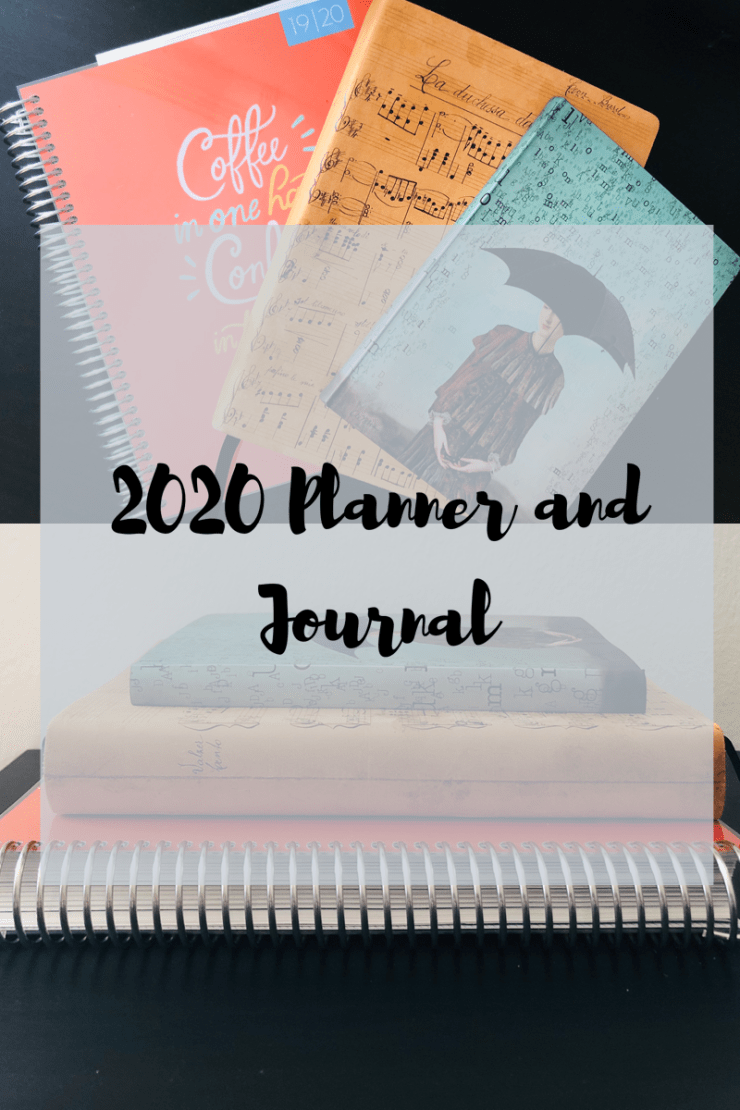
2020 Planner and Journal

Untitled Design 27How is it already 2020? A new year, a new decade, a chance for a real fresh start and outlook. I find that one of my favorite things about the new year is a chance to break out some new stationary and planning. I’ve kept no secret my need for paper and writing. The act of physically writing my schedule, to do list, important notes, etc…it keeps my mind sane. I tend to accomplish more and remember things better as well.

2019 was an incredible year, but was also incredibly busy. It was the first year in my adult life that I wasn’t working in some form and that was a big change. This post isn’t necessarily about that (but I can do a post about that if you’d be interested?), but I did find that my planning needs changed drastically. I found that I wasn’t looking at my time in a daily manner, but rather in a weekly and monthly fashion. Using a daily planner, things were getting lost in the shuffle, and I felt just a general state of disorganization. So I switched.

This year I am using a Monthly/Weekly planner that I customized to fit my own needs. I used a company called Plum Paper, which you can find HERE, and purchased the weekly layout. My favorite part of these planners is that you can customize EVERYTHING. From what holidays and dates show, to when the weeks start, and the weekly breakdown.

Every month starts with a monthly highlights page, which I have sparingly used. This page has a spot to put birthdays, important dates, goals, and for me, my spending at the bottom. The next page is blank and I use it to track what books I’ve read that month and my rating. Then comes the monthly layout. I wish the boxes were a smidge bigger, but this works perfectly well.

Each week is given two pages. The days on the right side, and a page of “stuff” on the left. I have my weekly pages set to start on Monday (as I really got used to that in the Hobonichi set up) and I find that this is JUST enough room. If anything I try to leave these day layouts to appointments/meal plans/any specifics for that day. For all the rest of my “stuff” I break it down into two columns: weekly priorities, weekly tasks. Every week I have priorities in terms of blogging, writing, posting, etc. and every week I have the same tasks that I do in terms of cleaning and just self care stuff. These two columns break that up and allow me to know what I need to do in the course of the week, rather than just transferring tasks from day to day.

In the back of the planner I do have a meal planning kit that has a meal list breakdown, shopping list section, and quick reference information. I’ve already done really well with meal planning, but I’m hoping to streamline the process even more if I can.

IMG_8574I’ve also decided to give a commonplace notebook a shot. I am not really sure how this is going to work (as it is so much easier to just pull out my phone and jot a note down), but I really like the idea of a commonplace book. A commonplace notebook is exactly what you would think of, it’s a notebook that you always have on you and that contains anything that comes to you that you need/want to remember, whether that’s important dates, appointments, quotes, whatever. I’ll keep you posted on how this goes. I’m using this absolutely beautiful Paper Blanks Flexi Notebook for that purpose.
 

IMG_8565

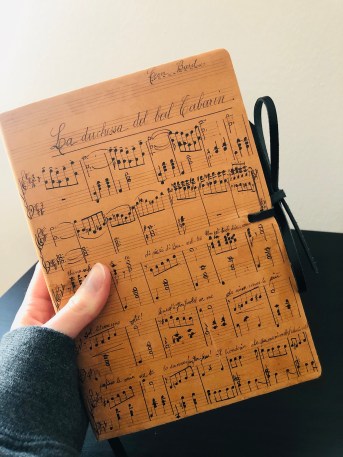
Finally, I have a new journal for 2020. I was off and on in my journaling over the second half of 2019, doing really well with it until about September/October. I am trying to be a little bit better with this this coming year (as well know how important writing is for me) and I’ve been really wanting to use this journal since I bought it. It’s a beautiful Italian Leather (maybe pleather?) bound journal with a tie string. It’s got some lettering all throughout the cover and I’ve found it to be a really nice journal to write in. Journaling and Planning go a lot better when you actually like what you are writing in.


So that is what my 2020 looks like in terms of stationary! Are you a stationary lover like me? What does your planning for this year look like?

A Bavarian Culture Evening – December 2019

Imagine…

A cold blustery evening, the sun has set. All bundled up with your friends and family by your side, in the town square you eagerly wait for the show to begin. Everyone told you that this you had to see, for not only was the show exciting, the culture couldn’t be beat. The square gets darker and soon a low rumble begins. An announcer’s voice starts to tell the story of Krampus and St. Nick. Slowly terrifying horned creatures fill the square carrying switches and sticks, bells clanging.

This begins the Krampus show that we went to this past month.

Untitled Design 25

Krampus has been set deep in the culture here and is known just as widely as St. Nick and Santa Claus. There is a troupe of performances who dress up in costume and put on a great fire show to tell the story and activities of Krampus during the Christmas Season. Before we chat on the performance I’ll share a bit of the history of Krampus that we know.

Krampus dates back to when pre-Germanic tribes practiced paganism and originally had no relation to Christmas. Krampus is described in folklore as a half goat half demon creature and beyond dating him to pre-Germanic origins, there really isn’t much more history on Krampus. Saint Nicholas became popular around the 11-12th century, with Krampus following suit in the 16th century. During the 16th century masked devils would run around acting as nuisances opposite of the St. Nicholas displays. In modern times Krampus “flies” with St. Nicholas on December 5 punishing all the bad little boys and girls (while St. Nicholas awards the good children). Krampus has horns on the top of his head, a long tongue, a face that seems to be in a perpetual howl or evil expression, chains (as an attempt to bind him), and hooves. He typically carries a birch switch and has bells somewhere on his person.

A much darker version has Krampus kidnapping and torturing those who are bad (which is what has been picked up in America/Hollywood/Movie Producers).

There are a couple different ways to see Krampus, one is a performance (which is what we did), the second is a Krampus Run (which is something the bigger cities will hold), and the third is to run into him at a Christmas Market. The one thing they all have in common is that Krampus has no boundaries. His job is to cause havoc and mischief and he definitely succeeds at that.

When I originally heard about Krampus, I knew I wanted to go to one of the fire shows. It seemed the best way to experience the entire “effect” of Krampus. You see him both causing mischief (as the no boundaries includes the shows), but also how they work with the fire.

I’ll let the pictures from the show do most of the talking for this post, but let me just say this, if you EVER have a chance to go to a Krampus fire performance…go. It was so cool to not only see Krampus, but also see the work that they did with the fire, see the performers in their element, and feel the culture of Krampus and the Christmas Season.

He is terrifying (especially if you go up and ask for a picture- if you have any boundary issues DO NOT do this), but at the same time, there is something inherently awesome about the whole show. The troupe that we saw was Oberpfalzer Schlossteufeln e.V. and they were fantastic. They truly put on a show and they lived up to the Krampus legend.

And that was our Bavarian Cultural Evening for the Christmas season. We did combine it with attending the Christmas Market at Amberg, but the market itself was quite small so I didn’t have enough to really make a good market post on it.