A Little Insight into Travel Weariness

Untitled Design 9

Traveling is one of the best ways to spend our time, not only do you get to see new places, but you are experiencing new things, seeing new cultures, seeing different ways of life. It is so great, and I completely understand how a big chunk of advice that people give/receive when talking about life is to travel as much as possible. It is in fact a piece of advice I give out now as well. There is just so much to the world and so much to learn, see, and experience.

However, there is another aspect to traveling that we don’t talk about it: the sheer exhaustion of it all.

There are a couple of reasons as to this, one of those being that we feel as though we can’t complain. We are in an extraordinary position of being able to travel, to be able to see the world. Not many people are able to from just the standpoint of cost, let alone getting time off work, dealing with children and school schedules, and much more. It can feel even worse to be in these great opportunities and not 100% loving or enjoying them. Another reason we may not talk about it is that we don’t want to remember those moments. Nobody wants to see/hear/remember the hard times.

But, as we know, life is not sunshine and rainbows ALL the time and while traveling can be a blast and eye opening, it isn’t all sunshine and rainbows either.

So, travel weariness. Beth Sandland actually speaks about this in one of her blog posts, which you can find HERE, and she does a much better job than I do at articulating this. We all hit a point, no matter what kind of traveler we are, either while we are traveling, or shortly after getting home, where we just crash. We can’t go any further, we sleep longer hours, our bodies and minds needing all the rest they can possibly get. We find our energy to be at odds with what we want to accomplish, and we end up having a day or two of just catching up with ourselves.

This is a very real feeling. It’s something that happens to me usually after a couple of weekends away. I actually try to schedule our weekends away where we have at least a week or so in between a trip that is going to be more than one night. We can do back to back to back trips, but then we need a bit of a longer home time in between. We’ve found a way to make it work for us.

All this probably sounds a bit whiny, or a bit of “you shouldn’t complain” and maybe in a way it is. We are so incredibly blessed (as is anybody who is able to travel) and we don’t turn a blind eye to that. We wholeheartedly recognize the situation we are in and are trying to make the most of our time here. But, I also don’t want to shy away from sharing some of the harder bits either.

Traveling is exhausting. Traveling with two toddlers is even more so exhausting. It’s stressful. There are so many levels to that stress and exhaustion. Trying to balance family fun, with photos, with remembering everything, with making sure our kids are behaving. (I’m well aware of how this all sounds, but it’s really fun and it’s quite easy once you fall into what works for yourself/your family. I just want you to know that it is a lot).  There is a lot of planning and organization that goes into even just the long weekends away, let alone our longer holidays. But we love it. We love every minute of it. So, we put up with the exhaustion. On our longer holidays we try to keep a day of nothing, and when planning any trips, we try to book in a day after travel to catch up on home stuff before heading back into work.

So, there you have it. My look into Travel Weariness. Have you experienced it? Let me know in the comments below.
A Close to Home Autumnal Weekend

We have had another one of those weekends recently where we’ve done a couple different things, each important, but not enough to warrant individual blog posts (although this one is probably pushing it). I figured I would once again, consolidate into one “long weekend” post. This is a bit longer than I would have liked, so grab a cuppa something good and snuggle in for a read.

The second weekend in October we got the chance to have a long weekend together. My husband had both Friday and Monday off of work (due to Columbus Day), but we didn’t really want to do a lot of traveling. Look, traveling is tiring and at some point you’ve got to take a little rest. I’ve mentioned this previously and have a full blog post coming up talking about it, but we decided that it was really in all of our best interests to stay close to home. We had actually originally planned a relaxing weekend, curling up at home, handling some things and just chilling.

Apparently the weather decided differently for us.

When Sunday morning hit and we were supposed to see 70 degree’s, sunshine, and not a cloud in site we made a last-minute decision to take a little trip to the Nuremberg Zoo. I’ve been wanting to go as the kids love the zoo and it’s an excellent learning opportunity for them. We also love seeing the wide variety of animals, as well as the workout that comes with walking an entire zoo with two toddlers who like to be carried off and on. We booked train tickets as that is a feasible option, a shorter train ride (about an hour for us) works best with the boys and no parking/navigation worries. The zoo itself is quite large (we saw everything there was to see and ended up walking about 6 miles), with a spacious layout. I do tend to worry sometimes about zoo’s, but I found the animals to be well cared for and have more than enough room/things to do. For the most part they were quite active, which pleased the boys to no end.

We did end up stopping for lunch within the zoo and found several things. I want to interject to say that this is the first time that we’ve eaten at a European Zoo (this is only the second we’ve been to; Berlin was the first) and I was incredibly impressed to say the least. Here’s the thing, you can order “normal” food. There isn’t pizza and hotdogs, we got Schnitzel Sandwiches and Chicken Cordon Blue. The food was served on proper plates and if you wanted to order a coffee or beer? Well you could and it would be served with the proper coffee cup and beer glass. Everywhere you could sit was clean and well maintained and people bussed their own tables when they were done. There wasn’t any trash overflowing, no massive gathering or anything. It was really refreshing and honestly, we would probably take a trip back to this zoo (it’s the closest to us) and spend another day here.

IMG_0853 2.jpg

Monday morning, we did the one thing that we had planned for all along, a river “cruise” down the Donau River to Weltenburg Abbey. This was something that we’ve been wanting to do for a while, but we’ve been waiting for the weather to cool and the leaves to turn before doing it. And boy, we picked the PERFECT time to do it. The leaves were at the height of the coloring, right before they all truly start to fall off and in this area there is just enough of the year-round green to make the reds/oranges/yellows to really pop.

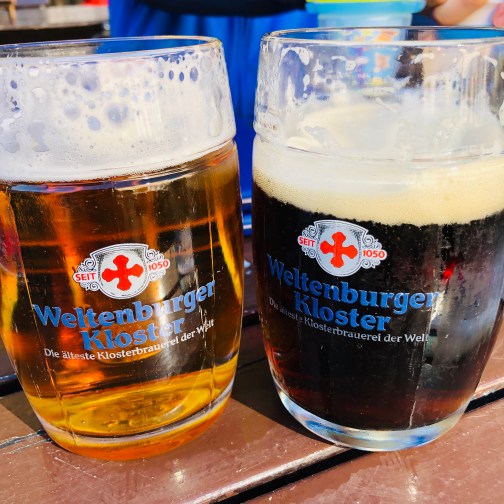
So, a little history first. Weltenburg Abbey was founded in 600 by two monks and is the oldest monastic settlement in Bavaria. The church was originally built in the early 1700’s but went through a period of being disbanded. King Ludwig reestablished the monastery and the abbey has been in use sine 1913. One of the neat things about this Abbey is that it has a brewery as well, Weltenburger Klosterbrauerei. It is one of the oldest monastic breweries, citing 1050 as the opening/starting date. It’s Dunkel beer has won several awards for being the best in the world, and there is a restaurant right in the Abbey courtyard where you can eat and drink the local dishes.

We took the first available cruise time, 9:30 AM. This provided us not only a relatively empty boat (seriously the second boat ride we saw come through was packed), but it afforded us the chance to see the sun peak over the hills and see the river under the soft dawn light (even though it was hours after daybreak). It was absolutely gorgeous. There are several sights to see throughout the cruise, as they talk about the history of the area. This area has ties to Napoleon and his reign, including a story about his suitcase being left behind. There are also quite a few folk lore style tales about river witches turning pretty maidens to stone, and three rock brothers fighting, then falling into the river. It is so much fun to hear about all the folklore and tales of the region and we really enjoyed that aspect. Plus, the fact that the area is gorgeous and the trip down the river was a nice smooth 40-minute boat ride.

Once we arrived at the abbey we headed in to see the museum, which contains relics from the abbey as well as a little kid’s room with hands on activities. You do have to pay for both the cruise down to the abbey and entrance to the little museum. The museum is entirely in Germany, although the very nice greeter told us you can request the movie to be played in English and they will try to accommodate. From there we headed into the church, which was easily one of the most gorgeous churches we have ever been in. It was absolutely incredible, both in overall looks and the minute details. The whole region that encompasses the abbey is able to be converted into one big hike and is absolutely gorgeous. We simply chose to hike up the smaller hill and get an overarching view into the abbey.

Since the abbey is still an active church, you are able to see the church being used by the monks at their prayer times.

IMG_0983.jpgWe then settled in for a little bite to eat and a beer a piece. I went with a lighter beer and Robert chose the Dunkel. Both were delicious. It was a really pleasant atmosphere, sitting right in the courtyard, with the sun shining and the leaves gently blowing in the breeze. Shortly after lunch we took the ferry back to Kelheim. We had one more stop still to make on this beautiful Monday.

Our final stop of the weekend was to visit Liberation Hall.

Liberation Hall was commission by King Ludwig as part of a “group” of several monuments. This particular one was intended as a memorial to victory against Napoleon. It is quite the masterpiece. On the exterior are 18 statues that are supposed to represent the various tribes of Germany (the number is also significant due to the date of the victory). The statues on the inside are the goddesses of victory holding hands for a ceremonial dance. Similarly, to Walhalla, you are able to walk around the exterior free of charge, but there is a cost to get inside. Unlike Walhalla, there is much more to the interior than meets the eyes.

By going inside you are able to not only go through the floor gallery, but you are able to go to the second gallery (same level as the statues), climb to two different “look out” points (one just below the dome, and one just below that), and then see the second “level” gallery. It was incredible and the climb to the top was definitely worth it for these views.

And that was our “close to home” weekend. Each of these places were well within a quick travel day (an hour or less) and are just beautiful spots. We would definitely re visit all three of these spots and I’d like to explore Kelheim a little more. I hope you enjoyed our weekend and seeing the sites through our eyes.

Schloss Lichtenstein – A Day Trip

The final castle we went to to round out our weekend away was Schloss Lichtenstein. One of the more popular and breathtaking castles, this one did not disappoint in any way. We even had the perfect weather to set the scene- fog all through the valley, swirling amongst the rockface where the castle comes out. Talk about perfection!

The original site (premodern day castle) dates back to 1100, although the structure that exists now does not hold much in common with the house that existed back then. Originally owned by ministerial it has passed many hands, although the one thing they all have in common is that the castle was frequently under attack. In the early early 1800’s (think 1802), after being in disrepair, the castle was dismantled, and a hunting lodge was erected in its place. This then fell into disrepair as well. Eventually the Duke Wilhelm von Urach purchased the estate and decided to turn it into a medieval castle that he could live in. He was very much inspired by the book Lichtenstein (Wilhelm Hauff- I now kind of want to read it out of curiosity) and the castle was able to be lived in in 1842 (with it becoming the official residence in 1869). This particular sustained damage during World War 2, of which you can see while on a tour inside, but this damage was repaired immediately after the war concluded. It is still currently in use as a part time/temporary residence.

Lichtenstein is one of the more popular castles’ in Germany due to its incredibly dramatic location. Set on the top of a rocky embankment looking precariously balanced, it gives any visitor a breathtaking look.

You have two options when visiting Lichtenstein, just walk the castle grounds or get a full tour of the interior. Each has a cost (although a difference of about 6 Euro) and honestly, if you’re already at the grounds, you might as well head inside too. The tour is given entirely in German, although they do give a pamphlet that has the English Translation and you see a fair amount of rooms that depict both the Hunting Lodge AND the actual castle life. There is still one spot where you can see the damage that was done during WW2, a bullet hole in a shattered mirror and that was pretty cool to see as most castles have either been repaired or were not affected during the war.

I think this was the perfect castle to round out our trip as it isn’t a super long tour or visit, but is still an incredible stop. I would definitely say you should go and visit Lichtenstein Castle, but know that it isn’t as big or as grandiose as some of the other castles you will see in Germany.

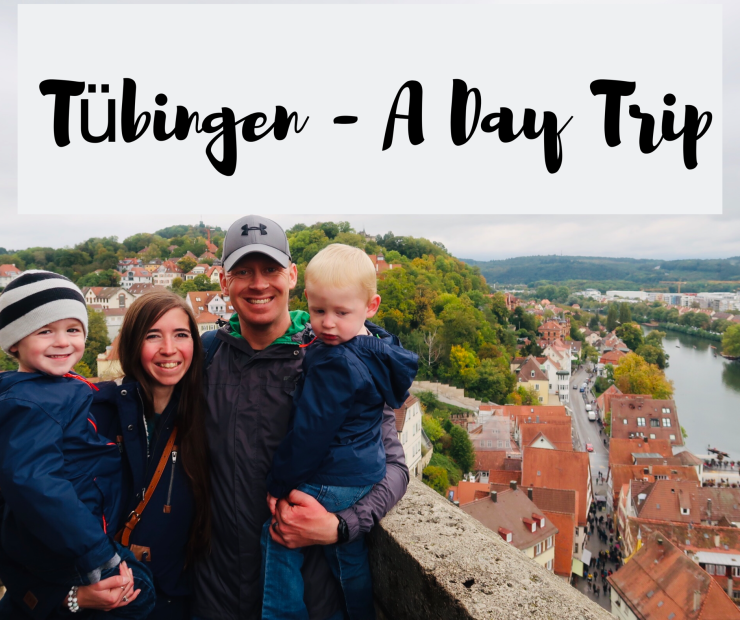
Tübingen – A Day Trip

On our weekend away we had a free day in between the castle’s we had planned on seeing. We decided to spend this free Saturday in nearby (to where we were staying) Tübingen. Tübingen is a university town in Baden- Württemberg that is full of old-world charm. My favorite bits happen to be what it’s known for: cobblestone streets (full crooked, tight, bumpy cobblestone) and the traditional timber homes that line the streets.

Tübingen has a very long history (dating back to the 6thor 7thcentury), although the first time there is any official notice of the town involves the town’s castle: Hohentübingen (this is Germany after all – and everything involves castles). Tübingen formally became a city in the 1200’s and “shortly” after that (about 30 years) a monastery was established by the Pope. In the 1400’s the Collegiate church was built AND the Eberhard Karls University was founded. This particular university is one of the oldest universities in Central Europe. The university continues to make a name for itself as one of the biggest universities in Germany and the biggest source of income for the city’s residents. Tübingen has also been a spot for quite the political history being involved in The Thirty Years War, Kristallnacht during WW2, being a center of the German Student Movement, being a part of Protests of 1968, and having student ties to a terrorist group (The Rote Armee Fraktion).

A quick fun fact for you: Tübingen’s Altstadte is one of the few completely intact Altstadte’s in Germany. It was not destroyed during WW2, which allows a visitor to get a real glimpse into what the city would have looked like throughout the years.

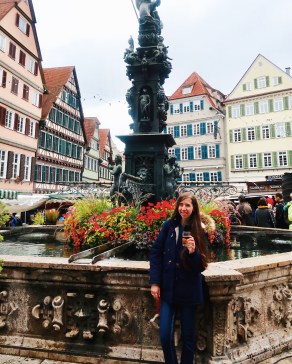
We visited Tübingen on a grey rainy day, but that didn’t dampen our spirits. We started out our day walking through the Market Square (Marktplatz). This market square also holds the Town Hall (Rathaus). The day that we went happened to be the day they were holding their Regional Market, so we got to sample a wide variety of goods, including a home made from scratch fresh pizza and Birnensecco ( a locally made pear prosecco). Both were delicious. We also got to peak around the stalls for local handcrafted goods including floral, produce, clothes/crochet/knitted goods, and different salami and cheese products. It was a fun little start to our day (and provided us lunch). This to me was just the European/German experience.

From the market square we wandered up to Hohentübingen to peak around the castle.

By best guesses the castle was originally marked in the 11thcentury, but was completely demolished and rebuilt in the 1500’s. In current day the castle holds the Museum Alte Kulturen, which was opened in 1997 to the public. There is also a section in the castle covering the advances that were made in the realm of sciences- this castle held one of the first biochemical lab worldwide, and talks about DNA. The rooms cover both modern-day sciences, as well as artifacts and the discoveries made at this particular location.

4FF8A7E4-9755-4D36-A77A-DF1F69F12EB0.JPGFrom the castle we wandered back down the street to stop once again at the market to pick up some food/drink and take a little break. Once refreshed (see above for what we ate) we headed over the St. George’s Collegiate Church (also referred to as Stiftskirche).

Dating back to the 15thCentury, this is one hell of a church. Fun fact: this church was one of the first to convert to Martin Luther’s Protestantism, although it still has several Roman Catholic features. We wandered through the main church, then paid a slight fee to head up the church tower. In this particular church, as long as the bells aren’t actively ringing, you are able to walk up the numerous stair steps to get an “eagle eye” view from the tower.

Not only is that an incredible view, but you get to see how the bells actually work from the bells themselves, the weights at the bottom, and the gears that make them ring. Looking at the bells it is actually incredible to think that a long time ago, people actually rang the bells themselves without the benefit of the gears.

IMG_0148

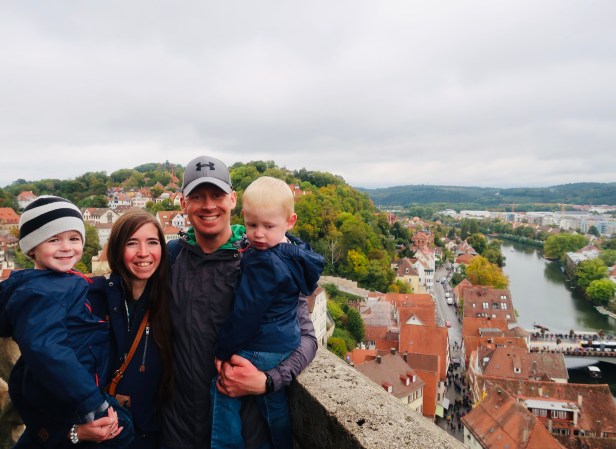
The view from the top really can’t be beat as you get a great 360 view of Tübingen and beyond. You can see the Marktplatz, the Altstadt, the river, the Schloss and so much more. It was worth the very slight fee to pay to be able to see the red roofs, the people milling about, walking along the cobblestone. We made it down the stairs just in time to hear the bells sing in the afternoon. They played beautifully and rang through the entire city.

Finally, we headed down to the Necker River. Crossing the bridge, you can get a view of the brightly colored historic homes and businesses, along with Holderlin’s Tower.

Holderlin’s Tower was the home to poet Frederich Holderlin and is a popular museum and destination. We took a little stroll on part of the Neckar Island (Neckarinsel). On the day that we went they were having their Rubber Duck Race (which we missed by about 30 minutes), so the little Island was packed with various exciting activities.

And with that final stroll our day in Tübingen came to an end! I think this little town might top my list of favorite towns in Germany so far. It is very close with Fussen (which I loved) and may edge it out of that top spot.

I hope you enjoyed seeing Tübingen though our eyes! Honestly, I hadn’t really heard too much about this town until we were in the area, but I feel like it should be on a travel list if you are wanting that German town experience.


Making the Most of Long Weekends

It’s happened…Europe has turned us into weekend travelers. I think we’ve traveled 90% of the “long” (3-4 days off, Fri-Mon, Thurs-Sun) weekends. It’s so easy here to hop into the car and just go somewhere new, spend a couple of days and return home. As easy as it is to do, it can seem daunting. There is always so much to do and so much to see that doing it in such a short period of time can seem…overwhelming. I like to think that we’ve got a fairly good system down for how we tackle long weekends and am going to share some of the tips that we’ve picked up over the past months of living here.

Tip#1: Narrow your travel list down to places that are 4-day places (with a realistic total of 2 ½ days of sight seeing) and places where maybe you want to spend a little more time at. This is where people can get stuck the most, because, honestly who wants to feel rushed when traveling? There is also SO MUCH to see and do here that that in itself is overwhelming. Here’s the thing (in my opinion/our perspective)- we are going to be here for three years. We will have numerous long weekends to travel (as opposed to a week or longer) and numerous places to go. If there are spaces that we want to see, but don’t have as much “sight seeing” to do, those are places we can go to on a long weekend. Our first long weekend was to Berlin. Totally doable on a 4 day weekend (in my opinion), our second was to The Netherlands. Both of those fit the 4 day mold fairly perfectly (although there are a couple of spots in The Netherlands I’d like to see one day) as there were sights to see, but we could go, go, go to all those sights.

Tip #2: Pick your top 5. When we decide to go on a long weekend trip we will pick our top 5 before we even leave the house. What are the things that we have to do? What do we absolutely not want to miss if we could not come back here? This lets us narrow down our list of spots to see (so less overwhelming) and when we head back home, we feel like we hit everything we wanted to. 5 is the perfect number and totally doable over a roughly 2 ½ day time period.

**I recognize I keep saying 2 ½ day, that’s what I’ve calculated out as actual sight seeing time on a 4 day weekend. You typically spend a day or so traveling to and from your destination, and then sleep and eating). **

Tip #3: Be ruthless in your packing. (Seems ridiculous to even include this tip) When we have long weekends, I take the bare minimum of what we will need. I grab 4 outfits for each of us, toiletries (that we already have pre packed and travel sized in a suitcase at any given time), and one book (the most important part haha). I pack the day before a trip so being able to just grab and go for a long weekend is super helpful. There have also been a couple weekends where we have literally decided the week before that we wanted to go, so it’s a much faster option to just grab a few outfits and pack the medium suitcase for all of us. Also, it’s a long weekend, you don’t need a lot (I’m talking to all of us women- we tend to overpack).

Tip #4: Don’t be afraid to be flexible. Here’s the thing, travel is all about flexibility. Sometimes you don’t get to everything, sometimes you’re priorities change with having little ones with you. Sometimes the weather impedes. Life happens. It’s more important to enjoy your time and do what you can than stress everything else. Just roll with the punches as they fly. I know that seems different from what I’ve said above, but honestly keep your spirits up and just go with it.

I think, above all, it is important to know what kind of a traveler you are. If you are a go, go, go traveler, long weekends are probably a breeze for you. For reference- we are typically go, go, go travelers, especially on long weekends. We like to see as much as we can with whatever time we have and aren’t keen on sitting around. Our kids have just kind of folded into that mold, being up for whatever we are up for. They nap/eat/live life on the go when we travel and they love being able to see all sorts of different things.

Once you know what kind of traveler you are, and what kind of traveler those with you are, it is easier to figure out what long weekends look for you.

What tips do you have to make the most out of a Long Weekend of travel?

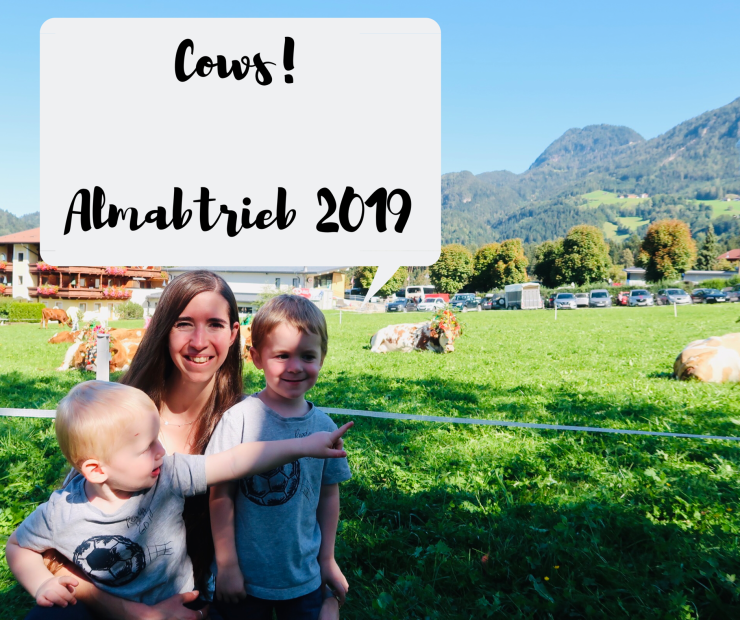
Almabtrieb 2019

There is an annual event here in Germany, Austria, and Switzerland (basically in the alps) that came from humble origins and has turned into a large festival. There are several throughout a couple week time period, in different locations, all involving cows.

The Almabtrieb is the cattle drive from the alpine pastures to the valley barns. During the summer months the cattle herd will feed on pastures in the alpine regions of Germany, Austria, and Switzerland. When Autumn starts to come around there is one drive for each area of towns to bring the cattle down to the valleys and back to the barns of their farms. Over time, these cattle drives have turned into large festivals, with the cows being “dressed” in wreaths and crowns, and the towns and villages coming out for a grand party. During the festival (which involves a lot of craft booths, drinking, food, and music), the cows are herded right through the center streets for all to see. They typically have large bells to signal their entrance and at the one we went to, they used the fire department bell to signal movement, so there is no chance of missing the cows.

I’m going to breakdown our experience and then I’m going to give a couple of tips that I found helpful when we went in case you get a chance to go…

This year we got to experience an Almabtrieb in a little town called Reith Im Alpbachtal in Austria. It’s about a 3-hour drive for us that is really pretty. Austria itself is a gorgeous country, it’s on my favorite spots we’ve been. In terms of the festival itself, there was a lot! It was much bigger than I was expecting with a lot more people. The streets are blocked off (obviously) and lined on each side with booths full of small businesses, food, and drinks.

The cows themselves are adorned with crowns and bells at the start of the drive and then paraded through the street.

I don’t think that this happens at every Almabtrieb ( I know of one person who has attended one where they didn’t “dress the cow” as they call it), but I think it is at most of them. There isn’t any rope or barrier, so you will actually be right next to the cow as it walks down. The herders walk alongside the cows to make sure nothing happens and to keep the cows moving along.

Once the cattle have been through the streets you may be able to go see them in the pasture. I would encourage you to do this as they are able to rest and the bells no longer sound obnoxious in the close confines of the streets, but rather like beautiful wind chimes in the mountains.

This particular festival had several forms of entertainment between these street performers, a whip performance, and different bands that alternated throughout the festival and throughout the day.

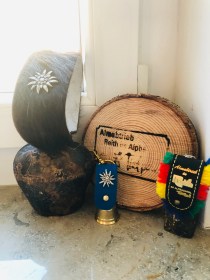
We stopped and bought cowbells, food, and did a little wood project sawing off our own souvenir.

IMG_7978

My tips/things I learned:

  • Staying the night isn’t essential. Obviously this tip really only applies to those who are in our area of Bavaria/Germany or if you are going to be traveling through the area. We are early risers as it is, and I didn’t find getting up a little bit earlier to be that bad. I also didn’t see that it was so bad of a drive for a trip. If you want to stay in the area for longer you certainly can, but I didn’t find it necessary just for the festival.
  • Be prepared for crowds at just about any Almabtrieb you go to. This has turned into quite a tourist spot and a full-on festival, so there will be a crowd. I found it to be fairly manageable, although I felt a little bit better that we went as a group rather than just me with both boys by myself.
  • Bring Euro. Most festivals here in Europe do not take cards, so Euro is essential. How much will depend on what all you want to get, but I would definitely bring more than you would think you would need. The booths are full of local hand-crafted items (my favorite way of shopping) and all of the food and drinks are delicious.
  • Arrive a little early to scope everything out and get into the festival mood. The festival that we went to opened at 10AM, but the cows were not to come through until about 12PM. WE used the couple hours to do a little shopping, let the kids run that pent up car ride energy off, and find the best place to sit once the first alarm sounded. There are actually several groups of cattle that come through, so if you miss the first round it doesn’t mean you won’t see any. We actually ended up seeing two or three herds come through by the time we headed to the pasture ourselves. They come through in bursts throughout the afternoon so you can eat, or shop in between as well or just enjoy the ambiance of the festival.

Overall, we had so much fun and I would honestly recommend that anyone and everyone attend. It is such a cool cultural thing to experience and the kids still haven’t stopped talking about it. So, if you’re visiting around this time of year (any time mid-September to early October) make sure to look up the Almabtrieb schedule.

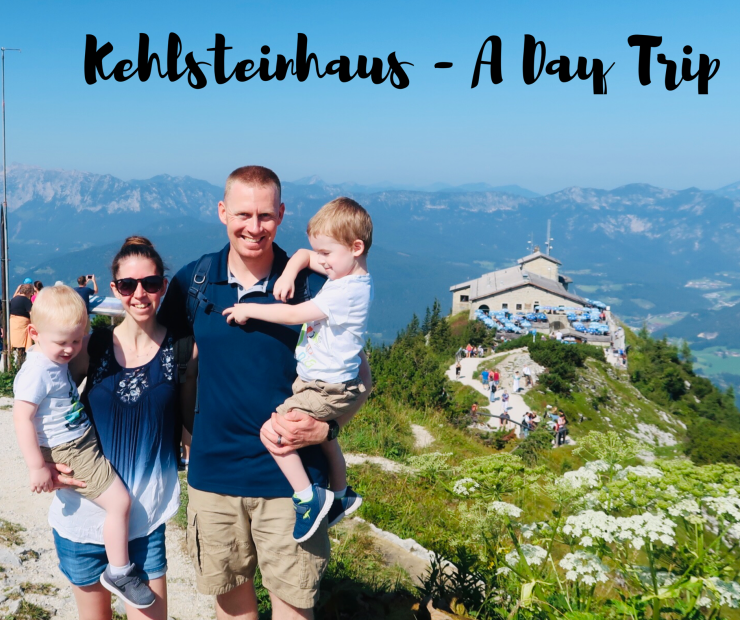
Kehlsteinhaus – A Day Trip

Over Labor Day Weekend we decided that instead of doing a long weekend away, that we would stick close to home and take a day trip or two. Now, we’ve been to Berchtesgaden before. We went on a long weekend back in May, but we were not able to do Kehlsteinhaus, The Eagle’s Nest, due to weather. It was on our list to go back to go see the area, but it’s a trip that you really have to monitor the weather for and be willing to just up and go when the window is right.

So, Labor Day Weekend became our weekend to see The Eagle’s Nest. The weather was supposed to be sunny and warm, clear skies except for maybe an hour or two for a storm. Since most of the day would be clear, we just decided to get up super early and make an attempt to do it. For us, it is about a 3-hour drive to get there, so totally doable for a day trip AND the Eagle’s Nest itself is a shorter visit, depending on you of course, so easy enough to fit into a day trip.

Some information about The Eagles’s Nest before we get into our trip.

IMG_9081

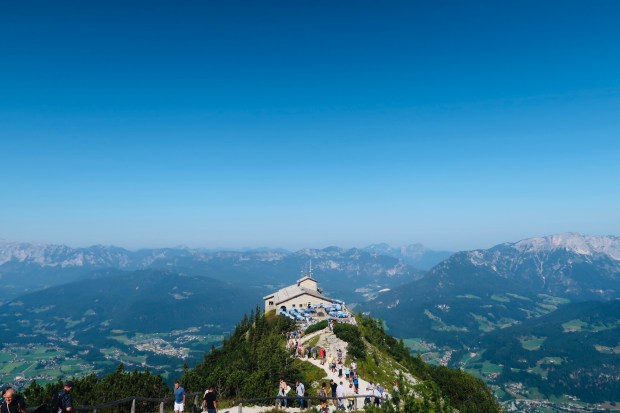
The Eagle’s Nest was built as a symbol of power and was a location where decisions were made in regard to Hitler’s plans for destruction. The house itself was built at the top of a mountain right over a sheer rock wall. The mountain was in some ways destroyed during the building of this house, having to cut through the terrain for a road and then equipping the mountain with an elevator to get up to the house. Where the house is actually located was known at the time as “the summit of all power”.

The Eagle’s Nest is one of the few buildings that WAS NOT destroyed post war which may lead to its popularity, along with it playing a prominent part in many US War Films (Band of Brothers anyone?). For all of its popularity, Hitler rarely actually visited the house, they only have 17 verifiable accounts of him being there.

These days,  The Eagle’s Nest is a restaurant that you can eat in on your lovely day their, which I actually recommend doing!

We arrived at The Eagle’s Nest around 9:15-9:30AM and I would recommend the same. You’ll want to get their early not only because the views and it being so clear, but also because of parking. Parking goes fast and, while you can park on the road (there is a lot of parking), the lower parking lot is definitely the better spot to be at.

You can purchase your ticket ahead of time or on site, we chose on site, so we had a little more freedom with our time in the morning (traffic, construction, etc.), and we had no problems getting a time close after purchase. To get to the elevator you can hike or ride the bus up. We have two young kids, so chose to do the bus. It was about a 20-minute ride and was absolutely beautiful. You get a good chance to see the entire area from different elevations.

Once you get to the tunnel and elevator entrance you need to give your return time to the bus organizer. Now, we planned for a total of 2 hours and that was more than enough time. That gave us time to leisurely look around the different overlooks and have a little lunch before needing to head back down. Depending on what you want to do (spend time sitting up there taking the beauty in, eat a longer meal, whatever) I think 2 hours is more than enough. If you do come down a little earlier than you expected you can speak with the bus drivers about taking an earlier bus.

Now, you get to go to the house, turned restaurant.

There are a couple of items of note within the house ( a fireplace, the sunroom, and a timeline of the build and who has been there), but the real beauty lays in what you see outside. The views from the mountain side are incredible. On a clear day you can see through to Salzburg (and they have the binocular bits set up so you can pay to really see it), you can see through the valleys of the Alps, and you can see Konigsee and the lake system nearby.

While we were there I was taken aback by just how, once again, stunning the views and beauty of this particular spot were and how this was also the spot where decisions were made that caused unspeakable hurt and terror. It’s such a hard idea to come to grips with and while doing a little extra research, I learned that in the case of The Eagle’s Nest, that was the point. The beautiful setting was intended to shadow all of the horrible actus. It was to give a pretty face at a time when many were starting to question as the war intensified.

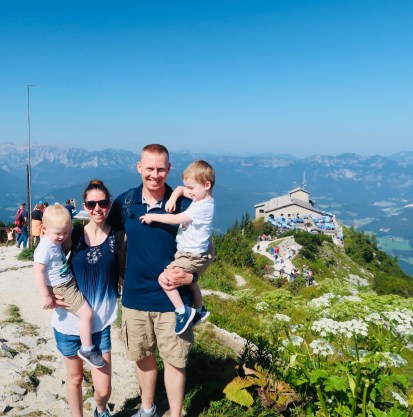
IMG_9120We had a lovely little lunch on the restaurant terrace and then made our way back down to the Dokumentation Obersalzberg. This is what we would call a museum that talks about National Socialism, the major players in Hitler’s regime as well as the Obersalzberg area. Something I didn’t know is that The Eagle’s Nest and the Obersalzberg area was much more than just The Eagle’s Nest. There was an entire network of “high players” that had buildings or homes in the region. This center talks through the image that they tried to portray in the Obersalzberg and Berchtesgaden area along with history of the NS and World War 2 history and relics. As part of the entrance you are able to go down into the Bunker, which not only contains information about the bunker itself, but also has graffiti from the Soldiers who came through the area in WW2.


Overall, I would highly recommend a visit to the area in general and would recommend a stop at The Eagle’s Nest. You don’t need a full day set aside, just a few hours and it is well worth it.