Round the Kettle Ep. 22- Entering February (finally!)

Oh hi. It’s been a while since I’ve done a Round the Kettle chatty post. They are still happening (as if you were really worried ha-ha), but I really felt the “workload” of the Christmas Season at the end of November and through December. I didn’t want to inundate your feed and email boxes with a ridiculous amount of posts, so I let them go until after the New Year past. This is probably going to be a “thing” that I do every year while we are in Europe. There is just so much to do and see around Christmas Season that I want to share, that they just aren’t possible.
IMG_2491 3

Let’s start with a little catch up…how are you doing?

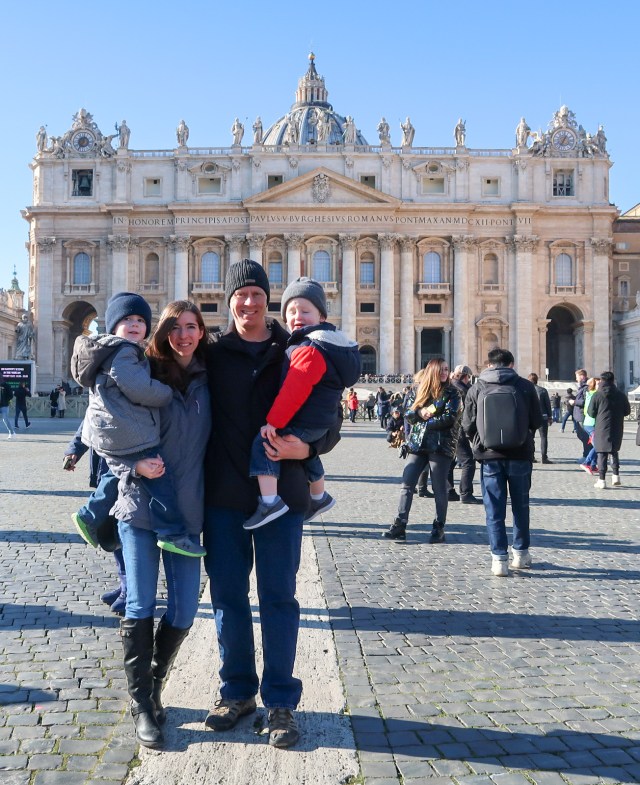
So, a brief catch up…as you will now know we spent our New Years in Rome on a weeklong holiday that still seems just so surreal in my mind. I can’t believe that I can say that I’ve been to Rome…just like I can say I’ve been to Scotland, London, Dover, The Netherlands…I mean the list goes on. It’s even more surreal and reflective as we are starting to come up on our one-year mark of living in Germany (that post is coming up this coming week). It’s funny because we are just living our normal lives, day to day, and then going on these incredible adventures that we only dreamed about.

I digress…

January passed by as January always seems to, dragging by, giving all of us that New Year’s funk at the end and making us wonder…will February ever come?! Don’t worry, February is here, and we’ve all survived. In a way January wasn’t too bad for me this year, a couple rough spots here and there, but overall pretty good. But February? I anticipate February being a rough one. We’ve got quite a few changes coming our way starting on Monday and I just feel like settling into a new groove is going to be…interesting. Our oldest is starting his preschool program, my husband has been much busier with work in January and into February, and I’m trying to figure out what our “normal” is going to be moving forward once again. It’s all good things, but it just means we’ve got a bit of a transition to make.

With that being said, I am going to be taking a little step back from the blog for a couple weeks in February. This week there will be posts as normal, and then there will be two weeks where I am not going to have any blog posts going up. I will be active as normal on IG/FB, but in terms of blog content, it’ll be quiet. I really try to take a week or two weeks “off” a couple times of year as I find that it helps me quiet my mind and refresh my brain. I’ve been writing pretty consistently for a few months now without a break (I posted a 14 posts in December where I normally average 9-11 posts a month) and I really just need to take a minute, not stare at a blank word document, and just breathe. February tends to actually be a pretty good time to do this as it is slow and quiet as it is (we aren’t traveling at all this month) and with these couple things changing at home, I need to just be able to focus on life.

How was your January? Did you have a good month or are you just ready for February?
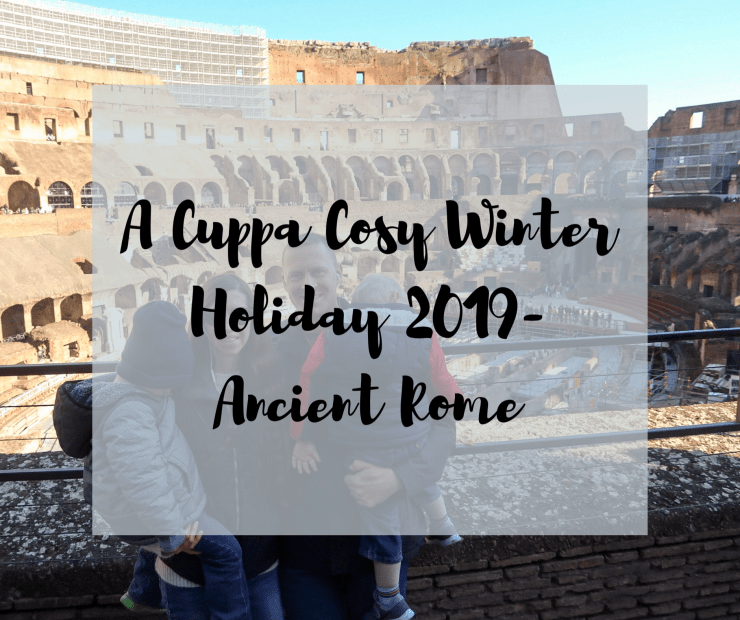
 

A Cuppa Cosy Winter Holiday 2019- Ancient Rome

I’ve decided to do another split in the Holiday posts and give Ancient Rome the post that it truly deserves. To be fair, when I planned out the original posts, I didn’t really know how it would shake out at the end. I mean, I should have known because I just tend to overshare the information anyways, but I wanted to try and condense it down as best as I could. Just the portion that covered Ancient Rome was almost 2000 words. Instead of giving you an almost 4000-word blog post, I just decided to do two separate posts.

So, today it’s all about Ancient Rome. Next it’ll be our last couple days in Rome (which was a fairly decent size too). Finally, I’ll have some tips and recommendations coming your way later on (probably in February).

So, on to the good stuff…

A Cuppa Cosy Winter Holiday - Ancient Rome

We started our 5th day out bright and early in Ancient Rome. So early in fact, we got to see the Sun breaking through the remains of the Colosseum.

What a way to start the day, huh?!

We booked another tour with Through Eternity Tours to see the Roman Forum, Palatine Hill, and The Colosseum. Once again, as with The Vatican, this was most definitely the right way to go about seeing these spots. Our tour guide was John and he was incredible. He shared information not only about the time, the people, and the places (aka the history of Ancient Rome), but he also clued us in on excavation projects including the first one we walked past, which was the most recent excavation to be done. The tour was the best way to get a somewhat in depth look at the history of Ancient Rome, the history of the location and different landmarks within the Forum and a history of the Colosseum. It was also great because we were able to bypass a lot of the lines that very quickly build up to get into these spots. I would highly recommend doing a tour (especially through this company) as it gives you a good overview of these spots and then once you are finished with the tour, you can then double back to the spots that you want to see more of (we went and walked through some other parts of The Coliseum). You know it’s a good choice if we are recommending it as we are not tour people at all.

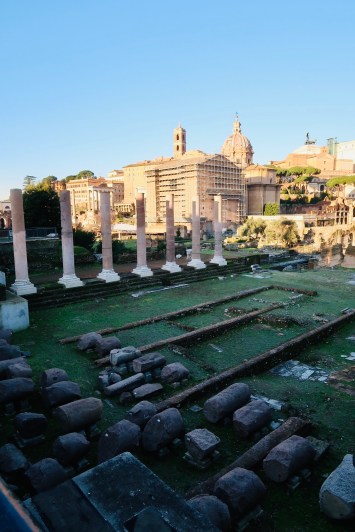
IMG_4659.jpgSo, our tour started at the entrance of the Roman Forum. The Roman Forum was the heart of Ancient Rome, the heart of the empire, and the starting point of so much of our Western Culture/Civilization. Before I get too much into the history, let me start by saying how absolutely incredible, breathtaking, overwhelming it was to be walking these Ancient Streets. It is an experience that I am never going to forget. My history loving heart was just exploding with happiness, but it was also a bit overwhelming at times to think of just how old, how ancient these places are. It’s hard to wrap your mind around while you are standing there in the moment. To give an idea to this, many historians believe that people first starting meeting in the forum around 500 B.C., even though the “city” wasn’t founded until 753 B.B. (by Romulus and Remus). The Forum has served many uses under many rulers, from a marketplace, to a religious spot full of temples, to a circus/gladiator ring (pre-Colosseum) to a public affairs location where soldiers would march the streets after their victories. In fact, there are a few arches within the forum that were made in honor of the rulers’ military victories. When the Roman Empire started to decline, the Roman Forum went along with it and during the Middle Ages it was completely destroyed to make room for farms and animals to graze. In the very early 1800’s excavations began to uncover the Forum and are even continuing on today (the most recent excavations were “completed” about 5 years ago, I think?). Fun fact/super neat fact: Every time something would get ruined (due to the fact that the Forum was actually located in a swamp/flood area), the Romans would just build over it. So, there are actually several different “eras” to the forum.

A couple of the really cool bits that we got to see (I mean the whole area is incredible) was the old Senate House building. A lot of Roman history focuses on the Senate- it was one of their proudest bits of government, and you are still able to see the exterior of the Senate building. They were in the process of cleaning and restoring when we were there, so we were not able to see the specifics, but still a really awesome site to see. With the restoration in process, we were only able to see bits of the Temple of Saturn, the front columns to be exact. The Temple of Saturn was, what is thought, one of the first temples in the Forum. These specific ruins date back to around 42 B.C. We were also able to glimpse the Arch of Septimus Severus, one of a few arches still surviving, the few columns of the Temple of Castor and Pollux dated in the 480’s B.C., AND the Ara di Cesare which is the spot where Caesar was burned after his death (this is one of those things that just still boggles my mind, that we were standing there). We walked past the Temple of Antonius and Faustina, which was probably the most intact and preserved I’ve seen in the Forum, around the Arch of Titus which was dated the 1st century A.D. and built to honor Domitian after successfully winning the Siege of Jerusalem. The level of detail on this arch is incredible (that is THE menorah).

From there we started to walk up towards Palatine Hill and the Palazzo.

Palatine Hill is the center hill of the Seven Hills of Rome and was the actual heart of Rome. It has long been used (dating back to around 10thcentury B.C.) and became a spot for ruler’s palaces and the place to live for the affluent Romans. It overlooks both the Forum and Circus Maximus. Wandering through the rooms you can see just how the wealthy and ruling class of Ancient Rome truly lived. We looked at the “back windows” of the hill towards Circus Maxima and peaked into Palatine Hill’s own Stadium, where the wealthy would work out, have “baths” and various other spa treatments.

From Palatine Hill we walked down the hill, passed some of the last aqueducts
(outside of Aqueduct Park), past the Arch of Constantine and over to The Colosseum.

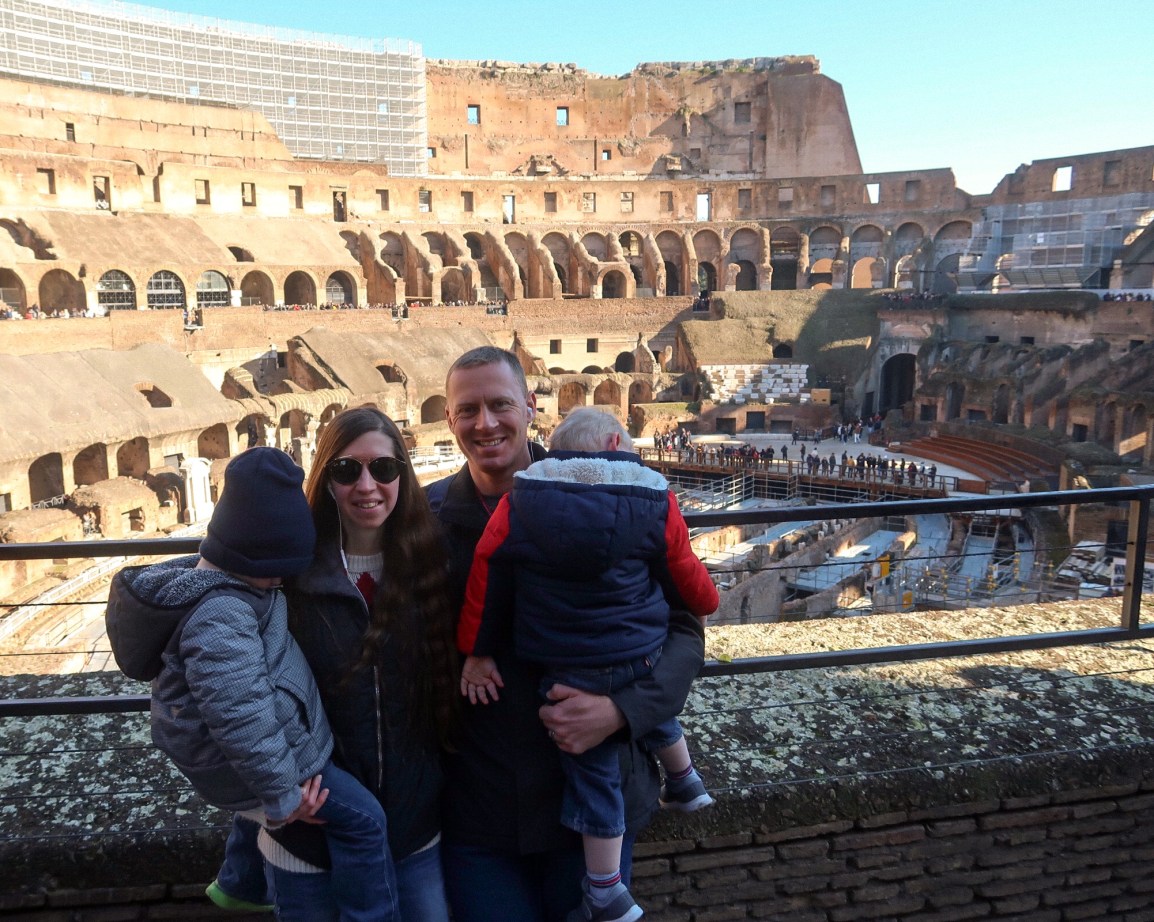
Commissioned in the 70’s A.D. and later opened 80 A.D.;  the colosseum was originally given the name: Flavian Amphitheater. Since this massive amphitheater (since that was it actually is) was completed under different rulers and there are no documents recording anything that have survived, we don’t know who the architect or builders were. The Colosseum was unique for its time in several ways; first, it was the largest of its time and second it was freestanding, rather than dug in. Each story had a different variety of columns, with seating for 50,000 (seated by class of course). There were also awnings built into the top in case the sun became too bright during the fights. Within the Colosseum there would be gladiator fights against other gladiators or animals. Despite what you see on TV or in movies, these fights would be massive theatrical productions. This was a source of entertainment (in as much as tv and movies are for us today) and so, to keep people interested elaborate storylines would be developed. This lasted 400 years and then the struggling Empire and a decline in attendance caused the fights to come to an end. Not only did the Colosseum struggle against Mother Nature with lightning, earthquakes, and such, but it also struggled from its own people. A large amount of the marble that was used in The Colosseum was “relocated” to St. Peter’s, Palazzo Venezia and other places around Rome. Finally, in the 18th century it has been conserved and listed as a sacred Christian site.

IMG_4878.JPG

I was truly amazed at the Colosseum. It’s a place that still very much sticks in my head as I think back to our trip (all of Ancient Rome does). To think about just how big these places and monuments truly are. The amount of work and engineering that went into each of these buildings is just incredible to think of. Then on top of that, the sheer age of the places just completely boggles my mind. In specifics to The Colosseum, aside from the size, the actual logistics of these tournaments, the truly theatrical experience was incredible to hear about it. You can see into the depths, where they would have platforms, levers, pully, whole systems that were so forward thinking for the time. It’s just absolutely incredible to think about and then to be there, standing right in the arena, seeing it all right in front of your face…no words.

Our Ancient Rome tour lasted about 4 ½ hours or so. It finished at The Colosseum and our tour guide finished up the tour with some recommendations on other places to check out. We spent the rest of our afternoon going to two of those spots: The Baths of Caracalla and the Santa Maria Maggiore Church.

Our first stop, The Baths of Caracalla, was not too far from where we were and was a spot that I truly just felt quite…small compared to what was around us. This was kind of a running theme for most of the day, but this just really compounded that in my head.

These baths are the second largest of the public baths (a 62-acre complex with columns reaching close to 40 feet tall) and date back to somewhere in the early 200’s. They were open for about 300 years before falling into ruin. While functioning, these particular baths were listed as one of the wonders of Rome and hosted a number of around 7,000 bathers a day. Something unique to these bath’s was the on-site public library. The library had two rooms, one for Greek texts and one for Latin, and each wall had niches built in to hold books. There was also a “frigidarium” (cold room), caldarium (hot room), a double pool, Olympic size pool, and two gym rooms to wrestle or box. One of the key parts to look at were the mosaics completed in marbled tile. You are able to see quite a bit of the mosaics as you walk along the complex. There were quite a few statues at one point in time, but those were either ruined or have been moved to other museums within Italy.

Our final stop of the day was a church. The Santa Maria Maggiore church is the most important church for the adoration of Mary.

This particular church was granted a Papal Major Basilica status, which is a really big deal (it’s one of four to have this title). Dating back to the early 5th century this church is incredible. Not only are the mosaics amazing, all in tribute to Mary, but it also contains some important things. Under the high alter is the Crypt of the Nativity, or a crypt that is said to contain the wood from Christ’s crib (as in- THE crib). It is also the home to Bernini’s steps AND at the time that we went, had the first nativity set on display. These figures are said to be from the 13th century made for Pope Nicholas IV. The church itself is beautiful, as is the nativity scene. We weren’t able to head up to the alter as a service was beginning.

That was the end of our day heading back farther into time than we could have ever imagined. Ancient Rome is probably one of my top places of our trips and this day was easily one of my favorites of our entire trip. I hope you enjoyed it too and that I did the history, information, and photo’s justice for you.

A Cuppa Cosy Winter Holiday 2019 – Vatican City

It’s the smallest country in the world. It’s among one of the holiest spots (save for Mecca/Jerusalem/and the like) in the world. It has quite the history in both good terms and bad terms. And we spent the better part of the day walking its paths, looking at its artwork, learning its history. Vatican City.

Untitled Design 30

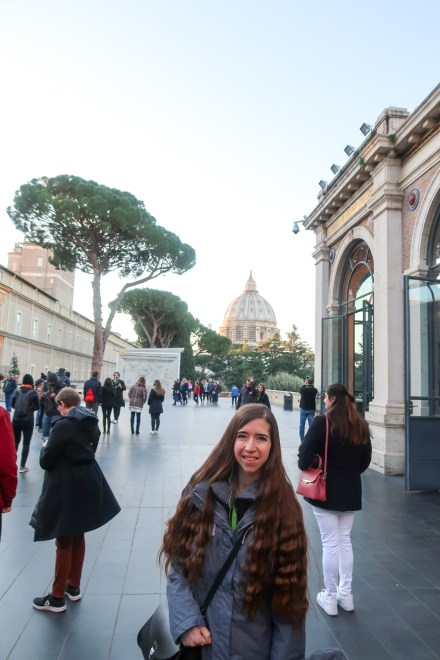
Where to even start? Our route was simple, we started in the Vatican Museum, then the Sistine Chapel, and finally to St. Peter’s Basilica. Before we even go much further I want to talk about how we saw Vatican City. We booked our tour through Through Eternity Tours (website HERE). They have a couple different options when it comes to Vatican Tours, but we decided to go with the Early Morning Vatican Tour with Sistine Chapel. It’s slighter more expensive (though still incredibly reasonable) and the timeline is specifically set up to get you the best time in the Sistine Chapel. I cannot recommend them enough. We had Federica as our tour guide, and she was great. She had not only great art knowledge and Vatican knowledge, but she also has a personal connection in that her husband works there, her son was baptized there (by the Pope himself!) and she shared not only the important stuff, but also little anecdotes. It may have been a very early morning, but it was very early. Honestly- if you are planning a trip and looking at different tour groups, this is the one that I would go with. They have their meeting place, their headset and ticket gathering down so that when you line up with the rest of the tour groups, you are already ready to go and one of the first groups in. (You’ll hear about them again in the next Rome post as well as we did a separate tour with them elsewhere)

IMG_4604.JPG

Our tour started off with meeting Federica and picking up our headsets at 7AM. From there we headed to the entrance spot (one entrance!) and waited in line. We were up towards the front with only a couple groups in front of us. While we were waiting, Federica made use of the time giving us a quick rundown on the history of Vatican City and specifically the artwork and artists displayed within the walls.

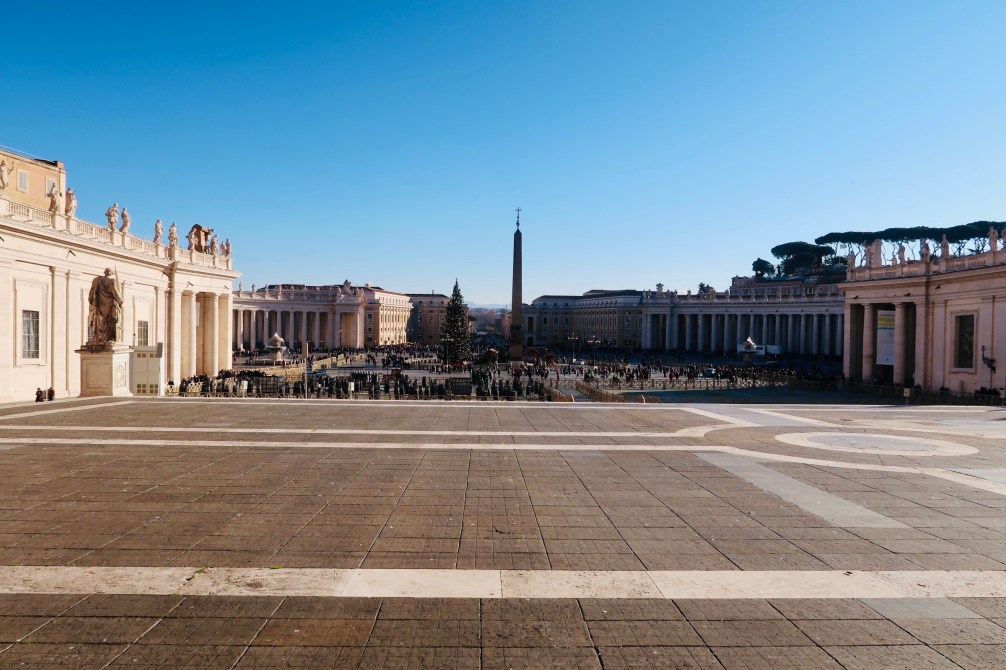
The history of the Vatican dates back to the 4th century when the construction of St. Peter’s Basilica began over the grave of St. Peter (issued by Emperor Constantine I). As the chapel and location grew in popularity, so did the development of the city. The walls were originally commissioned in the 9th century (after an attack) and were expanded through to the 17th century. The Pope’s have not always lived in the Vatican; however, a residence was built in the 6th century with a tunnel connecting the Vatican to Castel Sant’Angelo ( from our first days in Rome HERE) added in the 13th century. The Catholic Church briefly left Vatican City to relocate to France, but returned relatively quickly and worked to restore and rebuild most of the country.

Much of the Vatican City that you see today was due to Pope Julius II (with a bit of Sixtus IV and his commissioning bits of the Sistine Chapel). Julius II not only commissioned Michelangelo to paint the Sistine Chapel, he also commissioned a new church (St. Peter’s Basilica), and a new courtyard.

IMG_4486.jpg

Now, a quick foray into the Politics of Vatican City being its own country, separate from Italy and some information about the country itself. The Pope originally held power over its regional territories, but in 1870 a unified Italian government decided to take back the land located outside the walls of the Vatican which caused some…issues. In the 1930’s Mussolini signed an agreement that allowed Vatican City to become a separate, sovereign entity and had them receive compensation for the loss of territories. The Pope now only had power over his country, which is 109 acres and has a 2-mile border. The smallest country in existence. As many of you have probably heard, the Vatican does have its own post office, banking system, and you can potentially (depending on who is working) get a Vatican City passport stamp.

Our tour started in The Vatican Museum. The Vatican Museum actually takes you through the residence rooms of various Pope’s that contain artwork or statues that were either commissioned or used during their time as Pope. However, before you can get through to the artwork and rooms you go through the courtyard, statue, tapestry, and maps rooms. Each of these rooms featuring exactly what they are named for and each being almost more incredible than the last. Each room (or museum) has its own unique story and informational background. I’m going to link the official site of the museum and its history HERE as this blog post would get even longer than the last (and potentially more boring) if I went into elaborate detail about each spot. Instead of doing that, I’ll take a little bit to talk about each of my favorite one’s.

The map room in particular was incredible as the walls are lined with maps of Italy (and the islands) as it was seen at that time. It’s a much much different look at the world as this Gallery was opened in 1581. So much was still relatively “undiscovered” by Romans and their view of the world was much different. The walls of this room are lined with these maps and you can really see how they saw their “world” in a sense.

I also absolutely loved Raphael’s Rooms which, similar to the Sistine Chapel, were commissioned by Julius II and feature some absolutely incredible artwork. Raphael was given free reign over the design and depictions in the fresco’s and they are just an incredible sight to see.

A final cool spot (mostly because of the Pope) was Pope Alexander VI (Borgia)’s rooms. This particular pope is a very well known (some might say infamous) Pope and his rooms are exactly as you would expect. They are located in one of the most exclusive wings of the Apostolic Palace and were not inhabited by any other Pope’s. The ceiling of one of the rooms was decorated with pinecones, a symbol of fertility (yep you read that one right) and remained vacant after his death.

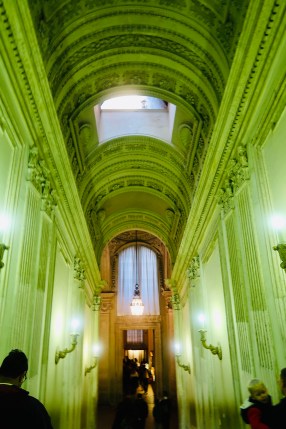
Something to note about the entire indoor areas of Vatican City is the floors. The floors are these absolutely incredible mosaic tiles, each individually laid and placed with care. These are the same floors that have been in existence since it’s origin. So, while you are walking through these various rooms, walking through the paths of artwork and statues, you are walking the same floors that many, many, great’s have walked before you. You are walking the same path that Michelangelo would have walked while he was working, the same path Raphael walked to get to this commissioned rooms. Just incredible to think about.

Once we finished with the museum portion (the Borgia apartment is the last to see), we headed straight into the Sistine Chapel. IMG_4474.jpgI have no pictures of the Sistine Chapel. First off, you are not allowed to take pictures in the chapel. Second, I don’t know that I would have wanted to take pictures even if you could. The Sistine Chapel is something that simply needs to be experienced, something that should just be taken in, without prior knowledge or warning. It is a spot to sit in silence and just revel at the beauty that is around you. It is truly incredible the amount of work, the paintings, the level of detail. Our tour guide, Federica, did a great job at pointing out a couple of spots for us to pay attention to when we did walk through. A couple of spots of note were the spots where Michelangelo inserted his…”opinion” on the commission. It is well known that Michelangelo had no interest in painting the fresco’s, he worked with marble, created statues- he hadn’t painted fresco’s in many many years. This “petty attitude” towards the Pope that he developed came through in some areas of the large painting (specifically where a little child is “flipping the pope off”). He also managed to apply this attitude to those who had…less than desirable opinions on the artwork (there is a Cardinal that is in a…precarious position in The Last Judgement).

We were able to spend 20 minutes in the Sistine Chapel before moving on to St. Peter’s Basilica.

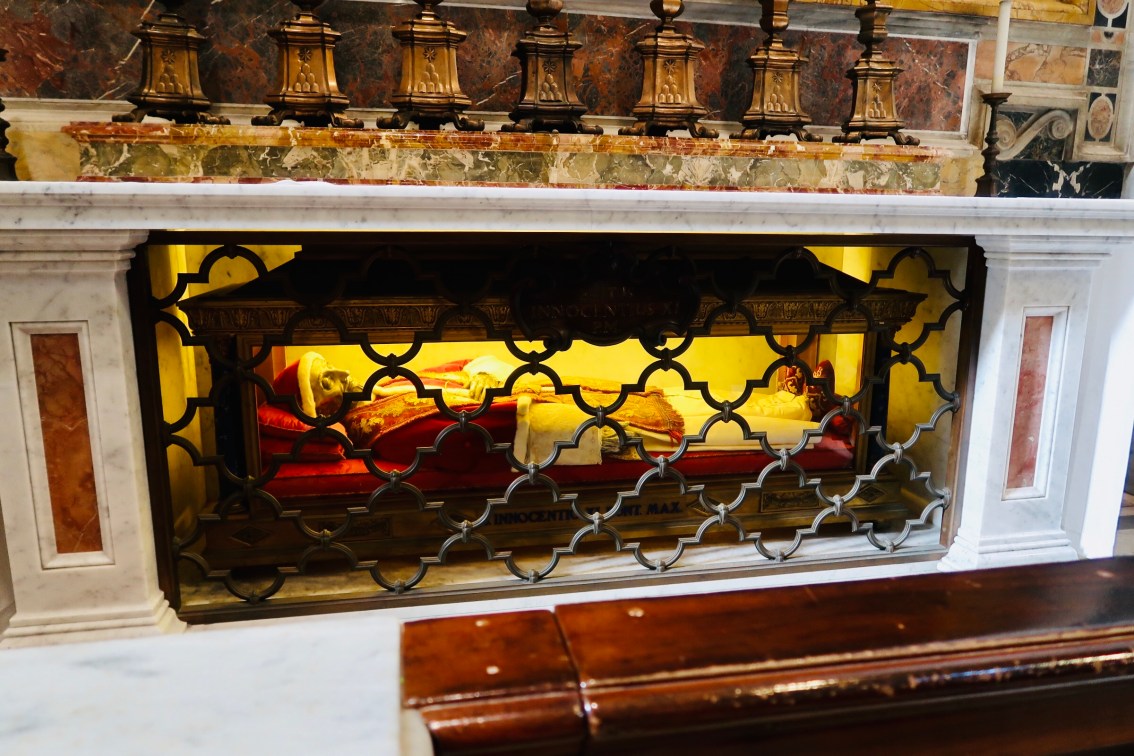
I’ve already briefly touched on St. Peter’s, but I’ll continue it here (very briefly to spare you). It took a little over 100 years to complete (after being commissioned in 1506) and the alter sits directly atop the shrine of St. Peter. It is truly a masterpiece just in terms of a church not even considering the incredible art inside the church. One of the major pieces that you can see within the church is the Pieta by Michelangelo. You are also able to see two pope’s that are “on display” within the church.

IMG_4537.jpg

When they were ready to be entombed in the Grottoes, they actually were found to be in perfectly preserved condition. Instead of being placed down in the Grottoes, they were placed at two different spots within the church for all to see. That’s not to say you can’t see the other Pope’s, simply head down the stairs to the Grottoes and you can learn about the histories of each of the Pope’s. It’s a pretty incredible site to see.

Our final stop within Vatican City was not as part of the tour, but something we decided to do ourselves, and that was to climb to the top of the dome on St. Peter’s Basilica. We’ve always been “those travelers” who like to get above a city and get a sort of “eagle eye view” of the city. This was the perfect chance to get as high as we could and take a look.

I will say this, despite my incredible fear of heights/falling from said heights, this view did not disappoint. It wasn’t my favorite of our entire trip (Alter of the Fatherland was as a side note), but this one was so special both for views and location. It is quite the climb up (500 something steps to the top), but you are able to take an elevator for about 200 of those steps. The elevator stops you at a higher point within the church, so you are able to see the interior of the dome a bit better and see down into the church from a higher viewpoint. Also, the steps aren’t really that bad as you are going up, you are able to tell each part of the dome that you are in.

IMG_4323 2.JPGThe Vatican was one of the most incredible parts of our visit and something that I am going to remember for the rest of my life. To stand in this most sacred spot for so many is something that words cannot describe and then you bring it’s long (and rich) history…it’s a lot. A lot of feelings. It is definitely a spot that you HAVE to go to if you are in Rome and a spot that I think is best done as part of a tour group (the line to get in without a pre-planned tour ticket was INSANE…heck the line to simply get into St. Peter’s Basilica without the tour was INSANE too). Through Eternity exceeded all of our expectations and we will definitely use them in the future if we are ever in need.

And that wraps up Day 4/Vatican City. I hope that you enjoyed!

A Cuppa Cosy Winter Holiday 2019 – Rome The First Days

For our winter holiday this past year we decided (somewhat last minute- have to get a bit better about that) to start knocking some of our Italy spots off our bucket list. We started with the big one, Rome.

We did things a little bit differently with this holiday, deciding to devote our entire week to only Rome, to an overnight train as our form of travel, staying in a Bed & Breakfast style hotel, and doing a couple guided tours during our holiday. Honestly, our holiday couldn’t have been more perfect in any other way.

Untitled Design 29

This morning starts the full holiday blog posts except rather than breaking them down by location (as I did for our Summer Holiday), I’ll be breaking them down in chunks of time. Today’s post will cover our first few days, then we will talk about our day at The Vatican in another post, then conclude things with our last few days. As always, I will also have a separate post detailing out my recommendations and tips at the end of the “series”.

***I want to make a note that I am not going to be detailing every single place we ate/drank/food related. You may think that that is crazy- oh but it’s Italy how can you not talk about the food?. I’ll be talking about the food, but honestly we ate at so many spots that I don’t remember every single one, AND there are very few spots that you can really go wrong food wise in Italy. It’s delicious just about anywhere. I’ll name the spots that stuck out to me that I remember and were above delicious, but overall you can’t go wrong with food in Italy.***

So, as I’ve already mentioned we decided to train over to Rome for this trip. There were several reasons behind this decision, BUT ultimately it came down to price and ease.Let’s be honest, as much as we like driving, it’s not always the easiest or fastest option. Driving would have allowed us to maybe make a stop or two on the way there/the way back, BUT driving IN Italy is a bit tricky (and there are tolls) and we definitely didn’t want to drive in the city. This meant that we would have to find parking for the car, and figure out what tolls we would hit on the way down. It also just meant a long drive (13 or so hrs.) and when the train option presented itself, we figured we might as well give it a shot.

We picked an overnight train which was about 13-14 hours long, leaving around dinner time/late evening and arriving the next morning. Overnight meant that most of our travel the boys were sleeping (and we could try and catch some z’s too), so less of an issue of keeping them occupied. We booked a standard (nonsleeping) compartment that came with six seats, so two additional passengers could be in our compartment, but a sliding door to shut and the seats themselves folded down for comfort during the trip. It was a super easy trip (once the boys calmed down from the train excitement) and definitely an option that we will keep in mind for future travels.

Rome Day 1:

When we arrived in Rome we basically hit the ground running. After a stop to drop our luggage off at our Bed & Breakfast (I’ll touch on this in a bit), we headed straight out for food, coffee, and a wander. We started our tourist exploring at Castel Sant’Angelo (actually called Mausoleum of Hadrian) right on the Tiber River. There was a small line to get in, but it moved quickly and the castle itself wasn’t crowded once you got in. This particular castle is actually a mausoleum (now) and has previously been used as a fortress for both Emperors and Popes alike.

Construction on the castle started in 135, finished 4 years later, became a military fortress in the 5th century, and then around the 13th century, a corridor was added connecting it to Vatican City in case of danger to the Pope (this corridor did end up getting used in the 16th century!). While walking through the castle you are able to see exactly how and what the castle was used for. Both the military fortress aspects and mausoleum parts have been very well preserved AND you get an excellent view of this side of the city from above (including a clear shot towards Vatican City and St. Peter’s Basilica).

It was probably one of the best clearest viewpoints we got, aside from Alter of the Fatherland. We spent a good hour or so here wandering the corridors, ramparts, and park.

Once done there, we were able to go back to our Bed & Breakfast and properly check in. We stayed at Tibullo Guesthouse Rome and it was a great spot for us. We chose a larger room that contained one double bed and two singles as well as a separate, but private, bathroom. It was reasonably priced and is not 10 minutes away from the Vatican or Castel Sant’Angelo. The hosts were incredible, so incredibly warm and welcoming, and made sure that we had everything that we needed (and then some!). The actual guesthouse is quite small, and breakfast is offered and is served in the comfort of your own room should you choose to do that.

After settling into our rooms and freshening up, we decided to head out again. This time heading into the heart of Rome and the most touristy/heavily populated spots. We hopped the metro and headed into the heart of the city. We started at the Piazza di Spagna, home of the Spanish Steps.

Dating back to the 18th century, The Spanish Steps are one of the most famous spots (although could be arguable). They’ve been home to poets, authors, painters, a very special tearoom and, most importantly, connect the church at the top of the hill to the square at the bottom. These famous steps are quite incredible to look at and we definitely had a lovely time climbing them, stopping for a little Audrey Hepburn moment, and then watching a Roman Sunset to end our first day. I think this might have been one of the most surreal moments (up until going to Ancient Rome and the Vatican).

After the sun set we got to see the city come alive (all over again) and headed over to Trevi Fountain.

Trevi Fountain. Where are the words? The Trevi Fountain is the largest Baroque Fountain within Rome and easily one of the most talked about in the world. Built in the 18th Century and centered at the cross of three roads, which also marks three points of aqueducts. It is absolutely incredible, a true feat of architecture, and at night it is completely lit up. Absolutely gorgeous. A fun thing to do (if you want to fight the crowds), is to actually toss a coin in the fountain. You are allowed to do this, and by tossing it behind your back it is said that you will return to Rome. The city actually collects the coins and donates them to a charity so your money will not be wasted if you choose to do this. We had a quick stop at the fountain as it was packed to the brim and we had a sleepy toddler (napping on my hip), but it was truly incredible to see.

We did quickly stop in Oratorio di Santa Maria in Trivio, a church across from the fountain before heading away to dinner and then the Bed & Breakfast for sleep.

Rome Day 2:

A1EBE0B8-5250-40F8-8B2A-2582F3F6D6C3.JPG

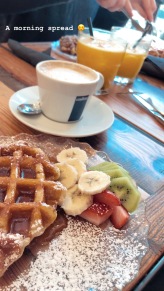
For our second day in Rome we had a bit of a sleep in. After being exhausted from all our travels the day before and hitting the ground running, we took it easy first thing in the morning. When we finally emerged from our room, it was to head out for brunch and then exploring. We stopped at The Loft for brunch and this was a great stop (we liked it so much we actually came back a second time and probably would have more if we had the time). After a breakfast of waffles and cappuccino’s and fresh squeezed orange juice, we hit the metro to head to our first stop.


We started our day at Piazza Navona.

This is a public square that was originally intended as a stadium which dates back to the 1st century. This was changed around the 15th century when it was turned in the city marketplace, Piazza Navona is now a square that holds markets, fountains, and a slew of restaurants and stores. There is also a very small Gladiator Museum on one entrance side to the square, which we did visit. If you are interested in Gladiators and replica’s then it is a neat visit. If it isn’t something that you are interested in, or you want something much more in depth, then give it a miss. There are a couple other stores of note, a toy store in one of the main entryways provides a bit of delight for adults and children and there are two “Made in Italy” shops that have some of my favorite leather-bound journals that I’ve ever seen. When we visited the Piazza, they had a little Christmas Market going on. Christmas is a bit different in Italy, celebrated on January 6 (Three Kings Day/Epiphany- long story which I can talk about on a different post), so they still had this little market going. It’s geared mostly towards children with games and such, only a couple booths have items to purchase or food.

From there we headed over to the Pantheon.

The Pantheon was originally used as a temple dating back to around the 2nd century (it might even be a little older than that as the current Pantheon was built on the remains of another temple). It’s most striking feature (because 12 columns and sheer size isn’t enough) is the opening in the ceiling that looks out to the sky above. There is what we would call a hole in the ceiling, not only that but the dome is the world’s largest unreinforced concrete dome. This is also known for being one of the best preserved Ancient Roman Buildings. After being used as a temple, it was transformed into a church and is still in use today. It was absolutely incredible to walk through and in this building.

From the Pantheon we just headed out to walk the streets. Honestly, that was a lot of our following days, just walking the streets of Rome.

No matter when or where, you can always find anything just by walking the streets. We wandered the streets finding hidden columns, little squares, and paths upwards. Our general goal was to make it over to Villa de Medici, but when we arrived our boys were in no mood to join in on a guided tour. We cut our losses on that, rather walking the gardens right next to the villa (somewhat near Borghese) and seeing the start of the sunset at the top of Piazza del Popolo.

This was one of the coolest squares that we saw, at one end was the Porto del Popolo, a massive arched entryway to the square. At the opposite end are two churches. Right in the center of the square is the Fontana dell’Obelisco; a massive fountain with lions on each corner and an obelisk rising from the center.

We ended up having dinner at a restaurant called Don Chisciotte and feasted on delicious homemade pasta & sauce, wines, tiramisu and cheesecake.

The perfect end to our day!

Rome Day 3:

We started our 3rd day with breakfast at a little café, Café MeMe. After a delicious heaping of eggs, bagels, pancakes, cappuccino’s, and smoothies (I promise you- this was spread across the 4 of us), we decided to hit one of the biggest monuments that we were seeing from every vantage point of the city…The Alter of the Fatherland. Before actually going to the monument we stopped at the church right behind it, Santa Maria in Aracoeli.

I don’t have any pictures to post from the inside, but I promise you- you MUST go to this church. It is absolutely incredible, just achingly beautiful. This may have been one of our favorite churches EVER and we’ve been to a lot so far. It is literally right next to the monument and so easy to just stop in to. And now, The Alter of the Fatherland.

IMG_4164

That name is actually not the correct name, although it is referred by that name regularly. This monument is the Victor Emmanuel II Monument and it is a masterpiece. Before we get into the history, let me just say that this structure with all its steps, individual monuments and sections, the museum within, and the view from the top is absolutely incredible. It sits in between Ancient Rome (right next to the Forum and atop Capitoline Hill- the center of Ancient Rome) and the more modern city of Rome via the Piazza Venezia. Work started in the late 19th century being completed in the very early 20th century and since then, this building more than anything else is seen as the “symbol of Italy”.

Not only do you have the steps leading up to the first landing, at that first landing is their Italian Unknown Soldier tomb (which is guarded), then there is a second landing which is the Portico, and then a third landing which you can walk around towards the back for the elevator to the top. Honestly, this is a most stop spot. Climb the steps, pay homage, and see the view of the city from above. I think this might have been my favorite “view from above” of Rome as you can see EVERYTHING.

It’s a great overlook of Ancient Rome, a great look of the modern city, and you see the domes of the churches and basilicas stacked up.

From there we stopped for a late lunch at Ristorante Il Miraggio which was a restaurant that we found randomly, looking for bathrooms, but it was one of the best random finds we had. It was down a side street and we had the best waiter I think we’ve ever had. It was so much fun to just watch him work, greet and entertain everyone from the paying diners to the random people walking down the street.

The food was delicious (as I said earlier- you can’t really go wrong wherever you go), and I had one of the best cups of standard black tea that I’ve had in a long time. It was the perfect stop and felt like such a good little spot.

After feeling refreshed from lunch, we started walking down the road once again. We headed up to Quirinale Palace.

This was a last minute, half hazard decision, and one of the few that worked out for us, but also didn’t work out. We headed up to the palace to go see it, but it was starting to get a bit later in the day and on the way up I ended up pinching a nerve in my back. So, we pretty much got to the actual palace (which wasn’t too bad) and then turned around to head back to the Tiber River. This was kind of a bummer as I would have liked to actually go in and experience it, but it wasn’t in the cards. This is the reality of traveling sometimes.

After a little rest, and some medication for my back, we just wandered along the Tiber River, crossing over at the pedestrian bridge and just wandering the neighborhoods. Which is such a nice perfect way to end this first post about our Winter Holiday. It was a long one and if you made it to the end…thank you. What was your favorite spot that we went to in these first couple days?

Dresden – An Overnight Trip

The weekend before Christmas we spent a very magical 24 hours in Dresden exploring Christmas Markets and landmarks alike. You can see my post on the Christmas Markets HERE, but today I am going to talk about some of the sights and my favorites about Dresden.

Untitled Design 28

Dresden is the state capital of Saxony and it is the 12th most populated city in Germany, the second largest city on the River Elbe. The city itself is relatively “recent” in comparison to the history of Germany, dating to around the 12th century. It has served as the seat of the state since it’s settlement and has also always been a center of culture, education, and politics in Germany. The most incredible thing about Dresden is that the entire city center was destroyed, along with 25,000 people killed, during the bombing of the city by Americans and British towards the end of World War 2. Certain parts of the inner city were completely reconstructed after the war including the Zwinger (the royal castle/palace).

I will be completely honest- a lot of my time in Dresden was taken up by either Christmas Markets or in awe of the architecture and landscape of the city itself. I’m looking back through my pictures and thinking “oh I loved that spot” and “that was pretty cool”, but not remember a lot of the details about the trip itself. Partially my fault for waiting this long to actually write this post (it’s now after New Year’s), but also Dresden was the second city that I really just let my “amateur photographer” heart fly free. I just took pictures (so many pictures) and wandered around. There wasn’t a lot of “specifics” to our trip. So, forgive me if this post is a little vague or different from previous posts. I’m still figuring out how to merge a couple different passions to put together the best posts that I can for you.

IMG_3300

So, since this post has already derailed into something very different than I anticipated, I’m just going to continue that trend…

While in Dresden we went square hopping pretty much. Each square has a “focal point” of sorts, whether it’s a palace, a statue, or a church. Each square also had a Christmas market, so we would start at the Christmas Market and then walk in to whatever the nearby attractions are. In our minds we had two or three “must see’s” on our list, but otherwise we just wandered around.

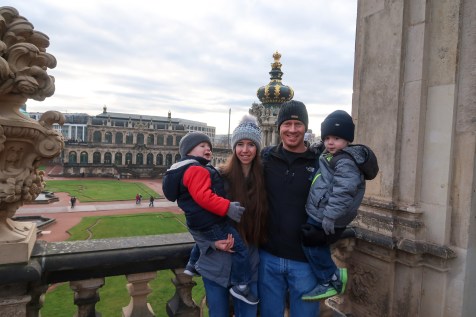
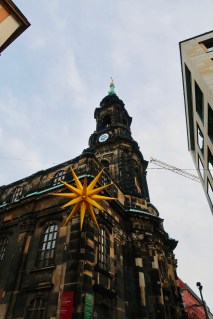
IMG_3137The first square is the main square and right off the main square is the Church of the Cross. This is actually the main church and the seat of the Evangelical-Lutheran Church in Saxony. It is also the largest church building in the state. The church itself has been through quite the history, but its current state retains the look of the church post Dresden bombing. It was decided to keep it in that state, rather than refurbish it to prewar designs.


Speaking of churches, we also went to The Catholic Church of the Royal Court of Saxony (also known as Dresden Cathedral/Katholische Hofkirche) and the Church of Our Lady (also known as Frauenkirche).

These were both absolutely incredible churches in full painted and designed glory. An interesting fact about Dresden (back in the day)- at the time the rulers were Catholic, BUT most of the residents were actually protestant. The Catholic Church of the Royal Court of Saxony is one of the foremost landmarks of Dresden. In fact, I can almost guarantee you’ve seen a picture of it, it’s incredible. The original church actually had a private high-level walkway from the Dresden Castle to the church for the rulers and other high-ranking officials to use. Of course, like much of Dresden, the bombing heavily damaged the church and it was fully restored following the reunification (including the private walkway between the castle and the church). The church does not only hold mass and services, but also (like many of the churches in Dresden) concerts throughout the year. In a slightly different tone, the Church of Our Lady was left in ruins after the bombing of Dresden to serve as a war memorial (for 50 years!). Originally built as a way for Dresden citizens to assert their will (by remaining protestant in the 18th century), the church was not rebuilt until the 1990’s-the early 2000’s.

Something that we had on our list and did see was the Procession of Princes or Furstenzung.

This is a 101-meter-long mural that shows the ruling family as a procession of various riders. It shows the Wettins’ family lineage through the years. Originally painted in the 19th century, it was replaced by porcelain tiles in the early (early- very early) 20th century due to the elements fading the paint. It is now known as the largest porcelain artwork in the world and is absolutely incredible to stand in front of. The members of the family are accompanied by various other “common folk”, scientists, children, and such.

We also managed to make a stop at The Zwinger, which was on our list.

The Zwinger has a long history, but I’ll be completely honest- I don’t quite understand it. So, I’m not going to try and talk about the things that I don’t know about it (as that would be wrong), but my basic understanding was that Augustus the Strong (who was recently made King of Poland and Elector of Saxony) wanted to have something similar to Louis XIV’s Palace of Versailles. It ended up getting changed around several times, halted, and finally completed at a much smaller scale. It was destroyed during the bombing, but was fairly quickly rebuilt (in the grand scheme of the other buildings listing within this post). You can walk the main garden levels, and then up higher in the ramparts. Within the buildings are museums containing artwork, porcelain, and jewelry.

Recommendations:

Honestly I would recommend just walking around Dresden.

Obviously going to the Zwinger, the museums, the Procession of Princes are all great places to start, but really I would recommend just walking around the city. The city (as many in Europe) is divided between “Old Town” and “New Town” by the river and it’s really neat to see both sides. By walking around you’ll see most of everything the city has to offer and then some. I would recommend separating your time by Old Town and New Town (whether you’re doing an overnight or day trip). If you are only going for a single day, I would stay with Old Town.

As for Parking, there are several parking lots within the city, both indoor and outdoor, with reasonable pricing. I would honestly go a bit further to go to one of the outdoor lots as people often times won’t go a little bit further, so there is a higher chance of them having open spots. Once you find a spot, I would just stick with it (some lots have the 24hr tickets) unless where you are staying is across town or you have a large amount of luggage. There is a large Galleria/Mall parking garage, however this is one of the first places that will fill up during the busy/Christmas season, so keep that in mind.

Depending on your travel plans (where you’re coming from, where you’re going, what you want to do), I don’t think that you realistically need more than the 24 hours to really get a good idea of the city. I felt like we got to see everything we wanted to and then some during our time there. You can definitely make it a longer trip, but I didn’t feel like it was super necessary to do so.

Overall we had a lot of fun on our little overnight get away and I really loved Dresden. It has elements similar to Prague, so if you loved Prague, you will probably love Dresden.


2019 – A Year in Review

How have we already reached the 30th of December? It seems like the year was just starting yesterday. And we aren’t even going to get into the fact that this is the end of a decade…what?! I’m still trying to wrap my mind around that one.

Untitled Design 23

2019 was quite the year over here at A Cuppa Cosy. We did an international move, lived out of a hotel and 6 suitcases for 5 ½ months, visited (as of the date of this post) 10 new to us countries, and experienced new highs and lows with two very rambunctious and active {not so} little boys. Looking back on our year for this post it’s hard to believe that this is our life now (we are going to be visiting The Vatican…what?!), but here we are.

In terms of highs, our move tops the list. In February we moved to a little spot in the German state of Bavaria. We left behind hectic, heavily populated D.C. for the rural countryside life. It was an absolute dream come true and we have well and truly made a home here. The people have been incredibly welcoming as we struggle to learn the language (German is no joke) and I feel like we have overall adjusted really well. For all the good that moving to Germany has done, living in a hotel for 5 ½ months was really hard at times. It’s tough not having your own belongings, having two boys who are used to a certain amount of space and who have a never-ending amount of energy, as well as not being able to have things as we like them.

Another high point of 2019 is the sheer amount of traveling that we have done. As I said, we visited 10 new countries and have really learned the art of short weekend trips (but we’ve also mastered long term travel too). My top place that we’ve visited is Scotland (is anyone surprised? Blog posts are HERE and HERE), followed very closely by Austria, which I’ve now visited twice (HERE and HERE). London was a dream come true (blog post HERE) as was seeing the Tulip Fields at Keukenhof (HERE). So far we haven’t been anywhere that we’ve not liked, although I wasn’t the biggest fan of Amsterdam (still enjoyed my time, just not the top of the list, blog post HERE). I’m definitely looking forward to more travel over the next two years.

We have experienced countless cultural events here in Germany including both Oktoberfest (HERE) and a Krampus show (blog post to come), but also the little festivals in between for random celebrations and Christmas Markets (you’ve seen all of these, but my top two are Gutenek and Dresden).

The boys grew…A LOT over the past year. Colton has really come into his own with his words, his likes/dislikes, and his energy level. He went to his first couple days of preschool (getting evaluated to determine if he needs/could use preschool due to speech) and he loved them. He handled drop off’s like a champ and looks forward to going every time we go. He has really started speaking properly and we are loving seeing his little personality shine (although sometimes he is a LITTLE too much like his father haha). Andrew has really started to come into his own too. He has a voice and definitely knows how to use it, as well as learning how to wrestle with big brother (and win). He has been loving going to our local playgroup and has become such a chatty social little boy. He still has a really sweet and soft side that comes out every time he comes up to give hugs or tries to help with everything. The time is passing all too quickly.

We had one really low point in the year, that I have kind of talked about, but also kind of haven’t. I had one month that I just struggled, that I just broke down. We were still adjusting to the schedule, had just come off of our long Summer Holiday, and I just really struggled the entire month. I had a couple of low days where I was incredibly low energy, crying, and in a dark place for a bit. Thankfully things balanced out and the rest of the year has been great. I say this to show that while our life is incredible here and we are so grateful, it hasn’t been a year of sunshine and daisies.

One of my intentions for 2019 was to be open. Be open to new opportunities, new adventures and to say yes more. I think that I’ve actually really accomplished that. I’ve tried to be more spontaneous this year, and just go with whatever happens as it happens. My word was Adventure and we have most definitely had some of those. Overall, I think this was one of our best years and I know that we are in store for so many more.

So, that was basically our 2019 in a nutshell. A move, lots of traveling, a very happy couple and two wild boys. Our not-so-perfect perfect life.

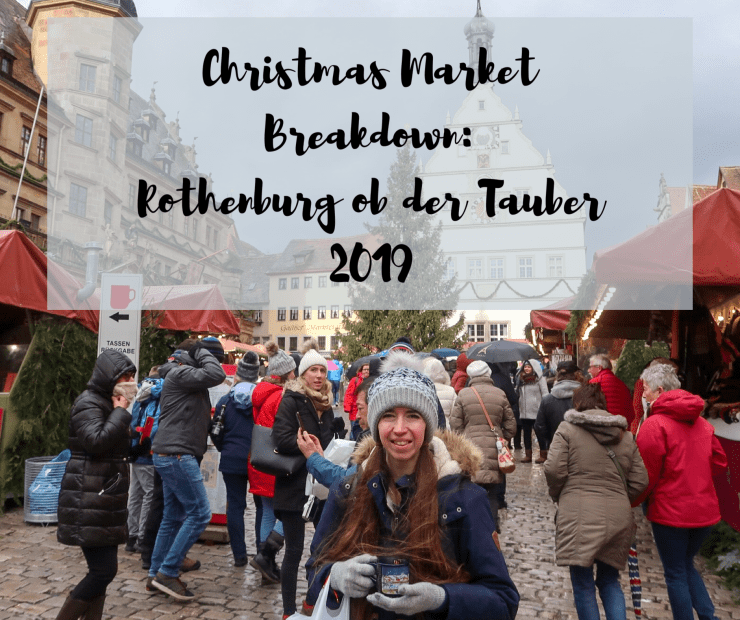
Christmas Market Breakdown: Rothenburg ob der Tauber 2019

IMG_2766Rothenburg ob der Tauber is easily one of the most popular spots in Germany to visit, to recommend to visit, to fall in love with, to spend a day walking in; It’s just one of those spots. It is a town that is medieval in nature and look and has somehow become devoted to Christmas, with Christmas shops being open year-round and its Christmas Market being one of the most popular ones. I had visited Rothenburg a couple weeks prior (which you can read about HERE) and my expectations were very high…

Rothenburg ob der Tauber Specifics

Rothenburg ob der Tauber’s Christmas Market is within the walls of the medieval town, starting at the main town square and wrapping through the Rathaus and to the smaller side square and churchyard. The market itself is open 11/23/2019-12/23/2019 opening around 11AM daily. I think there are around 70 stalls total in the market (which makes our opinion a little…weird, but more later). This market has been going on for about 500 years and hasn’t changed much over those years.

In my personal opinion, this was a bit of a disappointment in terms of Christmas Markets and I don’t know that I can accurately say why. I think that there was a cumulation of a couple of different factors that honestly made the day a bit of a disappointment. I’ll break it down and then let you decide your own thoughts as to whether you want to visit.

***Clarification—VISIT Rothenburg odT, however decide if you want to visit the Christmas Market or not***

The market itself is a bit smaller and the stalls were…not oddly laid out, but could have been better. I felt like the layout could have been better, mixing up the vendors and displays. It was oddly packed in that there wasn’t a lot of people in the actual market square or along the stalls, but A LOT of people right at the entrance or down the main road. This made it really kind of annoying to navigate into the market and then made the market itself feel a bit…empty (both in people and with the stalls). The actual stalls were full of really cool goodies and they have a whole handcrafted market in the hall of the Rathaus, BUT between the crowd being oddly dispersed, the layout coming off a bit strange, and the crummy weather that we experienced it just wasn’t one that we loved.

All of that combined with my own previous trip to Rothenburg odT, which took place in the only “off” season that they have and was a quiet, calm day (again- read that HERE), just put a bit of a different spin for this market. When you compare it to the others that we’ve already been to, we definitely preferred more.

With our experience being what it was, we didn’t really eat a lot. I snagged some cocoa and Robert had a sausage sandwich and that was it. We did a little bit of shopping, although more so in the store fronts than in the market (which is something that I discourage during Christmas Markets, but it was what it was for this one). I picked up my Glühwein incense smoker and a Rothenburg odT wooden ornament. We also picked up a pickle ornament, which has a little tradition in Germany attached to it (basically it’s hidden and who ever finds it first gets a present and good luck for the upcoming year). Of course, I got the Rothenburg odT mug.

I still think that everyone should visit Rothenburg ob der Tauber, BUT I wouldn’t make the Christmas Market your sole reason and event for your day. I would either skip or combine it with everything I suggested in my previous post. I would be interested to hear from others if they’ve been, their thoughts and opinions. I think for us the weather (cold, windy, and rainy – the most not ideal weather) was the biggest killer of our day so I just wonder if we just had an off experience. I hate that we didn’t love this one :(, so leave your thoughts down below!

Recommendations and Tips for: A Weekend in Prague

Untitled Design 19We recently spent a couple days wandering the streets in Prague and I fully fell in love with the city. It has the perfect balance of history, culture, art, and music. It is a city that is full of life and love (seriously- my husband got all sorts of romantic during our short time there). It also happens to be a city that we fully plan on re visiting as there is so much to do and see. Today I am going to share some of the things that I think you should definitely see along with some tips about navigating the city. If you’d like a catch up on what we did you can see my post HERE. If you’d like tips specific to Christmas Markets in Prague, click HERE.

Recommendations

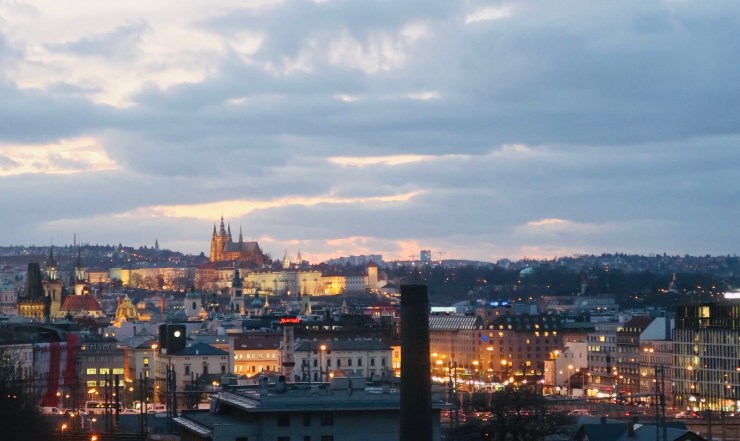
Prague Castle- It shouldn’t come as a surprise that I am recommending a trip to the castle. I love visiting castles as they usually are not only the focal point of a city/town, but also have such a rich, often turbulent history. Prague Castle is no different, plus it has the added bonus of being currently in use and it’s cathedral having been recently finished. I would head up towards the afternoon/evening so you can watch the sun set on the city. Then, for an added bonus, walk across Charles Bridge and see how the castle lights up across the water.

Old Town Square- I would recommend a morning wandering around Old Town Square. At the heart of Prague, this square offers churches, history, and shopping nearby (if that’s your thing). Make sure you pay attention to the ground as there are a couple special tiles on the ground in the square marking spots. There are two churches right around this square to go in as well and they both should be visited.

Charles Bridge – This is the pedestrian Bridge that connects Old Town Square to Lesser Town and Prague Castle and is a fun walking path to go between. There are quite a few monuments and statues on the bridge, as well as a couple to touch for good luck. If they are open, you are able to climb up into the towers and see a “birds eye” view. As I stated earlier, I would recommend walking the bridge in the evening so you can see the city light up and the castle across the river.

Jewish Quarter—This is a must see and is quite easy to navigate through. The important thing to know is that the entire Quarter is closed on Saturday and you will not be able to visit anything during that time. Otherwise, the synagogues typically open around 9AM for visitors and you need tickets to get into both the synagogue, the museum, and the old cemetery. You can stop at any of the souvenir or gift shops that are labeled to purchase tickets for the entire quarter. There are a couple different ticket options and I believe Audio Guides are included in most of them. I would definitely recommend stopping into as many of the synagogues as you can during your visit, as well as the Old Cemetery.

Prague Astronomical Clock – This one, quite honestly, is a miss. I wouldn’t go out of your way to watch the glockenspiel as it really isn’t worth fighting the crowds. If you happen to already be there, then go ahead and watch, but don’t make a special trip.

Honorable mention to Lesser Quarter if you have the time as well as Wenceslas Square. There are a couple of spots that I wish we would have gone and look forward to going back to see those spots (up in the all the towers and churches and some other food spots). When we go back, I’ll do another couple of posts giving more details.

Tips

Tip #1: Crowds. Prague is a very popular tourist destination and that leads to crowds. Honestly, I knew there would be crowds, but I didn’t feel like it was overwhelming (like Amsterdam was). To me, the crowds were just…the crowds. I would recommend to just keep moving with the crowd.

Tip #2: Use public transportation! I’m a huge proponent of using the local methods of transportation and Prague has a really great system. It is really easy to navigate, relatively inexpensive, with great options for ticket timelines (i.e 90 minute, 24 hr, 72 hr, etc.). I was very impressed with it while we were there.

Tip #3: Parking. Since you’ll be walking or using public transport during your time in Prague, you’ll need to find parking for your car. Parking in Prague is definitely a struggle. So many spots are reserved or not able to have parking, or are just too compact to comfortably park in. There are a couple spots to park in that you can pay for, The Palladium (which has convenience for Old Town Square), the main Train Station, OR you can use an app called Mr. Parkit which has spots that you can reserve all over town. They have both indoor and outdoor options and they all come with reviews and information. The benefit to using Mr. Parkit is that you reserve a spot, so you can come and go as needed (if you are staying to night or a couple nights this is helpful). The app itself is easy to use and once you’ve reserved a spot it’s easy to get in and out.

And that wraps up my recommendations and tips for Prague! I know I’ve said it a million times, but I loved Prague and I cannot wait to go back! Have you been to Prague? Any additional tips or spots to go?

Christmas Market Breakdown: Prague 2019

Prague is such a beautiful city and the same goes for its Christmas Markets. In case you missed my post all about our weekend in Prague, you can find that HERE. Today I am going to be talking about the various Christmas Markets we went to within the city, the tips that I have for going to the markets, and the things you should buy at Christmas Markets. I’m still finding my way in writing these posts, so bear with me as I figure out how I want to structure them and such.

To Start With…The Basics

IMG_2078Christmas Markets are a great way to get in the Christmas Spirit, to try new foods/pastries, drinks, and other fun items. It’s a good option when shopping for Christmas Gifts and fun little keepsakes of your time in Europe. Each city has its own market and the bigger cities often have several different markets.

Prague holds several Christmas Markets throughout its town, but the two big ones are Old Town Square and Wenceslas Square. There are several other notable markets, Republic Square, Havel’s Market, and Prague Castle, most of which you will either walk through our past if you are just attending Old Town Square and Wenceslas.

The Christmas Markets officially open right around the end of November and most will continue through the beginning of January. I’ll touch on the specific 2019 dates when I talk about each market that we attended. They are open all day and into the night, with all the lights really coming on at dusk (around 5pm or so).

Prague Specifics

I am going to touch on just general tips real quick, for parking you’ll want to either use Mr. Parkit (all over Czech Republic) or the Palladium Parking Garage (the big mall). This will give you access to the Republic Square Market and from there you can walk the entire line. You can also purchase a day transport ticket (24 hours) that will cover your bus, street car, and metro trips. It’s reasonably priced and a great option if you are not able to walk the trip.

I have listed out the markets below in the order that we visited them. I will include a final summary at the end of the post of the order I think you should go in (the one that fits best in my opinion). I’ll also include a bit on what we ate, what I bought, as well as what is worth spending money on (again, in my opinion).

Prague Castle Market:

This is a smaller market located within the walls of Prague Castle, this was the only market this year that actually had the nicer mugs. This is a smaller market, with more craftsman makings, but still just as lovely as some of the cities bigger offerings. This year the Prague Castle Market opened up November 23, 2019 and runs until January 6, 2020 and it opens around 9AM everyday (closing at 7PM). I highly recommend just including this as part of your Prague Castle trip as it is a beautiful smaller market. It was one of our top favorite markets from Prague this year.

Republic Square Market:

IMG_1952.jpg

This is the first market we went to on our walking Prague/Christmas Market day. This is a smaller, but still just as good, market right outside the Palladium Mall Area. It’s a nice little start and introduction to the Prageu Christmas Markets. It’s a good start as it’s not big or overwhelming. There are plenty of stands to have a browse in before heading to the other markets. This particular market differs in dates as it is only open 11/25/2019-12/24/2019, it also opens at 10AM, but closes early at 7PM.

The Old Town Square Market:

One of the most popular markets within Prague, this is also one of the busiest markets. Nestled right in the heart of Old Town Square, the tree at the center (with the church as a backdrop) this definitely is a beautiful market. I would even go as far to say that this market is the heart of the Prague Christmas Markets. This is the main event and we got to not only check out the market early in the day (therefore beating the bulk of the crowds), but we also go to watch the Official Opening and Lighting of the Christmas Tree. I’ll be honest- it was magical. The Old Town Square Market runs from 11/30/2019-1/6/2020 and opens at 10AM. This is another market that we loved, although I would recommend visiting it earlier in the day as it will get crowded.

Havel’s Market:

IMG_2146.jpg

This was probably one of my favorite markets as it is a market set up all year round, with Christmas time leading to more of the Christmas Stalls. It is just a row of shops in the street (that is a walking street), which makes for easy set up and browsing for shoppers. This one has the most artwork and crafts stalls that I saw (with Prague Castle being a close second to that) and we found some really good bits at this market.


Wenceslas Square:

IMG_2160 2.jpg

This was the final Christmas Market we went to in Prague and it was probably my least favorite of the bunch. I don’t know what it has been like in past years, but this year it was heavily focused on food shops, which was good for us as it was lunchtime, BUT it’s not what I would have wanted at any other time. The booths here that did not offer food or drink were almost nonexistent, shoved to the very end of the row. So, good for a little food break, but definitely missable in the grand scheme. This market is again, open 11/30/2019-1/6/2020 and open at 10AM.

So, my overall thoughts are that Prague at Christmas is magical. Christmas Markets have an air of magic and with the backdrop of Prague it’s amplified. In my opinion, if you are just taking a day to wander the markets, I would start at Prague Castle. This is a market that won’t take you long to walk through and you’ll get to wander the castle. It really sets the magical mood. From there I would hop a bus or street car over to Republic Square. From there you can walk through the Prasna Brana down to Old Town Square and Havel’s Market. You can choose whether or not you would like to go to Wenceslas Square, but I personally wouldn’t.

These markets are definitely doable in one day, especially with a dinner at the end of it if needed.

At the markets we ate Trdelniks, which is the most delicious pastry, a Chocolate Waffle on a Stick, also delicious, but messy so bear that in mind, and chicken shishkibobs. I didn’t end up getting any drinks beyond some tea, but I would always recommend trying out either the glühwein or hot chocolate with rum. Each market has it’s own twist on what they will taste like, so don’t entirely judge the drinks off of just one try. There are also different flavorings for glühwein and the like!

In terms of what we bought this time around, I just picked up a little resin village house for my Christmas Village collection (I am going to collect these as we go along in time here). I also did pick up a mug, but not one from the Christmas Market. It is my plan to collect Christmas Market mugs, but I missed out on getting the mug that I wanted. Lesson learned for future Market trips!

And that is my Christmas Market Breakdown for Prague. I hope that you enjoyed, got some tips, or just followed the Christmas Magic through our eyes. Please let me know if you like this formatting or if there are more things you want to/would rather hear more about.


Prague – A Long Weekend Away

IMG_1891Our final stop on our Thanksgiving Weekend Away was in Prague for ~2 days. This post is going to only focus on what we did in Prague and the history of those spots. I will be doing separate posts on the Christmas Markets and my Recommendations and Tips. I’m going to break this post down day by day as I think that is probably the best way to handle the information in a concise way. And, one final thing before we get into the post, we fully plan on going back to Prague to do a little bit more exploring. I fell in love with the city and I feel like there is so much more to see. It’s only a couple hour drive (or train ride) so it’s totally feasible for us to go back.

Prague itself dates back to around the 2nd century, but it wasn’t until Charles IV came into power that it really started to find a place on the map. Prague has been through its fair share of ups and downs, crusaders, religious upheaval, and foreign occupations. It’s seen war, nonviolent revolutions, and a modern turn towards capitalism (and a big shift in consumerism). The city itself shows all the different stages of its history and I think that makes it so interesting and easy to explore. Every corner holds a different era.

Now, onto what we did in our short amount of time in Prague…

Afternoon Day 1

We arrived about midday in Prague and decided to start our time off at Prague Castle. This was the highest and furthest point that we wanted to go on this particular trip, so it seemed like a good place to start and work our way back from. We used the public transportation system (buses, street cars, and an underground metro) to get as close as we could and then walked the final hill to the castle entrance.

IMG_1942.jpg

Prague Castle dates it’s foundation laying to the 9th Century, with the Cathedral not being completed until the 20th Century. The castle itself is the largest castle complex in the world. The castle itself is made up of three large courtyards with the cathedral being the most prominent. It dominates any view of Prague and for quite a while was the seat of various rulers. In modern day, it happens to be the seat of the President of the Czech Republic.

Before you even head into the castle, the views overlooking Prague are incredible. Within the castle walls, you walk up the street and see St. George’s Basilica. This is the oldest preserved church. Originally built in the 10thcentury, it was rebuilt in the 12th and then “updated” in the 17th century. It is very impressive and certainly dominates the main first courtyard.

Going around the lane a bit further and you come to the incredible Cathedral of St. Vitus, St. Wenceslas and St. Adalbert.  This is the spiritual symbol of the state, building began in the 14th century, but took almost 600 years to complete (with the final touches being completed in 1929). The interior of the cathedral is equally impressive and contains the crypt where the kings were buried, and the crown jewels are housed. It was absolutely gorgeous on the inside (although we didn’t make our way through the entire cathedral). You are able to walk through the rest of the complex and the buildings throughout the complex. We headed out right around sunset and got to watch the sun set on the city, and then see the city start to come to life in the evening.

We checked into our Airbnb (which was a fun exercise) and then headed out to dinner at Restaurace U Houdků. This was a lovely local pub type restaurant and we had a lovely meal of various Czech delicacies. We made it an early night in preparation for the long day ahead.

Day 2:

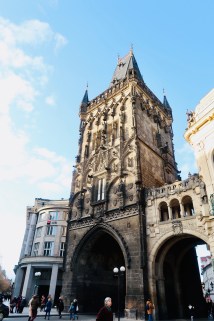
Saturday was our walking day. I love to walk a city (especially one that is so easily walkable to see so much) and Prague was perfect for that. We woke early, stopped for a quick coffee, and then headed out to be tourists for the day. We started our stroll at the IMG_1969.jpgPrašná brána (Powder Tower). Dating back to the 15th century, this was the entrance that all the kings would use to enter The Old Town. It was a gunpowder store in the 18th century, today it serves as not only a viewing gallery to see over the city, but still is the entrance for a royal route to Prague Castle. It certainly was an impressive sight to see and is a good start to your morning/day out in Prague Old Town.


From there it is a quick stroll down the streets to reach Old Town Square. This main square holds not only the markets, but has been restored throughout the years. The Old Town square is circled by several prominent buildings, the first of which being the Church of Our Lady before Týn. This is easily one of the most impressive buildings you will see during your visit to Prague, aside from the Cathedral at the Castle. This particular church also contains the oldest organ in Prague, dating to the 17th century. The church itself dates back to the 14thcentury.

In the square itself there are several things to see before moving on in another direction. There are various steps on the ground itself marking where executions would take place and other little tidbits of what life was like. There is the Jan Hus Memorial in the central. You can walk off to the side a little bit and go to the St. Nicholas Church. This church was completed in the early 18th century and is absolutely incredible. When we went in they had the organ music playing and the grand chandelier was a sight to see. It not only serves as a church, but is also a classical music concert hall. Before leaving the square, do a quick look see at The Prague Astronomical Clock. It isn’t necessary to stick around for the performance (it’s really not anything to write home about0, but it’s definitely something to peak at before leaving the square.

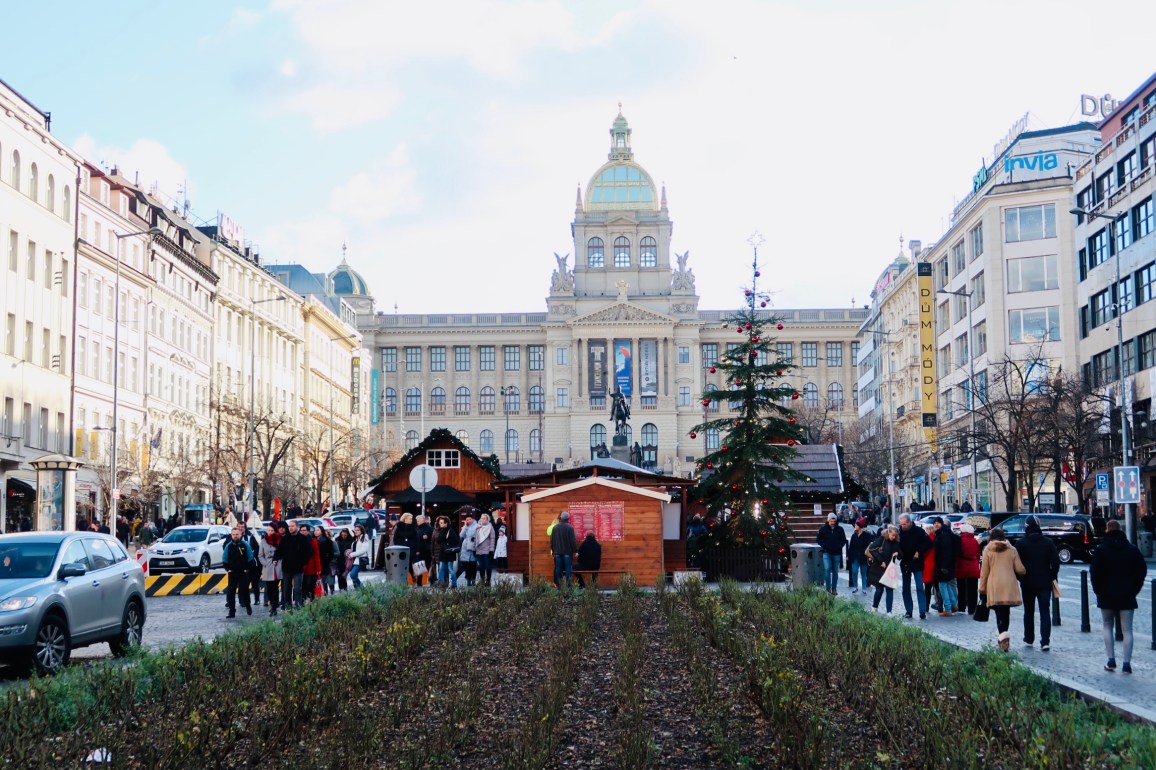
From the square we walked the side streets up to Wenceslas square. It’s not a far walk and by walking we not only got to see a couple more markets, we also got to see a wide variety of the architecture of the city.

IMG_2160.jpg

Wenceslas square is at the heart of “New Town” and is full of shopping and commercial life. New Town was commissioned by Charles IV in the 14th century. New Town was intended to be the center of Prague and with this new square under construction Prague became the third largest city in Europe (at that time). While New Town may not be very new by age standards, it certainly is the heart of the modern shopping era. Wenceslas Square is set up as a boulevard or (as its original layout and time period would entail) a horse market. Wenceslas Square has served as a parade ground of sorts, seeing everything from celebrations to uprisings. The square backs up into the National Museum and the Opera House, as well as a statue of St. Wenceslas riding his horse.

From Wenceslas Square we decided to hop on the metro and head over to the Charles Bridge Area.

IMG_2341.jpg

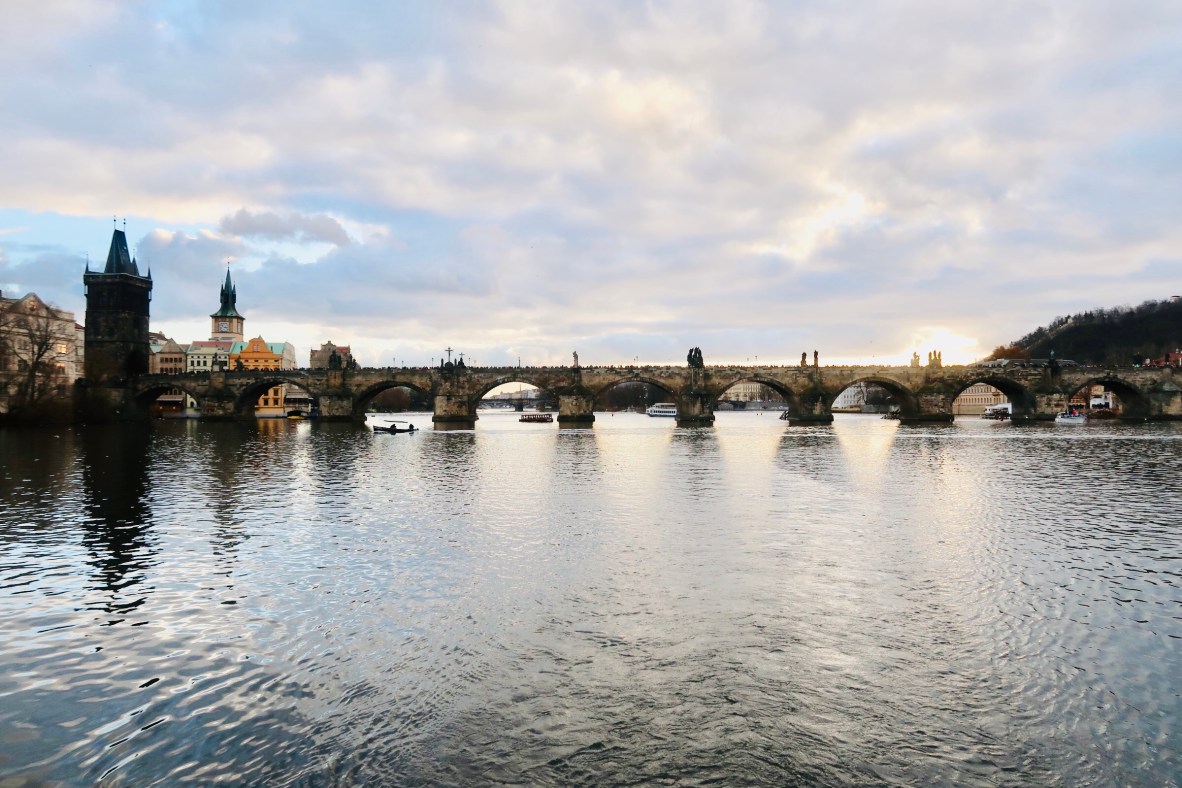
Charles Bridge is the main pedestrian bridge used to cross from one side of the Vitava River to the other. Charles IV commissioned the bridge and even laid the first foundation stone of the bridge in 1357 (there is a marking for it). This was originally intended for tournaments, but has since evolved into the bridge it is now. It is adorned with a total of 75 statues throughout the bridge and is a great option to walk from Old Town to Lesser Town.

On the Old Town side of Charles Bridge, you enter under the Old Town Bridge Tower. This is an incredible tower that continued the path of royalty through the Old Town and up to The Castle. You can climb inside the tower and see opposite the tower and bridge. On the Lesser Town side there is the Lesser Town Bridge Tower. This was built in the 15th century and was modeled off of the Old Town Bridge Tower. The smaller tower that is connected is Judith’s Tower; the only remaining part of the original bridge crossing. You are also able to climb up inside the Lesser Town Bridge Tower and see opposite.

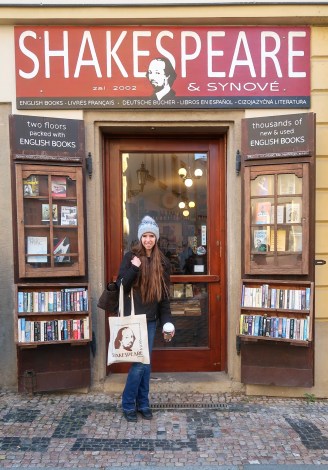
Once in Lesser Town we did a couple of stops, the first of which being a bookstore. Massive thanks to my friend Hannah (who happened to be in Prague at the same time we were), who enlightened me to the existence of Shakespeare and Sons. IMG_2288Shakespeare and Sons is a {big} little almost hole in the wall bookstore in a corner of Lesser Town. Situated near Kafka’s house and museum it is the perfect little stop. It has the used and new book atmosphere that I love, with book stacked high along the walls, piled on the floor and behind the cash register. I didn’t have nearly all the time I wanted to browse (thanks to two very active toddlers and one husband who couldn’t believe we were at a bookstore in a foreign country…again), but I did manage to snag a couple books. I got each book stamped with the bookseller’s mark, a reusable book bag, and a bookmark. Such a perfect little stop!


After our stop, we knew we needed a little breather from walking and exploring and a little chance to just relax and take it easy. We were right near the sight-seeing boat docks, so we decided to take a little boat tour of the river. Stay tuned for my full thoughts on this in my tips/recommendations, BUT it did what it intended- gave our boys a chance to rest and eat and us a chance to sit for a bit.

IMG_2407.jpgWe headed back to Old Town Square for the Christmas Tree Lighting and the official opening of the Prague Christmas Markets. More on this in the Prague Christmas Market post.


Morning Day 3

On our last morning in Prague we spent a little time in the Jewish Quarter (Josefov). The Jewish Quarter (originally the Jewish Ghetto) originates from around the 10th century, however it’s history really begins around the 13th century when the Jews were ordered to leave their homes behind wherever they were, and were banished to this Quarter. The first pogrom occurred Easter of 1389 and it has had a turbulent history since then. The quarter has gone through radical changes, with its people living at the whim of whomever was in charge at the time and at one point was overcrowded. There is a total of six synagogues in the Jewish Quarter, a Ceremonial Hall, and the Old Jewish Cemetery. Ironically enough, the Jewish Quarter was one of the few Jewish spots that survived World War 2 in the area as Hitler decided it could be a “Museum of an Extinct Race”. There is so much history to the Jewish Quarter, that I know I’ll be learning about everything for a long time to come.

We started with breakfast at this cute little café called Mansson The Danish Bakery. We munched on coffee’s, pastries, and meats before heading into the proper quarter.

We didn’t have a long time in the morning to see all of the synagogues and sights, but we tried to make the most of our time to see the absolute must see. We wandered the streets and admired the architecture of the Jewish Quarter before stopping into our first synagogue, Maisel Synagogue.

The Maisel Synagogue was originally built in the late 16th century and founded by its namesake, Mordechai Maisel. After a fire destroyed the original synagogue, the current synagogue dates back to the 19/20th century. This is an incredible synagogue to stop in and details out what life was like in the Jewish Quarter and a bit of the history around the early years of the Quarter. My personal favorite was hearing details about the book and scholarly life.

The second synagogue that we stopped in was the Pinkas Synagogue.

This was built, again, in the 16thcentury. It originally served as a private family oratory by the wealthy family that commissioned it, but later was adapted to add a women’s gallery and new décor for the Torah Ark. This synagogue was reconstructed and turned into a Memorial. The names of the victims of the Shoah are painted on the walls, arranged alphabetically by residence. It’s the oldest monument of its kind and bares 80,000 names on its walls. This was an incredibly moving memorial and absolutely heartbreaking to see. To have all these names laid out in front of you, all around you on the walls, it’s breathtaking.

Our final stop was the Old Jewish Cemetery, which can be accessed through either the Pinkas Synagogue or next to the Klausen Synagogue. The Old Jewish Cemetery is one of the oldest in the world, having been founded early in the 15th century. The Cemetery contains burials from before 1440 until 1787, when a decree came down prohibiting active burial grounds within inhabited areas of the city. There are around 12,000 tombstones, but even more graves as some of collapsed into the ground and others have been destroyed by the elements. Now, if you’re wondering how the dead are actually buried in this manner (with the tombstones being the way they are), don’t worry, we were too. The community actually would add new soil to the ground when they needed more room, so there are several layers of graves in the cemetery, one above the other. The gravestones became crowded as each site holds multiple graves. Both Rabbi Low and Mordecai Meisel, two big names who helped build the Quarter up, are buried here.

Words can’t even begin to describe this sight. It was incredible not only with the overcrowding of the tombstones and the idea of how old the graves were and how many people were actually there, but just the sheer size. At some points it seemed never ending. The amount of history in this relatively small area of Prague is incredible to think of.

We wanted to see both the Old-New Synagogue (the oldest preserved synagogue in Central Europe) and the Spanish Synagogue (the most beautiful in Europe), but both were not open when we were there.

And that ended our short little weekend in Prague! We are definitely making plans to go back and see more of the city, and have already added a couple of spots to our must-see list. Have you been to Prague? What was your favorite spot? If you haven’t, what would you like to go see the most?